Shared posts

03 Nov 03:37

The Lovelace and Babbage Paper Dolls I’m Sure You Wanted

by sydney

Thank you so much for all the kind words about the book! It’s good to be back! And there is as of yet no angry mob of Organist diehards gathered neath my window!

In gratitude, I know if there’s one aching need in your lives that’s unfulfilled right now, it’s..

PRINTABLE LOVELACE AND BABBAGE PAPER DOLLS!

paperdolls

I’m not 100% sure why I drew those, unless it’s to go with the Lovelace and Babbage paper theatre sets I’ve been doodling.

26 Oct 06:27

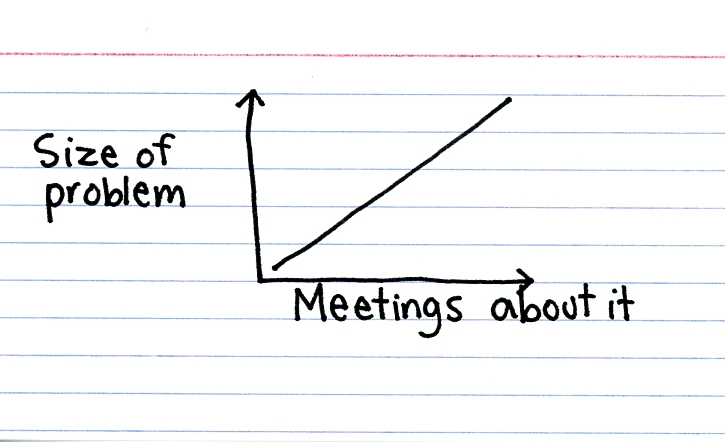
How to make it worse.

by Jessica Hagy

card4422

Share and Enjoy:DiggStumbleUpondel.icio.usFacebookTwitterGoogle Bookmarks

24 Oct 04:54

Political Straightjacket

by admin_a

If the ozone hole had been discovered ten years later, governments are likely to have done nothing.

By George Monbiot, published on the Guardian’s website, 11th September 2014

In The Magnificent Seven Deadly Sins, a comedy made in 1971, Spike Milligan portrays Sloth as a tramp trying to get through a farm gate. This simple task is rendered almost impossible by the fact that he can’t be bothered to take his hands out of his pockets and open the latch. He tries everything: getting over it, under it, through it, hurling himself at it, risking mortal injury, expending far more energy and effort than the obvious solution would require.

This is how environmental diplomacy works. Governments gather to discuss an urgent problem and propose everything except the obvious solution – legislation. The last thing our self-hating states will contemplate is what they are empowered to do: govern. They will launch endless talks and commissions, devise elaborate market mechanisms, even offer massive subsidies to encourage better behaviour, rather than simply say “we’re stopping this”.

This is what’s happening with manmade climate change. The obvious solution, in fact the only real and lasting solution, is to decide that most fossil fuel reserves will be left in the ground, while alternative energy sources are rapidly developed to fill the gap. Everything else is talk. But not only will governments not contemplate this step, they won’t even discuss it. They would rather risk mortal injury than open the gate.

The same applies to biodiversity, fisheries, neonicotinoid pesticides and a host of other issues affecting the living planet: negotiators have tried to work their way under, over and through the gate, while ensuring that the barrier remains in place.

It wasn’t always like this. There was a time when they took their hands out of their pockets.

This week the UN revealed that the ozone layer is recovering so fast that, across most of the planet, it will be more or less mended by the middle of the century. Ozone is the atmospheric chemical that blocks ultraviolet-B radiation, protecting us from skin cancer and from damage to our eyes and immune systems, and protecting plants from destruction. It’s coming back, and this is a great advertisement for active government.

Like manmade global warming, the problem was forecast before it was observed. In the case of global warming, Svante Arrhenius predicted in 1896 that the “carbonic acid” (carbon dioxide) produced by burning fossil fuels was sufficient to raise the global temperature. In 1974, before any noticeable issues had arisen, the chemists Frank Rowland and Mario Molina predicted that the breakdown of chlorofluorocarbons – chemicals used for refrigeration and as aerosol propellants – in the stratosphere would destroy atmospheric ozone. Eleven years later, ozone depletion near the South Pole was detected by the British Antarctic Survey.

Had governments not acted, the UN estimates,

“atmospheric levels of ozone depleting substances could have increased tenfold by 2050.”

The action governments took was direct and uncomplicated: ozone-depleting chemicals would be banned. The Montreal Protocol came into force in 1989, and within seven years use of the most dangerous substances had been more or less eliminated. Every member of the United Nations has ratified the treaty.

This was despite a sustained campaign of lobbying and denial by the chemicals industry – led by Dupont – which bears strong similarities to the campaign by fossil fuel companies to prevent action on climate change.

The Montreal Protocol is one of those victories that allows us to forget. We are not wired to recognise an absence; we don’t spend our days celebrating the eradication of smallpox, or the fact that diphtheria no longer ravages our cities. But were the protocol not in force, scarcely a day would pass when the problem did not impinge on our consciousness. The UN maintains that the protocol

“will have prevented 2 million cases of skin cancer annually by 2030″.

There are still issues to resolve. Earlier this year, scientists detected four new ozone-depleting chemicals in the atmosphere, which are likely to be either industrial feedstocks or black market products. There will always be cheats and freeloaders, but the treaty can keep evolving to address new threats.

The Montreal Protocol has famously done more to prevent global warming (which was not its purpose) than the Kyoto Protocol, which was designed to prevent it. This is because some of the chemicals the ozone treaty bans are also powerful greenhouse gases.

So what’s the difference? Why is the Montreal Protocol effective while the Kyoto Protocol and subsequent efforts to prevent climate breakdown are not?

Part of the answer must be that the fossil fuel industry is much bigger than the halogenated hydrocarbon industry, and its lobbying power much greater. Retiring fossil fuel is technically just as feasible as replacing ozone-depleting chemicals, given the wide range of technologies for generating useful energy, but politically much tougher.

But I don’t think that’s the only factor. When the Montreal Protocol was negotiated, during the mid-1980s, the notion that governments could intervene in the market was under sustained assault, but not yet conquered. Even Margaret Thatcher, while speaking the language of market fundamentalism, was dirigiste by comparison to her successors: enough at any rate to be a staunch supporter of the Montreal Protocol. It is almost impossible to imagine David Cameron championing such a measure. For that matter, given the current state of Congress, it’s more or less impossible to see Barack Obama doing it either.

By the mid-1990s, the doctrine of market fundamentalism – also known as neoliberalism – had almost all governments by the throat. Any politicians who tried to protect the weak from the powerful or the natural world from industrial destruction were punished by the corporate media or the markets.

This extreme political doctrine – that governments must cease to govern – has made direct, uncomplicated action almost unthinkable. Just as the extent of humankind’s greatest crisis – climate breakdown – became clear, governments willing to address it were everywhere being disciplined or purged.

Since then, this doctrine has caused financial crises and economic collapse, the destruction of livelihoods, mountainous debt, insecurity and the devastation of the living planet. It has, as Thomas Piketty demonstrates, replaced enterprise with patrimonial capitalism: neoliberal economies rapidly become dominated by rent and inherited wealth, in which social mobility stalls. But despite these evident failures, despite the fact that the claims of market fundamentalism have been disproven as dramatically as those of state communism, somehow this zombie ideology staggers on. Were the ozone hole to have been discovered today, governments would have announced talks about talks about talks, and we would still be discussing whether something should be done as our skin turned to crackling.

Tackling any environmental crisis, especially climate breakdown, requires a resumption of political courage: the courage just to open the sodding gate.

www.monbiot.com


20 Oct 03:43

real polynomial equations

Today on Toothpaste For Dinner: real polynomial equations


HOLY SHIT WE DID IT!!! Superpoop is back and updates every Thursday. Drewtoothpaste is back and updates every Monday. Subscribe to the combined RSS feed for Superpoop and Drewtoothpaste and get updates in your RSS reader.
19 Oct 18:31

a nonprofit

Today on Toothpaste For Dinner: a nonprofit


HOLY SHIT WE DID IT!!! Superpoop is back and updates every Thursday. Drewtoothpaste is back and updates every Monday. Subscribe to the combined RSS feed for Superpoop and Drewtoothpaste and get updates in your RSS reader.
19 Oct 02:29

Data entry REAR-END SNAFU: Weighty ballsup leads to plane take-off flap

by Richard Chirgwin

Another good reason not to treat kids as adults

We're all accustomed to tales of woe that children are becoming too fat, but how about too-light kiddies spoiling the balance of an aircraft?…

14 Oct 18:13

climate change debate

Today on Toothpaste For Dinner: climate change debate


HOLY SHIT WE DID IT!!! Superpoop is back and updates every Thursday. Drewtoothpaste is back and updates every Monday. Subscribe to the combined RSS feed for Superpoop and Drewtoothpaste and get updates in your RSS reader.
11 Oct 18:06

you said i could be anythin

Today on Toothpaste For Dinner: you said i could be anythin


HOLY SHIT WE DID IT!!! Superpoop is back and updates every Thursday. Drewtoothpaste is back and updates every Monday. Subscribe to the combined RSS feed for Superpoop and Drewtoothpaste and get updates in your RSS reader.
11 Oct 17:57

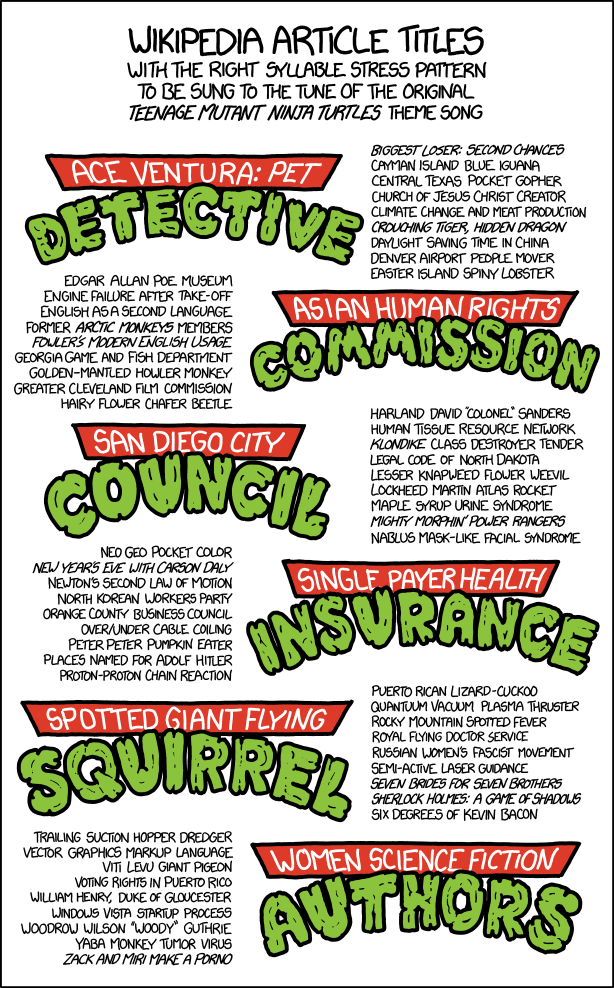
Teenage Mutant Ninja Turtles

My upcoming album, 'Linked List', has covers of 'The Purple People Eater', the Ninja Turtles theme, 'Itsy Bitsy Teenie Weenie Yellow Polka Dot Bikini', and the Power Rangers theme, with every song played to the tune of the next.
10 Oct 03:30

Loop

Ugh, today's kids are forgetting the old-fashioned art of absentmindedly reading the same half-page of a book over and over and then letting your attention wander and picking up another book.
08 Oct 03:29

the evolution of phones

Today on Toothpaste For Dinner: the evolution of phones


HOLY SHIT WE DID IT!!! Superpoop is back and updates every Thursday. Drewtoothpaste is back and updates every Monday. Subscribe to the combined RSS feed for Superpoop and Drewtoothpaste and get updates in your RSS reader.
01 Oct 18:48

Floppy Tube Garlic Peeler

by mark

When you are pulling together a meal, anything you can do to minimize prep time up front — or more importantly, along the way — helps make things run more smoothly and cleanly. I love garlic and often increase (or double) suggested amounts in recipes for the dishes I like to make. I don’t mind peeling garlic per se, but it can get tedious and slow especially when a recipe asks for a lot. Considering how sticky it makes your hands as well, doing this mid-cook can be a real time suck and throw off one’s rhythm.

This amazingly simple tool makes a huge difference. You can peel multiple cloves of garlic in just a couple seconds with no mess whatsover. Whether you are prepping for a recipe or realize you need more garlic once you are already going, this can save a great deal of time and energy. You just pop 2-5 cloves into the tube, roll it with the palm of your hand, turn the tube on it’s side and voila – the peeled cloves just fall out. At this point its just a quick mince, press or slice and you move on.

On top of the usage benefits, cleaning and storage are also exceedingly convenient. Just giving it a quick rinse under the tap releases the accumulated skins inside the tube and is a sufficient clean most of the time. After several uses — or each usage if you are germaphobic — you may give it a thorough wash as it is dishwasher safe.

-- Ali Kafshi

[This is a Cool Tools Favorite from 2006]

Floppy tube garlic peeler ($4)

Available from Amazon

19 Sep 05:56

Animated Cosmic Inflation Explained

by Jon

The University of Sussex animated the PhD Comic that I helped create about the recent BICEP2 results and Inflation.

12 Sep 19:12

Lego and BMW reveal 1,077-part Mini Cooper

by Ronan Glon

mini-classic-lego-6Lego and MINI parent company BMW have teamed up to introduce a Mini Cooper crafted out of 1,077 Lego bricks. Finished in British Racing Green, the Lego Mini Cooper is inspired by the limited-edition model that was built from July 1997 to August of 1998 in order to celebrate the car’s 40th anniversary.

The Lego Mini is surprisingly detailed inside and out. The doors, the hood and the trunk all open, the front seats tilt forward and the gear lever is movable. The transversally-mounted four-cylinder engine features a red oil cap and a plastic exhaust manifold, while the trunk hides a spare tire and a full picnic set made up of a basket, two glasses, a tablecloth, a bottle of water and a baguette with two pieces of cheese.

Fully built, the Lego Mini stretches 9.8 inches long, 5.5 inches wide and 4.3 inches tall (25 centimeters long / 14 centimeters wide / 11 centimeters tall), dimensions that equate to approximately 1/12 scale. The roof panel can be removed in order to provide a better view of the cockpit.

The Mini Cooper is scheduled to join Lego’s Creator Expert series next month. Pricing information will be published closer to the set’s on-sale date.

mini-classic-lego-4 mini-classic-lego-1 mini-classic-lego-2 mini-classic-lego-3 mini-classic-lego-11 mini-classic-lego-5 mini-classic-lego-10 mini-classic-lego-12 mini-classic-lego-7 mini-classic-lego-8 mini-classic-lego-9
12 Sep 19:05

Boffins fill a dome with 480 cameras for 3D motion capture

by Richard Chirgwin

'Panoptic studio' doesn't need no stinkin' sensors

Video  Move over Gollum: Carnegie-Mellon boffins are working on 3D motion capture that works without tracking sensors, and can pull together images from hundreds of sensors.…

11 Sep 18:42

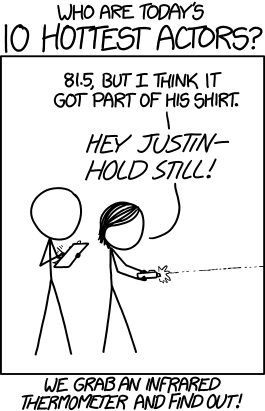
Actors

Once again topping the list of tonight's hottest rising stars in Hollywood is ξ Persei!
02 Sep 19:36

not technically a sauna

Today on Toothpaste For Dinner: not technically a sauna


HOLY SHIT WE DID IT!!! Superpoop is back and updates every Thursday. Drewtoothpaste is back and updates every Monday. Subscribe to the combined RSS feed for Superpoop and Drewtoothpaste and get updates in your RSS reader.
02 Sep 19:35

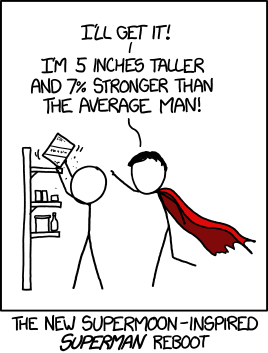
Superm*n

See also: Spider-Man reboot in which he can produce several inches of web, doesn't need as much chalk powder on his hands when he goes rock climbing, and occasionally feels vaguely uneasy about situations.
02 Sep 19:08

you like this

Today on Toothpaste For Dinner: you like this


HOLY SHIT WE DID IT!!! Superpoop is back and updates every Thursday. Drewtoothpaste is back and updates every Monday. Subscribe to the combined RSS feed for Superpoop and Drewtoothpaste and get updates in your RSS reader.
31 Aug 17:54

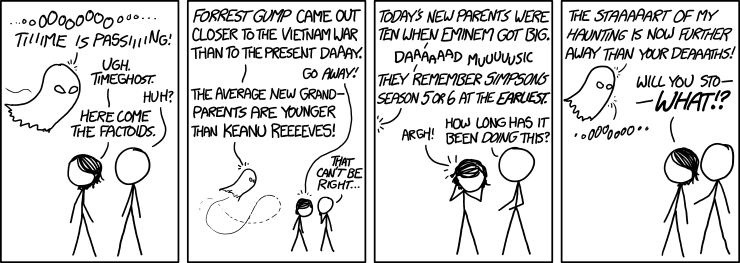
Timeghost

'Hello, Ghostbusters?' 'ooOOoooo people born years after that movie came out are having a second chiiiild right now ooOoooOoo'
28 Aug 00:52

Can you afford to make a mistake?

by Jessica Hagy

card4365

Share and Enjoy:DiggStumbleUpondel.icio.usFacebookTwitterGoogle Bookmarks

18 Aug 18:46

Britain’s Most Glorious Cold War Bomber Jet Takes Flight Again

by Alex Davies
The Avro Vulcan—a Cold War era bomber that only fought Argentina—takes flight this weekend.


02 Aug 18:47

A New Bike Lane That Could Save Lives and Make Cycling More Popular

by Liz Stinson
Nick Falbo is proposing a new protected intersection design that would make intersections safer and less stressful than they are today.


02 Aug 17:48

FIRST PASS/FIRST DRAFT: Apologies Due from the Academic Left


The aide [Karl Rove] said that guys like me [reporter Ron Suskind] were "in what we call the reality-based community," which he defined as people who "believe that solutions emerge from your judicious study of discernible reality." I nodded and murmured something about enlightenment principles and empiricism. He cut me off. "That's not the way the world really works anymore." He continued "We're an empire now, and when we act, we create our own reality. And while you're studying that reality—judiciously, as you will—we'll act again, creating other new realities, which you can study too, and that's how things will sort out. We're history's actors ... and you, all of you, will be left to just study what we do." (Faith, Certainty and the Presidency of George W. Bush)

All politicians operate within an Orwellian nimbus where words don't mean what they normally mean, but Rovism posits that there is no objective, verifiable reality at all. Reality is what you say it is …. Neal Gabler, Los Angeles Times; October 25, 2004


            While we await apologies from Donald Rumsfeld and the Neoconservatives for the increasing mess in Iraq and environs; while we're bemoaning radically skewed unfair income distribution and impossibly-high college costs and an impoverished American public sphere — some time during the next several years, I want to hear an apology or two from some of the "more-Left-than-thou" academics who pushed way too hard on postmodernist themes and identity politics in the latter parts of the 20th century.

            Identity politics are far more forgivable because, in moderation, they are necessary and need no apology — especially when one's identity group has been consistently fucked over for the last half millennium or so (American Indians, Blacks) or for pretty much all of recorded history (women). Identity politics are inevitable and necessary politics, but effective politics are almost always coalitional, and the practice of effective politics requires never losing sight of that essence of politics, the question Who’s getting what, and from whom?

            Radical cultural feminists changed the focus from the Liberal project of getting an Equal Rights Amendment to issues of rape and cultural/social oppression of women by men. Fair enough, except when the logic of such social/cultural analysis precluded alliances of men and women — it being problematic to be literally or figuratively sleeping with the enemy — and undercut feminist solidarity between White and African-American women, or at least African-American women who remembered when charges of rape, and lynchings for rape, were used to keep in line African-American men.

            The mantra was "Class, Gender, Race" and soon enough "Class, Gender, Race, and Sexual Orientation": except that class issues, nitty-gritty money issues tended to get lost among hot-button cultural issues.

            Side-bar, sort of: I recently attended WisCon, the feminist science fiction conference and found myself in a conference room in Madison, WI, around the corner from the Wisconsin Capitol building where union activists and their allies demonstrated against the attempted and partially successful roll-back of New Deal/Progressive Era protections for workers. And at the WisCon session we were discussing a matter I'd written on: gendering pronouns in Ursula K. Le Guin's The Left Hand of Darkness. Pronoun usage has its political importance, as do other technical matters of how we speak and write: those constantly-repeated little things underlie our approach to the world. Still, this was a reminder that while a fair number on the academic Left were debating such issues of gender and race and all, ageing Young Americans for Freedom and rich Right-wing donors were working on winning school board elections and raising up a generation of political candidates and policy wonks. We on the Left were dealing with division of house work and sports team nicknames and such — worthy efforts in themselves — while the Right was quietly working on school curriculums, regulatory law, and the various state and federal tax codes.

            For the feminist projects — where much of the action was on the Left in the late 20th century — the switch of emphasis from politics, rights, and money to social and cultural issues allowed too much opportunity for the Right, opportunities they took.

            So today we are getting gay marriage, which is a good thing, and will make a number of nice people happy. But as Andrew Sullivan kept reminding readers, gay marriage is basically a conservative issue. In pushing gay marriage (etc.) much of the Left lost sight of looking at marriage and family encouragement in the tax code period, and from there looking at that larger issue of how taxes were being quietly manipulated to reward some and punish others — primarily determined by who can afford lobbyists to write tax law.

            More abstractly, we get to the issue indicated in my headnote quotations.

            Significant portions of the attack on empiricism and scientific method — indeed, the entire belief in facts — has come from the Left. The totalitarian state of Oceania in George Orwell's Nineteen Eighty-Four is most directly a reflection of Stalinist Russia and the "Orwellian" Party in 1984 is a perversion of tendencies on the Left, including at least twice now, Leftist attacks on the idea of reality external to the human mind. Orwell's O'Brien tells Winston Smith a central "fact" for Winston's re-education, that there are no facts:

"You believe that reality is something objective, external, existing in its own right. You also believe that the nature of reality is self-evident. When you delude yourself into thinking that you see something, you assume that everyone else sees the same thing as you. But I tell you, Winston, that reality is not external. Reality exists in the human mind, and nowhere else. Not in the individual mind, which can make mistakes, and in any case soon perishes: only in the mind of the Party, which is collective and immortal. Whatever the Party holds to be the truth, is truth. [….]" (3.2.51, O’Brien)

And damn, if some of my colleagues didn't go over to the O'Brien position, not just attacking the idea of objective facts, totally independent data — "The observer is part of the system," that is indeed always and necessarily a fact — but attacking the whole idea of facts in any sense. Moreover, placing this attack in a larger radical critique of Science and scientific method.

            Indeed, there have been some real problems with the world of the post-Enlightenment, and "scientism" and the worship of "hard facts" vs. feelings — especially compassion — is a very bad idea.

            Still, the world is a better place because of the Enlightenment and the various sciences and technology, and wholesale attack on reason and facts and science and the post-Enlightenment worldview paved the way for attacks on Reason from the Right.

            Indeed, recycling the O'Brien philosophy paved the way for Karl Rover and the dismissal of "the reality-based community."

            America and the world are owed a bit of an apology from the Left, but I'll expect it to come about the same time the mea culpa arrives from the Right.


01 Aug 18:51

What’s Up With That: Building Bigger Roads Actually Makes Traffic Worse

by Adam Mann
The concept is called induced demand, which is economist-speak for when increasing the supply of something (like roads) makes people want that thing even more. Though some traffic engineers made note of this phenomenon at least as early as the 1960s, it is only in recent years that social scientists have collected enough data to show how this happens pretty much every time we build new roads.
19 Jul 22:18

This Jazz Album Is All Love Songs for Awesome ’70s Cars

by Alex Davies
If you can't afford the cars you love, write jazz songs about them.


16 Jul 18:29

The Values Ratchet

by admin_a

How to ensure that nations slide ever further into selfishness, and ever further to the right.


By George Monbiot, published in the Guardian 11th June 2014

Any political movement that fails to understand two basic psychological traits will, before long, fizzle out. The first is Shifting Baseline Syndrome. Coined by the biologist Daniel Pauly, it originally described our relationship to ecosystems(1), but it’s just as relevant to politics. We perceive the circumstances of our youth as normal and unexceptional – however sparse or cruel they may be. By this means, over the generations, we adjust to almost any degree of deprivation or oppression, imagining it to be natural and immutable.

The second is the Values Ratchet (also known as policy feedback). If, for example, your country has a public health system which ensures that everyone who needs treatment receives it without payment, it helps instil the belief that it is normal to care for strangers, and abnormal and wrong to neglect them(2,3). If you live in a country where people are left to die, this embeds the idea that you have no responsibility towards the poor and weak. The existence of these traits is supported by a vast body of experimental and observational research, of which Labour and the US Democrats appear determined to know nothing.

We are not born with our core values: they are strongly shaped by our social environment. These values can be placed on a spectrum between extrinsic and intrinsic. People towards the intrinsic end have high levels of self-acceptance, strong bonds of intimacy and a powerful desire to help other people. People at the other end are drawn to external signifiers, such as fame, financial success, image and attractiveness(4). They seek praise and rewards from others.

Research across 70 countries suggests that intrinsic values are strongly associated with an understanding of others, tolerance, appreciation, cooperation and empathy(5,6,7). Those with strong extrinsic values tend to have lower empathy, a stronger attraction towards power, hierarchy and inequality, greater prejudice towards outsiders and less concern for global justice and the natural world(8,9). These clusters exist in opposition to each other: as one set of values strengthens, the other weakens(10,11).

People at the extrinsic end tend to report higher levels of stress, anxiety, anger, envy, dissatisfaction and depression than those at the intrinsic end of the spectrum(12,13,14). Societies in which extrinsic goals are widely adopted are more unequal and uncooperative than those with deep intrinsic values. In one experiment, people with strong extrinsic values who were given a resource to share soon exhausted it (unlike a group with strong intrinsic values), as they all sought to take more than their due(15).

As extrinsic values are strongly associated with conservative politics, it’s in the interests of conservative parties and conservative media to cultivate these values. There are three basic methods. The first is to generate a sense of threat. Experiments reported in the journal Motivation and Emotion suggest that when people feel threatened or insecure they gravitate towards extrinsic goals(16). Perceived dangers – such as the threat of crime, terrorism, deficits, inflation or immigration – trigger a short-term survival response, in which you protect your own interests and forget other people’s.

The second method is the creation of new frames, structures of thought through which we perceive the world. For example, if tax is repeatedly cast as a burden, and less tax is described as relief, people come to see taxation as a bad thing that must be remedied(17). The third method is to invoke the Values Ratchet: when you change the way society works, our values shift in response. Privatisation, marketisation, austerity for the poor, inequality: they all shift baselines, alter the social cues we receive and generate insecurity and a sense of threat.

Margaret Thatcher’s political genius arose from her instinctive understanding of these traits, long before they were described by psychologists and cognitive linguists: “Economics are the method; the object is to change the heart and soul.”(18) But Labour and the Democrats no longer have objects, only methods. Their political philosophy is simply stated: if at first you don’t succeed, flinch, flinch and flinch again. They seem to believe that if they simply fall into line with prevailing values, people will vote for them by default. But those values and baselines keep shifting, and what seemed intolerable before becomes unremarkable today. Instead of challenging the new values, these parties keep adjusting. This is why they always look like their opponents, with a five-year lag.

There is no better political passion killer than Labour’s Zero-Based Review(19). Its cover is Tory blue. So are the contents. It promises to sustain the coalition’s programme of cuts and even threatens to apply them to the health service(20). But, though it treats the deficit as a threat that must be countered at any cost, it says not a word about plugging the gap with innovative measures such as a Robin Hood tax on financial transactions, a land value tax, a progressively-banded council tax or a windfall tax on extreme wealth. Nor does it mention tax avoidance and evasion. The poor must bear the pain through spending cuts, sustaining a cruel and wildly unequal social settlement.

At the end of last month, Chris Leslie, Labour’s Shadow Chief Secretary to the Treasury, promised, like George Osborne, that the cuts would be sustained for “decades ahead”(21). He asserted that Labour’s purpose in government would be to “finish that task on which [the Chancellor] has failed”: namely “to eradicate the deficit”. The following day the shadow business secretary, Chuka Umunna, sought to explain why Labour had joined the political arms race on immigration. In doing so, he revealed that his party will be “radical in reforming our economy” in support of “a determinedly pro-business agenda”(22). They appear to believe that success depends on becoming indistinguishable from their opponents.

It’s not quite as mad as the old tactic among some Marxist groups of promoting inequality and injustice in the hope that popular fury would lead to revolution, but it’s not far off. Quite aside from the obvious flaw (what’s the sodding point of voting for a party that offers no substantial change in policy?), it evinces a near-perfect psychological illiteracy. When a party reinforces conservative values and conservative ideas, when it fails clearly to expound any countervailing values, when it refuses to reverse the direction of the Values Ratchet, what outcome does it expect, other than a shift towards conservatism?

www.monbiot.com

References:

1. Daniel Pauly, 1995. Anecdotes and the Shifting Baseline Syndrome of Fisheries. Trends in Ecology and Evolution 10. 10:430.

2. Stefan Svallfors, 2010 Policy feedback, generational replacement, and attitudes to state intervention: Eastern and Western Germany, 1990-2006, European Political Science Review, 2, 119-135.

3. Tom Crompton, September 2010. Common Cause: The Case for Working with our Cultural Values. WWF-UK. http://assets.wwf.org.uk/downloads/common_cause_report.pdf

4. Tim Kasser, November 2011. Values and Human Wellbeing. The Bellagio Initiative. http://www.bellagioinitiative.org/wp-content/uploads/2011/10/Bellagio-Kasser.pdf

5. Shalom H. Schwartz, 2006. Basic Human Values: Theory, Measurement, and Applications. Revue Française de Sociologie, 47/4. http://bit.ly/1hL1JFJ

6. Frederick Grouzet et al, 2005. The structure of goal contents across fifteen cultures. Journal of Personality and Social Psychology, 89, 800-816. http://psycnet.apa.org/journals/psp/89/5/800/

7. Tom Crompton, September 2010. Common Cause: The Case for Working with our Cultural Values. WWF-UK. http://assets.wwf.org.uk/downloads/common_cause_report.pdf

8. Tim Kasser, November 2011. Values and Human Wellbeing. The Bellagio Initiative. http://www.bellagioinitiative.org/wp-content/uploads/2011/10/Bellagio-Kasser.pdf

9. Kennon M. Sheldon and Charles P. Nichols, 2009. Comparing Democrats and Republicans on
Intrinsic and Extrinsic Values. Journal of Applied Social Psychology, 2009, 39, 3, pp. 589–623.

10. Tim Kasser, November 2011. Values and Human Wellbeing. The Bellagio Initiative. http://www.bellagioinitiative.org/wp-content/uploads/2011/10/Bellagio-Kasser.pdf

11. Tom Crompton, September 2010. Common Cause: The Case for Working with our Cultural Values. WWF-UK. http://assets.wwf.org.uk/downloads/common_cause_report.pdf

12. Tim Kasser, 2014. Changes in materialism, changes in psychological well-being: Evidence from three longitudinal studies and an intervention experiment. Motivation and Emotion, 38:1–22. doi: 10.1007/s11031-013-9371-4

13. Kennon M. Sheldon and Tim Kasser, 2008. Psychological threat and extrinsic goal striving. Motivation and Emotion, 32:37–45. Doi: 10.1007/s11031-008-9081-5 http://www.selfdeterminationtheory.org/SDT/documents/2008_SheldonKasser_MOEM.pdf

14. Tim Kasser, November 2011. Values and Human Wellbeing. The Bellagio Initiative. http://www.bellagioinitiative.org/wp-content/uploads/2011/10/Bellagio-Kasser.pdf

15. Kennon M. Sheldon, and Holly McGregor, 2000. Extrinsic value orientation and the “tragedy of the commons.” Journal of Personality, 68, 383–411. http://onlinelibrary.wiley.com/doi/10.1111/1467-6494.00101/abstract;jsessionid=A7F705A627AE58C7814C6AC62749E128.f03t04

16. Kennon M. Sheldon and Tim Kasser, 2008. Psychological threat and extrinsic goal striving. Motivation and Emotion, 32:37–45. Doi: 10.1007/s11031-008-9081-5 http://www.selfdeterminationtheory.org/SDT/documents/2008_SheldonKasser_MOEM.pdf

17. Tom Crompton, September 2010. Common Cause: The Case for Working with our Cultural Values. WWF-UK. http://assets.wwf.org.uk/downloads/common_cause_report.pdf

18. http://www.margaretthatcher.org/document/104475

19. http://www.yourbritain.org.uk/uploads/editor/files/Zero_Based_Review.pdf

20. “We will be cutting departmental spending in 2015-16 and not raising it, with no more borrowing to cover day-to-day spending”
“The fundamental principle of the Zero-Based Review is that all spending is in scope and all budgets will be challenged. The review will cover all areas of public spending, including those that have been protected in the current Spending Review such as health”.

21. http://press.labour.org.uk/post/87284550049/long-termism-in-public-finance-speech-by-chris-leslie

22. http://www.theguardian.com/commentisfree/2014/may/30/labour-immigration-ukip-farage

16 Jul 04:32

Urine a goldmine for fuel-cell materials: boffins

by Richard Chirgwin

Drink beer. Make fuel. Repeat until dependence on fossil fuels ends

Over the centuries, urine has been collected for all manner of unpleasant industrial applications. Now, a new research paper suggests pee could be a big contributor to the future of carbon fuel-cell technology.…

12 Jul 20:40

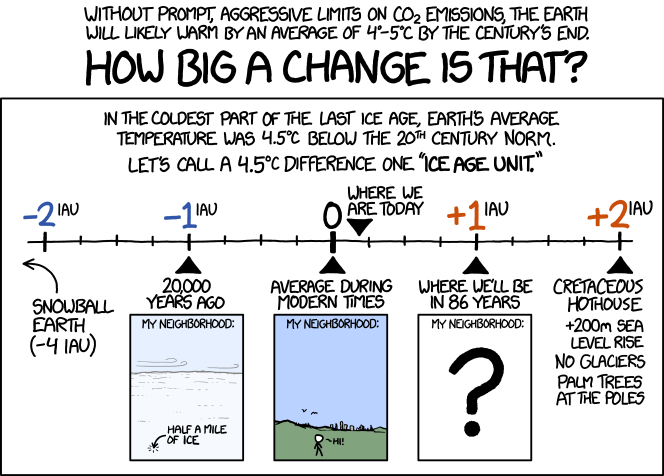
4.5 Degrees

The good news is that according to the latest IPCC report, if we enact aggressive emissions limits now, we could hold the warming to 2°C. That's only HALF an ice age unit, which is probably no big deal.
30 Jun 03:05

fuck rss

Joe Elliott

Whoa, did my RSS-related complaint to the author of 05/22/2014 inspire this comic?

Today on Toothpaste For Dinner: fuck rss


I NEED YOUR HELP: Please chip in $1 or more on Patreon and I can keep Toothpaste For Dinner updating daily, PLUS you'll get to see bonus comics & writing!