Didier “Ice” Iceman
Shared posts
Sur la Libye, le silence coupable des Africains
Didier “Ice” IcemanEuh et le notre on en parle?

Virus used in gene therapies may pose cancer risk, dog study hints
Didier “Ice” IcemanOn n'est pas sorti

Élections à Taïwan : le statu quo avec la Chine en danger ?
Didier “Ice” IcemanDanger imminent
Feu vert pour le gazoduc EastMed en Méditerranée, pied de nez à la Turquie
Didier “Ice” IcemanToujours le même enjeu

Vaccination coverage in HCM City reaches 95 per cent
Didier “Ice” IcemanBonne nouvelle
 The percentage of fully vaccinated children covered under the expanded national vaccination programme in HCM City has reached 95.2 per cent so far this year, according to the Centre for Disease Control in HCM City.
Robot drone swarms could take the place of nukes
Didier “Ice” IcemanOn se détruira
With Donald Trump’s North Korea denuclearization policy seen as a failure and his loyalty to allies seriously questioned, there’s talk that South Korea and Japan might go nuclear in self-defense. But in fact, nukes are obsolete. Swarms are the new deterrent that can actually be used.
Suppose Kim Jong Un, his hand on the nuclear button, is preparing to occupy Seoul. Do you threaten to blow up Pyongyang? Or do you unleash mosquitoes trained to bite him ceaselessly until he can no longer control his fingers?
Imagine a missile a third the size of a telephone pole flying over a field of enemy tanks. A sensor flops open its belly and 60 independently targetable mines search out the tanks and destroy them. In almost any battlefield condition, swarms of such small independently maneuverable bombs can do the job of a tactical nuclear weapon.
These weapons already exist and can be tested without being detected or without violating any treaty. Next time you see Chinese drones in a synchronized light show, imagine how they might be used in anti-aircraft defense or anti-submarine warfare.
Swarms are surgical, produce less collateral damage and are not radioactive. Smart unmanned crawlers can breach the beach and destroy enemy infrastructure. So can malware, stealthily implanted. If you can bring the enemy’s economy to a standstill, you don’t need nukes.
The threshold of usage for swarms and malware are much, much lower than for nukes which could lead to mutually assured destruction, also known as MAD. So it is time to label the nuke a dirty 20th-century deterrent. It is as mindless as a suicide vest.
Talking about nukes today is like repeating the London Naval Conference of 1930 which limited the tonnage of battleships – right when battleships were becoming obsolete.
Recall that the German battleship Tirpitz hid in a Norwegian fjord during World War II, as did the Yamato in the Inland Sea until it went on a suicide mission to Okinawa. Those ships lost their days to swarms of carrier-borne planes – and now the unusable dumb sledgehammer that is a nuke is being replaced by swarms of little robots and malware implants.
Kim’s reliance on nukes and missiles will fail – without fail. Nukes and missiles have limited shelf lives. Submarines and submarine-launched ballistic missiles are expensive and their parts must be replaced constantly. Spending 20% to 24% of a country’s GDP on defense is simply unsustainable. Economically that is equivalent to a nation building hundreds of bridges to nowhere every year.
The Soviet Union played that game and lost. Russia’s economy is now smaller than Italy’s. Although Vladimir Putin boasts of a slick new super-fast missile, basically Russia is now reduced to relying on polonium pellets and nerve killers carried in perfume bottles.
Back to North Korea: It takes time, but maximum pressure works. It works because it narrows the margin of error for a regime and when you are vastly overspending on defense, it is simply a matter of time. The time factor is especially critical when there is no guarantee of legitimacy for the family business.
South Korean President Moon Jae-in is not the only one thinking about the post-US landscape. Everyone is. Whether Trump wins a second term or not, every nation – think Australia, Germany, Japan, Poland, Taiwan, the UK – is now rethinking its relationship with the US. If Trump could happen once, “it” could happen again.
But we could say the same thing about China or Russia or India. If and when Beijing can no longer exchange income growth for political silence – and that is always a matter of when, not if – what will be the consequences? Will people look back to Hong Kong today and Tiananmen Square yesterday or – totally unthinkable at this point, yes, but – could they be inspired by the Uighur resistance movement?
Restore and keep up maximum pressure on Kim. Those who say it does not work should read about the bitterly cold December of 1991, when Moscow sought out US aid in the form of unused rations from the Gulf War. (The USSR lasted from Dec. 1922 to Dec. 1991 or 69 years; that is less than this writer’s age.)
Let North Korea spend over 20% of its GDP on figurative bridges to nowhere. Narrow its margin of error to a razor’s edge, and let it make mistakes. But make sure the children are fed.
Des vies plus précieuses que d'autres
Didier “Ice” IcemanEst ce nouveau ? Non. Cynique ? Oui
Show of seapower by China, Russia, Iran starts
Didier “Ice” IcemanC'est beau la paix
China, Russia and Iran will hold joint naval drills starting Friday in the Gulf of Oman, Beijing said, at a time of heightened tensions since the US withdrew from a landmark nuclear deal with Tehran.
Set to take place from December 27 to 30, the military exercises aim to “deepen exchange and cooperation between the navies of the three countries,” Chinese defense ministry spokesman Wu Qian told reporters Thursday.
Wu said the Chinese navy would deploy its Xining guided missile destroyer – nicknamed the “carrier killer” for its array of anti-ship and land attack cruise missiles – in the drills.
But he did not give details on how many personnel or ships would take part overall.
The US reimposed crippling sanctions on Iran in May last year after withdrawing from the international deal aimed at tackling the Islamic Republic’s nuclear program, prompting Tehran to hit back with countermeasures.
Remaining parties to the badly weakened 2015 deal include China, Russia, Britain, France and Germany.
China’s foreign minister said the exercises are part of “normal military cooperation” between the three countries.
In June, US President Donald Trump authorized a military strike after Iran shot down a US drone, only to call off the retaliation at the last moment.
– AFP
YouTube ‘censors’ cryptocurrency content
Didier “Ice” IcemanLa concurrence
Crypto YouTubers have had their holiday spirits dampened by censorship, according to reports.
The sudden action by the video platform, which is considered a vital source of information about the new technology and market activity, has alarmed crypto personalities.
It’s a public fact that the Google-owned company has certain restrictions when it comes to the content uploaded to individual channels that, over the years, has become increasingly stringent. Content that is explicitly breaking advertiser-friendly guidelines is a big no-no, IBT reported.
Then there’s the demonetization element too for uttering swear words on videos that left most content creators at sea until a guide that YouTube published this year offered more clarity.
But what’s entirely out of the blue was the sudden restricting and deleting of videos containing crypto-related content.
In a tweet published on December 23, Chris Dunn – a crypto YouTuber with 210,000 subscribers and almost 7.5 million channel views – claimed:
“@YouTube just removed most of my crypto videos citing “harmful or dangerous content” and ‘sale of regulated goods’… it’s been 10 years of making videos, 200k+ subs, and 7M+ views. WTF are you guys doing @TeamYouTube?!”
.@YouTube just removed most of my crypto videos citing "harmful or dangerous content" and "sale of regulated goods"… it's been 10 years of making videos, 200k+ subs, and 7M+ views. WTF are you guys doing @TeamYouTube?! pic.twitter.com/MPcKbBVrC4
— Chris Dunn (@ChrisDunnTV) December 23, 2019
In a separate tweet on December 23, crypto education channel Node Investor wrote:
“Merry Christmas to you also @YouTube. Apparently a video I posted two years ago on researching crypto’s is now illegal…Rules are changing.”
Merry Christmas to you also @YouTube. Apparently a video I posted two years ago on researching crypto’s is now illegal…Rules are changing pic.twitter.com/GdGqR3RVOw
— Node Investor (@NodeInvestor) December 23, 2019
Strike action
Dunn said he was served with a “strike” action against at least seven videos, each of which have been designated as “harmful or dangerous content,” Cointelegraph reported.
These videos’ titles include “50 Crypto Trading & Investing Lessons from the Past 5 Years,” “Is Bitcoin Really Money?” and “The Future of Initial Coin Offerings.”
A “strike” against a channel prevents the YouTuber from uploading, posting or streaming content for one week. A second strike extends this restriction to a two-week period, while a third within any 90-day period results in the permanent removal of the channel, YouTube informed Dunn in a notification.
Node Investor’s tweet reveals a similar notification – apparently pertaining to just one video – indicating that the content has been removed due to a violation of the platform’s “sale of regulated goods policy.”
Cybersecurity
YouTube does not ostensibly restrict legitimate crypto-related content, but cybersecurity researchers have recently detected abuses of the platform for the purposes of spreading cryptojacking malware, the Cointelegraph report said.
Once blanket-banned on Facebook, Google and Twitter, restrictions on blockchain-related advertisements have now gradually been lifted, and some provisions have been introduced to make the policy more nuanced and permit most forms of crypto-related content, except for misleading ads.
Bornes de recharge : presque 30 000 points en France, mais très peu en charge rapide
Didier “Ice” IcemanRecharge pourrie pour pas de transition
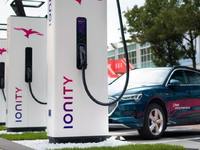 La situation des bornes de recharge en France s'améliore, mais la proportion des bornes de charge rapide ne progresse pas. Actuellement, il y a un peu moins de 30 000 bornes dans l'Hexagone, mais tout juste 10 % au delà des 22 kW, ce qui est très peu.
En Allemagne, de plus en plus de “semaines sans week-end”
Didier “Ice” IcemanAvenir de merde

Reconsidérer le « bien vieillir »
Didier “Ice” IcemanUne bonne question
The Netflix decade: How one company changed the way we watch TV
Didier “Ice” IcemanDecenie pourrie

Erdogan s’invite encore un peu plus dans le chaos libyen
Didier “Ice” IcemanUn bien ou un mal

Lebanon leader to name Hezbollah-backed Diab as PM
Didier “Ice” IcemanLa cata
Crisis-hit Lebanon’s president said Thursday he would name academic and former minister Hassan Diab, backed by Shiite movement Hezbollah, as the country’s new prime minister, ending nearly two months of political wrangling.
The little-known 60-year-old engineering professor at the American University of Beirut (AUB) replaces outgoing premier Saad Hariri amid nationwide anti-government protests and the worst economic crisis since Lebanon’s 1975-1990 civil war.
He was thrust forward as a candidate with the backing of parliamentary blocs affiliated with Shiite movements Hezbollah and Amal as well the Free Patriotic Movement (FPM), founded by Christian President Michel Aoun.
But he did not receive the backing of Sunni blocs or their own Christian allies.
His nomination will yield a lopsided government that observers warn could fuel sectarian tensions and complicate efforts to secure international aid needed to pull Lebanon back from the brink of default.
“After binding parliamentary consultations… the president has summoned… Hassan Diab to appoint him to form a government,” the presidency said in a statement after the twice-delayed talks on Thursday.
Aoun launched had launched the talks Thursday and met with all parliamentary blocs before naming the new premier.
Hariri pulled out of the race on Wednesday and his bloc did not nominate its own candidate for prime minister.
‘The only option’
Hariri resigned seven weeks ago under pressure from an unprecedented wave of protests demanding a complete overhaul of the political system, leaving the country without a government to tackle its worst ever economic crisis.
The 49-year-old Sunni leader had in recent days been seen as likely to head a technocrat-dominated government, but he announced late Wednesday he was pulling out.
Lebanon has been ruled by the same political clans and families since the 1975-1990 civil war.
But demonstrators from all sects have protested every day since October 17 to demand the removal of the entire political leadership – seen as corrupt and incompetent – and its replacement with a technocratic government.
“I have strived to meet their demand for a government of experts, which I saw as the only option to address the serious social and economic crisis our country faces,” Hariri said in a statement.
But, he added, his rivals’ staunch opposition to his plan for a technocratic government forced him to bow out.
A career academic, Diab held the education portfolio from 2011 to 2014 in a government formed after Hezbollah brought down a previous Hariri cabinet.
A power-sharing system enshrined after the end of the civil war means that the prime minister’s position should be filled by a member of the Sunni Muslim community.
As the leading Sunni representative, the premier is usually backed by the community’s main leaders.
But Lebanon’s heavyweight Sunni politicians stopped short of backing Diab, raising fears that the next government will be polarized and unable to tackle urgent reforms demanded by protesters and the international community.
‘Sunni-Shiite schism’
Imad Salamey, a political science professor at the Lebanese American University, said Diab’s appointment will only “deepen” Lebanon’s crisis.
It will mean “the coming government will be dominated by Hezbollah [and its allies] without political cover from Hariri and the Sunnis,” he told AFP.
“This will drive Lebanon towards a Sunni-Shiite schism and drown the revolution in sectarian discourse.”
Diab, who is not politically affiliated and little known to the public, describes himself on his website as “one of the rare technocrat ministers since Lebanon’s independence”.
But it remains to be seen how protesters will react to his appointment.
Three days after the start of the anti-government protests, he called them a “historic and awe-inspiring scene.”
“The Lebanese people have united to defend their rights to a free and dignified life,” he wrote on Twitter.
Turkey rewrites rules in Eastern Mediterranean
Didier “Ice” IcemanUne ambition manifeste
Turkey’s parliament recently signed a comprehensive security and defense cooperation memorandum of understanding with Libya, which some fear could lead to a military confrontation between two factions in the country.
The approval on Saturday by the foreign relations commission of the Turkish parliament for the recently-signed comprehensive security and defense cooperation MoU with Libya has fuelled alarmist predictions that a military confrontation is looming with Libyan renegade general Khalifa Haftar, who announced only last week a “decisive battle” to capture Tripoli from the UN-backed Government of National Accord led by Prime Minister Fayez al-Sarraj.
But President Recep Erdogan’s unfolding grand project in the East Mediterranean, his riskiest ever, is principally aimed at strengthening Turkey’s independent and self-sufficient foreign policies. There is a national consensus in Turkey over it.
Israel is probably the only regional power which understands this. Israel’s official Kan radio made a seemingly innocuous disclosure on December 15 that “Ankara has expressed its willingness to enter into negotiations with Jerusalem on transferring Israeli gas supplies to the European continent through Turkish territory.”
“A high-ranking Turkish energy source has conveyed a message in this regard to Israel, explaining that his country is waiting for the formation of a stable government in Israel and the appointment of a new energy minister to discuss this issue,” the Israeli report added.
Interestingly, Ankara highlighted the Israeli disclosure within hours via the Anadolu state news agency. A high-stakes game is unfolding with potentials that go far beyond the Libyan warlord supported by Russia, Egypt, the UAE and Saudi Arabia.
Turkey’s support
Indeed, this is not to rule out a Turkish intervention in Libya. Sarraj passed through Istanbul on December 12 where he met Erdogan, who said later: “Al-Sarraj is the legitimate leader and Haftar is not. He has not been recognized internationally.”
Erdogan went on to express Turkey’s readiness to offer “all necessary support to Sarraj.” He repeated that Ankara could send military personnel to Libya once a request came from the GNA.
From Istanbul, Sarraj proceeded to Doha where he was received by Qatari emir Sheikh Tamim bin Hamad Al Thani on the same day. The emir also assured Sarraj of support in the “security and economic fields for efforts aimed at restoring security and stability in Libya.”
Turkey and Qatar move in tandem in regional politics and are, no doubt, in a joint venture to stall Haftar’s offensive on Tripoli, which is backed by Egypt, Saudi Arabia and the UAE. But that sideshow is not to be confused with the main thrust of Turkey’s pro activism in Libya – geopolitics of the East Mediterranean.
The US Geological Survey had estimated as far back as in 2010 that the natural gas reserves in the Levant Basin were in the region of 122 trillion cubic feet and pegged the recoverable reserves in the Nile Delta Basin at 223 trillion cubic feet – with distinct prospects that there’s more to be found.
Last year, the East Mediterranean Gas Forum came into being, comprising Cyprus, Israel, Egypt, Greece, Jordan, the Palestinian Authority and Italy, with US and EU support. The proposed EastMed Pipeline is a US$7.36 billion underwater natural gas pipeline project that will ship gas from Israeli and Cypriot fields across Cyprus and Greece to inter-connector terminals in Italy.
Maritime boundaries
Unsurprisingly, Turkey refuses to accept its exclusion from these profound regional developments. Turkey’s pledge of security support for Sarraj can be seen as quid pro quo for his agreement with Ankara last month demarcating an 18.6-nautical mile (35-kilometer) line that will form the maritime boundary separating the two countries’ economic zones.
To connect the dots, the Turkey-Libya deal on a maritime boundary implies in turn that any gas pipeline from the eastern Mediterranean will have to pass through Turkey’s Exclusive Economic Zone.
Now, one may endlessly quibble over the legality of the Turkish-Libyan maritime agreement, but Ankara holds the cards to block the EastMed Pipeline and force its sponsors to return to the abacus.
It may seem Turkey is playing the role of ‘spoiler,’ since it has no relations with Cyprus, is traditionally inimical toward Greece and has chilly relations with Egypt and Israel. Besides, Ankara is also pushing back at the US and the EU on various fronts and the discord over Libya (East Mediterranean Gas Forum) adds spice to it.
However, there is a big picture, as the Turkish offer to negotiate with Israel signals. Ankara has hinted that the mending of ties may become possible and discussions over a ‘win-win’ gas pipeline project can provide a good start.
It is no secret that Turkey, which is energy-deficient, aspires to become the regional hub for gas transportation to Europe. There shouldn’t be any conflict of interests on that score between Turkey and Israel. The Tamar and Leviathan fields off Israel’s coast are estimated to have 11 and 22 trillion cubic feet of gas reserves respectively, while Egypt’s Zohr field has another 30 trillion cubic feet.
Regional influence
Of course, it is up to Israel to assess how far pivotal its nascent alliance with Greece and Cyprus could be in its geo-strategies, although Washington has been promoting it to punish Turkey for its deepening relations with Russia.
Erdogan is embarking upon the most audacious foreign-policy project of his presidency so far by rewriting the rules in the Eastern Mediterranean. Call it ‘neo-Ottomanism’ or whatever, he aims to mitigate Turkey’s present isolation and restore its sweeping regional influence.
Erdogan is beginning with the least problematic of today’s ‘adversaries’ to promote a geopolitical realignment with enduring economic underpinnings – Israel. Clearly, Turkey’s dalliance with Libya goes much beyond a struggle with the Egypt-Saudi-Emirati troika over the Muslim Brotherhood’s destiny.
But Erdogan’s pathway is strewn with heavy boulders. The rivalries in this region are both historical and topical. Greece and Cyprus are intensely aware of Ankara’s claims in the Aegean Sea and on Cyprus and certain Greek islands and react sharply if the old foe flexes its muscles. And they are EU member countries.
In principle, Turkey’s constructive engagement of Israel ought to be a matter of satisfaction for Washington but in this case, there are caveats.
As US Defence Secretary Mark Esper remarked last week at the Reagan National Defense Forum, Washington also has overarching “concerns about Turkey’s direction that they may be spinning out of the NATO orbit.”
Meanwhile, Russian President Vladimir Putin is planning to visit Israel next month and Gazprom has long-standing plans for developing and marketing Israel’s gas reserves. And Russia is Turkey’s principal provider of energy – by far.
Australia has its hottest day on record
Didier “Ice” IcemanTout va bien
Australia this week experienced its hottest day on record and the heatwave is expected to worsen, exacerbating an already unprecedented bushfire season, authorities said Wednesday.
The average nationwide temperatures of 40.9 degrees Celsius, or 105.6 degrees Fahrenheit, on Tuesday beat the previous record of 40.3 degrees Celsius in January 2013, the Bureau of Meteorology said.
“This heat will only intensify further today,” meteorologist Diana Eadie said.
The heatwave is another alarm bell about global warming in Australia, where this year’s early and intense start to regular summer bushfires has heaped pressure on the Australian government to do more to tackle climate change.
Hundreds of bushfires have been raging across Australia for months, including a “mega-blaze” burning north of Sydney, the country’s biggest city.
Smoke from the fires has engulfed Sydney, raising air pollution to levels so hazardous that leading doctors have labeled the event a “public health emergency.”
At least three million hectares, or 7.4 million acres, of land has been torched across Australia, with six people killed and about 700 homes destroyed.
Scientists say the blazes have come earlier and with more intensity than usual due to global warming and a prolonged drought that has left the land tinder dry and many towns running out of water.
The fires have sparked climate protests targeting the conservative government, which has resisted pressure to address the root causes of global warming in order to protect the country’s lucrative coal export industry.
Record heatwave
Record spot temperatures were recorded this week in Western Australia, where firefighters have also been battling blazes raging across thousands of hectares of land.
The hot weather then began drifting across the country’s arid center toward the heavily populated eastern states, where most of the bushfires have raged.
Parts of the eastern state of New South Wales, of which Sydney is the capital, were forecast to reach the mid-40s Celsius, or about 110 Fahrenheit, on Thursday.
On Saturday parts of Sydney are forecast to tip over 46 degrees Celsius.
Turbulent winds of up to 100 kilometers an hour are forecast to also hit the east coast at the same time and worsen the blazes.
“Over the next few days we are going to see firefighters, the emergency services and all those communities close to fires … challenged with a new threat,” New South Wales fire commissioner Shane Fitzsimmons said Wednesday.
Embers carried by the winds can travel up to 30 kilometers from a blaze, authorities said.
“We are going to have a number of fronts that are going to fuel, or escalate the fires burning, but also the potential to have spot fires and embers traveling very long distances,” NSW Premier Gladys Berejinklian warned.
On Wednesday police evacuated residents from dozens of homes in the coastal area of Peregian near the popular tourist hotspot if Noosa in the northeastern state of Queensland, as an out of control fire threatened properties.
“Fire crews and waterbombing aircraft are working to contain the fire but firefighters may not be able to protect every property,” Queensland Fire and Emergency services said.
“You should not expect a firefighter at your door. Queensland Police Service are door-knocking in the area. Power, water and mobile phone service may be lost.”
Prime Minister Scott Morrison last week made a rare admission that climate change was one of the “factors” behind the fires.
But he defended the government’s record on emissions reduction and failed to announce further measures to address the issue.
Climate protesters plan to march on Morrison’s official residence in Sydney this week to rally for change and highlight his absence as large parts of the country burn.
Morrison is holidaying at an undisclosed location overseas.
– AFP
Modern fishing methods are driving small whales and dolphins to extinction
Didier “Ice” IcemanPas une surprise

Résister à l'insécurité sociale
Didier “Ice” Icemansouvenir de 1995
Trump Jr., chasseur d’espèce menacée en Mongolie
Didier “Ice” IcemanSalopard

As epilepsy drugs fail nearly one-third of patients, scientists seek root causes of seizures
Didier “Ice” Icemanintéressant de reparler du modèle animal

‘Lupin III: The First’: A 3D animation with a nostalgic heart

Guess who has more CCTV cameras per capita?
Didier “Ice” Icemanles USA rattrapent
The reputation seems to be rightly deserved — Chinese citizens under the constant watchful eye of security cameras with facial recognition technology, able to recognize a face automatically.
Clearly, as a “security state,” they are the worst offenders? Well, not exactly …
While China is usually labeled as such, it’s been discovered that the United States actually has more closed-circuit TV (CCTV) cameras per capita than anywhere in the world.
According to a new report published by PreciseSecurity details, China leads the world in CCTV cameras with 200 million installed.
The US follows behind China with 50 million, then it drops down to Germany with 5.2, and then the United Kingdom with 5 million. Japan follows the UK closely with nearly 5 million cameras, Vietnam with 2.6 million, France with 1.65 million, South Korea with 1.03 million, and the Netherlands with 1 million.
What is most interesting, though, since China has such an overwhelming population, the US actually comes first place with the “highest number of CCTV cameras per person in the world” with 15.28 cameras per 100 people.
China follows closely behind the US with 14.36 cameras per 100 people, and then the UK comes in with just 7.5 CCTV cameras per 100 people. Other top 10 countries include Germany with 6.27 cameras per 100 individuals, Netherlands 5.8, Australia 4, Japan 2.72, France 2.46 and South Korea 1.99.
Eight of the top 10 cities with the largest number of CCTV cameras are located in China. The top three cities are Shanghai with 2,985,984 cameras, followed by Chongqing with 2,579,890 units and Shenzhen with 1,929,600 surveillance devices.
The top 10 includes Tianjin (1,244,160), Beijing (800,000), Guangzhou (684,000), London (627,707), Ji’nan (540,463), Wuhan (500,000) and New Delhi (179,000). These top ten cities have an average of 14.35 million citizens, which means they are large cities that must be controlled and surveilled.
India has reported data of 9 different cities that accumulate 274,784 surveillance cameras. New Delhi, Chennai, and Pune were the cities that reported the largest number of CCTV cameras with roughly 179,000, 50,000 and 11.29,000, respectively.
Meanwhile, cities that reported in the US included Chicago, New York, Atlanta, Washington D.C., San Diego, San Francisco, Boston, Houston, Philadelphia, Detroit, Miami, Dallas, and Los Angeles. Nonetheless, many other cities remained outside of the list.
Chicago had 35,000 cameras, followed by New York with 11,000 reported cameras, Atlanta with 7,800 and Washington D.C., 4,000.
According to the South China Morning Post, the omnipresence of surveillance in China is designed to monitor traffic, prevent petty theft in restaurants and supermarkets, and monitor public safety in parks and shopping malls.
China’s national surveillance system, called the Skynet Project, equipped the country with more than 20 million cameras dedicated to “live surveillance and recording” and millions more are expected to be added by 2020, according to a 2017 report by Chinese state media.
Local authorities have also deployed their own systems in certain areas, including kindergartens, restaurant kitchens, and even inside taxis. Research firm IHS Markit estimated that the country’s entire surveillance network had over 170 million cameras in use in 2017 and that the number next year would reach 600 million.

However, while countries are strengthening surveillance for security reasons, there has been resistance from citizens who feel that their privacy is being invaded, SCMP reported.
The American Civil Liberties Union has argued that although the US Constitution offers some protection against video surveillance searches conducted by the police, there are “no general, legally enforceable rules to limit privacy invasions and protect against abuse of CCTV systems.”
China’s surveillance system scans facial features of people on the streets from frames of video footage in real time, creating a virtual map of the face, The Guardian reported.
It can then match this information against scanned faces of suspects in a police database. If there is a match that passes a preset threshold, typically 60% or higher, the system immediately notifies officers.
Qiu Rui, a policeman in Chongqing, was on duty this summer when he received an alert from a facial recognition system at a local square. There was a high probability a man caught on camera was a suspect in a 2002 murder case, the system told him.
Three days later the police captured the man, who eventually admitted that he was the suspect.
Cases such as this, where facial recognition systems are used to help local police crack crime cases, are not unusual in the south-west China city, with 2,579,890 units.
Meanwhile, a Toronto-area businessman with close ties to Beijing is looking to implement the technology in Canada this month, prompting concern from privacy and human-rights activists.
Wei Chengyi, owner of the Foody Mart grocery chain, confirmed the company is considering introducing payment by Chinese-made facial recognition devices at its stores in Ontario and B.C., and suggests the firm is just moving with the times, The National Post reported.
The payment systems capture an image of the shopper’s face which is then linked to his or her account, enabling the person to make a purchase simply by looking into a camera — no card, cash or phone needed. It could be the first such use of the technology by a North American retailer.
Foody Mart is planning to buy the system from SnapPay, a Toronto firm that distributes Chinese payment gear from tech giants Tencent and Alibaba, Ryan Li, another company executive, told Yahoo Finance recently.
“If it has use in the market, our company will use it,” Wei told the National Post in an e-mail. “Because society moves forward and we will follow it.”
As honorary chair of the Confederation of Toronto Chinese Canadian Organizations, Wei is a longtime friend of China’s government.
But human-rights advocates say they’re worried that a pro-China entrepreneur is looking to bring the technology to Canada.
“Perhaps Mainland Chinese immigrants are attuned to this kind of payment, but I smell trouble ahead,” said Cheuk Kwan of the Toronto Association for Democracy in China. “I don’t want to sound alarmist, but this is another insidious and on-the-surface-innocent way China is slowly encroaching on our society.”
Les ventes de voitures électriques vont stagner en 2019 à l'échelle mondiale
Didier “Ice” Icemanha ha ha
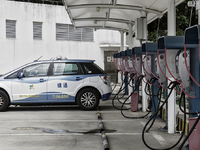 L'arrêt progressif des subventions pour l'achat de véhicules rechargeables en Chine a eu un effet immédiat : le ralentissement net des ventes à l'échelle mondiale. En 2019, les immatriculations de ces véhicules devraient stagner par rapport à 2018.
Nitrogen crisis from jam-packed livestock operations has ‘paralyzed’ Dutch economy
Didier “Ice” IcemanEn Hollande aussi

Aung San Suu Kyi risks image defending Rohingya genocide
Didier “Ice” IcemanChute et décadence
From democracy champion to defending Myanmar against genocide charges, the shock decision by civilian leader Aung San Suu Kyi to face the UN’s top court risks further damaging her image overseas and deepening the siege mentality at home.
“We stand with you,” proclaim billboards across Myanmar, sporting beaming portraits of the Nobel laureate as she prepares to face the International Court of Justice (ICJ) over the Rohingya crisis.
Suu Kyi’s supporters are printing off T-shirts, organizing rallies and even signing up to VIP tours to The Hague to offer their backing.
Political parties and even some rebel armed groups have also fallen over themselves to give their support, in a country where the Rohingya garner little sympathy and are widely regarded as illegal immigrants.
Yet overseas, particularly in the West and in Muslim countries, Suu Kyi’s reputation lies in tatters with multiple awards and even an honorary citizenship revoked.
Critics say “The Lady”, once lauded alongside Mahatma Gandhi and Nelson Mandela, has become an apologist for a murderous military intent on wiping out the country’s Rohingya Muslims.
The spectacle of Suu Kyi standing up in court on behalf of the nation might play well at home but she risks suffering a fatal blow to what remains of her international reputation.
“If she’s only going to use the visit to demonstrate defiance and continue to defend the indefensible, then it only widens the impasse,” Yangon-based analyst David Mathieson said.
‘Bad management’
On behalf of 57 Muslim countries, Gambia will call on the ICJ on December 10 to announce interim measures to prevent any further genocide by Myanmar.
The tiny, mainly Muslim West African state alleges Myanmar breached the UN’s Genocide Convention with its bloody crackdown against its Rohingya community two years ago.
Some 740,000 Rohingya fled into sprawling camps in Bangladesh, bringing with them accounts of widespread murder, rape and arson – violence UN investigators branded as genocide.
Myanmar says the operations were justified to flush out Rohingya militants and insists abuse allegations are under investigation by its own committees. Rights groups say those panels have only whitewashed the atrocities.
The UN team also accused Suu Kyi and her government of complicity in the violence — an astounding fall from grace for the one-time rights icon who endured 15 years of house arrest under the former military junta.
She has consistently dismissed criticism of Myanmar’s military, including the damning UN report, insisting the outside world simply does not understand the situation’s complexities.
A tacit acknowledgment at the World Economic Forum last year that “the situation could have been handled better” did little to quell criticism.
Politics or principle?
Observers are divided over why Suu Kyi is now throwing herself into the spotlight to defend the military.
Some say shielding the armed forces will bring concessions over reforms to the military-drafted constitution.
“There will be more negotiation and give-and-take between the government and the military,” predicted political analyst Maung Maung Soe.
Others suggest it is a political ploy ahead of elections next year, a vote-winner for Suu Kyi’s National League for Democracy (NLD).
“The majority of political parties suspect (the NLD) will benefit at the election,” Khin Yi from the opposition, military-affiliated USDP party said.
Even in the face of some voter disillusionment, a landslide NLD victory is widely expected – arguably rendering any gamble unnecessary.
Myanmar historian and writer Thant Myint U dismissed notions the move was simply political, saying Suu Kyi believes no genocide was carried out – the position taken by most of the country.
“I think she genuinely feels a great anger at what she sees as an unfair response from the outside world. I think she genuinely wants to have literally her day in court and make this argument,” he said at an event in Bangkok.
“I think she genuinely believes that there can be no one better to represent the country,” he added.
Only a trio of rebel armed groups – the MNDAA, TNLA and AA, themselves locked in battle with the military – have dared voice support within Myanmar for the genocide charges.
Yet even they could not bring themselves to use the loaded word “Rohingya”, referring to the persecuted minority in their statement with the pejorative term “Bengali”, which suggests they are from Bangladesh.
Aye Lwin from Yangon’s Islamic Centre of Myanmar said he thought Suu Kyi was doing the right thing by personally assuming responsibility and going to The Hague, where the full breadth of atrocities committed will be laid bare.
“It’s not about winning or losing. It’s about revealing the truth and correcting an injustice.”
– AFP
Cyclos to be banned in Hà Nội
Didier “Ice” Icemanla fin d'un monde

Three-wheeled vehicles may soon be banned in Hà Nội. The Hà Nội People’s Committee announced in a recent statement that the new rule would increase road safety and support efforts to improve air quality in the capital.
Une fracture automobile se développe progressivement
Didier “Ice” IcemanUne fracture des transports
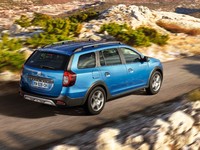 Selon les résultats de l'Observatoire Cetelem, une fracture automobile s'installe progressivement dans le pays entre les citadins et les ruraux, entre les jeunes et les plus âgés. Autre enseignement intéressant de l'étude : une large majorité de Français se voit avec une voiture dans dix ans.
Un extrait du discours de Victor Hugo contre la pauvreté prononcé le 9 Juillet 1849 à l’assemblée.
Didier “Ice” IcemanVisionnaire

« Vous venez, avec le concours de la garde nationale et de l’armée, avec le concours de toutes les forces vives du pays, de raffermir l’État ébranlé. Vous avez sauvé la société régulière, le gouvernement légal, la paix publique, la civilisation. Vous avez fait une chose immense. Eh bien, vous n’avez rien fait, non.
Messieurs, vous n’avez rien fait, tant que l’ordre matériel raffermi n’a pas pour base l’ordre moral consolidé : vous n’avez rien fait tant que le peuple souffre, tant qu’il y a au-dessous de vous une partie du peuple qui désespère, tant que ceux qui pourraient travailler, et demandent à travailler, ne trouvent pas de travail, tant que ceux qui sont vieux et ne peuvent plus travailler sont sans asile ; vous n’avez rien fait tant que l’usure dévore nos campagnes. Tant qu’on meurt de faim dans les villes ; vous n’avez rien fait tant qu’il n’y a pas de lois évangéliques qui viennent en aide aux familles honnêtes, aux bons paysans, aux gens de cœur ; vous n’avez rien fait tant que l’homme méchant, dans l’œuvre souterraine qui se poursuit encore, a pour collaborateur fatal l’homme malheureux. »