Didier “Ice” Iceman
Shared posts

Comprendre la crise politique en Malaisie
Didier “Ice” IcemanA suivre
Việt Nam vows to eliminate wildlife trade
Didier “Ice” IcemanEnfin
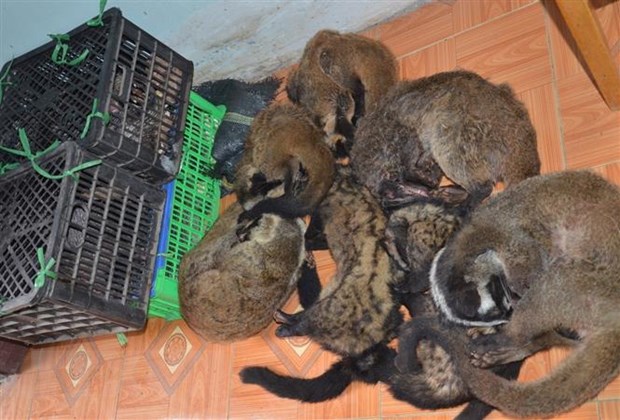
Director of the Centre for Natural Resources and Environmental Studies Trịnh Lê Nguyên talks to Vietnamplus online newspaper on Việt Nam’s efforts to eliminate the wildlife trade
Bolivia dismissed its October elections as fraudulent. Our research found no reason to suspect fraud. https://wapo.st/3cdo9NX
Didier “Ice” IcemanVrai
Bolivia dismissed its October elections as fraudulent. Our research found no reason to suspect fraud. https://wapo.st/3cdo9NX
What the EU should do now after parliamentary elections in Iran
Didier “Ice” IcemanPas faux

As widely predicted, conservative and hardline forces made sweeping gains in Iran’s parliamentary elections last week. Although divided into different factions, their combined lists will now control 76 percent of the seats in the Majles, with their reformist opponents reduced to only 7 percent, and independents another 12 percent.
Massive disqualifications of mostly moderate and reformist candidates by the Council of Guardians, an unelected vetting body, raised doubts among the voters about the fairness of the process. As a result, elections registered the lowest turnout since the establishment of the Islamic Republic — some 42 percent, according to official data. Significantly, the lowest turnout of all (26 percent) was in the capital city of Tehran, the center of Iran’s political life.
Low turnout came despite the consistent appeals by the Supreme Leader, Ayatollah Ali Khamenei, to electoral participation as means to bolster the Islamic Republic’s legitimacy. Although the outbreak of coronavirus may have had an impact on participation, the voters’ frustration with the system seems to be a far likelier explanation.
This rebuke, however, does not mean that the system is about to crumble. There is no evidence that Iranians are willing to compound their current woes with major and bloody disruption that a new revolution would bring. However hopeless many may feel about the prospects of reform, there is no credible alternative to the Islamic Republic in sight. The heir to the Pahlavi dynasty, the so-called “crown prince” Reza Pahlavi and Mojahedeen-e Khalk (MEK), a widely despised exiled cult, qualify as such only in febrile imagination of neoconservative schemers. Such grassroots opposition as there exists, like the association of “United Students,” both called for boycott of the elections and denounced the “corrupt monarchical opposition” on their Telegram channel.
This lack of alternatives means that the international community will have to deal with Iran as it is, not as it would like it to be. The task will become even more difficult if the conservatives, with wind in their sails, will succeed in capturing the presidency in the next year’s elections — the one institution of the state still controlled by the moderates around the President Hassan Rouhani. For all the divisions among the conservatives and focus on economic issues, it is safe to assume that their foreign policy will be more defiant towards the West. They will feel less compunction about abandoning the JCPOA for good and withdrawing Iran from the Nuclear Non-Proliferation Treaty (NPT), all this accompanied by more assertive regional posturing and more repressive domestic environment.
The E3 (France, Germany, Britain) and the European Union as a whole have particular responsibility to do their utmost to prevent such a scenario from materializing. The ascendancy of the conservative camp is not a natural outcome of organic political change in Iran. It is foremost a result of the Trump administration’s “maximum pressure” campaign against Iran. By foolishly violating the Iran nuclear deal and re-imposing sanctions against an agreement-compliant Iran, Trump undermined Iranian moderates. They are now under assault by the conservatives for giving up the country’s nuclear program while failing to secure the corresponding sanctions relief. Rouhani has little to show for his pragmatic outreach to the West.
Conversely, the E3/EU could provide some relief to the embattled moderates by giving them ammunition to argue that engagement with the West is still worth pursuing. There is an understandable Iran fatigue in Europe, as efforts to save the nuclear deal ruthlessly exposed the limits of its power. Nevertheless, the EU still has roughly one year before the next presidential elections in Iran, which it should use wisely.
First, INSTEX, the special trade mechanism designed to bypass the extra-territorial American sanctions, has to finally become operational. More countries joined it in addition to the original E3 — Belgium, Denmark and Norway, with Sweden, Finland and Netherlands expected to follow suit. This is a welcome sign of political confidence in the mechanism, but it would remain merely a gesture if not accompanied by real action. The current outbreak of coronavirus in Iran serves as a tragic reminder of an urgency of opening at least humanitarian trade channels.
Second, the E3/EU should raise its profile through bold high-level diplomatic engagement with Iran. The recent visits of the EU high representative for foreign policy Josep Borrell and the Dutch foreign minister Stef Blok to Tehran showed that the venues for dialogue are still open. Now these visits should be complemented by the E3, together with Borrell, as advised by experts such as Adnan Tabatabai from the Germany-based CARPO think-tank.
Third, the E3/EU should revive the consultation mechanism in the format of E3 + Italy, used to discuss regional security issues with Iran, particularly Yemen. Following the UK’s formal withdrawal from the EU, Spain should be included in this format to reinforce the EU side. The talks should be extended to other crises in the region, and include maritime security in the Hormuz straits, relations with Saudi Arabia, the situations in Syria, Lebanon, and Iraq, and prospects for peace in Afghanistan. The European side should engage with Iran on its Hormuz Peace Endeavour (HOPE), which overlaps with the ideas expressed by Borrell on the need for regional approach to de-escalate tensions in the Persian Gulf. Such an engagement would not require any new institutional build-ups as the framework of the High Level Political Dialogue, launched after the conclusion of the Iran deal, already provides for it.
Fourth, the EU should engage with the new Iranian parliament. Lumping all conservatives together, ignoring genuine differences between them, is not helpful. For example, Mohammad Bagher Ghalibaf, a former mayor of Tehran and perennial presidential candidate, has occasionally displayed a pragmatist streak. He is now touted as a possible new speaker of the chamber. Institutions like the European Parliament accrued significant experience in inter-parliamentary diplomacy, and it should be further used to take political temperature in Tehran.
These steps will not endear the EU to the current American administration that seeks to isolate Iran. Yet, if ever there was an occasion to beef up the narrative of the EU as a global player, the Iranian case presents clear opportunity. The time has come for the EU to act.
This article reflects the personal views of the author and not necessarily the opinions of the S&D Group and the European Parliament.
The post What the EU should do now after parliamentary elections in Iran appeared first on Responsible Statecraft.
Pas Sage En seine 2020 - Aider au lieu de parler

A l'origine de ma réflexion
Tout est parti d'une série de message publié par Nina LaPalice sur le réseau social Twitter, il y a quelques temps déjà (fin août 2019). Nina évoquait son travail de Coorganisatrice de la Nextcloud Conf. En résumé, Nina disait "Inviter des femmes à faire des conférences, les hommes proposeront de toutes façons des sujets".
Pour la version longue, je vous invite à lire
les différents twitts enchainés (un thread) de Nina aka NLaPalice sur Twitter.
Et pour celles et ceux qui ne veulent pas aller sur Twitter, au cas où ce serait effacé etc. je cite une partie des messages.
Depuis quelques années, je tiens le discours suivant : si vous voulez améliorer votre équilibre hommes/femmes pour une conférence ou un poste ou autre, ne demandez qu'à des femmes. Rassurez-vous, vous aurez toujours des hommes à la fin. J'ai voulu tester ça pour la conf Nextcloud : je n'ai demandé, sauf une exception, qu'à des femmes. Croyez-moi ou pas, à la fin, on est à quasi 50/50 en termes de personnes qui interviennent. J'ai beau l'avoir dit, le vivre reste un sacré choc. Pour les raisons, c'est assez simple : c'est moi qui étais en charge de contacter les speakers. Mais toutes les personnes qui se sont spontanément manifestées étaient des hommes, et on les a retenus quand les sujets étaient intéressants. Sur une des tables rondes, toutes les suggestions qu'on m'a faites étaient également masculines. Je ne suis pas à Berlin donc je ne connais pas les personnes à inviter sur certains sujets. Bref. Du coup, ravie d'avoir contacté uniquement des femmes directement, les sujets sont super stylés et j'ai hâte ! Bref, been there done that, je continuerai à appliquer ça pour mes prochaines sélections. D'une part parce que ça paie, d'autre part parce que ça fait un programme beaucoup plus intéressant à la fin : tous les sujets pas retenus, c'était parce que c'était du vu revu rerevu. (Ne me faites pas dire ce que je n'ai pas dit : les hommes sont tout à fait capables de proposer de bons sujets de conf. Mais ils prennent tellement de place sur la scène tech/privacy que je suis capable de réciter la quasi totalité des conférences que les “grands noms” proposent).
L'appel à conférence de Pas Sage En seine
Pas Sage En seine ?
Le festival Pas Sage En seine est un rendez-vous annuel de la région parisienne qui vient de fêter ses 10 ans déjà.
Lieu incontournable du milieu hacker à ses débuts, il a toujours eu pour vocation d'amener les citoyens de tous horizons à se réapproprier la société en bidouillant le système. Initialement axé numérique, il s'est ouvert au fur et à mesure des éditions et traite aujourd'hui de sujets aussi variés que la politique, la justice, l'alimentation, les médias, la littérature, les sciences, les arts, le journalisme, le divertissement, l'inclusivité, l'accessibilité, le handicap… L'entrée est libre et gratuite afin d'être accessible au plus grand nombre, sans discrimination de ressources. Le thème de l'édition 2020 est : Bidouille, écologie & démocratie.
L'appel à participation est en cours et jusqu'au 16 avril 2020, il est possible de proposer des conférences et des ateliers, via le lien https://participer.passageenseine.fr/
Ma proposition
Pas Sage En seine , cela fait plusieurs années que j'y vais. Et plusieurs années que j'y propose et fais ensuite une conférence. Vous me voyez venir ? ;)
Je pensais proposer une conférence sur Nextcloud, je ne le ferai pas. Cette année, au lieu de parler moi, je voudrais accompagner / aider quelqu'un.e qui voudrait se lancer en donnant une 1ère conférence sur ce sujet. Le prérequis est donc de vouloir parler de Nextcloud, et d'avoir un peu de temps pour préparer ça de façon asynchrone et à distance.
Si tu es intéressé.e. par cette idée, et que tu penses que je peux t'apporter mon expérience, mes conseils etc. pour t'aider à te lancer à ton tour, pour faire une première conférence en public, contactes moi et nous verrons alors ce que nous pouvons faire / comment nous organiser.
INFO -Précarité pr les agriculteurs, mais pas pr les cadres de la #FNSEA. L'ex-DG est rémunérée 14.900€ brut par mois pr un poste de «conseillère» [3jrs par semaine], l’équivalent de ce que touche en moyenne un exploitant agricole en 1 an. (Mediapart) https://www.mediapart.fr/journal/france/190220/la-fnsea-le-train-de-vie-hors-sol-des-dirigeants?page_article=1 …

 INFO -Précarité pr les agriculteurs, mais pas pr les cadres de la #FNSEA. L'ex-DG est rémunérée 14.900€ brut par mois pr un poste de «conseillère» [3jrs par semaine], l’équivalent de ce que touche en moyenne un exploitant agricole en 1 an. (Mediapart) https://www.mediapart.fr/journal/france/190220/la-fnsea-le-train-de-vie-hors-sol-des-dirigeants?page_article=1 …
How long can Russia and Turkey cooperate amid a myriad of conflictual hazards?
Didier “Ice” IcemanUne bonne question

There are two story lines about the Russian-Turkish relationship that have been circulating in the past few years. One is that the leaders of these two states, Vladimir Putin and Recep Tayyip Erdogan, have become increasingly close as a result of their resentment of American and European policies as well as their determination to thwart them. The other is that Moscow and Ankara are increasingly at odds over important issues such as Syria and Libya. The question, then, is will the impressive cooperation that Putin and Erdogan have achieved allow them to overcome their serious differences, or will their differences be so severe that they negatively impact both their willingness and ability to cooperate? Or will they somehow be able to maintain their current level of cooperation despite serious differences between them?
And those differences are serious, especially in Syria where the Russian-backed Assad regime’s determination to retake Idlib from the Turkish-backed Syrian opposition there is now coming to the fore. What Ankara fears is that if the Assad regime retakes Idlib, a flood of refugees will stream north into Turkey where Ankara is already struggling to support previous waves of refugees from the Syrian civil war that has been going on since 2011. Further, if the Assad regime retakes Idlib, it may then seek to retake areas further north that Turkey now has influence over, such as Afrin. Conflict between Turkish and Assad regime forces involving Russian personnel has already occurred and could grow worse. A similar dynamic may be developing in the conflict between Libya’s U.N.-recognized government and General Khalifa Haftar in which Turkey is aiding the former and Russia (via private military contractors) is helping the latter.
The fact, though, that Putin and Erdogan have established an impressive degree of cooperation over the past few years, raises the possibility that they will be able to contain, if not completely overcome, their serious differences in Syria and Libya. The rebound in their relations less than a year after the low point they reached in November 2015 when Turkish forces shot down a Russian military aircraft suggests that Putin and Erdogan may be able to overcome other differences as well. Erdogan’s belief that America and Europe supported the attempted coup against him in July 2016 while Putin supported him aided this earlier rapprochement greatly.
But can their sharing of grievances against the West allow Putin and Erdogan to overcome their current differences as occurred in 2016? The problem is that while each objects to American and Western policies, they do not object to the same ones. Putin is angry with the West over its economic sanctions against Russia over its annexation of Crimea and other actions in Ukraine. But while Erdogan has not joined this Western campaign against Russia, he does not support what Putin has done in Ukraine either. Similarly, while Erdogan is incensed with the U.S. for supporting Syrian Kurdish forces whom he sees as allied to the Kurdish opposition inside Turkey, Moscow reached out to the Syrian Kurds and offered to mediate between them and the Assad regime after U.S. President Donald Trump announced that he was going to withdraw American forces from northeastern Syria.
In the Middle East’s various conflicts, Moscow’s preferred approach is often not to completely side with one party against the other, but to try to maintain good relations with both. In Syria, for example, Moscow is largely content with helping the Assad regime control what for Russia is “useful Syria.” It is not crucial for Moscow that Assad regain lost territory in Idlib or elsewhere. Indeed, Moscow could live with Turkey having predominant influence in those areas near the Syrian-Turkish border either because of its fears about increased Syrian refugees or Kurdish influence. The problem, though, is that the Assad regime is not willing to live with Turkish influence is northern Syrian, and so is actively seeking to expel it.
Turkey would like Russia to restrain its Syrian allies, but Moscow has proved either unwilling or unable to do so. Indeed, Moscow may feel compelled to support the Assad regime’s actions for fear either of losing influence to Iran, or worse, risking Syrian government forces being defeated by Turkish and Turkish-backed Syrian forces. At best, this could end Moscow’s hopes to pacify Syria sufficiently to attract outside economic investment from the Arab Gulf and even the West that Moscow hopes (however unrealistically) to encourage. At worst, an Assad regime setback could lead to revived opposition against it more generally which Moscow does not wish to see.
In Syria in particular, then, the differences between Moscow and Ankara are over high stakes issues for both sides. And it is not at all clear that common antipathy toward American and European policies will be able to help Putin and Erdogan overcome them this time.
The post How long can Russia and Turkey cooperate amid a myriad of conflictual hazards? appeared first on Responsible Statecraft.
Sudan agrees to hand over Bashir
Didier “Ice” IcemanA suivre, sudan
In Sudan’s sprawling Camp Kalma, people who fled the Darfur conflict are overjoyed at a pledge by the country’s new authorities to finally deliver ex-president Omar al-Bashir to the International Criminal Court.
Bashir, who was deposed in April 2019 following mass protests, has for the past decade flouted ICC arrest warrants on charges of genocide and war crimes in the ravaged Darfur region of western Sudan.
Sudan’s transitional authorities agreed last Tuesday to transfer him to stand trial before the court based in The Hague.
“There was rejoicing across the camp after people heard Bashir is being handed over to the ICC,” 65-year-old Adam Ali, a longtime resident of Kalma camp in Nyala, capital of South Darfur state, told AFP.
Darfuris and rebel groups have repeatedly demanded Bashir be handed over to the ICC over alleged war crimes in a conflict which according to the United Nations left 300,000 people dead and displaced 2.5 million others.
Local community leader Yaqoob Mohamed said the decision was “a victory for the victims” and would go a long way towards “rebuilding trust” with the leadership in Khartoum.
Hundreds of thousands of those displaced by the conflict that broke out in 2003 in Darfur, a vast region made up of five states, still live in camps and remain dependent on aid provided by the UN and other international organisations.
The conflict erupted when African minority rebels rose up against Bashir’s Arab-dominated government in Khartoum, which they accused of marginalizing the region.
To crush the rebellion, Bashir’s government unleashed an armed militia of mostly Arab nomads known as the Janjaweed, who have been accused by rights groups of “ethnic cleansing” campaigns and widespread rape.
Thousands of the militiamen were later incorporated into Sudan’s paramilitary Rapid Support Forces, led by commander and current political powerbroker Mohamed Hamdan Dagalo, who is known as Hemeti.
‘Great relief’
The decision to surrender Bashir to the ICC came after protracted talks between rebel groups, including from Darfur, and Sudan’s ruling body, which took power after Bashir’s ouster and arrest.
Three of his aides, including former defense and interior ministers, are also to be handed over to the court, although a timeframe has not yet been announced.
“If Bashir and his aides are not handed to the ICC, peace will never find its way to Darfur,” said Hassan Issac, another Darfuri living in Kalma.
Hassan Isaac Mohamed, a 72-year-old Darfuri, said he felt “relief” in the wake of a war that had decimated his family, killing his father and two brothers.
Government spokesman Faisal Mohamed told reporters on Wednesday that “details of how Bashir and others will be presented in front of the ICC will be discussed with the ICC and armed groups”.
Rights groups such as Amnesty International are pressing for a swift handover of the toppled strongman.
Since its creation in August, Sudan’s transitional government has been pushing to forge a peace settlement with rebel groups and to end conflicts across the country.
It has promised accountability and kept Bashir in Khartoum’s Kober prison on a string of charges including corruption.
In December, the veteran leader was sentenced to two years in a community reform centre over accusations of illegally acquiring and using foreign funds.
He was removed from power after street protests against his rule broke out in December 2018, triggering unrest that left dozens dead, hundreds wounded and thousands jailed.
“We were relieved when Bashir fell but now we feel like we can finally start to recover from the impact of war,” said camp resident Jamal Muhammed.
– AFP
Les avancées sur le moteur à explosion fortement réduite à cause du poids des véhicules depuis 40 ans
Didier “Ice” IcemanC'est vrai
 Le travail acharné de milliers d'ingénieurs pendant des décennies sur les moteurs thermiques n'a finalement guère fait progresser la consommation. La faute à une masse générale des automobiles en explosion, une surface frontale parfois démesurée et des aérodynamiques moins favorables.
Hezbollah ‘biggest winner’ of Lebanese collapse
Didier “Ice” IcemanPas une bonne nouvelle
The Lebanese Shiite movement Hezbollah will be the “biggest winner” of the country’s impending economic collapse, Lebanon’s former interior minister Raya al-Hassan warned this week in a wide-ranging interview with the Asia Times.
“Do you know who will be the biggest winners? Hezbollah. Because they’d be able to survive an economic collapse much more than anybody else,” said Hassan, speaking from the offices of the Western and Gulf-aligned Future Movement in downtown Beirut.
“I talk to them. They say we have our own systems, our own social safety nets. We have our own hospitals and our people can resist, in their psyche, much more than anybody else.”
Those systems have been impacted by US sanctions on Iran, but have not been broken, says Hassan, who served as Lebanon’s finance minister from 2009-2011. A Hezbollah official told Asia Times last May that the party has a “financial infrastructure that would keep it fully functional for around four to five years under sanctions on Iran.”
The US government under President Donald Trump has pursued what it calls a “maximum pressure” campaign against Iran and its Lebanese ally Hezbollah, a strategy encouraged by its regional allies Saudi Arabia and Israel.
A year before Trump took office, Saudi Crown Prince Mohammad bin Salman canceled US$4 billion in military and security aid to Lebanon, and has not looked back since.
Hassan disputes that the US-led pressure campaign is hurting its stated target in Lebanon.
“I have a question mark, frankly, on the US strategy – undermining the banking sector to put a pressure on Hezbollah. Hezbollah doesn’t use the banking sector!” she told Asia Times.
US Secretary of State Mike Pompeo, who has characterized Lebanon’s ongoing anti-corruption protests as an uprising against Hezbollah, has refrained from endorsing the new Lebanese government.
That government, composed only of Hezbollah and its allies, now risks overseeing the evaporation up of the country’s foreign-currency reserves, should it refuse to submit itself to the International Monetary Fund.

IMF ‘only option’
Lebanese Prime Minister Hassan Diab reiterated his pledge on Tuesday to court the “brotherly” nations of the oil-rich Persian Gulf region for urgent aid, but he has had no success doing so since taking office.
Hopes that energy-rich Qatar or the rival United Arab Emirates would offer substantial support have not come through.
“The Europeans may have been coaxed into providing some funding, but I think the Americans are putting some pressure on them,” Hassan said.
While Lebanon’s central bank governor Riad Salameh has assured the public there remain $30 billion in foreign-currency reserves, the amount of usable reserves likely stands at roughly $10 billion.
With 6 million people, a third of those Syrian and Palestinian refugees, living within its borders, Lebanon requires some $5 billion in US dollars each year to import its most basic needs of oil and gas, medicine, and wheat.
“If no fresh money comes in, probably the foreign reserves would dry up in a year,” Hassan told Asia Times. “There is no likelihood to get money from the outside.”
With dollars running out, she concluded: “We don’t have any other option except an IMF program.”
Nabih Berri, the head of the Hezbollah-allied Amal party in control of the Finance Ministry, has signaled he will back negotiations with the IMF over Lebanon’s debt, an undertaking the Argentine president recently likened to player poker.
According to a Wednesday report in Lebanese daily Annahar, Berri told visitors Lebanon must “send a message abroad, to the Americans in particular – as they are the most influential actor in the IMF – that Lebanon needs ‘technical’ assistance from the Fund to come up with a rescue plan.”
At the same time, Berri reportedly cautioned that Lebanon must not “hand over its affairs” to the fund, as austerity measures like those placed on its Mediterranean neighbor Greece by the European Union would be crushing.
Lebanon’s ongoing protest movement was famously sparked on October 17 by a planned tax on the messaging service WhatsApp, which serves as the de facto phone plan of the poor and middle class.
Hezbollah has yet to announce its position on a potential IMF rescue plan, a spokeswoman told Asia Times on Tuesday, declining to say whether it had decided its position or not.
IMF spokesman Gerry Rice late on Wednesday indicated that the Lebanese government had sought its “technical advice.”
“Today the #Lebanese authorities requested our technical advice on the macroeconomic challenges facing the economy. IMF stands ready to assist Lebanon. Any decisions on debt are the authorities’, to be made in consultation with their own legal and financial advisors,” he tweeted.
The nationwide economic situation has meanwhile become increasingly dire, with salaries being slashed and people losing jobs.
Banks have for months enforced arbitrary, and increasingly rigid, capital controls on dollars accounts and international transfers, leaving hospitals in crisis and businesses bordering on a standstill amid rising inflation.
On Tuesday in the northern city of Tripoli, the dollar was trading for 2,200 Lebanese pounds at black-market exchange offices, marking a roughly 50% depreciation for the local currency in less than six months. The official exchange rate is 1,507.5 pounds to the dollar.
Lebanese traders are until now selling goods in local currency, exchanging those profits for USD at black market rates, and then bringing those dollars to banks to be transferred to their international suppliers. “But how long can you sustain that?” Hassan asked.
Eurobonds in flux
The question hanging over Lebanon at present is whether the central Banque du Liban will honor a $1.2 billion payment in Eurobonds, due in less than four weeks.
Lebanon has one of the highest debt-to-GDP ratios in the world, at more than 150%. But it has never defaulted on its debts, a point of pride for a banking sector that was once one of the most respected in the region.
Civic organization Kulluna Irada, which has been lobbying the new government against the upcoming payment, argued in a policy brief on February 4 that:
“Defaulting is not a matter of national pride. It is unwise to proceed to paying bonds at full, when the market has already written down their values by 40-50% and is expecting a restructuring of debt.
“It is a matter of time before Lebanon’s rampant socioeconomic crisis develops into a full-blown humanitarian crisis,” it said, adding: “It is inadmissible to proceed with the payment of debt principal and interest, privileging interests of few banks and investors, when the economy is not able to bear this burden.
“We call on the government to honor its responsibility towards the Lebanese people and proceed immediately to an orderly default.”
Even some of the foreign funds that hold Lebanon’s bonds are urging the beleaguered Lebanese government not to pay, sources in those funds have told Bloomberg.
Yet the new cabinet is facing “intense lobbying from some local bankers and foreign bondholders,” said Kulluna Irada’s director, Karim Bitar.
In her interview with Asia Times, Hassan said she was “of the opinion we should not pay; that we should announce a moratorium and immediately start negotiation.”
“Because if [the central bank governor] uses whatever little he has, then whatever is remaining will only probably be sufficient until maximum the end of the year to cover for fuel, wheat and for medicine.”
With the payment due March 9, however, she believes Lebanon is dangerously close to defaulting before it can come to an agreement on a moratorium and secure the legal and financial expertise to negotiate a restructuring of its obligations.
She acknowledges that there are divergent views on this issue even within her own party, however, and in the government as a whole.
The Diab cabinet, in the end, may pass the buck to the IMF and ask for its determination on whether or not Lebanon should pay up in March.

Blocking the screams
As Lebanon faces an economic and even humanitarian precipice, with half the population in danger of falling below the poverty line according to the World Bank, the protest movement has struggled to keep up momentum.
Hundreds of Lebanese protesters on Tuesday attempted to block the paths of lawmakers’ SUVs to the parliament, now surrounded by concrete barrier walls, but were unsuccessful in halting a vote of confidence.
Hassan, who held the post of interior minister from January 2019 until last month, says she fought to allow space for demonstrations to take place, even when it meant bumping heads with government rivals and putting the overstretched riot police force in a complex situation on the ground.
During the last weeks of her tenure, Lebanon saw fierce confrontations between the security forces and protesters, with a handful of people having their eye shot out at point blank range by rubber bullets.
Hassan acknowledged “grave mistakes” were made, and said internal investigations and consequences were being taken, though not publicized. She also defended the performance of the security personnel, who she says were often working 15-hour shifts and deployed between demonstrators and Hezbollah and Amal partisans attacking the sit-ins.
The protest movement, which began October 17, also interrupted a major British-led retraining of the Lebanese riot police, she said, which saw only the top class of officers graduate.
In total, Lebanon’s riot police number 1,400 nationwide, of which only 500 could be deployed to downtown Beirut at a time.
“You didn’t have the proper institutional training to accompany that kind of movement,” said the former minister, who says her worst fear was that someone would be killed.
“Thank God there were no death casualties,” she said.
Lebanon’s new interior minster, who comes from a military security background, has signaled zero tolerance for the demonstrations, expanding and fortifying a circle of concrete barriers around the parliament.
The protest movement, which began with what could have been a million people on the streets, has also seen its numbers wear thin, ground down by disillusionment, frigid weather, and the literal flight of Lebanese seeking a livelihood outside the country.
Speaking of the government’s expanded cordon, Hassan reflected: “It’s going to be like they’re in isolation.
“They will not hear people screaming and shouting any more.”
.@stephenWalt writes that he fears "the problems #Europe is facing go far beyond Britain's decision to leave and raise serious questions about Europe's future role in world politics." #Brexit https://bit.ly/2w0Y2cv
Didier “Ice” IcemanA lire
. @stephenWalt writes that he fears "the problems #Europe is facing go far beyond Britain's decision to leave and raise serious questions about Europe's future role in world politics." #Brexit https://bit.ly/2w0Y2cv
Azerbaijanis vote on Sunday. Here are 4 things you need to know about the surprising snap election. Analysis by @AnarKamiloglu @fggaleiden and @Farid_GuliyevZ @jlugiessen #azvote2020 @PeterTejler @Tom_deWaal https://www.washingtonpost.com/politics/2020/02/07/azerbaijanis-vote-sunday-here-are-4-things-you-need-know-about-surprising-snap-election/ …
Didier “Ice” IcemanA savoir
Azerbaijanis vote on Sunday. Here are 4 things you need to know about the surprising snap election. Analysis by @AnarKamiloglu @fggaleiden and @Farid_GuliyevZ @jlugiessen #azvote2020 @PeterTejler @Tom_deWaal https://www.washingtonpost.com/politics/2020/02/07/azerbaijanis-vote-sunday-here-are-4-things-you-need-know-about-surprising-snap-election/ …
MoT asks for solutions to repay Cát Linh-Hà Đông Railway debt
Didier “Ice” IcemanQuelle surprise
 The Ministry of Transport (MoT) has asked the Government for advice over a loan owed to China for the long-delayed and still not yet operational Cát Linh-Hà Đông urban railway project.
Electricity turns garbage into graphene
Didier “Ice” IcemanUne piste ?

Asian film: From Fu Manchu to Bong Joon-ho
Didier “Ice” IcemanCinéma
Spiriting audiences away
- Akira, the premium cyberpunk anime, today enjoys iconic status worldwide. Video: YouTube
Japan’s TV and film anime (Japanese for “animation”) became established as a format in the 1960s, based on the firm creative foundation of a vast manga (comics) industry that covers everything from science fiction to pornography. Animes rose to global prominence in the 1980s – appropriately enough, the decade in which many Americans feared Japan was threatening the US position as the global number one economy.
In 1988, two very different animes hit global screens. One was Akira, a pacey and violent cyberpunk thriller. The other was Grave of the Fireflies, a haunting tragedy about two orphaned children in wartime Kobe. Both were superb works. Akira is today considered one of the greatest science fiction films ever; Fireflies one of the greatest war films.
- Stand by for the greatest war film you have never heard of – the heartbreaking Grave of the Fireflies. Video: YouTube
The latter was made by a collective of master animators, founded in 1985. Studio Ghibli would go on producing some of the most iconic anime ever, with its specialty being whimsical fantasies, set in dreamlike landscapes that are difficult to place, either geographically or historically. My Neighbor Totoro (1988), about two little girls’ interactions with Japanese forest spirits was – remarkably – released on the same bill in the US as Fireflies. Its eponymous (friendly) monster became a global icon.
Part 1 of this series, featuring prejudicial Asian representations in Hollywood and the rise of the chanbara, kung fu and ‘gun-fu’ genres, can be read here.
Other standout fantasies from the collective included Kiki’s Delivery Service (1989), Princess Mononoke (1997), Spirited Away (2001) – Ghibli’s most financially successful film – and Howl’s Moving Castle (2004). These films’ unforced cuteness appealed to children, their exquisite artistic creativity to adults.
They also had a special visual appeal to non-Asians. Many animes feature racially androgynous characters with huge eyes and blond or brown hair. “There was a move in the industry to consider anime and manga not just for domestic consumption but also for overseas appeal,” said Aaron Han Joon Magnan-Park, an Asia film expert at the University of Hong Kong. “So, in a way, they are whitewashing their own products!”
In a sign of the rising power of Asian cinema, Studio Ghibli jealously guarded creative control, insisting its films be carefully dubbed and not cut in global markets. When Princess Mononoke was being distributed in the US, Ghibli sent Hollywood mogul Harvey Weinstein a samurai sword with a message: “No cuts!”
- My Neighbor Totoro introduced global audiences to the dreamlike fantasies that would become Studio Ghibli’s trademark. Video: YouTube
From art house to cineplex
Meanwhile, Asian breakout cinema had to encompass mainland China. Mao Zedong himself had been a secret fan of Bruce Lee, but under his rule, Chinese film-making had ossified. After his death, the tribulations of 20th century Chinese history – the fall of the Qing, Japanese invasion, civil war and the Cultural Revolution would become backdrops for a group of directors who would win critical kudos at European film awards and transfix art-house audiences in the US. The two most famed were Chen Kaige and Zhang Yimou.
- Fear and loathing in a Chinese manse: Raise the Red Lantern. Video: YouTube
Chen’s Yellow Earth (1984) was set in rural China during the war, and was noted for its non-propagandist treatment of Communist troops. Zhang’s Red Sorghum (1988) tells the story of a wartime village, its distillery, and its destruction, and introduced Chinese actress Gong Li to the world. His Raise the Red Lantern (1991), another Li vehicle, was a sumptuously shot tragedy about a warlord’s concubine in the 1920s. Chen’s Farewell my Concubine (1993) told the story of a long-term love affair within a Chinese opera troupe with Li starring yet again.
In 2000 Asian cinema’s breakthrough moment in the US came. And it came via the most quintessentially Asian film possible.
Crouching Tiger, Hidden Dragon was all-Asian – in cast, setting, theme and aesthetics. Taiwanese director Ang Lee’s movie starred Hong Kong action stalwarts Chow Yun Fat and Michelle Yeoh and introduced global filmgoers to Beijing-born actress Zhang Ziyi. It was based on a wuxia novel, a Chinese literary genre combining martial arts and fantastical elements – most especially the wire-work that kung fu film borrowed from it – in a semi-historic setting.
Its perfection in film-making earned critical kudos – including four Oscars. But it also earned big box-office bucks: An Asian film was finally watched by Americans in air-conditioned cineplexes, rather than by cult viewers in specialized cinemas and high-brow audiences in art house theaters.
- Ang Lee’s masterpiece of wuxia theater, Crouching Tiger, Hidden Dragon, shifted Asian film from the art house to the cineplex. Video: YouTube
Eastern gifts to Western film
Hollywood, the mightiest soft-culture industry on earth, has drenched the world, including Asia, with its products, people, influences and trends. However, traffic has not been entirely one way.
Asian cinema has given the English language a wealth of new words – kung fu, ninja, wuxia, anime – all representing specific Asian genres. The success of prevalently genre-based Asian films has caused issues for some actors and auteurs.
Type-casting is one. “The West has, until lately, been fixated on Asia costume dramas almost as a type of fetish,” Frances Gateward, an expert on Asia film at California State University told Asia Times. “People remember [Akira] Kurosawa not for his films set in contemporary times, but for his samurai films. Similarly, Zhang’s contemporary films received little to no attention.”
Even Bruce Lee’s creation of a new and powerfully positive image for Asians in Hollywood generated a new cliche. “Bruce represented an important shift in Asian maleness,” said Michael Hurt, Social Science Korea research professor at the Center for Glocal Culture and Social Empathy at the University of Seoul. “But then you get a new stereotype: ‘Every Asian knows kung fu or karate.’”
Regardless, Asian genres have had considerable influence on Hollywood.
Western filmmakers have widely embraced eastern martial arts in both direction and choreography. The common chanbara trope of the hero frozen in a martial pose after terminating a villain – who may stand poised for seconds before collapsing from the death blow – has been widely copied in Hollywood action and superhero films.
- Fastest draw in the East? The famous duel in Kurosawa’s Sanjuro gave global cinema the “frozen-in-action” trope that has been endlessly copied. Video:YouTube
When it comes to film fights, the old “sock ‘em on the jaw” is long dead: Both the varied combat techniques of kung fu movies, and their fluid choreography, has been endlessly borrowed. Likewise, Hollywood action has been informed by the “heroic bloodshed” genre of intricately choreographed running gunfights, slow-motion action, doubled-handed gunplay and the tense gun-to-gun face-off.
Some Hollywood films, such as The Matrix series (1999-2003), built their action entirely around Asian stylizations – and indeed, the science fiction genre has borrowed heavily from Asia. The look/production design of cyberpunk animes has been replicated in US films, notably Blade Runner (1982). However, Asian cinema’s greatest influence has been on the biggest science fiction film, and the most successful Hollywood franchise, of all time.
“When you talk about Kurosawa, you have to talk about Star Wars [1977],” said Hurt. “George Lucas has made no bones about where he got his ideas from Darth Vader has a samurai helmet, the Jedi lightsaber duels are samurai fights and even the robots, C3PO and R2D2, came from a specific Kurosawa movie.”
- Samurai in space? You better believe it! Lightsaber versus lightsaber in Star Wars. Video: YouTube
Beyond genre: The rise of Hallyuwood
The next wuxia to go global after 2000’s Crouching Tiger was Zhang’s Hero (2002), starring mainland kung fu sensation Jet Li. But by then, Asian cinema had moved beyond the genre picture.
Hong Kong director Wong Kar-wai won international plaudits and multiple European awards for his cinematic wizardry in romantic dramas like Chungking Express (1994), Happy Together (1997) and In the Mood for Love (2000). Japanese film, meanwhile, had won global eyes for horror movies such as The Ring (1998) and The Grudge (2004).
- The Ring showed that Japanese horror could compete with the best of Hollywood. Video: YouTube
Still, the main players behind the Asian non-genre film hailed from a newly emergent cinematic powerhouse.
Japanese film had won US attention in the 1950s, Hong Kong film in the 1970s and mainland Chinese in the late 1980s. At the tail end of the 1990s, it was the turn of South Korea. A confluence of factors drove the trend known – in a term coined by a Chinese reporter – as Hallyu (“The Korean Wave”).
One was democratization. After authoritarian rule ended in 1987, censorship was lifted, expanding artistic horizons. Moreover, Koreans, previously unable to receive passports, were allowed to travel abroad in 1991, enabling would-be auteurs to study film-making overseas. In 1997, the Asian financial crisis collapsed much of the old entertainment industry infrastructure, opening a space for new companies and new talent. And in the late 1990s, cable TV and the Internet came online across the region. These trends created new distribution channels and new demands for content.
Hallyu surfed these waves with K-drama, K-pop, K-gaming and K-film.
The highest-profile were K-drama and K-pop. In their own ways, both are as formulaic as a Shaw Brothers kung fu film. What distinguishes them is their craftsmanship and professionalism.
K-film benefits from the same assets – and is also similarly international. Not only is K-film a non-Asian genre in its subject matter, but it is also global in its technique, thanks to Koreans’ long fascination with foreign film.
“The directors who are influential now, their influences were really international: When they were younger, they watched films from all over the world,” said Darcy Paquet, a Seoul-based academic and film reviewer who subtitled current mega-hit Parasite. “You don’t have a strong local influence on contemporary filmmakers.”
Hollywood has generated corking thrillers, such as 1999’s North-South espionage actioner Shiri (widely seen as the first of Korea’s new wave movies), horror films, such as zombie hit Train to Busan (2016), and creative comedies such as My Sassy Girl (2001).
- On track for mayhem: Train to Busan. Video: YouTube
However, unlike the safe and sugary K-pop and K-drama, K-film is often dark, edgy, challenging and difficult to categorize. Three major writer-directors would rise to global prominence: Kim Ki-duk, Park Chan-wook and Bong Joon-ho.
- The Isle blends gorgeous film making with difficult-to-forget scenes of brutality. Video: YouTube
Many of Kim’s films, such as The Isle (2000) and Pieta (2013) deal with sadism and misogyny – even his gorgeous-to-look-at Buddhist parable Spring, Summer, Fall, Winter… and Spring (2003) centers around a wife-murdering monk. (Life may be imitating art: Kim himself has recently faced allegations of abuse of actresses.)
Park produced the tense North-South thriller JSA (2000) and stylishly shot, uber-violent revenge dramas like Sympathy for Mr. Vengeance (2002) and Oldboy (2003). The latter, with its brilliant premise of a man being locked up for years by unknown people for unknown reasons, earned endless praise from Quentin Tarantino and introduced the world to one of the most memorable faces in Asian cinema – that of actor Choi Min-sik.
- Vengeance will be mine: Oldboy. Video: YouTube
Though he is a genre-bender whose work is multidimensional and hard to nail down, Bong’s works are arguably the most accessible of the three. His breakthrough film was the unsolved crime drama/social critique Memories of Murder (2003), which he followed with the monster movie/family drama/black comedy, The Host (2006).
Following two Hollywood diversions, Snowpiercer (2013) and Okja (2017) Bong returned to home turf and hit the global critical jackpot with the black comedy Parasite (2019).
The film is inhabited by two classes of people: super-rich and super poor. The angst-ridden middle class – once hopeful of getting rich, now fearful of plummeting into poverty – are absent. This makes the film – which also benefits from Bong’s best-of-breed cinematic craftsmanship and talented cast, notably his favorite actor, Song Kang-ho – truly global in theme.
- There is something in the river…and it is not Godzilla. Bong Joon-ho’s masterly monster movie, The Host. Video: YouTube.
The third and final part of this series, covering ongoing issues facing Asian films, actors and auteurs in Hollywood, and the probability of a better future, will run in Asia Times tomorrow.
Russia and Turkey failed to mediate peace in Libya. What happens now? Analysis by @el_khawaga @ChathamHouse. @AGomati @JMJalel_H @Eljarh @PeterMillett1 https://www.washingtonpost.com/politics/2020/01/15/russia-turkey-failed-mediate-peace-libya-what-happens-now/ …
Didier “Ice” IcemanLibye
Russia and Turkey failed to mediate peace in Libya. What happens now? Analysis by @el_khawaga @ChathamHouse. @AGomati @JMJalel_H @Eljarh @PeterMillett1 https://www.washingtonpost.com/politics/2020/01/15/russia-turkey-failed-mediate-peace-libya-what-happens-now/ …
Tiny organs grown from snake glands produce real venom
Didier “Ice” IcemanSi ça evte de tuer

Jouez gratuitement à plus de 2500 jeux MS-DOS dans votre navigateur
Didier “Ice” IcemanMiaaam

J’ai déjà mentionné plusieurs fois le fabuleux site Internet Archive au travers de mes articles. Fabuleux parce qu’il propose l’archivage et la conservation de pans entiers de la culture Internet. Une vraie mine d’or pour celui qui veut y passer du temps.
Sans lui, qui se souviendrait encore à quoi korben.info ressemblait le 7 février 2006 ? (la vache, même moi j’avais presque oublié)

Mais, comme vous le savez sans doute déjà, il ne propose pas que les anciennes versions de sites web pour les nostalgiques que nous sommes. Vous y trouverez plus de 2.5 millions d’e-books, plus de 5 millions de films et vidéos, 8 millions de fichiers audio, quasi 3.5 millions d’images, des tonnes de vieux logiciels, etc. Quand je parlais de mine d’or …
Et dans tout ce fouillis, je suis tombé il y a quelques semaines sur une information qui a fait chavirer mon petit coeur moelleux de retrogamer : l’ajout au catalogue de 2500 vieux jeux MS-DOS entièrement jouable depuis un navigateur. La plupart du temps avec les informations de base comme la description, l’éditeur, l’année de sortie, la plateforme d’origine … #CoeurCoeur

Alors pour être honnête le site avait déjà commencé à ajouter ce type de jeux depuis 2015, mais au compte goutte. La preuve c’est qu’avant cet ajout massif il n’y avait que 77 jeux disponibles. Pour un total de 2577 aujourd’hui (bonjour le pro de l’addition).
Pour réaliser l’opération, ils se sont basés sur un autre projet du même genre, nommé eXoDOS, dont le but est de rendre tous les jeux MS-DOS (de l’époque, mais aussi plus récents) jouable par tout le monde et sur tous les systèmes modernes. Et il semble y avoir de la marge puisque eXoDOS annonce un catalogue de 7000 jeux dans sa dernière version.
D’ailleurs si vous voulez télécharger directement (au format torrent) cette dernière c’est par là. Le pack vient complet avec tous les émulateurs nécessaires, mais prévoyez un peu de place sur votre disque, le pack prend quand même quasi 530 Gigas.

Pour en revenir à Internet Archive l’avantage c’est que vous n’avez pas à tout télécharger en amont, les jeux seront chargés au fur et à mesure que vous les jouerez avec l’aide de l’émulateur DOSBox.
Servez-vous des différents filtres proposés (par année, par créateur …) afin de dénicher la perle rare ou le jeu souvenir (Hugo 3 ? The secret of Monkey Island ? WipEout ?) auquel vous voulez rejouer. Attention gros retour en enfance/adolescence possible !

Comment ai-je pu continué à vivre si longtemps sans cette douce musique qui a bercé des heures entières de ma vie ?
Is Apartheid the Inevitable Outcome of Zionism?
Didier “Ice” IcemanEn effet

The threat of a new war with Iran that might have replicated what has been the worst disaster in the history of America’s international misadventures — George W. Bush’s invasion of Iraq based on fabricated lies — sucked the air out of all other international diplomatic activity, not least of what used to be called the Middle East peace process.
Yet the failure of the peace process has not been the consequence of recent mindless and destructive actions by Donald Trump and of the clownish shenanigans of his son-in-law, Jared Kushner, who was charged with helping Israeli hardliners in nailing down permanently the Palestinian occupation. For all the damage they caused (mainly to Palestinians), prospects for a two-state solution actually ended during President Barack Obama’s administration, despite Secretary of State John Kerry’s energetic efforts to renew the stalled negotiations. They were not resumed because Obama, like his predecessors, failed to take the tough measures that were necessary to overcome Prime Minister Benjamin Netanyahu’s determination to prevent the emergence of a Palestinian state, notwithstanding his pledge in his Bar-Ilan speech of 2009 to implement the agreements of the Oslo accords.
Yes, Obama and Kerry did warn that Israel’s continued occupation might lead to an Israeli apartheid regime. But knowing how deeply the accusation of an incipient Israeli apartheid could anger right-wingers in Israel and in the U.S., they repeatedly followed that warning with the assurance that “America will always have Israel’s back.” It was the sequence of this two-part statement that convinced Netanyahu that AIPAC had succeeded in getting American presidents to protect Israel’s impunity. Had Obama and Kerry reversed that sequence, first noting that the U.S. had always had Israel’s back, and then warning that Israel is now on the verge of trading its democracy for apartheid, the warning might have had quite different implications for Israel’s government.
The peace process and the two-state solution failed because America — the only country on which Israel could count on for generous diplomatic, military and economic support, and therefore the only country that has the necessary leverage to influence Israel’s policies — allowed it to fail. Consequently, most Israelis, including many belonging to the Blue/White party, headed by General Benny Gantz, oppose granting any future Palestinian entity the most basic features of sovereignty, including control of its own borders. Gantz refused to form a unity government with the Likud because of Netanyahu’s indictment for multiple crimes, not because of differences over peace policy. What doubts anyone might have had on this subject were removed when Gantz just announced that he embraces Netanyahu’s intention to annex the Jordan Valley to Israel.
For the Palestinians, territory is the most critical of the final status issues. The current internationally recognized borders that separate Israel and the Occupied Territories reduced the territory originally assigned to Palestinians in the U.N. Partition Plan of 1947 from roughly half of Palestine to 22 percent. Israel, which was assigned originally roughly the other half of Palestine, now has 78 percent, not including Palestinian territory Israel has confiscated for its illegal settlements.
No present or prospective Palestinian leadership will accept any further reduction of territory from their promised state. Given the territory they already lost in 1947, and again in 1949, and given Israel’s refusal to accept the return of Palestinian refugees to Israel, is it really reasonable to expect Palestinians to give up any further territory? Where else other than the West Bank could Palestine refugees return to?
The one-state solution that is preferred by many Israelis is essentially a continuation of the present de facto apartheid. It is not the one-state alternative any Palestinian would accept. Repeated polling has shown that a majority of Jewish Israelis are unprepared to grant equal rights to Palestinians in a one-state arrangement. This opposition is unsurprising, for the inclusion in Israel’s body politic of West Bank and Gaza Palestinians would mean the end of Israel as a Jewish state, for Israel’s non-Jewish citizens would then outnumber its Jewish ones, and may already do so. Of course, Israel could contrive a non-voting status for the West Bank’s Palestinians, something many Jewish Israelis and political parties actually advocate, but that would not deceive anyone. It would mean the formal end of Israel’s democracy.
The foregoing notwithstanding, I have long maintained that if Israel were compelled to choose between one state that grants full equality to Palestinians now under occupation and two states that conform substantially to existing agreements and international law, and no other options were available to it, the majority of Israelis would opt for two states. Why? Because as noted above, the overwhelming majority of Israelis oppose any arrangement that might produce a Palestinian majority with the same rights Israeli Jewish citizens enjoy. Of course, Israel has never been compelled to make such a choice, nor will they be compelled to do so by the international community.
However, they could be compelled to do so by the Palestinians, but only if Palestinians were finally to expel their current leadership and choose a more honest and courageous one. That new leadership would have to shut down the Palestinian Authority, which its present leaders allowed Israel to portray as an arrangement that places Palestinians on the path to statehood, of course in some undefined future. Israel has deliberately perpetuated that myth to conceal its real intention to keep the current occupation unchanged. The new Palestinian leadership would have to declare that since Israel has denied them their own state and established a one-state reality, Palestinians will no longer deny that reality. Consequently, the national struggle will now be for full citizenship in the one state that Israel has forced them into. I have argued for the past two decades that the one-state option is far more likely to open a path to a two-state solution, however counter intuitive that may seem to be. Palestinians rejected it categorically from the outset, but younger Palestinians have come around to accepting it—even preferring it to the two-state model.
Unlike the struggle for a two-state solution, a goal that has so easily been manipulated by Israel to mean whatever serves their real goal of preventing such an outcome — and also so easily allowed international actors to pretend they have not given up their efforts to achieve that outcome, an anti-apartheid struggle does not lend itself to such deceptions. South Africa has taught the world too well what apartheid looks like, as well as how the international community could deal with it. Of course, South Africa has also shown how long and bloody a struggle against apartheid can be, and the terrible price paid by the victims of such a regime. But Palestinians already live in such a regime, and have for long been paying a terrible price for their subjugation.
Yet deeper and more troubling questions are raised by the choices that now face Israel, including whether the original idea of the Zionist movement of a state that is both Jewish and democratic is not deeply oxymoronic, a question that not only Israelis but Jews outside of Israel must address. That question is underscored by the challenges to India’s democracy posed by its prime minister’s decision to turn his country into a Hindu nation. It is a question that did not escape some of the founders of the Zionist movement, who argued that Zionism should define the state as Jewish only in its ethnic and secular cultural dimensions. But that this is not how Jewish identity is treated in Israel is undeniable.
Imagine if Israel’s laws defining national identity and citizenship, as recently reformulated by Israel’s Knesset, were adopted by the U.S. Congress or by other Western democratic countries, and if Christianity in its “cultural dimensions” were declared to be their national identity, with citizenship also granted by conversion to the dominant religion, as is now the case in Israel, where arrangements for Jewish religious conversions are part of the Prime Minister’s office.
Is this not what America’s founders, and the waves of immigrants, including European Jews, sought to escape from? And how would Jews react today to legislation in the U.S. Congress that would explicitly seek to maintain the majority status of Christians in the U.S.? Are Jews to take pride in a Jewish state that adopts citizenship requirements that mirror those advocated by white Christian supremacists? These supremacists have already proclaimed jubilantly that Israel’s policies vindicate the ones they have long been advocating.
It is true, of course, that for some Jews, aware of the history of anti-Semitism that has spanned the ages, and especially the Holocaust, Zionism’s contradictions with democratic principles are an unpleasant but inescapable dilemma they can live with. As a survivor of the Holocaust, I can understand that. But I also understand that the likely consequences of these contradictions are not benign, and can yield their own terrible outcomes, particularly when they lead to the dalliances by the prime minister of a Jewish state with right-wing racist and xenophobic heads of state and of political parties that have fascist and anti-Semitic parentage.
Legislation proposed in the U.S. Congress and by Trump, and recently celebrated by his son-in-law Kushner in a New York Times op-ed, proposing that criticism of Zionism be outlawed as antisemitism, would be laughable, were it not so clearly — and outrageously — intended to deny freedom of speech on this subject. Yet laughable it is, for its first target would have to be Jews — not liberal left-wingers but the most Orthodox Jews, known as Haredim, in Israel and in America.
At the very inception of the Zionist movement 150 years ago, not only the Haredim but the overwhelming majority of Orthodox Jewry everywhere was opposed to Zionism, which it considered to be a Jewish heresy, not only because the Zionists were mostly secularists, but because of an oath taken by Jewish leaders after the destruction of the Second Temple following their exile from Palestine, that Jews would not reestablish a Jewish kingdom except following the messianic era. Zionism was also bitterly opposed by much of the world’s Jewish Reform movement, many of whose leaders insisted that Jewishness is a religion, not a political identity.
Much of Orthodox Jewry did not end its opposition to Zionism until after the war of 1967, but many if not most Haredis continue to oppose Zionism as heresy. Most of its members refuse to serve in Israel’s military, to celebrate Israel’s Independence Day, sing its national anthem, and do not allow prayers in their synagogues for the wellbeing of Israel’s political leaders. Trump, Kushner, and the U.S. Congress would have to arrest them as anti-Semites.
I have no doubt that Trump’s rage at the Jewish chairmen of the two Congressional committees that led the procedures for his impeachment will sooner or later explode in anti-Semitic expletives. The only reason it has not done so yet is because of Trump’s fear of jeopardizing Evangelical support and Sheldon Adelson’s mega bucks. After all, Trump already told us that the neo-Nazi rioters in Charlottesville declaiming “Jews will not replace us” included “very fine people.” Netanyahu never criticized Trump’s statement, for he too does not want to jeopardize certain relationships, namely the “very fine people” he has embraced — leaders in Hungary, Poland, Austria, Italy, Brazil, Philippines, Saudi Arabia, and elsewhere.
If Trump’s son-in-law is searching for anti-Semites, he should have been told they are far closer at hand than in America’s schools, for they are ensconced in the White House. They are also to be found in Jerusalem where they are being accorded honors by Netanyahu. The anti-Semitic dog whistling contained in Trump’s attacks on the two Jewish congressmen were not misunderstood by his hardcore supporters — who now include the entire leadership of the Republican party — who Trump needs to take him to victory in the coming presidential elections, or to keep him in the White House were he to lose those elections.
If apartheid is coming (or has come) out of Zion, it should not shock that what may come out of Washington is a repeat by Trump’s Republican shock troops of what occurred in Berlin in 1933, when the Bundestag was taken over by the Nazi party and ended Germany’s democracy.
The post Is Apartheid the Inevitable Outcome of Zionism? appeared first on Responsible Statecraft.
The Trump administration and its foreign-policy team are simply incapable of thinking strategically, as this oped demonstrates with respect to Iran. https://twitter.com/vali_nasr/status/1219239528575180800 …
Didier “Ice” IcemanEssai
The Trump administration and its foreign-policy team are simply incapable of thinking strategically, as this oped demonstrates with respect to Iran. https://twitter.com/vali_nasr/status/1219239528575180800 …
Contre « la-démocratie »
Didier “Ice” IcemanDu bon lordon
Quand Agnès Buzyn annonce aux personnels hospitaliers cette formidable innovation dont elle leur fait la grâce : des postes de beds managers, à quoi avons-nous affaire ? Plus exactement à quel type d'humanité ? Car nous sentons bien que la question doit être posée en ces termes. Il faut un certain type pour, après avoir procédé au massacre managérial de l'hôpital, envisager de l'en sortir par une couche supplémentaire de management — le management des beds. Mais bien sûr, avant tout, pour avoir imaginé ramener toute l'épaisseur humaine qui entoure la maladie et le soin à ce genre de coordonnées. Comme tout le reste dans la société.
- La pompe à phynance / France, Mouvement de contestation, Retraites, Société, Stratégie, Violence, PolitiqueRègles sur les émissions de CO2 : la France n'est pas d'accord avec l'Europe
Didier “Ice” IcemanPas trop tot
 Élisabeth Borne, ministre de la Transition Écologique, a fait savoir qu'elle comptait remettre en cause un avantage laissé aux véhicules les plus lourds. Cibles visées : les SUV, bien sûr, et l'Allemagne.
Conférence de Berlin sur la Libye : tout ça pour rien ?
Didier “Ice” IcemanEn effet, trop d'intérêts extérieurs divergznts

What Iranians think of the US
Didier “Ice” IcemanIntéressant
After the Trump administration killed Iranian General Qassem Soleimani with a drone strike on January 3, anti-American protests in Iran subsequently spiked, with thousands mourning Soleimani’s passing.
As someone who studies the US image and world opinion, I am aware that this event is rapidly evolving, so it’s difficult to determine how things will settle. Polls aren’t yet available to reflect Iranians’ views on these recent incidents.
Good data are hard to come by, but IranPoll, a Canadian-based polling company, sheds some light. IranPoll has focused on Iran exclusively for years and provides unique survey data, especially from surveys conducted from May to October 2019 of 1,000 Iranians.
Anti-Americanism
Iranians have felt strongly antagonistic toward the United States in recent years.
Since President Donald Trump took office, the unfavorability of the US among Iranians steadily increased, from 71% in January 2016 to 86% in May 2019.
These findings overlap with Gallup’s Annual Global End of Year Survey. In 2017, Gallup reported that 81% of Iranians held unfavorable views toward Trump.
America’s soft power – its ability to attract others to follow its example – is in a shambles among the Iranian public.
IranPoll compared survey data collected by Zogby, another polling firm, showing that Iranians have had a declining view of American values over the last 15 years. For example, two-thirds of respondents agreed in 2019 that “America is a dangerous country that seeks confrontation and control,” compared to just under half in 2005.
Shreds of nuclear deal
The United States withdrew from the Joint Comprehensive Plan of Action, better known as the Iran nuclear deal, back in May 2018. At that time, US Secretary of State Mike Pompeo announced 12 conditions that Iran would have to meet before America would consider going back to the bargaining table.
Iran hasn’t met these new restrictions and has now withdrawn from the last restrictions to which it agreed under the Obama administration.
So, is there any hope for support for the deal among the remaining signatories – Germany, France, the United Kingdom, China, Russia and the European Union – to the agreement? Iranians don’t seem to think so.
Although 61% of respondents were confident in 2016 that other countries besides the US would “live up to their obligations toward the nuclear agreement,” this reversed after Trump scrapped the deal in 2018. As of October 2019, only 30% of Iranians were confident that other signatories would hold up their end of the bargain.
Inside Iran
US-Iran relations are in turmoil. The stakes are quite high, given that the Iranian regime seems resolute now in its pursuit of nuclear weapons.
But it’s not just the United States and Trump that Iranians have deep antipathy toward. Data shows that Iranians are ambivalent toward their own leadership.
On the one hand, the assassination of Soleimani united Iranians at a level not seen in decades. But after the Iranian government shot down a civilian plane, denied it, then finally admitted so, public protests came out in force against the regime. Following the momentum of the 2009 Green Movement, many youth in Iran still desire more internal social reform.
The gross domestic product per capita in Iran has fallen in recent years, from about US$8,000 in 2012 to $5,265 in 2017. The average Iranian has felt the sting of economic sanctions and worries that the government is taking advantage of the situation through corrupt policies.
In an IranPoll in May 2019, 57% of respondents felt the economy was “run by a few big interests,” compared to just 31% who said that the economy was “run for all the people.”
Meanwhile, half of respondents feel that, compared to the last year, Iranian President Hassan Rouhani’s efforts to fight economic corruption “remain unchanged” since last year. Another 19% feel Rouhani’s efforts have decreased.

Monti Datta, Associate Professor of Political Science, University of Richmond
This article is republished from The Conversation under a Creative Commons license. Read the original article.
Beating the War Drums In Israel
Didier “Ice” IcemanPas surprenant mais inquiétant

The assassination of General Qassem Soleimani came as a strategic surprise. President Trump’s gamble surprised even the U.S. intelligence community. Iran promised “fierce revenge” and Trump responded with threats of “disproportionate” retaliation against vital Iranian targets. Heightened escalation scenarios and drums of war flooded the American discourse.
In Israel, perhaps surprisingly, the reaction was muted. The political leadership and the high military echelons preferred to keep their public statements low profile. But this is probably a temporary, essentially tactical, quiet — a wish not be involved at this stage in the exchange of blows between Iran and the U.S. Indeed, in the months that preceded the Soleimani crisis, there had been an intense discourse regarding an imminent war with Iran, and the response required.
The war discourse in Israel regarding the Iranian threat took place on two levels, occasionally becoming entangled, which created confusion in the accompanying commentary. Prime Minister Benjamin Netanyahu set the tone. The imminent existential threat posed to Israel by the Iranian nuclear program as a result of the “bad nuclear deal” was a recurring motif in Netanyahu’s statements: Iran who calls for Israel to be wiped off the map is racing towards the bomb. The deal will enable Iran to create its first bomb in a short time, and then to leap forward to “an arsenal of one hundred bombs.”
The military leadership’s threat concept, however, looks very different. In a lecture at an academic forum, Chief of Staff Lt. General Aviv Kochavi presented his strategic perception of the threats facing Israel. Kochavi spoke of an intensification of threats in a fragile multi-threat environment, especially on the Syrian-Iran front, in which a deterioration in one arena could affect the other areas. The next war, which could take place soon, is inevitable, he said, and holds the potential for huge losses on the Israeli home front. It is therefore absolutely necessary to prepare and plan for this war. In concrete terms, Iran has recently become more aggressive (for example, the attack on the oil facilities in Saudi Arabia) and it is devoting significant efforts to developing long range ballistic missiles (in addition to the missiles and rockets that it has supplied to Hezbollah) that are capable of reaching population centers and important facilities in Israel. Therefore, in the Chief of Staff’s view, one cannot exclude the possibly of “a limited confrontation with Iran.”
The military echelon speaks mainly in terms of deteriorating into war and unplanned escalation as a result of an entanglement with Iran in Syria or Lebanon. The emphasis in the Chief of Staff’s lecture was on deterring the other side. We can hear in his words echoes of Carl von Clausewitz’s classic theory of war being a political activity to be used as a last resort. Apart from an ambiguous sentence about the Iran nuclear deal in the context of “diplomatic dialogue” with the U.S., Chief of Staff Kochavi focused on the increasing threats of conventional war in the northern arena and did not address the Iranian nuclear threat. This is in contrast to Netanyahu who speaks of a concrete nuclear threat — an existential threat facing Israel.
It would seem that the military echelon does not see eye-to-eye with the prime minister on the subject of the Iranian nuclear threat. It is unfortunate that the Israeli Defense Forces Military Intelligence — which is the agency responsible for the Israel National Security Assessment — does not publish an unclassified version, as its U.S. counterpart does, of the annual intelligence assessment of the Iranian nuclear threat presented to the political leadership.
Instead we are obliged to rely on partial leaks and selective briefings. According to a briefing to military correspondents, the Israeli National Intelligence Assessment for 2020 is that Iran is not interested in a “quick breakthrough” to obtain nuclear weapons. According to the Military Intelligence Assessment, Iran’s recent violations of the nuclear agreement were for negotiating purposes and applying continued pressure to the other signatories to provide economic benefits — or alternatively to amass bargaining chips for a future nuclear agreement. From this, we can implicitly conclude that Military Intelligence sees the Joint Comprehensive Plan of Action (JCPOA), as the nuclear deal is formally known, as having a positive contribution to Israel’s security. Because in their eyes (as opposed to Netanyahu’s) there is meaning to Iran’s commitment through the JCPOA and the Non-Proliferation Treaty not to develop nuclear weapons. This is a commitment anchored in the intrusive inspection regime that the International Atomic Energy Agency (IAEA) applies to all Iran’s nuclear facilities, and which was not harmed by Iran’s recent actions.
Support for the military echelon’s moderate realistic position regarding the JCPOA can be found in remarks made in Hebrew by the former Chief of Staff Lt. General Gadi Eizenkot (today a senior research fellow at the Institute for National Security Studies or INSS) in a INSS panel discussion last December in which he repeated the assessment that was made during his period as Chief of Staff: the JCPOA was a strategic turning point that while it created risks, it also created positive opportunities for Israel’s security. In the former Chief of Staff’s ranking of threats, the Iranian nuclear program is only in third place —‚ after Hezbollah’s missiles and rockets, and the future threat posed by the recovering Syrian army. Even after the latest Iranian violations — “scraping” the agreement in his words — the former Chief of Staff referred to the possibility of an Iranian nuclear weapons program as a “vision.” A vision is not exactly an operative program, and it has a connotation of a distant and not necessarily certain future.
The difference in the threat perception held by Netanyahu and that held by the military is significant and likely to points to a strategic disagreement between the prime minister and the military echelon which has implications for the “next war” and on the means of dealing with it. The military which is waging a covert war against Iran and its proxies who are armed with missiles and rockets in Syria and Lebanon is aware of the dangers of a miscalculation and a slide into escalation — and of the possibility that a “preemptive strike” could be necessary. According to military doctrine, a preemptive strike is a last resort and a defensive action against a certain imminent threat in the immediate future. But the question is how do you prove that the threat is imminent, and how do you prevent an expansion of the “limited confrontation” in Syria to a larger war?
Netanyahu, on the other hand, speaks of launching a “preventive strike” against nuclear facilities in Iran. The definition of a “preventive strike” in the strategic literature is a war against preparations for uncertain threats as the result of possible changes in the balance of power in the distance and unclear future. The prime minister publicly discussed operative scenarios for a preventive strike during the annual memorial ceremony for the Yom Kippur war. He discussed “preventive war” in spite of the detailed IAEA reports since the entry into force of the JCPOA at the beginning of January 2016 until today that have not identified the development of nuclear weapons in Iran. It is possible that Netanyahu later understood that the international arena perceives preventive war as illegitimate and has therefore removed this paragraph from the official text of the speech that was distributed by the Prime Minister’s Office.
The disagreement between Netanyahu and the military leadership and the discussion of offensive scenarios brings us back to the “hot summer” of 2012. Netanyahu and then-Minister of Defense Ehud Barak pushed for an attack on Iranian nuclear sites. The Israeli security establishment opposed the idea. The plan was dropped following a U.S. veto: you do not attack a non-nuclear country that is signatory to the NPT when the U.S. National Intelligence Estimate assesses that Iran halted its nuclear weapons program in 2003. The difference between then and now are the main players. Today we have the Trump-Netanyahu duo that is working to destroy the JCPOA. Then, we had to the Obama administration that successfully worked for and promoted the JCPOA to block Iran’s route to nuclear weapons.
The post Beating the War Drums In Israel appeared first on Responsible Statecraft.
How Escalating Tensions Between the U.S. and Iran Affect South Korea
Didier “Ice” IcemanEffet de bord

The impact of the rising tension between Iran and the United States is not solely bilateral. Its impact can be felt globally and shapes U.S. interests elsewhere in the world. As U.S. Secretary of State Mike Pompeo meets with his South Korean and Japanese counterparts in California this week, the case of South Korea illustrates how a potential war against Iran does not only mire the United States in yet another war in the Middle East, but also stresses and strains a crucial U.S alliance in East Asia.
South Korea has long had a significant level of economic exchange with the Middle East. As an industrial power, the South Korean economy depends heavily on Middle Eastern petroleum, which makes up more than 70 percent of South Korea’s oil imports. The Middle East, in turn, has been a robust market for South Korea’s manufactured products and construction know-how. When the South Korean economy was in the early stages of development in the 1970s, the Middle East was one of the first markets that welcomed South Korean products and services that were not yet tested internationally. Between 1975 and 1980, 85.3 percent of the foreign currency earned by South Korea came from the Middle East.
South Korea has had military involvement in the Middle East as well — sometimes as a part of a U.S.-led initiative, other times on its own. South Korea sells military equipment such as missiles, armored cars, and helicopters to countries like the United Arab Emirates (UAE), Turkey, Iraq, and Saudi Arabia. South Korea sent a division of 3,600 soldiers to Iraq in 2003, the third largest contingent within the Multi-National Force – Iraq, trailing only the United States and United Kingdom in troop size. In 2009, South Korea pledged to give military assistance to the UAE in case of a national security-related emergency as an undisclosed side deal that accompanied the UAE’s decision to hire South Korean companies to build nuclear power plants in the country. (The side deal was later revealed in 2018 following a small domestic scandal, which effectively cancelled the pledge.)
South Korea’s relationship with Iran, which officially began in 1962, followed a similar pattern. A major reminder of South Korea-Iran relations is the “Teheran-ro,” a boulevard in Seoul’s Gangnam district which is today one of the busiest streets of Seoul. The road, named after Iran’s capital to commemorate the visit of Tehran’s mayor to Seoul in 1977, is now the street address for numerous glass-and-steel skyscrapers hosting major corporations, banks, and law firms. (Tehran also has a “Seoul Road,” although its status within the city is not quite as iconic as Teheran-ro is in Seoul.)
Despite having begun during the Pahlavi Dynasty, South Korea’s relationship with Iran survived the Iranian Revolution of 1979 and until recently, South Korea was Iran’s third largest trading partner, trailing only China and India in trade volumes. Iran, in turn, was South Korea’s third largest supplier of petroleum as of 2017, after Saudi Arabia and Kuwait. In addition, Iranians are enthusiastic consumers of South Korean pop culture, as Korean dramas and K-pop have gained a rabid following there. The South Korea-Iran relationship reached a new height in 2016 when then-South Korean president Park Geun-hye visited Tehran to meet with Iran’s President Hassan Rouhani and hold the first-ever summit meeting between the two countries. Park’s visit was occasioned by Iran’s entry into the international nuclear agreement known as the Joint Comprehensive Plan of Action (JCPOA), which lifted the sanctions against Iran and opened new diplomatic and economic possibilities for South Korea.
U.S. sanctions have complicated South Korea’s relationship with Iran, however. In 2010, for example, a major business deal whereby Iran’s Entekhab Industrial Group would have acquired South Korea’s Daewoo Electronics failed, in part because Entekhab had difficulty closing the deal as U.S. sanctions intensified. Mohammed Reza Dayyani, owner of Entekhab, brought an investor-state arbitration against the Republic of Korea and prevailed in 2018, handing South Korea its first-ever defeat in an investor-state arbitration. After the United States withdrew from JCPOA under the Trump administration, South Korea’s economic relationship with Iran was all but extinguished. In May 2019, the Trump administration terminated the waiver for importing Iranian crude, taking South Korea’s import of Iranian petroleum to zero. Because of the sanctions, the South Korean government cannot even pay out the $68 million it owes to Dayyani as a result of the arbitration loss.
The Trump administration’s killing of Iranian General Qassem Soleimani complicated the matters for South Korea even further. Although the tensions somewhat subsided following Iran’s missile attacks against American facilities in Iraq, the likelihood of a military engagement between the United States and Iran remains quite high. South Korea’s military may be embroiled in this standoff. Before the killing of Soleimani, South Korean president Moon Jae-in was facing a difficult request from the Trump administration to quintuple South Korea’s contribution for hosting U.S. troops in the country. One of the ways in which Moon’s negotiators pushed Washington to climb down from this outrageous demand was to offer sending South Korea’s naval ships to the Strait of Hormuz, to join the U.S. maritime operation guarding the oil tankers in the sea. South Korea would do so by diverting its Cheonghae unit, which is currently operating off the coast of Somalia as a part of the international effort to combat piracy.
The Moon administration was also reportedly leaning toward dispatching the South Korean navy to the Strait of Hormuz — until the killing of Soleimani dramatically altered the calculus. Following the missile attacks on January 8, the Islamic Revolutionary Guard Corps issued a statement that “all allied countries of the U.S.” will be targets of military retaliation if attacks are launched from bases in their countries. In a media interview, Iran’s ambassador to Seoul raised the possibility of severing diplomatic relations if South Korea sent troops to the Strait of Hormuz. (Ambassador Badmchi Shabestari later denied directly mentioning the possibility of severing diplomatic ties.) Should South Korea’s navy join the U.S. operation, several hundred South Korean soldiers currently deployed in Lebanon and the UAE, as well as over two thousand South Korean civilians living and working in the Middle East, may be exposed to retaliation by Iran’s military or Iran-backed militia groups.
Should the U.S.-Iran tensions boil over to a war, the South Korean military would be joining yet another U.S.-led war in the Middle East — which is not an appealing prospect for Moon Jae-in administration. When South Korea sent troops to Iraq in 2003, the liberal administration led by then-president Roh Moo-hyun took a significant hit in support as over 70 percent of the South Korean public opposed joining the Iraq War. That memory must be particularly vivid for Moon, who began his political career as Roh’s senior presidential staff. A recent poll indicates that 48 percent of South Koreans opposed sending troops to the Strait of Hormuz, with 40 percent in favor. The gap between the two will likely widen if the U.S.-Iran conflict turns even more kinetic.
Perhaps sensing Seoul’s hesitation, Ambassador Harry Harris is pressuring Moon by publicly demanding South Korea send its navy to the Strait of Hormuz. Yet the South Korean government remained cagey, as Foreign Minister Kang Kyung-wha said in response to a legislator’s query: “the stance of the United States and ours cannot always be the same… when considering bilateral ties with countries in the Middle East. We have sustained economic ties with Iran for a long time.”
With the looming threat of North Korea’s nuclear program and the increasingly illiberal China, South Korea is emerging as one of the most critical allies of the United States in East Asia, reprising the role of West Germany during the Cold War. But the Trump administration, characteristically, has been testing this alliance, as can be seen from the extortionate demand for fivefold increase in defense contribution. There is no indication that this White House is even considering the impact of its actions that will be felt on the U.S.’s East Asian allies. With the specter of yet another war in the Middle East, the United States is in danger of alienating an irreplaceable partner, who is located in the part of the world that will determine the course of this century.
The post How Escalating Tensions Between the U.S. and Iran Affect South Korea appeared first on Responsible Statecraft.
Xi visits Myanmar to push Belt and Road plan
Didier “Ice” IcemanCrucial
China’s President Xi Jinping arrives in Myanmar this week to nail down multi-billion-dollar infrastructure deals in a country abandoned by many in the West appalled at the “genocide” of Rohingya Muslims on leader Aung San Suu Kyi’s watch.
Xi’s two-day visit, his first as president, will seek to cement Beijing’s position as Myanmar’s largest investor and strategic partner.
The much-trumpeted China-Myanmar Economic Corridor (CMEC) aims to connect the Middle Kingdom to the Indian Ocean, a key route in Beijing’s Belt and Road Initiative that envisions Chinese infrastructure and influence spanning the globe.
In addition to offering tens of billions of dollars in investment, China shields its neighbor at the United Nations, where pressure is mounting for accountability over the Rohingya crisis.
Yet the relationship between the countries is tangled.
Ethnic conflicts sizzling in border zones and the impact of dams, pipelines and transport links risk awakening hostility over Chinese intentions.
For China, it is “time to get things back on track,” historian Thant Myint-U wrote in his latest book.
‘Open for business’
The headline deal will likely be a colossal factory zone and deep-sea port in Rakhine state, which lies on Myanmar’s west coast beside the Bay of Bengal.
Myanmar successfully slashed the cost of Kyaukphyu port from US$7.2 billion to $1.3 billion, reducing the chance of it turning into a debt trap.
Like other Chinese-led projects, however, public details are scant.
Rakhine’s northern fringes saw 740,000 Rohingya forced out in a bloody military crackdown in 2017. The state remains the stage for a civil war between the military and an ethnic Rakhine rebel group.
Undeterred, Myanmar has declared the area open for business. While Western investors have shunned the opportunity, China – competing against other regional giants – has few such qualms.
Billions of cubic meters of gas and millions of barrels of oil from offshore rigs are pumped each year across the country to China.
Beijing now wants to secure plans for a high-speed rail link between the port and China’s landlocked Yunnan province.
Other key projects include industrial zones on the shared border and a makeover for commercial hub Yangon.
Analyst Richard Horsey said the visit brings both huge opportunity and enormous risk for Myanmar.
“They feel they’re again over-reliant on China and that’s a very dangerous place to be.”
China already holds the largest share – about $4 billion or 40% – of Myanmar’s foreign debt.
That dam question
The future of a suspended, Beijing-backed mega-dam in northern Kachin state threatens to overshadow Xi’s visit. As vice-president in 2009, Xi signed off on the Myitsone dam with Myanmar’s then-military junta.
But widespread public anger brought the project to an abrupt halt two years later in an affront to China. The $3.6 billion dam would flood an area the size of Singapore and critics warn of irreparable damage to the Ayeyarwady River.
Inching towards restarting the project would be “catastrophic, counter-productive and unpopular” ahead of Myanmar elections later this year, said Horsey.
Once a vocal opponent of the dam, Suu Kyi last year called on people to reconsider their opposition. Chinese Vice-Foreign Minister Luo Zhaohui last week cryptically said the two nations remained in “close communication” on the issue.
But anger still permeates local communities. Ndau Pri, 60, who was shunted from her home 10 years ago by early construction work, still cannot return as the project has not been definitively canceled.
“They don’t care about us,” she said, gesturing to the infertile ground around her new village.
Hearts and minds
The Xi visit is also to “show support to Suu Kyi in the context of the Rohingya crisis,” analyst Yun Sun said.
Suu Kyi’s reputation in the West lay shattered even before she defended her nation against genocide charges at the UN’s top court in The Hague last month.
Luo, the Chinese Vice-Foreign Minister, focused on extolling China’s role in mediating between Bangladesh and Myanmar over the Rohingya.
China plays a shadowy yet influential role behind the scenes of other festering conflicts with rebel groups, particularly on the countries’ shared border.
The economic corridor will cut through mountainous areas of Shan state, where a dozen insurgent armies and hundreds of militia forces are based.
Local media reported a Chinese envoy this week even visited key militant groups to warn them not to undermine the summit.
Xi will meet both Suu Kyi and powerful army chief Min Aung Hlaing to deepen ties. From Rakhine fishermen to Kachin farmers, hearts and minds in Myanmar, however, are far from won.
“China could again become the bogeyman, seen as the existential threat to the country,” Horsey said.
– AFP
Former Đà Nẵng chairmen jailed in Phan Văn Anh Vũ case
Didier “Ice” IcemanEncore une purge
 Two former Đà Nẵng political leaders were sentenced to a total of 29 years behind bars on Monday for their role in dozens of public land deals with real estate mogul Phan Văn Anh Vũ which caused losses of hundreds of millions of dollars to the State.
Trump prêt à tout pour faire oublier l’impeachment
Didier “Ice” IcemanIl faut le rappeler
