Shared posts

01 Aug 18:40

Israël, un État juif mais pas démocratique

by Michel Warschawski
Didier “Ice” Iceman

Une loi qui oublie l'histoire

L'adoption par le Parlement israélien de la « loi sur la Nation » est une confirmation de la dérive du gouvernement d'extrême droite pour lequel le caractère juif de l'État passe avant la démocratie. Et elle marque, selon une journaliste israélienne, « la fin de la démocratie ».

Au dernier moment, juste avant la fin de la session parlementaire et le départ en vacances des députés, le Parlement israélien a voté la « loi sur la Nation », une loi constitutionnelle qui ne peut être abolie que par une majorité qualifiée. Une loi qui met la Cour suprême hors-jeu si elle envisageait de l'annuler, parce qu'elle contredirait les fondamentaux d'Israël comme « État juif et démocratique ». Cette loi s'ajoute à une autre loi, votée au cours de l'année, qui change radicalement l'équilibre entre les pouvoirs, et limite les possibilités de la Cour suprême de déclarer anticonstitutionnelle une loi votée par le Parlement (en hébreu ‘hoq ha-hitgabrut que l'on peut traduire par « loi sur la prééminence »).

Pourquoi cette urgence ? Pourquoi donner à cette loi une telle importance ? Avant de répondre à ces questions, résumons les dix articles de la loi sur la Nation :

- Israël est la patrie historique du peuple juif ;

- le symbole de l'État est le candélabre, son hymne est La Hatikvah (L'Espoir) ;

- la capitale d'Israël est le grand Jérusalem réunifié ;

- la langue officielle est l'hébreu ;

- l'État est ouvert à l'immigration juive ;

- l'État investira des moyens pour conserver ses liens avec les Juifs de l'étranger ;

- l'État encouragera la colonisation juive ;

- les calendriers officiels sont les calendriers hébreu et étranger (sic) ;

- Les journées du judéocide, du souvenir (des soldats tombés au front) et de l'indépendance sont des journées officielles ;

- le shabbat et les fêtes (juives) sont des journées chômées ;

- l'amendement de cette loi ne peut être voté que par une loi fondamentale (constitutionnelle), à une majorité de 61 députés.

Nombreux seront ceux qui diront : quoi de neuf là-dedans ? Pourquoi s'exciter contre cette loi, puisque que tout ce qui y est écrit a été l'arrière-fond de la politique d'Israël depuis 70 ans ? La loi sur la Nation ne signifierait-elle rien de nouveau ? Oh que si !

Pendant plus d'un demi-siècle, Israël a été défini comme un « État juif et démocratique », Juif avec un grand J, c'est-à-dire l'État des Juifs — entendu comme communauté et non comme religion. Même si pour beaucoup cette définition est un oxymore (comment être une démocratie si l'on exclut une ou plusieurs communautés de la souveraineté réelle ?), la caractérisation d'« État démocratique » comptait beaucoup pour les dirigeants et le peuple israéliens. On tenait à appartenir au monde civilisé, à l'Occident démocratique ou se prétendant tel, et pas au tiers-monde ou encore au totalitarisme soviétique.

Pour les citoyens, les droits civiques étaient réels, et à partir de 1966, les libertés publiques comme le droit à l'organisation et à l'expression n'étaient pas que des slogans vides de contenu. Le racisme anti-arabe n'a pas disparu, tant s'en faut, mais on ne peut nier que l'espace public laissait de plus en plus de place à la minorité arabe.

Le caractère démocratique (illusoire) du régime israélien n'était pas seulement une question d'image internationale ; c'était aussi une question de perception de soi : les fondateurs de l'État et les premières générations d'immigrants se voulaient partie prenante de la philosophie des Lumières qui était censée guider le monde occidental.

C'est là que l'on peut comprendre le tournant qualitatif pris par l'extrême droite, qui, il est bon de le rappeler détient le pouvoir depuis maintenant plus de deux décennies. Dans la ligne idéologique et politique du néoconservatisme, elle a entrepris une contre-réforme politique, sociale et idéologique, et une véritable croisade contre les valeurs des Lumières. Benyamin Nétanyahou ne courtise plus l'Europe libérale, mais les régimes semi-totalitaires polonais, tchèque et hongrois, prêt à réécrire au besoin l'histoire antisémite de ces pays, lui qui a systématiquement instrumentalisé l'accusation d'antisémitisme pour délégitimer toutes les critiques de sa politique venant de la gauche des échiquiers politiques. Le premier ministre israélien, ses ministres et ses amis n'ont plus aucune gêne à se montrer avec des antisémites notoires, à se revendiquer des nouvelles droites européennes, et à fermer les yeux sur les amis néonazis de Donald Trump.

Dans cet esprit, le pouvoir israélien n'a plus aucun complexe à casser le vieil oxymore qui qualifiait Israël d'« État juif et démocratique ». La loi sur la Nation jette à la poubelle la vieille prétention d'être à la fois un État juif et un État démocratique : Israël appartient désormais au peuple juif et à lui uniquement. Les citoyens palestiniens sont des locataires ; leur présence dans le pays et l'exercice de leurs droits civiques sont conditionnels, et donc toujours provisoires. Le slogan électoral qu'avait lancé, il y a une dizaine d'années le parti d'Avigdor Lieberman : « Pas de loyauté, pas de citoyenneté » reflète tout à fait cette conception de la nouvelle démocratie israélienne. Avec la nouvelle loi constitutionnelle, elle est désormais gravée dans le marbre. Au moment où j'écris ces lignes, la présentatrice des informations de la première chaine de télévision vient d'ouvrir les nouvelles par la phrase suivante : « Cette semaine noire marque la fin de la démocratie israélienne. » Le président Reuven Rivlin s'est lui aussi publiquement insurgé contre cette nouvelle loi.

La loi sur la Nation déclare en outre que la colonisation juive (en Israël et dans les territoires occupés en 1967) est une priorité nationale, ouvrant ainsi la voie à de nouvelles vagues d'expropriations massives, y compris des quelques terres laissées aux citoyens arabes. Symboliquement, la loi déclare aussi que la seule langue nationale est l'hébreu, abrogeant ainsi l'une des conditions imposées par l'ONU en 1949 pour intégrer Israël en son sein.

Revenons aux questions posées au début de cet article : pourquoi maintenant, pourquoi si vite, pourquoi donner à la Loi sur la Nation une telle importance, alors que son contenu n'apporte rien de nouveau d'un point de vue pratique ? Pour y répondre, il nous faut passer de la grande politique institutionnelle et constitutionnelle à la petite politique politicienne, et à la concurrence entre Benyamin Nétanyahou et son ministre de l'éducation Naftali Bennett du parti d'extrême droite Le Foyer juif. Entre ces deux personnages se déroule une bataille de pouvoir pour déterminer qui sera le leader de la droite dans la prochaine décennie.

Le doigt d'honneur — ou plutôt de déshonneur — que signifie cette loi aux yeux de la minorité arabe d'Israël n'est en fait rien d'autre qu'une minable manœuvre électoraliste entre un premier ministre qui risque d'être condamné pour de graves affaires de corruption, et celui qui voudrait prendre sa place.

01 Aug 17:54

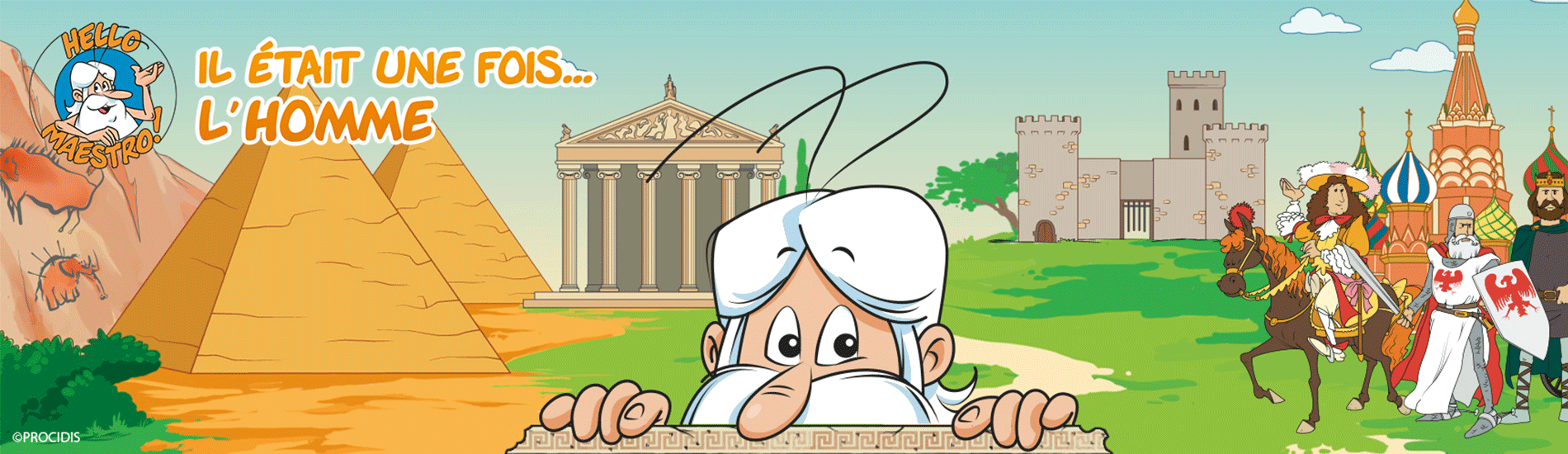
Il était une fois… l’intégrale sur Youtube

by Korben

Si vous voulez occuper un peu vos enfants pendant les périodes de creux des vacances ou si vous voulez vous faire une petite séance nostalgie, sachez que l’ensemble des épisodes de « Il était une fois… » sont disponibles gratuitement et intégralement sur YouTube.

Quel beau cadeau ! Retrouvez donc :

De quoi se remettre à jour sur quelques trucs. Bon évidemment, ces séries sont assez anciennes, car les premiers épisodes ont été diffusés à la fin des années 70 pour se poursuivre durant toutes les années 80. Il est donc possible que scientifiquement ou historiquement parlant, il y ait quelques petites choses qui aient changé entre-temps… Mais bon, il n’y a pas d’équivalent pour les enfants qui soit mieux que ça pour le moment.

Source


Pack débutant WWDC 2018

Devenez programmeur iPhone pour la sortie de iOS 12

! Promotion temporaire !

Ce pack spécial WWDC 2018 contient tout le nécessaire pour apprendre à programmer, vous spécialiser en programmation iPhone/iPad et vous préparer pour la sortie de iOS 12 à l’automne.

Il rassemble 5 cours et l’accès à plusieurs services d’aide et d’accompagnement pour vous aider à devenir un programmeur.

9 modules sont inclus dans ce pack pour vous fournir le meilleur dispositif éducatif pour vous apprendre à coder, suivre votre progression et vous aider à tout moment dans votre apprentissage.

Au prix habituel de 330 € ce pack vous est proposé en accés limité au prix de 59 €

01 Aug 16:56

Sony's Mobile Business Is Shrinking Out of Existence

by BeauHD
Didier “Ice” Iceman

En rognant sur la qualité et en ayant une gamme illisible , c'est un sabordage annoncé

The latest earnings report from Sony indicates the company's already tiny smartphone business has shrunk by almost half. "In the quarter ending in July 2018, Sony managed to sell only 2 million mobile devices, down 1.4 million from the same period in the proceeding year," reports The Verge. From the report: In its 2017 accounting year, Sony sold 13.5 million phones, and back in April its modest estimate for 2018 was 10 million, but now that's been revised down to 9 million. Anticipating it will make only $5.49 billion of mobile sales for the entire fiscal 2018, Sony is now in a close contest with HTC for the title of being the least relevant global Android device vendor. At least BlackBerry has its promise of uniquely secure phones and keyboards with actual, physical buttons on them. Sony's signature mobile feature in recent times has been an insistence on shipping massive bezels for way too long. It's important to note that while Sony's mobile business is hurting, Sony as a whole is in good financial health.

Share on Google+

Read more of this story at Slashdot.

31 Jul 03:58

Le recours aux produits phytosanitaires a augmenté de 12%

by Sciences et Avenir avec AFP
Didier “Ice” Iceman

et le plan abeille mis en parallèle parait bien ridicule

Prenant acte de l'échec du plan Ecophyto, les ministres de l'Agriculture, de la Santé et de la Transition écologique envisagent de nouvelles mesures.
31 Jul 03:57

Norvège : Un ours polaire abattu après avoir attaqué un homme

by Sciences et Avenir avec AFP
Didier “Ice” Iceman

quel gachis...

Un homme travaillant sur l'archipel norvégien du Svalbard a été attaqué par un ours polaire poussant un autre employé à abattre l'animal. Une enquête a été ouverte.
30 Jul 14:55

Les bornes électriques de recharge rapide arrivent sur les autoroutes françaises

by Loïc Chauveau
Didier “Ice” Iceman

Mais il ne faudra pas en abuser

Avec une recharge en 20 minutes, les bornes du programme Ionity ouvrent la possibilité aux voitures électriques d’effectuer de longues distances sans perte de temps sur le trajet. De nombreux projets prévoient ainsi d’enjamber l’obstacle de l’autonomie des batteries.
30 Jul 14:54

En Irak, au "pays des deux fleuves", la sécheresse met à l'agonie bovins et éleveurs

by AFP
Didier “Ice” Iceman

Avec les barrages turcs ca ne va pas s'arranger

30 Jul 14:53

Dès mercredi, l'humanité aura épuisé les ressources de la planète pour 2018

by AFP
Didier “Ice” Iceman

Et c'est toujours pire

28 Jul 04:47

Manchots royaux: "déclin massif" de la plus grande colonie au monde

by AFP
Didier “Ice” Iceman

Déprimant...

28 Jul 04:47

La France entre deux eaux dans les énergies marines renouvelables

by AFP
Didier “Ice” Iceman

Et surtout en retard?

27 Jul 15:29

Why I’m Deleting All My Old Tweets

by Emily Dreyfuss
Didier “Ice” Iceman

Une bonne argumentation

If you want to delete yours too, here's how.
27 Jul 03:47

New map reveals just 13% of the world’s oceans are still ‘wild’

Didier “Ice” Iceman

Traduire : Seulement 13% des oceans ne sont pas pollués par l'Homme

Pollution and other humanmade problems are changing ecosystems elsewhere
27 Jul 03:46

Élections législatives . Cambodge : pays amer, tyran prospère

Didier “Ice” Iceman

peu de suspens

Après trente ans d’un gouvernement dirigé par Hun Sen, l’aspiration au changement ne pourra pas s’exprimer lors des élections législatives du 29 juillet. Interdiction de l’opposition, fermeture des journaux indépendants : une chappe de plomb est tombée sur le pays. Dans les zones rurales, les citoyens proches de l’opposition redoutent d’être stigmatisés par des autorités locales liées au parti au pouvoir.
26 Jul 13:04

Trump Has Made Iran Public Enemy No.1. How Far Will He Go?

by W.J. Hennigan
Didier “Ice” Iceman

Beaucoup de mesures prises afin de déstabiliser le régime iranien... mais avec des conséquences qui pourraient entraîner au Chaos.


Inside a stately boardroom at the Federal Ministry of Finance in Berlin last April, U.S. Treasury Department officials meeting with their German counterparts described an elaborate Iranian operation that the Americans had uncovered. For several years, Iran’s elite Islamic Revolutionary Guard Corps (IRGC) had been using German front companies to buy advanced printing machinery, watermarked paper and specialty inks in violation of European export controls. The IRGC had then printed counterfeit Yemeni bank notes potentially worth hundreds of millions of dollars and used them to help fund its proxy war against the beleaguered pro-U.S. government in the capital of Sana’a. German companies, the Americans said, were being used as a cover by the Iranians to finance the world’s worst humanitarian conflict.

The evidence, uncovered by U.S. illicit-finance investigators, was meant to sway the Germans, but not just in hopes of countering Iran’s moves on the southern tip of the Arabian Peninsula. The larger mission, according to other Treasury documents later used in a presentation and reviewed by TIME, was to convince Berlin that Tehran cannot be trusted and that the Germans should join the Trump Administration in imposing economy-crippling sanctions on Iran. Weeks later, American officials presented their hosts with one last set of documents: detailed blueprints on how the Trump Administration was preparing to unleash financial warfare on the Iranian economy.

For many, U.S.-Iran tensions are defined by President Trump’s occasionally flamboyant outbursts, including a late July 22 all-caps tweet that appeared to threaten Tehran with military attack. But the low-grade confrontation between the two countries has been intensifying almost from the moment they and five major powers signed the landmark 2015 nuclear deal known officially as the Joint Comprehensive Plan of Action (JCPOA). That deal brought Iran’s nuclear program under tight international controls, but freed it from heavy sanctions. Tehran has been causing trouble for the U.S. and its allies ever since.

Iranian leaders used part of the windfall from the lifted sanctions, worth tens of billions of dollars, to expand the country’s reach into the region, and further its role as the world’s leading state sponsor of terrorism, Administration officials say. Tehran is now involved in every single serious conflict in the Middle East, almost always on the side of America’s enemies. Israel and Gulf nations have pressured the White House to address what they see as a growing Shi’ite sphere of influence across the Middle East with the IRGC bolstering its support for allied militant groups in Iraq, Lebanon and Syria. Tehran is also said to have increased funding for Shi’ite insurgents opposing American allies in Bahrain, Saudi Arabia and Yemen. It also has continued to develop ballistic missile technology in defiance of the United Nations.

Even before Trump took office, the U.S. was responding to Iran’s regional expansion with military, intelligence and diplomatic countermeasures. Trump’s decision in May to walk away from the nuclear deal accelerated the confrontation. And Trump’s campaign for “maximum economic and diplomatic pressure”–quietly unveiled by U.S. officials in international capitals across Europe, the Middle East and Asia–is bringing matters to a head as an Aug. 6 deadline for the new sanctions approaches.

The stakes rise with the confrontations. U.S. allies have been warned during road shows like the one last April in Berlin that if they don’t join the new campaign, their countries’ companies are susceptible to Iranian schemes, and after August 6 they could be slapped with U.S. sanctions for doing business with Tehran. Everyone from French energy giants to South Korean petrochemical companies are weighing the cost of rolling back three years of investment in Iran against losing access to the exponentially larger U.S. economy. As a business decision, it’s not a hard one. More than 50 companies in all major industries have already committed to leaving the Iranian market by August, U.S. officials say.

The run for the door has intensified pressure on Iran’s already battered economy. The value of its currency, the rial, collapsed to a record low of 90,000 rials to the U.S. dollar–a nearly 50% drop since Trump left the nuclear deal. In an economy based on petrodollars and heavy importing, most Iranians effectively lost half of their wealth, as prices soared for everything from daily goods to cars. On June 25, after the government banned the import of 1,300 foreign goods to battle inflation, merchants in Tehran’s Grand Bazaar shuttered their businesses. Protests spread from Tehran to other cities.

Unrest is just what the Trump Administration is hoping for. The White House believes new sanctions will drive middle-and lower-class Iranians to pressure the central government to redirect wealth from foreign adventures to domestic spending. “After our sanctions come in force,” Secretary of State Mike Pompeo said in May at the Heritage Foundation, a right-leaning Washington think tank, “Iran will be forced to make a choice: either fight to keep its economy off life support at home or squander precious wealth on fights abroad. It will not have the resources to do both.”

But the U.S. faces risks too. Russia and China are opposing the U.S. sanctions push, and most other countries still support the 2015 deal and are looking for ways around the Trump Administration crackdown. If they find them, and the U.S. looks ineffectual, it could weaken American diplomatic and economic clout around the world.

Even success could prove costly. National Security Adviser John Bolton has long advocated toppling the Iranian leaders, and while the Administration no longer espouses that policy openly, many suspect regime change is the ultimate goal of the sanctions. Few who lived through the bloody aftermath of America’s 2003 invasion of Iraq have forgotten how costly messy leadership changes in the Middle East can become.

On July 24, 2015, 10 days after the Iran nuclear deal was signed, an airliner carrying Major General Qassem Soleimani touched down in Moscow. As commander of the IRGC’s Quds Force, a designated terrorist organization, Soleimani wasn’t supposed to be allowed to fly commercially–U.N. Security Council resolutions barred him from leaving Iran. Yet there he was, according to former and current U.S. officials, meeting with senior Russian military leaders to pitch an audacious plan: together Moscow and Tehran could team up to save the forces of Syrian President Bashar Assad, which were nearing defeat at the hands of rebel groups.

Soleimani, who reports directly to Iran’s supreme theocratic ruler, Ayatullah Khamenei, had already organized, funded and deployed Shi’ite militias–many from Afghanistan, Pakistan and Lebanon–to help Assad. What he needed was air power. He got it. By that October, Russian warplanes were striking rebel positions daily from above while Iranian special forces were leading operations on the ground. The military moves triggered by Solemani’s Moscow visit, the officials say, fundamentally changed the trajectory of the Syrian war in Assad’s favor.

And Iran was only getting started. For the previous five years, it had labored under a U.S.-led crackdown on its banking and financial sectors designed to coerce it to abandon its nuclear program. But six months after the July 2015 deal, the sanctions came off and money began flowing again, including billions in cash assets previously frozen by the U.S. Firms from Europe and the U.S. began to invest–albeit cautiously. Iran’s oil exports started a steady climb to their current 2.7 million barrels per day. All told, Iran profited by tens of billions of dollars from the deal–and $16 billion went to regional proxies, according to a senior State Department official.

National pride, including memories of Persian empires, also figures in Iran’s regional ambitions. But there is little doubt, says Nathan Sales, counterterrorism coordinator at the State Department, that “you’re seeing an intensification of Iranian support for terrorism and other malign activity.” U.S. State Department officials estimate that in Syria alone, Tehran floated Assad more than $4 billion in credit to purchase oil and other goods from Iran, munificence that would not have been possible without JCPOA sanctions relief on Iran’s economy.

The result has been expanded influence inside Syria, where the IRGC is regarded by some analysts as being in control of Assad’s ground forces. That in turn has raised fears of pervasive Iranian influence that Sunni rulers warned would come into being after the U.S. invaded Iraq. Already, Tehran had used the U.S. ouster of Iraq’s despot, Saddam Hussein, to establish militia networks there. Now its overland supply route runs from Tehran, across Iraq and Syria, to Lebanon, a route replacing air cargo flights as a supply corridor.

Of all the Shi’ite militias in the region, Hizballah in Lebanon has gained the most from Iran’s post-JCPOA ascendancy. A U.S. State Department official estimated Iran’s support at $700 million a year. Hizballah has received weapons, training facilities in Iran and direct financial support since the early 1980s, when Iran helped establish it. It posts photos of Iran’s leaders in territory it controls, and flies a flag inspired by the IRGC emblem. The group is both deeply rooted in Lebanon’s Shi’ite population, and a clear proxy for Iran on the Mediterranean.

Iran’s ascendance presents an immediate problem for Israel, America’s closest ally in the region and Tehran’s mortal enemy. Iran’s forces in Lebanon and Syria, which border Israel, have been attacked by Israeli jets, enforcing Israel’s pledge to protect its borders “until the last millimeter.” Israel has launched airstrikes for several months that target groups arrayed to the north and northwest of the border. Israel even attacked a convoy of Iranian-backed Iraqi Shi’ite militiamen crossing into Syria near Deir ez-Zor–some 500 miles away from the Israeli border.

Israel isn’t the only U.S. ally in the region to confront resurgent Iranian proxies. In Bahrain, which was once a part of Iran and now hosts the U.S. Navy’s Fifth Fleet, the IRGC has found proxies in Shi’ite groups like al-Ashtar Brigades. In Yemen, the war escalated by Saudi Arabia and the United Arab Emirates in 2015 has boosted Iran’s relationship with the rebels known as Houthis. They have received long-range missiles which were then fired into Saudi Arabia, and the U.S. Navy and allies have intercepted weapons shipments from Iran headed to the Houthis.

The U.S. military has thus far avoided direct confrontation with Iranian forces–even when small Iranian boats and drones routinely pestered American naval ships at sea. (The U.S. military said that behavior abruptly–and inexplicably–stopped this year.) Instead, the U.S. is working to expose Iran’s activities and help America’s allies. “We do consider Iran to be the most destabilizing actor across the region,” General Joseph Votel, commander of all U.S. forces across the Middle East, told reporters July 19. “And our efforts across the region have been on exposing their activities and then working with partners to stop or disrupt them.”

In addition to naval interdictions off the coast of Yemen, the Trump Administration has provided intelligence, munitions and midair refueling to Saudi warplanes operating against the Houthis. In Syria, the U.S. maintains a remote Special Operations base at Al Tanf, in the country’s southeast, at a strategic intersection where the borders of Syria, Iraq and Jordan meet that serves as a physical obstruction against Iranian expansion. And at every turn, Trump has backed Israel’s efforts to attack Iran.

The greater U.S. push has come on the economic battlefield. Under the reimposed American sanctions, companies that invested in Iran have a brief window to wind down business ties before incurring penalties. The first group of sanctions on Iran’s automotive sector, gold trade and other industries will “snap back” beginning on Aug. 4.

The real economic pain will begin Nov. 6 when a more rigorous set of sanctions on oil and transactions with the central bank of Iran come into effect. Iran currently exports around 1 million barrels of oil per day to Europe, and nearly 2 million to Asian countries like China, India, South Korea and Japan. Importers of Iranian oil have already reduced their purchases about 8% in the past two months amid Trump Administration efforts.

No one expects a full return to the level of international sanctions that were in place prior to the nuclear deal–a prodigious, nearly global and ultimately successful effort aimed at forcing Iran to the negotiating table. But the U.S. wields great power even alone. French energy giant Total is preparing to walk away from a $47 million investment in Iran’s South Pars gas field under the threat of U.S. sanctions. It’s happening despite the French government’s belief, along with all other signatories, that Iran is fully complying with the terms of the 2015 nuclear deal. “There’s a difference of opinion about the JCPOA itself, but I wouldn’t infer that there’s a difference of opinion in countering Iran’s malign activities,” said Sigal Mandelker, Treasury’s Under Secretary for Terrorism and Financial Intelligence, who has been traveling to European and Middle Eastern capitals on the Trump Administration’s road shows. “For us, we have conversations with our European counterparts about the aggressiveness with which we’re going to enforce our authorities.”

The U.S. moves already appear to be having an effect. Analysts at BMI Research project that Iran’s economy will grow just 1.8% this year, down from a prior forecast of 4.3% before Trump pulled out of the nuclear deal. Some experts say U.S. economic expect more companies to join Trump’s crackdown. “The fact of the matter is, when foreign firms are forced to choose between business with Iran and access to the U.S. financial system, they are going to choose the latter,” said Daniel Glaser, a former Assistant Treasury Secretary for Terrorist Financing in the Office of Terrorism and Financial Intelligence.

Tehran is doing what they can to push back. Iranian President Hassan Rouhani and Javad Zarif, his Western-educated Foreign Minister, have traveled throughout Europe in search of commitments from leaders there, but have yet to secure them. “We see that under pressure from the U.S., under the psychological atmosphere that the U.S. has tried to create, some European companies have already started to withdraw,” Zarif told to Euronews in a July 19 interview.

The leadership is right to worry. The new round of protests over Iran’s economic woes poses a challenge to Rouhani’s government, which was twice elected on the promise that a nuclear deal would result in integrating the country into the global economy. And there are more signs the Iranian people are growing weary of their government’s foreign military intervention. On June 25, protesters chanted “Death to Palestine,” a noticeable about-face from the chants most often heard in Tehran: “Death to Israel.”

The unrest may predate Trump’s withdrawal from JCPOA, but that doesn’t mean he can’t use it. The U.S. government recently unveiled plans to create an around-the-clock Farsi channel that promotes Western propaganda on television, radio, and social media. “Trump is gambling that this regime is extremely unpopular at home,” said Alex Vatanka, an Iran expert at the Middle East Institute. “A lot of this is psychological. The Administration has made the determination that there are real cracks inside this Iranian society, so why not tap into it?”

All of which helps explain the mounting tensions between Tehran and Washington. Rouhani revived a threat to shut down international oil shipments in the strategic Strait of Hormuz if Washington continued to provoke Tehran, a step that would almost certainly trigger war. Meanwhile, U.S. officials told NBC News in July that Iran has “laid the groundwork” for cyberattacks against electric grids, water plants and tech companies in the U.S. and Europe.

There have been other provocations. An Iranian diplomat based in Vienna was among six people arrested in connection with a foiled bombing attack on a conference of opponents of the Tehran regime that was to be held in a town north of Paris. Israel’s Mossad spy agency claimed it had alerted European authorities of a cell led by the diplomat. A Belgian couple of Iranian origin was arrested with homemade explosive and a detonation device found in their car. Iran said it had nothing to do with the plot, calling it a staged “false flag” operation.

Finally, on July 22, Rouhani spoke out in rare bellicose terms more often heard from Iran’s Supreme Leader. “Mr. Trump, do not play with the lion’s tail, this will only lead to regret,” Rouhani said, according to the state-run news agency IRNA. “America must understand that peace with Iran is the mother of all peace and war with Iran is the mother of all wars.” That triggered Trump’s all-caps tweet the same day: “Never, ever threaten the united states again or you will suffer consequences the likes of which few throughout history have ever suffered before.”

Trump’s tweet also had a domestic context–it changed the subject from fallout from his Russia summit. But critics say the President’s entire approach to Iran runs a steep risk. “There’s so much friction between Iran, the U.S. and their respective allies throughout the region,” said Ali Vaez, the Iran project director at the International Crisis Group. “There’s so many flash points that a single miscalculation could result in a confrontation that could easily spiral out of control.” A wider war with Iran might stoke bloody sectarian violence across a region already reeling through nearly three decades of nonstop conflict. Some experts also fear a smaller, targeted threat against U.S. interests, perhaps an Iranian-backed militia attack against isolated U.S. forces, on a remote base in Syria.

With the August sanctions looming and tougher ones on track in November, the break in tensions seems likely. Especially between governments that, even in the best of times, cast the other as a reliable villain.

– With reporting by KAY ARMIN SERJOIE/TEHRAN


This appears in the August 06, 2018 issue of TIME.
26 Jul 10:56

Pour plusieurs compagnies aériennes, Taïwan est désormais en Chine

Didier “Ice” Iceman

Mais que dit Trump alors ?

Les sites Internet d’American Airlines, Delta Airlines et United Airline ne mentionnent plus l’île comme un territoire à part. L’administration civile chinoise leur avait donné jusqu’au mercredi 25 juillet pour se mettre en conformité avec la doctrine de Pékin.
25 Jul 20:34

Émissions polluantes: l'UE met le doigt sur une habile tricherie des constructeurs

by AFP
Didier “Ice” Iceman

Les constructeurs allemands sont encore en ligne de mire

25 Jul 08:22

Des Chiliens présentent des sacs solubles dans l'eau non polluants

by AFP
Didier “Ice” Iceman

Toujours bon à savoir

24 Jul 04:23

La demande d'éventuels rabais rétroactifs fait chuter Tesla en Bourse

by Reuters
Didier “Ice” Iceman

C'est pourtant ce que font les acheteurs dans l'automobile traditionnellement

23 Jul 21:10

La catastrophe de Fukushima a laissé une trace dans les vins californiens

by Sarah Sermondadaz
Didier “Ice” Iceman

Et ce n'est qu'un début

Des chercheurs français ont trouvé des traces de radioactivité dans les vins californiens qui pourraient être attribuables à la catastrophe de Fukushima. Leur niveau, très faible, ne pose toutefois pas de risque sanitaire.
23 Jul 21:09

Les coulisses de la déclaration Balfour, terreau de la création d’Israël

Didier “Ice” Iceman

Un rappel d'histoire

En 1917, la déclaration Balfour change à tout jamais le sort de la Palestine en la transformant en foyer pour les Juifs. En réalité, son instigateur aurait voulu empêcher l’immigration des réfugiés juifs en Grande-Bretagne.

 
23 Jul 18:01

Pour l'abolition de l'animal-esclave

by Gary L. Francione
Didier “Ice” Iceman

Que dire de plus...

Nous adorons nos chiens et nos chats domestiques, raffolons des dessins animés ou des films animaliers, et cependant notre comportement à l'égard des animaux en général prouve notre insensibilité et notre complicité passive devant leur immense souffrance. Tant que l'animal continuera d'être une (...) / Alimentation, Animal, Idées, Industrie, Violence - 2006/08 Refuser la fatalité
21 Jul 16:40

Vu des États-Unis. “L’Afrique championne du monde ?” Pourquoi la France n’a pas compris Trevor Noah

Didier “Ice” Iceman

C'est tout a fait ça. ..

L’humoriste Trevor Noah a suscité la polémique en affirmant que l’Afrique avait remporté cette Coupe du monde 2018. L’ambassadeur de France à Washington lui a répondu. Mais ce n’est pas fini : pour Vox, ce débat illustre des visions radicalement différentes de l’identité des deux côtés de l’Atlantique.
21 Jul 16:07

Nanoengineer Finds New Way To Recycle Lithium-Ion Batteries

by BeauHD
Didier “Ice” Iceman

Un enjeu majeur pour l'environnement

Zheng Chen, a 31-year-old nanoengineer at UC San Diego, says he has developed a way to recycle used cathodes from spent lithium-ion batteries and restore them to a like-new condition. The cathodes in some lithium-ion batteries are made of metal oxides that contain cobalt, a metal found in finite supplies and concentrated in one of the world's more precarious countries. Los Angeles Times reports how it works: The process takes degraded particles from the cathodes found in a used lithium-ion battery. The particles are then pressurized in a hot alkaline solution that contains lithium salt. Later, the particles go through a short heat-treating process called annealing, in which temperatures reach more than 1,400 degrees Fahrenheit. After cooling, Chen's team takes the regenerated particles and makes new cathodes. They then test the cathodes in batteries made in the lab. The new cathodes have been able to maintain the same charging time, storage capacity and battery lifetime as the originals did. Details of the recycling method were recently published in the research journal Green Chemistry, submitted by Chen and two colleagues.

Share on Google+

Read more of this story at Slashdot.

21 Jul 05:19

Vu d’Allemagne. Enfin la grève chez Ryanair !

Didier “Ice” Iceman

Où quand le Low cost arrive à ses limites

La compagnie aérienne fait face à des mouvements de grève de 24 heures, de ses pilotes en Irlande et de son personnel de cabine dans plusieurs pays européens. Un conflit que l’on attendait depuis longtemps, se félicite un quotidien allemand.
21 Jul 05:17

Le Liban envisage de légaliser le cannabis médical pour booster son économie

Didier “Ice” Iceman

Après ça risque de passer au pavot...

Au pays du cèdre, les champs de cannabis font partie du paysage. Une véritable économie parallèle et très lucrative qui pourrait être légalisée pour aider le pays à sortir du marasme économique.
21 Jul 04:58

La Belgique veut la mise en place d'un permis pour la détention d'animaux

by Anne-Sophie Tassart
Didier “Ice” Iceman

Le problème est que ça créera aussi de la clandestinité

Un texte de loi qui pourrait prochainement être appliqué en Wallonie prévoit la mise en place d'un permis pour la détention d'animaux mais aussi l'installation de caméras de surveillance dans les abattoirs.
21 Jul 04:58

Vieux Geek, épisode 131 : Star Writer 1 pour Amstrad, l’ancêtre lointain de StarOffice.

by Frederic Bezies
Didier “Ice” Iceman

Ce n'est pas celui que j'utilisais mais ça ressemblait

Allemagne, 1985. Une entreprise du nom de Star-Division est fondée. Son but ? Proposer des logiciels bureautiques pour des ordinateurs 8 bits. 14 ans plus tard, elle est rachetée par Sun Microsystems peu après la sortie de StarOffice 5.1.

En juin 2016, je consacrais un billet vieux geek à StarOffice. Pour résumer rapidement, durant une dizaine d’années, Sun continuera de faire vivre la suite via un duo OpenOffice.org et StarOffice. Quand Sun sera racheté par Oracle, le produit pourrira sur pied jusqu’au lancement du projet LibreOffice, dont la première version remonte à début 2011.

Mais si on sait fouiller, on peut tomber sur un ancêtre lointain de LibreOffice Writer, du nom de Star-Writer dont la première version est sorti pour CP/M, un OS porté sur Amstrad CPC.

Via CPC-Power – que je tiens à remercier – j’ai pu mettre la main sur le logiciel entièrement en allemand. Je tiens aussi à remercier CPC-Wiki pour les informations concernant Star-Division.

J’ai donc fait chauffé mon ami JavaCPC pour vous montrer l’ensemble en action.

Comme vous avez pu le voir, le logiciel souffrait de pas mal de limitations et son ergonomie n’était pas extraordinaire… Mais il avait le mérite d’exister. Des outils comme les premiers Microsoft Word n’étaient pas mieux loti au final.

Mais au moins, on voit l’énorme marge de progression en l’espace d’un tiers de siècle, et ça laisse réveur !

21 Jul 04:52

Google, Which Owns Duck.com, Confuses Users Searching For Its Rival DuckDuckGo and Redirects Them Back To Google

by msmash
Didier “Ice” Iceman

Encore un coup bas d'un géant...Méfiance avec quant.com

Commenting on the record $5 billion fine on Google by the European Commission, privacy focused search engine DuckDuckGo said this week it welcomes the decision as it has "felt [Google's] effects first hand for many years and has led directly to us having less market share on Android vs iOS and in general mobile vs desktop." The company said: Up until just last year, it was impossible to add DuckDuckGo to Chrome on Android, and it is still impossible on Chrome on iOS. We are also not included in the default list of search options like we are in Safari, even though we are among the top search engines in many countries. The Google search widget is featured prominently on most Android builds and is impossible to change the search provider. For a long time it was also impossible to even remove this widget without installing a launcher that effectively changed the whole way the OS works. Their anti-competitive search behavior isn't limited to Android. Every time we update our Chrome browser extension, all of our users are faced with an official-looking dialogue asking them if they'd like to revert their search settings and disable the entire extension. Google also owns http://duck.com and points it directly at Google search, which consistently confuses DuckDuckGo users. "If it looks like a duck, swims like a duck, and quacks like a duck, then it probably is google," wrote security researcher Mikko Hypponen, summing up the story.

Share on Google+

Read more of this story at Slashdot.

21 Jul 04:48

Facebook, Google, Microsoft, and Twitter Launch the Data Transfer Project

by msmash
Didier “Ice” Iceman

Et on transfert les données où???

Facebook, Google, Microsoft, and Twitter have teamed up for a new open source project that strives to make it easier to transfer your data between online services. From a report: The Data Transfer Project (DTP) was officially founded last year, and there have been whisperings about it on the likes of GitHub, but the initiative was officially unveiled today with its first four members. The DTP is actively seeking other members too. The ultimate aim of the Data Transfer Project is to improve data portability, allowing users to not only download their data but transfer it directly to any other service.

Share on Google+

Read more of this story at Slashdot.

21 Jul 03:46

Diplomatie. Quand Pékin resserre son emprise sur Taïwan

Didier “Ice” Iceman

18 pays seulement!!

À la suite de plusieurs défections, seuls 18 pays maintiennent des relations diplomatiques avec Taïwan. Cet isolement croissant pourrait remettre en cause un statu quo permettant la coexistence de fait avec Pékin.