“Samantha, I noticed that your “fun-o-meter’ is stuck in the middle. Why is that?
“Well the robots are cool, but why aren’t there any girls?”
“Why couldn’t the long lost brother be a long lost sister?“
“And how are all their disparate technologies able to connect to each other?”
“Doesn’t like boys!”
“Doesn’t understand robots!”
“That’s”
“That’s not what I said!”
Damn.
Cartoon Network is getting too damn real
That’s pretty goddamn ironic from a network which cancelled a superhero show because it was watched by too many girls, due to belief that it’s impossible to market superhero merch to girls
I’m fairly sure that’s the joke.
(Also the network doesn’t make the show - people may not realize that Cartoon Network isn’t a giant conglomerate cartoon factory and actually consists of tens of thousands of individual creators, many of whom spend a significant portion of their day wondering what can we sneak past Cartoon Network?)
At least that’s what I’m like when I write for them. Zing!!
That’s certainly how we operated when writing for them when they were Hanna-Barbera, before they were Cartoon Network. Some things don’t change.
In fact we would sometimes put three or four things in a script that we knew they’d catch and insist on having removed, so we would get away with the one thing we really wanted to keep in…
It’s official, the #somsnow15 contest has ended! I want to first thank everyone who entered their guesses for when the giant snow pile would melt. Your enthusiasm was contagious and helped me power through the last miserable weeks of winter.
In the end, the recent warm weather really moved things along and the contest was a tie. Congratulations to Carolyn of Salem and Britt of Dorchester who both guessed April 12 at 4 p.m. and will get to celebrate their win with Union Square Donuts! I wanted to learn a little more about the lucky winners, so here’s a quick Q&A with each of them.
Carolyn, formerly of Somerville, now of Salem says …
1) Why did you pick April 12 at 4 p.m.?
April 12 at 4pm is my approximate birthdate and time! (Happy birthday Carolyn!)
2) What is your best winter survival tip?
That’s tough … Don’t leave the house unless you have to!
3) What are you most looking forward to doing now that it’s spring?
Bike riding and farmers markets
4) What’s your favorite donut flavor?
Glazed or toasted coconut
Britt, formerly of Camberville, now of Dorchester says …
1) Why did you pick April 12 at 4 p.m.?
We played a similar game at my office in Waltham 5 years ago, and when you plow a huge parking lot into a snow pile, it is about that height/shape. So I figured that was as good a proxy as any, and thought about what the trees looked like and how the air temp felt on my skin on the last day of that game, and tried to guesstimate the date from that. Let’s be honest, it was luck.
2) What is your best winter survival tip?
Shoveling isn’t a chore … it’s exercise and a chance to meet your neighbors. Also, wood fires.
3) What are you most looking forward to doing now that it’s spring?
Hiking!!!
4) What’s your favorite donut flavor?
Raised glazed donut with chocolate icing (I’ve had a dreadful sweet tooth ever since I was little)
Again, thanks to everyone who entered. This was a lot of fun, but let’s hope next winter doesn’t require snow-melting contests to see us through. Happy spring!
Two weeks ago, to build buzz for the Android smartphone it announced today, Chinese tech company Letv turned to Hitler. A poster teasing the phone shows Hitler giving the Nazi salute while wearing an armband marked with the Apple logo. Apple, explained Letv CEO Jia Yueting in an accompanying post on Weibo, is an "arrogant regime" that has embraced "tyranny."
Jia quickly apologized for invoking Nazis to shill electronics, saying he meant only that "that open-ended technology ecosystems are more beneficial to consumers." More beneficial than, say, Apple and Hitler, which respectively adopted policies requiring in-house vetting of mobile apps (in Apple’s case) and the systematic genocide of millions (in Hitler’s). As a brand disaster Jia’s comments were unfortunate, but as content marketing they had their desired effect. Thousands of people around the world were introduced to fast-growing, loose-talking Letv, and anticipation for the company’s first smartphone shifted from nonexistent to "let’s see how it compares to Hitler."
Brand disaster as content marketing
At an event Monday evening in San Francisco, Letv (pronounced "L-E-T-V") introduced itself to the United States in the same awkward, lost-in-translation style it had used to bash Apple. A group of American and Chinese journalists gathered in a half-empty conference space in the Financial District, where an Letv-branded television delivered a stilted video transmission from Jia himself. "Hello US," he said. "Letv is coming."
JD Howard (left) and Mark Li
So what is Letv? Listening to Jia wasn’t much help; he described his $12 billion company as "an open, vertically integrated ecosystem for how content is distributed and experienced." So ignore that and instead think of Letv as a kind of Chinese YouTube that went public instead of selling to Google. Now imagine that YouTube had opened its own movie studio, and started manufacturing connected TVs so as to better market its video content. And then told you it was going to make an electric car, and call it "the sixth screen."
A name previously reserved for French roller discos
And finally, just as you were wrapping your brain around that, imagine YouTube threw a party announcing its arrival in a large foreign market, though none of its products would be for sale there for many months to come. That’s Letv in a nutshell. Its new device is called "Le Superphone," a name previously reserved for French roller discos of the late 1970s, and it’s going on sale in China today and America later this year.
Mark Li, a Letv vice president, and JD Howard, a former Lenovo executive who is running Letv’s international expansion, were tasked with introducing Le Superphone to America. "The smartphone industry is getting a little stale," Howard lamented. "It’s a little same-old, same-old." Ever since a certain never-mentioned smartphone re-fashioned the industry in its image, possibly using a combination of arrogance and tyranny, the world had delivered only incremental improvements.
Enter Letv. With 400 million monthly users of its streaming-video service, the company has "the experience, the creativity, and the ambition to disrupt in this space," executives told us. I girded myself for the knowledge bombs about to drop. "We’re not trying to be like everybody else here," Howard said. A slide behind him flashed a single word: Innovation.
The innovations mentioned on stage numbered three: a different kind of USB connector, a display with enhanced colors, and improved sound reproduction. They sounded like the sort of incremental improvements that Letv had just spent 20 minutes complaining about, but there were no phones to be seen, so I reserved my judgment for a while. I’m not a tyrant.
"We're not trying to be like everybody else."
A Q&A followed, and I asked Li if he cared to elaborate on the similarities between Apple and Hitler. He declined, referring me instead to Jia’s previous apology. Instead, Li talked about opening a new office in Silicon Valley, from which Letv will seek content deals with American companies. A short while later, we moved to a second room to see Le Superphone — which I mentally pronounce in a cartoon Parisian accent — in action.
When a Letv employee puts it in my hand, I first think it’s an HTC One: similar polished aluminum finish, similar gray borders on the rear, similar placement of camera and fingerprint sensor. Le Superphone has similar rounded edges and a large screen, though weirdly no one can tell me the exact size other than to say there will be three choices. (The displays all appear to be hovering within a fingernail or two of 5.5 inches.) In keeping with fashion, the phone has a thin bezel, though not so thin I couldn't rest a thumb on the home button.
Le spec sheet of Le Superphone largely meets your expectations for a flagship Android phone these days: it runs on a Qualcomm Snapdragon 810 chip, has a high-resolution display, and offers a 21-megapixel camera. It’s billed as the first Android phone to use a reversible USB Type-C port for charging and data transfer, and includes a custom sound chip to offer enhanced audio. (We didn’t get to try it.)
An Instagram filter for your operating system
And yet the whole thing feels, as they say over at Letv, a little same-old, same-old. At the hands-on area, I asked Howard to explain it to me. Where’s all that innovation? He proceeded to show me a Superphone feature that lets you change the default color settings of your phone to make them more or less saturated — like applying an Instagram filter to the entire operating system. I had never given any thought to the color settings of my phone, and never will again, but if you’ve ever looked at your iPhone and wished you could make everything look vaguely red, you may want to book travel to Beijing.
I pressed Howard on Letv’s US ambitions, and how its core asset — millions of hours of Chinese-language video — would be of any use to it here. The United States has an estimated 2.9 million Chinese speakers, the company says; Apple sells eight times as many iPhones in a month. Howard tells me that Letv’s core skill lies in building up libraries of content and finding lucrative ways to distribute them; eventually, he says, Letv could offer Superphones localized to many different ethnicities, all tied to language-specific content libraries.
The since-deleted teaser poster for tonight’s event showed us two worlds: one that embodied "arrogance, tyranny" (Apple, supposedly) and another that represented crowdsourcing and "freedom." But we never saw any crowdsourcing tonight, and Le Superphone doesn’t strike any obvious blows for freedom beyond its wackadoodle color settings. Arrogance, though — there was plenty of that on display. And it wasn’t Apple's.
Save-for-later service Pocket introduced a redesign of its web client today, making the site responsive for the first time and allowing it to scale more easily from smartphone screens to desktop monitors. The web version now includes a persistent sidebar offering one-tap access to your saved articles, videos, and images, as well as your favorites, archived saves, and anything you've tagged.
The company, which is building a kind of "DVR for everything," also announced $7 million in new investment from investors including New Enterprise Associates and Sound Ventures, the fund started by Ashton Kutcher and Guy Oseary. Pocket has raised $14.5 million in total. Founder Nate Weiner says the money will be used mostly for hiring; the company built and supports native apps for nearly all major platforms with just 15 employees. "We've done a lot with that team but we really all want to move faster," Weiner says. He hints big changes are coming to the service later this year, but declines to say anything more.
Pocket says it now has 17 million registered users — it won't say how many are active — and they save 2 million items a day. If you spend significant time reading the web, it's essential (though some prefer its chief rival, Instapaper). With the newly responsive design, you can read it just about anywhere.
Amazon has had a hard time keeping up with the sheer breadth of Google Play's app selection, but it's done a pretty great job when it comes to putting a spotlight on kid and family content. There's FreeTime Unlimited, a (cheap) monthly subscription service that gives younger users access to a wide selection of age-appropriate ebooks, movies, TV shows, educational apps, and games. And the company puts a worry-free guarantee behind its Fire HD Kids Edition; break the thing at any point over the course of two years, and Amazon will replace it for free.
Google doesn't offer anything like that for its Nexus tablets, nor does Android come with a built-in answer for FreeTime Unlimited. But today, the company is getting more determined about nailing the software end of things so parents can quickly find apps and games that are a perfect fit for their children. That effort begins with Android developers.
This is one area where Amazon is way ahead of Google
Google has announced "Designed for Families," a new program that will permit developers to "designate their apps and games as family-friendly." Yes, Google Play already displays age ratings, which are a quick (but imperfect) way of weeding out inappropriate content. To participate in Designed for Families, developers need to do more than just stamp an accurate age rating on their app. "Apps must meet a stringent legal and policy bar and pass a specialized operations review," a Google spokesperson told The Verge.
With the FTC constantly breathing down the necks of Google, Apple, and Amazon to ensure child safety on mobile devices, it's not surprising to see Google in turn raising the bar here. But what do developers get in exchange for signing on? Right now, Google is only saying that participating apps will be prominently featured in "upcoming family-focused experiences on Google Play that will help parents discover great, age-appropriate content and make more informed choices." So if you're a developer, it'll soon be easier and quicker for families to download your app.
"Apps must meet a stringent legal and policy bar..."
Users won't see any changes today; Google says consumers will learn more about its plans over the next few weeks. "We’ll be adding new ways to promote family content to users on Google Play," a spokesperson said. So it sounds like approved apps will be easy to find in Google Play, but do plans end there? Will Android perhaps offer more granular parental controls that permit only Designed for Families apps? With the introduction of user profiles in Android 5.0 Lollipop, it's not hard to see that as one possibility. Google's very much playing catch-up with Amazon here, so it'll be interesting to see what's coming.
Surprise! The reboot of popular plastic instrument franchise Guitar Hero looks like a full-motion video game from the 1990s. FMV blurs the line between movie and game and is best known for B-grade cult hits like Sewer Shark, Corpse Killer, and Night Trap. The format looks both awkward and outdated, and the decision to bring it back is as brilliant as it is prescient.
To make a future proof game, Activision learned from the past.
Throughout a recent demonstration of Guitar Hero Live, the developers weaved in PR speak about creating a game that caters to the modern way we consume media. With a tap of a button at any time, the player will be sent to an online music video stream, connecting them to their friends and other players across the world. That kind of sounds like a "modern media experience," whatever such a thing actually is. But the team members only briefly nodded at the real place the vast majority of young people get their music: a web browser or a discrete app.
Here's a bold prediction: the future of Guitar Hero will be, in some capacity, on your laptop. And that will be possible because by streaming or even locally running Guitar Hero Live, a game without fancy current generation graphics. This isn't the next Halo or Crysis; Guitar Hero Live is a graphical overlay on pre-recorded footage.
The low-impact game is already proving advantageous. Activision has announced that the mobile version of Guitar Hero Live will be the same game available on consoles. How the guitar and tablet will connect to televisions is something they plan to clarify at E3. Whatever the case, if I can run Guitar Hero on my iPad Mini, I could assuredly run it on my laptop — and so could millions of other people.
In his recent analysis of the video game industry in 2015, Wired's Chris Kohler eloquently enumerated the problems facing triple-A game publishers. As expectations for big-budget games demand bigger worlds with better graphics, publishers have become risk averse to the point of absurdity. With frightened companies releasing fewer blockbusters, the vacuum is filling with indie, mobile, and small-scale games.
"Consoles are slowly finding their entire raison d'être not eliminated," says Kohler, "but being squished down through a funnel."
Activision is well-known for its shrewd business acumen. Its shooter franchises Call of Duty and Destiny have enticed players to spend considerable amounts of money after the initial purchase on sizable expansion packs, while Skylanders led the way for NFC-compatible copycats like Disney Infinity, Lego Dimensions, and Nintendo's Amiibo toys. In fact, the most recent version of Skylanders was also available, full-featured, for tablets. For all the flack Activision receives from video games' most dedicated fans, the company is taking bigger risks than its competitors, and so far, it's paying off. Call of Duty is the biggest shooter on the planet, and its likely usurper is Destiny; Skylanders is worth $3 billion.
There's a considerable chance consoles will one day cease to be the place we play video games, and Activison is already hedging. Maybe Guitar Hero Live won't run on browsers this year, and the game will be limited to consoles and tablets. But one thing's clear: Activision plans to make the games available to the largest audience possible. Guitar Hero Live's full-motion video might look like a throwback, but it's a carefully conceived play for what's next.
SodaStream's completely over-the-top new carbonation machine, the Mix, is on display in Milan this week where visitors to Teatro Versace will have a chance to try its adults-only beverages. Yes, that's right: the Mix can make fizzy booze.
A quick refresher on the Mix: it's got a color display, Bluetooth connectivity, and a companion smartphone app that you can use to upload cocktail recipes. Once recipes are loaded onto the machine, it can guide you through the mixing process. It also seems to handle stirring, which is good news for pretty much everyone except James Bond.
Also, the Mix has a status message on its display that it is "refining the bubbles." Refining them. I don't know what that means, but it doesn't sound cheap. (Pricing and availability haven't been announced.)
Netflix is doing more to make its service accessible to blind customers and those who are visually impaired. Today, the company announced that it's rolling out audio descriptions, which are narration tracks that describe "what is happening on-screen, including physical actions, facial expressions, costumes, settings and scene changes." The first series to get audio descriptions is Netflix's newest (and very good) original series Daredevil, and it's something comic book fans have been asking for. To feature an original series starring a blind protagonist — while not doing all it could to accommodate blind customers — has recently put Netflix's lacking accessibility options through fresh scrutiny.
But the company says audio descriptions will quickly be expanded beyond just Daredevil to include House of Cards, Orange is the New Black, Unbreakable Kimmy Schmidt, and Marco Polo. Narration tracks for those shows will be added in the "coming weeks," and Netflix says customers can access them like any other alternate audio track. Netflix isn't stopping with its own original programming though, pledging that it's "actively committed to increasing the number of audio-visual translations for movies and shows" in a blog post today. Discussions with studios and content owners to move that effort along are ongoing, and Netflix is "also exploring adding audio description into other languages in the future."
I have a deep hatred of the selfie stick (and a deeper hatred of people who hold up their phone for the duration of a concert). Not everyone on staff agrees with me, but at least Apple does. The creators of the scourge known as iPad photography have banned selfie sticks from its Worldwide Developers Conference, apparently not looking to support anything that further compromises the audience's viewing experience. "You may not use selfie sticks or similar monopods within Moscone West or Yerba Buena Gardens," Apple wrote on its WWDC page today.
Just like Coachella, Lollapalooza, and apparently every halfway decent art museum in the world, Apple will not allow a room filled with floating sticks to ruin the viewing experience for others. Now we all can stare lustfully at the next versions of iOS and OS X without the risk of a concussion. Thank you, Apple. Keep fighting the good fight.
SternisheFan sends this quote from the Washington Post:
Gaioz Nigalidze's rise through the ranks of professional chess began in 2007, the year the first iPhone was released. In hindsight, the timing might not be coincidental. On Saturday, Nigalidze, the 25-year-old reigning Georgian champion, was competing in the 17th annual Dubai Open Chess Tournament when his opponent spotted something strange. "Nigalidze would promptly reply to my moves and then literally run to the toilet," Armenian grandmaster Tigran Petrosian said. "I noticed that he would always visit the same toilet partition, which was strange, since two other partitions weren't occupied." Petrosian complained to the officials. After Nigalidze left the bathroom once more, officials inspected the interior and say they found an iPhone wrapped in toilet paper and hidden behind the toilet. "When confronted, Nigalidze denied he owned the device," according to the tournament's Web site. "But officials opened the smart device and found it was logged into a social networking site under Nigalidze's account. They also found his game being analyzed in one of the chess applications." Nigalidze was expelled from the tournament, which is still ongoing and features more than 70 grandmasters from 43 countries competing for a first-place prize of $12,000. The Georgian's career is now under a microscope. His two national titles are under suspicion.
Pros
- Lots of free food, parties and alcohol. If you’re a “bro” then you’ll have a great time.
Cons
- Tumblr is run on a tangled mess of homegrown tools, horrendously fragile code and the worst engineering practices I’ve ever seen from any company. There is no QA, code reviews aren’t taken seriously, anyone can commit to master and push their code to production at any time. The entire development process can best be described as institutionalized cowboy coding.
- Brogramming is real and Tumblr exemplifies it. It was the norm for bros to knowingly push buggy, incomplete, untested code into production after a few rounds of drinks then leave the problems for others while they moved onto another project.
- Engineering management is filled with dead weight who have been loyal and stuck around long enough. They aren’t qualified to lead teams, they have horrendous technical knowledge and do absolutely nothing to help grow the careers of their subordinates.
- Every position from VPs down to engineers are a revolving door, every week at least one person quits and the one thing that the people who quit have in common is that they were very good at their jobs. I can safely say that if you see someone has been at Tumblr more than six months they are looking for a new job; if they are there for two years or more they are probably incompetent. Absolutely no one who has options stays at Tumblr.
- New employees, no matter how experienced, are treated like they are complete idiots. Recently, I watched someone who had more experience than everyone on his team quit out of frustration. His manager told other people that he was useless and contributed nothing. What the manager didn’t realize was the same person he called useless had accepted a more senior role at Google.
my mom has been a coder from way back, like she helped write the first ATM networks and stuff, and she worked with a guy who liked to dump his buggy ass code into the production machine and then leave for the weekend or a vacation or whatever
the systems administrator had a process that would remove any changes he’d made
dude never did run anything on the test box without being told to and never got fired for it
Gosh, that part in Much Ado About Nothing when Beatrice and Benedick read each other’s secret love letters and admit their in love is always so cute. But, like, too cute.
… That’s more like it. That’s the response I’d expect of two hyper-critical sarcastic dorks in love.
I want to see this performance of it. WHERE DO I FIND IT?
Pretty sure the whole thing is on Youtube. I know I watched it and I think that’s where it was.
I just googled and found it here. (There’s also a production of Macbeth starring David Morrissey, aka The Governor, that I MUST SEE.)
King Jane’s new video for her latest single, “Yoga,” is the type of video so many people have waited for. First of all, the song is such a summer jam, with hints of club beats and trap vibes to keep you sweating on the dance floor or in the comfort of your own home. And the video, which shows Jane baring some skin, booty popping, along with her hair swinging to her waist in a braid that could whip you into shape, has us seeing Janelle in a light we weren’t sure she’d touch base with.
But of course, all of these changes have raised red flags to stans that are not ready to see Janelle tread new looks of territory. “She’s selling out,” “She’s showing ass? Nah, can’t respect her,” and “This isn’t her, at ALL,” comments have been spewing, and I am here to shut them down. Because it seems to me people are getting the wrong idea RATHER quickly without processing the information.
REASONS WHY YOU MAD, AND WHY YOU SHOULDN’T BE:
“Black People Don’t Do Yoga! / “Yoga Isn’t Sexual! She’s Sexualizing It!”
Sadly, because of cultural appropriation, many believe Yoga is a “White People Thing,” even though it originated in India. So, thanks to Jane, the song and the video actually show Black women engulfed in the physical, mental, and spiritual disciplinal practice known as Yoga. Because we exist. And no, it’s not a thing only White people do.
/
Also… yoga isn’t MEANT to be sexual, but the point of it is to exercise your mind, your body, and your spirit, all of which can help create a better sex life for yourself. IDK about you, but some tricks done on the mat can be done in the bed with AMAZING results. And Janelle isn’t telling you to bend over and catch some eggplant. Her song promotes being centered, being in tune with yourself, and exercising you, to be the best you that you can be. IDK how that’s sexualizing.
“She Preached Not To, But She’s Showing Skin & Being Sexual, Like Every Girl In The Industry!”
Jane has never preached AGAINST showing skin or being sexual. Janelle has no problem with that, actually. What she had a problem with was the EXPECTANCY for women, especially in music, to do just that in order to make it ahead. She rebelled against that notion to indicate that she wouldn’t and couldn’t be controlled, and to illustrate that there are many means of sexiness. She’s made that point loud and clear for years, especially since we all have swooned hard for Jane in her tux’s, and is now allowing herself to show a little more skin because she wants to, and it can get pretty boring doing the same ol’ thing where people now have expectations.
Also, if you think Janelle is getting sexual NOW, then you definitely have not paid attention to her music in the past, cuz…
“Where’s The Message? This Song Is For The Clubs!”
Oh, you damn skippy this song is for the clubs, and the beach shindigs, and the house parties that will erupt this coming summer. I can’t wait, especially since Janelle is now the CEO to her OWN record label, Wondaland Records, where she’ll have a huge say in the diverse music that’ll be coming from the Black artists on the label, which we’ll hear on their compilation album, “The Eephus.” Jane deserves to enjoy herself for making a huge dream of hers come true. This song is also a means of promotion, especially because it’s coming out as the weather transforms into heat. Also, debunk that stigma that club/party music has no message. We’re talking about Janelle Monáe here. Just because she made a song for the clubs, doesn’t mean there isn’t a message. “Crown on my head, but the world on my shoulders / I’m too much a rebel, never do what I’m supposed to,” isn’t a message about wearing your crown with pride even with the stereotype Black women face as backbones to this country with no respect in return?
“Some call me peachy, and some call me vulgar / Even when I’m sleeping, I have one eye open,” isn’t a message about being conscious and aware of your surroundings, because at the end of the day, loving yourself as a Black woman in this country is the greatest rebellion, and will have people ready to tear you down even though they don’t KNOW you?
And my fave, “You cannot police me, so get off my areolaaaaa…” ISN’T A MESSAGE ABOUT TELLING YOU TO BACK UP OFF ME JUST BECAUSE WHO I AM MAKES YOU UNCOMFORTABLE? Isn’t a message about telling anyone who tries to put you in a box, who tries to tell you who you are isn’t who you should be, to kick rocks and hop off you?
Get outta hurr.
“She’s Dancing Like That For The Male Gaze!”
So, check this out. Point me to the men that were in Janelle’s room as her and the many beautiful women of color danced and bended it while not breaking it. Because what I saw was Janelle dancing in the mirror and admiring herself, which is probably my favorite part. She could have easily sexualized the song and the video, doing Yoga poses in front of a man to turn him on, but she didn’t. She literally danced for HERSELF. Janelle knows how gorgeous she is, and she’s mentioned it. So the fact that she danced in the mirror for herself to see and admire is not for the male gaze, but for her own. It’s claiming her sexuality, which is something women are told they shouldn’t do, and if they do, are called names such as “Ho,” “Slut,” and the new & wretched, “THOT.” I saw a video where women danced amongst each other, enjoying their company, and practicing yoga while getting their life. I saw a sexy ass man talk about, “She’s put my collar on, like she’s my owner,” illustrating the women have the power and he’s willing to obey. And even in the end, when everyone’s together, man and woman, I don’t see the women dancing to catch the man’s attention, and I don’t see the men hounding the women. I see people enjoying themselves and each other.
“Where’s The ArchAndroid Janelle? She’s Gonna Go Pop & Sell Out!”
Bruh. She was levitating in the beginning and middle of the video. The ArchAndroid is still there. Relax.
I’m so happy to see Janelle expand. This video gave me freedom. This video gave me power. This video gave me beautiful Black women in many shades and many styles doing them. This video gave me sisterhood. This video gave me admiration and love of ONESELF. This video gave me Carefree Black Girl, which, as I mentioned, is the greatest rebellion this world will ever see.
You may believe Janelle is selling out because of ONE song and ONE video that illustrates that she has many palettes other than the one you’ve gotten quite comfortable with, but trust. This is just the beginning of something bigger. In order to be a true artist, you must bend your palette and never break your soul. Janelle is doing just that.
I’m so excited for her direction. I’m falling more in love with her as she grows.
G’on, King Jane. Shine that throne. Prepare for world domination.
HOPE YOURE COOL WITH ME REBLOGGING THIS LIKE DAILY CAUSE I NONSTOP WATCH IT SO THATS OUR LIVES NOW
A man is in custody after allegedly leading police on a multi-county chase, shooting at several cars and injuring two people, one of whom is in critical condition. KTVI reports that KC man Reginald Adams Jr., has been charged with assault on a law enforcement officer, first-degree assault, resisting arrest and armed criminal action.
St. Ann Police Chief Aaron Jimenez says Adams shot multiple times at officers, who returned fire, before arresting him. Neither the suspect nor officers were shot.
Jimenez says the 22-year-old Adams told authorities he had “snapped” because of a girlfriend.
However, Adams’ brother, who lives in Kansas City, says Adams has been troubled and in need of help ever since he survived a traffic accident that killed their mother two years ago.
Once in a while, someone publishesanarticle about adjunct professors who resort to food stamps in order to survive on the rock-bottom pay that so many college instructors are expected to live on. But until today, I had never seen a statistic summing up how many academics are actually resorting to government aid. The number, it turns out, is rather large. According to an analysis of census data by the University of California–Berkeley's Center for Labor Research and Education, 25 percent of "part-time college faculty" and their families now receive some sort public assistance, such as Medicaid, the Children's Health Insurance Program, food stamps, cash welfare, or the Earned Income Tax Credit. For what it's worth, that's not quite so bad as the situation faced by fast-food employees and home health care aids, roughly half of whom get government help. But, in case there were any doubt, an awful lot of Ph.D.s and master's degree holders are basically working poor.
Low-Wage Occupations and Public Assistance Rates
I don't think it would be quite accurate to say that 25 percent of all adjuncts are getting aid, since some do in fact have full-time jobs that would show up in the census as their occupation. Still, we're talking about a large group of highly educated individuals. According to NBC News, which reported on some of the labor center's data prior to publication, "families of close to 100,000 part-time faculty members are enrolled in public assistance programs."
Despite their symbolic value, food stamps aren't the most popular program among adjuncts. According to the NBC report (I haven't been able to find these specific numbers published elsewhere), 7 percent of part-time faculty are enrolled in the Supplemental Nutrition Assistance Program, 7 percent are signed up for Medicaid (though the number may be higher thanks to Obamacare's expansion of the insurance program), and "one in five" receive the Earned Income Tax Credit, which boosts pay for low-wage workers.
Over the past several decades, colleges and universities have come to rely on adjuncts in order to keep down education costs and tuition. According to the American Association of University Professors, "more than half of all faculty hold part-time appointments." But despite the awful compensation these teachers receive, the unfortunate reality is that instruction costs per student have still risen faster than inflation at schools in recent years. (Though they did fall a bit during the recession.) If we ever want universities to pay part-time educators a decent wage, one of three things needs to happen: Either institutions will have to find savings elsewhere in their budgets, states are going to have to refund their higher education systems, or students are going to have to pay more. The first two seem unlikely, unfortunate as that may be. And the third is a choice nobody really wants to make.
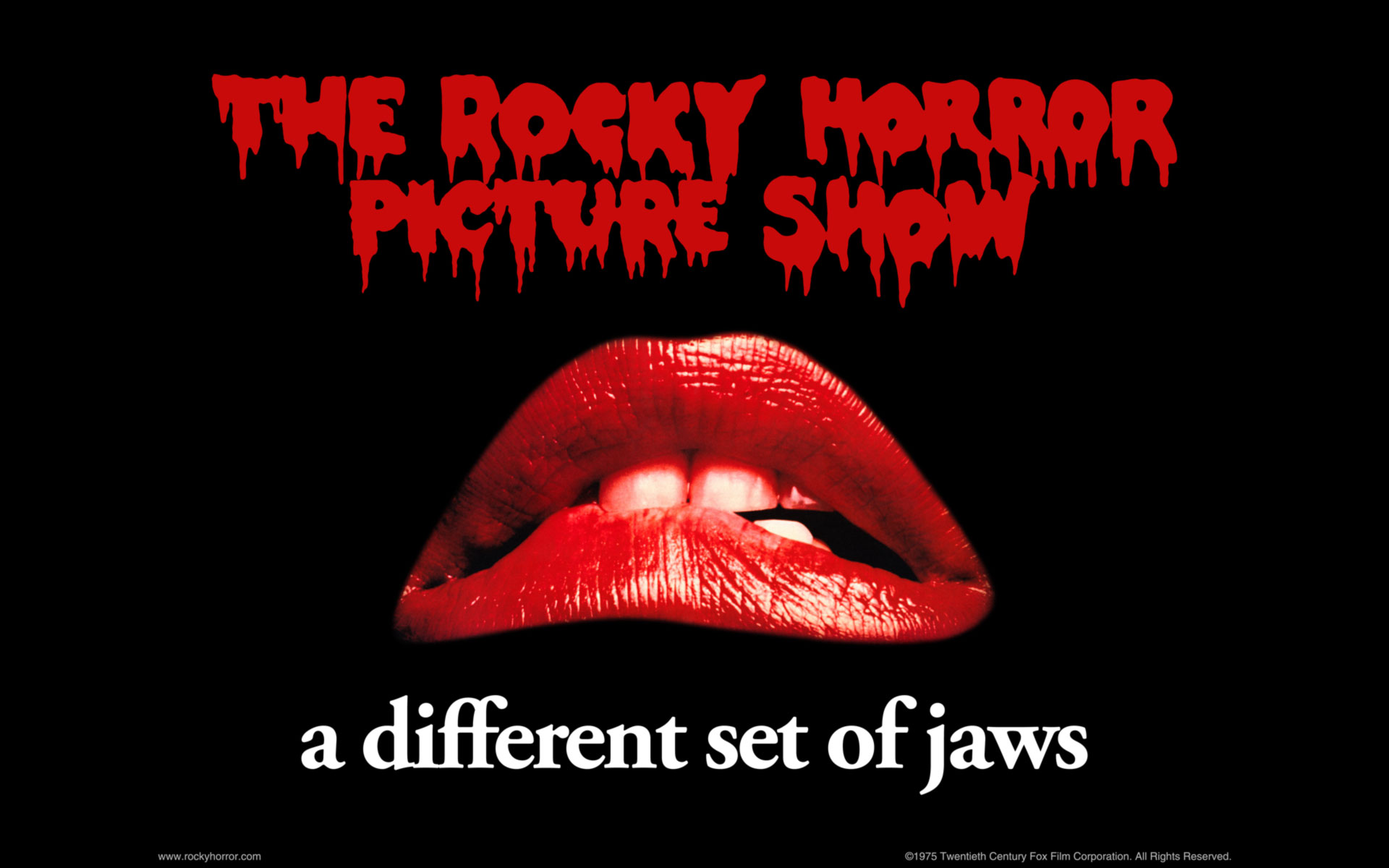
Fox has reportedly ordered The Rocky Horror Picture Show Event, a made-for-television reimagining of the 1975 musical comedy horror film The Rocky Horror Picture Show. The original film, holding the record as having the longest theatrical release in history, celebrates its 40th year in a limited release this year. Fans of the cult phenomenon shouldn’t have too much trouble following along with the two-hour TV special, as the script and music are expected to adhere to the original version. According to Deadline, Lou Adler, the original film’s producer, is set to be an executive producer of the special along with Gail Berman and Kenny Ortega.
Got a data cap on your smartphone? You should be grateful, according to an opinion piece that Verizon Wireless published on Friday.
"Let’s face it, if everyone had unlimited data and used it fully, the performance of the networks would suffer because of bandwidth restrictions and the 'shared resource' nature of wireless," industry analyst Jack Gold, founder of J. Gold Associates, wrote in an article titled "The Lure of Unlimited Wireless Data—Is It Necessary?"
Gold went on to write that customers have shifted high-bandwidth activities to Wi-Fi networks, where usage doesn't count against cellular data caps, and that "users are very well served by current wireless data plans, and really don’t require more. So, while unlimited data may sound attractive, there is no practical effect of data limits on the majority of users."




 OnlyMrGodKnowsWhy
 1) Why did you pick April 12 at 4 p.m.?
 1) Why did you pick April 12 at 4 p.m.?


 Super Opinionated.