Read more of this story at Slashdot.

Read more of this story at Slashdot.


Isn’t "The District Sleeps Alone Tonight" a perfect song? The same could be said for a few other tracks from Postal Service’s debut release, but the perfection of this bleak song is underlined by the GameCube copy of Animal Crossing just hanging out in the album art for its single.
Now, I don’t imagine Ben Gibbard was tending a virtual town when he wrote the song, inspired when he thought "I’m staring at the asphalt wondering about the gyroids buried underneath" — the art’s actually from husband-and-wife team Kozyndan. You can buy it as a print, pillow, or device skin here.
Anyway, the point of this post is that bands with GameCube stuff in their artwork are cool. Big ups to Caribouj for spotting the box in the art.
BUY AC: New Leaf, District Sleeps Alone Tonight, upcoming games
Best Buy has stopped taking Xbox One pre-orders, both in stores and online.
The Best Buy website, on which the Xbox One Day One Edition is the only console listed, says pre-orders are "sold out online," and customers cannot place orders for in-store pickup, either.
We called a Best Buy store and were told that pre-orders were no longer being accepted, although the store employee noted that there's a chance the big-box retailer will reopen pre-orders after it gets a better idea of the stock it will have at launch. Best Buy is still accepting pre-orders for PlayStation 4 consoles and bundles.
GameStop ceased in-store Xbox One pre-orders last month, although customers can still head to its website and pre-order the console. The Day One Edition is sold out on Amazon, but the online retailer is offering a pre-order of a "Standard Edition." Wal-Mart is still taking pre-orders for Xbox One consoles and customizable bundles.

firehoseKryptos beat
firehose"Ms. Eerie is definitely my favorite of the new Ditko heroes, and only in part because a man born in 1927 is apparently more capable of devising strong female superhero characters than most writers active in the genre today. ... Also, there's a nosy journalist, which is treated in the same way as all nosy journalists are in Steve Ditko comics: with unbridled contempt"
Phase Three is where the series becomes mostly multi-paneled stories and begins behaving in a distinctly superhero comic book-like manner. The first issue of this phase, Ditko Presents (#6), debuts three brand-new super-characters -- two heroes and a villain -- one of which then headlines each succeeding issue, with numerous additional stories included (some of which are serialized across several issues). Each of the “main” characters' stories are period pieces, taking place in the 1930s: the decade in which comic book superheroes were born, and the roots to which Ditko now returns, in the twilight of his career.
THE MADMAN (appears in 6, 7, 10, 13, 16)

LOOK AT THAT FACE. Ditko may be all about the hero as an inspiring force, but as a citizen of this world he understands that the vast majority of people are prone to ethical lapses and small, damning compromises. More and more, his recent work focuses less on superheroes bellowing speeches into whatever space is available in the panel, than compromised human beings writhing in psychic agony over their flaws. To continue my religious comparison, to read Ditko is to know we live in a fallen world, though no god awaits these poor souls after death.
The Madman is the only “big” serial Ditko is running in his new comics: a gigantic continuing mystery story featuring modular adventures issue by issue, but potentially building toward something greater. At the center of it all is Matt Madder, a freelance thief and dedicated Individual who is accused of murder and driven insane on drugs in a psychiatric unit. Sadly for everyone, he then escapes from custody, his chemically addled brain inspiring him to dress in a frankly amazing sparkles-and-polka-dot ensemble like a blotter paper rendition of the Spirit, his only mission revenge on the people who double-crossed him: and everyone in the paranoid city of Zane is implicated!

As you can see, Madder's eccentric fashion sense reflects Ditko's visual interests: his slacks are tidy horizontal stripes, while his shirt is mad and squiggled: he is both heroic and unheroic, a victim of rationality-destroying Force and frame-up Fraud that has come back to haunt the city, exposing the ethical rot of so many.
This is another important quality of Ditko's recent work. Often, the “hero” is an overtly inhuman, purely metaphorical agent, disinterested in living in human society at all, and dedicated solely to needling the bad and empowering the good.
By way of illustration, here's the Distorter, a character from #17: Seventeen (#17):

The Distorter is the guy/gal with the power coming out of a hand in a ruffled sleeve in panel two. This is all we ever see of him/her. He/she never speaks. All that happens is that the power -- as with Kirby, crackling dots generally denote the presence of super-energy -- transforms three titans of industry into living shapes, symbolic of their status as jagged aggression, wobbly compromise, and steadfast, square-bound objectivity.
And then they fight.

A common knock against Randian folk is that they tend to favor the activities of self-serving corporations against real people, but Ditko avoids this. Indeed, a huge portion of his rogues' gallery is rapacious businessmen and nasty rich dudes who've accumulated money through ill means. Money is not really important to Ditko. By dint of his career biography, he plainly does not place blind trust in corporate actors. What is important is the Ideal, and when his heroes are close to human, they suffer for it in the uncaring world. The ol' Parker luck.
MISS EERIE (appears in 6, 8, 11, 14, 17)

The police of the 1930s did not allow women on the force. So, May Ero became a superhero.
You will not find an origin story more perfect than that, nor will you find as straight-up Golden Age a superhero design as a lady dressing up in a scary mask and beating the snot out of crime without ever losing her totally awesome hat.

Ms. Eerie is definitely my favorite of the new Ditko heroes, and only in part because a man born in 1927 is apparently more capable of devising strong female superhero characters than most writers active in the genre today. Maybe that's a sign your philosophical model is a woman. Miss Eerie is hardly alone in these comics:

Here we see luckless Ida, passed over for the big promotion in favor of mushy Brad, whose “I... I guess I am qualified!” is genuinely hilarious. This is from a two-part story in A Ditko Act 3 (#8) and Act 4 (#9).

Ah, but suddenly Ida and Brad are sucked into a vortex by the Cape, another baffling hero that targets random humans for inter-dimensional mettle-testing, possibly in retaliation for that NBC television series ruining its good name.

Whisked away to the jungles of pre-history, Ida demonstrates to Brad how a self-starting go-getter behaves herself in the wilds of finance.

Finally transported back home, Brad, observing the facts in front of him, arrives at a rational, objective valuation of how he is s****. “...if she'll have me...” sounds like a homage to Wonder Woman creator William Moulton Marston to me!
THE !? (appears in 6, 9, 12, 15, 18)

Speaking of communication, Ditko does enjoy a good joke, and none are better in the comics form than superhero names that frustrate any attempt at verbal communication. Try pretending this is a movie!
The !? is a gym owner in a bad part of town, at a crossroads between rival gangs. When trouble rears its head, this masked marvel takes to the rooftops, sowing confusion and exasperation (“!?”) amongst those who can't tell which side he's on -- because he has to take a side! He can't possibly be... AN INDIVIDUAL!?!?!?
Plus, there's wrasslin'.

Crusher Hogan couldn't have done it better. Also, there's a nosy journalist, which is treated in the same way as all nosy journalists are in Steve Ditko comics: with unbridled contempt (see "Ditko Vs. The Press" sidebar below!)!
Add Hearst to the names of traditional media companies trying to stop Aereo from expanding its web TV service. WCVB, a Hearst-owned TV station, filed a copyright lawsuit yesterday in Boston, according to Bloomberg, accusing Aereo of "capturing its signals and retransmitting the programming to its subscribers without a license, the newswire reported.
We haven't seen the complaint yet, but the accusations sound very similar to those made last year in New York by CBS, Fox, NBC and other TV broadcasters — allegations that were rejected by two federal courts. Aereo showed the court that it doesn't capture any signals. The company connects subscribers to tiny TV antenas via the internet. Customers control those aerials, which are stored in Aereo's facilities, to change channels and record shows with the company's DVRs.
"WCVB will be deprived of existing and potential revenue streams"
“If Aereo is permitted to profit from the unauthorized retransmission of copyrighted television programming, WCVB will be deprived of existing and potential revenue streams from advertising and authorized retransmissions,” Hearst said according to Bloomberg.
Developing
firehose!!!!!!!!!!!!!!!!!!!
“Without Apple’s orchestration of this conspiracy, it would not have succeeded as it did in the spring of 2010,” the judge, Denise L. Cote of United States District Court in Manhattan, said in her ruling. She said a trial for damages would follow.
The Guardian |
Apple played 'central role' in ebook price-fixing conspiracy, says federal judge
The Guardian Apple has been found guilty of conspiring with book publishers to raise ebook prices, in one of the biggest anti-trust lawsuits ever brought by US federal authorities. US district judge Denise Cote ruled on Wednesday that the company played a "central role" in ... E-Book Ruling Gives Amazon an AdvantageNew York Times (blog) Apple's Court Loss Could End the Book as We Know ItWired Apple Learns The Hazards Of Innovation With E-Book Antitrust RulingForbes BBC News -Modesto Bee all 407 news articles » |
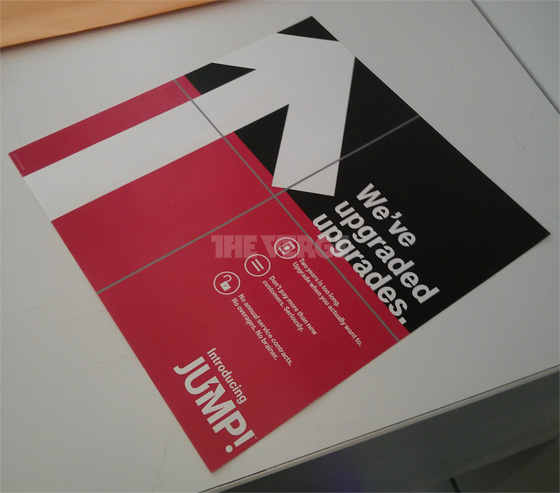
The Verge has learned that T-Mobile will introduce an unlimited phone upgrade scheme today called Jump that would allow subscribers to "upgrade when [they] actually want to" by paying the same amount for a new phone that a new customer pays, as often as they like without waiting a certain number of months or years to qualify for upgrade pricing. Rumors that such a plan might be introduced were first reported first by TmoNews, which suggests a monthly fee may be involved and that subscribers would need to trade in their current handset to qualify. AT&T and Verizon recently made headlines by extending upgrade qualification times to a full two years, meaning that if a customer wishes to buy a new handset before then, they're required to pay the full unsubsidized price.
T-Mobile's event — at which it proclaims it'll announce it's "boldest moves yet" — is later today at 2:30PM ET, and we'll be there live.
NBC4 Washington |
Gun activist arrested on drug, weapons charges
USA TODAY Adam Kokesh has said he made the video in an act of civil disobedience. Adam Kokesh. Gun activist Adam Kokesh appears in a YouTube video taped July 4 in Washington showing him loading live ammo into a shotgun in violation of local laws. He calls it an ... Police reportedly search home of gun rights activist Adam KokeshFox News Police search home of pro-gun activist Adam KokeshCNN Activist arrested after loading shotgun in Freedom PlazaWashington Times New Mexico Watchdog -Politix -NBC4 Washington all 24 news articles » |
A little over a week after it dropped a new version of its Android app with a full 'Metro' redesign, Skype has rolled out an update which fixes some of the issues reported by users during that time. This biggest change is the addition of a new sign out options,which can be made it easier for users to sign out of their account and now offers both a Menu key option or from any of the main navigation screens. Previously, users were required to navigate to their profile and hit a conspicuously-placed overflow button to sign out of the app.
Skype notes it has patched a bug that prevented users from logging in or making/receiving calls if they had set their status to offline before updating to the new version. A similar bug that stopped users making video calls has also been fixed. While it's a minor update, Android users will be able to better manage the app's battery consumption, ensure calls are forwarded to the correct devices, and remove the persistent Skype notification from the status bar.
firehose'The PAC announced it has hired 270 Strategies to build a field operation to marshal voter support for a potential 2016 Clinton campaign. The firm's partners include Jeremy Bird, Obama's 2012 national field director, and Mitch Stewart, who oversaw the campaign's operations in battleground states.'
Politico |
Pro-Clinton super PAC hires Obama 2012 field organizers
USA TODAY WASHINGTON – Ready for Hillary, the super PAC pushing a presidential bid by Hillary Rodham Clinton, is joining forces with a firm whose leaders built President Obama's wildly successful grassroots campaign operation. The PAC announced it has hired ... Hillary Clinton super PAC turns to Obama teamPolitico Oscar de la Renta comes to Ark., where pantsuit he designed for Hillary Clinton ...Minneapolis Star Tribune Hillary Clinton Debuts Wind - Tousled , Bouncy Hair as Anna Wintour Endorses ...Vanity Fair Newsday -Newsworks.org all 155 news articles » |
By John Walker on July 10th, 2013 at 12:00 pm.

In the latest example of a pencil manufacturer being sued for the doodles of a pencil purchaser, the complete buffoons at Putt-Putt are attempting to sue Minecraft for the creations of players in the game. In other news, duuuuuuuuuuhhhhhhhhh.
In Notch’s usual fashion, the legal letter was promptly published online for us all to enjoy. You can do that here. In this remarkable diatribe, they demonstrate no perspicacity whatsoever, seemingly having managed to generate a hefty legal threat without doing even a fraction of a scrap of research. So it is that the owners of a collection of crazy golf courses are trying to sue the creators of a blank canvas.
After boasting about just how famous Putt Putt Golf is, their missive states,
“It has recently come to our attention that Mojang AB has been using, without authorization, our famous Putt-Putt trademarks in connection with your business. A copy of images showing such unauthorized use of our famous trademarks is enclosed for your review.”
Remarkable, these so-called images are in fact a collection of YouTube results in a Google search, showing how people have created their own mini-golf courses in the game and then uploaded footage. None, obviously, shows Minecraft itself containing these very very very famous trademarks, but rather super-imposed text added via video editing software.
Now, there’s one out here for Putt-Putt. Their name is one of those that is in danger of slipping into common usage, a Sellotape, Xerox or Hoover scenario, where they must fiercely defend their trademarks – and been seen to be doing so – lest they lose exclusive rights over the words. Arcane laws state that if you don’t defend your trademarks, they can become public domain, and this is often the reason behind some of the more spurious-seeming writs. (And it really happens: ask Otis about “escalator”, or Thermos about, well, “Thermos”.)
However, while that may be the case, it’s pretty idiotically applied here. Minecraft of course no more contains Putt Putt Golf trademarks than a box of Crayola crayons contains the works of Disney. While one can see a rationale for cruelly suing the mom-n-pop mini-golf course that calls itself “Putt-Putt Funtimes” to prevent that slip into “genericized trademark”, there’s no justification here, and they’ve made themselves look extremely silly. They go on to say,
“We feel that Mojang AB’s use of the Putt-Putt name has benefited Mojang AB to the detriment of Putt-Putt. Due to the identical nature of the marks at issue, it appears that confusion as to the source and/or sponsorship is unavoidable. Accordingly, we require your prompt written assurance that Mojang AB, and each and every person, agent, and entity affiliated with Mojang AB, will immediately refrain from all use of the Putt-Putt trademark in connection with your business.”
Well, I suppose they could write that letter right now, with nothing changing at all! They of course go on to say that if Mojang doesn’t comply with their “amicable” resolution, they’ll sue them to bits, suggesting they’d seek “damages of a reasonable royalty for Mojang AB’s past infringing use.” Since there has been no infringement, and indeed if anything the player’s use of the product name in their creations could be deemed as healthy advertising for the firm, it wouldn’t seem unreasonable for Mojang to reply with a bill.
Fortunately Mojang are not ones for being bullied, and so I expect Putt Putt will quietly walk away from their mistake without much fuss. Although it’d be pretty hilarious if they didn’t. Previous equally ludicrous attempts at suing the creators of art media have resulted in humiliation for the pursuers, as was neatly demonstrated back in 2004 when Marvel stupidly tried to sue City Of Heroes for giving players freedom to create their own characters. It was finally abandoned in 2007, after a judge had very sternly told Marvel to stop being such dickwads. It’s likely the same will happen to Putt-Putt if they try to pursue it any further.
This is really interesting. It starts by talking about a "cant" dictionary of 16th-century thieves' argot, and ends up talking about secret languages in general.
Incomprehension breeds fear. A secret language can be a threat: signifier has no need of signified in order to pack a punch. Hearing a conversation in a language we don't speak, we wonder whether we’re being mocked. The klezmer-loshn spoken by Jewish musicians allowed them to talk about the families and wedding guests without being overheard. Germanía and Grypsera are prison languages designed to keep information from guards -- the first in sixteenth-century Spain, the second in today’s Polish jails. The same logic shows how a secret language need not be the tongue of a minority or an oppressed group: given the right circumstances, even a national language can turn cryptolect. In 1680, as Moroccan troops besieged the short-lived British city of Tangier, Irish soldiers manning the walls resorted to speaking as Gaeilge, in Irish, for fear of being understood by English-born renegades in the Sultan's armies. To this day, the Irish abroad use the same tactic in discussing what should go unheard, whether bargaining tactics or conversations about taxi-drivers' haircuts. The same logic lay behind North African slave-masters’ insistence that their charges use the Lingua Franca (a pidgin based on Italian and Spanish and used by traders and slaves in the early modern Mediterranean) so that plots of escape or revolt would not go unheard. A Flemish captive, Emanuel d’Aranda, said that on one slave-galley alone, he heard "the Turkish, the Arabian, Lingua Franca, Spanish, French, Dutch, and English." On his arrival at Algiers, his closest companion was an Icelander. In such a multilingual environment, the Lingua Franca didn't just serve for giving orders, but as a means of restricting chatter and intrigue between slaves. If the key element of the secret language is that it obscures the understandings of outsiders, a national tongue can serve just as well as an argot.
By Nathan Grayson on July 10th, 2013 at 1:00 pm.

All good things must come to an end. Weekends, guitar solos, and – yes – even seemingly unending conversations with a panel of thoughtful game developers. It is nature’s way. And so we reach the third and final part of my chat with Obsidian’s Chris Avellone, Dreamfall’s Ragnar Tornquist, Vlambeer’s Rami Ismail, Introversion’s Chris Delay, and Redshirt’s Mitu Khandaker. This time we discuss clones, competition, diversity, and the future of PC gaming. Also, Ragnar dies horribly. Or maybe he leaves in the middle. I forget. Either way, READ ON OR REGRET FOREVER.
RPS: So games on Kickstarter exist in a weird state of both cooperation and competition, but what about the other ways smaller developers butt heads? What about, say, cloning?
It’s going to be PC, always. You develop on PC, it works on PC, you put it on PC.
Ismail: Well, cloning is a completely different story. You know how we feel about clones, right? [laughter]
Delay: It doesn’t help you if it gets out on Steam first, gets to market first. No one ever paid for DayZ. The War Z made millions of dollars in sales.
Avellone: I didn’t do any metrics for this, but the old-school RPG [Brenda Romero and Tom Hall] were promoting started like halfway through our Kickstarter. I wonder how much that translated into success versus the breaking point for either one of those projects. I have to think about that. I felt like those shared the same awareness space to an extent. I just want to do due diligence and say that there are instances where there can be competition like that.
Ismail: Again, those are… It will be interesting see what happens if they try and figure out a way to work together. The Humble Bundle and a lot of similar initiatives like the Indie Megabooth are all about using that – putting things together, even if they’re similar, and just saying, “Here, guys. Here’s a bundle. Support them both.”
RPS: It’s sort of bizarre how consumerism works in that sense. On one hand, we have a bunch of companies that are just absolutely adamant about competing against each other. But then half the services and storefronts that sell stuff to us are saying, “If you like this, you’ll probably also like this!”
Avellone: You’ll enjoy Running With Friends! [laughter]
Ismail: Those are the things that I wonder about. Is that necessary? The way I’ve seen a bunch of games get a lot of attention is not by competing, but by working together. I wonder. On Kickstarter, could it be that two similar projects launch, and the project creators go, “Here’s a bundle”?
Tornquist: I think the danger there is that you’d make the same amount of money as one of them would and you’d have to split that money so that both project weren’t feasible.
Avellone: I can relate to that happening, because with inXile we offered digital versions of each of these products as part of the Kickstarter process, and we felt that it helped us both. But to devil’s-advocate that, the Kickstarters weren’t running at the same time.
Ismail: So we don’t know. Somebody should do this. End of story. You two, make video games and bundle them.
Delay: When in doubt, bundle.
Ismail: I think there’s a lot of value there. It’s interesting to see how many consumers are complaining about the amount of games that they have in their Steam libraries that they have never played. It’s not because they don’t want those games. It’s just that they have a whole bunch of games that they’ve bought in bundles and things like that.

Tornquist: I think restrictions on time are a lot more important than restrictions on money. People can afford to buy more games than they do a lot of the time, but especially triple-A games. People buy like five games a year…
Avellone: The whole consumerism thing… Time urgency, seemingly drastically reduced price, I’d better jump on this now… That’s a proven commercial technique for selling more than you need. [laughs]
RPS: Are you on some level competing with yourself when you Kickstarter? If you launch a certain type of Kickstarter, I think it seems like fans start to expect you to do a certain type of thing with it. Double Fine can get away with doing two different, varied types of games with their Kickstarters, because that’s always what they’ve been. They’re trusted for it. But people look at Obsidian, and if you guys did another Kickstarter and it wasn’t another old-school type of RPG, people would maybe raise some eyebrows at it.
Ismail: Please make a STALKER game.
RPS: Yes. I changed my mind. Forget my last statement and make a STALKER game.
Avellone: But it would happen because… For example, we wouldn’t have any sort of track record in a first-person shooter. We have no track record or experience with ever doing a game like that. I think that’s completely understandable. I don’t know if we’d want to do a first-person shooter, but you see my point.
Delay: You can make good use of that historical context, though, the things you’ve made and that people have liked. You’re saying, “I’m going to take that and make a new version and bring forward a lot of the things that you liked about it, but make it different.” But if you come out and say you’re going to make something completely different, all the people that liked you for those original games would hate you for not remaking the original games, and the people that like the new game you’re making don’t care about the old games you made.
Ismail: This kind of sentiment is always an interesting thing. [laughter]
[Ragnar leaves forever due to time constraints]
RPS: The Ragnar has left the building.
Khandaker: I just couldn’t imagine doing a Kickstarter. It seems like the worst possible thing. Having to be accountable to that many people… I mean, that’s why I’m indie. I don’t want to be accountable to other people, right?
Ismail: I have exactly the same problem.
Avellone: Yeah, but I feel like you always are. You’re always accountable to the players.

Ismail: But there’s a big difference between being accountable to the player and being accountable to people who gave you money.
Avellone: If your players don’t give you money, I guess that works, but…?
Delay: You have the pirate community that downloaded your game from Bittorrent… [laughter]
Ismail: Well, that is a pretty huge community. The good thing about Kickstarter is that you know that these people are interested in what you’re doing, and that they believe that you can do it.
Avellone: Honestly, we found that they bought into the concept. They were really inspired by the concept. Once they’re part of the concept, they actually support the vision with other people. “Hey, I feel like I was part of developing this system, these mechanics.” They become the biggest advocates out on the net. When they’re talking to people who are just looking into the game, they’re like, “The systems in this game are great!” They’ve already bought in and they’re contributing.
Ismail: Making people part of your development is such a big thing.
Avellone: I feel like I’m building up a new community when we’re doing one of these projects, which is pretty cool.
Ismail: We focused a lot on having Vlambeer develop a community, instead of having separate games. Because we work on a game for three months and then we’re done with it. Being a fan of this specific game for three months isn’t really useful. We sort of built Vlambeer around Vlambeer. It’s been interesting, because if we’re ever going to do a Kickstarter, we could make a Kickstarter about whatever we come up with.

Avellone: But if you don’t need to, that’s great.
Ismail: No, we don’t need to. But the interesting thing is, I wouldn’t want to, because I’d be really, really scared. It sounds like the most terrifying thing.
Khandaker: And it’s not like it’s a sure thing. It seems like having a failed Kickstarter is worse than… The most depressing thing is those Tumblrs of Kickstarter wasteland…
Avellone: Well, I disagree.
Ismail: Which is why you did it. And that’s great.
Avellone: No, no, but the sense of… As painful as it can be to have a failed Kickstarter, I’ve known people who have realized what was flawed about the original idea and why it didn’t appeal to people. I’ve seen all the postmortems about why Kickstarters fail, and then they do another one that gets approved.
Delay: What about the usage fee? You’ve generated the money, but then… That would be surely the worst.
Ismail: Yeah, that would be the worst.
[long pause]
RPS: But anyway…
Ismail: Indie games!
RPS: Indie games, they are great. Especially for diversity in games – both in terms of the characters we portray and the people who make them. Do you think we’d have ever reached this point otherwise? Moreover, do you think this is one of the places where games are most powerful: giving people the ability to step into somebody else’s skin and understand their experience?
Ismail: Anybody can get into making games. For me, that is the biggest thing. If you are somebody sitting in a room upset about something… I know a few indie game developers that had bad experiences in their life, and they’re just like, “I want to explain this to somebody.” And they don’t know how to explain it. But they make a video game about it and they use that to explain it. Mattie Brice is a great example.

Delay: There’s a new route to market, too. It’s a commercial reality as well. You don’t have to sacrifice three years of your life [to express something].
Ismail: The other thing is, it doesn’t need to be a commercial reality. Mattie made that game because she wanted to make that game. She wanted to say something through that game. We’ve opened up our medium not just to the commercial space, but also to a lot of other spaces that are infinitely interesting, and we’re just starting to explore them, just starting to see. Having that happen sends a signal to the rest of the industry that these games are okay to make. These games are interesting to make. If the commercial space picks up on that, great, because I’d love to see commercial versions of games that deal with issues like that, as long as they do it with the same taste and the same care as these people that have put their heart and soul into it.
Khandaker: Yeah. Everyone should definitely check out Mattie Brice’s game, Mainichi. It’s brilliant. And it’s so important for me to have indie be something that’s very inclusive. There’s a worry that… As I was saying earlier, about not going, “Oh, we’re all now making money and we’re all following a similar path.” We’re not, and we shouldn’t need to be. It should be really open and diverse. It should be welcoming to as many types of people as possible.
RPS: Yeah. You ended up doing a rant at GDC, didn’t you?
Khandaker: Yeah. My rant at GDC was about race representation in games. And again, a lot of those concepts apply to the entirety of culture. But yeah, I think inclusivity is just important, and we shouldn’t even have to explain why it is, really. [laughs] It just is. It’s good business on the one hand, but I also hate that argument, because we shouldn’t have to go for the business argument when we’re trying to explain why people should just be treated equally as people. I don’t know.

Ismail: Like I said, games might be the most potent medium that I’ve seen. It has everything from everywhere. It has everything from audio, from video, from graphics, from writing. Anything can be in here. And then the player is put into this world or into this place or this situation that you’ve created to explain whatever you want. Whether you want them to shoot something, whether you want them to understand how it feels to be stared at by people in the street, whatever that is, you should be able to explain that in our medium. I think our medium is more than capable of doing all these things.
It would be a shame to have that limited by commercial interests, by political interests, by social interests. Just have everybody be able to make video games. That’s where the medium becomes mature, as far as I’m concerned.
RPS: At this point, the openness of the PC as a platform definitely enables a lot of people to make games. But at the same time, PC hardware sales are down and stores/tools on other platforms – whether console or mobile – are pretty proprietary. Do you think PC’s safe in the long run?
Ismail: It’s the most convenient. Making games for PC is easy. You’ve got Game Maker. You’ve got Unity. You’ve got all these tools.
Delay: Hardware sales might be slowing down because we don’t need to buy a new PC every six months, right?
Ismail: I definitely need to buy a new printer… [laughter]

Delay: Steam is there as a distribution method. The development tools are there on PC. It’s the natural home for it. Xbox was a really great place for indie games for a while, but it’s not anymore. Definitely not anymore. There’s a new generation coming around and maybe they’ll all be different. Maybe Sony will do something different. But the PC’s always there.
Ismail: It’s a generation of convenience. It’s really about convenience.
Delay: And you can aim in first-person shooters. That’s a real benefit. [laughter]
Avellone: It’s the control stuff for us. It’s largely the control stuff on consoles that prevented us from doing all the RPGs that we wanted to do. While there are great RPGs that come out for systems like that, we miss having a larger party. That’s the stuff that we grew up designing. That’s what we’re really passionate about. Having a device that limits that kind of input is disappointing, and on PC we don’t have that sort of problem.
Being able to turn to that was really gratifying for us. And a lot of the advantages you guys described in terms of things like Unity and digital distribution… I feel like there are more avenues to get the game out there in the first place on PC. Added to that, a lot of the community, I feel, is also PC-centric. Everybody reads the forums through the PC anyway. It’s so easy to switch back and forth between community and game.
Ismail: I guess the simple answer for why PC will remain the place for creative games is that pretty much everybody has a PC. Pretty much everybody can develop something for PC without needing anybody to say yes and without needing to pay money to anybody. You make your game, you put it out there, you send the link to somebody, and it works.

RPS: With that in mind, why don’t we have more open platforms? Why haven’t more companies picked up on this?
Ismail: Ouya’s working on it. Sony’s working on it. A lot of people are working on making sure that things open up. But it’s going to be PC, always. You develop it on PC, it works on PC, and you put it on PC.
[Everyone nods in general agreement]
RPS: Well then, hurrah! Thank you all for your time.

The media is abuzz once again with stories about dying bees. According to a new report from the USDA, scientists have been unable to pinpoint the cause of colony collapse disorder (CCD), the mysterious affliction causing honey bees to disappear from their hives. Possible factors include parasites, viruses, and a form of pesticide known as neonicotinoids. Whatever the cause, the results of a recent beekeeper survey suggest that the problem is not going away. For yet another year, nearly one-third of US honey bee colonies did not make it through the winter.
Given the variety of crops that rely on honey bees for pollination, the colony collapse story is an important one. But if you were to rely on media reports alone, you might believe that honey bees are in short supply. NPR recently declared that we may have reached “a crisis point for crops.” Others warned of an impending “beepocalypse” or a “beemageddon.”
In a rush to identify the culprit of the disorder, many journalists have made exaggerated claims about the impacts of CCD. Most have uncritically accepted that continued bee losses would be a disaster for America’s food supply. Others speculate about the coming of a second “silent spring.” Worse yet, many depict beekeepers as passive, unimaginative onlookers that stand idly by as their colonies vanish.
This sensational reporting has confused rather than informed discussions over CCD. Yes, honey bees are dying in above average numbers, and it is important to uncover what’s causing the losses, but it hardly spells disaster for bees or America’s food supply.
Consider the following facts about honey bees and CCD.
For starters, US honey bee colony numbers are stable, and they have been since before CCD hit the scene in 2006. In fact, colony numbers were higher in 2010 than any year since 1999. How can this be? Commercial beekeepers, far from being passive victims, have actively rebuilt their colonies in response to increased mortality from CCD. Although average winter mortality rates have increased from around 15% before 2006 to more than 30%, beekeepers have been able to adapt to these changes and maintain colony numbers.

Rebuilding colonies is a routine part of modern beekeeping. The most common method involves splitting healthy colonies into multiple hives. The new hives, known as “nucs,” require a new queen bee, which can be purchased readily from commercial queen breeders for about $15-$25 each. Many beekeepers split their hives late in the year in anticipation of winter losses. The new hives quickly produce a new brood and often replace more bees than are lost over the winter. Other methods of rebuilding colonies include buying packaged bees (about $55 for 12,000 worker bees and a fertilized queen) or replacing the queen to improve the health of the hive.
“The state of the honey bee population—numbers, vitality, and economic output—are the products of not just the impact of disease but also the economic decisions made by beekeepers and farmers,” economists Randal Rucker and Walter Thurman write in a summary of their working paper on the impacts of CCD. Searching through a number of economic measures, the researchers came to a surprising conclusion: CCD has had almost no discernible economic impact.
But you don’t need to rely on their study to see that CCD has had little economic effect. Data on colonies and honey production are publicly available from the USDA. Like honey bee numbers, US honey production has shown no pattern of decline since CCD was first detected. In 2010, honey production was 14% greater than it was in 2006. (To be clear, US honey production and colony numbers are lower today than they were 30 years ago, but as Rucker and Thurman explain, this gradual decline happened prior to 2006 and cannot be attributed to CCD).

What about the prices of queen bees and packaged bees? Because of higher winter losses, beekeepers are forced to purchase more packaged queen and worker bees to rebuild their lost hives. Yet even these prices seem unaffected. Commercial queen breeders are able to rear large numbers of queen bees quickly, often in less than a month, putting little to no upward pressure on bee prices following CCD.
And what about the prices consumers pay for crops pollinated by honey bees? Are these skyrocketing along with fears of the beepocalypse? Rucker and Thurman find that the cost of CCD on almonds, one of the most important crops from a honey bee pollinating perspective, is trivial. The implied increase in the shelf price of a pound of Smokehouse Almonds is a mere 2.8 cents, and the researchers consider that to be an upper-bound estimate of the impact on fruits and vegetables.
There is, however, one measure that has been significantly affected by CCD—and that’s the pollination fees beekeepers charge almond producers. These fees have more than doubled in recent years, though the fees began rising a few years before CCD was reported. Rucker and Thurman attribute a portion of this increase to the onset of CCD. But even this impact has a bright side: For many beekeepers, the increase in almond pollination fees has more than offset the costs they have incurred rebuilding their lost colonies.
Overcoming CCD is not without its challenges, but beekeepers have thus far proven themselves adept at navigating such changing conditions. Honey bees have long been afflicted with a variety of diseases. The Varroa mite, a blood-thirsty bee parasite, has been a scourge of beekeepers since the 1980s. While CCD has resulted in larger and more mysterious losses, the resourcefulness of beekeepers remains.
Hannah Nordhaus, author of The Beekeeper’s Lament, warned that the scare stories evoked by CCD should serve as a cautionary tale to environmental journalists. “By engaging in simplistic and sometimes misleading environmental narratives—by exaggerating the stakes and brushing over the inconvenient facts that stand in the way of foregone conclusions—we do our field, and our subjects, a disservice,” she wrote in her 2011 essay “An Environmental Journalist’s Lament.”
“The overblown response to CCD in the media stems from a failure to appreciate the resilience of markets in accommodating shocks of various sorts,” write Rucker and Thurman. The ability of beekeepers and other market forces to adapt has kept food on the shelves, honey in the cupboard, and honey bees buzzing. Properly understood, the story of CCD is not one of doom and gloom, but one of the triumph and perseverance of beekeepers.
We welcome your comments at ideas@qz.com.

firehosechop off the dead limb
ABC7Chicago.com |
Tribune Co. to Split in Two
New York Times (blog) Ending months of speculation, the Tribune Company announced on Wednesday that it would spin off its newspapers, including The Los Angeles Times and The Chicago Tribune, into a separate division called Tribune Publishing Company. Its broadcasting ... Tribune to Spin off Publishing From Broadcast BusinessWall Street Journal Tribune plans to split into 2 companiesMiamiHerald.com Tribune to separate broadcasting, publishing businessesReuters Q13 FOX -Chicago Tribune all 17 news articles » |
firehose'”Our discretionary sales remained challenged as our customers have been forced to make spending choices between basic needs and wants.” The future looks equally grim, he noted. “Consistent with market trends, we expect that our customers will continue to face financial headwinds.” And this time around, the slump can’t be blamed on payroll taxes and delayed tax refunds.'

 The numbers: Weak. Total revenues rose 9% to $2.57 billion in Family Dollar Stores’s third quarter, but profit at the dollar discount store fell 2.9% to $120.9 million due to dwindling profit margins. The company’s profit forecast for the fourth quarter is grim, consistent with overall negative expectations. But analysts expected an even worse showing, and shares rose 2.5% in pre-market trading.
The takeaway: It didn’t take much for Family Dollar to beat remarkably low analyst estimates. When Wal-mart posted underwhelming earnings back in May, the question was whether its cheaper competitors—namely the likes of Family Dollar Stores and Dollar General—were stealing its mojo. Apparently they weren’t. Dollar General already lowered its full-year outlook last quarter, and, like Walmart, Family Dollar has been subsisting on disappointing earnings.
What’s interesting: A poor performance for Family Dollar Stores reflects the dire straits of low-income American families, who rely on variety discounters for discretionary items like clothing and bedding. CEO Howard Levine stressed the implications. ”Our discretionary sales remained challenged as our customers have been forced to make spending choices between basic needs and wants.” The future looks equally grim, he noted. “Consistent with market trends, we expect that our customers will continue to face financial headwinds.” And this time around, the slump can’t be blamed on payroll taxes and delayed tax refunds.

firehose'"So as part of our design process we ended up making a giant controller, 50 percent larger than usual, so that we could directly experience what it feels like to be a child playing a game," Cerny said.'
a novel solution to avoiding interaction with children during the design process

 Giant DualShock helped make Knack accessible to kids, taught design lessons originally appeared on Joystiq on Wed, 10 Jul 2013 08:30:00 EST. Please see our terms for use of feeds.
firehoseclickthrough for video
In Cuckoo Clock Hell, Titisee, Germany
firehose- This conference is in the same mode as Apple's conference.
- - Every stupid joke gets guffaws and cheers.
- - It's so tiresome.
What they announced
Now they're doing demos
firehosevia Overbey
meanwhile, in Portland

    
|
Imagine a weapon that creates sound that only you can hear. Science fiction? No, this is one area that has a very solid basis in reality. The Air Force has experimented with microwaves that create sounds in people’s head (which they’ve called a possible psychological warfare tool), and American Technologies can "beam" sounds to specific targets with their patented HyperSound (and yes, I’ve heard/seen them demonstrate the speakers, and they are shockingly effective).

The goal of the Sonic Projector program is to provide Special Forces with a method of surreptitious audio communication at distances over 1 km. Sonic Projector technology is based on the non-linear interaction of sound in air translating an ultrasonic signal into audible sound. The Sonic Projector will be designed to be a man-deployable system, using high power acoustic transducer technology and signal processing algorithms which result in no, or unintelligible, sound everywhere but at the intended target. The Sonic Projector system could be used to conceal communications for special operations forces and hostage rescue missions, and to disrupt enemy activities.
Here’s the question of the day: if the military were to beam voices into somebody’s head, what would they say?
firehosevia Russian Sledges

It certainly took its time to arrive, but a number of coin-operated phone booths in Leeds have gotten a Doctor Who-like makeover in the form of a fresh blue paint coat, complete with free Wi-Fi and interactive information stations with touchscreens. Just one word, that’s all: TARDIS.
The post TARDIS finally arrives in Leeds as wifi-enabled phone booths appeared first on Lost At E Minor: For creative people.