firehose
Shared posts
Mars Chefs Ready To Emerge From Simulated Mission
Teenager Tackles Autism With Help From Google Glass
Icarus Proudbottom Teaches Typing Is Incredible
firehoseaw;dp
By Nathan Grayson on August 13th, 2013 at 8:00 am.

“When we’re done with you, your fingers will be like gods.”
That is just one of roughly a trillion gems from Icarus Proudbottom Teaches Typing, which doesn’t really teach typing so much as it uses the act of inputting words into a computer as a loose framework magnificently bizarre insanity. You might remember Icarus Proudbottom and his best spirit owl pal from John’s favorite game of all time (it’s about poo), but this one unfurls a yarn of a rather different nature (it’s not about poo). Sometimes there is typing. Other times? RPG stat sheets, virtual pet minigames, loving odes to the tilde key, copious profanity, and a sinister end-of-game plot twist. Icarus Proudbottom Teaches Typing probably won’t teach you to type, but it might help you learn to love again.
It begins like any other edutainment game – overly cheery characters guiding you through a tutorial, lots of bright colors, a talking animal of some sort – and then wastes no time spiraling into madness. Exceedingly silly, occasionally dark madness. So it’s kind of like “edutainment” stablemate Frog Fractions, at least in that respect. Without spoiling too much, there’s a sketchy secret agent, the fourth wall gets shattered into four million pieces, the owl is a wizard, and Icarus worships typing with zeal that makes religion look like hobbyist ship-in-a-bottle creation.
For the most part, the writing is excellent. I laughed out loud at multiple passages I typed, not to mention character dialogue and, um, loading screens. A few gags tried too hard and fell painfully flat, but the plot rarely strayed far from my giggle button. Which sounds weird. Ew.
Oh, right: there’s also typing. It’s, um… yeah, it’s definitely typing. Press keys, letters come out – all that good stuff. Tilde (or control, if your keyboard is weird and lacks that most formidable of squiggles) activates a special mode that either replenishes health or gives you a score multiplier, but that’s it. Icarus Proudbottom Teaches Typing is about the gags, and they’re pretty wonderful.
Give it a go here. I highly recommend seeing it through to the end, which isn’t a particularly huge commitment given that the game’s only 20-30 minutes long. Enjoy!

Discover the majesty of video game worlds without risking your life
Other Places, a new video series on YouTube, sets out to celebrate the often unappreciated beauty and grandeur of the video game landscape. We're typically so busy slaughtering humans, aliens, and mythical creatures in the foreground, that the background tends to fade, well, into the background. Compiling idyllic scenes from some of the prettiest modern game worlds — like Dishonored's Dunwall and Bioshock Infinite's Columbia — YouTube user ultrabrilliant provides a tour through their intricate designs that's gracefully devoid of violence and blood spatter. It's like doing a pacifist run through these games without any of the actual effort.
- Via Polygonbuzzfeed
- Source ultrabrilliant (YouTube)
- Related Items games video gaming series youtube background compilation visual landscape watch this
Here's how NASA will use a 3D printer on the ISS
NASA says it will be ready to launch a zero-G-ready 3D printer into space in June 2014, in time for the fifth SpaceX mission to the ISS. The agency has prepared a video, complete with upbeat muzak, that details not only how astronauts will be able to print objects on demand, but why they might need to do so in the first place. As astronaut Timothy "TJ" Creamer puts it, 3D printers will enable "Star Trek replication right there on the spot."
The ability to fabricate equipment in space could save NASA considerable time and energy. "As you might imagine on Space Station, whatever they have available on orbit is what they have to use," says Niki Werkheiser, NASA's lead on the zero-G project. "And just like on the ground, you have parts that break or get lost."
"Just like on the ground, you have parts that break or get lost."
NASA will be able to preload blueprints onto the hardware, but has the ability to upload new files from the ground as well; Creamer notes that astronauts may be able to "make things we've thought of that could be useful" as well as simply replacing old tools.
The printer is designed by Made In Space, and was recently verified to work in zero-G with an experiment conducted through NASA's Flight Opportunities program. While the project should be launched within a year, NASA's interest in the field gets even more ambitious — the agency is also funding research into how to 3D-print food such as pizza.
- Source NASA (YouTube)
- Related Items nasa made in space 3d printing zero-g iss space station international space station printer
collectivehistory: London readers continue to browse at a...

Reviewed: New Logo and Identity for Outokumpu by N2 Nolla
Be Steel, my Beating Heart


Established in 1910 after the discovery of a copper ore deposit in Eastern Finland that led to successful mining, Outokumpu — which translates into strange (outo) mound (kumpu) according to Google Translate — is now one of the leading global manufacturers of stainless steel and high performance alloys. For example: they produce the material, T316L to be precise, that was used to construct Anish Kapoor's "Cloud Gate" (or "The Bean") in Chicago's Millennium Park. In 2012 Outokumpu acquired Inoxum, the stainless steel arm of ThyssenKrupp, making it an even bigger company with 16,000 employees in more than 40 countries. At the end of May, the company introduced a new logo designed by Helsinki-based N2 Nolla and a new vision, "a world that lasts forever".
All images sourced from here and here.
The resulting identity is a (re)cycle symbol — the forever 'O' — created from stainless steel, expressed through typography and colour palette, emphasising the structural and creative qualities of Outokumpu's stainless steel and high performance alloys. The brand level imagery visualises the forever brand message through a sense of time — the past, motion, and captured personal moments.
Behance project page



Even though the default reaction to the new logo should be of disapproval for being not much more than a pretty rendering, the approach and execution are anything but gratuitous. The company makes the material from which forms like their new logo are built. It's also a very nice rendering and the icon is something I could see as an actual object, either a giant structure or a small pendant on a necklace. My favorite aspect of the icon is the decision to have it reflect the color of the type next to it. It's a very nice detail that connects the flat typography with the overly dimensional icon. It is also extremely adaptable to any background: browse through their website and see how good the icon looks on every photograph. This is a very rare feat.

As part of the renewal, we collaborated with Tomi Haaparanta, directed by Brian Kaszonyi, to create a new font family that would share stainless steel's "building block" qualities as well as bring to the human and creative sides of the new brand attritubes alive.
The resulting type family has a sympathetic, modern core yet can almost go backwards and forwards in time and style by adding or subtracting serifs and structural lines -- a good reference to Outokumpu's rich history which extends back to landmarks such as the Chrysler Building through to today's Helix Bridge.
Behance project page


The typography is very interesting on its own, especially the multi-layered approach. But it doesn't seem to have much to do with the icon or with the stainless steel material. It's far too friendly and makes me think more of plastic than steel. Even the plain, sans serif style feels at odds with the icon. The slab starts to feel more appropriate but even then it doesn't feel like the right fit.


In application there isn't much to see and the layered typography doesn't even appear so far and the icon is what makes everything work, from the large, cropped versions on stage to the smaller applications on the stationery. In summary: great icon but ditch the type.

The Grammar Rules of 3 Commonly Disparaged Dialects
All dialects, from the very fanciest to the ones held in lowest esteem, are rule-governed systems. Here are three examples from three different commonly disparaged dialects that illustrate how dialects have grammar.

Linked: Fun With Jupiler Logo

Link
A bunch of type nerds had some fun modifying the Jupiler logo on the bar's coasters while out drinking.
There’s a maximum-security prison in Brazil where male inmates are expert knitters

Brazil’s Arisvaldo de Campos Pires is like any other maximum security penitentiary—inmates’ crimes range from armed robbery to murder, and armed guards patrol almost every inch of the prison. Except there’s one small quirk: many of the facility’s prisoners are becoming professional knitters.
As part of a prison-wide program called the Lotus Flower project, inmates are crocheting high-end clothing in exchange for a modest salary and—the real kicker—reduced prison sentences. The program, which began in 2009 after Brazilian fashion designer Raquel Guimaraes realized she was going to need help scaling up to meet demand for her Doiselles brand, has been wildly successful; over 100 inmates have now participated. And unlikely as it may seem, it’s been a male-only affair. While Guimaraes originally approached the penitentiary with a proposal to train female prisoners to produce clothing, they decided to work the men instead.
The incentives are so good that inmates aren’t merely willing, but are eager to start knitting. For every three days spent knitting, male inmates earn a full-day reduction in their sentences. And they get paid a salary—albeit a modest one—too: the workers earn 75% of minimum wage, a quarter of which is put aside and handed over upon their release.
Guimaraes, of course, never imagined that her ideal knitters would come in the form of tattooed felons, but the relationship has proved to be a surprisingly symbiotic one. Guimaraes’ company has managed to supply a slew of new stores, including some 70 across Brazil, as well as others in the US, France and Japan, and the prisoners have built skills and padded their bank accounts, all while reducing their time behind bars. ”The program gives inmates skills and confidence they can use when they return to life on the outside. This raises the self-esteem of the prisoners, and opens the door to work and employment for everyone else,” Celio Tavares, a former inmate jailed for armed robbery, told the Daily Mail.
18 prisoners currently help Guimaraes produce her handmade knit clothing. Reuters photographer Paulo Whitaker spent time at prison to document the project.


Tzatziki Dip Obituary

An office in Australia mourns the untimely dead of a Tzatziki Dip in the fridge.

Stephen Colbert Reveals Month-Long Headache Surrounding Daft Punk's Scheduled Appearance - The Hollywood Reporter
How Capitalism Explains Why Processed Food is Bad For You
 |
popular
shared this story
from  Rottin' in Denmark. Rottin' in Denmark.
|
Originally posted at The Billfold
I make a mean marinara sauce. I sauté onions, garlic and bacon (yes, bacon) for 10 minutes until they sweeten and become crisp, then add a big glass of red wine, a can of chopped tomatoes and generous pinches of salt, basil, oregano and rosemary. Then I leave the room. When I come back two hours later, the sauce is thick, sweet and almost purple. I throw in a handful of fresh basil leaves—done.
I’ve been thinking a lot about my marinara this week because I’ve been reading Michael Moss’s Salt, Sugar, Fat: How the Food Giants Tricked Us. Company after company, product after product, Moss shows how Big Food formulates products for maximum addictiveness and overeatability. Oreos, Cheetos, Lunchables, Wonder Bread, they’re all the same Iowa corn and Brazilian sugarcane, just liquefied, dyed and processed into different shapes and colors.
The same week I read Moss’s book cataloguing how Big Food is trying to kill us, I read David H. Freedman’s Atlantic cover story about how it’s also going to save us all. According to Freedman, big food companies—the same ones Moss accuses of nutritional euthanasia—are actually de-fatting, de-sugaring and de-salting their products one by one. McDonald’s is using whole-wheat buns, Cargill is selling a fullness-inducing tapioca starch, Stevia is fucking everywhere.
It’s a great article, and Freedman’s butchering of sacred foodie cows (Michael Pollan! Farmer’s markets! Granola!) is both essential and effective. But when it comes to his core argument, that America’s obesity problem is going to be solved by better processed food and bigger corporations, I’m not convinced. That’s not because I think it’s impossible to make a healthier Oreo or Pepsi or Lunchable—it wouldn’t actually be all that hard. Nope, corporations won’t make us healthier because capitalism makes it impossible for them to do so. Bear with me, I’ll explain.
1. Scale, Speed and Shelf Life
Let’s say I want to start selling my marinara, and I want to turn it into an industrial food megabrand—another Ragu, Hot Pockets, Lean Cuisine. The first thing I have to do is make it in huge batches and make each of those batches taste the same. No more willy-nilly tossing of spices, no more adding whatever veggies are in the fridge. I need to standardize every single element, from the weight of the onions to the heat under the pot.
To keep costs down, maybe I cut the simmering time in half, use salt instead of hours to make the flavors come out. Moss notes that herbs are up to 10 times more expensive than salt in industrial cooking, so that’s the first no-brainer modification.
The next problem is shelf life. Those Lunchables might look all crisp and fresh when you grab them out of the refrigerated aisle, but they sat around at room temperature for at least two months before they got there. Warehouses, wholesalers, truck beds, stockrooms, my marinara is going to need a lot of help not to go bad in all that time. That means preservatives (most of which, according to Moss, are derivatives and modifications of salt), chemicals, coloring agents to save my marinara’s magenta as it trundles across the country.
So now my sauce has been made in huge batches, jarred, shipped and shelved. It’s in the supermarket aisle. I win!
But wait. Thanks to all the preservatives and additives, my marinara tastes like an old sock. I go back to my simmering pot, add a glob of vegetable oil, a dash—OK, a deluge—of high fructose corn syrup, some thickeners and emulsifiers so it has that pasta saucey texture, and it’s ready for the store again.
Before I grew up and started cooking, I thought the pasta sauce I bought at the store was the same as the one I could make on the stove. I was just paying a bit extra so a factory worker somewhere did the chopping, seasoning and simmering for me. This is how our economy is supposed to work, right? I don’t knit my own clothes, I don’t build my own house, I don’t weld my bike together from parts. Why should food be any different?
There’s a scene in Moss’s book where he goes to a Cargill facility and they make him a slice of industrial-scale bread without any salt. The texture, the taste, the color, everything is wrong, Moss says. It tastes like a piece of tin foil.
This scene confused me. When I make bread at home, I use about half a teaspoon of salt for an entire loaf. If you cut the salt out of my homemade bread, yeah, it’s bland and a bit puffier (Alton Brown teaches us that salt counteracts the effectiveness of yeast), but it’s still bread, not some horrifying replicant.
But my bread, the one I spend the better part of a day kneading and proofing, is stale before I can eat about half of it. Wonder Bread, with 27 ingredients, half a teaspoon of sugar and 7 percent of your daily allowance of salt in every slice, lasts on the shelf for two weeks.
Processed food isn’t bad for you because the products—pasta sauce, macaroni and cheese, white bread—are inherently sweet and salty. They are bad for you because they are inherently industrial. Supermarket supply chains are long, slow and and unforgiving. Which means everything you buy at one has to be made in massive batches, perfectly standardized and capable of sitting at room temperature in a glass jar or plastic bag for months on end. If you took that kind of abuse, you’d need chemical assistance too.
2. Competition
My marinara sauce is now mass-produced, shelf-stable and OK-tasting. Sure, it’s got some extra salt and sugar, but it’s still one of the healthier brands on the shelves.
The only problem is, no one is buying it. Every other brand of pasta sauce at the supermarket has way more sugar and fat than my sauce, and they taste way better. To get people to switch to my sauce, I’m going to have to add even more sweeteners (sugar) and flavor enhancers (salt).
One of the most tragic sequences in Moss’s book is the story of Kraft in the early 2000s. The company, reeling with power from its huge market share in cereal (Raisin Bran), cookies (Oreos) and packaged pastas (the eponymous mac and cheese), started taking health and nutrition much more seriously. It added extra labels (alongside the miniscule USDA-mandated serving sizes, it listed nutrition facts for the whole package) and stealthily reduced the salt, sugar and fat in its most popular products. It even cut the calories in Oreos and started selling them in 100-calorie packs.
And then Hershey’s invaded. Starting in 2003, the chocolate company launched a line of S’mores cookies that were fatter and sweeter than Kraft’s newly trimmed-down Oreos. Kraft started to lose market share. It had no choice but to retaliate. And that’s how we got Banana Split Cream Oreos, Dairy Queen Blizzard Creme Oreos and Triple Double Oreos. They tasted better than normal Oreos, they had more sugar and fat and, not coincidentally, they sold better. Does Hershey’s even make cookies anymore?
The story of Kraft is one of the reasons I find Freedman’s “How Junk Food Can End Obesity” article so unconvincing. All of the major food companies—from Pepsi and General Mills right down the line to Monsanto—are publicly traded. They’re big, they’re multinational, they’re corporations. This means the only thing that matters to them is profits.
This isn’t a normative description or a moral judgment, it’s just a factual description of their corporate form. In a dilemma between earning more profit and protecting public health, profit will win. In a dilemma between earning more profit and anything, profit will win. Again, not a judgment, just a description.
Freedman profiles the Carl’s Jr. Charbroiled Atlantic Cod Fish Sandwich, a not-fried, not-sugared, not-terrible-for-you sandwich sharing menu space with fries and sodas. With the right marketing, the right “Would you like to try” push from employees, America might just start eating it. And, Freedman argues, just might get a little slimmer, a little healthier.
That’s a nice scenario, and it might even happen, and yay if it does. But Freedman doesn’t walk us through the scenario where Wendy’s or Burger King launches a similar fish burger, one that’s fried, that’s salted and sugared, that has triple the tartar sauce. That because of all these differences (and this is the killing stroke) tastes better. What can Carl’s Jr. do except retaliate in kind?
Two years ago, the New Yorker ran a feature detailing how Pepsi (and its subsidiary, Frito-Lay) were launching a “we’re healthy now” makeover. Less sugar and salt, more vitamins and whole grains. They even hired a guy from the World Health Organization to implement his own science-backed health standards right through the soda-and-potato-chips family.
And then, like Kraft before it, Pepsi buckled. The minute U.S. sales fell to third place (after Coke and—the horror—Diet Coke), Pepsi launched an all-hands-on-deck marketing campaign to go back to selling its old sugar-water staple.
Two years after the healthy makeover, Pepsi’s CEO told shareholders, “We refocused our efforts on our key global brands and categories in our most important developed markets to drive profitable growth,” annual report-ese for, “we marketed the shit out of our unhealthiest products.” Pepsi traded the guy from the WHO for Beyonce. The stock soared.
And that’s how it goes. Processed food companies are like drug addicts, promising “next time it’ll be different, watch!’ when they’re euphoric on market share and rising stock prices. As soon as they crash back down, they’re right back to their old habits. Cheap sugar, loud marketing, bogus health claims.
This is why Moss’s book and, in a different way, Freedman’s article are so depressing. Companies aren’t evil, they’re not greedy, they’re not pernicious. They’re just companies. As Moss points out, they’re as addicted to shitty food as we are.
Freedman’s right that just because a food is “processed” doesn’t necessarily mean its bad for you. And just because something is organic or local or homemade or “natural” doesn’t mean its good for you. But I can’t help but notice that a Starbucks muffin has 500 calories and that the one I make at home has 140. Ragu, the number one pasta sauce in America, has almost nine teaspoons of sugar, more than a day’s recommended amount of salt and as much fat as a milkshake in each jar.
Freedman would probably point out that my marinara sauce is not particularly healthy (wine and bacon, after all, are just foodie forms of salt, sugar and fat) and, serving for serving, must be more expensive than $2-per-jar Ragu. He might argue that in a few years, Ragu or General Foods or Kraft will offer a pasta sauce that’s nutritionally identical to mine, and that I’d be an asshole and a snob not to buy it. And he might be right.
But for now, neither of us can escape the reality that food, like everything else we buy, is designed to be cheap to make, to last forever and to taste better than the next product down the shelf. And also like everything else, after you buy it, you’re on your own.


the card on the bottom of Risk Legacy

the card on the bottom of Risk Legacy
NSA Increasing Security by Firing 90% of Its Sysadmins
General Keith Alexander thinks he can improve security by automating sysadmin duties such that 90% of them can be fired:
Using technology to automate much of the work now done by employees and contractors would make the NSA's networks "more defensible and more secure," as well as faster, he said at the conference, in which he did not mention Snowden by name.
Does anyone know a sysadmin anywhere who believes it's possible to automate 90% of his job? Or who thinks any such automation will actually improve security?
He's stuck. Computerized systems require trusted people to administer them. And any agency with all that computing power is going to need thousands of sysadmins. Some of them are going to be whistleblowers.
Leaking secret information is the civil disobedience of our age. Alexander has to get used to it.
Ludonarrative dissonance doesn't exist because it isn't dissonant and no one cares anyway.
firehose"Or it's also a game about poverty too, with money routinely found in trash cans... and it's about the systemic complexity of racism, and you can solve racism in Act II by pressing Q... and let's throw some quantum science-magic in there too... also, the player should press F everywhere... ... The most charitable thing I can say is that it put a great deal of hard work into being lazy."
 |
| "I'm a living breathing person... but I'm just going to stand frozen in this spot forever. Also, I'm a tortoise." |
Clint Hocking famously coined "ludonarrative dissonance" to describe moments when what's happening in a single player action game doesn't fit with what the game is telling you is happening -- maybe it's just plain wrong, maybe the tone doesn't match, or maybe the game thinks this thing is more interesting than it is -- either way, it doesn't quite work.
It's when you realize your sympathetic handsome male player character is a sociopathic mass murderer, or maybe when a character in an RPG "dies" despite having already died and revived dozens of times before, or maybe the brief instance when an elite soldier NPC glitches in the middle of a doorway despite all the boring game lore dumped on you. Sometimes it's intrinsic to making a game about killing people, sometimes you hope fridge logic kicks in, and sometimes it's a technical quirk you forgive.
But I feel like that theory doesn't explain what actually happens out in the field: if Bioshock Infinite was forged entirely, purposefully, from solid ingots of 100% pure ludonarrative dissonance, why didn't this annoy the shit out of everyone? Isn't ludonarrative dissonance supposed to be jarring and horrible? Why was the unusually unified critical response to Binfinite something like, "wow this game is colossally stupid," but the mainstream response was, "this is amazing"?
So I have a new theory -- most players do not find dissonance to be dissonant, and therefore ludonarrative dissonance doesn't really exist.
 |
| An important part of being good at games means looking past dissonance to value the "game underneath." |
Some academics might call this a "lusory attitude" or make references to a semi-porous "magic circle." Or maybe it's a suspension of disbelief, or maybe you're in a flow state and you're not in a mental place to criticize. Whatever you call it, a lot of players seem pretty good at ignoring stuff that gets in the way of playing video games.
Bissell implies that gameisms are supposedly just these fringe cases that'll get ironed out by the Grand March of Game Innovation, temporary band-aids to patch the cracks between systems before Our Dear Young Medium Grows Up and surpasses Hollywood as an influential culture industry.
... I disagree that they're fringe cases. As frequent game players, we've just numbed ourselves to the more primal gameisms that form the fundamental core of AAA single player action games; the most basic assumptions and reasoning we make about player progression... they all involve heavy doses of gameisms. The contrivance is EVERYWHERE with everything we do.
Like, let's imagine you're playing a typical first person game, and there's a locked door: what do you do now?

Do you remember seeing a door like this in Fallout 3? Probably not, because noticing the incoherence here does not help you level-up your character. You were probably looking for rocket launcher ammo.
Faced with a locked door, which arbitrary leap of logic are you supposed to make? Maybe encountering a locked door means you need to find a key to open it -- unless it's a post Half-Life 1 game and there's a nearby hallway or crevice to go around it -- or unless it's a fake un-unlockable locked door intended as set-dressing -- or maybe a scripted event / monster closet that broke? -- and you can tell it's a fake door because there's no 3D doorknob model there? -- but wait the door just turned red, that means we need to sprint into it to knock it down! -- oh but that door has a gold padlock on it, made of unbreakable metal? -- but since it doesn't require any lockpicks to pick it, we know it's probably a critical-path door, since the game would never put me into an unwinnable situation that required lockpicks without any to be found -- oh wait there's a crumbling wall, I can probably just stab these bricks with my knife to knock it down -- and hey, the apples in that nearby tree resemble the positions of the bricks, I have to stab the bricks in that specific order...
Game logic is frequently illogical. When is that okay and not okay? When should we do better?
I'd reckon that AAA designers, either wisely or obliviously, rarely have these existential crises. It's not just the players, but also the developers, who have to train themselves to ignore the gameisms inherent in their games.

Well, let's just cram this inane magical clothes system into the single player game! That fits really well, because the player character probably wears clothes, right? And we need to give the player more choices and trade-offs, because that creates deep combat, right?
Hopefully it didn't happen like that. But what other kind of groupthink could produce thinking like this:
How about a pair of pants that lets your magical flaming crow-gun-hand haunt an enemy's gun to shoot by itself? Yes, but then should we tweak the haunt duration from 5 seconds to 7.5 seconds? 40% probability or 45%?
At any point in these design meetings, did anyone wonder whether bird-igniting pants-ghosts were even relevant, at all, in a game supposedly about fatherhood / redemption?

Or it's also a game about poverty too, with money routinely found in trash cans... and it's about the systemic complexity of racism, and you can solve racism in Act II by pressing Q... and let's throw some quantum science-magic in there too... also, the player should press F everywhere...
The result is a moist pile of theme-creep, a game that isn't about anything except how it isn't about anything. All attempts to read Bioshock Infinite, in any consistent way, end with, "because video games." Where some games might worry a lot about the coherence of an NPC invincible in combat, suddenly dying in a scripted event -- or maybe why a family would lock so many interior doors in their own house, and then leave town -- this game said, "Fuck it."
I suspend my disbelief for games all the time. But here, I couldn't. The most charitable thing I can say is that it put a great deal of hard work into being lazy.
... And no one notices and no one cares. The falling tree never made a sound. Clearly I don't play enough first person shooters to appreciate the tradition! Forgive me, Bissell.
Here, Gamespot puts me in my place: "[Binfinite] depicts uncomfortable, relevant themes in an effective way [...] Upgrades make you feel increasingly powerful. [...] Some annoying texture pop-in and screen tearing are the culprits mostly likely to disturb the captivation. [...] 9/10."
(I'm glad they finally made a video game where upgrades make the player more powerful. Very relevant. Very captivating.)
See? No dissonance. No confusion. It's totally straightforward.
Except for a little bit of screen tearing (-1 pt!), Bioshock Infinite is truly the Citizen Kane of video games. It is decided.
No dissonance.

Two Law Professors Have Been Trying To Divorce Each Other For 17 Years
No, Not All Sidewalk Use Violations Are Created Equal

I know people love their Voodoo pastries and puffs. I get it. But, in light of the sidewalks crackdown outside Portland City Hall—in the name of safety!—does anyone see anything wrong with the following pictures?
I'll tell you what's wrong. This scene—fueled by summer weather—plays out every day. Just like the protest outside city hall that swelled this summer and last summer. One difference? This is way worse. The entire pedestrian zone is filled, leaving people to walk along the curb or in the street. The city hall protest was crammed along the curb and sometimes strayed into the pedestrian zone but never filled it. That protest built in a place that didn't have a high-pedestrian tag until Mayor Charlie Hales decided, among several reasons, he wanted to clear the plaza for food carts. The sidewalk around Voodoo has long had the designation.
The other difference? No police or press conferences about safety. This is a beloved business, written about in national media, that caters to tourists and out-of-towners. In high traffic zones, the sidewalks ordinance allows exceptions for customers going directly to and from a business. I guess you could make the case that a long twisty line is direct. But I doubt it. It also exempts permits.
"We don't have a permit," the guy who answered at Voodoo just told me. "I don't think the city bothers us."
So, basically, this is also what happens when complaints drive the enforcement process. Some violations are treated differently than others.
20 People Shot With BB Guns At LG G2 Promotional Event
firehose_marketing_


Read more of this story at Slashdot.

Elysium Is a Great Movie If You Imagine a Golden Retriever Directed It
 OnlyMrGodKnowsWhy
(9) and (10)
by Sarah Miller

Warning: slight spoilers.
Here is my experience of watching Elysium from its optimistic first moments through a sinking feeling that maybe this was not such a good movie to the sad realization that the film may have in fact have been written and directed by a golden retriever.
1. Oh, this is nice. It’s dark! Oh, good! It’s nice and cool in here! I like Matt Damon. We are the same age. It makes me feel good to look at him! Ok, it’s Earth in the future, and it’s a shithole. Great slum shots. Neat, they CGIed some slums onto bombed-out skyscrapers. That looks cool. Wait. Matt Damon lives in the slums? I don’t know if I believe that. Oh well. Ok. Why not? Matt Damon in the slums. Fine. He looks good. We look good!
2. Now we’re in this place called Elysium. Elysium is where the rich people live, because Earth is no longer good enough for them. Elysium is exactly like the Fashion Island Mall in Newport Beach but in space. They have these glass capsules in their houses and if you are sick and get in one it will cure you. That’s neat. And the poor sick people from earth want to get into the capsules but Jodie Foster, who is in charge of Elysium, and frowns and wears neutral gabardine suits, won’t let them. Wonderful. Who doesn’t love a good class warfare romp?
3. Back to shithole Earth. Wait, it’s the fucking PAST? And Tiny Matt Damon lives in a dusty orphanage? He wants to go to Elysium one day! Well, duh, who wouldn’t? He is friends with a hot girl and he promises to take her to Elysium one day. A kindly nun gives Tiny Matt Damon a locket, with a picture of Earth in it. A sneer forms on the left side of my lip.
4. I wonder if Matt Damon was like, “Hey, can we cut this part where people in the slum who speak Spanish are scornful of the idea that I have a job? Because it's like, offensive?” and they were like, “Hey, we know you’re from Cambridge and stuff, but why don’t you shut the fuck up?”
5. The cute girl from the dusty orphanage grew up and now works at the hospital Matt Damon goes to when some robots beat him up. So is she a doctor or a nurse? The answer: It doesn’t matter. She is hot, and she helps people! What more do you need to know? God!
6. Matt Damon’s shitty job is manufacturing robots similar to the ones who beat him up and this is a decent enough metaphor for the way we live now that I momentarily forgive that Matt Damon managed to reach 40 while his female childhood companion has miraculously stayed in her late 20s.
7. Matt Damon now has radiation poisoning and needs to get to a healing pod, stat. This is neither here nor there, of more immediate concern to me is this: why did a group of Spanish-accented Criminals of Unspecified Ethnicity just install a robo-skeleton/robo-exoskeleton into Matt Damon? I turn to my sci-fi loving date. “I’m so confused,” I say. He looks at me scornfully and asks “Why?”
8. Do they not have hard drives in the future? Why does everything need to be loaded into Matt Damon’s brain? The Unspecified Hot Health Care Worker’s daughter has leukemia. What?
9. The robo-skeleton/robo-
10. You can’t have a nun give Tiny Matt Damon a locket on Earth in Act 1 without Dying Matt Damon taking the locket out in Elysium in Act 3. The locket held a picture of Earth, and he went on at some length about how beautiful earth was, and how the nun told him to never forget that was where he came from. And I thought about how I sat down two hours before thinking I was about to watch a movie about poverty, wealth and possibly Obamacare, and I thought, well, if the movie can’t remember where it came from, why should Matt Damon bother remembering?
Sarah Miller is the author of Inside the Mind of Gideon Rayburn and The Other Girl. She lives in Nevada City, CA.
11 Commentspetehix: chrisdemaraisofficial: transposing: milkti: lidstrom: pyreclaws: masato-indou: whitta...
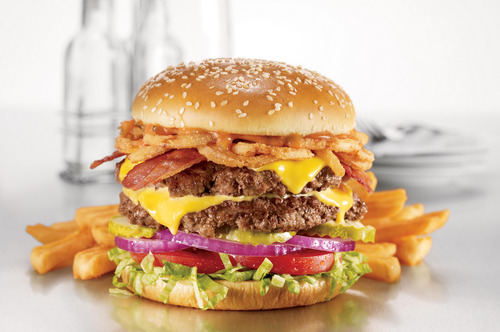
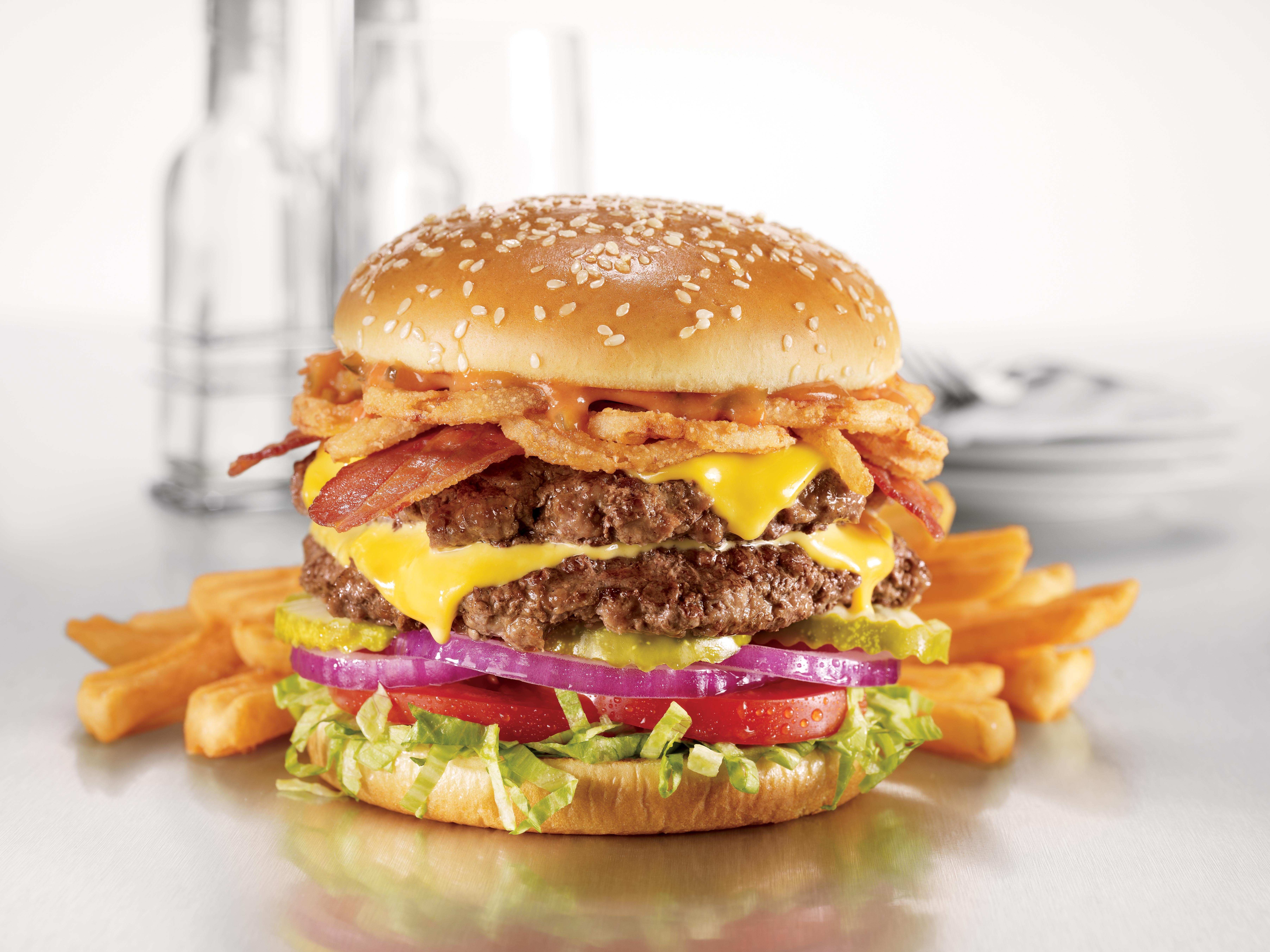
I can see the goddamn cell walls in the onion holy fucking shit
wait a sec is that
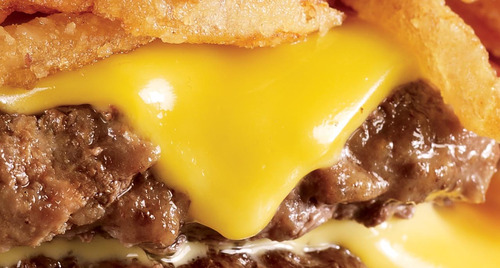
a hair in the cheese
oh my god is that
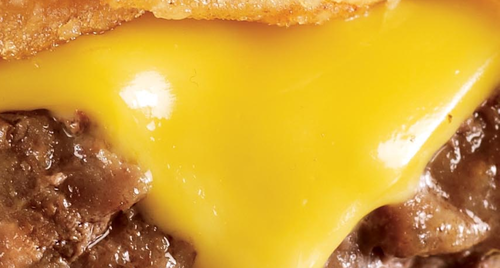
a doge in the hair
WAIT
What is this.
In the doge’s eye
Could it be?
I THINK IT IS
Oh my days there iS A BURGER IN THE EYE OF THE DOG IN THE HAIR IN THE CHEESE IN. THE. BURGER.