
firehose
Shared posts
16 Aug 23:39

corgis-everywhere: Inspired by one of my fav. shows as a kid....
Inspired by one of my fav. shows as a kid. If you’re curious he uses the Rottweiler Zord.
submitted by toprotectandlove
firehose and -1 others like this


16 Aug 21:45
 Those who pre-order Saints Row 4 through GameStop or EB Games and pick the game up within 48 hours of its release on August 20 will receive the Presidential Pack DLC, Deep Silver announced. The Presidential Pack offers players the chance to "live out your wildest dreams of being one of the most famous American Presidents or dress up your President like a real American Revolutionary."
Unfortunately, that's the only description available for the bonus content. Aside from what seem to be images of Abraham Lincoln, George W. Bush and Barack Obama masks accompanying the newsletter from Deep Silver, it's not clear what players will get in the Presidential Pack DLC. Amazon.de is also offering the pre-order bonus, and shows George Washington alongside the other presidents.
Saints Row 4 adds presidential pre-order bonus
by Mike Suszek
Unfortunately, that's the only description available for the bonus content. Aside from what seem to be images of Abraham Lincoln, George W. Bush and Barack Obama masks accompanying the newsletter from Deep Silver, it's not clear what players will get in the Presidential Pack DLC. Amazon.de is also offering the pre-order bonus, and shows George Washington alongside the other presidents.
 Saints Row 4 adds presidential pre-order bonus originally appeared on Joystiq on Fri, 16 Aug 2013 17:30:00 EST. Please see our terms for use of feeds.
16 Aug 21:42


Archaeologists Unearth Pieces from a 5,000 Year-Old Board Game
by George Dvorsky
firehoseseriously can't love or reshare this enough

While excavating an ancient burial mound at Başur Höyük near Siirt in southeast Turkey, archaeologists discovered a set of sculpted stones that may represent the earliest recorded gaming tokens.
    
|
Tertiarymatt, firehose likes this
16 Aug 21:41
EFF got $1 million from Facebook and Google
Thanks to Adam Curry for digging up a pointer to this Fortune article.
It helps answer the question I asked a couple of days ago, if EFF can rep the users of tech industry services if they already rep the interests of the industry.
In both cases the $1 million payment was in settlement of a legal action, not brought by the EFF. Both companies, according to the Fortune article, "helped select EFF to be their beneficiary."
I remembered reading about the settlements at the time, but didn't remember them when I wrote Tuesday's blog post. It's where I formed the impression that the EFF gets money from the tech industry.
Thanks Adam for digging up this pointer! :-)
firehose likes this
16 Aug 21:38


Kal Penn Tweets in Support of Stop-and-Frisk
by OnlyMrGodKnowsWhy
firehoseJesus Christ, Kal Penn
For a guy who launched his career with the stoner movie "Harold & Kumar Go To White Castle," actor Kal Penn's recent tweets in support of stop-and-frisk come as a surprise. Yesterday, he applauded NYC Mayor Michael Bloomberg's recent op-ed, saying "Great op/ed by @MikeBloomberg on the merits of "stop-question-frisk."
In a series of tweets, which have since been deleted but were saved by The Aerogram, he responds to criticism from fans, saying he supports racially profiling black and Latino people because they commit most crimes. 
It seems he's had a change of heart around racial profiling. In a 2011 interview with GQ he said he'd experienced racial profiling at the airport, and thought the practice was counterproductive. And, ironically, Penn's recent film "Harold & Kumar Escape from Guantanamo" centers around two college friends who are racially profiled as terrorists.
(h/t The Aerogram)
16 Aug 21:38


Film: Great Job, Internet!: Watch Donald Glover demand to be taken seriously in his short film, Clapping For The Wrong Reasons
by Kayla Reed
firehose"it all kind of feels like Community's Donald Glover tried really, really hard to make what he thinks is a thought-provoking and artsy film. It doesn't work, obviously."
The full version of Clapping For The Wrong Reasons is only slightly more fulfilling and meaningful than that cryptic trailer from a couple of weeks ago. The plot is almost nonexistent, and it all kind of feels like Community's Donald Glover tried really, really hard to make what he thinks is a thought-provoking and artsy film. It doesn't work, obviously.
Still, there are some beautiful shots and it's kind of cool that Chance The Rapper and Trinidad James offer a bit of comic relief. Other highlights include the crazy eyes Boy Meets World's Danielle Fishel has during her one scene, and the appearances from porn star Abella Anderson and Flying Lotus. (Childish Gambino trying to follow up a badass verse from Captain Murphy himself is especially entertaining.) There are also a few promising tastes of what could be future Childish Gambino tracks. It's certainly not ...
Read more
acboehm likes this
16 Aug 21:37

This post does not spoil any specifics of the "plot" in Gone Home, but it might sensitize you to its delivery mechanisms and some details.
A mansion means: old, rich, and scary. The most quintessential "mansion games" that emphasize these qualities might be Maniac Mansion, Thief, and Resident Evil -- these games would not work without the mansion tropes that figure prominently in their game design. Most importantly, mansions are big.
Gone Home is very aware of its place in the mansion genre, a genre that emphasizes the primacy of inventories, objects, and possessions. Here, the lightweight puzzle gating and densely hot-spotted environments evoke adventure; the first person object handling and concrete readables evoke the immersive sim; the loneliness and the shadows evoke horror. In a sense, this is a video game that was made for gamers aware of all the genre convention going on -- in particular, one moment in the library will either make you smile or wince -- but in another sense, this is also a video game made for humans. Gone Home carefully negates or omits core "gameisms" of the very genres it comes from.
The characters in Gone Home are tolerable (or even great) because they do not hesitate in doorways and stare blankly at you. It's the same trick that Dear Esther pulled: fictional characters in games develop full-bodied, nuanced personalities precisely when they're *not* constrained by fully simulated virtual bodies present in the world. (Maybe Dear Esther is actually a mansion game?)

As invisible ghostly tour guides, they're able to narrate anything, anytime, without all the other problems that plague most virtual dramas: you don't have to justify how an NPC pathfound to your location, or why they react to some NPCs but not others, or what happens if you caress their face with with a box, etc. reactions that are complicated to engineer or script, and easily create narrative dissonance for many players. So, I think the main strength of this approach is that "plausibility of presence" becomes irrelevant.
The word here is "interiority" -- how we seem to have first-hand access to what the narrator thinks and feels. Everyone in this game pours out their feelings in numerous diaries and letters scattered around a house... which feels weird, but weird in the familiar way that novels are implausible, while also playing directly into the designers' hands:
Does it feel weird and implausible only because we weren't white upper middle class American teenage girls living in the mid-1990s, bombarded by a particular strain of second-wave feminism that we can no longer identify with? Is this alienation similar to the alienation she was feeling?
A lot of Gone Home might feel alien to a lot of players. Unlike most games, playing every first person shooter since Doom will not help you understand it any better because these things are real-life cultural things, not reliant on game logic.
Understanding what Reed College means, or what Riot Grrrl culture signifies, or who reads thriller paperback novels sold at airports, or what kind of person goes to Earth Wind and Fire concerts, or what a vapid postcard from a teenager in Europe sounds like... This game is less concerned (though still concerned) with ludonarrative coherence than good old fashioned narra-narrative coherence.

"Density" is Steve Gaynor's word for it. How much meaning are you packing into a space? But filling spaces with stuff is useless if players don't know to look for it.
In Wolfenstein 3D, there were a few player strategies for finding secrets: unusual wall decoration, numerous wall alcoves, or certain wall sections framed peculiarly by plants or lights. There was also a second deeper strategy that you might call "layout analysis": to reason where hallways went and where space remained, to remember which areas you could see into but never actually visited. If you saw treasure or health behind a column, you knew there must have been a secret push-wall to get behind there, somewhere, somehow.
Thief framed "reading the environment" in a different way: here, mansions offer probability puzzles, asking players to predict how much treasure will be in a given room (bathroom = 1% chance, bedroom = 40% chance, throne room = 100%, etc.) -- and if you enter a king's bedroom, and there's no treasure to be found, then that makes no sense -- and you better start looking for a secret button at his bedside, or a secret lever near the fireplace, or maybe douse the fire in the fireplace and look inside it.
It's about setting up patterns that players can read, and then pacing those patterns as informal puzzles. In this way, Gone Home functions much like Thief.
One bedroom might be densely packed with narrative objects and artifacts -- which makes sense, because bedrooms are culturally read in Western culture as private spaces associated closely with specific person(s). However, you wouldn't expect a small half-bathroom to be nearly as personalized, especially if it connects directly to the foyer -- that would be read as a public-facing bathroom for guests. The cultural program, imbued within your understanding of American mansion architecture, helps you play Gone Home and maybe even "solve" it.
Gone Home goes one step further though, and uses a sort of "layering" to forge connections between different objects. For instance -- if you're in a public-facing room of the house, then who owns the stuff in that room? (A lot of Gone Home pivots on this question, of who owns which spaces?) To help you figure that out, objects frequently overlap each other: something that belongs to one character might sit on top of a leaflet they picked up, which sits on top of a letter they received. It uses these spatial connections to emphasize the narrative connections between things and what they symbolize.
It's also worth pointing out that Gone Home wouldn't feel nearly as fluent if it was made with technology from 10 years ago. Sufficiently advanced physics simulation that lets you stack stuff on top of stuff? Switchable dynamic lighting that help you remember whether you explored an area before or not? Very high resolution textures for all the different readables? I think we often pretend many video games could've been made at any time in the history of game development, and we downplay the influence of graphics technology as a mindless indulgence / crime against the Great God of Gameplay.
But I think a lot of Gone Home works because of where we are in video games today, design-wise and gameplay-wise and graphics-wise. It is totally a product of its time.
We'll see whether it ages better than Riot Grrrl music. (ohhh BURNnnn!)
DISCLOSURE: I playtested Gone Home at various stages in its development.
"Gone Home" and the mansion genre.
by noreply@blogger.com (Robert Yang)
This post does not spoil any specifics of the "plot" in Gone Home, but it might sensitize you to its delivery mechanisms and some details.
A mansion means: old, rich, and scary. The most quintessential "mansion games" that emphasize these qualities might be Maniac Mansion, Thief, and Resident Evil -- these games would not work without the mansion tropes that figure prominently in their game design. Most importantly, mansions are big.
Gone Home is very aware of its place in the mansion genre, a genre that emphasizes the primacy of inventories, objects, and possessions. Here, the lightweight puzzle gating and densely hot-spotted environments evoke adventure; the first person object handling and concrete readables evoke the immersive sim; the loneliness and the shadows evoke horror. In a sense, this is a video game that was made for gamers aware of all the genre convention going on -- in particular, one moment in the library will either make you smile or wince -- but in another sense, this is also a video game made for humans. Gone Home carefully negates or omits core "gameisms" of the very genres it comes from.
The characters in Gone Home are tolerable (or even great) because they do not hesitate in doorways and stare blankly at you. It's the same trick that Dear Esther pulled: fictional characters in games develop full-bodied, nuanced personalities precisely when they're *not* constrained by fully simulated virtual bodies present in the world. (Maybe Dear Esther is actually a mansion game?)
As invisible ghostly tour guides, they're able to narrate anything, anytime, without all the other problems that plague most virtual dramas: you don't have to justify how an NPC pathfound to your location, or why they react to some NPCs but not others, or what happens if you caress their face with with a box, etc. reactions that are complicated to engineer or script, and easily create narrative dissonance for many players. So, I think the main strength of this approach is that "plausibility of presence" becomes irrelevant.
The word here is "interiority" -- how we seem to have first-hand access to what the narrator thinks and feels. Everyone in this game pours out their feelings in numerous diaries and letters scattered around a house... which feels weird, but weird in the familiar way that novels are implausible, while also playing directly into the designers' hands:
Does it feel weird and implausible only because we weren't white upper middle class American teenage girls living in the mid-1990s, bombarded by a particular strain of second-wave feminism that we can no longer identify with? Is this alienation similar to the alienation she was feeling?
A lot of Gone Home might feel alien to a lot of players. Unlike most games, playing every first person shooter since Doom will not help you understand it any better because these things are real-life cultural things, not reliant on game logic.
Understanding what Reed College means, or what Riot Grrrl culture signifies, or who reads thriller paperback novels sold at airports, or what kind of person goes to Earth Wind and Fire concerts, or what a vapid postcard from a teenager in Europe sounds like... This game is less concerned (though still concerned) with ludonarrative coherence than good old fashioned narra-narrative coherence.
"Density" is Steve Gaynor's word for it. How much meaning are you packing into a space? But filling spaces with stuff is useless if players don't know to look for it.
In Wolfenstein 3D, there were a few player strategies for finding secrets: unusual wall decoration, numerous wall alcoves, or certain wall sections framed peculiarly by plants or lights. There was also a second deeper strategy that you might call "layout analysis": to reason where hallways went and where space remained, to remember which areas you could see into but never actually visited. If you saw treasure or health behind a column, you knew there must have been a secret push-wall to get behind there, somewhere, somehow.
Thief framed "reading the environment" in a different way: here, mansions offer probability puzzles, asking players to predict how much treasure will be in a given room (bathroom = 1% chance, bedroom = 40% chance, throne room = 100%, etc.) -- and if you enter a king's bedroom, and there's no treasure to be found, then that makes no sense -- and you better start looking for a secret button at his bedside, or a secret lever near the fireplace, or maybe douse the fire in the fireplace and look inside it.
It's about setting up patterns that players can read, and then pacing those patterns as informal puzzles. In this way, Gone Home functions much like Thief.
One bedroom might be densely packed with narrative objects and artifacts -- which makes sense, because bedrooms are culturally read in Western culture as private spaces associated closely with specific person(s). However, you wouldn't expect a small half-bathroom to be nearly as personalized, especially if it connects directly to the foyer -- that would be read as a public-facing bathroom for guests. The cultural program, imbued within your understanding of American mansion architecture, helps you play Gone Home and maybe even "solve" it.
Gone Home goes one step further though, and uses a sort of "layering" to forge connections between different objects. For instance -- if you're in a public-facing room of the house, then who owns the stuff in that room? (A lot of Gone Home pivots on this question, of who owns which spaces?) To help you figure that out, objects frequently overlap each other: something that belongs to one character might sit on top of a leaflet they picked up, which sits on top of a letter they received. It uses these spatial connections to emphasize the narrative connections between things and what they symbolize.
It's also worth pointing out that Gone Home wouldn't feel nearly as fluent if it was made with technology from 10 years ago. Sufficiently advanced physics simulation that lets you stack stuff on top of stuff? Switchable dynamic lighting that help you remember whether you explored an area before or not? Very high resolution textures for all the different readables? I think we often pretend many video games could've been made at any time in the history of game development, and we downplay the influence of graphics technology as a mindless indulgence / crime against the Great God of Gameplay.
But I think a lot of Gone Home works because of where we are in video games today, design-wise and gameplay-wise and graphics-wise. It is totally a product of its time.
We'll see whether it ages better than Riot Grrrl music. (ohhh BURNnnn!)
DISCLOSURE: I playtested Gone Home at various stages in its development.
firehose likes this
16 Aug 21:36

Portland Cyclist Says Cop Threw Him from His Bike in Old Town Entertainment District
by Dirk VanderHart
firehose"This suit is familiar territory for Kafoury, who in 2010 won $306,000 for a client beaten up by cops nearby (the city has since decided not to appeal the judgment)."
also the guy's name is literally (even by the Old English definition) Stiffler
Old Town's "entertainment district"—touted by Mayor Charlie Hales and the city's cops as a way to make weekend revelers more safe—has drawn what might be its first lawsuit, a $65,000 complaint for police brutality.
It stems from an incident on Saturday, April 27, when 32-year-old Portlander Stephen Stiffler ventured his bike into the district. That's not allowed. When the entertainment zone is in effect on Fridays and Saturdays, only pedestrians are permitted in the cordoned-off swath of NW 3rd from Burnside to Everett. Pedicab drivers will sometime awkwardly walk fares through the zone. It's weird.
Stiffler was headed west on Couch and had just reached 3rd when he ran into Officer Charles Harris—literally. The officer, spotting Stiffler, reached out and snatched the cyclist off his single-speed, breaking Stiffler's right clavicle and "wrenching, stretching, twisting and tearing" his shoulder tissues, says the lawsuit.
Harris, meanwhile, contends he'd merely held out his arm to indicate Stiffler needed to walk, yelling "Hey, stop!" In a report, Harris wrote the cyclist made a sharp turn, essentially running into his outstretched arm. "If the bicyclist would have gone straight, he would have passed me by with about 5 feet of clearance," Harris wrote. "Instead, due to his turn, he rode into my arm." Bouncers at nearby clubs corroborate that version of events, the report says.
Stiffler, who was not cited in the incident and left the area in a cab, tells the Mercury that's calumnious.
"It's horrible," Stiffler said of the cop's version of events. "At the last minute the officer turned around and clotheslined me, basically. Fucking pulled me off my bike."
The Portland Police Bureau could not comment on the pending litigation, according to spokesman Sergeant Pete Simpson.
Stiffler's lawyer, meanwhile, was happy to talk.
"People don't just crash their bikes for no reason," said Jason Kafoury, a Portland attorney well known for taking on the police bureau in use-of-force suits. "The reality is, he was basically grabbed and thrown down by the officer. The officer reacted to him passing by locking arms and taking him down."
Stiffler's lawsuit is making a tentative claim for $65,000, a number which Kafoury says could change, depending on how well his client heals (Stiffler told the Mercury he's pretty much recovered).
It is not a big or overly scandalous case, Kafoury concedes. But, in the context of the much-debated entertainment zone, it's actually pretty interesting. Hales has been a continuous champion of the district (which got momentum under then-Mayor Sam Adams), pushing his city council colleagues to extend the street closures through the fall while making promises the program would see improvements. Many of those things—roadway beautification, portable toilets, food carts, and a general "street festival" atmosphere the Mayor's talked up—haven't taken place. There's not money for them, and Old Town doesn't seem in any rush to pony up.
Business owners in the area have complained the closures hurt sales, and Old Town residents have pushed back against the program, which they think gives legitimacy to rowdy and disrespectful weekend debauchery.
Among past critiques of the program: Unclear signage that leaves people wondering why the streets are closed off. Whether Stiffler was thrown off his bike or ran into the officer's arm, it's possible that confusion ultimately led to this incident.
"I don't think he knew that it was closed to bikes at the time," Kafoury said of his client. "I think he knew it was closed to cars."
This suit is familiar territory for Kafoury, who in 2010 won $306,000 for a client beaten up by cops nearby (the city has since decided not to appeal the judgment). He says Stiffler's misfortunes are just more of the same.
"Why is an officer slamming some nice young guy to the ground and breaking his collar bone? It follows a pattern of Portland Police and excessive use of force."
16 Aug 21:35

Gone Home: A Tale Of Two Dads
by Alec Meer
firehose#twodadsinPortland?
By Alec Meer on August 16th, 2013 at 6:00 pm.
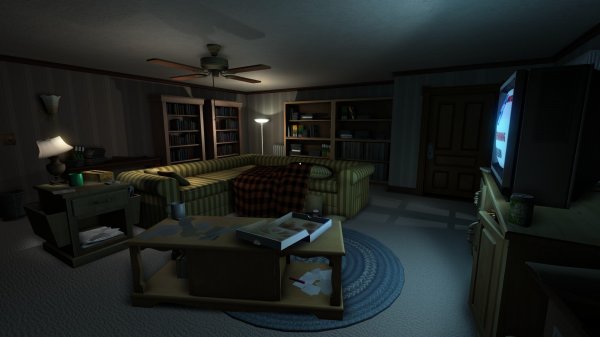
Entirely understandably, the bulk of the deservedly rapturous reception to Gone Home has focused on its unseen narrator Sam, a teenage girl who gradually and powerfully documents her timeless emotional and social trials. While it was certainly the dénouement of Sam’s tale that prompted open tears from me and that will, I sincerely hope, see this game reach a wide audience of human beings, there are (at least) three other stories in this short game, taking more of a background role and enjoying no narrator, or indeed any kind of explicit call for attention.
I found a little extra personal resonance in a particular one of these, and it’s that which prompts me to interrupt my sabbatical from work and post about it now. Be warned that here be both spoilers and navel-gazing.
There’s a reason I can’t entirely connect with Sam, much as her story moved me deeply, and it isn’t because she’s female, or gay, or American, or a videogame character. It’s because she’s cool. I was a similar age at the same time, but I was not cool. Perhaps she didn’t consider herself cool either, but she was: outsider cool. Freak cool, not geek introversion. Zines and basement gigs and rebel clothing choices were just incomprehensible whispers from another world to me. I didn’t even hear the term riot grrl until several years after the event. Nirvana (until a few years later, when my brain and ears finally matured) just sounded like noise. I didn’t have to worry about the effect of major lifestyle choices on my social life, because I didn’t really have a social life to lose. The dual oppressions of being a nerdy waif at a sports-focused, essentially Conservative school and an upbringing that prided discipline and academic achievement far above anything so indulgent as happiness or self-confidence meant finding myself, let alone rebelling against normality, was simply an impossibility.

What I did was to lose myself in turgid licensed sci-fi novels, X-Men comics and whatever PC games I managed to pirate from richer kids (who were not my friends but for some reason accepted me on that one basis). I listened to Meat Loaf and Bon Jovi, though I just about discovered the glossiest side of Britpop before I was a lost cause. I didn’t go to cool gigs or dye my hair or distribute photocopied words and pictures created from pure passion and personality. I share(d) a certain loneliness with Sam, but really the most concrete comparison is that we both loved the X-Files.
My So Called Life beats quietly through Gone Home’s veins, but I was no Angela. I was Brian. Not even Brian, if I’m honest. And so, playing Gone Home, it’s the less prominent sad sack I identify with the most. Someone who’s not a hero, someone whose voice is never heard, someone who feels rejected by life but who hasn’t acknowledged the role he plays in that dispossession. Perhaps because the real cause comes from a previous generation.
Terry, father of Sam and her sister Katie, is a writer. A failed writer, whose grand ambitions run aground and who has recently found himself doing the literary equivalent of turning tricks down on the docks. He’s writing technical, bullshit-strewn reviews of hi-fi equipment, for a magazine and an audience that believes life is meaningfully improved by minor differences in picture quality or mid-range tones. He has to sound enthusiastic and authorative about the Emperor’s new clothes, time and again. Were he still doing that in 2013, he’d be pretending a £100 HDMI cable can do something a £1 one cannot. He’d be called out here, no doubt.

As it is/was in 1995, we soon discover that he couldn’t keep up this joyless, mendacious facade for long, started turning out awful copy, and quickly fell out of favour with his commissioning editor. It’s not entirely comparable, but I certainly had more than a few mental wobbles when the outcome of my journalism post-grad degree turned out to be reviewing fucking printers for a computing magazine. I know how he felt.
Meanwhile, his sci-fi series about JFK and time travel has resolutely failed to sell, sequels have been refused and no amount of motivational post-it notes he leaves for himself can keep him from the worrying number of bottles and shot glasses that litter his rooms in the enormous house that is Gone Home’s setting.
None of this is told to us. It’s just there to discover, if we so wish, in typewritten, half-finished reviews, scrawled notes, decreasingly cheerful letters from his editor, and a jarringly miserable mini-bar strewn with empties. Piece it all together, if your mind’s eye, and a very clear picture of Terry forms. He never speaks, he’s never seen outside of an oddly mutant-faced family portrait, and I don’t believe we read anything that’s a direct admission of what he feels – it’s all in the reviews, the books, the stiff, dismissive responses to the reviews and books, and all those empty bottles and glasses. But I knew, I know, that Terry was completely, utterly lost.
That isn’t me now, not really, though I inevitably nurse any number of unfilled artistic aspirations, but oddly it did evoke me then, even though me then was barely half Terry’s age then. No-one seemed to take him seriously, he seemed to lack a clear idea of what to do with himself, he turned inwards rather than sought to improve his life. He inadvertently drove others away because of it. I wonder what reasons Katie would give for her long time abroad, if she was entirely honest about it.

Sad sack. I won’t be surprised if plenty of Gone Home players – and, though we don’t hear them say as much, the rest of Gone Home’s unseen cast – consider him pathetic. Clearly, he fails Sam in her hour of need, and despite social conventions being a little different back then, I’m not convinced it was homophobia or even simple discomfort that did it. It was being too self-pitying to be capable of supporting someone else in their emotional struggle. It seems, or is implied by assorted, restrained notes and calendar entries, that his misery, or his lack of thereness, drove his wife to seek ultimately unrequited comfort from a hunky colleague. He suffered, I think, the kind of hopelessness that pushes people away rather than encourages them to come to your side, and I recognised it all too well.
Later in the game, I also recognised the root of it.
God, I hope my dad never reads this.
In the impossibly gigantic basement that runs underneath Sam, Terry et al’s impossibly gigantic home, there’s a letter. It’s not a letter that need be read in order to enable progress or advance the core plot. It’s easily missed, as many things in Gone Home are. It’s in the dark, requiring you to find and activate a light in order to see it, as almost everything in Gone Home does.

It’s from Terry’s father. It’s about Terry’s first book. It’s superficially a congratulation. It’s realistically a knife in the ribs from a man who doesn’t care about his son’s feelings or personality, only how his son’s achievements reflect on him. I forget what Terry’s father’s job is stated as, though I seem to recall his name had some professorial prefix. Certainly, his style of writing – stuffy, cheerless, officious – reflects this. It reads like a note from a headmaster to a barely-remembered former student, not a father to his son. It opens with recognition that Terry has been published, then without warmth turns to admonition for perceived stereotypes and lacklustre turns of phrase in what does, admittedly, sound like a cheap and nasty thriller. Sucker punch right to my limp stomach.
Terry probably knows, on some level, that it’s cheap and nasty, and perhaps even deliberately targeted a certain audience. That doesn’t for one second justify his father, the person who should be the most important man in his life, pointing this out, criticising him for it. Making him feel small, worthless, nothing.
In that one letter, Terry’s entire personality and every mistake he ever made – and quite clearly continued to make – was explained. I winced, and I remembered. My relationship with my father isn’t like that now, isn’t hung around my achievements or lack thereof, but it was, and it still hurts a little, no matter how far we’ve come from it, no matter that my dad accepts and respects that I’ve somehow made a career out of my nerdy childhood interests rather than the maths and mechanics he pushed me towards. He was never as stuffy or as cold as Terry’s mirthless, aloof father seems, but put is this way – he once give me a maths textbook as a birthday present, in response to falling grades. I felt Terry’s agony, felt the rejection he suffered, felt his struggle to anchor himself in life, felt his struggle for approval. I felt the contempt of his father, and it hurt.

There’s a suggestion, near the end of the game, that Terry and his ridiculous novels are redeemed, rediscovered. We don’t see the outcome, but we do see a rare letter directly from Terry, positively brimming with joy and disbelief that a new publisher wants to bring his books back to market. This part of Terry’s story perhaps didn’t resonate as well for me – it seemed a little too cute and unlikely, and for that reason I chose to believe that, ultimately, his books failed to sell for a second time, and his sequel proposal was ultimately rejected once again.
I also chose to believe that his cold, cruel father died before the two of them ever experienced any closeness, that Terry would be forever left feeling unappreciated, unloved, unsuccessful, no matter what he went on to do. That way, I could not be Terry – I could be better than Terry after all. Go Home, with its implications, its off-camera characters and its clear picture built only from words and shadows, gave me the freedom to finish Terry’s story that way. While Sam’s story is essentially told outright by the end of the game, only brief, uncommented upon components of Terry’s story are ever given, leaving me to piece them together and experience my own reaction to them.

Poor Terry. As the damning image above shows, he made witless attempts to help his daughter, but I’m not sure he’ll ever experience the euphoria, the self-discovery and the freedom that Sam did. I’m worried he’s well on the road to becoming like his father – seeing family members as problems in need of solutions, rather than unique human beings with all their infinitely complex internal struggles. I hope I’ve escaped being Terry. But I can’t guarantee it. I hope I don’t do what Terry’s dad did to him to my child. I hope I can see past myself enough to be be able to help her when she needs help.
Good luck, Terry. I hope you manage to find yourself.
16 Aug 21:32
[toread] [priv] Extensive timelines of slang for genitalia
by macdrifter
firehose"Jonathon Green, a slang lexicographer, has two new timelines. The first is an interactive timeline that shows slang for male genitalia going all the way back to the 1300s up to present. Colors and shapes represent different parts.
Then naturally there's the timeline for female genitalia. It has slang terms that date back to 1250. Yep."
direct links:
http://timeglider.com/timeline/194b572e19fd461b
http://timeglider.com/timeline/07f47d6b843da763
firehose and -1 others like this


16 Aug 21:29


Scientists are arguing about whether Voyager has left the Solar System
by John Timmer
firehoseVger is always leaving beat

Has Voyager 1 reached interstellar space or not? That question was first asked about a year ago, when the probe first started seeing a drop-off in the levels of energetic particles emitted by the Sun, accompanied by a rise in cosmic rays from interstellar space. But the models of the Solar System's edge had suggested that there should be a corresponding change in the magnetic field's orientation as the Sun's field is overwhelmed by that of the galaxy as a whole. And Voyager 1 is seeing nothing of the sort; even as particle levels flip-flopped several times, the magnetic field remained largely stable.
There have been a couple interpretations of this. The scientists who first announced the results argued that the data showed evidence that a new, previously unpredicted region exists at the edge of the Solar System and that we would have to wait before we would be able to sample the interstellar magnetic field. But later that year, a different team argued that the probe was in interstellar space. It's just that interstellar space wasn't looking like we expected.
Now, a new paper has come out that revisits the cause of the problems: the models of the magnetic fields that exist where there's a complex interaction between two magnetic fields and two different flows of charged particles colliding. Earlier models of this region had been the ones that suggested the orientation of the magnetic field would change as the interstellar field wrapped gently around the one generated by our Sun. The new one, however, suggests that the interstellar field lines run directly up against the ones from our Sun, at which point they execute a nearly right-angled turn, leaving the two sets to travel parallel.
Read 6 remaining paragraphs | Comments
|
|
firehose likes this
16 Aug 21:29
Ubuntu Edge, The First Ubuntu Smartphone Beats Pebble as Largest Crowdfunding Campaign
by Kimber Streams
firehose"As of this writing Canonical has raised over $10.4 milion compared to Pebble’s final $10,266,845, but the project still has a long way to go to reach its $32 million goal before the campaign ends in six days"
The Indiegogo campaign for the Ubuntu Edge, the first Ubuntu smartphone from Canonical, has beat out Pebble as biggest crowdfunding campaign. As of this writing Canonical has raised over $10.4 milion compared to Pebble’s final $10,266,845, but the project still has a long way to go to reach its $32 million goal before the campaign ends in six days. The Ubuntu Edge, if funded, will be a 4.5-inch 720p smartphone that can dual boot Android and Linux on a multi-core processor with 4GB of RAM, 128GB of storage, and LTE capability. The project is currently seeking funding on Indiegogo.

videos via celebrateubuntu
photo via Ubuntu Edge
via The Next Web
16 Aug 21:28
I bow to you, master thief.
by Anonymous
firehosethe Portland criminal mind is severely fucking stupid
You just stole a headlamp off my bike. You now have a $40, presumably broken, headlamp.. as you could not have possibly had the time to steal it with a screwdriver in the 45 seconds I looked away. The bike you stole it from cost me $5000. It was unlocked. Free for the asking. You probably could have gotten away with it. And you went for the headlamp. Instead of the $5000 bike. Good job.
firehose likes this
16 Aug 21:27
Libertarian Magazine Looking For 'Businesslike' Stoner To Appear On Next Cover
"Send us selfies where you are smoking, growing, or just possessing marijuana while looking otherwise ordinary."
firehose likes this
16 Aug 21:27
My Least Favorite Piece of Misogyny This Week: Mark Millar Edition
by Barbara Holm
firehoseeverybody hates Mark Millar
This weekend, Kick Ass-2 writer Mark Millar defended his use of rape as a plot device in his fiction. He has employed it in the comics Wanted, The Authority, Nemesis and now Kick-Ass 2. In an interview for The New Republic, Millar responded to the criticism, “The ultimate [act] that would be the taboo, to show how bad some villain is, was to have somebody being raped, you know. I don't really think it matters. It's the same as, like, a decapitation. It's just a horrible act to show that somebody's a bad guy.” That's pretty offensive... that he hasn't been decapitated. My least favorite piece of misogyny this week is Mark Millar's cavalier attitude toward using rape as a plot device.
Using sexual violence in fiction differs from decapitation because decapitation victims probably won't be going to see the movie. (If they did though, they'd really lose their heads.) Also, there's no version of decapitation that can be mistaken for love, except maybe putting your zombified ex-beau out of their misery. Ergo, decapitation doesn't get blamed on the victim or dismissed as something they were asking for.
Millar's comment is dismissive of the trauma of sexual violence. The phrase, "I don't really think it matters" is so glib it is practically wearing an ironic neckerchief. I take umbrage with the fact that he's thinking about sexual violence in terms of how it portrays the perpetrator instead of in terms of how it relates to the victim. It's unnecessary for Millar to use sexual assault as a plot device to disturb and horrify an audience. His personality can do that for him.
The way the media portrays sexual objectification has a definite effect on society. Entertainment influences our subconscious perception of ourselves and others and the more we see women as physical objects to be acted upon—especially violently—the worse our sense of self and others becomes. I'm not saying that there can never be rape used in any fictional work; I've seen it done well. I'm just saying that it shouldn't be used like a cheap trick. That's been my least favorite piece of misogyny this week! Tune in next week for me to accidentally spoil more Buffy trivia.
firehose likes this
16 Aug 21:26
It's Time To Meet the Muppets on The Line It Is Drawn Tonight!
firehosethe Animal/Wolverine one (with bonus Beaker/Bunsen) needs to be owned by me
but the sneaky champion is clearly http://goodcomics.comicbookresources.com/wp-content/uploads/2013/08/line8-16-13-620x691.png
The Line It Is Drawn mashes up the best of Muppets and comics with Gonzo as Nightcrawler, Animal as Wolverine, a Spider-Ham/Miss Piggy Romance, Alan Moore hosts "The Muppet Show" & more!

firehose likes this
16 Aug 21:23
Song of the Day
by Paul Constant
firehoseYES
YESSSSSSSSSSSSS
YESSSSSSSSSSSSSSSSSSSSSSSSSSS
FUCKING PRESS THAT SINGLE I ALREADY BOUGHT IT
This is good advice for Christians, atheists, and basically everyone in the whole damn world:
I hope the choir in this video records and releases this song to iTunes. They could raise a whole lot of money for their church.
(Via Gawker.)
firehose likes this

16 Aug 21:23
Report: A-Rod's 'inner circle' leaked documents on Braun - USA TODAY
firehosethis fucking guy
FOXSports.com |
Report: A-Rod's 'inner circle' leaked documents on Braun USA TODAY SHARE 318 CONNECT 48 TWEET 34 COMMENTEMAILMORE. Major League Baseball has evidence that New York Yankees third baseman Alex Rodriguez used performance-enhancing drugs throughout the 2010-2012 seasons, and also purchased ... Rodriguez Denies Report That His Associates Leaked NamesNew York Times Report: Friends of Alex Rodriguez leaked info implicating Ryan BraunLos Angeles Times Alex Rodriguez's inner circle implicated fellow players in Biogenesis scandal ...Washington Post Sportsrageous -The Spokesman Review -Kansas City Star all 131 news articles » |
firehose likes this
16 Aug 21:22


Navy commissions new designs on armed, carrier-launched drones
by Sean Gallagher
firehosedrones
The X-47B is keeping a spot warm on the carrier deck for its UCLASS successor.
U.S. Navy
A week after recommissioning Northrop Grumman's X-47B proof-of-concept carrier-launched drones for additional testing, the US Navy awarded $15 million contracts to four companies contending to be the maker of the X-47B's successor. The contracts are part of the Navy's Unmanned Carrier Launched Surveillance and Strike (UCLASS) aircraft program, which aims to produce an autonomous robotic attack plane capable of spying on and attacking enemies.
The relatively small $15 million contracts—awarded to Lockheed Martin, Northrop Grumman, Boeing, and General Atomics (the manufacturer of the Predator and Reaper armed drones)—will fund preliminary design reviews of proposals from the companies. The Navy will pick a winning design by the fall of next year. The goal is to start taking delivery of the winning UCLASS drone within three to six years; just how fast the winning drone is produced will depend on how "mature" the winning design is.
The Navy has said that the UCLASS aircraft have to be compatible with the fleet's existing bombs and that no new weapons will be designed for the aircraft. UCLASS will likely not be a replacement for the firepower of the Navy's and the Marine Corps' FA-18s; the goal is an aircraft capable of reconnaissance and "light strike" using existing weapons in the Navy's arsenal, up to 250 pounds each.
Read 1 remaining paragraphs | Comments
|
|
16 Aug 21:20
 Infinity Ward executive producer Mark Rubin tells Joystiq that adding playable female soldiers in Call of Duty: Ghosts was to recognize the franchise's complete audience. Women have been added as part of the multiplayer customization in Ghosts, set to arrive on November 5.
"Honestly, adding female soldiers to character customization wasn't about trying to lure more people into the game. It was actually just about acknowledging the people who already play our game," Rubin says.
Enngine limitations were another contributing factor in the franchise's lack of playable female soldiers.
"It wasn't until we rewrote the way character memory is handled - that we could do 'Create-a-Soldier,' that we could do customized characters - that the possibility of having female soldiers really came to fruition," Rubin explains.
"Bringing female characters into Call of Duty: Ghosts wasn't something that was limited generation, it was limited by the engine itself."
Call of Duty: Ghosts multiplayer gender options about 'appreciating' female fans
by Xav de Matos
firehose"Honestly, adding female soldiers to character customization wasn't about trying to lure more people into the game. It was actually just about acknowledging the people who already play our game," Rubin says.
"Which is why we totally waited until an unrelated engine rewrite allowed gender changes as a cheap-to-implement side effect," firehose vomited
"Honestly, adding female soldiers to character customization wasn't about trying to lure more people into the game. It was actually just about acknowledging the people who already play our game," Rubin says.
Enngine limitations were another contributing factor in the franchise's lack of playable female soldiers.
"It wasn't until we rewrote the way character memory is handled - that we could do 'Create-a-Soldier,' that we could do customized characters - that the possibility of having female soldiers really came to fruition," Rubin explains.
"Bringing female characters into Call of Duty: Ghosts wasn't something that was limited generation, it was limited by the engine itself."
Continue reading Call of Duty: Ghosts multiplayer gender options about 'appreciating' female fans
Call of Duty: Ghosts multiplayer gender options about 'appreciating' female fans originally appeared on Joystiq on Fri, 16 Aug 2013 16:45:00 EST. Please see our terms for use of feeds.
firehose likes this
16 Aug 21:19
Lawmaker Considered Blowing the Whistle on the NSA From the Senate Floor
by Philip Bump, Atlantic Wire
firehosevia multitasksuicide
Ronny Ron Wyden fucking rules
But the thought was brief, Wyden tells Rolling Stone.