
Viktoria Luise Adelheid Mathilde Charlotte von Preußen, Herzogin zu Braunschweig-Lüneburg, Prinzessin von Hannover, Prinzessin von Großbritannien und Irland.
Viktoria Luise Adelheid Mathilde Charlotte von Preußen, Herzogin zu Braunschweig-Lüneburg, Prinzessin von Hannover, Prinzessin von Großbritannien und Irland.

With my permission, my “Interstates as Subway Map” is featured on the cover of a new report, Moving Off the Road: A State-by-State Analysis of the National Decline in Driving, released today by the U.S. Public Interest Research Group (PIRG).
Given the subject matter of the report, my image becomes a nice little visual metaphor, don’t you think?
Read some background information on the report here, or download it here (PDF).
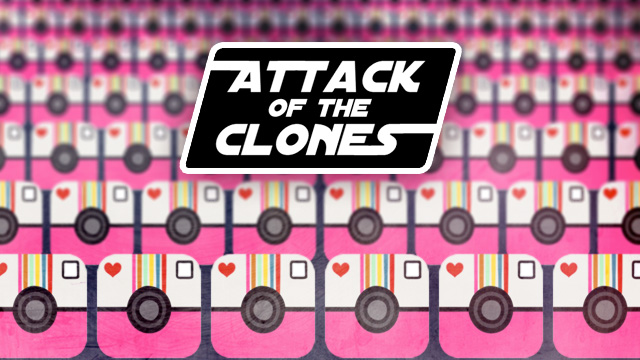
The app had only been out three months, and already the creators of A Beautiful Mess were scrambling to deal with a big problem: clones, copycats, and rip-offs, as many as seven of them, crowding the search results in the App Store. The clones appeared to be legitimate, affiliated versions, yet as all the developers knew, they were anything but. The CEO of the company that created the original A Beautiful Mess called them “infuriating.”
The legitimate version of the app is a product of the lifestyle blog A Beautiful Mess; it allows users to augment photos or background patterns with text, doodles, and filters. The app was launched by Red Velvet Art LLC, which was affiliated with the blog, and it was developed by Rocket Mobile, a brand agency based in Austin, Texas. The app launched on May 14 and debuted as the number three paid app in the App Store. Shortly thereafter, it moved to the number one spot.

In June, the first clone appeared. It used the same icon and screenshots as A Beautiful Mess but came with a modified name: A Beautiful Mess Free. The second clone was produced by a developer named John Harlampa: A Beautiful Mess Plus. By the beginning of August, seven clones cluttered up the App Store, and one rip-off was charting in the top 50, according to AppTweak. It hovered in that range until the day it was pulled, sometime on August 19.
Read 16 remaining paragraphs | Comments

    
|


Read more of this story at Slashdot.


Besides its Daily Challenges feature, one of the bonuses of the PC version for Spelunky HD that’s not in the PSN editions is the ability to mod the game. Here you can see several edits people made to play as Mario, Pauline, and even Uncle Scrooge. They’ve also skinned the stages and swapped out the damsels you can rescue. You can see and grab these mods from BoogieLove, Headbox, and Radioduke at the Spelunky forums.
Have I mentioned how jealous I am that the PS Vita version doesn’t have Daily Challenges? Apparently Spelunky creator Derek Yu says it’s a possibility that the PSN versions will receive it somehow, and that he intends to discuss the matter with BlitWorks (the studio that ported Spelunky to PSN). There’s no guarantee that anything will come out of those talks, and I wouldn’t hold my breath for that update, but at least there’s hope.
While we’re talking about Spelunky and Nintendo-themed mods, someone used a hack and finally found a use for the Kid Icarus-esque eggplant item. This seems impossible to pull off without cheating.
BUY PS Vita, upcoming games

San Francisco hedge fund billionaire Tom Steyer has emerged as the antithesis to the Koch brothers, the conservative American industrialists who have bankrolled the Tea Party and other right-wing causes. Steyer has financed ballot initiatives, non-profits and think tanks to promote renewable energy, climate-change activism, and to derail the Keystone XL pipeline. Now he appears to be taking it to the streets.
In a blog post today to mark the 50th anniversary of the black civil-rights movement’s March on Washington, Steyer riffs on whether the time is right for non-violent civil disobedience to protest the continued inaction on climate change as the effects of global warming accelerate.
“Americans are not willing to put up with denial any longer. Opinions are shifting—hard and fast,” Steyer writes, citing a poll that found 13% of Americans would commit civil disobedience to put pressure on politicians over climate change. “People understand the risks as they begin to see and feel the impacts, and are tired of the dysfunction that is preventing change. All that these individuals need is a clear, direct action to take.”
Steyer cites Martin Luther King’s 1963 “Letter from a Birmingham Jail.” In the letter, King laid out his principles for protest in the face of unjust laws and police brutality—themes that would echo in his famous “I Have a Dream” speech in Washington, DC months later.
“When you consider the impact climate change will have on our collective future, it is instructive to remember what Martin Luther King had to say about the power of non-violent civil disobedience in that letter,” Steyer writes. “ Dr. King’s key insight is not just that outright oppressors never give up their advantages willingly, but also that moderates never advocate any direct, non-violent, attack on the status quo because they are actually satisfied with it.”
“For the sake of our own struggle, this point is worth keeping in mind,” he adds. “Because of self-interest, the dirty energy industry will always engage in fierce, intense opposition. But what about the moderates of our era? Are they still satisfied with the status quo? I think not.”
Steyer’s post stops just barely short of calling outright for mass civil disobedience over climate change. He wouldn’t be the first to do so—Bill McKibben’s 350.org has been leading the charge on that front—but it marks another evolution of the once media-shy founder of Farallon Capital Management (he retired in 2012) into a vocal critic of the fossil-fuel industry and its political supporters.
A major donor to Democratic candidates, Steyer spoke at the 2012 Democratic Convention. But unlike the secretive Koch brothers, whom Steyer defeated in a 2010 ballot battle over California’s landmark global warming law, he seems increasingly comfortable in the limelight.
“Thomas Jefferson thought that 15% of the general population was the number needed for accomplishing significant transformation,” Steyer concludes in his blog post. “If he was correct, this may represent a tipping point. We may be on the precipice of major change. Let’s hope we are.”


An innovative approach to decking over the Mass Pike through Boston.
Building a surface street above the highway and replacing the frontage roads with development.
From archBoston

Mayor Charlie Hales' push to create a vibrant, walkable "entertainment district" in Old Town took a step forward earlier this month, when the Portland Police Bureau began fielding applications from bars and restaurants who want to extend seating into the area's cordoned streets.
That's a potential game changer for a district that's struggled to find its feet his summer. Despite the mayor's talk of creating a "street festival" atmosphere, and the addition of portable toilets in recent weeks, the closed-off segments of NW 3rd and adjacent streets still feel empty and eerie most Saturdays.
But more than two weeks after the city announced it would accept applications, only one Old Town business has taken them up on the offer. According to documents obtained by the Mercury via open records request, the Dixie Tavern, at NW 3rd and Couch, is the lone bar in the area with aspiring streetward.
The tavern's owners, Concept Entertainment, applied August 16 to install a 780-square-foot seating area in NW Couch during the weekend closures. The enclosure would hold 48 seats and house a food stand, according to plans Concept provided. Portland police approved the plan a week ago.
City rules dictate the seating enclosures can extend no more than 10 feet into the road, and must be staffed by at least one bouncer. They can contain performers and food carts, the city says, but no "adult entertainers/nude dancers," speakers or games. Businesses have to file an additional application with the Oregon Liquor Control Commission if they want alcohol allowed in street seating areas.
Begun under then-Mayor Sam Adams late last year, the entertainment zone concept has been a priority of Hales' who has repeatedly pushed it as a way to make the nightclub district more safe. Not everyone's been enthused about the project, though. Businesses complain it's hurting the bottom line, and Old Town residents don't like the legitimacy it gives to rowdy antics that can take place in the area. Even several city commissioners, who acquiesced earlier this year to Hales' request for an extension to the program, have had hard questions.
The pilot project is now scheduled to end October 27.
Mei the cat plays with moving windshield wipers and gas station employees wiping down the windshield with cleaning cloths in these funny videos by ayapanyan.

After creating two TV shows in which underdogs are pitted against the elite in scenarios involving murder and being rude about catering, Veronica Mars and Party Down’s Rob Thomas is going back to one of the original rich vs. poor vs. food stories with a contemporary TV take on Les Misérables for Fox, one that doesn’t involve Hugh Jackman singing. And—because this is 2013, and Thomas therefore has a choice among making a cop, doctor, or lawyer show—he’ll turn Jean Valjean into a “brilliant lawyer running a legal exoneration program who fights to evade the consequences of his own unjust conviction many years before.” In the modern, sexy lawyer version, presumably he is arrested for stealing a loaf of bread, then having sex with it.
Anyway, much like The Fugitive before it (and much like ABC’s Revenge is to The Count Of Monte ...
Read more
|
|
firehosevia multitasksuicide

South Side, Chicago.
Easter 1941.

Over at The Digital Bits, Bill Hunt has a breakdown of what Paramount has decided to do with their Blu-ray release of Star Trek Into Darkness:
The seven featurettes listed in the press release are basically everything you get on the disc, aside from the usual DVD copy, Digital Copy, UltraViolet copy, Xerox copy and what not. The featurettes amount to about 42 minutes of EPK-style behind the scenes material. There’s no commentary, no deleted scenes, no trailers… which would be bad enough.
Except…
It turns out that more extras were created for this release—more featurettes and even an audio commentary with director J.J. Abrams and members of his crew. None of it is available on the wide release Blu-ray or Blu-ray 3D SKUs. The commentary can only be found as an iTunes “extra” download. And those extra featurettes? Some are on a Target bonus disc. Some are on a Best Buy bonus disc. And some are only available via CinemaNow and VUDU downloads.
In other words, if you (legally) want all the special features for Into Darkness, you have to buy at least three copies of the movie, from three different places. This isn't interesting not because of what those extras are so much as it's more proof that the very businesses who would benefit from shoring up physical media are instead hastening its demise.
Speaking as someone with a stupidly large Blu-ray and DVD collection—and who realized last time I moved that 90 percent of the crap all my friends had to lug up and down stairs were goddamn books—there are still legitimate reasons to still buy movies on physical media: audio and visuals that still vastly exceed streaming quality, being able to watch something even when it's been yanked from Netflix, and, in the case of things like Criterion releases, having related essays and art kept with the film itself. For me, the biggest draws are still well-produced, thoughtful supplementary materials and extra features, which are growing increasingly rare but can still vastly impact one's perceptions of a film. Realistically speaking—and like everybody else—I watch more stuff via streaming than I do on disc, but I also like having discs of films or shows that I know I'll be revisiting a lot.
But movie nerds like me are pretty much the only people still buying Blu-rays—just as music nerds are the only people still buying vinyl, or book nerds are the only people still dropping $35 on a hardcover. Casual consumers—which is to say, everyone else—has moved on. Which means that in order for physical media to keep going, it needs to provide things that digital can't. I always think of McSweeney's whenever this comes up, but you can make the comparison across media, too, apply it to the Alien Anthology Blu-ray or whatever: You have to provide something that people want to physically own, despite its inconvenience. You can do this by creating beautiful and unique things (McSweeney's), or can do this by creating things that attain some level of definitiveness, appealing to fans' completist tendencies (Alien Anthology). And once you've targeted die-hards as your target market, you can usually charge a premium to justify the extra work and time that goes into making these things, as opposed to just uploading a file somewhere for people to buy and/or steal.
The Into Darkness thing, though, is the opposite of all of that: If you have a stake in physical media continuing to sell—which studios very well should—then it doesn't make sense to make it harder for people to get what they want on physical media. Because once you do that, you remind people how much easier it is to just buy something digitally—or not buy anything at all.
firehosevia Snorkmaiden
firehoseNSFW; perfume company retells the story of Taj Mahal in a 5m45s commercial
and of course the woman portraying Mumtaz is white, duh
firehoseoh like fuckin' Brookline has anything else to do shit
the only Dunks-based economy on Earth, all transactions made in Dunks
Dunks cards are the only banking system in Brookline
if you need healthcare you go to Dunks for your checkup
mayor Memninmo does it too
 OnlyMrGodKnowsWhy
This is the first page of a 3-page article. :|
Our epic coffee run yielded five different cups of coffee from four establishments in Brookline.
The amount of options for getting hot coffee served inside a paper cup in Brookline skyrocketed last week when Dunkin’ Donuts prematurely introduced a new cup to comply with the town’s looming Styrofoam ban.
The ban takes effect at the end of the year, and was approved by Town Meeting late last year. The trademark Dunkin’ Donuts Styrofoam cups were part of the ban, as well as any containers made with polystyrene.
So, how does the new cup stack up against some of the other coffee establishments? We went out on a coffee run and came back with some results.
The new paper Dunkin’ Donuts cup
Let’s get right to the new kid on the block. This cup is essentially two paper cups in one. One holds the coffee while the other acts like a sleeve to keep your hand from getting too hot. The lid that comes with the cup is also new, and allows you to rotate the top so the opening can be sealed off.
Heat retention: This one performs about the same as standard paper cups, but what keeps the coffee a little hotter is the rotating lid. The extra paper layer helps with handling hot coffee, but it only takes about a minute and a half until your thumb might need to cool off.
Environmental: Because of the extra layer, this cup is a little less attractive from a recycling perspective than a single paper cup. But even single paper cups aren’t the best for recycling, and we’ll get to the reason why soon. Still, environmentalists would probably agree that the new cup is an improvement over the Styrofoam cups, which are not biodegradable.
Lipstick test: This test was invented by Newton TAB reporter, and former Brookline TAB reporter Trevor Jones, who confessed to having an aversion to seeing lipstick on cups, particularly Styrofoam ones. In this case, the new Dunkin’ Donuts cup did worse than the traditional Styrofoam, as the lipstick left a more lasting mark.
The old Dunkin’ Donuts cup
Everyone knows what this cup looks like. It’s impossible to live anywhere in Massachusetts and not know the familiar shape and size of a medium Dunkin’ Donuts cup. And if you ever get nostalgic for the old cups, Boston and Newton are a short drive away.
Heat retention: Regardless of how you feel about Styrofoam, you really can’t attack its ability to hold hot liquids and keep said liquids hot. Styrofoam excels at this. In fact, you never have to put down a Styrofoam cup because it gets too hot. Just doesn’t happen. And on top of that, the old Dunkin’ Donuts lids and the cup keep your coffee hotter than the other paper products on the market.
Boston Globe |
Boston Marathon Bombing Update: Friend of suspect Dzhokhar Tsarnaev ... CBS News (CBS/AP) BOSTON - Robel Phillipos, a friend of surviving Boston Marathon bombing suspect Dzhokhar Tsarnaev, was indicted Thursday for allegedly making false statements to authorities. PICTURES: Boston bombing victims · PICTURES: Boston Marathon ... Grand jury indicts marathon bombing palThe Australian Tsarnaev's Friend Indicted on Charges of Making False StatementsWFJA Classic Hits and Oldies 105.5 FM Boston Marathon bombing suspect's friend indictedCorvallis Gazette Times The Coloradoan all 84 news articles » |
firehose"the most enthusiastic responses have come from manufacturers, teachers, medical companies, and hospitals"

Yesterday evening in New York City, Google’s Glass team threw a party. It brought together “Explorers” and “Influencers”—the lucky few people who got to try out the computerized glasses Google is developing. Over cocktails and hors d’oeuvres, the diverse crowd gushed about the joys and dissected the drawbacks of the device, which they’ve been wearing for the last few months.
The takeaway? Google Glass is not for who you think it is. Though Google has been promoting the device with heart-warming videos on rollercoaster rides and in children’s playgrounds, for the next few years at least, its main customers will be large businesses.
Members of the Glass operations team have been on the road showing it off to companies and organizations, and they told Quartz that some of the most enthusiastic responses have come from manufacturers, teachers, medical companies, and hospitals. That suggests that they may be trying to persuade firms to buy the device and develop applications for it. (Google had not responded to a request for comment by the time of publication.)
Those potential uses are manifold. For example, two Explorers I spoke to gushed about inventory programs they were developing that could save manufacturers tens of thousands of dollars in compliance costs. Currently, manufacturers hire expensive consultants to help them keep track of inventory and guard against stuff going missing or being stolen. They may even shut down for a few days to make sure their books are in order. But if the employees are wearing Glass, a simple app could not only record them taking inventory, but even recognize products automatically and transmit data about them to a company’s servers, to make sure stock doesn’t run out.
Other uses of Glass would be in medicine. Both new and experienced surgeons could transmit what they’re seeing during a procedure to colleagues for advice. It could also serve as a medical device. One Glass user—a patient with brain damage—has been using it to take pictures of where he left his keys so that he can find them later.
Finance companies are already taking to Glass. We’ve written previously about how it could streamline decision-making for bankers. Boston-based Fidelity Investments has already developed an app that will help Glass users monitor markets.
This is not to say that ordinary people won’t ever use Glass. But not too many people are likely to walk down the street sporting it—at least not anytime soon. Explorers I spoke to agreed that the device can get in the way of normal social interaction. The head movements that control the device can masquerade as normal gestures, they said, disrupting conversations and making other people feel uncomfortable. Its notifications can be distracting and—though this gets better with practice—it’s still hard to navigate and control.
Moreover, even the consumer-oriented apps that Explorers said they were developing weren’t things you might use continuously, but had specific purposes. Some talked about apps that would help a shopper find a specific product in a store. Another mused that mechanics connected to Glass could help stranded drivers fix their cars.
These aren’t the kinds of uses that keep a Glass on your face 24/7. They also require a lot of investment and development by retail companies, and that may not come until a fair number of people have Glass. Right now, there are only around 10,000.
So you might one day walk down the street with Glass glued to your face. But at least in the near term, it could be your boss who makes you start wearing one.

firehosedamn you know Joey B wanted that job so bad
 |
Vice President Biden swears in B. Todd Jones as Director of the Bureau of Alcohol, Tobacco, Firearms, and Explosives and announces new Executive Actions to r...
|
From:
The White House
Views:
7282
  
115
ratings
|
| Time: 08:51 | More in News & Politics |
firehose'During the BART strike I talked to a guy named Richard White, the CEO of a tech startup in San Francisco called UserVoice. He'd been on Facebook, complaining about the traffic that had been unleashed on his staff. And he said this about the striking BART workers.
“My solution would be to pay whatever the hell they want, get them back to work, and then go figure out how to automate all their jobs.” '
firehoseShit is mostly tame here; Kappa Alpha and Kappa Sigma were both worse at my podunk u than the bottom 4, and that's just the racist shit they pulled.
This is more like a list of frats dumb enough to get caught.
10. Kappa Sigma, Tulane University ("$10,000 worth of psychedelics from the Kappa house after two 19-year-old brothers scored 107 grams of ecstasy from undercover officers")
9. Pi Kappa Phi, University of Arizona (14 alcohol citations since 2010)
8. Phi Delta Theta, Emory University ("requirement that new members participate in a Chuck Palahniuk-style 'fight club' ")
7. Pi Kappa Alpha, Florida International University ("used Facebook and another message board to sell drugs, share hazing techniques, and trade nearly 70 naked photos of their classmates")
6. Alpha Gamma Rho, Arkansas State University ("shots fired from an AK-47")
5. Sigma Chi, Willamette (Ore.) University (private Facebook group leaked, exposing comments on hazing, sexism, and violence)
4. Beta Theta Pi, Carnegie Mellon University ("trading sexually explicit pictures (and videos) of men and women, all of which were captured inside their house on campus")
3. Sigma Alpha Epsilon, University of New Mexico ("rapes have plagued this Albuquerque house since 2007")
2. Alpha Delta, Dartmouth College ("breathtakingly racist parties")
1. Sigma Alpha Epsilon, Arizona State University (drinking pledge death in addition to "brothers dumped one of their own in front of a local ER with a Post-It note on his body. According to reports, the young man, 20, had consumed 30 ounces of tequila")
 "There’s been a sort of trend for awhile of people writing strong women as women who are morally right, which is so uninteresting. It's no fun and frankly it's a massive disservice to womankind. It boxes us in to making these sort of slightly dull, virtuous choices... We need to be villains too. We need to be messy and sloppy and three-dimensional and complicated, and that’s writing a strong woman."—Rebecca Hall tells it like it is about female characters while discussing her new movie Closed Circuit.
Preach it, Ms. Hall. People all too often throw around the phrase "strong female character" like there's only one way for a female character to be strong. You know what I'm talking about: Your butt kicking, heroic, "don't need anybody but myself" badass. And she's great! But she's not enough. Give us female characters who are physically strong and physically weak. Morally bad and morally good. Mentally secure and struggling to keep it together. Give us female characters who are strong by virtue of being actual, complex human beings.
And yes, while you're at it, give us more female villains. Those are my jam.
(via: The Wrap)
Are you following The Mary Sue on Twitter, Facebook, Tumblr, Pinterest, & Google +?
"There’s been a sort of trend for awhile of people writing strong women as women who are morally right, which is so uninteresting. It's no fun and frankly it's a massive disservice to womankind. It boxes us in to making these sort of slightly dull, virtuous choices... We need to be villains too. We need to be messy and sloppy and three-dimensional and complicated, and that’s writing a strong woman."—Rebecca Hall tells it like it is about female characters while discussing her new movie Closed Circuit.
Preach it, Ms. Hall. People all too often throw around the phrase "strong female character" like there's only one way for a female character to be strong. You know what I'm talking about: Your butt kicking, heroic, "don't need anybody but myself" badass. And she's great! But she's not enough. Give us female characters who are physically strong and physically weak. Morally bad and morally good. Mentally secure and struggling to keep it together. Give us female characters who are strong by virtue of being actual, complex human beings.
And yes, while you're at it, give us more female villains. Those are my jam.
(via: The Wrap)
Are you following The Mary Sue on Twitter, Facebook, Tumblr, Pinterest, & Google +?
firehosewhat does it fucking matter? oh no, someone funded a kickstarter you already committed money to! that's a scam! they're going to steal the money I already committed to give them even though there's zero indication or enforcement that even with their best interests at heart, I'd ever see anything from the money I ACTIVELY COMMITTED TO GIVING THEM IF IT WAS FUNDED!
The developers behind crowdfunded Ouya game Elementary, My Dear Holmes are just as concerned about finding out who backed their project as the user accusing the team of scamming their way to success, so they reached out to Kickstarter for help.
Elementary, My Dear Holmes is, alongside iOS sports game Gridiron Thunder, one of the first two success stories to come out of the $1 million program designed to attract exclusive games to Ouya by matching their Kickstarter funding goal; however, both games experienced an unusually high number of backers who had no previous experience funding games on the website and whose accounts were only recently set up this month.
As a result, the gaming community began to express their doubts in the legitimacy of these Kickstarter campaigns, Victory Square Games head Sam Chandola tells Polygon he contacted the crowdfunding website to verify whether the backer accounts were real and to find out whether there was "a correlation between the payment method registered to a number of profiles from our backers list."
"I will not shy away from acknowledging though, that we do have quite a few first-time backers though," Chandola told us. "This is a concern that I myself brought up with Amazon and Kickstarter. At the same time, we at Victory Square Games are grateful and thankful to all our backers.
"We do not know everything about who they are, what they do, or their personal tastes - but we do thank them for their support. It is not our place to judge how people want to represent or express themselves, but I am hoping to get clarification from Kickstarter sooner than later. After I raised the above mentioned concern, Amazon replied back to us saying we should confirm with Kickstarter."
In response, Chandola states Kickstarter sent him the following exchange starting Aug. 27, which he provided to Polygon:
Sam Chandola:
Dear Kickstarter,
I am currently running a crowdfunding campaign for a point-and-click adventure game, Elementary, My Dear Holmes.
A good number of our backer profiles have no previous Kickstarter history. These profiles joined in July/August 2013, and have profile pictures of famous celebrities instead of real people. I previously reached out to Amazon Payments for clarification and they suggested I get in touch with you.
This could be a really random coincidence (our ad-campaign reached out to over 20,000 Sherlock-Holmes fans, some of whom could have become first-time KS users), or not. If it would be possible, we would like to know if there is a correlation between the payment method registered to a number of profiles from our backers list.
Kind regards,
Sam
Kickstarter:
Hi Sam,
Thanks for writing in, and congratulations on the success of your project!
If you'd like to know more about backers who have found your project, you can always take a look at their profile to get a better feel for them. It's very possible that these first-time backers have found your project through your outreach, or just by browsing Kickstarter - I wouldn't be surprised if Sherlock Holmes fans had a way of sleuthing these things out! And of course, if needed, you're also welcome to message any backers who you'd like to know better, if you really have hesitations about their pledge.
That said, I'd just suggest continuing to promote your project, so that if for some reason these pledges don't go through or there are otherwise issues (as can occasionally happen with first-time backers) then you're still above your goal. When it comes to getting new backers, we see time and time again that getting the word out through your own existing networks is the most effective. Many people browsing Kickstarter do look around for new projects to back, but the majority of the people who find and back your project will be friends, friends of friends, or fans of the work you do.
I recommend considering what type of people might be interested in your project, and thinking about how to reach them. Consider reaching out through blogs, other websites, or even events. For more tips on how to promote your project, check out our Kickstarter School linked below.
http://www.kickstarter.com/help/school
Best of luck,
Megan
Kickstarter did not respond to requests for comment about or verification of the letter.
According to Chandola, a large section of backers are indeed friends, family and also roughly "20,000 people" who were reached by the team's ad campaign. "Most of them Sherlock Holmes fans, but not traditional gamers, so we are hoping some of them got converted into new backers as well. And while we're talking stats, our pitch video has been played over 5,500 times according to Kickstarter dashboard, thus leading to many backers.
"It doesn't help that we are being mentioned alongside Gridiron Thunder and their massive donations in most articles, but we are determined to cooperate and make a game that will make our backers proud."
As first noted on NeoGAF, Gridiron Thunder reached $78,466 as of press time, with only 142 backers, resulting in an average $553 per backer. While the game received under $100 every day during its first week starting Aug. 9, on Aug. 13 and 14 this spiked with backer offerings the ended in $10,187 and $10,216, respectively. On Aug. 19, the game received a total of $25,020 from backers, then later on Aug. 24 it received a total of $25,196 before experiencing another slump.
In the wake of the game's success, users have pointed to the unusually high donations per user as evidence of manipulation of the campaign by the studio, many positing that staff may have backed the game themselves in order to reach Ouya's Free the Games requirements.
According MogoTXT CEO Andy Wong, these accusations are baseless.
"Some of the first accusations made against us was that we were scam artists who would take the money and run and not build the game that we promised," Won told Polygon. "They made this accusation despite the fact that the developers on my team previously worked at companies like EA, Kixeye, Glu and so forth. Did they really think that all 10 of us would run off to Bermuda or the Bahamas with $78,000. It's almost comical.
"The current accusations are in the same vein. While we can't stop people from making baseless accusations, we will prove them all wrong again."
Won's company has its roots in Silicon Valley, where Won himself previously worked as a Silicon Valley lawyer for firms across Palo Alto. According to the studio head, as MogoTXT is made up of developers from Electronic Arts and Kixeye, it's likely that friends of these companies helped to fund the Kickstarter campaign.
Ouya has yet to offer any comment to Polygon regarding these accusations. As previously stated by the company, games that are elligible must reach their Kickstarter funding goal and raise a minimum of $50,000. Once successful, Ouya will match 100 percent of total funds raised up to $250,000.
Game developers must in addition make their game exclusive to the Ouya console for at least six months. The title that raises the most through Kickstarter by the summer 2014 will earn an additional $100,000 from Ouya. Games that qualify for Ouya's Free the Games program will receive 25 percent in matched funds when their Kickstarter campaign ends, 50 percent when the game launches on Ouya and the final 25 percent when the six-month exclusive-to-Ouya period ends.
"We have done nothing wrong," said Won. "And we are about to roll out an awesome title for the Ouya. We are just a hardworking game development firm."

firehosewell that's random
firehose"they reportedly do not have to admit any culpability for their sport being any reason for the cause of players' head trauma."
