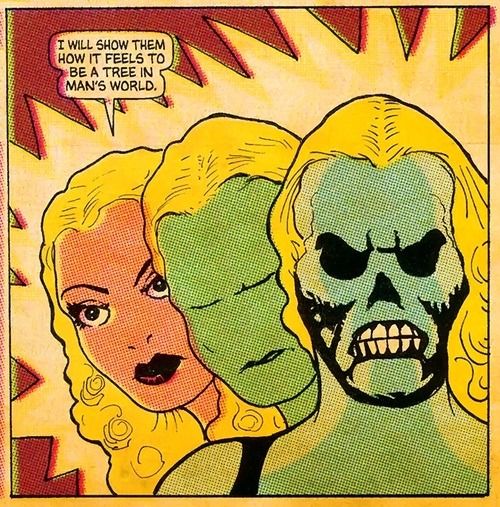
"I wonder how men will respond to women’s incursion into the whiskey market. Traditionally we’ve seen male flight. As an activity, occupation, or product is increasingly associated with women, men leave. In a society where women keep infiltrating more and more of men’s domains, this is a bad long-term strategy for maintaining dominance (see, for example, the feminization of education). As I ask in my forthcoming sociology of gender textbook: What will happen when women are sipping from all the bottles?"
the images-only feed would've just shown a bar, a Pink Lady, and HIllary doing shots
This is typical for America today: Women are expected to perform femininity, but when they perform masculinity, they are admired and rewarded. This is because we still put greater value on men and the things we associate with them.
Shawn Alexander Allen is a fascinating developer creating a game that’s a complex mash-up of turn-based tactics and oldschool brawler. Drawing inspiration from influences ranging from Bad Dudes to FTL and Teenage Mutant Ninja Turtles, Treachery In Beatdown City is currently seeking a final push on Kickstarter. I contacted Shawn to discuss the game and the influence of a life in ever-changing NYC, as well as his time working at Rockstar, the finer points of GTA and the representation and cultural impact of previously marginalised groups on the development scene.
RPS: For those of our readers who missed the initial news post and might not have seen the game elsewhere, can you briefly describe Treachery in Beatdown City?
Allen: Treachery in Beatdown City is a hybrid brawler/turn based tactics game. It’s got real time movement, and some attacks, but much like Fallout III the best attacks come when you bring up a menu and use points in a VATS like system to build combos. Our combo system is fairly open and allows for players to think about their next move, while also maintaining the pace and some of the twitch elements of a brawler.
Our battles are more akin to “matches” instead of just mowing down enemies, so you are fighting dozens of distinct opponents with their own look, attacks, range, style of fighting, etc. No two are exactly the same, and the biggest similarity between enemies is that many of them punch, but there’s a lot of different types of attacks to keep things interesting.
RPS: I often think that taking an existing genre and breaking down its mechanics in some way – making a sidescrolling brawler turn-based for example – is a form of interpretation. Done well, it can expose aspects of a genre that we take for granted and open them to re-analysis. Is there any of that in Beatdown City or am I projecting?
Allen: Yeah, definitely. The first thing is by making people aware that – A: every move they have has a name, and B: that they have a bunch of them and C: that they can do combos of different moves – people really care and don’t want to fall back on their instincts to button mash as much as the presentation may make them want to.
Part of designing the play in Treachery in Beatdown City was watching speed runs of Final Fight/Double Dragon III (a game I am terrible at) and just prior knowledge of the pitfalls of beat ‘em up design, like finding the dominant strategy and only using that for the next 30 minutes or so that the game lasts for in order to get through on a single life. And that’s not saying we are going to hammer out any existence of those, but we make the need for them translucent and make players want to play better because it only benefits them in the long run.
RPS: How exactly do the fights play out? More like Final Fantasy Tactics or more like actual Final Fantasy? Or something else entirely maybe.
Allen: I’ve been joking about this for a bit recently because of the return of FTL to prominence but our game is like the FTL of brawling, in terms of the fights – you can stop time, and plan out your next few moves, but when you’re fighting a ship and have people on board trying to take out your pilot, things can get very hectic.
You’re moving around in real time, and have some real time strikes at your disposal. But the meat is the combo building via a menu. Using attacks leaves you waiting for different amounts of time, although you’re not required to spend all of your points or COMBO meter. You can, say, uppercut one guy, turn around and grab then suplex the next. Or do a three jab combo.
There are also status effects that affect attack strength, damage taken, walking speed, poison type ailments, etc. There are also buffs to these as well.
RPS: What kind of fighting styles are incorporated and do you take reference from actual martial arts/wrestling etc?
Allen: Our main characters have different styles.
Lisa, the middleweight, is a mix of boxing/MMA, which means she has a lot of cool boxing moves on top of some kicks, and a bunch of holds. In fact she gets a dash punch, like Balrog, a “superman punch”, like several fighters use in UFC, a leg kick (that causes SLOW on enemies), etc.
Brad is a wrestler type who, as a bigger, older guy, uses a mix of grapple strikes and slams, but can also equip a new costume to bring some of his more acrobatic moves from his younger days back into the fold. He uses moves from numerous wrestlers. One of his initial strikes is the Dusty Elbow which causes STUN (enemy’s next attack may fail).
Then we have Bruce, who is a Jeet Kune Do/Capoeira expert. We modeled a lot of our moves from Bruce Lee’s training books as well as taking a few of his capoeira moves from watching a lot of Eddie Gordo. He also has an elbow that gets stronger as his health goes down, modelled after Anderson Silva.
Different enemies focus on different styles too, so choosing your player against different groups of enemies will change how the match plays out. Some characters have higher strike evade, making it harder for Bruce to gain the upperhand. Meanwhile, a guy like Brad, who uses mostly grabs, becomes a lot stronger in that fight.
RPS: The cultural references and touchstones in Beatdown City surprised me. Is this one of the first socially aware brawlers or have I been missing out on an Abobo subtext for years?
Allen: Probably…in fact beat ‘em ups have a long history of having weird issues, like Bare Knuckle 3 and Crime City 2′s use of leather clad gay men with highly exaggerated animations. These games pretty much were products of pop culture, so they looked more like Fist of the North Star or Streets of Fire.
The most socially conscious brawler I know of is the Kunio Kun series. The first game was referencing the creator Yoshihisa Kishimoto’s time in High School when he’d get into fights. It was then transformed into Renegade, and the rise of the biker brawls began. So even with humble, personal beginnings, the series quickly became an action movie cliche, which is part of the fun anyway.
I love action movies, games, etc. And I think some of the best ones dealt with those aspects to an extent. The A-Team dived into BA Baracus’ past here and there, making more human characters with complex interactions that were nuanced over entire seasons of episodes, or a couple of hours in a movie. That’s where we come in. We don’t want to jam a message down people’s throats, but we make you care about the characters and the places you are in while also telling a lot of uncomfortable jokes, both in dialog and in environment design. If you get down with that, that’s cool.
RPS: As well as working on Beatdown City, you’re a speaker and advocate for a more inclusive development scene, particularly in your native NYC. What kind of events and talks do you find helpful?
Allen: For me diving headfirst into the games industry on numerous levels woke me up a bit, it didn’t hurt that I always have this nagging race issue in the back of my head being a biracial black dude. The efforts at places like GDC for women to find a more inclusive space by people such as Brenda Romero definitely helped embolden me to think minorities, men or women, could be included more as well.
Different Games, Indiecade, Indiecade East, and special efforts by Brandon Sheffield for the Games Career Seminar at GDC are great places to find helpful information and support. I gave a talk at PAX East this year too and I feel like it helped a few people.
But you also have to go to places that aren’t filled with the people that immediately care about what you have to say, which is why I think events like DICE need to open up their talk categories.
RPS: I see the broadening of the medium as an inevitable step forward and a great opportunity. Do you feel there’s a fight involved for previously marginalised groups to be heard, respected and represented?
Allen: It’s interesting, as the gates are opened and the barriers towards game creation go down, the amount of competition goes up immediately. So while more people can make games, I think people will have to work through more nontraditional means, either for direct sales, or by making their games more interesting or unique or telling a different story, or showing different types of player avatars to get noticed.
Having more voices being heard is important, but I also don’t want it to be in some weird pandering because a person is “different”. We’re all going to just have to do our thing, and market the crap out of everything we do, just like everyone else, which is still a hard thing right now. I try to signal boost people as much as I can so people see these talented people more readily.
RPS: Is the recent rise of microstudios, by which I mean one or two person teams, partly responsible for the dialogues springing up about diversity? In a team of a 100+, aren’t individual efforts somewhat subsumed even where they might swerve from the norm?
Allen: I’d say so. I think seeing more people taking stuff into their own hands you’ll see more types of people with their own interests showing up. There’s still always going to be a contingent that chases the almighty buck though, as I’ve seen smaller diverse teams pumping out facebook clones too. But I think we are moving forward because there are less company NDAs to hold back people like myself from trying to make our voices heard.
RPS: From a creative standpoint, what do you think any artistic medium can gain from a diversity of voices?
Def Jam didn’t just start with LL Cool J, but with the Beastie Boys as well. Keith Haring became popular because of big influences by Puerto Rican graffiti writers. I have a friend who has work in the permanent Whitney collection who calls Andy Warhol a thief because of how much he would assimilate from other voices. No one knows Jack Smith, but he influenced Warhol quite a bit.
RPS: Beatdown City involves a fight against gentrification. Where in New York did you grow up and how much has it changed?
Allen: I grew up in the East Village in Manhattan. It was down the street from where Allen Ginsberg used to live. He came to my elementary school once and sang some songs and told some stories. In my building one day my mom almost got thrown down the stairs by some dude high on something when we came home at the wrong time. So there was this creative culture that existed, but it was still 80′s New York.
My mom moved into her current apartment in the late 70′s. The gates from the window in the room that was mine as a kid are still up. My mom had been broken into one too many times. Still she chose to move here from North Carolina, and she did poetry when I was a baby.
New York was once a place where rent was cheap-to-nonexistent in areas, and an artist could come to live and create. Now we are stuck with million dollar cheaply made condos and a new class of people jamming into overly expensive apartments just to get a job at some tech firm.
I was joking with my daughter this morning about how many coffee shops were springing up, representing an obvious shift in our neighborhood’s populace (we live in the Lower East Side area now). New York still has a very personal side, but it’s a lot harder to find these days.
RPS: How can you reflect that in a game? Particularly this kind of game?
That is tough, honestly. I try to just pour all of my soul into creating the backgrounds that you walk by, trying to represent this decay butted up against boutiques and condos. And we try to write that into the characters, and how they interact with each other.
At one point you, as Lisa Santiago, a born and raised East Fulton resident, you’re fighting a private security officer who is blaming you for harassing a drunken socialite. If that doesn’t say something, I’m not sure what will. But again, it’s kind of there if you pay attention…or it just looks like three women fighting otherwise.
RPS: You’ve written about bad dudes rescuing the president and Beatdown City’s America has a familiar face at its helm. What sort of political twists and turns can we expect from the story?
Allen: A bunch of the story is rooted in a farcical, but maybe not, premise of how far will the rich go for power. Also the “NinjaDragon Terrorist” organization who takes credit for kidnapping said president is dubiously named on purpose. Who are they, anyway?
Think Metal Gear level shenanigans, but even though they have meaning, there won’t be several minute long explanations.
RPS: Tell me if I’m wrong on any of these, but my first instinct was that River City Ransom, Streets of Rage and Double Dragon were the key influences on Beatdown City. But then I started to think about The Warriors, Paul Auster and MF Doom. What else should I be thinking about?
Allen: In terms of story? There’s a bunch of stuff from a lot of games that I either played or read about as a kid. In fact I just re-ordered the Ninja Gaiden 2 NES guide because I remember loving that Nintendo Power guide’s comics and back stories for every enemy. Double Dragon on the NES, Narc, and Bad Dudes were huge for aesthetic and story influences, but I also again used Ninja Gaiden as a style guide for ideas of cutscenes because that was a game that really went in with the art in those.
I love MF Doom and would love to work with him on something one day, but I’m also a huge Ghostface mark.
RPS: You spent several years working at Rockstar – my thinking on the GTA games in particular is that they mostly represent characters who are variants on a type. I rarely find the satire strong enough to counter the stereotyping and cheap jabs, even though there are some damn fine performances scattered about. Do you think there’s an argument to be made that the cast is at least more diverse than four bald space marines?
Allen: I loved GTA IV because Niko isn’t Russian, and gets offended whenever people call him Russian which is such a nuanced detail. It’s a unique idea to tackle because I even had a producer tell me “Duh, he’s Russian” before I worked at the company, right after seeing the first trailer. I postulated Eastern Europe, or perhaps even Middle Eastern.
Luis Lopez is also really interesting in that he is a Dominican dude wrestling with his old life, friends, family and lack of having a father figure around. He’s full of machismo to the point where he constantly points out that he’s not gay, and then he has a complicated father son relationship with a gay white man.
I’d like to see more of those details explored in games, personally.
Cryptonite brings EncFS and TrueCrypt to Android. You can browse, export and open EncFS-encrypted directories and files on your Dropbox and on your phone. On rooted phones that support FUSE (e.g. CyanogenMod) you can also mount EncFS and TrueCrypt volumes.
One of the most persistent legends in recent American history is how the Reagan-era CIA flooded the ghettos with crack cocaine, using the money to fund its many illegal activities. While this has never been officially proven, the CIA’s best alibi seems to be, “How could we find the time, when we were so busy giving arms to Iran and helping the Contras overthrow a democratically elected government?” And while we don’t know for certain that the CIA was behind the crack epidemic, it remains widely assumed—and true or not, it’s a story that has long captured the public imagination.
It’s such a compelling story, in fact, that director John Singleton is going to retell it for Showtime. The one-hour drama Snowfall will be set in Los Angeles in 1984, the same time and place as Singleton’s film debut, Boyz N The Hood. It ...
The graphic shows that Italy has a shockingly high percentage of architects in its population: for every 414 Italians, one is an architect. According to the graphic, Portugal, Denmark, Germany, Belgium, Spain, and Greece all have ratios of less than 1,000 to one. Of course, there are plenty of other architect-heavy places missing from the list; not even mentioned in the graphic is Chile, a country that – according to its latest census - has one architect per 667 inhabitants, nor Mexico which has about 724 inhabitants per architect. On the other end of the spectrum, China has only one architect for every 40,000 persons.
Just days after Microsoft launched a special ad-free version of Bing for schools, search rival Google is making some ad changes targeted at classrooms. In a statement to The Wall Street Journal, Google says it has stopped scanning student Gmail accounts for advertising purposes. The data-mining practice was central to a Microsoft-backed privacy bill that has seen Google face a lawsuit in a US court case. While Google Apps for Education is free from ads, the search giant still scanned more than 30 million accounts so that it could potentially target ads to students on other Google properties.
While the practice is being killed off for education accounts, Google is also reportedly planning to disable email scanning on its Google Apps services for businesses and government too. Google’s email scanning is the primary catalyst for Microsoft’s Scroogled attacks. Microsoft, which competes with its Outlook.com service, created its own Gmail Man spoof ad alongside full-age ads in national newspapers to highlight Google’s practices. While the Scroogled campaign has mixed reviews, it has served as a method to increase pressure on Google to alter its data-mining. Microsoft faced its own privacy pressure recently after the company was caught snooping on a blogger’s Hotmail account, a move that forced the software maker to rethink its own internal policies.
New submitter Raystonn (1463901) writes "Bloomberg has announced the release of Bitcoin support in their trading terminals, used worldwide by over 320,000 trading professionals. The market makers of the world will now have instant access to immediate Bitcoin prices on an industry-standard trading platform. This places the virtual currency before the eyes of the movers and shakers of most of the world's money supply as they decide where to invest their USD holdings."
Brussels under the same amount of water that covered the earth the last time CO2 was this high.
#DrownYourTown tumblr
Savor this last day of April 2014—it has been a remarkable month in the history of the earth. It’s the first month in recorded history in which the levels of carbon dioxide in the atmosphere have exceeded 400 parts per million (ppm) every day of the month, according to readings by the US’s National Oceanic and Atmostpheric Administration taken atop a volcano in Hawaii.
Carbon dioxide—or CO2, as it’s better known—is perhaps the most notorious greenhouse gas. It’s pumped into the atmosphere by the burning of fossil fuels such as oil and coal, and where plants once absorbed it, the razing of the planet’s forests means more and more of it hangs around in the atmosphere. CO2 is also incredibly long-lived, able to endure for centuries or even a millennium.
Since CO2 traps solar energy that would otherwise dissipate into space, the big worry here is that the more of it that’s around, the faster the world heats up. And this record-breaking April tells us that there’s a lot more of it around than ever in Homo sapien history.
Hourly, daily and monthly averages of carbon dioxide concentrations at Mauna Loa, Hawaii.
Scripps Institution of Oceanography, via Climate Central
To offer some historical context, CO2 levels have been at 180-280 ppm levels for at least the last 800,000 years, based on the analysis of ancient bubbles trapped in Antarctic ice sheets, reports Climate Central. Another recent study found that the last time CO2 levels were consistently this high was between 10 and 15 million years ago (paywall). Other research suggests CO2 levels may have hovered around the same levels (pdf) between 2 million and 4.6 million years ago (paywall).
“This was a time when global temperatures were substantially warmer than today, and there was very little ice around anywhere on the planet. And so sea level was considerably higher—around 100 feet [30.1 meters] higher—than it is today,” Michael Mann, a climate scientist at Pennsylvania State University, told Climate Central. But you don’t have to dig back to the Pliocene epoch to be alarmed by April’s CO2 levels, Mann said: “There is the possibility that we’ve already breached the threshold of truly dangerous human influence on our climate and planet.”
Even by the standards of very recent history, this month is astonishing. The US’s National Oceanic and Atmospheric Administration started measuring CO2 from a site on the Hawaiian volcano Mauna Loa back in 1958. In case you’re wondering, those zig-zags on the chart below show plants in action. Every spring and summer, they suck CO2 from the atmosphere in order to photosynthesize. As you can see, though, their yearly intake isn’t enough to keep CO2 levels down.
National Oceanic & Atmospheric Administration
The significance of that 400 ppm number is clear from the chart below, showing that measurements passed that threshold at Mauna Loa for the first time on May 19, 2013, then surpassed that number over the past month.
National Oceanic & Atmospheric Administration
And that’s what’s really disquieting—the brisk clip at which CO2 levels are rising. The faster the earth’s climate changes, the more dramatically humans will have to adapt.
dying cuz i was looking at pics of Shazam (one of the DC comics characters DC/Warner Bros just announced are getting their own movies):
and then i was like, “wait, doesn’t he look kind of familiar?” because last week it was announced that there’s gonna be a film adaptation of Superior, who looks like this:
anyway, Shazam is a young boy who gets turned into an adult superhero by a wizard, whereas Superior is a young boy who gets turned into an adult superhero by an alien monkey/demon, so they are totally different.
in other news, still no Wonder Woman or Black Widow movie.
Established in 1904 in New York, NY, the Jewish Museum is one of the leading cultural institutions devoted to "exploring art and Jewish culture from ancient to contemporary" through programming and exhibitions that are "intellectually engaging, educational, and provocative." Housed in a seven-story mansion, near other prominent New York museums along Fifth Avenue, the Jewish Museum counts with 30,000 works of art, artifacts, and broadcast media. Yesterday, the museum introduced a new identity designed by Sagmeister & Walsh.
The new graphic identity, being implemented throughout the Museum's building, digital, and print materials, reflects the Museum's commitment to exploring art and Jewish culture, historical and contemporary, while infusing it with an up-to-date sensibility and a global perspective. In addition, Sagmeister & Walsh has designed a completely new website for the Jewish Museum, debuting in June 2014, balancing aesthetics and functionality while serving the growing digital needs of the institution and its diverse audiences.
Our goal in rebranding the museum was to connect the historic and contemporary, and engage multiple visitor generations. The new identity system we created is founded on 'sacred geometry', an ancient geometric system from which the Star of David was formed. The entire branding system is drawn on this grid, from the word and logo mark, to dozens of patterns, icons, typography, and illustrations. […] This system invites surprise and flexibility across all media, while always unified in visual language.
Using the Star of the David as the base for the grid of the logo and the rest of the identity.Monogram.
The previous logo — three competent (except for the "T • H • E") lines of sans serif text in a square — looked exactly like what you would expect a museum logo to look like but, by no means, like a Jewish museum. What in the world does a Jewish museum logo look like, though? At least one not mired in clichés? Sagmeister & Walsh have come up with an answer by using the basic geometry of the Star of David — the Jewish equivalent of the Canadians' maple leaf — to build a comprehensive and flexible system with a consistent aesthetic that isn't completely repetitive.
The new logo is hard to digest at first. No museum logo looks like this, particularly no museum housed in a seven-story mansion on Fifth Avenue. It's not a pretty logo but damn if it doesn't demand attention. I can rally behind the idea and execution and I support sticking to a grid as die-hard as possible but a little leniency in the rules would have been welcome here, particularly the connection in the "w" and "s"s — they just don't naturally flow out of those letters and feel really weird and forced. The "JM" monogram is an effective reduction of the main wordmark and placed inside the hexagon it reveals its matching angles quite nicely.
Color palette.Drawing of the museum's seven-story mansion in the Upper East side of Manhattan.Custom font, primary.
The main elements of the identity are the wordmark; a bezier-heavy rendering of their building; a color palette that relies way, way, way too much on blue; and a custom font that follows the wordmark that, again, shows too much adherence to the grid and forcing that connection on the right side of every single letter (I'm actually surprised the "f" doesn't have it, maybe they missed it). On their own, the elements seem dissonant, but together…
Stationery.Stationery detail.
There is something hypnotic and decidedly energetic about it that makes it irresistibly compelling. I kind of hate it and love it at the same time.
Custom font, secondary.Grid for the secondary font.Typographic pattern. Says "Shalom".The pattern as wrapping paper.Shopping bag and other materials. To me, this image is what makes this identity.360-degree view of the bag.
The identity continues with further typography on a grid and other textural patterns, visually exploding in the retail applications where we finally see a color other than blueblueblueblue with the sparks of fluorescent red/orange and it's a fantastic contrast. I wish the stationery had a few of these bursts of colors to break the monochrome monotony. Another example with color directly below.
Brochure cover.Grid for the icons.The finished icons.Ads.Digital presence. (And spiky plant).
So, is this a Jewish-looking identity? Remarkably, it is. And it does so avoiding every expected solution. (It helps that it says "Jewish" everywhere but, clearly, this wouldn't work as the identity for The Mexican Museum). The hexagon-grid approach gets heavy-handed at times but it's what makes the identity stick together and, overall, it's a very welcome break from the black-and-white, spaced sans serif identities we've grown so accustomed to from museums.
Ohagi the cat doesn’t let anything distract him when stalking prey. His his concentration is locked, his green-eyed laser beam is focused as his little kitty butt goes into full wiggle, lining himself up for the kill.
NBA owners are expected to force Clippers owner Donald Sterling to sell his team, and boxing star Floyd Mayweather Jr. could have the power to buy the franchise.
Boxer Floyd Mayweather Jr. says he and his investment group are interested in the buying the Los Angeles Clippers from embattled owner Donald Sterling, reports USA Today.
The comments from the world's top-ranked boxer comes a day after NBA commissioner Adam Silver announced that league owners would vote to remove Sterling as the team's owner -- to do so the NBA needs three-fourths majority vote from owners -- following the scandal over a racially-charged recording that was revealed to be of Sterling's voice.
Mayweather said that his group is "very, very interested" in purchasing the Los Angeles team and have the money to do so. A Los Angeles resident and frequent fan at Clippers and Lakers games, Mayweather added that he wouldn't relocate the team to Las Vegas and that he'd want to own a share of more than three or four percent.
But Mayweather won't be the only star athlete that could try to buy the Clippers.
Of course, it's hard to project a timetable for league owners to vote against Sterling. And even if that passes as expected, it's quite possible a legal battle could ensue if Sterling doesn't want to sell the team -- he told Fox News' Jim Gray he would not sell before Silver announced his punishments.
Government regulators around the world have spent the last year scrambling to prevent bitcoin from becoming the currency of choice for money launderers and black marketeers. Now their worst fears may be about to materialize in a single piece of software.
Google, for its part, denies any plans to change its strategy with Google+. But now comes evidence that the company is indeed exploring a future where Google+ branding gradually fades into the background.
ASL Interpreters - Beauty And The Beast: Live at Disney’s Hollywood Studios
Wow, what amazing interpreters. I love it how the woman’s signs reflect the character speaking. Her arms up as a spout before signing for Mrs. Potts, her hands around her face representing the face on a clock for Cogsworth, and arms up like a candlestick for Lumiere.
Not to mention that her signs are then performed like the characters. Cogsworth signs a bit robotically and stiff, and Mrs. Potts’ signs are softer. Wonderful acting and a great interpreting partnership between the two. So amazing.
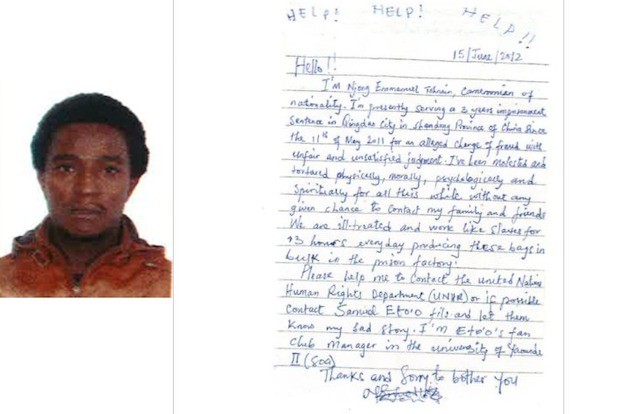
The message, written in blue ink on white lined paper, appeared to be a desperate cry from a man who said he made the bag while being unfairly held in a Chinese prison factory more than 7,000 miles away.
"We are ill-treated and work like slaves for 13 hours every day producing these bags in bulk in the prison factory," continued the letter, which was tucked into the bottom of the bag. It ended, "Thanks and sorry to bother you."
Some time ago, I tracked down a surviving copy of Ralph Steadman’s fairly obscure 1995 illustrations for George Orwell’s Animal Farm. Last week, I spent time scanning and restoring the images, then wrote about the edition with the appropriate background and context.
Three days later, Buzzfeed, the vermin on of the internet – or, for a more context-appropriate metaphor, the pigs of the internet – stripped the images of context and reposted them, without credit, as an ad-infested listicle nestled among their usual fare of ethically repugnant “sponsored content.”
If this seems like an extreme reaction, there’s something to be said for the blend of anguish and fury that comes with investing eight years of your life into a labor of love, only to see it systematically stolen by greedy thieves who feel they are more equal than others.
The most tragicomic irony? In my original piece, I also included an excerpt from, and a note on the timeliness of, Orwell’s unpublished preface to the book, in which he discusses the failures of integrity in journalism.
This is a rant, yes, but also a reminder – a reminder that our attention is a gift to be given thoughtfully, that we shape our own media universe, its ideals and its promises, through what we choose read and share. We can do better than to give Buzzfeed and its ilk that gift.
'Listening to The Pros and Cons of Hitch Hiking as a 320kbps MP3 downloaded from Spotify, I was struck by the unparalleled depth of the drum production. It is truly astonishing in its aural power and accuracy, and will only resonate more fully through a 24-bit DAC like the ES9018MK2.
The other side of that microchip is that The Pros and Cons of Hitch Hiking sucks.'
This tiny square rests at the heart of Neil Young’s loudly-touted PonoPlayer. You can buy one—a single ES9018MK2 microchip—for $18, and in bulk, you would expect to pay half that. Soldered per the circuit designs of Boulder, Colorado audiophile lab Ayre Acoustics, the 9018MK2 Digital Audio Converter (DAC) supports a stupendous bit-rate ceiling for lossless audio playback, and is the essential component of the Pono gambit.
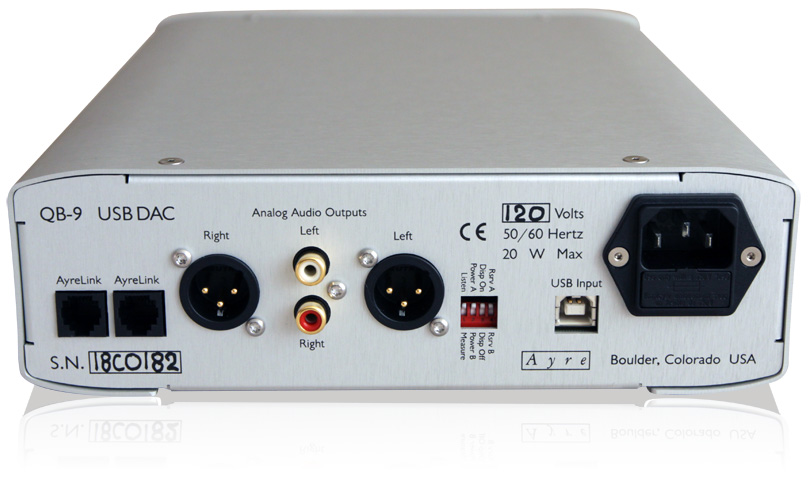
Ayre are already known for questionably expensive audiophile products, like the $2500 QB-9 USB DAC, a hockey puck housing a Texas Instruments TAS1020B chip you can presently buy used for $5.50. Comically, the QB-9 includes XLR and analog RCA outputs, technologies that date from 1958 and 1941, respectively. The digital wizardry in a PonoPlayer can only be extracted through a pair of 3.5mm stereo sockets, signal-weighted for headphone or line stage output. This configuration remains largely unchanged since its first application, in 1878.
Theoretically, you are paying for knowledge, for technical expertise, but the circuit boards of modern DAC players are flatly simple. With their noise-canceling doo-dads and holy-water signal ionizers—Ayre at least have a sense of humor, calling one of their woozle-wuzzles the “Ayre Conditioner”—devices like these represent the self-congratulatory feedback loop of an elitist technocracy.
The DAC chip’s output comes in the form of current, so Ayre designed a proprietary, fully discrete, fully-balanced, zero-feedback current-to-voltage stage. This then goes to a fully discrete, zero-feedback buffer stage to drive both the headphone output and the line stage output. — word magic from Pono’s Kickstarter
For the digital audiophile, bit-rate and compression have supplanted old arguments over gauge, wattage and solid-state vs. tube amplification. The distinction is that analog purists fought a measurable arms race, driven by electricity, magnetism, and acoustic geometry. The digital audiophile is in a race against Moore’s law, and nothing else. More and more articles are pointing out that digital signals are binary—a light switch—and there is no cable better at relaying them than another, unless the other is cut in two.
This is the Wolfson WM8741, a 24-bit DAC, similar to the ESS chip inside a PonoPlayer. It costs $9, and is currently used by Astell&Kern as the brains behind their mid-priced$1300 MP3 player, the AK120.
Astell&Kern are a NewCo reboot of iRiver, makers of the original triangular DAC player, the iFP-195T:
Forgiving high failure rates for its moving parts, iRiver’s MP3 players were the best on the market ten years ago, favored by athletes for their light pocket footprint (compared to the then-chunky iPod), and “prosumer” listeners for their on-board equalizer. In identifying this ultra-portable niche (to the tune of owning +/-4% of the total MP3 player market), iRiver pushed Apple to release the iPod Mini ahead of schedule: its clammy first generation player was being retooled as it launched, and was replaced within a year. The Mini was too cheap to be a bust for Apple, and it helped bridge their penultimate year of development before launching the life-altering iPhone in 2007.
“I shook up the world.”
Smartphones have almost completely rationalized human consumption of information, including audio and visual media. With such vast applications for daily life, we should expect to pay a premium for their utility, and we certainly do, though for most of us, telecommunications providers bear the brunt. Without contract crippling, the iPhone 5S, which has a BOM somewhere around $200, starts at $650 from the Apple Store. A universe of diverse conveniences is built into that sticker price. What does the $400 PonoPlayer, with an estimated BOM of about $50, offer in trade?
“We can’t share any of our BOM details on this forum as it’ll trigger a lot discussions that take away from the bigger picture.” — The Pono Music Team, on Kickstarter
No matter how high you set the bitrate via $10 DAC chips, there is a common-sense argument that undercuts Neil Young’s qualitative put-on, and underscores the nastiness of its intention. Pono rewards privilege. Only the best-produced music can benefit from the one feature it offers. As it raises the digital audio ceiling, Pono simultaneously forms a gated community around its beneficiaries.
You will not hear anything new in Aphex Twin’s “Xtal,” Big Daddy Kane and Kool G Rap’s “Raw,” or the Silver Jews’ “Secret Knowledge of Backroads” thanks to Neil Young. The listening experience he and his backers advertise is real, and phenomenal, but accessible only to fans of the Eagles, Pink Floyd, Michael Jackson and in particular I’d suggest the Police, whose Synchronicity LP is exactly the kind of opportunity Pono affords: a record with peerless fidelity and established popular endurance that has, arguably, never been heard properly.
Last week, a reader asked me about the solo albums Pink Floyd’s main songwriters released in the 1980s, and I remarked that Roger Waters’ The Pros and Cons of Hitch Hiking is generally viewed as the only excusable effort from either of them. Reminded of it, I put the album on in the car, which, incidentally, is not a place to pretend you can hear the difference between MP3s and lossless FLACs (this remains a stupefying suggestion on Neil Young’s part). Listening to The Pros and Cons of Hitch Hiking as a 320kbps MP3 downloaded from Spotify, I was struck by the unparalleled depth of the drum production. It is truly astonishing in its aural power and accuracy, and will only resonate more fully through a 24-bit DAC like the ES9018MK2.
The other side of that microchip is that The Pros and Cons of Hitch Hiking sucks. It’s one of the most incomprehensibly bleary, noncommittal smears of rock excess you’ll ever hear. A composite failure as a piece of music, The Pros and Cons of Hitch Hiking was apparently made in 1984 for 2014: like the PonoPlayer that promises to finally unlock music’s sonic grandeur, it demonstrates the folly in handing musicians a blank check.
Great news for fans of Octavia Butler's mind-expanding fiction: two previously unpublished stories of hers are coming out this June, in a single volume called Unexpected Stories.
The Colorado Symphony Orchestra has announced a series of concerts in association with a legal pot promoter, Edible Events. The series lights up on May 23 with three bring-your-own weed concerts at the Space Gallery in Denver’s Santa Fe arts district and climaxes with a massive outdoor puff-storm at Red Rocks Amphitheatre in September.