I did not choose to significantly reduce my engagement with the online world, and specifically to delete all of my social media. I did so out of painful necessity, in the wake of my own terrible behavior, and within a sweeping set of changes to all facets of my life. I am not in a position to evangelize – it’s hypocritical to do so if you only found religion to stay ahead of the cops – and I’m not interested in doing so. Anyway, it’s hard for me to say what changes in my life stem from my online habits as opposed to going back on meds, seeing a social worker, getting back into therapy, doing a year of AA, going to a support group, or suddenly living a reclusive life. I’m not trying to convince you to do anything.
I do want to simply share my experience about going from being pathologically online to being, not offline, but less online, consciously online, deliberately online. Or if you can forgive me for being cute, halfline.
I got rid of Facebook, Twitter, and Instagram. These were services that I utilized, as I say, pathologically – that is, to excess despite clear negative effects on my life and constant decisions to cut back or quit. Checking them was a literal constant for me, as it is for many people. I argued about politics; I kept abreast of the news; I stayed connected to friends; I told and read dumb jokes; I fought, and I fought, and I fought, and I fought; and I looked at pictures of attractive women. Those things wallpapered my days and were suddenly gone. I also stopped blogging, and in a bigger sense, opinion making, after having done so faithfully for almost exactly a decade. I stopped freelance writing, which was a major source of my sense of self and a minor source of income. (It will disappoint some to learn that I still get asked.) If I’m being honest, I long ago stopped writing out of the joy of getting published and started writing out of something like spite. So all of those things are gone.
I also found myself naturally less connected in terms of following the news cycle. Social media, after all, is a feed, of news and opinions among other things. Early on, when I was most involved with the essential work of early recovery, I read nothing that I could not hold in my hands. It was a blessing in a period that was both incredible difficult and filled with blessings. Over time I came back to reading stuff – #content, Takes – in fits and starts, and never close to the level as before. There wasn’t, and isn’t, much rhyme or reason to what I read and when. I catch on to many stories late, but some I am perfectly up-to-date about. Whole controversies pass me by only for me to learn about them from some oblique reference from a friend. I learned about the Harvey Weinstein thing months after the fact, only because I caught a glimpse of the front page of the New York Post and was curious. Sometimes I still get into Wikipedia rabbit holes. I can’t remember the last time I read a hot take about politics or saw the front page of the New York Times, but I check ESPN.com religiously. I still check RSS, but I never followed anything remotely mainstream on RSS anyway, and as the category of interesting and independent thinker has essentially gone extinct online, my RSS reader has grown barren.
Occasionally I codify my media consumption into a set of rules. For example, for more than a year and a half now I have not read a story with the word “Trump” in the headline. I simply realized one day that I could not remember having learned one genuine thing from such pieces, one insight that made me a smarter or sharper person, and so I stopped. I do not feel at all the poorer for it, or for dramatically reducing my consumption of online opinion making in general.
I am not a monk. Going fully offline was not an option. After all, email is a form of internet communication, and I need email, for work most of all. I also couldn’t maintain my current job without access to my online calendar, to Blackboard, and to (shudder) CUNYFirst. Nor would I willingly give up the ability to communicate with friends and family via email, or to coordinate my files with Dropbox. I stream movies on Amazon. I also occasionally play video games, which at least require downloading and often online connectivity. I watch some YouTube, even after a major reduction and imposition of rules, as I realized that watching YouTube was becoming just another habitual behavior. Similarly I found myself obsessively checking MLB and NBA box scores until I realized it was just another way to constantly open up my phone. I still have to keep an eye out for the subtle ways I might cheat without knowing it.
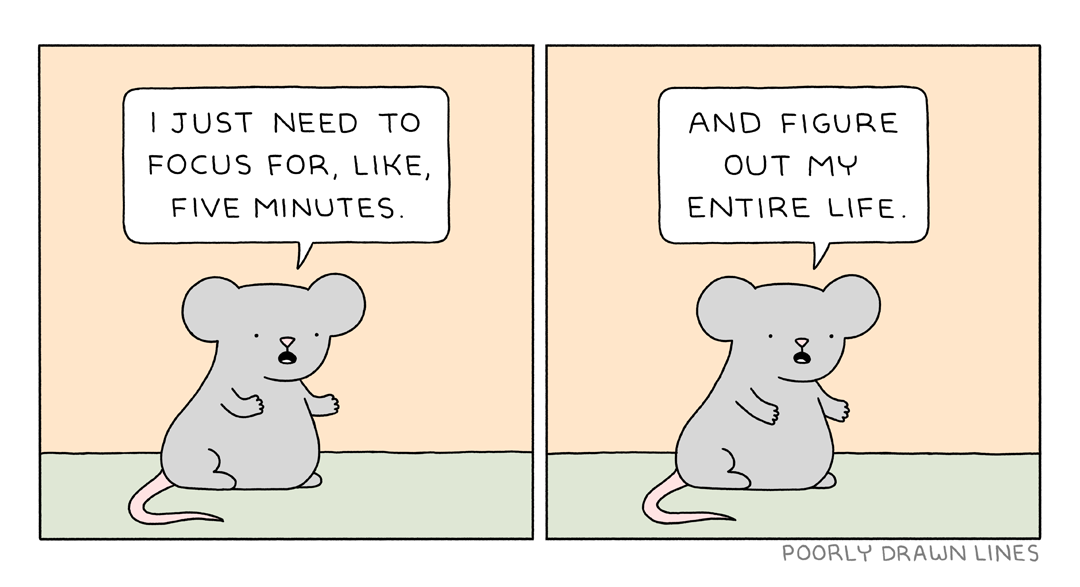
So what has it meant for me, to leave constant connectivity, endless social conditioning, and perpetual knowingness behind? Perhaps the most important thing to say to anyone is this: nothing happens overnight, and what does happen is not dramatic, at least at first. I sometimes read about people going offline for three months or six and I sense that they are disappointed that wisdom does not suddenly appear. Probably the most obvious difference for the first year was that my phone suddenly had an abundance of battery life. I think it takes longer than a year for changes to emerge, and even then you must be prepared for the changes to be gentle and quiet. If you’re going into it with an expectation of some quick fix then don’t bother.
But changes do come, and they are real. The most obvious is just the need to fix. The constant sense of having to check something, to go seeking that little hit of dopamine and getting it. Again, I suspect that the transition for me was less obvious because it was drowned in the personality-destabilizing experience of onboarding meds. But the feelings were still very present and sometimes intense, the reflexive grab for the phone. I think this manifests for most people as an inability to maintain attention on anything for even brief snatches of time. And that did change, for me. Bit by bit, the vague panic that something somewhere was happening that I wasn’t noticing subsided. I didn’t imagine unread urgent emails and I didn’t assume that I was ignoring some vital social cue. I stopped feeling like I had to do something else at the same time I was watching a show. That stuff did come and it has raised my quality of life. But it comes slowly.
It also takes work. I’ve always been a big reader, but my exile prompted me to really think about it, and I admitted to myself that where I was once a reflexive and habitual reader, I had become in the past decade a deliberate one, someone who penciled reading into his planner. Perhaps this was grad school, most of all, but I’m also sure that the ceaseless fight against a flickering attention played a large part. You can’t read voraciously when you’re fighting another part of your brain for control of your attention. (I truly fear for the world’s 11 year olds, that they may never experience what it’s like to be incapable of putting a book down.) So I set about trying to make reading a more organic, spontaneous part of my day, paradoxically by initially scheduling more brief moments to read. In time I didn’t have to schedule anymore, and when I did read I felt pulled away less often. It took a lot of ignoring. In time the temptation to read while doing something else returned, although it’ll never be like it was before I first read a blog.
Another thing: there is a remarkable freedom in no longer feeling like you need to sell something to someone. That’s what I feel, when it comes to me. I feel like I no longer have to sell anything – not an idea, or an image, or a self. Because that’s what you’re constantly doing on social media, selling some version of yourself, marketing your very personality. (One of my pet beliefs is that many or most adults go through life relitigating high school, trying either to recapture past glory or to get to be one of the popular kids this time around. This impulse explains approximately 100% of Twitter culture.) It’s freeing to allow your personality to just exist, disaster though it may be. Offline I have nothing to advertise.
What is most powerful is what I can’t convey. There is just a kind of voice in my head that’s gone, a level of awareness I’m no longer aware of. Something will knock around in my brain and for a second I’ll go “Ohhhhhh…” and I’ll recall a kind of knowing that knows only itself, an internet ouroboros, a cell of the hive mind. There is a type of meta-understanding of oneself within a constellation of other selves that I’ve lost, and which I won’t try to describe, because I don’t want to think about it too hard and risk it coming back.
Here’s what I know: the mindset I have partially and slowly left behind is the product of choice, and not my choice.
It’s a point that I cannot stress enough, and it’s one that I think should be far more common, prevalent, and pressing than it is today. Silicon Valley is constantly in the process of manipulating your brain chemistry to suit its ends. Deliberately and directly. Tech companies spend untold millions of dollars engineering ways to alter your mind. The way online life changes the way you think is not an accident; it is the result of a very conscious and nefarious decision by powerful corporations to monetize the malleability of our psychological selves. When you feel like you can’t stop checking Facebook every 5 minutes, when you stare at your iPhone despite knowing you’re being rude in doing so, when you lie awake at night on Instagram even though you’ve made up your conscious mind not to do so… these things are happening because engineers have set out to manipulate you. They have control over you. Real control. None of it is an accident, and all of it is done because it is profitable.
That we have gone along with this strikes me as one of the darkest turns in our collective cultural memory. And the change has been, to many people, unambiguously a bad one; so, so many people who are permanently online will tell you matter-of-factly that they derive far more unhappiness from online life than they do happiness. If you don’t believe me, ask around. Go on Twitter. Ask people: does this network, on balance, bring you pleasure? I suspect most will admit that it doesn’t. Certainly if all the gallows humor is to be believed the answer is no. Yet people continue to participate despite this knowledge. Cool kid Twitter has, for a very long time, struck me as an unbearably sad place; all the irony and jokes and memes paper over a desperate and directionless unhappiness. They may farm likes and retweets, and they may address the whole world from a stance of derisive and disaffected superiority. But they’re not happy people.
Some seem to find offline life unthinkable. Every four or five months someone emails me to ask whether they have discovered my “secret Twitter account.” There’s also the “I need it for my job” delusion. Usually when people say that, if you respond “How do you need it for your job, specifically?” the response is a lot of hemming and hawing. The number of people who authentically need to access social media must be very small. I am less interested in this excuse itself than I am in the urge to find an excuse at all. The behaviors that compel us to come up with excuses and rationalizations are the behaviors that hurt us most.
Like I say, I am not an evangelist. People should do as they please. Most everyone will find using social media a healthier pursuit than I did. Most people do not possess my abundant pathologies, and most possess the maturity, restraint, and perspective that I never did. Perhaps most people use social media without issue.
But I think it would be good for everyone if we all communally understood: when we use these technologies, we are giving access to our brain to some very shadowy figures. And too many of us are relying on the pleasant fiction that our conscious mind will overpower the unconscious, the conditioned, the Pavlovian. It is a hallmark of irrational thinking to believe that our rationality prevails. Take it from one who knows of what he speaks: we are not in control of our own minds. And when we sign away the deed to even a sliver of our brains, we risk bringing discord of an insidious and unknowable variety to the recesses of our selves. You do not have to believe that we live in the worst case scenario of what social media could potentially do. You only need to believe that, when you open the door to those amoral and rapaciously ambitious men of Silicon Valley, you never know what will come through, or if you will even notice the day it walks in.
I do miss the Instagram thots though.