Shared posts

28 Apr 17:18

The “Losing Jobs To China” Discussion

by Fred Wilson
Ben Wolf

Or maybe the conversation should be about how there will be less and less jobs in general in the future. It's not like the information jobs aren't getting automated too. So perhaps the idea is that will need to share the wealth.

I am bothered by the ongoing discussion about how the US has allowed China (and other lower cost countries) take our manufacturing jobs. That is true, of course. But it does not address the larger context which is that manufacturing is becoming more and more automated and many of these jobs will not exist at all anywhere in a few more decades.

We are now well into a transition from an industrial economy to an information economy. It seems to me that part of that transition was the move of industrial jobs to lower and lower cost regions in an ongoing march to reduce costs. But that march may end with massive automation and very little labor in the manufacturing process. That means that these low cost regions that “stole our jobs” will also lose these jobs eventually.

The US and a number of other countries around the world are building new information based economies. That is the long term winning strategy.

So while we can critique our leaders (business and political) for giving up on the manufacturing sector a bit too early, I think the US has largely played this game correctly and will be much better off than the parts of the world that have taken the low cost manufacturing jobs from us.

But we don’t hear any of our political leaders explaining this. I wish they would.

28 Apr 12:44

Michigan police officer buys car seat for struggling father

by Jason Marker

Filed under: Government/Legal,Driving,Safety,Police/Emergency

A police officer in Westland, Michigan helped out a struggling young father when, instead of writing him a ticket, the officer bought a car seat for the man's daughter.

Continue reading Michigan police officer buys car seat for struggling father

Michigan police officer buys car seat for struggling father originally appeared on Autoblog on Tue, 26 Apr 2016 14:45:00 EDT. Please see our terms for use of feeds.

Permalink |  Email this |  Comments
27 Apr 19:05

Acte.2 Shows Its Playful Side With Vibrant SS16 Lookbook

by Jake Boyer

Visit the original post to see all 9 images from this gallery.

After an incredibly gloomy FW15 editorial, high-end retailer Acte.2 has completely turned the tables in a new lookbook for the SS16 season. It’s bright, colorful and tongue-in-cheek.

The lookbook culls together several other brands from Acte.2’s parent retailer, French online store The Next Door. Some of the brands worn by the highly amused models include AMI, Acne Studios, Junya Watanabe, sacai and Stussy. The parade of various designer prints and looks are captured in an ornately cluttered hotel suite, one that stresses this season’s sense of playfulness.

Shop some of the captured styles through Acte.2 and The Next Door’s website.

For more SS16 goodies, check out our latest editorial “East End Local.”

22 Apr 16:34

Prince's "While My Guitar Gently Weeps" solo shows one of his underappreciated skills

by German Lopez

Prince is dead at 57. As the internet mourns, a tweet calling out Prince's incredible guitar talents, referencing a supposed Eric Clapton quote, has gone viral:

The quote is very, very likely fake. There is no verifiable source for it on the internet, as far as I can tell. And it has been used interchangeably for other artists on internet forums.

But even if that's the case, one thing that's undeniable — although perhaps underappreciated — is that Prince really was an incredible guitarist. Just check out his absolutely phenomenal rendition of the Beatles's "While My Guitar Gently Weeps":

Prince's solo starts at around 3:25 in the video above. As Dan Riffle put it on Twitter, the solo was written by George Harrison, recorded by Eric Clapton, and perfected by Prince.


Watch: Prince, remembered in 11 songs you might not know he wrote

21 Apr 14:25

A NSFW Content Recognition Model

by Fred Wilson
Ben Wolf

For trending?

Last week our portfolio company Clarifai released a NSFW adult content recognition model.

If you run a web or mobile service that allows users to upload images and videos and are struggling with how to police for NSFW content, you should check it out.

Ryan Compton, the data scientist at Clarifai who built this NSFW model, blogged about the problem of nudity detection to illustrate how training modern convolutional neural networks (convnets) differs from research done in the past.

We are excited about the possibilities that modern neural networks open up for entrepreneurs, developers, and scientists. Our investment in Clarifai is based on our belief that AI/machine learning/neural networks/etc have reached the point of mainstream adoption and usability. And we are seeing more and more use cases for this technology every day.

Solving the problems of content moderators and trust and safety teams at scale, as we discussed here at AVC this past weekend, seems like a particularly good use of this technology.

21 Apr 12:21

Numbers (and the magic of measuring the right thing)

by Seth Godin

What you measure usually gets paid attention to, and what you pay attention to, usually gets better.

Numbers supercharge measurement, because numbers are easy to compare.

Numbers make it difficult to hide.

And hence the problem.

Income is easy to measure, and so we fall into the trap that people who make more money are better, or happier, or somehow more worthy of respect and dignity.

Likes are easy to measure, so social media becomes a race to the bottom, where the panderer and the exhibitionist win.

Five star reviews are easy to measure, so creators feel the pressure to get more of them.

But wait!

What does it mean to 'win'? Is maximizing the convenient number actually going to produce the impact and the outcome you wanted?

Is the most important work always the most popular? Does widespread acceptance translate into significant impact? Or even significant sales? Is the bestseller list also the bestbook list?

Who are these reviews from? Are they based on expectations (a marketing function) or are they based on the change you were trying to make? It turns out that great books and great movies get more than their fair share of lousy reviews--because popular items attract more users, and those users might not be people you were seeking to please.

Or consider graduation rates. The easiest way to make them go up is to lower standards. Or to get troublesome students to transfer to other institutions or even to get them arrested. When we lose track of what's important in our rush to keep track of what's measurable, we fail.

The right numbers matter. A hundred years ago, Henry Ford figured out how to build a car far cheaper than his competitors. He was selling the Model T for a fraction of what it cost other companies to even make one of their cars. And so measuring the cost of manufacture became urgent and essential.

And farmers discovered the yield was the secret to their success, so tons per acre became the most important thing to measure. Until people started keeping track of flavor, nutrition and side effects.

And then generals starting measuring body count...

When you measure the wrong thing, you get the wrong thing. Perhaps you can be precise in your measurement, but precision is not significance.

On the other hand, when you are able to expose your work and your process to the right thing, to the metric that actually matters, good things happen.

We need to spend more time figuring out what to keep track of, and less time actually obsessing over the numbers that we are already measuring.

       
20 Apr 01:11

Hilariously bad phone number web forms

by Jason Kottke
Ben Wolf

Yes

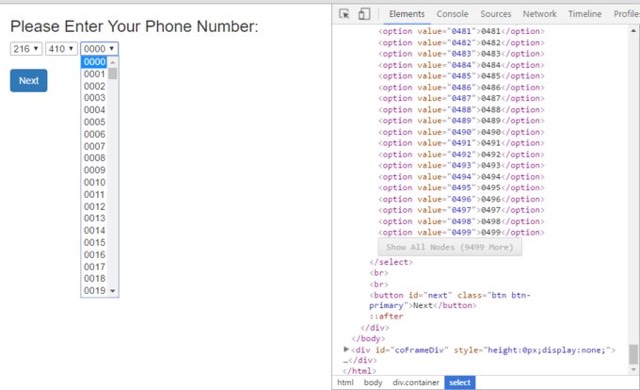
Stelian Firez recently shared a really boneheaded web form for entering your phone number:

Phone Num Forms

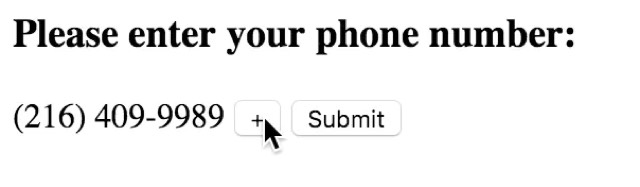
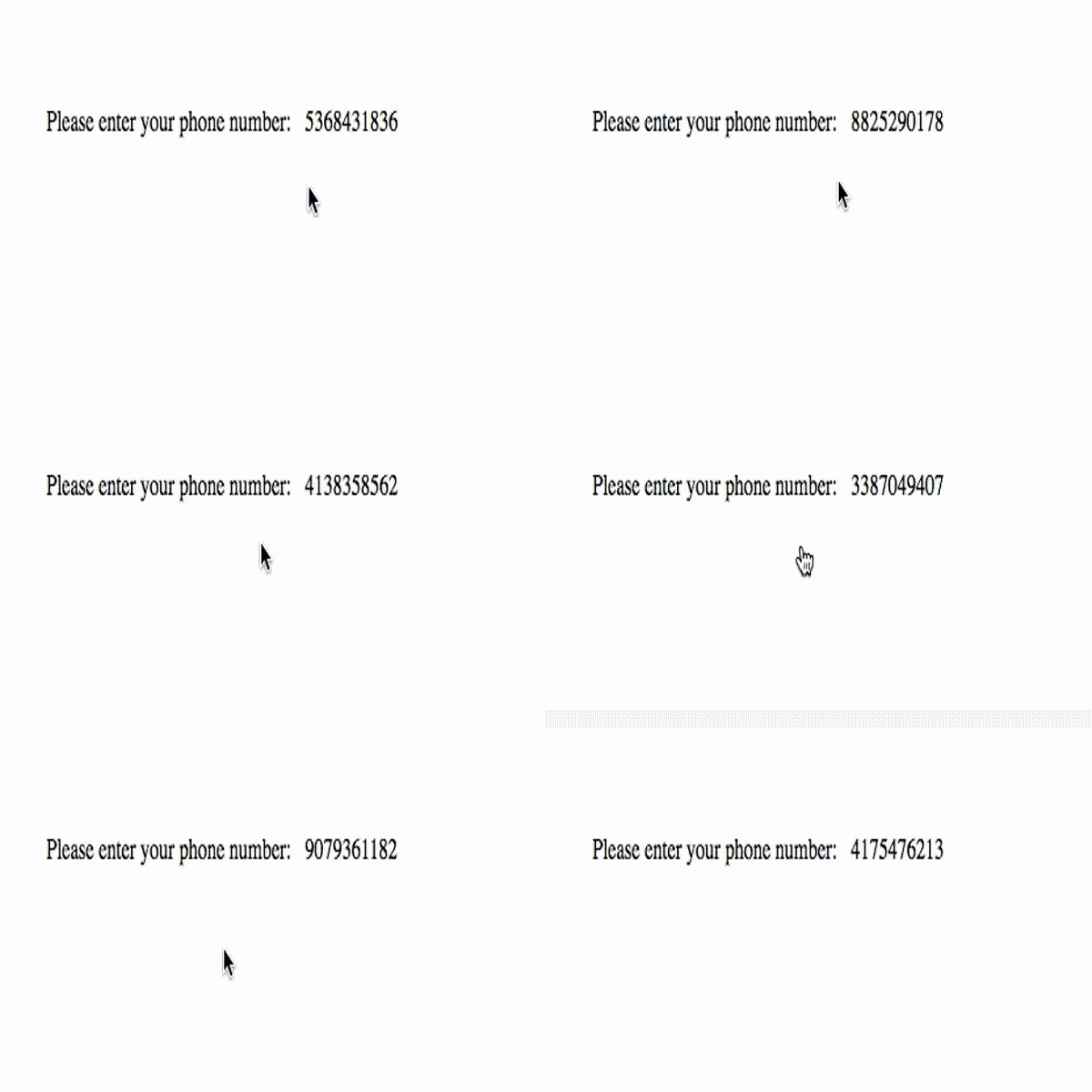
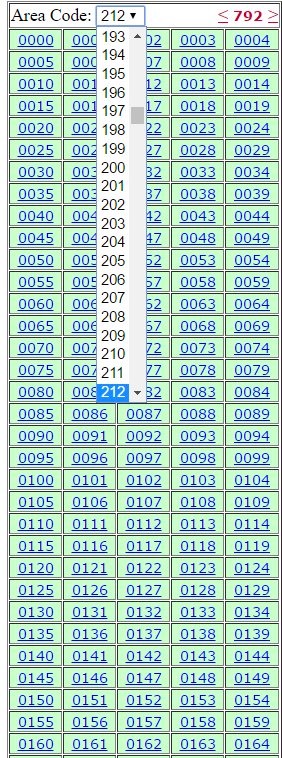
Soon afterward, several people attempted to conjure up even more cumbersome ways to ask people for phone numbers:

Phone Num Forms

Phone Num Forms 03

Phone Num Forms 04

Phone Num Forms 05

"Solutions" by Jeff Bonhag, Paulo Gaspar, Dan Kozikowski, and Justin. (via @ftrain)

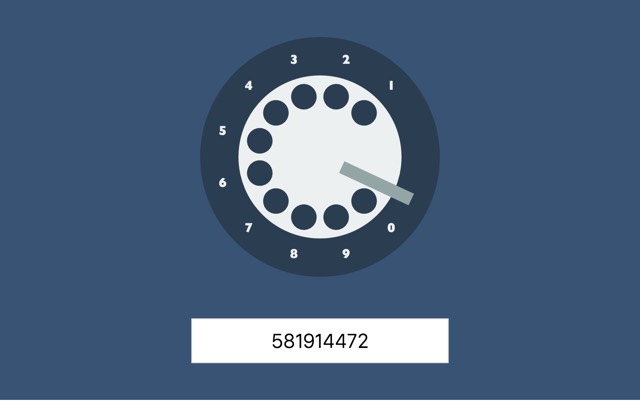
Update: Thomas Park went old school with a rotary dial.

Phone Num Forms

Tags: Stelian Firez   web development
14 Apr 17:32

Product Designer Renders Laypeople's Inaccurate Bicycle Sketches

Ever play Pictionary with someone who can't draw? It's excruciating, no? Now imagine these non-drawers were tasked with concept development and it was your job to render them.

Product designer Gianluca Gimini has capitalized on the limited abilities of non-drawers in order to create Velocipedia, his wonderful, six-year-long rendering project. "Back in 2009 I began pestering friends and random strangers," Gimini writes. "I would walk up to them with a pen and a sheet of paper asking that they immediately draw me a men's bicycle, by heart. Soon I found out that when confronted with this odd request most people have a very hard time remembering exactly how a bike is made. Some did get close, some actually nailed it perfectly, but most ended up drawing something that was pretty far off from a regular men's bicycle."

Gimini then rendered these sketches, to hilarious effect:

Some of these actually look pretty wicked. And to be clear Gimini, for his part, is not mocking these folks' work, but appreciating it. "I collected hundreds of drawings, building up a collection that I think is very precious," he explains. "There is an incredible diversity of new typologies emerging from these crowd-sourced and technically error-driven drawings. A single designer could not invent so many new bike designs in 100 lifetimes and this is why I look at this collection in such awe."

13 Apr 18:59

How a car engine works

by Jason Kottke

How a car engine works

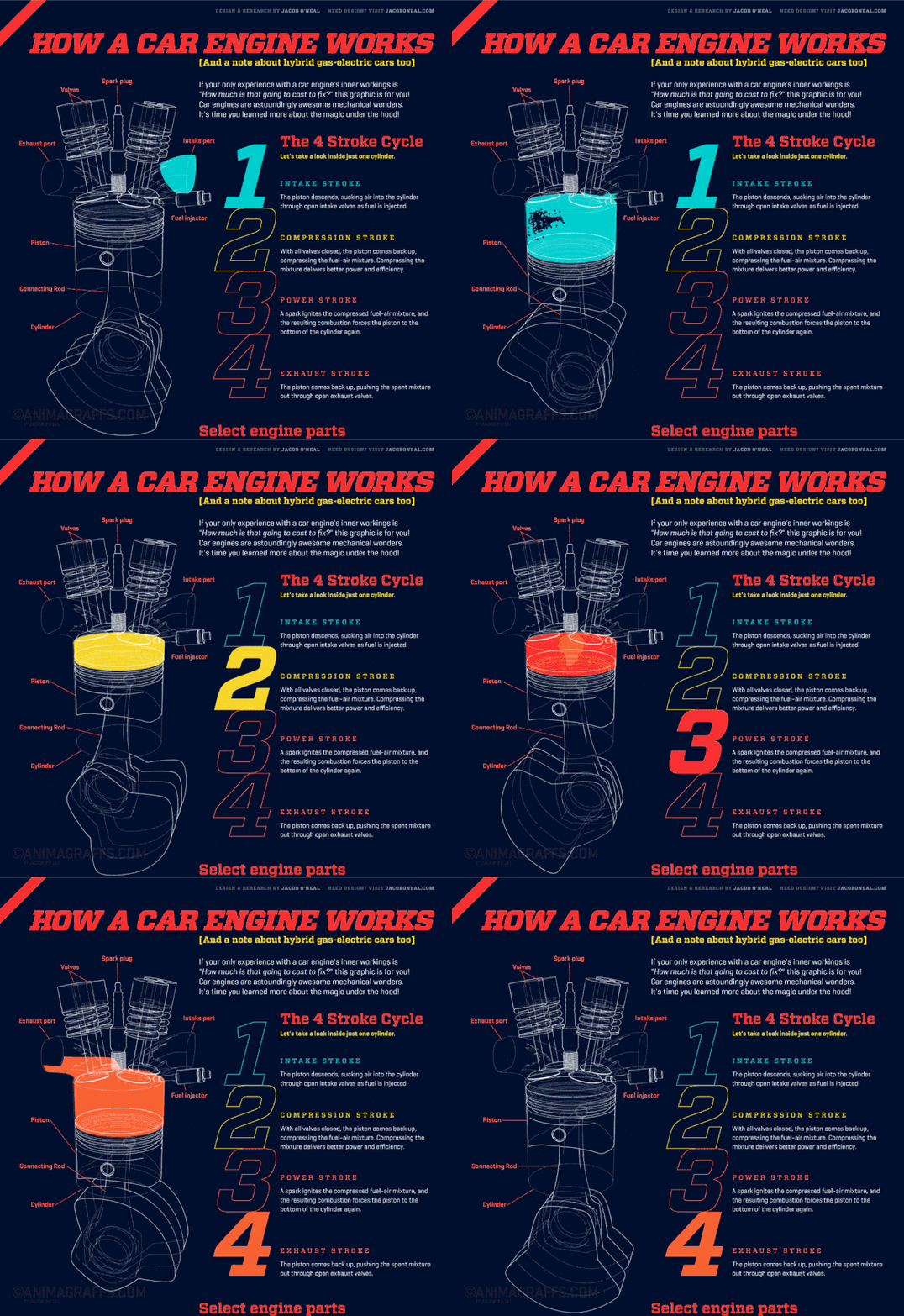
From Jacob O'Neal, a great series of animated GIFs about how internal combustion engines work. There are separate animations of the fuel, air, cooling, oil, electrical, and exhaust systems.

See also O'Neal's animations on how a jet engine works and how a handgun works.

Tags: Jacob O'Neal
13 Apr 18:52

Climate Change Is Causing The North Pole To Move Towards Europe

by Robin Andrews
Ben Wolf

Weird.

Environment
Photo credit: Since 2000, the North Pole has been moving fairly quickly towards Europe. NASA/JPL-Caltech

Man-made climate change, humanity’s most recognizable fingerprint on the natural world, is affecting everything.

12 Apr 20:09

ecdysiast

Ben Wolf

Really?

A person who disrobes to provide entertainment for others.
07 Apr 20:21

Why I love ugly, messy interfaces — and you probably do too

by Jonas Downey
Ben Wolf

This is interesting on a lot of levels.

Beautiful. Fresh. Clean. Simple. Minimal. These words have been dominating design discourse for a while now.

Continue reading on Medium »

06 Apr 14:55

And what else will you lie about?

by Seth Godin

When did companies start talking about, "unexpectedly high call volume?"

Are they really so inept at planning that the call volume is unexpected? For months at a time? 

Even non-legacy companies like OpenTable are using it to describe their email load.

Once an institution starts glibly lying, it's a slippery slope. A reality distortion field moves from on-hold time to diesel emissions.

On the other hand, consider what happens if you start by telling the truth about little things. "To save money for our customers and investors, we keep our support team lightly staffed. Please wait patiently a few days and we'll get back to you..."

       
04 Apr 15:38

lunkhead

A dull or slow-witted person.
02 Apr 18:07

Google Takes Internet Jackass Day to New Low With Gmail ‘Mic Drop’ Button

by John Gruber
Ben Wolf

Fireball nailed this one. Title says it all.

You would think that the people who run Gmail understand that you can’t fuck around with people’s email. A terrible idea poorly executed. Exemplifies everything that’s wrong with Google’s company culture — they are institutionally socially inept.

Harry McCracken:

I am NEVER going to get in a Google self-driving car on April Fools’ Day.

25 Mar 13:16

How a lifetime of running changes you

by Alexander Aciman

I started running only a few weeks after my 12th birthday. My best friend and I had impulsively decided to join the middle school cross-country team to get out of gym class.

I didn't even know what cross-country was at the time — before the first day of practice I suspected it would involve some form of skiing equipment. Being the two youngest and slowest runners on the team, my friend and I started training after school by running with rocks in our backpacks. As far as I knew, we were merely holding out until the other was ready to call it quits.

I do not know how those painful and dangerous mid-October afternoon training sessions somehow became the start of my longest, most dedicated relationship with any activity. But 14 years later, I still get single-word texts from the former teammates I trained with on that grassy, mile-and-a-half-long pitch in the Bronx: Run? That's all I need to read and I'm already reaching for my shoes.

The first question people ask after learning that I run is whether I am training for a marathon. I'm not. Nor am I training for a half-marathon, although on occasion my former teammates and I do go out and run 13 miles. I am not running to stay in shape, but I do wonder what might happen if I decided to stop.

For many, the act of running is a way to stay thin, or to fight off heart disease or stay active in a strange attempt at getting over a breakup, or even to catch a train whose doors are about to close. But I don't run to be alone and escape into my headphones, or to zone out and meditate on my troubles. I am not an introvert who uses exercise as a break from human contact.

For me, running is itself the destination. It has become my way of balancing the scales, and at some point since 2002 I started to feel most at home when my body was most worn out. I count my life in miles.

I run because after all these years I have learned to find a measure of serenity in the act of running. Somewhere in the past decade I started to find pleasure in this singularly painful activity.

In the past few years, long-distance running has gone from a trademark of masochists and compulsive dieters to a national pastime for people in their 20s and 30s. Runner's World estimates that the number of people who complete half-marathon races has increased almost tenfold, from 300,000 to more than 2 million since 1990 when I was born.

According to Running USA's state of the sport report, the number of marathon finishers has seen a growth of nearly 50 percent in the past 10 years. Distance running has even become something of a casual hobby, with a slew of apps and online resources dedicated to getting people in marathon shape in only a few months.

While new runners may be familiar with the pleasure of leaving their house on the first day of spring with nothing but shoes and shorts and a key, they cannot possibly be aware of the ways in which running will change their lives. When practiced over great periods of time — not simply over many miles — I have found that something about the sport changes you, perhaps even the way some experts believe that growing up bilingual alters brain function.


I am only now beginning to understand the long-term effects that running has had on my life. Running long distance means that some ligament or muscle of the body will always be sore, even when not running, and so runners learn to interpret all manner of pain in only two volumes: chronic or fleeting. Anything less than chronic can be pushed through, fought with, massaged, foam-rolled out of the body, or very simply ignored. This is because to become a better runner, one must repeatedly push oneself beyond one's threshold. Can we really be surprised that this instinct spills into other corners of our lives?

This past fall I waited three days after a rock collapsed out from under me on a hike before going to see a doctor, only to learn that I had broken two ribs. Last year a friend and longtime distance runner waited so long to see a dentist about tooth pain that the nerve in her tooth died. Dr. Jordan Metzl, a sports medicine specialist and author of Running Strong, believes that runners condition themselves to ignore pain.

"There are some things about running that change physiology and psychology," he says. "Runners can tough stuff out. Their pain response is a little dulled over time. They can suppress things, push out longer, because they're used to it."

For years I assumed that some of my most pronounced quirks were personal idiosyncrasies — leaving the house without a coat in single-degree temperatures, forgoing the use of oven mitts unless a pan is hot enough to burn skin, trudging almost unaware through bouts of fever or bronchitis — only to realize that these very same behaviors were practiced by many of the long-distance runners I know. It is not that we cannot feel pain, but we simply choose not to care.

Yet at the same time, a stiff hamstring can derail almost anything. These sorts of workout-interrupting discomforts are treated with the same urgency as grave illnesses, and must be addressed immediately. Runners can ignore almost any pains save those that — however faint or indistinct — presage a break or a tear.

It is fitting that this acquired pain threshold is accompanied by a greater psychological endurance as well. Runners will frequently train in negative splits — a term used to describe the practice of running each mile at a faster pace than the last. This sort of repeated aggression against one's physical limits can only happen when one has the endurance for it.

This means that because runners are able to sustain an activity over the course of 9 miles, they also find themselves particularly well-adapted to working intensely for long stretches of time.

"Psychologically, it's the same kind of thing as changing your pain response," Metzl says. "It's socialization. You train yourself to develop this form of concentration, which is necessary for long-distance running."

For years I avoided learning to drive. Yet after finally getting my license at 25, I was surprised to find myself well-suited to very long bouts behind the wheel, able to drive for many hours before beginning to fade.

But this socialization, as Metzl calls it, can come with obvious drawbacks. Shorter tasks can begin to feel tedious and uncomfortable. On longer runs you will often feel stiff for the first mile, only to suddenly realize that somewhere in the middle of the second your stride has become open and elastic.

Running teaches you to look for your stride in the second mile. That's where you'll find it. Nothing before that moment counts. Mile-long sessions are exercises in frustration. My mind is always aimed toward a long haul. Those new runners who work best during short bursts should switch to CrossFit before the changes become irreversible.


My body is quite unlike the one I would have had if my friend and I had decided to quit the team halfway through October 2002. More than that: It is unlike the one my genes would have predicted. I have yet to join the men in my family, who, even when physically fit, seem to get a little rounder in their 20s. I do not know what my resting natural body is like. It and I are strangers.

My doctor recently told me that we no longer know what my genetic cholesterol predisposition looks like because I have been running for so long. Physicians have long thought I was naturally hypoglycemic, but a new doctor suggested that I may very simply have been running so much that my body's blood sugar is kept artificially low. I could even be prediabetic, he joked, but we might never know, because I'm essentially always starving.

Those of us who have been running since before puberty are distinctly out of touch with our baselines in every physical sense. We do not know what normal is. It is like a system whose equilibrium has been attacked. Even those of us who run for miles in the woods nevertheless remain detached from the natural order of our bodies.

What a strange, lonely idea, that running should pull us further away from our true natural selves, the selves we are at rest — the selves we were meant, in every sense, to be. Our body's universe has been completely disturbed. Yes, my body is a lot thinner than it might have otherwise been at 25, but it is also pockmarked with injuries that I never would have had.

Running, one orthopedist insisted, is highly injurious on the body. I am incredibly injury prone — a torn Achilles tendon in 2014, broken ribs this fall, chronic IT band problems, quad weakness, years of knee pain, neck stiffness.

My first injury was the strange growth of bone and ligament by my knee called Osgood-Schlatter, a common ailment in teenagers that took me out of commission for the last season of middle school track. My second serious injury was freshman year of college, which turned out to be another common runner's issue called patellofemoral pain syndrome.

Running long term has trashed certain parts of my body. Runners subconsciously learn to downplay the severity of symptoms when being checked out for an injury, hoping somehow that underreporting pain will force the universe to accept your hopeful words as gospel, that speaking this incantation of backward superstition will somehow make it true and that you will get the green light from your doctor and go back to running sooner than expected simply because you wished it.

It won't. But you'll go out running anyway, and you might even hurt yourself.

Even Metzl, whose research suggests that runners have lower rates of depression and lower risk of heart disease and cancer, understands the risks associated with running. Distance training can cause loss of fast-twitch muscles, and so running, he says, should be accompanied by strength training to aid in injury prevention.

The ever-present risk of injury stimulates hyperawareness of each joint. The creak in your left knee is like the voice of an old friend; you can never entirely forget the specter of a dormant inflammation in your hip, kept at bay only with meticulous stretching and icing. You silently groan before a long flight of stairs.

But with this also comes a heightened acuity for understanding the other mechanics of your body. Long-term runners do not need GPS watches to time their mile paces or know how far they've run, or heart rate monitors. Calculating these metrics without the use of technology is a learned instinct and, when in the company of new runners, something like a party trick that amazes them as though you had just pulled a quarter out from behind their ear.


After all these years, it is unclear to me whether my body is a finely tuned microchip or a lug nut that has been stripped of its edges from years of abuse. Whatever the case, my body yearns for those moments when it feels most worn out after a long run. Because my notion of pain has been changed over time, so too has my notion of pleasure. From this source of pain the body procures absolute pleasure.

With time you begin to revel in these moments when the movement of each joint is sluggish as though injected with grains of wet sand and glassy mineral, and when a flush of warm blood sweeps across your face like a mask. The air draws violently through your nostrils, carrying with it a noxious vapor of salty moisture lifting up from your skin, mixed with dirt kicked up from your shoes.

In the next hour you will hardly be able to go from one corner of your apartment to the next. Your body has been ground down to a powder, rubbed raw like an element stripped of its valence electrons.

This very sensation was one I used to dread during my first years as a runner. It is perhaps this same fear that keeps so many people from taking up running to begin with. And yet I have come, with time, to feel most like myself during these moments. The world changes entirely when you are worn out from a long run, and you almost begin to feel new again, as though during each negative split mile you were shedding not only entire seconds from your pace, but parts of yourself as well. Those parts are forever lost to the run.

For a few moments, as you pick yourself up from the slumped position and fight through the urge to vomit and catch your breath, you live completely unencumbered. The post-run daze, which for new runners is understood only as the moment of greatest discomfort, is the closest thing to serenity that exists for old runners. It is chased, literally, for miles.

Time teaches you to find a home in this moment — a sense of belonging, or even a sense of natural order — as though it is only then that the real fog clears.

Stranger yet, in this clearness you find changes in yourself. You do not feel the need to brush off the thin film of dirt against your palms. In winter you are warm, and in summer cool. The thirst you felt in the third mile has vanished. Aches from the fourth mile have died down. You feel only the buzz, as though nothing but the body exists, and you are drawn to basic indulgences that would have been an assault to your whole being after a workout in your early years as a runner. Beer, drunk in this state, tastes like the sweetest nectar. You drink it as though nothing else matters, and wonder, as though it were the first you ever had: Should anything on Earth ever be allowed to feel this good?

Alexander Aciman is a writer living in New York. His work has appeared in the Wall Street Journal, the New York Times, Tablet, the New Republic, the Paris Review, and elsewhere. Follow him on Twitter.


First Person is Vox's home for compelling, provocative narrative essays. Do you have a story to share? Read our submission guidelines, and pitch us at firstperson@vox.com.

24 Mar 00:30

Watch Richie Jackson Perform Unreal Skateboard Tricks

by Ben Dahl
Ben Wolf

So creative


Richie Jackson is a skateboarder that, in addition to looking like he could front a British rock band, plays with every idea you have about tricks from playing too much Tony Hawk growing up. He rides street signs and construction barricades. He spins on rocks and vents. He surfs on concrete and slides down stairs. […]
21 Mar 12:44

Group Drumming Bangs Away at Anxiety and Depression

by Tom Jacobs
(Photo: Jesse Grant/Getty Images for NAMM)

Researchers in London have found evidence of a surprisingly effective treatment for anxiety and depression, one that even alters the inflammatory immune responses that may underlie these disorders.

Prozac? Actually, percussion.

An "exploratory examination" found 10 weeks of group drumming provided significant benefits for a group of people who had sought help for mental-health issues. What's more, the improvements persisted for at least three months after the sessions concluded.

"This study demonstrates the psychological benefits of group drumming, and also suggests underlying biological effects, supporting its therapeutic potential for mental health," writes a research team led by Aaron Williamon and Daisy Fancourt of the Royal College of Music's Centre for Performance Science.

The study, published in the online journal PLoS One, featured 45 Londoners, 30 of whom participated in the drumming lessons and 15 who served as a control group. All were "adults accessing mental health services" from a psychologist, psychiatrist, or support group; they volunteered to participate.

A drum circle may be a true circle of life—and health.

Those in the experimental group took part in weekly 90-minute group drumming lessons, which were led by a professional drummer.

"The professional drummer taught the participants the basics of how to use the drum, led the participants in a series of 'call and response' exercises where they copied the leader, and taught the participants rhythmic patterns," the researchers explain. The complexity of the music they played gradually increased over the course of the program.

Those in the control group did not take any music lessons, but they did participate in other regular activities, including book clubs and quiz nights.

Each week, all participants filled out a set of questionnaires designed to measure their levels of anxiety, depression, and general well-being. In addition, those in the drumming group provided weekly saliva samples, which allowed scientists to measure the strength of pro- and anti-inflammatory markers.

"Significant improvements were found in the drumming group, but not the control group," the researchers report. For the drummers, "by week six there were decreases in depression, and increases in social resilience. By week 10, these had further improved, alongside significant improvements in anxiety and mental well-being."

At follow-up interviews three months later, "all significant changes were maintained," they add.

In addition, "Across the 10 weeks there was a shift away from a pro-inflammatory towards an anti-inflammatory immune profile," the researchers report. This suggests the improvements the participants reported have a biological basis.

This is a small study, of course, but it provides strong evidence of "the therapeutic potential of group drumming," as well as the more general notion that music can make a positive difference in people's lives. A drum circle may be a true circle of life—and health.

Findings is a daily column by Pacific Standard staff writer Tom Jacobs, who scours the psychological-research journals to discover new insights into human behavior, ranging from the origins of our political beliefs to the cultivation of creativity.

16 Mar 21:47

John Oliver Sides With Apple on the FBI Encryption Debate

by Jonathan Sawyer

On the most recent episode of Last Week Tonight with John Oliver, the talk show host dove into the ever-controversial topic surrounding the FBI insisting that Apple unlock the San Bernadino shooter’s encrypted cell phone. In short, Oliver sides with Apple on this one, imploring that the government is like your dad, as he said “if he asks you to help him with his iPhone, be careful. If you do it once, you’re going to be doing it 14 times a day.”

This isn’t, however, the first time that the government has found itself in the midst of an encryption-related dilemma. Back in the ’90s, they used a method dubbed “clipper chip” in attempts to find a back door to computers. Ultimately, a hacker figured out a way to disable the chip and the project was thus abandoned.

For more on the current situation, press play above to hear John Oliver’s candid take on the FBI versus Apple.

Where do you stand?

16 Mar 20:21

Feature No One Wants Coming Soon to Instagram

Ben Wolf

And this

Nothing gold can stay.
16 Mar 18:36

Instagram to Switch to Algorithmic Feed Order

by John Gruber
Ben Wolf

I'm surprised by this

Instagram:

The order of photos and videos in your feed will be based on the likelihood you’ll be interested in the content, your relationship with the person posting and the timeliness of the post. As we begin, we’re focusing on optimizing the order — all the posts will still be there, just in a different order.

If your favorite musician shares a video from last night’s concert, it will be waiting for you when you wake up, no matter how many accounts you follow or what time zone you live in. And when your best friend posts a photo of her new puppy, you won’t miss it.

We’re going to take time to get this right and listen to your feedback along the way. You’ll see this new experience in the coming months.

I trust Instagram to get this right.

16 Mar 13:22

Donald Trump is continuing to remold the Republican Party in his image

by Michelle Hackman
Ben Wolf

This is horrible

Not only is Donald Trump the clear frontrunner for the Republican nomination, but he seems to be reshaping the Republican Party in his image.

Here’s some evidence that that's happening: Huge majorities of Republican voters across five states last night told exit polls they would support a temporary ban on Muslims entering the United States.

According to exit polls in Florida, Illinois, North Carolina, and Ohio, two in three Republican voters voiced support for the ban. In Missouri, support was even higher, with three in four voters in favor.

Placing a religious-based ban on immigration to the United States – a questionably constitutional proposal — certainly represents a steep departure from immigration policy instituted at any other time in American history. But in a sign of how quickly the idea caught on this year, both Ted Cruz and Chris Christie avoided condemning it when Trump raised the idea back in December.

It’s worth remembering that before Donald Trump rose as a force in GOP politics, this sort of proposal would have been considered far too extreme to introduce to a broad electorate. It is a testament to Trump’s prowess as a pandering politician — more than the evolving immigration views of Republican voters — that his idea has caught on with such fervor.

12 Mar 03:53

Obama on FBI v. Apple, Encryption: ‘We Can’t Fetishize Our Phones Above Other Values’

by John Gruber

Natt Garun, reporting on President Obama’s remarks on stage at SXSW:

“If it was technologically possible to make an impenetrable device where there’s no door at all, then how do we apprehend the child pornographer? How do we disrupt a terrorist plot? How do we even do a simple thing like tax enforcement?” he posed. “If government can’t get in, then everyone’s walking around with a Swiss bank account in their pocket. There has to be some concession to get into that information somewhere.”

Obama is sadly on the wrong side on this one. (Not surprising, given his past remarks and the fact that the Department of Justice is part of the Executive Branch.)

Here’s the thing: it is technically possible to make an impenetrable device. I strongly suspect Apple will, this year or next, begin selling them. And law enforcement will have to catch and prosecute criminals the same way they always have: through the evidence they can legally obtain.

“Setting aside the specific case between the FBI and Apple, we’re gonna have to make some decisions about how we balance these respective risks,” POTUS concludes. “We can’t fetishize our phones above every other value. The dangers are real. This notion that sometimes our data is different and can be walled off from these other trade-offs is incorrect.”

I firmly believe Obama is advocating the wrong set of trade-offs. Our phones are either insecure, making life easier for law enforcement — or, our phones are secure, making life more difficult for law enforcement, rendering some potential evidence unobtainable. We don’t ban matches to prevent people from burning evidence. We don’t mandate weak locks to make it easier for the police to crack safes.

I keep thinking about a line from Orson Welles’s Touch of Evil: “A policeman’s job is only easy in a police state.

08 Mar 20:11

Swipe Right

by Nowness.com
Swipe Right
Swipe Right

Singer-songwriter Emmy the Great talks about the concept behind her dating software-led collaboration with London-based artist Daniel Swan:

“My research for the video began with shopping and dating algorithms, then moved on to narrative software—such as Wordsmith and Narrative Science—which takes data and turns it into narratives for e-commerce and reporting. Artist Daniel Swan and I decided to 'ask' an algorithm to write the video for us. 

"With the help of Nicolas Seymour-Smith, a programmer and artist, we built a machine that generates music-video treatments using natural language processing algorithms. We taught the machine what a music video plot was by feeding it synopses of music videos—classics like "Thriller" and "Scream", and modern favourites from Lady Gaga and Katy Perry. The machine began generating its own plots based on what it had learned, and 'Algorithm' was born.”

Emmy the Great's third album, Second Love is out on 11 March on Bella Union

07 Mar 19:36

Louis C.K. on Trump: "The guy is Hitler. And by that I mean we are being Germany in the 30s."

by Jeff Stein
Ben Wolf

This letter is worth reading.

In an email to fans plugging his new show, Horace and Pete, comedian Louis C.K. unloaded on the Republican frontrunner in an uncharacteristically searing and political postscript.

"The guy is Hitler. And by that I mean that we are being Germany in the 30s. Do you think they saw the shit coming?" Louis C.K. writes of Donald Trump. "Hitler was just some hilarious and refreshing dude with a weird comb over who would say anything at all."

The rest of C.K.'s email isn't much kinder to Trump, whom he calls "an insane bigot" and a "shocking cunt billionaire liar" and bully likely to drive us to "national suicide." But it tries, at length, to empathize with Trump's supporters, who C.K. argues see all the presidential candidates as "bullshit soft criminal opportunists."

"Voting for Trump is a way of saying 'fuck it. Fuck them all'. I really get it," Louis C.K. writes. "The whole game feels rigged and it’s not going anywhere but down anymore. I feel that way sometimes."

Donald Trump. (Justin Sullivan/Getty Images)

Louis C.K. even expresses sympathy for Trump himself — in the same breath as he compares Trump to Hitler. It's a message that feels particularly powerful because it casts Trump not just as a fearful menace, but as a victim of his own emptiness.

"Trump is a messed up guy with a hole in his heart that he tries to fill with money and attention. He can never ever have enough of either and he’ll never stop trying. He’s sick," C.K. writes. "He’s not a monster. He’s a sad man. But all this makes him horribly dangerous if he becomes president."

Here's the email, which is worth reading in full:

P.S. Please stop it with voting for Trump. It was funny for a little while. But the guy is Hitler. And by that I mean that we are being Germany in the 30s. Do you think they saw the shit coming? Hitler was just some hilarious and refreshing dude with a weird comb over who would say anything at all.

And I’m not advocating for Hillary or Bernie. I like them both but frankly I wish the next president was a conservative only because we had Obama for eight years and we need balance. And not because I particularly enjoy the conservative agenda. I just think the government should reflect the people. And we are about 40 percent conservative and 40 percent liberal. When I was growing up and when I was a younger man, liberals and conservatives were friends with differences. They weren’t enemies. And it always made sense that everyone gets a president they like for a while and then hates the president for a while. But it only works if the conservatives put up a good candidate. A good smart conservative to face the liberal candidate so they can have a good argument and the country can decide which way to go this time.

Trump is not that. He’s an insane bigot. He is dangerous.

He already said he would expand libel laws to sue anyone who "writes a negative hit piece" about him. He says "I would open up the libel laws so we can sue them and win lots of money. Not like now. These guys are totally protected." He said that. He has promised to decimate the first amendment. (If you think he’s going to keep the second amendment intact you’re delusional.) And he said that Paul Ryan, speaker of the house will "pay" for criticizing him. So I’m saying this now because if he gets in there we won’t be able to criticize him anymore.

Please pick someone else. Like John Kasich. I mean that guy seems okay. I don’t like any of them myself but if you’re that kind of voter please go for a guy like that. It feels like between him and either democrat we’d have a decent choice. It feels like a healthier choice. We shouldn’t have to vote for someone because they’re not a shocking cunt billionaire liar.

We should choose based on what direction the country should go.

I get that all these people sound like bullshit soft criminal opportunists. The whole game feels rigged and it’s not going anywhere but down anymore. I feel that way sometimes.

And that voting for Trump is a way of saying "fuck it. Fuck them all". I really get it. It’s a version of national Suicide. Or it’s like a big hit off of a crack pipe. Somehow we can’t help it. Or we know that if we vote for Trump our phones will be a reliable source of dopamine for the next four years. I mean I can’t wait to read about Trump every day. It’s a rush. But you have to know this is not healthy.

If you are a true conservative. Don’t vote for Trump. He is not one of you. He is one of him. Everything you have heard him say that you liked, if you look hard enough you will see that he one day said the exact opposite. He is playing you.

In fact, if you do vote for Trump, at least look at him very carefully first. You owe that to the rest of us. Know and understand who he is. Spend one hour on google and just read it all. I don’t mean listen to me or listen to liberals who put him down. Listen to your own people. Listen to John Mccain. Go look at what he just said about Trump. "At a time when our world has never been more complex or more in danger… I want Republican voters to pay close attention to what our party’s most respected and knowledgeable leaders and national security experts are saying about Mr. Trump, and to think long and hard about who they want to be our next Commander-in-Chief and leader of the free world."

When Trump was told what he said, Trump said "Oh, he did? Well, that’s not nice," he told CBS News’ chief White House correspondent Major Garrett. "He has to be very careful."

When pressed on why, Trump tacked on: "He’ll find out."

(I cut and pasted that from CBS news)

Do you really want a guy to be president who threatens John McCain? Because John McCain cautiously and intelligently asked for people to be thoughtful before voting for him? He didn’t even insult Trump. He just asked you to take a good look. And Trump told him to look out.

Remember that Trump entered this race by saying that McCain is not a war hero. A guy who was shot down, body broken and kept in a POW camp for years. Trump said "I prefer the guys who don’t get caught." Why did he say that? Not because he meant it or because it was important to say. He said it because he’s a bully and every bully knows that when you enter a new school yard, you go to the toughest most respected guy on the yard and you punch him in the nose. If you are still standing after, you’re the new boss. If Trump is president, he’s not going to change. He’s not going to do anything for you. He’s going to do everything for himself and leave you in the dust.

So please listen to fellow conservatives. But more importantly, listen to Trump. Listen to all of it. Everything he says. If you liked when he said that "torture works" then go look at where he took it back the next day. He’s a fucking liar.

A vote for Trump is so clearly a gut-vote, and again I get it. But add a little brain to it and look the guy up. Because if you vote for him because of how you feel right now, the minute he’s president, you’re going to regret it. You’re going to regret it even more when he gives the job to his son. Because American democracy is broken enough that a guy like that could really fuck things up. That’s how Hitler got there. He was voted into power by a fatigued nation and when he got inside, he did all his Hitler things and no one could stop him.

Again, I’m not saying vote democrat or vote for anyone else. If Hillary ends up president it should be because she faced the best person you have and you and I both chose her or him or whoever. Trump is not your best. He’s the worst of all of us. He’s a symptom to a problem that is very real. But don’t vote for your own cancer. You’re better than that.

That’s just my view. At least right now. I know I’m not qualified or particularly educated and I’m not right instead of you. I’m an idiot and I’m sure a bunch of you are very annoyed by this. Fucking celebrity with an opinion. I swear this isn’t really a political opinion. You don’t want to know my political opinions. (And I know that I’m only bringing myself trouble with this shit.) Trump has nothing to do with politics or ideology. He has to do with himself. And really I don’t mean to insult anyone. Except Trump. I mean to insult him very much. And really I’m not saying he’s evil or a monster. In fact I don’t think Hitler was. The problem with saying that guys like that are monsters is that we don’t see them coming when they turn out to be human, which they all are. Everyone is. Trump is a messed up guy with a hole in his heart that he tries to fill with money and attention. He can never ever have enough of either and he’ll never stop trying. He’s sick. Which makes him really really interesting. And he pulls you towards him which somehow feels good or fascinatingly bad. He’s not a monster. He’s a sad man. But all this makes him horribly dangerous if he becomes president. Give him another TV show. Let him pay to put his name on buildings. But please stop voting for him. And please watch Horace and Pete. - Louis C.K.


The rise of Donald Trump is a scary moment in America

07 Mar 19:22

View-Master Viewer DLX: Virtual Reality that Doesn't Click

With hotly anticipated entries like the virtual reality Oculus Rift headset dropping for consumers at the end of this month, and Microsoft's Hololens augmented reality hardware available to developers around the same time, this spring makes for as clear of a starting line as we've seen in the race for imaginary-space.

Google's effort in this field is the C77DA Winning Google Cardboard, which has already made gains with real world audiences through a mix of affordable headsets which utilize mobile phones as the display screen and now-available apps. The recent news of note in their ecosystem, other than the Happy Meal headset (!!!), is the launch of the View-Master Viewer DLX, an upgraded version of the VR View-Master toy which Mattel announced last year. 

The new View-Master has an appealing story: it is a seemingly natural evolution of an iconic toy, realizing both in technology and form the futurism of the era of its inception, all while maintaining its nostalgic color palette and basic interaction model. It has emerged, however well considered, in the shadow of the original View-Master, a toy, possibly the only toy, which sits in the pantheon of singular product experiences. Its layers of sensorial and cognitive enjoyment are revelatory and profound. That may sound grandiose but at one point, this single product enterprise had 65% of the global population recognizing its brand. So though it really is unfair, let's measure up the descendant by breaking down the progenitor...

The View-Master's defining experiential components are (in our humble opinion, please hit the comment section with your own):

Physical
- The action and sound of the lever pull
- The manipulation, insertion, movement and errors of the disc
- The orientation of it to oneself and tilting to use it

Metaphysical
- The disc's physical harmony with classical children's narratives: progression, being finite, looping
- The exciting dialectic and dependency of coded artifact and deciphering tool
- The play between the simulation of and abstraction of reality

Of these the new View-Master preserves only the last of each list. Is that enough to give it the cultural significance of its forebear? Already there is a quite similar set of real-world physical ticks marking our use of VR; principally moving us as we move it, but also cocooning and masking us. And yes, as was the case with the diorama-aesthetic that grew to define the View-Master disc as a medium, there is a widely recognizable set of visual tropes in our electronic virtual worlds—the character glitches, connection-error stuttering of action or uncanny valley strangeness. But neither of these clusters of pop-culture reference material are unique to the View Master or to Google Cardboard, they apply to our experience of virtual and augmented reality as a whole. If there is a significance to be found that is specific to the new View-Masters, it is that the brand's history and the disc models' wide use has made them a very natural, and accessible, bridge between VR and consumers at an important time.

Image credit: Twitter @Jeff Faust

Legacy is certainly harnessed to that end; the product design of the DLX continues to develop the retro aspects of the first VR version, the chief one, the red plastic, has moved to the face of the unit and turned translucent. The vestigial lever continues a slow morph to a button. The overall finish level can be expected to be as smooth and flawless as one would expect of a mass-produced artifact. That clean machine-tooled look and sealed construction was always a part of the object, but receded far behind the above mentioned attributes. Without the experiential foundation the View-Master Viewer DLX is reduced to a styling exercise for something which is essentially just a handle for your phone — a haptic theme.

The genius of the original Google Cardboard viewer and, dare I say it, even the Happy Meal viewer, is that it accepts and fits its role. While McDonalds' execution does incorporate a meaningful lesson in repurposing, Google's nears the metaphysical qualities of the original View-Master. Google Cardboard, in its DIY-assembly, disposable, rough-touch material and overall humble supporting-role aesthetic subtly reminds us of systems vs. objects, of the transient qualities of experience and of our own agency in constructing narratives; whether real, augmented or virtual.

The DLX View-Master has made progression on the tricky transition it began last year. The re-orientation towards VR, the new logo, the product design and the collage work on its packaging; they are all very well considered and maintain, on the surface, View-Master's legacy of wonder. But the DLX fails to embrace its new role, instead stretching to preserve the vestigial disc-viewer duality while missing the opportunity to develop a meaningful relationship to its new medium.

01 Mar 22:49

HTC + Under Armour's HealthBox Fitness Tracking Set: A three-piece monitoring system that charts just about everything

by Evan Orensten
Ben Wolf

I don't know about this stuff. Is this the future?

HTC + Under Armour's HealthBox Fitness Tracking Set
In the age of quantifiable self, there are many devices offering an array of useful functionality. Fortunately, the UA HealthBox—developed by HTC and Under Armour—delivers one of the most comprehensive packages and, thus, plenty of data. The three......
Continue Reading...
01 Mar 18:55

The missing Seinfeld episode, made from Curb Your Enthusiasm clips

by Jason Kottke

In 2009, Curb Your Enthusiasm centered on Larry David doing another season of Seinfeld. The four main Seinfeld stars (plus Newman) were all on the show, in character. From the various clips and bits shown, Topher Grace edited together a nine-minute "missing" Seinfeld episode. It's actually pretty good. I didn't know how much I'd missed the show until I watched this. (thx, greg)

Tags: Curb Your Enthusiasm   remix   Seinfeld   Topher Grace   TV   video
24 Feb 12:05

‘Absolutely Right’

by John Gruber

Katie Benner and Matt Apuzzo, reporting for the NYT on whether the FBI’s request for Apple to unlock the San Bernardino shooter’s iPhone will open the door to more such requests:

In a note posted to its website on Monday, Apple reiterated that the government’s request seems narrow but really isn’t. “Law enforcement agents around the country have already said they have hundreds of iPhones they want Apple to unlock if the F.B.I. wins this case,” the company said.

To that point, the New York City police commissioner, William J. Bratton, and the Manhattan district attorney, Cyrus R. Vance Jr., criticized Apple after it refused to comply with the court order and said that they currently possessed 175 iPhones that they could not unlock.

Charlie Rose recently interviewed Mr. Vance and asked if he would want access to all phones that were part of a criminal proceeding should the government prevail in the San Bernardino case.

Mr. Vance responded: “Absolutely right.”

22 Feb 20:44

Hillary Clinton: white people need to listen when people of color talk about racism

by Michelle Garcia

NEW YORK — In Hillary Clinton’s sweeping plan to boost racial equality if elected president, announced last week in Harlem, her most powerful message may have been to white voters.

"White Americans need to do a better job at listening when African Americans talk about the seen and unseen barriers they face every day," she said. "Practice humility rather than assume that our experience is everyone’s experiences."

Yes, during the event, Clinton announced a wide-ranging plan to dismantle racial discrimination and bias through a mix of new and previously proposed policies. She proposed a plan to close the school-to-prison pipeline. She intends to reduce youth unemployment and close the gender pay gap, which she noted especially affects women of color. She talked about banning areas on job applications where ex-offenders are asked to disclose any criminal background.

But the speech also seemed to mark a turning point for Clinton, who used the opportunity to show black voters she’s heard the criticism directed at her, while also asking white voters to actively participate in dismantling racism.

Clinton has made faux pas on race in the past

African Americans still generally support Clinton. And that will be crucial for her going into Saturday's South Carolina primary, where a majority of voters are black.

Nonetheless, she's still faced multiple confrontations and tough questions from black voters since announcing her bid for the presidency last year. In fact, when it comes to race, several moments have dogged Clinton’s campaign.

In June, at a historic black church just miles from Ferguson, Missouri, which had protests over the shooting of 18-year-old black resident Michael Brown a year prior, Clinton used the term "all lives matter," which has been used frequently to downplay the sentiment behind the Black Lives Matter movement. She wasn’t alone on this, since her Democratic rivals at the time, Martin O’Malley and Bernie Sanders, have both encountered pushback for using the term.

Later in August, a group of Black Lives Matter activists spoke with Clinton after a New Hampshire campaign event, and the conversation grew tense. A particular sticking point was whether a president can change people’s racist attitudes, and how law enforcement policies under Bill Clinton's administration have contributed to racist views.

Earlier this month, legal scholar and author Michelle Alexander declared that Clinton hadn’t earned the black vote. She wrote that Clinton had a role in ushering in policies during the 1990s that were part of a major push for "tough-on-crime" legislation, leading to disproportionate imprisonment among people of color. She also pointed out the effects of allowing mass economic globalization, which eliminated many jobs for black workers in the US.

Clinton used a unifying message, with a call for white Democrats to help end systemic racism

In 2008, as Clinton debated Barack Obama during the Democratic primary, one might remember the sarcastic tone she took around the idea that a president could "wave a magic wand" to help people abandon their divisiveness.

But Tuesday at the Schomburg Center for Research in Black Culture on Malcolm X Boulevard, Clinton attempted to flip the script. She pivoted away from her words this summer about not being able, as a president, to change the hearts and minds of voters who are ignorant to racism. Instead, she told voters to "hold me responsible," adding that "ending systemic racism requires contributions from all of us, especially those of us who haven't experienced it ourselves."

Clinton alluded that focusing on economic status as a means to deal with racism is comforting for some who have not had to deal directly with racism in their lives.

She even made a dig at her remaining rival on the left, Sen. Bernie Sanders, who has been met with skepticism as to whether his overall message of dismantling economic inequality can do anything to also break down racial bias.

"We have to begin by facing up to the reality of systemic racism, because these are not problems with economic equality," she told the crowd. "These are problems with racial inequality."

In recent months, though, Sanders has expanded his vision with a broader plank on racial justice and equality.

Overall, Clinton’s plan for helping erode discrimination against people of color seems pretty broad. But she declared, borrowing from black lesbian feminist poet Audre Lorde, "we're not a single-issue country," meaning that all of these policy goals can be met through a sustained, collaborative effort.

Throughout Clinton's speech, she leaned into both subtle and overt references to black thought leaders to share her policy proposals, while also attempting to show she’s been listening to the feedback.

She used the term "intersectionality," which was coined by scholar Kimberlé Crenshaw decades ago to describe how systems of oppression are interconnected (for example, how women of color are uniquely met with both racism and sexism).

In addition to Lorde, Clinton quoted poet Langston Hughes, who wrote in "Mother to Son" that when "life ain’t no crystal stair you’ve got to keep climbing."

She spoke of learning from Marian Wright Edelman, an advocate for the rights and opportunity for children and founder of the Children’s Defense Fund, where Clinton got her start as a young lawyer.

Just the fact that Clinton spoke in Harlem, two weeks before heading into the South Carolina Democratic primary — where black voters are expected to have a bigger impact than in Iowa and New Hampshire's primaries — was clearly a strategic move.

But her words show she knows what role she could play in her presidency when it comes to race: leading white people into the tough conversation around racial inequality in a meaningful way. It's a task that President Obama has somewhat sidestepped through much of his time in office, perhaps to avoid alienating many Americans who are still too uncomfortable to talk about race.

"For many white Americans, it’s tempting to believe bigotry is behind us. That would leave us with a lot less work, wouldn’t it?" Clinton said. She added, "I don’t have the answers, but I do believe we can and we must do better."

Passing policy is one thing, but ending systemic racism is another

As the crowd dissipated after her speech, one young woman of color stood near the back, watching Clinton shake hands with supporters from the stage. "How the hell is she going to even do all these things?" she asked her friend. "How many times have we heard some white guy politician say the exact same stuff?"

That young woman's questions came from true concern, especially since she is surely not alone in remaining skeptical that a politician can just show up to the White House and undo the deep-seated systems of discrimination that still linger in America. Even Clinton herself has expressed skepticism of such a feat — remember that magic wand comment? Or even what she said to activists this summer?

But there was one distinct difference in the way Clinton spoke versus the way other politicians often do. The white teenage girl sitting next to me with her mom at the Schomburg Center — clapping passionately with every admission of racial and gender inequality — may not be old enough to vote, but she's old enough to have conversations about race and difference. With time, for that girl and her peers, those conversations may be, while still uncomfortable, not insurmountable.