23 Dec 09:24
Energy Environ. Sci., 2017, 10,2480-2480
DOI: 10.1039/C7EE90060K, Correction

Open Access
Zhengyang Bin, Jiangwei Li, Liduo Wang, Lian Duan
The content of this RSS Feed (c) The Royal Society of Chemistry

23 Dec 09:23
Energy Environ. Sci., 2017, 10,2570-2578
DOI: 10.1039/C7EE02685D, Paper
Shizhong Yue, Kong Liu, Rui Xu, Meicheng Li, Muhammad Azam, Kuankuan Ren, Jun Liu, Yang Sun, Zhijie Wang, Dawei Cao, Xiaohong Yan, Shengchun Qu, Yong Lei, Zhanguo Wang
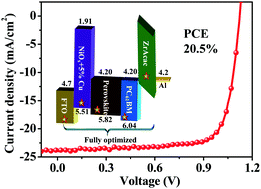
A systematic strategy for effectively engineering the charge extraction in inverted structured perovskite solar cells based on CH3NH3PbI3-xClx is provided. An optimized power conversion efficiency of 20.5% is realized.
The content of this RSS Feed (c) The Royal Society of Chemistry

23 Dec 02:21
by Lingwei Xue, Yankang Yang, Jianqiu Xu, Chunfeng Zhang, Haijun Bin, Zhi-Guo Zhang, Beibei Qiu, Xiaojun Li, Chenkai Sun, Liang Gao, Jia Yao, Xiaofeng Chen, Yunxu Yang, Min Xiao, Yongfang Li
Abstract
Suppression of carrier recombination is critically important in realizing high-efficiency polymer solar cells. Herein, it is demonstrated difluoro-substitution of thiophene conjugated side chain on donor polymer can suppress triplet formation for reducing carrier recombination. A new medium bandgap 2D-conjugated D–A copolymer J91 is designed and synthesized with bi(alkyl-difluorothienyl)-benzodithiophene as donor unit and fluorobenzotriazole as acceptor unit, for taking the advantages of the synergistic fluorination on the backbone and thiophene side chain. J91 demonstrates enhanced absorption, low-lying highest occupied molecular orbital energy level, and higher hole mobility, in comparison with its control polymer J52 without fluorination on the thiophene side chains. The transient absorption spectra indicate that J91 can suppress the triplet formation in its blend film with n-type organic semiconductor acceptor m-ITIC (3,9-bis(2-methylene-(3-(1,1-dicyanomethylene)-indanone)-5,5,11,11-tetrakis(3-hexylphenyl)-dithieno[2,3-d:2,3′-d′]-s-indaceno[1,2-b:5,6-b′]-dithiophene). With these favorable properties, a higher power conversion efficiency of 11.63% with high VOC of 0.984 V and high JSC of 18.03 mA cm−2 is obtained for the polymer solar cells based on J91/m-ITIC with thermal annealing. The improved photovoltaic performance by thermal annealing is explained from the morphology change upon thermal annealing as revealed by photoinduced force microscopy. The results indicate that side chain engineering can provide a new solution to suppress carrier recombination toward high efficiency, thus deserves further attention.

Suppression of carrier recombination is critically important for efficient polymer solar cells. Herein, it is demonstrated that difluoro-substitution of thiophene-conjugated side chains on the medium-bandgap polymer donor can suppress triplet formation for reducing carrier recombination and improving photovoltaic performance.
23 Dec 02:19
by Yongfang Li, Zhi-Guo Zhang, Yankang Yang, Jia Yao, Lingwei Xue, Shanshan Chen, Xiaojun Li, William Morrison, Changduk Yang
Abstract
All-polymer solar cells (all-PSCs) offer unique morphology stability for the application as flexible devices, but the lack of high-performance polymer acceptors limits their power conversion efficiency (PCE) to a value lower than those of the PSCs based on fullerene derivative or organic small molecule acceptors. We herein demonstrate a strategy to synthesize a high-performance polymer acceptor PZ1 by embedding an acceptor–donor–acceptor building block into the polymer main chain. PZ1 possesses broad absorption with a low band gap of 1.55 eV and high absorption coefficient (1.3×105 cm−1). The all-PSCs with the wide-band-gap polymer PBDB-T as donor and PZ1 as acceptor showed a record-high PCE of 9.19 % for the all-PSCs. The success of our polymerization strategy can provide a new way to develop efficient polymer acceptors for all-PSCs.

Energy conversion: Embedding an acceptor–donor–acceptor-structured organic semiconductor building block into a polymer main chain creates an excellent low-band-gap polymer acceptor with red-shifted absorption and high absorption coefficient. The polymer acceptor provides a record-high power conversion efficiency of 9.19 % for all-polymer solar cells.
09 Dec 13:33
J. Mater. Chem. A, 2017, 5,22480-22488
DOI: 10.1039/C7TA07830G, Communication
Jing Liu, Lik-Kuen Ma, Zhengke Li, Huawei Hu, Tingxuan Ma, Chenhui Zhu, Harald Ade, He Yan
The introduction of an asymmetric unit enables a fine-tuned morphology and thus up to 10.4% efficiency for non-fullerene organic solar cells.
The content of this RSS Feed (c) The Royal Society of Chemistry
09 Dec 13:32
by Gi Eun Park, Suna Choi, Seo Yeon Park, Dae Hee Lee, Min Ju Cho, Dong Hoon Choi

In article number 1700566, Min Ju Cho, Dong Hoon Choi, and co-workers report a new conjugated widebandgap donor polymer, 3MT-Th, harmonized with an ITIC acceptor to enable the production of a polymer solar cell (PSC) with high efficiency of 9.73% under eco-friendly conditions using a non-halogenated solvent. This PSC also exhibits excellent shelf-life stability in air and good operational stability under continuous light illumination.
09 Dec 13:31
by Kui Feng, Guofang Yang, Xiaopeng Xu, Guangjun Zhang, He Yan, Omar Awartani, Long Ye, Harald Ade, Ying Li, Qiang Peng
Abstract
Newly developed benzo[1,2-b:4,5-b′]dithiophene (BDT) block with 3,4-ethylenedioxythiophene (EDOT) side chains is first employed to build efficient photovoltaic copolymers. The resulting copolymers, PBDTEDOT-BT and PBDTEDOTFBT, have a large bandgap more than 1.80 eV, which is attributed to the increased steric hindrance between the BDT and EDOT skeletons. Both copolymers possess the satisfied absorptions, low-lying highest occupied molecular orbital (HOMO) levels and high crystallinity. Using the fluorination strategy, PBDTEDOT-FBT exhibits a wider and stronger absorption and a deeper HOMO level than those of PBDTEDOT-BT. PBDTEDOT-FBT:[6,6]-Phenyl C71 butyric acid methyl ester (PC71BM) blend also shows the higher hole mobility and better surface morphology compared with the PBDTEDOTBT:PC71BM blend. Combination of above advantages, PBDTEDOT-FBT devices exhibit much higher power conversion efficiency (PCE) of 10.11%, with an improved open circuit voltage (Voc) of 0.86 V, short circuit current densities (Jsc) of 16.01 mA cm−2, and fill factor (FF) of 72.6%. This work not only provides a newly efficient candidate of BDT donor block modified with EDOT conjugated side chains, but also achieves high-performance large bandgap copolymers for polymer solar cells (PSCs) via the synergistic effect of fluorination and side chain engineering strategies.

Combination of fluorination and side chain engineering strategies, newly developed benzo[1,2-b:4,5-b′]dithiophene block with 3,4-ethylenedioxythiophene side chains is first employed to build the efficient large bandgap copolymers with efficiency of 10.11%.
09 Dec 13:31
by Huatong Yao, Yunke Li, Huawei Hu, Philip C. Y. Chow, Shangshang Chen, Jingbo Zhao, Zhengke Li, Joshua H. Carpenter, Joshua Yuk Lin Lai, Guofang Yang, Yuhang Liu, Haoran Lin, Harald Ade, He Yan
Abstract
The device performance of polymer solar cells (PSCs) is strongly dependent on the blend morphology. One of the strategies for improving PSC performance is side-chain engineering, which plays an important role in controlling the aggregation properties of the polymers and thus the domain crystallinity/purity of the donor–acceptor blends. In particular, for a family of high-performance donor polymers with strong temperature-dependent aggregation properties, the device performances are very sensitive to the size of alkyl chains, and the best device performance can only be achieved with an optimized odd-numbered alkyl chain. However, the synthetic route of odd-numbered alkyl chains is costly and complicated, which makes it difficult for large-scale synthesis. Here, this study presents a facile method to optimize the aggregation properties and blend morphology by employing donor polymers with a mixture of two even-numbered, randomly distributed alkyl chains. In a model polymer system, this study suggests that the structural and electronic properties of the random polymers comprising a mixture of 2-octyldodecyl and 2-decyltetradecyl alkyl chains can be systematically tuned by varying the mixing ratio, and a high power conversion efficiency (11.1%) can be achieved. This approach promotes the scalability of donor polymers and thus facilitates the commercialization of PSCs.

The structural and electronic properties of random polymers comprising a mixture of commercially available alkyl chains can be systematically tuned and a power conversion efficiency up to 11.1% can be achieved, which is one of the highest values to date for polymer:fullerene solar cells. These random polymers are easier to scale up compared to that obtained using odd-numbered alkyl chains.
09 Dec 13:29
by Xiaopeng Xu, Zhaozhao Bi, Wei Ma, Zishuai Wang, Wallace C. H. Choy, Wenlin Wu, Guangjun Zhang, Ying Li, Qiang Peng
Abstract
In this work, highly efficient ternary-blend organic solar cells (TB-OSCs) are reported based on a low-bandgap copolymer of PTB7-Th, a medium-bandgap copolymer of PBDB-T, and a wide-bandgap small molecule of SFBRCN. The ternary-blend layer exhibits a good complementary absorption in the range of 300–800 nm, in which PTB7-Th and PBDB-T have excellent miscibility with each other and a desirable phase separation with SFBRCN. In such devices, there exist multiple energy transfer pathways from PBDB-T to PTB7-Th, and from SFBRCN to the above two polymer donors. The hole-back transfer from PTB7-Th to PBDB-T and multiple electron transfers between the acceptor and the donor materials are also observed for elevating the whole device performance. After systematically optimizing the weight ratio of PBDB-T:PTB7-Th:SFBRCN, a champion power conversion efficiency (PCE) of 12.27% is finally achieved with an open-circuit voltage (Voc) of 0.93 V, a short-circuit current density (Jsc) of 17.86 mA cm−2, and a fill factor of 73.9%, which is the highest value for the ternary OSCs reported so far. Importantly, the TB-OSCs exhibit a broad composition tolerance with a high PCE over 10% throughout the whole blend ratios.

Highly efficient ternary-blend nonfullerene organic solar cells based on two copolymer donors and one electron acceptor are fabricated and evaluated. The multiple energy and charge-transfer pathways in this ternary system enable the power conversion efficiency to reach 12.27%, which is a new record for ternary-blend organic solar cells at present. These devices also exhibit a broad composition tolerance.
09 Dec 13:27
by Sunsun Li, Long Ye, Wenchao Zhao, Xiaoyu Liu, Jie Zhu, Harald Ade, Jianhui Hou
Abstract
Improving the fill factor (FF) is known as a challenging issue in organic solar cells (OSCs). Herein, a strategy of extending the conjugated area of end-group is proposed for the molecular design of acceptor–donor–acceptor (A–D–A)-type small molecule acceptor (SMA), and an indaceno[1,2-b:5,6-b′]dithiophene-based SMA, namely IDTN, by end-capping with the naphthyl fused 2-(3-oxocyclopentylidene)malononitrile is synthesized. Benefiting from the π-conjugation extension by fusing two phenyls, IDTN shows stronger molecular aggregation, more ordered packing structure, thus over one order of magnitude higher electron mobility relative to its counterpart. By utilizing the fluorinated polymer (PBDB-TF) as the electron donor, the corresponding device exhibits a high efficiency of 12.2% with a record-high FF of 0.78, which is approaching the theoretical limit of OSCs. Compared with the reference molecule, such a high FF in the IDTN system can be mainly attributed to the more ordered π–π packing of acceptor aggregates, higher domain purity and symmetric carrier transport in the blend. Hence, enlarging the conjugated area of the terminal-group in these A–D–A-type SMAs is a promising approach not only for enhancing the electron mobility, but also for improving the blend morphology, and both of them are conducive to the fill-factor breakthrough.

By extending the conjugated area of the end-group, a newly designed A–D–A–type small-molecule acceptor, namely IDTN, exhibits dense and ordered packing, and therefore, the electron mobility of the IDTN is over one order of magnitude higher than that of its counterpart. When blended with the donor polymer PBDB-TF, a high efficiency of 12.2% with an outstanding fill factor of 0.78 is achieved.
09 Dec 13:25
by Baobing Fan, Lei Ying, Peng Zhu, Feilong Pan, Feng Liu, Junwu Chen, Fei Huang, Yong Cao
Abstract
A novel wide-bandgap conjugated copolymer based on an imide-functionalized benzotriazole building block containing a siloxane-terminated side-chain is developed. This copolymer is successfully used to fabricate highly efficient all-polymer solar cells (all-PSCs) processed at room temperature with the green-solvent 2-methyl-tetrahydrofuran. When paired with a naphthalene diimide-based polymer electron-acceptor, the all-PSC exhibits a maximum power conversion efficiency (PCE) of 10.1%, which is the highest value so far reported for an all-PSC. Of particular interest is that the PCE remains 9.4% after thermal annealing at 80 °C for 24 h. The resulting high efficiency is attributed to a combination of high and balanced bulky charge carrier mobility, favorable face-on orientation, and high crystallinity. These observations indicate that the resulting copolymer can be a promising candidate toward high-performance all-PSCs for practical applications.

A novel wide-bandgap conjugated copolymer PTzBI-Si based on an imide-functionalized benzotriazole unit containing a siloxane-terminated side-chain is developed and used to fabricate all-polymer solar cells (all-PSCs). When processed with a green solvent 2-methyl-tetrahydrofuran, the all-PSC exhibits a power conversion efficiency of 10.1%, which represents the highest efficiency ever reported for all-PSCs.
09 Dec 13:25
by Shunmian Lu, Hong Lin, Shaoqing Zhang, Jianhui Hou, Wallace C. H. Choy

In article number 1701164, Wallace C.H. Choy and co-workers demonstrate an all-solution-processed switchable interconnecting layer (ICL) for both inverted and normal tandem organic solar cells (OSCs). This strategy shifts the views from conventionally complicated tunneling junction ICL where both electron/hole transport layers play several different roles towards simplified ICL where electron/hole transport layers play distinct decoupled role, advancing ICL for more adaptable tandem OSCs.
09 Dec 13:23
by Weigang Jiang, Runnan Yu, Zhiyang Liu, Ruixiang Peng, Dongbo Mi, Ling Hong, Qiang Wei, Jianhui Hou, Yongbo Kuang, Ziyi Ge
Abstract
A novel small-molecule acceptor, (2,2′-((5E,5′E)-5,5′-((5,5′-(4,4,9,9-tetrakis(5-hexylthiophen-2-yl)-4,9-dihydro-s-indaceno[1,2-b:5,6-b′]dithiophene-2,7-diyl)bis(4-(2-ethylhexyl)thiophene-5,2-diyl))bis(methanylylidene)) bis(3-hexyl-4-oxothiazolidine-5,2-diylidene))dimalononitrile (ITCN), end-capped with electron-deficient 2-(3-hexyl-4-oxothiazolidin-2-ylidene)malononitrile groups, is designed, synthesized, and used as the third component in fullerene-free ternary polymer solar cells (PSCs). The cascaded energy-level structure enabled by the newly designed acceptor is beneficial to the carrier transport and separation. Meanwhile, the three materials show a complementary absorption in the visible region, resulting in efficient light harvesting. Hence, the PBDB-T:ITCN:IT-M ternary PSCs possess a high short-circuit current density (Jsc) under an optimal weight ratio of donors and acceptors. Moreover, the open-circuit voltage (Voc) of the ternary PSCs is enhanced with an increase of the third acceptor ITCN content, which is attributed to the higher lowest unoccupied molecular orbital energy level of ITCN than that of IT-M, thus exhibits a higher Voc in PBDB-T:ITCN binary system. Ultimately, the ternary PSCs achieve a power conversion efficiency of 12.16%, which is higher than the PBDB-T:ITM-based PSCs (10.89%) and PBDB-T:ITCN-based ones (2.21%). This work provides an effective strategy to improve the photovoltaic performance of PSCs.

Fullerene-free ternary polymer solar cells with a high efficiency of 12.16% are fabricated by adding a novel small-molecule acceptor to form a cascaded energy-level structure.
09 Dec 13:19
by Mingyu Jeong, Shanshan Chen, Sang Myeon Lee, Zhiwei Wang, Yankang Yang, Zhi-Guo Zhang, Chunfeng Zhang, Min Xiao, Yongfang Li, Changduk Yang
Abstract
A series of PBDB-TTn random donor copolymers is synthesized, consisting of an electron-deficient benzo[1,2-c:4,5-c′]dithiophene-4,8-dione (BDD) unit and different ratios of two electron-rich benzo[1,2-b:4,5-b′]dithiophene (BDT) and thieno[3,2-b]thiophene (TT) units, with intention to modulate the intrachain and/or interchain interactions and ultimately bulk-heterojunction morphology evolution. A comparative study using 4 × 2 polymer solar cell (PSC) performance maps and each of the [6,6]-phenyl-C71-butyric acid methyl ester (PC71BM) and the fused-aromatic-ring-based molecule (m-ITIC) acceptors are carried out. Given the similarities in their absorption ranges and energy levels, the PBDB-TTn copolymers clearly reveal a change in the absorption coefficients upon optimization of the BDT to TT ratio in the backbone. Among the given acceptor combination sets, superior performances are observed in the case of PBDB-TT5 blended with PC71BM (8.34 ± 0.10%) or m-ITIC (11.10 ± 0.08%), and the dominant factors causing power conversion efficiency differences in them are found to be distinctly different. For example, the performances of PC71BM-based PSCs are governed by size and population of face-on crystallites, while intermixed morphology without the formation of large phase-separated aggregates is the key factor for achieving high-performance m-ITIC-based PSCs. This study presents a new sketch of structure–morphology–performance relationships for fullerene- versus nonfullerene-based PSCs.

BDD-based four copolymers PBDD-TTn which contained BDT, TT, and BDD are synthesized and operated with two acceptors, PC71BM and m-ITIC. Two systems have different operating mechanisms, and simultaneously high-performances 8.44% for PC71BM and 11.18% for m-ITIC are obtained.
09 Dec 13:19
J. Mater. Chem. A, 2017, 5,25460-25468
DOI: 10.1039/C7TA06217F, Paper
Song Chen, Lei Yan, Liangang Xiao, Ke Gao, Wei Tang, Cheng Wang, Chenhui Zhu, Xingzhu Wang, Feng Liu, Xiaobin Peng, Wai-Kwok Wong, Xunjin Zhu
A new visible-near-infrared absorbing A-[small pi]2-D-[small pi]1-D-[small pi]2-A type dimeric porphyrin donor is developed for high performance organic solar cells with an efficiency up to 8.29%.
The content of this RSS Feed (c) The Royal Society of Chemistry
09 Dec 13:18
by Jingshuai Zhu, Zhifan Ke, Qianqian Zhang, Jiayu Wang, Shuixing Dai, Yang Wu, Ye Xu, Yuze Lin, Wei Ma, Wei You, Xiaowei Zhan
Abstract
Naphtho[1,2-b:5,6-b′]dithiophene is extended to a fused octacyclic building block, which is end capped by strong electron-withdrawing 2-(5,6-difluoro-3-oxo-2,3-dihydro-1H-inden-1-ylidene)malononitrile to yield a fused-ring electron acceptor (IOIC2) for organic solar cells (OSCs). Relative to naphthalene-based IHIC2, naphthodithiophene-based IOIC2 with a larger π-conjugation and a stronger electron-donating core shows a higher lowest unoccupied molecular orbital energy level (IOIC2: −3.78 eV vs IHIC2: −3.86 eV), broader absorption with a smaller optical bandgap (IOIC2: 1.55 eV vs IHIC2: 1.66 eV), and a higher electron mobility (IOIC2: 1.0 × 10⁻³ cm2 V−1 s−1 vs IHIC2: 5.0 × 10⁻⁴ cm2 V−1 s−1). Thus, IOIC2-based OSCs show higher values in open-circuit voltage, short-circuit current density, fill factor, and thereby much higher power conversion efficiency (PCE) values than those of the IHIC2-based counterpart. In particular, as-cast OSCs based on FTAZ: IOIC2 yield PCEs of up to 11.2%, higher than that of the control devices based on FTAZ: IHIC2 (7.45%). Furthermore, by using 0.2% 1,8-diiodooctane as the processing additive, a PCE of 12.3% is achieved from the FTAZ:IOIC2-based devices, higher than that of the FTAZ:IHIC2-based devices (7.31%). These results indicate that incorporating extended conjugation into the electron-donating fused-ring units in nonfullerene acceptors is a promising strategy for designing high-performance electron acceptors.

A novel fused-ring electron acceptor (IOIC2) based on naphthodithiophene is designed and synthesized, and compared with a naphthalene-based counterpart (IHIC2). The IOIC2-based single-junction binary-blend organic solar cells exhibit efficiencies up to 12.3%, much higher than that of IHIC2 (7.45%).
09 Dec 13:18
by Yaowen Li, Guiying Xu, Chaohua Cui, Yongfang Li
Abstract
Flexible and semitransparent organic solar cells (OSCs) have been regarded as the most promising photovoltaic devices for the application of OSCs in wearable energy resources and building-integrated photovoltaics. Therefore, the flexible and semitransparent OSCs have developed rapidly in recent years through the synergistic efforts in developing novel flexible bottom or top transparent electrodes, designing and synthesizing high performance photoactive layer and low temperature processed electrode buffer layer materials, and device architecture engineering. To date, the highest power conversion efficiencies have reached over 10% of the flexible OSCs and 7.7% with average visible transmittance of 37% for the semitransparent OSCs. Here, a comprehensive overview of recent research progresses and perspectives on the related materials and devices of the flexible and semitransparent OSCs is provided.

Flexible and semitransparent organic solar cells (OSCs) are regarded as the most promising photovoltaic devices for the application of OSCs in wearable energy resources and building-integrated photovoltaics. Here, a comprehensive overview of recent research progresses and perspectives on the related materials and devices of the flexible and semitransparent OSCs is provided.
06 Sep 01:15
J. Mater. Chem. A, 2017, 5,20473-20481
DOI: 10.1039/C7TA06332F, Paper
Mu He, Miaomiao Li, Xin Dong, Hongkun Tian, Hui Tong, Jun Liu, Zhiyuan Xie, Yanhou Geng, Fosong Wang
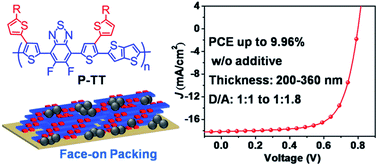
A difluorobenzothiadiazole-based polymer P-TT with alkylthiophene side chains diplays a desirable blend film morphology and high PCE with wide processing windows.
The content of this RSS Feed (c) The Royal Society of Chemistry
06 Sep 01:11
by Hua Sun, Xin Song, Jian Xie, Po Sun, Peiyang Gu, Changmei Liu, Fei Chen, Qichun Zhang, Zhi-Kuan Chen and Wei Huang

ACS Applied Materials & Interfaces
DOI: 10.1021/acsami.7b08282

06 Sep 01:11
by Francesco Biccari, Fabio Gabelloni, Erica Burzi, Massimo Gurioli, Sara Pescetelli, Antonio Agresti, Antonio Esaú Del Rio Castillo, Alberto Ansaldo, Emmanuel Kymakis, Francesco Bonaccorso, Aldo Di Carlo, Anna Vinattieri
Abstract
The electron transport layer (ETL) plays a fundamental role in perovskite solar cells. Recently, graphene-based ETLs have been proved to be good candidate for scalable fabrication processes and to achieve higher carrier injection with respect to most commonly used ETLs. Here, the effects of different graphene-based ETLs in sensitized methylammonium lead iodide (MAPI) solar cells are experimentally studied. By means of time-integrated and picosecond time-resolved photoluminescence techniques, the carrier recombination dynamics in MAPI films embedded in different ETLs is investigated. Using graphene doped mesoporous TiO2 (G+mTiO2) with the addition of a lithium-neutralized graphene oxide (GO-Li) interlayer as ETL, it is found find that the carrier collection efficiency is increased by about a factor two with respect to standard mTiO2. Taking advantage of the absorption coefficient dispersion, the MAPI layer morphology is probed, along the thickness, finding that the MAPI embedded in the ETL composed by G+mTiO2 plus GO-Li brings to a very good crystalline quality of the MAPI layer with a trap density about one order of magnitude lower than that found with the other ETLs. In addition, this ETL freezes MAPI at the tetragonal phase, regardless of the temperature. Graphene-based ETLs can open the way to significant improvement of perovskite solar cells.

The effects of different graphene-based electron transport layers (ETLs) in perovskite methylammonium lead iodide (MAPI) solar cells are experimentally investigated. Using graphene-doped mesoporous TiO2 (mTiO2) with the addition of a lithium-neutralized graphene oxide interlayer as the ETL, the carrier collection efficiency is increased by approximately a factor two with respect to standard mTiO2.
06 Sep 01:08
by Yaocheng Jin, Zhiming Chen, Manjun Xiao, Jiajun Peng, Baobing Fan, Lei Ying, Guichuan Zhang, Xiao-Fang Jiang, Qingwu Yin, Ziqi Liang, Fei Huang, Yong Cao
Abstract
Two novel narrow bandgap π-conjugated polymers based on naphtho[1,2-c:5,6-c′]bis([1,2,5]thiadiazole) (NT) unit are developed, which contain the thiophene or benzodithiophene flanked with alkylthiophene as the electron-donating segment. Both copolymers exhibit strong aggregations both in solution and as thin films. The resulting copolymers with higher molecular weight show higher photovoltaic performance by virtue of the enhanced short-circuit current densities and fill factors, which can be attributed to their higher absorptivity and formation of more favorable film morphologies. Polymer solar cells (PSCs) fabricated with the copolymer PNTT achieve remarkable power conversion efficiencies (PCEs) > 11% based on both conventional and inverted structures at the photoactive layer thickness of 280 nm, which is the highest value so far observed from NT-based copolymers. Of particular interest is that the device performances are insensitive to the thickness of the photoactive layer, for which the PCEs > 10% can be achieved with film thickness ranging from 150 to 660 nm, and the PCE remains >9% at the thickness over 1 µm. These findings demonstrate that these NT-based copolymers can be promising candidates for the construction of thick film PSCs toward low-cost roll-to-roll processing technology.

Two novel conjugated polymers based on naphtho[1,2-c:5,6-c]bis[1,2,5]thiadiazol (NT) as the electron-deficient unit are developed for polymer solar cells (PSCs). The fabricated PSCs based on the high molecular weight copolymer and the fullerene acceptor ([6,6]-phenyl-C71-butyric acid methyl ester) present remarkable power conversion efficiencies over 10% with the bulk-heterojunction film thickness ranging from 150 to 660 nm.
06 Sep 01:08
by Chan Myae Myae Soe, Wanyi Nie, Constantinos C. Stoumpos, Hsinhan Tsai, Jean-Christophe Blancon, Fangze Liu, Jacky Even, Tobin J. Marks, Aditya D. Mohite, Mercouri G. Kanatzidis
Abstract
2D Ruddlesden–Popper (RP) perovskites have recently emerged as promising candidates for hybrid perovskite photovoltaic cells, realizing power-conversion efficiencies (PCEs) of over 10% with technologically relevant stability. To achieve solar cell performance comparable to the state-of-the-art 3D perovskite cells, it is highly desirable to increase the conductivity and lower the optical bandgap for enhanced near-IR region absorption by increasing the perovskite slab thickness. Here, the use of the 2D higher member (n = 5) RP perovskite (n-butyl-NH3)2(MeNH3)4Pb5I16 in depositing highly oriented thin films from dimethylformamide/dimethylsulfoxide mixtures using the hot-casting method is reported. In addition, they exhibit superior environmental stability over thin films of their 3D counterpart. These films are assembled into high-efficiency solar cells with an open-circuit voltage of ≈1 V and PCE of up to 10%. This is achieved by fine-tuning the solvent ratio, crystal growth orientation, and grain size in the thin films. The enhanced performance of the optimized devices is ascribed to the growth of micrometer-sized grains as opposed to more typically obtained nanometer grain size and highly crystalline, densely packed microstructures with the majority of the inorganic slabs preferentially aligned out of plane to the substrate, as confirmed by X-ray diffraction and grazing-incidence wide-angle X-ray scattering mapping.

Controllable tuning of the thin film properties of high-n member layered Ruddlesden–Popper perovskites, BA2MA4Pb5I16, is achieved via a hot-casting method using dimethylformamide (DMF)/dimethylsulfoxide (DMSO) processing solvent. Unlike the polycrystalline films grown from DMF, the optimized 3:1 DMF:DMSO films are essentially single-crystalline with regularly stacked inorganic slabs, and deliver solar cell power conversion efficiencies up to 10%.
06 Sep 01:08
by Yaokang Zhang, Zhongwei Wu, Peng Li, Luis K. Ono, Yabing Qi, Jixiang Zhou, Hui Shen, Charles Surya, Zijian Zheng
Abstract
Semitransparent perovskite solar cells (st-PSCs) have received remarkable interest in recent years because of their great potential in applications for solar window, tandem solar cells, and flexible photovoltaics. However, all reported st-PSCs require expensive transparent conducting oxides (TCOs) or metal-based thin films made by vacuum deposition, which is not cost effective for large-scale fabrication: the cost of TCOs is estimated to occupy ≈75% of the manufacturing cost of PSCs. To address this critical challenge, this study reports a low-temperature and vacuum-free strategy for the fabrication of highly efficient TCO-free st-PSCs. The TCO-free st-PSC on glass exhibits 13.9% power conversion efficiency (PCE), and the four-terminal tandem cell made with the st-PSC top cell and c-Si bottom cell shows an overall PCE of 19.2%. Due to the low processing temperature, the fabrication of flexible st-PSCs is demonstrated on polyethylene terephthalate and polyimide, which show excellent stability under repeated bending or even crumbing.

Fully solution-processed transparent conducting oxide-free semitransparent perovskite solar cells are reported to allow low-cost fabrication of highly efficient tandem solar cells and flexible solar cells. Nitric acid annealed poly(3,4-ethylenedioxythiophene): polystyrene sulfonate is incorporated in the fabrication process to realize high-throughput printing of highly conductive transparent electrodes.
06 Sep 01:06
by Nicola Gasparini, Michael Salvador, Thomas Heumueller, Moses Richter, Andrej Classen, Shreetu Shrestha, Gebhard J. Matt, Sarah Holliday, Sebastian Strohm, Hans-Joachim Egelhaaf, Andrew Wadsworth, Derya Baran, Iain McCulloch, Christoph J. Brabec
Abstract
Organic semiconductors are in general known to have an inherently lower charge carrier mobility compared to their inorganic counterparts. Bimolecular recombination of holes and electrons is an important loss mechanism and can often be described by the Langevin recombination model. Here, the device physics of bulk heterojunction solar cells based on a nonfullerene acceptor (IDTBR) in combination with poly(3-hexylthiophene) (P3HT) are elucidated, showing an unprecedentedly low bimolecular recombination rate. The high fill factor observed (above 65%) is attributed to non-Langevin behavior with a Langevin prefactor (β/βL) of 1.9 × 10⁻⁴. The absence of parasitic recombination and high charge carrier lifetimes in P3HT:IDTBR solar cells inform an almost ideal bimolecular recombination behavior. This exceptional recombination behavior is explored to fabricate devices with layer thicknesses up to 450 nm without significant performance losses. The determination of the photoexcited carrier mobility by time-of-flight measurements reveals a long-lived and nonthermalized carrier transport as the origin for the exceptional transport physics. The crystalline microstructure arrangement of both components is suggested to be decisive for this slow recombination dynamics. Further, the thickness-independent power conversion efficiency is of utmost technological relevance for upscaling production and reiterates the importance of understanding material design in the context of low bimolecular recombination.

Nonfullerene-based organic solar cells with an unprecedentedly low bimolecular recombination rate are presented. The absence of parasitic recombination and high carrier lifetimes in the devices inform an almost ideal bimolecular recombination behavior with a Langevin prefactor (β/βL) of 1.9 × 10⁻⁴. This exceptional recombination behavior allows the fabrication of solar cells with layer thicknesses up to 450 nm without significant performance losses.
06 Sep 01:04
by Yajie Zhang, Dan Deng, Zaiyu Wang, Yuheng Wang, Jianqi Zhang, Jin Fang, Yang Yang, Guanghao Lu, Wei Ma, Zhixiang Wei
Abstract
Bulk heterojunction (BHJ) morphologies are vital to the device performance of organic solar cells (OSCs), including phase separation in lateral and vertical directions. However, the morphology developed from the blend solution is not easily predicted and controlled, especially in the vertical direction, because the BHJ morphology is kinetically frozen during the rapid solvent evaporation process. Here, a simple approach to control BHJ morphologies with optimized phase distribution for small molecule:[6,6]-phenyl-C71-butyric acid methyl ester (PC71 BM) blends by enhancing the substrate temperature during the spin-coating process. Three molecules with various fluorine atoms in the end acceptor units are selected. The relationship among molecular structures, substrate temperature effects on the morphology, and device performances are symmetrically investigated. Low temperature induces a multiple-sublayer-like architecture with significantly varied distributions of composition, morphology, and localized state energy, while high processing temperature induces more uniform film. The short-circuit current, open-circuit voltage, and fill factor of the devices are tuned with synergic improvement of efficiency toward over 10% and 11% for conventional and inverted devices. This work reveals the origination of vertical phase segregation, and provides a facile strategy to optimize the hierarchical phase separation for enhancing the performance of OSCs.

Vertical phase segregation in small molecule photovoltaic devices is manipulated via substrate temperature tuning. Low temperature induces multiple-sublayer-like architecture with significantly varied distributions of composition, morphology, and localized state energy, while high processing temperature induces more uniform film. The parameters of devices are largely tuned with synergic improvement of efficiency toward over 10% and 11% for conventional and inverted devices.
06 Sep 01:04
by Yang Zhou, Feng Wang, Yu Cao, Jian-Pu Wang, Hong-Hua Fang, Maria Antonietta Loi, Ni Zhao, Ching-Ping Wong
Abstract
Mixed iodide-bromide organolead perovskites with a bandgap of 1.70–1.80 eV have great potential to boost the efficiency of current silicon solar cells by forming a perovskite-silicon tandem structure. Yet, the stability of the perovskites under various application conditions, and in particular combined light and heat stress, is not well studied. Here, FA0.15Cs0.85Pb(I0.73Br0.27)3, with an optical bandgap of ≈1.72 eV, is used as a model system to investigate the thermal-photostability of wide-bandgap mixed halide perovskites. It is found that the concerted effect of heat and light can induce both phase segregation and decomposition in a pristine perovskite film. On the other hand, through a postdeposition film treatment with benzylamine (BA) molecules, the highly defective regions (e.g., film surface and grain boundaries) of the film can be well passivated, thus preventing the progression of decomposition or phase segregation in the film. Besides the stability improvement, the BA-modified perovskite solar cells also exhibit excellent photovoltaic performance, with the champion device reaching a power conversion efficiency of 18.1%, a stabilized power output efficiency of 17.1% and an open-circuit voltage (V
oc) of 1.24 V.

Using a postdeposition film treatment with benzylamine (BA) molecules, the highly defective regions of the wide-bandgap FA0.15Cs0.85Pb(I1−
x
Br
x
)3 films can be well passivated, thus preventing the progression of decomposition or phase segregation in the film during combined heat and light stress. The BA-treated perovskite solar cells exhibit a stabilized power output efficiency of 17.1% and an open-circuit voltage (V
oc) of 1.24 V.
06 Sep 01:03
by Jinbao Zhang, Bo Xu, Li Yang, Changqing Ruan, Linqin Wang, Peng Liu, Wei Zhang, Nick Vlachopoulos, Lars Kloo, Gerrit Boschloo, Licheng Sun, Anders Hagfeldt, Erik M. J. Johansson
Abstract
Tremendous progress has recently been achieved in the field of perovskite solar cells (PSCs) as evidenced by impressive power conversion efficiencies (PCEs); but the high PCEs of >20% in PSCs has so far been mostly achieved by using the hole transport material (HTM) spiro-OMeTAD; however, the relatively low conductivity and high cost of spiro-OMeTAD significantly limit its potential use in large-scale applications. In this work, two new organic molecules with spiro[fluorene-9,9′-xanthene] (SFX)-based pendant groups, X26 and X36, have been developed as HTMs. Both X26 and X36 present facile syntheses with high yields. It is found that the introduced SFX pendant groups in triphenylamine-based molecules show significant influence on the conductivity, energy levels, and thin-film surface morphology. The use of X26 as HTM in PSCs yields a remarkable PCE of 20.2%. In addition, the X26-based devices show impressive stability maintaining a high PCE of 18.8% after 5 months of aging in controlled (20%) humidity in the dark. We believe that X26 with high device PCEs of >20% and simple synthesis show a great promise for future application in PSCs, and that it represents a useful design platform for designing new charge transport materials for optoelectronic applications.

The importance of the pendant groups on triphenylamine-based hole transport materials (HTMs) in perovskite solar cells is investigated. A new HTM X26 with optimal spiro[fluorene-9,9′-xanthene]-based pendant groups shows an efficiency of over 20%. This work demonstrates that the pendant groups in HTMs play important roles in determining the molecular property, solar cell performance, and stability.
06 Sep 01:00
by Zengqi Huang, Xiaotian Hu, Cong Liu, Licheng Tan, Yiwang Chen
Abstract
Solar cells based on mixed organic–inorganic halide perovskites are promising photovoltaic technologies with low-cost and fantastic power conversion efficiency (PCE). Enhancing the nucleation and regulating the crystallization rate of perovskite films and improving the bendability of brittle hybrid grains are crucial to improving the photovoltaic performance of flexible perovskite solar cells (PVSCs). Here, a simple approach is first introduced for fabricating perovskite films with full coverage and larger crystalline size by incorporating the elastomer polyurethane (PU) into the perovskite precursor solution to both retard the crystallization rate and improve the bendability. Shiny, smooth perovskite films are obtained with compact, micrometer-sized crystalline grains that exhibit excellent photoelectric performances. The PVSCs fabricated by incorporating PU into the perovskite precursor offer an impressive PCE of 18.7% with almost no photocurrent hysteresis and excellent stability in ambient air. More importantly, the elastomer PU additive crosslinks the grain boundaries between neighboring perovskite crystals to form a PU network that effectively improves the bendability of the perovskite films.

Polyurethane (PU) has been used as an effective additive to optimize the performance of perovskite solar cells by retarding crystallization rate and enhancing grain size of perovskite crystals. More importantly, elastomer PU can effectively improve the bendability of perovskite films due to denseness and high elasticity created by crosslinking grain boundaries between neighboring perovskite crystals to form a PU network.
06 Sep 00:46
Nanoscale, 2017, 9,14592-14601
DOI: 10.1039/C7NR04392A, Paper
Cen Zhang, Feifei Zhu, Haiyang Xu, Weizhen Liu, Liu Yang, Zhongqiang Wang, Jiangang Ma, Zhenhui Kang, Yichun Liu
Significant enhancement of near-UV electroluminescence is achieved from ZnO quantum dot LEDs via coupling with carbon nanodot surface plasmons.
The content of this RSS Feed (c) The Royal Society of Chemistry

06 Sep 00:46
Nanoscale, 2017, 9,14602-14611
DOI: 10.1039/C7NR03920D, Paper
Kunping Guo, Changfeng Si, Ceng Han, Saihu Pan, Guo Chen, Yanqiong Zheng, Wenqing Zhu, Jianhua Zhang, Chang Sun, Bin Wei
High-performance MoS2 nanopillar arrays characterized with electron injection and light extraction were facilely developed and applied in flexible inverted OLEDs.
The content of this RSS Feed (c) The Royal Society of Chemistry

   This article is licensed under a Creative Commons Attribution 3.0 Unported Licence.