06 Sep 00:20
J. Mater. Chem. A, 2017, 5,19541-19559
DOI: 10.1039/C7TA05632J, Review Article
Lei Zhang, Jacqueline M. Cole
Dye aggregation dictates structural and optoelectronic properties of photoelectrodes in dye-sensitized solar cells (DSSCs), thereby playing an essential role in their photovoltaic performance.
The content of this RSS Feed (c) The Royal Society of Chemistry
06 Sep 00:19
J. Mater. Chem. A, 2017, 5,20473-20481
DOI: 10.1039/C7TA06332F, Paper
Mu He, Miaomiao Li, Xin Dong, Hongkun Tian, Hui Tong, Jun Liu, Zhiyuan Xie, Yanhou Geng, Fosong Wang
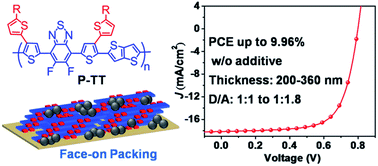
A difluorobenzothiadiazole-based polymer P-TT with alkylthiophene side chains diplays a desirable blend film morphology and high PCE with wide processing windows.
The content of this RSS Feed (c) The Royal Society of Chemistry
06 Sep 00:18
by Zengqi Huang, Xiaotian Hu, Cong Liu, Licheng Tan, Yiwang Chen
Abstract
Solar cells based on mixed organic–inorganic halide perovskites are promising photovoltaic technologies with low-cost and fantastic power conversion efficiency (PCE). Enhancing the nucleation and regulating the crystallization rate of perovskite films and improving the bendability of brittle hybrid grains are crucial to improving the photovoltaic performance of flexible perovskite solar cells (PVSCs). Here, a simple approach is first introduced for fabricating perovskite films with full coverage and larger crystalline size by incorporating the elastomer polyurethane (PU) into the perovskite precursor solution to both retard the crystallization rate and improve the bendability. Shiny, smooth perovskite films are obtained with compact, micrometer-sized crystalline grains that exhibit excellent photoelectric performances. The PVSCs fabricated by incorporating PU into the perovskite precursor offer an impressive PCE of 18.7% with almost no photocurrent hysteresis and excellent stability in ambient air. More importantly, the elastomer PU additive crosslinks the grain boundaries between neighboring perovskite crystals to form a PU network that effectively improves the bendability of the perovskite films.

Polyurethane (PU) has been used as an effective additive to optimize the performance of perovskite solar cells by retarding crystallization rate and enhancing grain size of perovskite crystals. More importantly, elastomer PU can effectively improve the bendability of perovskite films due to denseness and high elasticity created by crosslinking grain boundaries between neighboring perovskite crystals to form a PU network.
05 Sep 02:56
by Jinbao Zhang, Bo Xu, Li Yang, Changqing Ruan, Linqin Wang, Peng Liu, Wei Zhang, Nick Vlachopoulos, Lars Kloo, Gerrit Boschloo, Licheng Sun, Anders Hagfeldt, Erik M. J. Johansson
Abstract
Tremendous progress has recently been achieved in the field of perovskite solar cells (PSCs) as evidenced by impressive power conversion efficiencies (PCEs); but the high PCEs of >20% in PSCs has so far been mostly achieved by using the hole transport material (HTM) spiro-OMeTAD; however, the relatively low conductivity and high cost of spiro-OMeTAD significantly limit its potential use in large-scale applications. In this work, two new organic molecules with spiro[fluorene-9,9′-xanthene] (SFX)-based pendant groups, X26 and X36, have been developed as HTMs. Both X26 and X36 present facile syntheses with high yields. It is found that the introduced SFX pendant groups in triphenylamine-based molecules show significant influence on the conductivity, energy levels, and thin-film surface morphology. The use of X26 as HTM in PSCs yields a remarkable PCE of 20.2%. In addition, the X26-based devices show impressive stability maintaining a high PCE of 18.8% after 5 months of aging in controlled (20%) humidity in the dark. We believe that X26 with high device PCEs of >20% and simple synthesis show a great promise for future application in PSCs, and that it represents a useful design platform for designing new charge transport materials for optoelectronic applications.

The importance of the pendant groups on triphenylamine-based hole transport materials (HTMs) in perovskite solar cells is investigated. A new HTM X26 with optimal spiro[fluorene-9,9′-xanthene]-based pendant groups shows an efficiency of over 20%. This work demonstrates that the pendant groups in HTMs play important roles in determining the molecular property, solar cell performance, and stability.
02 Sep 02:33
by Yaokang Zhang, Zhongwei Wu, Peng Li, Luis K. Ono, Yabing Qi, Jixiang Zhou, Hui Shen, Charles Surya, Zijian Zheng
Abstract
Semitransparent perovskite solar cells (st-PSCs) have received remarkable interest in recent years because of their great potential in applications for solar window, tandem solar cells, and flexible photovoltaics. However, all reported st-PSCs require expensive transparent conducting oxides (TCOs) or metal-based thin films made by vacuum deposition, which is not cost effective for large-scale fabrication: the cost of TCOs is estimated to occupy ≈75% of the manufacturing cost of PSCs. To address this critical challenge, this study reports a low-temperature and vacuum-free strategy for the fabrication of highly efficient TCO-free st-PSCs. The TCO-free st-PSC on glass exhibits 13.9% power conversion efficiency (PCE), and the four-terminal tandem cell made with the st-PSC top cell and c-Si bottom cell shows an overall PCE of 19.2%. Due to the low processing temperature, the fabrication of flexible st-PSCs is demonstrated on polyethylene terephthalate and polyimide, which show excellent stability under repeated bending or even crumbing.

Fully solution-processed transparent conducting oxide-free semitransparent perovskite solar cells are reported to allow low-cost fabrication of highly efficient tandem solar cells and flexible solar cells. Nitric acid annealed poly(3,4-ethylenedioxythiophene): polystyrene sulfonate is incorporated in the fabrication process to realize high-throughput printing of highly conductive transparent electrodes.
02 Sep 02:32
by Yajie Zhang, Dan Deng, Zaiyu Wang, Yuheng Wang, Jianqi Zhang, Jin Fang, Yang Yang, Guanghao Lu, Wei Ma, Zhixiang Wei
Abstract
Bulk heterojunction (BHJ) morphologies are vital to the device performance of organic solar cells (OSCs), including phase separation in lateral and vertical directions. However, the morphology developed from the blend solution is not easily predicted and controlled, especially in the vertical direction, because the BHJ morphology is kinetically frozen during the rapid solvent evaporation process. Here, a simple approach to control BHJ morphologies with optimized phase distribution for small molecule:[6,6]-phenyl-C71-butyric acid methyl ester (PC71 BM) blends by enhancing the substrate temperature during the spin-coating process. Three molecules with various fluorine atoms in the end acceptor units are selected. The relationship among molecular structures, substrate temperature effects on the morphology, and device performances are symmetrically investigated. Low temperature induces a multiple-sublayer-like architecture with significantly varied distributions of composition, morphology, and localized state energy, while high processing temperature induces more uniform film. The short-circuit current, open-circuit voltage, and fill factor of the devices are tuned with synergic improvement of efficiency toward over 10% and 11% for conventional and inverted devices. This work reveals the origination of vertical phase segregation, and provides a facile strategy to optimize the hierarchical phase separation for enhancing the performance of OSCs.

Vertical phase segregation in small molecule photovoltaic devices is manipulated via substrate temperature tuning. Low temperature induces multiple-sublayer-like architecture with significantly varied distributions of composition, morphology, and localized state energy, while high processing temperature induces more uniform film. The parameters of devices are largely tuned with synergic improvement of efficiency toward over 10% and 11% for conventional and inverted devices.
02 Sep 02:30
by Yang Zhou, Feng Wang, Yu Cao, Jian-Pu Wang, Hong-Hua Fang, Maria Antonietta Loi, Ni Zhao, Ching-Ping Wong
Abstract
Mixed iodide-bromide organolead perovskites with a bandgap of 1.70–1.80 eV have great potential to boost the efficiency of current silicon solar cells by forming a perovskite-silicon tandem structure. Yet, the stability of the perovskites under various application conditions, and in particular combined light and heat stress, is not well studied. Here, FA0.15Cs0.85Pb(I0.73Br0.27)3, with an optical bandgap of ≈1.72 eV, is used as a model system to investigate the thermal-photostability of wide-bandgap mixed halide perovskites. It is found that the concerted effect of heat and light can induce both phase segregation and decomposition in a pristine perovskite film. On the other hand, through a postdeposition film treatment with benzylamine (BA) molecules, the highly defective regions (e.g., film surface and grain boundaries) of the film can be well passivated, thus preventing the progression of decomposition or phase segregation in the film. Besides the stability improvement, the BA-modified perovskite solar cells also exhibit excellent photovoltaic performance, with the champion device reaching a power conversion efficiency of 18.1%, a stabilized power output efficiency of 17.1% and an open-circuit voltage (V
oc) of 1.24 V.

Using a postdeposition film treatment with benzylamine (BA) molecules, the highly defective regions of the wide-bandgap FA0.15Cs0.85Pb(I1−
x
Br
x
)3 films can be well passivated, thus preventing the progression of decomposition or phase segregation in the film during combined heat and light stress. The BA-treated perovskite solar cells exhibit a stabilized power output efficiency of 17.1% and an open-circuit voltage (V
oc) of 1.24 V.
02 Sep 02:29
J. Mater. Chem. A, 2017, 5,20381-20389
DOI: 10.1039/C7TA03802J, Paper
Achilleas Savva, Ioannis T. Papadas, Dimitris Tsikritzis, Gerasimos S. Armatas, Stella Kennou, Stelios A. Choulis
Solvothermal synthesized CuO nanoparticles are implemented for the development of room temperature HTLs for highly efficient perovskite photovoltaics.
The content of this RSS Feed (c) The Royal Society of Chemistry
02 Sep 01:53
by Kai Zhang, Yunpeng Qin, Feng Li, Liangmin Yu and Mingliang Sun

The Journal of Physical Chemistry C
DOI: 10.1021/acs.jpcc.7b05815

01 Sep 07:46
by Qi Wang, Jie Ren, Xue-Feng Peng, Xia-Xia Ji and Xiao-Hui Yang

ACS Applied Materials & Interfaces
DOI: 10.1021/acsami.7b07458

01 Sep 07:46
by Liangang Xiao, Tianxiang Liang, Ke Gao, Tianqi Lai, Xuebin Chen, Feng Liu, Thomas P. Russell, Fei Huang, Xiaobin Peng and Yong Cao

ACS Applied Materials & Interfaces
DOI: 10.1021/acsami.7b07960

01 Sep 07:45
by Adam Hultqvist, Kerttu Aitola, Kári Sveinbjörnsson, Zahra Saki, Fredrik Larsson, Tobias Törndahl, Erik Johansson, Gerrit Boschloo and Marika Edoff

ACS Applied Materials & Interfaces
DOI: 10.1021/acsami.7b07627

01 Sep 07:43
by Xin-Wei Chen, Si-Lu Tao, Cong Fan, Dong-Cheng Chen, Ling Zhou, Hui Lin, Cai-Jun Zheng and Shi-Jian Su

ACS Applied Materials & Interfaces
DOI: 10.1021/acsami.7b07704

01 Sep 07:42
by John Ciro, Santiago Mesa, Juan Felipe Montoya, José Ignacio Uribe, Rafael Betancur and Franklin Jaramillo

ACS Applied Materials & Interfaces
DOI: 10.1021/acsami.7b06343

01 Sep 07:40
by Hua Sun, Xin Song, Jian Xie, Po Sun, Peiyang Gu, Changmei Liu, Fei Chen, Qichun Zhang, Zhi-Kuan Chen and Wei Huang

ACS Applied Materials & Interfaces
DOI: 10.1021/acsami.7b08282

01 Sep 07:39
by Qingshan Ma, Shujuan Huang, Sheng Chen, Meng Zhang, Cho Fai Jonathan Lau, Mark N. Lockrey, Hemant K. Mulmudi, Yuchao Shan, Jizhong Yao, Jianghui Zheng, Xiaofan Deng, Kylie Catchpole, Martin A. Green and Anita W. Y. Ho-Baillie

The Journal of Physical Chemistry C
DOI: 10.1021/acs.jpcc.7b06268

01 Sep 07:38
J. Mater. Chem. A, 2017, 5,21077-21113
DOI: 10.1039/C7TA06500K, Review Article
Vasilis Nikolaou, Asterios Charisiadis, Georgios Charalambidis, Athanassios G. Coutsolelos, Fabrice Odobel
Approaches to enhance the performance of recent sensitizers employed in dye-sensitized NiO photocathodes for DSC and DSPEC devices are described.
The content of this RSS Feed (c) The Royal Society of Chemistry
01 Sep 07:35
J. Mater. Chem. A, 2017, 5,20263-20276
DOI: 10.1039/C7TA04762B, Paper
Chunyuan Lu, In Taek Choi, Jeongho Kim, Hwan Kyu Kim
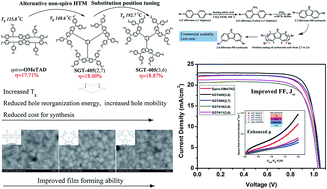
SGT-405(3,6), developed by tuning the substitution position from (2,7) to (3,6) position of carbazole moiety, is an promising alternative non-spiro type small molecular HTM with low-cost, high Tg and excellent performance for existing cost ineffective and synthetically-challenging spiro-OMeTAD in perovskite solar cells.
The content of this RSS Feed (c) The Royal Society of Chemistry
01 Sep 07:32
by Francesco Biccari, Fabio Gabelloni, Erica Burzi, Massimo Gurioli, Sara Pescetelli, Antonio Agresti, Antonio Esaú Del Rio Castillo, Alberto Ansaldo, Emmanuel Kymakis, Francesco Bonaccorso, Aldo Di Carlo, Anna Vinattieri
Abstract
The electron transport layer (ETL) plays a fundamental role in perovskite solar cells. Recently, graphene-based ETLs have been proved to be good candidate for scalable fabrication processes and to achieve higher carrier injection with respect to most commonly used ETLs. Here, the effects of different graphene-based ETLs in sensitized methylammonium lead iodide (MAPI) solar cells are experimentally studied. By means of time-integrated and picosecond time-resolved photoluminescence techniques, the carrier recombination dynamics in MAPI films embedded in different ETLs is investigated. Using graphene doped mesoporous TiO2 (G+mTiO2) with the addition of a lithium-neutralized graphene oxide (GO-Li) interlayer as ETL, it is found find that the carrier collection efficiency is increased by about a factor two with respect to standard mTiO2. Taking advantage of the absorption coefficient dispersion, the MAPI layer morphology is probed, along the thickness, finding that the MAPI embedded in the ETL composed by G+mTiO2 plus GO-Li brings to a very good crystalline quality of the MAPI layer with a trap density about one order of magnitude lower than that found with the other ETLs. In addition, this ETL freezes MAPI at the tetragonal phase, regardless of the temperature. Graphene-based ETLs can open the way to significant improvement of perovskite solar cells.

The effects of different graphene-based electron transport layers (ETLs) in perovskite methylammonium lead iodide (MAPI) solar cells are experimentally investigated. Using graphene-doped mesoporous TiO2 (mTiO2) with the addition of a lithium-neutralized graphene oxide interlayer as the ETL, the carrier collection efficiency is increased by approximately a factor two with respect to standard mTiO2.
01 Sep 07:32
by Chan Myae Myae Soe, Wanyi Nie, Constantinos C. Stoumpos, Hsinhan Tsai, Jean-Christophe Blancon, Fangze Liu, Jacky Even, Tobin J. Marks, Aditya D. Mohite, Mercouri G. Kanatzidis
Abstract
2D Ruddlesden–Popper (RP) perovskites have recently emerged as promising candidates for hybrid perovskite photovoltaic cells, realizing power-conversion efficiencies (PCEs) of over 10% with technologically relevant stability. To achieve solar cell performance comparable to the state-of-the-art 3D perovskite cells, it is highly desirable to increase the conductivity and lower the optical bandgap for enhanced near-IR region absorption by increasing the perovskite slab thickness. Here, the use of the 2D higher member (n = 5) RP perovskite (n-butyl-NH3)2(MeNH3)4Pb5I16 in depositing highly oriented thin films from dimethylformamide/dimethylsulfoxide mixtures using the hot-casting method is reported. In addition, they exhibit superior environmental stability over thin films of their 3D counterpart. These films are assembled into high-efficiency solar cells with an open-circuit voltage of ≈1 V and PCE of up to 10%. This is achieved by fine-tuning the solvent ratio, crystal growth orientation, and grain size in the thin films. The enhanced performance of the optimized devices is ascribed to the growth of micrometer-sized grains as opposed to more typically obtained nanometer grain size and highly crystalline, densely packed microstructures with the majority of the inorganic slabs preferentially aligned out of plane to the substrate, as confirmed by X-ray diffraction and grazing-incidence wide-angle X-ray scattering mapping.

Controllable tuning of the thin film properties of high-n member layered Ruddlesden–Popper perovskites, BA2MA4Pb5I16, is achieved via a hot-casting method using dimethylformamide (DMF)/dimethylsulfoxide (DMSO) processing solvent. Unlike the polycrystalline films grown from DMF, the optimized 3:1 DMF:DMSO films are essentially single-crystalline with regularly stacked inorganic slabs, and deliver solar cell power conversion efficiencies up to 10%.
01 Sep 07:29
by Lingwei Xue, Yankang Yang, Jianqiu Xu, Chunfeng Zhang, Haijun Bin, Zhi-Guo Zhang, Beibei Qiu, Xiaojun Li, Chenkai Sun, Liang Gao, Jia Yao, Xiaofeng Chen, Yunxu Yang, Min Xiao, Yongfang Li
Abstract
Suppression of carrier recombination is critically important in realizing high-efficiency polymer solar cells. Herein, it is demonstrated difluoro-substitution of thiophene conjugated side chain on donor polymer can suppress triplet formation for reducing carrier recombination. A new medium bandgap 2D-conjugated D–A copolymer J91 is designed and synthesized with bi(alkyl-difluorothienyl)-benzodithiophene as donor unit and fluorobenzotriazole as acceptor unit, for taking the advantages of the synergistic fluorination on the backbone and thiophene side chain. J91 demonstrates enhanced absorption, low-lying highest occupied molecular orbital energy level, and higher hole mobility, in comparison with its control polymer J52 without fluorination on the thiophene side chains. The transient absorption spectra indicate that J91 can suppress the triplet formation in its blend film with n-type organic semiconductor acceptor m-ITIC (3,9-bis(2-methylene-(3-(1,1-dicyanomethylene)-indanone)-5,5,11,11-tetrakis(3-hexylphenyl)-dithieno[2,3-d:2,3′-d′]-s-indaceno[1,2-b:5,6-b′]-dithiophene). With these favorable properties, a higher power conversion efficiency of 11.63% with high VOC of 0.984 V and high JSC of 18.03 mA cm−2 is obtained for the polymer solar cells based on J91/m-ITIC with thermal annealing. The improved photovoltaic performance by thermal annealing is explained from the morphology change upon thermal annealing as revealed by photoinduced force microscopy. The results indicate that side chain engineering can provide a new solution to suppress carrier recombination toward high efficiency, thus deserves further attention.

Suppression of carrier recombination is critically important for efficient polymer solar cells. Herein, it is demonstrated that difluoro-substitution of thiophene-conjugated side chains on the medium-bandgap polymer donor can suppress triplet formation for reducing carrier recombination and improving photovoltaic performance.
30 Aug 12:33
J. Mater. Chem. A, 2017, 5,19884-19891
DOI: 10.1039/C7TA06088B, Paper
Xin Jin, Xunyong Lei, Chunyan Wu, Guoshun Jiang, Weifeng Liu, Hualing Zeng, Tao Chen, Changfei Zhu
An alternative hole transporting material Cu2-xGeS3 is developed for perovskite solar cells, which can improve both efficiency and device stability.
The content of this RSS Feed (c) The Royal Society of Chemistry
30 Aug 12:32
by Daniel Prochowicz, Pankaj Yadav, Michael Saliba, Marcin Saski, Shaik M. Zakeeruddin, Janusz Lewiński and Michael Grätzel

ACS Applied Materials & Interfaces
DOI: 10.1021/acsami.7b06788

29 Aug 10:25
by Thanh Luan Nguyen, Tack Ho Lee, Bhoj Gautam, Song Yi Park, Kenan Gundogdu, Jin Young Kim, Han Young Woo
Abstract
A new donor (D)–acceptor (A) conjugate, benzodithiophene-rhodanine–[6,6]-phenyl-C61 butyric acid methyl ester (BDTRh–PCBM) comprising three covalently linked blocks, one of p-type oligothiophene containing BDTRh moieties and two of n-type PCBM, is designed and synthesized. A single component organic solar cell (SCOSC) fabricated from BDTRh–PCBM exhibits the power conversion efficiency (PCE) of 2.44% and maximum external quantum efficiency of 46%, which are the highest among the reported efficiencies so far. The SCOSC device shows efficient charge transfer (CT, ≈300 fs) and smaller CT energy loss, resulting in the higher open-circuit voltage of 0.97 V, compared to the binary blend (BDTRh:PCBM). Because of the integration of the donor and acceptor in a single molecule, BDTRh-PCBM has a specific D–A arrangement with less energetic disorder and reorganization energy than blend systems. In addition, the SCOSC device shows excellent device and morphological stabilities, showing no degradation of PCE at 80 °C for 100 h. The SCOSC approach may suggest a great way to suppress the large phase segregation of donor and acceptor domains with better morphological stability compared to the blend device.

Integration of donor and acceptor in a single molecule by a covalent linkage is a promising approach to overcome unfavorably large-phase separation in bulk heterojunction blend solar cells. A new all-in-one system forms a specific molecular arrangement which decreases energetic disorder and facilitates ultrafast charge separation.
29 Aug 10:24
by Chunxiong Bao, Zhaolai Chen, Yanjun Fang, Haotong Wei, Yehao Deng, Xun Xiao, Lingliang Li, Jinsong Huang
Abstract
Organic–inorganic halide perovskites are promising photodetector materials due to their strong absorption, large carrier mobility, and easily tunable bandgap. Up to now, perovskite photodetectors are mainly based on polycrystalline thin films, which have some undesired properties such as large defective grain boundaries hindering the further improvement of the detector performance. Here, perovskite thin-single-crystal (TSC) photodetectors are fabricated with a vertical p–i–n structure. Due to the absence of grain-boundaries, the trap densities of TSCs are 10–100 folds lower than that of polycrystalline thin films. The photodetectors based on CH3NH3PbBr3 and CH3NH3PbI3 TSCs show low noise of 1–2 fA Hz−1/2, yielding a high specific detectivity of 1.5 × 1013 cm Hz1/2 W−1. The absence of grain boundaries reduces charge recombination and enables a linear response under strong light, superior to polycrystalline photodetectors. The CH3NH3PbBr3 photodetectors show a linear response to green light from 0.35 pW cm−2 to 2.1 W cm−2, corresponding to a linear dynamic range of 256 dB.

Photodetectors based on organic–inorganic halide perovskite thin single crystals (TSCs) are fabricated. Due to the absence of grain-boundaries, very low trap densities, and small thickness (≈10 µm) of the TSCs, the TSC photodetectors with vertical p–i–n structure show low noise (1–2 fA Hz−1/2), high specific detectivity (≈1.5 × 1013 cm Hz1/2 W−1), and large linear-dynamic-range (256 dB).
29 Aug 08:49
by Bo Li, Yanan Zhang, Luyuan Zhang, Longwei Yin
Abstract
Despite great progress in the photovoltaic conversion efficiency (PCE) of inorganic–organic hybrid perovskite solar cells (PSCs), the large-scale application of PSCs still faces serious challenges due to the poor-stability and high-cost of the spiro-OMeTAD hole transport layer (HTL). It is of great fundamental importance to rationally address the issues of hole extraction and transfer arising from HTL-free PSCs. Herein, a brand-new PSC architecture is designed by introducing multigraded-heterojunction (GHJ) inorganic perovskite CsPbBrxI3−x layers as an efficient HTL. The grade adjustment can be achieved by precisely tuning the halide proportion and distribution in the CsPbBrxI3−x film to reach an optimal energy alignment of the valance and conduction band between MAPbI3 and CsPbBrxI3−x. The CsPbBrxI3−x GHJ as an efficient HTL can induce an electric field where a valance/conduction band edge is leveraged to bend at the heterojunction interface, boosting the interfacial electron–hole splitting and photoelectron extraction. The GHJ architecture enhances the hole extraction and conduction efficiency from the MAPbI3 to the counter electrode, decreases the recombination loss during the hole transfer, and benefits in increasing the open-circuit voltage. The optimized HTL-free PCS based on the GHJ architecture demonstrates an outstanding thermal stability and a significantly improved PCE of 11.33%, nearly 40% increase compared with 8.16% for pure HTL-free devices.

Through energy-band engineering, a brand-new perovskite solar cell architecture with multigraded-heterojunction (GHJ) inorganic perovskite CsPbBrxI3−x layers as an efficient hole-transport layer is designed. The GHJ architecture enhances the hole extraction and conduction efficiency, and decreases the recombination loss during the hole transfer. A certified efficiency of 11.33% is obtained and the high-performing devices show outstanding thermal- and humidity-stability.
26 Aug 08:52
J. Mater. Chem. A, 2017, 5,19439-19446
DOI: 10.1039/C7TA06163C, Paper
Yoon Hee Jang, Jang Mi Lee, Jung Woo Seo, Inho Kim, Doh-Kwon Lee
Monolithically integrated, 2-terminal CuInSe2-perovskite tandem solar cells are successfully fabricated using low-cost solution processes, demonstrating higher efficiency than the constituent single-junction devices.
The content of this RSS Feed (c) The Royal Society of Chemistry
26 Aug 08:46
by Junwoo Lee, Mahdi Malekshahi Byranvand, Gyeongho Kang, Sung Y. Son, Seulki Song, Guan-Woo Kim and Taiho Park

Journal of the American Chemical Society
DOI: 10.1021/jacs.7b04949

26 Aug 08:33
by Zewen Xiao, Yanfa Yan
Abstract
Lead halide perovskites have recently emerged as promising absorbers for fabricating low-cost and high-efficiency thin-film solar cells. The record power conversion efficiency of lead halide perovskite-based solar cells has rapidly increased from 3.8% in 2009 to 22.1% in early 2016. Such rapid improvement is attributed to the superior and unique photovoltaic properties of lead halide perovskites, such as the extremely high optical absorption coefficients and super-long photogenerated carrier lifetimes and diffusion lengths that are not seen in any other polycrystalline thin-film solar cell materials. In the past a few years, theoretical approaches have been extensively applied to understand the fundamental mechanisms responsible for the superior photovoltaic properties of lead halide perovskites and have gained significant insights. This review article highlights the important theoretical results reported in literature for the understanding of the unique structural, electronic, optical, and defect properties of lead halide perovskite materials. For comparison, we also review the theoretical results reported in literature for some lead-free perovskites, double perovskites, and nonperovskites.

Progress in the theoretical study of metal halide perovskite absorber materials is reviewed with a focus on the understanding of the unique structural, electronic, optical, and defect properties of lead halide perovskites. For comparison, the theoretical results reported for some lead-free perovskites, double perovskites and nonperovskites are also reviewed.
26 Aug 08:33
by Zhongmin Zhou, Xing Li, Molang Cai, Fengxian Xie, Yongzhen Wu, Zhang Lan, Xudong Yang, Yinghuai Qiang, Ashraful Islam, Liyuan Han
Abstract
Low-temperature-processed perovskite solar cells (PSCs), which can be fabricated on rigid or flexible substrates, are attracting increasing attention because they have a wide range of potential applications. In this study, the stability of reduced graphene oxide and the ability of a poly(triarylamine) underlayer to improve the quality of overlying perovskite films to construct hole-transport bilayer by means of a low-temperature method are taken advantage of. The bilayer is used in both flexible and rigid inverted planar PSCs with the following configuration: substrate/indium tin oxide/reduced graphene oxide/polytriarylamine/CH3NH3PbI3/PCBM/bathocuproine/Ag (PCBM = [6,6]-phenyl-C61-butyric acid methyl ester). The flexible and rigid PSCs show power conversion efficiencies of 15.7 and 17.2%, respectively, for the aperture area of 1.02 cm2. Moreover, the PSC based the bilayer shows outstanding light-soaking stability, retaining ≈90% of its original efficiency after continuous illumination for 500 h at 100 mW cm−2.

Low-temperature-processed hole-transport bilayer (reduced graphene oxide/polytriarylamine) is constructed to fabricate inverted perovskite solar cells (PSCs), which based on flexible and rigid substrates show power conversion efficiencies of 15.7 and 17.2% on the cells area of 1.02 cm2, respectively. In addition, the PSCs with the hole-transport bilayer show outstanding light-soaking stability.