Publication date: 15 January 2016
Source:Surface and Coatings Technology, Volume 285
Author(s): Michael Tkadletz, Nina Schalk, Rostislav Daniel, Jozef Keckes, Christoph Czettl, Christian Mitterer
Due to economical demands to further increase the efficiency of production processes, it is essential to exploit the full potential of wear resistant hard coatings. This is, however, possible only if the coating microstructure and properties are well characterized. Thus, in the present work, recently suggested advanced characterization techniques for coatings are reviewed. The application of atom probe tomography, electron backscatter diffraction and synchrotron X-ray nanodiffraction enables previously unrevealed insights in their chemical composition, microstructure and crystallographic structure. For the determination of mechanical and tribological properties at elevated temperatures, high-temperature nanoindentation and high-temperature ball-on-disk tests in combination with in-situ measurement techniques are discussed. Utilization of micromechanical tests for coatings provides information about their fracture toughness and rupture strength. High-temperature X-ray diffraction and biaxial stress temperature measurements for the determination of the coefficient of thermal expansion are compared. The thermal conductivity as well as the specific heat capacity of coatings can be studied using the 3-ω technique, time domain thermoreflectance and differential scanning calorimetry. The introduced portfolio of characterization techniques enables the determination of a complementary microstructural, mechanical and thermo-physical fingerprint of wear resistant hard coatings, which allows to understand the complex structure–property relations in these materials and subsequently to further improve their performance.
Shared posts
26 Nov 19:11
Advanced characterization methods for wear resistant hard coatings: A review on recent progress
26 Nov 19:00
Restoring Light Sensitivity in Blind Retinae Using a Photochromic AMPA Receptor Agonist
by L. Laprell, K. Hüll, P. Stawski, C. Schön, S. Michalakis, M . Biel, M. P. Sumser, and D. Trauner

ACS Chemical Neuroscience
DOI: 10.1021/acschemneuro.5b00234
Publication Date (Web): October 23, 2015
26 Nov 18:57
Trilayered Film with Excellent Tribological Performance: A Combination of Graphene Oxide and Perfluoropolyethers
Abstract
In the current paper, trilayered films (abridged as APS-GO/PFPE) composed of graphene oxide (GO) and perfluoropolyethers (PFPE) were fabricated successfully on the silicon substrate pre-modified with a self-assembled monolayer of 3-aminopropyl triethoxysilane. The so-prepared films were characterized by a range of complementary techniques including Raman spectroscopy, contact angle measurements, X-ray photoelectron spectroscopy, and atomic force microscopy, to reveal the surface chemical compositions and surface morphologies. Furthermore, the microtribological behavior of the so-prepared films was studied on a ball-on-plate tribometer. The APS-GO/PFPE film showed better friction-reducing and wear-resisting properties as compared with the control samples, which was ascribed to the excellent wear-resisting properties of GO and the excellent lubricating nature and low shear strength of PFPE.
24 Nov 12:09


Lead Telluride Quantum Dot Solar Cells Displaying External Quantum Efficiencies Exceeding 120%
by Marcus L. Böhm, Tom C. Jellicoe, Maxim Tabachnyk, Nathaniel J. L. K. Davis, Florencia Wisnivesky-Rocca-Rivarola, Caterina Ducati, Bruno Ehrler, Artem A. Bakulin and Neil C. Greenham

Nano Letters
DOI: 10.1021/acs.nanolett.5b03161
24 Nov 12:01


All-Quantum-Dot Infrared Light-Emitting Diodes
by Zhenyu Yang, Oleksandr Voznyy, Mengxia Liu, Mingjian Yuan, Alexander H. Ip, Osman S. Ahmed, Larissa Levina, Sachin Kinge, Sjoerd Hoogland and Edward H. Sargent

ACS Nano
DOI: 10.1021/acsnano.5b05617
wangchuanxi, rongmingcong likes this
14 Nov 18:32

Recent advances in transition-metal dichalcogenide based nanomaterials for water splitting

Nanoscale, 2015, 7,19764-19788
DOI: 10.1039/C5NR06718A, Review Article
DOI: 10.1039/C5NR06718A, Review Article
Fengmei Wang, Tofik Ahmed Shifa, Xueying Zhan, Yun Huang, Kaili Liu, Zhongzhou Cheng, Chao Jiang, Jun He
We present an overview of the state-of-the-art research progresses in layered and pyrite-phase structured TMDs for electrocatalytic and photocatalytic water splitting.
The content of this RSS Feed (c) The Royal Society of Chemistry
We present an overview of the state-of-the-art research progresses in layered and pyrite-phase structured TMDs for electrocatalytic and photocatalytic water splitting.
The content of this RSS Feed (c) The Royal Society of Chemistry
Rain and -1 others like this
14 Nov 12:57

Chiral modification of copper exchanged zeolite-Y with cinchonidine and its application in the asymmetric Henry reaction

Dalton Trans., 2015, 44,20949-20963
DOI: 10.1039/C5DT03630E, Paper
DOI: 10.1039/C5DT03630E, Paper
Jogesh Deka, L. Satyanarayana, G. V. Karunakar, Pradip Kr. Bhattacharyya, Kusum K. Bania
(−)-Cinchonidine is being encapsulated inside copper exchanged zeolite-Y and used as heterogeneous catalyst for the asymmetric Henry reaction.
The content of this RSS Feed (c) The Royal Society of Chemistry
(−)-Cinchonidine is being encapsulated inside copper exchanged zeolite-Y and used as heterogeneous catalyst for the asymmetric Henry reaction.
The content of this RSS Feed (c) The Royal Society of Chemistry
14 Nov 12:55

Observation of unusual slow-relaxation of the magnetisation in a Gd-EDTA chelate

Dalton Trans., 2015, 44,20321-20325
DOI: 10.1039/C5DT04072H, Communication
DOI: 10.1039/C5DT04072H, Communication
Rebecca J. Holmberg, Le Tuan Anh Ho, Liviu Ungur, Ilia Korobkov, Liviu F. Chibotaru, Muralee Murugesu
A Gadolinium EDTA chelate displays characteristic isotropic behaviour common of GdIII complexes under zero applied magnetic field, and anisotropic behaviour arising from dipolar coupling and weak spin-phonon coupling under an applied magnetic field.
The content of this RSS Feed (c) The Royal Society of Chemistry
A Gadolinium EDTA chelate displays characteristic isotropic behaviour common of GdIII complexes under zero applied magnetic field, and anisotropic behaviour arising from dipolar coupling and weak spin-phonon coupling under an applied magnetic field.
The content of this RSS Feed (c) The Royal Society of Chemistry
14 Nov 12:24
Green Ionic Liquid Lubricants Prepared from Anti-Inflammatory Drug
Abstract
1-Alkyl-3-methylimidazolium ibuprofen ionic liquids (ILs, L-Ibu104, L-Ibu106 and L-Ibu108) were synthesized from an anti-inflammatory drug, sodium ibuprofen. The physicochemical and tribological properties of these ILs as neat lubricants for steel/steel and steel/copper contacts were measured. The results of hydrolysis stability evaluation and copper strip corrosion test show that these kinds of ILs are hydrolysis stable and have no corrosion to the metal contacts because of stability of anion. The friction and wear test results exhibit that these ibuprofen ILs have more effective friction-reducing and anti-wear properties than poly-alpha-olefin (PAO40) and 1-hexyl-3-methylimidazolium bis(trifluoromethylsulphonyl)imide (L-F106) at 100 °C. According to the X-ray photoelectron spectrometer analytical results, we speculated that physical adsorption films can easily formed on the metal worn surfaces during the rubbing process because of the high adsorption ability of Ibu− anion, which play an important role in the good lubricating behaviours of ibuprofen ILs.
Graphical Abstract

14 Nov 12:24
Head Wear of Thermal Flying Height Control Sliders as a Function of Bonded Lubricant Ratio, Temperature, and Relative Humidity
Abstract
Head wear of thermal flying height control sliders is studied experimentally by (a) comparing the touch-down power before and after a wear test consisting of 300 consecutive touch-down cycles, (b) examining scanning electron microscopy (SEM) images, and (c) investigating atomic force microscopy (AFM) measurements of unworn and worn heads. The effect of bonded lubricant ratio, relative humidity, temperature, and heater power on head wear is investigated. The experiments were carried out on a commercial load/unload tester inside an environmental test chamber. We conclude that (a) head wear increases with increasing bonded lubricant ratio, (b) temperature has a minor effect on head wear for the temperature range of 30–50 °C, (c) head wear increases with decreasing relative humidity, and (d) head wear increases with increasing heater power during the wear test. SEM images show wear of the write shield for changes in touch-down power typically larger than 6 mW. AFM measurements show changes in surface roughness of heads with changes in touch-down power as small as 1.3 mW compared to new, unused head. A wear coefficient on the order of 10−11 to 10−13 was estimated.
14 Nov 12:22

CVD Growth of MoS2-based Two-dimensional Materials
by H. F. Liu, S. L. Wong, D. Z. Chi
The ‘self-limiting’ character of graphene growth on the surface of metals such as Ni and Cu makes CVD the natural choice for growing large-area and continuous graphene films. Beyond graphene, absence of the self-limiting property results in a challenge to achieving large-area, high-quality two-dimensional (2D) crystals by CVD. Recent studies of structural, optical, and electrical properties of MoS2-based atomic layers grown by CVD are reviewed, concluding that thermal vapor deposition will outperform thermal vapor sulfurization in producing the required materials. Whether gaseous sources will replace the now dominant solid sources in direct deposition methods is an open issue. The latest progression in various CVD techniques used in MoS2 growth and their resultant products are discussed and compared.

Recent studies of MoS2-based atomic layers grown by CVD are reviewed, suggesting that TVD will outperform TVS towards large-area, high-quality, 2D-MoS2. Whether gaseous sources will replace the now dominant solid sources in direct deposition is still an open issue. The latest progression in CVD for 2D-MoS2 nanosheets is discussed towards elucidating and helping better define future process optimizations.
14 Nov 12:05

From Atomistic Surface Chemistry to Nanocrystals of Functional Chalcogenides
by Volker L. Deringer, Richard Dronskowski
Abstract
Synthesis and utilization of nanocrystals are highly active fields of current research, but they require a thorough understanding of the underlying crystal surfaces. In this Minireview, we span the arc from surfaces to free nanocrystals, and onward to their chemical synthesis, using as examples lead selenide (PbSe), tin telluride (SnTe), and their direct chemical relatives. Besides experimental insights, we highlight the increasingly influential role played by quantum-chemical simulations of surfaces and nanocrystals. What can theory do today, or possibly tomorrow; where are its limits? Answering these questions, and skillfully linking them to experiments, could open up new atomistically (that is, chemically) guided perspectives for nanosynthesis.

Nanocrystals, made to measure? Skillful links between theory and experiments promise new insight into the chemistry of nanoscale materials. This Minireview describes how such bridges can be built for group IV chalcogenides, from free surfaces to nanocrystals, and with the long-term goal of enabling rational synthesis planning.
14 Nov 11:58


Diorganyl Dichalcogenides as Useful Synthons for Colloidal Semiconductor Nanocrystals
by Richard L. Brutchey

Accounts of Chemical Research
DOI: 10.1021/acs.accounts.5b00362
caoxing likes this
14 Nov 11:46

Tellurium-Assisted Low-Temperature Synthesis of MoS2 and WS2 Monolayers
by Yongji Gong, Zhong Lin, Gonglan Ye, Gang Shi, Simin Feng, Yu Lei, Ana Laura Elías, Nestor Perea-Lopez, Robert Vajtai, Humberto Terrones, Zheng Liu, Mauricio Terrones and Pulickel M. Ajayan

ACS Nano
DOI: 10.1021/acsnano.5b05594
14 Nov 11:29


Imaging Excited Orbitals of Quantum Dots: Experiment and Electronic Structure Theory
by Lea Nienhaus, Joshua J. Goings, Duc Nguyen, Sarah Wieghold, Joseph W. Lyding, Xiaosong Li and Martin Gruebele

Journal of the American Chemical Society
DOI: 10.1021/jacs.5b09272
14 Nov 11:24

Materials: Boron made into 2D sheet
Materials: Boron made into 2D sheet
Nature 527, 7577 (2015). doi:10.1038/527136c
Researchers have created a 2D form of boron and shown that it behaves as a semiconductor.Materials such as graphene (the atomically thin form of carbon) and others made of silicon and phosphorus have desirable electrical properties that could be useful in electronics, and 2D
Chendahong1987 likes this
13 Nov 23:38

Widespread exploitation of the honeybee by early Neolithic farmers
by Mélanie Roffet-Salque
Widespread exploitation of the honeybee by early Neolithic farmers
Nature 527, 7577 (2015). doi:10.1038/nature15757
Authors: Mélanie Roffet-Salque, Martine Regert, Richard P. Evershed, Alan K. Outram, Lucy J. E. Cramp, Orestes Decavallas, Julie Dunne, Pascale Gerbault, Simona Mileto, Sigrid Mirabaud, Mirva Pääkkönen, Jessica Smyth, Lucija Šoberl, Helen L. Whelton, Alfonso Alday-Ruiz, Henrik Asplund, Marta Bartkowiak, Eva Bayer-Niemeier, Lotfi Belhouchet, Federico Bernardini, Mihael Budja, Gabriel Cooney, Miriam Cubas, Ed M. Danaher, Mariana Diniz, László Domboróczki, Cristina Fabbri, Jesus E. González-Urquijo, Jean Guilaine, Slimane Hachi, Barrie N. Hartwell, Daniela Hofmann, Isabel Hohle, Juan J. Ibáñez, Necmi Karul, Farid Kherbouche, Jacinta Kiely, Kostas Kotsakis, Friedrich Lueth, James P. Mallory, Claire Manen, Arkadiusz Marciniak, Brigitte Maurice-Chabard, Martin A. Mc Gonigle, Simone Mulazzani, Mehmet Özdoğan, Olga S. Perić, Slaviša R. Perić, Jörg Petrasch, Anne-Marie Pétrequin, Pierre Pétrequin, Ulrike Poensgen, C. Joshua Pollard, François Poplin, Giovanna Radi, Peter Stadler, Harald Stäuble, Nenad Tasić, Dushka Urem-Kotsou, Jasna B. Vuković, Fintan Walsh, Alasdair Whittle, Sabine Wolfram, Lydia Zapata-Peña & Jamel Zoughlami
The pressures on honeybee (Apis mellifera) populations, resulting from threats by modern pesticides, parasites, predators and diseases, have raised awareness of the economic importance and critical role this insect plays in agricultural societies across the globe. However, the association of humans with A. mellifera predates post-industrial-revolution agriculture, as evidenced by the widespread presence of ancient Egyptian bee iconography dating to the Old Kingdom (approximately 2400 bc). There are also indications of Stone Age people harvesting bee products; for example, honey hunting is interpreted from rock art in a prehistoric Holocene context and a beeswax find in a pre-agriculturalist site. However, when and where the regular association of A. mellifera with agriculturalists emerged is unknown. One of the major products of A. mellifera is beeswax, which is composed of a complex suite of lipids including n-alkanes, n-alkanoic acids and fatty acyl wax esters. The composition is highly constant as it is determined genetically through the insect’s biochemistry. Thus, the chemical ‘fingerprint’ of beeswax provides a reliable basis for detecting this commodity in organic residues preserved at archaeological sites, which we now use to trace the exploitation by humans of A. mellifera temporally and spatially. Here we present secure identifications of beeswax in lipid residues preserved in pottery vessels of Neolithic Old World farmers. The geographical range of bee product exploitation is traced in Neolithic Europe, the Near East and North Africa, providing the palaeoecological range of honeybees during prehistory. Temporally, we demonstrate that bee products were exploited continuously, and probably extensively in some regions, at least from the seventh millennium cal bc, likely fulfilling a variety of technological and cultural functions. The close association of A. mellifera with Neolithic farming communities dates to the early onset of agriculture and may provide evidence for the beginnings of a domestication process.
03 Nov 09:20
Quantitative In Situ Analysis of Deformation in Sliding Metals: Effect of Initial Strain State
Abstract
Using in situ, high-speed imaging of a hard wedge sliding against pure aluminum, and image analysis by particle image velocimetry, the deformation field in sliding is mapped at high resolution. This model system is representative of asperity contacts on engineered surfaces and die–workpiece contacts in deformation and machining processes. It is shown that large, uniform plastic strains of 1–5 can be imposed at the Al surface, up to depths of 500 μm, under suitable sliding conditions. The spatial strain and strain rate distributions are significantly influenced by the initial deformation state of the Al, e.g., extent of work hardening, and sliding incidence angle. Uniform straining occurs only under conditions of steady laminar flow in the metal. Large pre-strains and higher sliding angles promote breakdown in laminar flow due to surface fold formation or flow localization in the form of shear bands, thus imposing limits on uniform straining by sliding. Avoidance of unsteady sliding conditions, and selection of parameters like sliding angle, thus provides a way to control the deformation field. Key characteristics of the sliding deformation such as strain and strain rate, laminar flow, folding and prow formation are well predicted by finite element simulation. The deformation field provides a quantitative basis for interpreting wear particle formation. Implications for engineering functionally graded surfaces, sliding wear and ductile failure in metals are discussed.
03 Nov 09:15

Direct Synthesis of Few-Layer Graphene on NaCl Crystals
by Liurong Shi, Ke Chen, Ran Du, Alicja Bachmatiuk, Mark Hermann Rümmeli, Manish Kumar Priydarshi, Yanfeng Zhang, Ayyakkannu Manivannan, Zhongfan Liu
Chemical vapor deposition is used to synthesize few-layer graphene on micro crystalline sodium chloride (NaCl) powder. The water-soluble nature of NaCl makes it convenient to produce free standing graphene layers via a facile and low-cost approach. Unlike traditional metal-catalyzed or oxygen-aided growth, the micron-size NaCl crystal planes play an important role in the nucleation and growth of few-layer graphene. Moreover, the possibility of synthesizing cuboidal graphene is also demonstrated in the present approach for the first time. Raman spectroscopy, optical microscopy, scanning electron microscopy, transmission electron microscopy, and atomic force microscopy are used to evaluate the quality and structure of the few-layer graphene along with cuboidal graphene obtained in this process. The few-layer graphene synthesized using the present method has an adsorption ability for anionic and cationic dye molecules in water. The present synthesis method may pave a facile way for manufacturing few-layer graphene on a large scale.

Few-layer graphene is synthesized on cuboidal NaCl crystals via a facile low temperature chemical vapor deposition method. The removal of NaCl substrate can be achieved easily by a water washing process due to its water-soluble nature. Cuboidal graphene boxes can also be obtained by replicating the morphology of NaCl crystals.
yandaye, ylm0809185 likes this
02 Nov 13:31
Residual stress measurement in DLC films deposited by PBIID method using Raman microprobe spectroscopy
Publication date: 15 December 2015
Source:Surface and Coatings Technology, Volume 283
Author(s): Yasuhiro Miki, Akio Nishimoto, Takumi Sone, Yoshiji Araki
Diamond-like carbon (DLC) films were prepared and their residual stresses were measured nondestructively using Raman microprobe spectroscopy. The plasma-based ion implantation and deposition (PBIID) method was used to coat the DLC films on thin glass substrates using acetylene, a mixture of acetylene and toluene, or only toluene gas at 1.0Pa. Peaks in the Raman spectra of the DLC films were assigned as the D′(disordered) or C–C bonding peaks at 1150cm−1. The phonon deformation potentials (a′) of the films were estimated from data for the phonon deformation potentials for pure graphite and diamond and calculated using the sp3/sp2 bonding ratio and the hydrogen content of the films. Thus, a relation was observed between the Raman shift of the G peak (ω G) and the residual stress (σ c) in each film. The Raman shifts (ω 0) of the G peak for the films with no deformation were 1554, 1556, and 1562cm−1 for the films deposited using acetylene, a mixture gas and toluene gas. Moreover, only toluene had stress constants of −0.378, −0.384, and −0.391GPa/cm−1. The residual stresses constant in each film using (8.2×10⁻⁴·a′)−1 ω 0 −1 were estimated as −0.379, −0.384, and −0.391GPa/cm−1. The Raman shift of the D peak remained stationary as the compressive σ c in the films increased but changed when the deposition gas was varied. The distance the D peak moved from 1420cm−1 corresponded to that of the G peak from 1560cm−1 in the Raman spectra of the films in the stress-free state. In addition, the compressive residual stress in the DLC film had a major impact on the hardness.
Source:Surface and Coatings Technology, Volume 283
Author(s): Yasuhiro Miki, Akio Nishimoto, Takumi Sone, Yoshiji Araki
Diamond-like carbon (DLC) films were prepared and their residual stresses were measured nondestructively using Raman microprobe spectroscopy. The plasma-based ion implantation and deposition (PBIID) method was used to coat the DLC films on thin glass substrates using acetylene, a mixture of acetylene and toluene, or only toluene gas at 1.0Pa. Peaks in the Raman spectra of the DLC films were assigned as the D′(disordered) or C–C bonding peaks at 1150cm−1. The phonon deformation potentials (a′) of the films were estimated from data for the phonon deformation potentials for pure graphite and diamond and calculated using the sp3/sp2 bonding ratio and the hydrogen content of the films. Thus, a relation was observed between the Raman shift of the G peak (ω G) and the residual stress (σ c) in each film. The Raman shifts (ω 0) of the G peak for the films with no deformation were 1554, 1556, and 1562cm−1 for the films deposited using acetylene, a mixture gas and toluene gas. Moreover, only toluene had stress constants of −0.378, −0.384, and −0.391GPa/cm−1. The residual stresses constant in each film using (8.2×10⁻⁴·a′)−1 ω 0 −1 were estimated as −0.379, −0.384, and −0.391GPa/cm−1. The Raman shift of the D peak remained stationary as the compressive σ c in the films increased but changed when the deposition gas was varied. The distance the D peak moved from 1420cm−1 corresponded to that of the G peak from 1560cm−1 in the Raman spectra of the films in the stress-free state. In addition, the compressive residual stress in the DLC film had a major impact on the hardness.
01 Nov 07:42

Molecular Materials That Can Both Emit Light and Conduct Charges: Strategies and Perspectives
by Zitong Liu, Guanxin Zhang, Deqing Zhang
Abstract
Molecular materials with concomitant light-emissive and semiconducting properties have received increasing attention in recent years. Such dual functional materials ensure the development of multifunctional devices (e.g., organic light-emitting transistors) and the emergence of new technologies. However, owing to the fact that intermolecular interactions and dense packing have opposite effects on photoluminescence and charge-carrier mobility, it is still rather challenging to rationally design high-performance molecular materials that exhibit both semiconducting and light-emissive properties. In fact, only a limited number of such dual functional materials are available, and most of their performances need to be further improved. In this concept article we discuss the design strategies and perspectives of this challenging area with the introduction of representative examples of such dual functional materials reported in recent years.

Important but challenging! Molecular materials with concomitant light-emissive and semiconducting properties have received increasing attentions. However, it is rather challenging to rationally design high performance molecular materials exhibiting both properties. Design strategies and perspectives of this area are reported; with representative examples of such dual functional materials.
haozi likes this
01 Nov 07:35


Ordered Vacancy Compound Formation by Controlling Element Redistribution in Molecular-Level Precursor Solution Processed CuInSe2 Thin Films
by Choong-Heui Chung, Ki-Ha Hong, Doh-Kwon Lee, Jae Ho Yun and Yang Yang

Chemistry of Materials
DOI: 10.1021/acs.chemmater.5b03841
01 Nov 07:23

Anisotropic Thermal Conductivity of Exfoliated Black Phosphorus
by Hyejin Jang, Joshua D. Wood, Christopher R. Ryder, Mark C. Hersam, David G. Cahill

The anisotropic thermal conductivity of passivated black phosphorus (BP), a reactive two-dimensional material with strong in-plane anisotropy, is ascertained. The room-temperature thermal conductivity for three crystalline axes of exfoliated BP is measured by time-domain thermoreflectance. The thermal conductivity along the zigzag direction is ≈2.5 times higher than that of the armchair direction.
01 Nov 07:20
Transition metal doped pyrite (FeS2) thin films: structural properties and evaluation of optical band gap energies

J. Mater. Chem. C, 2015, 3,12068-12076
DOI: 10.1039/C5TC03275J, Paper
DOI: 10.1039/C5TC03275J, Paper
Sadia Khalid, Mohammad Azad Malik, David J. Lewis, Punarja Kevin, Ejaz Ahmed, Yaqoob Khan, Paul O'Brien
The properties of transition metal doped iron pyrite thin films deposited by AACVD have been studied.
The content of this RSS Feed (c) The Royal Society of Chemistry
The properties of transition metal doped iron pyrite thin films deposited by AACVD have been studied.
The content of this RSS Feed (c) The Royal Society of Chemistry
01 Nov 07:20


Low-Friction Adsorbed Layers of a Triblock Copolymer Additive in Oil-Based Lubrication
by Shinji Yamada, Ami Fujihara, Shin-ichi Yusa, Tadao Tanabe and Kazue Kurihara

Langmuir
DOI: 10.1021/acs.langmuir.5b03620
01 Nov 07:18
Thermal sprayed coatings for hot corrosion protection of exhaust valves in naval diesel engines
Publication date: Available online 30 October 2015
Source:Surface and Coatings Technology
Author(s): L. Baiamonte, F. Marra, S. Gazzola, P. Giovanetto, C. Bartuli, T. Valente, G. Pulci
Fuel used in diesel engines for naval propulsion contains high levels of impurities, principally vanadium and sulfates, that can react to form aggressive compounds, responsible for hot corrosion phenomena, leading to severe degradation of engine's components, especially exhaust valves. A protective coating is thus required to increase service life of the valves in the highly corrosive environment. In this work five different thermal-sprayed metal-ceramic coatings are selected as potential candidates and their hot corrosion resistance is investigated and discussed in terms of microstructure evolution and hot corrosion kinetics. Four coatings were deposited by either HVOF or APS processes starting from commercial powders (Cr3C2-CoNiCrAlY, Cr3C2-self fusing alloy, Cr3C2-NiCrAlY, Cr3C2-NiCr), optimizing deposition parameters by DoE technique. The last composite coating was purposely designed including silica nanoparticles and ceramic fillers (mullite) in a NiCr matrix, and was deposited by HVOF. Microstructural characteristics of each coating in the as-sprayed conditions were evaluated by measuring porosity and microhardness. Hot corrosion tests were performed on samples covered with a mixture of Na2SO4 and V2O5 and placed in a furnace at 700°C in air for different times (5, 25, 50, 75 and 100h). Finally, EDS and XRD analyses were carried out on the corroded samples.
Source:Surface and Coatings Technology
Author(s): L. Baiamonte, F. Marra, S. Gazzola, P. Giovanetto, C. Bartuli, T. Valente, G. Pulci
Fuel used in diesel engines for naval propulsion contains high levels of impurities, principally vanadium and sulfates, that can react to form aggressive compounds, responsible for hot corrosion phenomena, leading to severe degradation of engine's components, especially exhaust valves. A protective coating is thus required to increase service life of the valves in the highly corrosive environment. In this work five different thermal-sprayed metal-ceramic coatings are selected as potential candidates and their hot corrosion resistance is investigated and discussed in terms of microstructure evolution and hot corrosion kinetics. Four coatings were deposited by either HVOF or APS processes starting from commercial powders (Cr3C2-CoNiCrAlY, Cr3C2-self fusing alloy, Cr3C2-NiCrAlY, Cr3C2-NiCr), optimizing deposition parameters by DoE technique. The last composite coating was purposely designed including silica nanoparticles and ceramic fillers (mullite) in a NiCr matrix, and was deposited by HVOF. Microstructural characteristics of each coating in the as-sprayed conditions were evaluated by measuring porosity and microhardness. Hot corrosion tests were performed on samples covered with a mixture of Na2SO4 and V2O5 and placed in a furnace at 700°C in air for different times (5, 25, 50, 75 and 100h). Finally, EDS and XRD analyses were carried out on the corroded samples.
01 Nov 06:28
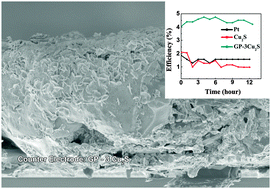
Graphite powder film-supported Cu2S counter electrodes for quantum dot-sensitized solar cells
J. Mater. Chem. C, 2015, 3,12140-12148
DOI: 10.1039/C5TC02101D, Paper
DOI: 10.1039/C5TC02101D, Paper
Jing Hui Zeng, Dan Chen, Ye Feng Wang, Bin Bin Jin
A graphite powder (GP) film-supported Cu2S counter electrode (CE) has been prepared by an accessible and low-temperature method.
The content of this RSS Feed (c) The Royal Society of Chemistry
A graphite powder (GP) film-supported Cu2S counter electrode (CE) has been prepared by an accessible and low-temperature method.
The content of this RSS Feed (c) The Royal Society of Chemistry
28 Oct 13:23

Kitchen Chemistry 101: Multigram Production of High Quality Biographene in a Blender with Edible Proteins
by Ajith Pattammattel, Challa Vijaya Kumar
A high yielding aqueous phase exfoliation of graphite to high quality graphene using edible proteins and kitchen chemistry is reported here. Bovine serum albumin (BSA), β-lactoglobulin, ovalbumin, lysozyme, and hemoglobin are used to exfoliate graphite and the exfoliation efficiency depended on the sign and magnitude of the protein charge. BSA showed maximum exfoliation rate, facilitated graphite exfoliation in water, at room temperature, by turbulence/shear force generated in a kitchen blender at exfoliation efficiencies exceeding 4 mg mL−1 h−1. Raman spectroscopy and transmission electron microscopy indicated 3–5 layer, defect-free graphene of 0.5 μm size. Graphene dispersions loaded on a cellulose paper (650 μg cm−2) showed the film conductivity of 32 000 S m−1, which is much higher than graphene/polymer composites. Our method yielded ≈7 mg mL−1, BSA-coated graphene with controllable surface charge, which is stable under wide ranges of pH (3.0–11) and temperature (5.0–50 °C), and in fetal bovine serum, for more than two months.These findings may lead to the large scale production of graphene for biological applications.

Graphite exfoliates to high-quality, few-layer graphene when subjected to shear forces in a kitchen blender on a multigram scale, which is assisted by ordinary, edible proteins. Protein charge plays a very important role in the exfoliation mechanism, and the graphene samples are highly conductive. The graphene suspensions in water are stable against temperature (5–50 °C) and a pH range from 3 to 11 for well over a month, and are suitable for biological applications.
26 Oct 19:29

Printing Tablets with Fully Customizable Release Profiles for Personalized Medicine
by Yajuan Sun, Siowling Soh
DJLOMG DRUGPRINTER

Personalizing the release profiles of drugs is important for different people with different medical and biological conditions. A technically simple and low-cost method to fabricate fully customizable tablets that can deliver drugs with any type of release profile is described. The customization is intuitively straightforward: the desired profile can simply be “drawn” and printed by a 3D printer.