Shared posts

16 Sep 03:32

Fireside Friday, November 17, 2023

by Bret Devereaux

Hey folks! Fireside this week! I was hoping to have a post on Roman infantry tactics this week, in particular the oddity of the Romans not using spear-and-shield infantry (much), but it isn’t ready yet and other things have me quite busy, so fireside it is. Fortunately, we have Ridley Scott to complain about.

I Couldn’t help but include this, where eight of my American Military History students opted to dress up as me for our Halloween class (posted with permission of the students involved).

For this week’s musing, I want to comment at least briefly on dust-up surrounding Ridley Scott’s latest film, Napoleon and historians. As was evidently heavily reported, Ridley Scott responded to historians doing critiques of the film’s historical accuracy by telling them to ‘get a life‘ and suggesting that the earliest works on Napoleon were the most accurate and that subsequent historians have just progressively gotten more wrong.

I think there are two questions to untangle here: is the film accurate and does it matter? Now I haven’t yet seen the film, I’ve only seen the trailer. But my response to the trailer seems to have been basically every historian’s response to the trailer: Napoleon shows up at all sorts of places, doing all sorts of things he didn’t do. In particular, the battle scenes I’ve seen in the trailer and other snippets bear functionally no relationship to either Napoleonic warfare in general or the Battle of Austerlitz in particular (the bit with large numbers of soldiers drowning in a frozen lake was disconfirmed at the time; the lake was drained and few remains were found).

All of this is not a huge shock. All of Ridley Scott’s historical movies take huge liberties with their source material. Sometimes that’s in the service of a still interesting meditation on the past (Kingdom of Heaven, The Last Duel), sometimes in service of just a fun movie (Gladiator). Ridley Scott, in particular, has never mastered how basically any historical battle was fought and all of the battle scenes in his movies that I’ve seen are effectively nonsense (including Gladiator, which bears functionally no relationship to how Roman armies actually fought open field battles). Cool looking nonsense, but nonsense. Heck, Gladiator‘s entire plot is basically nonsense with some characters sharing historical names and very little else with their actual historical counterparts (the idea of Marcus Aurelius aiming to restore the republic in 180 is pretty silly).

So it isn’t a surprise that Ridley Scott’s grasp on Napoleonic warfare is about at the level of a not particularly motivated undergraduate student or that he has finessed or altered major historical details to make a better story. Its Ridley Scott, that’s what he does. Sometimes it works great (Kingdom of Heaven), sometimes it works poorly (Exodus: Gods and Kings).

Does it matter?

Unsurprisingly, I think that Ridley Scott is being more than a bit silly with his retorts to historians who are using his film as an opportunity to teach about the past. That’s what we do. Frankly, I find the defensiveness of ‘get a life’ more than a bit surprising, as I assumed Ridley Scott knew he didn’t have much of a grasp on the history and was OK with that (or better yet, did have a grasp on it, but chose to alter it; I do not get this sense from his commentary), but it rather seems like he thinks he does know and is now very upset with the D+ he got on his exam and has decided to blame his ‘nitpicky’ professor instead of his not having done the reading.

That said, when it comes to criticism (in the sense of ‘saying things are wrong,’ rather than in the sense of ‘critical analysis’), I think there is a distinction to make. In the past I’ve framed this as the degree to which works ‘make the claim‘ to some kind of historical validity. It might be a fun exercise to talk about the armor in, say, Dungeons and Dragons or The Elder Scrolls and we might even learn something doing that, but neither of those works is making any claim to historical accuracy or rootedness. And so the tenor of the discussion is quite different.

But here I think Ridley Scott is to a significant degree making the claim. Of the battles, Ridley Scott says, “It’s amazing because you’re actually reconstructing the real thing” and that he “started to think like Napoleon,” which is once again both clearly making that claim (‘the real thing’) and also just a remarkable thing to say given how much of a mess his battle scenes generally are. He also comments that “the scale of everything is so massive…I’d have 300 men and a hundred horses and 11 cameras in the field” and while that’s far more cameras than were on any Napoleonic battlefield, that’s just not a statement which suggests that Ridley Scott is even very aware of other achievements in recreating historical battles. Gettysburg (1993) had something on the order of five thousand reenactors on the field for filming and it is by no means the largest such effort! Spartacus (1967) had a cast of eight thousand Spanish soldiers to play the Roman legions.

So while I do not know if Napoleon is a good movie or not – I haven’t seen it yet – it seems pretty clear to me that Ridley Scott did make the claim for some of its fundamental historicity and the response of historians has been to reject that claim. And I think it’s actually quite fair to also skewer the apparent whiny arrogance of Scott making that claim baselessly and then responding petulantly when historians handed him that ‘D+, please come see me after class.’ If you want to make historical fiction, by all means do – Scott is very good at it! – but do not be upset if historians call it what it is.

Ollie has decided that this stroller is for him and who are we to tell him any different?
(And you thought I wasn’t going to give you at least one cat picture?)

On to Recommendations:

First, friend and colleague Mary Elizabeth Walters, assistant professor at the Air Command and Staff College had a really good interview/podcast on the implications and difficulty of urban warfare. The discussion is clearly tilted for implications in Gaza which we’re seeing unfold now but is a generally useful expert’s case on urban warfare.

On the current situation for universities, I had planned to link to a working paper posted by University of Chicago Classics professor Clifford Ando, but he seems to have pulled that down, announcing that the paper will be appearing soon in revised form at the Chronicle of Higher Education. In the meantime, here is a Chicago Maroon article covering some of the points in his paper, where he notes that the University of Chicago’s debt level is rapidly increasing despite the university’s high tuition and considerable funding, with the funds plowed into a mix of expensive programs and vanity projects for administrators (including $3m to renovate the president’s residence). It seems fairly clear to me at this point that the professional administrators brought in to ‘run universities like a business’ have generally failed their institutions. UChicago is a private institution, but the same thing is going on at public universities and it is long past time that taxpayers demanded some accounting.

Speaking of which, I should also flag this Wall Street Journal article on wild overspending by universities and their unsustainable financial models from August. As the article notes, university spending on things other than the core education mission, including athletics and new construction (especially on student amenities) has tended to be profoundly profligate, backstopped by rapidly rising tuition and debt.

Over at Pasts Imperfect, University of Iowa professor Sarah Bond has an interesting piece on incorporating AI into her assignments by having students fact-check the results ChatGPT spits out at them. I think that’s a useful response for a certain kind of assignment and know of others who have done the same; I don’t think that makes ChatGPT useful, but I think it is a good approach for assignments otherwise vulnerable to ChatGPT as a method of limiting harm. Put another way: it is a good assignment for what I am still unconvinced is a good technology.

And finally, over at Peopling the Past, they have a short blog with Macquarie University’s Danijel Džino on the Illyrians, the peoples of the eastern coast of the Adriatic. The Illyrians, who do not write to us, are one of those peoples who appear primarily in the writing of the Greeks and Romans (and in material culture), and so about whom we are less well informed than we might like, but Džino essay here is a useful entry-point for the beginner trying to get a sense of who these people were, where they were and how they interacted with the broader Mediterranean.

Finally, for this week’s book recommendation, I was going to save this until after we discussed the emergence of Rome’s rather unique tactical system, but now is as good a time as any, I’m going to recommend Jeremy Armstrong’s War and Society in Early Rome: From Warlords to Generals (2016). In this book, Armstrong presents an up-to-date vision of what we know about Roman warfare before the evidence of the Middle Republic (Polybius and books 21-45 of Livy) gives us some relatively reliable foundations on which to rest our feet.

So the great value Armstrong provides here is in putting together the archaeological evidence with the literary sources and tracing out what we can know about Rome’s warfare down to roughly 338 B.C. It’s a tricky task: While we have literary sources that claim to document this period (Livy, Dionysius of Halicarnassus, inter alia), they write much later and so can be very difficult to use, especially for the non-specialist. Archaeological evidence can help, but it can be tricky to interpret and cannot answer all of our questions. Compounding this is the tendency of the literary sources we have (and as a result, also of some modern historians) to assume a far more centralized, state-organization to early Roman warfare – something rather a lot more like the organization we see in the third and second century (and in our societies today). But the archaeological evidence (and bits in the literary evidence) suggests quite strongly that early Roman warfare probably wasn’t centralized like this.

In particular, Armstrong guides the reader through how the aristocratic gens-based (read: clan-based) warfare of the sixth century gave way first to the incorporation of a broader range of non-aristocratic Roman in the fifth century and finally to a fully state-centralized Roman army, based around a new set of equipment – what will becomes the distinctive Roman equipment package of the pilum, scutum, Montefortino helmet and so on – in the fourth century.

The book benefits greatly from Armstrong’s clear and straight-forward writing, which makes it very readable even for non-specialists. I have no idea how he managed to convince Cambridge University Press to give him footnotes (not endnotes, footnotes) but whatever magic was used it is most welcome here as it allows the reader to follow the evidence through the notes as they read the text. There are a few black-and-white illustrations, including some very useful line-art drawings of period artwork, though one wishes for a bit more. The maps are excellent, grouped neatly at the beginning of the text and extremely useful. Overall, this is a book intended to move the scholarly consensus (it is the book-version of Armstrong’s PhD thesis), but one which is, I think, accessible to a general audience who I imagine will find it quite interesting. A solid recommendation for those looking to get a sense of what the Roman army was like before there was a singular Roman army in the way we see it later.


27 Sep 20:33

Quick Thoughts on Darkman (1990)

fibula-rasa:

1990 August 24 | 96 min | Color

[Image Description: Movie poster for Darkman that features the titular hero facing forward, standing on a beam of a burning building still under construction. Behind him is a city skyline at night. Text reads: They destroyed everything he had, everything he was. Now, crime has a new enemy and justice has a new face. Darkman.]

The best way to describe Darkman (1990) is that it’s the single most comic book movie not based on a comic book. I went into this movie not knowing much about it, and having only ever seen the carnival game scene. Honestly, it’s probably best to go in cold and see how it suits you. That is, don’t read on, go watch it.

Peyton Westlake (Liam Neeson) is a scientist working on pioneering biotechnology. He’s dating a brilliant and successful lawyer, Julie (Frances McDormand). When Julie cracks open an organized crime ring, Peyton ends up massively disfigured and his research partner is murdered by sadistic criminals. Peyton is believed dead, but he continues his research in secret and develops the tech to print and wear different faces. He becomes a vigilante, Darkman, undermining and subverting the mobsters who disfigured him and killed his partner.

Darkman wears its influences on its sleeve in the most charming ways. Despite its superhero-comic vibe, Universal horror movies, The Invisible Man (1933) and Frankenstein (1931) in particular, are the film’s strongest inspiration. As someone who loves those classic horror films, I’m kicking myself for not having watched Darkman sooner.

While watching this with my SO, who is a long-time devotee of the movie, I looked at him in shock during the film’s finale at how heavily Christopher Nolan had borrowed from this film for The Dark Knight (2008). It’s… a lot.

28 Aug 06:19

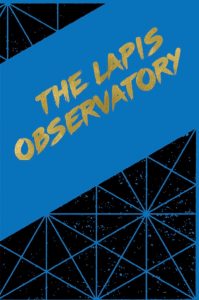
The Lapis Observatory

by Bryce Lynch
lapisob

lapisob
By Jacob Hurst, Gabriel Hernandez, Evan Peterson, Donnie Garcia
Self Published
System Neutral

This is a six level fifty-ish room tower. It used to be an elven observatory and then was turned into an elven hotel/pleasuredome for the jaded. (Soulless/Eid elves, not the generic elves of modern RPG.) It conjures a vision of opulence and decadence that Carcosa wanted and was hinted at in Slumbering Ursine. It does this through some pretty stark design choices. It’s absolutely a must buy for those folks interested in design and a pretty good choice for those willing to put in a little work. For this is product is some weird marriage of a location and a toolkit for it.

The tower has five upper levels and one basement level, with access up a stark basalt cliff. The tower used to be an elven observatory was then turned in an elven pleasuredome/hotel. Thus we can check off rules one and two of good adventure locale design. First, the dungeon and/or entrance is notable. There’s a passage of some sort that marks your journey in to SOME.PLACE.ELSE. This is commonly referred to as the entrance to the Mythic Underworld, and while that’s a bit pretentious for my tastes, it is the case that some of the best dungeons do this. It signals that the rules are all wrong and every perversion is justified. You’re crossing thr threshold from the normal world to some place where the normal rules don’t apply. Sometimes it’s a journey across a lake, a well, a long staircase down, or even just a tower in the distance that lightning illuminates as a body falls from it. In this case it’s the tower sitting high up on black basalt spire, and the climb just to get there.

Secondly it leverages the transient nature of dungeons. It was something and now it’s something else. How to Host a Dungeon is built upon this as are some of the best adventure locales. This is a mixing of themes and types that allows for a more varied environment. In a megadungeon is might be strongly themes levels. In this tower it’s the leftover remnants of an elven observatory and then the pleasuredome hotel is became … and then the ruination that further occurred after Something bad happened inside.

It is, at this point, that we need to diverge a bit and address the adventures core conceits: this thing is trying out two ideas in a big way. First, the room descriptions are just bolded nouns with a few adjectives. Second, it’s awaiting population but the DM. Third, it is system neutral. I know, I said two, but the third is interesting also. It does all three of these in a way that I’ve seen discussed online but never seen in a print product. Each, individually, is interesting and in combination you get something … DIfferent. (hence the must buy recommendation for people interested in design.)

Here’s an example of the noun/adjective format:
“1. The Sliding Doors
20′ x 20′, two engraved panels[white stone, highly detailed, le panel broken, passable, crawling, engraved with: stars, constellations, sipopa flower fractals], rubble[door chunks, statue fragments: arms and heads], orange crystal [thick sheet, covers rubble and bottom third of door]

The orange crystal is brittle and shatters loudly if broken”

My copy/paste doesn’t really do the formatting justice. What you have is an excellent room name that is descriptive and cements something in to the DM’s head: sliding doors. Then a short burst of bolded text that your eyes pick up, noting the notable notables in the area: the doors have engraved panels, there’s rubble, and orange crystal. Then your eyes move to the move details adjectives: the rubble is statue fragments. There’s a star motif, the crystal is on the bottom of the doors. Finally, there’s one line of DM notes, explaining a mechanic: you can break the crystal loudly and easily. Longtime readers will remember I’m a big fan of evocative descriptions and leveraging the DM’s imagination to fill in the details. I think this does that. Your mind naturally fills in the details and a pictures is built up in your head, which you can then communicate to the players. I’m not necessarily advocating this style of traditional prose, but it’s interesting and i think it does the job it needs to do … which is rare. We get room after room of this style. Some have more things, some have less. They all tend toward set-piece environments with strong exploration elements. Things to do. Stuff to poke. Note that they are not set pieces, but more the environments that set pieces tend to have. A more fully worked out location with lots of things to screw with that one COULD use in a fight. IE: the big boiling cauldron in the middle of the lair that is begging to be kicked over., or have someone stuffed in to. An interactive environment.

Conceit the second is that the DM gets to populate the dungeon. There’s a 3d6 tables of creatures and a 3d6 table of what they doing and a number f blank lines on the map to write in what you roll up. “A lizardman shaman” and “making a delivery” might be two things you roll for room 2, the entryway. You get this build up of the dungeon that. Again, I would suggest your imagination tries to make sense of and add context to. This is then supplemented by a 3d6 table of “the overall vibe of the dungeon” that roll once on. For example, if you rolled entry 8 then d4+1 extraplanar party goers have arrived thinking the hotel is still open. How now does your brain do with the shamen? He’s clearly delivering something for/to the partiers. Maybe he’s confused, or jaded or a submissive servant. Who knows, but you’ve now got something to work with.

The Seclusium of Orphone was too generic with too much trivia in it. The tables here help drive the action in the rooms. But you have to put the work in. You will need to prep. You’ll need to decide what the population frequency of the rooms are, and roll to populate, and maybe jot down a note or two. But, critically, the adventure provides you the tools to do it. This is the kind of prep I can get into and am happy to do. It’s supportive of the DM and creativity, rather than punitive or the result of poor design. This extends to the magical treasure (which is wonderfully unique & interesting, which in BryceLands earns you a “Meets Expectations” award.) which the DM is encouraged to sprinkle throughout the rooms. And then to the mundane treasure, which is abstracted.The designer correctly notes that how much and what depends on level and the amount of gold in this place could unhinge an economy. While all true, it’s left entirely up to the DM to decide how much and where and what. This earns some grumbles from me, but I also can’t dispute the statement … the thing is system & level agnostic and you need to target the goodies at the level and system. The end result of all of this is something like that unique element to Ravenloft where you decided where the goodies were ahead of time and then rolled with whatever story ended up coming out through actual play.

This ALL hits the buttons I think are the right ones in designs for exploration: A location map, modified by events. Rolls on tables to determine creatures and room elements. An emergent environment/story for the dungeon that comes from these rolls. And then the characters encounter this emergent environment and a story develops on how they engage with the site.

Focus. This adventure knows what it’s trying to do and focuses on it the way few others do.

I’m quite enamored the the monsters also … all new. They have things they want. They have things they do NOT want. They have little seeds and interesting bits scattered throughout that support ACTUAL PLAY. Orange blob people will be obsessed with the body of a dead elf, as they try to imitate it horrified by dwarves because they are so ugly. The descriptions are full of these things which recognize that they are there to be interacted with by the party, and the descriptions support that.

This is a magnificent example of focused design. It’s also a magnificent example of system neutral design, eschewing ALL stats. If I had one suggestion it would be for a reference table for the blob people. There’s direction that they get random personalities (from an included table) and they all have names, so a short worksheet, pre-filled or blank, would have been nice to see. If I had a second suggestion it would be for a little more interactivity in the rooms, beyond the encounter tables. The encounter in the room creates interactivity, in a set-piece kind of way, but the entire site could use a little more in the way of things in rooms to play with and explore. It doesn’t need to be stuffed to the brim, but upping the quantity a bit would really put this one over the top.

Evidently there’s some kickstarter campaign coming soon and this is an example of the style; it’s one of the fifteen dungeons to be detailed in the location? I’ve seen a lot of shit released in support of kickstarters, examples of what you will get. They generally are lame BEYOND BELIEF. Not this. This is one of the very few examples of something doing what it’s intended to do: get people excited about what’s coming. No doubt I’ll forget to follow it and will miss the kickstarter, but I am genuinely excited to see more, and that’s quite rare.

It’s fluff! It’s an adventure! It’s wonderful.

$5 PDF (like on Etsy) or $15 print at shop.swordfishislands.com

09 Jun 22:46

Paul Ryan is now Literally Hiding from Reporters

by Matt Baume
Confanity

8^D

by Matt Baume

Remember when I was gonna be Mitt Romneys Vice President? Back then, we knew how to veil our racism.
"Remember when I was gonna be Mitt Romney's Vice President? Back then, we knew how to veil our racism." Christopher Halloran / Shutterstock.com

Where's Paul Ryan these days? Well, he's always in the last place you look, which could be anywhere because I certainly haven't been looking for him. One place Paul Ryan is not: at a podium answering questions, because he canceled his weekly press conference to avoid talking to reporters about why he endorsed a man responsible for a "textbook definition of a racist comment."

Paul says that he cancelled his time with the press because Indian Prime Minister Narendra Modi is visiting. But what a weird state of affairs — politicians are incapable of talking to the media for a week when a foreign head of state makes a visit? Sure, okay. (To be fair, Modi actually sounds like a pretty fun guy. addressing Congress, he said of Indian Americans, "They are among your best CEOs, academics, astronauts, scientists, economists, doctors — even spelling bee champions." Lol.)

Anyway, Nancy Pelosi wasted no time in getting in a good zing: "Speaker Paul Ryan will not be available to answer your questions today about his surrender to Donald Trump," her office wrote. "Speaker Ryan has cancelled his regular Wednesday press conference so you don’t ask him about Donald Trump’s racist commentary against a federal judge, and why, ahead of their national security agenda rollout tomorrow, the House GOP wants to hand the nuclear codes to a person who engages in textbook racism."

Haha, good one. Who do you think is a funnier politician, Nancy Pelosi or Narendra Modi? (It's a trick question, neither one of them is funny because like all actors someone else writes their material.)

Earlier this week, Paul did his best to get out from under his Trump endorsement by creating a momentary diversion in the form of an anti-poverty plan. Alas, that's far too boring to compete with any news involving Trump. And also, it's possibly one of the worst anti-poverty plans since "let them eat cake."

For example, tucked away in Paul's proposal is a repeal of a law that requires financial advisors to offer advice in the best interests of their client, rather than in their own best interests. "It looks more like an agenda for creating poverty than reducing it," wrote America's cool best friend, Elizabeth Warren.

How could it possibly combat poverty to give poor people bad financial advice? Paul must have a good answer to that question, but it probably involves shouting "look over there" and throwing a smoke bomb before falling through a trap door concealed in the stage.

He also just released a national security plan, one phase of which is simply entitled "Defend Freedom." It doesn't get much more detailed than that. (Defend the freedom of financial advisors to rip off their clients?)

In addition to releasing plans about poverty and security, the GOP is preparing to release plans for the economy, tax reform, health care, and "The Constitution." Uhhhh what? What's their plan for The Constitution? "Coming this month," is all that a GOP website says. Can't wait.

What we're probably seeing with this barrage of plans is a race to get out ahead of Donald Trump, and to establish a GOP agenda before he can trample through the party and tell them what they stand for. Maybe that'll work — but it's hard to see how the party can maintain any control over its nominee if the Speaker of the House's strategy is to use any excuse he can to hide from reporters.

[ Comment on this story ]

[ Subscribe to the comments on this story ]

21 Jun 16:12

Game Inspiration: Brothers-at-Arms & Medieval war contracts

by Peter V. Dell'Orto
Confanity

Topical to Josh's DMing interests, perhaps!

I'm slowly reading a book on Henry V of England.

In the usual explanation of how Medieval warfare is a wholly different thing than modern warfare is a nice collection of details on the office of herald, the way loot is divided*, the importance of ransoms, etc. there was a bit about what are best called early adventuring compacts:

"Another more sophisticated method of distributing the dangers and rewards of war were the contracts between soldiers which made them "brothers-at-arms." Such agreements were genuine legal bonds, sometimes for life, sometimes for a specific period, which were usually arrived at by a solemn oath or by sealed letters. Their terms normally provided that the brothers-at-arms should share equally in all gains of war, and should contribute equally to ransoms if one of them became a captive. If both were taken prisoner, one served as a hostage and the other went to raise the ransom for both. All classes of soldiers might become brothers-at-arms -[. . . ]"
- Margaret Wade Labarge, Henry V, p. 67

It goes on to give the example of an English duke and a French duke who were brothers-at-arms despite serving different kings and having different allegiances. Still another specified two captains would pool their loot and send it to London - whoever got home first would invest it, and if only one got home he would get all of it except 1/6 set aside for the widow of the other.

So, early adventuring contracts. Maybe pooling all the loot, dividing it up, and providing for healing and resurrection of the slain (basically, paying a ransom to death!**) is not a strange modern let's-all-get-along thing but rather an extension of how loot-hunting men-at-arms dealt with similar issues.


* For example, as of the time of Henry V and soldiers serving for pay and loot not out on a temporary callout, the finder gets 1/3, his captain 1/3, and the king 1/3. The captain also pays 1/3 of his take (so, 1/3 of that 1/3) to the king.

** Which is an outstanding gaming concept, right there. It would explain and/or justify level based costing for Raise Dead in D&D games.
25 Mar 16:37

The Railroading Manifesto – Part 5: More Chokers

by Justin Alexander

Go to Part 1

LIMITING SOLUTIONS

The Sphinx

The mechanical gate is a specific example of a broader category of chokers in which the potential solutions to a problem are limited. This limitation self-evidently creates an experiential chokepoint.

Limiting solutions merely for the sake of limiting solutions is almost always a railroad-by-design. What can avoid the railroad, however, is only limiting the potential solutions to a problem within a specific paradigm.

For example, the PCs encounter the Sphinx and it demands an answer to its riddle. Within the paradigm of “solving the riddle” there is only one solution (because the riddle only has one answer). Outside of that paradigm, however, the PCs could also kill the Sphinx, teleport past the Sphinx, or hire someone to deal with the Sphinx for them. (If you opt for the last of these, however, I recommend not marrying the handsome young lad who solves the problem for you. It’ll end in tears of blood.)

The example of the Sphinx, however, also reveals why the technique of limiting solutions can be effective: It creates a sense of accomplishment when the answer to a problem is discovered. (Or when you manage to MacGyver your way around it.) An adventure that consists only of Sphinxes who say, “Say any word and you can go ahead.” is a lot less interesting than puzzling out the answer to an actual riddle. (Or, alternatively, slipping on your ring of invisibility and tricking Gollum into leading you to the surface.)

INFORMATION ARROWS

In addition to limiting solutions, you can also limit information. The classic example of this, once again, is the clue in a mystery scenario. (Here the information provided by the clue is also the limited solution to the problem of where you need to go to find the next clue, which also demonstrates how much overlap there is between these different categories of chokers.)

But the limiting (or structuring) of information can also encourage PCs to interact with a situation in a specific way. Or create entirely new ways for them to interact with it.

A simple example: The PCs discover information that they can use to blackmail the programming director of Arcadia Television. Without that information, blackmail is impossible. With that information, blackmail becomes possible. (Limiting information can be used to prevent certain choices from being made by withholding knowledge that they’re possible.)

Another example: Someone is being framed for a crime. If the PCs are aware of the character’s innocence when they begin their investigation, that’s a very different scenario than if the PCs are ignorant of it.

Let’s take a more complicated example. Imagine a simple hexcrawl in which the small village of Laciton is surrounded by six hexes. These hexes are keyed with:

  • The ruins of the Keep of the Dracolich
  • A bleakened fairy ring
  • A mammoth cave system used by goblin marauders
  • A lake that’s home to a prophetic sylph
  • A tower haunted by “ghosts” who are actually dimensionally-displaced wizards
  • The dreamgroves of the ash-scarred ents

In one version of this hexcrawl, the PCs can go to the center of Laciton and see a billboard that lists all six of the interesting locations surrounding the village. There is no choker and the information is freely available: They can simply choose which location they want to investigate first.

In another version of this hexcrawl, the PCs can ask around town. The villagers know that there’s a ruined keep west of town. They know that goblin marauders are attacking the outlying farms, but they don’t know where they’re coming from. They also warn people away from the “haunted tower”. In this campaign, although the default hexcrawl structures still make it possible for the PCs to visit any of the six locations they want, each limited piece of information creates an arrow which points them preferentially towards the things they know about.

SCARCITY OF RESOURCES

In the blackmail example above, the information was a necessary tool and the withholding of that information necessarily removed the ability to make certain choices. Information, however, is not the only resource which can be required in order to make a particular choice possible.

For example, the PCs might want to blow up the demon with a bazooka. But if they don’t have a bazooka, they obviously can’t do that. Similarly, 1st level D&D characters generally don’t have access to a teleport spell, so they won’t be able to teleport into Skull Mountain.

This choker can also appear during play if the PCs are deprived of a resource: Their swords can be sundered. Their hotel rooms plundered. Their evidence confiscated. Their informants killed.

What I generally recommend when it comes to a scarcity of resources, however, is that it is almost always the right course of action to make it possible for the PCs to gain the resources they want. That doesn’t have to be easy, of course: When Buffy the Vampire Slayer and the Scooby Gang wanted a bazooka to blow up a demon, they had to leverage their existing resources (Xander’s vestigial memories of being an enchanted soldier) in order to stage a difficult raid on a military armory.

If the resource they want simply doesn’t exist, is there some way that it can be created? For example, there might not be any blackmail available on the local politician because he’s actually a pretty decent guy. That doesn’t mean they can’t set up a honeytrap and create the blackmail material they need.

DEADLINE

When the resource being limited is specifically time, you’ve created a deadline.

The limitation of time has the practical effect of taking certain options off the table. For example, if you know the Priests of Orcus are sacrificing Lady Karna at the stroke of midnight, then the option of performing a tactical retreat and coming back in the morning after you’ve had a chance to recuperate is no longer viable. (Assuming you want to save her, of course.)

However, you can also use deadlines to make choices more meaningful: When the Joker tells Batman that he only has time to save one of the hostages from dying in a gasoline explosion, that creates a crucible for the character which reveals deep truths. (Although sometimes what’s revealed is that you can outsmart the Kobyashi Maru and save everybody. Don’t get so attached to your crucibles that you start negating player choices that would circumvent them.)

UNIQUE REWARD

The opposite of a limited resource is a unique reward which can be only be gained in a specific way.

A pile of gold coins is not a unique reward; there are a lot of gold coins out there. Even the bazooka from the local armory isn’t a unique reward because, again, there are other bazookas out there.

Having to go to the Lady of the Lake in order to claim Excalibur? That’s a choker.

Like the Sphinx and its riddle, clever PCs may be able to find other methods of obtaining the reward. (And an Arthurian campaign where King Arthur murders the Lady of the Lake and steals her sword is definitely going to be a fascinating iteration of the legend.) But, generally speaking, the unique reward is a giant carrot that says, “Come over and do this really cool thing so that you can get this really awesome reward.”

EXTERNAL EVENTS

An external event is one which cannot be anticipated (or prevented) by the PCs because it originates from outside the domain of their experience.

For example, the Red Dragon Gang decides to put a hit out on the PCs. You make a note in your prep documents that on November 18th dragon ninjas are going to track the PCs down and attack them.

If the PCs were previously interacting with the Red Dragon Gang (or, possibly, just aware of them) this is not an external event: The attack could theoretically be prevented if the PCs wipe the gang out before the 18th or negotiate a truce with them or fake their own deaths or just coincidentally kill the dragon ninjas who were supposed to be attacking them on the 18th.

If the PCs were NOT previously interacting with the gang, however, it’s an external event. And it’s a choker because there’s no functional way for the PCs to avoid the attack. (Hypothetically, of course, they might have just left town or something. Which is why this is a choker and not a railroad.)

When taken to an extreme – when the PCs are subjected to an endless sequence of external events over which they can have no influence or control – these chokers can be hideously frustrating. In practice, fortunately, that’s very unlikely: The reaction to being ambushed by dragon ninjas is generally going to be figuring out who sent the dragon ninjas, which immediately gets the PCs involved in events over which they do have control.

And external events can be incredibly useful to the GM because they automatically provide the certainty which simplifies smart prep: Since the PCs basically can’t avoid them, the GM can assume they happen without needing to spend a lot of time on contingency plans. They are bangs that can be carefully incubated and then unleashed at the perfect moment.

External events, properly implemented, can also be very effective in providing a larger structure for the campaign. My Ptolus: In the Shadow of the Spire campaign, for example, started with the PCs waking up after losing two years of their memories. In preparing the campaign, I knew that Act II would be triggered when someone they had hired to find a magical artifact during their period of amnesia returned to tell them that the artifact had been located.

With that external event in my pocket, I could confidently build the interlocking scenarios of Act II without needing to worry about whether or not a specific outcome would emerge from Act I.

It should be noted that this didn’t mean that the events of Act I were irrelevant. Quite the contrary: Ninety sessions into Act II, the decisions they made in Act I continue to resonate daily in the campaign. Intriguingly, this is largely because the decisions they made created a rich tapestry of chokers: They chose alliances and they rejected others. They destroyed some enemies and allowed others to escape. They learned some secrets and gave others away before they knew what they had. All of those decisions limited their resources and the information that they held, which has had a deep impact on how they’ve been able to approach Act II and the problems its presents.

FINAL THOUGHTS

The Czege Principle maintains that, “When one person is the author of both the character’s adversity and its resolution, play isn’t fun.”

This is a principle which applies equally to roleplaying games, storytelling games, and improvisational theater. In the case of roleplaying games, it generally means two things:

First, railroads are boring. The GM creates the adversity and they also create the resolution of the adversity. (Then they force the players into acting out the resolution they’ve already created.)

Second, chokers are necessary. Chokers are either the means by which the GM creates adversity or the result of that adversity in play. A campaign without chokers is a featureless expanse in which the PCs face no adversity of which the players are not the ultimate architect. Here, too, adversity and solution flow from a single spring and the result is lusterless.

Avoiding the railroad does not mean that the GM must abandon their creative agenda. Quite the opposite, in fact. The GM must create richly and they must create deeply, so that when their creations meet the creativity of their players there will be greatness born in the clash of titanic ideas.

Addendum: Random Railroads

11 Jan 03:59

The Web’s Heart Of Darkness

by Andrew Sullivan
Confanity

True darkness, this time, not just an unfamiliar territory.

Last summer, Andrew O’Hagan undertook the peculiar experiment of borrowing “a dead young man’s name and see[ing] how far I could go in animating a fake life for him.” In the resulting meditation on identity and “the ghostliness of the internet and the way we live with it,” O’Hagan describes how he plunged his fictionalized “Ronald Pinn” into the dark web, “where one can be anybody one wants to be”:

There were areas I wouldn’t allow him to go into – porn, for instance – but the Ronnie who existed last summer was alive both to drugs and to the idea of weaponry.

It’s one of the contradictions of the dark web, that its love of throwing off constraints doesn’t always sit well with its live-and-let-live philosophy. There are people in those illicit marketplaces who sell ‘suicide tablets’ and bomb-making kits. ‘Crowd-sourced hitmen’ were on offer beside assault weapons, bullets and grenades. One of the odd things I discovered during my time with cyber-purists – and Ronnie found it too – was how right-wing they are at the heart of their revolutionary programmes. The internet is libertarian in spirit, as well as cultish, paranoid, rabble-rousing and demagogic, given to emptying other people’s trash cans while hiding their own, devoted not to persuasion but to trolling, obsessed with making a religion of democracy while broadly mistrusting people. Far down in the dark web, there exists an anti-authoritarian madness, a love of disorder as long as one’s own possessions aren’t threatened. The peaceniks come holding grenades. The Manson Family would feel at home.

When Ronnie Pinn went to see this world he found it welcoming and vile. He saw Uzis and assault rifles, bomb-making kits, grenades, machetes and pistols. As a man with cyber-currency, he was welcome in every room and was never checked. He was anybody as well as nobody. He could have been a teenager, a warrior, a terrorist or a psychopath. So long as he had currency he was okay.


10 Nov 03:42

Brevity: Still The Soul Of Wit

by Andrew Sullivan
Confanity

Yes. Wit or no wit, brevity is good. Clarity is also good. However, different contexts and cultures do have different needs, so being able to modulate sentence length, diction, and other factors in order to produce a variety of effects is far and away more important to mastering the written word than any given style, even such a useful and popular style as Hemingway-inspired straightforward pith.

Ben Myers praises the short, apt sentence, noting that he’s “been trying to use a greater variety of sentence types in my writing, and I have particularly been labouring to achieve good short sentences”:

I have also begun to notice that many college students could improve their writing dramatically merely by setting their sights on shorter sentences. Many students have somehow got the assumption that scholarly writing requires a certain tone of voice. I don’t know where this assumption comes from. I am inclined to blame it on the rhetorical posturing of well-meaning but fundamentally inept high school English teachers – the kind of teacher who promotes “critique” and “decoding” of “texts” instead of explanation and clarity of ideas. I do not blame these teachers. I hope they will still be allowed into heaven. I know they are only doing what they’re told. At any rate, whatever the source of this malaise, the symptoms are evident in the tendency of students to obfuscate simple ideas through a complexification of syntax, a multiplication of imprecise verbs instead of the selection of the one strong verb, and a deliberate substitution of polysyllabic words whose meanings are often vague and slippery for smaller ones whose meanings are plain and solid. It is all very anti-working-class. The student’s shame of his uneducated parents and their drab suburban home is transferred to a (deeper and more scandalous) shame of plain speech. Nothing good will come of this.

So I have been encouraging students to aim for shorter sentences that say exactly what you want to say, not for longer sentences that sound the way you would like to sound. And – physician, heal thyself – I’ve been trying to do it too.


14 Sep 21:57

War Stories

by Andrew Sullivan
Confanity

I want this to be a lesson of some kind. Books are good.

During World War II, book publishers began to mass-produce cheap copies of their most valuable hardcovers, selling them to the army for pennies. Yoni Appelbaum looks back at which titles made a particular impression on GIs:

No book generated more passion among its readers than A Tree Grows in Brooklyn, a gritty coming-of-age novel. On a Pacific island, a lucky soldier given a new copy “howled with joy,” but knew he’d have to sleep on top of it if he hoped to hang onto it long enough to finish it. A 20-year-old Marine “went through hell” in two years of combat, but wrote from his stateside hospital bed that the book had made him feel human again. It might, he conceded, be “unusual for a supposedly battle-hardened marine to do such an effeminate thing as weep over a piece of fiction,” but he was now making his way through the book for the third time. In France, the colonel commanding an anti-aircraft battalion being shelled by German artillery found one of his soldiers reading the book between explosions. “He started to read us a portion … and we laughed like hell between bursts. It sure was funny.” The tough West Pointer later found a copy of his own, and was tempted to pull it out and read it while wounded and pinned down by enemy fire. “It was that interesting,” he recalled, in a letter to the publisher.

Appelbaum goes on to describe how the publishers’ wartime gamble helped the industry flourish after troops came home:

Suddenly, anyone who wanted to could fill a shelf with books. Paperbacks lost their stigma. The Armed Services Editions succeeded in “conditioning the younger generation to be perfectly at home with books in paper covers.” The new technology, initially feared and scorned, proved to be the industry’s salvation. Many readers first hooked with paperbacks later purchased hardcovers, fueling sales and providing the old-line publishing industry with a vastly larger market for its wares.

15 Aug 13:17

The World Is Losing Its Eyesight

by Andrew Sullivan
Confanity

Myopia to reach 1/3 of the world's population by 2020? There's a little irony for you.

More and more individuals need glasses:

Over the past 15 years, the world has witnessed an explosion of cases of myopia, or nearsightedness. A quarter of the world’s population, or 1.6 billion people, now suffer from some form of myopia, according to the Myopia Institute. If unchecked, those numbers are estimated to reach one-third of the world’s population by 2020. While myopia has always affected a fraction of the population, at least in countries that have kept records, the condition has recently reached unprecented rates among children and young adults.

National Institutes of Health study published in 2009 showed that myopia prevalence in the United States increased by 66 percent between the early 1970’s and the early 2000’s.

Too much time indoors could be part of the problem:

Kathryn Rose, a researcher of visual disorders at the University of Sydney’s college of health sciences, recently concluded  that spending too much time indoors also has a huge impact on eyesight deterioration. Rose said in a CNN interview that she was not sure how time spent using digital media relates to myopia progress, but that outdoor light has been shown to have a positive effect on vision. Studies from the U.S., Singapore, and China confirm a link between the time spent outdoors and the prevention of myopia, Rose said.

08 Aug 13:17

Map Of The Day

by Andrew Sullivan
Confanity

GOP: "More proof that Obama hates the US! He hasn't called its leader even once!"

opSPO1O

Every phone call Obama has made to another world leader so far this year. Max Fisher captions:

The most significant detail here is Europe: Obama’s phone calls in 2014 have been overwhelmingly with European leaders. This just goes to show how much the Ukraine crisis has come to dominate US foreign policy this year. Tellingly, the foreign leader whom Obama has called most frequently is, by far, German Chancellor Angela Merkel. That may surprise you — US-German relations are probably not the first topic that comes to mind when you think about US foreign policy — but it makes sense given the Ukraine crisis. The German leader is the most influential figure within the European Union, and the EU is the body with the most power to help Ukraine and to punish Russia for its role in the crisis.

10 Jul 02:44

Is Hobby Lobby The End Of ENDA?

by Andrew Sullivan

Screen Shot 2014-07-09 at 9.48.59 AM

Several major gay rights advocacy groups, including the ACLU, the National Gay & Lesbian Task Force, Lambda Legal, and GLAAD (but not HRC), have dropped their support for the current version of ENDA in the wake of the Hobby Lobby ruling, which they believe makes the exemption seen above much more powerful:

The groups said the federal Employment Non-Discrimination Act (ENDA) contains religious exemptions that are far too broad. Beyond typical exemptions for explicitly religious organizations like churches and ministries, ENDA includes provisions that would allow religious employers, such as a religiously affiliated hospital, to refuse to hire LGBT people. “ENDA’s discriminatory provision, unprecedented in federal laws prohibiting employment discrimination, could provide religiously affiliated organizations — including hospitals, nursing homes, and universities — a blank check to engage in workplace discrimination against LGBT people,” the groups argued. “The provision essentially says that anti-LGBT discrimination is different — more acceptable and legitimate — than discrimination against individuals based on their race or sex.”

But it is different in so far as a majority of major religions still sincerely hold that gay relationships are inherently sinful, indeed “objectively disordered” – and many base their views on literal readings of inerrant Scripture or centuries-old natural law. That includes the current, widely admired Pope. And even the gay left groups accept the legitimacy of some kind of religious exemption for ENDA. So the question is: how broad a religious exemption is needed in general and in the wake of Hobby Lobby?

Supreme Court Rules In Favor Of Hobby Lobby In ACA Contraception CaseOn the first question, I ask myself what it would feel like for a religious organization to employ, say, a married lesbian. Does it truly affect a hospital’s ability to care for patients or to uphold certain beliefs if the nurse or janitor or doctor is gay? Of course not. A college or high school with respect to an openly gay teacher? A closer call – but only if they violate professional duties by, say, advocating things in the classroom that a religious group would disagree with, and not by just “being gay while working”. A corporation making automobiles? Please.

So I would probably narrow the current ENDA religious exemption a little – remove the word “corporation”? – but not by that much. And one reason I differ from my fellow gay and straight allies on this is that I fear they are understandably reacting to the emotional toll of the rhetoric being used by some on the culture war right and thereby over-reacting to a relatively narrow holding in Hobby Lobby. They are, particularly, missing the key points of Kennedy’s concurrence and forgetting the business push-back within the Republican coalition we saw in Kansas against any broad anti-gay employment discrimination statutes. To put it simply: I don’t believe that there’s a threat of the kind posited by many who see the world in utterly Manichean culture war terms. I fear that both sides are whipping themselves up into a lather that is largely unjustified.

But on the religious exemption in federal contracting, Supreme Court Issues Rulings, Including Hobby Lobby ACA Contraception Mandate CaseI favor none whatsoever. I gave my full reasons here. But my view is that if the government mandates something, you have a right to opt out in some circumstances on the grounds of religious freedom. But if you are actively seeking federal money, you have no right to attach discriminatory conditions to it. The right to religious freedom does not extend to the right to government subsidy and the right to discriminate. Pick one, Rick.

Then there’s the bizarre situation in which gay groups are effectively saying that they’d rather have no employment non-discrimination bill at all, than one with a religious exemption. This would be like saying you’d rather there were no ACA because of the Hobby Lobby decision – i.e. that the first ever government mandate for contraceptive insurance coverage should be voided entirely because a few companies can get an exemption from it.

It’s an easy position to take right now, of course, as Geidner notes, because this bill is going nowhere anyway in this Congress and probably not the next either. And it may be best seen as a form of jockeying in order to put countervailing pressure on the administration given the major religious right lobbying recently. But if it really came down to it – and gay groups actually opposed ending employment discrimination for gays because of the religious exemption, what they’re really saying is that they’d rather engage in culture war against the religious right than vastly improve the lot of millions of gay people. I think that’s short-sighted and a sad reflection on how polarized we have become.

Of course I appear to be an outlier here (as usual). I believe the greater narrative is one of huge advances in gay rights, and that some accommodation to the fast-losing side is actually more likely to sustain our victory than ratcheting the culture war dynamic still further. But understandable emotions – fueled by right-wing trolling – see the world as always darkening for gay people. So here’s how Joe Jervis sees it:

Years and years of hard-fought battles resulted in the Senate passage of ENDA in November 2013 by a vote of 64-32. I exulted in that moment, truly. But no hope of the bill progressing in the GOP-dominated House coupled with the Hobby Lobby ruling means that the entire LGBT rights movement must now focus on having LGBT Americans included under the broad protections of the Civil Rights Act of 1964.

Some are loudly arguing that LGBT opposition to ENDA is yet another case of the perfect being the enemy of the good, a cry that was also made when many of us objected after transgender protections were stripped from the 2007 version of ENDA. But as some of you have pointed out, exempting the very people most likely to discriminate from an anti-discrimination bill just does not make sense in the post-Hobby Lobby world.

Why not – if the actual result is their cultural and social isolation and punishment in the marketplace? Ask yourself: has the firing of gay teachers made the Catholic church seem more Christian and likely to appeal to more people? Please. With every decision like that, they lose an entire generation. What too many miss is how the marketplace has a role here. The reason so many major corporations have non-discrimination policies when it comes to gay people is not because they hold a view on the question; it’s that they don’t want to lose good employees or good customers. And the power of gay money in changing the world is far too easily dismissed by people whose job it is to focus on government. I think the market and the culture are fast accelerating gay integration, and we can afford a little moderation in giving space to our beleaguered opponents.

Yes, this may mean tolerating some nasty anti-gay discrimination from a few companies or religious institutions for a while, but the anti-ENDA campaigners have already shown that’s something they can live with – by preventing passage of ENDA indefinitely as it now stands. I think the compromise I favor does far less damage, while allowing the country to move ever forward on the integration of gay people in society.

Morrissey adds some perspective:

In the case of employment discrimination … courts have routinely ruled that government has a compelling interest in ensuring equal treatment regardless of religious beliefs, even those sincerely held. In fact, they have ruled that way even on commerce discrimination, most recently in the case of the bakers and photographers who didn’t want to participate in same-sex weddings. Statutory enforcement such as that in ENDA has been commonly considered the least-burdensome method of addressing that compelling interest. Hobby Lobby didn’t change a single stroke of that precedent. Even if the exemption clause in ENDA is broader than that in RFRA, the overall thrust of the statute and intent of Congress in passing it would still move the LGBT lobby’s goal forward on the ground first, and probably in courts, too — which would still end up having to do the same kind of balancing test that RFRA requires, using existing precedent.

Exactly. But the culture war has too much emotional energy right now for such cooler heads to prevail.

(Photos from Getty)

22 Jun 17:37

The Creation Museum Of Movies

by Andrew Sullivan
Confanity

Atheistprofessor Boogieman: the Movie!

It’s easy to dismiss God’s Not Dead, the cringe-inducing film about an evangelical undergraduate who takes on his atheist professor, but Robert Geroux sees it as an emblem of what’s wrong with too much of conservatism, and conservative Christianity, in America these days:

I have a theory about contemporary conservatism generally, and the religious right more specifically. They’ve studied the post-68 playbook of the center-left. They’ve appropriated the language of civil rights, the student movement and identity politics and turned it in a new direction: targeting “religious discrimination,” cultural indifference and even aggression (the “War on Christmas”), and so on. Both then and now, many of these battles took place on college campuses. Kevin Sorbo’s arrogant professor is surely a distortion, but the persona is meant to resonate with conservative viewers, especially young people who have been told repeatedly that the secular classroom is the place where faith commitments are deconstructed and stripped-away, often painfully. In God’s Not Dead this myth becomes hyperbole: no philosophy professor requires – on the first day no less! – the disavowal of God. What the distortion discloses however is the cynical belief that the role of authority in the pursuit of knowledge and even wisdom is nothing more than a sham, a mere power trip, intellectual combat for its own sake. According to these terms, the young man in question doesn’t really belong in a Philosophy class, since he already has all the wisdom he needs.

We have to strip away the image here to get at the reality.

What parades as a liberating experience of “speaking truth to power” is in fact profoundly disingenuous. The position and situation of the young man in the film is merely one of nothing more than a mobilized series of stale tropes, tableaux that support a worldview in which evangelical Christians are an oppressed minority. That we know this isn’t true is beside the point. Films like God’s Not Dead are the ideological expression of this stance, of a piece with the Creation Museum and Fox News histrionics around the holiday season. What we see in films like this is the elaboration of a closed circuit, a symbolic gated community in which to live. No thanks. And it has to be said as well: the ideological edifice just isn’t a very good one. So far, every overtly evangelical work of pop culture I’ve experienced is a transparent piece of unconscious self-parody and abysmal kitsch.

09 Jun 15:29

The Known Unknowns About Bowe Bergdahl, Ctd

by Jonah Shepp
Confanity

"Carpenter expects the right to stick to its story without regard for the evidence." ...This is news? I think we're reaching the point where it goes without saying.

Was he actually a bit of a gung-ho warrior? As I noted last night, further reporting keeps complicating the Palinite meme:

To many of those soldiers, Sergeant Bergdahl was viewed as standoffish or eccentric, smoking a pipe instead of spitting tobacco, as so many soldiers do, and reading voraciously when others napped or watched videos. But he was not isolated from his platoon Screen Shot 2014-06-09 at 10.18.38 AMmates, some said. And while he was, like other soldiers in the platoon, often disappointed or confused by their mission in Paktika, some of his peers also said that Sergeant Bergdahl seemed enthusiastic about fighting, particularly after the platoon was ambushed several weeks before his disappearance.

“He’d complain about not being able to go on the offensive, and being attacked and not being able to return fire,” said Gerald Sutton, who knew Sergeant Bergdahl from spending time together on their tiny outpost, Observation Post Mest Malak, near the village of Yahya Khel, about 50 miles west of the Pakistani border. Mr. Sutton said he had struggled to square the popular portrayal of Sergeant Bergdahl as brooding and disenchanted with the soldier he knew. “He wanted to take the fight to the enemy and do the mission of the infantry,” he said, adding, “He was a good soldier, and whenever he was told to do something, he would do it.”

But Carpenter expects the right to stick to its story without regard for the evidence:

The Times adds that “Just how and why Sergeant Bergdahl disappeared remains a mystery to his fellow soldiers.” But it’s no mystery to the right. They have their story and they’ll stick to it–no matter how thumpingly it unravels–because not only does it mesh with their history of Obamian horrors, it must mesh.

Meanwhile, Tomasky knocks down the meaningless notion that “we don’t negotiate with terrorists”:

Every president since has said we don’t negotiate with terrorists. And every president has. And I would say prudently and reasonably so. When terrorists can give you information, for a certain price or because you have a shared enemy, take it. George W. Bush paid a ransom of $300,000  to a radical Islamist group in the Philippines that was holding two American missionaries, a married couple, captive. To get them to safety? I say, fine. Alas, however, the man was killed, even after we paid the money. So an American president ended up financing terrorist operations and overseeing a failed military mission. Imagine what Lindsey Graham would be saying today if Barack Obama had done that over the weekend.

It’s a mindless, right-wing electoral politics that make our politicians say “I won’t negotiate with terrorists.” It’s just like “I won’t let the Willie Hortons out of prison,” or, from an earlier time, “We won’t let the ChiComs take over Korea.”

David Rohde, who was kidnapped by the Taliban around the same time as Bergdahl and subsequently escaped, weighs in on our misguided approach to the issue:

Both sides in the furor over the Bergdahl case offer simplistic answers to the growing problem of abductions. Those who say the release of the five prisoners sets no precedent are downplaying the scope of this propaganda coup for the Taliban. Other militants around the globe will likely emulate them. At the same time, the argument that refusing to pay ransom or release prisoners will end all kidnappings is wishful thinking. Given the delusions of my captors, jihadists will remain convinced for years, if not decades, that secret ransoms are being paid.

The real solution would require a massive and difficult long-term effort to reduce the world’s pockets of ungoverned spaces. The Taliban who held Bergdahl and me felt no pressure to reduce their demands because they had a safe haven in the mountains of Pakistan.

And Dexter Filkins wonders about the extent of Pakistan’s involvement in the Bergdahl case:

So far, Pakistani officials have been silent about any role they played in either Bergdahl’s captivity or his release. But there are many questions that need to be answered. The Haqqani network, the group that was holding Bergdahl, maintains especially close ties to Pakistan’s Inter-Service Intelligence, or I.S.I. (The Taliban official who told me about Bergdahl was a leader of the Haqqani group.) That a Taliban-aligned guerrilla unit would be so closely tied to the government of our ostensible ally—to which we give more than a billion dollars each year—has long raised troubling questions about American policy in the region. …

Given the close connections that the I.S.I. maintains with the network, it seems inconceivable that the organization wasn’t well aware of Bergdahl’s condition, status, and whereabouts. Did the I.S.I. try, over the years, to free him? We don’t know. Could Pakistani intelligence officials have done more to help him? Did they do nothing? Likewise, we don’t know. Were they involved, and perhaps even instrumental in, gaining his final release? We don’t know. But, given the amount of American money that flows into Pakistan, we’re entitled to ask.

Recent Dish on the evolving Bergdahl story here. My take on the right’s hysterical reaction here, here, here, and here.

(Photo: a reaction to the military’s difficulties in interviewing someone immediately after five years of sometimes brutal captivity and stress.)

17 May 14:44

Crowd Control

by Andrew Sullivan
Confanity

While this is encouraging, and the counterpoint they are making is obviously to "mob trampling" and the like, I can't help but think of lynch mobs. They may be characterized by cooperation, but there *is* a high degree of irrationality and a very low degree of altruism.

Michael Bond rejects the idea of the “crazed crowd,” noting research that indicates “people in crowds define themselves according to who they are with at the time; their social identity determines how they behave”:

Years of field research have taught [researchers Clifford] Stott, [Stephen] Reicher and other social psychologists not only that mindless irrationality is rare within crowds, but also that co-operation and altruism are the norm when lives are at stake. …

At the University of Sussex, researchers led by the social psychologist John Drury have coined the term ‘collective resilience’, an attitude of mutual helping and unity in the midst of danger, to describe how crowds under duress often behave. There are many documented examples of this.

In 2008, Drury’s team interviewed survivors of 11 tragedies from the previous 40 years, including the 1989 Hillsborough football stadium disaster when 96 Liverpool supporters died after being trapped in overcrowded pens, and the IRA bombing that killed six outside Harrods in London in 1983. In each case, most of Drury’s interviewees recalled feeling a strong sense of togetherness during the crisis, and an inclination to help strangers. Without such co-operation, the casualty rates could have been far higher, says Drury, who refers to crowds as ‘the fourth emergency service’ – an attitude not often shared by police. In Drury’s view, it is wrong-headed to blame crowd disasters on the behaviour of the crowd. More often the real problem is poor organisation – too many people in one place – or inadequate venue design.

Drury explains that a crisis, even a minor one such as a train breaking down in a tunnel, creates a ‘psychological crowd’ out of what was previously an aggregate of strangers. You suddenly share a common fate and your sphere of interest ramps up from the personal to the group.

Recent Dish on the Hillsborough 25th anniversary here.

30 Apr 06:05

Billion-Story Building

by xkcd
Confanity

I want a book full of these to use as bedtime stories. I should probably set bedtime to 6pm to compensate for all the thinking they'd cause, thought.

Billion-Story Building

My daughter—age 4.5—maintains she wants a billion-story building. It turns out not only is that hard to help her appreciate this size, I am not at all able to explain all of the other difficulties you'd have to overcome.

Keira, via Steve Brodovicz, Media, PA

Keira,

If you make a building too big, the top part is heavy and it squishes the bottom part.

Have you ever tried to make a tower of peanut butter? It's easy to make a little tiny one, like a blobby castle on a cracker. It will be strong enough to stay standing. But if you try to build a really big castle, the whole thing smushes flat like a pancake.

The same thing happens with buildings. The buildings we make are strong, but we couldn't make one that went all the way up to space, or the top part would squish the bottom part.

We can make buildings pretty tall. The tallest buildings are almost 1 kilometer tall, and we could probably make buildings 2 or even 3 kilometers tall if we wanted, and they would still be able to stand up under their own weight. Higher than that might be tricky.

But there would be other problems with a tall building besides weight.

One issue would be wind. The wind up high is very strong, and buildings have to be very strong to stand up against the wind.

Another big problem would be, surprisingly, elevators. Tall buildings need elevators, since no one wants to climb hundreds of flights of stairs. If your building has lots of floors, you need lots of different elevators, since there would be so many people trying to come and go the same time. If you make a building too tall, the whole thing gets taken up by elevators and there's no space for regular rooms.

Maybe you can think of a way to get people to their floors without having too many elevators. Maybe you could make a giant elevator that takes up 10 floors. Or you could make fast elevators that work like roller coasters. Or you could fly people up to their rooms with hot air balloons. Or you could launch them with catapults.

Elevators and wind are big problems, but the biggest problem would be money.

To make a building really tall, someone has to spend a lot of money, and no one wants a really tall building enough to pay for it. A building many miles tall would cost billions of dollars. A billion dollars is a lot of money! If you had a billion dollars, you could rent a giant spaceship, save all the world's endangered lemurs, give a dollar to everyone in the US, and still have some left over. Most people don't think giant towers a few miles tall are important enough to spend a lot of money on.

If you got really rich, so you could pay for a tower to space yourself, and solved all those engineering problems, you'd still have problems making a tower a billion stories tall. A billion stories is just too many.

A big skyscraper might have about 100 floors, which means it's as tall as 100 little houses.

If you stacked 100 skyscrapers on each other to make a mega-skyscraper, it would reach halfway to space:

This skyscraper would still only have 10,000 floors, which is way less than your billion floors! Each of those 100 skyscrapers would have 100 floors, so the whole mega-skyscraper would have 100 times 100 is 10,000 floors.

But you said you wanted a skyscraper with 1,000,000,000 floors. Let's stack 100 mega-skyscrapers to make a mega-mega-skyscraper:

The mega-mega-skyscraper would stick out so far from the Earth that spaceships would crash into it. If the space station were heading toward the tower, they could use its rockets to steer away from it.[1]They'd probably get pretty grumpy after having to dodge your tower repeatedly, so you might want to launch fuel and snacks out the window with a rail gun as they go by. The bad news is that space is full of broken spaceships and satellites and pieces of junk, all flying around at random. If you build a mega-mega-skyscraper, spaceship parts will eventually smash into it.

Anyway, a mega-mega-skyscraper is only 100 times 10,000 = 1,000,000 floors. That's still a lot smaller than the 1,000,000,000 that you want!

Let's make a new skyscraper by stacking up 100 mega-mega-skyscrapers, to make a mega-mega-MEGA-skyscraper:

The mega-mega-MEGA-skyscraper would be so tall that the top would just barely brush against the Moon.

But it would only be 100,000,000 floors! To get to 1,000,000,000 floors, we have to stack 10 mega-mega-MEGA-skyscrapers on top of each other, to make one Keira-skyscraper:

The Keira-skyscraper would be pretty close to impossible to build. You would have to keep it from crashing into the Moon, being pulled apart by the Earth's gravity, or falling over and smashing into the planet like the giant meteor that killed the dinosaurs.

But some engineers have an idea sort of like your tower—it's called a space elevator. It's not quite as tall as yours (the space elevator would only reach partway to the Moon), but it's close!

Some people think we can build a space elevator, but other people think it's a crazy idea. We can't build one yet because there are some problems we don't know how to solve, like how to make the tower strong enough and how to send power up it to run the elevators. If you really want to build a gigantic tower, you can find out more about some of the problems they're working on, and eventually become one of the people coming up with ideas to solve them. Maybe, someday, you could build a giant tower to space.

I'm pretty sure it won't be made of peanut butter, though.

22 Apr 04:41

Check This Out – Czech Translation of Three Clue Rule

by Justin Alexander

My original essay on the Three Clue Rule has been translated into Czech for an awesome-looking fanzine:

Drakkar 43

Direct Link (PDF) / Facebook Page

I’ll be honest: I can’t read a word of it, but I think it’s pretty cool nonetheless.

16 Feb 15:50

Who Says Bigger Is Better?

by Andrew Sullivan
Confanity

A reference for next time a woman complains out loud about her bust size?

Research reveals a link between straight men’s socioeconomic status and the breast size they prefer on their partners:

[T]he present results indicate that men in relatively low socioeconomic sites rate larger breast sizes as more physically attractive than do their counterparts in moderate socioeconomic sites, who in turn rate a larger breast size as more attractive than individuals in a high socioeconomic site. In broad terms, these results are consistent with previous studies showing that there is an inverse relationship between socioeconomic status and breast and body size judgements. These results provide preliminary evidence that breast size may act as an indicator of calorific storage and that men in environments characterised by relative resource insecurity perceive larger breast sizes as more attractive than their counterparts in higher socioeconomic contexts.

Researchers also evaluated how hunger affected judgment:

[H]ungry men rated a significantly larger female breast size as physically attractive than did satiated men. Although the effect size of this difference was small-to-moderate, it nevertheless suggests that there are significant differences in the attractiveness ratings based on breast size between hungry and satiated men. In addition, the results of this study corroborate previous work showing that hungry men rate a significantly heavier female body size as attractive …. Moreover, these results are in line with the findings of Study 1: in both studies, it appears to be the case that men who experience relative resource insecurity show a preference for a larger breast size than do men who experience resource security.

(Hat tip: Hazlitt)

28 Nov 13:27

Complacency in Storytelling

by Ben "Yahtzee" Croshaw

I noticed it when I was playing Batman: Arkham Origins. The unearned assumption that we're on board seems to extend to the gameplay as well as the exposition.

16 Jul 14:16

In A Rush To Get Killed

by Andrew Sullivan
Confanity

The moral of the story: always prepare your escape route in case of zombies?

Researchers studying evacuation strategies presented participants with a computer simulation depicting “a zombie-filled room with two available doorways on opposite sides”:

[T]heir task was to exit the room as fast as possible back to the corridor. During this evacuation phase, the zombies in the room were also attempting to get back out into the corridor. In a baseline condition, the participants showed no preference for either of the exits. However, when stress levels were ratcheted up with a prominent challenge to beat the current fastest time … participants were more likely than in the baseline condition to try to exit via the route they used to enter the room, even though this was the most crowded exit favoured by the majority of the zombies.

The result fits with anecdotal observations from real life emergencies. For instance when the Lowenbrauskeller building in Munich was evacuated in 1973, two people were killed in a crush at the main exit as fleeing occupants ignored eight other signposted exits on route.

“Our approach has revealed what can only be described as nonrational human decision making under the influence of the motivational, potentially stress-inducing, treatment,” said Bode and Codling. “We suggest that in evacuations with higher stress levels evacuees will be more likely to use known exit routes and less able or willing to adapt their route choices, even if this results in longer evacuation times.”