I like how Cinefix does these videos. They pick the ten films, but they also mention other films that take similar approaches. In this case, the picks are also more populist than usual, which I appreciate.
Tags: best of lists movies videoClaus.dahl
Shared posts
08 Mar 09:19
Game: Guess the correlation
by Nathan Yau
Claus.dahlDer mangler nogle patologiske eksempler - men sjovt var det

Guess the Correlation is a straightforward game where you do just that, and it's surprisingly fun. You get a scatterplot and you guess the correlation coefficient. That's it. If you're off by too much, you lose a life, and if you're almost spot on, you gain a life. If you're somewhat right, you get a coin. Bonus points for streaks of correct guesses.
Tags: correlation, game
jvg312 likes this
08 Mar 09:17


Four short links: 2 February 2016
by Nat Torkington
Claus.dahlNu er altid særligt. Link 1 er godt at læse hvis man har hørt for meget singularitets-bullshit
- This is Not the Fourth Industrial Revolution (Slate) -- the phrase "the fourth Industrial Revolution" has been around for more than 75 years. It first came into popular use in 1940.
- Huginn -- MIT-licensed system for building agents that perform automated tasks for you online. They can read the Web, watch for events, and take actions on your behalf. Huginn's Agents create and consume events, propagating them along a directed graph. Think of it as a hackable Yahoo! Pipes plus IFTTT on your own server.
- Evidence-Oriented Programming -- design programming language syntax and features based on what research shows works. They tested Perl and Java, found apparently not detectably easier to use for novices than a language that my student at the time, Susanna Kiwala (formerly Siebert), created by essentially rolling dice and picking (ridiculous) symbols at random.
- Deep Detect -- open source deep learning service.
08 Mar 09:11
The Simpsons screencap search engine
by Jason Kottke
Claus.dahlyes! Denne - for al video + al audio nogensinde, tak

Casey Tompkins likes this
08 Mar 09:07
History of the Djembe | The Drum Doctor
Claus.dahlDjembe lyder for fedt
History of the Djembe | The Drum Doctor:
The Bamana people of Mali hold that their saying Anke dje, anke be, which translates to everyone gather together in peace, serves to give the djembe its name as well as define its purpose. Dje translates to gather, and be translates to peace. Djebe … Djembe. According to highly respected djembefola, Abdoulaye Diakite, the drum was originally called jebe barra, meaning unity drum.
08 Mar 08:55
Primitive Technology
by Jason Kottke
Claus.dahlDen har jeg også nydt
My new favorite YouTube channel is called Primitive Technology. It features mostly silent videos of an Australian man making and building things using only Stone Age technology. He built a hut out of mud, sticks, and leaves:
He made his own charcoal:
To make the charcoal the wood was broken up and stacked in to a mound with the largest pieces in the center and smaller sticks and leaves on the out side. The mound was coated in mud and a hole was left in the top while 8 smaller air holes were made around the base of the mound. A fire was kindled in the top of the mound using hot coals from the fire and the burning process began.
He's also made an axe, a sling, baskets, and a cord drill for starting fires...all completely from scratch. Here's the accompanying blog. (via @craigmod & sarah)
Tags: architecture video
Jennifer.earl, M likes this
08 Mar 08:54
Queen Nefertiti freed from German museum
by Jason Kottke
Claus.dahlMere og mere tyder på at det her var bare hoax - fordi det ikke er så let at lave gode 3D-scans. Måske har de scannet noget hele andet, eller scanner er lavet på en anden måde end de siger.
The Neues Museum in Berlin is the current home of the bust of Queen Nefertiti, a singular piece of ancient Egyptian sculpture. A pair of artists went to the museum, did a 360° scan of the bust without the museum's permission, and have made the resulting high-resolution 3D model available to all.
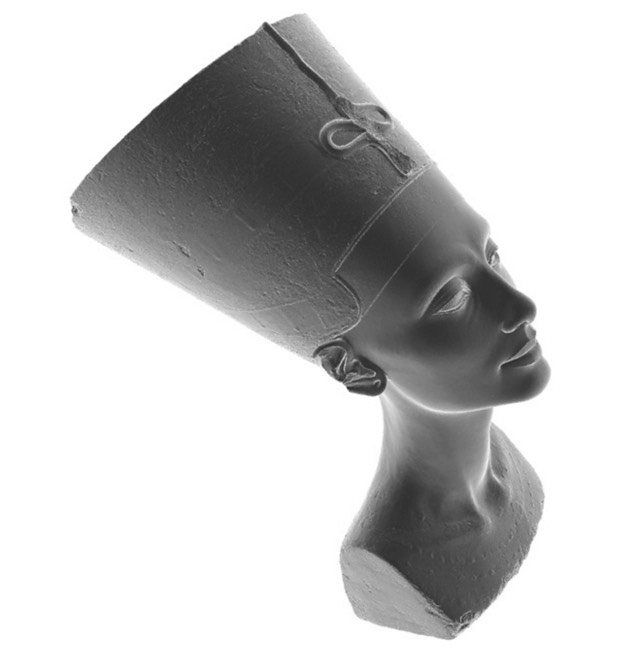
In lieu of the contested original, a 3D-printed copy of the bust made from the model is now on display in Egypt at the American University of Cairo. (via hyperallergic)
Tags: 3D printing art Egypt museums Queen Nefertiti
M and -1 others like this
08 Mar 08:52


Four short links: 23 February 2016
by Nat Torkington
Claus.dahlLink 4 er interessant - hvis AI og fremskridt ku ændre os mod en revival for formel verifikation også så ville software se meget anderledes ud
- Doing Something For Me vs Allowing Me To Do Even More (Matt Webb) -- nails the split in startups. Come on, valley kids ... do you want diapers or do you want superpowers?
- Paul Ford on Racter -- But don’t get too ahead of things. Using Racter is not as different from using Siri as you might expect. It’s just that Siri has petabytes of stuff in her brain, whereas Racter has a floppy’s worth. Computers have changed a ton in the last 30 years, humans barely at all. Don’t mistake their progress for ours. We’ve learned how to talk to computers, and they’ve learned how to pretend to understand us. Useful when driving. People love chatting with their Amazon Echo. But the conversation still doesn’t really mean anything.
- Accelerating Science: A Computing Research Agenda (PDF) -- Siri thinks I want to tell telemarketers to "duck off," while researchers look to automated hypothesis generation, experiment design, results analysis, and knowledge integration.
- Not Quite So Broken TLS (Adrian Colyer) -- instead of ad-hoc codery, A precise and testable specification (in this case for TLS) that unambiguously determines the set of behaviours it allows (and hence also what it does not). The specification should also be executable as a test oracle, to determine whether or not a given implementation is compliant. The paper outlines this for TLS, but I see formal methods growing in importance in coming years. We can't build an airport with cardboard on a swamp. In this metaphor, cardboard represents our ad hoc dev practices and the swamp is our platform of crap code. The airport is ... look, never mind, I'll work on the metaphor. Read the paper.
08 Mar 08:46

Everything That Happened On Earth While These Guys Spent a Year in Space
by Matt Novak
Claus.dahlgod liste
Astronaut Scott Kelly and cosmonaut Mikhail Kornienko return from space next week, having spent a total of 340 days up there. They left March 27, 2015 but it may as well have been a lifetime ago. Here’s everything that happened on Earth while they were away.
Gordon.clausen likes this
08 Mar 08:37

The Defense Department Got Mad at Darpa For Creating Email
by Matt Novak
Ray Tomlinson, widely credited as the inventor of email, died this past weekend. He was 74.
Scirocco6 likes this
08 Mar 08:33
What do free, open, and peaceful borders look like?
by Jason Kottke
Claus.dahlFlere af dem, tak


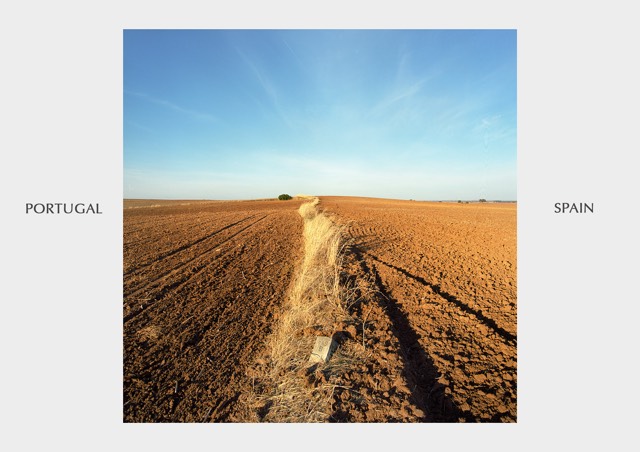
Valerio Vincenzo's project, Borderline, the Frontiers of Peace, consists of photos of the erased borders between countries in Europe's Schengen Area.
The Schengen Area is the area comprising 26 European countries that have abolished passport and any other type of border control at their common borders, also referred to as internal borders. It mostly functions as a single country for international travel purposes, with a common visa policy.
While visiting friends in France a few years ago, we passed the checkpoint between France and Switzerland several times a day and didn't even bother taking our passports with us. It felt weird but good. (via @neilhalloran)
Tags: Europe photography politics Valerio Vincenzo
08 Mar 08:08


Further notes on the quantified self
by AG
Claus.dahlDet er utrolige vigtige spørgsmål det her. Kan data samles, så de er en fordel for indsamleren - eller vil det altid være aggregatoren af data der har glæden af dem. Kan man på nogen måde sikre data-indsamling mod den assymetri der er i algoritmerne i sig selv (lidt data virker ikke, meget data virker)
We can surely read the various technologies of the quantified self as tending to “ensure that people continue to act and dream without any form of connectedness and coordination with others” (Stavrides), and this quick, cogent piece will only reinforce that sense.
Now, I can imagine a world — just barely, but it can be done — in which the capture of biometric measurements by a network with qualities of ubiquity and persistence was somehow not invidious. I can even imagine a world in which that capture resulted in better collective outcomes, physically, psychically and socially. But in our world, the one we actually live in, I think the very best we can possibly hope for from these technologies is positive-sum competition, a state in which each of our individual outcomes only improve for the fact that we are set against each other.
That’s the best-case scenario. Even that is still competitive, still oriented solely toward the individual, still only bolsters the unquestioned supremacy of the autonomous liberal subject. And far more likely than the best case, frankly, is the case in which data derived from these devices is used to shape life chances, deprive us of hard-won freedoms at work, mold the limits of permissible expression or even bring violence to bear against our bodies.
My bottom line is this: Though I’d be happy to be proven wrong, given everything I know and everything I’ve seen it is very, very difficult for me to imagine socially progressive uses of quantified-self technologies that do not simultaneously generate these easily foreseeable, sharply negative consequences. It may be my own limitations speaking, but I can’t see how things could possibly break any other way. In this world, anyway.
08 Mar 08:04
How Gawker trolled Donald Trump into tweeting a Mussolini quote as his own
Claus.dahlDet er den kedeligste aktion nogensinde. Hvorfor i alverden skulle Trump vide at noget med en tiger og et får er Mussolini? Det kunne have været et kinesisk ordsprog for all I care.
Twitter bot making headlines
07 Mar 22:52


Four short links: 2 March 2016
by Nat Torkington
Claus.dahlAs boring as humanly possible - den kedelig regel, der gælder for al software.
- An Adaptive Learning Interface that Adjusts Task Difficulty based on Brain State (PDF) -- using blood flow to measure cognitive load, this tool releases new lessons to you when you're ready for them. The system measures blood flow using functional near-infrared spectroscopy (fNIRS). Increased activation in an area of the brain results in increased levels of oxyhemoglobin. These changes can be measured by emitting frequencies of near-infrared light around 3 cm deep into the brain tissue and measuring the light attenuation caused by levels of oxyhemoglobin. I think we all want a widget on our computer that says "your brain is full, go offline to recover," if only to validate naptime.
- Deploying Software -- Your deploys should be as boring, straightforward, and stress-free as possible. cf Maciej Ceglowski's "if you find it interesting, it doesn't belong in production."
- Replicating SQLite Using Raft -- rqlite is written in Go and uses Raft to achieve consensus across all the instances of the SQLite databases. rqlite ensures that every change made to the database is made to a quorum of SQLite files, or none at all.
- An Introduction to Autonomous Robots -- An open textbook focusing on computational principles of autonomous robots. CC-NC-ND and for sale via Amazon.
07 Mar 22:43
Charles Stross cataloguing space-opera cliches
by Bruce Sterling
Claus.dahlElsker klichélister - selv om den her er lidt overdone. Det er fiktion ffs - det her stiller RESTEN af det du skriver i et misforstået lys som noget der IKKE bare er pis du har fundet på
*What a useful contribution to the profession. http://www.antipope.org/charlie/blog-static/2016/03/towards-a-taxonomy-of-cliches-.html Towards a taxonomy of cliches in Space Opera By Charlie Stross “So I’m chewing over the idea of eventually returning to writing far future SF-in-spaaaace, because that’s what my editors tell me is hot right now (subtext: “Charlie, won’t you write us a space opera?”). A secondary […] The post Charles Stross cataloguing space-opera cliches appeared first on WIRED.


22 Feb 15:12
Architectures
by Jason Kottke
Claus.dahlhuset bag navnet
Architectures is a documentary series exploring the architecture of notable buildings and the architects who designed them.
Each 26-minute film in the series focuses on a single building chosen because of the pioneering role it has played in the evolution of contemporary architecture. Meticulously filmed, each building is explored in great detail and this in-depth examination highlights all the concerns that confronted the architect from the genesis of the project through to its completion.
I've embedded the first episode in the series above, an examination of The Dessau Bauhaus by Walter Gropius; the rest of the series is available on YouTube or on DVD. (via @BoleTzar)
Tags: architecture video
no way, Serafin.shane and -1 others like this
22 Feb 15:12
Uber hires largest union busting law firm, as the driver furor only grows
by Sarah Lacy
Uber fights politicians (the ones it doesn’t give money to.)
Uber fights journalists.
Uber fights taxis.
Uber fights other startup competitors.
Around the world.
Uber’s fights with its own drivers.
But so far, it’s only had to fight with them one-on-one or a few dozen at a time in social media...
22 Feb 15:04


Four short links: 17 February 2016
by Nat Torkington
Claus.dahlLink 3 især
- Grasping with Gecko Grippers in Zero Gravity (YouTube) -- biomimetic materials science breakthrough from Stanford's Biomimetics and Dexterous Manipulation Lab proves useful in space. (via IEEE Spectrum)
- Nissan's Self-Parking Office Chairs -- clever hack, but thought-provoking: will we have an auto-navigating office chair before the self-driving auto revolution arrives? Because, you know, my day isn't sedentary enough as it is ...
- The Man Behind the Robot Revolution -- profile of the man behind Willow Garage. Why he and it are interesting: Although the now defunct research-lab-startup hybrid might not ring any bells to you now, it was one of the most influential forces in modern robotics. The freewheeling robot collective jump-started the current race to apply robotics components like computer vision, manipulation, and autonomy into applications for everything from drones and autonomous cars to warehouse operations at places like Google, Amazon, and car companies like BMW. Google alone acquired three of the robot companies spawned by Willow.
- NSA's Lousy Evaluation of Drone Strike Algorithm Effectiveness (Ars Technica) -- vastly overstating the quality of the predictions. The 0.008% false positive rate would be remarkably low for traditional business applications. This kind of rate is acceptable where the consequences are displaying an ad to the wrong person, or charging someone a premium price by accident. However, even 0.008% of the Pakistani population still corresponds to 15,000 people potentially being misclassified as "terrorists" and targeted by the military—not to mention innocent bystanders or first responders who happen to get in the way. Security guru Bruce Schneier agreed. "Government uses of big data are inherently different from corporate uses," he told Ars. "The accuracy requirements mean that the same technology doesn't work. If Google makes a mistake, people see an ad for a car they don't want to buy. If the government makes a mistake, they kill innocents." (via Cory Doctorow)
22 Feb 14:42


Four short links: 19 February 2016
by Nat Torkington
Claus.dahlExoskeletter!
- Exoskeletons Must be Covered by Health Insurance (VICE) -- A medical review board ruled that a health insurance provider in the United States is obligated to provide coverage and reimbursement for a $69,500 ReWalk robotic exoskeleton, in what could be a major turning point for people with spinal cord injuries. (via Robohub)
- New Models for the Company of the 21st Century (Simone Brunozzi) -- large companies often get displaced by new entrants, failing to innovate and/or adapt to new technologies. Y-Combinator can be seen as a new type of company, where innovation is brought in as an entrepreneurial experiment, largely for seed-stage ideas; Google’s Alphabet, on the other hand, tries to stimulate innovation and risk by dividing a large company into smaller pieces and reassigning ownership and responsibilities to different CEOs.
- Zephyr -- Linux Foundation's IoT open source OS project. tbh, I don't see people complaining about operating systems. Integrating all these devices (and having the sensors actually usefully capturing what you want) seems the bigger problem. We already have fragmentation (is it a Samsung home or a Nest home?), and as more Big Swinging Click companies enter the world of smarter things, this will only get worse before it gets better.
- A Hands-On Approach on Botnets for a Learning Purpose -- these researchers are working on open source botnet software for researchers to bang on. (So you don't need to attract the interest of actual botnet operators while you learn what you're doing.)
22 Feb 14:37

Time to channel my inner Dave Winer
by Joi

Caroline Sinders and Dave Winer at the Media Lab Center for Civic Media on February 11, 2016
After the first Internet bubble burst around 2001 and the Nasdaq came crashing down to pre-Internet size, most of the world wrote off the Internet as having been a failure or a fad. Douglas Rushkoff said at the time, that it was just the Internet fending off an attack. I was lucky enough to still be investing at the time and was very excited by blogging which emerged from the ashes of the crashed dot-com space.
As I become familiar with the characters active in blogging, Dave Winer was one of those guys who was inspiring, aggravating, but only ignored at great expense. When I first started blogging, I learned a ton from Dave, sometimes by having him attack me for using the wrong version of RSS, but with a conviction to the Open Web and a clarity of mission that seemed almost a bit overboard when it felt like everyone was just trying to do the right thing - when many blogging platforms allowed you to export your whole blog and import it into another blogging platform and everyone was mostly working together on all kind of standards.
I've had my own strong beliefs around decentralized networks from when I was in the ISP business, copyright from when I ran Creative Commons and was on the Open Source Initiative Board, but it was only when I saw Dave just a few weeks ago that his views about the importance of the Open Web, or more precisely, the particular layer of the Open Web that Dave has been so focused on since I've known him, hit me with a big "ah ha!"
We talked about how "the walled gardens" like Facebook and at some level Twitter feed off of the Open Web and need it but how the Open Web was being torn apart from all sides. Even the somewhat reasonable sounding announcement that Google will be lowering page rank for non https: sites will push self-hosted blogs lower in the results.
It reminded me about an argument that Google Translate is trained with human-created translations and that it wouldn't be able to train anymore if the translators went out of business. On the other hand, I suppose we may have figured out better translation training by then or maybe already have. Anyway, I digress.
We talked about how a healthy system probably involves a vibrant Open Web along with for-profit companies and that this balance was important, but how we are leaning away from the Open Web right now. Dave isn't anti-platform, just anti-anti-Open Web. Listening to Dave speak at Ethan's Center for Civic Media group meeting, I realized that I needed to pay more attention to Dave, amplify his message and take some of his recommendation to heart and into action.
If you haven't been tracking him recently, I recommend you do. I think he's speaking up about an important topic and a very timely moment in the evolution of the Web.
Here's a provocative but insightful post about why NOT to post on Medium or at least cross-post to the Open Web, which caught my attention most recently and trigged inviting Dave to the Lab with Ethan.
16 Feb 17:01
This Russian truck is amazing
by Jason Kottke
This Russian truck is mostly tires, which gives it a short turning radius, cuteness,1 and the ability to swim. Yep, you can drive it right into a lake. Jalopnik has more details, including the truck's surprisingly pint-sized engine:
It weighs just 2,866 pounds dry, so while it might only have a 44.3 horsepower 1.5 liter Kubota V1505 four-cylinder diesel linked to a five-speed manual, it will still do 28 mph on land, or 3.7 mph in water, depending on the wind. It will also crawl at up to 9.3 mph in first gear.
(via digg)
-
The oversized tires on the normal-sized frame have a similar effect as large eyes on a cartoon character do.↩
M, Sambinns92 likes this
16 Feb 16:22
David Gryn of Daata Editions
by Bruce Sterling
Claus.dahlDavid Gryn. Den la'r vi lige stå et øjeblik.
*Well, let’s see what becomes of that. https://i-d.vice.com/en_gb/article/daata-editions-and-digital-arts-commercial-future “The art market can easily feel over blown, over hyped, over saturated, stuffed full of money, and of course that’s partly true, though not if you’re an artist or gallery dealing in digital work. As a recent exhibition at the Whitechapel Gallery, Electronic Superhighway, shows, computer and […] The post David Gryn of Daata Editions appeared first on WIRED.


16 Feb 07:46

Tell Us Your Old Secrets About Technology, Utopian Communities, and the Machines of War
by Matt Novak
Do you have an old secret about the history of technology, a defunct cult, or a futuristic weapon that never made it off the drawing board? Would you like the world to know about it? Tell us.
16 Feb 07:28


Four short links: 12 February 2016
by Nat Torkington
Claus.dahlGode webstock links
- Webstock: Bug Fixes & Minor Improvements -- notes from Anna Pickard's talk about being the voice of Slack, recorded by Luke Wroblewski.
- Webstock: The Map & The Territory -- notes from Ethan Marcotte's talk about making accessible experiences, recorded by Luke Wroblewski.
- Webstock: The Shape of Things -- notes from Tom Coates's talk about designing for the Internet of Things, recorded by Luke Wroblewski.
- Today I Learned -- A collection of concise write-ups on small things I learn day to day across a variety of languages and technologies. These are things that don't really warrant a full blog post.
16 Feb 07:26
General Tetris
by Jason Kottke

This is a recent favorite of mine by Christoph Niemann, part of a series of six animations done for MoMA.
Tags: Christoph Niemann MoMA Tetris video games
Cat Winterfox likes this