
Shared posts

27 Aug 21:58

A tale of two bank robbers, or The Clerk and the Pauper

by Tim Carmody

Today is a weird day for human-interest stories about bank robbers.

The New York Times highlights Shon R. Hopwood, a former bank robber who studied law in prison, successfully petitioned on behalf of another prisoner in a Supreme Court case his team won 9-0, and will soon be a clerk for the DC circuit federal appeals court, "generally considered the second most important court in the nation, after the Supreme Court":

The judge Mr. Hopwood worked for last summer said he deserved his 147-month sentence. "He used a weapon in some of those robberies, and that justified a very heavy hit," said Judge John C. Coughenour of Federal District Court in Seattle. "But everybody we sentence has the potential to turn their life around."

Meanwhile, one state south in Oregon:

Authorities in Oregon say a homeless man who held up a bank for $1 was just looking for a way to go to jail so he could receive free health care.

According to Clackamas County sheriff's deputies, 50-year-old Tim Alsip entered a Bank of America in Southeast Portland last Friday morning and handed the teller a note that read, "This is a holdup. Give me a dollar."

I know he's a busy man, but it would be remarkable if Mr. Hopwood could drive from Seattle to Portland and find a way to help Mr. Alsip be relegated to an appropriate facility.

Tags: jail   matter   Shon R. Hopwood   Supreme Court   Tim Alsip
27 Aug 21:52

Videodrome is the best movie ever made about Facebook

by Klint Finley

Videodrome VHS packaging

Cyborgologist Nathan Jurgenson on the 30th anniversary of Videodrome:

Over the course of the film, Max comes to know a “media prophet” named Professor Brian O’Blivion—an obvious homage to Marshall McLuhan. O’Blivion builds a “Cathode Ray Mission,” named after the television set component which shoots electrons and creates images. The Cathode Ray Mission gives the destitute a chance to watch television in order to “patch them back into the world’s mixing board,” akin to McLuhan’s notion of media creating a “global village,” premised on the idea that media and technology, together, form the social fabric. O’Blivion goes on to monologue,

“The television screen is the retina of the mind’s eye. Therefore, the television screen is part of the physical structure of the brain. Therefore, whatever appears on the television screen appears as raw experience for those who watch it. Therefore, television is reality; and reality is less than television.”

This is Videodrome’s philosophy. It’s the opposite of The Matrix’s (1999) misreading of Baudrillard’s theories of simulation, and it goes completely against the common understanding of the Web as “virtual,” of the so-called “offline” as “real.” O’blivion would agree when I claim that “it is wrong to say ‘IRL’ to mean offline: Facebook is real life.”

This logic—that the Web is some other place we visit, a “cyber” space, something “virtual” and hence unreal—is what I call “digital dualism” and I think it’s dead wrong. Instead, we need a far more synthetic understanding of technology and society, media and bodies, physicality and information as perpetually enmeshed and co-determining. If The Matrix is the film of digital dualism, Videodrome is its synthetic and augmented opponent.

Full Story: Omni Reboot: Network of Blood

Although I agree with Nathan’s rejection of digital dualism, I do find that the internet, or rather particular parts of the internet create a “place-like” experience — much the way reading a book or watching a movie does. Except other people are there. Place metaphors have been common since the beginning, besides cyberspace we have chat “rooms” web “sites.” Of course these spaces are real, and enmeshed with the physical, but they are also ethereal — they are unplaces. That’s part of their appeal. You can enter them from anywhere, your phone at a bus station, a cybercafe in Bangkok or your new apartment in a new city. And when you enter, you are someplace more than the place that you are physically.

(FWIW, both Neuromancer and Matrix include some concept of entanglement between meatspace and cyberspace: when you die in them, you die for real.)

See also:

Nathan on Mindful Cyborgs

David Cronenberg dossier

TV Ate Itself

27 Aug 19:21

dreamsofinkandlies: sagginpants-singlemamas: jungz: forcesofna...


dreamsofinkandlies:

sagginpants-singlemamas:

jungz:

forcesofnature:

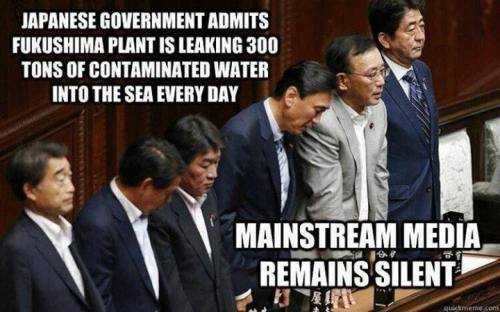
reblog please…the media is asleep

"A puddle of the contaminated water was emitting 100 millisieverts an hour of radiation, Kyodo news agency said.

Masayuki Ono, general manager of Tepco, told Reuters news agency: “One hundred millisieverts per hour is equivalent to the limit for accumulated exposure over five years for nuclear workers; so it can be said that we found a radiation level strong enough to give someone a five-year dose of radiation within one hour.”

..and 300 tons of that same water has been pouring into the ocean everyday for God knows how long.

Reblog reblog reblog

27 Aug 18:10

Twitter Hires Ex-Ticketmaster CEO Nathan Hubbard As Head of Commerce To Make It Retail Friendly

by Matthew Panzarino
Claus.dahl

cuz we're all hoping Twitter turns into Ticketmaster...

twitter logo

Twitter has hired ex-Ticketmaster CEO Nathan Hubbard as its new Head of Commerce. Hubbard will work under head of revenue Adam Bain to make the platform more friendly to retailers.

We’ve confirmed the hire with Twitter, which pointed to a tweet this morning by Bain. According to Bloomberg, Hubbard will reportedly focus on the business of encouraging retailers to use Twitter to convert sales from tweets. Using Twitter’s Cards feature to present products in the best way possible and to streamline the purchasing procedures will likely be a part of that purview.

At this point, there’s no indication that this will be about creating a payment component to Twitter cards, something that startups like Chirpify are currently working on.

Hubbard tells Bloomberg that it will be ‘partnering’ with retailers to sell digital and physical goods on the platform, helping them to “use Twitter to sell [them] more effectively”.

Hubbard left Ticketmaster earlier this month, where he was overseeing an overhaul of its online business. “To me, Twitter is a cardiogram of the passion of the live moment, So I’m excited to announce I’ve joined the flock as Head of Commerce,” Hubbard said today in an announcement tweet.

Though Hubbard’s position isn’t reportedly about making Twitter a payments platform yet, it’s not hard to see that the integration of Square into Twitter Cards, along with a universal login system, could create a very powerful sales component without much fuss. Depending on how the efforts of Hubbard improve the retail tweeting experience, we could see the birth of a new sales powerhouse along the lines of Amazon or eBay.


27 Aug 17:17

Owlet, A Bootie That Tells You How Your Baby Is Breathing, Hits The Crowdfunding Trail

by John Biggs
Claus.dahl

babyfodlænke

product_sock

The lives of new parents are fraught with stress but now the weight of knowing whether or not your wee one is breathing can be lifted. Owlet is a small bootie that the baby wears while sleeping. It signals heartrate and respiration and you can check in on the little shaver via a mobile device. As a parent of three, I remember a few rough moments spent peeking in on the quiet little ones out of fear or curiosity.

The company is asking for pledges of $159 to get an early-bird unit (the price will go up to $199 once they sell out). They are looking for funding of $100,000. They’ve reached $25,000 so far.

The sensor measures heart rate, oxygen levels, breathing, and sends sleep alerts when baby rolls over while asleep. It also takes temperature measurements. It runs on Bluetooth LTE so you can check on your baby when it’s nearby using your smartphone or remotely via an Internet-connected computer.

There are definitely similar tools that you can use but none fit so snugly in a wearable device. While baby bed sensors are nothing new, the fact that this gives a full complement of important information that can help parents and pediatricians both is pretty important.

You can preorder here and they plan on shipping in November.


27 Aug 17:15

Anonymous Document Sharing Site Pastebin Surpasses 1 Million Members, Keeps Growing

by John Biggs
Claus.dahl

It's extremely interesting that this level of simplicity can go so far

pastebin

Pastebin officially announced that they’ve surpassed 1 million registered members since the introduction of the login service two and a half years ago. The service allowed users to log in using social media tools and control the pastes they uploaded to the site. Members can also edit and delete pieces of information they post to the site. Users can still paste items anonymously.

Like many popular “paste” sites, Pastebin started out as a repository for code, snippets of text, and chat logs. Now, however, it has become a sort of clearinghouse for Anonymous, the group, and other groups intent on maintaining anonymity.

“About a year ago we added the option to create new Pastebin accounts via social media platforms like Facebook, Twitter and Google which greatly increased the number of daily signups. Month over month we are seeing more traffic records, and we are currently serving about 17 million visitors per month,” said Jeroen Vader, owner of the site.

The site hosts 36 million active pastes and adds about 40,000 every day. “We have had some issues/headaches storing all this information, and at the same time making sure that the website stays lightning fast for our users,” said Vader. “For our developers it has been a huge learning curve, but we’ve got a pretty solid platform now that allows for a lot of future growth. Also we’ve had to deal a lot with DDOS attacks over the years, but with the help of some of our users, we’ve got a pretty solid system now to fight those kinda attacks.”

Vader is also working on what he is calling Pastebin 4.0 which will include a comment system, friends lists, a favoriting system, and a new layout. “That and some other ‘still secret’ features,” he said. “Those will be revealed once the new site is online.”

In the post-Snowden era, Vader is seeing more and more activity on the site.

“Every time something really controversial gets posted on Pastebin, it often results in a lot of media attention, which can result in a temporary boost in traffic. In the case of the Edward Snowden related items there were also a few days where traffic was noticeably higher than normal,” he said.


26 Aug 15:12

Get Lucky reimagined for every decade since the 1920s

by Jason Kottke
Claus.dahl

consistenly 10 yrs off - 1960 sounded like the 50s.

This is great...Daft Punk's Get Lucky as it would have sounded in every decade from the 1920s to the 2020s.

This is what singles should be from now on...you get the original song, a 30s jazz version of the song, a 1800s classical version, an 80s new wave version, and so on.

Tags: Daft Punk   music   remix   video
26 Aug 14:53

The true web

by Robin Sloan
Claus.dahl

Skyggenettet anno 2020 - digital telex mellem the cognoscenti. Læser NSA RSS?

I love the sentiment in this short post from Russell Davies. Okay, it’s not even a post; more of a wave from across the street, or a high-five in passing:

I love blogging without tweeting about it. I know who I’m talking to – you lot who still do RSS. You’re my people.

(Yep, that’s the whole post. There’s also a picture.)

Google Reader is going away in a couple of weeks, but I just keep clicking its little link in my toolbar like a dope. I’ll ride it all the way to the end of the line. I have my stuff loaded into Feedly and I’m sure the new app will seem normal and natural in just a few months’ time.

It will dip and diminish, but will RSS ever go away? Nah. One of RSS’s weaknesses in its early days—its chaotic decentralized weirdness—has become, in its dotage, a surprising strength. RSS doesn’t route through a single leviathan’s servers. It lacks a kill switch. I’ve got 72 feeds now in my Reader (my… Feedly?), down from a peak of three hundred, and many seem pretty derelict. But who knows? As long as the URL resolves, a feed can still surprise you. RSS is the true web: a loose net of dark filaments. These faint tendrils of connection are almost invisible when quiescent, but then out of nowhere—hello!—they light up again. I am happy to have them.

26 Aug 14:34

Four short links: 17 June 2013

by Nat Torkington
Claus.dahl

SWEET link 4

  1. Weekend Reads on Deep Learning (Alex Dong) — an article and two videos unpacking “deep learning” such as multilayer neural networks.
  2. The Internet of Actual Things“I have 10 reliable activations remaining,” your bulb will report via some ridiculous light-bulbs app on your phone. “Now just nine. Remember me when I’m gone.” (via Andy Baio)
  3. Announcing the Mozilla Science Lab (Kaitlin Thaney) — We also want to find ways of supporting and innovating with the research community – building bridges between projects, running experiments of our own, and building community. We have an initial idea of where to start, but want to start an open dialogue to figure out together how to best do that, and where we can be of most value..
  4. NAND to TetrisThe site contains all the software tools and project materials necessary to build a general-purpose computer system from the ground up. We also provide a set of lectures designed to support a typical course on the subject. (via Hacker News)
26 Aug 11:41

Elsk dine hadere

Claus.dahl

Hader de her brandalarm-salg fra mediekonsulenterne

1. Vær hurtig
Uanset hvor utålelig, uretfærdig og uoverskuelig kritikken er, er det en god idé at svare hurtigt. Du kan altid høfligt takke brugeren for sin henvendelse og skrive, at du undersøger sagen og vender tilbage hurtigst muligt. Og så skal du selvfølgelig huske at vende tilbage - hurtigst muligt. På den måde undgår du, at kunden bliver endnu mere vred, fordi han eller hun føler, at der ikke bliver gjort noget ved sagen. Derudover sender du et signal til resten af dine kunder om, at du tager hånd om de henvendelser, du får – også de negative.
 
 
Et uheldigt eksempel på en virksomhed, der ikke var hurtig nok til at besvare en kundes kritik, er Telenor, der blev udsat for en shitstorm sidste år. På grund af sommerferie var de ikke ligeså tilstedeværende på Facebook som normalt, hvilket resulterede i, at det kritiske indlæg udløste mere end 3000 kommentarer og nåede op på over 30.000 likes
 
2. Vær ærlig/realistisk
Pas på med at forsøge at afværge problemet ved at love guld og grønne skove. Vær ærlig - og frem for alt realistisk. Hvis du fortæller brugeren, at du sender klagen videre til kundeservice, som vil svare inden for 24 timer - eller at du selv undersøger problemet og vender tilbage - så skal du eller kundeservice også svare inden for den angivne tidsramme. Ellers risikerer du en endnu større sviner, og det kan potentielt starte en shitstorm - eller et ligeså slemt alternativ: En hadeside, hvor kunden udtrykker sin utilfredshed med endnu større bogstaver. Det oplevede mobilselskabet 3 sidste sommer, da en utilfreds kunde oprettede hadesiden 3fail.dk, hvor han svinede 3 til og offentliggjorde al email-korrespondance mellem ham og 3. Rigtig ærgerligt for 3, når hadesiden dukker op på Google-søgninger.
 
Sidste sommer blev en kunde så utilfreds med mobilselskabet 3, at han oprettede en hadeside, hvor han lagde al korrespondance mellem ham og 3 frem til fuld skue for offentligheden 
 
3. Undlad at slette kritik
Selvom kritik kan være ubehagelig og måske ligefrem løgnagtig, vil det ofte kun gøre ondt værre, hvis du sletter indlægget. Afsenderen vil lynhurtigt bemærke det og udsende en endnu vredere bølge af had – og endnu værre er det, hvis afsenderen har taget et skærmbillede af sit (slettede) indlæg, som kan dokumentere, at du har slettet det. Desuden har et ordentligt svar en god signalværdi, der viser, at din organisation tager kritik og kunder alvorligt - selv de sure af slagsen. De eneste indlæg du bør slette er dem, der strider imod god opførsel, som defineret i din kommentarpolitik (se råd 5).
 
Et lækkert eksempel på kritik, der ikke blev slettet, men derimod besvaret på en humoristisk måde, var da YouSee blev fravalgt til fordel for Netflix. YouSee kunne tillade sig at besvare indlægget på en sjov, ironisk og kærlig måde, fordi kunden selv kommunikerede ved brug af en kæreste-diskurs. YouSee fik over 10.000 likes for sit originale svar
 
4. Vær gennemsigtig
Kritik kan være rigtigt ubehagelig, men den kan også være ganske brugbar. Kritik kan både være en rigtig god måde for virksomheden at få feedback, og samtidig en god måde for kunderne at få information på. Hvis der fx er en kunde, der bliver rasende over, at din virksomheds hjemmeside er nede, går de måske ind på din virksomheds facebook-side for at brokke sig over det. Hvis de her ser, at problemet allerede er blevet pointeret af andre brugere, og at din organisation rent faktisk har givet et godt og konstruktivt svar, så har de forhåbentligt fået al den information, de behøver, og har ikke længere brug for at smide en sviner. Det kan derfor være bedre at skrive et godt, sagligt, udredende og fyldestgørende svar i offentligheden i stedet for at komme med en ’kundeservice vender tilbage’-erklæring - eller i stedet for at slette indlægget. Andre kunne måske få gavn af svaret.
 
5. Lav en offentlig kommentarpolitik
En kommentarpolitik giver dig mulighed for at fortælle dine læsere, at kritik er velkommen, og at indlæg ikke vil blive slettet, med mindre at de strider imod dine retningslinjer for god kommentar-etik. Det amerikanske supermarked Publix har fx oprettet en kommentarpolitik, der blandt andet viser, at de fjerner indlæg, der indeholder vulgære, racistiske eller personangribende kommentarer. En offentlig kommentarpolitik har både den fordel, at den viser, at du som virksomhed kan tage imod konstruktiv kritik – og samtidigt legitimerer den, at du fjerner stødende kommentarer, der går efter personen og ikke bolden. På den måde kan du altid referere til din kommentarpolitik, hvis en bruger brokker sig over, at du har slettet vedkommendes indlæg.
 
Publix har lavet en offentlig kommentarpolitik på deres Facebook-side, der fortæller, at de omfavner konstruktiv kritik, men at de fjerner stødende kommentarer, der går efter personen i stedet for bolden
 
6. Identificér kritikken
Der findes mange forskellige typer af svinere, og der er forskellige måder at håndtere dem på. "Fuck jer Telenor. I stinker!" og "Det er for dårligt, at jeg ikke har modtaget mit sim-kort endnu. Der er gået ni dage!" er to vidt forskellige typer af klager, som kan håndteres på forskellige måder. Så start med at identificere kritikken og besvar den efter hvilken type kritik, der gives. Nogle gange er det bedst at lægge sig fladt ned og sige undskyld til kunden, som vi fx så med Palads, da de i august sidste år undskyldte for at have advaret mod 'muslimsk uro' i biografen. Andre gange kan man med fordel slå tilbage, ignorere eller i nogle tilfælde slette indlægget.

Kritik skal håndteres forskelligt afhængigt af situationen. Det kan sommetider være det bedste at lægge sig fladt ned og sige undskyld, som Palads gjorde, efter at de sidste sommer havde advaret mod "muslimsk uro" i biografen. Se flere metoder til at besvare en sviner på Facebook her
 
7. Pas på trolls
En troll er en person, der elsker at diskutere og larme på online platforme - udelukkende for at provokere. Rigtig mange kritikere på Facebook elsker nemlig at brokke sig, og de gør det til en leg at pisse dig af. Du kan tackle trolls på to måder: Enten kan du ignorere dem, eller også kan du lege med. På den ene side lever trolls af reaktioner, så ved at ignorere dem, kan du håbe på, at de forsvinder igen. Men sommetider virker det ikke, og så kan det være taktisk smart at lege med - det kaldes modtrolling. Ved at drille igen og slå trollen i sit eget game, bliver han forhåbentlig frustreret og forsvinder igen. Udfordringen, når man vælger om man skal modtrolle, er, at det kan være svært at identificere trolling, og det kræver derfor ofte både erfaring og analyse at kunne genkende en troll.
 
Et eksempel på modtrolling er blevet set på mormon.org's chattjeneste, da en troll havde stillet en masse drilske spørgsmål til en mormonsk vejleder, hvor mormonen gav igen ved at afsløre i koder, at han vidste, at brugeren var en troll
 
8. Rådfør dig med andre
Går du også i panik, når du modtager kritik offentligt? Træk vejret dybt. Selvom du bør svare hurtigt, er der ingen grund til total panik. Et godt råd kan være at tale med en kollega eller én udenfor organisationen, som kan vejlede dig til, hvad du kan svare. Det er altid lettere at finde det gode svar, hvis man har andre at sparre med. Og så er det selvfølgelig altid en god idé at sætte sig i kritikerens sted. Hvilken form for respons ønsker han at få? Og hvordan kan dette behov tilfredsstilles bedst muligt?
 
9. Kunden har 'altid' ret
Selvom kunden selvfølgelig ikke altid har ret, er det vigtigt at huske, at du lever af dine kunder, og derfor i langt de fleste tilfælde må bide irritationen i dig og give dem et høfligt svar. Et eksempel på en virksomhed, der helt har misforstået hvordan man kommunikerer med sine kunder, er Amy's Baking Company Bakery Boutique & Bistro, der efter at have været i tv i forbindelse med et Gordon Ramsey Kitchen Nightmares-program, modtog massevis af kommentarer på deres facebook-side fra vrede seere. De to ejere af Amy's Company Bakery Boutique & Bistro gik til massivt modangreb på brugerne og kaldte dem for pussies, punks, sinners og et væld af andre grimme navne. Senere erklærede de, at deres facebook-side var blevet hacket - men med deres fjendske attitude på både tv og i de sociale medier, er der næppe mange, der tror på det. Så husk at tage høflighedshatten på, når du besvarer kritik.
 
Alarm! Gør ikke som Amy's Baking Company, der for nyligt kaldte deres kritikere på Facebook for pussies, punks og sinners. Tag i stedet høflighedshatten på - og lær af kritikken. Brug kritikken til at forbedre din virksomhed
 
10. Der findes ingen standardløsninger
Det kan være virkelig brugbart at have et skema med forslag til, hvordan du håndterer brugerindlæg på Facebook. Billedet er en guide til, hvordan du kan besvare negative kommentarer. Og guiden kan være super anvendelig - men kun som guide vel at mærke. For hverken guiden eller rådene er en plug and play-vejledning. Du skal selvfølgelig have både hjertet og hovedet med, hver gang du besvarer en sviner. Det nytter altså ikke noget bare at copy-paste. Alle svar kræver omtanke, og sommetider kan helt alternative løsninger være meget bedre end de foreslåede råd.
 
Der findes ingen standardløsninger. Men brug gerne skemaet som inspiration, når du konfronteres med hadeindlæg på Facebook. Klik på billedet for at se det i et større format - eller klik her for at se illustrationen på SlideShare
 
Artiklen er venligst udlånt af KOM magasinet, udgave 72, juni 2013
 
 
________________________________________________________
 
Links:


________________________________________________________
 
26 Aug 11:21

NFC RIng

Claus.dahl

Nice concept

NFC RIng Created by UK developer John Mclear and his Bradford based team the NFC ring is pretty much exactly what it says it is on the tin.The ring can be used to unlock your phone, open a NFC enabled door lock, or share a url/contact...
26 Aug 11:04

Zynga Won't Pursue Real-Money Gaming License In The U.S.; Shares Drop 13% In After-Hours

by Kim-Mai Cutler
Claus.dahl

They should make a game called Waffle Kingdom about their strategy

zynga poker

Zynga is giving up what many investors had hoped might be its trump card: a real-money gaming business in the U.S. The company, which has been testing out real-money casino games in the U.K., said it won’t be pursuing a U.S. license after all in its second quarter earnings report today.

Sources tell us this is a decision to focus and not spread the company too thinly between real-money gaming, diversifying onto mobile and maintaining a core on Facebook. If it weren’t for the political and legal complexities of opening up real-money gaming in state after state, the business could have been interesting for Zynga, especially considering how long Zynga Poker has dominated both on the Facebook platform and on iOS and Android. None of Zynga’s social casino games, which use virtual currency, are affected by this. Shares declined 13 percent in after-hours to $3.02.

In the release today, Zynga said:

Zynga believes its biggest opportunity is to focus on free to play social games. While the Company continues to evaluate its real money gaming products in the United Kingdom test, Zynga is making the focused choice not to pursue a license for real money gaming in the United States. Zynga will continue to evaluate all of its priorities against the growing market opportunity in free, social gaming, including social casino offerings.

Zynga has long been exploring real-money gaming. It partnered with operator Bwin.Party to offer titles in the U.K. Then last November, the company took its first steps toward real-money gaming in the U.S. by applying for a “preliminary finding of suitability” from the Nevada Gaming Control Board.

It’s not that this option is forever off the table. It’s just that the company is in the middle of a significant platform transition now, and real-money games — which would probably only be available to players in Nevada at first anyways — could be distracting.


26 Aug 10:33

The Faroes became a protectorate of Denmark in the sixteenth...

Claus.dahl

This comfy life is made possible by ridiculously high subsidies from Denmark.


The Faroes became a protectorate of Denmark in the sixteenth century. Just shy of 50,000 people, it enjoys one of the highest minimum wages in the world ($20 USD) and a strong social-​welfare system that supports a healthy middle class. 

Photographer, Benjamin Rasmussen, returns to the Faroes nearly every summer, when the daylight stretches to twenty hours … summer is the work season, the social season. “The Faroese build relationships in the summer,” he explains. “They have experiences during the summer. The winter is narrative, revisiting those experiences.”

(via VQR » Summer on the Island  and 3QuarksDaily)

26 Aug 08:37

Four short links: 31 July 2013

by Nat Torkington
Claus.dahl

Haha, link 2 is ridics' - Google's "don't be evil" turns more and more into 'situational ethics'

  1. How to Easily Resize and Cache Images for the Mobile Web (Pete Warden) — I set up a server running the excellent ImageProxy open-source project, and then I placed a Cloudfront CDN in front of it to cache the results. (a how-to covering the tricksy bits)
  2. Google’s Position on Net Neutrality Changes? (Wired) — At issue is Google Fiber’s Terms of Service, which contains a broad prohibition against customers attaching “servers” to its ultrafast 1 Gbps network in Kansas City. Google wants to ban the use of servers because it plans to offer a business class offering in the future. [...] In its response [to a complaint], Google defended its sweeping ban by citing the very ISPs it opposed through the years-long fight for rules that require broadband providers to treat all packets equally.
  3. The Future of Programming (Bret Victor) — gorgeous slides, fascinating talk, and this advice from Alan Kay: I think the trick with knowledge is to “acquire it, and forget all except the perfume” — because it is noisy and sometimes drowns out one’s own “brain voices”. The perfume part is important because it will help find the knowledge again to help get to the destinations the inner urges pick.
  4. psd.rb — Ruby code for reading PSD files (MIT licensed).
25 Aug 20:09

Bret Victor's The Future of Programming

Claus.dahl

pitch perfect

inspired by Alan Kay, a time warp back to 1973 to talk about programmer humility  
25 Aug 19:46

1993—year of the present →

by Mark Jensen
Claus.dahl

Quick guess before jumping: The author of the piece was 17-25 in '93, I'm guessing 21.

Pretty good string of arguments as to why 1993 is the epicenter of modernity and nostalgia:

But flipping through the exhibition catalogue, I see their point—and it’s hard to argue with. In many ways, 1993 did give us our world: globalized and multicultural, libertarian and technocratic at once, target-marketed, relentlessly digital and relentlessly individual, without distinctions between the pursuit of culture and the pursuit of wealth. To put it another way, 1993 might have been the last year of the sellout, when the principle of resistance to the smooth and efficient running of the market began to collapse into our culture of collaboration. It was the year of the first web browser and the forging of both the European Union and NAFTA. Bill Kristol was writing, in Commentary, of how to rebrand conservatism as rebellion in the face of Clinton’s win. MTV’s cultural metabolism was probably at its most rapacious, Tony Kushner brought Angels in America to Broadway, and Toni Morrison won her Nobel. Atlantic Records invested in indie label Matador and Walt Disney bought Miramax. Pulp Fiction, Clerks, and Reality Bites were all in production. Marc Jacobs’s grunge collection was for spring ’93. Harmony Korine was writing Kids, and the former insult-comic editor of Spy had taken over Vanity Fair. In other words, niche markets were becoming mainstream propositions—and soon gave us the entire gloriously fractured culture we’re unavoidably (and more often than not wirelessly) connected to today.

25 Aug 11:19

I, Cringely Microsoft, Ballmer, and the end of the PC era - I, Cringely

by clausd
Claus.dahl

Damn straight. Det interessant ved iPhone et al er ikke deres eksistens, men at de *endelig* var dem vi havde forestillet os ud fra sci-fi filmene

You’ll read a lot of stories today and tomorrow about how Ballmer as CEO missed big product trends like smart phones and tablets — the very trends that Steve Jobs and Apple did so well. But that’s not so. Windows CE phones existed long before the iPhone. Windows tablets predated the iPad by more than a decade and date from the pen-based computing fiasco of the early 1990s. So it’s not that Microsoft missed these opportunities — they just blew them.
25 Aug 09:30

Sony fits an entire camera in a lens that snaps on your Android phone

by Kevin C. Tofel
Claus.dahl

They'd have to be vastly cheaper or smaller than similar actual super compacts to make any sense

The mega-battle over smartphone camera megapixels could be a moot point based on images and information on Sony’s latest project. The Verge says Sony may introduce its new DSC-QX10 and DSC-QX100 lenses for handsets. Except these aren’t just lenses. According to the Sony Alpha Rumors site, these are fully operational cameras packed inside the lens that will snap on to an Android phone.

QX10

At that point, it won’t matter what internal camera sensor and software the phone has. The snap-on camera will take the place of your internal imaging sensor and your Android phone will become a wireless viewfinder for Sony’s camera. Unlike traditional smartphone cameras, you’d then have a much higher quality set of lenses and optics to use for image capture using a smartphone.

Here’s how the site explains these products:

They have built-in sensor, Bionz processor, Wifi/NFC wireless connection and SD card slot. These lenses have no LCD screen and no usual camera controls. You will be able to control them through your smart phone or tablet (via WiFi or NFC). The lenses can be magnetically attached on your smartphone and it works on both, Android and iOS devices. That is nothing like we have seen before. For the first time you can shoot top quality images with your smartphone.

If true, you won’t need to rely on the small image sensor typically found in smartphones. These higher end of these two lenses is expected to offer 1-inch sensors, which are nearly as large as those used on Micro Four Thirds cameras. For comparison, Nokia’s new Lumia 1020 uses a small 2/3-inch sensor while Apple’s iPhone 5 with its 1/3.2-inch sensor is too small to appear on this chart. The less-expensive lens uses an 18 megapixel sensor the same size as the Lumia 1020

Image sensor sizingThese lenses actually exist in their traditional form for Sony cameras with costs ranging from $400 to $600, so adding Bluetooth and additional processors could raise the price even higher if the products do come to market.

Even so, I can see camera enthusiasts being interested in the lenses, although they might be a little bulky to carry around all the time. Still, leaving the DSLR or other full-time camera at home could become an option for day trips; particularly if you were going to take your smartphone with you anyway.


Related research and analysis from GigaOM Pro:
Subscriber content. Sign up for a free trial.

25 Aug 09:28

reading as destiny

by russell davies
Claus.dahl

Nature of Technology just made the must-read list

I suspect part of the appeal of things like Timehop is they let you figure out / invent narratives for your life in the way a biographer would do. They give you a thread through the years which you might not ordinarily step back and see.

I noticed today, for instance, that I read these two books on holiday four years ago:

the nature of technology

The Nature of Technology (which I loved) led directly to my dconstruct talk. Lots of thoughs came out of all that, most of which I haven't done anything about. But I'm hoping I'll get the chance one day.

shop class as soulcraft

Shop Class As Soulcraft (which I found very irritating and problematic) led, sorta, to Laptops And Looms and a lot of other ideas I haven't done anything about, but which was one of the highlights of 2011, for me.

Challenging the made-up-self-mythology though I do have to point out that I also read American Nerd, which I don't remember anything about.

american nerd
25 Aug 09:03

Epic launches, Politico goes deeper: Why longform is the new necessity

by Hamish McKenzie
Claus.dahl

very welcome, if true. I had not heard of Google prioritizing long form before

Harunobu_1768_V&A

In the last 24 hours, there have been two major updates to the list of media companies investing in longform journalism. Last night, the New York Times’ David Carr broke the news that writers Joshuah Bearman and Joshua Davis have launched a new site for longform reporting that might appeal to movie studios looking to turn articles into motion pictures. The site, called Epic, is backed by Medium, although the Times was vague on the exact nature of the relationship. (We’ve requested an interview with Epic’s founders to find out more, but that won’t be happening until next week).

Meanwhile, earlier today, Politico announced that it is beefing up its recently relaunched magazine in an effort to expand its in-depth journalism efforts by hiring GQ and New York magazine contributor Jason Zengerle and Washington magazine’s Denise Kersten Wells. The organization also added one of its star reporters, Glenn Thrush, to the magazine team, which is headed by former Foreign Policy editors Susan Glasser and Blake Hounshell. Vanity Fair contribuing editor Todd Purdum also recently joined the Politico magazine.

Non-profit investigative news organization ProPublica, which recently launched its own digital magazine, has also hired three new investigative reporters.

The burst of activity comes as other digitally-oriented publications such as BuzzFeed, The Verge and Polygon (both owned by Vox Media), and Paul Carr’s NSFWCorp (Disclosure: Carr is a frequent contributor to PandoDaily and a friend of the company) are placing bets on in-depth reporting and analysis, and as new players such as The Big Roundtable and Beacon emerge.

Even as some evidence suggests that people don’t read long articles online and mobile metrics indicate that people prefer to “snack” on news content on their mobile phones, editors and startups increasingly seem to believe that it is important to place more emphasis on longform reporting. As our own Sarah Lacy has pointed out before, Suddenly everyone wants New Yorker-style content (even as some fail attempting to get it).

Why? Well, this isn’t a scientific analysis, but here are five things I suspect might be driving the “slow media” trend.

Tablets

On Friday, we reported that people are spending considerably more time in mobile news apps than in other apps in general – 4.2 minutes per day compared to 3.2 minutes, according to Localytics. Less publicized but perhaps ultimately more important, however, Localytics found that people spend 50 times more time accessing news app content on tablets than they do on mobile phones. Those numbers back up Pew’s 2012 findings that tablet owners read more news and longer articles, as well as a study by Bowker Market Research and Book Industry Study Group that shows tablets are becoming the preferred e-reading devices. Tablet ownership in the US is also growing fast – 44 percent of American households now have a tablet, up from 30 percent in 2012, according to Magid Media Futures. The more connected reading devices there are in the world, the more opportunities there are for publishers to find readers that previously would have been difficult to access.

News is increasingly a commodity

Whether it be tech news, political news, world news, or even local news, it is easier than ever before to get informed about daily events instantly and cheaply – in most cases, for free – thanks not only to the proliferation of news websites, apps, and new media companies, but also because of social media, and especially Twitter. The problem these days is not how to find what to read, but how to find signal in the noise – a process that actually involves finding reasons not to read certain things. Considered, in-depth reporting and storytelling that stresses longterm nourishment rather than quick-hit fix is one way to stand out from the frenzy of instant information being flung at readers from other quarters. Unless you’re the Wall Street Journal or Financial Times, the high-volume, high-velocity news is also proving difficult to monetize as the value of display ad units diminishes over time.

Traffic

Last week, Google announced that it has started featuring links to in-depth articles in some of its search results, an effort to promote quality content that stands the test of time. The move holds much promise for driving traffic to publishers in a similar way to which Google News usually results in a traffic boon to the sites whose content is featured prominently in the search results.

Fast Company has also demonstrated how its investment in longer-form stories has paid off not only in terms of lower bounce rates, but also increased time that readers spend on the site. PandoDaily has seen similar positive effects. Some of our longform stories – including pieces on Facebook Platform, the death of the music industry, and Sarah Lacy’s in-depth look at PayPal from today – have significantly outperformed most of the day-to-day reporting that dominates the site.

Curation sites such as Longform, Longreads, Digg, Reddit, as well as newsletters like NextDraft and MediaREDEF, help drive extra traffic to quality longform reporting. Longform co-founder Aaron Lammer says its own site has seen a 30 percent increase in traffic this year, and that’s not counting users of the Longform iPad app.

Revenue opportunities

This – longform via digital – is an emerging space, so it pays not to get too excited about this, but some publishers are likely hoping that there might be new revenue opportunities associated with longform content. Among the potential opportunities: sponsorship of specific stories; subscription revenue (as it the case with digital magazines put out by 29th Street Publishing), and, in the case of Epic, sales of options to movie studios. If one-click-style micropayments become more prevalent – and who knows, perhaps Jeff Bezos has some ideas along those lines for the Washington Post – the longform landscape becomes more interesting. And other revenue experiments lie ahead. Whatever the case, there’s more than a little to be said for having more readers engaged with your content for longer.

Prestige

Aside from world-beating scoops, nothing builds a media brand’s reputation like quality longform reporting, especially if it happens to win awards. Not only does longform add to a publication’s credibility, but it also helps those organizations establish a voice and develop a deeper relationship with readers. BuzzFeed’s longform project, for instance, is one way the company is attempting to show that it is more than just a site for quirky listicles; similarly, Politico is recognizing the need to expand beyond 400-word blog posts to establish itself as the journal of record inside the beltway, and to better compete with the Washington Post, a longtime purveyor of quality longform. By having a strong longform department, media companies are also better-equipped to attract top journalists, many of whom hold longform reporting in the highest regard.

It would be over-hasty to draw too many conclusions too soon about the longform renaissance. Most of the endeavors described in this article – from Epic to Beacon to Politico’s new magazine – can be described as experimental. Longterm success, or even sustainability, is far from assured. But what is clear is that, despite the last decade’s decline in the the fortunes of the media business, longform journalism seems just as desirable as ever.

Even as Twitter satiates our need to snack, there are plenty of new arrivals lining up to serve the feast.

[Image courtesy Wikimedia]

Hamish McKenzie

hamishmckenzie
Hamish McKenzie is a Baltimore-based reporter for PandoDaily who covers media, politics, and international startups. His first name is pronounced "hey-mish" and you can follow him on Twitter. Also: How to pitch Hamish.


25 Aug 08:59

Four short links: 13 August 2013

by Nat Torkington
Claus.dahl

Etsy's team is practical and awesome

  1. How Things Work: Summer Games Edition — admire the real craftsmanship in those early games. This has a great description of using raster interrupts to extend the number of sprites, and how and why double-buffering was expensive in terms of memory.
  2. IAMA: Etsy Ops Team (Reddit) — the Etsy ops team does an IAMA on Reddit. Everything from uptime to this sage advice about fluid data: A nice 18 year old Glenfiddich scales extremely well, especially if used in an active active configuration with a glass in each hand. The part of Scotland where Glenfiddich is located also benefits from near-permanent exposure to the Cloud (several clouds in fact). (via Nelson Minar)
  3. Who Learns What When You Log Into Facebook (Tim Bray) — nice breakdown of who learns what and how, part of Tim’s work raising the qualify of conversation about online federated identity.
  4. lolcommits — takes a photo of the programmer on each git commit. (via Nelson Minar)
25 Aug 08:52

How We Got To Now

by Jason Kottke
Claus.dahl

Oh god, five hundred years of just-so stories. A travesty of knowledge

Now this looks interesting: Steven Johnson is doing a six-episode series on PBS about the 500-year histories of several aspects of modern life. Sounds right up my alley...and also quite Connections-ish.

The show builds on many of themes in the innovation history trilogy of The Ghost Map, The Invention Of Air, and Where Good Ideas Come From, but is based on new material with a completely different structure. Each hour-long episode takes one facet of modern life that we mostly take for granted -- artificial cold, clean drinking water, the lenses in your spectacles -- and tells the 500-year story of how that innovation came into being: the hobbyists and amateurs and entrepreneurs and collaborative networks that collectively made the modern world possible. It's also the story of the unintended consequences of these inventions: air conditioning and refrigeration didn't just make it possible to build ski slopes in the desert; they also triggered arguably the largest migration of human beings in the history of the species -- to cities like Dubai or Phoenix that would otherwise be virtually uninhabitable.

Outside of the nature documentaries like Planet Earth, I haven't seen a decent science series on TV in a long while -- most of them are too slow with too much filler and not enough actual, you know, science -- so I'm not getting my hopes up too high, but hoping this one bucks that trend.

Tags: How We Got To Now   science   Steven Johnson   TV
25 Aug 08:45

The NSA in 1983

by Bruce Sterling
Claus.dahl

The NSA has been winning these things for30 years

*This screed must be pretty comforting, if you’re NSA.

http://www.nytimes.com/1983/03/27/magazine/the-silent-power-of-the-nsa.html?partner=rss&emc=rss&pagewanted=all&pagewanted=print

March 27, 1983

THE SILENT POWER OF THE N.S.A.

By David Burnham

David Burnham is a reporter in The Times’s Washington bureau. This
article is adapted from Mr. Burnham’s book ”The Rise of the Computer
State,” to be published by Random House in May.

A Federal Court of Appeals recently ruled that the largest and most
secretive intelligence agency of the United States, the National
Security Agency, may lawfully intercept the overseas communications of
Americans even if it has no reason to believe they are engaged in
illegal activities. The ruling, which also allows summaries of these
conversations to be sent to the Federal Bureau of Investigation,
significantly broadens the already generous authority of the N.S.A. to
keep track of American citizens.

The decision by the United States Court of Appeals for the Sixth
Circuit involves the Government surveillance of Abdeen Jabara, a
Michigan-born lawyer who for many years has represented Arab-American
citizens and alien residents, and reverses a 1979 ruling that the
N.S.A.’s acquisition of Jabara’s overseas messages violated his Fourth
Amendment right to be free of ”unreasonable searches and seizures.”
Even while refusing the plaintiff’s request for reconsideration, the
Court curiously acknowledged the far-reaching nature of the case,
recognizing that the N.S.A.’s interception of overseas
telecommunications and their dissemination to ”other Federal agencies
has great potential for abuse.” The Court, however, held that the
problem was ”a policy matter that lies in the domain of the executive
or legislative branch of our Government.”

The N.S.A. is much more than a massive computerized funnel that
collects, channels and sorts information for the President and such
organizations as the Central Intelligence Agency and F.B.I. The
National Security Agency, an arm of the Defense Department but under
the direct command of the Director of Central Intelligence, is an
electronic spying operation, and its leverage is based on a massive
bank of what are believed to be the largest and most advanced
computers now available to any bureaucracy in the world: computers to
break codes, direct spy satellites, intercept electronic messages,
recognize target words in spoken communications and store, organize
and index all of it. (((In 1983, mind you.)))

Over the years, this virtually unknown Federal agency has repeatedly
sought to enlarge its power without consulting the civilian officials
who theoretically direct the Government, while it also has sought to
influence the operation and development of all civilian communications
networks. Indeed, under Vice Adm. Bobby Ray Inman, N.S.A. director
from 1977 to 1981, the agency received an enlarged Presidential
mandate to involve itself in communications issues, and successfully
persuaded private corporations and institutions to cooperate with it.

[...]

The power of the N.S.A., whose annual budget and staff are believed to
exceed those of either the F.B.I. or the C.I.A., is enhanced by its
unique legal status within the Federal Government. Unlike the
Agriculture Department, the Postal Service or even the C.I.A., the
N.S.A. has no specific Congressional law defining its responsibilities
and obligations. Instead, the agency, based at Fort George Meade,
about 20 miles northeast of Washington, has operated under a series of
Presidential directives. Because of Congress’s failure to draft a law
for the agency, because of the tremendous secrecy surrounding the
N.S.A.’s work and because of the highly technical and thus thwarting
character of its equipment, the N.S.A. is free to define and pursue
its own goals.

Despite the impenetrable secrecy surrounding the agency – no public
briefings or access to its premises is allowed – its mission was first
discussed openly in the 1975 hearings of the Senate Select Committee
to Study Government Operations with Respect to Intelligence
Activities. Various aspects of the agency’s responsibilities also have
been touched upon in a handful of depositions filed by the agency in
Federal courts, several recent executive orders and a few aging
documents found in the towering stacks of the National Archives. (((etc etc
more etc)))

[...]


25 Aug 08:32

The Ultimate Cheat Sheet For Starting And Running Your Business

by James Altucher
Claus.dahl

hilarius

hero

Editor’s note: James Altucher is an investor, programmer, author, and several-times entrepreneur. His latest book, “Choose Yourself!” (foreword by Dick Costolo, CEO of Twitter) came out on June 3. Follow him on Twitter @jaltucher.

This is going be a bullet FAQ on starting a business. No joke. If you’re a lawyer, feel free to disagree with me, so you can charge someone your BS fees to give the same advice. If you can think of anything to add, please do so. I might be missing things. If you want to argue with me, feel free. I might be wrong on any of the items below.

There are many types of business. Depending on your business, some of these won’t apply. All of these questions come from questions I’ve been asked.

The rules are: I’m going to give no explanations. Just listen to me.

1) C Corp or S Corp or LLC?
C-Corp if you ever want to take on investors or sell to another company.

2) What state should you incorporate in?
Delaware.

3) Should founders vest?
Yes, over a period of four years. On any change of control the vesting speeds up.

4) Should you go for venture capital money?
First build a product, then get a customer, then get friends-and-family money (or money from revenues which is cheapest of all) and then think about raising money. But only then. Don’t be an amateur.

5) Should you patent your idea?
Get customers first. Patent later. Don’t talk to lawyers until the last possible moment.

6) Should you require venture capitalists to sign NDAs?
No. Nobody is going to steal your idea.

7) How much equity should you give a partner?
Divide things up into these categories: manage the company; raise the money; had the idea; brings in the revenues; built the product (or performs the services). Divide up in equal portions.

8) Should you have a technical co-founder if you are not technical?
No. If you don’t already have a technical co-founder you can always outsource technology and not give up equity.

9) Should you barter equity for services?
No. You get what you pay for.

10) How do you market your app?
Friends and then word of mouth.

11) Should you build a product?
Maybe. But first see if, manually, your product works. Then think about providing it as a service. Then productize the commonly used services. Too many people do this in reverse and then fail.

12) How much dilution is too much dilution?
If someone wants to give you money, then take it. The old saying, 100 percent of nothing is worth less than 1 percent of something.

13) Do you listen to venture capitalist?
Yes, of course. They gave you money. But then don’t do anything they ask you to do.

14) What if nobody seems to be buying your product?
Then change to a service and do whatever anyone is willing to pay for using the skills you developed while making your product.

“You’re gonna rattle the stars, you are.”

15) If a client wants you to hire their friend or they won’t give you the business (e.g. like a bribe) what should you do?
Always do the ethical thing: Hire the friend and get the client’s business.

16) What do you do when a customer rejects you in a B2B business?
Stay in touch once a month. Never be angry.

17) In a B2C business?
Release fast. Add new features every week.

18) How do you get new clients?
The best new clients are old clients. Always offer new services. Think every day of new services to offer old clients.

19) What’s the best thing to do for a new client?
Over-deliver for the first 100 days. Then you will never lose them.

20) What if your client asks you to do something not in your business plan?
Do it, or find someone who can do it, even if it’s a competitor.

21) Should I ever focus on SEO?
No.

22) Should I do social media marketing?
No.

23) Should I ever talk badly about a partner of an employee even though they are awful?
Never gossip. Always be straight with the culprit.

24) I have lots of ideas. How do I pick the right one?
Do as many ideas as possible. The right idea will pick you.

25) What is the sign of an amateur?
– Asking for an NDA.
– Trying to raise VC money before product or customers.
– Having fights with partners in the first year. Fire them or split before anything gets out of control.
– Worrying about dilution.
– Trying to get Mark Cuban to invest because “this would be great for the Dallas Mavericks.”
– Asking people you barely know to introduce you to Mark Cuban.
– Asking people for five minutes of their time. It’s never five minutes, so you are establishing yourself as a liar.
– Having a PowerPoint that doesn’t show me arbitrage. I need to know that there is a small chance there is a 100x return on money.
– Catch 22: showing people there’s a small chance there’s 100x return on their money. The secret of salesmanship is getting through the Catch 22.
– Rejecting a cash offer for your company when you have almost no revenues. Hello Friendster and Foursquare.

26) What is the sign of a professional?
– Going from bullshit product to services to product to SaaS product. (Corollary: the reverse is amateur hour).
– Cutting costs every day.
– Selling every day, every minute.
– When you have a billion in revenues, staying focused. When you have zero revenues, staying unfocused and coming up with new ideas every day.
– Saying “no” to people who are obvious losers.
– Saying “yes” to any meeting at all with someone who is an obvious winner.
– Knowing how to distinguish between winners and losers (subject of an entire other post but in your gut you know — trust me).

27) When should I hire people full time?
When you have revenues

28) How long does it take to raise money?
In a GREAT business, six months. In a mediocre business, infinity.

29) Should I get an office?
No, not unless you have revenues.

30) Should I do market research?
Yes, find one customer who DEFINITELY, without a doubt, will buy a service from you. Note that I don’t say buy your product, because your initial product is always not what the customer wanted.

31) Should I pay taxes?
No. You should always reinvest your money and operate at a loss.

32) Should I pay dividends?
See above.

33) What should the CEO salary be?
No more than 2x your lowest employee if you are not profitable. This even assumes you are funded. If you are not funded your salary should be zero until your revenues can pay your salary last. Important RULE: the CEO salary is the last expense paid in every business.

34) When should I fire employees?
When you have fewer than six months’ burn in the bank and you aren’t getting revenues growing fast enough.

35) When should you have sex with an employee?
When you love her and the feeling is mutual.

36) What other reasons should one fire an employee?
– When they gossip.
– When they don’t over-deliver constantly.
– When they ask for a raise because they think they are making below industry standard.
– When they talk badly about a client.
– When they have an attitude.

37) When should you give a raise?
Rarely.

38) How big should the employee option pool be?
15 to 20 percent.

39) How much do advisers get?
One-fourth of 1 percent. Advisers are useless. Don’t even have an advisory board.

40) How much do board members get?
Nothing. They should all be investors. If they aren’t an investor, then one-half of 1 percent.

41) What if one client is almost all of my revenues?
Treat them very nicely. Don’t forget the Christmas gift basket.

42) What’s the best way to sell anything?
Show arbitrage: If they pay X now they are buying something worth X * Y. That is the ONLY way to sell.

43) What is the best way to sell anything?
Part II: fear and agitation. Get them afraid (the world is falling apart). Get them agitated (this is the only way to stop it).

44) What’s the best way to talk about your competition in a meeting?
Use “choice ambiguity” (Google it). Say, “all of my competition is great. I wouldn’t even know how to choose among them.”

45) What’s the best way to value a company?
Ask yourself (no BS): How much would it cost to recreate the technology, services, brand and customers you have already built. Then quadruple it and see what people would pay.

46) Should I ever worry about the news or the economy?
Absolutely not. The best businesses are started in horrible economies.

47) What happened to all of my friends?
You don’t have anymore friends.

48) How do I charge more for my services?
Itemize as finely as possible and charge for each item.

49) Do I charge per hour or per project or per month?
First per project, then per-month maintenance.

50) How do I prepare for a meeting?
Know everything about the clients: competition, employees, industry. Over-read everything.

Read everything.

51) What is the only effective email marketing?
Highly targeted email marketing written by professional copywriters, and the email list is made up of people who have bought similar services in the past six months.

51a) Corollary: If you have zero skills as a copywriter then everything you write will be boring.

52) Should I give stuff for free?
Maybe. But don’t expect free customers to turn into paying customers. Your free customers actually hate you and want everything from you for nothing, so you better have a different business model.

53) Should I have schwag?
No.

54) Should I go to SXSW?
No.

55) Should I go to industry parties and meetups?
No.

56) Should I blog?
Yes. You must. Blog about everything going wrong in your industry. Blog personal stories that you think will scare away customers. They won’t. Customers will be attracted to honesty.

57) Should I care about margins?
No. Care about revenues.

58) Should I spin-off this unrelated idea into a separate business?
No. Make one business great. Throw everything in it. Do DBAs to identify different ideas.

59) Should I hire people because I can travel on a seven-hour plane ride with them?
Don’t be an idiot. If anything, hire people the opposite of you. Or else who will you delegate to?

60) When should I say “no” to a client?
When they approach you.

61) When should I say “yes” to a client?
Every other conversation you ever have with them after that initial “no.”

62) Should I have sex with an employee?
Stop asking that.

63) Should I negotiate the best terms with a VC?
No. Pick the VC you like. Times are going to get tough at some point, and you need to be able to have a heart-to-heart with them.

64) Should I even start a business?
No. Make money. Build shit. Then start a business.

65) Should I give employees bonuses for a job well done?
No. Give them gifts but not bonuses.

66) What should I do at Christmas?
Send everyone you know a gift basket.

67) If my customer just got divorced, what should I say to him?
“I can introduce you to lots of women/men.”

68) When should I give up on my idea?
When you can’t generate revenues, customers, interest, for two months.

69) Why didn’t the VC or customer call back after we met yesterday and it was great?
They hate you.

70) Why didn’t the above call back after we met yesterday and it was great?
“Yesterday” was like a split second ago for them and a lifetime for you. There’s the law of entrepreneurial relativity. Figure out what that means and live by it.

71) Should I hire a professional CEO?
No. Never.

72) Should I hire a head of sales?
No. The founder is the head of sales until at least 10 million in sales.

73) My client called at 3 a.m. Should I tell him to respect boundaries?
No. You no longer have any boundaries.

74) I made a mistake. Should I tell the client?
Yes. Tell him everything that happened. You’re his partner. Not the guy that hides things and then lies about them.

75) My investors want me to focus.
Should I listen to them? No. Diversify in every way you can.

76) I personally need money. Should I borrow from the business?
Only if the business can survive for another six months no matter what.

77) I just bought two companies. Should I put them under the same roof and start consolidating?
No. Not for at least two years.

78) Should I quit my job?
No. Only if you have salary that can pay you for six months at your startup. Aim to quit your job but don’t quit your job.

79) What do I do when I have doubts?
Ask your customers if your doubts are trustworthy.

80) I have too much competition. What should I do?
Competition is good. It shows you have a decent business model. Now simply outperform them.

81) My wife/husband thinks I spend too much time on my startup?
Divorce them or close your business.

82) I’m starting my business, but I have relationship problems. What should I do?
Get rid of your relationship.

83) Should I expand geographically as quickly as possible?
No. Get all the business you can in your local area. Travel is too expensive time-wise.

84) How do I keep clients from yelling at me?
Document every meeting line-by-line, and send your document to the client right after the meeting.

85) I undercharged. What should I do about it?
Nothing. Charge the next client more.

86) I have an idea for an app but don’t know how to execute. What should I do?
Draw every screen and function. Then outsource someone to make the drawings look like they come from a real app. Then outsource the development of the app. Get a specific schedule. Micromanage the schedule.

87) I want to buy a franchise in X. Is that a good idea?
Only buy a franchise if it’s underperforming and you can see how to improve it. Don’t buy on future hopes; only buy on past mistakes.

88) I want to buy a franchise in X. Is that a good idea?
Rely on the three Ds: Death, Debt, Divorce. When someone dies, the heirs will sell a business cheap. When someone is in debt, they will sell a business cheap. When someone divorces, the couple usually has to sell a business cheap. IMPORTANT: even if the trends in the industry are in your favor, you CANNOT predict the future. But you can use the past to help you get a deal. Always get a deal.

89) I have a lot of traffic but no revenues. What should I do?
Sell your business. There’s only one Google. (Well, there are two or three Googles: Facebook, Twitter … )

90) I have no traffic. How do I get traffic?
Shut down your business.

91) Should I hire a PR firm?
No. Do guerilla marketing. Read “Newsjacking” and “Trust me I’m Lying.” PR firms screw up from beginning to end. The first time I hired a PR firm, instead of sending me my contract they accidentally sent me their contract for “Terry Bradshaw.” He was paying $12,000 a month. Was it worth it for him?

92) My competition is doing better than me across every metric. What should I do?
Don’t be afraid to instantly shut down your business and start over if you can’t sell it. Time is a horrible thing to waste.

93) I’ve been in business now for six years, and my business doesn’t seem to be growing. It’s even slowing down. What should I do?
Come up with 10 ideas a day about new services your business can offer. Try to get a customer for each new service. I know one business in this situation that refuses to do this because their VCs are telling them to focus more. You’re going to go out of business otherwise.

94) Is it unethical to run my business from the side while still at my job?
I don’t know. Did God tell you that in a dream?

95) My customer called me at 5 p.m. on a Friday and said, “We have to talk.” And now I can’t talk to him until Monday. What does it mean?
It means you’re fired.

96) XYZ just sold for $100 million. Should I be valued at that? I’m better!
No, you should shut up.

97) Investors want to meet me and customers want to meet me. Who do I meet if I need money?
You should know the answer to that by now.

98) If an acquirer asks me why I want to sell, what should I say?
That you feel it would be easier for you to grow in the context of a bigger company that has experienced the growing pains you are just starting to go through. That 1+1 = 45.

99) I just started my business. What should I do?
Sell it as fast as possible (applies in 99 percent of situations). Sell for cash.

100) I can change the world with my technology.
No you can’t.

100a) Corollary: Don’t smoke crack.

101) If you’re so smart why aren’t you a billionaire?
Because I sold my businesses early, lost everything, started new businesses, sold them, and got lucky every now and then.

101a) Corollary: These rules don’t always apply. But like Kurt Vonnegut said, “if you want to break the rules of grammar, first learn the rules of grammar.”

RULE #infinity:
You create your luck by being healthy and not regretting the past or being anxious about the future.


25 Aug 07:11

More Gibberish About Genemodding

by Rudy
Claus.dahl

Rucker's posts are pure delight

Share

I wasn’t quite satisfied with last week’s post, “Genetic Engineering With An SF Interface.”

At this point I’m into revising the fourth out of fifteen first-draft chapters of my novel The Big Aha. And I have some lingering questions about how my characters go about tweaking the “nurbs,” which are the biomodded or tweaked organisms of the future—pretty much used in place of any of the manufactured things we currently use.

There’s also some stuff called nurb gel, which is a kind of primordial slime or universal tissue that can be converted into nurbs.

And my characters have acquired something they call “qwet” for “quantum wetware.” It allows them to get their minds into a cosmic mode, which feel fairly psychedelic, and which allows for telepathy or teep with other qwet people. Nurbs can get qwet too.

I’m interested in how the coming of qwet makes a difference in how we manipulate our nurbs. I’ve organized this installment (extracted from my Notes For The Big Aha volume) into a Q and A format. I realize it’ll seem a little cryptic, but you might have a little fun with it. As usual, I’m sticking in a bunch of my photos.

Q: How can the coming of qwet (that is, quantum wetware) make a difference in how we shapeshift our genetically engineered nurbs?

A: Thus far, all I’ve had qwet doing for us was giving us teep (or telepathy) and making us high. It would be good if qwet also had some more techie kind of effect. So let’s say that it allows you do to a vast and nontraditional computation in your head by staying in cosmic mode for a longer period of time, and thus solve the genemod design problem in your head, that is, the problem of figuring out the correct DNA changes needed to give a biotweaked organism some particular properties.

No need to explicitly call this mental process a “quantum computation,” as that phrase is a little tired. I might equally well call it a cosmic computation. Or cosmic logic, yeah baby. (Reminds me of a salon in Santa Cruz called “Hair Logic.” Only kind of logic you’re gonna get in Cruz…)

Anyway, once qwet gives you access to cosmic logic, you can indeed figure out how a genemod design (a.k.a. a DNA retrofit) in your head. And then you use your qwet teep to do the genemod installation, that is, you put the changes down onto every DNA molecule in the nurb’s body.

By the way, a quantum scientist might object that, if teep is always oblivious, then there could a bit of a problem with teep-tweaking a nurb, as this seems to entail transmitting permanent information via the teep link, in that you are literally “writing” something into its DNA—and this might meant you’re sending a signal faster than light. But I can somewhat undercut the objection by saying that you’re really just convincing the nurb to want to look a certain way once it gets around to it, and that the effects aren’t instantaneous. Or I might say that qwet teep works via a higher-dimensional channel to which the the usual signal-speed strictures don’t apply.

Q: How does genemod installation work?

A: The basic idea is that, by using quantum entanglement, you apply a genemod to every single cell of a receptive nurb.

The genemodding process works via a cascade of quantum vortices into the target organism’s cells. Like a tornado that fractally spawns sub- and subsub- and subsubsubtornadoes and so on, all the way to a molecule-sized force fields that reaches into the individual cells and alters their DNA.

In the pre-qwet days, people used a tool for this, an old-school machine. Call it a genemodder wand.

But now we qwetties can do it by looking at nurbs and getting into harmony with them. When you do this, you experience a mental image like that tornado-spawning process I just described.

To smooth the way for the installation, we’ll assume that the target nurb has been made qwet. Someone might argue that this isn’t necessary, given that we were able to use genemodder wands to install genemods even when the nurbs weren’t qwet. But perhaps the genemodders used a great deal of energy, and in order for the low-energy emanations of a human brain to be efficacious we can require that the target nurb indeed by qwet. Makes things more symmetric. You qwet a nurb and think things at it.

Q: Who invented the technique of using cosmic logic for genemod designs and qwet teep for installing the genemods?

A: Junko Shimano and Loulou Sass. Junko gets most of the credit, as she has a Stanford degree in Wetware Engineering, whereas Loulou is more like a carnie or a punk.

Q: Why does The Big Aha involve shapeshifting our nurbs?

A: The idea sort of started with Loulou’s Levolver game, a public realtime competition to design the coolest nurb, starting with a blank, accessible wad of nurb gel. I invented the game mainly so I could give Loulou an interesting skill. And working out its details is causing me this huge amount lot of trouble. I could just drop the Levolver game, but at this point I’d rather not.

And in any case, shapeshifting a nurb is also part of Zad’s eventual artistic process. in the old days when they did DNA retrofitting with a genemodder wand, Zad didn’t know how to mod a nurb. But now, in the new age of qwet teep genemodding, Zad can remodel a nurb—or build one from scratch out of nurb gel. And this opens up a new art career for him.

I also have a scene where Loulou does a genemod on an earring in Ned’s store. And someone might do this to the flying jellyfish nurbs, later on. Or try to. Note that a nurb doesn’t have to do what you tell it to. It might be in some sense “inaccessible” so that you can’t possibly genemod it. See the question after next for more on this point.

Q: What about the self-shapeshifting done by the mover nurbs and by Zad’s nurb copy, SubZad?

A: True shapeshifting is always done via DNA retrofitting, that is, via genemodding. But some nurbs do enjoy a weaker type of shapeshifting—via internal springs. This isn’t really so different from the fact that a human can “change shape” by flexing muscles and bending joints.

Gurky’s mover nurbs are shapeshifters in that weak sense of using internal springs. Or of flipping into one of several stable modes, like a Zeeman catastrophe machines. Yes, I did have Craig turning one of movers into a ball. But that’s not so different from a person squatting down.

I’ll call the mover nurbs “golems,” as that’s a colorful word, but I won’t use that word for any other kinds of nurbs.

SubZad can shapeshift his arms, making them long. I was thinking of him as being like the comic book Plastic Man, or like the Barbapapas in the kids’ books. But let’s say we’re doing this special arm-stretch via internal springs as well, akin to the stretching of an octopus’s tentacles.

Q: How do we prevent mischievous or terroristic genemods from being installed upon people, animals and nurbs?

A: This is crucial. It must be impossible to tweak the DNA of very important kinds of nurbs such as house trees. You don’t want some nut to abruptly collapse a well-populated hundred-story house tree into a flat patch of lichen and thereby kill everyone in the building. You also don’t want people to be tweaking your own personal DNA against your will.

So we’d need two kinds of nurbs: tweakable and nontweakable. Accessible or inaccessible. Raw nurb gel is accessible, which is why you can make it into whatever you like. Commercial nurbs—like horns of plenty or roadspiders—are generally inaccessible.

But some commercial nurbs, such as jewelry, are accessible. There can be weak access restrictions, akin to write permissions on a computer file. Usually the write permission on an accessible nurb is limited so that only the owners (or the owner-approved agents) can redesign them at will. Akin sunglasses whose tint an optician can change.

To make the write-permission be fairly secure, we can suppose that a nurb knows its unique owner—not as a number or a name but as a personality with an accompanying DNA signature.

Living natural organisms are by default inaccessible. Being accessible is the exception, not the rule. You can’t ever make a inaccessible nurb or organism become accessible. But you can permanently make an accessible nurb become inaccessible. It’s a one-way irreversible transformation. Like an amputation.

The inaccessible/accessible distinction applies whether you’re trying to tweak the nurb with an older genemodder wand or with the newer process of qwet teep.

Q: What does it mean for a nurb’s DNA to be accessible? Why is it impossible to make an inaccessible nurb become accessible? Why is naturally occurring DNA always inaccessible?

A: A DNA molecule being accessible means it’s possible to get into a quantum entanglement with it.

Accessibility is a physical property, not a software encryption trick.

I’m imagining something like a little antenna on the DNA. It’s not a naturally-occurring thing. Let’s think of the antenna as something four-dimensional, like the Mophone antennas in Spaceland. I wouldn’t want to say much about the higher-dimensionality of the tweak antennas in the novel; I don’t want to push the readers too hard. But a 4D antenna is a reasonable concept within the framework of The Big Aha, where our universe is immersed in N-space, with a parallel partner universe not so far away, and with completely different island universes out there as well. So why not take advantage of this SFnal bounty?

Anyway, if you try and attach one of these antennas to a normal strand of DNA, you’ll end up breaking the DNA and killing the cell. You can only have the antenna if it was designed into the component base-pairs of the DNA. And it is fairly easy to break off the antennas without hurting the DNA>

Q. What is nurb gel?

A. It’s a wad of amoebas or maybe slime-mold cells. Nurbs. With DNA antennas, that is, fully accessible. Zad used some nurb gel with a color interface as paint. And you can use nurb gel as a universal modeling clay. Zad makes nurbs like the Mr. Normals and the SubZad out of it. Let’s remember that Zad’s abilities to design or to shapeshift nurb gel only developed after he became qwet and gained the ability to use cosmic logic to design tweaks, and gained the ability to install the genemods via qwet teep with the gel.


[Skate shop in Santa Barbara, CA]

Q:What happens when Gaven tries to turn a cattail into a hot dog?

A: Gaven’s shoots out a qwetter beam, and thinks he can use qwet teep to install some meaty genemods onto the cattails. But you can’t genemod natural organisms. They’re permanently inaccessible. Their DNA has no antennas. Being more of a biz guy than a techie, Gaven didn’t understand this.

Perhaps, as an unexpected and comic side-effect, Gaven’s effort does take effect on some accessible nurb gel that happens to be at the picnic. Let’s say Zad had brought a little cup of nurb gel in hopes of making a small painting to impress everyone. And his paint crawls out of his paint tub and is a hot dog. Mild amusement ensues.

Share

25 Aug 07:08

Daily Outline

by Doc Searls
Claus.dahl

Student in last link sounds pretty awesome

Media

Surveillance

  • The low road to a stack of needles. By Dan Blum. His bottom lines: “But if more and more users go underground, the trend will feed on itself as the market for successor services to Lavabit and Silent Circle grows and their functionality improves. Law enforcement will no longer be able to find the needles in the haystack because more of the haystack will be a stack of needles. And then we’ll see the old debates of PGP, encryption escrow and the Clipper chip reprised – this time with a much more powerful national security establishment at the helm and significantly more real threats on the horizon. It could end up being the law of the jungle on the Internet…”
  • That cookie-killing student? An ad agency just hired her. By Kate Kaye in AdAge.
25 Aug 06:55

Extending The Spectrum Of Openness To Include The Moral Right To Share

by Glyn Moody
Claus.dahl

Meget interessant landskab

Prefixing concepts with the epithet "open" has become something of a fashion over the last decade. Beginning with open source, we've had open content, open access, open data, open science, and open government to name but a few. Indeed, things have got to the point where "openwashing" -- the abuse of the term in order to jump on the openness bandwagon -- is a real problem. But a great post by David Eaves points out that the spectrum of openness actually extends well beyond the variants typically encountered in the West:
While sharing and copying technologies are disrupting some of the ways we understanding "content," when you visit a non-Western country like India, the spectrum of choices become broader. There is less timidity wrestling with questions like: should poor farmers pay inflated prices for patented genetically-engineered seeds? How long should patents be given for life-saving medicines that cost more than many make in a year? Should Indian universities spend millions on academic journals and articles? In the United States or other rich countries we may weigh both sides of these questions -- the rights of the owner vs. the moral rights of the user -- but there's no question people elsewhere, such as in India, weigh them different given the questions of life and death or of poverty and development.

Consequently, conversations about open knowledge outside the supposedly settled lands of the "rich" often stretch beyond permission-based "fair use" and "creative commons" approaches. There is a desire to explore potential moral rights to use "content" in addition to just property rights that may be granted under statutes.
He then goes on to write about the ideas of Sunil Abraham, founder and executive director of the Centre for Internet & Society (CIS) in India. Abraham has created an interesting representation showing the extended gamut of openness, which reaches from proprietary to counterfeiting and false attribution:

Eaves's post examines some of the details of Abraham's map:

Particularly interesting is Sunil's decision to include non-legal "permissions" such as ignoring the property holders rights in his spectrum of openness. He sees this as the position of the Pirate Party, which he suggests advocates that people should have the right to do what they want with intellectual property even if they don't have permission, with the exception, interestingly, of ignoring attribution.
This is something that several Techdirt posts have touched on before. One of the most telling facts about unauthorized sharing online is that people preserve attribution -- there's no attempt to hide who made the song or film. That's probably why survey after survey shows that sharing materials online increases their sales -- something that would be unlikely if attribution were stripped from files. Eaves notes that this aspect ties into a particularly hot topic at the moment -- surveillance:
To Sunil, the big dividing line is less about legal vs. illegal but around this issue of attribution. "This is the most exciting area because this (the non-attribution area) is where you escape surveillance," he declares.

"All the modern day regulation over IP is trying to pin an individual against their actions and then trying to attach responsibility so as to prosecute them," Sunil says. "All that is circumvented when you play with the attribution layer."

This matters a great deal for individuals and organizations trying to create counter power -- particularly against the state or large corporate interests. In this regard Sunil is actually linking the tools (or permissions) along the open spectrum to civil disobedience.
It's a fascinating piece that brings some fresh ideas to an area that has been steadily gaining in importance for some time. I hope that Abraham builds on these thoughts, and publishes some more extended and worked-out explorations of them -- ultimately, perhaps, as a book.

Follow me @glynmoody on Twitter or identi.ca, and on Google+


Permalink | Comments | Email This Story


25 Aug 06:53

Android is better — PaulStamatiou.com

by clausd
Claus.dahl

De her sammenligninger er langt hen ad vejen dødsyge, men pointen med manglende kultur er der muhligvis noget om. Tror nu ikke-first-movers could care less

The Android community lacks a champion. An evangelist that doesn't obsess over hardware specs and has a broader appeal. Someone that vividly illustrates how Android can fit into the ebb and flow of your daily life as it has mine. And sure, even someone to encourage budding developers to take their next idea to Android. Where is the Marco Arment or John Gruber of Android? We'll get there.
24 Aug 18:18

Oh Google. Of course email users expect privacy — you promised it to them.

by David Meyer
Claus.dahl

searchable hosted email is not secure

The California-based advocacy group Consumer Watchdog has this week highlighted an interesting claim emanating from Google’s legal team, with which it is doing battle over data mining. In a motion to dismiss Consumer Watchdog’s class action lawsuit against it, Google said no email users can expect privacy.

The lawsuit is about the fact that Google scans Gmail emails for keywords, so it can better target ads at the user. Many of the plaintiffs in this class action suit are Gmail users, and Google’s argument there is that they signed up to its terms (which I’m sure they all read, right?). However, regarding those plaintiffs complaining about their emails to Gmail users being scanned and processed, Google’s lawyers said:

“The state law wiretap claims of the Non-Gmail Plaintiffs fail for similar reasons. While the non-Gmail Plaintiffs are not bound to Google’s contractual terms, they nonetheless impliedly consent to Google’s practices by virtue of the fact that all users of email must necessarily expect that their emails will be subject to automated processing.

“Just as a sender of a letter to a business colleague cannot be surprised that the recipient’s assistant opens the letter, people who use web-based email today cannot be surprised if their communications are processed by the recipient’s [email] provider in the course of delivery. Indeed, ‘a person has no legitimate expectation of privacy in information he voluntarily turns over to third parties.’ Smith v. Maryland, 442 U.S. 735, 743-44 (1979).”

That’s some awesome reasoning right there, especially considering that the Smith case was about telephony – not, in 1979, a rich field for the kind of data-mining that Google performs on its users’ emails today.

I’m no expert in U.S./Californian privacy law (to be clear, I’m not a lawyer, period) but, while it is certainly true that email has inherent insecurities, Google’s line of argument seems to me to be problematic on several levels. For one, secure email does exist, if end-to-end encryption is in place and, crucially, if the email provider isn’t storing emails in unencrypted form so it can scrape it for keywords. Does Google stand by Consumer Watchdog’s interpretation, that “if you care about your email correspondents’ privacy don’t use Gmail”?

But where might email users have got the crazy idea that their webmail correspondence was private and secure in the first place? Perhaps from their provider’s promises, such as these examples:

And so on.

It does look like Google is trying to have its cake and eat it too. If the firm is so sure that email users would be nuts to expect privacy, perhaps it should stop promising it to them.


Related research and analysis from GigaOM Pro:
Subscriber content. Sign up for a free trial.

24 Aug 18:14

Spiri Is A Programmable Quadcopter That Lets Developers Focus On Building Airborne Apps

by Natasha Lomas
Claus.dahl

billing spas

spiri

If you’re hankering to hurry up a Half Life-style future of eye-in-the-sky scanners keeping tabs on the comings and goings of human meat-bags you’re going to need a decent quadcopter to carry your dystopic dreams.  Enter Spiri, a programmable quadcopter that’s been designed as a platform for airborne app creation. It’s also autonomous, meaning you don’t have to have mad piloting skills yourself just to test whether your neighbour spy app works. And even if your neighbour gets annoyed and throws a rock at it, Spiri can take a few knocks (thanks to reinforced carbon fiber ribbon protecting its body/blades).

The Linux-based quadcopter comes stuffed with sensors, cameras, wi-fi — i.e. the sorts of things you might want to power your apps — plus cloud support and development tools. One advantage of using Spiri vs a less developer-friendly quadcopter is that devs don’t have to worry about controlling and correcting its flight (which is powered by a separate processor) — that side is taken care of, say its creators. So you can concentrate on honing your computer vision algorithms to peek into Mr Trilby’s garden shed.

Spiri’s Canada-based creators are hoping to build a community of developers around the device, so have an API and are developing an app platform for distributing apps:

Our API and library of flight primitives and other basic commands allow developers to work on top of the main chip, which runs Ubuntu Linux with ROS (Robot Operating System). This is an open source platform supported by an active community of hobbyists, engineers and scientists. We are designing a simple script-calling environment for end use, as well as a native programming environment for app development. The Spiri Applications Platform, also under development, will give developers a way to get their apps out to the wider Spiri user base.

The quadcoptor’s main processor, which will run your apps, is a 1Ghz dual-core ARM Cortex A-9, giving this gizmo roughly as much power as a mid-range Android smartphone. Airborne apps that might make sense for Spiri could include urban mapping or building maintenance use-cases, say it’s creators. But really thinking up the cool software stuff is where you guys come in.

Spiri’s makers are seeking to raise $125,000 via Kickstarter campaign to get this gizmo off the ground. One Spiri quadcopter can be yours if you pledge $520 — but the full dev kit plus Spiri package costs from $575. They’re aiming to ship to backers next April.