Shared posts

26 Sep 11:53

You Won’t BELIEVE How “UpWorthIt” Parodies Upworthy’s Socially-Conscious Linkbait

by David Holmes
Claus.dahl

Fuck yeah! Upworthy is horrible

upoworthy

Tomorrow’s PandoMonthly guest Chris Hughes is best known for cofounding Facebook, jumpstarting Obama’s online campaign, and taking over the New Republic. What’s less talked-about is his role as an early investor in Upworthy, the socially conscious, social-media-powered beast of a content site that exploded to 30 million monthly uniques last May. (Fast Company declared it the “fastest-growing media site of all time,” a point we won’t argue.)

But at the time, Hamish McKenzie expressed concerns that Upworthy was becoming a one-note wonder. Its success is driven by carefully crafted headlines that elicit empathy and clicks in equal measure (A favorite of mine is “Dustin Hoffman Breaks Down Crying Explaining Something That Every Woman Sadly Already Experienced“). The formula is “Outrage + Uplift + Mystery = Clicks.” But as the novelty of its approach fades, these irresistibly clickable headlines become, well, resistible. As McKenzie wrote, “The hammer of its unrelenting moralism starts to feel not so much as if it is breaking barriers as it is cracking your skull.”

Now there’s a parody account that gives voice to the click-fatigue Upworthy inspires: It’s called “UpWorthIt” and it takes Upworthy’s breathless and sensational positivity to its logical conclusion with headlines like:

Like I said: Outrage (“He’ll shatter your heart!”) + Uplift (“He’ll change your life!”) + Mystery (“So why is he in a coma?”)

So Upworthy’s parody-ready headlines are predictable. Who cares? What kind of asshole hates a story about a “special lady who overcame an entire country’s homophobia”? Who doesn’t want to watch Australia’s Prime Minister verbally dismantle one of her sexist Parliament members?

But Upworthy often feels like a parody of itself, like in the headline “This Dude Just Used Jelly Beans To Convince Me To Live My Life To The Fullest.” Jelly Beans won’t save your life any more than a pizza party will end ethnic cleansing. Want to know how to live life to the fullest? You can start by not watching YouTube videos about jelly beans.

Upworthy also gets into trouble when it tackles more complicated topics. A GMO story titled “Why Coke is Getting All Up In Your Broccoli” brings to mind vegetables genetically-engineered to include high fructose corn syrup and caffeine. In reality, the story’s about Coca-Cola’s opposition to a GMO labeling initiative. But it still gives the author a “tummy-ache.” There’s also the “scare ellipses” when she writes, “Companies that profit from GMO food say it’s perfectly safe…” when in reality, so do most scientists.

UpWorthIt isn’t alone in mocking Upworthy’s headlines. Last week, the Hairpin took a crack at it with entries like, “You Are Going To Think These Poor Kids Playing Soccer In The Dirt Are Amazing. We Dare You Not To Cry When You Realize They Don’t Have Feet.” But despite the easy, satisfying mockery, Upworthy, like Buzzfeed, is part of a larger media pattern where emotive headlines matter as much as the content below them. In some ways, Upworthy is merely a site for its time, and parody is the sincerest form of flattery. And for investor Chris Hughes’ part, I bet he wouldn’t mind that kind of attention, snide or not, to be showered on his main squeeze, The New Republic, which he owns and publishes.

On the other side of things, the parody headline racket is itself getting pretty predictable. To go with “UpWorthIt,” we have “Vice_Is_Hip” (which bides its time “Arm wrestling with the autoerotic asphyxiation mogul backing Hillary Clinton’s bid for the Whitehouse”) and of course “NYTOnIt,” one of the earliest examples of media ridicule on Twitter.

These single serving Twitter accounts are hilarious for a while, yet grow just as tiresome as the targets they ridicule over time. But if they play a role in eliminating the scourge of predictable headlines, then more power to them.

[Illustration by Hallie Bateman]

David Holmes

Studio20profile
David Holmes is the head of social media and experimental journalism for PandoDaily. He is also the co-founder of Explainer Music, a production company specializing in journalistic music videos. His work has appeared at FastCompany.com, ProPublica, the Guardian, the Daily Dot, NewYorker.com, and Grist.
You can follow David on Twitter @holmesdm


25 Sep 07:52

Project Unbreakable

by Jason Kottke
Claus.dahl

Horrible, horrible

This is powerful and amazing (and upsetting): Project Unbreakable is a photography project that features images of sexual assault survivors holding signs showing what others (attackers, family members, cops, etc.) said to them about the assaults.

Project Unbreakable

It's difficult to pick the yuckiest bottom-of-the-barrel sludge here, but the comments from the police officers really get my dander up.

"If you were my daughter I would have killed you." - Lady police officer while being interrogated

"If you don't tell us how many people you've slept with, the ADA won't even consider your case." - Interviewing Dectective

"This is why we have underage drinking laws! THIS IS YOUR FAULT! If you hadn't been drinking this wouldn't have happened to you!" - St. Petersburg police when I tried to press charges

Sickening, sickening. The police are supposed to protect the vulnerable, not persecute them. (via @rebeccablood)

Tags: crime   photography
25 Sep 07:48

Fresser - Kevin Slavin sent you a request in Battle Camp

Claus.dahl

the spam that began the saga

Hey,

Kevin Slavin wants to challenge you in Battle Camp.

Experience the AWESOME in Battle Camp (http://email.notifications.pennypop.com/c/aT1jMm0xYW9yWjZ0STFZY2s2Uk81ekxnJTQwbm90aWZpY2F0aW9ucy5wZW5ueXBvcC5jb20maD00ODQzNDM3YWZhNDVkYTA5YmYwZTIwOTUzZmNiODJkOCZyPXR1c3Q3djl0JTQwdHVtYmxyLmNvbSZsPWh0dHBzJTNBJTJGJTJGYXBwcy5mYWNlYm9vay5jb20lMkZiYXR0bGVjYW1wYXBwJTJGJmQ9NDFhYjE). Catch monsters, crush bosses, and dominate your competition. Download for FREE on iOS.

To unsubscribe click: >

25 Sep 07:43

Four short links: 20 September 2013

by Nat Torkington
Claus.dahl

Det er vildt så dybt NSA og venner er gået til værk (re link 1) - link 2 er et crowdet felt, performance under load er stadig dårligst forstået. Venter på nogen der kan vise mig en query-optimiser lige så god som SQL optimizere, men for komplekse docs

  1. Researchers Can Slip an Undetectable Trojan into Intel’s Ivy Bridge CPUs (Ars Technica) — The exploit works by severely reducing the amount of entropy the RNG normally uses, from 128 bits to 32 bits. The hack is similar to stacking a deck of cards during a game of Bridge. Keys generated with an altered chip would be so predictable an adversary could guess them with little time or effort required. The severely weakened RNG isn’t detected by any of the “Built-In Self-Tests” required for the P800-90 and FIPS 140-2 compliance certifications mandated by the National Institute of Standards and Technology.
  2. rethinkdbopen-source distributed JSON document database with a pleasant and powerful query language.
  3. Teach Kids Programming — a collection of resources. I start on Scratch much sooner, and 12+ definitely need the Arduino, but generally I agree with the things I recognise, and have a few to research …
  4. Raspberry Pi as Ad-Blocking Access Point (AdaFruit) — functionality sadly lacking from my off-the-shelf AP.
25 Sep 07:42

The Internet Hates Me

by clausd
Claus.dahl

wast sweeping judgments based on careless observation. Yep, det er internettet.

A few months later, when Christy Wampole wrote an essay for the New York Times bemoaning hipsters and their devotion to irony, I couldn’t help but feel empathy for all those tossed onto the web as pitiful avatars of hipsterdom. Wampole had inadvertently joined the ranks of Internet commenters who make vast, sweeping judgments based on careless observation.
25 Sep 07:24

In AllThingsD divorce News Corp gets the house, Walt & Kara get the kids

by Adam L. Penenberg
Claus.dahl

The Fivethirtyeight-comparison is meaningless - Nate Silver had his own brand already, was already on TV, the NYT just bought some programming

d8-20100602-165456-06985-L

One way to look at AllThingsD and Dow Jones parting ways is that Walt Mossberg and Kara Swisher are granted the divorce they so desperately wanted and gain custody of the kids (i.e. the AllThingsD staff) while News Corp. keeps the house.

It’s hard to say which side will be better off. Walt Mossberg became one of the first post-tech brand name journalists who became, in some ways, as important as the newspaper he wrote for. The well-connected Kara Swisher has developed a reputation as one of the best news breakers in tech media. By going out on their own, they follow Nate Silver, the statistics-obsessed founder of FiveThirtyEight with the eerily accurate election forecasts, who became a huge draw on The New York Times website only to jump to ESPN. This may be the start of a diaspora brought about by the emergence of digital publishing.

News Corp, the parent to Dow Jones, which struck the original deal with AllThingsD, holds on to the AllThingsD name, website and conference business. A hard-spun press release from Dow Jones tries to make it sound like the split was joyously mutual. “For years, Dow Jones/The Wall Street Journal has enjoyed working with Walt Mossberg and Kara Swisher to bring the best of tech coverage to readers around the world under the All Things Digital brand, however, after discussions, both parties have decided not to renew the agreement when the contract expires at the end of this year.”

This warm send off, which contradicts the reportedly “frosty” negotiations, sounds as believable as a celebrity marriage that, according to publicists, ends in “an amicable split.” Tom Cruise and Katie Holmes once claimed they “amicably settled” their divorce.  So did Ashton Kutcher and Demi Moore. Naturally, it’s all public posturing.

As with most deals that fall apart, it comes down to money. Kevin Delaney, a former managing editor of WSJ.com, reported in Quartz that Mossberg and Swisher have been seeking investments in a renamed boutique tech-news site with associated conference business that would value the entity between $30 and $40 million. This is far less than the dynamic duo originally sought.

The AllThingsD website pulls in, by one estimate, $1 million annually in advertising and according to the audience profile the Wall Street Journal created for it last year, draws 1.3 million unique visitors a month. The conference business does $12 million a year in revenue. It’s hard to say how valuable it would be without its two stars and a new cast of writers and editors or how it will do in the long run. The Cleveland Browns moved from Cleveland to Baltimore, changed the name to the Ravens, and won a championship (actually two, now). An entirely new team became the Cleveland Browns wearing the same uniforms and playing in the same city — and fans willingly accepted this bait-’n-switch. More recently, Jeff Bezos plunked down $250 million for the Washington Post, and that quarter of a billion dollars bought him a venerable brand, although not exactly a thriving business.

I suspect News Corp might tender offers to AllThingsD staff that the home office identifies as worth keeping. At any rate it will not the same business without Mossberg, Swisher, and their team, although News Corp. announced that it will push out a “major global expansion” by bringing onboard “20 reviewers, bloggers, visual journalists, editors, and reporters covering digital.”

Fine, News Corp. seems to be saying to Mossberg and Swisher. “You can have your divorce. Now meet my new spouse who is younger and hotter than you.”

Name recognition goes a long way in this business, as long as it is associated with a big media brand. Over the years some well-known journalists have left big time publications only to find that their associations with the brand were more valuable than their own. For example, Howard Kurtz jumped from the Washington Post, where he was viewed as a top media writer, for The Daily Beast. It did not end well. People read Kurtz when he was associated with the Washington Post. Large numbers did not follow him when he left.

Also true is that big media brands have the advantage of audience inertia. After Michael Arrington sold TechCrunch to AOL, and many of its high profile writers left (including Arrington), the site continued (and continues) to draw a large readership. While Techcrunch boasted a founder strongly connected to its brand, the brand persisted long after he stopped writing regularly. An AllThingsD under new leadership could find itself in a similar enviable position.

If reports are accurate, Mossberg and Swisher are seeking a deep-pocketed media company with which to forge a partnership. Rumors are they include NBCUniversal, a unit of Comcast, with other possibilities being Bloomberg, Conde Nast, and the Washington Post. Doubtless, whichever media company plows resources into Mossberg and Swisher’s new company, they will have to coax traffic to a new media brand where there are already so many others, and build from the ground up an entirely new conference business, where there are also so many others.

It’s a daunting task. Not impossible, though. And for Mossberg and Swisher living well would be the greatest revenge.

Image via AllThingsD.

Adam L. Penenberg

Adam Pix Book Jacket 2
Adam is the Editor of PandoDaily and a journalism professor at New York University. Author of several books, including the critically acclaimed "Viral Loop", he has written for The New York Times, Forbes, Fast Company, as well as many others. Follow him on Twitter @penenberg.


25 Sep 07:22

Rapping jihadists have rather high body-count

by Bruce Sterling
Claus.dahl

Det er sgu fjollet med artikler på engelsk på KForum. Den eneste grund til at læse KForum er dansk-kontekst-ificeringen

*Each paragraph outdoes the last in apparent improbability.

*Kinda typical of VICE reportage, really. I read heaps of their stuff, and it’s always consistently outside-the-pale, and I’m always convinced that it’s really happening. I mean, of course the German gangsta rapper would be running around in Syria with a rocket-launcher for the Opposition.

*VICE gets more mainstream by the day. There should be a government someplace where VICE is the house organ of the ruling party.

http://www.vice.com/en_uk/read/the-search-for-deso-dogg-german-rapper-turned-jihadi-poster-boy


25 Sep 07:20

Dear EVERYONE I HAVE EVER KNOWN:  No, I do not want to challenge...

Claus.dahl

The epic saga of machined spam to highly visible people and their contacts


Dear EVERYONE I HAVE EVER KNOWN: 

No, I do not want to challenge you at Battle Camp. I don’t even want you to look at it. 

What I *do* want to do is publicly address Gordon Su and Charles Ju and their company, Pennypop, which makes the game (which for the record: is shit). 

I launched it on my phone, it asked for access to my address book (to see if any friends are playing) and then crashed.

I now understand that when it crashed, it sent a half dozen emails to every single contact in my address book, on my behalf. Every ex, every mailing list, every CEO, every journalist. 

Even my tumblr, since there’s a mail post option that is in my address book. Even some people whose names I don’t even have in name fields on my phone, because their email addresses are that sensitive.

Pennypop spammed you repeatedly in my name, and now I apologize in theirs. Sorry.

25 Sep 07:16

Breaking Bad-ize any web page

by Jason Kottke
Claus.dahl

Nyttigt

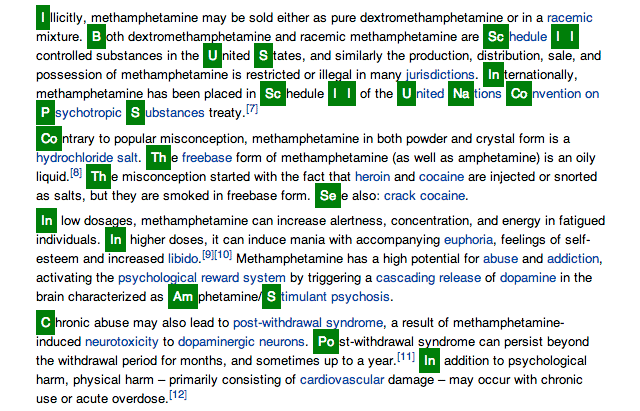
fter I wondered why no one had a made a Breaking Bad bookmarklet that highlights element symbols on web pages in the style of Breaking Bad's opening titles sequence, Adam Prescott did just that.

Breaking Bad Js

Tags: Adam Prescott   Breaking Bad   web development
25 Sep 07:14

How the NFL fleeces taxpayers

by Jason Kottke
Claus.dahl

Sports absurde blanding af kommercialitet og offentlig kiggen væk er et globalt fænomen

It probably doesn't come as much of a surprise that the NFL is a highly profitable business. But it might come as a shock that the league enjoys nonprofit status. From Gregg Easterbrook: How the NFL Fleeces Taxpayers.

Taxpayers fund the stadiums, antitrust law doesn't apply to broadcast deals, the league enjoys nonprofit status, and Commissioner Roger Goodell makes $30 million a year. It's time to stop the public giveaways to America's richest sports league -- and to the feudal lords who own its teams.

Tags: football   Gregg Easterbrook   NFL   sports
25 Sep 07:12

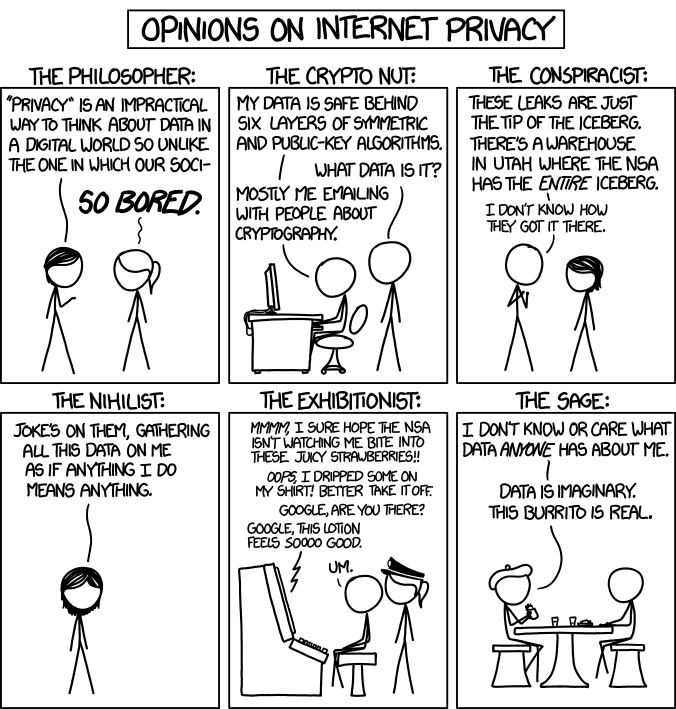
Privacy Opinions

Claus.dahl

Udemærket oversigt

I'm the Philosopher until someone hands me a burrito.
25 Sep 07:02

Stephen Elop’s Nokia contract rewarded him for the way things played out

by David Meyer
Claus.dahl

Criminal stupidity by the Nokia board

Many people in Finland are feeling understandably sore at the sale of Nokia’s venerable handset division to Microsoft, and this won’t help quell the conspiracy theories. Nokia previously said outgoing CEO Stephen Elop had a similar bonus structure to that of his predecessor, but on Tuesday it emerged that Elop’s contract included a “change of control” clause that helped him net $25 million on the way out. There was effectively a built-in incentive for Elop to see the share price fall and then have to sell off the handset business.

Story posted at: forbes.com

To leave a comment or share, visit: Stephen Elop’s Nokia contract rewarded him for the way things played out


Related research and analysis from GigaOM Pro:
Subscriber content. Sign up for a free trial.

24 Sep 10:21

The NSA Review Panel Is An Even Bigger Joke Than We Previously Thought

by Alex Wilhelm
Claus.dahl

Let's pay some insiders to secretly reach the conclusion that everything is fine and they themselves are standup guys. But just to be sure, let's read what they say first and make sure they didn't fuck this simple task up

Screen Shot 2013-09-22 at 4.44.23 PM

Today the AP reported that President Barack Obama’s promised NSA review panel is channeling the entity that it is supposed to inspect, hiding behind layers of government bureaucracy and obfuscating its work.

The AP states that the review panel is lodged in offices provided by the Director of National Intelligence (DNI). Even more, the DNI is running its media strategy, vetting requests through its own press office. Any whiff of independence that the group might have hoped to engender is now certainly gone.

Not that it got off to a good start. The panel was stacked with, as I reported in late August, ”a slurry of insiders, former insiders, and a previous colleague of the president.” So, it was hardly the “high-level group of outside experts” that the president had promised.

Now, ensconced inside the entity that it is supposed to vet, surrounded and apparently managed by those very organs, the panel is rapidly approaching punchline status.

The AP has more, almost comically. I quote to preserve the dryness of its writing:

James Clapper, the intelligence director, exempted the panel from U.S. rules that require federal committees to conduct their business and their meetings in ways the public can observe. Its final report, when it’s issued, will be submitted for White House approval before the public can read it.

So, in short, Clapper, the head of the DNI, exempted the group that he is currently housing, that is supposed to be vetting his work, from rules requiring their work to be public. Transparency! And, whatever they come up with will of course have to be approved for publishing.

“We need new thinking for a new era,” the president stated when announcing that the panel would be formed. We do, he’s correct. But when those hired to think are old friends of either the agency in question or former associates of its boss (the president), and whose thoughts are potentially withheld from the public, we don’t make any progress at all.

The point of hiring “outsiders” to vet the NSA and our lager surveillance activities is that they don’t have allegiance to the folks inside. We didn’t get that. But to top that failure off by absconding the panel behind the very curtains it was supposed to cast open is simply disgraceful.

At least we have something to laugh about over lunch: “Remember when they said the panel was going to be full of outside experts, and provide a real check to the NSA’s views on privacy?” Ha ha.

Top Image Credit: Zoe Rudisill


24 Sep 10:19

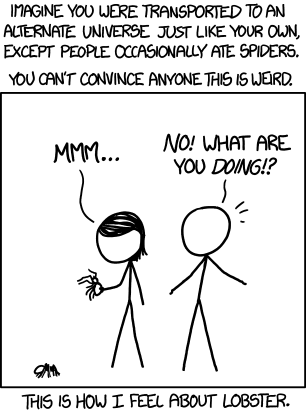
Alternate Universe

As best as I can tell, I was transported here from Earth Prime sometime in the late 1990s. Your universe is identical in every way, except for the lobster thing and the thing where some of you occasionally change your clocks for some reason.
24 Sep 10:16

Four short links: 23 September 2013

by Nat Torkington
  1. Together.js — Mozilla-produced library for in-page collaboration.
  2. This Complex and Tragic Event Supports My Own View (Vaughan Bell) — pretty much every tactic he describes, you will see deployed daily.
  3. Natalie Silvanovich — a security engineer who has extracted and decompiled the code (running on a 6502!) in the heart of a Tamagotchi, and documenting it. Formidable!
  4. Science Fiction to Science Fabrication — MIT course: This class ties science fiction with speculative/critical design as a means to encourage the ethical and thoughtful design of new technologies. (via Beta Knowledge)
24 Sep 10:09

Don’t price your ebook at $1.99

by Laura Hazard Owen
Claus.dahl

We're learning in the "everything is free"-net that free really isn't the selling point. Free doesn't do anything for you, really...

What’s the right price for your self-published ebook? You’ll probably want to stay in the $2.99 to $5.99 range, new data from Kobo’s Writing Life platform suggests — and stay away from $1.99 if you want to maximize sales.

Publishers Weekly reports on Kobo’s self-publishing platform, Writing Life, which launched in June 2012. Mark Lefebvre, Kobo’s director of self-publishing and author relations, tells PW that the $1.99 price point “is dead”:

“Authors most often start at $2.99 ‘and walk the prices up,’ he said, noting, ‘A low price point may be a hook, but it’s the quality of a work that attracts readers, not the price.’ Lefebvre added that $1.99 is dead ‘not just for us, but also, it seems, on other platforms,’ pointing out that $0.99 KWL titles sell twice as many copies as those at $1.99, and that ‘$2.99 sells more than four times more.’ About 80 percent of the KWL titles that sell consistently are priced in the $2.99–$5.99 range, and he also pointed to ‘a bit of a lift in the $7.99–$9.99 price range.’”

This is corroborated by a recent report from self-publishing platform Smashwords, in which Smashwords CEO Mark Coker called the $1.99 price point “a black hole” and said to avoid it. He found that “on average, $3.99 books sold more units than $2.99 books, and more units than any other price except FREE.”

So what is the problem with $1.99? It may be that readers have come to associate it with bargain-basement quality; they may see $0.99 or free as a promotional or limited-time price and $2.99 and above as a marker of quality. I’d love to hear thoughts from self-published authors in the comments.

Photo courtesy of Shutterstock / photo.ua


Related research and analysis from GigaOM Pro:
Subscriber content. Sign up for a free trial.

24 Sep 09:59

Kevin Slavin sent you a request in Battle Camp (ERROR)

Claus.dahl

Haha, this is an autopost to Kevins tumblr - spam is it ware, to counteract spam PennyPop originally sent out in Kevin's name by mistake. Clearly ill-advised to send out an all-hands "we're sorry"

Kevin Slavin sent you a request in Battle Camp (ERROR):

Hello

Writing from PennyPop, a game developer in San Francisco. We are writing because a series of messages was sent in error, in Kevin Slavin’s name, requesting you to join him in one of our games, Battle Camp.

This email was sent in error when our App crashed on our Challenge Friend screen. We are still working hard to identify why the App would send out challenges upon a crash. We are working hard to resolve the issue, and we are deleting all affected users from our records. Please disregard the message, and our apologies for the error. Feel free to contact us with any questions. Place “PRIORITY” in the subject line and we will immediately address any concerns.

Regards,
Gordon

To unsubscribe click:

24 Sep 09:40

I like that a privacy violation and the redress of same both get auto-posted to my Tumblr, since my...

Claus.dahl

Oh yeah, transactional email - you now, actually transactional, not just shit that correspond to state somewhere,

I like that a privacy violation and the redress of same both get auto-posted to my Tumblr, since my post-to address is in my address book.

It’s a funny world. Not always ha-ha funny, but always funny.

24 Sep 09:28

Betaworks And Tim Ferriss Among First Using General Solicitation To Ask Crowds For Investment

by Josh Constine
Claus.dahl

This has stock bubble disaster written all over it. Funding is good, but I have a hard time coming up with reasons this will *not* become some kind of glorified lottery with horrible average payouts and lottery-like bloated expectations

Betaworks SEC

It’s day one of the new general solicitation rules allowing companies to openly advertise that they’re fundraising, and betaworks is wasting no time. It’s just emailed asking its thousands of Openbeta testers to invest in it through AngelList Syndicates. It’s not the only one diving head-first into general solicitation, indicating the new rules will have a profound effect on startups.

For example, best-selling “4-Hour Work Week” author Tim Ferriss just published a blog post titled “You’d Like to Be an Angel Investor? Here’s How You Can Invest In My Deals” to his 1.4 million monthly readers. He’s raising $250,000 via AngelList Syndicates for a startup called Shyp that will pick up, package, any loose item you want sent somewhere.

Some people I’ve talked to a bit suspicious of Ferriss’ chops as a startup picker, but he has advised Uber and Evernote, plus invested somewhat early in Facebook and Twitter.

In an effort to avoid duping people and properly disclose risk, Ferriss tells readers that startup investing is a gamble, they should be comfortable losing what they invest, and do to investing right they should slowly build a portfolio. He also explain that investors will have to prove they’re accredited (net work of over $1 million) when they register with AngelList.

Then he does something I expect we’re going to see a lot of beside general solicitation: proving value-add.

Ferriss includes a section to help Shyp gain users, recruit employees, get press, and strategize expansion:

Can’t invest right now? No worries. If relevant, I’d love for your to consider any of the below actions. Shyp and I would really appreciate it!

- Apply to be a Shyp Hero (Heroes are Shyp’s drivers).

- Apply for a job on Shyp’s core team.

- Interview the co-founders of Shyp: Kevin, Josh, and Jack. They’re clever gents. Just email: founders at shyp dot com.

-Tell Shyp which city you live inso they can launch there before others!

To get space in funding rounds, syndicate operators may need to demonstrate they can provide more than just money and advice. If Ferriss can help Shyp with the projects listed above, he may be able to convince other startups to let him run syndicates for them.

But back to betaworks, “a company that builds companies”.

Previously it took venture capital from big firms and invested it in a slew of companies that it helped build and operate as well, including Digg, Chartbeat, bit.ly, and Dots. Now it’s going to take capital from people in its Openbeta community of beta testers.

I’ve copied the email asking for investment below as I think it’s a fascinating early example of something that might become quite common. You can also read more about their strategy on their blog.

One of the questions it’s hoping to answer with the test is “Could users be more helpful to early-stage companies than venture investors are?” Really, that’s the question General Solicitation as a whole poises. What I’ve gathered, a sentiment mirrored by AngelList co-founder Naval Ravikant, is that the best VCs aren’t in danger of being displaced. Nothing beats the deep experience, mentorship, connections, and clout a top-tier firm or angel can bring.

But the bottom-of-the-barrel venture capitalists could find it much harder to find deals. If one person or a firm can’t provide value beyond their money, why not take that money from an army of crowdsourced investors? It will take a few years for the impact of general solicitation to play out for startups, but with the popularity of general solicitation and AngelList Syndicates fresh out the gate, it’s clear that fundraising is entering a whole new era.

From betaworks to its Openbeta testers:

Hey Openbeta -

Earlier this year we kicked off Openbeta to create a more open line of communication between betaworks and our community. In a very short period of time, it has become a place where thousands of people can try the early products we build and invest in, join us for events at the betaworks studio — and today, for the first time, invest alongside us in the companies we fall in love with.

We believe we’re better at what we do — building and operating companies — because of our open ecosystem, so we’ve decided to take it a step further. Starting today, we’re proud to announce that we’ll start syndicating seed investments for our Openbeta users and community.

While this announcement comes on an important day for crowdfunding (with the lifting of the ban on general solicitation), it’s something we’ve been thinking about for a long time. We think that in the next few months, as the crowdfunding regulations are fully implemented, this new funding environment will be hugely positive for startups and how they approach raising capital.  Unfortunately, because the laws are still unclear, we can’t yet discuss the specific investment we’re syndicating, but we’re excited to be doing this and to partner with AngelList to do it.

To invest in our syndicates, you must:

  • Be an Openbeta Member (you’re already done!)

  • Be an accredited AngelList investor. Ultimately, we’d like to include a broader group, but existing regulations limit startup investing to accredited investors. We hope that as crowdfunding regulations progress, we will be able to include the entire Openbeta community, both accredited and non-accredited investors alike. Stay tuned

These new regulations combined with our announcement today marks a significant change for the technology industry, particularly for startups and venture capital.  We’re happy being smack in the middle of it and we’re thrilled that you’ve chosen to join us in this journey. You can read more about our thought process in the full blog post here, and if you have any additional questions you can reach out to me directly at [redacted]

Nick


19 Sep 15:37

VO2 max - Wikipedia, the free encyclopedia

by clausd
Claus.dahl

Dæhlie er vild - men tjek dog hundene!

Dæhlie's result was achieved out of season, and physiologist Erlend Hem who was responsible for the testing stated that he would not discount the possibility of the skier passing 100 mL/(kg·min) at his absolute peak. Norwegian cyclist Oskar Svendsen is thought to have recorded the highest VO2 max of 97.5 mL/(kg·min), a "sensational" value in itself, made more remarkable by his young age (18 years old at the time).[11] To put this into perspective, thoroughbred horses have a VO2 max of around 180 mL/(kg·min). Siberian dogs running in the Iditarod Trail Sled Dog Race have VO2 values as high as 240 mL/(kg·min).
19 Sep 10:08

Four short links: 18 September 2013

by Nat Torkington
Claus.dahl

I'm much more of a Bezos fan than a Jobs fan. Even though I'm a super happy Amazon-customer, I've never had the feeling my expectations are being managed, and I'm being invited into a cult. I'm just a customer.

  1. No ManagersIf we could find a way to replace the function of the managers and focus everyone on actually producing for our Students (customers) then it would actually be possible to be a #NoManager company. In my future posts I’ll explain how we’re doing this at Treehouse.
  2. The 20 Smartest Things Jeff Bezos Has Ever Said (Motley Fool) — I feel like the 219th smartest thing Jeff Bezos has ever said is still smarter than the smartest thing most business commentators will ever say. (He says, self-referentially) “Invention requires a long-term willingness to be misunderstood.”
  3. Putting Time in Perspective — nifty representations of relative timescales and history. (via BoingBoing)
  4. Sophia — BSD-licensed small C library implementing an embeddable key-value database “for a high-load environment”.
19 Sep 09:47

Willing to Work, But Too Tired to Hustle

by Klint Finley
Claus.dahl

Killer line, if nothing else

willing-to-work

Community college teacher Nicole Matos writes:

There’s vanishingly little excitement, to tell you the truth. There’s just explicitly, and I don’t think entirely naively, the longing for a job where you do one thing, easily described, for a long term, and get predictably and sufficiently paid for what you do.

My students don’t want to be Astronauts. They want to be, sort of, Post Office clerks—with a 9-5 and a pension plan.

And, in that case, I don’t know how to break it to them. I don’t know how to sell the alternative—the more realistic future of work, that sort of chance, the chanciest chance I’ve ever sold.

To be clear, there’s nothing wrong with the competitive capacity of my students; if anything, they seem more experienced in cutthroat competition than ever before. What is exhausted—just worn and jaded, from constant use, and such challenging odds of reward—is their inner reserves. Their belief that hustle can actually, well, work. And their trust that a hustle-world—a world of contingent, not permanent, labor; of setting your own path, not following the path of a established bureaucracy; and of preparing, always preparing, not for the present, but for the as-yet-unimagined-job-that’s-next—will be a good one, an equitable one, a world they’ll want to join. Or that will include a place for them, even if they do.

Full Story: Medium: Too Tired to Hustle

Sounds like precariat burnout to me.

18 Sep 17:05

Area man brews own beer in gut

by Jason Kottke
Claus.dahl

fan-fucking-tastisk, (mon sandt?)

A Texas man was getting drunk without drinking alcohol and his doctors think they figured out why: brewer's yeast in his in gut was brewing beer and making the man intoxicated.

The patient had an infection with Saccharomyces cerevisiae, Cordell says. So when he ate or drank a bunch of starch -- a bagel, pasta or even a soda -- the yeast fermented the sugars into ethanol, and he would get drunk. Essentially, he was brewing beer in his own gut. Cordell and McCarthy reported the case of "auto-brewery syndrome" a few months ago in the International Journal of Clinical Medicine.

Some clever entrepreneur will undoubtedly turn this syndrome into a product...the market opportunity for a pill that allows you to get drunk on spaghetti *and* be the owner/operator of your own microbrewery is too large to ignore. (via ★interesting)

Tags: food   medicine   science
18 Sep 12:24

Showtime: Ultra Lab, “Hello World! Processing”

by Bruce Sterling

*It’s forty minutes long, but it’s got all the usual suspects of Processing art code waxing eloquent.

*Also, as documentaries go, it’s hard to beat for artsy.

Hello World! Processing from Ultra_Lab on Vimeo.


18 Sep 12:19

How to beat AWS: Be cheaper, personalized and free of the PATRIOT Act

by Derrick Harris
Claus.dahl

Han er eddermame god til at komme i medierne ham Gauger

Life can be hard for American cloud providers trying to compete with Amazon Web Services, but a group of European cloud providers speaking at Structure:Europe on Wednesday don’t appear too concerned about distinguishing themselves from their larger counterpart.

On the highest level, the easiest way is simply to have a better business model. Whereas AWS offers predefined instance sizes that users must choose from, every provider on the stage lets users choose the exact amounts of compute, storage and memory they need. “We sort of see [AWS] as the Walmart, in a sense,” said UpCloud General Manager Antti Vilpponen — it’s the biggest provider around and probably has what many workloads require, but there are specific workloads that require customized infrastructure.

According to Andreas Gauger, CMO of ProfitBricks, cost is a big point of distinction, too. “It’s actually very easy to beat Amazon on price because Amazon doesn’t care about price,” he said. “… I’ve never seen a product with such a high margin as this.”

In fact, Gauger added, if all cloud providers were willing or able to drop their prices, its effect on business would be even greater than it already is. He believes the only reason the industry is still talking about things like private clouds and hybrid clouds is that it’s just too expensive to run anything at scale in most public clouds.

The good news, CloudSigma COO Bernino Lind noted, is that it’s easy enough to cut costs even if you’re not operating at AWS’s scale. With the innovation taking place at the chip level, cloud providers can get better energy efficiency, for example, that lets them reduce their costs even without being able to demand lower prices from vendors because they’re buying so much gear and bandwidth.

Supporting native languages helps win European customers as can supporting Europeans currencies, said ElasticHosts CEO Richard Davies.

Oh, and being subject to European laws rather than government-leaning U.S. laws is a big draw for some customers. CloudSigma has been approached by the Swiss government to hand over data, Lind said, and when the company declined, that was the end of the story. U.S. laws, of course, often require the disclosure of data in many cases.

The recent NSA spying revelations have only driven this point home. “I think the PRISM scandal didn’t hurt [European providers],” Gauger joked.

Check out the rest of our Structure:Europe 2013 coverage here, and a video embed of the session follows below:


Related research and analysis from GigaOM Pro:
Subscriber content. Sign up for a free trial.

17 Sep 14:04

The Nexus 4 is sold out. Nexus 5 on the way?

by Alex Colon
Claus.dahl

Ahrmen hold nu op, Goog! Jeg havde glædet mig til den gamle telefon.

Bye bye, Nexus 4. The 16GB model of the phone sold out on the Google Play online store on Monday. Last week it sold out of the 8GB model following a $100 price drop. And according to a source close to The Verge, Google has no plans to restock and continue offering the phone. That makes me think a Nexus 5 announcement can’t be too far off.

Nexus 4 sold out

There’s plenty of evidence to support this. First off is the announcement of Android 4.4 (KitKat), which is likely to make its debut on Google’s next-generation handset. Then there’s the mystery phone, which looks a lot like a new Nexus, that may or may not have been planted in a Google promotional video. Finally, there’s the recently surfaced FCC filing with images that look extremely similar to the phone in Google’s video. All of which is to say, you shouldn’t be surprised if Google announces the Nexus 5 in the near future.

Little is known about the device itself, although it is believed that LG is manufacturing it. And thankfully, those FCC filings confirm that the device pictured will support LTE frequency bands, which was arguably the Nexus 4’s greatest shortcoming.


Related research and analysis from GigaOM Pro:
Subscriber content. Sign up for a free trial.

17 Sep 08:07

Four short links: 16 September 2013

by Nat Torkington
Claus.dahl

The books like link 4 are coming hard and heavy - but maybe a bit too many?

  1. UAV Offers of Assistance in Colorado Rebuffed by FEMAwe were told by FEMA that anyone flying drones would be arrested. [...] Civil Air Patrol and private aircraft were authorized to fly over the small town tucked into the base of Rockies. Unfortunately due to the high terrain around Lyons and large turn radius of manned aircraft they were flying well out of a useful visual range and didn’t employ cameras or live video feed to support the recovery effort. Meanwhile we were grounded on the Lyons high school football field with two Falcons that could have mapped the entire town in less than 30 minutes with another few hours to process the data providing a near real time map of the entire town.
  2. Texas Bans Some Private Use of Drones (DIY Drones) — growing move for govt to regulate drones.
  3. IETF PRISM-Proof Plans (Parity News) — Baker starts off by listing out the attack degree including he likes of information / content disclosure, meta-data analysis, traffic analysis, denial of service attacks and protocol exploits. The author than describes the different capabilities of an attacker and the ways in which an attack can be carried out – passive observation, active modification, cryptanalysis, cover channel analysis, lawful interception, Subversion or Coercion of Intermediaries among others.
  4. Data Mining and Analysis: Fundamental Concepts and Algorithms (PDF) — 650 pages on cluster, sequence mining, SVNs, and more. (via author’s page)
16 Sep 19:16

Temperature chart for the last 11,000 years

by Jason Kottke
Claus.dahl

climate denialists are fucking idiots

For the first time, researchers have put together all the climate data they have (from ice cores, coral, sediment drilling) into one chart that shows the "global temperature reconstruction for the last 11,000 years":

11000 years temperatures

The climate curve looks like a "hump". At the beginning of the Holocene - after the end of the last Ice Age - global temperature increased, and subsequently it decreased again by 0.7 ° C over the past 5000 years. The well-known transition from the relatively warm Medieval into the "little ice age" turns out to be part of a much longer-term cooling, which ended abruptly with the rapid warming of the 20th Century. Within a hundred years, the cooling of the previous 5000 years was undone. (One result of this is, for example, that the famous iceman 'Ötzi', who disappeared under ice 5000 years ago, reappeared in 1991.)

What on Earth could have caused that spike over the past 250 years? A real head-scratcher, that. But also, what would have happened had the Industrial Revolution and the corresponding anthropogenic climate change been delayed a couple hundred years? The Earth might have been in the midst of a new ice age, Europe might have been too cold to support industry, and things may not have gotten going at all. Who's gonna write the screenplay for this movie? (via @CharlesCMann)

Tags: climate   global warming   science
16 Sep 19:14

Techstars NY grad Urtak suspends operations

by Erin Griffith
Claus.dahl

rofl cartoon

poll_q_inside

Urtak, a New York-based maker of an online polling tool, has suspended its operations. The company announced the move in a blog post this morning, signed by co-founders Aaron Gibralter and Marc Lizoain:

The decision to suspend our service is one that we do not take lightly and that causes us great pain. We have spent more than five years dedicated to the idea of an open and democratic public opinion industry. We intend to continue this fight. While we have no choice but to turn out the lights on Urtak, we can say with certainty that this is not a farewell, but instead a goodbye for now.

Urtak graduated from Techstars NY in 2011, raising $500,000 in seed funding from Vaizra Investments, Quotidian Ventures, Advancit Capital, and Esther Dyson.

The company’s WordPress plug-in allowed bloggers and publishers to poll their users with simple yes and no questions. It was a fun tool. I used it on a short blog post about Urtak and native advertising and was surprised to get hundreds of responses as well as dozens of new questions. It really seemed to boost engagement.

I wasn’t alone in that experience: 12,000 different publishers, including Sports Illustrated, the Daily Dish, InStyle and Mashable, have also used Utak’s tools. (I’ve embedded one last poll at the bottom of this post for old time’s sake.)

Urtak’s business model, however, was in its early stages. Earlier this summer, company had announced plans to sell ads that accompanied its survey tools. Urtak’s plan was to split revenue from the ads with publishers. One sponsored poll, for example, generated $600 for TheBlaze.

Thumb, which made a similar social polling tool only for mobile, recently sold itself in an acqui-hire deal to a research firm called YPulse.

The company’s blog post, titled “Goodbye for now,” hints that Urtak isn’t completely giving up.

Our current reality is that we must now pause the work of developing and distributing Urtak polls in order to reflect, revise, and relaunch our project on a winning trajectory.

I reached out to the company’s founder and will update this post if I get more information. Service will shut down on Sept. 20.

Illustration by Hallie Bateman

Erin Griffith

erin
Erin Griffith covers New York startups for PandoDaily. She's worked as staff writer for Adweek and a private equity blogger for peHUB. Her writing has appeared in VCJ, Time Out New YorkHuffington Post, FT.com, and BUST. She plays keyboard in a band called Team Genius and Tweets as @Eringriffith.


16 Sep 13:49

Hey Boston, if you want to keep startups close, loosen up and stay up late

by Barb Darrow
Claus.dahl

Bawston lukker nemlig latterligt tidligt. Og byens taxachauffører kan notorisk ikke finde rundt i egen by. Eller tale sproget....

As Boston gears up for a mayoral election melee — a dozen candidates want to succeed Thomas Menino, who is not running for a sixth term –  tech pundits have some advice to would-be mayors: if they want to keep startups from decamping out west or to New York City, they need to make sure Boston stays up later. 

Compared to New York, in particular, Boston bars and restaurants tend to close way early — 11 p.m. or midnight — and that’s bad for young employees who work late and want to unwind later. Kayak.com co-founder Paul English and Karmaloop founder Greg Selkoe told The Boston Globe that needs to change. Said English:

“New York looks to be the biggest threat to Boston, in terms of stealing entrepreneurs. And the reason New York is stealing from us, is the people who are graduating from Harvard and MIT and other schools think New York is more fun. So the first question you should ask is: How would twentysomethings design this city? Keep restaurants open later, and make sure the T is running late.”

Selkoe pointed out that of all the major public transit systems, the “T” closes the earliest. English proposes that both bars and the MBTA stay open till 4 a.m. Right now, depending on the line, the last T run is 12:30 a.m.

Making Boston into a more of a night owl is not a new proposal; Michael Skok, general partner of North Bridge Venture Partners, advocated the same thing a few weeks ago in GigaOM. Still, a 4 a.m. last call would be a stretch in a town where Puritan-inspired “blue laws” die hard. It’ll be interesting to see if any of the candidates take up this issue for real.  

Feature photo courtesy of Flickr user ReneS


Related research and analysis from GigaOM Pro:
Subscriber content. Sign up for a free trial.