Shared posts

27 Feb 03:55

Advice on Organizing Asset Allocations and Managers

by David Merkel
Photo Credit: Roscoe Ellis

Photo Credit: Roscoe Ellis

I was reading an occasional blast email from my friend Tom Brakke, when he mentioned a free publication from Redington, a UK asset management firm that employs actuaries, among others. I was very impressed with what I read in the 32-page publication, and highly recommend it to those who select investment managers or create asset allocations, subject to some caveats that I will list later in this article.

In the UK, actuaries are trained to a higher degree to deal with investments than they are in the US. The Society of Actuaries could learn a lot from the Institute of Actuaries in that regard. As a former Fellow in the Society of Actuaries, I was in the vanguard of those trying to apply actuarial principles to risk management, both when I managed risks for insurance companies, worked for non-insurance organizations, and manage money for upper middle class individuals and small institutions. Redington’s thoughts are very much like mine in most ways. As I see it, the best things about their investment reasoning are:

  • Risk management must be both quantitative and qualitative.
  • Risk is measured relative to client needs and thus the risk of an investment is different for clients with different needs.  Universal measures of risk like Sharpe ratios, beta and standard deviation of asset returns are generally inferior measures of risk.  (DM: But they allow the academics to publish!  That’s why they exist!  Please fire consultants that use them.)
  • Risk control methods must be implemented by clients, and not countermanded if they want the risk control to work.
  • Shorting requires greater certainty than going long (DM: or going levered long).
  • Margin of safety is paramount in investing.
  • Risk control is more important when things are going well.
  • It is better to think of alternatives in terms of the specific risks that they pose, and likely future compensation, rather than look at track records.
  • Illiquidity should be taken on with caution, and with more than enough compensation for the loss of flexibility in future asset allocation decisions and cash flow needs.
  • Don’t merely avoid risk, but take risks where there is more than fair compensation for the risks undertaken.
  • And more… read the 32-page publication from Redington if you are interested.  You will have to register for emails if you do so, but they seem to be a classy firm that would honor a future unsubscribe request.  Me?  I’m looking forward to the next missive.

Now, here are a few places where I differ with them:

Caveats

  • Aside from pacifying clients with lower volatility, selling puts and setting stop-losses will probably lower returns for investors with long liabilities to fund, who can bear the added volatility.  Better to try to educate the client that they are likely leaving money on the table.  (An aside: selling short-duration at-the-money puts makes money on average, and the opposite for buying them.  Investors with long funding needs could dedicate 1% of their assets to that when the payment to do so is high — it’s another way of profiting from offering insurance in of for a crisis.)
  • Risk parity strategies are overrated (my arguments against it here: one, two).
  • I think that reducing allocations to risky assets when volatility gets high is the wrong way to do it.  Once volatility is high, most of the time the disaster has already happened.  If risky asset valuations show that the market is offering you significant deals, take the deals, even if volatility is high.  If volatility is high and valuations indicate that your opportunities are average to poor at best, yeah, get out if you can.  But focus on valuations relative to the risk of significant loss.
  • In general, many of their asset class articles give you a good taste of the issues at hand, but I would have preferred more depth at the cost of a longer publication.

But aside from those caveats, the publication is highly recommended.  Enjoy!

27 Feb 03:53

Buffett, Bacteria & Compounding

by Muthu

It’s 50 years since Warren Buffett has been running Berkshire Hathaway. Soon, he would be publishing his 50th annual letter. I thought of sharing with you some portions from his 25th annual letter written in 1990.


We face another obstacle: In a finite world, high growth rates must self-destruct. If the base from which the growth is taking place is tiny, this law may not operate for a time. But when the base balloons, the party ends: A high growth rate eventually forges its own anchor.

Carl Sagan has entertainingly described this phenomenon, musing about the destiny of bacteria that reproduce by dividing into two every 15 minutes. Says Sagan: “That means four doublings an hour, and 96 doublings a day. Although a bacterium weighs only about a trillionth of a gram, its descendants, after a day of wild asexual abandon, will collectively weigh as much as a mountain…in two days, more than the sun – and before very long, everything in the universe will be made of bacteria.” Not to worry, says Sagan: Some obstacle always impedes this kind of exponential growth. “The bugs run out of food, or they poison each other, or they are shy about reproducing in public.”

Even on bad days, Charlie Munger (Berkshire’s Vice Chairman and my partner) and I do not think of Berkshire as a bacterium. Nor, to our unending sorrow, have we found a way to double its net worth every 15 minutes. Furthermore, we are not the least bit shy about reproducing – financially – in public. Nevertheless, Sagan’s observations apply. From Berkshire’s present base of $4.9 billion in net worth, we will find it much more difficult to average 15% annual growth in book value than we did to average 23.8% from the $22 million we began with.


Imagine that Berkshire had only $1, which we put in a security that doubled by year end and was then sold. Imagine further that we used the after-tax proceeds to repeat this process in each of the next 19 years, scoring a double each time. At the end of the 20 years, the 34% capital gains tax that we would have paid on the profits from each sale would have delivered about $13,000 to the government and we would be left with about $25,250. Not bad. If, however, we made a single fantastic investment that itself doubled 20 times during the 20 years, our dollar would grow to $1,048,576. Were we then to cash out, we would pay a 34% tax of roughly $356,500 and be left with about $692,000.

The sole reason for this staggering difference in results would be the timing of tax payments. Interestingly, the government would gain from Scenario 2 in exactly the same 27:1 ratio as we – taking in taxes of $356,500 vs. $13,000 – though, admittedly, it would have to wait for its money.


We hope in another 25 years to report on the mistakes of the first 50. If we are around in 2015 to do that, you can count on this section occupying many more pages than it does here.

(Source: http://www.berkshirehathaway.com/letters/1989.html)


27 Feb 03:06

Railway Budget: Big Plans in Store, And Can You Open Your Pockets Please?

by Deepak Shenoy

The Rail Budget is here. Let’s cut through the bull and give you what’s important.

Fares Haven’t Changed

Yes, it’s time to rejoice. You’re still going to be stuffed like sardines into massive metal boxes when you’re an “unreserved” customer of the Railways, but you won’t pay a rupee more than last year.

However, you are likely to get your tickets in 5 minutes. We aren’t exactly sure why it should take five minutes either, but apparently this is a big improvement.

Freight Costs are Up

To transport goods, freight costs have been increased. The rates are between 4% and 10% (mostly 10%) and they expect traffic to grow as well. Coal transportation rates, for instance, are up 6.3%. Those people who just bid for all those coal blocks suddenly have to pay more, and we hope they factored that in.

Big Investment in Upgrades

So you complained about a train never coming on time?… (Read On...)

27 Feb 03:05

How Parle G tackled crunch with price and reach..some interesting history

by Amol Agrawal
Interesting business history snippet on the iconic biscuit brand: There is a spot where the warm aroma of fresh baking catches hold of anyone travelling in a Mumbai local train enroute Andheri and further north. A result of the busy ovens at the first factory of Parle Products baking a batch of the world’s largest biscuit […]
27 Feb 03:05

Become a public policy thinker in three easy steps..

by Amol Agrawal
Ajay Shah has a piece on this. Easier said than done but he has some nice ways to think about public policy. The three steps are: Step 1: What’s the market failure? Step 2: What’s the proposed intervention? Step 3: The hurdle of public administration In the end he says: Decades of Indian socialism have starved […]
26 Feb 07:43

Budget 2015: Watch How Subsidies Have Eaten Up Our Government Spending

by Deepak Shenoy

We welcome the Budget 2015 series with a post on Subsidies. The government pays for many things for us:

  • Food: The government buys food and lets it rot in large warehouses (which it also pays to build)
  • Oil: You pay less at the petrol pump because the government pays the oil companies for the losses they make for billing you lesser.
  • Fertilizer: The government pays the fertilizer companies so as to keep prices low for farmers.

These are of course the main subsidies, but there are probably umpteen more. For instance when Air India need a Rs. 40,000 cr. rescue, it’s not called a subsidy, even though in effect, it is one. When farmers refuse to pay loans and the government pays it for them, it’s called a “waiver”, not a subsidy. When a big corporate demands a tax write off before investment, that’s not a subsidy, that’s just business. When IT companies don’t pay taxes for 10 years, that’s not a subsidy because darn it we say so.… (Read On...)

26 Feb 07:43

Central Banks and the King Midas touch…

by Amol Agrawal
One big lesson from the recent crisis should have been to ignore whatever econs and their inspired central banks have been telling us for some years now. Their role should have been marginalised. But the dependence on them and their wisdom has only risen. We were told by celebrated econs that how central banks could have avoided great depression only […]
26 Feb 07:43

Become a public policy thinker in three easy steps

by Ajay Shah

Step 1: What's the market failure?


Each of us tends to get unhappy at some feature of the world or the other. As an example, I don't like rap music. But value judgements of this nature do not justify the use of State power - either to ban rap music or to encourage classical music. Such coercion by the State is just abuse of power.

When should the State intervene? The technically sound answer is: When you are certain there is a market failure, and when you are confident you know how to setup the correct State capacity for the intervention.

Market failures come in four kinds: 1. Asymmetric information,   2. Externalities,   3. Market power and 4. Public goods. These are technical terms in microeconomics and each needs to be carefully understood.

The first hurdle that must be crossed in policy thinking is the question: "Is there a market failure?"  Every proposal to do something in public policy faces this test.

A good way to smell market failures is the prices being wrong. In a well functioning economy, the price should be close to marginal cost or to the Ramsey price. When the observed price diverges from these normative ideals, a market failure may be afoot. But while the price being wrong is the diagnostic that alerts you to a problem, direct intervention in the price is seldom the right answer

At present, most of what the government does in India is not about market failures. Using the coercive power of the State to meddle in the voluntary decisions of consenting adults is mostly a bad idea. The Indian State suffers from rampant central planning, license-permit raj, and shameless value judgments.

Step 2: What's the proposed intervention?


Once we agree there is a market failure, we have to figure out what we'd like to do about it. Here, it's important to understand the anatomy of the market failure, and solve it at its root cause.

If there is a causal chain x -> y -> z, leading up to a bad outcome z, don't use the power of the State to change y or z. Understand the root cause, and solve it there.

Example: Investors are not buying infrastructure bonds. Don't propose tax exemption as the solution.

Example: Micro-finance companies in Andhra Pradesh are mistreating their consumers. Don't propose micro-prudential regulation of micro-finance companies as an answer.

Example: OTC derivatives are not enforceable. Don't propose changing the financial regulatory architecture as the answer.

Government agencies in India are known to do a bait-and-switch. A problem is shown, outrage is created, and then a completely unrelated solution is pushed forward which will increase power and reduce accountability. We need to be skeptical and verify: Does your claimed intervention address your claimed market failure?

Complicated microeconomic interventions which require volumes of law are generally abuses of power, and will not deliver on the original objective. At a heuristic level, the Indian capital controls don't work because the FEMA handbook weighs 3.5 kilos.

Occam's Razor in Public Policy: Many different interventions could possibly change the world in the direction that you like. The least intrusive intervention that gets the job done is the right one. In order to find this least-intrusive intervention, you have to understand the market failure deeply. Sound thinking in public policy requires understanding the anatomy of the market failure, and coming up with the minimum use of the coercive power of the State in addressing that market failure and in minimally disturbing the rest of the landscape.

Corollary: Macroeconomic problems require macroeconomic policy tools. It's almost always wrong to use microeconomic interventions to pursue macroeconomic goals.

Step 3: The hurdle of public administration


Okay, you are all dressed up and ready to go, with a demonstrated market failure, and a minimal intervention which solves it. Now the question arises: Can you design a feasible solution with real world political economy and public administration?

Pressure groups will hijack well meaning policy frameworks to favour small groups at the expense of the diffused populace. Government agencies like to be lazy and corrupt. Politicians and officials work for themselves and not for the citizenry. Can we envision the accountability mechanisms through which the Principal (the citizen) is able to coerce the Agent (the government) to deliver results? A complex machinery of checks and balances has to be designed, including transparency, reporting, rule of law, due process, etc.

As a thumb rule, government should almost never be in the position of determining a price [example]. Prices must fluctuate every day, based on changes out there in the world. It is impossible for government agencies to figure out what the right price should be. Similarly, a government should not be in the business of determining business plans or business models. That's a tell tale sign of central planning.

We have to be careful about mission creep. Market power is the job of the Competition Commission and not the IRDA. Enforcing IPC is the job of the police and not of FMC. SEBI should not be forcing listed companies to have women directors; RBI should not be subsidising ATM placement in Assam, and so on.

Libertarianism of necessity vs. libertarianism of choice


Many times, even after we know there is a market failure and we're able to envision a surgically limited intervention, we have to fall back on doing nothing, as the market failure is not very large or significant, and it's not easy to design the public administration machinery through which we can make a government deliver the desired outcomes. When there is low State capacity, this happens more often. We do more subtle interventions in Sweden, we do more laissez faire in India.

Conclusion


Decades of Indian socialism have starved us of capabilities in economics. Everyone interested in the field of public policy should limber up with these three steps: (a) What's the market failure? (b) What's the minimal intervention that precisely addresses the root cause of the market failure? (c) How do we construct mechanisms through which government agencies in the real world will deliver the desired outcome, even though their first instinct is to favour laziness and corruption?

This is hard work. The outcomes of this process of thinking resist classification into prefabricated belief systems. I sometimes meet people who say "As I'm a Keynesian, I propose policy X". That's a great economy of thought; by reading a few books by Keynes, you have figured out the world. It's  better to start from first principles, and analyse each problem on its merits, and engage with the gritty reality out there in figuring things out.
26 Feb 07:40

What A Rembrandt Can Teach you about Software and Programmers

by Shane Parrish

matrix

A thoughtful passage by David Gelernter in Mirror Worlds: or the Day Software Puts the Universe in a Shoebox…How It Will Happen and What It Will Mean on how looking at a Rembrandt can teach us to better understand not only software but the craft behind it.

Suppose you visit an art museum and walk up to a painting. I say “Ah ha! I see you’re admiring some powdered pigments, mixed with oil and smeared onto what appears to be a canvas panel.” You say “No, you moron. I’m admiring a Rembrandt.” Good. You’re three-quarters of the way towards a deep understanding of software.

How did this happen?

Well clearly we may, if we choose, regard a painting as a coming-together of two separate elements. The paints and canvas—the physical stuff; and the form-giving mind-plan. I’ll call these two elements the body and the disembodied painting respectively.

Both are necessary to the finished product. But they are unequally decisive to its character. If Rembrandt had (while trying to shake out a tablecloth) accidentally chucked his favorite paint set into a canal on the very morning he was destined to make our painting; if he’d accordingly been forced to go down to the basement and hunt up another set—the finished product would be the same. But if he’d altered his mind-plan—the disembodied painting—before setting to work, our finished painting would obviously have been different.

In fact, the disembodied painting is a painting in and of itself— albeit a painting of a special kind, namely an unbodied one. Rembrandt is perfectly entitled to tell his wife “I have a painting in mind” before setting to work. But plainly the mere body is no painting, not in and of itself. If the paints on Rembrandt’s table went around telling people “Hey look at us, we’re a painting,” no-one would believe them.

This distinction is the key to software and its special character. A running program is a machine of a certain kind, an information machine. The program text—the words and symbols that the programmer composes, that “tell the computer what to do” – is a disembodied information machine. Your computer provides a body.

Unlike Rembrandt’s mind plan, a disembodied information machine must be written down precisely and in full. It’s a bit like the engineering drawings for a new toaster in this regard; the machine designer leaves nothing to chance. Unlike Rembrandt’s mind plan or the toaster drawings, on the other hand, a disembodied information machine can be “embodied” automatically. No skill, judgement or human intervention is required. Merely hand your text to a computer (it’s probably stored inside the computer already); the computer itself performs the “embodying.”

So: A running program—an information machine or infomachine for short—is the embodiment of a disembodied machine. In saying
this, we have said a lot. A fairly simple point first, then a subtle and deeply important one—

Some people believe that, when they see a program running, the machine they are watching is a “computer.” True, but not true
enough. The computer, that impressive-looking box with the designer logo, is merely the paint, not the painting. When you say I’m watching this computer do its stuff, you are saying in effect I’m admiring not this Rembrandt but some paint smeared on canvas. Some people imagine the computer as a gifted actor (say) who is handed a program and declaims it feelingly. No: bad image. The computer itself is of the utmost triviality to the workings of the infomachine you are watching. It may decide how fast or slowly the thing runs, and may effect its behaviour just a little around the fringes, but essentially, it is of no logical significance whatever. It is a mere body, and bodies are a dime a dozen.

The second point is harder.

People often find it difficult to keep in mind that, when they see a program text, what they’re looking at is a machine. The fact that, for the time being, the machine they’re looking at has no body confuses them With good reason: This is a subtle, maybe a confusing point. They leap to the conclusion that what programmers do amounts to arranging symbols on paper (or in a computer file) in a certain way. They look at a program and see merely a highly specialized kind of document …

This mistake is fatal to any real understanding of what software is.

Understanding software doesn’t mean understanding how program texts are arranged, it means understanding what the working infomachine itself is like—what actually happens when you embody the thing and turn it on-what kind of structure you are creating when you organize those squiggles-the shape of the finished product, the way information hums through it, the way it grows, shrinks and changes as it runs, the look and feel of the actual computational landscape. This is where software creativity is exercised. This is where the field evolves, metamorphoses and explodes. Talented software designers work with some image of the actual running program uppermost in mind. Failing to see through the program text to the machine it represents is like trying to understand musical notation without grasping that those little sticks and ellipsoids represent sounds.

This kind of information is hard to convey. You can’t directly see a running program. You can sense its workings indirectly, but you can’t open the hood and look right at the mechanism. An ironic reversal of the Rembrandt experience: Here the mind-plan is tangible, but the embodied thing itself is not.

Finally concluding

[I]f you get carried away, and start asserting that “music is the mechanical manipulation of symbols on staff paper,” “programming is mathematics,” you have committed intellectual suicide. You’ve mistaken the means for the end. You’ve cut yourself off absolutely from all real inspiration, creativity and growth. And you have failed, profoundly, to understand the character of your field.

A dangerous mistake. Where software is concerned, an all-too-natural one.

--
Sponsored By: Greenhaven Road Capital: You think differently - now invest differently.

26 Feb 07:39

18 on 30

by Dev Ashish
Hi guys… Two days back, I turned 30…that’s 3 full decades!! And just imagine what would have happened if someone had gifted me shares of Wipro worth Rs 10,000 around that time? I would now have been worth more than Rs 100 Crores!! But that did not happen…so let’s leave it… Here is a picture of my birthday cake which I posted on the Facebook Page too… and if you observe carefully, you will
26 Feb 07:39

Budget of 2015: What to do if you are an Investor?

by subra


If you are an investor in India there are many people around you saying ‘How prepared are you for the budget’. If you are a Real Long Time Investor you should listen to Ayn Rand – and just ‘shrug’. I agree it is very difficult to remain indifferent. Your simple morning newspaper, television channels, websites all are in a hurry to tell you the following:

What is likely to happen, what industry wants, what the housewife wants, why gas prices will go up, cigarettes will now be doomed….etc. etc.

The budget is an activity which has no meaning at all for a retail investor. The budget is a document which says how much the government is expected to earn, borrow, lend, spend, save, and how the economy is LIKELY to take shape. It is just a hope document which may not mean anything for you! And at the end of the year you have a Finance Minister telling you why nothing of that happened. Or did not happen as he said it would.

As an investor you could be investing in bank fixed deposits, bonds, mutual funds (all varieties) , equity, land and gold. In your investing life which could range from 20 years to say 90 years, what impact can ONE budget have? zilch. Nothing at all.

Now come to 2014 India. If you were an equity investor, you are in the MECCA OF TAXATION. No capital gains tax, no dividend tax, no wealth tax, – what more can you want? A well developed market, a fantastic back end, guaranteed trades. You can sell shares worth a few million dollars and get the money credited into your account in 48 hours. No hassles, fully safe, no counter party risk,  completely tax free. You can only pray that the Finance Minister does not do anything which upsets this equation.

Now the stupidest thing that an investor can do is to REACT to the budget. Let us assume one provision said (it did in 2014) ‘the government will encourage drip irrigation all over the country’. You rush to buy Jain Irrigation which has already shot up 10%. You feel happy with that till you see the prices of Jain Irrigation drop over the next 3 days.  After one full year, the share may have done NOTHING, and you would have been much better off in your mutual fund, where the fund manager may have taken a calmer call!


Why? Simply because the people who knew this would happen had already ‘bought on rumors and SOLD on news’. So reacting to the budget, well does not help the retail investor much. Might as well wait and take a calmer decision.

You think the investor learnt his lesson in 2015? NO. He will continue to be excited by the budget. Arun Jaitely will say “We understand the need for Infrastructure, ..so the retail investor will go and invest in either Infrastructure funds or a few infrastructure shares currently quoting below Rs. 10.

Time alone will tell you whether you were smart of not. The probability of you making money on that transaction is also quite low. And it is only after a year will you be able to judge whether your decision is right or wrong.

If you are a Gold investor, we both know that we are a gold hungry country and the recent track record is so good that people will continuously buy gold. There is Wealth tax on gold, SHORT TERM capital gains for gold UNLESS it is held for 3 years. After 3 years it still attracts LONG TERM capital gains. You will still buy gold because your wife said so…or for whatever reasons. So how does a national budget help you? Nothing.

If you are a bank depositor, chances are the bank transactions will be left untouched – but even if he were to tinker it could only be to improve the post tax return for the investor. Really nothing to look forward to as an investor / depositor.

Real Estate – another asset class which you buy, hold or sell depending on your own use requirement or friend’s advise! These are really long term decisions and one or 2 budgets do not really make / mar your decisions.

So as an investor if you sleep through the budget and woke up two days late, do you think it will matter? The answer is NO.

Instead of seeing what Arun Jaitely is doing with the country’s money (rather what he is promising) YOU should concentrate on YOUR own budget. Your asset allocation, your income and expenditure, your balance sheet, your goals.

That friends will give you a far superior RoT. Return on Time spent.


Post Footer automatically generated by Add Post Footer Plugin for wordpress.

26 Feb 07:39

How to Stop Buying Things You Never Use?

by Hemant Beniwal

When my friend did the annual Diwali cleaning ritual, he noticed that the cupboards had more stuff as compared to last year. Another funny thing he noticed was that there were plenty of things that he did not use for quite some time. Why did he buy them in the first place? Many times we end up buying things because there is a good ‘deal’ or discount on them. Sometimes we buy things which we think may be useful to us but then they never are. We even buy things because someone else has it! These habits lead to too many purchases, too many things to store and end up wasting of lot of money.

ReadSmartphones are making us Dumb – Financially & Mentally

How to Stop Buying Things You Never Use

Here are some ways to STOP buying things that are never used –

  1. Use cash to make purchases – When you use cash to buy things, you will be aware of the amount you spend. When you use debit cards and credit cards, you do not realise how much money you spent and tend to go overboard with spending. If you see something and feel like buying it, you will think hard when you have to part with cash. (its really “painful” to waste cash)
  2. Delay the purchase – You see a fancy new phone and want to buy it. You have a car but feel like buying a new one as your neighbour has the latest model. Do not immediately buy. Wait for a day or two. Check your spending for the last 3 months and your current savings and debts. You might realize that you have made many other purchases or come to the conclusion that your car or phone is just fine for now. The purchase feeling was just an impulse which went away when you thought logically.
  3. Do not make a mall visit every other day – Malls (including online malls) have amazing shops with great products on display. There are various deals offered too. Many shops have discounts when you buy 3 T-shirts. So a person who wanted to buy one ends up buying 3 as it is hard to resist a “good deal”. But most of the time, you do not need most of the stuff displayed there and you did not need the 3 T-shirts. If you avoid malls, you will not buy things that you do not need. You can go to the park, watch a movie at home or chat with your friends if you have free time. Go to the mall only if you really need something. ReadDeals & Discounts – Good or Bad for your finance
  4. Do not get tempted by advertisements – Advertisements tempt you to find happiness by buying the products advertised. They make you believe that you need to buy products to lead successful and exciting lives. But advertisements are there to market the products and services. They are marketing tools used to increase a company’s revenues and profits. You should keep emotions out when seeing advertisements or else you will end up buying things which you may never use.
  5. Categorize things into needs and wants – Whenever you are tempted to buy something, ask yourself if it is a need or a want. A “need” is something you cannot do without. A “want” is something you would like to have but you will be fine without it as well. If it is a want, maybe you can skip buying it. For example, you need clothes to wear but does every piece of clothing need to be from an expensive brand? Do you need to buy clothes every month? This kind of thinking and questioning will help you stop buying unnecessary stuff.
  6. Keep yourself busy – When you are bored, you end up splurging on something that you do not really need. You should use your free time creatively. You can read books, go visit places in the city that you have not been to like museums and parks rather than the new mall that has opened up. You can take up creative hobbies like painting to use your time effectively. A good piece of art done by you will definitely make you feel good. When you spend your time by doing things that you like or getting new experiences, you will have less time to watch T.V. or obsess over things that you do not have and lead a more content life. Read15 ways to save money on Holidays

Do take a look around your house and see which are the things that you do not use regularly or would be fine without having them. What led you to buy that thing? Next time, you are tempted to buy something, use the points above to decide if you really need it or can avoid buying it. Your will save a lot of money and have a less cluttered house and life.

26 Feb 07:38

Motorola Beefs Up Its Entry-Level Moto E With A Quad-Core Processor & LTE

by Alnoor M Peermohamed

Motorola unveiled its second-generation budget superstar Moto E smartphone just yesterday, and we’re both excited as well as little disappointed.

Moto-E-2015-Black

The device is now more powerful, features a few goodies that were missing from last year’s model and comes with support for high-speed 4G LTE bands. However, the company has stuck to its no-nonsense styling that we’ve been seeing for the past two years, and that’s a real risk.

When it comes to firepower, the Moto E now features a 1.2GHz quad-core Snapdragon 410 processor, that’s better than the one of the current Moto G! Motorola has stuck to offering just 1GB of RAM, and considering that it runs the latest version of Android Lollipop, performance should be breezy.

Welcome upgrades include a front-facing camera for taking those selfies, while the rear module has stuck to its 5MP resolution. The screen is now larger, measuring in at 4.5-inch but isn’t going to be breaking any records with its 960 x 540 (qHD) resolution. The battery too is slightly larger at 2,390mAh instead of the original one’s 1,980mAh module.

The biggest upgrade however, and the one that should get most people excited is the 4G LTE capabilities of the new Moto E. While there are already a few devices in its price bracket that feature support for faster net connectivity, few devices are as well rounded as Motorola’s.

Moto-E-2015-White

Now for the bits that we’re a bit ticked off about. The design of the new Moto E while different from its predecessor, doesn’t stray too far from what we got to see over two years ago. It’s one of the best design languages we’ve seen, but it is getting a bit boring now. (Take cue from Samsung – doing the same thing over and over doesn’t work.)

Initial word on the new Moto E is that it’s built a bit sturdier than the old one, probably thanks to a design where only the plastic rim running around the device is detachable rather than the entire back. That also means only the accents of the device can be customized in a variety of hues, unless you go in for one of those popular grip shells.

The external memory and SIM card slots now lie beneath the removable rim, while internal storage has been bumped up from 4GB to 8GB now. The face of the device too has been cleaned up a bit, doing away with the chrome speaker slot at the bottom. Pricing in India isn’t known yet, but the E will retail for $119 (3G) and $149 (4G) in the US.

Overall, the new Moto E is a big upgrade over its predecessor but not when it comes to the design. Hell, if Motorola were to make big amends to its design language, it would probably debut that on its flagship Moto X, so lets keep our fingers crossed for now.

The post Motorola Beefs Up Its Entry-Level Moto E With A Quad-Core Processor & LTE appeared first on NextBigWhat.

24 Feb 03:16

List of Pages on Teresa the Merciless

by Atanu Dey
24 Feb 03:16

Edelweiss’ ECL Finance Limited 10.60% NCDs – February 2015 Issue

by Shiv Kukreja

This post is written by Shiv Kukreja, who is a Certified Financial Planner and runs a financial planning firm, Ojas Capital in Delhi/NCR. He can be reached at skukreja@investitude.co.in

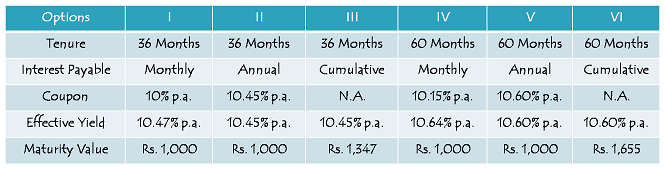
ECL Finance Limited, a subsidiary of Rashesh Shah’s Edelweiss Group, is launching its third public issue of secured, redeemable non-convertible debentures (NCDs) from the coming Thursday, February 26th. The issue will carry a maximum of 10.60% coupon rate with monthly, annual and cumulative interest payment options and will remain open till March 16th.

Size & Objective of the Issue - The company plans to raise Rs. 800 crore from this issue, including the green shoe option of Rs. 400 crore. The company plans to use at least 75% of the issue proceeds for its lending activities and to repay its existing loans and up to 25% of the proceeds for general corporate purposes.

Coupon Rate & Tenor of the Issue - Last time, the company offered its NCDs with 12% coupon rate and 70 months maturity period. This time the company has decided to issue its NCDs for a duration of 36 months and 60 months. The company has cut its offered rate of interest sharply to 10.45% and 10.60% for 36 months and 60 months respectively.

Picture3

Minimum Investment - Investors need to apply for a minimum of ten bonds in this issue with face value Rs. 1,000 each i.e. an investment of Rs. 10,000 at least.

Categories of Investors & Allocation Ratio - The investors have been classified in the following three categories and each category will have the below mentioned percentage fixed in the allotment:

Category I – Institutional Investors – 30% of the issue is reserved

Category II – Non-Institutional Investors – 20% of the issue is reserved

Category III – Individual & HUF Investors – 50% of the issue is reserved

NCDs will be allotted on a first come first served basis.

NRIs Not Allowed - Non-Resident Indians (NRIs), foreign nationals and qualified foreign investors (QFIs) among others are not eligible to invest in this issue.

Credit Rating & Nature of NCDs - CARE and ICRA have rated this issue as ‘AA’ with a ‘Stable’ outlook. As mentioned above, these NCDs will be ‘Secured’ in nature.

Listing, Premature Withdrawal & Put/Call Option - These NCDs will get listed on both the national exchanges i.e. Bombay Stock Exchange (BSE) as well as National Stock Exchange (NSE). The listing will take place within 12 working days after the issue gets closed. Though there is no option of a premature redemption, the investors can always sell these bonds on the exchanges.

Demat & TDS - Demat account is not mandatory to invest in these bonds as the investors have the option to apply these NCDs in physical form as well. Also, though the interest income would be taxable with these bonds, NCDs taken in demat form will not attract any TDS.

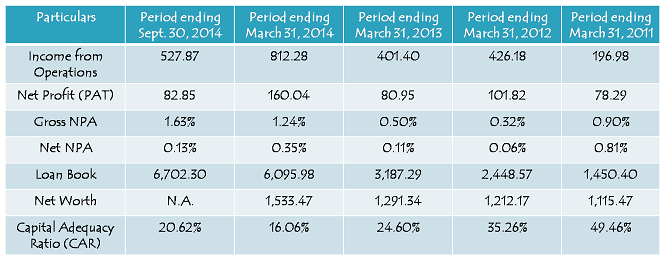
Financials of ECL Finance

Picture2

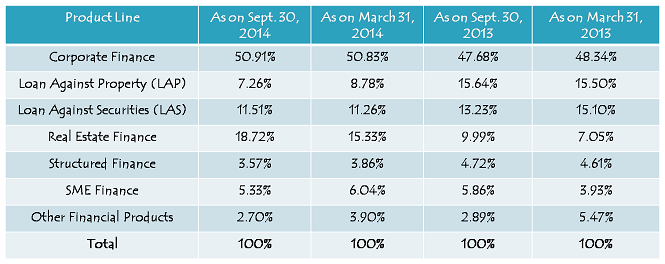
Loan Book of ECL Finance

Picture1

Should you invest in these NCDs?

Though the interest rates have fallen in the past one year and it is widely expected that there will be more rate cuts by the RBI and the commercial banks in the next 6-12 months, I think the rates offered by ECL Finance are on a slightly lower side for me to call it an attractive issue. I think these NCDs are suitable for those investors who have no taxable income or who seek regular monthly income. The investors would do well to invest in Gilt funds or bond funds as I think they should fetch higher returns in the next 3-5 years.

Application Form of ECL Finance NCDs

Note: As per SEBI guidelines, ‘Bidding’ is mandatory before banking the application form, else the application is liable to get rejected. For bidding of your application, any further info or to invest in ECL Finance NCDs, an investor can reach us at +919811797407

24 Feb 03:15

Financial crisis, the Euro and the need for political union.

by Antonio Fatas
In today's Financial Times, Gideon Rachman discusses the flaws of the Euro and the possibility of failure. He admits that from the beginning he believed that the Euro project would eventually collapsed because

"First, a currency union cannot ultimately survive unless it is backed by a political union. Second, there will be no political union in Europe because there is no common political identity to underpin it. And so, third — the euro will collapse."

I have always been very skeptical about statements arguing that a currency union needs a political union. The political consequences of sharing a currency (the Euro area) are in many ways much smaller than the political consequences of being part of the European Union, why don't we make the same argument about the European Union? (just to be clear, some make the same argument but clearly it is much less common, as can be seen in the article by Rachman).

There are plenty of example where the European Union (EU) requires some serious political consensus: the EU requires partial transfers of sovereignty to a supranational authority when it comes to legislation, the EU has economic mechanisms that imply a significant transfer of income across countries (via its budget, the structural and cohesion funds). Then why is it that the EU does not require to be backed by a political union in the same way the Euro project does?

My view is that the request for more political union in the Euro area is not so much the result of sharing monetary policy and a currency, I think that the answer comes much more from the power and size of financial flows and how these flows create a risk that is centralized and needs to be managed through the ECB.

The current debate between Greece and others in the Euro area is not about monetary policy. While there have been disagreements about the best course for monetary policy during the crisis, the fact is that the ECB has not been "too far" from what other central banks have done, interest rates have been close to zero for years and while QE has been different from that of other central banks, it is unlikely that a US-style QE would have made that much of a difference (we are still debating how effective QE was in the US or the UK).

The real debate in the Euro area today is about dealing with a debt crisis. The real issue is that the financial flows in the period 2000-2007 established links between countries and spread a risk across all Euro members, in a way that other countries (including EU members) not part of the Euro did not see. And the creation of the Euro was instrumental for this.

The role of the Euro was twofold. First it facilitated flows across countries as exchange rate risks had disappeared and provided the illusion of no risk. Second, once the flows had taken place it created financial links between banks and governments across countries that made them exposed to the same risk. In addition, the ECB because its connections with banks became a central repository of that risk and a solution for some of the countries facing a credit crunch -- the ECB acted like the IMF in many ways.

None of this is exactly about monetary policy, even if the ECB is involved. This is about financial risk and how financial crises have painful economic consequences. When sharing a currency the risk of financial crisis and its potential solutions bring countries and governments together in a way that a political consensus seems to be necessary because transfers might be involved and because common political solutions need to be found. And while these transfers might be smaller than the ones agreed as part of the Social and Cohesion Funds of the European Union, they come as a surprise and they are uncertain (we cannot agree ex-ante on their final size). This is what makes the Euro project a much more difficult one to manage without a sense that we all belong to the same group and are willing to work on this together.

For many, the Euro was one of the projects within the much bigger ambition behind the European Union (which came with the idea of a partial political union). But the recent financial crisis has shown that the risks associated to sharing a currency when financial and sovereign crises are possible, are a lot larger than what we thought. And these risks are much larger than the risks associated to simply sharing the same currency and the same monetary policy (yes, one interest rate does not fit all but this is not the real issue this time).

If there was a way to avoid the next financial crisis I would go back to my original idea that a currency union can survive without a political union. But as long as financial flows (and sovereign debt) can potentially generate the same type of risk as in this crisis, then the Euro might not survive the next one without stronger political ties between all its members.

Antonio Fatás
24 Feb 03:13

Richard Dawkins on the Monotheistic God

by Atanu Dey

The god of the Old Testament is the same god that Christians adopted in their New Testament. Following the Jews and the Christians, Islam proclaimed the same monotheistic god. Who is this god? Richard Dawkins, a non-believer, characterized that god in his book The God Delusion thusly:

“The God of the Old Testament is arguably the most unpleasant character in all fiction: jealous and proud of it; a petty, unjust, unforgiving control-freak; a vindictive, bloodthirsty ethnic cleanser; a misogynistic, homophobic, racist, infanticidal, genocidal, filicidal, pestilential, megalomaniacal, sadomasochistic, capriciously malevolent bully.”

Every word in that description is justified — within the so-called “holy” books. Chapter and verse can be quoted to show why that god is “the most unpleasant character in all fiction.”

23 Feb 12:09

Yahoo + Flurry = Love For App Developers

by Alnoor M Peermohamed

Yahoo has rolled out a new mobile app developer suite that’s built on data and technology from Flurry (acquired in August 2014) and BrightRoll (acquired in December 2014) in conjunction to its own.

Yahoo Mobile App Developer Suite

The suite is made up of 5 products – Flurry Analytics with Explorer, Flurry Pulse, Yahoo App Publishing, Yahoo Search in Apps, and Yahoo App Marketing – which will help developers measure, advertise, monetize and enhance their apps.

Here’s A Rundown Of The Tools The Suite Offers:

  • Flurry Analytics Explorer is an update to Flurry Analytics with an easy to used data exploration interface that doesn’t require writing code, building queries or implementation of a new SDK
  • Flurry Pulse makes it easy for developers to share insights with partners using their existing Flurry SDK without the need for proliferation and additional engineering work
  • Yahoo App Publishing has now been opened up to third party developers, allowing them to monetize apps with high-quality native, video and display ads
  • Yahoo Search in Apps makes it easier for developers to integrate Yahoo Search into their apps, thereby creating an additional monetization channel
  • Yahoo App Marketing (powered by Gemini) allows developers to efficiently acquire new users, by buying targeted native and video advertising across Yahoo’s content services network

Yahoo is looking to capitalize on Flurry’s deep understanding of the mobile ecosystem and its vast audience across devices to help developers better monetize their apps and grow their user base.

Flurry already has 200,000 developers who’ve developed 630,000 apps that reach 1.6 billion devices.

The post Yahoo + Flurry = Love For App Developers appeared first on NextBigWhat.

22 Feb 03:51

What is Gratuity?

by Kirti

After 5 years of working in the company an employee becomes eligible for Gratuity. This article explains what is Gratuity? How many years of service is considered to be eligible for Gratuity? How is Gratuity amount calculated? What is tax and Tax exemption on Gratuity? Difference between Gratuity and Pension.

What is Gratuity?

Gratuity is a lump sum payment made by employer  to the employee based on the duration of his  total service when the employee leaves the job .  The reason for leaving the job can be either by resignation, death, retirement or termination, etc. The amount you get as gratuity depends on the number of years you have served and the last drawn monthly salary. Roughly, you get half a month’s Basic and Dearness Allowance(DA) for every completed year of service.

Gratuity and the Law

Gratuity comes under the Payment of Gratuity Act. Most establishments including Charitable institutes, hospitals, educational institutes employing 10 or more workers are covered by the Act.Even employees not covered under the Payment of Gratuity Act are entitled to gratuity. The document (pdf) related to act is at labour.gov.in/upload/uploadfiles/files/ActsandRules/SocitySecurity/ThePaymentofGratuityAct1972.pdf

How many years of service is considered to be eligible for Gratuity?

Gratuity is payable only if an employee has been with the employer for five years or more. But this rule is waived if an employee dies or is disabled. In such cases, even if the tenure is less than 5 years gratuity is paid to the nominees or to the employee. After 5 years of service if you serve more than six months in the last year of employment, it is considered as a full year of service for calculation of gratuity amount. As per the judgement of the Supreme Court an employee is eligible for gratuity if he has completed 4 years of continuous service and 240 days continuous working in 5th year. (Ref lawyersclubIndia ). Since the gratuity is a statutory service condition,the Act provides for the punishment of the employer who fails to pay it to an employee.

  • To calculate number of years of employment, employee’s date of joining and date of leaving is considered and date of resignation is not taken into consideration.
  • Probation period is included while calculating eligibility for gratuity.
  • If you have worked for MNC and join the parent company as permanent employee in foreign location, you will no longer be employee of company registered in India and hence if you have completed 5 years in India office you will be eligible for gratuity.
  • If the company changes its name but management remains the same , there is no resignation from one company and joining of new company then years in both the companies will be counted.

When will the employee not get Gratuity even after completing minimum 5 years of service? The employer can forfeit gratuity even if employee has completed 5 years when the employee is fired for Disorderly  or  riotous conduct or any other act of violence  or moral offence during the course of his employment. A proper enquiry should be held and employee should have been found guilty and termination letter should mention that. Other than that even on being fired an employee is eligible for Gratuity.

How is Gratuity amount calculated?

Formula to calculate gratuity amount for a government employee/non government employee covered under the act is given below.  Your employer can choose to pay you more but the maximum amount of gratuity according to the Act cannot exceed Rs. 10 lakh. Amount paid more than the formula is something voluntary and not mandated according to law(called ex-gratia)

Gratuity  amount = (Number of years of service rounded off) * (Last drawn monthly Basic and DA) *15/26.

Ex: if an employee has served 20 years and in last year he drew monthly Basic and DA of Rs. 40,000 , he would get gratuity of Rs. 4,61,538 calculated as (20 * 40,000 *15/26). As mentioned earlier, If employee have served more than 5 years and in last year of employment he served more than 6 months then for gratuity calculation it is considered as a full year of service. For instance, if his tenure is 20 years and 7 months, the years of service for gratuity calculation will be rounded off to 21. But if he has served 20 years and 5 or 6 months, then the number of years of service will be considered as 20.

For an employee not covered under the Gratuity Act

Gratuity  amount = (Whole Number of completed years of service) * (Last drawn monthly Basic and DA) *15/30

Ex: if an employee has served in an organisation not covered under the act for 20  years and 7  months, then in calculation 7 months are ignored and only 20 years are used for calculation.  If in last year he drew monthly Basic and DA of Rs. 40,000 , he would get gratuity of Rs. 4,00,000 calculated as (20 * 40,000 *15/26).

How do companies plan to pay Gratuity amount? 

Some organisations set up a gratuity fund as a part of their financial planning. Some companies take the Gratuity schemes of insurance companies like  LIC’s,  Group Gratuity(Cash Accumulation) Scheme where the employer pays premium and gets tax rebate on the premium.

What about Tax on the Gratuity amount?

The gratuity received by an employee is NOT taxable if it is received on his retirement, his becoming incapacitated prior to retirement or if such gratuity is received by his widow, children or dependants on his death. So if one doesn’t retire and is below the retirement age then Gratuity is not tax free. Gratuity is taxed under the head Income from Salaries. Gratuity received by the legal heir is taxable under the head  Income from Other Sources. Some portion of gratuity received is exempt from tax as per Section 10(10) of the Income Tax Act which is explained below.

For a government employee the entire gratuity amount is exempt from tax.

For a non government employee covered under the Act or not covered by Act, he would get tax deduction for an amount which is the minimum of the following. Note that the ceiling of Rs. 10  lakh applies to the sum of all the gratuity received from one or more employers in the same or different years. Before May 24,,2010 limit was 3.5 lakh.

  1. Actual gratuity received
  2.  15 days Basic and DA for each completed year of service (according to calculations in the example above)
  3. Rs. 10 lakh

For example  after 20 years of service the employer paid gratuity of Rs. 5,00,000, gratuity amount by calculation is 4,61,538 to employee. Minimum of 5 lakh, 4,61,538 and 10 lakh is 4,61,538. The employee,non government will enjoy tax deduction on Rs 4,61,538 and Rs 38,462(5 lak h – 4,61,538) will be subject to tax.

What is difference between Gratuity and Pension?

Gratuity is an one time payment made to employees who have completed a 5 years of service in an organisation. Gratuity is the amount an employee may receive in gratitude for his services. Technically it is same as a TIP(TO INSURE PROMPTNESS), given to a waiter, taxi driver, or hairdresser .  Pension is the monthly payment made to retiring employees. Though most retiring employees get gratuity, pension is given only by some organisations, mostly government ones.

Is Gratuity part of CTC (Cost of Company)?

It’s a company discretion whether they want to make Gratuity part in employee’s CTC or not. The argument of not including Gratuity in CTC is that employee become eligible for gratuity only after completion of 5 years so how come company can make it part of employee CTC.  What if employee leave the company  before completing 5 years? But employer sees Gratuity as liability to pay in completion of 5 years employee and also  in case of death and disablement irrespective of completion of 5 years. So most of employers include Gratuity in CTC because they believe  Cost to the Company (CTC) is cash out go today + cash outgo in the future, which means, Basic + perquisites + Company’s contribution to your PF + today’s valuation of the gratuity element, especially when employer has taken insurance policy to cover gratuity liability. Our article Salary, Net Salary, Gross Salary, Cost to Company: What is the difference discusses CTC in detail.

Related Articles:

All articles related to Salary, EPF,Job , Income Tax in one place 

Job-hopping can increase your pay, but good old loyalty also has its perks.

20 Feb 04:26

Real estate as an Investment

by subra

“Data shows that the first claim upon the savings of households is physical assets such as gold and real estate.”
That Indians love their ‘real estate’ would be like stating the obvious. But sometimes it is necessary to state the obvious as well. Why? That will soon become clear.
AkhileshTilotia, a thematic research analyst with the institutional equities arm of the Kotak Mahindra Group, makes a very interesting point in his new book The Making of India—Gamechanging Transitions. As he writes: “Thanks to its love for real estate investments, India is in a curious position of having more houses than it has households.”
This becomes clear from the Census 2011 data. “India’s households increased by 60 million to 247 million from 187 million between 2001-2011. Reflecting India’s higher ‘physical’ savings, the number of houses went up by 81 million to 331 million from 250 million. The urban increases is telling: 38 million new houses for 24 million new households,” writes Tilotia.

So what is happening here? One explanation for the number of houses rising faster than the number of households may lie in the fact that houses are being bought as investment and not to be lived in.”

This is a quote from Vivek Kaul…in one of his articles.

One conclusion that people draw from all the Indian statistics is : a) people buy houses in India for speculation / investments MORE than buying for staying in and b) there is a lot of black money in RE markets.

ASSUMING THIS TO BE TRUE….This means 2 things: a) more houses are being created than what can be consumed and b) black money uses this as a safe haven and NOT AS AN investment. That means the black money is expecting only about 6% return – value preservation by getting a real return…

Both of these SHOULD mean that if this is true, RE prices should be down, not up.

People expect say 12% p.a. return on white money and about 6% return on B money. Also in case of B money many people are happy to take it off their backs – for almost a NIL kinda return. So a big builder can get it at a very low rate from a bureaucrat who just does not want to keep it with himself.

Not sure..what to say….


Post Footer automatically generated by Add Post Footer Plugin for wordpress.

20 Feb 04:26

Loss aversion and negative interest rates

Loss aversion is a basic tenet of behavioural finance, particularly prospect theory. It says that people are averse to losses and become risk seeking when confronted with certain losses. There is a huge amount of experimental evidence in support of loss aversion, and Daniel Kahneman won the Nobel Prize in Economics mainly for his work in prospect theory.

What are the implications of prospect theory for an economy with pervasive negative interest rates? As I write, German bund yields are negative up to a maturity of five years. Swiss yields are negative out to eight years (until a few days back, it was negative even at the ten year maturity). France, Denmark, Belgium and Netherlands also have negative yields out to at least three years.

A negative interest rate represents a certain loss to the investor. If loss aversion is as pervasive in the real world as it is in the laboratory, then investors should be willing to accept an even more negative expected return in risky assets if these risky assets offer a good chance of avoiding the certain loss. For example, if the expected return on stocks is -1.5% with a volatility of 15%, then there is a 41% chance that the stock market return is positive over a five year horizon (assuming a normal distribution). If the interest rate is -0.5%, a person with sufficiently strong loss aversion would prefer the 59% chance of loss in the stock market to the 100% chance of loss in the bond market. Note that this is the case even though the expected return on stocks in this example is less than that on bonds. As loss averse investors flee from bonds to stocks, the expected return on stocks should fall and we should have a negative equity risk premium. If there are any neo-classical investors in the economy who do not conform to prospect theory, they would of course see this as a bubble in the equity market; but if laboratory evidence extends to the real world, there would not be many of them.

The second consequence would be that we would see a flipping of the investor clientele in equity and bond markets. Before rates went negative, the bond market would have been dominated by the most loss averse investors. These highly loss averse investors should be the first to flee to the stock markets. At the same time, it should be the least loss averse investors who would be tempted by the higher expected return on bonds (-0.5%) than on stocks (-1.5%) and would move into bonds overcoming their (relatively low) loss aversion. During the regime of positive interest rates and positive equity risk premium, the investors with low loss aversion would all have been in the equity market, but they would now all switch to bonds. This is the flipping that we would observe: those who used to be in equities will now be in bonds, and those who used to be in bonds will now be in equities.

This predicted flipping is a testable hypothesis. Examination of the investor clienteles in equity and bond markets before and after a transition to negative interest rates will allow us to test whether prospect theory has observable macro consequences.

20 Feb 04:23

What matters more--the productivity slowdown or the inequality increase?

by Greg Mankiw
The Economic Report of the President was released today.  A friend draws my attention to Table 1-3 on page 34, which presents several historical counterfactuals.  It finds:

1. If productivity growth had not slowed after 1973, the median household would have $30,000 of additional income today.

2. If income inequality had not increased after 1973, the median household would have $9,000 of additional income today.

So, which is the bigger problem? (Of course, neither has an easy solution.)
19 Feb 05:23

The Food Corporation Of India Continues to be Overstocked by 2x

by Deepak Shenoy

The Food Corporation of India continues to own stocks way above the required buffer limits. The redemption for us is that stocks aren’t really going up, they are slowly falling. Here’s the stock chart as of Feb 1:


image

As you can see, we have, in the FCI,  530 lakh tonnes of Rice+Wheat, when the buffer requirement is only 250 lakh tonnes. (2x overstocked) This buffer norm has recently been downgraded to 210 lakh tonnes (for Jan, Feb, March) so the overstocking is even more. Here’s the new stock norms:

image

(Multiply by 10 to get lakh tonnes).

We currently have 530 lakh tonnes in stock. This is greater than the HIGHEST amount of stock we should have even including the new buffer norms for the Food Security Act. This is just crazy.

In Rice we own too much rice+unmilled paddy. This is altogether too much, and still, the FCI wanted to import rice from abroad!… (Read On...)

19 Feb 05:23

What hurts you financially…..really….

by subra

There are many things which hurt you financially. Obviously it is all the things that you do that matters..but not KNOWING the following things makes you behave in a particular manner. So NOT KNOWING THE FOLLOWING things is what is hurting you FINANCIALLY:

1. Not remembering that you too will retire: by the age of 35 if you have not started earmarking ‘retirement’ portfolio, you have lost the magic of compounding. Period.

2. Having an emergency fund, but not knowing what is an emergency: If you keep dipping into your emergency fund for your car repair, a new TV, travel, etc. is so stupid, it is unbelievable – and it is amazingly common too! I find it funny!!

3. How much return you are getting on your OVERALL portfolio: If you do not know this, it means you do not know your risk profile, asset allocation, or you have money far in excess of your needs. Well, you could be ‘To the Manor born’ but you will soon lose your assets.

4. How to protect your money from budget busting friends. Or on hindsight..are you a budget buster yourself?

5. As you get older your financial life will get far more complex….and you will have a spouse who will tell you what to do with your money. Chances are that you will not be able to do what you wish.

6. How your parents handle money, how your wife and kids handle money, etc. will determine how much money you are able to save.

7. That Savings are alone not enough. The amount accumulated as savings have to be put to work. This is called Investing.

8. Investing carries lot of risk, but not understanding INVESTING is the biggest risk.

9. You do not understand your CTC, and there is no way you can reconcile from a CTC to your take home salary figure.

10. That one stupid career mistake – like misbehaving with a woman – can destroy you financially, as well as socially and professionally.

11. You live pay cheque to pay cheque….and you will not have it otherwise.

12. Your house is full of impulse purchases. You have no clue that these purchases have set back your financial goals by a few years.

….there are about 100 i guess?

Post Footer automatically generated by Add Post Footer Plugin for wordpress.

19 Feb 05:22

Introducing The Modi Index by Capital Mind

by Deepak Shenoy

Ever since Narendra Modi was appointed the PM candidate by the BJP, speculation has been rife that he would come in and change India dramatically. What he has done till now might be debated, but it’s a given that his arrival, and the sweep of the BJP of the elections, has charged the stock markets. With the Nifty nearly touching 9,000, up over 37% since Jan 1, 2014, it’s almost like a Midas touch.

But what if we evaluated his first speech and found the sectors he really liked, and chose stocks in them to buy? Our analysis threw up four sectors:

  • Power
  • Railways
  • Capital Goods
  • Tourism

We chose, in hindsight, of course, three stocks in each sector. For Power, we chose PowerGrid, NTPC and Reliance Infra.

For Capital Goods, L&T, Bharat Forge and BHEL.

For Railways, BEML, Texmaco Rail, and Container Corporation.

For Tourism, Cox and Kings, Jet Airways and Indian Hotels.  (We thought about Spicejet, but would you really think a Spicejet would be a Modi stock?… (Read On...)

18 Feb 08:11

Policy framework for Finance SEZs

by Ajay Shah
There is a lot of interest in India today, on setting up an international financial services centre (IFSC) in an enclave, i.e. a Special Economic Zone. Possibilities include GIFT City near Ahmedabad and a MIFC in Bombay.

A concept note of ours on this subject has been released for public comment by the Ministry of Finance.

Many decades ago, free trade zones like Kandla or SEEPZ, played a role in improving India's engagement with globalisation at a time when there were many restrictions on the current account. There is a possibility that Finance SEZs could play a similar role in improving India's engagement with globalisation.

In 2007, the Percy Mistry Committee on Mumbai as an International Financial Centre (MIFC) had rejected the strategy of building an enclave, and had emphasised the importance of solving the problems of the mainland. From 2007 till 2015, the main work process of financial sector policy has been to fix the mainland. It is only in the context of that larger strategy that it makes sense, today, to additionally explore an enclave strategy. The raw materials available at hand today, owing to that larger strategy, are what make now the enclave strategy feasible. The enclave strategy is now only a small detour and is now advisable.

The Percy Mistry Committee used the acronym `IFC' for `International Financial Centre'. This has become confusing as the acronym also stands for `Indian Financial Code'. The folks at GIFT shifted to the phrase `International Financial Services Centre' (IFSC) which is unambiguous and we should all just switch.
18 Feb 05:57

How to Avoid Getting Cheated by Bad Investment Advice

by Vishal Khandelwal

“Come what may, I will not listen to anyone’s advice before investing my money this year,” said my friend Ravi. “I’ve had enough of bad advice last year!”

“Is this your New Year resolution?” I asked him.

“Yes! And this time I am not going to break it!”

“Let’s see,” I said while infuriating my friend who thought I did not believe he was really going to adhere to his resolution this year.

“See Ravi,” I told him, “I don’t want to disappoint you. But you have to go past a great obstacle to meet your resolution of not falling for your advisor or broker’s advice.”

“What do you mean?” he questioned.

“Okay, let me be very clear with you now.”

“You better be,” he chided me as if warning me against confusing him with my explanations.

“See Ravi, if you’re wondering why you’ve ever listened to dubious advice from your broker or financial planner, there is a study done by a leading neuro-economist that suggests it’s really hard for us to resist the temptation to fall for someone else’s advice.”

“And who’s that?”

“He’s Dr. Gregory Berns of Emory University in the US. Dr. Berns works as a Professor of Neuroeconomics, and in 2009 published a study that illuminates what happens when we listen to an ‘expert’ we trust.

“Tell me more,” Ravi sounded as if he was interested to listen more.

So here is what I told him.

How Our Brain Works
Let me talk about an experiment Dr. Berns did along with his colleagues. He asked people to pick between a sure win and a series of gambles. A functional magnetic resonance imaging (MRI) scanner tracked the changes in blood flow in their brains as they made their choices.

In 50% of the instances, an ‘expert economist’ with impressive credentials suggested which option was better; otherwise, people made up their own minds.

When people had to think for themselves, two networks in their brains activated.

One that determines the payoff from a sure win, and one that that calculates the likely gain from a gamble.

These are the areas of our brain that normally make decisions by combining the value of:

  1. What you have,
  2. Your fear of loss, and
  3. Your hope of gain

However, something interesting happened when people that were part of the experiment listened to the expert’s advice.

The activations in their brains faded! In simple words, the three bulbs that earlier lighted up (bulbs of – what I have, my fear of loss, and my hope of gain), did not light up when people listened to the expert’s advice.

Amazingly, these bulbs stayed quiet even when the expert’s advice was bad!

Dr. Berns’ concluded that when we make financial decisions on our own, our brain’s regions for evaluating risk and reward are active.

But when we take advice from an expert, two things happen:

  1. The networks in our brain that earlier alerted us on what we had, our fear of loss, and our hope of gain, do not get activated, and
  2. Our choices move toward whatever the expert recommends.

In short, Dr. Berns’ summed it up that…

“…the mere act of seeking an expert’s opinion may erase our own. In the presence of a financial advisor, our brain can empty out like a dump truck.

Our brain empties like a dump truck in the presence of an ‘expert’

Now you can imagine what happened to all those sophisticated clients of Citibank in Gurgaon who lost crores at the hands of just one Shivraj Puri a few years back.

These were highly educated people and at high positions in the corporate world. But their brains failed to fire up just because they were mesmerized by the advice – and the promise of high returns – from their relationship manager, which led then to huge losses.

As Dr. Berns puts it…

You should beware of people offering advice not only because they might be wrong, but because that advice may inhibit your own ability to form judgments.

“So does that mean we must never listen to a financial advisor? I think that’s a good idea.” Ravi broke his silence.

“No Ravi, not at all!” I told him. “None of what Dr. Berns suggests means that consulting with a financial advisor is an inherently bad idea.”

“But you just said that,” he countered.

“I never did. I never said that consulting with a financial advisor for your investment plans is a bad idea all the time.

“What I’ve tried to tell you is this. If you have strong beliefs about what investing strategy is right for you, you should write down your reasons for those beliefs before you sit down with an advisor.

“And then, when you meet or speak with the advisor, commit to no course of action that makes you uncomfortable. Only after you have had a chance to review it later, away from the direct influence of the advisor, should you accept or reject any major change of strategy.

“You see Ravi, some advisors are sometimes right and there are some who are often right. But the responsibility is upon you to determine whether you agree with your advisor once your brain is clicking again, and not when it is acting like a dump truck mesmerized by what he advised.

“After all, even he is a human being and even his brain works with the same constraints as yours. Don’t treat him like a super-human, and keep your brain on alert mode when he is advising you stuff.”

I saw a tinge of smile on Ravi’s face.

“All the best, Ravi! I wish you keep your New Year resolution this year!” I said while bidding him goodbye.

    
18 Feb 03:57

Q3 Results: Nifty Companies Y-on-Y Profits Decline; Quarterly Performance Shabbiest in FY 2015

by Gautam Jagannathan

It’s that the time of the year again where companies release their Q3 results. Capital Mind has been following the announcements very closely and we have been tweeting some of the more interesting ones via our Twitter handle @CapitalMind_In (Follow us now for the wonderful tweets and insights). We have also been periodically sending out detailed reports to our Premium Subscribers, intimating them of the results of companies as and when they announce, along with a sector-wise breakdown of performance via Revenue Growths, Profits Growth and EPS growth.

Back to the focus of this post. It is mid-February already. The Budget is less than 2 weeks away and everyone, from the noted economist to your resident retiree armed with a newspaper and tons of well-researched opinions, is keeping their eyes and ears open, waiting with bated breath to see what changes, if any, will be ushered in this time. Taking the equity markets as a microcosm of the economy, we can use this as one of the indicators of the performance of the economy as a whole.… (Read On...)

16 Feb 07:03

Government mustn't get fixated on the fiscal deficit.

by T T Ram Mohan
Should the government stick to its fiscal road-map- 4.% for fiscal deficit/GDP in the current year and a lower deficit the next year? Ruchir Sharma argues in today's TOI that it should. He gives instances, such as China, where an increase in government spending has been followed by lower growth rate.

I disagree. China is over-invested in infrastructure. We are under-invested. Without infrastructure investment, it's hard to see investment in general reviving. And the private sector is in no position to get into infrastructure now. So, the government should go ahead and spend on infrastructure- and it doesn't matter if it's about half a percentage point away from its fiscal deficit targets. Here's my case.

India's debt to GDP ratio of around 65% today is among the lowest in the world today. So, considerations of sustainability of debt need not deter us. The only case can be that higher spending will spur inflation which will undermine our currency. The inflation rate has declined sharply, our external account has improved considerably and quantitative easing in Europe and Japan can be expected to offset somewhat the effect of any rise in the interest rate in the US. So, concerns about the impact of the rupee are not a factor either.

Whichever you look at it, this is the right time for Jaitley to go out and spend boldly.


16 Feb 04:07

On Monkeys, Cats & the Generality Principle

by Atanu Dey

This one is hauled from the archive. Why? Because these two articles are nice. Even if I myself say so. Also, I am very busy reading and so don’t have the time to write fresh stuff. Or perhaps I am just plain lazy. In any case, do check out the following.

1. Profiting from Conflict. The Monkey and the Cats.

Wars are generally very costly for most people but are always very profitable for some. It is also not too difficult to start a conflict. Envy, greed and covetousness lie just beneath the surface and can be summoned almost at will. Arms manufacturers and arms dealers have the greatest incentive for provoking, fuelling and maintaining conflict. Follow the money if you want to know why some parts of the world suffer chronic conflict.

2.On Constitutions and the Generality Principle.

Societies which have potential fracture lines can still avoid catastrophic breakdown provided the basic set of rules — the constitution — that constrain behaviour were such that it did not stress those divisions. The real danger arises when the constitution makes those fault lines explicit and laws are enacted in accordance with those rules which then discriminate for or against identifiable groups.

Questions, comments?