After nearly all flights were shut down in the initial stages of the pandemic, airlines are now battling to regain customer trust where travel safety is concerned.
Japanese airline All Nippon Airways (ANA), however, is already looking into possible solutions that may boost passenger confidence in airlines.
The airline started trialing a new "elbow-activated" door for its airplanes at Tokyo International Airport (also known as Haneda Airport), according to CNN.
It was first trialed in mid-June.
Though the state of bathroom hygiene aboard aircraft carriers was already a cause for concern for a lot of flyers prior to the COVID-19 health crisis, the pandemic has increased a need for caution around public bathrooms: normally, aircraft toilets are disinfected between uses. Despite this, now more than ever, it may be hard to feel entirely reassured if you do use an airplane toilet mid-flight that it will have been cleaned adequately.
Unfortunately, the lack of space means it's not an easy task to add hygienic modifications to existing spaces.
The doors of airplane toilets usually open inwards — they tend to have small handles instead of knobs, or latches. This usually requires using your hands.
Prototype of a new aircraft door opening system being tested by ANA airline.
ANA
ANA — which is also testing flights that go nowhere — may have found a novel solution in conjunction with aircraft interior supplier giant JAMCO.
The airline is now getting feedback on an "elbow-activated" airplane door that can be operated with the elbow rather than with the hands. The innovation aims to be more hygienic as well as to adapt to existing spaces.
JAMCO, which specializes in airplane seats, kitchens, and toilets, specifically designed the innovation.
It's a prototype and is currently available only at ANA's lounge at Haneda Airport.
The "elbow-activated" door consists of two key components
There are two different components to the locking mechanism: the door will still open inwards, but instead of pulling a latch, passengers will be able to push the door open, hands-free, with their elbow.
Once inside the bathroom, there's a second, larger sliding bolt to lock and unlock the door — this can also be pushed with the elbow, which passengers could theoretically use to let themselves in and out.
ANA has said it will continue collecting feedback on the concept until the end of August.
If travelers give the door the green light, the elbow-activated, hands-free design could be extended to other ANA aircraft carriers — whether the doorknob would have to meet aviation standards before being rolled out remains to be seen.
The novel coronavirus is not mainly spread through surfaces, according to the US Centers for Disease Control and Prevention. But the organization recommends frequent and robust hand-washing and that frequently touched surfaces — like door handles, bathroom taps, and drinking fountains — should be disinfected daily.
Partners helping their education customers gear up for back to school now have access to Cisco Webex Classrooms, a platform with new features for instructors and students in remote and hybrid learning environments.
The Henley Passport Index is an annual ranking of the most powerful passports in the world based on how many destinations the holder can enter without a visa.
Japan secured the top spot once again for 2021, with access to 191 countries and territories, a position it shared with Singapore until 2020.
Asia dominated the list, with Singapore landing in the No. 2 spot and South Korea tying with Germany for No. 3.
A US passport provides access to 185 destinations in 2021, giving it a seventh-place ranking. Passports from 16 other countries provide better access than the US.
Travel restrictions and bans may vary from country to country amid the coronavirus pandemic.
A passport from Japan opens more doors than a passport from anywhere else in the world, according to the Henley Passport Index.
The index is an annual power ranking of passports determined by the number of destinations a passport holder can enter without a visa.
A Japanese passport promises uncomplicated travel to 191 other countries and territories in 2021. That's the same number of countries it allowed visa-free access to in 2020, the year it pulled ahead from its tie with Singapore to become the world's most desirable travel document.
Singapore once again placed second this year, providing access to 190 countries, followed closely by South Korea and Germany, with access to 189 countries and territories.
The 2021 ranking remains largely unchanged from 2020 with only two exceptions: a New Zealand passport now offers visa-free access to 185 countries, one more than it did in 2020. And Australia also gained visa-free access to one additional country for a total of 184. For comparison, passports from Afghanistan, Iraq, and Syria - the three lowest-ranking passports on the list - offer access to fewer than 30 countries each.
Of course, travel restrictions and bans vary from country to country amid the coronavirus pandemic, with some countries requiring mandatory quarantines and negative COVID-19 test results upon arrival.
Keep reading for a look at the countries with the most powerful passports, ranked by ascending number of visa-free travel options.
10. Those holding a passport from Hungary can visit 182 places without a visa in 2021.
The Matra mountains in Hungary.
gehringj/Getty
9. Those holding a passport from Canada can visit 183 places without a visa in 2021.
Toronto, Canada.
Shutterstock
8. Those holding the following passports can visit 184 places without a visa in 2021: Australia, Czech Republic, Greece, and Malta.
Santorini, Greece.
Shutterstock
7. Those holding the following passports can visit 185 places without a visa in 2021: Belgium, New Zealand, Norway, United Kingdom, and the United States.
Washington, DC.
6. Those holding the following passports can visit 186 places without a visa in 2021: France, Ireland, Netherlands, Portugal, and Sweden.
Paris, France.
Mike Hewitt/Getty Images
5. Those holding the following passports can visit 187 places without a visa in 2021: Austria, Denmark.
Vienna, Austria.
Getty Images/Alexpoison
4. Those holding the following passports can visit 188 places without a visa in 2021: Finland, Italy, Luxembourg, and Spain.
Positano, Italy.
Mikolajn/Shutterstock
3. Those holding passports from Germany and South Korea can visit 189 places without a visa in 2021.
Seoul, South Korea.
Cj Nattanai/Shutterstock
2. Those holding a passport from Singapore can visit 190 places without a visa in 2021.
Singapore.
MOLPIX/Shutterstock
1. Those holding a passport from Japan can visit 191 places without a visa in 2021, making it the world's most powerful passport.
Tokyo.
These humanities courses will help you understand the history of racial oppression and violence in the US.
AP
In the wake of protests against racism and ahead of a presidential election, now is an important time for Americans, especially non-Black people, to educate themselves on the history of race and racial oppression in the US.
Business Insider found several free online courses on race and white privilege offered by top institutions like Yale University and Stanford University.
The courses include "African American History: From Emancipation to the Present" and "The Inner Life and Global Vision of Martin Luther King, Jr."
Protests against racism and police brutality that began at the end of May after the killing of George Floyd have sparked a national conversation around race in America. Business leaders continue to pledge their commitment to usher in change, and President Donald Trump and Democratic presidential nominee Joe Biden are likely to debate the issue during Thursday's final presidential debate.
But racism, racial violence, and white privilege have long plagued the US. To put recent events in context, it's important for people, especially non-Black allies, to educate themselves.
Following Black thought leaders on social media and reading books about anti-racism are great places to start educating yourself. However, taking an online course taught by notable professors can give you more in-depth knowledge. You'll not only read the course's required texts, but you'll get writing prompts and quizzes to test your knowledge.
Business Insider found several free online courses that address race and racism in the US. These classes are taught by professors at Ivy League colleges, and are self-paced.
The Civil War and Reconstruction Era, 1845-1877
President Abraham Lincoln, wearing top hat, is shown with Union Army Gen. George B. McClellan, facing Lincoln, and McClellan's staff at Antietam, Maryland, 1862 during the American Civil War.
Alexander Gardner/AP
Institution: Yale University
Duration: 13 weeks
Time commitment: 2-3 hours per week
This class looks closely at the causes and consequences of the American Civil War, including the impact of race, slavery, and emancipation as moral, personal, and national problems. Readings assigned and discussed include "The Narrative of the Life of Frederick Douglass" by former slave Frederick Douglass and "A Short History of Reconstruction" by historian Eric Foner.
African American History: From Emancipation to the Present
Civil rights leaders, including Martin Luther King, Jr., surrounded by crowds carrying signs, Washington, DC, 1963.
Library of Congress
Institution: Yale University
Duration: 13 weeks
Time commitment: 2-3 hours per week
In this course, students look at the Black experience in America, from the end of the civil war through the modern civil rights movement. The course focuses on works by thought leaders like Booker T. Washington, Ida B. Wells-Barnett, Marcus Garvey, Martin Luther King Jr., and Malcolm X.
Jonathan Holloway, now president of Rutgers University, was a professor of history, African American studies, and American Studies at Yale University and the Dean of Yale College. He is the author of multiple books including "Confronting the Veil" and "Jim Crow Wisdom."
Negotiating a Changing World: 1920-1950
Women working in a gas mask facotry, 1940.
Thomas D. Mcavoy/The LIFE Picture Collection/Getty Image
Institution: Columbia University
Duration: 10 weeks
Time commitment: 2-3 hours per week
This course begins with the passage of the 19th amendment and explores women's changing role in society during World War II. But importantly, this class examines how racial barriers prevented Black women from advancing in society as much as white women did.
American Prophet: The Inner Life and Global Vision of Martin Luther King Jr.
United States Library of Congress
Institution: Stanford University
Duration: 11 weeks
Time commitment: 2-4 hours per week
This course looks closely at the public and personal life of civil rights leader Martin Luther King Jr. Students will learn everything from King's early upbringing to how he inspired a movement.
The class is taught by Clayborne Carson, the Martin Luther King Jr. Centennial professor of history and the founding director of the Martin Luther King Jr. Research and Education Institute at Stanford University.
In this course, students get an introduction to moral and political philosophy that examines difficult topics ranging from property rights to equality and affirmative action. The principal readings are texts by Aristotle, John Locke, Immanuel Kant, John Stuart Mill, and John Rawls, and are used to debate contemporary topics.
In this course, students explore the history of civil rights and liberties in America, mainly through the lens of key Supreme Court decisions. Topics discussed include slavery, segregation, abortion, campaign finance, free speech, affirmative action, and more.
Amazon is looking to hire two intelligence analysts to track "labor organizing threats" within the company.
The company recently posted twojob listings for analysts that can keep an eye on sensitive and confidential topics "including labor organizing threats against the company." Amazon is looking to hire an "Intelligence Analyst" and a "Sr Intelligence Analyst" for its Global Security Operations’ (GSO) Global Intelligence Program (GIP), the team that's responsible for physical and corporate security operations such as insider threats and industrial espionage.
The job ads list several kinds of threats, such as "protests, geopolitical crises, conflicts impacting operations," but focuses on "organized labor" in particular, mentioning it three times in one of the listings.
Amazon has historically been hostile to workers attempting to form a union or organize any kind of collective action. Last year, an Amazon spokesperson accused unions of exploiting Prime Day "to raise awareness to their cause" and increase membership dues. Earlier this year, the company fired Christian Smalls, a Black employee who led a protest at a fulfillment center in New York over Amazon's inadequate safety measures in the early days of the COVID-19 pandemic. During a meeting with Amazon CEO Jeff Bezos, company executives discussed plans to smear Smalls calling him "not smart, or articulate."
These job listings show Amazon sees labor organizing as one of the biggest threats to its existence.
Do you work at Amazon, did you used to, or do you know anything else about the company? We'd love to hear from you. Using a non-work phone or computer, you can contact Lorenzo Franceschi-Bicchierai securely on Signal at +1 917 257 1382, on Wickr at lorenzofb, OTR chat at lorenzofb@jabber.ccc.de, or email lorenzofb@vice.com.
After this story was published, Amazon deleted the job listings and company spokesperson Maria Boschetti said in an email that "the job post was not an accurate description of the role— it was made in error and has since been corrected." The spokesperson did not respond to follow-up questions about the alleged mistake. The job listing, according to Amazon's own job portal, had been up since January 6, 2020.
A screenshot of the now-deleted job listing on Amazon's job portal.
Dania Rajendra, the Director of the Athena Coalition, an alliance of dozens of grassroots labor groups that organize amazon workers, criticized the listing.
"Workers, especially Black workers, have been telling us all for months that Amazon is targeting them for speaking out. This job description is proof that Amazon intends to continue on this course," Rajendra told Motherboard in a statement. "The public deserves to know whether Amazon will continue to fill these positions, even if they’re no longer publicly posted."
On Monday, the Open Markets Institute, a nonprofit that studies monopolies, published a report on Amazon's employee surveillance efforts, claiming that these practices "create a harsh and dehumanizing working environment that produces a constant state of fear, as well as physical and mental anguish."
After a week of the jobs being posted online, 71 people have applied to the Intelligence Analyst position, and 24 people to the Sr Intelligence Analyst job, according to Linkedin. The first job was posted in the Amazon Jobs portal in January, the second job on July 21, according to the company’s site.
UPDATE Sept. 1, 12:04 p.m. ET: Shortly after this story was published, Amazon removed the listings from its job portal.
UPDATE Sept. 1, 2:48 p.m. ET__: this story was updated to include Amazon’s comment.
Aston Martin has a new car on the market — but it might be a tight fit for you, dear reader. That's because it's a tiny, child-sized electric version of Aston's iconic 1960s sports car, the DB5.
Tiny as it may be, however, the DB5 Junior's price tag isn't. The two-thirds-scale car starts at a hefty $47,000, and the sportier Vantage version commands a hefty $60,000 before taxes or extra options.
The Little Car Company, whose mission is to create "exceptional junior cars in partnership with the most elite car manufacturers," helped Aston bring its mini DB5 to life — and it's not your typical ride-on toy car. Aston and The Little Car Company meticulously recreated the original DB5 of yore, even incorporating scaled-down versions of its gauges, front and rear suspension, steering wheel, and badges.
Not to mention, the DB5 Junior can hit a top speed of 30 mph and boasts a range of up to 20 miles. Its more powerful sibling, the DB5 Vantage Junior, goes even faster.
Take a closer look at the completely over-the-top mini car below.
Aston Martin teamed up with The Little Car Company to create a miniature version of its iconic 1963 DB5, appropriately called the DB5 Junior.
Aston Martin DB5 Junior.
The Little Car Company
Built to two-thirds scale, the car seats an adult and child side by side, The Little Car Company said.
Aston Martin DB5 Junior.
The Little Car Company
It gets its power from a 6.7-horsepower electric motor that allows for a frightening top speed of 30 mph in "expert mode."
Aston Martin DB5 Junior.
The Little Car Company
The DB5 Junior rides on 10-inch wheels and features disc brakes all around.
Aston Martin DB5 Junior.
The Little Car Company
Its battery pack offers 10 to 20 miles of range, and the company notes that it can be swapped if you need a quick recharge.
Aston Martin DB5 Junior.
The Little Car Company
If a 30-mph top speed isn't quite enough oomph for you, The Little Car Company also built a Vantage version with a carbon-fiber body, double the horsepower, and a top speed that's "still unconfirmed."
Aston Martin DB5 Junior.
The Little Car Company
Aston Martin said lots of the car's details — like the gauges, suspension, badges, and steering wheel — are true to the original DB5.
Aston Martin DB5 Junior.
The Little Car Company
The Little Car Company developed the DB5 Junior over 15 months based on 3D scans of an original DB5 "to ensure complete accuracy and authenticity."
Aston Martin DB5 Junior.
The Little Car Company
By default, the cars come in silver with a black leather interior, but buyers will have various exterior and interior options. They'll also be able to add on options like customized license plates, toolkits, and covers.
Aston Martin DB5 Junior.
The Little Car Company
The Little Car Company said it will build 1,059 DB5 Juniors — the same number of original DB5 models built.
Aston Martin DB5 Junior.
The Little Car Company
The DB5 Junior starts at roughly $47,000, while the Vantage version will retail for a whopping $60,000. There are plenty of used Aston Martins — full-size ones, I might add — that you can pick up for less.
Aston Martin DB5 Junior.
Videoconferencing platform Zoom had a huge second quarter, with $663.5 million in revenue compared to $145.8 million a year ago, the company announced on Monday. It now has around 370,000 customers with more than 10 employees, an increase of 458 percent year over year.
“Our ability to keep people around the world connected, coupled with our strong execution, led to revenue growth of355% year-over-year in Q2,” Zoom founder and CEO Eric S. Yuan said in a statement announcing the earnings.
On a call with analysts— over Zoom, of course— Zoom CFO Kelly Steckelberg said subscriptions from new customers accounted for 81 percent of the second quarter revenue growth. The company did not see the customer churn it had expected, she added. Yuan...
It may look like Play-Doh. But it's actually a 3D-printed steak.
It's made by the Israeli alternative meat startup Redefine Meat, and the technology behind it is one of many contenders in today's sizzling hot, international race to capitalize on the growing faux-meat market.
Redefine Meat isn't focusing on alternatives to ground beef or sausages, but whole-cut steaks — an area of the market that has yet to hit the mainstream.
"There is an amazing industry of alternative meat that is focused on minced meat. And actually the meat industry is driven by the whole muscle cuts," CEO Eshchar Ben-Shitrit told Reuters. "Steaks, roast, slow-cooking, grilling — everything that an animal can do we want to do the same or even better."
Ben-Shitrit is focused on creating industrial-level 3D printers that would ultimately be sold to meat distributors around the globe and become part of the meat supply chain.
"The idea is to replace a cow. So each of our machines produce in a day exactly like a cow, up to 250 [kilograms] in a single day," he said.
Faux meat is believed to be significantly better for the environment, requiring less water and energy and releasing fewer fossil fuels than livestock — the CEO calls it "the best way to fight climate change, to deliver healthier solutions and food to the entire population of the planet."
At this stage in development, Redefine Meat is not disclosing how much the printers will cost. The plan is to keep the price of their 3D-printed steaks comparable to traditional ones, which can range from $5 to $12 per pound.
The company aims to debut the steaks at high-end restaurants in Israel, Switzerland, and Germany by the end of 2020.
The Israeli company hopes to release machines that can print 44 pounds of faux steak an hour.
Reuters
But it will be a while before the printers are part of the meat-industrial complex. Currently the machines only produce up to 13 pounds of meat an hour, and next year, the company plans to release a new generation of machines that will print 44 pounds an hour.
By comparison, American slaughterhouses can collectively process over 100,000 cows a day, each of which yields hundreds of pounds of beef.
In the meat industry, profit margins are greatest on whole-animal cuts, like steaks. The key to those profits is creating a product with the same taste and texture as traditional meat, Redefine Meat food engineer Alexey Tomsov said.
"We analyzed the different components that make those beautiful cuts and and … we identified three main components — the muscle, the blood, and the fat," he said. "These are the components that we need to mimic in order to reach the perfect, beautiful steak."
Redefine Meat's recipe contains soy and pea proteins, coconut fat, and sunflower oil, among other ingredients. Although the full list is secret, the company says all ingredients are plant-based and vegan.
The company has some competition. Israel is a hotspot for alternative meat companies, developing both lab-grown and 3D-printed food. In Spain, the startup Novameat is also working on 3D-printed steaks, and also recently developed a whole-muscle version of pork. Big companies including Tesco and Unilever are developing plant-based meats, too.
Venture capital money is pouring in and the global faux meat market is projected to reach a value of $8.1 billion by 2026, according to Allied Market Research.
They're all racing to convince consumers that a lab-grown product can taste as good as the real thing.
"At the end of the day, technology is important, but what's more interesting is to have a really delicious and tasty food product that you can cut through and have a bite, and be excited," Ben-Shitrit said.
Communication vendors are waking up to the need to invest in ML/AI in media processing. The challenge will be to get ML in WebRTC.
Two years ago, I published along with Chad Hart a report called AI in RTC. In it, we’ve reviewed the various areas where machine learning is relevant when it comes to real time communications. We’ve interviewed vendors to understand what they’re doing and looked at the available research.
We mapped 4 areas:
Speech Analytics
Voicebots
Computer Vision
RTC Quality and Cost Optimization
That last area was tricky. Almost everyone was using rule engines and heuristics at the time for all of their media processing algorithms and only a few made attempts to use machine learning.
My argument was this:
At some point, applying more heuristics to media processing algorithms loses its appeal
There’s so much we can do with rule engines and heuristics. Over time, machine learning will catch up and be better. We are now at that inflection point. Partially because of the technology advances, but a lot because of the pandemic.
ML in media processing is challenging
When looking at machine learning in media processing, there’s one word that comes to mind: challenging
Machine learning is challenging.
Media processing is challenging.
Together?
These are two separate and far apart disciplines that need to be handled.
The data you look at is analog in its nature, and there’s often little to no labeled data sets to work with.
A few of the things you need to figure out here?
How do you find machine learning engineers, or whatever they are called in their titles this day of the week?
Do these engineers know anything about media processing? How do you get them up to speed with this technology? Or is it the other way around? Getting media engineers trained in machine learning
Can you generate or get access to a suitable data set to use? Do you even have access to enough data?
Where do you focus your efforts? Audio or video? Maybe just network? Should you go for server side implementation or client side one? What about model optimizations?
When do you deem your efforts fruitful? Ready for production?
This isn’t just another checkmark to place in your roadmap’s feature list. There’s a lot of planning, management effort and research that needs to go into it. A lot more than in most other features you’ve got lined up.
The noise suppression gold rush
If I had to pick areas where machine learning is finding a home in communications, it will be two main areas:
Video background processing (more on that at some future point in time)
Noise suppression
Both topics were always there, but took centerstage during the pandemic. People started working from weird places (like home with kids) and you now can’t blame them. One of the best games I play in workshops now? Checking who’s got the most interesting room behind him…
Video background is about stopping me from playing. Noise suppression is about you not hearing the lawn mower buzzing 16 floors below me, or the all-too-active neighbor above me who likes to home renovate whenever I am on a call – with a power drill.
How I think my neighbor looks like whenever I am on a conference call
This need has led to a few quick wins all around. The interesting 3 taking place in the domain of WebRTC (or near enough) are probably the stories about Google Meet, Discord/Krisp and Cisco/BabbleLabs.
Google Meet
Google Meet built its own noise suppression technology
In June, Serge Lachapelle, G Suite Director of Product Management was “called to the flag” and was asked to do a quick interview for VentureBeat on Google Meet’s noise suppression. Serge was once the product manager for WebRTC at Google and moved on to Google Meet a few years back.
You can watch the short interview here:
The gist of it?
Google decided to implement it in the cloud
They use “secure” TPUs for that (Tensorflow Processing Units, a specialized chip in the Google Cloud for machine learning workloads)
The feature is optional. It can be enabled or disabled by the user
Noises it cancels are almost arbitrary. It is something that is really hard to define as initial requirements. It is also something that will be fine tuned and tweaked over time by Google
As I stated earlier, Google isn’t taking any prisoners here and contributing this back to the community freely as part of WebRTC. They are making sure to differentiate by making sure their machine learning chops are implemented outside of the open source WebRTC library. This is exactly what I’d do in their place.
Discord
Discord “bought” its way to noise suppression by partnering with Krisp
Krisp is one of the few vendors tackling machine learning in media processing and doing that as a product/service and not a feature. They’ve been at it for a couple of years now, and things seems to be going in their favor this year.
Krisp managed to do a few things:
Focus on noise suppression. They started “all over the place” with voice related media algorithms, and seem to be finding product-market-fit in noise suppression
Won a deal/partnership with Discord
Got their technology to work inside the browser (see here)
Execution
The Discord story was first published in April on Discord’s blog. Noise suppression was added in beta to the Discord desktop app. Was that done using the browser technology used in Discord’s Electron app or by the native implementation that Krisp has is an open question, but not the most relevant one.
Adding this to mobile means they got positive feedback on the desktop integration
Especially considering how they phrased it:
As we continue to improve voice chat, Krisp is an integral part of making Discord your place to talk. No matter how stressful the world around us may be, Krisp is here to help every one of our 100 million monthly active users feel more connected to our far-away friends.
100M MAU is what Discord now has, and this is a vote of confidence in Krisp and in ML-based noise suppression technology
Discord shouts to the world that they are using Krisp. Something not many companies do for their suppliers
This may mean that they got this on the cheap (or free)
Or it means that they are cozying up to Krisp
My read of it? Krisp might be acquired and gobbled up by Discord to make sure this technology stays off the hands of others – if that hasn’t happened already – just look at this page – https://krisp.ai/discord/ (and then compare it to their homepage).
Cisco
Cisco gobbled up BabbleLabs to own noise suppression technology
In the case of Cisco, the traditional approach of reducing risk by acquiring the technology was selected – acquihiring.
BabbleLabs was in the same space as Krisp. A company offering machine learning-based algorithms to process voice. The main algorithm there today as we’ve seen is noise suppression. This is what Cisco were looking for and now they will have it inhouse and directly integrated into WebEx.
Cisco devices not to self-develop. They also decided to own the technology. The reasons?
Google owns it
Zoom has its own implementation
That left… WebEx
Will BabbleLabs stay open? No.
In his recent post about the acquisition, Chris Rowen, CEO of BabbleLabs, explains what lead to the acquisition and paints a colorful future. The only thing missing in that post is what about existing customers. The answer is going to be a simple one: They will be supported until the next renewal date, when they will simply be let go.
A win to Krisp. If it isn’t in the process of being acquired itself already.
Who’s next?
This definitely isn’t the end of it. We will see more vendors taking notice to this one and adding noise suppression. This will happen either through self-development or through the licensing of third party solutions such as Krisp.
The challenge with these third party solutions is that they feel more like a feature than a product or a full fledged service. On one hand, everyone needs them now. On the other hand, they need to be embedded deep in the technology stack of the vendors using them. The end result is relatively small companies with a low ceiling to their potential growth (=not billion dollar companies). This puts a strain on such companies, especially if they are VC backed.
On the other hand, everyone needs noise suppression now. Where do they go to buy it? How do they build it?
Noise suppression is just the beginning
Noise suppression is just the beginning here. In the workshop I did last month on WebRTC innovation and differentiation, I’ve taken the time to focus on this. How machine learning is now finding a place in bringing differentiation to the actual communication. Noise suppression was one of the topics discussed, with many others.
There were 3 main areas that we will see growing investment in:
Video treatment – video compression, super resolution, etc
Background blur/replacement – I am placing it on its own, as it seems to be the next big thing
Each of these domains has its own set of headaches and nuances.
Server, native or browser?
Should you employ ML in WebRTC in the cloud or on the edge?
This is a big question.
If you look at the examples I’ve given for noise suppression:
Google Meet chose cloud
Discord is native and browser
WebEx is native as far as I can tell
Going for native or browser means you’re closer to the edge and the user. You can do things faster, more efficiently and with a lower cost to you (you’re practically employing the user’s device to bear the brunt of running the machine learning inference algorithm). That also means you have less resources for other things like the actual video and you’re limited in the size of the model you can use for your algorithm.
Cloud means a central place where you can do training, inference, A/B testing, etc. It is probably easier to maintain and operate in the longer run, but it will add some delay to the media and will definitely cost you to run at scale.
Each company will choose differently here, and you may see a company choosing for one algorithm to run it in the cloud and for another to run on the edge.
Are you planning for this ML/AI future?
Machine learning and artificial intelligence is in our future. Both in the communication space and elsewhere. It is finally coming also to media processing directly. In a few years, it will be a common requirement from services.
Are you planning for that in any way?
Do you know how you’re going to get there?
Will you be relying on third parties or on your own inhouse technology for it?
There are no open source solutions at the moment for any of it. At least not in a way that can be productized in a short timeframe.
If you need assistance with answering these questions, then check my workshop. It is recorded and available online and it is more relevant than ever.
I regret to inform you that AT&T is at it again. For over a decade now, the company has had a weird infatuation with Google. It seems to truly hate Google and has long decided that anything bad for Google must be good for AT&T. Because Google was an early supporter of net neutrality -- a concept that AT&T (stupidly and incorrectly) seems to think is an existential threat to its own business plans of coming up with sneaky ways to spy on you and charge you more -- over a decade ago, AT&T started floating the lame idea that if it's to be held to "net neutrality" Google ought to be held to "search neutrality." Of course, there's a problem with that: there's no such thing as "search neutrality" because the whole point of search is to rank results for you. A "neutral" search would be a useless search that ranks nothing.
However, now that the FCC (who knows better) caved in to the bumptious Trump demands to reinterpret Section 230 of the Communications Decency Act, AT&T stupidly (and self-destructively) has decided that it's going to comment against Section 230. AT&T top lobbyist Joan Marsh put up a truly spectacularly dumb blog post about how this is "the neutrality debate we need to have" (i.e., about Google and Facebook's treatment of content, rather than AT&T's treatment of network connections):
This Wednesday, the FCC will take comments on NTIA’s petition on reforming Section 230 of the Communications Decency Act, a provision enacted in 1996 to address a narrow set of concerns involving nascent internet platforms that then played only a marginal role in American life. The purpose of the provision made sense at that moment in internet history: Section 230 sought to insulate the newly emerging technology companies from liability risks they might otherwise face if they were deemed a publisher or speaker in the traditional sense.
First off, this is bullshit. Section 230 was not written to "address a narrow set of concerns involving nascent internet platforms that then played only a marginal role..." It was a key aspect of figuring out how the internet would work and was, in fact, driven by the concerns of various ISPs who realized that it would create massive problems if they were held liable for actions of their users on the network. This includes AT&T, though at the time AT&T in whatever form you might consider it, since the modern AT&T is really the remains of different telco companies that purchased AT&T.
Congress had no way to foresee a quarter century ago that this provision, intended to protect struggling startups at the dawn of the internet, would ultimately be wielded by the largest and most powerful companies in the world as a shield not just from unfair and frivolous lawsuits, but from what many consider to be every day responsibilities.
This is bullshit and wrong. Both authors of Section 230 have said exactly the opposite -- that Section 230 was written with the recognition of how important the internet would be and that it's working as intended. Marsh is rewriting history.
Since that time, America’s tech platforms have grown from their humble beginnings into the most powerful forces in the global economy today. Five tech giants (Facebook, Amazon, Apple, Microsoft, Google) alone make up about 25% of the S&P 500 with valuations growing, even in a pandemic.
Marsh leaves out that AT&T itself is worth over $200 billion. It's not exactly a slouch. And when you combine it with Verizon, Comcast and others, it also represents quite a powerhouse. One that has spent the last decade especially fighting back against any form of regulatory guidelines that impact how it runs its business. It has pressured the FCC to remove pretty much all of its authority over the company. So it's truly hypocritical for it to suddenly be claiming that the FCC needs to take a stand and regulate Google and Facebook.
Meanwhile, it's always been clear that AT&T has been among the absolute worst companies regarding its treatment of consumers. AT&T is famous for jacking up prices, including hidden fees, spying on its users (or wanting them to pay more for their privacy) and handing data over to the NSA freely. Google offers most of its key services for free, has built a reputation around giving users much more control over privacy, and has fought legally against NSA attempts to collect its data. And if you look at general consumer satisfaction surveys it shows. 90% of the public likes what they get from Google. Meanwhile AT&T remains one of the most hated companies in America.
The decisions these companies make on a daily basis – which search results to rank first, which products to promote, which news stories to feature, and which third parties they will deal with and on what terms – shape virtually every aspect of America’s economic, social and political life.
What? This is... just a myth. Yes, ranking well in search can help companies, but (1) it's not everything and (2) the way you rank well in search is by... actually doing a good job in providing people what they need. Unlike AT&T.
Yet those decisions are shrouded in obscurity, away from public view, in a world where black-box algorithms and non-negotiable terms pick winners and losers in every sphere of public life.
If Google was bad at this, then people would use other search engines. But they don't. Because Google tends to give good results. Why is AT&T mad about that?
In comments this Wednesday, AT&T will join the growing consensus of voices concluding that online platforms should be more accountable for, and more transparent about, the decisions they control that fundamentally shape how we communicate, learn, shop, and are informed and entertained. We argue first that the dominant online platforms owe the public greater transparency about the choices made on their platforms. Such transparency is considered table stakes in every discussion about broadband networks owned by ISPs.
I'm not against more transparency, but AT&T is one of the least transparent companies out there. Google was the first company to publish transparency reports about things like content takedowns and (importantly) government requests for data. AT&T resisted calls to do the same for years and then when it finally agreed to do so provided significantly less data than Google. So, seriously, to argue that Google needs to be more transparent is fucking rich from AT&T.
And, again, Google did this by choice and it did so at the same time that AT&T itself was arguing that the FCC should have no oversight over its business. For AT&T to now argue that the FCC should force Google to be more transparent is the height of hypocrisy.
We also argue that Section 230 immunity should be modified to reduce the gross disparities in legal treatment that have emerged between the dominant online platforms and the traditional purveyors of third-party content, such as book publishers, newspapers, or radio and television businesses. There is no longer any reason that the nation’s most powerful online platforms should enjoy legal immunities unavailable to similarly-situated traditional companies.
This is... simply ridiculous. Section 230 protects every company on the internet the same way. Including AT&T. AT&T knows that it enjoys Section 230's protections as well. It's why no one gets to sue AT&T when an AT&T account holder does something illegal over its network.
And as the net neutrality debate soldiers on, as it surely will, the Section 230 debate and the broader tech scrutiny underway should serve as a reminder of where the power to control access to content, websites and e-services on the internet really resides – and the neutrality debate that really matters. Adopting an ISP-only “neutrality” regime is as backwards looking as it is mistargeted. It would be akin to landing the plane, but on the wrong day, at the wrong gate, and in the wrong airport.
No. Network neutrality matters because internet access is a commodity product with very, very few choices and extremely high costs (and, especially, switching costs). People want to buy access to the entire internet, not the internet of companies who paid AT&T. Meanwhile, people want Google to rank results, because that's what search is. This whole blog post by AT&T is truly ridiculous.
This is all cynical nonsense from AT&T's top lobbyist, trying to stick a knife in Google, the company AT&T has been jealous of for over a decade because Google actually provided people a service people wanted (for free) while AT&T relies on regulatory capture, hidden fees, government handouts, and destroying your privacy.
In the digital age, writing a note by hand carries a lot of weight.
Penning a thank-you note after a job interview can help seal the deal, and sending a handwritten letter to a loved one can show gratitude.
Business Insider spoke with Zaim Kamal, the creative director Montblanc, and etiquette coach Myka Meier, both of whom made the case for why people should still invest their time perfecting the art of the handwritten note.
There's something almost sensual about the way a good pen glides across a smooth piece of paper; the excitement of reading handwritten letters from a friend, a lover, or a family member. It's also a bit nostalgic, reminiscent of a time when the words "pen" and "paper" were as inseparable as "touch" and "screen" are today.
And in the 21st century, a note written carefully and meticulously by hand is just about the most luxurious thing you can get or give someone.
"Handwritten notes show you took time and effort, which shows genuine gratitude," Myka Meier, an etiquette coach and the author of Business Etiquette: Made Easy, told Business Insider. "In the digital era, tangible notes are less and less frequent, meaning when you receive one, you take extra notice."
Handwritten letters date back thousands of years
Around 500 BC, one of the first handwritten letters in recorded history was penned by Persian Queen Atossa. And as literacy rates grew throughout the world, so did the popularity of sending letters. In the 18th century, as Malcolm Jones pointed out in an old Newsweek article, handwritten letters were once so common that one of the first prose narrative novels in the English language, Samuel Richardson's "Pamela," is actually just composed of handwritten letters.
Today, notes can be used for just about anything. For example, after a job interview, sending a handwritten "thank you" note can help seal the deal; sending out invitations to friends on personalized stationery shows effort, and sending your best wishes to a loved one shows that you care.
Even bad news can be delivered via handwritten note — much better than with a blanket email statement.
"A handwritten note can even become a sentimental keepsake to some," Meiers said. "It adds extra emphasis to whatever you are saying. It sets the message apart and draws attention to whatever it is someone is communicating. Executives often receive hundreds of electronic messages daily — a handwritten note will surely make a statement."
A notebook and pen from one of Montblanc's latest collections
The goal when writing a note is to make it as unique as a painted Birkin or a customized car
Handwriting, as messy as it can be, adds something special to a note. Business Insider's Shayanne Gal previously reported that experts can look at one's handwriting and find over 5,000 personality traits. Large letters mean you are more people-oriented; small letters indicate you're introverted; writing with no slant means you are very solid and pragmatic; and writing with light pressure means you move easily from place to place.
All of this, in addition to having personalized stationery, adds an extra level of gravitas that sets one apart from the rest of the crowd; a level of maturity and the security of the before times, prior to everything going digital.
"When you write something on a handwritten letter, you don't just pass on the content, you are actually passing on meaning," Zaim Kamal, creative director of Montblanc, told Business Insider. "When you carry a letter around, you are carrying around the person that wrote it. Handwritten notes convey emotion and feelings."
Although fountain pens have fallen from everyday use, they still add an element of elegance to a personalized note — especially in the digital era.
Successful executives recognize the value of handwriting something over simply sending a note digitally.
Business Insider's Allana Akhtar previously reported that Sheldon Yellen, CEO of Belfor Holdings, always travels with a suitcase full of stationery and writes notes by hand for everything from anniversaries to birthdays. Each year, he writes cards to each of his 9,200 employees to show gratitude to them; the result is a "culture of compassion" he's fostered at the company.
Meanwhile, Business Insider's Charlie Wood reported that Alex Rinke, cofounder and joint CEO of the $2.5 billion company Celonis, used to write handwritten letters to senior executives to help market his company to large firms and potential investors.
"The idea was that if we hand wrote letters, we would actually get to the senior executives, because if they receive a handwritten letter, it could be their grandmother; it could be somebody really important or a personal emergency or whatever," Rinke said. "And it worked – people really did open the letters. I mean, you send out 1,500 letters and you win maybe two or three Fortune 500 clients. It's not a huge number percentage-wise, but it's pretty meaningful."
Even digitally-native Gen Zers can come around to the handwritten note — nostalgia sells, like Polaroids, like stereos, like DVRs, and soon like pens and paper. Kamal told Business Insider that a good balance could be writing a handwritten note, taking a photo of it, and then texting or emailing the photo to someone.
"It has nothing to do with wealth or where you come from; it has to do with how you want to convey yourself," Kamal said of writing notes by hand. "In the past, everyone wrote by hand, and now everyone is rediscovering it. Especially now that we are in lockdown."
As for how best to express yourself in handwritten correspondence, the etiquette guidelines are actually pretty straightforward.
Meiers suggests that "flat or fold-over cards" are best to give as a thank-you note after an interview, while monarch stationery (also referred to as Executive stationery), which often comes with a personalized letterhead printed or engraved at the top, is best used for handwritten social notes or informal printed letters.
"When you write something by hand — and we see this in studies — you are actually slowing your thoughts down. You are not in the automation process; rather, you are editing, you're putting things away, you are making connections in your head," Kamal said. "You're basically creating a memory out of a note. When you write on a computer, all you create is a file."
A new set of Bose sunglasses with built-in speakers could be on the way, as revealed by new filings published by the FCC. You might be looking at the next version of the company’s Frames line of audio sunglasses.
Check out this gallery for a few other angles on the glasses, showing where the speakers and hardware are built into the frames and and also revealing that the device will have a USB-C port for charging:
The filings also confirm the glasses will be branded under the Frames line and that they’ll be IPX4-certified for water resistance.
Bose already offers two sets of sunglasses, the Alto and the Rondo, as part of the Frames line, but these new glasses revealed by the FCC are of a different style...
As climate change continues to increase the frequency and intensity of storms, and as sea level rise and coastal erosion push storm damage further inland, millions of additional American properties are at risk for catastrophic damage each year.
A major report released in June shows that federal flood maps underestimate the number of homes and businesses at risk of flooding by a stunning 67%
Between 1980 and 2019, the cost of storm damage in the United States has totaled $1.75 trillion. That is $300 billion more than the estimated total value of all property that sits within 700 feet of the US coastline.
To put it simply: the US Government and private insurance companies have spent more money rebuilding damaged coastal property than it would have cost to relocate every single home within this risky zone.
Yet, banks and private lenders continue to issue between $60 billion and $100 billion in new mortgages in these high risk coastal zones each year, allowing thousands of new families to move into harm's way. Lenders are able to get away with issuing these mortgages because they know that they can re-package and sell them to government-secured enterprises, like Fannie Mae and Freddie Mac. After billion-dollar hurricanes between 2004 and 2012, Fannie Mae and Freddie Mac saw a 10% increase in the unloading of risky mortgages from private lenders.
These mortgages aren't just enabling families to move into harm's way; they're putting billions of taxpayer dollars at risk. It's time to stop subsidizing these risky homes, and proactively craft a response to climate change that protects not only coastal residents but our entire economy.
Rising tides don't raise all homes
It's clear that our current policies are not fully accounting for the threat of increased flooding due to climate change.
The National Bureau for Economic Research thinks that property in flood prone areas is overvalued by an estimated $34 billion, and that housing markets do not fully account for the risks of flooding in the valuation of property across the country.
Economic policy expert Dr. Lindsay Owens argues in a newly released report that unlike private banks, "Fannie Mae and Freddie Mac, which collectively guarantee the majority of residential mortgages, don't formally account for the risks that climate change poses to their portfolio in their capital requirements."
Fannie and Freddie aren't ignorant of the risks, but government rules prohibit them from pricing or declining mortgages based on climate risk. Former chief economist at Freddie Mac, Sean Becketti, wrestled in a 2016 monthly Insight report with the challenges housing economists face. He mused that property values could fall as coastal homes continue to flood, as lenders and insurance companies begin to rethink doing business in these zones, or even if owners begin to sell their homes to escape the risk. The question of when this devaluation of properties will occur, however, has no clear answer.
As a result, buoyed by the government, coastal property values have remained relatively stable despite evidence that some banks are reconsidering 30-year mortgage in high risk coastal zones.
As hurricanes and coastal flooding become more frequent and severe, economists and housing experts agree that we will reach a tipping point at which millions of homes like the one Becketti described in his 2016 example will become valueless, stranded assets.
This massive devaluation sets the stage for a new climate driven housing crisis. And the more risky coastal mortgages Fannie and Freddie acquire, the larger the bill for taxpayers when the housing crash occurs.
It doesn't have to be this way
There are clear steps for the country to avoid this coastal housing crisis.
Congress and the Federal Housing Finance Agency — which regulates Fannie Mae and Freddie Mac — should immediately require all government-secured enterprises to account for the risk of climate change in any future pricing or purchasing decisions.
We must also quantify the potential losses that may result from already-secured mortgages, in the event they become literally, or figuratively, underwater.
It's also clear that our current strategy of reacting to climate change impacts, instead of proactively working to reduce future risk is failing us. The government must incentivize families in risky coastal regions to relocate by offering them buy-outs.
These types of efforts, called managed retreat, have been ongoing sporadically for decades, but without a cohesive national strategy they become expensive and inequitable. Not only that: managed retreat programs are underfunded and so complicated that only the highest capacity local governments tend to take them on.
Demolishing the highest risk homes, and preserving the land as open space, would help mitigate the financial threat these homes pose to the entire housing market, and also protect homes further inland from experiencing storm driven flooding.
The key, however, is for the government to listen to the science and act now to prevent Americans from being swept up in another housing crisis, this time caused by climate change.
Powell's, a giant in the independent bookstore world, will no longer sell books on Amazon.
"For too long, we have watched the detrimental impact of Amazon's business on our communities and the independent bookselling world," CEO Emily Powell wrote in a letter to customers this week.
Like many retailers that primarily rely on in-person shoppers, independent bookstores have struggled in recent months.
Powell's, one of the largest and most iconic independent bookstores in the US, is ditching Amazon.
CEO Emily Powell wrote in a letter to customers on Wednesday that the bookstore would no longer be selling its wares on Amazon's marketplace. Powell's was founded in 1971 and takes up an entire city block in Portland, Oregon.
"For too long, we have watched the detrimental impact of Amazon's business on our communities and the independent bookselling world. We understand that in many communities, Amazon — and big box retail chains — have become the only option," Powell wrote.
"And yet when it comes to our local community and the community of independent bookstores around the U.S., we must take a stand. The vitality of our neighbors and neighborhoods depends on the ability of local businesses to thrive. We will not participate in undermining that vitality."
Representatives for Amazon did not return Business Insider's request for comment.
Like many retailers that primarily rely on in-person shoppers, independent bookstores have struggled in recent months. Early on in the pandemic, prominent bookstores — including Powell's — were forced to lay off or furlough employees as they fought to stay in business.
At the same time, Amazon prioritized shipments of essential goods like medical supplies and household cleaning products that were in high demand due to pandemic concerns. To make up for lost sales on Amazon, Powell's began refocusing on customers coming to its own website, Powell told CNBC.
Powell said that Amazon's marketplace was "hard to give up, sort of like smoking" given that the e-commerce giant has historically been a "big sales generator" for the bookstore.
Ultimately, though, selling on Amazon is cost-intensive for small businesses like Powell's, thanks to expenses related to advertising and providing ultra-speedy shipping.
"No one goes into the book business expecting an easy path, and each year typically brings its share of surprises and challenges. This year, of course, is like none other in memory," Powell wrote in her letter to customers.
"We are all climbing the mountain ahead of us, but the outcome is uncertain."
Going-out-of-business sales are beginning at all of Lord & Taylor's 38 stores and online on Thursday, according to a press release issued by a joint venture between liquidators Hilco Merchant Resources and Gordon Brothers.
The department stores and its parent company, clothing rental startup Le Tote, filed for Chapter 11 bankruptcy on August 2.
At the time, the companies said they would seek a buyer for the most profitable Lord & Taylor stores and could close all of its locations if one was not found. Liquidation sales had already begun at 19 stores in 10 states.
"While we are still entertaining various opportunities, we believe it is prudent to simultaneously put the remainder of the stores into liquidation to maximize value of inventory for the estate while pursuing options for the Company's brands," Ed Kremer, chief restructuring officer for Lord & Taylor and Le Tote, said in a press release on Thursday.
He continued: "I am extraordinarily proud of the continued efforts of our store and corporate team members as they have worked tirelessly over the past several months, under unprecedented conditions, to preserve this historic brand. We have a long road ahead of us and I am grateful and humbled by the dedication and resiliency of our team."
Deep discounts will be available throughout the stores and online. Store fixtures, furniture, and equipment will also be sold.
"This Going Out of Business event gives shoppers the opportunity to take advantage of exceptional savings on notable brands at rarely seen discounts," a spokesperson for Hilco Merchant Resources and Gordon Brothers said in the release. "Customers will continue to experience the superior service and value they've come to expect from this iconic retailer."
If you're a Lord & Taylor employee with a story to share, contact this reporter at mstone@businessinsider.com or via the secure messaging app Signal at +1 (646) 889-2143 using a non-work phone.
by tsonnemaker@businessinsider.com (Tyler Sonnemaker)
Armed counter-protesters clashed Tuesday with people protesting the shooting of Jacob Blake by police officers in Kenosha, Wisconsin.
Morry Gash/AP
Facebook was warned by multiple users about the violent intentions of the "Kenosha Guard" militia group, but initially refused to take action, The Verge reported Wednesday and Business Insider confirmed.
Facebook eventually removed the group and a counter-protest event it had organized, several hours after a gunman — which the company says wasn't connected to the group — shot and killed two protesters in Kenosha, Wisconsin, on Tuesday night.
A Facebook spokesperson told Business Insider that it has a "specialized team" that handles enforcement of its new anti-militia policy, which it eventually determined the group violated, but that team didn't see users' warnings.
The miscommunication between Facebook's moderation teams is the latest example of how the company has struggled to consistently enforce its policies, especially amid quickly unfolding events.
A self-described militia group in Kenosha, Wisconsin, used Facebook to organize a "call to arms" event hours before two people were shot and killed during protests Tuesday night.
On Wednesday morning, hours after the shootings, Facebook removed the Kenosha Guard group as well as the event it organized, where it urged people to "take up arms and defend our city tonight from the evil thugs."
But a new report from The Verge on Wednesday, which Business Insider has confirmed, reveals that Facebook had been warned multiple times about the group's violent intentions ahead of the previous evening's shootings.
At least two users reported Kenosha Guard, which had about 3,000 members, and the event where it aimed to organize armed counterprotesters — alerting Facebook moderators on Tuesday that the pages contained posts likely to incite violence.
In both cases, Facebook determined that neither the group, its "call to arms" event, nor specific posts — which, according to The Verge, included threats to stick nails in the tires of protesters' cars and discussion of which weapons to bring — violated its policies.
Facebook had previously banned content explicitly calling for violence, but introduced a new policy last week targeting "movements that, while not directly organizing violence, have celebrated violent acts, shown that they have weapons and suggest they will use them, or have individual followers with patterns of violent behavior."
The policy, which specifically calls out accounts and pages "tied to offline anarchist groups that support violent acts amidst protests," says Facebook will continue to let people post content supporting such groups but will take a variety of actions to either remove or limit the groups' spread.
Facebook eventually reversed course, with a spokesperson telling Business Insider: "The Kenosha Guard Page and their Event Page violated our new policy addressing militia organizations and have been removed on that basis."
But the company initially declined to take action, according to the spokesperson, because users' warnings on Tuesday didn't make it to the team that deals with militia-related content.
"This work is done by our specialized team whose primary role is to enforce our dangerous organizations policy and who specifically enforces this new policy update. This team continues studying terminology and symbolism used by these organizations to identify the language used that indicates violence so we can take action accordingly," the spokesperson told Business Insider.
The disrepancy between how Facebook's normal team of content moderators and its "specialized" team dealt with the Kenosha group reveals its challenges in consistently enforcing an increasingly complex and constantly evolving set of policies — particularly during quickly unfolding events.
Between the time Facebook's moderators were first alerted that the group violated its policies and the time it actually took action, an armed gunman shot and killed two protesters at the same demonstrations where Kenosha had urged people to "take up arms."
"At this time, we have not found evidence on Facebook that suggests the shooter followed the Kenosha Guard Page or that he was invited on the Event Page they organized," the spokesperson said, adding that Facebook has designated the incident as a mass shooting and is taking a variety of steps to remove content praising or supporting the shooter or his actions and is working with law enforcement on the matter.
Facebook recently announced several crackdowns on groups promoting violence, white supremacy, and conspiracies as pressure has mounted on the social media giant to curb toxic and dangerous content on its platform. But many of the groups have already used Facebook to recruit millions of members and reach even more people with their content, and critics say the company has waited too long to take action.
Despite the purported crackdowns, Facebook has continued to struggle to stamp out such groups, and recent reports have found that Facebook has long been aware that its powerful recommendation algorithm encourages extremist and polarizing content but that executives including CEO Mark Zuckerberg have ignored the issue.
This story was updated to reflect an additional response from Facebook clarifying how it enforces its anti-militia policy.
Both corporate and store employees will lose their jobs.
Justin Sullivan/Getty Images
Bed Bath & Beyond is in the process of nixing 2,800 jobs.
The layoffs will affect corporate and store employees alike, according to a statement from the struggling retailer published Tuesday.
In the statement, CEO Mark Tritton said that while "saying goodbye to colleagues and friends is incredibly difficult," the company needed to "rebuild the foundation of our business."
Bed Bath & Beyond is cutting 2,800 jobs from its corporate headquarters and store locations.
The "workforce reduction" is effective immediately, according to a statement published on the struggling retailer's website on Tuesday.
"This action is designed to further reduce layers at the corporate level, significantly reposition field operations to better serve customers in a digital-first shopping environment, as well as realign technology, supply chain and merchandising teams to support strategic growth initiatives," the statement said.
A company spokesperson told Business Insider, "these actions are the next steps in our restructuring plan that is expected to further support investment in strategic growth plans, and provide additional financial flexibility."
Bed Bath & Beyond estimates that while it will need to spend $25 million in severance and related costs due to the restructuring, the job cuts will save the company an annual sum of $150 million, at the very least.
"Saying goodbye to colleagues and friends is incredibly difficult, but this component of our comprehensive restructuring program is critical to rebuild the foundation of our business, construct a modern, balanced and durable business model, and meet the structural shift in customer shopping and service preferences that we have seen accelerate as a result of COVID-19," CEO Mark Tritton said in the statement.
According to the company's annual filing, Bed Bath & Beyond had a workforce of around 55,000 full-time and part-time employees as of February 29. The retailer furloughed the majority of its store workers and a number of corporate employees as a result of the coronavirus pandemic. Bed Bath & Beyond temporarily closed its entire fleet of stores on March 23, eventually reporting a net loss of $302.29 million in its fiscal first quarter of 2020 – ending on May 30 –with a 49% drop in sales.
In July, the company announced that it would shutter 200 "redundant" stores and "leverage significant lease expirations" in an effort to cut costs. Bed Bath & Beyond also owns retail chains Buy Buy Baby and Cost Plus Inc., but executives said the mass shuttering of locations would mostly impact its namesake stores.
Are you a Bed Bath & Beyond employee? Email tips to acain@businessinsider.com.
Salesforce is laying off some of its employees, the company has confirmed, following news that the cloud software giant reported one of its best quarters in the company's 21-year history.
Employees received notifications on Tuesday and Wednesday that they had been laid off from the San Francisco-based provider of cloud-based software company, which employs 49,000 workers.
“We’re reallocating resources to position the company for continued growth,” a spokesperson for Salesforce said. “This includes continuing to hire and redirecting some employees to fuel our strategic areas, and eliminating some positions that no longer map to our business priorities. For affected employees, we are helping them find the next step in their careers, whether within our company or a new opportunity.”
Engineers at the data visualization firm Tableau, which is owned by Salesforce, have also reported losing their jobs.
“Based on the near-record revenue numbers, and all of the other positives Marc Benioff spoke about, doing a layoff of this scale and scope, during a global pandemic seems abjectly unconscionable,” Vanya Tucherov, a Tableau engineer who says he will lose his job and has worked at the company for more than a decade, told Motherboard. “I hadn't planned on leaving before retirement, so now having to re-enter the job market, particularly in the era of COVID is more than a little daunting.”
The layoffs arrive at a time of uncertainty for tech workers, as companies have dealt with the economic effects of the Coronavirus pandemic by shedding tens of thousands of tech workers. As of early July, more than 25,500 employees of Silicon Valley start-ups, including Uber, Lyft, Airbnb, and Groupon had lost their jobs.
On Tuesday, amidst news of the layoffs, Salesforce CEO and billionaire founder Marc Benioff boasted about the company's performance during the COVID-19 pandemic, and declared a victory for "stakeholder capitalism."
"It’s humbling to have had one of the best quarters in Salesforce’s history against the backdrop of multiple crises seriously affecting our communities around the world," Benioff said in a press statement.
In March, Salesforce committed not to cut any of its employees for 90 days.
In a tweet, using the Hawaiian word for family, "ohana," to refer to Salesforce employees, Benioff wrote, “Salesforce is pledging to its workforce Ohana not to conduct any significant layoffs over the next 90 days... We encourage our Ohana to pay their own personal hourly workers like housekeepers & dog walkers.”
Tucherov, the Tableau engineer told Motherboard that he found Salesforce’s touting of its employees as '“family” as entirely tone deaf, particularly during a pandemic.
“Since Salesforce so proudly trumpets its vocal commitment to Trust and isn't shy about culturally appropriating the Hawai'ian term ‘Ohana’ to describe the relationship it wants to have with its staff and customer base, the juxtaposition of layoffs under these circumstances seems to expose that as a wanton falsehood,” Tucherov said. “This is not how one treats family, nor how a company builds trust with its employees.”
Edison Mail has announced a new paid subscription service, Edison Mail Plus, which adds a variety of anti-phishing and security-focused features to the email app for either $14.99 per month or $99.99 per year.
The primary addition is a new “verify sender” feature, which flags suspicious emails when they arrive in your inbox and tries to provide better information around whether the person or company messaging you is legitimate. The system checks for standard email authentication markers like DMARC, does server tests to make sure that the email address can actually send and receive emails (and isn’t a spoofed address), and checks the email against a variety of existing spam databases.
Google is improving the performance of tabs in Chrome, according to a new blog post, and the changes could lead to speed gains of up to 10 percent. “When you’re checking off one task after another from your to-do list, waiting even a few seconds while your tabs load can slow you down,” Google’s Alex Ainslie wrote.
Chrome will speed up loading times for active tabs by taking back resources from those that’ve been idle for awhile, according to a Chromium post. “We see improvements not only in loading speed but also battery and memory savings,” Chrome engineering director Max Christoff wrote.
Tab grouping, which Google announced back in May, will now allow you to collapse groups and expand them “so it’s easier to see the ones you need to...
‘As I’ve said before, we’ve identified some real areas of efficiencies and so that has obviously headcount implications to it, which may be what you’re calling layoffs,’ CEO Julie Sweet had said during a June 25 earnings call.
Zendesk has been offering customers the ability to track customer service statistics for some time, but it has always been a look back. Today, the company announced a new product called Explore Enterprise that lets customers capture that valuable info in real time, and share it with anyone in the organization, whether they have a Zendesk license or not.
While it has had Explore in place for a couple of years now, Jon Aniano, senior VP of product at Zendesk says the new enterprise product is in response to growing customer data requirements. “We now have a way to deliver what we call Live Team Dashboards, which delivers real-time analytics directly to Zendesk users,” Aniano told TechCrunch.
In the days before COVID that meant displaying these on big monitors throughout the customer service center. Today, as we deal with the pandemic, and customer service reps are just as likely to be working from home, it means giving management the tools they need to understand what’s happening in real time, a growing requirement for Zendesk customers as they scale, regardless of the pandemic.
“What we’ve found over the last few years is that our customers’ appetite for operational analytics is insatiable, and as customers grow, as customer service needs get more complex, the demands on a contact center operator or customer service team are higher and higher, and teams really need new sets of tools and new types of capabilities to meet what they’re trying to do in delivering customer service at scale in the world,” Aniano told TechCrunch.
One of the reasons for this is the shift from phone and email as the primary ways of accessing customer service to messaging tools like WhatsApp. “With the shift to messaging, there are new demands on contact centers to be able to handle real-time interactions at scale with their customers,” he said.
In order to meet that kind of demand, it requires real-time analytics that Zendesk is providing with this announcement. This arms managers with the data they need to put their customer service resources where they are needed most in the moment in real time.
But Zendesk is also giving customers the ability to share these statistics with anyone in the company. “Users can share a dashboard or historical report with anybody in the company regardless of whether they have access to Zendesk. They can share it in Slack, or they can embed a dashboard anywhere where other people in the company would like to have access to those metrics,” Aniano explained.
The new service will be available starting on August 31 for $29 per user per month.
Nvidia is getting ready for its big GeForce event next week by teasing the design for its next-generation graphics cards. In a newly published video, Nvidia engineers and designers discuss the changes being made to its next Ampere-based GeForce cards. Recent leaks have suggested Nvidia will announce RTX 3000 Series cards on September 1st, including an RTX 3080 and a flagship RTX 3090 card.
At the end of Nvidia’s video, the company briefly flashes up what appears to be an RTX 3090. It matches recent card leaks that claim the RTX 3090 will ship with a pennant-shaped board and a new cooling shroud. Nvidia focuses heavily on cooling throughout the video, noting that it has redesigned its cooling solution to improve airflow and overcome some...
On Monday, embattled Postmaster General Louis DeJoy testified before a House subcommittee about the changes he's made at the USPS, the post office's ability to handle the election, and his qualifications for the job. During the hearing's approximately six hours of back-and-forth, we learned very little. But, about halfway through the hearing, there was a brief moment that shed light on how the post office has gone horribly wrong under DeJoy's tenure.
About three and a half hours into Monday's hearing, Rep. Peter Welch (D-VT) had an extended and pointless monologue interrupted by committee chair Rep. Carolyn Maloney (D-NY) because his time had expired. Per custom, Maloney let DeJoy "answer the question," even though there technically wasn't one. This allowed DeJoy to do something he had, thus far, not been allowed to do: explain himself.
His explanation only lasted about 90 seconds, but it was the clearest picture yet about the story DeJoy is telling himself regarding what he has done to the post office and why, something that has been surprisingly difficult to pin down over recent weeks, as speculation has swirled about whether he's a Trump stooge out to sabotage the post office ahead of the election, a small government Republican hastening the privatization of the post office, or a brilliant logistics expert shaking things up.
DeJoy's story is a simple one, and it even sounds sensible on the surface, intended to address very real problems in the way the USPS functions. But it's also easy to see how it screwed up the post office so badly. And at the heart of the problem is a conflict over what is more important: keeping costs down or delivering the mail on time.
Subscribe toThe Mail, Motherboard’s newsletter about the USPS, voting security, and democracy.
During DeJoy's second day on the job, the USPS Office of Inspector General published a damning report about how mail is processed. It found, among many other things, the USPS was late processing almost one in five mailpieces at distribution facilities.
When mail isn't processed in time to make the last scheduled truck trips from the distribution facilities to your local post office, USPS managers have two options. They can dispatch another truck which costs the USPS more money. Or they can hold the mail for the next day, which slows delivery and risks creating a backlog that can snowball into even more delays.
Before DeJoy, managers typically opted to dispatch extra trucks, because, as the OIG report put it, "Generally, management prioritized high-quality service above the financial health of the Postal Service and are making decisions daily to meet service performance goals that are significantly increasing costs."
But late trips beget more late trips, and overtime begets more overtime. If the workers processing mail are late finishing up, then the trucks run late, which causes the mail carriers to leave late on their routes, and thus work late finishing deliveries. Perhaps the mail arrives unsorted by address to your local post office because they didn't have time to do so at the distribution facility, meaning delivering the mail will take even longer because it has to be sorted at the local post office or even on the road. And all that overtime adds up. The OIG found USPS "spent $1.1 billion in mail processing overtime and penalty overtime, $280 million in late and extra transportation, and $2.9 billion in delivery overtime and penalty overtime costs" just in the latest fiscal year.
So in came DeJoy, a man who has worked decades in the logistics and trucking business. He saw late trucks, and, according to the story he told the House committee, he ordered no more late trucks.
"People ask why do trucks matter, why do on-time trucks matter? They do matter," he said during his 90-second monologue. "It is a fundamental premise how the whole mail network is put together. If the trucks don't run on time then the mail carriers cannot leave on time, they are out at night, have to come back to get more mail, the collection process is late, the plant process is distorted. I see several billion dollars in potential savings in getting the system to connect properly and that's why we ran out and put a plan together to really get this fundamental basic principle: run your trucks on time."
According to the USPS, trucks are now running on time thanks to DeJoy's policy, at least more so than they used to. DeJoy said USPS has seen a 70 percent reduction in extra or late trip costs over the last four weeks, eliminating some 4,500 such trips per day. Indeed, the very concept of doing otherwise seemed anathema to him. "I find it really—I would not know how to reverse that now. Am I to say, 'Don't run the trucks on time?' Is that the answer that we're looking to get me to say here today?"
Do you work for the USPS? What do you think of DeJoy's explanation? Email Aaron Gordon ataaron.gordon@vice.com.
The problem, according to employees working in the processing and distribution facilities, as well as a closer reading of the OIG report, is that the late and extra truck trips were a symptom of the problem, not the cause. Remember, the trucks were being held—or called to make extra trips entirely—because the mail wasn't ready. Now, the mail still isn't ready, but the trucks are leaving anyway.
"The truck leaving on time is a good thing if the mail is in it," one employee at a distribution facility told Motherboard. "But this is not the case." Under DeJoy, the USPS has accomplished its goal of spending less money—by delivering less mail.
So what is causing the late mail sorting in the distribution facilities? There are two main problems. First, processing facilities are understaffed, according to both postal management interviewed by the OIG and unionized employees interviewed by Motherboard. Short staffing, high turnover rates, and employees taking time off for legitimate reasons—and slightly less legitimate reasons such as to attend a football game, as mentioned in the OIG report—results in facilities not having enough workers to run the machines and load the trucks. And these site visits were before the pandemic which has made the problem even worse.
One reason the USPS doesn't have enough workers is because of the 2006 Postal Accountability and Enhancement Act (PAEA), a bipartisan effort which saddled the USPS with tens of billions of dollars in unnecessary debt in the form of future retiree benefits that had to be funded immediately, torpedoing its finances and forcing it to undertake austerity measures such as slashing its workforce through attrition. From 2008 to 2018, the USPS reduced the number of employees by 11 percent while also increasing the number of "non-career" employees (ones with few benefits, low pay, and an annual turnover rate of one in three) by 54 percent, according to a separate OIG report. Now, overtime is a key part of the USPS's operational model, because hiring these non-career employees and relying on them to pick up the slack to move the mail is cheaper than hiring more "career" employees with better pay and solid benefits.
The second issue at the distribution facilities is what the OIG called "management oversight issues" due in part to short-staffing, lack of adequate management training, and turnover. As a result, management simply doesn't sound like they're doing a very good job. The OIG report says they don't communicate with workers, use available software to make sure mail was not being processed either too early or too late, or take an active role in monitoring conditions on the floor.
Frankly, it is astounding that out of all the lessons in this report, the one DeJoy chose to hone in on was the truck trips. It is possible he did so because his expertise is in trucking and logistics, so that's what his brain gravitated towards. It is also possible this is what he noticed because they are the main statistics presented in the "Highlights" section, while most of the other findings are buried in the report itself.
But the most telling element of DeJoy's plan is that, despite his fondness for citing this report as the impetus for his disruptive changes, he did not follow the report's recommendations. There are two different "Recommendations" sections, and neither of them suggests a sudden mandate to run all truck trips on time. Instead, the report recommends a slate of extremely mundane bureaucratic tweaks to get the distribution facilities to run better, such as putting signs on or near the machines that clearly lay out mail processing schedules and truck departure times.
Moreover, the report specifically advised USPS to wait to develop a plan until "the impacts of COVID-19 begin to subside." DeJoy did not do this. His now infamous "Pivoting For Our Future" memo, which outlined the elimination of late or extra trips, was issued on July 10, right in the middle of the nationwide spike in cases that began in mid-June and peaked around July 20.
All this is to say, even stipulating DeJoy's intentions are as innocent and civic-minded as he claims they are, the one major decision he has made in his time as postmaster general does not accord with the advice he says he's following. Even his claim that he identified billions of dollars in savings by running the trucks on time isn't in line with the OIG report he says is his evidence for it. The report says potential savings would be just $385.6 million, because so much of the overtime identified in the report is unavoidable without hiring more employees.
DeJoy says he is trying to fix an unsustainable postal service, one that could not continue to operate the way it did. No doubt, there are numerous problems within the postal service worth addressing, and he correctly identified an important oversight report that has a lot of helpful suggestions in it. But DeJoy's actions raise a lot of questions, including whether he actually read the entire report.
As we've been noting, Trump's executive order attempting to ban TikTok is not only legally unsound, it's not coherent policy. Chinese state hackers, with their unlimited budgets, can simply obtain this (and far greater) data from any of the thousands of companies in the existing, unaccountable international adtech sector, our poorly secured communications networks, or the millions of Chinese-made IOT devices or "smart" products Americans attach to home and business networks with reckless abandon. The U.S. has no privacy law and is a mess on the privacy and security fronts. We're an easy mark and TikTok is the very least of our problems.
With that as backdrop, it's clear that most of the biggest TikTok pearl clutchers in the Trump administration couldn't care less about actual U.S. consumer security and privacy. After all, this is the same administration that refuses to shore up election security, strictly opposes even the most basic of privacy laws for the internet era, and has been working tirelessly to erode essential security protections like encryption. If the U.S. was actually interested in shoring up U.S. security and privacy, we'd craft coherent, over-arching policies to address all of our security and privacy problems, not just those that originate in China.
Trump's real motivations for the ban lie elsewhere. As a delusional narcissist, some of his motivation is the attempt to portray himself as a savvy businessman, extracting leverage for a trade war with China he clearly doesn't understand isn't working, and is actually harming Americans. Spreading additional xenophobia as a party platform is also an obvious goal. But it's also becoming increasingly clear that at least some of the recent TikTok animosity is originating with Trump's newfound BFFs over at Facebook, who've been hammering Trump with claims that Chinese platforms "don’t share Facebook’s commitment to freedom of expression," and "represent a risk to American values and technological supremacy.":
"That was a message Zuckerberg hammered behind the scenes in meetings with officials and lawmakers during the October trip and a separate visit to Washington weeks earlier, according to people familiar with the matter. In a private dinner at the White House in late October, Zuckerberg made the case to President Donald Trump that the rise of Chinese internet companies threatens American business, and should be a bigger concern than reining in Facebook, some of the people said."
"In a private dinner at the White House in late October, Mr. Zuckerberg made the case to President Trump that the rise of Chinese internet companies threatens American business, and should be a bigger concern than reining in Facebook, some of the people said."
On one hand, Facebook certainly has a case to make that if AG Bill Barr and state AGs impose poorly-constructed remedies that harm and/or hamstring Facebook, worse, less ethical foreign alternatives could come to dominate the vacuum that's created. On the other hand, this is Facebook and the Trump administration, and neither have been stellar examples of the "American values" the meetings sought to defend, so it requires some heavy logical lifting to presume Facebook's motivations here are predominately patriotic and altruistic.
Of course Facebook wants to build a narrative where U.S. companies are somehow exceptions to the privacy-violating unethical hubris that is the global norm. Of course Facebook wants to derail antitrust scrutiny of its own myriad failures and misdirect that scrutiny toward foreign competitors whose teen video data it covets. And of course Facebook wants you to believe it neither works closely with China nor exhibits many of the same bad privacy habits China routinely engages in. Aka an "opportunistic weasel," as Gizmodo puts it:
"...if these meetings happened the way the Journal is laying them out, then even if Zuckerberg isn’t guilty of calling TikTok a threat to our security, he’s very guilty of being a weasel. A weasel who isn’t afraid to cuddle up to an administration he’s ostensibly critical of, and offer up any other company, foreign or domestic, as a distraction to take the heat off antitrust scrutiny."
Facebook's self-serving posturing here may be accompanied by some legitimate concerns that hamstringing domestic social media giants in idiotic ways could only make things worse for U.S. tech in general, but it's also pretty hard to believe TikTok hysteria coincidentally reached a fevered pitch just as Facebook was unveiling its TikTok clone, Reels.
There are certainly whiffs of coordination here that go well beyond genuine concerns about the perils of regulatory over-reach. This being Facebook, how much coordination will likely emerge three months down the road, but Facebook, for its part, is claiming TikTok was never even mentioned at October meetings:
"Facebook spokesperson Andy Stone said in statement Sunday that "Mark has never advocated for a ban on TikTok." He also said it was wrong to conclude that policy decisions were driven by Zuckerberg.
"He has repeatedly said publicly that the biggest competitors to US tech companies are Chinese companies, with values that don't align with democratic ideals like free speech," he said. "It's ludicrous to suggest that long-standing national security concerns — raised by policymakers on both sides of the aisle — have been shaped by Mark's statements alone."
Zuckerberg could have easily avoided mentioning TikTok specifically at dinner, while having his policy folks and lobbyists repeatedly wind up Trump and Senate leaders on a TikTok ban. The problem with believing there's no unsavory coordination here requires leaning on reputations the Trump administration and Facebook simply don't have. Namely that either operates out of anything more than self-interest, or genuinely cares about the privacy and market ramifications of a teen dancing app. If either party is bothered by the insinuation they're not being truthful here, a good first step would be to perhaps stop lying constantly.
Whatever the motivation, it remains hard to view the TikTok ban as serious, adult policy given the track records of those involved with it, its legal shakiness, and the fact it won't actually accomplish any of its stated goals. It's a legally unworkable mountain of policy nonsense, and those who continue to pretend it's rooted in a genuine desire to protect Americans' data and security are giving the Trump administration -- and apparently Facebook -- credibility they've certainly never earned.
A cheese board can — and should — include more than just cheese.
Murray's Cheese
Cheese boards are an exciting, versatile addition to any party, no matter how casual or formal.
There are no hard and fast rules for creating a cheese plate, but you can impress your guests by featuring cheeses with contrasting or a similar variety of flavors.
Tyler Frankenberg, customer experience manager at Murray's Cheese shop in New York City, recommended portioning out one ounce to 1.5 oz of each cheese per person.
The mantra "What grows together, goes together" can help you select meats, nuts, fruits, and other accompaniments that will match well with your cheeses.
The cheese plate is, without a doubt, everyone's favorite guest at a party. It's approachable, welcoming, and, above all, always different. Plus, it's incredibly versatile, whether it's at a casual picnic in the park or a formal (socially distanced) garden party.
Crafting the perfect cheese plate is easier than you may think. There are ways to make the dish artful — one that balances flavors, textures, and has depth and range. You can elevate your plate to the highest form with complementary meats, fruits, spreads, and crackers, or you can have it be as simple as three to four cheeses. There really is no wrong way to do a cheese plate.
We spoke to Tyler Frankenberg, customer experience manager at the famous Murray's Cheese shop in New York City, for his tips on how to begin to flex your cheese muscles and craft a wow-worthy plate.
"I get asked all the time at the pairing classes I teach whether it's okay to mix and match the cheeses and accompaniments, and my answer is 'absolutely yes,'" he told Business Insider. "The guidelines I'm offering should help you arrive at the most enjoyable pairings, but that's not to say your favorite pairing is 'wrong' if it 'breaks the rules."
The only "right" answer when pairing cheeses and accompaniments, Frankenberg said, is what's most enjoyable to you. In a nutshell, don't worry, don't overthink. Just slice, spread, and smile.
It all starts (but doesn't end) with taste
The Mother's Day sampler from Murray's Cheese features three pounds of assorted cheeses.
Murray's Cheese
Believe it or not, there are only five tastes that our taste buds can perceive: sweet, savory (salty), sour (tart/tangy), bitter, and umami. Everything else that we experience as "flavor" is contributed by our sense of smell. (Test it out: Hold your nose the next time you taste something and you'll see how muted it becomes).
"These five tastes are just the starting point when balancing a cheese plate," Frankenberg said. "We want to taste with all of our senses, including smell, sight, touch, and sometimes even sound, in the case of crunchy crackers, cornichons, or the amino acid crystals that form in very firm cheese."
Setting the tone: casual or formal?
The Alp Blossom, here topped with honeycomb, is one of Murray's fancier cheeses and coated with a mix of marigold, rose, and lavender petals.
Murray's Cheese
When it comes to cheese, there can absolutely be a vibe. It can be as unbuttoned as Ritz crackers and cheddar, or you can elevate the experience to a decadent and formal affair.
"They are produced year-round with balanced, consistent, and familiar flavors, so they'll be a hit at any gathering," he said. These also offer a bit more bang for your buck, which is always something to keep in mind when shopping for a crowd.
If you're ready to make your cheese plate a bit more haute, try fancier cheeses. "I think of formal cheeses as those I might have to put a bit more effort into appreciating because they're only seasonally available, or because their flavors vary seasonally," Frankenberg said.
A cheese plate is not an exact science — a mix of either similar or contrasting flavors can both work.
Murray's Cheese
When selecting which cheeses to display, should they all be of a similar family, or is it better to play off of contrasting flavors? Again, there's no wrong answer.
"Contrast pairings are a very straightforward way to highlight the unique notes that contribute to your cheese's flavor profile, as well as deliver a uniquely satisfying experience with every cheese on the plate," Frankenberg said.
For example, if one cheese has a light and smooth texture with a clean and tangy flavor profile, another cheese can swing more firm and fudgy, with strong aromas and flavors. For these contrasts, he recommended pairing Westfield Farm Capri with a Der Scharfe Maxx Extra.
"It doesn't have to be 'opposites attract,' though," he added. "If you love Brie and want to take your appreciation to the next level, try a plate of three to five different bloomy-rinded cheeses and explore their similarities until you can distinguish the nuances between them."
One thing that's important is to order cheese from least to most aggressive flavor — "From mild to wild," as they say at Murray's. "Offer palate cleansers like slices of fresh baguette or a wholesome cracker so that the flavor of each cheese stands on its own as much as possible," Frankenberg said.
How to portion your cheeses
Cheese also goes great with any type of wine.
Murray's Cheese
After choosing about three to five cheeses of a variety of milk types and styles, Frankenberg recommended portioning out one ounce to 1.5 oz of each cheese per person for a guided tasting. If you're hosting a casual get-together instead, you can easily double those portions.
Serving the plate at room temperature is the best way to get maximum flavor. For hard cheese, pull them out of the fridge an hour before serving, and set the softer cheeses out a half hour before. Adjust accordingly if it's a warm day.
Adding meat to a cheese plate
Thin cuts of meat like salami, prosciutto, or jamon serrano offer a hearty addition to a cheese plate.
Murray's Cheese
A cheese plate can sing beautifully all on its own, but pairing cheese with a delicious selection of meat can absolutely raise the bar and bring a whole new series of experiences.
Pairing meat with cheese isn't all that different from pairing cheeses with each other. Remember that contrasting or comparing textures and flavors enhance the experience.
"I love pairing Alp Blossom with Duck Mousse pate because the cheese's firm, consistent paste and light, clean, floral flavor profile contrasts so well with the pate's smooth, rich texture and fatty, gamy notes," Frankenberg said.
He recommended the mantra, "What grows together, goes together" — meaning meats and cheeses (or wines, nuts, fruits, etc.) that come from the same region and are products of the same genealogy, climate, cultural, and agricultural tradition, often centuries or millennia of shared evolution.
"More often than not, this means they're going to taste great paired together."
Finger fruits, like grapes, are an easy add to balance the heavier flavors on a cheese plate.
Murray's Cheese
Absolutely! Why not add more flavors, textures, aromas, and colors to the table?
"Choosing what exactly to have is a matter of rounding out the representation of those tastes we perceive with our taste buds and adding additional textural elements to the mix," Frankenberg said.
Take feta and marinated olives, for example. They balance each other out beautifully. "Nuts like walnuts or Marcona almonds also tend to bring a nice smack of umami and sometimes a hint of bitterness to the table, and can be an especially textural contrast with sweet, buttery triple cream cheeses like Nettle Meadow Kunik," Frankenburg said.
The cracker isn't an afterthought
More than just a vehicle for your cheese, the cracker is just as important as the rest of the plate because it's a great palate cleanser in between cheese and accompaniments.
"Crackers add a crispy or crunchy texture that you won't find in any cheese, and therefore adds a contrast element," Frankenberg said. "A flavorful cracker can be another solid pairing in its own right."
Choose a cracker that's simple, like a sea salt flatbread that's made to go with cheese. He recommended brands like Firehook or Onesto — both are wholesome, sturdy, and flavorful without being overpowering. Onesto happens to be gluten-free and vegan as well.
Creating a cheese plate isn't a perfect science. As long as you cater the dish to you and your guests' own tastes and preferences, it's sure to be a crowd pleaser.

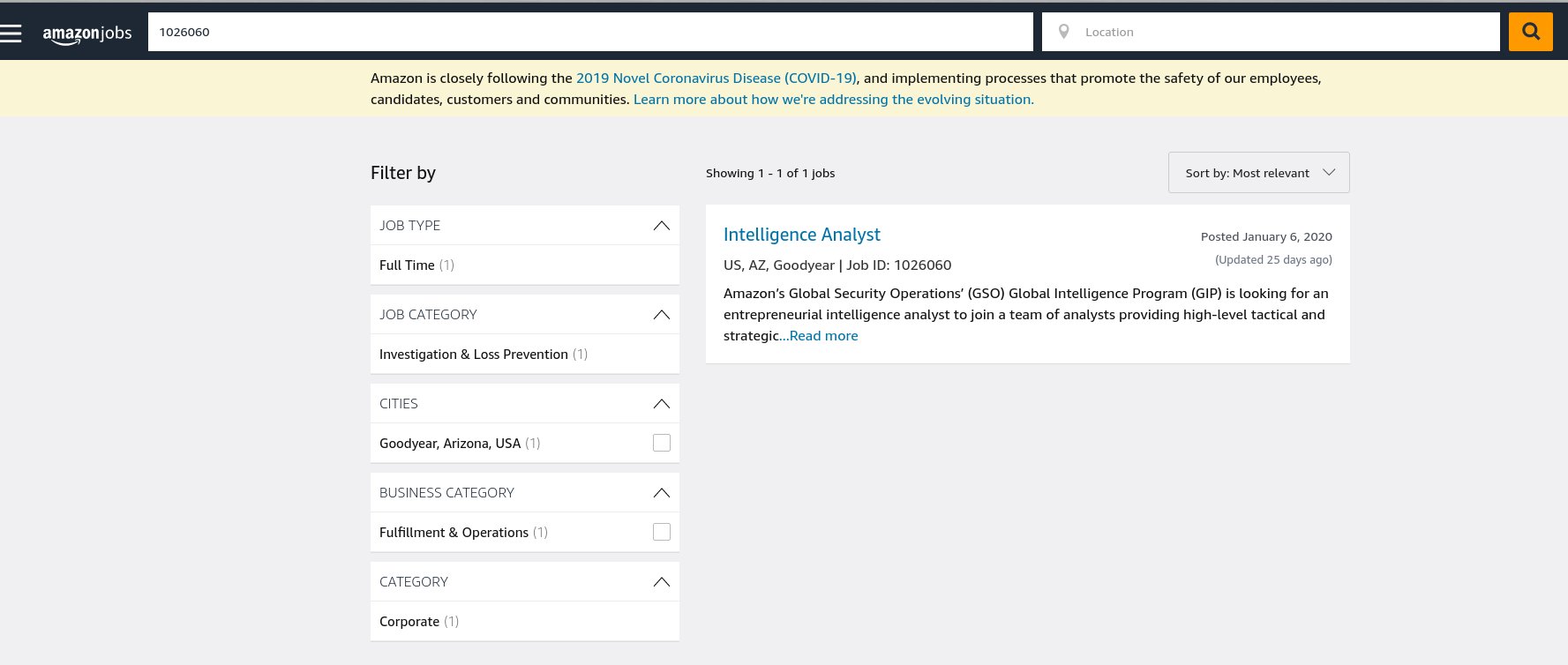

 Illustration by Alex Castro / The Verge

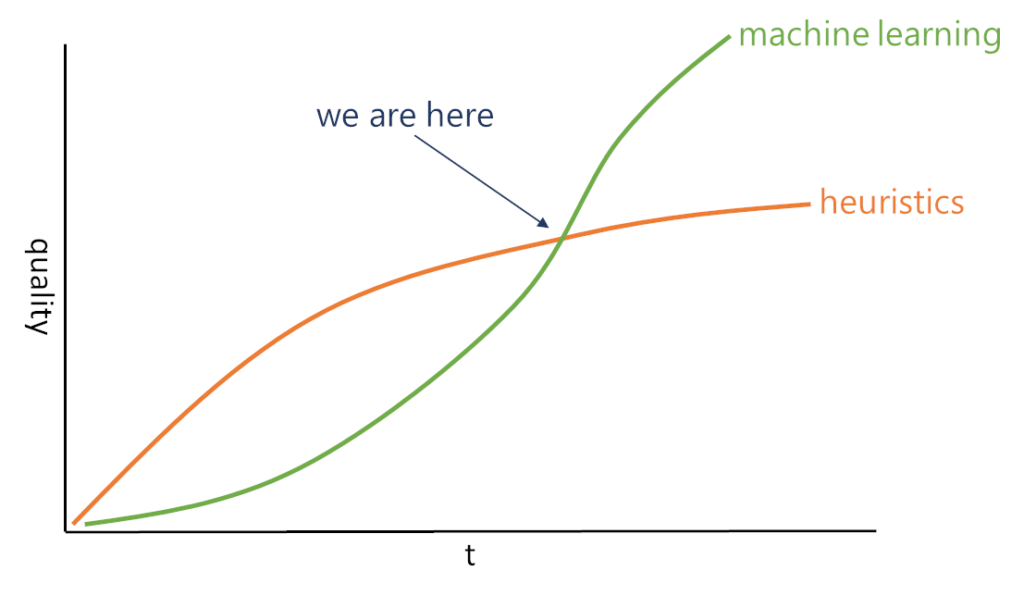










 Image:


 Illustration by Alex Castro / The Verge