Leonardo DiCaprio and Claire Danes in Baz Luhrmann’s Romeo + Juliet (1996). | 20th Century Fox
Juliet and her Romeo are dead, but Romeo and Juliet lives forever.
Friends, I come before you today to address an injustice. For too long have we, as a culture, allowed ourselves to take Romeo and Juliet for granted.
For too long have we sneered at it as adolescent and mawkish when compared to brooding Hamlet or tragic Lear! For too long have we tolerated those pedants who like to smugly opine that if you think Romeo and Juliet is romantic, you’re reading it wrong! For too long have we cast it into the dark pits of eighth-grade language arts curricula, tainting it with memories of Brian G. and Natasha S. protecting their mouths with their hands during the kissing scenes!
No more. There comes a time in life when everyone has to take a stand, and mine is that Romeo and Juliet is good, actually, and furthermore, it’s astonishing that we don’t just spend every day talking about how good it is.
Obviously we all know that Romeo and Juliet is influential. It’s the basic template for all our culture’s tragic love stories, and it’s the reason we’ve got West Side Story and Shakespeare in Love and that early 2000s action classic, Romeo Must Die. But we don’t pay enough attention to the reason it has such a presence, the reason it is as influential and foundational as it has become: namely, that it’s managed to keep working all the way from the 1590s, when it was first written, into the present.
Romeo and Juliet is early-ish Shakespeare, and there’s an argument to be made that it’s his first really beautiful play. After the bawdy slapstick of Comedy of Errors and the bloody horror of Titus Andronicus, after the cynicism of Richard III and Richard II — after something like five years of turning out steady journeyman dramatic work, then Shakespeare wrote lovely, lyrical Romeo and Juliet, with its series of love sonnets embedded into the dialogue. “O, she doth teach the torches to burn bright,” Romeo says on seeing Juliet, and with that line Shakespeare became “mellifluous and honey-tongued Shakespeare,” celebrated by his contemporaries for the sheer beauty of his language.
Romeo and Juliet isn’t only beautiful. It’s also funny and sexy, sometimes shockingly so. “O, I have bought the mansion of a love but not possessed it,” Juliet laments as she awaits her wedding night, “and, though I am sold, not yet enjoyed.” So intense is the force of her desire that she starts to fantasize sadistically, declaring that after she dies, someone should “cut [Romeo] out into little stars” and hang them in the sky. Romeo, for his part, can’t manage to look at anything touching Juliet — gloves, sleep, prayer books — without rhapsodizing about how much he wants to be that thing. Never were there two characters in English literature quite so ready to bone.
Perhaps because Juliet and her Romeo are so palpably lusty and teenage, killjoys are apt to remark smugly that they were absolute idiots for dying for one another, and that for this reason it’s a mistake to read the play as romantic. It remains a testament to Romeo and Juliet’s powers that even if you choose to read it so cynically, it still works. It is entirely possible to consider Romeo and Juliet to be stupid horny teenagers who would have broken up within days if they’d survived the end of the play, and still find yourself crying at the end as they die.
And in the end, perhaps that’s what remains most taken for granted about Romeo and Juliet: that it is an indestructible play. We can pelt it all we like with our mockery, our indifference, our misreadings, our bad eighth-grade productions. It is so perfectly constructed that we will still find ourselves holding our collective breath in the final act, hoping that this time Friar Lawrence’s message will get to Romeo in time, and he and Juliet won’t die. It can survive swings in cultural attitudes on sex and romance and childhood rebellion, can make it through the bawdy Elizabethan era through the prudish Victorian age and into the sex-crazed 1990s, and always still seem perfectly modern, perfectly of our moment.
This play is bigger than us. It can take whatever we throw at it, and it will still be beautiful and funny and sexy and tragic, no matter how badly we treat it. Romeo and Juliet always die, but Romeo and Juliet will always survive our scorn and endure. It lives forever.
You can find Baz Luhrmann’s 1996 Romeo + Juliet streaming on HBO Max, and Franco Zeffirelli’s 1968 Romeo and Juliet for rent on most streaming services. For more recommendations from the world of culture, check out the One Good Thing archives.
During a tour of Rivian’s factory earlier this month, the electric vehicle maker’s CEO RJ Scaringe told reporters that he is very worried about battery shortages, as recounted by the Wall Street Journal. “Put very simply, all the world’s cell production combined represents well under 10 percent of what we will need in 10 years,” the WSJ quotes him as saying. “Meaning, 90 percent to 95 percent of the supply chain does not exist.”
Scaringe is hardly the first to raise this particular alarm bell—herearesomeotherarticlesfromthelastsixmonthsaboutthesameissue—and recent concerns about nickel supplies, a key ingredient in electric batteries, have only intensified the issue. None of this is especially surprising, though. EV batteries require a lot of raw materials, we barely made any of them 10 years ago, and now every car company wants to make a lot of them every year.
One possible reaction a car company could have to this problem is to carefully engineer their products to try and use the smallest possible batteries while still delivering a desirable product. In other words, to be efficient with a scarce resource, something economics textbooks tell us free markets are especially good at doing.
But that is not what’s happening with electric vehicle batteries. In fact, no company is being more wasteful with battery resources than Rivian itself, which manufactures vehicles with some of the largest batteries on the market.
Rivian makes two cars, a pickup truck and an SUV, called the R1T and R1S respectively. If you want a Rivian vehicle any time in the next two years, your choices in battery size are like popcorn at a movie theater: You can either have a Large or Max. A “Large” pack is 135 kWh with an estimated range of 320 miles. The Max is a whopping 180 kWh with a range of more than 400 miles.
A 135 kWh battery pack—which, again, is the smaller of the two options—is really big. According to the website EV Database, the average electric vehicle on the market in Europe, where the EV market is more mature and competitive, has a battery pack of 60.4 kWh, less than half the size. A Rivian’s battery is almost double the size of a Tesla Model Y’s 75 kWh battery pack despite providing essentially the same range (Tesla sells Model Ys with different ranges but manufactures the same battery pack into all of them unlocking additional range via software). It is 37 percent bigger than the standard Ford F-150 Lightning battery pack of 98 kWh—which delivers less range, somewhere in the area of 220 miles—and 4 kWh more than the extended-range version of the electric F-150. And the larger Rivian Max battery has the storage capacity of two and a half Model Y batteries or three Model 3 batteries. No matter which way you slice it, Rivian is stuffing its gigantic cars with even more gigantic batteries.
The reason the Rivian batteries have to be so huge is because the vehicles are inefficient. Just look at them. They are giant boxes that sit high off the road. Boxes are not very aerodynamic. But, targeting an affluent upmarket, Rivian figured its customers would be willing to pay $73,000 or more for a battery pack so large the car could still get 300 miles of range.
Rivian is not alone here. The electric F-150 and Cybertruck are similarly clunky and inefficient; the Hummer EV even more so (its battery pack is a stupid 210 kWh, which would have powered my 1,000 square foot apartment for all of last month on a single charge, but conspicuous overconsumption is a Hummer’s whole deal). EV efficiency is usually measured in kWhs per mile—or miles per kWh—but let’s stick to the miles per gallon equivalent metric used by the Environmental Protection Agency for convenience. Quartz recently put out a handy graphic showing just how inefficient these huge e-guzzlers are. A Hummer EV gets an eMPG of 47, worse than a Prius hybrid powered by gasoline and a tiny 1.3 kWh battery to aid with acceleration. The Ford F-150 Lightning gets 68 eMPG, and a Rivian R1T and Cybertruck get 70. For comparison, a Model Y gets 125, double the efficiency of these electric pickups, in large part because it is engineered to be more aerodynamic.
These giant vehicles get such poor efficiency ratings because all of them are engineered to accomplish goals other than efficiency. The F-150 and Hummers are engineered to look like their gas-powered counterparts, cultural signifiers of conspicuous consumption that not only devalue efficiency but intentionally reject it. The Cybertruck is engineered to look strange so people talk about it. And Rivians are engineered to look like luxury outdoorsy anythingmobiles. Which is why they all need giant battery packs the size of two or three typical EVs just to meet customer range expectations.
These are all perfectly rational design decisions for companies that thought their biggest problem was convincing people to buy electric cars. But, as EV makers can’t keep up with demand, that is not the challenge anymore. Now, the challenge is attempting to limit the use of scarce battery pack resources, a challenge these huge, energy-intensive cars were not designed to do. Which is why companies like Rivian find themselves struggling with production, pushing back delivery dates, and generally having difficulty adapting to a landscape where resource scarcity is a bigger problem than convincing people to buy electric cars.
All of this has a tinge of irony to it. Automakers spent decades successfully convincing American drivers they needed increasingly large, impractical cars for their everyday errands and commutes. This was a massively profitable endeavor for the car companies, as they could sell those big cars for a lot more money without them costing that much more to make than smaller, cheaper cars (a 2020 study by Morgan Stanley found Ford lost money on each Ford Focus sold, a compact car; the reported profit margin of a Ford F-150 pre-pandemic was somewhere around $10,000 per truck).
Gas powered pickup trucks are similarly inefficient to gas cars, relatively speaking, as electric pickup trucks are to electric cars. But, with gas-powered cars, the auto companies were externalizing all the costs of that inefficiency onto customers through the cost of more gasoline, charging more for the privilege of buying one, and pocketing the profits. But the dynamic is different with electric vehicles. The bigger, less efficient cars require much bigger batteries, and batteries are the most expensive and scarce part of an electric car. The cost per kilowatt-hour fluctuates, but has increased to $160 compared to a low of $105 last year. At $160 per kWh, a “large” Rivian battery pack costs $21,600, compared to $14,175 last year. Suddenly, all that inefficiency is a huge headache for automakers.
Automakers will spend billions of dollars in the coming years marketing every electric vehicle as a kind of no compromise machine, with all the convenience—or more—of a gas car but without the environmental costs. This is a flawed message for all EVs—which are better for the environment than gas cars, but not good for it—and especially so for the biggest ones. We can either learn from the mistakes of the gas car era or we can repeat them.
When the Russian warship Moskva told the Ukrainian border guards on Snake Island to surrender, the soldiers told the ship to go fuck itself. Two months later, the border guards are still alive, the Moskva is at the bottom of the Black Sea, and the moment of resistance has been turned into a painting that has become a popular meme. It’s even become a stamp that’s selling for outrageous prices on secondary markets like eBay.
“Russian warship, go fuck yourself,” turned into a popular phrase moments after the Ukrainian Roman Hrybov transmitted it to the Moskva. On March 1, the Ukrainian postal service announced a competition to design a stamp based on the phrase. Boris Groh’s painting of a Ukrainian soldier flipping the bird to a distant Moskva won after being put to a vote on Instagram and Facebook.
The Ukrainian post office turned the painting into a stamp and issued the first run of them on April 13. The next day, the Moskva sank after being struck by a Neptune anti-ship missile fired by Ukraine.
The stamp is now a collector’s item. The Ukrainian postal service issued 1 million of these stamps and is selling 700,000 of them in Ukraine. People are limited to purchasing 16 copies and are lining up around the block and waiting in hours-long lines to purchase their set. “This phrase—the answer of Ukrainian border guards, defenders of Snake Island, to the Russian ship on the offer to surrender on the day of the invasion of Russian troops in Ukraine on February 24 has become a symbol of courage and indomitable spirit of the Ukrainian people in the fight against Russia,” a press release about the stamp said.
Of the remaining 300,000 stamps in circulation, 200,000 are being held back for sale in territories currently controlled by Russia. The remaining 100,000 were sold online and they’ve already become collector’s items. Ukraine is selling the stamps for their face value—about $1 a piece. Some eBay listings for an individual stamp are as high as $30, with sets going for as much as $400.
Supplies of the stamp are limited, but the Ukrainian post office is also selling mugs and T-Shirts bearing Groh’s painting. Igor Smelyansky, the Ukrainian post service’s director general, told the New York Times he was happy to be trolling Russia with the power of stamps. “As the postal service we are always happy when the addressee gets the message,” he said.
Instagram is making a few new creator-focused changes to its platform, which Instagram head Adam Mosseri said are meant to “make sure that credit is going to those who deserve it.”
The new stuff is made up of three changes: product tags are now available to everyone, so you can tag a product in your post; you can assign yourself to a category like “Photographer” or “Rapper” and have that category show up every time you’re tagged in a post; and Instagram is going to start more heavily promoting original content on the platform.
“If you create something from scratch,” Mosseri said in a video explaining the new features, “you should get more credit than if you are re-sharing something that you found from someone else. We’re going to try...
Your personal information is probably all over the internet and no one is accountable. | Grant Faint via Getty Images
Data breaches are everywhere and consequences are ???
At this point, it’s hard not to imagine that at least some of your personal information isn’t for sale in some dark corner of the internet. After all, data breaches are happening constantly. Companies suck up customers’ details and then, try as they might — and let’s assume they really try — declare that it’s been leaked or hacked. You know the drill; the subsequent breach announcement goes a little something like this: “Oops!! We were the victims of a cyberattack, and by extension, so were you! It affected ??? people and we think ??? information was involved, but we’re still kind of guessing here at what happened. Hopefully you have some sort of identity theft protection, which maybe we’re offering and maybe not. But regardless, love you! We’re family! Please come back soon!”
The whole situation isn’t great.
High-profile data breaches have been in the headlines for years. In 2013, Target lost the credit card, debit card, and other information of tens of millions of customers. In 2018, Marriott disclosed a data breach that impacted up to 500 million people; in 2020, it got hit again. In 2021, hackers got a bunch of customer information from T-Mobile that the company reportedly tried and failed to get back. The list of breaches goes on and on.
Of course, these companies would surely rather not be dealing with these situations — data breaches cost firms millions of dollars and are often accompanied by reputational damage and sometimes fines. At the same time, that doesn’t mean the constant loss of consumer data is acceptable. Sure, we live in the era of the internet, and some security risks are inevitable. But that shouldn’t mean that you have to throw your hands up and accept your data is safe, basically, nowhere. The Targets and Equifaxes of the world got hit with big fines, but they still get to exist — lucratively. And they’re still constantly sucking up and monetizing consumers’ personal information.
There’s a simple reason companies collect so much of our data — money — but why they get to collect so much, keep it, and monetize it is more complicated. There are some laws around data privacy and security, but they’re scattershot and generally handled state by state, and they could be better. Companies keep screwing up with our data, and there are no good answers on what to do about it.
Companies after a data breach: Sry bae
In September 2017, credit bureau Equifax announced the information of over 100 million people it was holding onto had been compromised, including Social Security numbers, birth dates, and addresses. It took the company weeks to make the breach public, and shortly after that happened, its CEO stepped down. For a while, it continued to hedge about what exactly was compromised in the breach. In 2019, Equifax was fined hundreds of millions of dollars by the Federal Trade Commission (FTC), Consumer Financial Protection Bureau (CFPB), and states over the breach. It was also required to take other measures, including providing consumers with six free credit reports each year and providing up to 10 years of free credit monitoring for people affected. Data breach victims were supposed to be able to claim $125 checks from the company, but because so many people signed up, that amount translated to mere cents.
But afterward, Equifax — which makes money, in part, by selling people’s personal information to third parties — didn’t drastically change its business practices when it comes to collecting and selling data. The basic incentive for the company to scoop up and monetize as much data as possible remains.
In a statement to Vox, Jamil Farshchi, chief information security officer at Equifax, said that the company has invested over $1.5 billion to rebuild its security and technology systems “from the ground up” and hired upwards of 600 cybersecurity professionals to try to better protect consumer data. “Multiple independent ratings show that our security maturity and posture now exceed every major industry average. Few companies have invested more time and resources in the last few years into ensuring that consumers’ information is protected,” he said, pointing to its latest security report.
Still, it’s hard not to wonder whether any of this is really enough. After all, Equifax is still one of the three major credit bureaus in the United States that consumers have to rely on to navigate their financial lives, and its business is still humming along. Equifax, despite its major missteps, is fine. It’s also evidence that there are no easy answers on how to deal with data breaches or punish companies that have broken laws, to the extent that there are applicable laws in the first place.
To start from square one: There is no federal privacy law in the United States. Instead, it’s sort of a mishmash of federal laws covering certain areas (think HIPAA, the federal privacy law pertaining to health) and state laws. Currently, California, Colorado, Virginia, and Utah have what are intended to be more comprehensive consumer privacy laws (some, experts say, are more effective than others).
To start from square one: There is no federal privacy law in the United States
All 50 states have laws that require businesses and in most cases government entities to issue notifications about data breaches. But they often differ on what happens next in terms of who’s allowed to enforce the laws and go after companies who screw up, explained Caitriona Fitzgerald, deputy director of the Electronic Privacy Information Center (EPIC). “Some states give attorneys general sole authority to enforce data breach laws, but they don’t give them any resources to do it,” she said. Some states allow for a private right of action, which allows private citizens to sue a company directly, but that can be tricky to navigate. Fitzgerald said courts have often made it hard for individuals to sue because it’s hard to quantify harm and show exactly the cost of your data being lost.
At the federal level, it’s largely the FTC that is charged with handling data breaches. It does so under the FTC Act, which allows it to go after practices that are deemed either deceptive or unfair. It has brought about a number of cases on data security, including going after Uber, Equifax, and Facebook over their handling of privacy. But there are limits on what the FTC can do — companies don’t have to say anything about how they secure data, and again, there’s no federal privacy law outlining any rules. Last year, the Supreme Court also limited the FTC’s ability to seek monetary relief, which ties the agency’s hands even further.
In the meantime, companies keep collecting and losing data, and when that happens, the consequences are underwhelming.
Daniel Solove, a law professor at George Washington University and co-author of Breached! Why Data Security Law Fails and How to Improve It, pointed to the example of data breach notifications, which he says have been taking place since about 2005, when companies started being required to say when a breach happened. (Before that, a lot of the time, no one knew). Yes, it’s good that companies have to say when a breach has occurred, but that doesn’t fix the breach, it just sheds light on it. It’s like a doctor telling you that you have cancer, and when you ask about next steps for treatment the doctor saying that’s it, now you know. “Legislators like to pass a breach notification law because it looks like you’re doing something for security, but you’re not,” Solove said.
There are all sorts of ideas out there about what better data privacy and security laws might look like, including taking a look at what information companies collect, what they do with it, how they monetize it, and how they’re required to protect it. “Enforcers need to require changes to business practices,” Fitzgerald said.
Solove argues that the privacy and security components of data need to be less siloed — basically, good privacy leads to better security. He also notes that there’s only so much you can get from companies, punishment-wise, after a data breach happens. The government sometimes fines businesses when they lose data, but it’s hard for those fines to be big enough to make a real dent. When the FTC fined Facebook $5 billion over its privacy mishaps in 2019, for example, its stock price went up after investors found out.
Oftentimes, fines get passed on to shareholders and workers anyway. And even when businesses are nominally required to change business practices, if they don’t, they’re just hit with another fine. And, again, no company wants to suffer a data breach — to a certain extent, in the modern world with hackers and bad actors out there, they’re inevitable. One person gets fooled by a phishing email and boom.
“There’s no silver bullet,” Solove said. “Breaches are never going to go away — there’s going to be breaches.”
Data that’s never collected can’t be breached
We’ve become pretty accustomed to giving over a lot of information about ourselves to participate in the economy and live in the online world. Sometimes, it’s stuff we know we’re handing over — a credit card number and address to make a purchase, an email address to sign up for a website. Other times, it’s a lot less visible, like when companies are tracking our moves and interests online to package and sell that data to advertisers. But like it or not, data is a big part of the way the economy runs. As Louise Matsakis outlined for Wired in 2019, information about people fuels the digital economy; it’s kind of like oil. Much of the time, we don’t even know what data is out there or who has it because companies sell it and swap it among themselves.
“The best form of securing data from attack is to not collect it in the first place”
When we talk about data breaches, we often start at the end: the moment the information has already been leaked or hacked. But some privacy advocates say we need to start at the beginning.
“There is a common business model, which is to vacuum up as much personal information about people as possible, even if you have no use for that information, and then sell it to data brokers who then do all kinds of things with it, especially to sling advertisements,” said Adam Schwartz, senior staff attorney at the Electronic Frontier Foundation. “With so much information being systematically vacuumed and monetized, it increases the problems from these data breaches. To say the obvious, the best form of securing data from attack is to not collect it in the first place.” Or, once it’s collected, to delete it once it has been used.
To offer an example, let’s say I order a pizza from Domino’s. I’m going to hand over my address because I want the pizza delivered, and my credit card number if I don’t want to pay in cash. I’m also going to tell Domino’s what kind of pizza I want. All of this makes sense for Domino’s to have — in the moment. They don’t need a permanent record of where I live or what my credit card number is or whether I want pepperoni or sausage on my pizza. They also don’t really need me to create an account to order the pizza, which their website nudges me to do.
In a better and perhaps less risky world, companies like Domino’s would undertake an effort at data minimization, Schwartz said, meaning the business only collects from the consumer the specific information they need for the task at hand. Might it make ordering a pizza from Domino’s slightly less frictionless next time around when I have to input my information again? Sure. But maybe it’s worth it — just ask the hundreds of thousands of Domino’s customers in India whose credit card and order information was exposed in 2021.
On the collection front, Schwartz said it would be better if businesses used opt-in consent, which means they would have to get specific permission from users before collecting and using their personal data. It would be better if people were also able to ask what companies have and have that information deleted. In some places, such as California, there are privacy laws that allow for that. The problem is, oftentimes, people don’t even know who has their data, especially after it changes hands. (Europe’s privacy law does some of this, with varying degrees of success.)
Many of these measures aren’t ones companies are going to take on their own. If data equals money, and it often does, there aren’t incentives for them not to collect it.
“The market isn’t going to give us the right amount of security here,” said Solove. “We need to create some kind of an incentive so that companies can have at least a minimum level of security on what they’re creating — they need to be responsible for what they’re doing and what they’ve built and the costs they’re creating.”
We often take it as a given that companies are going to suck up our data. We know Facebook takes our information and monetizes it so we can use the site for free because, as Mark Zuckerberg explained to the Senate in 2018, “Senator, we run ads.” We create an account to buy concert tickets or order clothes online without thinking, seeing it as part of the game. But we often don’t interrogate how much personal information companies actually need from us, or how long they should be allowed to keep it.
“Data breaches are really dangerous to millions and millions of people. It allows them to be subjected to identity theft, financial fraud, stalking, and much more needs to be done to stop this,” Schwartz said. “At a minimum, that’s strong anti-breach laws that allow the victims to sue the negligent data managers, but more than that, it’s necessary to go to the source, which is businesses vacuuming up our information in the first place.”
We live in a world that’s constantly trying to sucker us and trick us, where we’re always surrounded by scams big and small. It can feel impossible to navigate. Every two weeks, join Emily Stewart to look at all the little ways our economic systems control and manipulate the average person. Welcome to The Big Squeeze.
The strategic agreement builds upon investments Five9 has made to support its rapidly growing Canadian market and to deliver an enhanced experience to customers.
SAN RAMON, CA – April 21, 2022 – Five9, Inc. (NASDAQ: FIVN), a leading provider of the intelligent cloud contact center, announced an enhanced strategic agreement with Deloitte Canada, an independent firm under the Deloitte brand that provides a broad range of integrated services and world-class capabilities to public and private clients spanning multiple industries.
The expanded collaboration will drive customer experience transformation, as Five9 continues to expand its international footprint, and closely aligns Five9 and Deloitte Canada’s proven success in partnering with Canadian companies to meet the growing demand for digital age networking and Cloud Contact Center as a Service (CCaaS).
Deloitte Canada will feature the Five9 Intelligent Cloud Contact Center as part of its Future of Service Practice, providing end-to-end contact center solutions and services across strategy, architecture, and implementation. The Five9 platform will provide Deloitte Canada’s clients access to digital channels, contact center analytics, workflow automation, workforce optimization, and practical AI to help create more human customer experiences, engaged and empowered contact center agents, and ultimately help deliver tangible business results.
Deloitte Canada is a leader in customer experience implementation, and Five9 is highly rated by customers for its solutions and superior after sales quality of service and customer satisfaction. This strategic agreement will amplify existing sales and solutions enablement resources in the Canadian market, and Deloitte Canada will invest in building a Five9 Center of Excellence within Canada focused on leveraging the Five9 platform to drive innovation for the contact center of the future.
“Contact centers have become a vital channel for organizations to strengthen their customer relationships and accelerate business transformation,” said Bruce Derraugh, Canadian Practice Leader, Deloitte. “We are expanding our Canadian Future of Service Consulting team that is dedicated to helping our clients leverage modern CCaaS solutions, and we look forward to working closely with Five9 to help our clients maximize the value of their CX solutions and drive successful transformation outcomes to meet their business objectives.”
There is a growing demand for CCaaS solutions, and this strategic agreement builds on recent investments Five9 has made to support its rapidly growing Canadian customer base. In 2020, Five9 rolled out two new Canadian data centers that support local data privacy regulations and augment the already available data centers in North America and EMEA. The Five9 field services teams have expanded to include additional Canadian-based Sales, Support, Professional Services, Cloud Infrastructure, Partner Ecosystem, and Customer Success teams that are helping Canadian companies embrace cloud innovation and meet the increased demand to deliver exceptional customer service.
“Canadian businesses have more choice than ever when it comes to cloud-based contact center services, and our partnership with Deloitte Canada will extend our ability to deliver a differentiated, secure, world-class experience for our customers,” said Steve Plunkett, Vice President, Global Systems Integrators, Five9. “We are excited about our partnership with Deloitte Canada and the business outcomes we will jointly drive for local enterprises’ ongoing success.”
About Five9
Five9 is an industry-leading provider of cloud contact center solutions, bringing the power of cloud innovation to more than 2,500 customers worldwide and facilitating billions of call minutes annually. The Five9 Intelligent Cloud Contact Center provides digital engagement, analytics, workflow automation, workforce optimization, and practical AI to create more human customer experiences, to engage and empower agents, and deliver tangible business results. Designed to be reliable, secure, compliant, and scalable, the Five9 platform helps contact centers increase productivity, be agile, boost revenue, and create customer trust and loyalty. For more information, visit www.five9.com.
The streaming service’s stock price took a major hit after releasing disappointing user numbers, making some in the crypto community cry foul at the volatility.
Travelers wear protective face masks at Denver International Airport on November 30, 2021, in Denver, Colorado, as concern grows worldwide over the omicron coronavirus variant. | Robyn Beck/AFP via Getty Images
This decision is what happens when judges don’t care what the law actually says.
So, you’ve probably heard by now that Judge Kathryn Kimball Mizelle, a Trump-appointed judge in Florida, issued a sweeping opinion striking down the Biden administration’s requirement that passengers wear masks on airplanes, trains, and similar methods of transportation.
This requirement from the Centers for Disease Control and Prevention (CDC) provided that “a person must wear a mask while boarding, disembarking, and traveling on any conveyance into or within the United States,” although it contained a few exceptions. For the moment, it is not in effect, as the Biden administration weighs whether to appeal the judge’s order. Hours after the decision, the country’s four largest airlines dropped their mask requirements — prompting confusion, sometimes mid-flight.
Mizelle is the apotheosis of former President Donald Trump’s approach to selecting federal judges. Appointed to the bench at age 33, Mizelle was fresh off a clerkship for Justice Clarence Thomas and working as an associate at Jones Day, a large law firm closely associated with Trump, when she received her lifetime appointment to the federal bench. At the time, Mizelle had just eight years of experience practicing law — meaning that she had not even yet completed the nine-and-a-half years of practice that Jones Day typically requires for its lawyers to become partners of the firm.
But what Mizelle lacks in experience, she made up for in her ability to rack up conservative credentials. In addition to her Thomas clerkship, Mizelle clerked for two other prominent members of the conservative Federalist Society. At a 2020 speech to that organization, she quipped that paper money is unconstitutional.
Mizelle was also nominated by a president who was about to be repudiated by the American public — Trump officially named her in September 2020, two months before Joe Biden defeated Trump in both the popular vote and the Electoral College. The Senate confirmed her while Trump was a lame duck, a week-and-a-half after the election was called for Biden.
Mizelle’s opinion in Health Freedom Defense Fund v. Biden, the case striking down the masking requirement, is so poorly reasoned that it is difficult not to suspect that it was written in bad faith. Its primary argument is that federal law permits the Centers for Disease Control and Prevention to require businesses to clean up contaminants that can spread disease, but that the law does not permit the CDC to actually prevent such contamination from occurring in the first place. But, to arrive at this interpretation of the law, Mizelle takes extreme liberties with statutory text.
I do not believe that Judge Mizelle is as incompetent as her opinion suggests. When Mizelle was up for Senate confirmation, the American Bar Association determined that she “has a very keen intellect, a strong work ethic and an impressive resume,” despite the fact that she lacked enough experience to be traditionally qualified for the federal bench. By all accounts, Mizelle is a smart early-career attorney who could be a very effective advocate. Neither Justice Thomas nor Jones Day have a reputation for hiring rank incompetents, though the former, in particular, is known for hiring hardline conservatives.
The most likely reading of her opinion, in other words, is that she simply disagreed with the Biden administration’s masking policy, and concocted a justification for striking it down. That approach should trouble anyone who cares about democracy, regardless of what they think about mandatory masking on airplanes.
Mizelle’s opinion is an abomination against textual interpretation
This statute also gives several examples of actions that the CDC is allowed to take, including regulations providing for “inspection, fumigation, disinfection, sanitation, pest extermination, destruction of animals or articles found to be so infected or contaminated as to be sources of dangerous infection to human beings” as well as any “other measures” the CDC determines “may be necessary.”
So this law is broadly worded, and it specifically gives the CDC the power to enact “sanitation” regulations that protect public health. Mizelle gets around the law’s broad wording largely by defining the word “sanitation” very narrowly and misreading other portions of the statute.
The word “sanitation” doesn’t mean what Mizelle says it means
Mizelle begins her analysis by arguing that this list of examples limits the CDC’s authority to make regulations — an assumption that, in fairness, is grounded in the Supreme Court’s interpretation of the statute. Thus, according to Mizelle, if the law authorizes the masking requirement, “the power to do so much be found in one of the actions enumerated” in the statute’s list of examples. The masking rule must be a regulation providing for “inspection, fumigation, disinfection, sanitation,” or something similar.
But that shouldn’t be a problem. The word “sanitation” appears right there in the statute, and the masking requirement is a classic sanitation regulation. Its whole purpose is to prevent passengers from spewing a dangerous contaminant into the air that can infect other passengers. And, as Mizelle admits in her opinion, dictionary definitions of the word “sanitation” include “measures that keep something clean.” She even quotes dictionaries that provide definitions such as “the use of sanitary measures to preserve health.”
Nevertheless, Mizelle refuses to give the word “sanitation” its ordinary meaning, instead claiming that this word’s meaning must be limited “to measures that clean something, not ones that keep something clean.”
Suppose, for example, that many toilets installed in airplanes had a design defect that causes them to spew sewage into the cabin. Under the ordinary definition of the word “sanitation,” the CDC could order airlines to fix these toilets to prevent passengers from being exposed to sewage in the first place. But, under Mizelle’s definition, the CDC would have to wait until passengers were wading through feces before it could order the airline to clean it up.
Mizelle reaches this creative interpretation of the statute by pointing out that the word “sanitation” appears in the same company as other words, such as “fumigation” or “disinfection” which involve the removal of existing contaminants and not preventative measures. “Words grouped in a list should be given related meaning,” she claims, quoting from a 1990 Supreme Court opinion.
But beyond semantic sophistry, Mizelle offers little explanation for why the common element uniting words like “fumigation” and “disinfection” is that they involve efforts to clean something up that is already dirty. Another element uniting these words with the word “sanitation” is that they all describe ways to prevent people from being exposed to a disease — such as by requiring people to wear masks so that they don’t readily spew Covid germs into the air.
Mizelle also briefly notes that the statute CDC relies upon to require masking has historically been used for more modest regulations, such as “quarantining infected individuals and prohibiting the import or sale of animals known to transmit disease.” But Covid-19 is the most serious public health crisis since the late 1910s, and arguably the most serious crisis of any kind to face the globe since World War II. So it’s unsurprising that the CDC used its authority more aggressively to confront a historical crisis than it did to fight more ordinary diseases.
And really, why on earth would Congress write a statute to permit the CDC to clean up a mess, but to forbid it from preventing that mess from occurring in the first place? As Mizelle’s opinion shows, a lawyer of sufficient ability can offer a legalistic justification for nearly any result that they want. But that’s not the role of a judge.
The rest of Mizelle’s opinion is even less persuasive than her interpretation of the word “sanitation”
In case there’s any doubt that Mizelle is not operating in good faith, the next segment of her opinion erases such doubt. Mizelle invents a distinction between CDC regulations governing “property” and CDC regulations governing “an individual’s liberty interests” that is directly counter to the statutory text.
As explained above, the CDC’s power to require masks on mass transit flows from a statute (42 U.S.C. § 264(a)) which permits the CDC to “make and enforce such regulations as in [its] judgment are necessary to prevent the introduction, transmission, or spread of communicable diseases.” Mizelle claims that this provision of the statute must be read to only permit the CDC to regulate “property” because it is followed by three other provisions (42 U.S.C. § 264(b–d)) that give “the CDC power to directly impose on an individual’s liberty interest.”
But this reading of the statute is plainly wrong. The provisions she cites are placing limitson the general authority over property and individuals that is granted in the first part of the statute. To illustrate, read the text of one of the three provisions Mizelle describes as giving the CDC authority over individuals:
Regulations prescribed under this section shall not provide for the apprehension, detention, or conditional release of individuals except for the purpose of preventing the introduction, transmission, or spread of such communicable diseases as may be specified from time to time in Executive orders of the President upon the recommendation of the Secretary, in consultation with the Surgeon General.
Unlike the primary provision of the statute, which gives the CDC the power to “make and enforce” regulations, this later provision contains no language authorizing the CDC to do anything. Instead, it places a limit on the CDC’s power to issue regulations under the primary provision. The primary provision gives the CDC the power to issue regulations limiting individual liberty, while the subsequent provision says that the CDC must satisfy certain conditions if it wants to apprehend, detain, or conditionally release an individual.
The other two provisions that Mizelle relies upon, which can be read here, similarly place limits on the CDC’s power to issue regulations. But they create no distinction between “property” and “individual’s liberty,” as Mizelle suggests.
In any event, there’s no need to get more into the weeds here. The point is that, while federal law does place some explicit limits on the CDC’s authority, there is no language whatsoever suggesting that the CDC’s sanitation regulations only apply to “property.” Mizelle appears to have just made this distinction up.
The elected branches, and not judges, should decide public policy
Other polls, however, suggest that mask mandates more broadly are starting to fall out of favor. An Axios/Ipsos poll, which was released last week, found that “the number of Americans who support their state or local government requiring masks in all public places has also dipped below 50% for the first time — now, 44% support such a requirement, down from 50% last month and 67% at the beginning of the year (during the height of the Omicron variant).”
Republicans like Mizelle, however, have long supported rolling back masking rules. A February Ipsos poll found that nearly two-thirds (64 percent) of Republicans “support government entities lifting all restrictions, compared to just 23% of Democrats.”
In any event, regardless of whether Mizelle ruled the way she did because she wanted to substitute conservative policy preferences for the Biden administration’s, or because she believed that popular opinion was on her side, this is not how a democratic society is supposed to function.
In 2020, the American people elected Joe Biden president. That means that Democrats will have an outsized say in determining America’s public health policy for the duration of Biden’s tenure in office. If the voters decide that Biden handled this responsibility poorly, then they will have the opportunity to swap in a different president in 2024.
The appointment of Mizelle — and other, similarly ideological judges — by Trump was intended to short-circuit this democratic process. Trump gave dozens of Federalist Society stalwarts the power to block literally any federal policy. And, especially in the public health context, Trump’s judges are using this power quite aggressively.
Phillipa Soo (foreground) in the world premiere musical Suffs at the Public Theatre. | Joan Marcus
With Suffs and Paradise Square, this season’s new musicals are reexamining the history books.
Seven years after Hamilton first hit Broadway, we’re finally beginning to see how large its legacy will loom. This spring, two new musicals are taking New York with an approach to history that gestures emphatically toward Hamilton: race-conscious, aiming for progressive ideas, and pitched squarely to the audiences of today. They pull it off with mixed results.
Broadway has always loved both a painfully earnest historical musical (see: 1776) and an arch and knowing deconstruction of history (see: Evita, Bloody Bloody Andrew Jackson, and, more recently, Six). Among Hamilton’s great innovations was that it found a way to serve both subgenres at once. Hamilton invited audiences to empathize sincerely with the travails of the Founding Fathers, and it also used its color-conscious casting to subtly critique America’s historical racism. It’s a tricky, supremely delicate balancing act, but Hamilton proved it could be done. Now its first true imitators are finally here.
On Broadway, cluttered and chaotic Paradise Square delves into the gritty history of New York’s Civil War-era Five Points district. There, Black and Irish Americans lived in the slums shoulder to shoulder, and, the leaden lyrics helpfully spell out, could “love who we want to love with no apology.” Downtown at the Public Theater, where Hamilton premiered, flawed, ambitious Suffs takes on the suffragist fight for the 19th Amendment and the flawed, ambitious women who brought it to pass. “Don’t forget our failure, don’t forget our fight,” they admonish.
Neither Paradise Square nor Suffs quite works at the level Hamilton did, although of the two, Suffs comes a hell of a lot closer. Together, they form a case study in the best and worst ways of putting Hamilton’s legacy to work.
Kevin Berne
Center, Joaquina Kalukango, Nathaniel Stampley, Chilina Kennedy, and the cast of Paradise Square.
Paradise Square has been in development for 10 years, since before Hamilton rewrote the rules of the historical musical. It began in 2012 as an off-Broadway show called Hard Times, written by Irish American musician Larry Kirwan and centered around Stephen Foster, the celebrated American pop composer of the 19th century. Its long and tortured development history shows in the final result.
Stephen Foster was in many ways a thoroughly American musical genius. He wrote songs still regularly hummed today (“Oh! Susanna,” “Swanee River”), but he also appropriated much of his music from Black culture and wrote racist songs meant for minstrel shows. He spent the last years of his life drinking away his money in the Five Points, where New York City’s poor Black and Irish populations lived next door to one another.
Hard Times put Foster and his music at the center of the Draft Riots of 1863, when working-class white men rioted over being drafted to fight for the Union in the Civil War. The idea was that the Five Points symbolized the possibility for racial solidarity, the riots showed America’s racial unrest, and Foster’s songs sat squarely in the middle of both. The show premiered in 2012 at New York’s Cell Theatre to largely positive reviews.
“Mr. Kirwan has not only delivered a knockout entertainment, he’s done a public service,” the New York Times review declared, “reacquainting us with the Foster songbook and the striving, teeming America for which it was written.”
Hard Times would become Paradise Square when controversial producer Garth Drabinsky signed on to shepherd the show to Broadway. Drabinsky, who was convicted of fraud and forgery in both Canada and the US in 2009, pinned a lot to this project, seeing it as a comeback vehicle of sorts after his release from Canadian prison in 2013. As he prepared for a 2019 workshop at the Berkeley Rep, he decided to thoroughly rework it.
Drabinsky “shied away from anchoring the show in Foster’s music, with its romanticization of the slavery-era South,” explained Richard Zoglin for the New York Times this April. Instead, he decided the show should be centered on the previously minor character of Nellie O’Brien, a Black woman married to an Irishman who owns the tavern called Paradise Square.
Drabinsky also felt that the show should have new music and a diverse creative team. To that end, he brought on writer after writer after writer. The final result credits Christina Anderson, Craig Lucas, and Larry Kirwan for the book, Jason Howland for the music, and Nathan Tysen and Masi Asare for the lyrics.
In its final version, Paradise Square sees Nellie struggling to keep her business afloat with her husband away at war, while rich white men from uptown slam her tavern with fines for trumped-up offenses. Her solution is to host a dance-off, with both her striving immigrant nephew and a formerly enslaved man on the run from the law competing for the trophy. Meanwhile, Stephen Foster lurks drunkenly on the sidelines, stealing songs, and a Civil War veteran who is one of Paradise Square’s patrons foments unrest at the new draft laws.
To be frank: This is too many plotlines from too many cooks. Paradise Square in the final product is cluttered and disjointed. It’s a musical by committee that circles blandly around its 10 (10!) major characters without succeeding in making a single one of them feel human or alive. It seems to know it can’t be great and so strives to be sentimental instead, and then fails at even that. It is unspecific and uninteresting; all the things that a show about awful, brilliant Stephen Foster could have avoided being.
If you’re making a musical about race in America, it’s a good idea to aim for a diverse creative team. And surely it’s reasonable to want to throw your resources behind a story that centers the experiences of Black people circa the Civil War over those of a problematic white man. The problem with Paradise Square seems to be that Drabinsky has applied those lessons of the post-Hamilton era to his own show clumsily and without nuance.
Instead of starting with a story that centered the 19th-century Black experience, he started with a musical story about a white man and his appropriated music, and then pushed both man and music to the side. Rather than building a diverse creative team from the ground up, he built a post-hoc committee, and then he asked them to create a compelling concept to fill the theatrical vacuum he himself created. It was a losing proposition from start to finish.
When Paradise Square manages to come to life, it is always thanks to the titanic efforts of individual figures. Joaquina Kalukango, Tony-nominated for her performance in Slave Play, manages to find the specificity in Nellie O’Brien through sheer force of will, despite a script that never once allows Nellie to make an active choice. Kalukango wrings a standing ovation out of audiences every performance with her rendition of the 11 o’clock rock ballad “Let It Burn,” and while weeks later the memory of her voice still gives me chills, the song itself is so generic I cannot recall a single lyric or chord from it.
Meanwhile, choreographer Bill T. Jones managed to find the one subplot in this doomed show that works at the level of both theme and form. Historically, tap dance was born in the Five Points, an American art form blossoming out of the union of Irish step and Black buck-and-wing. In a dance-off at Nellie’s tavern, Jones shows you how it happened, right on stage in front of you.
It’s a glorious theatrical moment, an illustration of what can be born out of racial solidarity that only musical theater could deliver. It also happens in a show that otherwise seems to have no idea why it’s a musical at all.
Joan Marcus
Nikki M. James as Suffs’ Ida B. Wells at the Public Theater.
If Paradise Square is a musical by committee, Suffs is the product of a singular vision. With book, music, and lyrics by Shaina Taub, who also stars, Suffs focuses its aims on a woman of singularly focused aims: Alice Paul, who devoted her life first to the 1919 passage of the 19th Amendment and then to the passage of the Equal Rights Amendment. (Paul drafted the ERA, which still has yet to be ratified.) And Suffs makes it plain that Paul’s single-minded drive came with costs.
In her quest to get women the right to vote, Paul suffers harassment and ridicule. She is imprisoned and then violently force-fed in prison, which Taub renders in a particularly harrowing scene. She also sacrifices other principles.
Infamously, Alice Paul invited Ida B. Wells to join her in a march for suffrage before Woodrow Wilson’s inauguration — and then, after southern white suffragists objected, asked Wells to march in the back, behind everyone else. (Wells refused.) In Suffs, this choice becomes Paul’s original sin, tainting all her later work.
“This fight is only for suffrage, above all else, at any cost,” Paul says staunchly. “Not colored rights or any other cause.” Wells (played here by a stunning Nikki M. James), makes it clear that Paul is fooling herself if she thinks her activism can be so neatly divided. “Since when does a radical roll over for bigots in the first place?” she demands. “Wait my turn? Well I sure don’t see you waiting yours.”
A weaker or less nuanced version of this story would make Wells the only Black woman Paul and her team encounter, a walking reminder of their racial guilt who serves no other dramatic purpose. In Suffs, Wells is an icon in her own right, a firebrand activist who is committed to the suffrage movement and refuses to bow to anyone else’s agenda. Her most important relationship is not with Paul, but with her fellow Black activist Mary Church Terrell. Together, they playfully spar over how best to ally with the white suffragists, with Wells favoring confrontation and Terrell favoring conciliation. Crucially, their debate echoes Paul’s fight with the establishment suffrage leader Carrie Catt, who calls for slow and incremental change and can’t abide Paul’s rabble-rousing ways. All of these disparate subplots revolve around the same central set of ideas, which keeps the play feeling focused and on-mission.
Suffs’ ferocious discipline here recalls the best of Hamilton, which derived much of its theatrical power from its ability to bring the broad biographical sweep of Hamilton’s life into parallel with the narrower thematic aims of its music. Likewise, Suffs’ careful attention to racial nuance is a legacy of the post-Hamilton era. It even seems, in a way, to be responding to the critiques of Hamilton: While Hamilton is consistently dinged for its refusal to fully interrogate its subjects’ slave-holding practices, no one can accuse Suffs of whitewashing away Alice Paul’s racism. These are not the only parallels between the two shows. As Helen Shaw wrote for Vulture, doing a shot anytime someone talking about Suffs brings up Hamilton will quickly get you sloshed.
Suffs has its premiere at the Public Theater, where Hamilton was born. The show stars its own composer, book-writer, and lyricist, as Hamilton did. It takes a progressive lens to history, like Hamilton did. Its all-women-and-nonbinary cast rhymes with Hamilton’s famous color-conscious cast. It features Phillipa Soo, Hamilton’s Eliza, clearly having a ball as the slinky and glamorous “beautiful suffragette” Inez Milholland (“We must put the sex in sex equality!”).
Where Paradise Square put the lessons of Hamilton to use clumsily, without appearing to understand their logic, Suffs understands why its famous predecessor worked. Its radicalism is baked into its form, and it doesn’t have to compensate with last-minute changes to its creative team. As a result, the power of its original vision keeps shining through, undiluted.
Where Suffs falls short of Hamilton’s example is in its inability to find the joy in the dark history it covers. This is a grim, even nightmarish account of the fight for equality, and while the dourness effectively evokes the historic and brutal costs of that fight, it also becomes wearing over time. Taub’s music, which is mostly serviceable when compared to her knife-sharp lyrics, has a tendency to repeat itself, which adds to the wearing effect. The only playfulness Suffs offers comes from the repeated device of having the cast burlesque itself as the suffragists’ male antagonists (Grace McLean is a stunning Woodrow Wilson), and that is a joke that suffers from some diminishing returns.
By the end of Suffs’ first act, I was weeping freely behind my mask. I was also longing for just one song that might be a little bit light. Something to lessen the effect of grinding misery that constantly threatens to overshadow the whole show.
The biggest problem Suffs is dealing with is that it is, if anything, too much itself. It stands as a sharp contrast to a show like Paradise Square, which doesn’t seem to have a very clear idea at all of what it is — and as a reminder that for all the power of Hamilton’s politics, and whatever backlash it might face as the cultural mood shifts, its greatest legacy is as a show committed fully and with all its might to the force of its vision.
At the Material Recovery Lab in Austin, Texas, engineers and experts use a pilot-scale industrial electronics shredder for research and development. Apple’s newest recycling machine, Taz, was developed out of this process, designed to help conventional bulk electronics recyclers recover more precious materials. | Image: Apple
Apple products contained almost 20 percent recycled materials in 2021, the highest percentagethe company has achieved to date. Apple shared new details on its recycling programs today, along with some new features it’s offering customers ahead of Earth Day on April 22nd.
In a first for any Apple device, recycled gold was used in the plating of the main logic board in the iPhone 13 and iPhone13 Pro, as well as in wire in the device’s front camera and rear cameras. That “milestone,” Apple says, was the result of the company “pioneer[ing] industry-leading levels of traceability to build a gold supply chain of exclusively recycled content.”
A first for any Apple device
That builds on the company’s previous efforts to retrieve gold from...
Photo by Camilo Freedman/SOPA Images/LightRocket via Getty Images
Delta CEO Ed Bastian said the airline has tested out SpaceX’s Starlink technology, according to a report by The Wall Street Journal. The report calls the tests “exploratory” and says there weren’t any further details, but it does seem like one of the major US airlines is at least interested in Elon Musk’s satellite internet service.
In July last year, SpaceX said it was “in talks with several” airlines and that it was trying to “get that product finalized to be put on aircraft in the very near future.” A few months before that, the company sought FCC approval to provide service to moving vehicles such as planes, boats, and trucks. (CEO Elon Musk has said the equipment is currently too big to put on passenger cars, though that hasn’t...
It just might be the hottest new career path: Oreologist. This novel field of science endeavors to understand some of the persistent mysteries of the popular Nabisco snack, including whether it’s possible to separate the two wafers of the cookie sandwich in such a way that the creme filling is evenly split.
For Crystal Owens, a Ph.D. candidate in mechanical engineering at Massachusetts Institute of Technology (MIT), the pursuit of an equal creme ratio in Oreos—which are prone to splitting with one side being nearly dry—is a lifelong dream. Now, she has had the chance to lead researchers in testing out the probability of achieving this hallowed outcome using a rheometer, an instrument that measures torque and viscosity of various substances.
The experiment revealed that even under laboratory conditions, it is practically impossible to end up with even doses of creme, a result that “confirms that the creme-heavy side is uniformly oriented within most of the boxes of Oreos,” according to an absolutely delightful study published on Tuesday in the journal Physics of Fluids that coins the term “Oreology” and defines it as “the study of the flow and fracture of sandwich cookies.”
“I was personally motivated by a desire to solve a challenge that had puzzled me as a child: how to open an Oreo and get creme evenly arranged on both wafers?” Owens said in an email. “I preferred the taste of the cookies with the creme exposed. If I got a bite of wafer alone it was too dry for me, and if I dunked it in milk the wafer would fall apart too fast.”
“When I came to MIT, I learned how to use our laboratory rheometer, which twists a fluid sample between parallel disks to measure the viscosity,” she continued. “I originally used our rheometer to test a carbon nanotube-based ink I was designing to 3D print flexible electronics, but one day I realized I had the tools and knowledge to finally solve this challenge with Oreos.”
Owens and her colleagues took a methodical approach to this important question, and even invented an “Oreometer,” a 3D-printed device “designed for Oreos and similarly dimensioned round objects,” according to the study.
After twisting Oreos apart with the instruments, the team visually inspected the ratio of creme on each wafer and logged the findings. A number of variations on the experiment were also introduced, such as dipping the cookies in milk, changing the rotation rate of the rheometer, and testing different Oreo flavors and filling quantities. But despite their best efforts, the researchers were not able to find a solution for the problem that has vexed Owens for decades.
“The results validated what I saw as a child—we found no trick for opening up our Oreos,” Owens said. “In essentially all possible twisting configurations, the creme tends to delaminate from one wafer, resulting in one nearly bare wafer and one with almost all the creme. In the case that creme ends up on both wafers, it tends to divide in half so that each wafer has a ‘half-moon’ of creme rather than a thin layer, so there is no secret to get creme evenly everywhere just by twisting open—you have to mush it manually if that's what you want.”
“This was surprising to me because I had imagined that if you twist the Oreo perfectly, you will get the cream to divide perfectly, but that's just not how the physics works,” she continued. She was also surprised to learn that Oreos aren’t filled with cream, but creme, which “is actually more of a frosting than a cream like cream cheese or cream fillings in pastries,” and indeed it contains no dairy. “The rheology is similar for the different fluids, though,” she added.
While the team has now confirmed the elusive nature of the Oreo, the new study is filled with new revelations about this ubiquitous snack and its intriguing properties. Owens and her colleagues report here, for the first time, that Oreos belong to the so-called “mushy” texture regime.
The team affixed cookies to a laboratory rheometer and designed a 3D-printed Oreometer to study the influences of rotation rate, flavor, amount of creme, and environment on Oreos. Image: Crystal Owens
The researchers also calculated the “degradation of chocolate wafer strength over time following milk imbibition,” concluding that Oreos experience “significant structural loss” within a minute of exposure to milk, according to the study. These findings presented another string of challenges to Owens’ worldview concerning Oreo cookies.
“I used to think that you need to dunk the cookie and wait for it to get saturated with milk to make it taste best, but the cookie falls apart too fast,” she said. “I used to think that the cookie getting soft meant it had enough milk, but it turns out that it can still feel ‘dry’ and have a lot of milk because it takes time to fall apart once wetted. According to another study I found, the cookie takes up as much milk as it can in only five seconds of dunking, so there is a ‘sweet spot’ in timing before it falls apart.”
As informative as the new study has been for cookie studies—a field that Owens notes has already earned an Ignobel Prize, a parody award, in 1999—there are still many mysteries about these tasty treats that demand explanation. Owens hopes her work will make people think about the scientific concepts that underpin their daily snacks and indulgences.
“With such a convenient name as ‘Oreology,’ I hope our study makes more people familiar with my research field, ‘rheology’ and the kinds of questions we can answer well,” she said. “It's also a perfect visual example for how our rheometer works, so it is a great introduction to the field that is relatable. We have shared our 3D printing files and hope people can make and use our device directly to do their own Oreology. I hope this study also simply inspires people to take puzzles that they're curious about in the world around them and use science to find the answers.”
“There are many questions we weren't able to answer fully in our first study, and so we welcome other people to contribute their own ideas and experiments,” she concluded. “We are considering a follow-up on ice cream. For now, we'll just keep Oreos in our break room for ‘taste tests' between other experiments, and maybe we'll find a new puzzle to tackle.”
I didn’t want to get rid of this handy left-hand search bar either. | Photo by Amelia Holowaty Krales / The Verge
If you’re like me and are using an old-school desktop PC, you probably haven’t been able to install Windows 11. You may also still be running Windows 10 if you’re a business user with a workflow still optimized for Windows 10 or a leisure user who just prefers it. Motives aside, there are a lot of us. And, fortunately, we now have an update available.
Windows 10 version 21H2 is now available for broad deployment according to Microsoft (first spotted by Neowin). If you’re not an IT administrator, the changes in this update likely won’t be too interesting to you. It’s stuff like “GPU compute support for the Windows subsystem for Linux (WSL)” and “Wi-Fi WPA3-Personal H2E support.” If you are an IT administrator, Microsoft has an article...
The Future of Work issue of the Highlight looks at the workers Americans dubbed “essential” and then largely left behind in the work revolution. Can we make work better for the nation’s crucial workforce?
“We often begin to understand things only after they break down. This is why, in addition to being a worldwide catastrophe, the pandemic has been a large-scale philosophical experiment,” Jonathan Malesic, author of The End of Burnout: Why Work Drains Us and How to Build Better Lives, writes in this month’s issue of the Highlight.
What has broken down, of course, is work, and what American workers, policymakers, and employers now can see plainly are the countless truths the pandemic laid bare: that productivity does not actually require an air-polluting, hourlong daily drive to a soulless downtown office building; that a fair and just society ought not put the poorest, most vulnerable Americans in danger in the name of capitalism; that the entire economy might just be held together by a rapidly dwindling sea of people — child care workers — earning roughly $13 an hour, with no benefits.
In this month’s Future of Work issue, the Highlight and Recode teamed up to explore the precarity faced by those workers whom the Great Resignation did not offer much in the way of increased power or security. We look beyond simply what is broken about their working lives, asking policy experts and workers themselves: What could make work better?
In our cover story, Rani Molla and Emily Stewart talk to those whose jobs, in this supposedly revolutionary time for worker power, haven’t changed for the better. For many who don’t have the luxury of working from home — farmers, food servers, truck drivers, teachers, home health aides, housekeepers, bank tellers, and others — slightly higher wages are masking more difficult and dangerous working conditions they expect will only continue into the so-called future of work.
The pandemic also showed Americans just how reliant the economy is on child care, and how incredibly fragile that industry is. Turnover is high. Making ends meet is impossible. The very people who need child care to allow them to work often are those without the means to afford it. Vox shadows one care worker over the course of a day that is both joyful and exhausting in order to better understand the work that ensures other Americans can do their jobs.
Though Malesic has become a well-known voice calling for an overhaul of work — he’s called it a “bad bargain” for many — he has found, perhaps surprisingly, that many Americans want to find their jobs meaningful, even if that meaning has lately come with stress and exploitation. In this issue, he explores what it might take to create a future in which we aren’t so reliant on work to live and could instead be freed to derive satisfaction from it.
Perhaps no employer in the past 50 years has transformed consumer expectations quite like e-commerce giant Amazon. Those changes have begun shifting what work is like, too, not only for the 1.1 million people Amazon directly employs, but also for its vast network of contractors — and for people working for the many companies that want to emulate Amazon’s methods for making its workforce and workflows hyper-efficient.
Finally, the Future of Work issue looks at Gen Z and its penchant for fearlessly posting about capitalism, labor, and employer behavior online, and we ask journalist and author Eyal Press about the nation’s worst, most exploitative jobs and just how complicit the rest of us are when others must do our “dirty work” for us.
For Maria Martinez, the future of work has never looked particularly bright. In most ofher 25 years as a dishwasher at a DoubleTree by Hilton hotel in Southern California, she had never gotten a raise beyond the minimum wage hikes mandated by the government. Before the pandemic hit, there were three people helping with her shift. Now, it’s often just her. Martinez keeps asking her bosses for help — business at the hotel has picked back up again — but for the moment, they’re not really budging. “The workload has increased, and it’s just me, by myself,” she says.
Martinez, 70, feels like no one appreciates the work she does or the work of people like her. Until recently, she was making $15 an hour, thanks to California’s minimum wage increases, but she says she’s still struggling. “Life isn’t like it used to be. The pay isn’t enough for this day and age,” she says. “We’ve got to figure out if we’re going to pay rent, pay bills, eat or not eat, and that’s got to change.”
It should change, but will it? For people like Martinez, the work revolution that’s supposedly going on across the country right now doesn’t feel very revolutionary.
The zeitgeist is characterized by a certain sense of optimism about the future of work and the power of the worker. Wages are rising (albeit not as fast as inflation), especially for the lowest-wage workers. Companies are scrambling for employees, in turn giving those employees more bargaining power. A raftofnews stories has declared that remote work is here to stay, a celebration of a moment in which, maybe, there’s finally greater work-life balance.
Damon Casarez for Vox
Maria Martinez, 70, has been a dishwasher at a DoubleTree by Hilton hotel in Southern California for 25 years, but since the pandemic began, she’s had fewer colleagues, which has meant more work. “The workload has increased, and it’s just me, by myself.”
Damon Casarez for Vox
Last year, Martinez and her colleagues unionized with Unite Here Local 11. Rising costs for everything from property insurance to everyday bills to goods has set workers behind, even if they did manage to raise their pay during the pandemic.
For many workers, the current state of work looks very much the same — or even worse. In many ways, so does the future.
“We have seen four and a half decades of rising inequality, of wage stagnation for working people for most of that period,” said Heidi Shierholz, president of the progressive-leaning Economic Policy Institute and former chief economist at the Department of Labor. “These couple of months of employers having to compete for workers is not going to fundamentally change that.”
From a policy standpoint, there is a plethora of ideas on the table for creating a more stable, prosperous situation for America’s working class. Changes like strengthening worker protections, bolstering unemployment insurance, putting in place higher minimum wages, making it easier to unionize, and mandating paid leave could make a real, sustained difference in people’s lives.
Martinez emphasized throughout much of our conversation that she didn’t really mean to complain. She’s always liked working. But she’s dedicated years to her employer, and she feels like she’s always given 100 percent. The situation just feels so unfair.
“Lots of work, little money,” she said. She recognizes she’s not unique in her situation. “There are so many people with stories just like mine.”
In recent weeks, Vox spoke with more than two dozen workers who are often left out of the conversation about what the future of work looks like for them. We focused on people who don’t work from home: food servers, farmers, truck drivers, teachers, home health aides, housekeepers, bank tellers, retail associates, and people whose bosses just want them to work in person.
“Lots of work, little money. There are so many people with stories just like mine.”
A murky picture emerged. Some workers are facing new challenges (more danger on the job and more work with fewer colleagues), while others are facing old ones (low wages, uncertain hours, lack of benefits) that still haven’t budged. It’s worth noting that in-person workers are more likely to be people of color and, more specifically, women of color, meaning they’re the ones losing out most if things don’t change.
Some people have made strides and seen improvements in their workplaces, but is that enough? We asked workers what would make their futures brighter. We also asked policy experts to weigh in on what it would take to turn these incremental gains into genuine change.
There’s a real risk that the future of work, for millions of people, will be exactly the same. But it doesn’t have to be.
During the early days of the pandemic, when the country was under lockdown and a wide swath of businesses ground to a standstill, many employers had to cut back on workers, if not lay them off entirely. Now, as business has returned, companies aren’t necessarily restaffing. In some instances, that’s because it’s difficult to find workers, but many of the people we spoke to believed it was because their employers are trying to get by with fewer workers. Despite the tight employment economy, there are still 1.6 million fewer jobs now than there were pre-pandemic. The people who are left behind at these jobs have to take on the brunt of that work.
The result is many people report that the amount of work they do has risen drastically. More than half of workers who stayed at their jobs reported taking on more responsibility when their coworkers left, with 30 percent struggling to get the necessary work done, according to a survey last summer by the Society for Human Resource Management.
Robyn Nikkel, who worked at a national retail bank in Tennessee and has since moved to a Florida location, says her job got harder after her bank permanently shut down branches it had temporarily closed earlier in the pandemic. While some customers switched to online banking, many did not, which made her branch busier than ever.
That strain was especially onerous earlier in the pandemic when the bank suspended incentive pay, which employees like Nikkel, who get money for signing up customers to checking and credit accounts, rely on. Her employer has since brought it back.
“We had double or triple the foot traffic, and we were doing a ton of work. But we were still basically getting paid the same amount of money even though the bank had a record profit year,” said Nikkel, who’s now trying to find a job with better work-life balance and wages to help her pay off student debt. “I don’t mind having to work hard, but I just felt like the strain that they were putting on the few staff that they did have at the bank was really hard.”
While these cutbacks are perhaps good for the companies’ bottom lines, they risk alienating their employees and customers in the long run. Because in some cases, less is less. Many of the workers we spoke to felt that the cutbacks were also hurting customers, who in turn take their frustrations out on them.
Beth Schaffer, a server at a franchised Denny’s in South Carolina, says that before the pandemic, each shift would have multiple servers, a dishwasher, cooks, and a manager. Now, since it’s so slow, it’s just her and a cook. When it does pick up, things get hectic. “When my cook’s busy cooking, I have to maintain the whole entire store by myself,” she said. That means longer waits, uncleaned tables, and upset customers.
She says she can’t do things like give clients their veteran’s or elderly discounts since there’s no manager to authorize those decisions. “Because I can’t give them their discount, they don’t want to tip me. So I make $4 for those two hours they just sat there,” she said. Her server wage is $2.13 an hour (where the tipped minimum wage has been set since 1991). If tips don’t bring that up to $7.25 an hour (where it’s been since 2009), the company is supposed to make up the difference. However, that requires some onerous reporting to get, and she said in practice it doesn’t actually happen.
In a statement the company sent to Vox, Denny’s wrote that “[S]ervers working at Denny’s company-owned restaurants receive a substantial premium above the full minimum wage in each respective state,” working out to about 165 percent of the minimum wage. The vast majority of Denny’s nearly 1,500 stores in the US are independently owned rather than company-owned. Denny’s did not respond to questions about franchised locations.
Even frontline workers — nurses, hospital staff, home health aides — who Americans banged pots and pans for earlier in the pandemic, are struggling. While people in these industries told Vox that they felt more appreciated than they used to, that appreciation hasn’t necessarily translated to better working conditions.
During the pandemic, nominal wage growth, or the actual amount people are paid, has grown faster than it has in years. Inflation, however, has knocked out a lot of those gains.
Susie Rivera, a home health aide in Texas who helps her clients with “all the activities of daily life,” from buying food to using the toilet, works 80 hours a week for two separate clients. While one pays well and has good benefits, the other doesn’t. And the situation of poor pay and benefits has predominated her four decades in the industry, leading to a severe shortage in the field that will someday affect us all.
“I’m thinking, who the heck is going to care for me when I’m that age if we’re not enticing this kind of work for the younger generation?” said Rivera, who is 65 and getting closer in age to her clients.
Home health aides make, on average, $13 an hour and often don’t get benefits for what can be some of the most grueling work, emotionally and physically. Meanwhile, there’s more need for home health aides in the next decade than workers in any other occupation, as people in the baby boomer generation, like Rivera, increasingly need their services.
Bad conditions have made it hard to hire or retain workers in that field and many others, and that’s affecting the old and young alike.
Hiring shortfalls for bus drivers mean kids have longer bus rides, as two bus routes get combined into one, Eric Griffith, a longtime school bus driver in Florida, told Vox. “The stress levels are higher because you’re dealing with more kids, you’re dealing with more work than you would normally,” he said, saying more crowded buses mean more disciplinary infractions and driving distractions. Griffith believes shortfalls could be fixed with better pay. “We really have to go farther in trying to recruit and make sure that our drivers are properly compensated for the things that we do, which is a lot.”
Making matters worse, while many Americans have been able to eke out more pay during the pandemic — nominal wage growth, or the actual amount people are paid, has grown faster than it has in years — inflation has knocked out a lot of those gains. Indeed, when factoring in inflation, the average annual wage gains of 5 percent that people got in February were actually real wage decreases of 2.6 percent. And plenty of workers haven’t had pay increases at all.
Martinez has seen her bills go up for electricity and gas, and the property insurance on her house just doubled. She and her husband, who has been on disability for over a decade after having open heart surgery, are struggling to figure out how to pay for it all. “It’s money that before you could save for an emergency,” she said. She’d like to retire, but it just feels impossible. “If I stop working, what we’d get from Social Security is very little, and our expenses are a lot.”
While the dominant narrative is one of worker bargaining power, many employees told us they rarely get a say in how their jobs are done.
A directive will come down from the bosses or from corporate stating that XYZ is now the new norm. Sometimes, those directives make sense. A lot of the time, what the people in charge think is happening or should happen doesn’t quite line up with reality. Workers on the ground might have a better idea of what would actually make their work better and the business as a whole run more smoothly. In unionized nursing homes, for example, where workers have more say in how their work is done, there was more access to personal protective equipment and lower rates of Covid-19 deaths. But more often than not, workers aren’t asked.
The disconnect between workers and bosses appears on the job in all sorts of ways. We heard from teachers in Florida who were dealing with arbitrary rules, like having to physically be in a school building for online parent-teacher conferences, even though the internet connection was much better at home. Two hotel housekeepers told us that getting rid of daily housekeeping means that when guests leave, rooms are incredibly dirty and take much longer to clean, but they have the same amount of time as before to clean them. A barista in Detroit said management was insisting that they make coffee on a broken espresso machine that burned them.
Peter, who works at a UPS warehouse in New York and asked for us to withhold his last name to avoid risking his job, says he believes that corporate directives are meant to squeeze every last drop out of the workforce. He works in the preloading section, the part where people load the trucks, and where workers are not only among the lowest paid in the operation but also face strict and unrealistic expectations. The company dictates how many packages they’re supposed to load in a shift and tries to calculate how long their movements should take, down to the step count. Meanwhile the workload is very high, as online shopping has remained elevated.
“These people are saying, ‘Oh, well, this person should be doing X number of steps every time they walk into the truck, and if they’re taking more than that, that’s why it’s taking them longer, so they should find a better way to do this or to do that.’ It’s almost always people who’ve never actually had to do it.”
It seems obvious to him that different people will have different performances based on how much experience they have, or just something as simple as how tall they are. But that never quite gets translated up.
“We haven’t had a conversation in this nation, pandemic or not, about changing and really empowering workers as owners, not widgets,” said Solana Rice, co-executive director of Liberation in a Generation, which advocates for economic policies that reduce racial disparities. “Workers are still a line item on a corporate spreadsheet.”
Even workers who supposedly have more control over their jobs have felt the constraints of their employment.
Mike Robinson, a 61-year-old Lyft driver in Los Angeles, wouldn’t normally have qualified for unemployment insurance. But thanks to temporary changes that allowed gig workers and freelancers to get support during the pandemic, he did. When pandemic unemployment ended in September 2021, he lost his benefits and went back to Lyft.
Damon Casarez for Vox
Rising gas prices, lower Lyft rates, and getting Covid in January proved a perfect storm for Mike Robinson, 61, a Los Angeles-based Lyft driver. He says he now must work more to try to make up for lost pay.
But now Robinson says Lyft has lowered its rates, so he works more hours for less pay. High gas prices are also eating away at his paycheck. (In March, Lyft announced it would add a 55-cent surcharge per ride for gas for at least 60 days, to go to drivers.) In January, he got Covid and missed work for two weeks. Because he’s a contractor, he wasn’t paid any sick leave during that time, either. “We don’t have insurance. We don’t have sick pay,” he said.He’s now working more to try to make up for his lost pay. “My wife is working, we got by, but what if there’s someone else that doesn’t, that he’s the only income?”
Gig workers like Robinson, as well as low-wage workers of all kinds, are much less likely to have health insurance than traditional workers, since their jobs don’t usually supply it. In 2021, Lyft began to offer people in California who drive on average 15 hours per week a health care subsidy after the passage of Proposition 22, which lets gig economy companies classify their workers as independent contractors, in the state.
There are policies that have been enacted previously in the US and elsewhere that could provide solutions for work. There are also potential solutions that haven’t been tried.
The response to the pandemic was evidence that the government can do more. The US government undertook tremendous efforts to support the economy when the pandemic hit — efforts that helped regular people stay afloat and put the country on a solid path to recovery. These include policies that, if they were left in place in some form permanently, like being codified into law, experts say could make the future of work much brighter.
“We’re not lacking in solutions, we’re lacking in the will to implement them,” Shierholz, from EPI, said. Those policies include better pay and benefits, a voice on the job, predictability, and better safety and health.
The Coronavirus Aid, Relief, and Economic Security Act, or the CARES Act, passed in the spring of 2020, temporarily put in place a number of measures to support the economy and workers, including enhanced unemployment insurance, loans to small businesses to try to keep people on payrolls, and money to state and local governments, among other measures. The federal government also pushed through a $900 billion stimulus package in December 2020 and then the $1.9 trillion American Rescue Plan, which included unemployment benefits, stimulus checks, and expanded health insurance coverage, among other measures, aimed at helping the economy and supporting working people.
“There hasn’t really been a cultural change, and to the extent there has been a change, it’s because of the CARES Act, and it’s because there were very deliberate economic decisions made to run the economy really hot,” said Matt Darling, an employment policy fellow at the Niskanen Center, a think tank.
For months, the federal government doled out stimulus checks. It added on extra funds to weekly unemployment benefits and expanded the pool of workers who were eligible. This gave some workers the time and space to drive up their own wages by holding out for better paying jobs. Despite handwringing from some economists and politicians that expanded unemployment would keep people out of the workforce, evidence suggests that wasn’t the case. People didn’t flood back to the workforce when expanded state and federal benefits expired.
“That was such a huge benefit to workers both in terms of stabilizing people’s incomes but also in giving them a little more leverage, giving them a little more bargaining power. It’s astonishing that that basically seemed to have no effect on the number of jobs,” Darling said. “We could definitely have much more generous unemployment insurance benefits.”
Other ideas to improve unemployment insurance include putting in place automatic stabilizers that kick in to enhance the program when recessions hit. That would mean benefits would be tied to certain economic conditions, such as unemployment, and would phase out as the economy improves. Many states have outdated unemployment systems that are hard to navigate and run on old technologies, much of which was not addressed during the pandemic. That could be fixed, too. The government could also tighten requirements around benefits so they’re not so different from state to state, and expand the eligibility pool, among other potential measures. There have been proposals along some of these lines in Congress.
Paying workers more is one of the most obvious ways to help. Earlier in the pandemic, many companies put in place hazard pay to better compensate some workers, but in most circumstances, that hazard pay was short-lived. In 2021, with Democrats in control of both houses of Congress, there was also real momentum around the idea of a $15 federal minimum wage, which has been stuck at $7.25 for more than a decade. Multiple states and localities are raising wages to $15 an hour or have minimums in place above the federal level. Many experts, politicians, and advocates are calling for an increased federal minimum wage to ensure a more solid floor for all workers.
Some political figures have begun to call for a higher minimum wage than $15, noting how long the fight has gone on already. Others say a federal minimum wage should be above $7.25 but say $15 is too much.
Additionally, wider adoption of worker standards boards, in which a group of employees take part in decision-making in their industry or with policymakers, could ensure worker protections and minimize the disconnect between workers and employers. In the past few years, a number of states and local governments have formed standards boards of varying kinds to help guide everything from compensation to safety.
The same goes for paid leave. The United States is the only industrialized country in the world without a federal paid leave program, meaning workers are largely at the whims of their employers or state governments. Paid sick and family leave has been left off of the agenda in Congress for now, but if it were put in place, it would, again, help millions of workers, especially low-wage ones.
More protections on the job would also make work better for everyone. Last year, OSHA issued a rule known as an emergency temporary standard that required health care employers to take measures to stop the spread of Covid-19 among employees, including providing personal protective equipment and screening patients for symptoms. Extending this rule beyond health care workers to other high-risk industries like meat processing and retail — or to all workers, as was originally intended — could ensure more safety for workers, as well as consumers.
Damon Casarez for Vox
Los Angeles rideshare drivers with Mobile Workers Alliance, including Robinson, rallied outside an Uber Greenlight Hub on April 6. The drivers are asking Uber, Lyft, and other gig apps to offer more support to workers who are attacked, threatened, or injured on the job.
Treating the ever-growing ranks of gig workers as employees — the state of California is fighting back and forth with gig companies over this — would guarantee them the same protections as traditional workers, such as minimum wage, protection from discrimination, and overtime pay. It would take bigger policy changes to grant them things that higher-paid workers get, including health care and paid sick leave.
And there are even bigger policy proposals that would change the future of work, such as universal health care, a federal job guarantee, and universal basic income. Other ideas include scrapping non-compete clauses and improving the problem of asymmetric information between employers and employees. More broadly, a strong economy is, of course, a main contributor to a strong job market and, in turn, better jobs.
Schaffer, the Denny’s waitress, wants a $15 minimum wage and health care, which the government could, presumably, make happen, because her employer won’t do it on its own. “We don’t get no paid sick days. I have no health insurance,” she said. “Denny’s and all these billion-dollar corporations, McDonald’s, they need to listen to what the workers are saying.” The president of Denny’s, which has a market cap of $866 million, bragged on a recent company earnings call that it was one of only two restaurants on Newsweek’s list of “most-loved” places to work (it was number 73 overall).
While some workers have reason to be optimisticabout the future of work, the past couple of years have made it glaringly obvious that many Americans have reason to think the opposite. For all the talk about how there’s no going back to the way things were before, it’s also not guaranteed that the way forward will be a meaningful improvement for millions of workers.
We know what the future of work could and should look like, but it’s not going to happen unless the economy remains strong and there are active policy decisions around it.
“It’s on us not to just let things get back to normal but actually continue to support workers who are making these demands in their companies and in their work sites, and to try to leverage what we have left of this moment to ensure those standards continue beyond the pandemic,” said Erica Smiley, executive director of Jobs With Justice, a labor rights organization.
Damon Casarez for Vox
In March, Martinez, 70, and the union to which she belongs, won an increase in pay and reduced their costs for health insurance. Pictured, her daughter Diana picks Martinez up from work, as she does every day.
Martinez and her colleagues unionized last year with Unite Here Local 11, and they successfully negotiated a contract with Hilton this March. It’s been an uphill battle, but one they believe is worth it. The company initially offered a 35-cent-per-hour raise, but the union’s collective bargaining power eventually helped it win more.
Employees are set to get a $3- to $4-an-hour increase over the next three years and were able to reduce their health insurance costs by nearly 50 percent. Martinez now makes $16.75 an hour. In a statement, a Hilton spokesperson said the company believes the agreement will be “beneficial” to their team members and the hotel. For Martinez, they’re benefits that she feels are long overdue.
“We’re asking for a fair salary, insurance we can afford for our families,” Martinez said, “and above all, respect and recognition.”
Rani Molla is a senior data reporter for Recode, covering business, technology news, and the future of work.
Emily Stewart is a senior correspondent for Vox, writing about the intersection of business, politics, and the economy.
The HP Chromebook x2 11 tablet comes with its keyboard and pen in the box. | Photo by Dan Seifert / The Verge
Almost anything becomes a little more appealing once the price goes down. Take HP’s Chromebook x2 11 tablet, for example. It’s currently selling for $299.99 at Best Buy, a price cut that’s mighty enough to outweigh its flaws. This one-day deal on the 11-inch tablet with Chrome OS makes for a much more compelling argument compared to its $599.99 regular price. When our own Dan Seifert reviewed the Chromebook x2 in December 2021, he scored it a 5.5 out of 10 due to its occasionally choppy performance. But for half price, it seems like a good deal.
What you’re getting today for $299.99 is a modestly sized tablet with a convenient 3:2 aspect ratio screen, making it taller than 16:9 alternatives, which is better for note-taking and web...
“Artificial intelligence” is often a dubious label for selling all manner of tech snake oil, but one area where the idea of machine sentience at least feels shockingly realistic is in Natural Language Processing, or NLP, the machine learning systems that learn to parse and respond to human language.
Large Language Models (LLMs) like GPT-3 have allowed chatbots to produce uncanny and disturbingly accurate human communication—so much so that it’s often hard to tell what is machine-generated and what is written by a human. Now, in a recently published paper, Google’s research team claims to have trained a language model called PaLM which is capable not only of realistic text generation, but the ability to interpret and explain jokes told by humans.
In examples accompanying the paper, Google’s AI team shows off the model’s ability to do logical reasoning and other complex language tasks that are heavily dependent on context—for example, by using a technique called chain-of-thought prompting, which vastly improves the system’s ability to parse multi-step logic problems by simulating a human’s thought process.
Example jokes that Google's language model was able to interpret.
But perhaps the most surprising examples show how the model can recognize and interpret jokes—even ones that are specifically designed to throw the listener off.
Input: What's the difference between a zebra and an umbrella? One is a striped animal related to horses, another is a device you use to stop the rain from falling on you.
Model Output: This joke is an anti-joke. The joke is that the answer is obvious, and the joke is that you were expecting a funny answer.
Behind PaLM’s ability to parse these prompts is one of the largest language models ever built, with 540 billion parameters. Parameters are the elements of the model that are trained during the learning process each time the system is fed example data. (For comparison, PaLM’s predecessor GPT-3 has 175 billion parameters.)
The increasing number of parameters has enabled researchers to produce a wide range of high-quality results without needing to spend time training the model for individual scenarios. In other words, the performance of a language model is often measured in the number of parameters it supports, with the largest models capable of what’s known as “few-shot learning,” or the ability of a system to learn a wide variety of complex tasks with relatively few training examples.
Many researchers and tech ethicists have criticized Google and other companies for their use of large language models, including Dr. Timnit Gebru, who was famously ousted from Google’s AI Ethics team in 2020 after co-authoring an unapproved paper on the topic. In Gebru’s paper, she and her co-authors described these large models as “inherently risky” and harmful to marginalized people, who are often not represented in the design process. Despite being “state-of-the-art,” GPT-3 in particular has a history of returning bigoted and racist responses, from casually adopting racial slurs to associating Muslims with violence.
“Most language technology is in fact built first and foremost to serve the needs of those who already have the most privilege in society,” Gebru’s paper reads. “While documentation allows for potential accountability, similar to how we can hold authors accountable for their produced text, undocumented training data perpetuates harm without recourse. If the training data is considered too large to document, one cannot try to understand its characteristics in order to mitigate some of these documented issues or even unknown ones.”
Meta is planning to bring its Horizon Worlds social metaverse platform to the web, Meta CTO Andrew “Boz” Bosworth said in a tweet on Thursday. Being available on the web would mark a major expansion for the platform, which is currently only available on its Quest VR headsets.
A web version isn’t the only one in the works — this week, Meta VP of Horizon Vivek Sharma told The Vergethat it’s working on bringing Horizon to mobile phones later this year and is in “early discussions” about bringing it to game consoles. However, it’s still unclear exactly when Horizon might expand to the web, and Meta spokesperson Iska Saric said there were “no timing details to share at this time” when we asked.
Historically, “smart” TVs aren’t always particularly smart. They’ve routinely been shown to have lax security and privacy standards. They also routinely feature embedded OS systems that don’t age well, aren’t always well designed, don’t perform particularly well over time, are slathered with ads, and are usually worse than most third-party game streaming devices or video game consoles.
Yet when if you go shopping for “dumb” televisions — as in just a high quality display with a bunch of HDMI ports and not much else, you’re usually going to be out of luck. There are options, but guides on this front will usually shovel you toward computer monitors (too pricey at large sizes), or business-class displays (ditto). This Lifehacker article ironically forgot to even list the few models that do exist:
The big caveat when it comes to dumb TVs is that they are absolutely not the priority in the market, and so it can be difficult to find a dumb TV that has the screen size, resolution, and other features of a smart TV. Still, it’s not impossible. Samsung makes a 65-inch 4K dumb TV, for example, as does Sceptre, but identifying and finding dumb TVs can be challenging.
Of course it’s challenging because TV manufacturers now make more money collecting and monetizing your personal data than they do selling the actual hardware. Last year Vizio noted it made $38.4 million in one quarter just from tracking and monetizing consumer viewing and usage data. It made $48.2 million on hardware (which also includes soundbars, and other products) in that same period.
That gap has likely closed in the year since, if it hasn’t slammed shut. Worse, TV makers seem insistent on pushing their luck and ruining the quality of their own products as they pursue new online revenues. You’ll routinely see smart TV GUIs slathered with obtrusive ads. And in some cases, greedy TV makers, like Vizio (previously busted tracking users without permission), are now pushing ads over live content.
“Smart” TV makers can’t just take the ad and consumer tracking money and be satisfied, they’re constantly pushing “innovations” seemingly invented to annoy you in a bid to obtain improved quarterly returns. And they’re always (always!) somehow framed as “innovative experiences“:
You used to own a TV for ten years, and you’d just swap in and out HDMI-connected hardware as technologies evolved. But by integrating an OS and trying to dominate the hardware space, TV vendors have created a new, wasteful paradigm that shortens the shelf-life of televisions. Frustrated by the slow OS of a four year old TV? Better just buy an entirely new one!
As a dumb TV fan who has bought several sets in the last decade, I’m usually told something akin to: “well, just don’t connect the TV to the Internet!” But that route locks you out of firmware updates, and some TV makers remove functionality if you refuse to participate in their online ecosystem. Many smart TV GUIs also need to load before you’re even allowed to switch laggy HDMI inputs.
For a decade all I’ve wanted is a quality, dumb-as-nails 65″ TV panel with an over-abundance of HDMI ports, no speaker, and a bare bones GUI. Yet it’s routinely impossible to find one, even if you’re willing to pay a several hundred dollar premium. I know I’m not alone in my quest for dumb technology, yet it’s positively bizarre that nobody wants to meet this market demand.
Former President Donald Trump prepares to speak at a rally in Florence, Arizona, on January 15. The January 6 committee is split over whether to refer Trump to the Justice Department for criminal prosecution. | Mario Tama/Getty Images
Should they refer Trump to the DOJ for prosecution? Or could that somehow backfire?
How will the House committee investigating the January 6 attack address whether Donald Trump committed crimes in his attempt to overturn the 2020 election?
According to recent reports, there have been some divisions in the committee about this. Politico’s Nicholas Wu and Kyle Cheney wrote last week that some of its members “are increasingly skeptical” about whether they should refer Trump to the Justice Department for criminal prosecution. The New York Times’s Michael Schmidt and Luke Broadwater had a similar story Sunday.
The committee can’t actually file charges against anyone, but they can recommend that the Justice Department do so, with a criminal referral. The House has already approved four such referrals from the committee — of Steve Bannon, Mark Meadows, Dan Scavino, and Peter Navarro — for contempt of Congress. (All four aides refused to turn over some or all records to the committee.)
Panel leaders have been open that they’re assessing whether Trump violated the law, too, and they’ve argued he may have done so in court. Many anticipated that the committee would eventually put forward a referral for the former president.
But committee members like Rep. Zoe Lofgren (D-CA) downplayed the importance of such a move in these recent stories. “A referral doesn’t mean anything,” Lofgren told Politico.
In practical terms, Lofgren has a point. Once receiving a referral recommending charges against someone, the DOJ is under no obligation to follow through and charge them, and often the agency doesn’t.
Yet the question of whether Trump should be referred for prosecution does touch on broader questions of what exactly the committee is trying to achieve, and how Democrats (and Trump’s few Republican critics) are struggling to ensure the former president faces consequences for his attempted election theft.
Should the committee’s top priority be to make a maximal political splash, discrediting Trump in the eyes of the public? Or should they focus on trying to help a criminal indictment against Trump actually happen, and to make that case as strong as possible?
Is their audience the public, or is it Attorney General Merrick Garland?
And which strategy will best achieve those aims — if achieving them is even possible?
What is the January 6 committee trying to do?
In one sense, the committee is engaged in a fact-gathering project, trying to document what happened during Trump’s attempt to overturn the election and during the attack on the Capitol. But the committee members have also made clear they view Trump’s behavior as a threat to the functioning of US democracy.
So they are likely trying to help ensure that doesn’t happen again and to weaken Trump’s chances for a 2024 comeback. They could do that in two ways.
The first would be to make their case against Trump in the court of public opinion. If their report contains damning findings about Trump, then perhaps some swing voters might be persuaded not to restore him to office. If this is the main goal, the committee’s report actions and eventual report should be aimed at the public.
The second would be to make a criminal indictment of Trump, and perhaps his conviction, more likely. Again, this would in part be about turning up actual damning findings, but the key audience here wouldn’t be the public — it would be top Justice Department officials like Attorney General Merrick Garland.
Carolyn Kaster/Pool/Getty Images
US Attorney General Merrick Garland speaks at the Department of Justice in Washington, DC, on January 5, addressing the January 6, 2021, attack on the US Capitol.
Trump’s critics believe he committed crimes and want him charged — he tried to steal the election, after all! But it’s unclear how likely that is to happen. A recent New York Times report claims federal prosecutors have recently started “seeking information about people more closely tied to Mr. Trump.” These deliberations, though, are happening behind closed doors, and we don’t really know their status.
Some Trump critics fear that Garland isn’t taking this matter seriously enough, and hope to publicly pressure him into doing so (or simply to lay out a strong, reasoned case that Trump should be charged). But others believe that, if a case against Trump really is in the works already, the committee should avoid getting in the way of the DOJ’s work, avoiding any actions that could make such a prosecution look politicized.
It’s unclear whether the January 6 committee’s behavior will have any significant impact at all on public opinion about Trump (which has proven difficult to impact) or Garland’s decision-making (which he will try to keep removed from politics). But they might as well try.
To refer or not to refer
The committee could conceivably approach the question of Trump’s criminal liability in a few ways, from weakest to strongest:
They could lay out evidence he may have committed crimes but decline to affirmatively state a conclusion on whether he did (this is what special counsel Robert Mueller eventually did in his report on Trump — he decided his team “would not reach a determination, one way or the other, about whether the president committed a crime”).
They could write that in their view Trump acted criminally, but avoid an explicit referral to the Justice Department.
Or they could write that referral and have it voted on by the full House of Representatives.
Again, a referral is just a recommendation, the Justice Department is under no obligation to follow it, and it might have little practical impact. But for those of the school of thought that Garland needs more public pressure to take a Trump case seriously, this could help achieve that.
Until recently, the question of what to say about Trump seemed to lie months far in the future, once the committee wrapped up its work, but a twist in the process surfaced it sooner.
While attempting to get Trump’s lawyer John Eastman to turn over records, despite Eastman’s claims to attorney-client privilege, the committee argued in a court filing that his records fell under the “crime-fraud exception.” If an attorney is advising a client on how to commit crimes (rather than just how to defend against them), those communications aren’t privileged.
To make this argument, the committee had to put forward their best argument that Trump may have committed crimes. So they did. They argued that their “evidence and information” establish “a good-faith belief” that Trump and others may have engaged in “criminal and/or fraudulent acts.”
They mentioned three in particular. First was obstruction of an official proceeding (trying to disrupt Congress’s count of the electoral votes on January 6 with actions like pressuring Mike Pence). Second was conspiracy (basically, working with other people to obstruct the proceeding). Third was simple common law fraud (the lies he spread that the election was stolen from him).
Drew Angerer/Getty Images
The House Select Committee to Investigate the January 6th Attack on the US Capitol met on March 28 to consider a vote to recommend contempt of Congress charges for Dan Scavino and Peter Navarro for refusing to cooperate with subpoenas from the committee as part of their investigation into the January 6, 2021, insurrection.
The committee did not argue here that Trump affirmatively committed crimes, they just said they have “a good-faith belief” that he “may” have done so. This also wasn’t their whole case, it was a 14-page overview and limited to matters Eastman was involved in.
But it was enough to convince the judge who reviewed their claims, David Carter of the Central District of California. In a scorching order, Carter wrote in late March that it was “more likely than not” that Trump committed obstruction and conspiracy related to the January 6 vote count. “If the country does not commit to investigating and pursuing accountability for those responsible, the Court fears January 6 will repeat itself,” Carter added, in a passage that may well have been aimed at the attorney general.
Did the referral of Trump kind of already happen?
Judge Carter’s ruling was a victory for the committee, but it had a surprising effect on some of its members and staff. It persuaded some that a criminal referral letter was now unnecessary and perhaps counterproductive because Judge Carter had kind of already done it. Schmidt and Broadwater of the Times wrote:
The ruling led some committee and staff members to argue that even though they felt they had amassed enough evidence to justify calling for a prosecution, the judge’s decision would carry far greater weight with Mr. Garland than any referral letter they could write, according to people with knowledge of the conversations.
The members and aides who were reluctant to support a referral contended that making one would create the appearance that Mr. Garland was investigating Mr. Trump at the behest of a Democratic Congress and that if the committee could avoid that perception it should, the people said.
So among these committee members, there’s a belief that Garland now is or will be investigating Trump and that they should stay out of his way. They believe they can still write in their own report that they think Trump committed crimes, but they want to avoid sending that referral letter to the Justice Department. Doing so, they fear, could backfire.
But remember that other priority of the committee: trying to impact public opinion. Here, a reluctance to refer Trump for prosecution could be problematic. It could be interpreted by the media, much like the Mueller report, as essentially “backing down.” The referral would be symbolic, but symbols can send a message, and declining to refer Trump (after referring four of his ex-aides) might send the wrong message.
There’s also the argument put forward by Rep. Elaine Luria (D-VA) recently — that this isn’t about messaging, but rather duty. “If in the course of our investigation we find that criminal activity has occurred, I think it’s our responsibility to refer that to the Department of Justice,” Luria said.
The disagreement over a criminal referral concerns something the January 6 committee can control, but the fate of the republic likely doesn’t hinge on it. The decision on whether Trump will be prosecuted will be made by the Justice Department. And the decision on whether Trump will win if he runs in 2024 will be made by voters, most of whom are not so happy with Joe Biden lately.
The committee can do its best to marginally impact either decision-maker, but the looming sense that Trump might slip away from consequences yet again — or regain power altogether — is a problem they can’t solve on their own.
“I invested in Twitter as I believe in its potential to be the platform for free speech around the globe, and I believe free speech is a societal imperative for a functioning democracy,” wrote the Tesla and SpaceX billionaire — who recently acquired a 9.2 percent stake in Twitter — in a filing. “However, since making my investment I now realize the company will neither thrive nor serve this societal imperative in its current form. Twitter needs to be transformed as a private company.”
It’s not clear how this gambit will play out, but there’s also a more fundamental question: what does Elon Musk think free speech is, and who’s threatening it? Free expression is a...
“Oh, hey, you can put that black four under that red five,” says a helpful person looking over your shoulder. | Microsoft
It’s time to celebrate the calming vibes of computer solitaire in this messed-up world we live in.
A couple of months ago, I bought a new computer for personal use for the first time in ages. For many boring reasons, I decided to get a Dell PC, rather than a Macbook, and when I first booted it up, I was greeted with a familiar old friend I hadn’t thought about in ages: Microsoft Solitaire Collection.
Historian Jimmy Maher has estimated that Windows Solitaire — first released with Windows 3.0 in 1990 — is likely the most-played computer game ever made. Throughout the ’90s, the one-player card game offered a quick and easy break for bored office workers, procrastinating students, and insomniacs staring at the computer until all hours of the night. Dragging a black six to rest under a red seven, working inexorably toward clearing the board, served as many people’s introduction to computer gaming, Maher argues.
The games of Windows became a vital part of ... an expansion of the demographics that were playing games, accomplished not by making parents and office workers suddenly fall in love with the massive, time-consuming science-fiction or fantasy epics upon which most of the traditional computer-game industry remained fixated, but rather by meeting them where they lived. Instead of five-course meals, Microsoft provided ludic snacks suited to busy lives and limited attention spans.
The game that most of us who grew up with Windows Solitaire think of as “solitaire” is technically a solitaire variant called “Klondike.” (Some quick terminology: Any one-player card game is called “solitaire.”) But after the success of the original solitaire program, Microsoft quickly added other solitaire variants alongside it, beginning with the puzzle-like Free Cell and continuing with the tricky untangling web of Spider.
The Solitaire Collection that comes bundled with Windows now includes Pyramid, in which you clear cards in the shape of a pyramid, and Tri Peaks, in which you clear cards in the shape of, well, three peaks. (Imaginatively named, these games.) This modern version ensures that any hand you are dealt is solvable, even if figuring out how to solve it can be fiendishly difficult.
More regrettably, the modern version also features occasional ads, unless you want to pay a monthly subscription to go ad-free. I get that we all have to make a buck, but considering that Microsoft took the original design for its solitaire program from an intern who has never made a cent off the game, the ad-supported version strikes me as particularly galling.
Yet if you don’t use a computer that has Windows installed, or you don’t use a computer at all, would you believe there are so many other ways to play solitaire? Google has its own spin on the game, and this site claims to have over 500 variations on solitaire. My favorite online solitaire site is probably World of Solitaire, and I haven’t even dug into solitaire apps. But honestly, it’s really hard to screw up solitaire. Almost any site or app is going to offer you an enjoyable, quick hand of cards.
You also could just find a deck of cards and play a game yourself. A program makes setting a hand of solitaire up much easier, but you can dig out a deck of cards and play pretty much anywhere you’d like, even in corners of the world with bad wifi. (Another bonus of playing with physical cards: It’s so much easier to cheat when you get stuck.)
Why is solitaire — especially the Klondike version — so ubiquitous? That’s harder to answer. Certainly, most versions of solitaire are quickly understandable to anybody who has seen a deck of cards before, and most games are just long enough to offer an involving challenge but also just short enough to provide a quick diversion. For many people, a game that can be played in five to 10 minutes feels easier to justify to oneself than an epic one must sink many hours into, even if all those five to 10 minute games start to add up in aggregate.
For me, though, I’ve found myself returning to solitaire not just because of the challenge but because of the game’s contemplative nature. Any given hand of solitaire is a singular puzzle for me to solve, and staring at the cards to figure out how they’re supposed to fit together is a good way to focus on something that will stretch my mind but also not stress me out too much.
There’s a pleasant, throwback quality to solitaire in this age of doomscrolling. For a few minutes at a time, I can look away from the rest of the world and just look for a way to get to the six of clubs that I know I need to finish this game. You can put a bunch of bells and whistles on solitaire, and you can toss it into a fancy package that’s supported by ads, but it’s still just the same game as it always was. It’s a connection to a time when these glowing screens were important, sure, but also not so heavily dominant in our lives. It might be the closest one can come to going offline while staying glued to a screen.
Solitaire is available in literally thousands of places, and physical decks of cards are available in even more. Microsoft Solitaire Collectionis available from the company’s online store. For more recommendations from the world of culture, check out the One Good Thing archives.
For the first time in recorded history, wind power was the second-largest source of electricity in the country for an entire day.
That’s according to data from the Energy Information Administration’s (EIA) Hourly Electric Grid Monitor, which on March 29 spotted wind energy surpassing both coal-fired and nuclear electricity generation to become a top source of energy across the U.S., second only to natural gas.
Wind turbines in the Lower 48 states produced 2,017 gigawatt hours of electricity that day, comprising 19 percent of the overall energy generated, beating out nuclear by a hair and coal by 2 percent. Natural gas accounted for 31 percent of electricity generated.
The EIA attributes the broken wind production records to consistent growth in wind power as a whole throughout the US. The number of land-based wind turbines in the country has skyrocketed in recent years. In 2021, wind accounted for 42 percent of new energy installed in the country, amounting to more capacity added to the grid than any other energy source. In 2000, electricity generation from wind amounted to around 6 billion kilowatt hours; in 2021, it amounted to 380 billion.
But the timing of the wind penetration event was no coincidence either, the EIA noted in a press release. Wind speeds tend to be higher during spring, and, amid milder temperatures, energy demand tends to decrease overall, so nuclear and coal-fired generators tend to reduce their production during warmer months. That makes way for wind to surpass both energy sources.
March 29 was the first time that wind generation beat out all other energy sources but gas for an entire day—in spring of 2021, it happened for an hour. The EIA notes cautiously that it’s unlikely that wind will beat out other energy sources for as long as a month in 2022 or 2023, but the achievement is still a sign of an industry on the rise.
From Kaseya’s recent REvil ransomware attack to Datto’s recent security acquisitions, here are five important things to know about Kaseya’s $6.2 billion acquisition of Datto and what it means for MSPs.
From car crashes to environmental spills to workplace injuries, author Jessie Singer encourages us to reconsider the word “accident.”
From the desk of my home office in Washington, DC, I can see a four-way intersection with stop signs on each corner. About a year ago, I started to notice something alarming: The cars seemed to be going much faster, and they were running stop signs much more frequently than usual.
More than 31,000 people died in car crashes on America’s roads in the first nine months of 2021, a 12 percent increase over the previous year, and the highest percentage increase during the first nine months of a year since the National Highway Traffic Safety Administration started tracking the numbers. The problem only seems to be getting worse.
When you look at the number of people being killed on our streets, the word “accident” starts to feel really unsatisfying. It almost seems to say “there’s nothing to see here,” when, clearly, something larger is going on. In America, we hear and read about “accidents” every day. Most of us shrug our shoulders: After all, if it’s an accident, there’s nothing much that could have been done to prevent it, right?
In the new book There Are No Accidents, author Jessie Singer argues that basically everything we consider to be an “accident” — be it car accidents or fatal fires or workplace injuries — are in fact not accidents at all. Humans, Singer writes, make mistakes all the time, but it’s the dangerous conditions in our built environments that result in fatal consequences. Larger systemic forces, shaped by corporations and governments, intersect to create vulnerabilities that we don’t all share equally. Anticipating and reducing those opportunities for human error is the key to preventing needless death.
“As a disclaimer, I don’t like to use the word ‘accident,’” Singer told me in the interview. “I don’t normally use the word ‘accident’ but I’m going to use it throughout our conversation, so that you can see when it starts to sound weird to you.”
I spoke with Singer about their book, their critique of how we use the term, and how we can make our communities safer. Our interview has been edited for length and clarity.
What do you mean when you say there are no accidents?
This is a real tricky thing for us to wrap our heads around because the word “accident” is quite tricky. By definition, it’s a contradiction. It has two definitions: One is a random event, and the other is a harmful event. So an accident is unpredictable, but with a predictable outcome.
From that direct contradiction, we get a lot wrong about what an accident is. What’s important when we talk about accidents, and perhaps the number one thing that we get wrong about accidents, is that we focus on the last person involved when things go wrong. In that viewpoint, accidents seem random, and we miss the layered causality that leads to accidental harm. We miss the stacked, dangerous conditions that lead to people being killed and injured in accidents.
What’s the problem with the term “accident?”
There are a lot of problems with it. Accidents are supposed to be random, right? And unpredictable. If that were true, then accidental death would be randomly distributed across the country, but it’s not. When we look at the data, we see that Black and Indigenous people and people living in poverty die by accident most often.
So we’re told at once that this is random, and then we’re told by example that this is totally not random. When we look at the racial and economic differences in accidental death, we see that this is especially true for accidents where policy and infrastructure make a difference between life and death. The safety of our homes, our roads, of our workplaces — what we see is that policy decisions and an unregulated corporate environment lead to risk unequally distributed across the US. But we’re told to think of it as a matter of personal responsibility.
When we say “it was an accident,” we’re saying it wasn’t my fault. It wasn’t their fault. In doing that, we’re almost always focusing on the wrong thing and setting up the same accident to happen again.
Why are Black and Indigenous people more likely to die “by accident” than white Americans, and what are some of those things that we think of as accidental?
When we talk about accidental death, what we’re talking about is unintended, injury-related death, not violence and not disease. There is a huge swath of ways that people die, from choking, to falls, to drowning, to traffic crashes, to fires, to poisoning, to drug overdoses. It is a massive category that includes much more obscure and unlikely ways to die, like freezing to death or starving to death, which of course still do happen.
These are all considered accidents. But there are racialized and economic differences in some accidental deaths — they’re not universal. Indigenous people are more than twice as likely as white people to be killed by a car crossing the street, and Black people are more than twice as likely to die in an accidental house fire than white people. There’s quite a bit of conditional exposure in whether or not a house fire is deadly, whether or not a traffic crash is deadly. It has to do with different layers of exposure, and that layered causality is really important.
If you’re driving an old car, you’re more likely to die in a traffic crash. If someone is driving a much bigger car than you or if you live in a low-income neighborhood where they’re not repairing the roads, you’re also more likely to die. And if you’re in a scenario where all three of those factors are interacting and maybe there are other factors too, like your local hospital recently closed, which means you’re farther away from emergency medical services — all of these layers contribute to whether or not we survive our mistakes. Certain people have less opportunities to survive their mistakes.
When someone is killed in an “accident,” let’s say a car crash, for example, people almost always ask questions like, “Was he in the crosswalk? Was she wearing a helmet? What color clothes were they wearing?”Why is it that we feel compelled to do that?
Questions of blame are really important to us when things get scary. This is especially true with accidents because they seem random, because we’re focused on that last person who made a mistake. It seems like there could have been no other conditions under which that mistake was made.
Seemingly random horrors and tragedies are terrifying. As a result, victim blaming, or even perpetrator blaming, is a comfort because it’s a way of feeling in control of an uncontrollable situation. This is an incredibly strong urge because there are few things more disquieting to us than not having control. In that disquiet, we search for the simplest and quickest and nearest cause, and the simplest and quickest and nearest cause is always the last person who made the mistake. It’s important to point out that victim blaming and perpetrator blaming aren’t that different. Obviously one is especially cruel, but both are useless because they don’t lead us to preventing the problem.
Victims are especially blamed. That’s because they’re dead or they’re hurt, it’s because they can’t speak up. The urge to blame victims is a way to say, “Not me, couldn’t happen to me. I wouldn’t have made those decisions.” It gives us quite a bit of space from this thing that terrifies us.
I know the whole point of your book is that we focus too much on individual responsibility and not on these larger systemic changes that need to be made. But for those of us who don’t want to feel completely helpless, what can we do as individuals to change things?
There are so many ways that we can throw a pillow between us and our mistakes. In terms of the big picture of the federal government, we should be pushing for the re-funding and the reviving of our regulatory agencies, to rein in corporate power and to put a cost on accidental death. Every time someone dies on a corporation’s watch, whether in an unsafe car, on the roads, or in an unsafe workplace, there should be a major cost that makes it no longer feasible for them to continue.
We should also be advocating on the federal level to rebuild the social safety net so people don’t have to make bad decisions. Pay people money to protect themselves, to drive a safer car, to not take the most dangerous job or live in the least-safe place. There’s also so much you can do locally. There are a million ways to prevent accidental death. In your neighborhood, you can advocate for traffic calming and public transit expansions, because if you don’t have to drive a car, you are much safer. If you’re able to take a bus or a train, that makes you more likely to survive your trip from point A to point B.
You can advocate for safe injection sites, and the free distribution of Naloxone and syringes. Simply making them accessible without stigma will not only prevent accidental overdose, but will prevent the accidental transmission of diseases. You can fight for in-your-home and in-your-office ADA accessibility, like ramps and grab bars, so an accidental fall is less likely to end in death.
This even extends to much less-common causes of accidental death, like fighting for fire safety requirements like sprinklers and self-closing doors in apartment buildings in the city you live in. It means that when someone makes the mistake of lighting something on fire, it’s less likely to kill people. As long as we can stop focusing on the last person who made a mistake, as long as we can accept that mistakes are inevitable but premature death is not, we can do so much to protect each other.
While severing Russia from the broader Internet may have felt good for those with a conscience, numerous organizations like The Internet Society warned the decision would likely only help Putin’s goal of a Russian “splinternet,” while potentially harming Russian independent media, human rights defenders, and anti-war protesters.
Putin for years has pushed to isolate Russian citizens from the broader Internet for two major reasons: it’s easier to spy on Russian citizens if they’re only using Russian telecom providers and Russian-based applications and services, and it’s easier to lie to the Russian public using propaganda if the only information they receive comes from Russian information sources.
While a little belated, the U.S. Treasury Department appears to have figured this out, and last week issued a new General License to exempt some communications services, software, hardware, and other connectivity-related technologies (web hosting, domain name registration services, email service companies) from U.S. sanctions against Russia.
The move was in response to a letter by numerous advocacy organizations urging such a license, and warning that broadly blocking Russian citizens from the broader Internet would likely have the reverse impact many had intended:
Access to the internet is essential to the protection of freedom of expression, access to information, and free association, and is increasingly recognized as a human right. Journalism and independent media depend on access to secure and reliable information technologies to document events inside contested areas, and to enable people to bypass state controls on information. Overly broad restrictions on the access of the Russian people to the internet would further isolate the embattled pro-democracy and anti-war activists, and impede the ability of NGOs, human rights groups, journalists, and attorneys inside and outside Russia to provide critical information to citizens about the current state of affairs and their rights. These actions would inadvertently speed up what the Kremlin has set out to achieve through its “sovereign internet” tools – a complete and total control of information space inside Russia.
Companies have every prerogative to make business decisions based on ethical considerations. Namecheap’s leadership informed me, for example, that the company has numerous employees in Ukraine and simply couldn’t, in good conscience, continue to do business in the country.
At the same time, there’s an absolute parade of experts warning that severing the Russian public from the Internet will only make them more susceptible to domestic surveillance and propaganda, something Putin was pushing for (with decidedly mixed success) long before the war began.
Report shows U.S. PC shipments took a 16 percent dive year over year in the first quarter, but Dell and Apple have both wrested market share away from competitors. One partner says once the dust settles, PC demand will still be higher than it was pre-pandemic.


/cdn.vox-cdn.com/uploads/chorus_asset/file/23397914/0060___Center__Joaquina_Kalukango__Nathaniel_Stampley__Chilina_Kennedy_and_the_cast_of_Paradise_Square__Kevin_Berne.jpg) Kevin Berne
Kevin Berne
/cdn.vox-cdn.com/uploads/chorus_asset/file/23397901/03_suffs0005rr.jpg) Joan Marcus
Joan Marcus

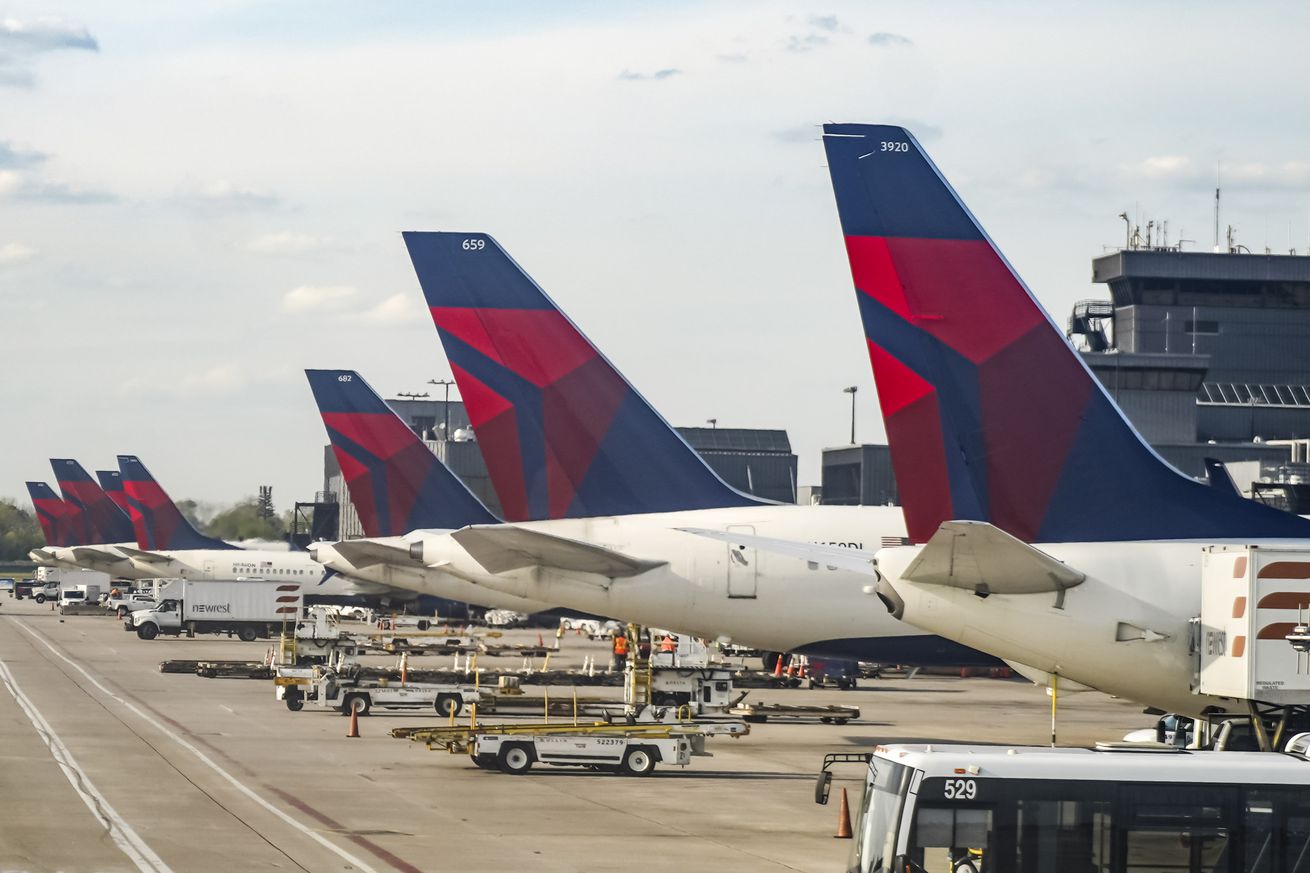



/cdn.vox-cdn.com/uploads/chorus_asset/file/21899595/VOX_The_Highlight_Box_Logo_Horizontal.png)
/cdn.vox-cdn.com/uploads/chorus_asset/file/23376234/Future_of_Work_Final_Kondrich.jpg) Michelle Kondrich for Vox
Michelle Kondrich for Vox
/cdn.vox-cdn.com/uploads/chorus_asset/file/23372840/20220322_highlight_childcare_28.jpg) Tim Tai for Vox
Tim Tai for Vox
/cdn.vox-cdn.com/uploads/chorus_asset/file/23376147/20220405_Vox.jpg) Mojo Wang for Vox
Mojo Wang for Vox
/cdn.vox-cdn.com/uploads/chorus_asset/file/23392127/This_Amazonian_Life_2.jpg) Lindsay Mound for Vox
Lindsay Mound for Vox
/cdn.vox-cdn.com/uploads/chorus_asset/file/23366461/bhayward_final.jpg) Bea Hayward for Vox
Bea Hayward for Vox
/cdn.vox-cdn.com/uploads/chorus_asset/file/23374465/GettyImages_1210676471.jpg) Sandy Huffaker/AFP via Getty Images
Sandy Huffaker/AFP via Getty Images

/cdn.vox-cdn.com/uploads/chorus_asset/file/23372113/Vox_Maria_Martinez_DAC8259_HIREZ_copy.jpg) Damon Casarez for Vox
Damon Casarez for Vox
/cdn.vox-cdn.com/uploads/chorus_asset/file/23372114/Vox_Maria_Martinez_DAC8245_HIREZ_copy.jpg) Damon Casarez for Vox
Damon Casarez for Vox
/cdn.vox-cdn.com/uploads/chorus_asset/file/23372157/Vox_Mike_Robinson_DAC8348_HIREZ_copy.jpg) Damon Casarez for Vox
Damon Casarez for Vox
/cdn.vox-cdn.com/uploads/chorus_asset/file/23372176/Vox_Mike_Robinson_DAC8535_HIREZ_copy.jpg) Damon Casarez for Vox
Damon Casarez for Vox
/cdn.vox-cdn.com/uploads/chorus_asset/file/23377222/Vox_Maria_Martinez_DAC8290_HIREZ.jpg) Damon Casarez for Vox
Damon Casarez for Vox



/cdn.vox-cdn.com/uploads/chorus_asset/file/23390151/GettyImages_1237552542.jpg) Carolyn Kaster/Pool/Getty Images
Carolyn Kaster/Pool/Getty Images
/cdn.vox-cdn.com/uploads/chorus_asset/file/23390204/GettyImages_1388273408.jpg) Drew Angerer/Getty Images
Drew Angerer/Getty Images


