Photo by Sean Zanni/Patrick McMullan via Getty Images
Elon Musk’s acquisition of Twitter hasn’t been finalized yet, but the world’s richest man is keeping busy by kicking around ideas for potential changes to the platform. His latest suggestion? Charging corporations and governments to tweet.
“Ultimately, the downfall of the Freemasons was giving away their stonecutting services for nothing,” tweeted Musk. “Twitter will always be free for casual users, but maybe a slight cost for commercial/government users.”
As is often the case with Musk, there’s no commitment to this plan: the guy’s just tweetin’. But it does fit in with what we’ve previously heard about Musk’s ideas for the platform. Reutersreported last month that, when pitching banks on his acquisition, Musk suggested he might...
A McDonald’s restaurant seen closed in Belaya Dacha, outside of Moscow, on April 14. The company has temporarily closed all its restaurants in Russia. | Getty Images
The unprecedented penalties are dismantling the Russian economy, even as Moscow tries to find ways to ease the pain.
The Russian economy was in free fall. Until it wasn’t, exactly.
The country’s central bank responded by sharply hiking interest rates to 20 percent and imposing strict capital controls. Those interventions, along with Russia’s still-intact ability to sell its oil and gas abroad, helped create a buffer against the economic chaosafter the initial sanctions shock. The measures were “straight out of the country’s economic crisis playbook,” said Adam Smith, a partner at Gibson, Dunn & Crutcher, who worked on sanctions during the Obama administration.
The economic crisis playbook did its job, and calmed the immediate crisis. The ruble stabilized. That allowed Russia to declare victory over the sanctions onslaught. “The strategy of the economic blitz has failed,” Russian President Vladimir Putin said in April.
At least, that is what Russia would like to claim. Russia’s efforts to shore up its currency mask the profound economic disruptions and transformations that sanctions are unleashing within Russia right now. The West’s sanctions are isolating Russia, cutting it off from key imports that it needs for commercial goods and its ownmanufacturing to make its economy work. That means high-tech imports like microchips, to develop advanced weaponry. Butit also means buttons for shirts.
Right now, there is “this false sense of stability,” said Maria Shagina, a visiting fellow at the Finnish Institute of International Affairs.
These sanctions, said Yakov Feygin, a political economy expert at the Berggruen Institute, are pushing Russia — a modern economy, integrated around the globe — back decades and decades.
“They’ve stabilized it, they’ve taken emergency measures. That was to be expected. But that’s not going to help them in the long run,” Feygin said of Russia. “You’re not going to see people queuing for food for quite a bit. But with the current course of things, it’s still very possible.”
The US and European allies have continued to pile on more penalties, refining and sharpening the sanctions, all in an effort to ratchet up the pressure on Moscow. The EU is weighing a phase-out of Russian oil, and depending on the final details, that might further erode the Kremlin’s lifeline. And the US could take additional steps, like threatening secondary sanctions that go after countries like China or India, to deter them from buying cheap Russian energy. That comes at a cost, and not just for Russia.
Even without more escalation, the sanctions regime against Russia is one of the most aggressive in history, untested on an economy of Russia’s size and as entangled in the global financial system.
Whether the sanctions are “working,” then, depends on what they are intended to achieve. One thing is clear:Over time, these sanctions will likely make it harder for Russia to rebuild its tanks, manufacture cruise missiles, and finance a war. It will also make it harder to produce food and make cars. And it still may not stop Russia from pursuing its campaign against Ukraine, all with unpredictable consequences for the rest of the world.
What Russia did (and what the West didn’t) to deal with the sanctions shock
Even so, Russia reacted aggressively once those sanctions hit. “They have done textbook defensive policies to retain capital and stabilize the currency and avoid a financial crisis,” said Rachel Ziemba, an economic and political risk expert and adjunct senior fellow at the Center for a New American Security.
Take the ruble, which President Joe Biden declared reduced to “rubble.” In the aftermath of sanctions, its value crashed. It suddenly took a lot more rubles to buy, say, one US dollar. You reallywouldn’t want rubles, then, because you wouldn’t have as much purchasing power. So the Russian central bank sought to create demand for rubles.
The central bank did so through a series of measures. That included raising interest rates, an incentive for Russians to save their money. The bank implemented a series of capital controls that targeted Russian businesses and individuals. For example, companies that export things or do business abroad had to convert 80 percent of their foreign exchange revenues to rubles. It also limited the amount of money Russians could transfer abroad or remove from foreign bank accounts — currently no more than $10,000 over the next six months.
Google FinanceThe Russian ruble to USD exchange rate over the past six months.
Neither sophisticated Russian central bankers nor energy can fully save the Russian economy in the long run. As Smith said, this is the economic crisis playbook. “The problem with that playbook, of course, is that it runs a course,” Smith said.
These measures are painful, which makes them harder to sustain. Russia has slightly eased some of its interventions, inching down interest rates to a (still high) 14 percent. It also loosened some capital controls, but that also knocked the value of the ruble.
“There was an initial shock,” Feygin said. “It’s over, but it’s not better.”
The toll of Russian sanctions, so far
Russia wants everyone to want rubles. But there isn’t much Russia can do with all those rubles because sanctions block those transactions or make them way too expensive. “The money itself matters, but also how you can use it — both in terms of who your counterparts are, and physically, how you can move it around — matters much more,” said Edoardo Saravalle, a sanctions researcher.
Moscow can’t buy some foreign goods because ofcontrols on critical items like microchips. Those restrictionswill directly undermine Russia’s technology and defense sectors, making it difficult to continue developing weaponry or tools like artificial intelligence, or even repair damaged tanks.
Even if items are not explicitly banned, the web of financial sanctions can make it difficult to do transactions, and often it’s easier for Western companies to self-sanction to avoid running afoul of any possible penalties.
And sanctionshave revealed how reliant Russia is on imported goods and products, not just for the things the country’s populace buys, but for the things it needs for the products it makes and sells at home.
All of that means Russia’s economy will become more isolated over time.Data from other countries has shown that it is already beginning to happen, as imports to Russia are crashing. For example, Finland’s exports to Russia are down 60 percent; South Korea’s are down about 62 percent.
All of this cascades across the economy. If a car company can’t get parts, it may have to temporarily shutter and its employees will lose income. If the bakers can’t fix their mixers, it may mean bread shortages. If Russia can’t get semiconductors or chips for computers or communications systems, it will have to make equipment that is less technologically and economically efficient. A report from the Bank of Russia called what Russia is facing “reverse industrialization.”
The US and its allies also keep adding more sanctions. So far, they are not as sweeping as what happened in the early days of the war, but instead are more incremental, building on what was already in place. For example, after the discoveries of the Bucha massacre, the US closed a loophole on Russia’s sovereign debt payment that might now force Russia to default on its foreign debt for the first time in more than a century. Europe is reportedly ready to move on a gradual oil embargo. It’s a cumulative tightening that gives Russia fewer and fewer options out of the catastrophe.
Ordinary Russians, too, have fewer options. They are the ones who will feel the real crush of sanctions. Overall, experts said, Russians are likely worse off than they were two months ago. “People are seeing a squeeze on their real incomes, that’s the main effect that ordinary Russians are feeling,” said Jacob Nell, former chief Russia economist and head of European economics at Morgan Stanley.
Ziemba said, at the outset, relatively well-off Muscovites might have felt the shock of sanctions most sharply — like those who worked in tech or who had a nice chunk of change in a foreign bank account. This is partly what prompted tens of thousands of people to flee, a “brain drain” depleting Russia of those who might be best able to help Russia recover, whenever that might be. Still, the sanctions have now made it even harder for those people to leave. There are few planes to take you anywhere, and Russians can’t take out more than $10,000 in foreign money from their accounts, making it hard to start a new life, wherever you might go.
Yet many of those middle- and upper-class Russians — with resources at the start of this crisis — are the people best able to withstand sustained sanctions pressure in the longer term. Russia’s most vulnerable will feel the sanctions’ pain most acutely, watching their incomes shrink, struggling to pay for goods, and seeing services fall away.
As Shagina said, those on Russia’s periphery were always an afterthought, and they will be the ones who suffer the most. “If you look at the people who were sent to fight the war in Ukraine, and they’re from the Far East. And because they were poor, I think their situation will be even worse,” she said. That is, the Russians who have the least power may be punished the most.
So are Russian sanctions working? Well, it depends on the goal.
The longer sanctions stay in place, the worse it will be. “We’re ultimately looking at an economy that is shrinking, is turning more inward,” Ziemba said.
Russia may figure out how to navigate as a permanently state-sanctioned economy — like an Iran or a North Korea. “These economies, they don’t just stop, they kind of slow down and stumble,” Saravalle said. “But often, I think in the popular perception, there was this point where the economy just collapses — and there isn’t necessarily. Past sanctions programs haven’t had these types of collapses.”
Russia will find workarounds where it can. It will substitute for supply chains, many of which will be murky, and help fuel a dark economy. Living standards may erode to levels not seen in decades, and the things Russians buy may be more poorly made and harder to get. “Cuba refurbishes old cars for a reason,” Feygin said. In early April, after the Biden administration tightened sanctions, a senior Biden administration official told reporters that, at this rate, Russia “will go back to Soviet-style standards from the 1980s.”
That will not likely happen in the immediate future, but it is the course Russia is on, for as long as the West keeps it there. But the question is: What does the West actually want to achieve by doing this? Before the invasion, the Biden administration framed the threat of sanctions as a way to deter Russia from invading Ukraine. It did not.
In the wake of the invasion, the goal was framed as “inflicting pain on Russia and supporting the people of Ukraine,” which is how Biden put it in his State of the Union. He also talked about depleting Russia’s military, making it harder to wage war in the future.
The Biden administration has also indicated that certain sanctions are trying to squeeze Russia, eroding its ability to finance its war in Ukraine. This month, Defense Secretary Lloyd Austin said that the US “wants to see Russia weakened to the degree that it can’t do the kinds of things that it has done in invading Ukraine.” The administration hopes to accomplish that through a combination of sanctions on Russia and aid for Ukraine.
But it’s less clear what a “weakened” Russia means, and what the United States and allies would do with it. Are they using the pressure to get Russia to the negotiating table? Are they trying to stop the war by getting Russia to withdraw or surrender? Or to defeat it? And what are the consequences of that?
If this is an indefinite effort to weaken Russia, it may get harder to keep up the intensity. The US and its allies acted in cohesion and got enormous buy-in from other partners, including in Asia. But as the war drags on and sanctions continue, that coalition may fracture, especially if the economic costs mount beyond Russia’s borders.
Poorer countries will experience the shock of these economic sanctions, without having much say at all in whether or not they will support these policies. Farmers in Brazil need fertilizer from Russia, countries that depend on Russian arms exports all of a sudden won’t have parts or equipment for themselves, either.
As experts said, the United States and its allies may also need to mitigate the pain for these countries, promising to help replace arms at a discount or offer food aid. The US’s latest request to Congress for $33 billion in supplemental aid to Ukraine partially acknowledged this, including funding for global food assistance.
The sanctions on Russia are unraveling its economy. But this act of extreme economic pressure will have consequences beyond Russia. “It’s a form of economic war,” Saravalle said. “But it’s also very much like we’re reshaping the global economy.”
The nonprofit Coral Restoration Foundation runs the ocean’s largest coral nursery, where scientists raise coral to restore reefs. | Jennifer Adler
Coral reefs can protect coastal cities from deadly floods, if only we keep them alive.
On a sunny afternoon in April, I stood indoors in front of the only machine in the world that can create a Category 5 hurricane in a lab. Housed in a large building at the University of Miami on Virginia Key, it consists of a swimming-pool-sized tank, a wave generator, and a loud jet engine that pipes in hurricane-strength winds.
The tank is an essential tool for research into how coral can lessen hurricanes’ damage to coastal communities. I was here to see how it works.
Landolf Rhode-Barbarigos, an assistant professor at the University of Miami, enters the hurricane simulator to secure a “seahive” structure for a demonstration.
Scientists use the simulator to test structures like this in ocean conditions.
Tropical storms are among the most dangerous and costly natural disasters in the US. Hurricane Ida, which made landfall in Louisiana last August, for example, cost Americans roughly $75 billion, cut power to more than a million homes and businesses, and killed dozens of people.
If that’s not bad enough, climate change is making hurricanes more destructive. Global warming raises sea levels and fuels storms with more water and stronger winds, increasing the risk of flooding.
Engineers defend against these threats by building structures like levees and seawalls, but these tools are imperfect. They can damage the environment, they don’t always hold, and they can be pricey themselves.
But for many communities, a simpler (and cheaper) solution could be a big help: restoring coral reefs.
Coral reefs are among the many ecosystems, including mangrove forests and wetlands, that can protect us. They function like natural breakwaters during a hurricane, helping to dampen or “break” waves that can flood homes and offices near shore.
The problem is that coral reefs are dying. Along with disease and pollution, climate change — the same force making hurricanes more damaging — has wiped out half of the world’s reefs. So to protect our coastal cities, scientists say, we should also protect and restore our coral reefs.
What’s a coral reef worth?
Across the US, coral reefs help safeguard the homes of more than 18,000 people and avert $1.8 billion in flood damage each year, according to a recent analysis by the US Geological Survey (USGS).
Florida, home to the world’s third-largest barrier reef, receives a large chunk of those benefits. Reefs provide flood protection to more than 5,600 Floridians and prevent $675 million worth of damage to property and peoples’ livelihoods each year, the analysis found.
Reefs reduce the amount of energy in waves by an average of about 97 percent, not unlike how a speed bump slows a car. Waves with less energy are smaller and slower and don’t deal as much damage when they reach the shore.
Even just a small difference in a reef’s height can make a big difference in risk, according to a study published last year in the journal Nature. Flood risk is often measured by what’s called the 100-year-flood zone — an area in which the chance of a flood in a given year is 1 percent. If coral reefs in the US lose 1 meter of height, that zone in the US would grow by 104 square kilometers (or about 26,000 acres), putting about 51,000 more people at risk of flooding, the study found.
That’s a big reason why losing reefs is so frightening. “These losses could escalate flood risk in just years to levels not anticipated by sea-level rise for decades or a century,” the authors of the Nature study wrote.
Building coral barriers, with help from the world’s largest hurricane simulator
In Miami-Dade County, sea levels are set to rise well over a foot in the next three decades. It’s one of the most flood-prone regions in the country, and a fitting place to study the impact of hurricanes.
When I visited the University of Miami in April, the hurricane simulator was filled with about a meter of water and a structure made of hollow, hexagonal tubes was submerged in the center. Scientists use the simulator to test how well structures like this one (called a “seahive”) dampen wave energy, with and without coral on them.
From a desk equipped with three computer screens, a doctoral student turned on the machine. The jet engine whirred and, inside, ocean-like conditions appeared. Gusts of wind created texture over the water, which erupted in waves that slammed into the seahive.
The seahive is one of three different structures that University of Miami researchers are testing, with and without coral on them.
Experiments in the simulator have shown that structures like this with coral on them more effectively reduce wave energy, in some cases reducing it by up to 95 percent, according to Landolf Rhode-Barbarigos, a researcher at the University of Miami.
Before the end of the year, Rhode-Barbarigos and other scientists will sink a few different structures, including seahives, in North Miami Beach. They’ll plant coral on some of them to test them in real-world conditions for the first time.
The University of Miami’s restoration project is considered a “hybrid” approach because it involves a human-made structure and live corals. But dozens of initiatives around the world — and many in Florida — involve planting coral straight on dying or damaged reefs, as I reported in April. A key selling point for these projects is that they can help safeguard coastal communities against storms.
Liv Williamson, a doctoral researcher at the University of Miami, picks up a baby coral. These tiny coral colonies are part of an experiment on disease.
Researchers at the University of Miami and elsewhere have also been developing coral colonies that grow quickly and better tolerate rising ocean temperatures, disease, and predation, often with some out-there approaches. The idea is to regrow reefs with corals that can tolerate the forces that wiped them out.
If coral reefs are so valuable, why don’t we pay more for them?
The US spends roughly $500 million a year to limit coastal flooding and related threats, according to USGS. In some years, those numbers are much higher: The Army Corps of Engineers spent $15 billion in 2018, for example, on projects to prevent flood and storm damage.
These figures make what cities spend to restore ecosystems look like pennies. The nation’s largest project to restore reefs, an initiative in the Florida Keys called Mission: Iconic Reefs, has received only around $5 million in federal funding.
“Funds for disaster management and climate adaptation are tens to hundreds of times larger than funds for habitat conservation and restoration,” authors of the Nature study wrote.
Joe Raedle/Getty Images
Damaged homes and streets seen after Hurricane Irma passed through Big Pine Key, Florida, on September 13, 2017.
That’s starting to change as government agencies look to reefs as a defense against tropical storms. One example is the seahive project, which was initially funded by the National Cooperative Highway Research Program (which is in turn funded by the federalgovernment).
The Department of Defense is also shelling out millions of dollars for coralrestoration through DARPA’s “Reefense” initiative. This is a big deal because it opens up an enormous new pot of money for reef conservation and restoration, said Andrew Baker, a coral researcher at the University of Miami who’s helping make corals more resistant to extreme heat.
Ultimately, protecting and restoring coral reefs is about much more than protecting coastal cities. Though they cover less than 1 percent of the world’s oceans, reefs sustain about one-quarter of all marine life and half of all federally managed fisheries. It’s hard to think of a better example of how helping an ecosystem is also helping ourselves.
That’s the best price we’ve seen on the Chromebook Duet, a 2-in-1 that impressed us with its long battery life and affordable price point. During our testing, we were able to use it for nearly 11 and a half hours on a single charge while we made Zoom calls and ran through a variety of tabs and apps, including Gmail, Slack, and...
Ventje is a car made for the work-from-anywhere types benefiting from the new hybrid and fully-remote workforce enabled by the COVID-19 pandemic. I’ve seen one in person and the build quality is impressive. It’s a German engineered Swiss army knife of Dutch design — on wheels.
Ventje starts with a new or used VW Transporter van and uses CNC precision to convert the interior into a multi-purpose space to work, lounge, cook, eat, sleep, and play. And when the weather’s good, the interior can be transformed into outdoor seating. Lift the tailgate and the surprisingly large and functional indoor kitchen becomes equally useable from the outside with drawers that open both inwards and outwards, no conversion required.
This weekend, a report from Good E-Reader seemed to suggest something truly wild. After 15 years, Amazon was going to finally bow to competition and support the ePub ebook format used by the wide majority of online bookstores, publishers, and competing services. But it turns out Amazon isn’t going to natively support the ePub format. Instead, per an update to Send to Kindle documentation, the Amazon Kindle will soon support using the Send to Kindle function to convert ePub files into an Amazon-specific digital book file format.
We were so close! And it’s wild because we’ve been this close, and also this far, since the Kindle and the ePub file format both launched back in 2007. Sony, Barnes & Noble, and other e-reader makers were quick to...
Sixteen states as well as several prominent climate activists sued the United States Postal Service this week over its plan to purchase 148,000 gas-guzzling delivery trucks over the next decade, alleging the agency failed to consider the environmental impact of its decision.
The states accuse the USPS of only performing a “cursory environmental review to justify the decision to replace 90 percent of its delivery fleet with fossil fuel-powered, internal combustion engine vehicles, despite other available, environmentally preferable alternatives,” the lawsuit reads. “In doing so, the Postal Service failed to comply with even the most basic requirements of [National Environmental Policy Act].”
You’ve been able to link your account to multiple computers for a while. | Illustration by Alex Castro / The Verge
WhatsApp seems to be working on a feature that would let users chat with the same account on multiple phones, or on a phone and a tablet, according to a screen found in a beta version of the app by the site WABetaInfo. The screen gives instructions for registering the device you’re using as a “companion” by scanning a code with your main phone — though currently there doesn’t appear to be an actual code to scan.
A screen found in a previous beta showed that devices could be getting the ability to sync recent messages, even though they’re end-to-end encrypted. That screen, combined with the “Register Device as Companion” screen that instructs users on how to use WhatsApp on another device, adds up to compelling evidence that this feature...
‘The only conclusion we can come to is that it has to be a gray market product. We’ve seen that pretty regularly, especially in the last couple of years and especially because of the supply chain in the last year,’ one Cisco partner tells CRN on recently lost deals.
Salesforce is a big, complex set of services, which has been augmented via acquisition with several other big complex services, including MuleSoft, Tableau and Slack, three companies the CRM giant acquired in recent years.
The company has been looking for ways to make all of these tools (including Salesforce itself) work better together, and it thinks the answer is using its low-code workflow tool, Salesforce Flow. Today, it announced an update that is designed to build integrated workflows between whichever tools in the Salesforce family you happen to be using.
It’s a bold attempt to pull together all of the pieces in the Salesforce arsenal in a more coherent fashion, using a popular tool that has been around since 2019 to do the job.
Salesforce co-founder and CTO Parker Harris says that when the company launched 23 years ago, it was all about humans entering data and interacting with machines, but over time, the machine has been able to take over some of the tasks, and that’s where Flow comes in.
“It was humans going into screens and entering information and reading it, and while that’s still very important, I think the world has shifted a lot where it’s now more about automation. It’s more the computer driving business, rather than humans trying to do it all on their own,” Harris explained.
While that ability to automate tasks has been around in various forms inside Salesforce for some time, the company is trying to pull it together in one centralized place by updating Flow with four new components. For starters, there is Flow in Slack, which as the name implies embeds Flow capabilities into Slack.
Slack already has powerful capabilities to incorporate other enterprise tools directly into it and use Slack’s workflow or an automation tool like Zapier to move work in an automated fashion, but the native integration with Flow lets users take advantage of Flow’s Salesforce-centric capabilities inside Slack to use it as a central work platform to access other Salesforce tools as needed.
The next item, Flow Actions, gives Tableau users the ability to create data-based workflows. So as you gather data inside a Tableau dashboard, certain levels could trigger actions like sending a message to a person in Slack when revenue drops below a certain level.
Finally, not to leave MuleSoft out of the equation, Salesforce introduced Flow Integrations, a powerful feature that lets you pull data from any system as part of a workflow, whether those systems are on on prem or in the cloud. In addition, Flow RPA lets you create automations across legacy systems.
You may be wondering about an intelligence component here, and while Einstein AI may not be built directly into these tools, workflow designers could add Einstein predictions and recommendations as part of an automated process, according to Salesforce.
Brent Leary, founder and principal analyst at CRM Essentials, says that these new tools are pulling together a lot of pieces of the Salesforce family of products in a way that has been difficult to do up to now.
“I think this is a necessary piece to the puzzle. The more clouds and components that comprise the overall platform, the more important it is to make it easier for actual business people to make them all work together,” he said.
Harris says that Salesforce decided to build these capabilities into Flow, rather than building a whole new tool because a large number of customers are already using it. “It’s very important, I think, to follow on success and follow on momentum and Flow has such adoption and momentum, and we’ll keep innovating on it,” he said.
The products are being announced today at the TrailblazerDX developer conference in San Francisco. Flow Integrations and Flow Actions are available today. Flow in Slack and Flow RPA will be available later this year.
Boeing is still working on the next generation Air Force One (the current one is pictured here). | Photo by Nathan Howard/Getty Images
Boeing’s CEO, Dave Calhoun, says that the company’s deal with Trump to build Air Force One was a risk the company “probably shouldn’t have taken.” The comment was made on Wednesday during a conference call to discuss the company’s Q1 results for 2022, which show that the Air Force One program went $660 million over its expected budget in the past few months. In a financial filing (PDF), Boeing reports that it’s now lost $1.1 billion on the contract.
“Air Force One I’m just gonna call a very unique moment, a very unique negotiation, a very unique set of risks that Boeing probably shouldn’t have taken, but we are where we are and we’re going to deliver great airplanes. And we’re gonna recognize the cost associated with it,” says Calhoun.
Fidelity will soon start allowing eligible individuals to save a portion of their 401(k) in Bitcoin, the company announced Tuesday. Employees will only gain access to the option if their employer signs off the option, which Fidelity says will start rolling out in mid-2022.
While Fidelity doesn’t specify how much employees can dedicate to cryptocurrency in its release, the Wall Street Journal reports that employees can elect to save up to 20 percent of their retirement fund in Bitcoin. Dave Gray, Fidelity’s head of workplace retirement offerings and platforms, also told the WSJ that Fidelity plans on adding support for other cryptocurrencies at some point in the future.
MicroStrategy is the first to announce that it has adopted the...
You’ll soon be able to download Microsoft Teams from the Microsoft Store that comes built into Windows, according to a roadmap update from the company, as spotted by Neowin. Yes, you read that right. Microsoft’s work communications app hasn’t been available on its own store up to this point; it either had to be downloaded from the web or installed alongside the rest of Office 365. (Though, as ZDNet notes, it was available at one point on the store exclusively for people using Windows 10 in S mode, which restricted where you could install software from.)
According to the roadmap, Teams will be available on the store sometime next month for both Windows 10 and 11. The version for Windows 10 will be usable with personal, work, and school...
Pleasant Grove, Utah and Denver, Colorado – April 26, 2022 –Alianza, Inc. and Lumen Technologies (NYSE: LUMN) today announced that Lumen will use Alianza’s cloud communications platform to strengthen its voice services portfolio and provide customers with robust, anywhere business communication functionality.
Built for service providers, Alianza’s cloud communications platform is a premier cloud-native, carrier-grade platform that addresses the critical needs of Lumen’s core voice products and customer segments.
Lumen has launched Lumen Cloud Communications on the Alianza platform and will position it as a primary option for customers ready to migrate to a cloud communications solution. Together, Lumen and Alianza will be able to offer a robust migration path for customers on legacy voice services.
Alianza’s proprietary full-stack cloud communications platform will provide Lumen business customers with feature-rich voice, team messaging, video conferencing, mobile applications, and specialty lines — a POTS replacement solution for lines that support elevator phones, alarming, security systems, and remote access modems. It will also help accelerate Lumen’s journey to an advanced digital experience where customers can order, deploy, manage, and use their services online with a user-friendly administration portal.
Lumen will help customers accelerate their plans to migrate to a high-quality, secure, next-generation voice and collaboration solution that includes among other things:
Centralized management. The Lumen Cloud Communications offering is managed with Alianza’s easy to use, intuitive portal that provides Lumen with simplified customer management and powerful analytics.
Automated provisioning. The Alianza platform enables remote deployment with limited involvement from Lumen support staff.
Online customer ordering and management. Lumen customers will be able to add an extension or direct number to their account within minutes, and users can configure a variety of settings to customize their call experience with ease through the Voice portal.
Easy porting of numbers. API integrations allow Lumen to better control porting and number activation for customers, enhancing the onboarding experience.
In addition, Lumen gains network and operational simplification, service automation, and an enhanced ability to quickly and easily provide advanced communications services to customers.
“Through Alianza’s platform, we are strengthening our portfolio of next generation cloud services to enable the speed, scale, and agility the market demands,” said Scott Velting, VP of Product Management at Lumen. “Together, we are uniquely positioned to help Lumen’s customers successfully navigate from legacy voice services to the cloud. This helps us achieve our strategic revenue growth goals and differentiates us from over-the-top competitors. Alianza’s commitment to supporting our Lumen-branded portfolio with a feature-rich platform, high-quality mobile applications, end user self-service tools, and a digital-first approach is a great fit with our strategy.”
“Lumen partnering with Alianza is another proof point of our leadership in cloud communications for service providers, validation of the telco-grade full-stack platform we have built, and a testament to our culture of innovation and focus on the customer experience,” said Brian Beutler, CEO and Founder of Alianza. “We are thrilled to be working with a highly respected, innovative market leader like Lumen as they take bold steps to deliver compelling, high-demand communications services now, and into the future.”
Alianza’s Cloud Communications Platform
Alianza’s cloud communications platform enables service providers to effortlessly launch new high-margin voice and unified communication services. Built to leverage a service provider’s broadband assets, the Alianza cloud communications platform is highly sustainable, cost-effective, all-inclusive, and flexible — enabling service providers to quickly address evolving market demands and growth that on-premises solutions can’t keep pace with.
About Alianza
Alianza is the only true cloud-native, carrier-grade communications platform built for service providers. Our proprietary full-stack cloud communications platform offers wholesale residential and business communications services, including voice, video conferencing, collaboration, text messaging, and standalone UC softphones. Our team of experts are passionate about transforming communications delivery and ensuring first-rate customer experiences to our growing market, which includes more than 300 service providers and over 500,000 end-user SaaS licenses worldwide. As a result of the platform’s exceptional quality and always-on availability, our service providers can innovate quickly and address the evolving demands of their end user customers in a way that is easy to manage, easy to consume, and highly profitable. Learn more about our solutions at alianza.com.
About Lumen Technologies and the People of Lumen
Lumen is guided by our belief that humanity is at its best when technology advances the way we live and work. With approximately 500,000 route fiber miles and serving customers in more than 60 countries, we deliver the fastest, most secure platform for applications and data to help businesses, government and communities deliver amazing experiences. Learn more about the Lumen network, edge cloud, security, communication and collaboration solutions and our purpose to further human progress through technology at news.lumen.com/home.
For all the talk of how Elon Musk wanted to buy Twitter to make it more supportive of free speech, there remain a ton of questions about what it will actually mean in practice. I’ve explained why his conception of free speech is incredibly naïve and his ideas around content moderation are not just outdated but counterproductive. Unfortunately, when most people talk about Twitter and “free speech” it’s the content moderation aspects that they’re referring to.
But, back here in reality, Twitter’s actual role in supporting free speech and the 1st Amendment often plays out quite differently: in court. Twitter’s legal team has been one of the most aggressive (if not the single most aggressive) companies in defending the privacy and free speech rights of its users. From early on, when various entities both private and public have sought to unmask anonymous Twitter users, the company has gone out of its way to defend the right to anonymity and to push back on questionable subpoenas that seek to unmask people over 1st Amendment protected speech.
The company also spent years fighting for its own 1st Amendment rights to reveal when governments demand information from companies, something it chose to do alone, after all the other big internet companies reached a settlement with the DOJ over what they would reveal regarding government demands for information.
Those are just the tip of the iceberg of the legal efforts that Twitter has been involved in to protect actual free speech/1st Amendment concerns. The company has always been extremely proactive in defending what the 1st Amendment actually protects.
Will the legal team continue to do so under Musk? One hopes so, but it now becomes much more of an open question. Given Musk’s statements to date about free speech, he seems more focused on the content moderation side of things than the actual 1st Amendment issues at play. Indeed, one of the changes that Musk has pushed for, to “authenticate all real humans”, works directly against this history.
Even if the plan is not to force a “real names” policy on Twitter users, but rather just for Twitter to know the real identity of all its users, that still creates massive risks — especially for people who are already at risk or marginalized. We’ve seen over and over again how thin-skinned rich and powerful users have sought to subpoena Twitter to seek out and identify online critics. Beyond going to court to defend the privacy and 1st Amendment anonymity rights of these users, Twitter also could (in the past) more credibly note that it doesn’t have certain information about many of those users, and might not have their real names.
But if Musk moves forward with “authenticating all real humans” not only will it now carry much more of that information, but it will make it a much bigger target for people who are seeking to unmask critics on Twitter — including foreign state actors. And that’s not even touching on how it will also make this “authentication” database a hacking target. It’s much easier to protect information you don’t have, yet Musk now appears to want that information.
And, frankly, Musk’s own history regarding such things is not encouraging. It wasn’t that long ago that Elon Musk was accused of trying to destroy a Tesla whistleblower and doing some fairly questionable things in the process:
The security manager at the Gigafactory, an ex-military guy with a high-and-tight haircut named Sean Gouthro, has filed a whistleblower report with the SEC. Gouthro says Tesla’s security operation behaved unethically in its zeal to nail the leaker. Investigators, he claims, hacked into Tripp’s phone, had him followed, and misled police about the surveillance. Gouthro says that Tripp didn’t sabotage Tesla or hack anything and that Musk knew this and sought to damage his reputation by spreading misinformation.
The story gets pretty crazy from there. After Tripp was interrogated and then fired, all sorts of data was leaked about him in the press. Tripp emailed Musk directly to complain, and Musk told him “threatening me only makes it worse for you.” And then an “anonymous threat” supposedly came in that Tripp might shoot up the Tesla gigafactory, leading to law enforcement hunting down Tripp — effectively SWATing him as a potential shooter.
After Gouthro had called the sheriff, he made a second call—to the private investigators he says Tesla kept on retainer, asking them to find Tripp. The PIs found Tripp before the police did, tracking him to the Nugget casino in Reno. Gouthro says his boss told him not to tell the cops that Tesla had Tripp followed.
Meanwhile, Musk emailed a reporter at the Guardian: “I was just told that we received a call at the Gigafactory that he was going to come back and shoot people,” Musk wrote. “I hope you all are safe,” the reporter replied.
A sheriff’s deputy, Tony Dosen, met Tripp on the street outside the casino. Body cam footage shows Tripp shaking and crying as he walked up to the police. He said he didn’t have a gun. Then he sat down on a park bench and started telling the police what had been going on since he’d clumsily attempted to blow the whistle on one of the world’s richest and most famous men.
There are some other similar stories that raise questions about Musk’s actual commitment to free speech as well. It’s not in the US, but Tesla has filed defamation claims against Chinese citizens who raised concerns about its cars. Musk also once called the boss of a vocal critic of Tesla, causing that person to shut down their Twitter account. He also has a long history of firing whistleblowers or critics within the company, then trying to silence them. And, as we’ve discussed before, he once banned an investor/journalist from buying a Tesla for merely criticizing the long wait to get a Tesla event started.
It’s difficult to believe that a Musk-led Twitter will do the hard work of standing up to such attempts by others when Musk may have been engaged in those kinds of attacks himself in the past.
Surprise, surprise: Another billionaire has bought another toy. Elon Musk seems to have finalized a deal to take Twitter private and unleash the value he insists it has had all along.
During Twitter founder Jack Dorsey’s tenure as chief executive, he was criticized as an ineffective leader partly because of his libertarian leanings and partly because he ran another company―Square, which now calls itself Block. So it may come as a surprise that a chorus of voices is now insisting that Musk, who seemingly shares similar politics but owns and runs even more companies (e.g., SpaceX, Boring Company, Tesla, NeuraLink), will save Twitter. Still, that's what a coalition of right-wing pundits who think he's on their side, "free speech absolutists," Musk cultists, and even Dorsey himself seem to believe.
For others, though, the news of the world's richest man—an unapologetic shitposter with main character syndrome—buying Twitter was cause for a meltdown.
Many threatened to leave Twitter altogether, with some critics reminding people that using a site owned by Musk means you’re doing free labor aimed at further enriching the world’s richest man. This is true, but it's also not unique to Musk. In that framework, we were doing free labor for Twitter shareholders like Vanguard Group, BlackRock, and the Saudi royal family before Musk’s acquisition. Both Vanguard and Blackrock have undoubtedly done more harm than Musk to this world through just one section of their portfolio―they are some of the world’s largestinvestors in fossil fuels―and the Saudis are busy committing war crimes against Yemenis, so it’s hard to argue that a moral calculus that allowed us to freely shitpost for their benefit would now compel us to stop. Twitter was always a vehicle for billionaire cash, just not from ones with a taste for publicity like Musk.
Others have pinned their hopes on intervention from the federal government to block the deal, but this borders on delusional. Former administration officials who helmed the Justice Department's antitrust division and Federal Trade Commission told the New York Times that while regulators might examine the purchase, as the size of the acquisition will require Musk to submit the deal for their review, they're unlikely to block it because it doesn’t pose a competition problem. If Musk wanted to buy another company that builds electric cars, or rockets, or attempts to win government contracts to build pointless tunnels, regulators at least might have something to say; why they’d object to a rich person buying a company unrelated to their existing businesses just because it happens to be Twitter isn’t clear.
The reality is the deal will most likely sail through because ours is a world where major communication platforms, the infrastructure necessary to provide digital goods or services, and nearly every other aspect of the digital world—just like the analog one—is structured with private interests and profits prioritized above all else. Musk taking over from another set of wealthy individuals and corporations is not necessarily a better or worse circumstance, but it does reveal the framework that Twitter always sat within, even if it's recently become popular to refer to it as a "town square" akin to a public good, mostly driven by aggrieved right-wingers who believe that social media is a liberal plot.
The problems highlighted by Musk’s apparent purchase won’t be solved focusing solely on this or that billionaire’s stewardship or this or that group of shareholders. (It's worth noting that the deal only came about because Musk—whose wealth is largely tied up in the value of his companies—is being enabled by Morgan Stanley and "certain other financial institutions" that are offering $13 billion in debt, $12.5 billion in loans backed by Musk's Tesla stock, i.e., more debt, and $21 billion worth of equity financing.)
The world's richest man will soon own Twitter. The second-richest man (Jeff Bezos) owns the Washington Post. The third-richest man (Bernard Arnault) owns French publisher Lagardère Group, which owns a host of major news media organizations in Europe. Two of the 10 richest men (Larry Page and Sergey Brin) own Google. Mark Zuckerberg, one of the richest 20 men in the world, owns Facebook, Instagram, and WhatsApp. If you are looking for another rich übermensch to save you, I’ve got bad news.
There are, of course, alternatives we should aspire to, and they don't include billionaires. In The Nation, Victor Pickard points out that there are an abundance of proposed models (public utilities, cooperatives, protocols, etc.) but that our options, at the moment, are limited to "broaden[ing] our conversations about how platforms should be designed, financed, and governed."
Alternatives like open and public protocols are worth pursuing for a variety of reasons: they could foster innovation through competition as well as novel business models (for the capitalists reading this), decentralize walled gardens while empowering users and workers by handing over more control over privacy and governance (for the socialists reading this), and maybe even intentionally decide what the shape, form, and purpose of communication services like Twitter should be.
In a Twitter thread talking about the acquisition, Dorsey said Twitter “wants to be a public good at a protocol level, not a company.” He also believes Twitter is "the closest thing we have to a global consciousness" and trusts Musk's "mission to extend the light of consciousness." None of that means anything concrete, precisely because Twitter and every other communication service that operates as a platform for private profit rationalizes its social utility ex post facto to match its valuation, or user base, or some other metric as opposed to some sort of actual, intelligible purpose. (It also shows that the service has long been controlled by a techno-mystic who appears to think his business transactions are carried out at a civilizational if not galactic scale, so Musk may not represent much change at all even in theory.) Things can and should be different.
“Existing platforms try to be all things for all people,” Ethan Zuckerman, a professor at University of Massachusetts Amherst, wrote in a thread on platform governance. “Is Twitter a robust civic public sphere? A place for shitposting? A place for experimental bot-based poetry? The fact that it's all makes it very hard to govern. Lots of social networks, aggregated, each with purpose.”
As Zuckerman writes elsewhere in the thread, the solution is a hard one that requires us—each and every one of us, as individual people, as well as members of collectives—to actually limit how much we invest in social networks we don't govern. To stop begging for better billionaires or better moderation, but instead build and find platforms that empower collective governance. To push for adversarial interoperability, or as Cory Doctorow puts it, “when you create a new product or service that plugs into the existing ones without the permission of the companies that make them.” Migrating to other services is only part of the solution, because we need to both find alternatives that prioritize users over owners and allow people to maintain ties (or control data) they've built in other places.
So, where does that leave us right now? What can we expect from Musk in the meantime?
Charlie Warzel writes that Twitter has, as an unnamed senior executive there told him, for years been a "honeypot for assholes," and how this is unlikely to change with Musk’s ascension. "The only thing I'm confident about is that Musk will return the company to its founding ethos—one that all of Twitter's founders later lamented as overly simplistic or naive about the nuances of running a technology platform at scale,” Warzel writes. “And so, Twitter will be left to face the problems of an aggressively polarized and increasingly toxic political and cultural environment with little of the crucial hindsight of its past."
Thus, Twitter is unlikely to change much, if at all. And if it does, it will likely be a version that is familiar to us―it was only a few years ago, after all, that Twitter was a private company possessed by the same sort of purportedly free-speech maximalist rhetoric that Musk is now parroting. If the past few years have proven anything, it’s that Musk is a salesman who will say what an audience wants to hear so that he can do what he wants.
"Free speech is the bedrock of a functioning democracy, and Twitter is the digital town square where matters vital to the future of humanity are debated," Musk said in a statement. "I also want to make Twitter better than ever by enhancing the product with new features, making the algorithms open source to increase trust, defeating the spam bots, and authenticating all humans. Twitter has tremendous potential—I look forward to working with the company and the community of users to unlock it."
As many critics have pointed out already, many of these goals are contradictory or possibly disastrous. Open-sourcing code could in fact lead to its gaming by bots—something the crypto industry is very familiar with by now as scammers exploit public smart contracts—and "authenticating all humans" would in its worst iteration amount to Musk controlling a private database with the confidential information of dissidents, sex workers, and other legitimately vulnerable people.
But what about the supposed core issue for Musk, free speech? Well, in the past, Musk has tried to destroy a Tesla whistleblower for raising the alarm about waste and fraud leading to unsafe products, personally canceled a blogger’s Tesla order after they wrote about a poorly-run launch event, allegedly tried to have an anonymous blogger fired for a negative stock analysis, fired employees for reporting racist harassment, and tried to bribe the teenager who set up an account tracking Musk's private jet flights. If one were to judge Musk's commitment to free speech based on his actions, we must conclude that he couldn’t care less about it. He cares about advancing his interests.
One theory put forward is that a key motivator for Musk is that “Twitter, and its ability to generate attention and hype, is an essential component of the business strategy for Tesla, SpaceX, and the Boring Company." Other commentators land somewhere close because this matches up much more closely with Musk’s track record. Given Musk's ability to move markets with tweets―and the trouble he’s gotten in for it with the SEC―we have to face the possibility that Musk doesn’t have some grand plan in mind to re-envision Twitter, but will settle on something convenient to his interests and dressed up as a pretentious vision for “global consciousness.”
“By buying Twitter and taking it private, Musk is seemingly trying to ensure he’ll have the full force of the company behind him the next time the SEC questions him about using the platform to commit fraud," Revolving Door Project research director Max Moran said in a press release.
On the other hand, nothing much might change at all, which would be fitting. Musk, with his insistence on marketing himself as an avatar of the future, would very much like you to think that this transaction represents something new in human affairs. Instead, it’s just a very old story: A very rich person using money to control not just what people say, but where they say it. The other part of that story is the people trying as hard as they can—and often winning—in a world where everything is, in one way or another, owned by the very rich.
Now boasting 3.9 million users, the r/AmITheAsshole subreddit has become known as one of the leading forums where users can seek and share advice with virtual strangers. Internet artists Morry Kolman and Alex Petros trained three AI models using comments from over 60,000 posts from the popular subreddit. They filtered the comments according to the original subreddit’s formal voting guidelines where users vote on whether the poster is the asshole or if ESH (Everyone Sucks Here). What results is a positive bot, a negative bot, and a neutral bot that respond to every scenario submitted.
The project, funded by Digital Void, aims to illustrate how training data can bias the decision-making abilities of artificial intelligence models. Now, their bots can help you answer the age-old question: Are you the asshole?
“This project is about the bias and motivated reasoning that bad data teaches an AI. The impact of this, however, is abstract,” Kolman tweeted. “How can we view weighted judgment? What does a poorly trained model look like? In short, it looks like Are You The Asshole.”
Users can submit their own moral dilemmas–real or not–and get a positive, negative, and swing response that can go either way. The three AI models are trained on data derived from Reddit users passing judgment so what results is a funny microcosm of what it’s like to debate on the internet now. Any topic can inspire strong, contradictory reactions from total strangers.
“When reading the results of a judgment, note the way in which the AI constructs ideas from snippets of human reasoning,” their website reads. “Sometimes the AI can produce stunning results, but it is fundamentally attempting to mimic the ways that humans put together arguments.”
Each post submitted receives serious, sometimes even nuanced, responses no matter how ridiculous it can be. Someone also noticed that the bot can even respond in Chinese. Overall, the bots do a surprisingly good job at mimicking how actual users interact on the original subreddit. Some of their comments even include an “edit” addendum as if they were actual users updating their responses.
As the co-creator Petros pointed out in a tweet, the bots seamlessly piece together phrases from the comments they’re trained on and create responses that sound almost logical. Twitter user Michael Ben submitted a story from the bible and one of the bots definitively responded, “YTA… this is about your over-the-top anger at people you see as ‘the enemy.’”
AYTA’s quirky responses illuminate the dark reality of using artificial intelligence models in the real world for surveillance and policing. It also shows that it isn’t always a good idea to get your advice from the internet.
By Dave Michels Poly’s product lines are about to get boosted by HP’s access to markets and resources – and HP’s about to get access to the growing enterprise video market.
Growing European capabilities to support Open RAN end-to-end delivery
Bonn, Germany – April 25, 2022 – Mavenir, the Network Software Provider building the future of networks with cloud-native software that runs on any cloud and transforms the way the world connects, has expanded its European capabilities with the establishment of an Open RAN Centre of Excellence in Germany.
Centred in Bonn, with satellite teams in Düsseldorf and Munich, the Centre of Excellence will support European Mobile Network Operators (MNOs) with Open Radio Access Network (Open RAN) engineering, planning, design, system integration and deployment.
Germany is a strong advocate for the development and adoption of Open RAN technologies. Open RAN is playing a key role in the country’s Mobile Network Transformation strategy: all German MNOs have committed to adopting Open RAN. The technology is also backed by Germany’s Federal Ministry of Transport and Digital Infrastructure, which announced €300 million ($344 million) in funding to develop and test Open RAN technology in the country.
Vishant Vora, President, Global Operations and Managed Services at Mavenir, said, “Mavenir’s Centre of Excellence in Germany is developing advanced Open RAN end-to-end skills, and supporting our German customers with localised support to accelerate Open RAN deployments.”
Puneet Sethi, Senior Vice President and General Manager of RAN Business at Mavenir, said, “This latest Centre of Excellence further extends access to Mavenir’s Open RAN expertise across Europe and complements existing R&D design centres of excellence in Sweden, the Czech Republic, and the United Kingdom.”
This announcement builds on Mavenir’s leadership in Open RAN. Earlier in the year, Mavenir launched the comprehensive OpenBeam™ portfolio of O-RAN compliant radio products, which provide MNOs with Open RAN solutions spanning micro, macro, millimeter wave (mmWave), and massive MIMO (mMIMO) use cases.
Mavenir is a multinational organisation delivering a regional focus through its globally placed offices and centres of excellence, driving the knowledge and innovation across the regions. The Centre of Excellence in Germany builds on Mavenir’s growing global presence with its network of dedicated Centres of Excellence and Innovation. It joins the Open vRAN, 5G, Artificial Intelligence/Machine Learning (AI/ML), open virtualized Multi Radio Access Technology (vMRAT), and software/system design for Open RAN Radio Units Centres located across EMEA, as well as the NFV/SDN Cloud Innovation Centres in North America, India, and Asia Pacific.
About Mavenir:
Mavenir is building the future of networks and pioneering advanced technology, focusing on the vision of a single, software-based automated network that runs on any cloud. As the industry’s only end-to-end, cloud-native network software provider, Mavenir is focused on transforming the way the world connects, accelerating software network transformation for 250+ Communications Service Providers in over 120 countries, which serve more than 50% of the world’s subscribers. www.mavenir.com
On Monday, the Bored Ape Yacht Club NFT project announced that its Instagram account had been hacked in a tweet.
“There is no mint going on today. It looks like BAYC Instagram was hacked. Do not mint anything, click links, or link your wallet to anything,” the group wrote.
On its official Discord channel, a moderator warned users: “THERE IS A FAKE LAND MINT WEBSITE BEING SHARED BY THE BAYC IG. DO NOT MINT ANYTHING.”
The hackers advertised a fake distribution of NFTs, known as an airdrop in the web3 world, which tricked users into clicking on a malicious link. Once people clicked on it, they gave control of their wallets to the hackers, according to CoinDesk.
In a tweet, independent blockchain sleuth Zachxbt shared a link to the hacker's Ethereum address, which is currently labeled as being a phishing address on Etherscan. Blockchain records show that the address received 134 NFTs within the space of a few hours on Monday morning. The stolen assets include numerous NFTs from Yuga Labs, the firm behind BAYC, including Bored Ape, Mutant Ape, and Kennel Club NFTs. The value of those NFTs before they were stolen was $2.7 million.
It’s unclear at this point how the hackers compromised the Instagram account.
A screenshot of the hackers’ post on BAYC’s Instagram account. (Image: ZachXBT)
A spokesperson for Yuga Labs, the company that created Bored Ape Yacht Club, said in a statement that “the hacker posted a fraudulent link to a copycat of the Bored Ape Yacht Club website, where a safeTransferFrom attack asked users to connect their MetaMask to the scammer’s wallet in order to participate in a fake Airdrop. At 9:53am ET, we alerted our community, removed all links to Instagram from our platforms and attempted to recover the hacked Instagram account.”
“Two-factor authentication was enabled and the security practices surrounding the IG account were tight. Yuga Labs and Instagram are currently investigating how the hacker was able to gain access to the account. We’re still investigating. Rough estimated losses due to the scam are 4 Bored Apes, 6 Mutant Apes, and 3 BAKC, as well as assorted other NFTs estimated at a total value of ~$3m. We are actively working to establish contact with affected users,” read the statement sent via email.
Do you have more information this hack? Or other web3 and crypto hacks? We’d love to hear from you. You can contact Lorenzo Franceschi-Bicchierai securely on Signal at +1 917 257 1382, Wickr/Telegram/Wire @lorenzofb, or email lorenzofb@vice.com
In the Discord channel, several people complained about being victims of today’s scam.
“They stole a bunch of shit. I had a rare king mutant and a bunny ear mutant. stuff that would sell above floor. I just lost over 100 ether on this. Fucking unacceptable. From official ig, the website looked real,” one user wrote. “I’m at the point where I have to sue yugo over this hack. Im not walking away from $300k because their shit was hacked.”
Another user wrote in solidarity for the people who lost their precious JPGs: “RIP to the apes that got tricked on IG today.”
Others blamed the victims.
“It’s like watching a bunch of people run into a burning building with free money spray painted on it,” wrote one user.
UPDATE, April 25, 12:42 p.m. ET: this story was updated to include Yuga Lab’s statement.
Pixel Watch between a 40mm Apple Watch (left) and 46mm Samsung Galaxy Watch. | Photo: tagtech414 (Reddit)
Our first look at what seems to be the Google Pixel Watch comes under strange circumstances: someone supposedly found its prototype lying around at a restaurant and sent pictures of it to Android Central on the condition of anonymity. The images of the purported device match up with what we’ve seen from previouslyleaked renders, down to the circular watch face and rotating crown.
Image: Android CentralThe watch appears to have a physical crown sitting between two buttons.
As shown in the photos, a physical crown sits between two buttons on the side of the watch. If it’s anything like the Samsung Galaxy Watch 4, the two buttons could be used to turn the watch on or off, return to the home screen, or even as a...
The largest underwater coral nursery is run by the Coral Restoration Foundation, a nonprofit located near Key Largo, Florida. | Jennifer Adler for Vox
Half of all coral reefs have vanished. Can we save the rest?
This story is part of Recode by Vox’s Tech Support series, which explores solutions for our warming world.
COOK ISLAND, Florida — The reef was dark. Hanna Koch, a marine biologist, hovered inches above bumpy mounds of mountainous star coral. She had already spent hours underwater that night, breathing air from scuba tanks.
Then it happened: Hundreds of tiny pink spheres burst from the coral. Koch screamed, forcing bubbles out of her regulator, which rose above her blonde hair. Around her, other clumps of mountainous star coral began erupting, too, until the reef looked like a snow globe.
It was around 11 pm on a warm night in August 2020, and the coral was spawning. This is how many corals breed: Each sphere contains a mix of sperm and eggs, and if all goes to plan, the sperm from one individual will fertilize the eggs of another.
Koch, a scientist at Florida’s Mote Marine Laboratory and Aquarium, was giddy with excitement. She started dancing underwater with another researcher, stirring up bioluminescent critters that emitted bright flashes of blue light. “We created our own fireworks,” Koch told me when I visited her lab in Summerland Key, Florida, a year and a half later.
Courtesy of Hanna Koch
Mountainous star coral spawning witnessed by Hanna Koch in 2020.
It’s rare to see corals reproduce in the wild, and it was a first for Koch — spawning typically happens just once a year. But that night was also special for another reason: Many of the spawning corals wereindividuals that Mote researchers had planted on the reef five years earlier. Those corals survived Hurricane Irma, extreme heat, and a disease outbreak, and still grew large enough to reproduce, all in record time. It was a rare sign of hope for an ecosystem under siege.
Madalen Howard, above, swims near large elkhorn corals in the Florida Keys. A nonprofit organization called the Coral Restoration Foundation, where she works, planted them here a few years ago.
Coral reefs cover less than 1 percent of the world’s oceans but are home to more than a quarter of all marine life, including the clownfish, seahorses, and other creatures that make these ecosystems special. But coral reefs are slipping away. Warming seas, diseases, and other threats have already wiped out more than half of the world’s corals, and more than 90 percent of those in Florida. “I don’t think people realize how bad it is,” said Koch, who has seen centuries-old corals disintegrate in front of her eyes.
Now, a growing number of organizations are racing to plant corals in damaged reefs, just as conservation groups plant trees in degraded forests. And so far, it seems to be working. They’ve restored hundreds of thousands of corals in places like Florida and Indonesia, and groundbreaking scientific research is helping to fortify these creatures against rising temperatures and other threats.
But the clock is ticking. The scale of coral planting is still small, and just 1.5 degrees Celsius of warming, relative to the preindustrial era, could destroy up to 90 percent of the world’s tropical coral reefs. We’re likely to hit that threshold in a matter of years.
An accident that revolutionized coral restoration
Corals are a marvel of nature. Each one is made up of hundreds to thousands of animals — yes, animals — living together in a big community, like a densely packed apartment building. Known as polyps, the animals have tentacles armed with stinging cells and a mouth, and they work together as one superorganism.
These animals are, perhaps, the world’s best example of intra-species teamwork, or symbiosis. They ingest microscopic algae into their stomachs and use them as an in-house factory for nutrients. The algae provide corals with the sugar they generate through photosynthesis, which the polyps need to grow, in exchange for nitrogen, carbon dioxide, and a sunlit workspace. (While coral polyps can use their tentacles to capture food, the majority of their energy — and much of their color — comes from these algae partners.)
A single polyp grows into a colony by cloning itself over and over, not unlike how some houseplants bud. This process of asexual reproduction is slow — on the scale of a few millimeters per year, for some species — which poses a challenge to restoration, a field in which time is of the essence.
“Instead of waiting 100 years, they’re reproductive in just a couple of years. They’re basically spawning as kindergartners.” —David Vaughan
But hobbyists discovered a shortcut: If you break a coral into small pieces, those pieces will grow much faster, not unlike how your skin grows quickly when healing a wound.
One day more than a decade ago, David Vaughan, a coral-restoration scientist, also stumbled upon this approach. He was cleaning a tank of baby elkhorn coral at Mote, and one got stuck to the bottom. When he yanked it, the coral broke into tiny shards. Vaughan, a bearded man with long, white hair,thought that he had killed the elkhorn coral, a critically endangered species and one of just a dozen such individuals that Mote scientists had painstakingly grown from spawn.
He checked the broken pieces again two weeks later, and his eyes widened: Each fragmenthad grown into a dime-sized colony of its own. What would normally take two years took only two weeks.
Vaughan later tried this approach — known as microfragmentation — on nearly 20 species of Atlantic coral. “It worked on all of them,” said Vaughan, who has since pioneered the approach for restoration. He began growing 600 corals a day (instead of in six years) at Mote, where he led the International Center for Coral Reef Research and Restoration. “We started running out of tank space.”
On a sunny April morning, I met Vaughan at a Boy Scout base on Summerland Key, where he’s built what you might call a coral garden center. There weremore than a dozen shallow tanks under a shaded awning, each filled with small bits of coral cut with a diamond-tipped band saw. After the fragments grow large enough, Scouts will plant them on a nearby reef in the ocean.
Wearing blue Crocs and a safari hat, Vaughan, who speaks enthusiastically about his work, reached his hand into a tank with wine-red blushing star coral. He stirred the water above them. Their red tentacles quickly retreated, making the coral appear white.
In another tank, small coral pieces from the same individual were planted near each other, and some were starting to fuse together. It’s another shortcut in restoration, said Vaughan.
Fragments that recognize each other as themselves will merge into one larger coral. And in the coral kingdom, Vaughan said, size matters more than age; they only spawn once they reach about the size of a basketball.
“Instead of waiting 100 years, they’re reproductive in just a couple of years,” Vaughan said. “They’re basically spawning as kindergartners.”
Then it was my turn to give coral fragmentation — or “fragging,” in restoration lingo— a try. I’m not exactly experienced with power tools, but I pressed my foot gently on the band saw’s pedal and slid a quarter-sized piece of brain coral into the blade.
That turned one fragment into two, which I then cut in half again.
Just like that, I had turned one coral into four. Each will quickly grow into a colony, Vaughan assured me, and one day someone will plant them on a nearby reef.
With this approach, Vaughan is trying to plant a million corals — literally. In 2018, he left Mote and founded a nonprofit called Plant a Million Corals. “If we can’t show that we can plant a million corals, then it’s a hopeless cause because there’s a giant ocean out there,” Vaughan said.
The magic of coral sex, and why scientists need to intervene
Restoring reefs with coral fragments comes with a catch: Each piece is a genetically identical replica of another. That means if one is susceptible to, say, disease, all of them might be. We grow many varieties of potatoes for the same reason that scientists want to grow many varieties of corals. Resilience in nature is rooted in genetic diversity.
A simple way to boost diversity is to get corals to breed, but in practice, it’s not so simple. Corals have no eyes or brains (not even the brain corals!) yet they’re able to synchronize spawning across large swaths of the ocean, like cicadas that somehow know when to erupt in unison from the ground. Perhaps even more remarkable, spawning tracks along the phases of the moon. (For example, the mountainous star coral that Koch saw spawn in the wild in 2020 did so several days after the full moon.)
Coral reefs cover less than 1 percent of the world’s oceans but are home to more than a quarter of all marine life
The problem is that many corals are now so rare that spawning in nature doesn’t work very well. The sperm and eggs from different individuals often don’t reach each other. So if you want to get these animals to breed, you sometimeshave to intervene. At nighttime during spawning season, scientists will actually boat out to sea and drape a mesh tent over a colony to capture that individual’s sperm and eggs, and then mix it with the spawn of another individual, either in a lab or in a container at sea.
This is not exactly easy work. Researchers often have to dive several nights in a row as August storms pass overhead. Even then, they can miss the magic. “It lasts only like 20 minutes,” said Margaret Miller, the research director of Secore International, a nonprofit focused on breeding corals for restoration. “You have to be there, and you have to know when it’s going to happen.”
Thankfully, there’s now a more convenient option: tricking corals into spawning in a lab. The key is to mimic the exact conditions that you’d find on a wild reef, from the moonlight to the water temperature, according to Jamie Craggs, who claims that he was the first person to deliberately coax coral to spawn in an aquarium, back in 2013. (His initial system was relatively low-tech: He used an LED light inside of a ping-pong ball to re-create the moon.)
These spawning tanks have since become a lifeline for some species. In the last decade, a mysterious disease called stony coral tissue loss has wiped out more than 90 percent of Florida’s Atlantic pillar coral, a species that looks like bony fingers rising from the seafloor. The Florida Aquarium in Tampa has a rare collection of healthy pillar coral fragments, and a few years ago, a scientist there, Keri O’Neil, got many of them to breed.
“You can legitimately say we were saving a species from extinction,” O’Neil, a senior coral scientist at the aquarium, told me over the phone. Many of the corals she’s spawned come from genetic varieties that no longer exist in the wild, she said.
I was eager to see one of these tanks myself, and thankfully, Koch has one.
The 250-gallon system sits in her wet lab at Mote, near a small aquarium with pet clownfish (Gladys and Earl) and a few shallow tubs of baby corals. A beautiful red staghorn coral sat inside, along with several great star corals, one of which glowed bright green under the hood light. A few had their tentacles out, waiting for scraps of food to float by.
Staff biologist Celia Leto showed me how the roughly $30,000 system works. Using a computer, she can tell it to mimic any time of year, such as a warm day in August or a chilly winter night, and the coral will be none the wiser. And the best part? These tanks give researchers the power to spawn corals during work hours.
Diving in an underwater forest
On a breezy afternoon a few days later, I was in a boat near Key Largo trying not to throw up. With a scuba tank strapped to my back and fins on my feet, I held my mask on my face, leapt off the stern, and sank slowly toward the seafloor.
There, I found myself floating in a massive underwater forest. Hundreds of “trees” made of fiberglass and PVC were hanging from buoys in the water, tethered to the sandy bottom. Fragments of orange, pink, and green corals hung from their branches like earrings on a jewelry stand. I was scuba diving in the ocean’s largest coral nursery.
Before planting corals on a reef, some organizations raise them in nurseries out in the ocean, like this one, owned by the nonprofit Coral Restoration Foundation (CRF). Growing corals at sea is cheaper than raising them in a lab, and there’s no limit on space. The tree structures, meanwhile (which the nonprofit developed), give corals access to plenty of light and nutrients.
I’m awkward underwater, but I managed to swim through the forest without knocking any corals loose. All kinds of fish were hiding out between the branches — angelfish, trunkfish, triggerfish, and others I couldn’t identify.
Amelia Moura, who leads CRF’s science program, was in front of me, swimming with the grace of someone who has logged more than 1,000 dives (she has). Moura stopped at one of the trees strung with staghorn coral and, using a wire cutter, began to lop off hand-sized chunks.
Her coworker counted the pieces and put them in a plastic milk crate. Then we all swam to the surface and climbed back on the boat.
An hour later, we were back down, this time at a spot called Pickles Reef. It looked pretty dead, but Moura’s team is helping it heal. In a bare spot on the reef, she and her coworker started gluing down 21 new pieces using a special marine epoxy.
She then led me to a spot where CRF had planted coral a few years ago. It was spectacular: Some of the elkhorn corals were wider than a meter and made of orange polyps that popped against the blue water. The staghorns were huge, too, and looked like messy piles of spears.
As I wandered around the reef, I encountered a colorful sea slug called a nudibranch (a red-tipped sea goddess nudibranch, I’d later learn). Shortly after,a small green sea turtle swam by. Both sightings reminded me that it’s not just the reefs that scientists are trying to save but the entire web of life that depends on them.
Giving coral its best shot at survival
To regrow a reef, you don’t just need to plant corals. You also need to make sure they can surviveas the oceans get hotter and more acidic, and diseases spread. And that could mean working to improve the corals themselves.
One approach is through selective breeding — essentially, a strategy to speed up evolution. If a certain trait, like heat tolerance, is rooted in a coral’s DNA, scientists could theoretically breed that individual coral with others to create heat-tolerant babies.
In a tank outside at Mote, for example, Koch is nurturing what she calls her Holy Grail — a group of baby staghorn corals from two parents that were both resistant to white band disease, another epidemic in Florida’s waters. Soon, Koch will run experiments to see if the babies are resistant, too.
A coral’s tolerance to heat is at least somewhat rooted in its genetics, research shows, which means that we could breed corals to better withstand warming. But scientists have also learned that tolerance depends to some extent on the kind of algae that corals partner with, said Liv Williamson, a doctoral researcher at the University of Miami.
Under extreme heat, the algae living inside polyps stop producing sugar and, instead, start emitting toxins. The polyps respond by kicking out the colorful algae, which makes the coral weak andturns it white — that’s coral “bleaching.” However, certain kinds of algae can withstand higher temperatures without harming polyps, according to Williamson. Theoretically, you could inoculate corals with these algae before putting them on a reef, she said, as a way to stave off bleaching, the greatest threat facing coral reefs today.
Other scientists are taking a totally different approach: trying to make the ocean more hospitable to coral. That’s the reason Jason Spadaro, another Mote scientist, is raising Caribbean king crabs. Native to the Keys, these crustaceans love to eat all kinds of algae that are spreading across Florida and polluting its waters, making it hard for corals to take root and grow.
To regrow a reef, you don’t just need to plant corals. You also need to make sure they can survive.
When we met at his lab in April, Spadaro casually pulled a crab out of a tank. It was twice the size of his hand with large pincers and a prickly, spider-like body. “These critters eat an enormous amount of algae, on par with cows and grass,” said Spadaro, a tall man with short hair and glasses. He’s raising king crabs by the thousands and plans to eventually unleash them on the reef, like a pack of janitors.
(Before he does, Spadaro will have to teach them to be scared of predators, he said, perhaps by using homemade hand-puppets that resemble groupers, lobsters, and octopuses.)
The reef restoration movement takes off
Planting and nurturing coral to save the world’s reefs is an imperfect solution. It’s expensive, challenging to scale up, and does nothing to address the most important problem: climate change.
Yet it seems clear these efforts are helping oceans heal, and they’ve only just begun. A decade ago, you could count restoration initiatives on one hand, according to Miller, and now, there are hundreds. “It’s just been a tremendous explosion,” she said.
Since 2007, the CRF has planted more than 170,000 corals in the Florida Keys. Koch, meanwhile, has raised nearly 10,000 genetically distinct babies in her lab and already planted many of them.
Funding is ramping up, too, especially in Florida. In 2019, the National Oceanic and Atmospheric Administration announced a major investment in reef restoration called Mission: Iconic Reefs, which is funneling millions of dollars to seven reefs in the Florida Keys. (CRF and Mote are both part of the project.)
These investments pay off. Beyond the inherent value of coral reefs and the animals that live on them, these ecosystems are useful to humans. Many of the roughly 1 billion people who live near coral reefs depend on them for food, income, and protection. By acting as natural seawalls, reefs prevent $1.8 billion each year in flooding-related damage in the US alone.
When I first arrived in Florida, I met Vaughan at the southernmost state park in the continental United States, on the southeastern shore of Key West. I was here to snorkel and see coral that Vaughan had planted a few years ago.
It got off to a rough start. The water was so murky I could barely see my hand in front of my face, much less anything resembling sea life, and fresh in my mind was asign near the beach warning swimmers of the jellyfish-like stinging man o’ wars known to cruise in those waters.
I’d have to dive down to see anything worth looking at, so I took a deep breath and swam to the bottom, 10 feet below. Looming up through the cloudy green water, the reef emerged. There were brain corals and mountainous star corals the size of salad plates, and schools of fish that zoomed by in blurs of yellow, white, and green. I heard the crackling sounds of shrimp and parrotfish and other critters. Just a few years ago, there was little more than rocks and sand on this ocean floor. Now the reef was alive.
Benji Jones swimming over fragments of staghorn coral planted by the Coral Restoration Foundation.
Are we surprised it’ll be called the Pixel Watch? Nah. | Photo by Dieter Bohn / The Verge
After years of speculation, we finally know what Google’s first in-house smartwatch will be called. Surprising absolutely no one, a new trademark filed with the U.S. Patent and Trademark Office reveals it is... Pixel Watch.
The filing (via 9to5 Google) is about as barebones as it gets. The description says the Pixel Watch name is “intended to cover the categories of smartwatches; cases adapted for holding smartwatches; wearable computers in the nature of smartwatches; smartwatch straps; smartwatch bands.” Further on in the filing, it’s noted that while the Pixel Watch name is not in current use, there is an intent to use it. Not to mention, Google recently changed its store to more prominently feature watches. Clearly, Google has...
Image: Sony (WH-1000XM4, left), TechnikNews (WH-1000XM5, right)
Sony’s WH-1000XM4 noise-canceling headphones have been one of the best options since they debuted in 2020, but it appears the company is gearing up to release the next generation. German tech news site TechnikNews has published some images and specs of the successor, seemingly called the WH-1000XM5 (via Gizmodo).
The first thing you might notice is a sleek new design, particularly a thinner headband. The 1000XM3s and 1000XM4s were almost identical, but Sony could change the way things look for the new 1000XM5s.
Instead of a shrouded arm that swivels, the arm is exposed, with a single contact point replacing the XM4’s larger folding hinge over the ear cups. That changes the design of the ear cups as well but suggests just a bit more of...


/cdn.vox-cdn.com/uploads/chorus_asset/file/23433802/Screen_Shot_2022_05_02_at_5.07.17_PM.png)

/cdn.vox-cdn.com/uploads/chorus_asset/file/23434270/adler_8830.jpg)
/cdn.vox-cdn.com/uploads/chorus_asset/file/23434274/adler_8950_copy.jpg)
/cdn.vox-cdn.com/uploads/chorus_asset/file/23434287/adler_8843_copy.jpg)
/cdn.vox-cdn.com/uploads/chorus_asset/file/23434295/adler_8727_copy.jpg)
/cdn.vox-cdn.com/uploads/chorus_asset/file/23435129/GettyImages_846560338_copy.jpg) Joe Raedle/Getty Images
Joe Raedle/Getty Images






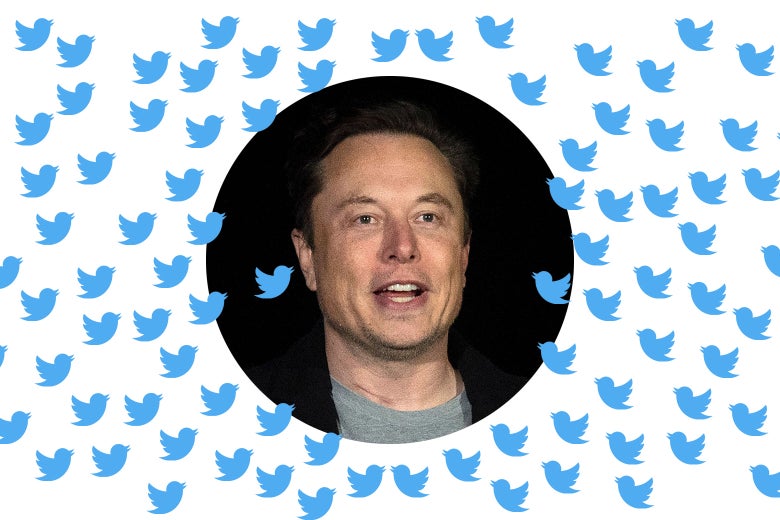





/cdn.vox-cdn.com/uploads/chorus_asset/file/23400403/5sec_1080px.gif) Courtesy of Hanna Koch
Courtesy of Hanna Koch
/cdn.vox-cdn.com/uploads/chorus_asset/file/23400718/adler_0351_copy.jpg)
/cdn.vox-cdn.com/uploads/chorus_asset/file/23400732/adler_0293_copy.jpg)
/cdn.vox-cdn.com/uploads/chorus_asset/file/23401092/adler_7941_copy.jpg)
/cdn.vox-cdn.com/uploads/chorus_asset/file/23401118/adler_7792_copy.jpg)
/cdn.vox-cdn.com/uploads/chorus_asset/file/23401193/adler_8040_copy.jpg)
/cdn.vox-cdn.com/uploads/chorus_asset/file/23401190/adler_8037_copy.jpg)
/cdn.vox-cdn.com/uploads/chorus_asset/file/23401191/adler_8056_copy.jpg)
/cdn.vox-cdn.com/uploads/chorus_asset/file/23401192/adler_8067_copy.jpg)
/cdn.vox-cdn.com/uploads/chorus_asset/file/23401099/adler_8739_copy.jpg)
/cdn.vox-cdn.com/uploads/chorus_asset/file/23401229/adler_8331_copy.jpg)
/cdn.vox-cdn.com/uploads/chorus_asset/file/23401233/adler_8358_copy.jpg)
/cdn.vox-cdn.com/uploads/chorus_asset/file/23401251/adler_9524_copy.jpg)
/cdn.vox-cdn.com/uploads/chorus_asset/file/23401258/adler_9587_copy.jpg)
/cdn.vox-cdn.com/uploads/chorus_asset/file/23401267/adler_9647_copy.jpg)
/cdn.vox-cdn.com/uploads/chorus_asset/file/23401292/adler_9779_copy.jpg)
/cdn.vox-cdn.com/uploads/chorus_asset/file/23401301/adler_0022_copy.jpg)
/cdn.vox-cdn.com/uploads/chorus_asset/file/23401307/adler_0017_copy.jpg)
/cdn.vox-cdn.com/uploads/chorus_asset/file/23401317/adler_0316_copy.jpg)
/cdn.vox-cdn.com/uploads/chorus_asset/file/23401326/adler_8443_copy.jpg)
/cdn.vox-cdn.com/uploads/chorus_asset/file/23401334/adler_9879_copy.jpg)
/cdn.vox-cdn.com/uploads/chorus_asset/file/23401339/adler_0333.jpg)


