
ACS Nano
DOI: 10.1021/acsnano.6b00298
Nature Nanotechnology 11, 345 (2016). doi:10.1038/nnano.2015.293
Authors: Luis A. Jauregui, Michael T. Pettes, Leonid P. Rokhinson, Li Shi & Yong P. Chen
Article
Ferromagnetism and superconductivity possess inherently incompatible electronic spin ordering, and their coexistence requires elaborate engineering of material components. Here, the authors induce ferromagnetism in a two-dimensional superconducting crystal by the adsorption of hydrazine molecules.
Nature Communications doi: 10.1038/ncomms11210
Authors: Xiaojiao Zhu, Yuqiao Guo, Hao Cheng, Jun Dai, Xingda An, Jiyin Zhao, Kangzhen Tian, Shiqiang Wei, Xiao Cheng Zeng, Changzheng Wu, Yi Xie


The oxidation of 10–10′ singly linked corrole dimers with DDQ at low concentration in CHCl3 afforded meso–meso, β–β, β–β triply linked 2H-corrole dimers (with two inner NH groups in each corrole unit), which exhibited characteristic 1H NMR and absorption spectra attributable to their nonaromatic electronic networks. These 2H-corrole dimers were reduced with NaBH4 to aromatic 3H-corrole dimers, which were unstable and easily oxidized back to the 2H-corrole dimers upon exposure to air. Bis(zinc(II)) complexes of the 2H-corrole dimers were synthesized and characterized as rare examples of nonaromatic zinc(II) corrole complexes.

The oxidation of singly 10,10′-linked corrole dimers with DDQ at low concentration in CHCl3 afforded stable triply linked 2H-corrole dimers. These dimers were shown to be nonaromatic on the basis of 1H NMR spectroscopy and DFT calculations, and were reduced with NaBH4 to aromatic 3H-corrole dimers, which were unstable and easily reoxidized to the 2H-corrole dimers upon exposure to air.
β,β-tripyrrin-bridged earring porphyrins were synthesized through Suzuki–Miyaura cross coupling reactions. These porphyrinoids have multiple cavities and can accommodate two or three metal ions per molecule. The structures of the porphyrins have been elucidated by x-ray diffraction analysis, and feature curved π planes. The electronic spectra of the porphyrins exhibit near-infrared (NIR) absorptions and metal insertion leads to red-shifted and intensified absorption features. Electrochemical analysis and transient absorption measurements indicated that the porphyrins exhibit effective electronic communication between their central and peripheral moieties.

Porphyrins with ears: β,β-Tripyrrin-bridged “earring” porphyrins were synthesized by Suzuki–Miyaura cross coupling reactions. These compounds have multiple cavities that can complex up to three metal ions. The porphyrin structures feature curved π planes, and their electronic spectra show near-infrared (NIR) absorptions. Metal insertion leads to red-shifted and intensified near-infrared absorption features.
 Open Access
   This article is licensed under a Creative Commons Attribution 3.0 Unported Licence.
Visualizing coherent intermolecular dipole–dipole coupling in real space
Nature 531, 7596 (2016). doi:10.1038/nature17428
Authors: Yang Zhang, Yang Luo, Yao Zhang, Yun-Jie Yu, Yan-Min Kuang, Li Zhang, Qiu-Shi Meng, Yi Luo, Jin-Long Yang, Zhen-Chao Dong & J. G. Hou
Many important energy-transfer and optical processes, in both biological and artificial systems, depend crucially on excitonic coupling that spans several chromophores. Such coupling can in principle be described in a straightforward manner by considering the coherent intermolecular dipole–dipole interactions involved. However, in practice, it is challenging to directly observe in real space the coherent dipole coupling and the related exciton delocalizations, owing to the diffraction limit in conventional optics. Here we demonstrate that the highly localized excitations that are produced by electrons tunnelling from the tip of a scanning tunnelling microscope, in conjunction with imaging of the resultant luminescence, can be used to map the spatial distribution of the excitonic coupling in well-defined arrangements of a few zinc-phthalocyanine molecules. The luminescence patterns obtained for excitons in a dimer, which are recorded for different energy states and found to resemble σ and π molecular orbitals, reveal the local optical response of the system and the dependence of the local optical response on the relative orientation and phase of the transition dipoles of the individual molecules in the dimer. We generate an in-line arrangement up to four zinc-phthalocyanine molecules, with a larger total transition dipole, and show that this results in enhanced ‘single-molecule’ superradiance from the oligomer upon site-selective excitation. These findings demonstrate that our experimental approach provides detailed spatial information about coherent dipole–dipole coupling in molecular systems, which should enable a greater understanding and rational engineering of light-harvesting structures and quantum light sources.
Nature Physics. doi:10.1038/nphys3704
Authors: C. Paulsen, S. R. Giblin, E. Lhotel, D. Prabhakaran, G. Balakrishnan, K. Matsuhira & S. T. Bramwell
A non-Ohmic current that grows exponentially with the square root of applied electric field is well known from thermionic field emission (the Schottky effect), electrolytes (the second Wien effect) and semiconductors (the Poole–Frenkel effect). It is a universal signature of the attractive Coulomb force between positive and negative electrical charges, which is revealed as the charges are driven in opposite directions by the force of an applied electric field. Here we apply thermal quenches to spin ice to prepare metastable populations of bound pairs of positive and negative emergent magnetic monopoles at millikelvin temperatures. We find that the application of a magnetic field results in a universal exponential-root field growth of magnetic current, thus confirming the microscopic Coulomb force between the magnetic monopole quasiparticles and establishing a magnetic analogue of the Poole–Frenkel effect. At temperatures above 300 mK, gradual restoration of kinetic monopole equilibria causes the non-Ohmic current to smoothly evolve into the high-field Wien effect for magnetic monopoles, as confirmed by comparison to a recent and rigorous theory of the Wien effect in spin ice. Our results extend the universality of the exponential-root field form into magnetism and illustrate the power of emergent particle kinetics to describe far-from-equilibrium response in complex systems.
Nature Materials. doi:10.1038/nmat4603
Authors: Peng Wei, Sunwoo Lee, Florian Lemaitre, Lucas Pinel, Davide Cutaia, Wujoon Cha, Ferhat Katmis, Yu Zhu, Donald Heiman, James Hone, Jagadeesh S. Moodera & Ching-Tzu Chen
Exploiting 2D materials for spintronic applications can potentially realize next-generation devices featuring low power consumption and quantum operation capability. The magnetic exchange field (MEF) induced by an adjacent magnetic insulator enables efficient control of local spin generation and spin modulation in 2D devices without compromising the delicate material structures. Using graphene as a prototypical 2D system, we demonstrate that its coupling to the model magnetic insulator (EuS) produces a substantial MEF (>14 T) with the potential to reach hundreds of tesla, which leads to orders-of-magnitude enhancement of the spin signal originating from the Zeeman spin Hall effect. Furthermore, the new ferromagnetic ground state of Dirac electrons resulting from the strong MEF may give rise to quantized spin-polarized edge transport. The MEF effect shown in our graphene/EuS devices therefore provides a key functionality for future spin logic and memory devices based on emerging 2D materials in classical and quantum information processing.
Author(s): Igor Altfeder, Hyungwoo Lee, Jianjun Hu, Rachel D. Naguy, Alp Sehirlioglu, Amber N. Reed, Andrey A. Voevodin, and Chang-Beom Eom
Using an advanced technique combining pulsed laser deposition growth of LaAlO3, LaTiO3, and SrTiO3 we effectively constructed half-integer unit cell number LaAlO3−SrTiO3 heterostructures where all interfaces are of LaO-TiO2 type, and where a two-dimensional electron gas (2DEG) forms a symmetric n-ty…
[Phys. Rev. B 93, 115437] Published Fri Mar 25, 2016
The well-known Hall effect describes the transverse deflection of charged particles (electrons or holes) in an electric-current carrying conductor under the influence of perpendicular magnetic fields, as a result of the Lorentz force. Similarly, it is intriguing to examine if quasi-particles without an electric charge, but with a topological charge, show related transverse motion. Chiral magnetic skyrmions with a well-defined spin topology resulting in a unit topological charge serve as good candidates to test this hypothesis. In spite of the recent progress made on investigating magnetic skyrmions, direct observation of the skyrmion Hall effect in real space has, remained elusive. Here, by using a current-induced spin Hall spin torque, we experimentally observe the skyrmion Hall effect by driving skyrmions from creep motion into the steady flow motion regime. We observe a Hall angle for the magnetic skyrmion motion as large as 15 degree for current densities smaller than 10 MA/cm^(2) at room temperature. The experimental observation of transverse transport of skyrmions due to topological charge may potentially create many exciting opportunities for the emerging field of skyrmionics, including novel applications such as topological selection.
Author(s): S. Samaddar, I. Yudhistira, S. Adam, H. Courtois, and C. B. Winkelmann
In graphene, doping inhomogeneities – charge puddles – grow remarkably in both size and amplitude as the charge carrier density vanishes.
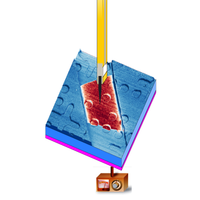
[Phys. Rev. Lett. 116, 126804] Published Wed Mar 23, 2016
On-surface synthesis of graphene nanoribbons with zigzag edge topology
Nature 531, 7595 (2016). doi:10.1038/nature17151
Authors: Pascal Ruffieux, Shiyong Wang, Bo Yang, Carlos Sánchez-Sánchez, Jia Liu, Thomas Dienel, Leopold Talirz, Prashant Shinde, Carlo A. Pignedoli, Daniele Passerone, Tim Dumslaff, Xinliang Feng, Klaus Müllen & Roman Fasel
Graphene-based nanostructures exhibit electronic properties that are not present in extended graphene. For example, quantum confinement in carbon nanotubes and armchair graphene nanoribbons leads to the opening of substantial electronic bandgaps that are directly linked to their structural boundary conditions. Nanostructures with zigzag edges are expected to host spin-polarized electronic edge states and can thus serve as key elements for graphene-based spintronics. The edge states of zigzag graphene nanoribbons (ZGNRs) are predicted to couple ferromagnetically along the edge and antiferromagnetically between the edges, but direct observation of spin-polarized edge states for zigzag edge topologies—including ZGNRs—has not yet been achieved owing to the limited precision of current top-down approaches. Here we describe the bottom-up synthesis of ZGNRs through surface-assisted polymerization and cyclodehydrogenation of specifically designed precursor monomers to yield atomically precise zigzag edges. Using scanning tunnelling spectroscopy we show the existence of edge-localized states with large energy splittings. We expect that the availability of ZGNRs will enable the characterization of their predicted spin-related properties, such as spin confinement and filtering, and will ultimately add the spin degree of freedom to graphene-based circuitry.

Direct measurements of spin fluctuations are becoming the mainstream approach for studies of complex condensed matter, molecular, nuclear, and atomic systems. This review covers recent progress in the field of optical Spin Noise Spectroscopy (SNS) with an additional goal to establish an introduction into its theoretical foundations. Various theoretical techniques that have been recently used to interpret results of SNS measurements are explained alongside with examples of their applications.


Nature Chemistry 8, 347 (2016). doi:10.1038/nchem.2441
Authors: Marita O'Sullivan, Joke Hadermann, Matthew S. Dyer, Stuart Turner, Jonathan Alaria, Troy D. Manning, Artem M. Abakumov, John B. Claridge & Matthew J. Rosseinsky
The behaviour of heterostructures, crucial in nanodevices, largely depends on interfacial phenomena. These have proven difficult to control when the different materials adopt distinct crystal structures. Now, a coherent interface between perovskite and fluorite has been achieved that relies in particular on the coordination flexibility of judiciously chosen metal cations.

Nature Chemistry 8, 310 (2016). doi:10.1038/nchem.2444
Authors: Laura Ascherl, Torben Sick, Johannes T. Margraf, Saul H. Lapidus, Mona Calik, Christina Hettstedt, Konstantin Karaghiosoff, Markus Döblinger, Timothy Clark, Karena W. Chapman, Florian Auras & Thomas Bein
Covalent organic frameworks (COFs) are attractive multifunctional porous materials that can be generated with atomic precision. However, endowing them with long-range order—desirable for applications—has remained challenging. Now, propeller-shaped building units have been used that allow consecutive layers to lock in position, resulting in highly crystalline COFs.
Nature Materials. doi:10.1038/nmat4593
Authors: Seonghoon Woo, Kai Litzius, Benjamin Krüger, Mi-Young Im, Lucas Caretta, Kornel Richter, Maxwell Mann, Andrea Krone, Robert M. Reeve, Markus Weigand, Parnika Agrawal, Ivan Lemesh, Mohamad-Assaad Mawass, Peter Fischer, Mathias Kläui & Geoffrey S. D. Beach
Magnetic skyrmions are topologically protected spin textures that exhibit fascinating physical behaviours and large potential in highly energy-efficient spintronic device applications. The main obstacles so far are that skyrmions have been observed in only a few exotic materials and at low temperatures, and fast current-driven motion of individual skyrmions has not yet been achieved. Here, we report the observation of stable magnetic skyrmions at room temperature in ultrathin transition metal ferromagnets with magnetic transmission soft X-ray microscopy. We demonstrate the ability to generate stable skyrmion lattices and drive trains of individual skyrmions by short current pulses along a magnetic racetrack at speeds exceeding 100 m s−1 as required for applications. Our findings provide experimental evidence of recent predictions and open the door to room-temperature skyrmion spintronics in robust thin-film heterostructures.

Author(s): Long-Jing Yin, Yu Zhang, Jia-Bin Qiao, Si-Yu Li, and Lin He
We report on microscopic measurements of the low-energy electronic structures both at the zigzag and armchair edges of bilayer graphene using scanning tunneling microscopy and spectroscopy (STM and STS). We have found that, both in the absence and in the presence of a magnetic field, an almost zero-…
[Phys. Rev. B 93, 125422] Published Fri Mar 18, 2016
Author(s): Dennis Huang, Tatiana A. Webb, Shiang Fang, Can-Li Song, Cui-Zu Chang, Jagadeesh S. Moodera, Efthimios Kaxiras, and Jennifer E. Hoffman
We use scanning tunneling microscopy (STM) and quasiparticle interference (QPI) imaging to investigate the low-energy orbital texture of single-layer FeSe/SrTiO3. We develop a T-matrix model of multiorbital QPI to disentangle scattering intensities from Fe 3dxz and 3dyz bands, enabling the use of ST…
[Phys. Rev. B 93, 125129] Published Fri Mar 18, 2016
Properties of two-dimensional transition metal dichalcogenides are highly sensitive to the presence of defects in the crystal structure. A detailed understanding of defect structure may lead to control of material properties through defect engineering. Here we provide direct evidence for the existence of isolated, one-dimensional charge density waves at mirror twin boundaries in single-layer MoSe2. Our low-temperature scanning tunneling microscopy/spectroscopy measurements reveal a substantial bandgap of 60 - 140 meV opening at the Fermi level in the otherwise one dimensional metallic structure. We find an energy-dependent periodic modulation in the density of states along the mirror twin boundary, with a wavelength of approximately three lattice constants. The modulations in the density of states above and below the Fermi level are spatially out of phase, consistent with charge density wave order. In addition to the electronic characterization, we determine the atomic structure and bonding configuration of the one-dimensional mirror twin boundary by means of high-resolution non-contact atomic force microscopy. Density functional theory calculations reproduce both the gap opening and the modulations of the density of states.
Article
Graphene nanoribbons confine electrons to just one dimension and this gives rise to strong electron–hole interactions. Here, the authors investigate the creation and recombination of biexcitons in these structures by ultrafast optical pulses using femtosecond transient absorption spectroscopy.
Nature Communications doi: 10.1038/ncomms11010
Authors: Giancarlo Soavi, Stefano Dal Conte, Cristian Manzoni, Daniele Viola, Akimitsu Narita, Yunbin Hu, Xinliang Feng, Ulrich Hohenester, Elisa Molinari, Deborah Prezzi, Klaus Müllen, Giulio Cerullo

The metallic transition-metal dichalcogenides (TMDCs) are benchmark systems for studying and controlling intertwined electronic orders in solids, with superconductivity developing upon cooling from a charge density wave state. The interplay between such phases is thought to play a critical role in the unconventional superconductivity of cuprates, Fe-based, and heavy-fermion systems, yet even for the more moderately-correlated TMDCs, their nature and origins have proved highly controversial. Here, we study a prototypical example, $2H$-NbSe$_2$, by spin- and angle-resolved photoemission and first-principles theory. We find that the normal state, from which its hallmark collective phases emerge, is characterised by quasiparticles whose spin is locked to their valley pseudospin. This results from a combination of strong spin-orbit interactions and local inversion symmetry breaking. Non-negligible interlayer coupling further drives a rich three-dimensional momentum-dependence of the underlying Fermi surface spin texture. Together, these findings necessitate a fundamental re-investigation of the nature of charge order and superconducting pairing in NbSe$_2$ and related TMDCs.
Author(s): Benjamin Siegert, Andrea Donarini, and Milena Grifoni
We demonstrate the nonequilibrium tip induced control of the spin state of copper phthalocyanine on an insulator coated substrate. We find that, under the condition of energetic proximity of many-body neutral excited states to the anionic ground state, the system can undergo a population inversion t…
[Phys. Rev. B 93, 121406(R)] Published Wed Mar 16, 2016
Enhancing coherence in molecular spin qubits via atomic clock transitions
Nature 531, 7594 (2016). doi:10.1038/nature16984
Authors: Muhandis Shiddiq, Dorsa Komijani, Yan Duan, Alejandro Gaita-Ariño, Eugenio Coronado & Stephen Hill
Quantum computing is an emerging area within the information sciences revolving around the concept of quantum bits (qubits). A major obstacle is the extreme fragility of these qubits due to interactions with their environment that destroy their quantumness. This phenomenon, known as decoherence, is of fundamental interest. There are many competing candidates for qubits, including superconducting circuits, quantum optical cavities, ultracold atoms and spin qubits, and each has its strengths and weaknesses. When dealing with spin qubits, the strongest source of decoherence is the magnetic dipolar interaction. To minimize it, spins are typically diluted in a diamagnetic matrix. For example, this dilution can be taken to the extreme of a single phosphorus atom in silicon, whereas in molecular matrices a typical ratio is one magnetic molecule per 10,000 matrix molecules. However, there is a fundamental contradiction between reducing decoherence by dilution and allowing quantum operations via the interaction between spin qubits. To resolve this contradiction, the design and engineering of quantum hardware can benefit from a ‘bottom-up’ approach whereby the electronic structure of magnetic molecules is chemically tailored to give the desired physical behaviour. Here we present a way of enhancing coherence in solid-state molecular spin qubits without resorting to extreme dilution. It is based on the design of molecular structures with crystal field ground states possessing large tunnelling gaps that give rise to optimal operating points, or atomic clock transitions, at which the quantum spin dynamics become protected against dipolar decoherence. This approach is illustrated with a holmium molecular nanomagnet in which long coherence times (up to 8.4 microseconds at 5 kelvin) are obtained at unusually high concentrations. This finding opens new avenues for quantum computing based on molecular spin qubits.
