03 May 08:20
by D. B. Szombati
Nature Physics.
doi:10.1038/nphys3742
Authors: D. B. Szombati, S. Nadj-Perge, D. Car, S. R. Plissard, E. P. A. M. Bakkers & L. P. Kouwenhoven
The Josephson effect describes supercurrent flowing through a junction connecting two superconducting leads by a thin barrier. This current is driven by a superconducting phase difference ϕ between the leads. In the presence of chiral and time-reversal symmetry of the Cooper pair tunnelling process, the current is strictly zero when ϕ vanishes. Only if these underlying symmetries are broken can the supercurrent for ϕ = 0 be finite. This corresponds to a ground state of the junction being offset by a phase ϕ0, different from 0 or π. Here, we report such a Josephson ϕ0-junction based on a nanowire quantum dot. We use a quantum interferometer device to investigate phase offsets and demonstrate that ϕ0 can be controlled by electrostatic gating. Our results may have far-reaching implications for superconducting flux- and phase-defined quantum bits as well as for exploring topological superconductivity in quantum dot systems.

02 May 14:39
by E. M. Reinisch, P. Puschnig, T. Ules, M. G. Ramsey, and G. Koller
Author(s): E. M. Reinisch, P. Puschnig, T. Ules, M. G. Ramsey, and G. Koller
The buried interface between a molecular thin film and the metal substrate is generally not accessible to the photoemission experiment. With the example of a sexiphenyl (6P) bilayer on Cu we show that photoemission tomography can be used to study the electronic level alignment and geometric structur…
[Phys. Rev. B 93, 155438] Published Fri Apr 29, 2016
30 Apr 08:53
by Marc Ganzhorn
Article
The Einstein-de Haas effect is a manifestation of the conservation of angular momentum, causing a magnetic object to rotate as its magnetization state is changed. Here, the authors demonstrate this effect at the single spin level for a molecular magnet suspended on a nanomechanical resonator.
Nature Communications doi: 10.1038/ncomms11443
Authors: Marc Ganzhorn, Svetlana Klyatskaya, Mario Ruben, Wolfgang Wernsdorfer

29 Apr 21:20
by Jack Hellerstedt, Mark T. Edmonds, Navneeth Ramakrishnan, Chang Liu, Bent Weber, Anton Tadich, Kane M. O’Donnell, Shaffique Adam and Michael S. Fuhrer

Nano Letters
DOI: 10.1021/acs.nanolett.6b00638

29 Apr 16:18
by Atena Rastgoo-Lahrood, Jonas Björk, Matthias Lischka, Johanna Eichhorn, Stephan Kloft, Massimo Fritton, Thomas Strunskus, Debabrata Samanta, Michael Schmittel, Wolfgang M. Heckl, Markus Lackinger
Abstract
The on-surface synthesis of covalent organic nanosheets driven by reactive metal surfaces leads to strongly adsorbed organic nanostructures, which conceals their intrinsic properties. Hence, reducing the electronic coupling between the organic networks and commonly used metal surfaces is an important step towards characterization of the true material. We demonstrate that post-synthetic exposure to iodine vapor leads to the intercalation of an iodine monolayer between covalent polyphenylene networks and Ag(111) surfaces. The experimentally observed changes from surface-bound to detached nanosheets are reproduced by DFT simulations. These findings suggest that the intercalation of iodine provides a material that shows geometric and electronic properties substantially closer to those of the freestanding network.

The go-between: Post-synthetic exposure of covalent porous polyphenylene networks synthesized by on-surface polymerization on Ag(111) to iodine vapor leads to detachment through intercalation of a densely packed iodine monolayer. Consequently, the organic nanostructures become decoupled from the strongly interacting metal surface, as evident by changes in both the geometric and electronic structures toward freestanding networks.
28 Apr 20:01
by Xiang-Bing Li, Wen-Kai Huang, Yang-Yang Lv, Kai-Wen Zhang, Chao-Long Yang, Bin-Bin Zhang, Y. B. Chen, Shu-Hua Yao, Jian Zhou, Ming-Hui Lu, Li Sheng, Shao-Chun Li, Jin-Feng Jia, Qi-Kun Xue, Yan-Feng Chen, and Ding-Yu Xing
Author(s): Xiang-Bing Li, Wen-Kai Huang, Yang-Yang Lv, Kai-Wen Zhang, Chao-Long Yang, Bin-Bin Zhang, Y. B. Chen, Shu-Hua Yao, Jian Zhou, Ming-Hui Lu, Li Sheng, Shao-Chun Li, Jin-Feng Jia, Qi-Kun Xue, Yan-Feng Chen, and Ding-Yu Xing
We report an atomic-scale characterization of ZrTe5 by using scanning tunneling microscopy. We observe a bulk band gap of ∼80 meV with topological edge states at the step edge and, thus, demonstrate that ZrTe5 is a two-dimensional topological insulator. We also find that an applied magnetic field i…
[Phys. Rev. Lett. 116, 176803] Published Thu Apr 28, 2016
28 Apr 20:00
by Ashis Kumar Nandy, Nikolai S. Kiselev, and Stefan Blügel
Author(s): Ashis Kumar Nandy, Nikolai S. Kiselev, and Stefan Blügel
We report on a general principle using interlayer exchange coupling to extend the regime of chiral magnetic films in which stable or metastable magnetic Skyrmions can appear at a zero magnetic field. We verify this concept on the basis of a first-principles model for a Mn monolayer on a W(001) subst…
[Phys. Rev. Lett. 116, 177202] Published Thu Apr 28, 2016
28 Apr 19:59
by Mallika T. Randeria, Benjamin E. Feldman, Ilya K. Drozdov, and Ali Yazdani
Author(s): Mallika T. Randeria, Benjamin E. Feldman, Ilya K. Drozdov, and Ali Yazdani
Unconventional superconductors, with order parameters that are predicted to have short range spatial modulations, have held long standing interest in the field. The Josephson effect, which directly probes the strength of the pairing potential is an ideal technique to study these materials, in contrast to a majority of probes which rely on deductions made from quasiparticle measurements. The authors combine the Josephson effect with the high spatial resolution afforded by scanning tunneling microscopy to study atomic scale variations of the order parameter in a model system consisting of magnetic adatoms on a BCS superconductor. The atomic resolution achieved establishes scanning Josephson spectroscopy as a promising tool for the study of novel superconducting materials.
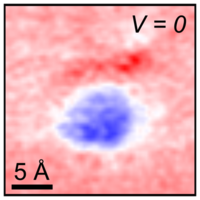
[Phys. Rev. B 93, 161115(R)] Published Thu Apr 28, 2016
28 Apr 09:01
by Kasper S. Pedersen, Ana-Maria Ariciu, Simon McAdams, Høgni Weihe, Jesper Bendix, Floriana Tuna and Stergios Piligkos

Journal of the American Chemical Society
DOI: 10.1021/jacs.6b02702

27 Apr 22:33
by Elizabeth Gibney
Europe plans giant billion-euro quantum technologies project
Nature 532, 7600 (2016). http://www.nature.com/doifinder/10.1038/nature.2016.19796
Author: Elizabeth Gibney
Third European Union flagship will be similar in size and ambition to graphene and human brain initiatives.

26 Apr 21:49
by Guillaume Vasseur, Mikel Abadia, Luis A. Miccio, Jens Brede, Aran Garcia-Lekue, Dimas G. de Oteyza, Celia Rogero, Jorge Lobo-Checa and J. Enrique Ortega

Journal of the American Chemical Society
DOI: 10.1021/jacs.6b02151

26 Apr 17:57
by Taner Esat
Nature Physics.
doi:10.1038/nphys3737
Authors: Taner Esat, Benedikt Lechtenberg, Thorsten Deilmann, Christian Wagner, Peter Krüger, Ruslan Temirov, Michael Rohlfing, Frithjof B. Anders & F. Stefan Tautz

26 Apr 13:14
by Jan Raphael Bindel (1), Mike Pezzotta (1), Jascha Ulrich (2), Marcus Liebmann (1), Eugene Sherman (3), Markus Morgenstern (1) ((1) II. Institute of Physics B and JARA-FIT, RWTH Aachen University, (2) Institute for Quantum Information and JARA-FIT, RWTH Aachen University, (3) Department of Physical Chemistry, the University of the Basque Country UPV-EHU and IKERBASQUE, Basque Foundation for Science, Bilbao, Spain)
The Rashba effect as an electrically tunable spin-orbit interaction is the
base for a multitude of possible applications such as spin filters, spin
transistors, and quantum computing using Majorana states in nanowires.
Moreover, this interaction can determine the spin dephasing and
antilocalization phenomena in two dimensions. However, the real space pattern
of the Rashba parameter has never been probed, albeit it critically influences,
e.g., the more robust spin transistors using the spin helix state and the
otherwise forbidden electron backscattering in topologically protected
channels. Here, we map this pattern down to nanometer length scales by
measuring the spin splitting of the lowest Landau level using scanning
tunnelling spectroscopy. We reveal strong fluctuations correlated with the
local electrostatic potential for an InSb inversion layer with a large Rashba
coefficient (~1 eV{\AA}). The novel type of Rashba field mapping enables a more
comprehensive understanding of the critical fluctuations, which might be
decisive towards robust semiconductor-based spintronic devices.
26 Apr 10:39
by Jesús Ferrando-Soria
Article
The physical implementation of quantum information processing requires individual qubits and entangling gates. Here, the authors demonstrate a modular implementation through chemistry, assembling molecular {Cr 7 Ni} rings acting as qubits, with supramolecular structures realizing gates by choice of the linker.
Nature Communications doi: 10.1038/ncomms11377
Authors: Jesús Ferrando-Soria, Eufemio Moreno Pineda, Alessandro Chiesa, Antonio Fernandez, Samantha A. Magee, Stefano Carretta, Paolo Santini, Iñigo J. Vitorica-Yrezabal, Floriana Tuna, Grigore A. Timco, Eric J.L. McInnes, Richard E.P. Winpenny

25 Apr 19:03
by Zsolt Majzik, Ana B. Cuenca, Niko Pavliček, Núria Miralles, Gerhard Meyer, Leo Gross and Elena Fernández

ACS Nano
DOI: 10.1021/acsnano.6b01484

25 Apr 17:02
by Yu Zhang, Si-Yu Li, Wen-Tian Li, Jia-Bin Qiao, Wen-Xiao Wang, Long-Jin Yin, Lin He
The pristine graphene is strongly diamagnetic. However, graphene with single
carbon atom defects could exhibit paramagnetism with local magnetic moments ~
1.5 per vacancy1-6. Theoretically, both the electrons and electrons of graphene
contribute to the magnetic moment of the defects, and the pi magnetism is
characterizing of two spin-split DOS (density-of-states) peaks close to the
Dirac point1,6. Since its prediction, many experiments attempt to study this pi
magnetism in graphene, whereas, only a notable resonance peak has been observed
around the atomic defects6-9, leaving the pi magnetism experimentally so
elusive. Here, we report direct experimental evidence of the pi magnetism by
using scanning tunnelling microscope. We demonstrate that the localized state
of the atomic defects is split into two DOS peaks with energy separations of
several tens meV and the two spin-polarized states degenerate into a profound
peak at positions with distance of ~ 1 nm away from the monovacancy. Strong
magnetic fields further increase the energy separations of the two
spin-polarized peaks and lead to a Zeeman-like splitting. The effective
g-factors geff around the atomic defect is measured to be about 40. Such a
giant enhancement of the g-factor is attributed to the strong spin polarization
of electron density and large electron-electron interactions near the atomic
vacancy.
21 Apr 08:11
by J. Salfi
Article
The goal of quantum simulation is to probe many-body phenomena in controlled systems, but Fermi-Hubbard phenomena are typically hard to simulate in cold atomic. Here, the authors simulate them with subsurface dopants in silicon, achieving a low effective temperature and reading out spin states with STM.
Nature Communications doi: 10.1038/ncomms11342
Authors: J. Salfi, J. A. Mol, R. Rahman, G. Klimeck, M. Y. Simmons, L. C. L. Hollenberg, S. Rogge

20 Apr 08:56
by Jittima Meeprasert, Supawadee Namuangruk, Bundet Boekfa, Raghu Nath Dhital, Hidehiro Sakurai and Masahiro Ehara

Organometallics
DOI: 10.1021/acs.organomet.5b01009

19 Apr 15:48
by Z. Wang
Nature Materials.
doi:10.1038/nmat4623
Authors: Z. Wang, S. McKeown Walker, A. Tamai, Y. Wang, Z. Ristic, F. Y. Bruno, A. de la Torre, S. Riccò, N. C. Plumb, M. Shi, P. Hlawenka, J. Sánchez-Barriga, A. Varykhalov, T. K. Kim, M. Hoesch, P. D. C. King, W. Meevasana, U. Diebold, J. Mesot, B. Moritz, T. P. Devereaux, M. Radovic & F. Baumberger
Surfaces and interfaces offer new possibilities for tailoring the many-body interactions that dominate the electrical and thermal properties of transition metal oxides. Here, we use the prototypical two-dimensional electron liquid (2DEL) at the SrTiO3(001) surface to reveal a remarkably complex evolution of electron–phonon coupling with the tunable carrier density of this system. At low density, where superconductivity is found in the analogous 2DEL at the LaAlO3/SrTiO3 interface, our angle-resolved photoemission data show replica bands separated by 100 meV from the main bands. This is a hallmark of a coherent polaronic liquid and implies long-range coupling to a single longitudinal optical phonon branch. In the overdoped regime the preferential coupling to this branch decreases and the 2DEL undergoes a crossover to a more conventional metallic state with weaker short-range electron–phonon interaction. These results place constraints on the theoretical description of superconductivity and allow a unified understanding of the transport properties in SrTiO3-based 2DELs.

19 Apr 11:05
by R. Toskovic
Nature Physics.
doi:10.1038/nphys3722
Authors: R. Toskovic, R. van den Berg, A. Spinelli, I. S. Eliens, B. van den Toorn, B. Bryant, J.-S. Caux & A. F. Otte
The ability to manipulate single atoms has opened up the door to constructing interesting and useful quantum structures from the ground up. On the one hand, nanoscale arrangements of magnetic atoms are at the heart of future quantum computing and spintronic devices; on the other hand, they can be used as fundamental building blocks for the realization of textbook many-body quantum models, illustrating key concepts such as quantum phase transitions, topological order or frustration as a function of system size. Here, we use low-temperature scanning tunnelling microscopy to construct arrays of magnetic atoms on a surface, designed to behave like spin-1/2 XXZ Heisenberg chains in a transverse field, for which a quantum phase transition from an antiferromagnetic to a paramagnetic phase is predicted in the thermodynamic limit. Site-resolved measurements on these finite-size realizations reveal a number of sudden ground state changes when the field approaches the critical value, each corresponding to a new domain wall entering the chains. We observe that these state crossings become closer for longer chains, suggesting the onset of critical behaviour. Our results present opportunities for further studies on quantum behaviour of many-body systems, as a function of their size and structural complexity.

18 Apr 17:17
by Albert Bruix, Jill A. Miwa, Nadine Hauptmann, Daniel Wegner, Søren Ulstrup, Signe S. Grønborg, Charlotte E. Sanders, Maciej Dendzik, Antonija Grubišić Čabo, Marco Bianchi, Jeppe V. Lauritsen, Alexander A. Khajetoorians, Bjørk Hammer, and Philip Hofmann
Author(s): Albert Bruix, Jill A. Miwa, Nadine Hauptmann, Daniel Wegner, Søren Ulstrup, Signe S. Grønborg, Charlotte E. Sanders, Maciej Dendzik, Antonija Grubišić Čabo, Marco Bianchi, Jeppe V. Lauritsen, Alexander A. Khajetoorians, Bjørk Hammer, and Philip Hofmann
The electronic structure of epitaxial single-layer MoS2 on Au(111) is investigated by angle-resolved photoemission spectroscopy, scanning tunneling spectroscopy, and first-principles calculations. While the band dispersion of the supported single layer is close to a free-standing layer in the vicini…
[Phys. Rev. B 93, 165422] Published Mon Apr 18, 2016
18 Apr 17:15
by Anthoula C. Papageorgiou, Katharina Diller, Sybille Fischer, Francesco Allegretti, Florian Klappenberger, Seung Cheol Oh, Özge Sağlam, Joachim Reichert, Alissa Wiengarten, Knud Seufert, Willi Auwärter and Johannes V. Barth

The Journal of Physical Chemistry C
DOI: 10.1021/acs.jpcc.6b01457

13 Apr 17:08
by Xin Song, Elena Primorac, Helmut Kuhlenbeck and Hans-Joachim Freund

The Journal of Physical Chemistry C
DOI: 10.1021/acs.jpcc.6b01318

13 Apr 08:55
by Can-Li Song, Hui-Min Zhang, Yong Zhong, Xiao-Peng Hu, Shuai-Hua Ji, Lili Wang, Ke He, Xu-Cun Ma, and Qi-Kun Xue
Author(s): Can-Li Song, Hui-Min Zhang, Yong Zhong, Xiao-Peng Hu, Shuai-Hua Ji, Lili Wang, Ke He, Xu-Cun Ma, and Qi-Kun Xue
Iron selenide films peppered with potassium atoms exhibit a high-temperature superconducting phase that emerges separately from a low-temperature superconducting phase.
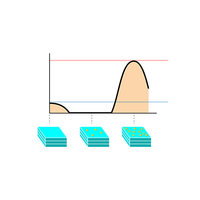
[Phys. Rev. Lett. 116, 157001] Published Mon Apr 11, 2016
13 Apr 08:18
by Davide Iaia, André Kubetzka, Kirsten von Bergmann, and Roland Wiesendanger
Author(s): Davide Iaia, André Kubetzka, Kirsten von Bergmann, and Roland Wiesendanger
The structural and magnetic properties of one atomic layer thin nanostructures of Ni deposited on fcc Fe monolayer stripes on Ir(111) have been studied by (spin-resolved) scanning tunneling microscopy measurements. Ni grows dominantly in fcc stacking on Ir(111), whereas it forms a dense reconstructi…
[Phys. Rev. B 93, 134409] Published Mon Apr 11, 2016
13 Apr 08:09
by Jörg Meyer, Robin Ohmann, Anja Nickel, Cormac Toher, Roland Gresser, Karl Leo, Dmitry A. Ryndyk, Francesca Moresco, and Gianaurelio Cuniberti
Author(s): Jörg Meyer, Robin Ohmann, Anja Nickel, Cormac Toher, Roland Gresser, Karl Leo, Dmitry A. Ryndyk, Francesca Moresco, and Gianaurelio Cuniberti
The Kondo resonance of an organic molecule containing a Co atom is investigated by scanning tunneling spectroscopy and ab initio calculations on a Ag(100) surface. High resolution mapping of the line shape shows evidence of local nonradially symmetric variations of the Fano factor and the Kondo ampl…
[Phys. Rev. B 93, 155118] Published Tue Apr 12, 2016
13 Apr 07:46
by Zhijian Wang
Article
The zero-determinant (ZD) strategies discovered by Press and Dyson overturned several decades of consensus about the iterated prisoner's dilemma. Here, the authors provide the first empirical evidence in support of Press and Dyson’s theory, by showing that knowledge of the opponent and the length of the interaction can facilitate the Generous and Extortionate ZD strategies as predicted.
Nature Communications doi: 10.1038/ncomms11125
Authors: Zhijian Wang, Yanran Zhou, Jaimie W. Lien, Jie Zheng, Bin Xu

10 Apr 08:08
by Shadan Ghassemi Tabrizi, Alexei V. Arbuznikov, Martin Kaupp
Abstract
A general giant-spin Hamiltonian (GSH) describing an effective spin multiplet of an exchange-coupled metal cluster with dominant Heisenberg interactions was derived from a many-spin Hamiltonian (MSH) by treating anisotropic interactions at the third order of perturbation theory. Going beyond the existing second-order perturbation treatment allows irreducible tensor operators of rank six (or corresponding Stevens operator equivalents) in the GSH to be obtained. Such terms were found to be of crucial importance for the fitting of high-field EPR spectra of a number of single-molecule magnets (SMMs). Also, recent magnetization measurements on trigonal and tetragonal SMMs have found the inclusion of such high-rank axial and transverse terms to be necessary to account for experimental data in terms of giant-spin models. While mixing of spin multiplets by local zero-field splitting interactions was identified as the major origin of these contributions to the GSH, a direct and efficient microscopic explanation had been lacking. The third-order approach developed in this work is used to illustrate the mapping of an MSH onto a GSH for an  trigonal Fe3Cr complex that was recently investigated by high-field EPR spectroscopy. Comparisons between MSH and GSH consider the simulation of EPR data with both Hamiltonians, as well as locations of diabolical points (conical intersections) in magnetic-field space. The results question the ability of present high-field EPR techniques to determine high-rank zero-field splitting terms uniquely, and lead to a revision of the experimental GSH parameters of the Fe3Cr SMM. Indeed, a bidirectional mapping between MSH and GSH effectively constrains the number of free parameters in the GSH. This notion may in the future facilitate spectral fitting for highly symmetric SMMs.

Many spins make up a giant: Construction of the giant-spin Hamiltonian for a trigonal Fe3Cr single-molecule magnet at the third order of perturbation theory revises HF-EPR simulations and offers a direct link between a microscopic picture and experiment. Taking into account the many-spin nature of exchange-coupled systems is shown to help in making spectral fittings by giant-spin Hamiltonians unambiguous, which leads to phenomenological parameters with higher physical significance.
08 Apr 09:00
by Wesley B. Swords, Sarah J. C. Simon, Fraser G. L. Parlane, Rebecca K. Dean, Cameron W. Kellett, Ke Hu, Gerald J. Meyer, Curtis P. Berlinguette
Abstract
A homologous series of donor–π–acceptor dyes was synthesized, differing only in the identity of the halogen substituents about the triphenylamine (TPA; donor) portion of each molecule. Each Dye-X (X=F, Cl, Br, and I) was immobilized on a TiO2 surface to investigate how the halogen substituents affect the reaction between the light-induced charge-separated state, TiO2(e−)/Dye-X+, with iodide in solution. Transient absorption spectroscopy showed progressively faster reactivity towards nucleophilic iodide with more polarizable halogen substituents: Dye-F < Dye-Cl < Dye-Br < Dye-I. Given that all other structural and electronic properties for the series are held at parity, with the exception of an increasingly larger electropositive σ-hole on the heavier halogens, the differences in dye regeneration kinetics for Dye-Cl, Dye-Br, and Dye-I are ascribed to the extent of halogen bonding with the nucleophilic solution species.

Scratching the surface of halogen bonding: A homologous series of donor–π–acceptor dyes bearing different halogen substituents, adsorbed onto a semiconductor surface, showed differences in reactivity towards nucleophiles that track with the extent of halogen bonding. Transient spectroscopic methods were used to show that this intermolecular interaction is most significant for the most polarizable halogen substituent.
07 Apr 12:58
by J. J. Seo
Article
Thin FeSe film on SrTiO 3 substrate becomes a superconductor with a transition temperature over 100 K, yet the origin remains controversial. Here, Seo et al . show superconductivity below 20 K on the electron-doped surface of an FeSe crystal, suggesting a decisive role of interfacial effects in the enhancement of superconductivity.
Nature Communications doi: 10.1038/ncomms11116
Authors: J. J. Seo, B. Y. Kim, B. S. Kim, J. K. Jeong, J. M. Ok, Jun Sung Kim, J. D. Denlinger, S. -K. Mo, C. Kim, Y. K. Kim


