13 Jul 15:54
by Philipp Alexander Held, Hong-Ying Gao, Lacheng Liu, Christian Mück-Lichtenfeld, Alexander Timmer, Harry Mönig, Dennis Barton, Johannes Neugebauer, Harald Fuchs, Armido Studer
Abstract
Herein we report the on-surface oxidative homocoupling of 6,6′-(1,4-buta-1,3-diynyl)bis(2-naphthoic acid) (BDNA) via bisacylperoxide formation on different Au substrates. By using this unprecedented dehydrogenative polymerization of a biscarboxylic acid, linear poly-BDNA with a chain length of over 100 nm was prepared. It is shown that the monomer BDNA can be prepared in situ at the surface via on-surface Glaser coupling of 6-ethynyl-2-naphthoic acid (ENA). Under the Glaser coupling conditions, BDNA directly undergoes polymerization to give the polymeric peroxide (poly-BDNA) representing a first example of an on-surface domino reaction. It is shown that the reaction outcome varies as a function of surface topography (Au(111) or Au(100)) and also of the surface coverage, to give branched polymers, linear polymers, or 2D metal–organic networks.

Playing dominos on gold: 6-Ethynyl-2-naphthoic acid (ENA) undergoes on-surface Glaser coupling on gold to form 6,6′-(1,4-buta-1,3-diynyl)bis(2-naphthoic acid) (BDNA) which in turn reacts in an unprecedented dehydrogenative coupling of the acid functionalities to give poly-BDNA. Polymeric chains with a length of over 100 nm can be obtained and the reaction outcome is influenced by the Au-surface topography and the surface coverage.
12 Jul 19:17
by Johannes Mielke, Jesús Martínez-Blanco, Maike V. Peters, Stefan Hecht, and Leonhard Grill
Author(s): Johannes Mielke, Jesús Martínez-Blanco, Maike V. Peters, Stefan Hecht, and Leonhard Grill
The dynamics at the interface between a close-packed porphyrin monolayer and Au(111) is investigated by time-dependent scanning tunneling microscopy, detecting the motion of single-interface adatoms in real space. Imaging sequences reveal predominant switching of the molecular appearance in adjacent…
[Phys. Rev. B 94, 035416] Published Tue Jul 12, 2016
12 Jul 19:14
by Cyril Laplane, Emmanuel Zambrini Cruzeiro, Florian Fröwis, Philippe Goldner, and Mikael Afzelius
Author(s): Cyril Laplane, Emmanuel Zambrini Cruzeiro, Florian Fröwis, Philippe Goldner, and Mikael Afzelius
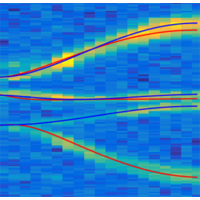
Electron spin resonance measurements on Nd3+ doped single crystals of YVO4 directly reveal the pairwise anti-symmetric exchange interaction known as the Dzyaloshinsky-Moriya interaction.
[Phys. Rev. Lett. 117, 037203] Published Tue Jul 12, 2016
12 Jul 19:13
by J. Stigloher, M. Decker, H. S. Körner, K. Tanabe, T. Moriyama, T. Taniguchi, H. Hata, M. Madami, G. Gubbiotti, K. Kobayashi, T. Ono, and C. H. Back
Author(s): J. Stigloher, M. Decker, H. S. Körner, K. Tanabe, T. Moriyama, T. Taniguchi, H. Hata, M. Madami, G. Gubbiotti, K. Kobayashi, T. Ono, and C. H. Back
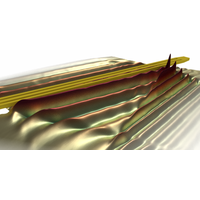
Researchers have verified experimentally that the reflection and refraction of spin waves at an interface follow a Snell’s-like law.
[Phys. Rev. Lett. 117, 037204] Published Tue Jul 12, 2016
06 Jul 20:59
Phys. Chem. Chem. Phys., 2016, 18,20627-20634
DOI: 10.1039/C6CP03551E, Paper
Jingya Dai, Qitang Fan, Tao Wang, Julian Kuttner, Gerhard Hilt, J. Michael Gottfried, Junfa Zhu
Depending on the substrate temperature, the deposition of DMTP molecules on a Cu(110) surface can result in the formation of either organometallic or oligophenylene zigzag chains.
The content of this RSS Feed (c) The Royal Society of Chemistry

04 Jul 18:01
by Z. F. Wang
Nature Materials.
doi:10.1038/nmat4686
Authors: Z. F. Wang, Huimin Zhang, Defa Liu, Chong Liu, Chenjia Tang, Canli Song, Yong Zhong, Junping Peng, Fangsen Li, Caina Nie, Lili Wang, X. J. Zhou, Xucun Ma, Q. K. Xue & Feng Liu

04 Jul 15:43
by Jannis Maiwald, Philipp Gegenwart
Abstract

Iron-based superconductors feature a rich set of intriguing magnetic, electronic and structural phases. In the case of Eu-based iron pnictides additional Eu 4f moments are introduced, that interact with the Fe 3d moments. In this review, Maiwald and Gegenwart focus on this interplay, which leads to interesting new phases upon chemical doping and application of pressure. The authors also discuss a strong, but indirect magnetoelastic coupling that leads to persistent, structural detwinning.
02 Jul 10:28
by Sandamali Halpegamage, Zhan-Hui Wen, Xue-Qing Gong and Matthias Batzill

The Journal of Physical Chemistry C
DOI: 10.1021/acs.jpcc.6b05186

01 Jul 08:26
by Leonardo Banchi, Joaquin Fernandez-Rossier, Cyrus F. Hirjibehedin, Sougato Bose
To push commercial electronics beyond its current size limits, atomic-scale
communication channels and logic units need to be designed, making the use of
quantum entities an imperative. In this regime, quantum fluctuations naturally
become prominent, and are generally considered to be detrimental. Here we show
that for spin-based information processing, these fluctuations can be uniquely
exploited to gate the flow of classical binary information across a magnetic
chain. Moreover, this information flow can be controlled with a modest external
magnetic field that drives the system through different many-body quantum
phases in which the orientation of the final spin does or does not reflect the
orientation of the initial input. Our results are general for a wide class of
anisotropic spin chains that act as magnetic cellular automata, and suggest
that quantum fluctuations may play a unique role in driving classical
information flow at the atomic scale.
01 Jul 08:24
by Menghan Liao, Song Jiang, Chunrui Hu, Rui Zhang, Yanmin Kuang, Jiazhe Zhu, Yang Zhang and Zhenchao Dong

Nano Letters
DOI: 10.1021/acs.nanolett.6b00533

30 Jun 20:39
by Hyungju Oh, Sinisa Coh, Young-Woo Son, and Marvin L. Cohen
Author(s): Hyungju Oh, Sinisa Coh, Young-Woo Son, and Marvin L. Cohen
We study by first-principles calculations a densely packed island of organic molecules (F4TCNQ) adsorbed on graphene. We find that with electron doping the island naturally forms a p−n junction in the graphene sheet. For example, a doping level of ∼3×10¹³ electrons per cm2 results in a p−n junction…
[Phys. Rev. Lett. 117, 016804] Published Thu Jun 30, 2016
30 Jun 19:42
by Zhensheng Tao
Attosecond spectroscopic techniques have made it possible to measure differences in transport times for photoelectrons from localized core levels and delocalized valence bands in solids. We report the application of attosecond pulse trains to directly and unambiguously measure the difference in lifetimes between photoelectrons born into free electron–like states and those excited into unoccupied excited states in the band structure of nickel (111). An enormous increase in lifetime of 212 ± 30 attoseconds occurs when the final state coincides with a short-lived excited state. Moreover, a strong dependence of this lifetime on emission angle is directly related to the final-state band dispersion as a function of electron transverse momentum. This finding underscores the importance of the material band structure in determining photoelectron lifetimes and corresponding electron escape depths.
Authors: Zhensheng Tao, Cong Chen, Tibor Szilvási, Mark Keller, Manos Mavrikakis, Henry Kapteyn, Margaret Murnane
30 Jun 19:37
by Uwe Bovensiepen
The photoemission of electrons from atoms, molecules, and condensed matter provides the experimental basis of our understanding of electronic structure. During the process of photoemission, a sufficiently large quantum of electromagnetic radiation (a photon) is absorbed by matter and converted into an electronic excitation, promoting a bound electron into a final state above the vacuum energy Evac. In photoemission spectroscopy, the kinetic energy and momentum of electrons in such final states are analyzed after their propagation to a distant detector. To determine the electronic structure of the sample, the “sudden approximation” has to be fulfilled, whereby the photoelectron leaves the sample fast enough, without further interaction with the remaining electronic structure. On page 62 of this issue, Tao et al. (1) provide unprecedented insight into final-state dynamics by measuring the time a photoelectron takes to leave a solid material for characteristically different final states. By comparing an electron excited to a final state of a nickel solid Ψ Nif with one excited to a state of vacuum Ψ vacf, they establish that a photoelectron resides in the final state for 200 attoseconds (as) (2 × 10⁻¹⁶ s) before it leaves the nickel (see the figure). Such time scales would still allow for the electron to interact with its surroundings and, thus, are relevant for the validity of the sudden approximation.
Authors: Uwe Bovensiepen, Manuel Ligges
30 Jun 08:32
by A. Bansil, Hsin Lin, and Tanmoy Das
Author(s): A. Bansil, Hsin Lin, and Tanmoy Das
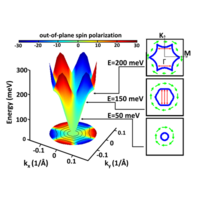
First-principles band theory, properly augmented by topological considerations, has provided a remarkably successful framework for predicting new classes of topological materials. This Colloquium discusses the underpinnings of the topological band theory and its materials applications.
[Rev. Mod. Phys. 88, 021004] Published Wed Jun 29, 2016
29 Jun 19:26
by Luca Rigamonti, Carri Cotton, Andrea Nava, Heinrich Lang, Tobias Rüffer, Mauro Perfetti, Lorenzo Sorace, Anne-Laure Barra, Yanhua Lan, Wolfgang Wernsdorfer, Roberta Sessoli, Andrea Cornia
Abstract
A 3D metal–organic framework (MOF) having single-molecule magnet (SMM) linkers was prepared in crystalline form by using a tetrairon(III) complex functionalised with two divergent pyridyl groups, namely [Fe4(pPy)2(dpm)6] (1; H3pPy=2-(hydroxymethyl)-2-(pyridin-4-yl)propane-1,3-diol, Hdpm=dipivaloylmethane). Reaction of 1 with silver(I) perchlorate afforded {[Fe4(pPy)2(dpm)6]2Ag}ClO4 (2), which crystallises in a cubic face-centred lattice and exhibits two interlocked diamondoid networks. In 2, the SMMs act as linear ditopic synthons, and silver(I) ions as tetrahedral nodes coordinated by four pyridyl nitrogen atoms. The magnetic properties of 1 (S=5 and D≈−0.4 cm−1 in the ground spin state) are largely preserved in 2, which shows slow magnetic relaxation with an anisotropy barrier of Ueff/kB=11.46(10) K in zero field and 14.25(8) K in an applied field of 1 kOe. However, crystal symmetry triggers highly noncollinear magnetic anisotropy contributions oriented at 109.47° from each other along the threefold axes of AgN4 tetrahedra, a unique scenario fully confirmed by a single-crystal cantilever torque magnetometry investigation. Magnetisation curves down to 0.03 K demonstrated the occurrence of a wide hysteresis loop when the magnetic field was swept along one of the four Ag−N bonds. By symmetry, the crystalline compound can then be persistently magnetised parallel or antiparallel to the four main diagonals of the unit cell, although the crystals have no overall second-order anisotropy.

Magnetic MOF: Tetrahedral Ag+ nodes and Fe4 single-molecule magnet linkers form a 3D metal–organic framework with two interlocked diamondoid networks (see figure). The structure has cubic symmetry but retains magnetic bistability.
29 Jun 09:06
by Biplab Pal, Rudolf A Römer and Arunava Chakrabarti
We design spin filters for particles with potentially arbitrary spin ##IMG##
[http://ej.iop.org/images/0953-8984/28/33/335301/cmaa2b01ieqn001.gif] {$S\left(=1/2,1,3/2,\ldots
\right)$} using a one-dimensional periodic chain of magnetic atoms as a quantum device. Describing
the system within a tight-binding formalism we present an analytical method to unravel the analogy
between a one-dimensional magnetic chain and a multi-strand ladder network. This analogy is crucial,
and is subsequently exploited to engineer gaps in the energy spectrum by an appropriate choice of
the magnetic substrate. We obtain an exact correlation between the magnitude of the spin of the
incoming beam of particles and the magnetic moment of the substrate atoms in the chain desired for
opening up of a spectral gap. Results of spin polarized transport, calculated within a transfer
matrix formalism, are presented for particles having half-integer as well as higher spin states. We
find tha...
29 Jun 09:04
by Yoshihiro Kubozono, Ritsuko Eguchi, Hidenori Goto, Shino Hamao, Takashi Kambe, Takahiro Terao, Saki Nishiyama, Lu Zheng, Xiao Miao and Hideki Okamoto
This article reviews new superconducting phases of carbon-based materials. During the past decade,
new carbon-based superconductors have been extensively developed through the use of intercalation
chemistry, electrostatic carrier doping, and surface-proving techniques. The superconducting
transition temperature T c of these materials has been rapidly elevated, and the variety of
superconductors has been increased. This review fully introduces graphite, graphene, and hydrocarbon
superconductors and future perspectives of high- T c superconductors based on these materials,
including present problems. Carbon-based superconductors show various types of interesting behavior,
such as a positive pressure dependence of T c . At present, experimental information on
superconductors is still insufficient, and theoretical treatment is also incomplete. In particular,
experimental results are still lacking for graphene and hydrocarbon superc...
28 Jun 20:50
by Lukas Schüller, Ville Haapasilta, Stefan Kuhn, Hugo Pinto, Ralf Bechstein, Adam S. Foster and Angelika Kühnle

The Journal of Physical Chemistry C
DOI: 10.1021/acs.jpcc.6b04672

28 Jun 17:32
Dalton Trans., 2016, 45,16566-16569
DOI: 10.1039/C6DT01963C, Communication
Na Li, Hao Wang, Dao-Liang Song, Chao Li, Ruoning Li, Shi-Min Hou, Yong-Feng Wang, Richard Berndt
Single Co adatoms adsorbed on a double-layer NaCl film were negatively charged after applying a positive voltage pulse by STM.
The content of this RSS Feed (c) The Royal Society of Chemistry

28 Jun 10:18
by Christopher Gutiérrez
Nature Physics.
doi:10.1038/nphys3806
Authors: Christopher Gutiérrez, Lola Brown, Cheol-Joo Kim, Jiwoong Park & Abhay N. Pasupathy

28 Jun 10:18
by Juwon Lee
Nature Physics.
doi:10.1038/nphys3805
Authors: Juwon Lee, Dillon Wong, Jairo Velasco Jr, Joaquin F. Rodriguez-Nieva, Salman Kahn, Hsin-Zon Tsai, Takashi Taniguchi, Kenji Watanabe, Alex Zettl, Feng Wang, Leonid S. Levitov & Michael F. Crommie
Electrostatic confinement of charge carriers in graphene is governed by Klein tunnelling, a relativistic quantum process in which particle–hole transmutation leads to unusual anisotropic transmission at p–n junction boundaries. Reflection and transmission at these boundaries affect the quantum interference of electronic waves, enabling the formation of novel quasi-bound states. Here we report the use of scanning tunnelling microscopy to map the electronic structure of Dirac fermions confined in quantum dots defined by circular graphene p–n junctions. The quantum dots were fabricated using a technique involving local manipulation of defect charge within the insulating substrate beneath a graphene monolayer. Inside such graphene quantum dots we observe resonances due to quasi-bound states and directly visualize the quantum interference patterns arising from these states. Outside the quantum dots Dirac fermions exhibit Friedel oscillation-like behaviour. Bolstered by a theoretical model describing relativistic particles in a harmonic oscillator potential, our findings yield insights into the spatial behaviour of electrostatically confined Dirac fermions.

28 Jun 10:13
by J. Hagemeister, D. Iaia, E.Y. Vedmedenko, K. von Bergmann, A. Kubetzka, R. Wiesendanger
We have employed spin-polarized scanning tunneling microscopy and Monte-Carlo
simulations to investigate the effect of lateral confinement onto the
nanoskyrmion lattice in Fe/Ir(111). We find a strong coupling of one diagonal
of the square magnetic unit cell to the close-packed edges of Fe
nanostructures. In triangular islands this coupling in combination with the
mismatching symmetries of the islands and of the square nanoskyrmion lattice
leads to frustration and triple-domain states. In direct vicinity to
ferromagnetic NiFe islands, the surrounding skyrmion lattice forms additional
domains. In this case a side of the square magnetic unit cell prefers a
parallel orientation to the ferromagnetic edge. These experimental findings can
be reproduced and explained by Monte-Carlo simulations. Here, the single-domain
state of a triangular island is lower in energy, but nevertheless multi-domain
states occur due to the combined effect of entropy and an intrinsic domain wall
pinning arising from the skyrmionic character of the spin texture.
DONATE to arXiv: One hundred percent of your contribution will fund improvements and new initiatives to benefit arXiv's global scientific community. Please join the Simons Foundation and our generous member organizations and research labs in supporting arXiv. https://goo.gl/QIgRpr
28 Jun 10:08
by Paolo Sessi
Article
Magnetic impurities break time reversal symmetry in topological insulators, but there has been disagreement between theory and experiment. Here, the authors study the response of topological states to magnetic dopants at the atomic level and show that, contrary to what generally believed, magnetic order and gapless states can coexist.
Nature Communications doi: 10.1038/ncomms12027
Authors: Paolo Sessi, Rudro R. Biswas, Thomas Bathon, Oliver Storz, Stefan Wilfert, Alessandro Barla, Konstantin A. Kokh, Oleg E. Tereshchenko, Kai Fauth, Matthias Bode, Alexander V. Balatsky

28 Jun 10:05
by Yan Sun
Article
Carotenoids are photoactive organic pigments found in many plants.
Here, the authors report the self-assembly of carotenoid suprastructures by forming a
pillararene host-guest complex, and show that these structures display functionalities
including stimuli responsiveness and photocatalytic activity.
Nature Communications doi: 10.1038/ncomms12042
Authors: Yan Sun, Fang Guo, Tongfei Zuo, Jingjing Hua, Guowang Diao

28 Jun 10:04
by Changmin Lee
Article
Emergent phenomena at the interface between a topological insulator and a ferromanget reflect broken symmetry of topological state. Here, Lee et al. report direct measurement of induced magnetism at the Bi 2 Se 3 -EnS interface, paving the way to understand emergent orders in topological material with broken time reversal symmetry.
Nature Communications doi: 10.1038/ncomms12014
Authors: Changmin Lee, Ferhat Katmis, Pablo Jarillo-Herrero, Jagadeesh S. Moodera, Nuh Gedik

27 Jun 09:31
by E. Młyńczak, M. Eschbach, S. Borek, J. Minár, J. Braun, I. Aguilera, G. Bihlmayer, S. Döring, M. Gehlmann, P. Gospodarič, S. Suga, L. Plucinski, S. Blügel, H. Ebert, C. M. Schneider
We consider the details of the near-surface electronic band structure of a
prototypical ferromagnet, Fe(001). Using high resolution angle-resolved
photoemission spectroscopy we demonstrate openings of the spin-orbit induced
electronic band gaps near the Fermi level. The band gaps and thus the Fermi
surface can be manipulated by changing the remanent magnetization direction.
The effect is of the order of $\Delta$E = 100 meV and $\Delta \text {k} =
0.1\,\text{\AA}^{-1}$. We show that the observed dispersions are dominated by
the bulk band structure. First-principles calculations and one-step
photoemission calculations suggest that the effect is related to changes in the
electronic ground state, rather than caused by the photoemission process
itself. The symmetry of the effect indicates that the observed electronic bulk
states are influenced by the presence of the surface, which might be understood
as related to a Rashba-type effect. By pinpointing the regions in the
electronic band structure where the switchable band gaps occur, we demonstrate
the significance of spin-orbit interaction even for elements as light as 3d
ferromagnets.
25 Jun 09:06
by Theanne Schiros, Dennis Nordlund, Lucia Palova, Liuyan Zhao, Mark Levendorf, Cherno Jaye, David Reichman, Jiwoong Park, Mark Hybertsen and Abhay Pasupathy

ACS Nano
DOI: 10.1021/acsnano.6b01318

24 Jun 22:20
by Qiang Sun, Liangliang Cai, Honghong Ma, Chunxue Yuan and Wei Xu

ACS Nano
DOI: 10.1021/acsnano.6b03048

23 Jun 16:15
by Rico Friedrich, Vasile Caciuc, Nicolae Atodiresei, and Stefan Blügel
Author(s): Rico Friedrich, Vasile Caciuc, Nicolae Atodiresei, and Stefan Blügel
In this theoretical investigation we demonstrate that the adsorption of spatially extended two-dimensional (2D) π systems such as graphene and hexagonal boron nitride on the ferromagnetic fcc Co(111) surface leads to a specific behavior of the in-plane and interlayer Co-Co magnetic exchange interact…
[Phys. Rev. B 93, 220406(R)] Published Wed Jun 22, 2016
23 Jun 16:12
by Henning von Allwörden, Kai Ruschmeier, Arne Köhler, Thomas Eelbo, Alexander Schwarz, Roland Wiesendanger
The design of an atomic force microscope with an all-fiber interferometric
detection scheme capable of atomic resolution at about 500 mK is presented. The
microscope body is connected to a small pumped 3He reservoir with a base
temperature of about 300 mK. The bakeable insert with the cooling stage can be
moved from its measurement position inside the bore of a superconducting 10 T
magnet into an ultra-high vacuum chamber, where tip and sample can be exchanged
in-situ. Moreover, single atoms or molecules can be evaporated onto a cold
substrate located inside the microscope. Two side chambers are equipped with
standard surface preparation and surface analysis tools. The performance of the
microscope at low temperatures is demonstrated by resolving single Co atoms on
Mn/W(110) and by showing atomic resolution on NaCl(001).


 As
As is unique among 122 iron pnictides due to its 4f magnetic moments. We review its properties with particular emphasis on the interplay between 4f and 3d moments. After discussing the parent compound, we first focus on the evolution of magnetism and superconductivity for hole-doped Eu
 K
K Fe
Fe As
As as well as for chemical and hydrostatic pressure in EuFe
 (As
(As P
P )
) . Non-Fermi liquid behavior for optimally doped superconducting systems is highlighted in the electrical resistivity and thermoelectric power. We also discuss the in-plane anisotropy and how the indirect magnetoelastic coupling between Eu 4f moments and the crystal structure can be used for persistent detwinning of EuFe
 As
As in the orthorhombic state by small magnetic fields.

