Nature Communications, Published online: 06 May 2024; doi:10.1038/s41467-024-48047-0
Previous measurements of FeSe0.45Te0.55 found one-dimensional (1D) defects that were interpretated as domain walls hosting propagating Majorana topological modes. Here, the authors reveal that these 1D defects correspond to sub-surface debris and show that the filling of the superconducting gap on these defects is topologically trivial.Dr.jens.brede
Shared posts
06 May 18:51
Topologically trivial gap-filling in superconducting Fe(Se,Te) by one-dimensional defects
by A. Mesaros
Alex Strasser, Sonny Rhim likes this
04 May 17:07
Probing single electrons across 300-mm spin qubit wafers
by Samuel Neyens
Nature, Published online: 01 May 2024; doi:10.1038/s41586-024-07275-6
Using a cryogenic 300-mm wafer prober, a new approach for the testing of hundreds of industry-manufactured spin qubit devices at 1.6 K provides high-volume data on performance, allowing optimization of the complementary metal–oxide–semiconductor (CMOS)-compatible fabrication process.
04 May 17:06
Intel brings quantum-computing microchips a step closer
by Ruoyu Li
Nature, Published online: 01 May 2024; doi:10.1038/d41586-024-01208-z
By adapting methods for fabricating and testing conventional computer chips, researchers have brought silicon-based quantum computers closer to reality — and to accessing the immense benefits of a mature chipmaking industry.
26 Apr 19:03
High-Resolution Tunneling Spectroscopy of Fractional Quantum Hall States
by Yuwen Hu, Yen-Chen Tsui, Minhao He, Umut Kamber, Taige Wang, Amir S. Mohammadi, Kenji Watanabe, Takashi Taniguchi, Zlatko Papic, Michael P. Zaletel, Ali Yazdani
arXiv:2308.05789v2 Announce Type: replace
Abstract: Strong interaction among electrons in two-dimensional systems in the presence of high magnetic fields gives rise to fractional quantum Hall (FQH) states that host quasi-particles with fractional charge and statistics. We perform high-resolution scanning tunneling microscopy and spectroscopy of FQH states in ultra-clean Bernal-stacked bilayer graphene (BLG) devices. Spectroscopy of FQH states shows sharp excitations in tunneling experiments that have been predicted for electron fractionalizing into bound states of quasi-particles. From our measurements and their comparison to theoretical calculations, we find energy gaps for candidate non-abelian FQH states that are larger by a factor of 5 than other related systems, making BLG an ideal setting for the manipulation of these novel quasi-particles and for the creation of a topological quantum bit. Our STM experiment also reveals previously undiscovered states in such ultra-clean samples.
14 Apr 17:50
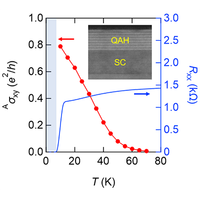
Molecular beam epitaxy of superconducting $\mathrm{FeS}{\mathrm{e}}_{x}\mathrm{T}{\mathrm{e}}_{1−x}$ thin films interfaced with magnetic topological insulators
by Yuki Sato, Soma Nagahama, Ilya Belopolski, Ryutaro Yoshimi, Minoru Kawamura, Atsushi Tsukazaki, Naoya Kanazawa, Kei S. Takahashi, Masashi Kawasaki, and Yoshinori Tokura
Author(s): Yuki Sato, Soma Nagahama, Ilya Belopolski, Ryutaro Yoshimi, Minoru Kawamura, Atsushi Tsukazaki, Naoya Kanazawa, Kei S. Takahashi, Masashi Kawasaki, and Yoshinori Tokura
The observation of Majorana anyons is a long-sought challenge in physics, but has been hindered by lack of high-quality materials. The authors fabricate a heterostructure with an atomically sharp interface between a quantum anomalous Hall insulator and superconductor, for the first time. This unique quantum material should enable the unambiguous observation of chiral Majorana edge states and braiding of non-Abelian anyons without magnetic field.
[Phys. Rev. Materials 8, L041801] Published Thu Apr 11, 2024
30 Mar 17:41
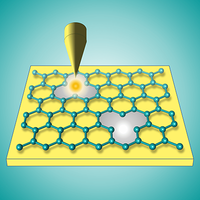
Vacancy Spectroscopy of Non-Abelian Kitaev Spin Liquids
by Wen-Han Kao, Natalia B. Perkins, and Gábor B. Halász
Author(s): Wen-Han Kao, Natalia B. Perkins, and Gábor B. Halász
A proposed approach to detect Majorana fermions in Kitaev spin liquids by using scanning tunneling microscopy could lead to the unambiguous confirmation of both the spin-liquid state and its Majorana zero modes.
[Phys. Rev. Lett. 132, 136503] Published Fri Mar 29, 2024
Sonny Rhim likes this
29 Mar 10:34
Anyonic statistics and slow quasiparticle dynamics in a graphene fractional quantum Hall interferometer
by Noah L. Samuelson, Liam A. Cohen, Will Wang, Simon Blanch, Takashi Taniguchi, Kenji Watanabe, Michael P. Zaletel, Andrea F. Young
arXiv:2403.19628v1 Announce Type: new
Abstract: Anyons are two dimensional particles with fractional exchange statistics that emerge as elementary excitations of fractional quantum Hall phases. Experimentally, anyonic statistics manifest directly in the edge-state Fabry-P\'erot interferometer geometry, where the presence of $N_{qp}$ localized anyons in the interferometer bulk contributes a phase $N_{qp} \theta_a$ to the observed interference pattern, where $\theta_a$ is twice the statistical exchange phase. Here, we report a measurement of $\theta_a$ in a monolayer graphene Fabry-P\'erot interferometer at $\nu$ = 1/3. We find a preponderance of phase slips with magnitudes $\Delta \theta \approx 2 \pi / 3$, confirming the result of past experiments in GaAs quantum wells and consistent with expectations for the tunneling of Abelian anyons into the interferometer bulk. In contrast to prior work, however, single anyon tunneling events manifest as instantaneous and irreversible phase slips, indicative of quasiparticle equilibration times exceeding 20 minutes in some cases. We use the discrepancy between the quasiparticle equilibration rate and our measurement speed to vary the interferometer area and $N_{qp}$ independently, allowing us to precisely determine the interferometer phase and monitor the entry and exit of individual anyons to the interferometer loop in the time domain. Besides providing a replication of previous interferometric measurements sensitive to $\theta_a$ in GaAs, our results bring anyon dynamics into the experimental regime and suggest that the average `topological charge' of a mesoscopic quantum Hall device can be held constant over hour long timescales.
29 Mar 10:21
Anyon braiding and telegraph noise in a graphene interferometer
by Thomas Werkmeister, James R. Ehrets, Marie E. Wesson, Danial H. Najafabadi, Kenji Watanabe, Takashi Taniguchi, Bertrand I. Halperin, Amir Yacoby, Philip Kim
arXiv:2403.18983v1 Announce Type: new
Abstract: The search for anyons, quasiparticles with fractional charge and exotic exchange statistics, has inspired decades of condensed matter research. Quantum Hall interferometers enable direct observation of the anyon braiding phase via discrete interference phase jumps when the quasiparticle number changes. Here, we observe the universal anyonic braiding phase in both the $\nu = 1/3$ and $4/3$ fractional quantum Hall states by probing three-state random telegraph noise (RTN) in real-time. We find that the observed RTN stems from anyon quasiparticle number $n$ fluctuations and reconstruct three Aharonov-Bohm oscillation signals phase shifted by $2\pi/3$, corresponding to the three possible interference branches from braiding around $n$ (mod 3) anyons. Hence, we fully characterize the anyon exchange statistics using new methods that can readily extend to non-abelian states.
28 Mar 22:41
Revealing the Microscopic Mechanism of Elementary Vortex Pinning in Superconductors
by C. Chen, Y. Liu, Y. Chen, Y. N. Hu, T. Z. Zhang, D. Li, X. Wang, C. X. Wang, Z. Y. W. Lu, Y. H. Zhang, Q. L. Zhang, X. L. Dong, R. Wang, D. L. Feng, T. Zhang
arXiv:2403.17671v1 Announce Type: cross
Abstract: Vortex pinning is a crucial factor that determines the critical current of practical superconductors. However, the understanding of its underlying mechanism has long been phenomenological without a clear microscopic description. Here using high-resolution scanning tunneling microscopy, we studied single vortex pinning induced by point defect in layered FeSe-based superconductors. We found the defect-vortex interaction drives low-energy vortex bound states away from EF, resulting a mini gap which effectively lowered the energy of vortex and caused the pinning. By measuring the local density-of-states, we directly obtained the elementary pinning energy and estimated the pinning force through the spatial gradient of pinning energy. The results align with the bulk critical current measurement. We further show that a general microscopic quantum model with considering defect-vortex interaction can well capture our observation. It indicates the local pairing near pinned vortex core is actually enhanced, which is beyond the traditional understanding that non-superconducting regions pin vortices. Our study thus revealed a general microscopic mechanism of vortex pinning in superconductors.
25 Mar 08:21
Realizing topological quantum magnets with atomic spins on surfaces
by Hao Wang, Peng Fan, Jing Chen, Lili Jiang, Hong-Jun Gao, Jose L. Lado, Kai Yang
arXiv:2403.14145v1 Announce Type: new
Abstract: Artificial quantum systems have emerged as indispensable platforms to realize exotic topological matter in a well-controlled manner. Here, we demonstrate topological quantum Heisenberg spin lattices, engineered with spin chains and two-dimensional spin arrays using spin 1/2 atoms on insulating films in a scanning tunnelling microscope (STM). We engineered with atomic precision both topological and trivial phases of the quantum spin model, realizing first- and second-order topological quantum magnets. Their many-body excitations were probed by single-atom electron spin resonance with ultrahigh energy resolution. The atomically-localized magnetic field of the STM tip allows us to directly visualize various topological bound modes including topological edge states, topological defects, and higher-order corner modes. Our results provide an important bottom-up approach to simulating exotic quantum many-body phases of interacting spins.
15 Mar 21:35
Quantum spin liquid signatures in monolayer 1T-NbSe2
by Quanzhen Zhang
Nature Communications, Published online: 15 March 2024; doi:10.1038/s41467-024-46612-1
Recently, signatures of quantum spin liquid have been reported in monolayer transition metal dichalcogenides. Here the authors report evidence of such state in 1T-NbSe2 via the measurements of the Kondo effect in a 1T-1H heterostructure, further supported by measurements for magnetic molecules on 1T-NbSe2.
ytdcty likes this
28 Feb 08:20

Time-resolved ARPES studies of quantum materials
by Fabio Boschini, Marta Zonno, and Andrea Damascelli
Author(s): Fabio Boschini, Marta Zonno, and Andrea Damascelli
Time-resolved angle-resolved photoemission spectroscopy provides access to light-induced changes in the electronic band structure and interactions of solids, and to the out-of-equilibrium electron dynamics. This article reviews the history and future prospects for the development of the technique, and offers an overview of recent achievements in studying unoccupied and light-driven states, photoinduced phase transitions, electron-phonon scattering, and electron dynamics in quantum materials, including topological insulators, unconventional superconductors, traditional and novel semiconductors, excitonic insulators, and spin-textured systems.

[Rev. Mod. Phys. 96, 015003] Published Tue Feb 27, 2024
fangsen li, Sonny Rhim likes this
23 Feb 09:18
Signatures of Majorana Bound States in the Diffraction Patterns of Extended Superconductor-Topological Insulator-Superconductor Josephson Junctions
by Guang Yue, Can Zhang, Erik D. Huemiller, Jessica H. Montone, Gilbert R. Arias, Drew G. Wild, Jered Y. Zhang, David R. Hamilton, Xiaoyu Yuan, Xiong Yao, Deepti Jain, Jisoo Moon, Maryam Salehi, Nikesh Koirala, Seongshik Oh, Dale J. Van Harlingen
arXiv:2311.16489v2 Announce Type: replace-cross
Abstract: In an extended superconductor-topological insulator-superconductor (S-TI-S) Josephson junction in a magnetic field, localized Majorana bound states (MBS) are predicted to exist at the cores of Josephson vortices where the local phase difference across the junction is an odd-multiple of $\pi$. These states contribute a supercurrent with a $4\pi$-periodic current-phase relation (CPR) that adds to the conventional $2\pi$-periodic sinusoidal CPR. In this work, we present a comprehensive experimental study of the critical current vs. applied magnetic field diffraction patterns of lateral Nb-Bi$_2$Se$_3$-Nb Josephson junctions. We compare our observations to a model of the Josephson dynamics in the S-TI-S junction system to explore what feature of MBS are, or are not, exhibited in these junctions. Consistent with the model, we find several distinct deviations from a Fraunhofer diffraction pattern that is expected for a uniform sin$({\phi})$ CPR. In particular, we observe abrupt changes in the diffraction pattern at applied magnetic fields in which the current-carrying localized MBS are expected to enter the junction, and a lifting of the odd-numbered nodes consistent with a $4\pi$-periodic sin$(\phi/2)$-component in the CPR. We also see that although the even-numbered nodes often remain fully-formed, we sometimes see deviations that are consistent with quasiparticle-induced fluctuations in the parity of the MBS pairs that encodes quantum information.
15 Feb 17:16
Altermagnetic lifting of Kramers spin degeneracy
by J. Krempaský
Nature, Published online: 14 February 2024; doi:10.1038/s41586-023-06907-7
Using photoemission spectroscopy and ab initio calculations, evidence is given of two distinct unconventional mechanisms of lifted Kramers spin degeneracy generated by the altermagnetic phase of centrosymmetric MnTe with vanishing net magnetization.
15 Feb 07:52
Hole Flying Qubits in Quantum Dot Arrays
by D. Fern\'andez-Fern\'andez, Yue Ban, Gloria Platero
arXiv:2312.04631v2 Announce Type: replace
Abstract: Quantum information transfer is fundamental for scalable quantum computing in any potential platform and architecture. Hole spin qubits, owing to their intrinsic spin-orbit interaction (SOI), promise fast quantum operations which are fundamental for the implementation of quantum gates. Yet, the influence of SOI in quantum transfer protocols remains an open question. Here, we investigate hole flying qubits using shortcuts to adiabaticity protocols, i.e., the long-range transfer of hole spin states and the quantum distribution of entangled pairs in semiconductor quantum dot arrays. We demonstrate that electric field manipulation allows dynamical control of the SOI, enabling simultaneously the implementation of quantum gates during the transfer, with the potential to significantly accelerate quantum algorithms. By harnessing the ability to perform quantum gates in parallel with the transfer, we employ dynamical decoupling schemes to focus and preserve the spin state, leading to higher transfer fidelity.
09 Feb 13:09
Tomasch Oscillations as Above-Gap Signature of Topological Superconductivity
by Antonio Štrkalj, Xi-Rong Chen, Wei Chen, D. Y. Xing, and Oded Zilberberg
Author(s): Antonio Štrkalj, Xi-Rong Chen, Wei Chen, D. Y. Xing, and Oded Zilberberg
The identification of topological superconductors usually involves searching for in-gap modes that are protected by topology. However, in current experimental settings, the smoking-gun evidence of these in-gap modes is still lacking. In this Letter, we propose to support the distinction between two-…
[Phys. Rev. Lett. 132, 066301] Published Wed Feb 07, 2024
Sonny Rhim likes this
06 Feb 09:15
Current Induced Hidden States in Josephson Junctions
by Shaowen ChenSeunghyun ParkUri VoolNikola MaksimovicDavid A. BroadwayMykhailo FlaksTony X. ZhouPatrick MaletinskyAdy SternBertrand I. Halperin Amir Yacoby
Josephson junctions enable dissipation-less electrical current through metals and insulators below a critical current. Despite being central to quantum technology based on superconducting quantum bits and fundamental research into self-conjugate quasiparticles, the spatial distribution of super current flow at the junction and its predicted evolution with current bias and external magnetic field remain experimentally elusive. Revealing the hidden current flow, featureless in electrical resistance, helps understanding unconventional phenomena such as the nonreciprocal critical current, i.e., Josephson diode effect. Here we introduce a platform for nanoscale, quantitative, and nonperturbative visualization of the super current flow, overcoming the long-standing challenge. Utilizing a scanning magnetometer based on nitrogen vacancy centers in diamond, we uncover competing ground states electrically switchable within the zero-resistance regime. The competition results from the superconducting phase re-configuration induced by the Josephson current and kinetic inductance of thin-film superconductors. We further identify a new mechanism for the Josephson diode effect involving the Josephson current induced phase. The nanoscale super current flow emerges as a new experimental observable for elucidating unconventional superconductivity, and optimizing quantum computation and energy-efficient devices.
06 Feb 09:10
Reducing disorder in PbTe nanowires for Majorana research
by Wenyu SongZehao YuYuhao WangYichun GaoZonglin LiShuai YangShan ZhangZuhan GengRuidong LiZhaoyu WangFangting ChenLining YangWentao MiaoJiaye XuXiao FengTiantian WangYunyi ZangLin LiRunan ShangQi-Kun XueKe HeHao Zhang
Material challenges are the key issue in Majorana nanowires where surface disorder constrains device performance. Here, we tackle this challenge by embedding PbTe nanowires within a latticematched crystal, an oxide-free environment. The wire edges are shaped by self-organized growth instead of lithography, resulting in nearly-atomic-flat facets along both cross-sectional and longitudinal directions. Quantized conductance plateaus are observed at zero magnetic field with channel lengths reaching 1.54 $\mu$m, significantly surpassing the state-of-the-art of III-V nanowires (nearly an order-of-magnitude improvement compared to InSb). Coupling PbTe to a Pb film unveils a flat interface spanning microns and a large superconducting gap of 1 meV. Our results meet the stringent low-disorder requirement for the definitive observation of Majoranas.
30 Jan 10:55
All-electrical driving and probing of dressed states in a single spin. (arXiv:2401.15440v1 [cond-mat.mes-hall])
by Hong T. Bui, Christoph Wolf, Yu Wang, Masahiro Haze, Arzhang Ardavan, Andreas J. Heinrich, Soo-hyon Phark
The sub-nanometer distance between tip and sample in a scanning tunneling microscope (STM) enables the application of very large electric fields with a strength as high as ~ 1 GV/m. This has allowed for efficient electrical driving of Rabi oscillations of a single spin on a surface at a moderate radio-frequency (RF) voltage of the order of tens of millivolts. Here, we demonstrate the creation of dressed states of a single electron spin localized in the STM tunnel junction by using resonant RF driving voltages. The read-out of these dressed states was achieved all-electrical by a weakly coupled probe spin. Our work highlights the strength of the atomic-scale geometry inherent to the STM that facilitates creation and control of dressed states, which are promising for a design of atomically well-defined single spin quantum devices on surfaces.
26 Jan 22:53

Bidirectional Multiphoton Communication between Remote Superconducting Nodes
by Joel Grebel, Haoxiong Yan, Ming-Han Chou, Gustav Andersson, Christopher R. Conner, Yash J. Joshi, Jacob M. Miller, Rhys G. Povey, Hong Qiao, Xuntao Wu, and Andrew N. Cleland
Author(s): Joel Grebel, Haoxiong Yan, Ming-Han Chou, Gustav Andersson, Christopher R. Conner, Yash J. Joshi, Jacob M. Miller, Rhys G. Povey, Hong Qiao, Xuntao Wu, and Andrew N. Cleland
A device with qubits coupled to microwave resonators achieves transfer and entanglement of complex quantum states between superconducting nodes.

[Phys. Rev. Lett. 132, 047001] Published Thu Jan 25, 2024
15 Jan 09:57
Characterization of two fast-turnaround dry dilution refrigerators for scanning probe microscopy. (arXiv:2401.04373v1 [cond-mat.mes-hall])
by Mark E. Barber, Yifan Li, Jared Gibson, Jiachen Yu, Zhanzhi Jiang, Yuwen Hu, Zhurun Ji, Nabhanila Nandi, Jesse C. Hoke, Logan Bishop-Van Horn, Gilbert R. Arias, Dale J. Van Harlingen, Kathryn A. Moler, Zhi-Xun Shen, Angela Kou, Benjamin E. Feldman
Low-temperature scanning probe microscopes (SPMs) are critical for the study of quantum materials and quantum information science. Due to the rising costs of helium, cryogen-free cryostats have become increasingly desirable. However, they typically suffer from comparatively worse vibrations than cryogen-based systems, necessitating the understanding and mitigation of vibrations for SPM applications. Here we demonstrate the construction of two cryogen-free dilution refrigerator SPMs with minimal modifications to the factory default and we systematically characterize their vibrational performance. We measure the absolute vibrations at the microscope stage with geophones, and use both microwave impedance microscopy and a scanning single electron transistor to independently measure tip-sample vibrations. Additionally, we implement customized filtering and thermal anchoring schemes, and characterize the cooling power at the scanning stage and the tip electron temperature. This work serves as a reference to researchers interested in cryogen-free SPMs, as such characterization is not standardized in the literature or available from manufacturers.
04 Jan 10:29
Harvard president’s resignation amid plagiarism allegations leaves academics reeling
by Jeff Tollefson
Dr.jens.brede“she was essentially run out by a mob before we got to have any kind of transparent and independent investigation”.
Nature, Published online: 03 January 2024; doi:10.1038/d41586-024-00009-8
Claudine Gay steps down in the face of intense scrutiny following controversial congressional testimony about antisemitism on campus.
21 Dec 22:38
Iron Vacancy Tunable Superconductor-Insulator Transition in $\mathrm{FeSe}/{\mathrm{SrTiO}}_{3}$ Monolayer
by Cheng-Long Xue, Li-Guo Dou, Yong-Jie Xu, Qian-Qian Yuan, Qi-Yuan Li, Zhen-Yu Jia, Zishuang Li, Ronghua Liu, and Shao-Chun Li
Author(s): Cheng-Long Xue, Li-Guo Dou, Yong-Jie Xu, Qian-Qian Yuan, Qi-Yuan Li, Zhen-Yu Jia, Zishuang Li, Ronghua Liu, and Shao-Chun Li
The Fe4Se5 with a 5×5 Fe vacancy order is suggested to be a Mott insulator and the parent state of bulk FeSe superconductor. The iron vacancy ordered state has been considered as a Mott insulator and the parent compound of bulk FeSe-based superconductors. However, for the superconducting FeSe/SrTiO3…
[Phys. Rev. Lett. 131, 256002] Published Wed Dec 20, 2023
21 Dec 22:29
Floating of the topological surface state on top of a thick lead layer: The case of the $\mathrm{Pb}/{\mathrm{Bi}}_{2}{\mathrm{Se}}_{3}$ interface
by Oreste De Luca, Igor A. Shvets, Sergey V. Eremeev, Ziya S. Aliev, Marek Kopciuszynski, Alexey Barinov, Fabio Ronci, Stefano Colonna, Evgueni V. Chulkov, Raffaele G. Agostino, Marco Papagno, and Roberto Flammini
Author(s): Oreste De Luca, Igor A. Shvets, Sergey V. Eremeev, Ziya S. Aliev, Marek Kopciuszynski, Alexey Barinov, Fabio Ronci, Stefano Colonna, Evgueni V. Chulkov, Raffaele G. Agostino, Marco Papagno, and Roberto Flammini
The puzzling question about the floating of the topological surface state on top of a thick Pb layer has now possibly been answered. A photoemission study of the interface made by Pb on Bi2Se3 for different temperatures and adsorbate coverage conditions, allowed us to demonstrate that the evidence r…
[Phys. Rev. Materials 7, 124203] Published Thu Dec 21, 2023
16 Dec 10:00
Majorana modes in striped two-dimensional inhomogeneous topological superconductors. (arXiv:2312.08439v1 [cond-mat.mes-hall])
by Pasquale Marra, Daisuke Inotani, Takeshi Mizushima, Muneto Nitta
Majorana zero modes have gained significant interest due to their potential applications in topological quantum computing and in the realization of exotic quantum phases. These zero-energy quasiparticle excitations localize at the vortex cores of two-dimensional topological superconductors or at the ends of one-dimensional topological superconductors. Here we describe an alternative platform: a two-dimensional topological superconductor with inhomogeneous superconductivity, where Majorana modes localize at the ends of topologically nontrivial one-dimensional stripes induced by the spatial variations of the order parameter phase. In certain regimes, these Majorana modes hybridize into a single highly nonlocal state delocalized over spatially separated points, with exactly zero energy at finite system sizes and with emergent quantum-mechanical supersymmetry. We then present detailed descriptions of braiding and fusion protocols and showcase the versatility of our proposal by suggesting possible setups which can potentially lead to the realization Yang-Lee anyons and the Sachdev-Ye-Kitaev model.
11 Dec 08:30
Inversion symmetry breaking in the probability density by surface-bulk hybridization in topological insulators. (arXiv:2306.09601v2 [cond-mat.mes-hall] UPDATED)
by Jorge David Castaño-Yepes, Enrique Muñoz
We analyze the probability density distribution in a topological insulator slab of finite thickness, where the bulk and surface states are allowed to hybridize. By using an effective continuum Hamiltonian approach as a theoretical framework, we analytically obtained the wave functions for each state near the $\Gamma$-point. Our results reveal that, under particular combinations of the hybridized bulk and surface states, the spatial symmetry of the electronic probability density with respect to the center of the slab can be spontaneously broken. This symmetry breaking arises as a combination of the parity of the solutions, their spin projection, and the material constants.
11 Dec 08:24
Dirac plasmon polaritons and magnetic modes in topological-insulator nanoparticles. (arXiv:2312.04958v1 [cond-mat.mes-hall])
by Nikolaos Kyvelos, Vassilios Yannopapas, N. Asger Mortensen, Christos Tserkezis
We report the existence of previously unreported magnetic modes with record-high magnetic Purcell factors in topological-insulator nanospheres. Focusing on Bi$_{2}$Se$_{3}$, and based on full electromagnetic Mie theory, we find magnetic modes arising from the surface current on the conductive surface of the topological insulator due to the existence of delocalized surface states. These currents are induced by electrons in the topologically protected states within the Dirac cone. Furthermore, we demonstrate that the Dirac plasmon polaritons resulting from the interaction between THz photons and Dirac electrons dramatically influence both the electric and the magnetic transitions of quantum emitters placed near Bi$_2$Se$_3$ nanospheres, providing significantly enhanced Purcell factors and entering the strong-coupling regime. These findings indicate that Bi$_{2}$Se$_{3}$ nanospheres exhibit a rich optical response, stemming from both bulk and topologically protected surface states, making them promising candidates for enhancing strong light--matter interactions in the fields of nanophotonics and THz technologies.
09 Dec 12:09
Interface-Induced Superconductivity in Magnetic Topological Insulator-Iron Chalcogenide Heterostructures. (arXiv:2312.04353v1 [cond-mat.mes-hall])
by Hemian Yi, Yi-Fan Zhao, Ying-Ting Chan, Jiaqi Cai, Ruobing Mei, Xianxin Wu, Zi-Jie Yan, Ling-Jie Zhou, Ruoxi Zhang, Zihao Wang, Stephen Paolini, Run Xiao, Ke Wang, Anthony R. Richardella, John Singleton, Laurel E. Winter, Thomas Prokscha, Zaher Salman, Andreas Suter, Purnima P. Balakrishnan, Alexander J. Grutter, Moses H. W. Chan, Nitin Samarth, Xiaodong Xu, Weida Wu, Chao-Xing Liu, Cui-Zu Chang
When two different electronic materials are brought together, the resultant interface often shows unexpected quantum phenomena, including interfacial superconductivity and Fu-Kane topological superconductivity (TSC). Here, we use molecular beam epitaxy (MBE) to synthesize heterostructures formed by stacking together two magnetic materials, a ferromagnetic topological insulator (TI) and an antiferromagnetic iron chalcogenide (FeTe). We discover emergent interface-induced superconductivity in these heterostructures and demonstrate the trifecta occurrence of superconductivity, ferromagnetism, and topological band structure in the magnetic TI layer, the three essential ingredients of chiral TSC. The unusual coexistence of ferromagnetism and superconductivity can be attributed to the high upper critical magnetic field that exceeds the Pauli paramagnetic limit for conventional superconductors at low temperatures. The magnetic TI/FeTe heterostructures with robust superconductivity and atomically sharp interfaces provide an ideal wafer-scale platform for the exploration of chiral TSC and Majorana physics, constituting an important step toward scalable topological quantum computation.
07 Dec 12:25
Strongly coupled edge states in a graphene quantum Hall interferometer. (arXiv:2312.03150v2 [cond-mat.mes-hall] UPDATED)
by Thomas Werkmeister, James R. Ehrets, Yuval Ronen, Marie E. Wesson, Danial Najafabadi, Zezhu Wei, Kenji Watanabe, Takashi Taniguchi, D.E. Feldman, Bertrand I. Halperin, Amir Yacoby, Philip Kim
Electronic interferometers using the chiral, one-dimensional (1D) edge channels of the quantum Hall effect (QHE) can demonstrate a wealth of fundamental phenomena. The recent observation of phase jumps in a Fabry-P\'erot (FP) interferometer revealed anyonic quasiparticle exchange statistics in the fractional QHE. When multiple integer edge channels are involved, FP interferometers have exhibited anomalous Aharonov-Bohm (AB) interference frequency doubling, suggesting putative pairing of electrons into 2e quasiparticles. Here, we use a highly tunable graphene-based QHE FP interferometer to observe the connection between interference phase jumps and AB frequency doubling, unveiling how strong repulsive interaction between edge channels leads to the apparent pairing phenomena. By tuning electron density in-situ from filling factor {\nu}<2 to {\nu}>7, we tune the interaction strength and observe periodic interference phase jumps leading to AB frequency doubling. Our observations demonstrate that the combination of repulsive interaction between the spin-split {\nu}=2 edge channels and charge quantization is sufficient to explain the frequency doubling, through a near-perfect charge screening between the localized and extended edge channels. Our results show that interferometers are sensitive probes of microscopic interactions and enable future experiments studying correlated electrons in 1D channels using our highly tunable platform.
06 Dec 22:55
Single-molecule electron spin resonance by means of atomic force microscopy
by Lisanne Sellies
Nature, Published online: 06 December 2023; doi:10.1038/s41586-023-06754-6
By using a pump–probe atomic force microscopy detection scheme, electron spin transitions between non-equilibrium triplet states of individual pentacene molecules, as well as the ability to manipulate electron spins over tens of microseconds, is demonstrated.
Dr.jens.brede likes this