08 Mar 19:19
by Roberta Sessoli
Nanoscience: Single-atom data storage
Nature 543, 7644 (2017). doi:10.1038/543189a
Authors: Roberta Sessoli
The ultimate limit of classical data storage is a single-atom magnetic bit. Researchers have now achieved the writing and reading of individual atoms whose magnetic information can be retained for several hours. See Letter p.226

03 Mar 19:53
by Giulia E. Pacchioni, Marina Pivetta, Luca Gragnaniello, Fabio Donati, Gabriel Autès, Oleg V. Yazyev, Stefano Rusponi and Harald Brune

ACS Nano
DOI: 10.1021/acsnano.6b07431

02 Mar 23:50
by Tomoya Asaba, B. J. Lawson, Colin Tinsman, Lu Chen, Paul Corbae, Gang Li, Y. Qiu, Y. S. Hor, Liang Fu, and Lu Li
Author(s): Tomoya Asaba, B. J. Lawson, Colin Tinsman, Lu Chen, Paul Corbae, Gang Li, Y. Qiu, Y. S. Hor, Liang Fu, and Lu Li
Quantum computers need new materials to protect their delicate quantum states. Evidence for such a material—a topological superconductor—has been detected as a breaking of rotational symmetry in a crystal of Nb-doped Bi2Se3.
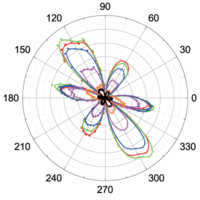
[Phys. Rev. X 7, 011009] Published Fri Jan 27, 2017
02 Mar 08:02
by Stefano Tebi, Mateusz Paszkiewicz, Hazem Aldahhak, Francesco Allegretti, Sabrina Gonglach, Michael Haas, Mario Waser, Peter S. Deimel, Pablo Casado Aguilar, Yi-Qi Zhang, Anthoula C. Papageorgiou, David A. Duncan, Johannes V. Barth, Wolf G. Schmidt, Reinhold Koch, Uwe Gerstmann, Eva Rauls, Florian Klappenberger, Wolfgang Schöfberger and Stefan Müllegger

ACS Nano
DOI: 10.1021/acsnano.7b00766

01 Mar 16:20
by Jinglei Chen, Guanyong Wang, Yanan Tang, Hao Tian, Jinpeng Xu, Xianqi Dai, Hu Xu, Jinfeng Jia, Wingkin Ho and Maohai Xie

ACS Nano
DOI: 10.1021/acsnano.7b00556

24 Feb 18:53
by Rocco P. Fornari, Paul W. M. Blom, and Alessandro Troisi
Author(s): Rocco P. Fornari, Paul W. M. Blom, and Alessandro Troisi
We describe charge transport along a polymer chain with a generic theoretical model depending in principle on tens of parameters, reflecting the chemistry of the material. The charge carrier states are obtained from a model Hamiltonian that incorporates different types of disorder and electronic str…
[Phys. Rev. Lett. 118, 086601] Published Fri Feb 24, 2017
23 Feb 21:26
by Vedran Jelic
Nature Physics.
doi:10.1038/nphys4047
Authors: Vedran Jelic, Krzysztof Iwaszczuk, Peter H. Nguyen, Christopher Rathje, Graham J. Hornig, Haille M. Sharum, James R. Hoffman, Mark R. Freeman & Frank A. Hegmann

23 Feb 15:34
by M. D. Jenkins, Y. Duan, B. Diosdado, J. J. García-Ripoll, A. Gaita-Ariño, C. Giménez-Saiz, P. J. Alonso, E. Coronado, and F. Luis
Author(s): M. D. Jenkins, Y. Duan, B. Diosdado, J. J. García-Ripoll, A. Gaita-Ariño, C. Giménez-Saiz, P. J. Alonso, E. Coronado, and F. Luis
We study the quantum spin dynamics of nearly isotropic Gd3+ ions entrapped in polyoxometalate molecules and diluted in crystals of a diamagnetic Y3+ derivative. The full energy-level spectrum and the orientations of the magnetic anisotropy axes have been determined by means of continuous-wave electr…
[Phys. Rev. B 95, 064423] Published Wed Feb 22, 2017
21 Feb 17:10
by Oleksandr Stetsovych

Nature Chemistry 9, 213 (2017).
doi:10.1038/nchem.2662
Authors: Oleksandr Stetsovych, Martin Švec, Jaroslav Vacek, Jana Vacek Chocholoušová, Andrej Jančařík, Jiří Rybáček, Krzysztof Kosmider, Irena G. Stará, Pavel Jelínek & Ivo Starý
Flat, prochiral molecules form chiral adsorbates on achiral surfaces, but such assemblies are globally racemic. Now, it is shown that this mirror symmetry can be broken through stereocontrolled on-surface synthesis. Enantiopure helicene molecules can be transformed into flat, enantiofacially adsorbed products through a cascade of reactions on Ag(111) monitored by high-resolution scanning probe microscopy.
16 Feb 17:53
by William Legrand, Davide Maccariello, Nicolas Reyren, Karin Garcia, Christoforos Moutafis, Constance Moreau-Luchaire, Sophie Collin, Karim Bouzehouane, Vincent Cros, Albert Fert
Magnetic skyrmions are nanoscale windings of the spin configuration that hold
great promise for technology due to their topology-related properties and
extremely reduced sizes. After the recent observation at room temperature of
sub-100 nm skyrmions stabilized by interfacial chiral interaction in magnetic
multilayers, several pending questions remain to be solved, notably about the
means to nucleate individual compact skyrmions or the exact nature of their
motion. In this study, a method leading to the formation of magnetic skyrmions
in a micrometer-sized nanotrack using homogeneous current injection is
evidenced. Spin-transfer-induced motion of these small
electricalcurrent-generated skyrmions is then demonstrated and the role of the
out-of-plane magnetic field in the stabilization of the moving skyrmions is
also analysed. The results of these experimental observations of spin torque
induced motion are compared to micromagnetic simulations reproducing a granular
type, non-uniform magnetic multilayer, in order to address the particularly
important role of the magnetic inhomogeneities on the current-induced motion of
sub-100 nm skyrmions, for which the material grains size is comparable to the
skyrmion diameter.
14 Feb 20:47
by Michele Serri, Matteo Mannini, Lorenzo Poggini, Emilio Vélez-Fort, Brunetto Cortigiani, Philippe Sainctavit, Donella Rovai, Andrea Caneschi and Roberta Sessoli

Nano Letters
DOI: 10.1021/acs.nanolett.6b05208

13 Feb 17:12
by S. N. Rebec, T. Jia, C. Zhang, M. Hashimoto, D.-H. Lu, R. G. Moore, and Z.-X. Shen
Author(s): S. N. Rebec, T. Jia, C. Zhang, M. Hashimoto, D.-H. Lu, R. G. Moore, and Z.-X. Shen
To elucidate the mechanisms behind the enhanced Tc in monolayer (1 ML) FeSe on SrTiO3 (STO), we grew highly strained 1 ML FeSe on the rectangular (100) face of rutile TiO2, and observed the coexistence of replica bands and superconductivity with a Tc of 63 K. From the similar Tc between this system …
[Phys. Rev. Lett. 118, 067002] Published Fri Feb 10, 2017
10 Feb 10:17
Phys. Chem. Chem. Phys., 2017, 19,6013-6021
DOI: 10.1039/C6CP06634H, Paper
Yasumasa Takagi, Heng Wang, Yohei Uemura, Takahiro Nakamura, Liwei Yu, Oki Sekizawa, Tomoya Uruga, Mizuki Tada, Gabor Samjeske, Yasuhiro Iwasawa, Toshihiko Yokoyama
The oxidation states of platinum nanoparticles were observed by in situ NAP-HAXPES under a water pressure of 4000 Pa.
The content of this RSS Feed (c) The Royal Society of Chemistry

10 Feb 09:15
by Ting Cao, Fangzhou Zhao, Steven G. Louie
Knowledge of the topology of the electronic ground state of materials has led
to deep insights to novel phenomena such as the integer quantum Hall effect and
fermion-number fractionalization, as well as other properties of matter.
Joining two insulators of different topological classes produces fascinating
boundary states in the band gap. Another exciting recent development is the
bottom-up synthesis (from molecular precursors) of graphene nanoribbons (GNRs)
with atomic precision control of their edge and width. Here we connect these
two fields, and show for the first time that semiconducting GNRs of different
width, edge, and end termination belong to different topological classes. The
topology of GNRs is protected by spatial symmetries and dictated by the
terminating unit cell. We have derived explicit formula for their topological
invariants, and show that localized junction states developed between two GNRs
of distinct topology may be tuned by lateral junction geometry. The topology of
a GNR can be further modified by dopants, such as a periodic array of boron
atoms. In a superlattice consisted of segments of doped and pristine GNRs, the
junction states are stable spin centers, forming a Heisenberg antiferromagnetic
spin 1/2 chain with tunable exchange interaction. The discoveries here are not
only of scientific interest for studies of quasi one-dimensional systems, but
also open a new path for design principles of future GNR-based devices through
their topological characters.
09 Feb 08:45
by V. Schendel, C. Barreteau, M. Brandbyge, B. Borca, I. Pentegov, U. Schlickum, M. Ternes, P. Wahl, K. Kern
Among all transition metals, Palladium (Pd) has the highest density of states
at the Fermi energy yet does not fulfill the Stoner criterion for
ferromagnetism. However, its close vicinity to magnetism renders it a nearly
ferromagnetic metal, which hosts paramagnons, strongly damped spin
fluctuations. In this letter we compare the total and the differential
conductance of mono-atomic Pd and Cobalt (Co) contacts between Pd electrodes.
Transport measurements reveal a conductance for Co of 1 $G_0$ , while for Pd we
obtain 2 $G_0$. The differential conductance of mono-atomic Pd contacts shows a
drop with increasing bias, which gives rise to a peculiar {$\Lambda$}-shaped
spectrum. Supported by theoretical calculations we correlate this finding with
the life time of hot quasi-particles in Pd which is strongly influenced by
paramagnon scattering. In contrast to this, Co adatoms locally induce magnetic
order and transport through single cobalt atoms remains unaffected by
paramagnon scattering, consistent with theory.
08 Feb 19:17
by Sumona Sinha, A. K. M. Maidul Islam, Mykhailo Vorokhta and Manabendra Mukherjee

The Journal of Physical Chemistry C
DOI: 10.1021/acs.jpcc.6b10803

03 Feb 20:00
by Rémy Pawlak, Ali Sadeghi, Res Jöhr, Antoine Hinaut, Tobias Meier, Shigeki Kawai, Łukasz Zajac, Piotr Olszowski, Szymon Godlewski, Bartosz Such, Thilo Glatzel, Stefan Goedecker, Marek Szymoński and Ernst Meyer

The Journal of Physical Chemistry C
DOI: 10.1021/acs.jpcc.6b11873

31 Jan 11:47
by Wei Yao
Direct observation of spin-layer locking by local Rashba effect in monolayer semiconducting PtSe<sub>2</sub> film
Nature Communications, Published online: 31 January 2017; doi:10.1038/ncomms14216
Spin polarization in non-magnetic solids has mainly been limited to non-centrosymmetric materials. Here, the authors identify a helical spin texture in the centrosymmetric semiconductor platinum diselenide, and suggest it arises from a local dipole induced Rashba effect rather than the usual spin-splitting.

28 Jan 16:33
by Mario Chiesa, Stefano Livraghi, Elio Giamello, Elisa Albanese, Gianfranco Pacchioni
Abstract
We report direct evidence for quintuplet spin states in a particular kind of reduced TiO2 anatase obtained by the mild oxidation of TiB2 under hydrothermal conditions. Continuous-wave and pulse EPR spectroscopy at X and Q band frequencies provide compelling evidence for the presence of S=2 states, stable in a wide range of temperatures up to room temperature. A tentative model, corroborated by spin-polarized DFT calculations, is proposed, which consists of four ferromagnetically interacting Ti3+ ions with distances ranging from 0.5 nm to 0.8 nm and tetrahedral arrangement.

Spinoff: Ferromagnetically interacting Ti3+ centers leading to stable S=2 states in TiO2 anatase are generated through the solvothermal oxidation of TiB2. This nanomaterial corresponds to a particular form of reduced, blue-colored TiO2 (structure and contour plot of 2D transient EPR nutation spectra shown).
27 Jan 19:02
by Yue Qi, Nannan Han, Yuanchang Li, Zhepeng Zhang, Xiebo Zhou, Bing Deng, Qiucheng Li, Mengxi Liu, Jijun Zhao, Zhongfan Liu and Yanfeng Zhang

ACS Nano
DOI: 10.1021/acsnano.6b07773

27 Jan 09:01
by Jianhui Wang, Yigal Meir, and Yuval Gefen
Author(s): Jianhui Wang, Yigal Meir, and Yuval Gefen
A topological insulator with beveled, as opposed to sharp, edges might lose the attributes that make it attractive for applications.
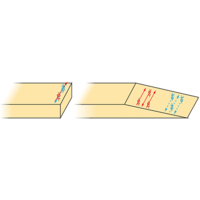
[Phys. Rev. Lett. 118, 046801] Published Thu Jan 26, 2017
26 Jan 10:28
by Fabian Schulz, Peter H. Jacobse, Filippo Federici Canova, Joost van der Lit, David Z. Gao, Adrianus van den Hoogenband, Patrick Han, Robertus J.M. Klein Gebbink, Marc-Etienne Moret, Pekka M. Joensuu, Ingmar Swart and Peter Liljeroth

The Journal of Physical Chemistry C
DOI: 10.1021/acs.jpcc.6b12428

26 Jan 10:24
by Tobias Schmitt, Pascal Ferstl, Lutz Hammer, M. Alexander Schneider and Josef Redinger

The Journal of Physical Chemistry C
DOI: 10.1021/acs.jpcc.6b12337

23 Jan 08:52
by Christoph Große, Pablo Merino, Anna Rosławska, Olle Gunnarsson, Klaus Kuhnke and Klaus Kern

ACS Nano
DOI: 10.1021/acsnano.6b08471

20 Jan 17:50
by Fang Cheng, Hai Xu, Wentao Xu, Pinjia Zhou, Jens Martin and Kian Ping Loh

Nano Letters
DOI: 10.1021/acs.nanolett.6b04715

20 Jan 16:56
by Avijit Kumar, Kaustuv Banerjee and Peter Liljeroth
Molecular self-assembly is a well-known technique to create highly functional nanostructures on
surfaces. Self-assembly on two-dimensional (2D) materials is a developing field driven by the
interest in functionalization of 2D materials in order to tune their electronic properties. This has
resulted in the discovery of several rich and interesting phenomena. Here, we review this progress
with an emphasis on the electronic properties of the adsorbates and the substrate in well-defined
systems, as unveiled by scanning tunneling microscopy. The review covers three aspects of the
self-assembly. The first one focuses on non-covalent self-assembly dealing with site-selectivity due
to inherent moiré pattern present on 2D materials grown on substrates. We also see that modification
of intermolecular interactions and molecule–substrate interactions influences the assembly
drastically and that 2D materials can also be used as a platform to carry out covalent and
metal-coordinated assembly....
19 Jan 17:54
by Zhumin Han (韩竹敏), Gregory Czap, Chen Xu (徐晨), Chi-lun Chiang (蔣季倫), Dingwang Yuan (袁定旺), Ruqian Wu, and W. Ho
Author(s): Zhumin Han (韩竹敏), Gregory Czap, Chen Xu (徐晨), Chi-lun Chiang (蔣季倫), Dingwang Yuan (袁定旺), Ruqian Wu, and W. Ho
Using a scanning tunneling microscope, researchers detect coupled vibrations between two molecules.
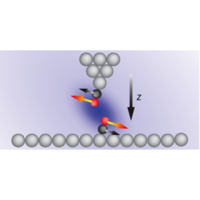
[Phys. Rev. Lett. 118, 036801] Published Thu Jan 19, 2017
19 Jan 17:42
by A. Di Bernardo
<i>p</i>-wave triggered superconductivity in single-layer graphene on an electron-doped oxide superconductor
Nature Communications, Published online: 19 January 2017; doi:10.1038/ncomms14024
Unconventional superconductivity may be triggered when graphene is deposited on a high temperature superconductor. Here, Di Bernardo et al. observe spectroscopic evidence for p-wave superconductivity in single layer graphene on an electron-doped cuprate superconductor.

17 Jan 18:18
by Yinghui Yu, Huixia Fu, Limin She, Shuangzan Lu, Qinmin Guo, Hui Li, Sheng Meng and Gengyu Cao

ACS Nano
DOI: 10.1021/acsnano.6b08347

17 Jan 08:17
by Berthold Jäck, Jacob Senkpiel, Markus Etzkorn, Joachim Ankerhold, Christian R. Ast, Klaus Kern
We have studied the temporal evolution of a quantum system subjected to
strong dissipation at ultra-low temperatures where the system-bath interaction
represents the leading energy scale. In this regime, theory predicts the time
evolution of the system to follow a generalization of the classical
Smoluchowski description, the quantum Smoluchowski equation, thus, exhibiting
quantum Brownian motion characteristics. For this purpose, we have investigated
the phase dynamics of a superconducting tunnel junction in the presence of high
damping. We performed current-biased measurements on the small-capacitance
Josephson junction of a scanning tunneling microscope placed in a low impedance
environment at milli-Kelvin temperatures. We can describe our experimental
findings by a quantum diffusion model with high accuracy in agreement with
theoretical predications based on the quantum Smoluchowski equation. In this
way we experimentally demonstrate that quantum systems subjected to strong
dissipation follow quasi-classical dynamics with significant quantum effects as
the leading corrections.


