06 Aug 05:38
by Pavlo Sukhachov, Jacob Linder
arXiv:2408.01494v1 Announce Type: new
Abstract: We investigate the Friedel oscillations of the local density of states (LDOS) induced by a single impurity with both a spin-independent potential and an exchange coupling to the electrons in altermagnets and unconventional $p$-wave magnets. We identify features that make the Friedel oscillations and magnetization distinct from other materials with nontrivial spin texture such as Rashba metals. Because time-reversal symmetry is broken in altermagnets, both magnetic and nonmagnetic impurities lead to local magnetization with the spatial pattern that reflects the symmetry of the altermagnetic splitting. The period of the corresponding oscillations provides an alternative way to quantify the altermagnetic spin splitting and the shape of the altermagnetic bands. The LDOS pattern in $p$-wave magnets, which respect combined time-reversal and translation symmetries, is rich. It reveals anisotropy related directly to the spin splitting, but surprisingly also features LDOS oscillations with a doubled period in the proximity of the impurity. The latter effect is also observed in a Rashba metal with an exchange field and originates from the interplay of propagating and evanescent waves. The obtained results are instrumental for investigating altermagnets and unconventional $p$-wave magnets and impurity effects via tunneling probes.
26 Jul 17:39
by Hanbin Deng, Tianyu Yang, Guowei Liu, Lu Liu, Lingxiao Zhao, Wu Wang, Tiantian Li, Wei Song, Titus Neupert, Xiang-Rui Liu, Jifeng Shao, Y. Y. Zhao, Nan Xu, Hao Deng, Li Huang, Yue Zhao, Liyuan Zhang, Jia-Wei Mei, Liusuo Wu, Jiaqing He, Qihang Liu, Chang Liu, and Jia-Xin Yin
Author(s): Hanbin Deng, Tianyu Yang, Guowei Liu, Lu Liu, Lingxiao Zhao, Wu Wang, Tiantian Li, Wei Song, Titus Neupert, Xiang-Rui Liu, Jifeng Shao, Y. Y. Zhao, Nan Xu, Hao Deng, Li Huang, Yue Zhao, Liyuan Zhang, Jia-Wei Mei, Liusuo Wu, Jiaqing He, Qihang Liu, Chang Liu, and Jia-Xin Yin
The kagome spin ice can host frustrated magnetic excitations by flipping its local spin. Under an inelastic tunneling condition, the tip in a scanning tunneling microscope can flip the local spin, and we apply this technique to kagome metal HoAgGe with a long-range ordered spin ice ground state. Awa…
[Phys. Rev. Lett. 133, 046503] Published Fri Jul 26, 2024
25 Jul 15:00
by Bar{\i}\c{s} Pekerten, David Brand\~ao, Bassel Heiba Elfeky, Tong Zhou, Jong E. Han, Javad Shabani, Igor \v{Z}uti\'c
arXiv:2407.16535v2 Announce Type: replace
Abstract: Planar Josephson junctions provide a platform to host topological superconductivity which, through manipulating Majorana bound states (MBS), could enable fault-tolerant quantum computing. However, what constitutes experimental signatures of topological superconductivity and how MBS can be detected remains strongly debated. In addition to spurious effects that mimic MBS, there is a challenge to discern the inherent topological signals in realistic systems with many topologically-trivial Andreev bound states, determining the transport properties of Josephson junctions. Guided by the advances in microwave spectroscopy, we theoretically study Al/InAs-based planar Josephson junction embedded into a radio-frequency superconducting quantum interference device to identify microwave signatures of topological superconductivity. Remarkably, by exploring the closing and reopening of a topological gap, we show that even in a wide planar Josephson junction with many Andreev bound states, such a topological signature is distinguishable in the resonance frequency shift of a microwave drive and the ``half-slope'' feature of the microwave absorption spectrum. Our findings provide an important step towards experimental detection of non-Abelian statistics and implementing scalable topological quantum computing.
25 Jul 14:56
by Taner Esat
Nature Nanotechnology, Published online: 25 July 2024; doi:10.1038/s41565-024-01724-z
The fabrication of a molecular quantum sensor on the tip of a scanning tunnelling microscope enables the detection of minute magnetic and electric fields of single atoms with sub-angstrom resolution.
19 Jul 18:59
by Shu-Hui Zhang, Jin Yang, Ding-Fu Shao, Jia-Ji Zhu, Wen Yang, and Kai Chang
Author(s): Shu-Hui Zhang, Jin Yang, Ding-Fu Shao, Jia-Ji Zhu, Wen Yang, and Kai Chang
Solving the Hamiltonian of a system yields the energy dispersion and eigenstates. The geometric phase of the eigenstates generates many novel effects and potential applications. However, the geometric properties of the energy dispersion go unheeded. Here, we provide geometric insight into energy dis…
[Phys. Rev. Lett. 133, 036204] Published Fri Jul 19, 2024
17 Jul 16:04
by F. Du, F. F. Balakirev, V. S. Minkov, G. A. Smith, B. Maiorov, P. P. Kong, A. P. Drozdov, and M. I. Eremets
Author(s): F. Du, F. F. Balakirev, V. S. Minkov, G. A. Smith, B. Maiorov, P. P. Kong, A. P. Drozdov, and M. I. Eremets
The pressures at which some elements start superconducting are so high that making detailed measurements of the transition has been impossible—until now.

[Phys. Rev. Lett. 133, 036002] Published Wed Jul 17, 2024
16 Jul 17:53
by Trond I. Andersen
Nature Physics, Published online: 15 July 2024; doi:10.1038/s41567-024-02578-x
Topological quantum computers are predicted to perform calculations by manipulating quasiparticles known as non-Abelian anyons. A type of non-Abelian anyon that supports universal quantum gates has now been simulated using superconducting qubits.
16 Jul 06:51
by Fabian G. Medina Cuy, Francesco Buccheri, Fabrizio Dolcini
arXiv:2404.18131v2 Announce Type: replace
Abstract: A current flowing through a superconductor induces a spatial modulation in its superconducting order parameter, characterized by a wavevector $Q$ related to the total momentum of a Cooper pair. Here we investigate this phenomenon in a $p$-wave topological superconductor, described by a one-dimensional Kitaev model. We demonstrate that, by treating $Q$ as an extra synthetic dimension, the current carrying non-equilibrium steady state can be mapped into the ground state of a half-filled two-dimensional Weyl semimetal, whose Fermi surface exhibits Lifshitz transitions when varying the model parameters. Specifically, the transition from Type-I to Type-II Weyl phases corresponds to the emergence of a gapless $p$-wave superconductor, where Cooper pairs coexist with unpaired electrons and holes. Such transition is signaled by the appearance of a sharp cusp in the $Q$-dependence of the supercurrent, at a critical value $Q^*$ that is robust to variations of the chemical potential $\mu$. We determine the maximal current that the system can sustain in the topological phase, and discuss possible implementations.
15 Jul 08:09
by David D. Dai, Liang Fu
arXiv:2407.09204v1 Announce Type: new
Abstract: We study the entire energy spectrum of an electron droplet in the lowest Landau level. By exact diagonalization calculations, we find highly excited states in the middle of the spectrum that display unexpected density distribution and pair correlation. We show that these exceptional excited states contain tightly bound electron bubbles with local filling $\nu = 1$ that form various ordered structures. Remarkably, these bubble excited states are shown to exist for both the $1/r$ Coulomb interaction and the $1/r^3$ dipole interaction. The experimental realization of bubble excited states in moir\'e materials under a magnetic field is also discussed.
10 Jul 07:21
by Carlos Pay\'a, Pablo San-Jose, Carlos J. S\'anchez Mart\'inez, Ram\'on Aguado, Elsa Prada
arXiv:2407.06330v1 Announce Type: new
Abstract: Majorana bound states (MBSs) located at the ends of a hybrid superconductor-semiconductor nanowire are only true zero modes if their characteristic localization length is much smaller than the nanowire length, $\xi_M\ll L$. Otherwise, their wave function overlap gives rise to a finite energy splitting that shows a characteristic oscillatory pattern $\sim e^{-2L/\xi_M}\cos(k_F L)$ versus external parameters that modify the Fermi momentum $k_F$. Detecting such "Majorana oscillations", measurable through low-bias conductance, has been proposed as a strategy for Majorana detection in pristine nanowires. Here we discuss how this detection scheme does not work in full-shell hybrid nanowires, an alternative design to partial-shell nanowires in which a superconductor shell fully wraps the semiconductor core. Using microscopic models, we provide both numerical simulations for Al/InAs hybrids as well as analytical approximations in terms of general nanowire parameters. We find that Majorana oscillations with flux in full-shell nanowires are absent in a wide portion of parameter space. This absence is not a signature of non-overlapping left- and right-end MBSs, but a consequence of the Majorana oscillation period being systematically larger than the flux window of odd Little-Parks lobes where Majorana zero-energy peaks are predicted to appear. Our results demonstrate that split near-zero modes or individual zero-energy crossings should not be dismissed as trivial even if they are found not to oscillate with flux.
04 Jul 10:38
by Margarita Davydova, Max Geier, Liang Fu
arXiv:2407.01681v1 Announce Type: cross
Abstract: We introduce the notion of nonreciprocal superconductors where inversion and time-reversal symmetries are broken, giving rise to an asymmetric energy dispersion. We demonstrate that nonreciprocal superconductivity can be detected by Andreev reflection. In particular, a transparent junction between a normal metal and a nonreciprocal superconductor generally exhibits an asymmetric current-voltage characteristic, which serves as a defining feature of nonreciprocal superconductivity. Unlike the superconducting diode effects, our detection scheme has the advantage of avoiding large critical currents that turn the superconducting state to normal. Finally, we discuss candidates for nonreciprocal superconductivity, including graphene, UTe2, as well as engineered platforms.
04 Jul 10:34
by Kewei Sun, Nan Cao, Orlando J. Silveira, Adolfo O. Fumega, Fiona Hanindita, Shingo Ito, Jose L. Lado, Peter Liljeroth, Adam S. Foster, Shigeki Kawai
arXiv:2407.02142v1 Announce Type: new
Abstract: Carbon-based nanostructures possessing {\pi}-electron magnetism have attracted tremendous interest due to their great potential for nano spintronics. In particular, quantum chains with magnetic molecular units synthesized by on-surface reactions provide an ideal playground for investigating magnetic exchange interactions between localized spin components. Here, we present an extensive study of antiferromagnetic nanographene chains with the diazahexabenzocoronene molecule as the repeating unit. A combination of bond-resolved scanning tunneling microscopy, density functional theory and quantum spin models revealed their detailed structures and electronic and magnetic properties. We found that the antiferromagnetic chains host a collective state featuring gapped excitations for an even number of repeating units and one featuring a Kondo excitation for an odd number. Comparing with exact many-body quantum spin models, our molecular chains provide the realization of an entangled quantum Heisenberg model. Coupled with the tunability of the molecular building blocks, these systems can act as an ideal platform for the experimental realization of topological spin lattices.
04 Jul 09:29
by Yu Huang, Yu Fu, Peng Zhang, Kang L. Wang, Qing Lin He
arXiv:2407.02761v1 Announce Type: new
Abstract: Interfacing the quantum anomalous Hall insulator with a conventional superconductor is known to be a promising manner for realizing a topological superconductor, which has been continuously pursued for years. Such a proximity route depends to a great extent on the control of the delicate interfacial coupling of the two constituents. However, a recent experiment reported the failure to reproduce such a topological superconductor, which is ascribed to the negligence of the electrical short by the superconductor in the theoretical proposal. Here, we reproduce this topological superconductor with attention to the interface control. The resulted conductance matrix under a wide magnetic field range agrees with the fingerprint of this topological superconductor. This allows us to develop a phase diagram that unveils three regions parameterized by various coupling limits, which not only supports the feasibility to fabricate the topological superconductor by proximity but also fully explains the origin of the previous debate. The present work provides a comprehensible guide on fabricating the topological superconductor.
03 Jul 18:59
by A. Veillon
Nature, Published online: 03 July 2024; doi:10.1038/s41586-024-07727-z
Observation of the scaling dimension of fractional quantum Hall anyons
27 Jun 06:12
by Jay D. Sau, Sankar Das Sarma
arXiv:2406.18080v1 Announce Type: new
Abstract: Recent experiments have measured flux dependent capacitance at radio frequencies leading to the potential for a fast parity read-out of a Majorana qubit. In this work we argue that the quantum dot used in the capacitance measurement can be reasonably approximated by a non-interacting weakly coupled orbital. We then predict the measured flux and parity dependent capacitance for several parameter regimes of the disordered Majorana nanowire model that are both topological and trivial. Following this we study how such a fast capacitance read-out can be used to characterize the quantum coherence of a Majorana nanowire-based qubit using Rabi oscillations. We additionally show that such measurements, if made possible by coherent inter-wire tunneling, would provide a valuable way of characterizing the low energy states in the frequency domain.
26 Jun 18:36
by Leo Kouwenhoven
arXiv:2406.17568v1 Announce Type: new
Abstract: Topological quantum computing and Majorana bound states were initially theorized between 2000 and 2010. These concepts gradually transitioned to practical implementations during the subsequent decade (2010-2020). Various directions have been investigated with mixed success. With respect to hybrid superconductor-semiconductor devices, great progress has been achieved in the larger area of mesoscopic superconductivity. Firm evidence for a topological phase in hybrid 1D nanowires, however, has not been demonstrated. Now, in the third decade, the lack of definitive topological results prompts a reevaluation. As an active participant, I have witnessed phases of hope, exuberance, and a return to realism and taking a step back. This Perspective provides a personal account of the past decade, my view on the current situation and challenges ahead. I assume the reader is familiar with the subject at the level of, e.g. the review by Prada et al. [1] from which I repeat as little as possible and refer to the extensive reference list for a comprehensive overview. The purpose of this Perspective is to share personal experiences and motivations.
26 Jun 18:28
by Stepan Kovarik, Richard Schlitz, Aishwarya Vishwakarma, Dominic Ruckert, Pietro Gambardella, Sebastian Stepanow
arXiv:2406.17522v1 Announce Type: new
Abstract: Control over quantum systems is typically achieved by time-dependent electric or magnetic fields. Alternatively, electronic spins can be controlled by spin-polarized currents. Here we demonstrate coherent driving of a single spin by a radiofrequency spin-polarized current injected from the tip of a scanning tunneling microscope into an organic molecule. With the excitation of electron paramagnetic resonance, we established dynamic control of single spins by spin torque using a local electric current. In addition our work highlights the dissipative action of the spin-transfer torque, in contrast to the nondissipative action of the magnetic field, which allows for the manipulation of individual spins based on controlled decoherence.
26 Jun 18:21
by David Christian Ohnmacht, Marco Coraiola, Juan José García-Esteban, Deividas Sabonis, Fabrizio Nichele, Wolfgang Belzig, and Juan Carlos Cuevas
Author(s): David Christian Ohnmacht, Marco Coraiola, Juan José García-Esteban, Deividas Sabonis, Fabrizio Nichele, Wolfgang Belzig, and Juan Carlos Cuevas
The authors propose here how to detect quartets in hybrid multiterminal Josephson junctions from the analysis of the current-phase relation and Andreev bound state (ABS) spectra. The methods are applied to the partial ABS spectrum of a three-terminal Josephson junction realized in an InAs/Al heterostructure, which is extracted from spectroscopic measurements with the help of a deep-learning algorithm. The authors’ analysis confirms the existence of quartets in these hybrid structures and illustrates their close relationship with ABS hybridization.
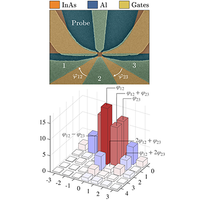
[Phys. Rev. B 109, L241407] Published Wed Jun 26, 2024
19 Jun 21:39
by Yichun Gao, Wenyu Song, Yuhao Wang, Zuhan Geng, Zhan Cao, Zehao Yu, Shuai Yang, Jiaye Xu, Fangting Chen, Zonglin Li, Ruidong Li, Lining Yang, Zhaoyu Wang, Shan Zhang, Xiao Feng, Tiantian Wang, Yunyi Zang, Lin Li, Dong E. Liu, Runan Shang, Qi-Kun Xue, Ke He, Hao Zhang
arXiv:2406.11211v1 Announce Type: new
Abstract: Clean one-dimensional electron systems can exhibit quantized conductance. The plateau conductance doubles if the transport is dominated by Andreev reflection. Here, we report quantized conductance observed in both Andreev and normal-state transports in PbTe-Pb and PbTe-In hybrid nanowires. The Andreev plateau is observed at $4e^2/h$, twice of the normal plateau value of $2e^2/h$. In comparison, Andreev conductance in the best-optimized III-V nanowires is non-quantized due to mode-mixing induced dips (a disorder effect), despite the quantization of normal-state transport. The negligible mode mixing in PbTe hybrids indicates an unprecedented low-disorder transport regime for nanowire devices, beneficial for Majorana researches.
12 Jun 20:00
by Sebastiaan L. D. ten Haaf
Nature, Published online: 12 June 2024; doi:10.1038/s41586-024-07434-9
We have implemented a two-site Kitaev chain in a two-dimensional electron gas by coupling quantum dots through Andreev bound states in a superconductor–semiconductor hybrid region.
11 Jun 19:13
by Y.-F. Li, S.-D. Chen, M. García-Díez, M. I. Iraola, H. Pfau, Y.-L. Zhu, Z.-Q. Mao, T. Chen, M. Yi, P.-C. Dai, J. A. Sobota, M. Hashimoto, M. G. Vergniory, D.-H. Lu, and Z.-X. Shen
Author(s): Y.-F. Li, S.-D. Chen, M. García-Díez, M. I. Iraola, H. Pfau, Y.-L. Zhu, Z.-Q. Mao, T. Chen, M. Yi, P.-C. Dai, J. A. Sobota, M. Hashimoto, M. G. Vergniory, D.-H. Lu, and Z.-X. Shen
Angle-resolved photoemission spectroscopy of an iron-based superconductor resolves debates about its electronic structure and confirms the existence of topological superconductivity in this material.
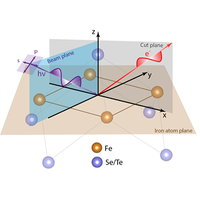
[Phys. Rev. X 14, 021043] Published Tue Jun 11, 2024
11 Jun 08:34
by Bar{\i}\c{s} Pekerten, David Brand\~ao, Bailey Bussiere, David Monroe, Tong Zhou, Jong E. Han, Javad Shabani, Alex Matos-Abiague, Igor \v{Z}uti\'c
arXiv:2406.05829v1 Announce Type: new
Abstract: A planar Josephson junction is a versatile platform to realize topological superconductivity over a large parameter space and host Majorana bound states. With a change in Zeeman field, this system undergoes a transition from trivial to topological superconductivity accompanied by a jump in the superconducting phase difference between the two superconductors. A standard model of these Josephson junctions, which can be fabricated to have a nearly perfect interfacial transparency, predicts a simple universal behavior. In that model, at the same value of Zeeman field for the topological transition, there is a $\pi$ phase jump and a minimum in the critical superconducting current, while applying a controllable phase difference yields a diamond-shaped topological region as a function of that phase difference and a Zeeman field. In contrast, even for a perfect interfacial transparency, we find a much richer and nonuniversal behavior as the width of the superconductor is varied or the Dresselhaus spin-orbit coupling is considered. The Zeeman field for the phase jump, not necessarily $\pi$, is different from the value for the minimum critical current, while there is a strong deviation from the diamond-like topological region. These Josephson junctions show a striking example of a nonreciprocal transport and superconducting diode effect, revealing the importance of our findings not only for topological superconductivity and fault-tolerant quantum computing, but also for superconducting spintronics.
04 Jun 23:19
by Joon Young Park, Young Jae Shin, Jeacheol Shin, Jehyun Kim, Janghyun Jo, Hyobin Yoo, Danial Haei, Chohee Hyun, Jiyoung Yun, Robert M. Huber, Arijit Gupta, Kenji Watanabe, Takashi Taniguchi, Wan Kyu Park, Hyeon Suk Shin, Miyoung Kim, Dohun Kim, Gyu-Chul Yi, Philip Kim
arXiv:2405.20597v1 Announce Type: cross
Abstract: Atomically thin van der Waals (vdW) films provide a novel material platform for epitaxial growth of quantum heterostructures. However, unlike the remote epitaxial growth of three-dimensional bulk crystals, the growth of two-dimensional (2D) material heterostructures across atomic layers has been limited due to the weak vdW interaction. Here, we report the double-sided epitaxy of vdW layered materials through atomic membranes. We grow vdW topological insulators (TIs) Sb$_2$Te$_3$ and Bi$_2$Se$_3$ by molecular beam epitaxy on both surfaces of atomically thin graphene or hBN, which serve as suspended 2D vdW "$\textit{substrate}$" layers. Both homo- and hetero- double-sided vdW TI tunnel junctions are fabricated, with the atomically thin hBN acting as a crystal-momentum-conserving tunnelling barrier with abrupt and epitaxial interface. By performing field-angle dependent magneto-tunnelling spectroscopy on these devices, we reveal the energy-momentum-spin resonant tunnelling of massless Dirac electrons between helical Landau levels developed in the topological surface states at the interface.
25 May 17:06
by Purna P. Paudel, Nathan O. Smith, Tudor D. Stanescu
arXiv:2405.12192v1 Announce Type: cross
Abstract: Disorder effects in hybrid semiconductor-superconductor (SM-SC) nanowires, widely recognized as the main obstacle to realizing stable Majorana zero modes (MZMs) in these structures, have been systematically investigated theoretically in recent years. However, there are no corresponding detailed studies of disorder effects in planar Josephson junction (JJ) structures, which represent a promising alternative to the Majorana nanowire platform. In this paper, we perform a numerical analysis of the low-energy physics of JJ structures based on an effective microscopic model that includes two types of disorder, charge impurities inside the semiconductor and roughness on the surface of the superconducting film. We consider different parameter regimes, including low and high chemical potential values, weak and strong effective SM-SC coupling strengths, and weak and strong disorder strengths. The results are benchmarked using disordered hybrid nanowires realized in planar SM-SC structures similar to those involved in the fabrication of Josephson junctions and having similar model parameters and disorder strengths. We find that the topological superconducting phase hosted by a JJ structure is, generally, more robust against disorder than the topological superconductivity realized in a hybrid nanowire with similar parameters. On the other hand, we find that operating the JJ in a regime characterized by large values of chemical potential results in huge finite-size effects that can destroy the stability of MZMs.
25 May 15:46
by M. Kristen, J. N. Voss, M. Wildermuth, A. Bilmes, J. Lisenfeld, H. Rotzinger, and A. V. Ustinov
Author(s): M. Kristen, J. N. Voss, M. Wildermuth, A. Bilmes, J. Lisenfeld, H. Rotzinger, and A. V. Ustinov
A class of strongly coupled two-level systems is revealed in experiments with compact microwave resonators fabricated from granular aluminum thin films.
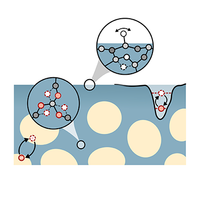
[Phys. Rev. Lett. 132, 217002] Published Wed May 22, 2024
25 May 15:34
by Reiner Br\"uning, Jasmin Bedow, Roberto Lo Conte, Kirsten von Bergmann, Dirk. K. Morr, Roland Wiesendanger
arXiv:2405.14673v1 Announce Type: cross
Abstract: Combining spin textures in ultra-thin films with conventional superconductors has emerged as a powerful and versatile platform for designing topologically non-trivial superconducting phases as well as spin-triplet Cooper pairs. As a consequence, two-dimensional magnet-superconductor hybrids (2D MSHs) are promising candidate systems to realize devices for topology-based quantum technologies and superconducting spintronics. So far, studies have focused mostly on systems hosting collinear ferromagnets or antiferromagnets. However, topologically non-trivial phases have been predicted to emerge in MSH systems with non-collinear spin textures as well. In this article, we present the experimental discovery of topological superconductivity in the MSH system Fe/Ta(110) where a magnetic spiral is realized in the Fe monolayer on the surface of the s-wave superconductor Ta. By combining low-temperature spin-polarized scanning tunneling microscopy measurements with theoretical modeling, we are able to conclude that the system is in a topological nodal-point superconducting phase with low-energy edge modes. Due to the non-collinear spin texture in our MSH system, these edge modes exhibit a magnetization direction-dependent dispersion. Furthermore, we identify direct signatures of Rashba spin-orbit coupling in the experimentally measured differential tunneling conductance. The present work realizes a non-collinear spin texture-based path to topological superconductivity.
25 May 15:24
by Rui Cheng, Haoran Ge, Shengpu Huang, Sen Xie, Qiwei Tong, Hao Sang, Fan Yan, Liangyu Zhu, Rui Wang, Yong Liu, Min Hong, Ctirad Uher, Qingjie Zhang, Wei Liu, Xinfeng Tang
Science Advances,
Volume 10, Issue 21, May 2024.
25 May 15:14
by Qijin Chen, Zhiqiang Wang, Rufus Boyack, Shuolong Yang, and K. Levin
Author(s): Qijin Chen, Zhiqiang Wang, Rufus Boyack, Shuolong Yang, and K. Levin
The theory of unconventional superconductors continues to provide profound puzzles. The crossover between the weakly coupled Bardeen-Cooper-Schrieffer (BCS) state and the strong-pairing Bose-Einstein condensate (BEC) provides a useful perspective on how to address these questions. This paper describes a self-consistent framework for thinking about the crossover regime in between these two limits. The review discusses to what extent this BCS-BEC theory applies to a range of classes of superconducting materials including the cuprates, iron pnictides, twisted bilayer graphene, and interfacial superconductivity among others.

[Rev. Mod. Phys. 96, 025002] Published Thu May 23, 2024
16 May 20:45
by Jacob R. Taylor, Jay D. Sau, and Sankar Das Sarma
Author(s): Jacob R. Taylor, Jay D. Sau, and Sankar Das Sarma
We develop a practical machine learning approach to determine the disorder landscape of Majorana nanowires by using training of the conductance matrix and inverting the conductance data in order to obtain the disorder details in the system. The inversion carried out through machine learning using di…
[Phys. Rev. Lett. 132, 206602] Published Thu May 16, 2024
06 May 18:38
by Lucas Chancel
Nature, Published online: 06 May 2024; doi:10.1038/d41586-024-01276-1
Where should society draw the line on extreme wealth? A fresh account sets out the logic and suggests how to redress inequality.

