11 Jan 08:41
by Alejandro O. Leon, Adam B. Cahaya, and Gerrit E. W. Bauer
Author(s): Alejandro O. Leon, Adam B. Cahaya, and Gerrit E. W. Bauer
The large spin-orbit interaction in the lanthanides implies a strong coupling between their internal charge and spin degrees of freedom. We formulate the coupling between the voltage and the local magnetic moments of rare-earth atoms with a partially filled 4f shell at the interface between an insul...
[Phys. Rev. Lett. 120, 027201] Published Wed Jan 10, 2018
10 Jan 08:33
by Florian Kraushofer, Zdenek Jakub, Magdalena Bichler, Jan Hulva, Peter Drmota, Michael Weinold, Michael Schmid, Martin Setvin, Ulrike Diebold, Peter Blaha and Gareth S. Parkinson

The Journal of Physical Chemistry C
DOI: 10.1021/acs.jpcc.7b10515

09 Jan 09:11
by Kuppusamy Senthil Kumar, Michał Studniarek, Benoît Heinrich, Jacek Arabski, Guy Schmerber, Martin Bowen, Samy Boukari, Eric Beaurepaire, Jan Dreiser, Mario Ruben
Realization of spin crossover (SCO) based applications requires studying of
spin state switching characteristics of SCO complex molecules at nanostructured
environments especially on-surface. Except for a very few cases, the SCO of a
surface bound thin molecular film is either quenched or heavily altered due to
(i) strong molecule-surface interactions and (ii) differing intermolecular
interactions in films relative to the bulk. By fabricating SCO complexes on a
weakly interacting surface such as highly oriented pyrolytic graphite (HOPG)
and copper nitride (CuN), the interfacial quenching problem has been tackled.
However, engineering intermolecular interactions in thin SCO active films is
rather difficult. This work proposes a molecular self-assembly strategy to
fabricate thin spin switchable surface bound films with programmable
intermolecular interactions. Molecular engineering of the parent complex system
[Fe(H$_{2}$B(pz)$_{2}$)$_{2}$(bpy)] (pz = pyrazole, bpy = 2,2'-bipyridine) with
a dodecyl (C$_{12}$) alkyl chain yielded a classical amphiphile-like functional
and vacuum sublimable charge neutral Fe$^{\rm II}$ complex,
[Fe(H$_{2}$B(pz)$_{2}$)$_{2}$(C$_{12}$-bpy)] (C$_{12}$-bpy =
dodecyl[2,2'-bipyridine]-5-carboxylate). The bulk powder and 10 nm thin film,
on quartz glass/SiO$_{\rm x}$ surface, of the complex showed comparable spin
state switching characteristics mediated by similar lamellar bilayer like
self-assembly/molecular interactions in both bulk and thin film states. This
unprecedented observation augurs well for the development of SCO based
applications, especially in molecular spintronics.
08 Jan 17:41
by Shuyuan Zhang, Jiaqi Guan, Yan Wang, Tom Berlijn, Steve Johnston, Xun Jia, Bing Liu, Qing Zhu, Qichang An, Siwei Xue, Yanwei Cao, Fang Yang, Weihua Wang, Jiandi Zhang, E. W. Plummer, Xuetao Zhu, and Jiandong Guo
Author(s): Shuyuan Zhang, Jiaqi Guan, Yan Wang, Tom Berlijn, Steve Johnston, Xun Jia, Bing Liu, Qing Zhu, Qichang An, Siwei Xue, Yanwei Cao, Fang Yang, Weihua Wang, Jiandi Zhang, E. W. Plummer, Xuetao Zhu, and Jiandong Guo
Charge transfer and electron-phonon coupling (EPC) are proposed to be two important constituents associated with enhanced superconductivity in the single unit cell FeSe films on oxide surfaces. Using high-resolution electron energy loss spectroscopy combined with first-principles calculations, we ha...
[Phys. Rev. B 97, 035408] Published Mon Jan 08, 2018
07 Jan 11:02
by Line Kyhl, Régis Bisson, Richard Balog, Michael N. Groves, Esben Leonhard Kolsbjerg, Andrew Martin Cassidy, Jakob Holm Jørgensen, Susanne Halkjær, Jill A. Miwa, Antonija Grubišić Čabo, Thierry Angot, Philip Hofmann, Mohammad Alif Arman, Samuli Urpelainen, Paolo Lacovig, Luca Bignardi, Hendrik Bluhm, Jan Knudsen, Bjørk Hammer and Liv Hornekaer

ACS Nano
DOI: 10.1021/acsnano.7b07079

05 Jan 09:46
by Xiong Zhou, Qian Shen, Kaidi Yuan, Wenshao Yang, Qiwei Chen, Zhenhua Geng, Jialin Zhang, Xiang Shao, Wei Chen, Guoqin Xu, Xueming Yang and Kai Wu

Journal of the American Chemical Society
DOI: 10.1021/jacs.7b10394

05 Jan 09:44
by Guowen Kuang, Shi Zhang Chen, Linghao Yan, Ke Qiu Chen, Xuesong Shang, Pei Nian Liu and Nian Lin

Journal of the American Chemical Society
DOI: 10.1021/jacs.7b11016

04 Jan 10:28
by Michael Ruby, Benjamin W. Heinrich, Yang Peng, Felix von Oppen, Katharina J. Franke
Magnetic adsorbates on superconductors induce local bound states within the
superconducting gap. These Yu-Shiba-Rusinov (\YSR) states decay slowly away
from the impurity compared to atomic orbitals, even in 3d bulk crystals. Here,
we use scanning tunneling spectroscopy to investigate their hybridization
between two nearby magnetic Mn adatoms on a superconducting Pb(001) surface. We
observe that the hybridization leads to the formation of symmetric and
antisymmetric combinations of \YSR states. We investigate how the structure of
the dimer wave functions and the energy splitting depend on the shape of the
underlying monomer orbitals and the orientation of the dimer with respect to
the Pb lattice.
03 Jan 09:38
by Salvador Cardona-Serra, Alejandro Gaita-Ariño
The role of Chemistry in the road towards quantum devices is the design of
elementary pieces with a built-in function. A brilliant example is the use of
molecular transistors as nuclear spin detectors, which, up to now, has been
implemented only on [TbPc$_2$]$^-$. We argue that this is an artificial
constraint and critically discuss the limitations of current theoretical
approaches to assess the potential of molecules for their use in spintronics.
In connection with this, we review the recent progress in the preparation of
highly coherent spin qubits based on vanadium dithiolate complexes and argue
that the use of vanadyl dithiolates as single molecule transistors to read and
control a triple nuclear spin qubit could give rise to new phenomena, notably
including a low-current nuclear spin detection scheme by means of a spin valve
effect.
03 Jan 09:31
by YiFan Bu, TingTing Cui, Ming Zhao, WeiTao Zheng, Wang Gao and Qing Jiang

The Journal of Physical Chemistry C
DOI: 10.1021/acs.jpcc.7b10329

03 Jan 09:31
by Rebecca A. Durr, Danny Haberer, Yea-Lee Lee, Raymond Blackwell, Alin Miksi Kalayjian, Tomas Marangoni, Jisoon Ihm, Steven G. Louie and Felix R. Fischer

Journal of the American Chemical Society
DOI: 10.1021/jacs.7b11886

02 Jan 10:59
by Chris J. Judd, Neil R. Champness, Alex Saywell

On-surface reactions can be performed on catalytic metal surfaces to combine molecular units into extended arrays. Templating the catalyst with a porous self-assembled network gives rise to nanometer-sized pores in which a chemical reaction can occur. Scanning probe microscopy experiments provide single-molecule resolution and show that templating a catalytically active surface, via a supramolecular template, influences the reaction pathway of an on-surface coupling reaction, leading to a different product to that formed on a non-templated surface. For more details, see the Communication by A. Saywell et al. on page 56 ff.
29 Dec 12:18
by Maciej Dendzik, Albert Bruix, Matteo Michiardi, Arlette S. Ngankeu, Marco Bianchi, Jill A. Miwa, Bjørk Hammer, Philip Hofmann, and Charlotte E. Sanders
Author(s): Maciej Dendzik, Albert Bruix, Matteo Michiardi, Arlette S. Ngankeu, Marco Bianchi, Jill A. Miwa, Bjørk Hammer, Philip Hofmann, and Charlotte E. Sanders
Low-resistance Ohmic contacts are a challenge for electronic devices based on two-dimensional (2D) materials. We show that an atomically precise in-plane junction between a 2D semiconductor and a metallic contact can lead to a semiconductor-to-metal transition in the 2D material, a finding which poi...
[Phys. Rev. B 96, 235440] Published Tue Dec 26, 2017
29 Dec 11:51
by Maarten Leeuwenhoek, Richard A. Norte, Koen M. Bastiaans, Doohee Cho, Irene Battisti, Yaroslav M. Blanter, Simon Gröblacher, Milan P. Allan
We report on the fabrication and performance of a new kind of tip for
scanning tunneling microscopy. By fully incorporating a metallic tip on a
silicon chip using modern micromachining and nanofabrication techniques, we
realize so-called smart tips and show the possibility of device-based STM tips.
Contrary to conventional etched metal wire tips, these can be integrated into
lithographically defined electrical or photonic circuits, as well as mechanical
systems. We experimentally demonstrate that the performance of the smart tips
is on par with conventional ones, both in stability and resolution. In situ tip
preparation methods are possible and we verify that they can resolve the
herringbone reconstruction and Friedel oscillations on Au(111) surfaces. In
addition, these devices can be made to accommodate two isolated tips with
sub-50 nm apex-to-apex distance to measure electron correlations at the
nanoscale using a new type of double-tip experiment described in this letter.
29 Dec 11:48
by Hannes Böckmann, Sylwester Gawinkowski, Jacek Waluk, Markus B. Raschke, Martin Wolf and Takashi Kumagai

Nano Letters
DOI: 10.1021/acs.nanolett.7b03720

29 Dec 11:29
by Nicolás I. Neuman

The Journal of Physical Chemistry A
DOI: 10.1021/acs.jpca.7b11908

29 Dec 10:44
by Andreas Topp, Raquel Queiroz, Andreas Grüneis, Lukas Müchler, Andreas W. Rost, Andrei Varykhalov, Dmitry Marchenko, Maxim Krivenkov, Fanny Rodolakis, Jessica L. McChesney, Bettina V. Lotsch, Leslie M. Schoop, and Christian R. Ast
Author(s): Andreas Topp, Raquel Queiroz, Andreas Grüneis, Lukas Müchler, Andreas W. Rost, Andrei Varykhalov, Dmitry Marchenko, Maxim Krivenkov, Fanny Rodolakis, Jessica L. McChesney, Bettina V. Lotsch, Leslie M. Schoop, and Christian R. Ast
While there are many explanations for the variety of material surface states, which can reveal interesting surface details and bulk properties, researchers lack an understanding of how these states arise in nonsymmorphic square-net semimetals. New experiments and calculations reveal that surface states in the compound ZrSiS come about because of nonsymmorphic symmetry breaking at the surface.
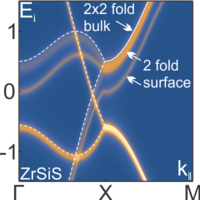
[Phys. Rev. X 7, 041073] Published Thu Dec 28, 2017
22 Dec 13:08
by Jeremy Hieulle, Eduard Carbonell-Sanromà, Manuel Vilas-Varela, Aran Garcia-Lekue, Enrique Guitián, Diego Peña and Jose Ignacio Pascual

Nano Letters
DOI: 10.1021/acs.nanolett.7b04309

22 Dec 12:56
by Albert Fert, Nicolas Reyren, Vincent Cros
Magnetic skyrmions are small swirling topological defects in the
magnetization texture stabilized by the protection due to their topology. In
most cases they are induced by chiral interactions between atomic spins
existing in non-centrosymmetric magnetic compounds or in thin films in which
inversion symmetry is broken by the presence of an interface. The skyrmions can
be extremely small with diameters in the nanometer range and, importantly, they
behave as particles that can be moved, created or annihilated, making them
suitable for abacus-type applications in information storage, logic or
neuro-inspired technologies. Up to the last years skyrmions were observed only
at low temperature (and in most cases under large applied fields) but important
efforts of research has been recently devoted to find thin film and
multilayered structures in which skyrmions are stabilized above room
temperature and manipulated by current. This article focuses on these recent
advances on the route to devices prototypes.
22 Dec 12:38
by Fabian Donat Natterer, Fabio Donati, François Patthey, Harald Brune
We use spin-polarized scanning tunneling microscopy to demonstrate that Ho
atoms on magnesium oxide exhibit a coercive field of more than 8 T and magnetic
bistability for many minutes, both at 35 K. The first spontaneous magnetization
reversal events are recorded at 45 K for which the metastable state relaxes in
an external field of 8 T. The transverse magnetic anisotropy energy is
estimated from magnetic field and bias voltage dependent switching rates at 4.3
K. Our measurements constrain the possible ground state of Ho single atom
magnets to either Jz = 7 or 8, both compatible with magnetic bistability at
fields larger than 10 mT.
20 Dec 17:03
by Weijiong Chen, Zijun Tian, Ping Li, Weidong Luo, and C. L. Gao
Author(s): Weijiong Chen, Zijun Tian, Ping Li, Weidong Luo, and C. L. Gao
FeSe, as the simplest Fe-based superconductor, invokes tremendous studies on its electronic and magnetic properties. Among these, inconsistent or even contradictory results are often seen in both theory and experiment, especially concerning the magnetism of FeSe. In this paper, the absence of static...
[Phys. Rev. B 96, 214426] Published Wed Dec 20, 2017
20 Dec 09:00
by Henning von Allwörden, Andreas Eich, Elze J. Knol, Jan Hermenau, Andreas Sonntag, Jan W. Gerritsen, Daniel Wegner, Alexander A. Khajetoorians
We describe the design and performance of a scanning tunneling microscope
(STM) which operates at a base temperature of 30 mK in a vector magnetic field.
The cryogenics is based on an ultra-high vacuum (UHV) top-loading wet dilution
refrigerator that contains a vector magnet allowing for fields up to 9 T
perpendicular and 4 T parallel to the sample. The STM is placed in a
multi-chamber UHV system, which allows in-situ preparation and exchange of
samples and tips. The entire system rests on a 150-ton concrete block suspended
by pneumatic isolators, which is housed in an acoustically isolated and
electromagnetically shielded laboratory optimized for extremely low noise
scanning probe measurements. We demonstrate the overall performance by
illustrating atomic resolution and quasiparticle interference imaging and
detail the vibrational noise of both the laboratory and microscope. We also
determine the electron temperature via measurement of the superconducting gap
of Re(0001) and illustrate magnetic field-dependent measurements of the spin
excitations of individual Fe atoms on Pt(111). Finally, we demonstrate spin
resolution by imaging the magnetic structure of the Fe double layer on W(110).
19 Dec 18:49
by Masato Niwata, Ryuichi Masutomi, and Tohru Okamoto
Author(s): Masato Niwata, Ryuichi Masutomi, and Tohru Okamoto
It is well known that external magnetic fields and magnetic moments of impurities both suppress superconductivity. Here, we demonstrate that their combined effect enhances the superconductivity of a few atomic layer thick Pb films grown on a cleaved GaAs(110) surface. A Ce-doped film, where supercon...
[Phys. Rev. Lett. 119, 257001] Published Mon Dec 18, 2017
19 Dec 16:50
by Yoji Horii, Shuhei Kishiue, Marko Damjanović, Keiichi Katoh, Brian Keith Breedlove, Markus Enders, Masahiro Yamashita
Abstract
A TbIII-phthalocyaninato double-decker ([1]0) single-molecule magnet (SMM) having four 15-crown-5 moieties in one of the ligands was synthesized, and its dimerization and magnetic properties were studied in an attempt to utilize the supramolecular aggregation for enhancing the SMM properties. Aggregation of [1]0 to form [12K4]4+ in the presence of K+ ions was studied by using UV/Vis-NIR absorption and NMR spectroscopies. For the magnetic measurements, [1]0 and [12K4]4+ were dispersed in poly(methyl methacrylate) (PMMA). UV/Vis-NIR absorption measurements on the PMMA dispersed samples were used to track the formation of [12K4]4+. Direct current (DC) magnetic susceptibility measurements revealed that there were ferromagnetic Tb–Tb interactions in [12K4]4+, whereas there was no indication of ferromagnetic interactions in [1]0. Upon the formation of [12K4]4+ from [1]0 and K+ ions, the temperature at which the magnetic hysteresis occurred increased from 7 to 15 K. In addition, the area of magnetic hysteresis became larger for [12K4]4+, meaning that SMM properties of [12K4]4+ are superior to those of [1]0. Alternating current (AC) magnetic measurements were used to confirm this observation. Magnetic relaxation times at 2 K increased 1000-fold upon dimerization of [1]0 to [12K4]4+, demonstrating the effectiveness of using K+ ions to induce dimer formation for the improvement of the SMM properties.

Paired SMMs are better than one! A TbIII-phthalocyaninato double-decker single-molecule magnet (SMM) having four 15-crown-5 moieties on one of the ligands was synthesized, and its dimerization and magnetic properties were studied in an attempt to utilize supramolecular aggregation for enhancing the SMM properties.
15 Dec 23:55
by Michael C. Chong, Nasima Afshar-Imani, Fabrice Scheurer, Claudia Cardoso, Andrea Ferretti, Deborah Prezzi and Guillaume Schull

Nano Letters
DOI: 10.1021/acs.nanolett.7b03797

14 Dec 11:36
by Aparajita Singha, Romana Baltic, Fabio Donati, Christian Wäckerlin, Jan Dreiser, Luca Persichetti, Sebastian Stepanow, Pietro Gambardella, Stefano Rusponi, and Harald Brune
Author(s): Aparajita Singha, Romana Baltic, Fabio Donati, Christian Wäckerlin, Jan Dreiser, Luca Persichetti, Sebastian Stepanow, Pietro Gambardella, Stefano Rusponi, and Harald Brune
We report x-ray absorption spectroscopy and x-ray magnetic circular dichroism measurements as well as multiplet calculations for Dy, Ho, Er, and Tm atoms adsorbed on Pt(111), Cu(111), Ag(100), and Ag(111). In the gas phase, all four elements are divalent and we label their 4f occupancy as 4fn. Upon ...
[Phys. Rev. B 96, 224418] Published Wed Dec 13, 2017
14 Dec 11:36
by Gerbold C. Ménard, Sébastien Guissart, Christophe Brun, Mircea Trif, François Debontridder, Raphël T. Leriche, Dominique Demaille, Dimitri Roditchev, Pascal Simon, Tristan Cren
Just like insulators can host topological Dirac states at their edges,
superconductors can also exhibit topological phases characterized by Majorana
edge states. Remarkable zero-energy states have been recently observed at the
two ends of proximity induced superconducting wires, and were interpreted as
localized Majorana end states in one-dimensional (1D) topological
superconductor. By contrast, propagating Majorana states should exist at the 1D
edges of two-dimensional (2D) topological superconductors. Here we report the
direct observation of dispersive in-gap states surrounding topological
superconducting domains made of a single atomic layer of Pb covering magnetic
islands of Co/Si(111). We interpret the observed continuous dispersion across
the superconducting gap in terms of a spatial topological transition
accompanied by a chiral edge mode and residual gaped helical edge states. Our
experimental approach enables the engineering and control of a large variety of
novel quantum phases. This opens new horizons in the field of quantum materials
and quantum electronics where the magnetization of the domains could be used as
a control parameter for the manipulation of topological states.
14 Dec 11:35
by J. A. Andrade, Alejandro M. Lobos
We theoretically consider a quantum magnetic impurity coupled to a
superconductor, and obtain the local density of states at the position of the
impurity taking into account the effect of spin-fluctuations and single-ion
magnetic anisotropy. We particularly focus on the spectrum of subgap
Yu-Shiba-Rusinov (YSR or Shiba) states induced by a quantum impurity with easy-
or hard-axis uniaxial anisotropy. Although this is a relevant experimental
situation in, e.g., magnetic adatoms on the surface of clean metals, it is
customary that theoretical descriptions assume a classical-spin approximation
which is not able to account for single-ion anisotropy and other quantum
effects. Here, quantum fluctuations of the spin are taken into account in the
equations of motion of the electronic Green's function in the weak-coupling
limit, and considerably modify the energy of the Shiba states compared to the
classical-spin approximation. Our results point towards the importance of
incorporating quantum fluctuations and anisotropy effects for the correct
interpretation of scanning tunneling microscopy (STM) experiments.
14 Dec 11:25
by A. Bermudez, X. Xu, R. Nigmatullin, J. O’Gorman, V. Negnevitsky, P. Schindler, T. Monz, U. G. Poschinger, C. Hempel, J. Home, F. Schmidt-Kaler, M. Biercuk, R. Blatt, S. Benjamin, and M. Müller
Author(s): A. Bermudez, X. Xu, R. Nigmatullin, J. O’Gorman, V. Negnevitsky, P. Schindler, T. Monz, U. G. Poschinger, C. Hempel, J. Home, F. Schmidt-Kaler, M. Biercuk, R. Blatt, S. Benjamin, and M. Müller
As small prototype quantum processors progress to large-scale, fault-tolerant computers, it is increasingly necessary to quantitatively assess the performance of quantum error correction. A new benchmark offers just such an assessment of trapped-ion quantum processors.
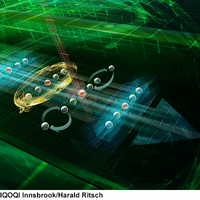
[Phys. Rev. X 7, 041061] Published Wed Dec 13, 2017
14 Dec 11:25
by Dominic V. Else, Paul Fendley, Jack Kemp, and Chetan Nayak
Author(s): Dominic V. Else, Paul Fendley, Jack Kemp, and Chetan Nayak
Topological materials hold much promise for quantum computers that are highly tolerant to errors, but the information can be corrupted by thermally excited quasiparticles. New numerical simulations show that in some materials, quantum information can be protected for much longer than expected.
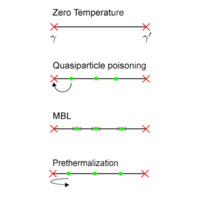
[Phys. Rev. X 7, 041062] Published Wed Dec 13, 2017


