14 Dec 11:26
by J. Fransson, D. Thonig, P. F. Bessarab, S. Bhattacharjee, J. Hellsvik, and L. Nordström
Author(s): J. Fransson, D. Thonig, P. F. Bessarab, S. Bhattacharjee, J. Hellsvik, and L. Nordström
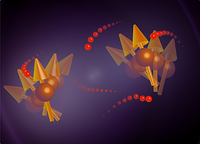
An ab initio framework for combined atomistic spin and lattice dynamics is introduced. The new approach comprises the descriptions of the damped driven oscillator for the ionic displacements as well as the spin dynamics according to Landau-Lifshitz-Gilbert theory. Both schemes are recovered in the limit of small spin-lattice coupling.
[Phys. Rev. Materials 1, 074404] Published Wed Dec 13, 2017
13 Dec 11:23
by Kai Yang, Yujeong Bae, William Paul, Fabian D. Natterer, Philip Willke, Jose L. Lado, Alejandro Ferrón, Taeyoung Choi, Joaquín Fernández-Rossier, Andreas J. Heinrich, Christopher P. Lutz
Quantum spin networks having engineered geometries and interactions are
eagerly pursued for quantum simulation and access to emergent quantum phenomena
such as spin liquids. Spin-1/2 centers are particularly desirable because they
readily manifest coherent quantum fluctuations. Here we introduce a
controllable spin-1/2 architecture consisting of titanium atoms on a magnesium
oxide surface. We tailor the spin interactions by atomic-precision positioning
using a scanning tunneling microscope (STM), and subsequently perform electron
spin resonance (ESR) on individual atoms to drive transitions into and out of
quantum eigenstates of the coupled-spin system. Interactions between the atoms
are mapped over a range of distances extending from highly anisotropic dipole
coupling, to strong exchange coupling. The local magnetic field of the magnetic
STM tip serves to precisely tune the superposition states of a pair of spins.
The precise control of the spin-spin interactions and ability to probe the
states of the coupled-spin network by addressing individual spins will enable
exploration of quantum many-body systems based on networks of spin-1/2 atoms on
surfaces.
13 Dec 11:21
by Steffen Rolf-Pissarczyk, Shichao Yan, Luigi Malavolti, Jacob A.J. Burgess, Gregory McMurtrie, Sebastian Loth
We present the appearance of negative differential resistance (NDR) in
spin-dependent electron transport through a few-atom spin-chain. A chain of
three antiferromagnetically coupled Fe atoms(Fe trimer) was positioned on a
Cu2N/Cu(100) surface and contacted with the spin-polarized tip of a scanning
tunneling microscope, thus coupling the Fe trimer to one non-magnetic and one
magnetic lead. Pronounced NDR appears at the low bias of 7 mV where inelastic
electron tunneling dynamically locks the atomic spin in a long-lived excited
state. This causes a rapid increase of the magnetoresistance between
spin-polarized tip and Fe trimer and quenches elastic tunneling. By varying the
coupling strength between tip and Fe trimer we find that in this transport
regime the dynamic locking of the Fe trimer competes with magnetic exchange
interaction, which statically forces the Fe trimer into the
high-magnetoresistance state and removes the NDR.
12 Dec 12:15
by Fang Yang, Jasmin Jandke, Tim Storbeck, Timofey Balashov, Anuva Aishwarya, and Wulf Wulfhekel
Author(s): Fang Yang, Jasmin Jandke, Tim Storbeck, Timofey Balashov, Anuva Aishwarya, and Wulf Wulfhekel
Islands of Bi showing (110)- and (111)-orientated facets were grown on a Nb(110) single crystal and were studied with a scanning tunneling microscope at low temperatures. On the (111) facets, several states localized at step edges are identified from maps of the local differential conductance. We fi...
[Phys. Rev. B 96, 235413] Published Mon Dec 11, 2017
08 Dec 18:54
by M. Tanveer, J. Dorantes-Dávila, and G. M. Pastor
Author(s): M. Tanveer, J. Dorantes-Dávila, and G. M. Pastor
First-principles electronic calculations show how the adsorption morphology, orbital magnetism, and magnetic anisotropy energy (MAE) of small CoN and FeN clusters (N≤3) on graphene (G) can be reversibly controlled under the action of an external electric field (EF). A variety of cluster-specific and...
[Phys. Rev. B 96, 224413] Published Fri Dec 08, 2017
05 Dec 08:31
by Xiao-Gang Wen
Author(s): Xiao-Gang Wen
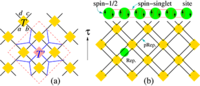
The subject of this Colloquium is related to the topic of the 2016 Physics Nobel Prize that was awarded to David J. Thouless, F. Duncan M. Haldane, and J. Michael Kosterlitz “for theoretical discoveries of topological phase transitions and topological phases of matter.” The Colloquium provides a pedagogical introduction to topological phases of matter from comprehensive point of view of many-body entanglement which is important in quantum physics.
[Rev. Mod. Phys. 89, 041004] Published Mon Dec 04, 2017
01 Dec 09:03
by Shawulienu Kezilebieke, Marc Dvorak, Teemu Ojanen, Peter Liljeroth
Magnetic impurities have a dramatic effect on superconductivity by breaking
the time-reversal symmetry and inducing so-called Yu-Shiba-Rusinov (YSR) low
energy bound states within the superconducting gap. The spatial extent of YSR
states is greatly enhanced in 2D systems, which should facilitate the formation
of coupled states. Here, we observe YSR states on single cobalt phthalocyanine
(CoPC) molecules on a 2D superconductor NbSe$_2$ using low-temperature scanning
tunneling microscopy (STM) and spectroscopy (STS). We use STM lateral
manipulation to create controlled CoPc dimers and demonstrate the formation of
coupled YSR states. The experimental results are corroborated by theoretical
analysis of the coupled states in lattice and continuum models. Our work forms
an important step towards the realization of exotic topological states in
designer magnetic lattices.
30 Nov 14:47
by Kai Yang, Yujeong Bae, William Paul, Fabian D. Natterer, Philip Willke, Jose L. Lado, Alejandro Ferrón, Taeyoung Choi, Joaquín Fernández-Rossier, Andreas J. Heinrich, and Christopher P. Lutz
Author(s): Kai Yang, Yujeong Bae, William Paul, Fabian D. Natterer, Philip Willke, Jose L. Lado, Alejandro Ferrón, Taeyoung Choi, Joaquín Fernández-Rossier, Andreas J. Heinrich, and Christopher P. Lutz
Quantum spin networks having engineered geometries and interactions are eagerly pursued for quantum simulation and access to emergent quantum phenomena such as spin liquids. Spin-1/2 centers are particularly desirable, because they readily manifest coherent quantum fluctuations. Here we introduce a ...
[Phys. Rev. Lett. 119, 227206] Published Wed Nov 29, 2017
28 Nov 08:09
by Thomas Knaak, Manuel Gruber, Sarah Puhl, Florian Benner, Alejandra Escribano, Jürgen Heck and Richard Berndt

The Journal of Physical Chemistry C
DOI: 10.1021/acs.jpcc.7b07302

27 Nov 18:09
by Seokhwan Choi, Hyoung Joon Choi, Jong Mok Ok, Yeonghoon Lee, Won-Jun Jang, Alex Taekyung Lee, Young Kuk, SungBin Lee, Andreas J. Heinrich, Sang-Wook Cheong, Yunkyu Bang, Steven Johnston, Jun Sung Kim, and Jhinhwan Lee
Author(s): Seokhwan Choi, Hyoung Joon Choi, Jong Mok Ok, Yeonghoon Lee, Won-Jun Jang, Alex Taekyung Lee, Young Kuk, SungBin Lee, Andreas J. Heinrich, Sang-Wook Cheong, Yunkyu Bang, Steven Johnston, Jun Sung Kim, and Jhinhwan Lee
A current of electrons with aligned spins can be used to modify magnetic order and superconductivity in an iron-based superconductor.

[Phys. Rev. Lett. 119, 227001] Published Mon Nov 27, 2017
23 Nov 09:32
by Alberto Brambilla, Andrea Picone, Dario Giannotti, Alberto Calloni, Giulia Berti, Gianlorenzo Bussetti, Simona Achilli, Guido Fratesi, Mario I. Trioni, Giovanni Vinai, Piero Torelli, Giancarlo Panaccione, Lamberto Duò, Marco Finazzi and Franco Ciccacci

Nano Letters
DOI: 10.1021/acs.nanolett.7b03314

22 Nov 16:13
by A. Chiesa, T. Guidi, S. Carretta, S. Ansbro, G. A. Timco, I. Vitorica-Yrezabal, E. Garlatti, G. Amoretti, R. E. P. Winpenny, and P. Santini
Author(s): A. Chiesa, T. Guidi, S. Carretta, S. Ansbro, G. A. Timco, I. Vitorica-Yrezabal, E. Garlatti, G. Amoretti, R. E. P. Winpenny, and P. Santini
Researchers characterize the spin couplings in the prototypical single-molecule magnet Mn12 using an advanced neutron scattering technique.

[Phys. Rev. Lett. 119, 217202] Published Wed Nov 22, 2017
22 Nov 13:09
by Gaël Reecht, Benjamin W Heinrich, Hervé Bulou, Fabrice Scheurer, Laurent Limot and Guillaume Schull
We present an improved way for imaging the density of states of a sample with a scanning tunneling
microscope, which consists in mapping the surface topography while keeping the differential
conductance (d I /d V ) constant. When archetypical C 60 molecules on Cu(111) are imaged with this
method, these so-called iso-d I /d V maps are in excellent agreement with theoretical simulations of
the isodensity contours of the molecular orbitals. A direct visualization and unambiguous
identification of superatomic C 60 orbitals and their hybridization is then possible.
22 Nov 10:03
by C. García-Fernández, Emil Sierda, Mikel Abadía, Bernhard Bugenhagen, Marc Heinrich Prosenc, Roland Wiesendanger, Maciej Bazarnik, José Enrique Ortega, Jens Brede, Eduard Matito and Andrés Arnau

The Journal of Physical Chemistry C
DOI: 10.1021/acs.jpcc.7b08668

21 Nov 07:12
by E. Frantzeskakis, S. V. Ramankutty, N. de Jong, Y. K. Huang, Y. Pan, A. Tytarenko, M. Radovic, N. C. Plumb, M. Shi, A. Varykhalov, A. de Visser, E. van Heumen, and M. S. Golden
Author(s): E. Frantzeskakis, S. V. Ramankutty, N. de Jong, Y. K. Huang, Y. Pan, A. Tytarenko, M. Radovic, N. C. Plumb, M. Shi, A. Varykhalov, A. de Visser, E. van Heumen, and M. S. Golden
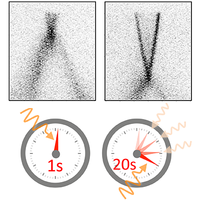
Electron spectroscopy and electron transport experiments are key techniques to probing the electronic structure of topological insulators, but results from these two methods disagree. A new analysis shows that the problem is inherent to ultraviolet light used in electron spectroscopy, and offers a solution.
[Phys. Rev. X 7, 041041] Published Mon Nov 20, 2017
17 Nov 17:50
by Peizhe Tang, Quan Zhou, and Shou-Cheng Zhang
Author(s): Peizhe Tang, Quan Zhou, and Shou-Cheng Zhang
Exotic massless fermionic excitations with nonzero Berry flux, other than the Dirac and Weyl fermions, could exist in condensed matter systems under the protection of crystalline symmetries, such as spin-1 excitations with threefold degeneracy and spin-3/2 Rarita-Schwinger-Weyl fermions. Herein, by ...
[Phys. Rev. Lett. 119, 206402] Published Fri Nov 17, 2017
17 Nov 13:09
by Jang, J., Yoo, H. M., Pfeiffer, L. N., West, K. W., Baldwin, K. W., Ashoori, R. C.
The single-particle spectral function measures the density of electronic states in a material as a function of both momentum and energy, providing central insights into strongly correlated electron phenomena. Here we demonstrate a high-resolution method for measuring the full momentum- and energy-resolved electronic spectral function of a two-dimensional (2D) electronic system embedded in a semiconductor. The technique remains operational in the presence of large externally applied magnetic fields and functions even for electronic systems with zero electrical conductivity or with zero electron density. Using the technique on a prototypical 2D system, a GaAs quantum well, we uncover signatures of many-body effects involving electron-phonon interactions, plasmons, polarons, and a phonon analog of the vacuum Rabi splitting in atomic systems.
10 Nov 07:28
by L. Cornils, A. Kamlapure, L. Zhou, S. Pradhan, A. A. Khajetoorians, J. Fransson, J. Wiebe, and R. Wiesendanger
Author(s): L. Cornils, A. Kamlapure, L. Zhou, S. Pradhan, A. A. Khajetoorians, J. Fransson, J. Wiebe, and R. Wiesendanger
Experimental evidence is presented for the spin polarization of Yu-Shiba-Rusinov states induced by the presence of a single magnetic atom on a superconductor.

[Phys. Rev. Lett. 119, 197002] Published Thu Nov 09, 2017
10 Nov 07:24
by Jeon, S., Xie, Y., Li, J., Wang, Z., Bernevig, B. A., Yazdani, A.
One-dimensional topological superconductors host Majorana zero modes (MZMs), the nonlocal property of which could be exploited for quantum computing applications. We use spin-polarized scanning tunneling microscopy to show that MZMs realized in self-assembled Fe chains on the surface of Pb have a spin polarization that exceeds that stemming from the magnetism of these chains. This feature, captured by our model calculations, is a direct consequence of the nonlocality of the Hilbert space of MZMs emerging from a topological band structure. Our study establishes spin-polarization measurements as a diagnostic tool to distinguish topological MZMs from trivial in-gap states of a superconductor.
10 Nov 07:21
by Vedran Jovic, Simon Moser, Søren Ulstrup, Dana Goodacre, Emmanouil Dimakis, Roland Koch, Georgios Katsoukis, Luca Moreschini, Sung-Kwan Mo, Chris Jozwiak, Aaron Bostwick, Eli Rotenberg, Theodore D. Moustakas and Kevin E. Smith

Nano Letters
DOI: 10.1021/acs.nanolett.7b02985

10 Nov 07:19
by Martina Corso, Eduard Carbonell-Sanromà, Dimas G. de Oteyza
Graphene nanoribbons (GNRs) make up an extremely interesting class of
materials. On the one hand GNRs share many of the superlative properties of
graphene, while on the other hand they display an exceptional degree of
tunability of their optoelectronic properties. The presence or absence of
correlated low-dimensional magnetism, or of a widely tunable band gap, is
determined by the boundary conditions imposed by the width, crystallographic
symmetry and edge structure of the nanoribbons. In combination with additional
controllable parame-ters like the presence of heteroatoms, tailored strain, or
the formation of hetero-structures, the possibilities to shape the electronic
properties of GNRs according to our needs are fantastic. However, to really
benefit from that tunability and harness the opportunities offered by GNRs,
atomic precision is strictly required in their synthesis. This can be achieved
through an on-surface synthesis approach, in which one lets appropriately
designed precursor molecules to react in a selective way that ends up forming
GNRs. In this chapter we review the structure-property relations inherent to
GNRs, the synthesis approach and the ways in which the var-ied properties of
the resulting ribbons have been probed, finalizing with selected examples of
demonstrated GNR applications.
06 Nov 18:49
by Chris J. Judd
Ullmann Coupling Reactions on Ag(111) and Ag(110); Substrate Influence on the Formation of Covalently Coupled Products and Intermediate Metal-Organic Structures
Ullmann Coupling Reactions on Ag(111) and Ag(110); Substrate Influence on the Formation of Covalently Coupled Products and Intermediate Metal-Organic Structures, Published online: 06 November 2017; doi:10.1038/s41598-017-13315-1

02 Nov 19:16
by Ayata, M., Fedoryshyn, Y., Heni, W., Baeuerle, B., Josten, A., Zahner, M., Koch, U., Salamin, Y., Hoessbacher, C., Haffner, C., Elder, D. L., Dalton, L. R., Leuthold, J.
Plasmonics provides a possible route to overcome both the speed limitations of electronics and the critical dimensions of photonics. We present an all-plasmonic 116–gigabits per second electro-optical modulator in which all the elements—the vertical grating couplers, splitters, polarization rotators, and active section with phase shifters—are included in a single metal layer. The device can be realized on any smooth substrate surface and operates with low energy consumption. Our results show that plasmonics is indeed a viable path to an ultracompact, highest-speed, and low-cost technology that might find many applications in a wide range of fields of sensing and communications because it is compatible with and can be placed on a wide variety of materials.
02 Nov 16:15
by C. Godfrin, A. Ferhat, R. Ballou, S. Klyatskaya, M. Ruben, W. Wernsdorfer, and F. Balestro
Author(s): C. Godfrin, A. Ferhat, R. Ballou, S. Klyatskaya, M. Ruben, W. Wernsdorfer, and F. Balestro
Grover’s algorithm, which finds an element in an unsorted list, has been implemented using a nuclear spin in a single-molecule magnet.

[Phys. Rev. Lett. 119, 187702] Published Thu Nov 02, 2017
02 Nov 14:45
Phys. Chem. Chem. Phys., 2017, Advance Article
DOI: 10.1039/C7CP06716J, Perspective
Masayuki Suda, Hiroshi M. Yamamoto
In this perspective, our recent progress in the development of novel SC organic FETs was reviewed, in which organic strongly correlated electron materials were utilised as channel materials.
To cite this article before page numbers are assigned, use the DOI form of citation above.
The content of this RSS Feed (c) The Royal Society of Chemistry

02 Nov 09:01
by Clément Godfrin, Abdelkarim Ferhat, Rafik Ballou, Svetlana Klyatskaya, Mario Ruben, Wolfgang Wernsdorfer, Franck Balestro
Quantum algorithms use the principles of quantum mechanics, as for example
quantum superposition, in order to solve particular problems outperforming
standard computation. They are developed for cryptography, searching,
optimisation, simulation and solving large systems of linear equations. Here,
we implement Grover's quantum algorithm, proposed to find an element in an
unsorted list, using a single nuclear 3/2-spin carried by a Single Molecular
Magnet (SMM) transistor. The coherent manipulation of this multi-level qudit is
achieved by means of electric fields only. Grover's search algorithm was
implemented by constructing a quantum database via a multi-level Hadamard gate.
The Grover sequence then allows us to select each state. The presented method
is of universal character and can be implemented in any multi-level quantum
system with non-equal spaced energy levels, opening the way to novel quantum
search algorithms.
02 Nov 08:58
by Naoya Kawakami, Chun-Liang Lin, Kazuaki Kawahara, Maki Kawai, Ryuichi Arafune, and Noriaki Takagi
Author(s): Naoya Kawakami, Chun-Liang Lin, Kazuaki Kawahara, Maki Kawai, Ryuichi Arafune, and Noriaki Takagi
We present the structural evolution of Bi on Au(111) from monolayer to multilayer regimes explored mainly by scanning tunneling microscopy. At the monolayer regime, Bi clusters distribute homogeneously to make an array with 5×5 periodicity. Further increase of the coverage converts these clusters to...
[Phys. Rev. B 96, 205402] Published Wed Nov 01, 2017
02 Nov 08:56
by Karen Michaeli, L. Aviad Landau, Eran Sela, and Liang Fu
Author(s): Karen Michaeli, L. Aviad Landau, Eran Sela, and Liang Fu
Majorana zero modes are localized zero-energy degrees of freedom in topological superconductors that can store quantum information in a protected manner. Finding a direct proof of the Majorana identity of zero-energy states has been a challenge. The authors show that, in a Coulomb blockaded superconductor island coupled to normal metal leads, Majorana zero modes on the island bind with electrons in the leads to form a charge-e boson, thereby converting the quantum statistics of charge carriers. This statistical transmutation leads to unusual temperature and voltage dependence of the tunneling current as a unique signature of the Majorana zero modes.

[Phys. Rev. B 96, 205403] Published Wed Nov 01, 2017
02 Nov 08:53
by K. Poppenhaeger
In an academic landscape where female physicists are still strongly
underrepresented, underlying causes like unconscious gender bias deserve
specific attention. Members of academia are often not aware of their intrinsic,
hence unconscious, biases; this can have negative effects on students and staff
at all career levels. At the Queen's University Belfast, I have developed and
conducted a workshop on unconscious gender bias awareness at the School of
Mathematics and Physics. The first installment of the workshop was attended by
63 members of the School, among them 26 academic staff (lecturer level and
above). Participants attended an informational talk followed by a discussion
session, and then took part in the Harvard Implicit Association Test for
association of gender with science. The participants self-reported their
results and their previous expectations, followed by a group discussion. Here I
present the observed magnitude of unconscious gender bias and summarise the
discussion points of the participants. The outcomes that bias can have on the
success of physics students as well as the careers of physicists in an academic
context will be highlighted. Putting the results into context, I discuss steps
forward to make physics a level playing field for all genders.
02 Nov 08:45
by Zejun Li, Yingcheng Zhao, Kejun Mu, Huan Shan, Yuqiao Guo, Jiajing Wu, Yueqi Su, Qiran Wu, Zhe Sun, Aidi Zhao, Xuefeng Cui, Changzheng Wu and Yi Xie

Journal of the American Chemical Society
DOI: 10.1021/jacs.7b10071


