Click here to go see the bonus panel!
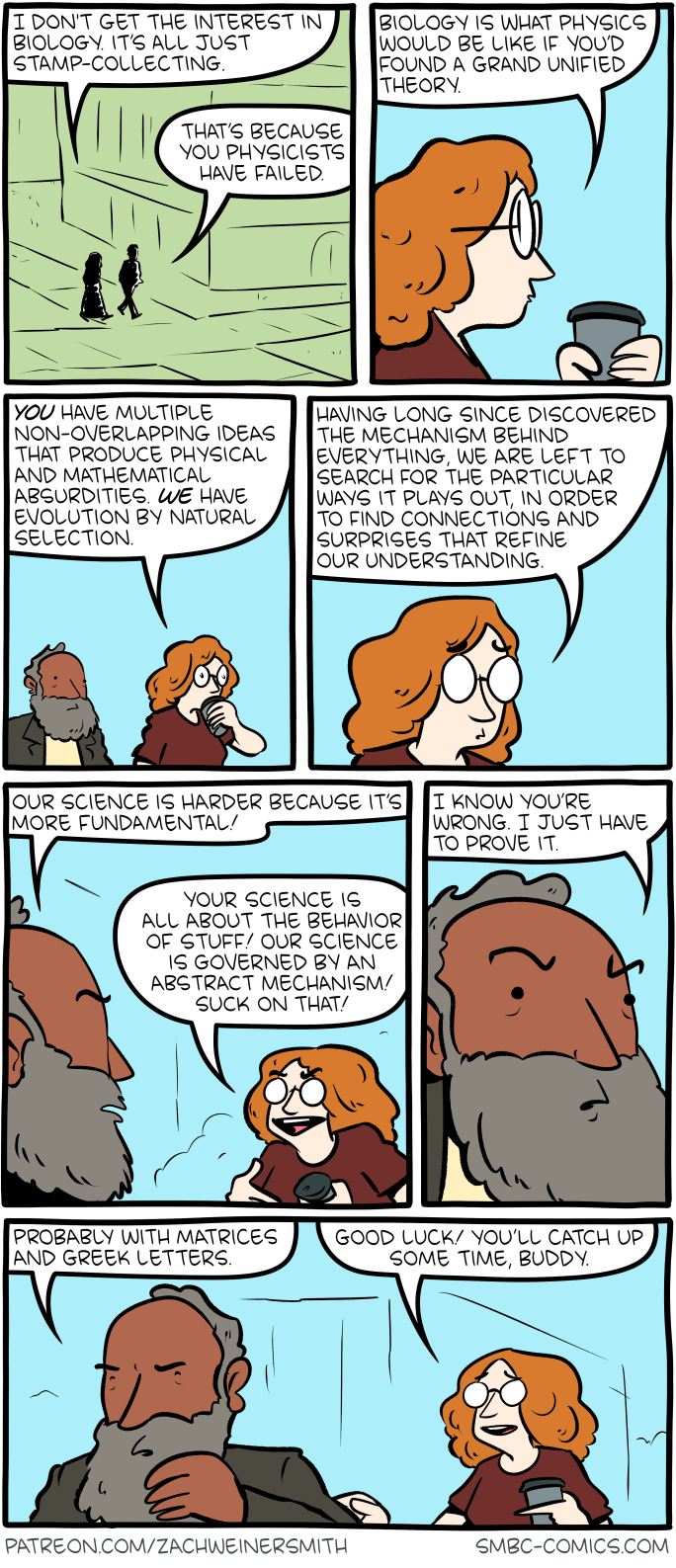
Hovertext:
10 points to anyone who tries this argument in real life.
Today's News:
Hovertext:
10 points to anyone who tries this argument in real life.
“By making any Member Content available through the Site or Services, you hereby grant to Academia.edu a worldwide, irrevocable, royalty-free, non-exclusive, transferable license to exercise any and all rights under copyright, in any medium… including the generation and hosting of Output and the use of AI to generate adaptations and other derivative works of Member Content.”
— Excerpt from the social platform Academia.edu’s terms of service.
Our AI has turned your book chapter about the ecology of the Southern Appalachian mountains into a five-minute podcast.
Our AI has turned your article about seahorse reproduction into a webcomic.
Our AI has turned your book chapter on pleromatic forms in gnostic cosmogony into a cute cat video.
Our AI has turned your dissertation on novel applications for multi-qubit nanoscale sensing into a catchy K-pop song.
Our AI has turned your article about Proust’s multiple ontologies of the self into a thirty-minute meal with only six ingredients.
Our AI has turned your thesis about oxygen evolution electrocatalysis into rage bait preloaded with one hundred racist and transphobic comments.
Our AI has turned your article about convex-constrained nonlinear functions into one simple trick to lose belly fat.
Our AI has turned your conference poster about nanofluid flow and thermal transfer into a fake endorsement by Selena Gomez.
Our AI has turned your article about post-IPO stocks and convertible bond prices into a hip-hop musical.
Our AI has turned your essay about mid-twentieth-century Brazilian sugar exports into an NIL deal for your university’s second-string quarterback.
Our AI has turned your white paper about the application of fiber optic sensors in tunnel construction into an unboxing video of your white paper… in a tunnel.
Our AI has turned your conference presentation about Sigenauk’s War of Independence into a makeup tutorial.
Our AI has turned your article on new treatments for dysentery in underserved rural communities into a romantasy novel.
Our AI has turned your article about a new species of salamander into a prestige drama starring Giancarlo Esposito.
Our AI has coated your critical review of Thomas Piketty’s Capital and Ideology in Dubai chocolate.
Our AI has converted your law review article about AI and copyright infringement into a pop-up ad for Academia.edu.
CHICAGO—Calling attention to the startling lack of tied-up cherry stems in the average diet, health experts from the American Medical Association warned Tuesday that Americans were not sensually eating enough fruit. “While it’s recommended that adults erotically suck on at least two pieces of fruit daily, many people are falling far short of that,” said Dr. Logan Toledano, emphasizing how essential it is for overall health and well-being to sumptuously lick a strawberry in a slow, circular motion before taking a big, wet bite. “Over the past 20 years, we’ve seen a marked decline in the amount of peach juice dripping down cleavage. While some might prefer to run their tongue up and down a melting ice cream cone or eat sushi off a bare stomach, there’s simply no replacement for moaning with tantalizing pleasure while eating grapes.” Toledano added that Americans could easily introduce more succulent fruit into their diet by deep-throating a banana.
The post Health Experts Warn Americans Not Sensually Eating Enough Fruit appeared first on The Onion.
LOS ANGELES—Leaning forward in his seat as a number of questions raced through his mind, Dwayne Johnson was reportedly intrigued Monday after learning there was a special trophy for good actors. “Huh, interesting—and you said they give them out every year?” asked Johnson, who frowned as he racked his brain in an attempt to recall if any of the orange blimps, WWE belts, or other assorted awards on display in his study had been given to him by the “academy” his dinner companions had mentioned. “So the statue is a man, but do you have to be a man to earn one? No? I see, I see. Well, how good of an actor do you have to be? Really good, or just good-good? Is there a certain movie you need to be in?” At press time, reports confirmed the veteran pro wrestler was even more confused after being told that sometimes an actor didn’t even need to be good to receive one.
The post Dwayne Johnson Intrigued After Learning About Special Trophy For Good Actors appeared first on The Onion.
The couple wed Saturday after realizing they could not, in fact, get the venue and vendor deposits back.
The post Mary Hill and Becca Cox appeared first on The Onion.
On Saturday, tech entrepreneur Siqi Chen released an open source plugin for Anthropic's Claude Code AI assistant that instructs the AI model to stop writing like an AI model. Called "Humanizer," the simple prompt plugin feeds Claude a list of 24 language and formatting patterns that Wikipedia editors have listed as chatbot giveaways. Chen published the plugin on GitHub, where it has picked up over 1,600 stars as of Monday.
"It's really handy that Wikipedia went and collated a detailed list of 'signs of AI writing,'" Chen wrote on X. "So much so that you can just tell your LLM to... not do that."
The source material is a guide from WikiProject AI Cleanup, a group of Wikipedia editors who have been hunting AI-generated articles since late 2023. French Wikipedia editor Ilyas Lebleu founded the project. The volunteers have tagged over 500 articles for review and, in August 2025, published a formal list of the patterns they kept seeing.
With a surprise to nobody, Kyle Cheney for Politico:
Two members of Elon Musk’s DOGE team working at the Social Security Administration were secretly in touch with an advocacy group seeking to “overturn election results in certain states,” and one signed an agreement that may have involved using Social Security data to match state voter rolls, the Justice Department revealed in newly disclosed court papers.
Elizabeth Shapiro, a top Justice Department official, said SSA referred both DOGE employees for potential violations of the Hatch Act, which bars government employees from using their official positions for political purposes.
Tags: DOGE, Politico, privacy, Social Security Administration
It’s five answers to five questions. Here we go…
1. Coworker keeps suggesting I should babysit his kids
I work in an office environment, somewhat casual, but we have absolutely no involvement with anything children-related. So I have no idea why a manager here seems to think that I would be interested in babysitting for him in the office or outside of work. For reference, I’m a mid-20s woman in a mostly male office.
The manager in question, Fergus, is above me in the hierarchy but not my boss (I report to two people above him). I’ve known for a while that he has two young children, and the nature of our jobs is either long hours, an odd schedule, or both. He has often made reference to his unhappiness with not being able to see his kids as often.
Back when we were peers, he made the occasional comment about getting me to babysit for him, despite the fact I’ve never met his children, have no desire to meet or babysit his children, and we made the exact same pay rate. Since he’s been promoted to his current job, I have seen him less due to schedule mismatches but every few weeks I still hear an occasional somewhat passive-aggressive comment about him bringing his children in and leaving them with me or me watching his kids after work. I haven’t heard ever he make a similar request to any of the other people in my job or to the other woman of similar age in the office.
How should I handle this? It’s not super frequent but it is grating when he does mention it. I do get along with my bosses, but I am not sure it is worthwhile to bring up to them. I could speak to Fergus about it but am not comfortable with the idea of engaging with him directly. And I’m not sure if it’s even worth it to bring up since it’s not an everyday occurrence.
It’s because you’re one of the few women, and he assumes all women are interested in and available for child care.
The next time he says something about having you watch his kids, say this in response: “I know you’re joking, but I’m not available to babysit and would rather you stop joking about it.” If you want to — or if the initial request to stop doesn’t work — feel free to also say, “It’s uncomfortable being one of the few women here and being the one to get babysitting comments. I’m sure you don’t mean it that way, but I’m asking you to stop.”
If he ever does bring his kids in and try to leave them with you, be ready to say on the spot (before he can get away), “I’m not able to watch them, don’t leave them here.”
2. My shifts are annoyingly short
I work in a call center and it’s casual work. But it’s casual in a really annoying way.
I get three- and four-hour shifts, every day. That means three hours of commuting for three hours work, on a bad day. People are leaving just because it’s not worth it. Why not give me seven hours work one day, then a day off?
When I mentioned this in a meeting, management just said “there’s an algorithm” and “the business needs you at some times and not others.” But when I finish my three-hour shift, I find myself leaving just as the guy next to me starts his four-hour shift. So there’s clearly seven hours of work to be done, right?
Another manager in that meeting said, “Hey, this job is not for everyone” as if it was submarine captain or battlefield medic. But it’s mostly helping elderly people change their passwords.
Do you think the company is deliberately giving us crumbs of work to keep us hanging on? I speculate sometimes that if they gave us whole days off, we would find it easier to apply for other jobs.
I don’t think they’re scheduling you that way to keep you from applying for other jobs (since you could do that during your half-days off — or at least you could if you didn’t have such a long commute). But I do think they’re scheduling you that way for other reasons that aren’t good — like that they want to avoid you being eligible for health insurance or other benefits, or keeping each person’s hours below a certain threshold means they don’t have to pay into specific state programs (or offer paid sick leave, in some states), or so forth.
Have you ever asked how it advantages the company to schedule people like this? Or explicitly asked for longer shifts? This company doesn’t sound particularly forthcoming so nothing useful may result from that, but both are worth asking.
3. Should I say I’m willing to take a salary below the advertised range?
This is my first time job-hunting since it became a requirement in many places to post the pay rates with job listings. Many places still have a spot for expected salary on their applications, though. With jobs that I’m confident I’m qualified for, I have no problem naming a figure in that range, but what about the ones that are a stretch? Some I would be happy to take even $10,000 below the lower end of the range, but is that helping my application to offer that or should I stick with the range? For reference, I’m being laid off from a nonprofit for financial reasons, and it’s mostly for profit jobs that I’m feeling this way about.
You should stick with the range they listed. Saying that you’ll take less than their range will look like you’re naively undervaluing your own skills, or aren’t qualified for the level the job is at, or didn’t pay enough attention to the ad. They’ve told you what the job is worth to them; assume they mean it and assess where you should fall in that range accordingly.
Also, the fact that you’re moving from nonprofit to for-profit is almost certainly playing a role here; you need to assess the value of the work you’d be doing within the market you’d be doing it in. The question isn’t, “How little pay would you accept in a vacuum?” It’s, “Knowing what you know about the market rate for this work within this industry and this geographic area, what salary will seem fair and worthwhile to you?” (And believe me, you would not be happy two years from now to realize that you’re making $10,000 less than coworkers doing the exact same work as you just because you used nonprofit salary scales to negotiate originally.)
4. Using family caregiving leave immediately before vacation
Last month, with the holidays approaching, I was planning to work remotely from my parents’ house Monday and Tuesday of one week while visiting them (this is allowed under company policy — up to six remote weeks a year from anywhere in the continental U.S.) and then take off the rest of the year for holidays. However, my mother is seriously ill and dying of cancer so I took off that Monday and Tuesday to care for her (this is also allowed under company policy and comes out of a different balance than vacation, which is why I could do that but not take vacation these two days.)
However, I am wondering about whether it is appropriate to use the two back-to-back — caregiving leave immediately prior to a vacation (and potentially immediately after depending on where we are in January). Is it appropriate under these particular circumstances, or is it bad optics since it seems like I’m extending my vacation? And if not, what should I do?
You are fine. People cobble together all sorts of arrangements during the holidays, but you’d be fine even if it hadn’t been the holidays. It’s not suspicious for care-giving to fall right before or after a vacation; in fact, it can make a lot of logical sense in situations like yours. The only way this would raise eyebrows in a reasonable company would be if you were someone who had a track record of unreliability and/or using your time off in ways that seemed obviously outside the spirit or letter of the law (like if you were someone who always seemed to need sick days to extend vacations you otherwise wouldn’t have had accrued time to take, or so forth). Assuming you are a reasonably conscientious person without a track record of shady PTO use, no one is likely to think twice about this.
I’m sorry about your mom!
5. Should I let someone launch a gas-flame-heated hot air balloon from our parking lot?
The company where I work is on the outskirts of town and has a large gravel parking lot and an empty lawn and forest behind that. If I am the only person in the building and someone knocks on the door and asks to launch a gas-flame-heated hot air balloon from our parking lot, should I let them? This is completely hypothetical, of course.
Absolutely you should.
The real answer is that no, you’re probably not authorized to take on that legal liability (and potential safety risk?) for your company and so you’d need to either say no or consult with whoever is. Whoever is will be delighted to get this question.
The post coworker wants me to babysit his kids, my shifts are way too short, and more appeared first on Ask a Manager.

Christmas comes early for Charlotte, she’s found her perfect problem person. And Christmas will come early for you too, dear reader, as due to a terrible accident of scheduling, the Solver Christmas story will run in the early summer. If I hadn’t done Savage Sword of Susan and two lots of NEMS, it would have neatly landed in December 2025. In my defence (and this may not be mitigation), I hadn’t started thinking about what was in it until about October last year. But keep a bit of tinsel handy for June.
The post Since I was born? appeared first on Bad Machinery.
I’m off for the holiday, so here’s an older post from the archives. This was originally published in 2021.
A reader writes:
My fiancé, “Ted,” has worked for 10 years on a small, very close-knit team, all of whom seem to get along exceptionally well. All the team members and spouses/partners socialize outside of work together as well, and we consider them all to be close friends. We thought they felt the same.
A few months ago, on the way to a work event, Ted and his coworker/best friend “Bob” were involved in a serious car accident and were rushed to the ER. Everyone waited anxiously for hours as they both underwent surgery. Thankfully, they both recovered.
When Ted returned to work, a team member, “Sally,” told him she had a confession to make. She said that while they had been in surgery, she prayed that if God had to let one of them die, she hoped it would be him. (WTF?!?)
Ted was shocked and asked why. He said she gushed on and on about what a “saint” Bob is. (Her examples were that Bob gives her great advice on her struggling marriage and has loaned her money when she was in a tight spot.) She finished by saying, “No disrespect to you, but Bob is in a class by himself. You have to admit you can’t measure up to that” and walked away.
Ted was truly devastated to learn that she felt this way, but he tried to attribute it to the stress of the situation and did his best to put it behind him. He never told anyone else on the team what she said and tried to continue on at work as if nothing had happened, but his relationship with Sally hasn’t recovered. He is still deeply wounded by her comments.
Although Ted appears to be a confident person, underneath he is fairly insecure. He truly thought Sally was a good friend. So in addition to causing him a lot of pain, this has also rattled his confidence. Now he’s wondering if all his team members secretly feel the way she does. Ted and Sally have always seemed to have a warm, cordial relationship and he can’t understand why she would say such a hurtful thing. Ted is now constantly measuring himself against Bob and questioning why he isn’t as “good.”
I suggested that perhaps Sally has a crush on Bob or feels closer to him for reasons that have nothing to do with Ted. But he is convinced that thinks she sees him as a “second tier” man and worries that others do too.
Our wedding is coming up soon and the venue strictly limits the number of guests. When it was time to send out invitations, Ted invited the rest of the team and their spouses but did not invite Sally and her husband. I expressed my concern that this would cause more problems, but he replied that since we could only have a limited numbers of guests, he’d prefer to spend our special day with another pair of close friends who “genuinely love and appreciate” us rather than a woman with whom his relationship is now severely strained.
Two weeks ago, I got a call from another team member, “Alice,” asking me if I had forgotten to send an invitation to Sally. I explained that because the venue is small, we simply couldn’t invite everyone.
Alice then told Ted that if we didn’t invite Sally, she and the other women on the team wouldn’t attend either. Ted told her that since the invitations have already gone out, there is no way to add Sally and her husband now unless we “uninvited” two other guests, which we can not do.
Now all the women on the team, including Sally, are freezing Ted out. They refuse to speak to him except when forced to, which is really starting to adversely impact the collaborative work the team does and hampering Ted’s ability to do his job. The men on the team have sided with Ted, saying they feel we have the right to invite (or not invite) whomever we want to our own wedding. This has caused an even further rift in the team.
Everyone is questioning Ted about why we didn’t invite Sally, but he doesn’t feel it’s his place to explain why he doesn’t want her to attend and just keeps repeating that the decision was due to the venue size limitations.
The manager of the team works at another site, and because the team has previously worked so well together, has historically been fairly hands-off, and is oblivious to what is happening now. But if the work continues to suffer, she’s going to notice and ask what’s going on.
What, if anything, should Ted do? Should he preemptively go to the manger to give her a heads/up, or will that make it even worse to be seen as “tattling”? Is there anything he can do to “fix” this on the team, before it erodes their work product even more?
I did weaken and called the venue, who grudgingly said they would be willing to accommodate one more couple. Should we break down and invite Sally to the wedding for the sake of harmony at work?
What a mess.
I completely understand why you wouldn’t want Sally at your wedding! She prayed your fiancé would die. Maybe not exactly … but pretty close to it. And then for some reason, she felt the need to tell him. Why?! She should have kept it to herself; there was no need to inform Ted and if she hadn’t, presumably life at work would have just gone on as before. So Sally sounds like a bit of a nut.
However.
I’m not a fan of pressuring people into wedding invitations, but you also can’t exclude one person from a tight-knit group and expect that not to send a message and cause drama. You’ve got to either invite the whole group, or invite fewer of them so you’re not leaving out just one person, or leave out the one person and accept that it’s going to be A Thing. You and Ted chose the latter option but are hoping it won’t cause drama, and that’s not realistic.
It’s especially not going to happen when no one knows why Ted is upset with Sally. From what they can see, they had a close, tight-knit group of work friends and now Ted has randomly and hurtfully decided to exclude one person for no reason.
I get that he’s trying to blame it on the venue size, but that doesn’t really work when you’ve excluded one person from a “tier” of wedding guests. It wouldn’t work if he had excluded one uncle or one niece, and it doesn’t work when you exclude one of a very close team of colleagues. People are going to read something into it and be hurt.
The drama that it’s causing is pretty excessive — coworkers freezing him out and refusing to speak to him except when forced, to the point that it’s affecting their work, is a weirdly intense reaction (as well as inappropriate and unprofessional). That’s likely a sign that the boundaries on this team were messed up before any of this happened, and that’s why the wedding invitations are functioning as a bomb rather than more like an exploding soda can.
And again, in theory you should be able to invite whoever you want to your wedding and exclude anyone you don’t want there. And you can! You just can’t do it without consequence, and that’s what you’re seeing now.
As for what to do, if Ted wants to stick to his decision, he’s probably better off just being matter-of-fact about why: “Normally we would have loved to have the whole group, but when Bob and I were in the hospital Sally told me she prayed for me to die if one of us had to. So we’re not asking her to celebrate our wedding with us.” Then at least people would have context. It will probably cause a different kind of drama, but if Ted can stay matter-of-fact about it (“it is what it is and we can still work together fine, but it didn’t make sense to ask her to be at the wedding”) it’s probably a better option than the drama of No One Knows Why Ted Did Such an Unkind Thing.
Frankly, it might also be an opportunity to clear the air with Sally. It sounds like she might have no idea why Ted didn’t invite her. He could sit down with her and say, “I’m sorry this has gotten so out-of-hand. I should have spoken to you earlier. I was really hurt by what you said to me after Bob’s and my accident. I’d thought we were close friends, and I haven’t been able to get past you telling me that you prayed I’d die if one of us had to. It’s why we didn’t ask you to be at our wedding, but I’m realizing that I should have talked with you about it earlier.”
It’s possible that conversation could move things to a much better place. Maybe Sally didn’t realize how her remark came across and maybe she’ll be mortified in hindsight. Maybe it’ll turn out she was addled by painkillers when they talked and this is the latest in her long and embarrassing list of discoveries of things she said that day. Maybe they’ll have the sort of conversation that will make Ted happy to extend a wedding invitation to her. Who knows. But looking at where things stand now, not talking to her about it seems like the worse option. And just giving in and inviting her without having that conversation first doesn’t seem likely to fix things at this point.
Read an update to this letter here.
The post a coworker prayed for my fiancé’s death so we didn’t invite her to our wedding … and now there is drama appeared first on Ask a Manager.
[Note that this article is a transcript of the video embedded above.]
September 2025 was an unusually bad month for runway overruns in the US. On the night of September 24th, an Embraer 145 with 53 people on board landed long at the Roanoke-Blacksburg Regional Airport in Virginia, overshooting the end of the runway. Just weeks earlier, on September 3rd, TWO similar incidents occurred on the SAME DAY, one a Gulfstream at Chicago Executive Airport and another a Bombardier at Boca Raton. In all three cases, the surface at the very end of the runway crushed under the weight of the planes’ tires. You look at the photos, and it looks like a mess, but these systems worked exactly as they were intended, preventing fatalities and serious injuries in all three cases.
We’ve all seen a runway before. At first glance, there’s not much to it: a strip of concrete or tarmac planted on the landscape with some extra markings and lights. It basically looks like a short section of highway. But if you look under the surface, there is a tremendous amount of engineering that makes these facilities entirely unique from anything else we build. I want to peel back the layers and show you what really goes into building a runway. I’m Grady, and this is Practical Engineering.
A fully loaded semi truck usually weighs on the order of 80,000 pounds (or 36 metric tonnes) and, depending on what state you’re in, legally maxes out at 60 to 80 miles per hour. Our highways are carefully engineered for vehicles in that weight and speed regime. Compare that to modern heavy jets that can weigh more than 500 tonnes or a million pounds, with takeoff and landing speeds around 180 miles per hour. Just like highways, the design decisions for runways - from length, to width, to shape, to materials and beyond - all have major implications on public safety. There is a long list of crashes and incidents that could have been avoided by better designs, and actually, a lot of the reasons we do things the way we do is because of lessons learned through previous tragedies. Maybe better than any other industry, the aviation world strives for continuous improvement through the understanding of past failures, and you can see evidence of that just about everywhere you look, including resources like SKYbrary.
The thing is, building a runway is an extremely costly endeavor. There’s practically no limit to the amount of money you can spend making one incrementally safer. So there’s always a balancing act between cost and capability. One of the most fundamental decisions that affects both sides is length. A longer runway can accommodate larger aircraft, but it can dramatically increase costs by requiring more land and more infrastructure. It can even affect the siting decisions, pushing an airport farther outside a city. It’s a pretty important choice. So important that FAA has a 40-page guidance document on length alone. Based on what you want to accomplish - whether it’s basic general aviation at a municipal field, air cargo, medevac, or serving as a backup to the Space Shuttle program - you first have to pick a critical aircraft: the one that requires the longest runway. But it’s more complicated than that, since takeoff and landing performance depends on a lot of factors. High temperatures and elevation reduce the density of the air, requiring more speed for the same amount of lift, which results in longer takeoff distances and landing rollouts. Slopes affect both takeoff and landing as well. Uphill takeoffs are harder because the engines have to fight gravity; downhill landings require stronger braking. The FAA says that for each percent of downhill slope, landing distance is increased by 10%. Manufacturers of aircraft can tell you the runway requirements for a specific make and model, or FAA has developed curves that can help you take these factors into account to decide a runway length.
When you’re driving on the highway, direction isn’t that important. Obviously, you have to get to where you’re going, but other than that, there aren’t many engineering requirements that change with the direction of the roadway. With runways, that’s not true. Whether taking off or landing, airplanes work best when facing directly into the wind. And in fact, they might not be able to land or take off at all under certain crosswind conditions. So the direction of a runway is a consequential decision. Prevailing winds vary a lot by location. In fact, one of my favorite types of diagrams, the wind rose, is specifically designed to show this at a glance. And if you look at enough wind roses, you’ll notice that, in some places, there’s not a prevailing wind direction at all. That’s why most large airports have perpendicular runways. Again, this is aircraft-dependent. Every airplane has its own crosswind limits. FAA generally expects runway orientation to provide about 95% wind coverage for the airport’s design aircraft, so in places without a strong prevailing wind direction, it takes a second runway to meet that target.
Length and direction are easy to notice, but there’s more to the geometry of a runway. In 2019, a Miami Air International Boeing 737 touched down in Jacksonville during heavy rain. The aircraft skidded off the runway and came to a stop in the St Johns River. 21 people were injured, but thankfully, nobody was killed. When the NTSB investigated the accident, one of the main contributors was that the runway was ungrooved. The water on the surface couldn’t squeeze out fast enough, instead building pressure in the contact patch between the tire and runway. It’s hydroplaning: the tires ride on the water instead of the ground, wiping out friction and directional control.
Just like in a car, planes need friction to stop. Larger jets have the benefit of aerobraking, using devices that reverse the thrust of the engines, but regular-old wheel brakes still do most of the work. And just like for cars, water makes that much more challenging, so there are a lot of engineering decisions that go into maintaining good friction on the runway surface. Like highways, most runways have a gentle crown at the centerline that drops off to the sides. This cross-slope helps shed rain and stops water from pooling on the surface. Larger airports install grooves in the runway surface that give water an escape path from beneath the tires, reducing the chance of hydroplaning in bad weather. And this isn’t just a one-time decision. Airports use friction-measurement equipment to monitor operational conditions. If the surface gets too polished from use or built-up rubber from the countless touchdowns, they have to clean the surface or even retexture with shot blasting to roughen it up.
Runways are a bit unusual because, when you think about it, they really have two very different jobs. Taking off and landing are pretty similar; one is essentially the reverse of the other. But in some ways, they’re entirely different. And so they drive the requirements for runway engineering in different ways. For example, it may feel like landing is the most dynamic moment in a flight, but it’s actually takeoff that usually governs runway length and strength. That’s mostly because of weight. A big part of the weight of a fully loaded airliner is fuel. An Airbus A380, the largest of commercial jets, has a max gross takeoff weight of over 550 metric tonnes. For a long-haul flight, nearly half of that weight can be in fuel. When an airplane touches down, even though the moment the wheels hit may feel impactful, the plane is much lighter. In fact, landings are so much less damaging to pavement than takeoffs that they usually don’t even count in load cycle tracking for the engineering design. It’s all about takeoffs, and to support those enormous loads, airport runways have some of the most heavily engineered pavement systems in the world.
This is something that you’ll almost never be able to see, but the amount of consideration and engineering below the surface is incredible. The FAA even has its own engineering software package, complete with a wonderful government acronym: the FAA Rigid and Flexible Iterative Elastic Layered Design or FAARFIELD. Just like highways, you basically have two choices for runway pavement materials. Rigid pavements generally use concrete. Flexible pavements use hot-mix asphalt. Their behavior and performance are pretty different, so the engineering is different too. Asphalt has a small but significant measure of give to it, which causes the effective width of aircraft tires to spread out in a cone underneath the surface into the deeper layers. This contrasts with rigid pavement, where a tire's effective width is its actual width.
Asphalt is a cheaper material, so it's used in the vast majority of paved airfields in the US. Concrete is stronger and stiffer, so most large-scale commercial airports use rigid surfaces. The tradeoff usually comes with volume. A rigid pavement has a longer design life, so the additional cost is offset by reduced maintenance and a longer interval before replacement. But in both cases, there’s a lot under the surface. It’s basically a layer cake of materials that all serve different functions.
Everything sits on the subgrade, which is the natural soil at the site. The quality of the subgrade really decides everything else. The soil strength, its potential for shrinkage and swelling, the depth of the frost line, and the depth of the water table will drive the design. If it’s really soft and mushy, the subgrade can be amended with sand, lime, cement, or geosynthetic materials.
Some pavements put a drainage layer on top of the subgrade. This is a permeable material, like gravel, that lets water get out of the system so it doesn’t soak the soils below, which might lead to softening and weakening over time. A runway is one place you don’t want a pothole.
Above that, many pavement systems (especially flexible ones) use a subbase. This is a layer of course material (sometimes even crushed up bits of an OLD runway). Practically, the sub-base adds thickness cheaply. Stress from wheel loads drops quickly with depth, so a layer of material that doesn’t have tight engineering specifications can accomplish the depth without driving up the cost too much. Plus, the subbase serves as a working platform so you’re not mucking up the subgrade with heavy equipment during construction.
Then comes the base course. This is the structural workhorse of a pavement system. It’s usually a mixture of high-quality crushed and uncrushed aggregates, specifically designed to lock together when compacted into a high-strength support. The goal is to distribute the point forces of wheel loads into the layers below. Lower stress mean less movement, which results in less cracking of the surface layer and a smoother ride over time.
On top of all that is the surface course that provides the friction and texture. Concrete pavements distribute forces, so they don’t require quite as much engineering underneath. For asphalt, friction is essentially its only purpose. The layers below do the heavy lifting. And if the surface course degrades, you can often mill it and overlay it with new material without having to rebuild the entire system below.
Separating the pavement into all these layers is about finding the right balance between performance, cost, and constructability. You could just build a 10-foot-thick layer of concrete and be done with it, but eventually those costs flow to the airline tickets, and no one would be happy to pay for that!
Since runways are essentially a connection to the sky, there are some quirks in their engineering to account for that too. One is the use of displaced thresholds. Sometimes, surrounding obstacles don’t allow for a gentle glide slope to the end of a runway. You don’t want airplanes diving steeply into a landing, so instead, we displace the touchdown point farther down the runway, while still allowing takeoffs to use the full length. Takeoff lengths are usually longer than landing lengths anyway, so this is a compromise worth making to take the best advantage of the surrounding airspace.
You can only displace a threshold so much, though. Sometimes design choices and sacrifices are made to accommodate unavoidable restrictions caused by nearby terrain or buildings. Airports have to exist in the broader context of developed areas. So, airport designers and managers have to ensure that imaginary zones called “obstruction surfaces” are free of buildings, trees, towers, and anything else you don’t want to get hit by a plane. These imaginary surfaces extend farther than you might think into the air space, providing safe approach and departure paths with comfortable margins of safety. Airports don’t usually have land-use authority, though, so keeping the airspace free from obstructions is a collaborative, and occasionally contentious, process between regulators, cities, landowners, and developers.
There are also areas of pavement at the ends of runways that aren’t intended to have planes on them at all. For example, larger runways include blast pads. This is one of my favorite elements of runway engineering. The powerful wakes produced by jet engines pick up grit and scour away the land behind them. If this is just loose soil or grass, the endless parade of planes will eventually dig a huge hole at the back of the runway! I’ve spent a lot of time working with concrete structures meant to curb erosion from flowing water, but there just aren’t that many pieces of infrastructure that are purpose-built to mitigate aerodynamic erosion. Blast pads can’t carry the weight of a jetliner, so they’re painted with yellow chevrons to tell pilots ‘stay off!’
Even when a runway is long enough to accommodate the air traffic it sees on a regular basis, accidents happen, and sometimes airplanes overshoot the end of the runway on takeoff or landing. Runways are required to have a certain amount of space beyond the pavement on all sides, called runway safety areas or RSAs. Like the clear zones along highways, RSAs provide an airplane with room to safely come to a stop without obstacles. There are some instances where space is tight, though. Urban infrastructure, a body of water, or other stuff can get in the way, making it less feasible to maintain so much open space around a runway. Luckily, there’s another option: Engineered Materials Arresting Systems, or EMAS.
These systems are manufactured from crushable material like lightweight concrete or foamed glass. In an emergency situation, they can dissipate a plane’s kinetic energy, quickly slowing it down so it doesn’t crash into whatever lies beyond. EMAS saved the day in all three major overrun incidents in September 2025. You can see just how effective it is in this footage from the September incident in Boca Raton. It’s like a much more sophisticated and carefully engineered runaway truck ramp for airplanes.
There’s so much more going on in the engineering and design of runways than I can possibly cover in one video. I’ve tried to focus on the hidden stuff: construction techniques and requirements that you don’t really notice when you’re a passenger looking through the window and may not even be familiar with as a pilot. I really love knowing how much goes into that stuff that most of us never have to think about. It makes me feel safer as a passenger. It’s a reminder that smooth and boring is usually the goal, and it takes a lot of work to keep it that way.
TORONTO – Citing an exhaustive battery of treatment, dermatologist Dr. Barbara Sanders has officially terminated all care of your profoundly and irredeemably stupid face. When Dr. Sanders first saw your face, she tried traditional methods of gentle cleansers, dietary changes, and doxycycline. As time went on, she tried more experimental methods, while her medical support […]
The post Dermatologist gives up on your stupid face appeared first on The Beaverton.
DAVOS, SWITZERLAND – Following a headline-making address about middle powers of the world uniting against hegemonic power, an amped up Mark Carney returned to the stage for a fiery encore speech about maximizing tax free savings accounts. “TFSAs offer the flexibility to save for many goals in one account! Throw ya hands in the air!” […]
The post Emboldened Mark Carney delivers encore WEF speech about TFSA planning appeared first on The Beaverton.
A reader writes:
Twice in the past year, I’ve been asked to provide a reference for a former report, “Enid.” I hired Enid in mid-2019 and she reported to me until mid-2021 when my role changed. I think she left the organization at the end of 2022. She was an incredible employee: shining in the position and tapped on the shoulder for extra projects that highlighted her skills. Absolute pleasure to work with in every way.
In February 2024, Enid asked if I could be a reference for her, and I was happy to oblige. I did so, provided a positive reference, and let her know afterwards. We’ve not had contact since.
Just last month, I received a voicemail saying that Enid has listed me as a reference, and could we arrange a time to talk. Different organization, different position. This one had an added layer of security questions, as well as standard interview questions. As Enid was a great employee, I was happy to oblige, but … she never asked me about this. I’ve had zero contact with her since she asked for the reference in 2024 and I confirmed it had happened. This new reference had a very high security clearance attached to it, and one of the first comments the interviewer made was to please keep this confidential from Enid. I should have asked if it was the content or the entire discussion, but I am erring on the side of caution and not reaching out to her at all. I did not tell them that she had not contacted me about this; they may have been able to read between the lines, however (“I am on medical leave, so I don’t have access to specific dates …” “I haven’t connected with Enid very recently …” “My leave started before Enid left so I don’t know her exact reason for leaving …”).
So, now to my questions.
• Am I wrong to expect a courtesy heads-up before being used as a potential reference for each round of job applications? Enid has shared my personal phone and email, as I am on medical leave — I told her this in February 2024. My medical situation could have worsened in the interim and made it impossible for me to provide a reference now. However, ignoring that, I am still a little put out that I had no warning.
• Just to sound incredibly old, “in my day” we would have sent a quick thank-you after somebody told us “I gave you a positive reference” and I was mildly put out when Enid didn’t do that in February 2024. Do I need to update my etiquette expectations to this century?
• Is it appropriate to reach out to Enid about this? And if so, how should I word it, considering how infrequently this occurs, and that the most recent occurrence was confidential for security reasons? She was an amazing employee and I will always be able to give that reference positively, but to me this gap in alerting me to the possibility of somebody reaching out feels like a misstep she should know about.
It’s happened a few times over the years where I’ve been used as a reference without being asked. It surprises me each time, and I guess I would appreciate some general guidance around if it’s ever appropriate to bring that fact to the attention of the caller. If it matches the working patterns of the individual, I have less qualms mentioning it.
Yes, ideally people would give you a heads-up when they’re offering you as a reference — but there are reference checks that go outside of the list provided by the candidate and contact previous managers whether they were suggested as an “official” reference or not. That’s especially true of jobs with a heavy security clearance component. So first and foremost, Enid may not have had any idea that this job was going to contact you, and you should not penalize her for it. If she was amazing employee, you should give her an amazing reference and be happy to do it, end of story.
It’s also true that people do sometimes offer references without alerting the reference that it’s coming … and honestly, that’s not something to hold against them either! It’s in the candidate’s best interests to alert you — so they know you’re available, and so you have time to organize and refresh your thoughts and don’t sound confused or taken off-guard when you get the call — but that doesn’t mean that they’re wronging you if they don’t do it. It is considered a professional nicety to give references a heads-up — but many people job-search so infrequently or don’t go delving deeply into job-search advice that they don’t even realize that’s expected. Or they think that the initial “yes, of course you can put my name down” covers them permanently. The convention that it’s best to alert references on every fresh round of job-searching is just a convention, and it’s not one everyone is aware of. So it’s a really mild faux pas at most, not a significant misstep.
If you prefer that people handle it differently, you can of course tell them that! It’s fine to say, “By the way, I wasn’t expecting the call — I’m always happy to give you a reference, but I can do a better job if you let me know if might be coming so I have time to organize my thoughts.” (You can’t say that in this case because you were asked to keep the reference check confidential — although frankly you may or may not truly be bound by that — but you can say it generally.)
And yes, Enid should have thanked you for the earlier positive reference — it’s smart for her to do that just from a basic relationship maintenance perspective — but I don’t think that’s a huge misstep either. It’s a social/business nicety that she skipped — but ultimately, she was an excellent employee and part of your job as the manager of an excellent employee is to continue to attest to that even if she forgets to thank you.
I think something that’s muddling your thinking here is that you’re conflating “things that are smart for a candidate to do” with “things that a candidate must do.” It’s smart for Enid to check in with you before listing you as a reference, and it’s smart for her to thank you when you tell her you gave her a glowing reference (because relationship maintenance with people who give her glowing references is beneficial to her) … but her not doing those things just means she’s skipping some relatively minor stuff that would be in her best interests, not that she’s slighting you in any way.
The post am I wrong to be put off that my former employee didn’t tell me she was listing me as a reference? appeared first on Ask a Manager.

A secret laboratory that makes bowling pins.
LONDON—Determined to get to the bottom of the highly publicized estrangement, fashion designer Victoria Beckham reportedly took to Reddit Tuesday to anonymously ask for someone to explain the Beckham family feud to her. “Sorry, I’m feeling kind of out of the loop here, could someone explain what’s going on with the son?” the 51-year-old Beckham wrote in a thread on the r/popculturechat forum, refreshing the page as she waited for another user to help fill her in on the details. “If you ask me, it kind of just seems like the son Brooklyn is acting like a spoiled brat, but am I wrong? Is there part of the drama I missed? And what’s up with his wife? Nichola? Nikola? Is she famous or something, because I really don’t get her deal at all.” At press time, sources confirmed Beckham was no closer to understanding the family feud.
The post Victoria Beckham Asks Reddit To Explain Beckham Family Feud To Her appeared first on The Onion.
WASHINGTON—Expressing deep fondness for those long-gone halcyon days, the U.S. population collectively yearned Tuesday for the relative calm of the “president is a giant pedophile” news cycle. “It was a simpler time then, back when all people wanted to talk about was the leader of the country molesting underage girls,” said Denver resident Scott Munoz, one of millions of Americans who noted the comparative peacefulness of the public discourse that surrounded Donald Trump possibly using his friendship with the late sex trafficker Jeffrey Epstein to prey on helpless minors and contrasted it with the current tumult marked by the president undermining global alliances in pursuit of Greenland, unlawfully capturing Venezuelan President Nicolás Maduro, and encouraging the violence of ICE agents. “I’m not saying everything was perfect when all the country cared about was the commander-in-chief groping prepubescent girls, but nowadays it’s almost quaint to think that we were once so concerned that the president had signed an incriminating letter about secretly being attracted to children, and that his signature was intended to double as the pubes on a lewd drawing. Lately, when I hear about ICE murdering people in the streets, I know I shouldn’t have taken that time for granted.” Munoz added that if he had to choose an island, he would choose Pedophile over Greenland any day.
The post Nation Yearns For Relative Calm Of ‘President A Giant Pedophile’ News Cycle appeared first on The Onion.
Ynyshir, a Welsh restaurant with two Michelin stars, has been given a one star hygiene rating by food standards inspectors, with the chef responding to the score by claiming he has “the highest standards in the world.” What do you think?

“That’s why I only eat at restaurants with three Michelin stars.”
Katherine Bontemps, Microwave Chef

“Hygiene is just as subjective as taste.”
Blake Orr, Systems Analyst

“If people can drop $650 on a dining experience, they can definitely pay for an ER visit.”
Otto Holman, Nautical Consultant
The post Two-Star Michelin Restaurant Given One-Star Hygiene Rating appeared first on The Onion.
WASHINGTON, D.C. – With President Trump sharing an image of Canada, Venezuela, and Greenland as captured U.S. territory, journalists are starting to ask follow up questions about his large, ominous box on which “Plans to Take Over the World” had been written in sharpie. The curious box appeared sometime overnight, along with a new map […]
The post Trump tells everyone not to worry about his large box labeled “Plans to Take Over the World” appeared first on The Beaverton.
“As support for abolishing ICE grows among Democratic voters, party leadership continues to argue for reform instead.” —Salon
When word reached King’s Landing that the dead were stirring beyond the Wall, the brave Democrats of the Seven Kingdoms sent a delegation north. They did not bring dragonglass, nor men for the Night’s Watch, nor coin to repair the Wall where it wept with meltwater. They brought parchment marked with sternly written words.
The Lord Commander thanked them while a savage wind cut through his heavy cloak and the dead moaned incessantly down below. The letters expressed concern about the White Walkers, but urged restraint. They reminded the Wildlings, should they be listening, that their murderous behavior did not represent who the Realm was. The delegation stayed long enough to be seen shivering as they glanced briefly northward, then rode south, satisfied that the issue had been thoroughly acknowledged.
As the dead marched inexorably south, nearly 90 percent of the Realm insisted on calling them monsters, abominations, and evil incarnate. The Democrats of the Seven Kingdoms cautioned against such language.
They proposed referring to the White Walkers as “nontraditional state actors” and urged all to consider how such incendiary labels might escalate tensions.
Deep in the Riverlands, smallfolk had begun to vanish. Some were taken by raiders, some by famine, some by dark creatures in the dead of night that no one dared name aloud. The Democrats of the Seven Kingdoms arrived with colorful tents and an ancient octogenarian septon to advise them, and asked the people to speak freely.
The people did. They spoke of burned fields and stolen children and soldiers who took innocence first and paid for their crimes never. One man said his wife had been dragged into the river at dusk and came back wrong. A woman said the gods had turned their faces away.
The Democrats nodded gravely while promising nothing concrete, as was their way. A framework for a peace plan was developed. Later, in a warm hall with wine, crisp capons, and steaming boar that fell easily from the bone, the Democrats agreed the suffering was real, but the language around it needed softening.
Many in Westeros demanded that the Free Folk beyond the Wall be welcomed south, if only to swell the ranks against greater threats. A small minority warned that this would upset affluent bannermen with deep coffers, who disliked the look of their shaggy, unkempt beards.
The Democrats of the Seven Kingdoms proposed a compromise: The Free Folk could be acknowledged as people, in principle, while remaining north of the Wall, in practice.
A meeting was convened between a flesh-hungry wight and a Stark of Winterfell, the kingdom most at risk of the Night King’s wrath.
Maesters were appointed to moderate. Debate rules were read aloud. Each side was encouraged to share their essential truths. By the end of the discussion, there was very little of the Stark left.
Afterward, the Democrats of the Seven Kingdoms celebrated the robust exchange of ideas.
Seeking unity, the Democrats of the Seven Kingdoms sailed west to reason with the Ironborn, who were actively raiding the coast. They brought proposals of mutual respect, economic incentives, and a shared vision of peace.
The Ironborn took their ships, their silver, and several delegates. Later, the Democrats who lived praised the “frank dialogue” and vowed to continue civic engagement.
As the snows deepened and the dead marched on King’s Landing, the Democrats of the Seven Kingdoms issued one final statement. It acknowledged the living’s fears in the face of absolute evil, yet urged them not to overreact.
Somewhere on the Kingsroad, a hedge knight and his young squire used the note to create a fire that fought the creeping cold and kept them alive till morning.
It was not much—nearly nothing, in fact—but the meager warmth it afforded was still slightly more than anything proposed by the Democrats of the Seven Kingdoms. The donors were happy, however, and that’s really all one could ask for these days.
“In a text message over the weekend, President Trump told Jonas Gahr Store, Norway’s prime minister, that since being denied the Nobel Peace Prize, he no longer felt obliged to ‘think purely of Peace.’” — New York Times
Mayor McCheese,
Sad to write this, very sad, but after what happened with the McDonald’s Monopoly game (TOTAL ROBBERY! Everyone knows I should have won), I no longer feel bound by the outdated, very weak concept of “lovin’ it.” Peace is still on the table, always has been, I INVENTED peace, but now I’m allowed to think about what’s good, what’s strong, and what’s DELICIOUS for the United States of America.
And what’s good is McDonaldland.
People are asking, many people, strong people with great cholesterol: “Why doesn’t Trump own McDonaldland already?” I ask the same question. You, Mayor, are doing a very poor job of protecting it. I look at McDonaldland, and what do I see? Wide open spaces. Soft borders. Playgrounds. Slides. Grimace just standing around. Is he even a legal resident? Have you checked his birth certificate? You think the Burger King isn’t looking at that? You think that low-IQ nasty girl Wendy doesn’t see a land full of fry grease reserves and say, “Wow, that definitely should be ours”? Believe me, they’re looking. They’re ALWAYS looking.
And why do you even have the right to own McDonaldland? No one can explain it. There are no documents. Just a story about a clown who showed up decades ago in a little car. A car, Mayor. We had cars too. Better cars. Tremendous cars. The biggest cars in the world that eat up the most gas. So that argument is OVER.
Let’s be honest: You can’t protect McDonaldland. You don’t have the military power. You don’t have the fry power. You don’t even have a real air force, just that weird bird lady who promotes Sausage McMuffins. Sad! McDonaldland is not safe unless we have Complete and Total Control. People say, “Donald, this is ridiculous.” Same people said that when I said that I’d win and Make America Great Again. Same people said that when I said that Grimace helped get his “Uncle” O’Grimacey into McDonaldland on a falsified family visa. Have you seen O’Grimacey around lately? Think about that.
Some people are saying this is about fries. It’s not just fries. It’s also about the Big Macs. And about security. It’s about strength. It’s about making sure hostile actors don’t weaponize the milkshake machine, which leftist terrorists have already used in the past against brave American patriots who now have permanent brain damage!
Here’s the very fair deal: You sell McDonaldland to me, to the United States, and we make it incredible. The golden arches will be made from actual gold! Or you keep pretending you’re in charge while foreign powers circle your fries like seagulls. I don’t want to do this the hard way. But I will if I have to. Very politely, but also very manly and sanely.
Thank you for your attention to this matter.
— President DJT
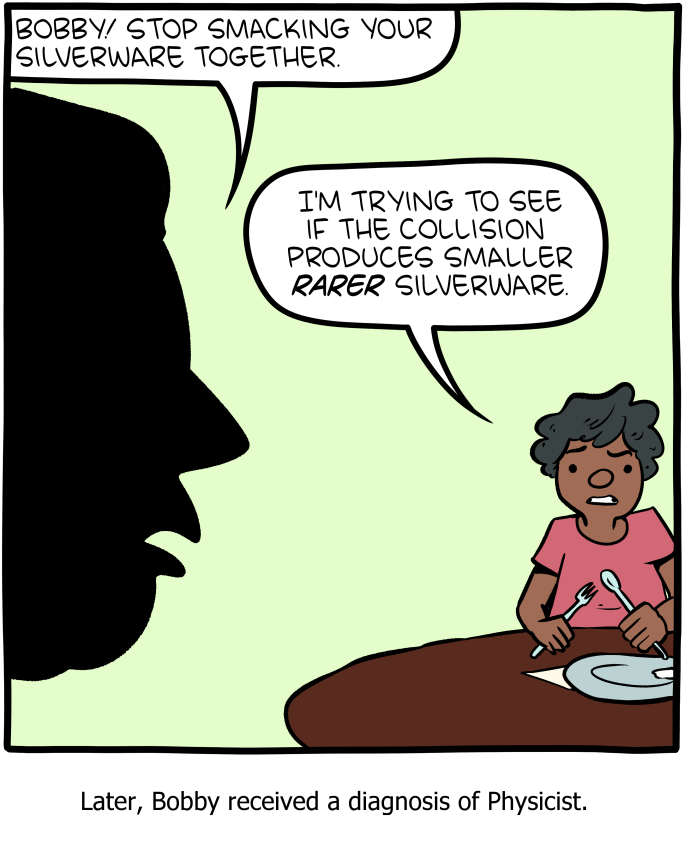
Hovertext:
It works when you bang humans together the right way!

 ALT
ALT