Ransomware is known to have serious consequences, but one of the latest attacks might have been fatal. BBC News reports (via MIT Technology Review) that prosecutors in Cologne, Germany have launched a negligent homicide investigation after a Düsseldorf University Hospital patient died following a ransomware incident. The attack hampered emergency services on September 9th, forcing healthcare workers to send the patient to a hospital 19 miles away for vital treatment.
Local media claim the hackers were targeting a different university and didn’t mean to compromise the hospital. They reportedly provided the ransomware decryption key for free once they realized their mistake.
Whatever the intentions, this may have been an avoidable breach. The intruders exploited a known security flaw in Citrix’s VPN software, and Germany’s cybersecurity authority said it warned of the vulnerability in January. It’s nothing new for institutions to fall short on security, but this misstep appears to have been deadly.
If the investigation establishes a connection, it could be one of the first deaths directly linked to a cyberattack, according to former UK security executive Ciaran Martin. If so, the loss might spur hospitals and other critical facilities to tighten security and prevent future tragedies.
The Maine Republican says, "The decision on a lifetime appointment to the Supreme Court should be made by the President who is elected on November 3rd."
(Image credit: Greg Nash/The Hill/Bloomberg via Getty Images)
NPR's Nina Totenberg first encountered law professor Ruth Bader Ginsburg in 1971. They became close friends after Ginsburg moved to Washington to serve on the federal appeals court.
In the 12 hours from 9 p.m. Friday to 9 a.m. Saturday, Democratic candidates and causes raised tens of millions of dollars on the ActBlue fundraising platform and the donations continue rolling in.
(Image credit: Boston Globe/Boston Globe via Getty Images)
Good Saturday morning! We’ll be with you here all weekend on Space City Weather to track the progress of Tropical Storm Beta, and its effects on Houston, Texas, and Louisiana. Broadly speaking our forecast has not changed a whole lot. For now, on our Flood Scale, we are still calling for a Stage 2 flood for areas south of Interstate 10, and a Stage 1 flood for areas north of Interstate 10.
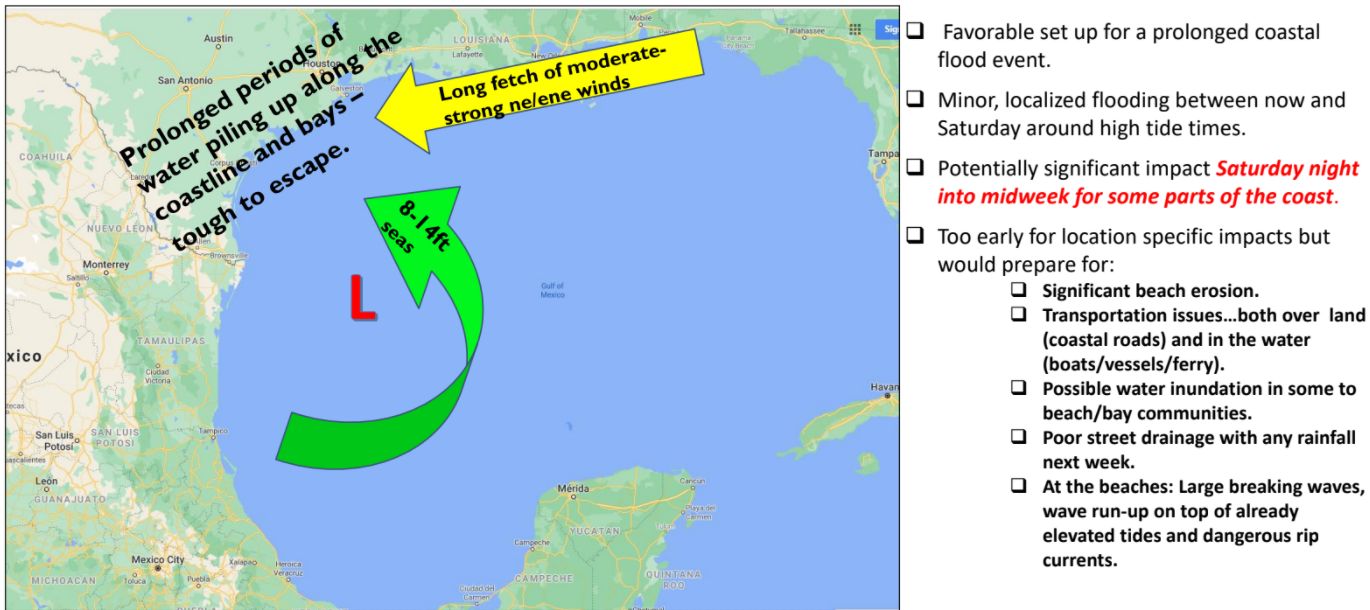
With this system we are most concerned about the potential for heavy rainfall next week, and then rising seas along the coast due to a prolonged period of winds from the east-northeast. Probably the most important thing we can tell you this morning is that there is still a lot of uncertainty in the track forecast for Beta, and where the storm’s heaviest rains will fall. We suspect this storm will have some surprises in store.
Track
As anticipated, Tropical Storm Beta has moved north overnight, and now lies nearly 300 miles due east of the mouth of the Rio Grande River. Pretty soon we expect the storm will run into a ridge of high pressure and take a westward turn, gradually moving toward Texas. We are reasonably confident that the storm will then approach the Texas coast somewhere between Corpus Christi and Matagorda Bay on Monday, potentially as a strong tropical storm or a Category 1 hurricane. Through Monday this track should keep most of the heaviest rainfall just along, or off the coast. So far, so good.
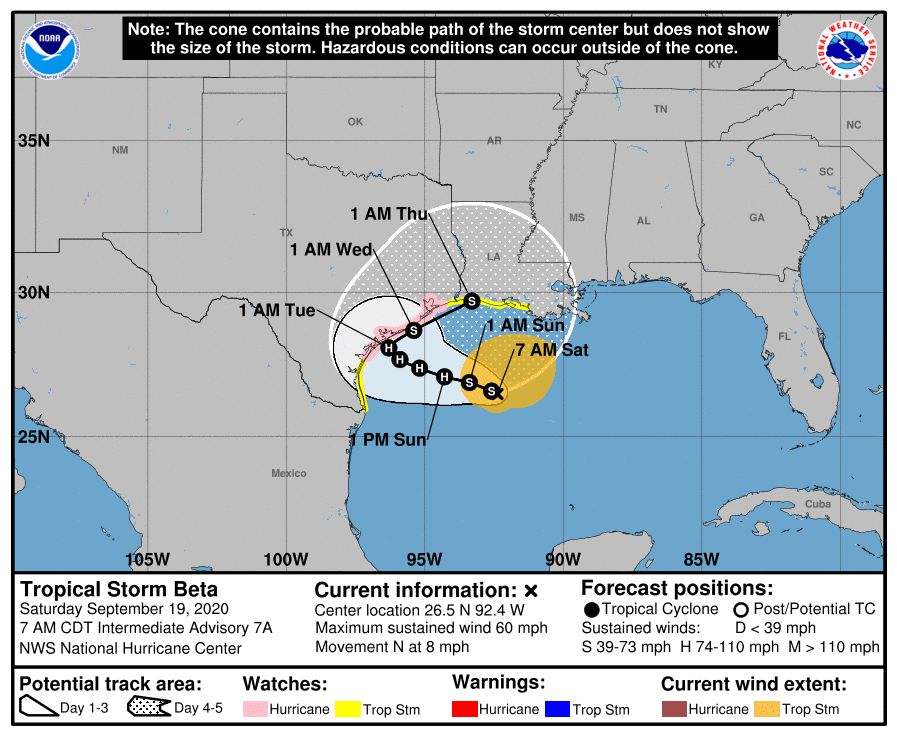
National Hurricane Center track forecast at 7am CT.
The problem is that, after this point, we’re not really sure what will happen. The National Hurricane Center’s official track brings the storm to the northeast on Tuesday, along the Texas coast, as weakening high pressure allows for an exit. However, it also seems possible the storm could move 50, or even 100 miles inland before making this turn, or remain 100 miles offshore. I know what you’re thinking, slow-moving storm, landfall near Corpus, moving inland—Eric, that sure sounds a lot like Hurricane Harvey. Well, I’ll agree, but there are some key differences here. Most significantly, Beta lacks Harvey’s organization, and will be fighting dry air as it moves toward Texas. This may help to limit inland rainfall. Moreover, the storm really should move away by Tuesday or Wednesday, so we are probably not looking at a four- or five-day heavy rainfall event.
Rainfall
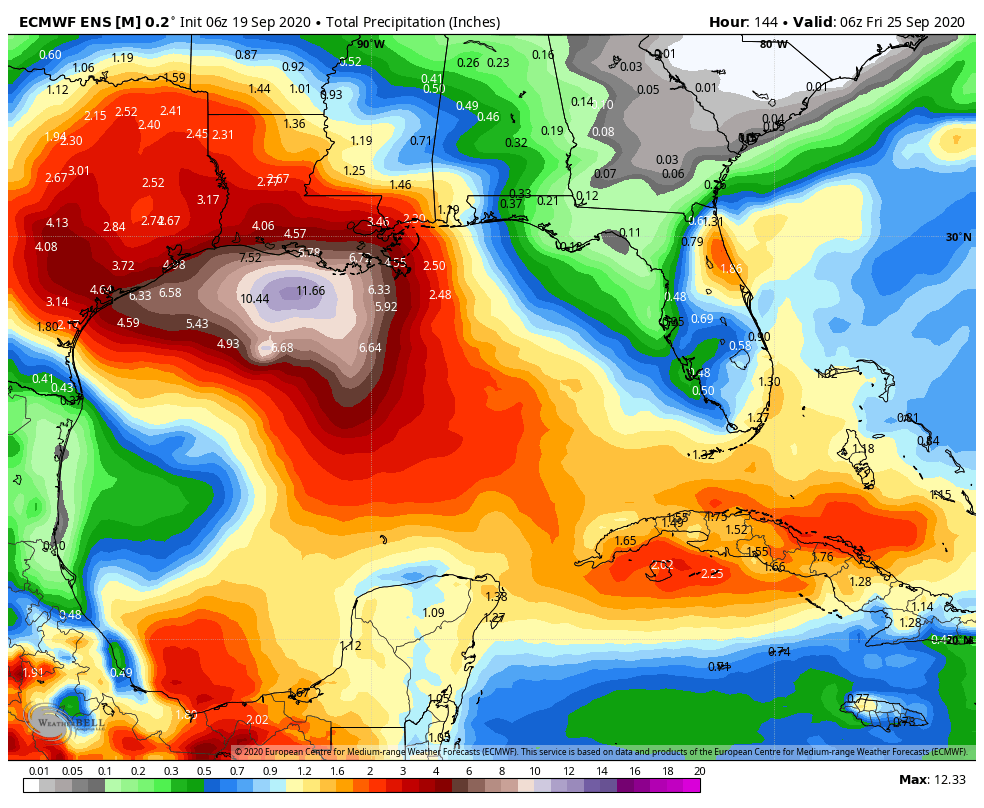
So how much is it going to rain next week? The global models have trended slightly downward in terms of rainfall accumulation during recent runs, and I think a good general expectation is 2 to 8 inches across much of the Houston metro area, with coastal areas potentially seeing 6 to 12 inches between later Sunday and Thursday. That much rain over four days is manageable, so our concerns are very high rainfall rates—which tropical storms produce—and higher than anticipated totals. We can’t rule out some 20-inch bullseyes, but so far there’s not much support for this in our best models. I think the bottom line is that we need to prepare for heavy rainfall through Wednesday or so of next week, and the possibility of flash flooding. But it may not come to that.
Both the European ensemble (shown above) and the GFS ensembles models show the signal for heaviest rainfall offshore. But it remains difficult to pinpoint specific risks. (Weather Bell)
Storm surge
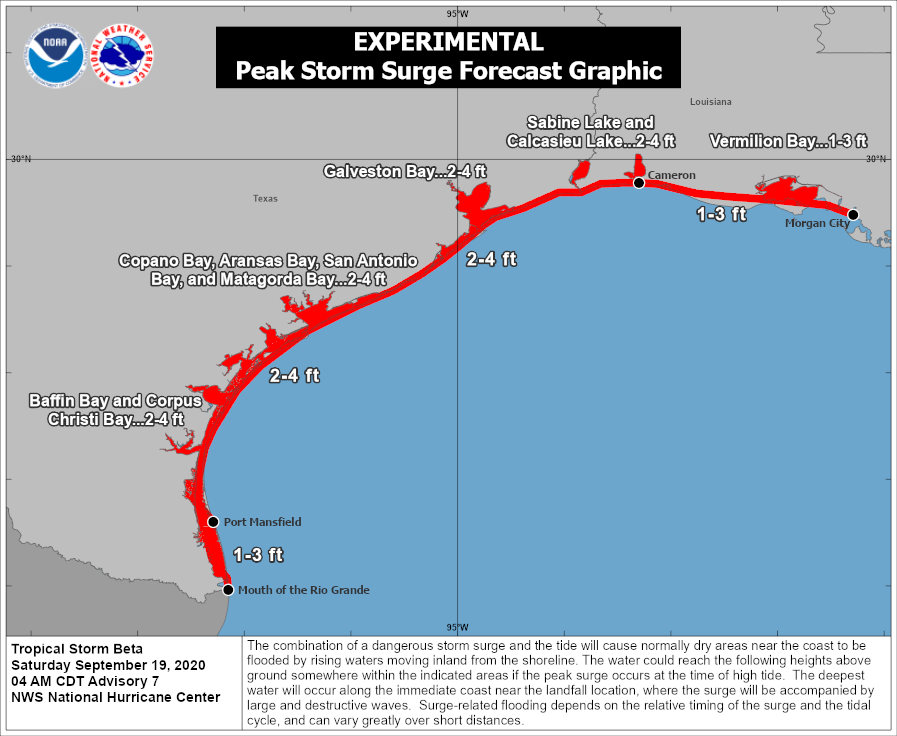
The other issue we’re going to face is storm surge as Beta produces strong easterly winds over the area. For now, Hurricane Laura’s water levels, plus one or two feet, is probably a good guide for what to expect from Beta along Galveston Island, Bolivar Peninsula, and Galveston Bay. However, this part of the forecast remains very much subject to change, given Beta’s track and intensity.
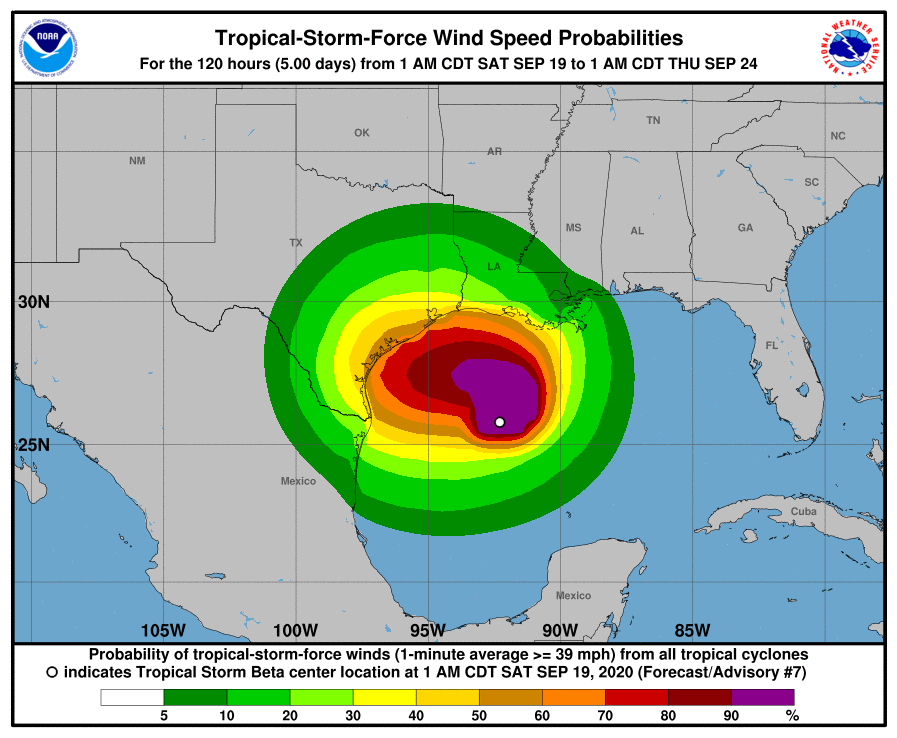
Winds will begin to increase across the area on Sunday and Monday, and there is a 30 to 40 percent chance that the Houston metro area will see tropical-storm force winds next week, with higher chances along the coast. This forecast, too, is very dependent on track and intensity so winds are a work in progress. But right now the expectation is that wind should not be too disruptive in terms of power outages across Houston.
Probability of Tropical Storm-force winds over the next five days. (National Hurricane Center)
Our next update will be posted no later than 2pm CT today.
U.S. President Donald Trump's comments on Friday suggesting Canada is keen to reopen the border with his country stand in direct contrast to statements made by Canadian officials supporting the continued border restrictions.
U.S. Sens. Ted Cruz and John Cornyn attended a Senate Judiciary Committee hearing to confirm Brett Kavanaugh to the Supreme Court in 2018. In 2016, both men opposed confirming a Supreme Court justice in a presidential election year. But both now indicate support for replacing the late Justice Ruth Bader Ginsburg weeks before another presidential election.
Credit: Matt McClain/Pool via REUTERS
For Democrats at the tail end of Republican President Donald Trump’s first term, it was the nightmare scenario they’d long been dreading.
The GOP-controlled Senate has displayed in recent years a cutthroat approach to moving judicial appointments through the chamber. Republicans hope to secure a conservative approach to Supreme Court rulings for a generation.
Texas’ two senators — who will likely be tasked with the confirmation of Ginsburg’s successor — were quick to issue statements commemorating her sweeping influence on American legal life. Both men also made clear that confirming her replacement either in the 45 days before Election Day or before the next inauguration was immediately on their minds. Four years ago, both men strongly opposed confirming Merrick Garland, the nominee proposed by President Barack Obama as a replacement for Justice Antonin Scalia. Scalia died more than eight months before the 2016 presidential election.
On Friday night, U.S. Sen. Ted Cruz called for an urgent confirmation during an appearance on Fox News. U.S. Sen. John Cornyn did not comment directly, instead retweeting a quote from Senate Majority Leader Mitch McConnell that said, “President Trump’s nominee will receive a vote on the floor of the United States Senate.”
Both senators serve on the U.S. Senate Judiciary Committee, which means that the eventual nominee will be called before them to testify.
Republicans have a 53-47 majority in the upper chamber.
Trump added Cruz earlier this week to a list of prospective Supreme Court nominees, should a vacancy emerge. Cruz immediately made public his aversion to serving on the court.
Cruz, a former Texas solicitor general, told Sean Hannity on Friday night that Trump should nominate a successor to the Supreme Court next week, urging the Senate to confirm that person before Election Day.
“The court — we are one vote away from losing our fundamental constitutional liberties, and I believe that the president should next week nominate a successor to the court, and I think it is critical that the Senate takes up and confirms that successor before Election Day,” Cruz said. “This nomination is why Donald Trump was elected. This confirmation is why the voters voted for a Republican majority in the Senate.”
When Scalia died unexpectedly in February 2016, Cruz reacted within hours as well. But that time, when Obama was in office, he called for a delay in nominating a successor.
At a 2016 GOP presidential primary debate, Cruz said that it had been 80 years since a Supreme Court justice was nominated and confirmed in an election year as logic for his opposition to an Obama appointee.
“There’s simply just too much at stake to leave the decision in the hands of a president who is headed out the door,” Cornyn said on the Senate floor in March 2016, toward the end of Obama’s second term.
In a follow-up op-ed, he clarified that this position was rooted in part in the fact Republicans had recently taken control of the chamber.
“The American people made clear that they wanted a check on the Obama administration when they put Republicans in charge of the Senate in November 2014,” he wrote. “Now, we have an obligation — and full constitutional authority — to use that mandate from the people for issues that matter most to this country. And that includes the direction of the Supreme Court.”
On average, recent confirmations to the court have taken well over two months — a timeline that would put the Trump administration after the November election, even if officials move quickly.
Among recent Supreme Court appointees, Ginsburg herself had the fastest path from nomination to final Senate approval: just 42 days, according to the Congressional Research Service.
And there are questions over whether McConnell will have the votes to move the nomination. At most, he can lose only three Republicans, as Vice President Mike Pence could serve as a tie breaker on a 50-50 split.
Ginsburg’s passing could have sweeping effects on the already turbulent Texas political landscape.
No race will feel the consequences on the scale of Cornyn’s bid for a fourth term. His challenger, Democrat MJ Hegar, criticized him Friday for tweeting McConnell’s quote about voting on a Trump nominee.
“It took @JohnCornyn less than two minutes to fall in line with Mitch McConnell. The Supreme Court is on the ballot,” she tweeted.
Cornyn is an established conservative, particularly on social issues like abortion. Hegar is firmly in the abortion-rights camp. One of the groups most credited with securing her the nomination is EMILY’s List, an influential national group that works to elect Democratic women who support abortion rights.
As it stands, most Texas political insiders — even optimistic Democrats — say Cornyn is one of the few points of stability in the Texas Republican sphere. From the beginning of the cycle, Cornyn drew lessons from Cruz’s near-loss last cycle and took little for granted.
At first blush, a Supreme Court fight could benefit both candidates. Cornyn may see a reinforcement of enthusiasm of the expansive anti-abortioncommunity in Texas. On the other hand, a nationalized last-ditch Democratic bid to pick up as many Senate seats as possible and send a message to Senate Republicans could lead to a fundraising boon for Hegar.
Two of the state’s most prominent Democrats, U.S. Rep. Joaquin Castro and former U.S. Housing and Urban Development Secretary Julián Castro, took to Instagram Live with their reactions and singled out Cornyn.
“He blocked Merrick Garland along with Mitch McConnell. So the question is, look, are they going to adhere to the same rule this time? Are they going to be hypocrites? Are they going to be typical politicians?” said Julián Castro.
The San Antonio siblings also added that this decision will have an impact on issues like health care and racial equity.
For the most part, though, Texas political operatives who spoke to the Tribune on Friday night were completely flummoxed with the gravity of the political ramifications and legal consequences ahead and were reluctant to weigh in with sweeping speculations or analysis.
Hegar, Cornyn’s Democratic opponent, emailed her supporters about Ginsburg’s legacy and called the late justice “a fighter.”
“Tomorrow, we will be strong, and we’ll fight to honor her legacy and protect our democracy — just as Justice Bader Ginsburg fought all the way to the end,” she continued. “But tonight — let us reflect on the life of an incredible woman who we were lucky enough to share time with.”
“Grieve tonight, and fight tomorrow,” she added.
Kelsey Carolan, Emma Platoff and Juan Pablo Garnham contributed to this report.
Senate Majority Leader Mitch McConnell is vowing a vote for a potential Trump nominee will take place on the Senate floor despite McConnell not even holding a hearing for Obama's 2016 nominee.
The U.S. Chamber of Commerce has endorsed 30 House Democrats for reelection, the highest number of Democrats to earn the business lobby's support in at least a decade.
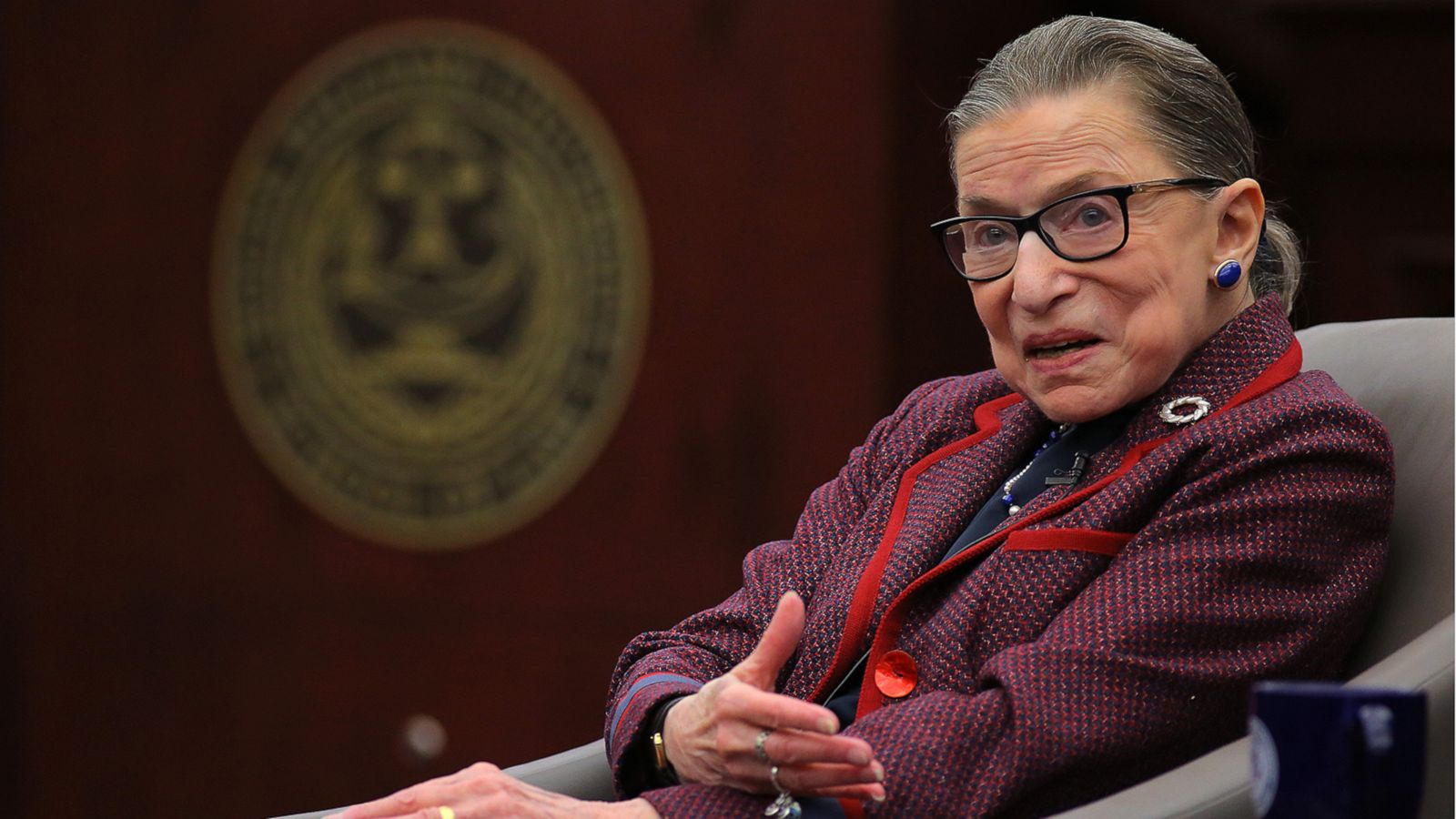
Supreme Court Justice Ruth Bader Ginsburg passed away on Friday night — a pivotal moment in the history of the nation’s highest court. Ginsburg’s death is one of the biggest developments yet in 2020, a year that has already included the impeachment of the sitting president, a deadly virus killing nearly 200,000 Americans and an economic collapse. Ginsburg not only reshaped U.S. jurisprudence — in particular, as an advocate for women’s rights — but she became a cultural and political icon too, especially for liberals and progressives.
Indeed, her death, and the fight to fill her seat, may have a number of political implications. Those will become clearer over the next days and weeks, of course, with the election right around the corner, but here’s a first look at what some of those potential implications might be:
1. Republicans have to decide whether they will break from their “no election year confirmations” stance from 2016
Back in 2016, when Senate Republicans blocked the nomination of then-President Barack Obama’s Supreme Court nominee, Merrick Garland, Republican Senate Majority Leader Mitch McConnell argued that voters should get to choose the president and that president should get to pick the next justice. Then-Justice Antonin Scalia died in February 2016, and Obama nominated Garland that March.
Ginsburg’s death comes even closer to the 2020 election — 46 days away. In all of American history, we have had only two Supreme Court vacancies closer to Election Day than we have now. In both instances, the incumbent president won reelection and nominated a replacement shortly after Election Day. (In terms of the actual confirmation, one was confirmed in December, one in March.) So by historical standards — and, notably, McConnell’s own previous standard — Trump would not nominate anyone unless he won a second term in November, since the election is less than two months away.
Filling a seat this close to the election is unheard of
Supreme Court vacancies in presidential election years, by how many days before the election they occurred and whether a replacement was confirmed before the election
Before election, replacement was…
Justice
Date of Vacancy
Days before Election
Nominated
Confirmed
S. Minton
Oct. 15, 1956
22
R. Taney
Oct. 12, 1864
27
R. B. Ginsburg
Sept. 18, 2020
46
?
?
R. Trimble
Aug. 25, 1828
67
J. McKinley
July 19, 1852
106
✓
C. E. Hughes
June 16, 1916
144
✓
✓
P. V. Daniel
May 31, 1860
159
H. Baldwin
April 21, 1844
194
✓
M. R. Waite
March 23, 1888
228
✓
✓
A. Scalia
Feb. 13, 2016
269
✓
A. Moore
Jan. 26, 1804
281
✓
✓
J. P. Bradley
Jan. 22, 1892
291
✓
✓
O. W. Holmes
Jan. 12, 1932
301
✓
✓
J. R. Lamar
Jan. 2, 1916
310
✓
✓
In the early 19th century, the election was held over the course of multiple days; the number of days before the election is the number of days before voting began.
This is a huge opportunity for Republicans — to have six GOP-appointed judges on the court at once. It is hard to imagine they will pass it up. It’s not guaranteed that 49 of the other 52 Senate Republicans would push forward and support a Trump nominee, particularly if Trump lost the election, but it seems likely.
2. It’s not clear if a confirmation process could finish before the election.
It would be unusually fast to finish the entire confirmation process in less than 46 days, the time left before the Nov. 3 election. (The average confirmation process since the Harry Truman administration has lasted 50 days.) That doesn’t mean there isn’t enough time for Trump to confirm a new justice, but it would be on the fast side.
Nevertheless, it’s possible that sometime in October, a judge has been nominated and perhaps confirmation hearings are taking place, right on the eve of the election. This creates the possibility that Trump loses the election and perhaps Republicans lose control of the Senate, but the lame duck president and some senators who have lost reelection put a justice on the Supreme Court — a move that will enrage Democrats. Alternatively, Trump could win the election and see a new justice appointed before he even begins his second term.
3. Ginsburg’s death creates new dynamics if there is an election-related dispute before the Court
With a 5-4 GOP majority, Chief Justice John Roberts has been a swing vote, and one who occasionally joins with the Court’s Democratic appointees. Whether the court is 5-3 (with Ginsburg’s seat not filled) or 6-3 (with a Trump nominee seated), Democrats would need two votes from GOP-appointed justices to win a case. So if there is some kind of electoral dispute that gets to the court, that’s bad news for Democrats. It raises the specter of a 4-4 tie in a pivotal election-related case, a potential deadlock that could complicate knowing who won the presidential race.
4. The future of the Court is now an even bigger electoral issue
Both parties already intensely cared about the Supreme Court. But now, there is the potential for a Supreme Court nomination (or discussion of an open seat) in the middle of the election. For Trump, this choice is a big opportunity in two ways. First, the Supreme Court nomination process might distract the media and public’s attention away from his mistakes in handling the COVID-19 outbreak and give him a way to galvanize conservatives who really care about judicial nominations and issues like abortion. Secondly, Trump is struggling in particular with women voters. Trump may pick a woman to replace Ginsburg and make his nominee part of his pitch to women voters.
Biden, too, would likely need to talk about judicial issues more and perhaps describe the kind of person he would put in this seat. (He has already promised to nominate a Black woman in the event of a Supreme Court vacancy if he becomes president.) Also, Democratic vice-presidential nominee Kamala Harris is on the Senate Judiciary Committee, so she would be involved in any kind of confirmation process.
This is also now a big issue in Senate races. GOP incumbents like Sen. Martha McSally of Arizona and Sen. Susan Collins of Maine may be faced with the choice of irritating GOP voters if they oppose a Trump pick or irritating more moderate voters if they back someone who is viewed as too conservative. This is a particularly acute issue for Collins, who is struggling in her reelection campaign in part because she backed Trump Supreme Court nominee Brett Kavanaugh in 2018.
More broadly, one of the most divisive elections in America history will now likely be even more tense and fraught.
5. Who Trump chooses is a really big deal
Assuming that Trump opts to nominate someone, who he chooses is a really big deal. With the election looming, does he nominate someone more moderate than he otherwise would have? Does he nominate a woman? A woman of color? Someone with a long record of opinions or someone who is more unknown?
6. If there are six GOP-appointed justices on the Supreme Court, law in America could fundamentally move to the right
This is the most important implication, even if it is not the most immediate. If Trump is able to appoint a justice who is similar in ideology to Neil Gorsuch and Kavanagh, his first two picks, it seems likely that abortion and affirmative action could be severely limited in the future, the Affordable Care Act overturned and a host of other conservative rulings issued. That is not guaranteed, but seems quite possible.
Trump and Republicans putting another justice on the bench either pre or post-election, in the case that he Trump loses, is also likely to trigger an aggressive Democratic response that could have long-lasting implications. Democratic activists were already floating the idea of increasing the number of justices on the Supreme Court to make up for the Garland seat, and I would expect so-called court-packing ideas to accelerate if Trump puts another conservative justice on the court before or right after he loses a presidential election.
Ginsburg, the second woman to serve on the Supreme Court, died from complications from cancer. Her death will set in motion what promises to be a tumultuous political battle over who will succeed her.
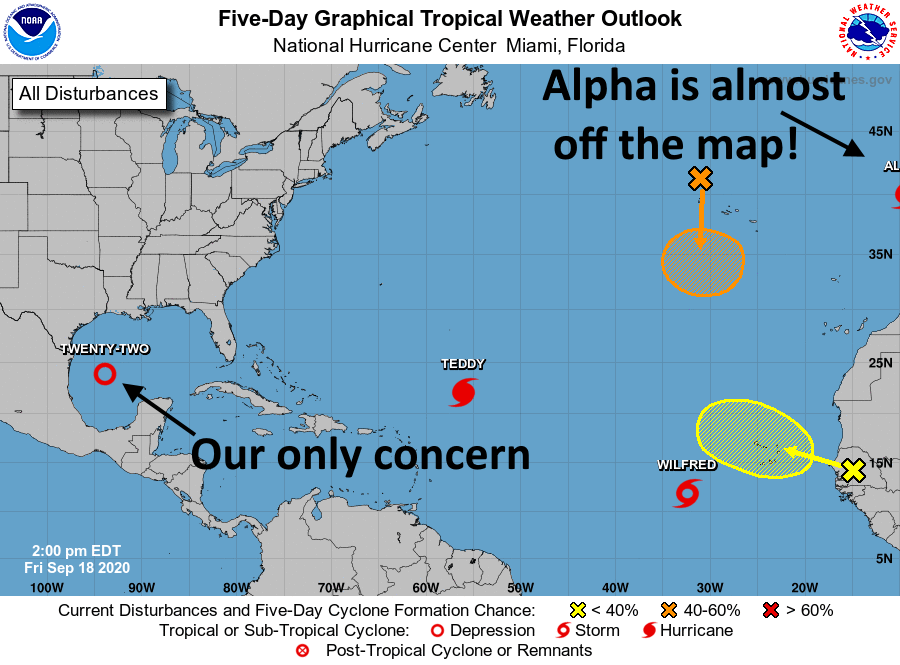
Welcome to another crazy day in the tropics. While we we’ve been waiting for Tropical Depression 22 to strengthen into a tropical storm, a system in the deep tropics became Wilfred this morning. And then, at noon, Subtropical Storm Alpha improbably formed off the coast of Portugal. Neither of these storms remotely concern the Gulf of Mexico, so our focus will remain on the depression that will become—checks notes—Tropical Storm Beta later today.
The state of the tropics at 1pm CT Friday. (National Hurricane Center)
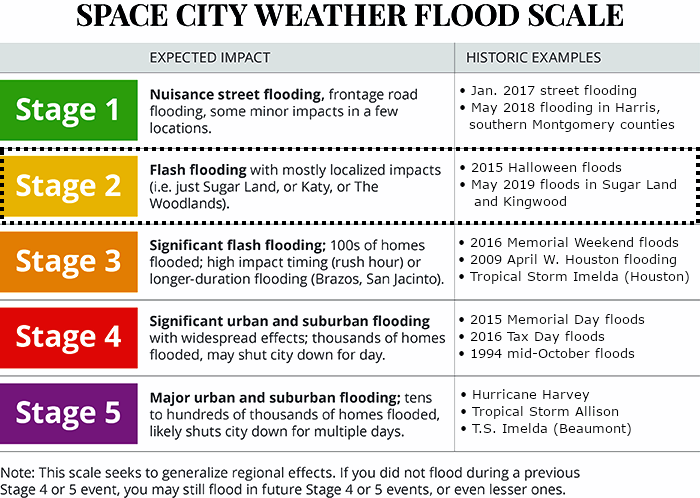
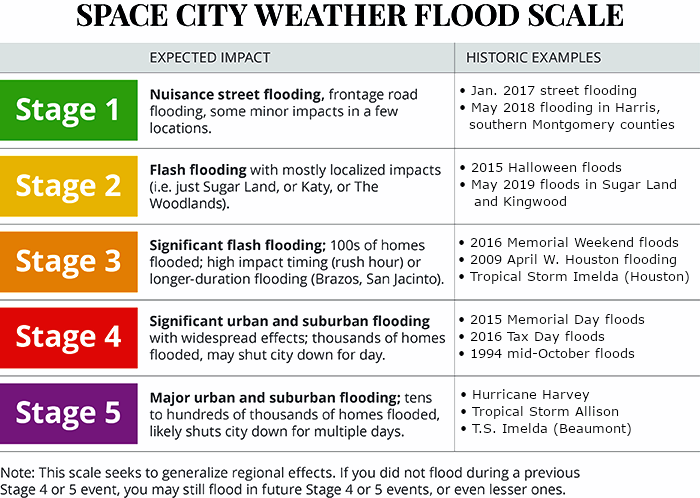
We are issuing our first Flood Scale forecast for this depression, with the caveat that this is subject to change. Simply put, there remains a healthy amount of uncertainty about where the heaviest rains will come over the next five or six days. However, for now, we are calling for a Stage 2 flood for areas south of Interstate 10, and a Stage 1 flood for areas north of Interstate 10. The biggest rainfall risks for Texas are right along the coast, from Brownsville to Galveston.
Space City Weather Flood Scale
Now let’s talk track, because that ultimately will determine what happens with the depression’s rainfall.
Where will Beta bend?
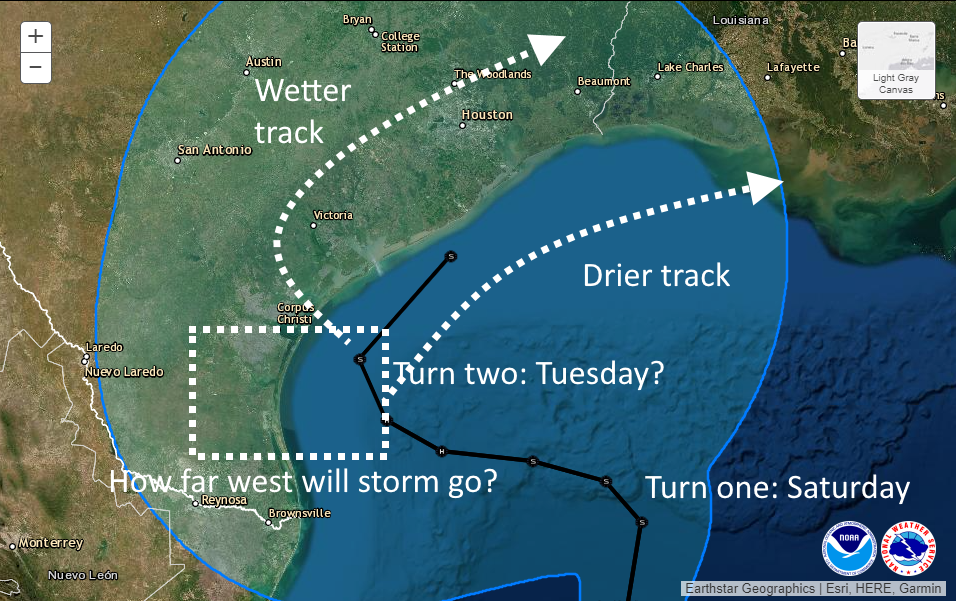
This will be the story of two turns. The following graphic shows the National Hurricane Center’s official forecast track (as of 10am CT Friday) in black. I’ve made several annotations that I want to talk through to help you understand the track forecast and the uncertainties that we’re dealing with.
Click to enlarge. (National Hurricane Center/Space City Weather)
Alright, so we’re fairly confident in the storm’s track today and tomorrow, when it should run into high pressure associated with the front that has moved through Houston already. This should push the system westward, toward Texas. The big question after this is how far west the storm will get—probably very close to the coast, and perhaps even a little bit inland (I’ve tried to highlight this area with the white rectangle). The storm does its coast-hugging, slow moving routine on Monday. At this time it will produce a lot of rain, but hopefully most of this will fall east of the center, offshore.
The second turn
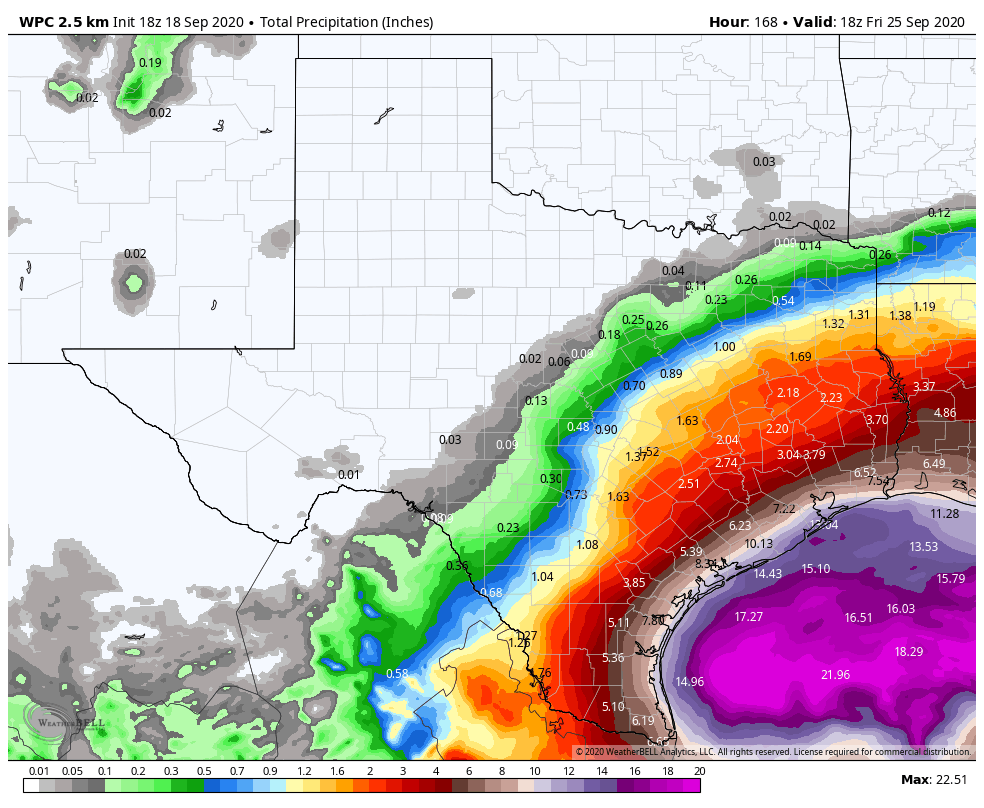
By around Tuesday, the storm should begin to lift to the north and then northeast, perhaps moving close to the coast (as indicated by the official forecast), or further inland (wetter for Texas) or further offshore (drier). Because we have so little confidence in the track for Tuesday and beyond it’s hard to say how much rainfall we will see in the Houston region. For example, I could envision 5 inches of rain in Galveston, or 20 inches. I could envision 2 inches of rain in Houston, or 8 inches. We’re pretty confident that rain chances will perk up on Sunday, with the really heavy stuff possible from Monday through perhaps Thursday morning. For more precise totals you’re going to have to hang in there with us until we get a better handle on the storm’s track.
NOAA forecast for total precipitation between now and midday Friday. (Weather Bell)
Coastal flooding
The other issue is coastal flooding. Generally, we anticipate the potential for water levels to rise 1 to 2 feet higher than the region experienced with Hurricane Laura three weeks ago. Waters will start to rise on Saturday, and increase on Sunday. After that any additional rises will depend upon the intensity of the depression—we still think it’s going to become a tropical storm or a Category 1 hurricane at most—and its track. So these hazards are to be determined as well.
That’s all we have for now. Matt will have our next update at 8:30pm CT this evening. By that time Beta probably will have formed. Alas, Beta won’t be a fish storm.
TikTok and WeChat will be banned from US app stores starting on Sunday, September 20th, the US Department of Commerce (DoC) has announced. The Chinese-owned apps from Tencent and ByteDance will not only be banned from the iOS App Store and Google’s Play Store on Sunday, but companies will be barred from hosting them in the US starting on November 12th.
The move was taken “at the President’s direction,” according to Commerce Secretary Wilbur Ross. “Today’s actions prove once again that President Trump will do everything in his power to guarantee our national security and protect Americans from the threats of the Chinese Communist Party,” he said in a statement. “The Chinese Communist Party (CCP) has demonstrated the means and motives to use these apps to threaten the national security, foreign policy, and the economy of the US.”
The app ban has come despite a possible partnership between Oracle and ByteDance. Yesterday, Trump said that he didn’t like that deal, according to Bloomberg, while adding that he was “not prepared to sign off on anything.”
The DoC’s wording makes clear that it wants the apps to disappear in the US. It has not only banned the apps, code and updates, but any payments associated with WeChat. By November 12th, it will also prohibit:
Any provision of internet hosting services enabling the functioning or optimization of the mobile application in the U.S.;
Any provision of content delivery network services enabling the functioning or optimization of the mobile application in the U.S.;
Any provision directly contracted or arranged internet transit or peering services enabling the function or optimization of the mobile application within the U.S.;
Any utilization of the mobile application’s constituent code, functions, or services in the functioning of software or services developed and/or accessible within the U.S.
All of that means that the White House is trying to leave no loopholes that would allow access to the app. And since it dropped the news on Friday, with the ban going effect Sunday, ByteDance and its partners will have little to no time to attempt to delay or reverse the decision. It will also force hosting services to react quickly to remove the app, given the November 12th deadline.
TikTok has 100 million users in the US, while WeChat has 19 million daily active users, according to Reuters. The order doesn’t prevent companies from hosting WeChat and TikTok outside the US, not does it affect other Tencent games and apps.
“We disagree with the decision from the Commerce Department, and are disappointed that it stands to block new app downloads from Sunday and ban use of the TikTok app in the US from November 12,” a TikTok spokesperson explained to Engadget. “Our community of 100 million US users love TikTok because it's a home for entertainment, self-expression, and connection, and we’re committed to protecting their privacy and safety as we continue working to bring joy to families and meaningful careers to those who create on our platform.”
The spokesperson also detailed what the company has done in an effort to appease the White House.
“In our proposal to the US Administration, we've already committed to unprecedented levels of additional transparency and accountability well beyond what other apps are willing to do, including third-party audits, verification of code security, and US government oversight of US data security,” the spokesperson said. “Further, an American technology provider would be responsible for maintaining and operating the TikTok network in the US, which would include all services and data serving US consumers. We will continue to challenge the unjust executive order, which was enacted without due process and threatens to deprive the American people and small businesses across the US of a significant platform for both a voice and livelihoods."
Update 10:48AM ET: This post has been updated with a statement from TikTok. It has also been updated to make clear that US companies will be barred from hosting TikTok and WeChat starting on November 12th.
"Widespread flash flooding and minor to moderate river flooding is likely" in parts of Georgia and South Carolina, forecasters say. A new potential storm is also being tracked in the Gulf of Mexico.
(Image credit: Bryan Tarnowski /for The Washington Post via Getty Images)
Elections analyst Nathaniel Rakich takes a look at our presidential forecast and asks what weird (and not-so-weird) scenarios could shake out in the 2020 election.
To the list of COVID-19 papers that have been retracted so far, add this: The Korean Journal of Anesthesiology has retracted an article it published last month on ventilating COVID patients because it was nearly identical to one that had appeared in a different journal three months earlier. The offending article, “Noninvasive versus invasive ventilation: … Continue reading The list of retracted COVID-19 papers is up to 33
In remarks Wednesday, the attorney general also said restrictions imposed during the coronavirus are "the greatest intrusion on civil liberties in American history" since slavery.
I don't know if anyone still has this blog in their feeds, but this news seemed post-worthy: I was recently hired to be the Assistant Director of the Tuscarawas County Public Library in Ohio!
Of course, it's mixed news. I've been at the Chelmsford Library in Massachusetts for 15 years, and it's a great place to be. When I became Assistant Director here about four years ago, I pretty much stopped blogging because most of what I did involved confidential staff or patron interactions, or far less interesting (to read about) vendor and contractor interactions. Still busy, just not with funny reference questions.
The new position will be similar to what I've been doing, but for a county system instead of a medium-sized town library. I'm really looking forward to it. The other bonus is that I'll be just a couple hours from my family, instead of eleven hours.
My last day in Chelmsford is October 2nd, and first day in Tuscarawas is November 2nd. In between, I need to pack up, move to Ohio, find a new place to live, etc. Should be fun.







/https://static.texastribune.org/media/files/f51a27ef4e1ff356b80e89239bfda165/Cruz_and_Cornyn_KAVANAUGH_REUTERS_TT.jpg)














.jpg)

