Steven Snow, John Buchan, Nevin Spoljaric, Donal Botkin, BN-12 , Ben Delo, Bobby , Chris Chapin, Richard Jenkins, Phil Gardner, Martin, Steven Grimm, سليمان العقل, David F Watson, Colin Millions, Ben Schwab, Saki Comandao, Jason Lewandowski, Marco Arment, Shantanu Raj, rictic , emptymachine , George Lin, Henry Ng, Thunda Plum, Awoo , David Tyler, Fuesu , iulus , Jordan Earls, Joshua Jamison, Nick Fish, Nick Gibson, Tyler Bryant, Oliver Steele, Andrew Bereza, Kermit Norlund, Kevin Costello, Rebecca Wortham, Derek Bonner, Derek Jackson, Mikko , Orbit_Junkie , Ron Bowes, Tómas Árni Jónasson, Bryan McLemore, Kyle Wayman, Alex Simonides, Felix Weis, Melvin Sowah, Christopher Mutchler, Giulio Bontadini, Paul Alom, Ryan Tripicchio, Scot Melville, Julien Dubois, Bear , chrysilis , David Palomares, Emil , Erik Parasiuk, Esteban Santana Santana, Freddi Hørlyck, John Rogers, Leon , Peter Lomax, Rhys Parry, ShiroiYami , Tristan Watts-Willis, Veronica Peshterianu, Dag Viggo Lokøen, John Lee, Maxime Zielony, Elizabeth Keathley, and Nicholas Welna
Have countless people over the past two decades prematurely predicted the imminent victory of Democrats in Texas? Yes. Is it possible that some people are making the same mistake today? Also yes. 2002 “[Texas] never was a Republican state. It’s just a Bush state.” —Former Democratic Texas comptroller John Sharp 2002 “Over the next decade, a Democratic presidential candidate could also win the electoral votes of Georgia, Tennessee, and, yes, even Texas.” —Authors John Judis and Ruy Teixeira 2008 “I don’t know if it’s four years or eight years off, but down the road, Texas will be a presidential battleground.” —Barack Obama’s Latino outreach official, Cuauhtémoc Figueroa 2008 “Texas is ready to turn blue.” —Democratic National Committee chairman Howard Dean 2010 “Texas Dems are presenting…View Original Post
The Board of My Life is pleased to share an announcement regarding a change of leadership. For the first time in 31 years, My Life will be led by a renegade leader and woman, Me. Former partner and Interim CEO, Donnie, will be stepping down immediately as he has no subject expertise and also never wanted the job. He will transition into his new role as Head of Manipulative Exes and continue to manage bullshit sales.
To be clear, this is not a political appointment or “spirit of the times,” i.e., hiring women because they look good and it looks good for us. Me beat out several finalist candidates for the position, including convincing psychic Dr. Karl and one very opinionated nail technician. While Me has not been seen at the forefront of decision making she has been sitting in the general area during leadership meetings muttering under her breath about how she could improve on My Life’s circumstances for the last ten-plus years.
Although the anticipated scope of change is very large, we feel confident that Me is the leader we need during this make or break moment in My Life’s history. The 20s are over, the 30s have hit, and success has been few and far between. My Life is seeing significant advancement opportunities, but capturing them will require a new emphasis on marketing, a financial overhaul, and an improvement of general brand awareness. Me has recently presided over an ambitious anxiety-reduction program via candle supply chain and self-help procurement systems via Selling Sunset binges, centralized journaling support systems, and streamlined friendship committees. The Green Smoothie Peloton Daily Initiative was her brainchild! Happiness revenues have substantially increased across the board, bringing her to the attention of senior management. We did make the decision to hide results from the general public as no one likes to see a woman doing good.
Me has a plan to get up to speed quickly, including re-reading diary entries and staring into the mirror while listening to Tracy Chapman. Me has proposed 80% of revenue will now go directly back into My Life, including all money that has been spent on butt masks and Etsy purchases after 11 pm. The strategy will be to turn My Life into a balanced, highly functioning body by 2030.1
Please note business as usual will not continue — all non-domesticated dating options, former fathers, and high-handed men will henceforth be ignored.
To new direct reports and subordinates, including intern dog, Gidget, and Mario, the dramatic mechanic: Me will be setting up time to connect with each of you, if she remembers.
To those who were passed over for this position: While it doesn’t have direct implications for your careers you should take it personally.
This announcement is a sign of the beginning, and not the end of listening to Ace of Base’s “The Sign.” You will see signals shortly of board leadership embracing this change through pained smiles and two thumbs up whenever you look our direction. If you have any questions or complaints feel free to lodge them directly with Me, she will blow a raspberry in your face and then make sure you’re okay.
The United States and seven additional countries have signed the Artemis Accords, reaffirming their commitment to peaceful, cooperative and transparent activities on the moon. Yes, that moon. The founding Artemis Accords nations are as follows: Australia, Canada, Italy, Japan, Luxembourg, the United Arab Emirates, the United Kingdom and the United States.
NASA is in the midst of a multi-year program to return to the moon, dubbed Project Artemis, and the signing of the Accords is another step in this process. Project Artemis is NASA’s ambitious plan to get “the first woman and the next man” on the moon in 2024, with the goal of establishing a long-term base for scientific, exploratory and, eventually, commercial purposes. That is, if Congress agrees to fund it.
The Artemis Accords reinforce the 1967 Outer Space Treaty, a non-armament document focused on barring weapons of mass destruction from the moon and other planetary bodies. The ‘67 treaty has been signed and ratified by 110 nations, including Russia, China and the United States.
Countries that sign the Artemis Accords agree to 10 principles, including peaceful exploration, transparency, offering emergency assistance to personnel in distress, publicly releasing scientific information, and safely disposing of space debris. Here’s the full list, as provided by NASA:
Peaceful Exploration: All activities conducted under the Artemis program must be for peaceful purposes
Transparency: Artemis Accords signatories will conduct their activities in a transparent fashion to avoid confusion and conflicts
Interoperability: Nations participating in the Artemis program will strive to support interoperable systems to enhance safety and sustainability
Emergency Assistance: Artemis Accords signatories commit to rendering assistance to personnel in distress
Registration of Space Objects: Any nation participating in Artemis must be a signatory to the Registration Convention or become a signatory with alacrity
Release of Scientific Data: Artemis Accords signatories commit to the public release of scientific information, allowing the whole world to join us on the Artemis journey
Preserving Heritage: Artemis Accords signatories commit to preserving outer space heritage
Space Resources: Extracting and utilizing space resources is key to safe and sustainable exploration and the Artemis Accords signatories affirm that such activities should be conducted in compliance with the Outer Space Treaty
Deconfliction of Activities: The Artemis Accords nations commit to preventing harmful interference and supporting the principle of due regard, as required by the Outer Space Treaty
Orbital Debris: Artemis Accords countries commit to planning for the safe disposal of debris
Notably, Russia — the US’ foil in the Cold War and the original Space Race — and China have not yet signed the Artemis Accords. There’s no word on whether either country is interested, though NASA says more nations will sign in the months and years ahead.
NASA acting associate administrator for international and interagency relations Mike Gold said, “Fundamentally, the Artemis Accords will help to avoid conflict in space and on Earth by strengthening mutual understanding and reducing misperceptions. Transparency, public registration, deconflicting operations — these are the principles that will preserve peace. The Artemis journey is to the Moon, but the destination of the Accords is a peaceful and prosperous future.”
On the clear, cool morning of November 13, 1963, a convoy flanked by blue Air Force police cars with flashing lights turned off the tarmac at Kelly Air Force Base, southwest of downtown San Antonio. It wound its way carefully across Interstate 410 and into the neighboring Lackland Air Force Base’s Medina Annex, slowly passing a neighborhood made up of new ranch homes. At the center of the convoy, an ungainly vehicle called a straddle carrier, whose driver sat in a cab high above the roadway, held precious cargo slung between its four wheeled legs. The vehicle resembled a giant spider protecting its eggs. The convoy drove into Site King, a secret area in Medina where about a hundred humpbacked rectangular bunkers made of fortified steel…View Original Post
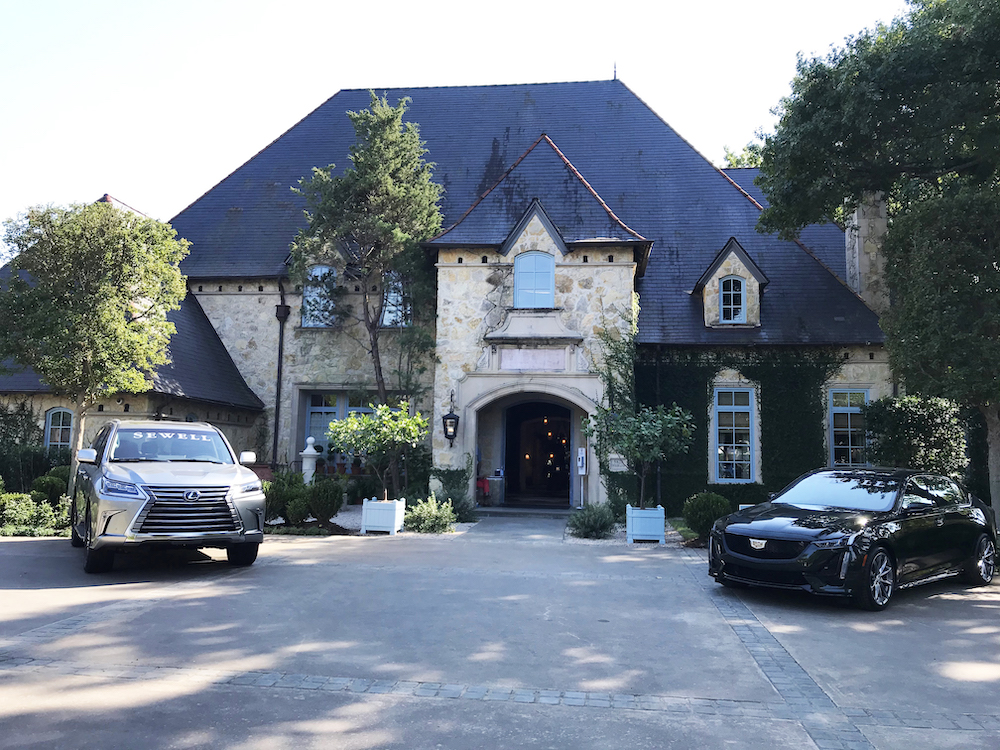
Normally, this type of event is too fancy-schmancy for my tastes. But when my friend invited me, three things about it caught my interest: the inclusion of Dallas-area artists’ work, the chance to see the inside of a $5.75 million house in Preston Hollow, and the fundraiser aspect, benefitting the Boys & Girls Club, Dwell with Dignity (a nonprofit that creates homes for families struggling with homelessness), and The Crystal Charity Ball, which supports children’s charities in Dallas.
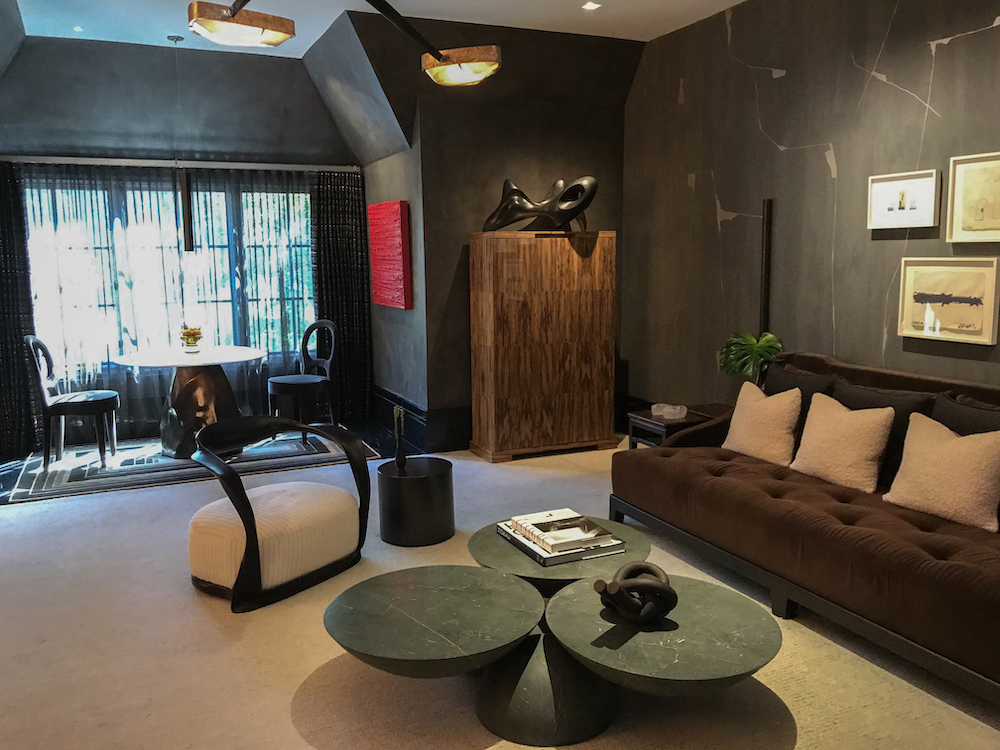
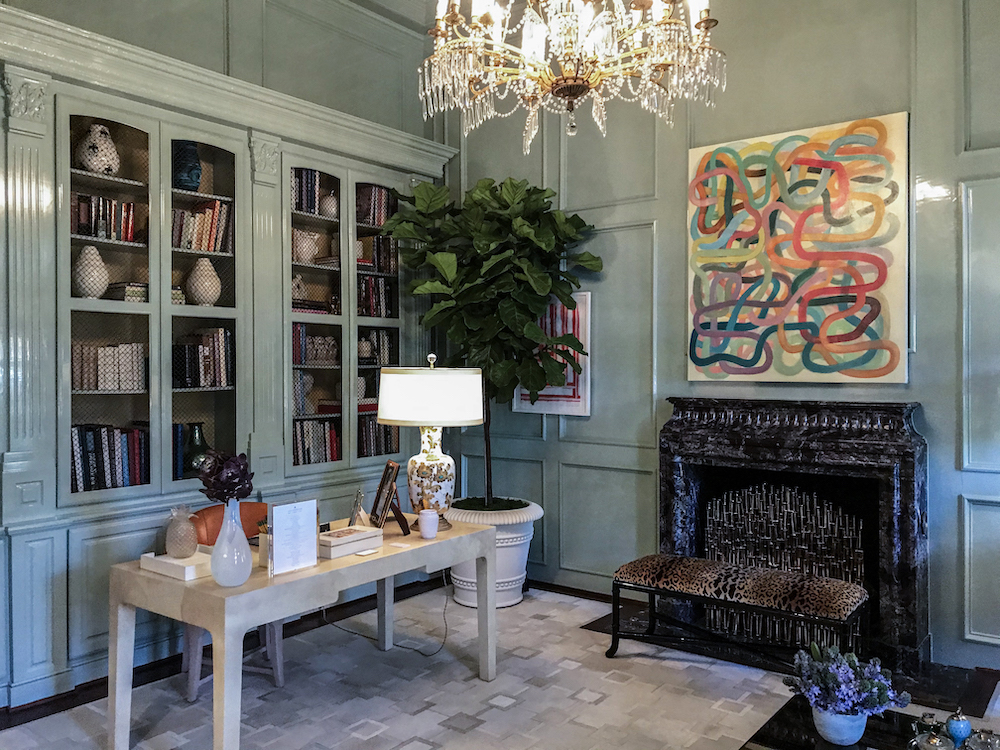
The Kips Bay Show House concept started 47 years ago in Manhattan by the Kips Bay Boys & Girls Club, and has since branched out to other cities. This is its first year in Dallas. The idea is that different interior designers and firms get a room or section of the house to showcase current domestic design trends.
Entryway designed by Rottet Studio
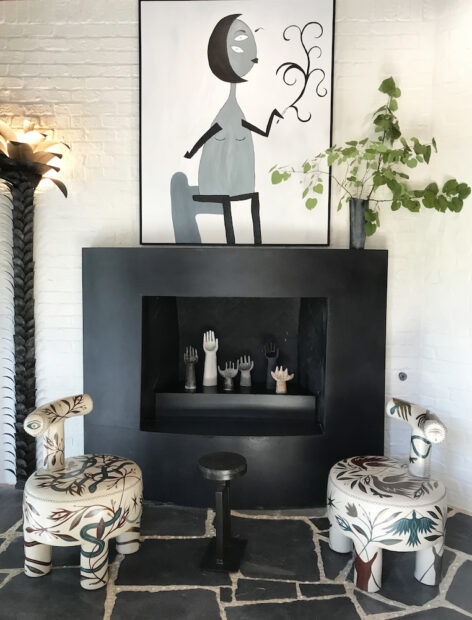
For those who enjoyed TV shows like the 1980s Lifestyles of the Rich and Famous (RIP Robin Leach), or who dream about living like the one percent, this tour is for you. It is grandeur and decadence. While I’m no design expert, I feel like for this project the designers were indeed successful in creating mini-utopias in each room. Some were more to my taste than others.
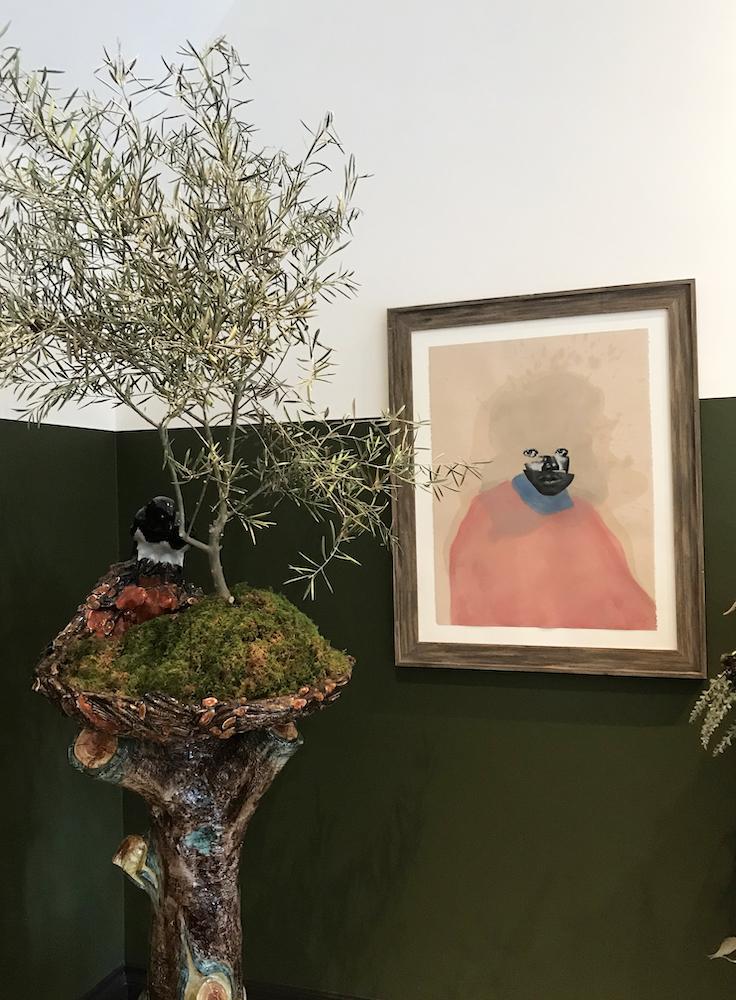
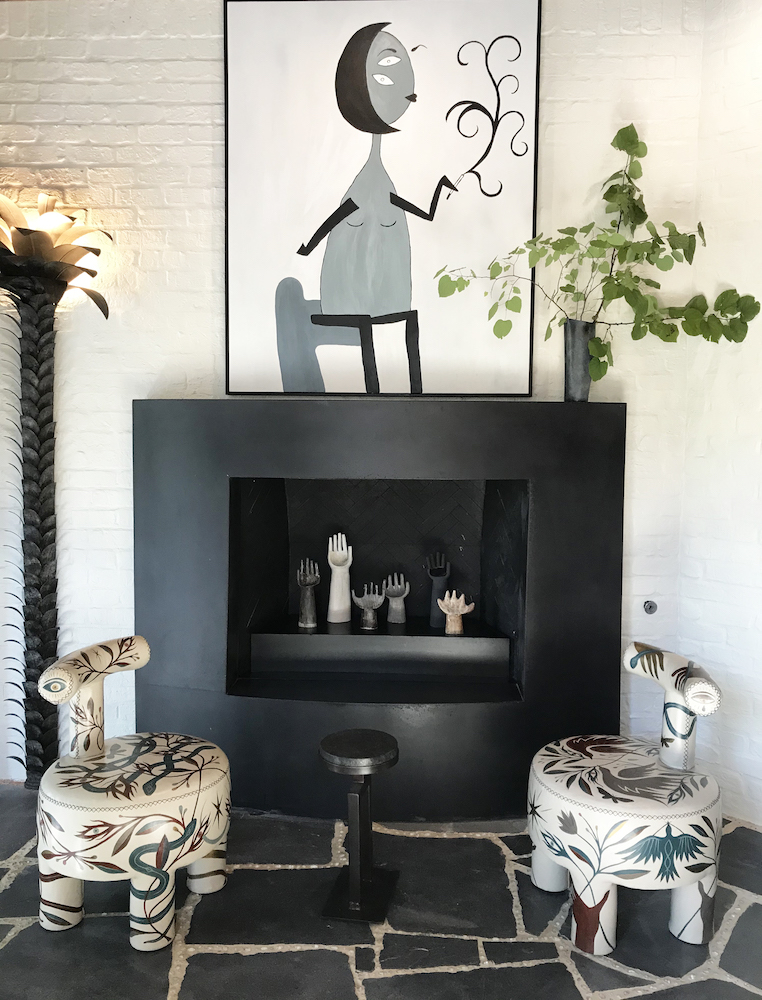
In terms of the art, I felt a bit like Alice down the rabbit hole: the surreal quality of masked visitors quietly whispering oohs and ahhs, while I played detective trying to locate and identify the local artists’ work on display. Understandably, there were no wall labels. However, it’s unfortunate for the artists that their names were not always included in the printed materials or catalog.
But I took photos, and did my research as best I could.
Letitia Huckaby
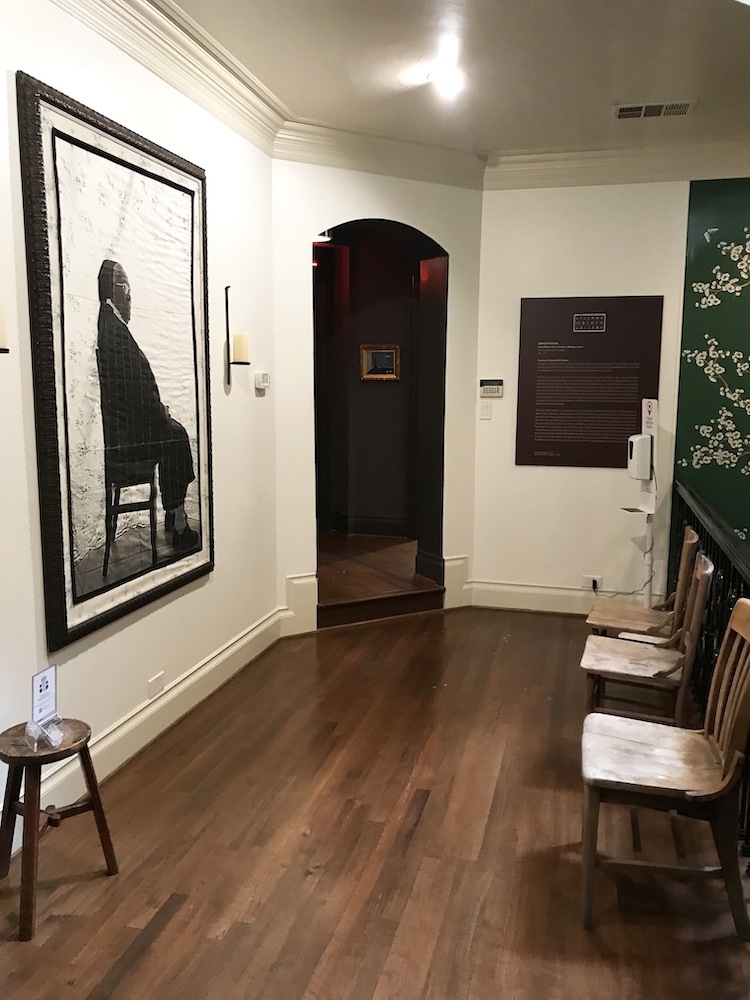
Current Artpace San Antonio resident Letitia Huckaby’s stitched photograph on fabric, Sister Rebecca (2014), from her Bayou Baroque series featuring the nuns of the Sisters of the Holy Family Mother House in New Orleans, is featured prominently on the upstairs landing. This is the only space in the house that is curated around a single art work, which I imagine is due to the fact that Liliana Bloch Gallery and not a designer curated the room. The powerful work commands its own space for quiet reflection.
Keer Tanchak
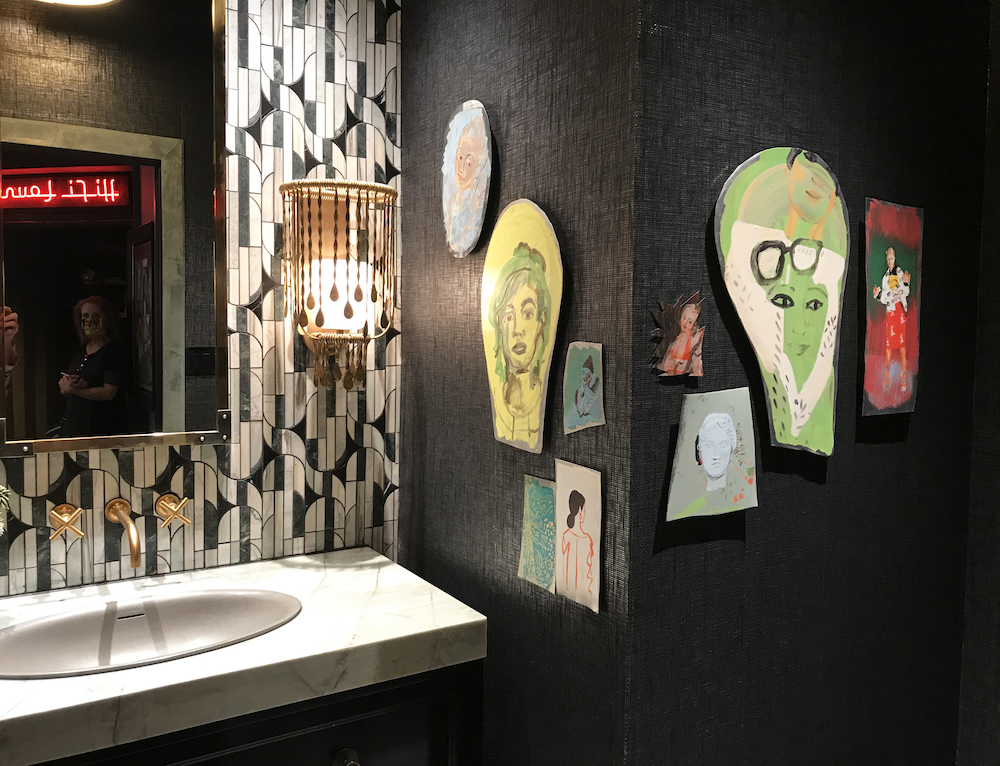
An art dealer friend of mine always says to put the best work in the bathroom. Keer Tanchak’s small-scale, intimate paintings of the female form transform the bathroom into a more dynamic space; the shaped metal canvases add a cool, quirky vibe.
Kitchen by SEES Design
Sarah Ball
Also in the kitchen: Chad Dorsey
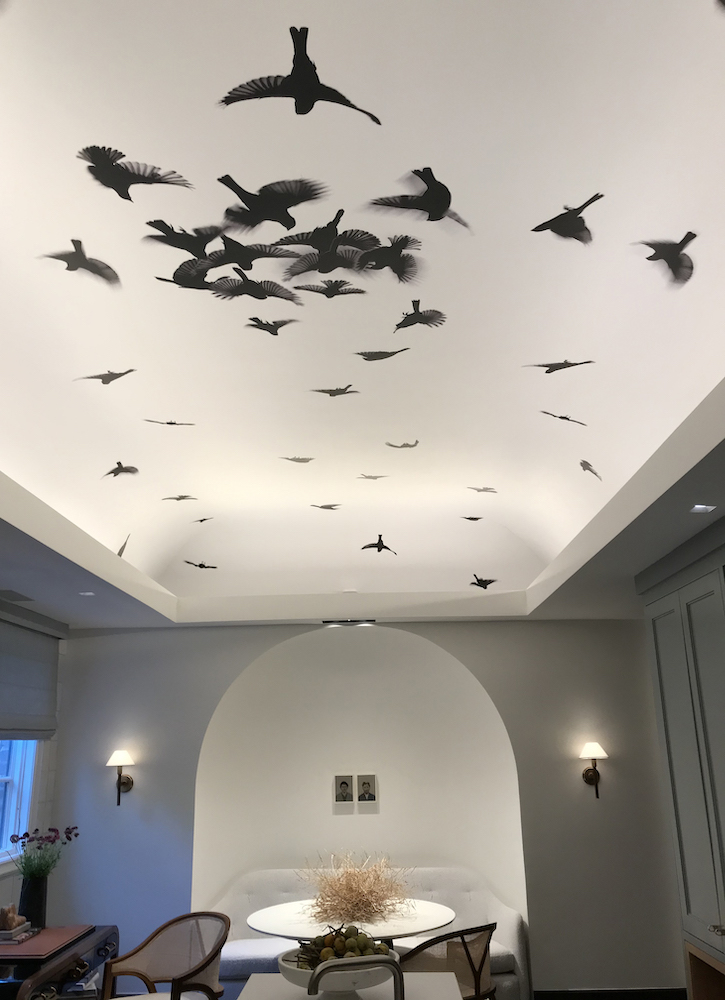
Sarah Ball’s small portrait paintings in the kitchen defy domesticity. One would expect to see portraits of family members in a domestic setting. But these haunting portraits are sourced from historical photographic archives of criminal mugshots. The subdued color palette and stark expression drops a bit of hidden subversive humor into the space.
Desireé Vaniecia
Desireé Vaniecia’s work In Times Like This We Pray is perfectly placed in the “We Tell Ourselves Stories” room (note: it looks like a living room to me). The artist’s work pays homage to her family, while challenging stereotypes of black women constructed by society and the media. The four panel paintings, full of evocative and complicated emotion, suggest a narrative, with each presenting a frozen moment in time. The title refers to our current, fraught socio-political moment.
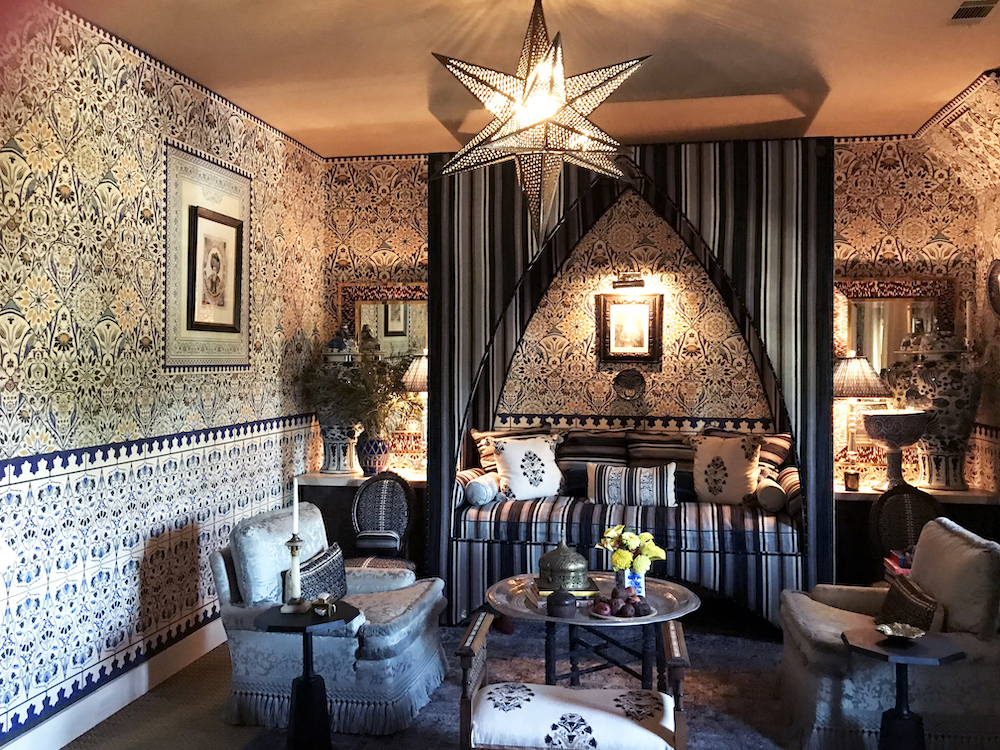
The “Turkish Writer’s Lair”
My favorite designer room is the “Turkish Writer’s Lair” by Michelle Nussbaumer. Evoking Morocco and Turkey, this room is intricately detailed. One could think that the patterns would overwhelm or conflict, but they’re perfectly balanced to create a creative and peaceful space.
“Utopia”
Carmen Menza
Rebecca Carter
Dan Lam
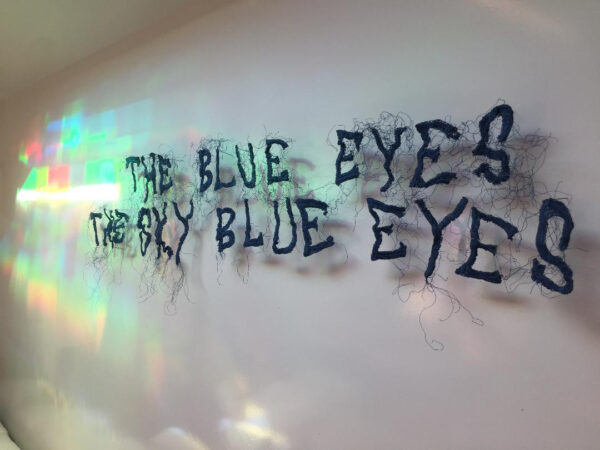
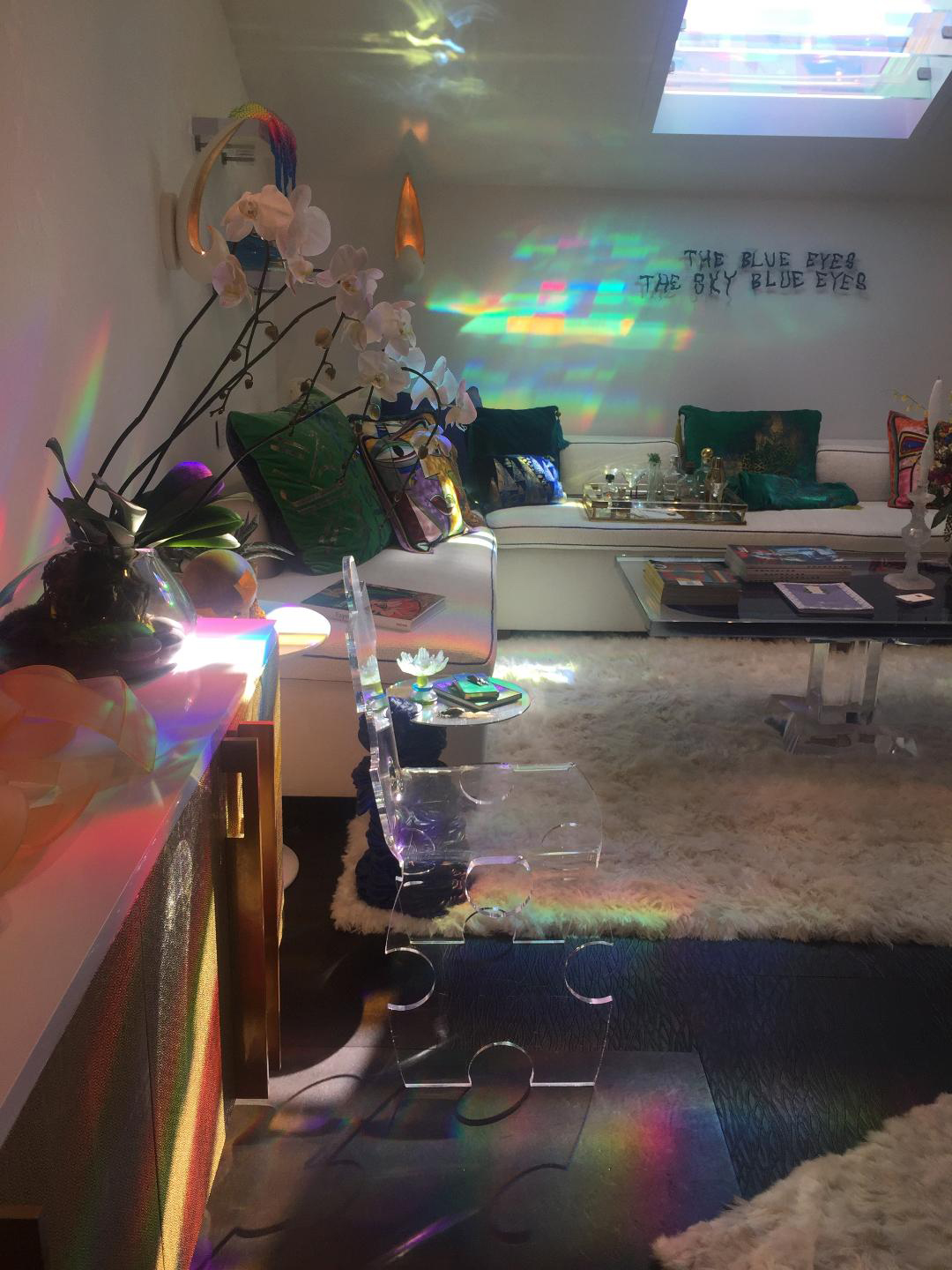
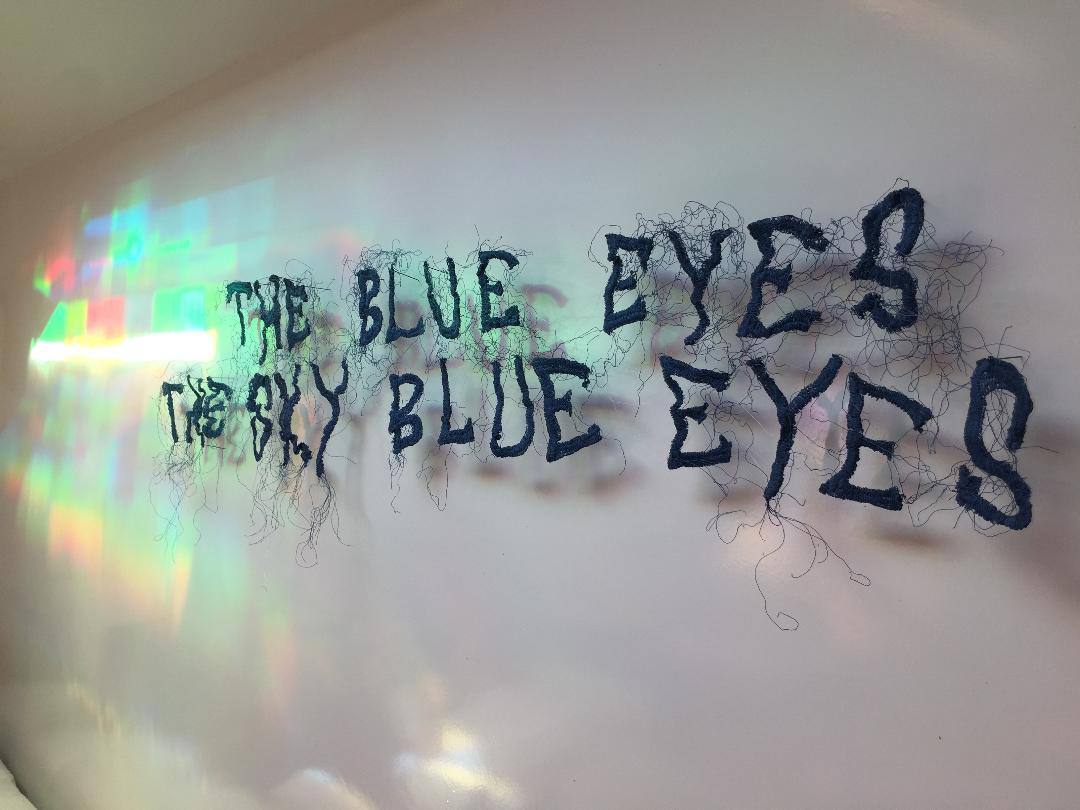
My favorite artist room is “Utopia” designed by Sherry Hayslip. If I were depressed or had artist’s block, this is the room I would want to live in. Carmen Menza’s custom-designed colored sky light Opaline Skies transforms the space and creates rainbows of light throughout the day and night. She’s best known for her colored light boxes, which are also featured in the room. The skylight is a new design for her, one that’s seamlessly integrated within the architecture of the space. Rebecca Carter’s delicate thread sculpture, The Blue Eyes, is prominently displayed on one wall. This piece reminds me of both Toni Morrison’s novel The Bluest Eye and Derek Jarman’s film Blue. Dan Lam’s drip sculptures Goldilocks and Dark Matter add an unexpected flourish to the book shelves. Hayslip included other artists as well.
The sculpture on the far wall is by Michael Wilson
Michael Wilson
The main benefit for artists participating in this kind of event is for potential collectors to see how art fits within the domestic sphere. I think it can be very difficult for patrons who see work in a gallery to imagine how it may fit in their home environment. Historically, any Kips Bay House gets a lot of media coverage. My hope is that this brings more attention to the talent we have here in Texas.
Study by Jan Showers. Painting by Robert Jessup
A work by David Shrobe
The lounge is by Cravotta Interiors, the painting is by Carl Hammond
This bathroom is by Doniphan Moore Interiors
The backyard design is by Melissa Gerstle
Porch by Tracey Hardenburg Designs
Another exterior view
Available to tour through Oct. 25, 2020. Go here for details.
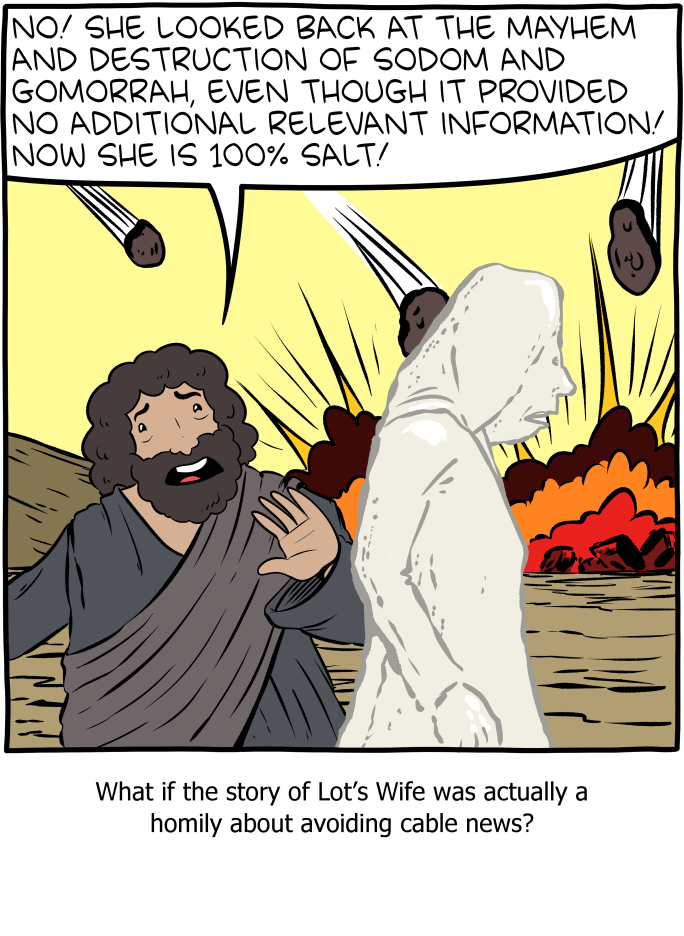
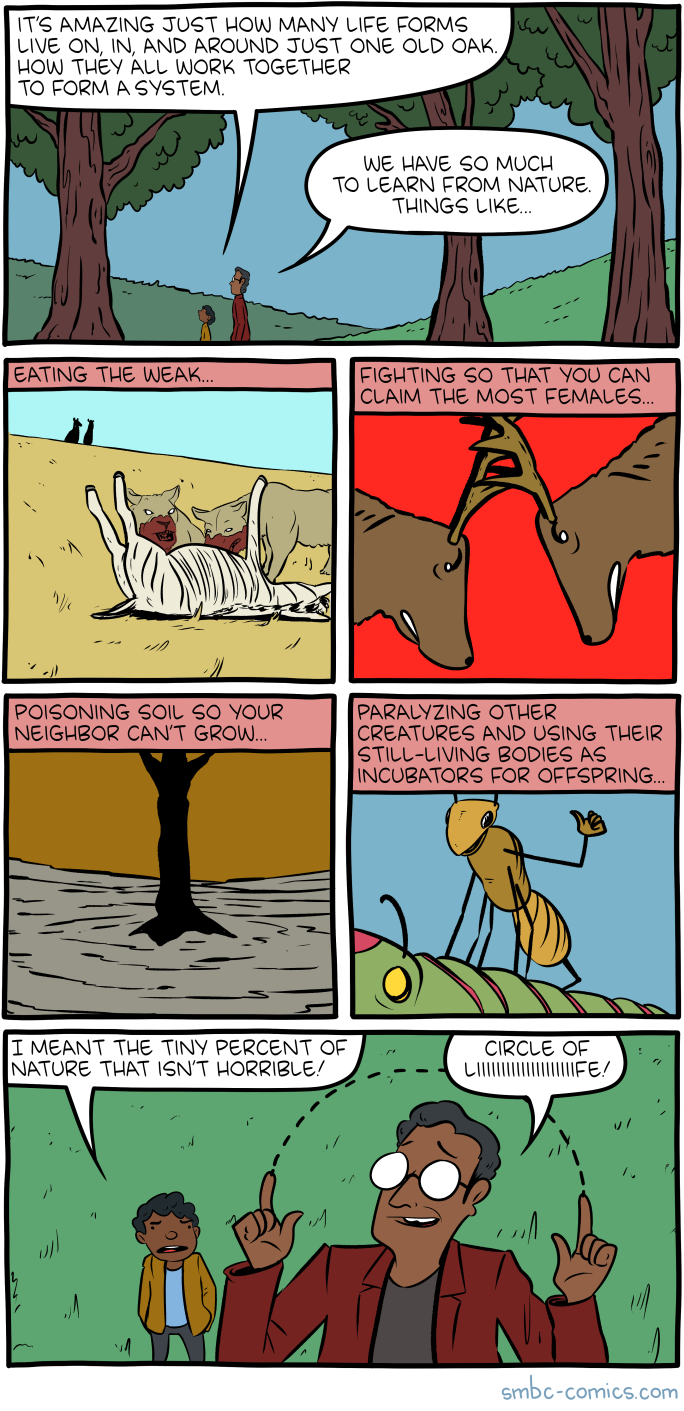
Hovertext: I used to watch a lot of news and commentary until one day I tried to tally up what I had learned during a month of it and found the quantity of facts could fit on a postage stamp.
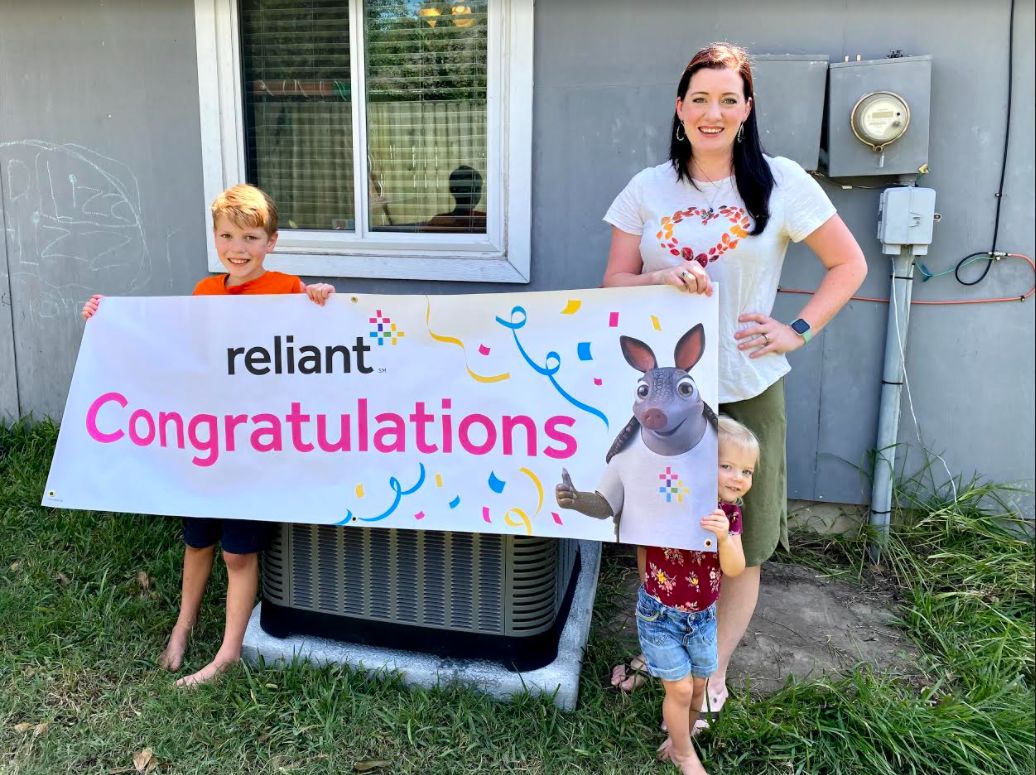
We’re excited to announce the second winner of a complete AC system from Reliant! As you may recall, for the second year in a row, our sponsor has given away two AC systems to Houston area residents to help them beat the heat—and there has been plenty of heat to beat this year.
The winner of Phase II of Reliant’s AC Giveaway, Cassie and her family. (Photo courtesy of Reliant)
The winner of this year’s second AC System is Cassie, who lives in Friendswood. She has four children, some of whom are participating in virtual learning this fall due to COVID-19. She found out about the contest through our site’s Facebook page and decided to enter to keep her family comfortable while working and schooling from home safely. The family’s previous AC unit was in decent condition, but leaked water, wasn’t placed to code, and didn’t cool the house efficiently. So the installation of the new unit will make a world of difference for Cassie and her family. After learning that she had won the contest, here’s what Cassie had to say:
We are so grateful for Eric Berger and his weather team. They are our number one source of information! Winning this sweepstakes is such a bright spot after a truly very difficult summer. Thank you, thank you to Space City Weather and Reliant!
Likewise, we are thankful for our readers, as well as Reliant, who has been a great, long-time sponsor of our site. They keep the lights on for us, figuratively and literally.
In addition to providing electricity, Reliant alos offers AC and heating services, generators, indoor air quality checks, and thermostats through their home services division, plus special offers for Reliant customers. Check out this link for more information.
Before, and after. (Reliant)
This will wrap up the AC giveaways for 2020, but we’ve got some big things planned for Space City Weather and Reliant in the coming year, so be on the lookout for announcements soon. Thanks to everyone who participated!
Submitter: We had a homeschool family Interloan this book for schooling purposes. We are so glad it is NOT on our shelves nor will it be. Reviews praise the artwork but that does not save this book. Besides the fact it is quite old with original copyright of 1955, it is just all wrong for educating children about Columbus. Using terms of “red skin savages” and “yellow skin” and “slanty eyes” is not acceptable; it is all stereotypes and glorifying the “white explorers” who save everyone they discover. This book will only teach you all the wrong facts about Columbus!
Holly: Not to mention it’s all scribbled in! (Submitter informs me that they used the computer to highlight the passages below. I had originally blamed that on naughty homeschoolers too.)
Thanksgiving in Canada is known simply as Thanksgiving — or action de grâce! if you’re fancy. It’s never called “Canadian Thanksgiving.” National adjectives are reserved for American Thanksgiving. Similarly, Canadian bacon is a myth, created to out American operatives.
History
In America, Thanksgiving is a celebration rooted in colonialism, sugarcoating the bloody interactions between pilgrims and indigenous people. In Canada, it has nothing to do with pilgrims. We sugarcoat our colonial history on other days, like Canada Day and Sir John A. McDonald Day, which celebrates our first and most racist prime minister.
Date
American Thanksgiving falls on the fourth Thursday of November, which is absurd. Who has a holiday fixed on Thursday? Canadians, being sensible, hold Thanksgiving on the second Monday in October, allowing for a long weekend of gluttony. Canadians traditionally eat first Thanksgiving dinner on Saturday, followed by in-law Thanksgiving dinner (or step-family Thanksgiving dinner in some regions) on Sunday, and leftover Thanksgiving dinner on Monday.
Shopping
Canadians don’t partake in Black Friday.* The day following Thanksgiving is known as Regular Tuesday. Canadians celebrate Regular Tuesday by scoffing at Americans and their crass, commercialized holidays, bragging that they’ll wait until Boxing Day (the post-Christmas holiday once meant to give alms to the poor and now a Canadian shopping holiday) to get their discounted HDTV.
*Unless the dollar’s at par, in which case all Canadians call in sick on Black Friday and drive to Buffalo (known traditionally as a Buffalo Jump).
Thanksgiving Dinner
The Thanksgiving dinner in Canada bears little resemblance to its American counterpart. Yes, there’s turkey and the usual fixings, but Canadian law mandates that Thanksgiving meals include butter tarts, blueberry grunt, and Margaret Atwood’s famous bourbon pecan cake from her 1987 Canlit Foodbook. The bulk of the Canadian literary icon’s fortune is said to be derived from royalties from this state-mandated recipe.
Arts & Crafts
American schoolchildren celebrate Thanksgiving by making hand turkeys wearing pilgrim hats. In Canada, Thanksgiving is rooted, in part, in an 1872 celebration honoring the health of the Prince of Wales. As such, Canadian children celebrate their history with hand Princes of Wales.
Football
Americans spend their Thanksgiving holiday watching American football. Canadians don’t do anything of the sort — they watch football instead (no national adjective, see?). Football in Canada is nothing like in America. It features three downs, a slightly larger field, and something called a rouge — a rare and incredibly underwhelming single point score.
Parades
The annual Thanksgiving parade is a quintessential American tradition. But in Canada, a “Thanksgiving parade” is a term for an incredibly lewd act. Under no circumstances should you ever invite a Canadian to a “Thanksgiving parade” or ask them what they think of the “Thanksgiving float.”
Character Flaws
Americans are largely insular and unaware of the Canadian holiday. In contrast, Canadians are a fragile, passive-aggressive lot who will silently hold a grudge against any American who doesn’t acknowledge their very distinct cultural celebration.
This spring, in the early days of the COVID-19 lockdown, my family joined thousands of other Houstonians in taking advantage of the car-free streets to go for long bike rides. It was surreal. Streets in Houston are for cars, not people, and yet there they were: People on brand-new bicycles, seeing the city up close for the first time. Kids rode bikes in packs like characters from The Sandlot. Families, like mine, luxuriated with toddlers on once-dangerous streets. Bike rentals skyrocketed.
In cities across Texas, people were unable to gather in their usual spots—offices, malls, movie theaters—without risking disease and death. Large swaths of the state began to suffer from a collective case of cabin fever. In response, Austin, Dallas, and San Antonio closed streets to cars so that people could walk, bike, and safely social distance outdoors.
Houston, meanwhile, failed to formalize its car-free streetscape beyond a single pilot project. I learned that lesson firsthand as we rode around Rice University one Sunday morning at the end of May, when a car nearly hit us while speeding on the way to a red light. The natural order had returned to Houston. The streets belonged, once again, to cars.
I once heard someone say that if aliens were to ever visit Houston, they would surmise that we had one law above all else—the cars must be happy.
When forced to choose between cars and people, the fourth-largest city in the United States has a long history of siding with the former. Houston infamously doesn’t have zoning, but that laissez-faire attitude goes out the window when it comes to regulations and laws that promote driving ahead of any other form of transportation. Buildings must be a certain distance away from the street, inhibiting walkability. Parking minimums mandate that businesses provide a massive number of spots for cars, forcing developers to make every building look like a feeder road strip center. Businesses have to receive special permission to put shade over sidewalks—a necessity for the six-month season we call summer—because the awnings illegally trespass into the public right of way. And, with some exceptions, sidewalk maintenance itself is the responsibility of private developers instead of public officials.
I once heard someone say that if aliens were to ever visit Houston, they would surmise that we had one law above all else—the cars must be happy.
The people, on the other hand, are less cherished. In 2018, an investigation by the Houston Chronicle found the metro area’s streets to be the deadliest in the nation for drivers, passengers, and pedestrians. According to the Chronicle, 640 people die on Houston-area roads each year, and 2,850 more are seriously injured. Those deaths, wrote the series’ authors, “are met largely with silence.”
People on foot are particularly vulnerable. While drivers are much more likely than pedestrians to be involved in a car crash, pedestrians die in similar numbers.
To its credit, the city heeded the exposé and adopted a Vision Zero plan to fix particularly dangerous roads. It started to install crosswalks and rebuild intersections. But progress comes in fits and starts. A city-led program to help build and repair sidewalks ended up helping a total of two residents. The city continues to support a $7.5 billion plan to expand an interstate through residential neighborhoods.
Although Houston has struggled to build a cityscape for people outside cars, it has at least started to tear down the regulations that make safe, walkable areas a near impossibility. Last year, Houston City Council eliminated parking mandates in the dense Midtown and EaDo neighborhoods. And in August, it unanimously approved the Walkable Places and Transit-Oriented Development ordinances, which will encourage pedestrian-friendly designs in areas near transit stops and in certain neighborhoods.
I’ve been thinking about Houston’s streets during COVID-19, and not just because I’ve been desperate to get out of my house. Over the past several months, Texas politicians, including Lieutenant Governor Dan Patrick, have tried to argue that we should all learn to live with COVID-19—or, more accurately, die with it. The argument sounds familiar to Houstonians who have demanded the city consider people’s safety ahead of all those happy cars. The economic risk of ditching the status quo is too high, skeptics say. Other places may have enacted policies that saved lives, they say, but we’re different.
But for a few weeks this spring, I saw how Houston could be a city for people beyond their cars. The city should not let the vision fade as life finds its new normal.
Four planned days of Senate confirmation hearings for President Trump’s latest Supreme Court nominee, Judge Amy Coney Barrett, begin today. And they are going to be a doozy.
Confirmation proceedings have generally gotten much more contentious over the years. But the fight over Barrett could be among the most rancorous yet. The presidential election is only three weeks away, yet Republicans are pushing ahead with the confirmation even though most Americans think they should wait; Trump and two Republican senators on the Judiciary Committee have tested positive for COVID-19, throwing the whole timeline into jeopardy; and Barrett, if confirmed, would replace a justice who was in many respects her polar opposite, making the court the most conservative it’s been in 70 years.
Even in a moment of deep partisan hatred, this is a particularly explosive brew.
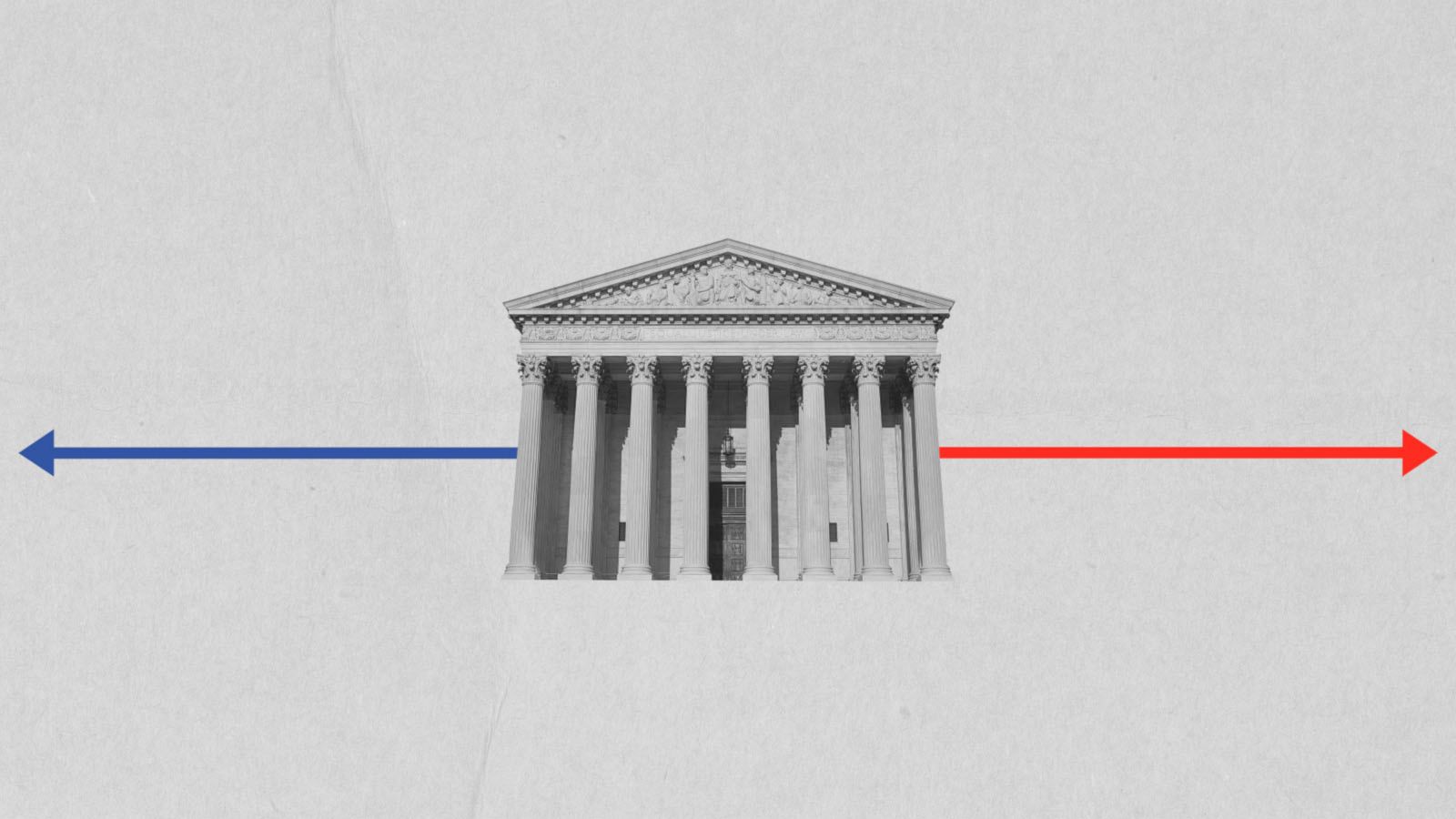
But the ideological fate of the Supreme Court isn’t the only thing on the line this week. The Supreme Court’s reputation as an apolitical, independent branch of government is also at stake.
During their confirmation hearings, would-be Supreme Court justices usually present themselves as neutral arbiters of law who make their decisionsabove the political fray. And that’s for good reason, since they’re unelected officials who would serve lifetime appointments on the most powerful court in the country. But faith in the Supreme Court is lower than it used to be, and confirmation hearings have been getting more and more partisan.
A bruising confirmation process will still likely result in Barrett’s ascension to the court, but that doesn’t mean its reputation as an institution isn’t at risk. If Americans become convinced that Barrett and the other justices are brazen political actors, public confidence in the court could erode further, opening the door to radical changes to the court, including the possibility that Democrats will try to add justices if they win the White House and Senate in November.
Faith in the Supreme Court has been waning
The Supreme Court is the branch of government Americans trust most. But at a moment when trust in most parts of government is at an all-time low, that isn’t saying much. According to polling by Gallup, Americans’ confidence in the Supreme Court has fallen significantly over the past two decades. A 2020 poll conducted before Justice Ruth Bader Ginsburg’s death found that only 40 percent of Americans said they had “a great deal” or “quite a lot” of confidence in the Supreme Court, down from a two-decade high of 50 percent in 2002.
That relatively low level of confidence isn’t the worst the Supreme Court has seen in recent years, though. In 2014, only 30 percent of Americans had “a great deal” or “quite a lot” of confidence in the high court, and nearly as many (24 percent) said they had “very little” confidence. The court’s current levels of support may be bolstered by the fact that Chief Justice John Roberts, who has held the crucial “swing” vote since Justice Anthony Kennedy’s retirement in 2018, joined the liberals in several high-profile decisions this year, effectively keeping the court in line with public opinion.
Polling by the Pew Research Center has also seen Americans’ views of the Supreme Court rebound a bit since hitting a low point around 2015. But that could easily change if Democrats’ support for the court plummets. And as I wrote last year, a wide partisan gap in how the court is viewed is especially bad news for the justices, because it could underscore the idea that the court itself is a partisan institution.
Confirmation votes are increasingly partisan
It’s hard to know, of course, how much Americans’ views of the Supreme Court are influenced by the confirmation process. But it’s clear that partisan tensions around the court have ramped up a lot in the past decade. As the table below shows, it was once common for justices to be confirmed with the support of most senators. Even as recently as 2005, the vast majority of senators voted to confirm Roberts, who had strenuously reassured them during his confirmation hearings that he would not be an ideologue.
Supreme Court confirmations are growing more contentious
Supreme Court confirmation votes in the U.S. Senate, since 1975
Votes
Year
Nominee
Yes
No
2018
Brett M. Kavanaugh
50
48
2017
Neil M. Gorsuch
54
45
2010
Elena Kagan
63
37
2009
Sonia Sotomayor
68
31
2006
Samuel A. Alito Jr.
58
42
2005
John G. Roberts Jr.*
78
22
1994
Stephen G. Breyer
87
9
1993
Ruth Bader Ginsburg
96
3
1991
Clarence Thomas
52
48
1990
David H. Souter
90
9
1987
Anthony M. Kennedy
97
0
1987
Robert H. Bork
42
58
1986
Antonin Scalia
98
0
1986
William H. Rehnquist*
65
33
1981
Sandra Day O’Connor
99
0
1975
John Paul Stevens
98
0
*Confirmed as chief justice
Source: United States Senate
Confirmation votes are rarely so harmonious today.
Trump’s first Supreme Court nominee, Neil Gorsuch, received only 54 votes when he was confirmed in 2017, and Brett Kavanaugh was confirmed by a narrow two-vote margin the following year. Barrett will probably be confirmed by a similarly tight vote. And Democrats will likely go out of their way to portray her as a partisan conservative who will overturn precedents she disagrees with, rather than be a neutral jurist who respects the court’s prior decisions. Her record advocating restrictions on abortion rights is likely to come under scrutiny, as is a 2017 law review article in which she criticized Roberts’s 2012 vote to uphold the Affordable Care Act.
The partisan hostility will be elevated, too, by the recent memory of Senate Majority Leader Mitch McConnell’s decision to block the confirmation vote for Judge Merrick Garland, then-President Obama’s choice for the seat that was eventually filled by Gorsuch. At the time, McConnell argued that the winner of the upcoming presidential election — which was happening more than eight months after Justice Antonin Scalia had died unexpectedly, leaving the seat vacant — should get to fill the seat. But now, McConnell and Senate Republicans are rushing to confirm Barrett with only three weeks left before a presidential election.
It’s risky for the court to veer outside the mainstream
There’s no obvious reason for Barrett or any other Supreme Court justice to care about public opinion once they’re safely ensconced on the court. After all, one argument for giving judges a lifetime appointment is to insulate them from the vagaries of politics. But if Barrett is confirmed, Democrats’ efforts to paint her as a partisan figure could be especially damaging if the conservative majority then takes a hard right turn on closely watched issues.
“If Barrett is confirmed and pushes the court’s decisions to the right, I suspect many decisions will be much more conservative than the public prefers, these decisions will get a lot of media attention, and public confidence in the court will decrease,” Peter K. Enns, a political science professor at Cornell University who studies the Supreme Court and public opinion, told me in an email.
It’s possible that if Barrett is confirmed on schedule, and takes a seat on the Supreme Court before Election Day, controversial rulings won’t be far behind either. On the day after the election, the court is hearing a major case that could allow private organizations receiving public funding to deny services to LGBTQ people. Broader religious liberty protections are a priority for several of the conservative justices, too. Justices Clarence Thomas and Samuel Alito already wrote this month that the 2015 ruling that legalized same-sex marriage was wrongly decided and has put significant burdens on religious Americans who object to gay marriage. A week after the election, the justices will then hear another challenge to the Affordable Care Act.
Research by Enns and other scholars has found that the Supreme Court rarely gets too far outside mainstream public opinion. But when that does happen, faith in the court drops and calls for court packing or term limits usually aren’t far behind. In recent times, politicians haven’t acted on those threats — but that was because the court backed down. Most famously, in the late 1930s, after then-President Franklin Delano Roosevelt announced his plan to add as many as six new justices to the Supreme Court, a member of the court’s conservative majority suddenly started voting to uphold New Deal legislation that was very similar to laws he and the other conservative justices had gutted the year before.
If Barrett is confirmed by Election Day, and the Democrats win the White House and Senate, the Roberts court could be heading for a similar reckoning. Packing the court or enacting term limits for Supreme Court justices would be radical, historic moves — but if the court’s legitimacy is eroded in the eyes of the public, it could be easier for them to become reality.
Almost nine minutes after the full-time siren sounded, the Wallabies and All Blacks finished in a 16-16 draw in what will go down as a Bledisloe Cup thriller.
It’s not just social networks and digital marketplaces cracking down on QAnon. Peloton has confirmed to Business Insider that it has pulled QAnon hashtags that supporters of the conspiracy theory were using to connect to each other on the fitness platform. A spokesperson said Peloton removed the content due to a “zero-tolerance” approach to “hateful content.”
Peloton removes anything that “does not reflect our company’s values of inclusiveness and unity or maintain a respectful environment,” the representative said.
QAnon has revolved around unsupported claims that parts of the US government are involved in human tracking and pedophilia, and that Donald Trump would ultimately take those offenders down. Some of the theory’s more extreme devotees have been involved in violence, hate and harassment, with the FBI going so far as to declare QAnon a domestic terrorist threat.
The tags didn’t appear to have large followings — a Q tag spotted by Washington Post opinions editor Drew Goins had 63 members shortly before it became unusable. Still, this shows just how difficult it can be to contain potentially harmful online movements, especially for Peloton and others that don’t normally have to aggressively moderate their services.
 Have countless people over the past two decades prematurely predicted the imminent victory of Democrats in Texas? Yes. Is it possible that some people are making the same mistake today? Also yes. 2002 “[Texas] never was a Republican state. It’s just a Bush state.” —Former Democratic Texas comptroller John Sharp 2002 “Over the next decade, a Democratic presidential candidate could also win the electoral votes of Georgia, Tennessee, and, yes, even Texas.” —Authors John Judis and Ruy Teixeira 2008 “I don’t know if it’s four years or eight years off, but down the road, Texas will be a presidential battleground.” —Barack Obama’s Latino outreach official, Cuauhtémoc Figueroa 2008 “Texas is ready to turn blue.” —Democratic National Committee chairman Howard Dean 2010 “Texas Dems are presenting…View Original Post


 On the clear, cool morning of November 13, 1963, a convoy flanked by blue Air Force police cars with flashing lights turned off the tarmac at Kelly Air Force Base, southwest of downtown San Antonio. It wound its way carefully across Interstate 410 and into the neighboring Lackland Air Force Base’s Medina Annex, slowly passing a neighborhood made up of new ranch homes. At the center of the convoy, an ungainly vehicle called a straddle carrier, whose driver sat in a cab high above the roadway, held precious cargo slung between its four wheeled legs. The vehicle resembled a giant spider protecting its eggs. The convoy drove into Site King, a secret area in Medina where about a hundred humpbacked rectangular bunkers made of fortified steel…View Original Post

























 Columbus