Shared posts

10 Mar 13:38

Farewell to a Beloved State Park

by Asher Elbein

Mildred Hempel likes to take photographs. She likes to photograph birds, otters, and even the dragonflies that flit like miniature hawks across the marshes of Fairfield Lake State Park, a meandering preserve 90 minutes southeast of Dallas. “It’s about patience,” Hempel told me. “You sit still and wait, and the dragonflies will fly right back to the same spot.”

Photography is the pursuit of the perfect moment—the image you can freeze and endlessly revisit, undiminished and undimmed. It’s a thing that lingers, a constant in your life. For Hempel, Fairfield Lake State Park has been one of those constants. She first visited as a girl in 1977, back when the coal mine on the other side of the artificial lake still ran, and the Big Brown Power Plant kept the water warm even in December. For nearly 50 years, thousands like her have come, lured by the quiet campgrounds, the packed fisheries, and the miles of trails. Some are local, like Hempel. Others come from further afield: Waco, Dallas, even Oklahoma, making periodic trips. You could do that: pop in once a year, walk the trails, do a little fishing. The park would be there for you. Change as it might with the seasons, it wasn’t going away.  

Then, in mid-February, the Texas Parks and Wildlife Department (TPWD) announced that Fairfield Lake State Park—long leased from Irving-based energy company Vistra—had been sold to a private developer. TPWD had 120 days to clear its property off the site before the new owners took over; the park would close February 28, sold to a developer who planned to turn it into a private gated community. The announcement made news throughout the state, sparking petitions, public outcry, and promises of action in the Legislature.

Today, the park’s future remains in doubt. By the time you’re reading this, however, the gates have locked. The facilities are closed, quite possibly forever. And the people who love the park—staff, locals, and visitors—have been forced to say goodbye. 


The former Fairfield Lake State Park sits in Freestone County, at the doorstep of East Texas. When I drove out to visit on February 24—four days before it closed—the first dusting of green shoots had appeared on the park’s trees. Heavy winds whipped over the lake, rattling the reedbeds. Choppy waves raced across the shallows. 

When I arrived, I hopped in a truck with Daniel Stauffer, the park’s superintendent. Together we drove out to tour the facilities, Stauffer pointing out the day-use sites, campgrounds, and fishing pier. 

The lake that gives the park its name is also the key to its origin, Stauffer explained—and, perhaps, its destruction. In 1970, the Dallas Power and Light Company opened a power plant in the county, fed by the lignite coal being strip-mined immediately to the east. The power plant needed a reservoir to keep its equipment cool, so the company dammed the Big Brown and Little Brown creeks to create a 2,400-acre lake. A year later, the site’s owners—which, after the usual corporate merry-go-round of acquisitions and mergers, ended up as Vistra—leased an 1,800-acre lakeside parcel, composed largely of peninsulas, to TPWD at no cost. The state park opened in 1976.
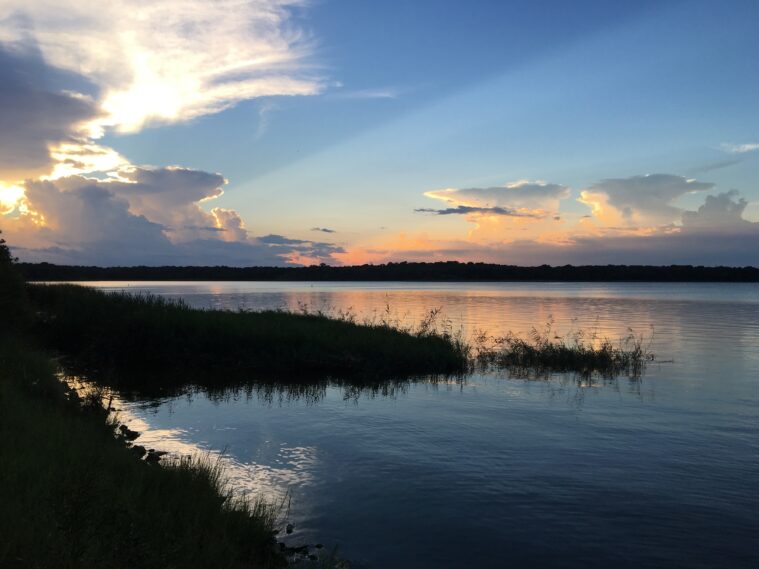
Sun sets over Fairfield Lake State Park, making the forest into dark silhouettes.
While some hold out hope for Fairfield Lake State Park, its future is uncertain at best. Shutterstock

Despite its longevity, the park’s position was always precarious. Rather than being owned by the state or federal government, Fairfield Lake was built atop private land—and that meant its fate was at the owner’s whim. (A few other Texas state parks—including Colorado City State Park and Martin Creek Lake State Park—are subject to similar agreements with Vistra.) 

As the decades passed, however, TPWD received continual lease renewals and invested a cumulative $70 million on park infrastructure: staff facilities, campgrounds, roads, electrical, and sewer and water systems. The waters of the lake ran warm enough that people swam and water-skied in the winter, or fished for thriving populations of tropical redfish and tilapia. 

“This lake is generational—grandparents have brought kids, who’ve now brought their children,” Stauffer said as we drove. “People have grown up and are now growing their children up in Fairfield Lake State Park.” 

Stauffer began working as park superintendent in 2019, when the park’s future was beginning to look a bit shaky. A year earlier, Vistra had closed the power plant and informed TPWD that they weren’t interested in renewing the free lease agreement. Instead, they were putting the whole parcel up for sale. The park’s fate would be in the hands of the eventual purchaser.

“Parks and Wildlife made plays at purchasing the park property itself,” Stauffer said. “But at the time, Parks and Wildlife didn’t have a dedicated revenue stream and we were at the mercy of the Legislature as to what our budget allotted. The revenue we had at our disposal just wasn’t appealing enough to Vistra for them to budge.” Then, the passage of Proposition 5, a November 2019 state constitutional amendment that funnels sales tax revenue from sporting goods to TPWD, created some hope the department could bid competitively.

Vistra amended the lease to keep the park open as long as possible, said company spokesperson Mirana Cohn, avoiding the originally projected October 2020 park closure. Eventually, TPWD and Vistra worked out a deal to end the lease with 120 days’ notice. In the meantime, Vistra posted the land for sale in 2021, to the tune of $110 million. At the time, despite the passage of Prop 5, the state did not submit a formal bid. 

Instead, in early 2022, Vistra entered a contract with a new buyer: Todd Interests. A Dallas-based real estate company run by Shawn Todd, Todd Interests is responsible for various high-end developments in downtown Dallas. (The company didn’t respond to requests for comment for this piece.) The company plans to build a private gated community on the park site, complete with multimillion-dollar homes and a private golf course.

“This lake is generational—grandparents have brought kids, who’ve now brought their children. People have grown up and are now growing their children up in Fairfield Lake State Park.”

According to texts leaked to the Dallas Morning News, Texas Parks and Wildlife Commissioner Arch “Beaver” Aplin did make an attempt to purchase the land directly from Todd, but he couldn’t close the deal. Todd offered to sell the parkland to the state, minus the hiking trails on the park’s northern peninsula, for $60 million, with Todd keeping water rights and restricting boating on the lake. Aplin texted back that the northern trails were nonnegotiable.“I just spoke with the Lt Gov and he reminded me I asked him and the leadership for the ok to buy it all, not the park minus,” he wrote, scuttling the deal. 

Aplin’s counteroffer was $60 million to Vistra for the whole property, plus a tax incentive—and for Todd to consider the added value of “altruism,” plus naming rights. Aplin’s goal, he told the Dallas Morning News, was to buy the lake outright and expand the park. Attempts to negotiate were reportedly chaotic, Todd Interests and Vistra spokespeople allege, with no formal offers and state officials unable to make up their mind whether they wanted to purchase just the park or the entire property, including the reclaimed mine.

For now, it seems like the state gets nothing. The final notice of lease termination was delivered on February 13, giving TPWD 120 days to remove physical infrastructure like fishing piers, the park’s bird watching platform, and park equipment. From there, TPWD made the decision to close the park on the February 28. “Absent any cooperation or interest in working with us from the developer, we have no other options,” Aplin said in a statement announcing the closure. “Rest assured Commissioners remain committed to working with Todd Interests to maintain this important public asset and grow outdoor recreation in Texas.”

Vistra has taken pains to emphasize that while they value their ongoing relationship with TPWD, the fate of Fairfield Lake is no longer their problem. After nearly half a century of renting land to the state at no cost, “any possible arrangements for the property to serve as a public park in the future will need to be decided between the buyer and TPWD,” said Brad Watson, Vistra’s senior director of community affairs, in a statement to the Texas Observer.  


If the development deal proceeds, Stauffer said, the impact on park ecology could be drastic. The preserve occupies a natural crossroads: a triangle of eco-regions that include towering oak trees, pine groves, and open blackland prairie. That mix of habitats shelters an abundance of flora and fauna—protected species like least terns and timber rattlesnakes, charismatic animals like bald eagles and river otters, plus migratory birds, beavers, and deer. Since the power plant closed, the lake has cooled to a more appropriate temperature, its fisheries now producing enormous bass and catfish that fuel fishing tournaments. 
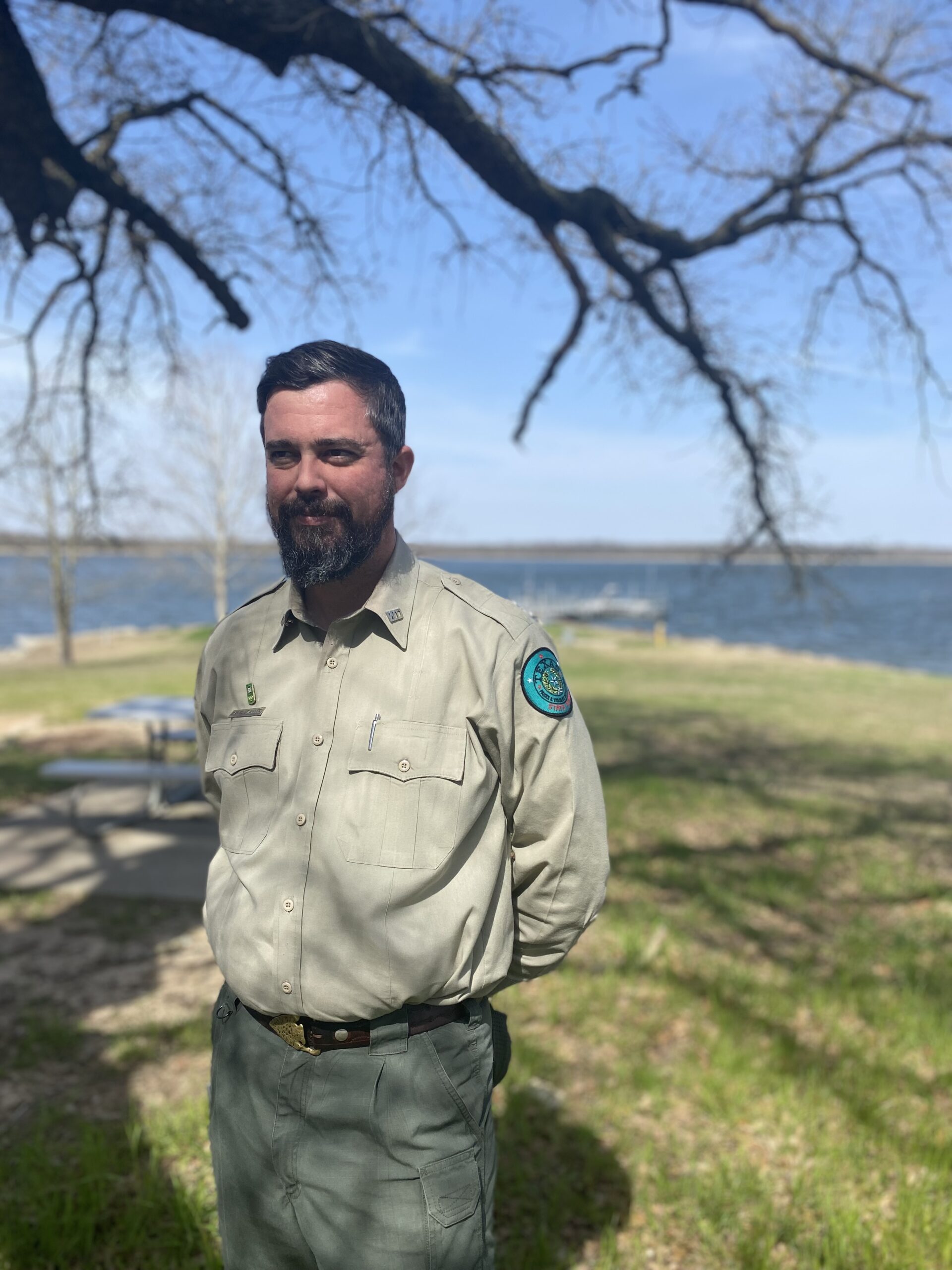
A bearded white man stands in a park ranger's uniform, his hands behind his back, with the wide open green and blue of Fairfield Lake State Park behind him. He is shaded by the branches of a leafless winter tree.
Park superintendent Daniel Stauffer fears for the animals and ecosystem of Fairfield Lake if development proceeds as planned. Asher Elbein / Texas Observer

“If the developers are able to do what they intend—to … clear land and create pad sites, the landscape would be altered irreparably in a way that would not allow for the wildlife,” Stauffer said. The lake isn’t likely to get off either: Having numerous private homes with verdant lawns—and their attendant pesticides and fertilizers—could end up doing significant damage to the aquatic ecosystem.  

There are likely economic impacts as well. During my visit, I stopped in at the Armadillo Emporium, an antiques and crafts store on the main street of Fairfield, the tiny town of 6,000 for which the park is named. The store is one of the community’s largest businesses. Its owner, Julie Emons, sat at the counter unpacking El Arroyo-branded mugs, while her brother Andy—a local artist—sat in a nearby rocking chair. The siblings are fifth-generation Fairfielders: Julie was 3 when the park opened in 1976, and she and her brother have grown up with the park. 

Many locals leave Fairfield on the weekends, Julie said. With the mine long-since closed, the lake is pretty much all they have to offer. That morning, five different out-of-town couples had stopped in, from Oklahoma and East Texas, all drawn by the park. “Our business is off of people traveling and touring here. On an average weekend, we get probably 75 percent of our business from campers at the state park,” Julie said.  If the park’s turned into a gated development, they’ll lose all that traffic. “All these businesses downtown and especially out toward the lake are going to suffer.”

The closure of the Fairfield park is also a step backward for Texas’ public land stewardship, something the state has struggled with. The nonprofit Environment Texas Research and Policy Center recently found that Texas ranks just 35th in the nation for public parkland, with 54 percent fewer state park acres per capita than Florida. During the early years of the COVID-19 pandemic, statewide park visitation exploded and has yet to drop: This year, the number of visitors to Texas parks is expected to crack 10 million for the first time, and many parks are battling overcrowding. In other words: The state needs more parks, not fewer.

Texas ranks 35th in the nation for public parkland, with 54 percent fewer state park acres per capita than Florida.

“A resource that’s been at the disposal of the people of Texas and [people] of all nationalities—you’re removing that resource from public hands,” Stauffer said. “Losing even just a portion of publicly accessible land is just sad.” 

Adding insult to injury, this year marks the 100th anniversary of the Texas parks system, making the loss of any public land a particularly embarrassing blow. As a result, there’s been an unusual scramble on the part of state legislators and politicians to signal support for keeping the park open. “The prospect of a developer taking this treasure out of our state park system is deeply troubling, especially at a time when both the Governor and members of the Legislature have called for the expansion of state parks across the state,” state Representative Trent Ashby, a Lufkin Republican and chairman of the House’s Culture, Recreation and Tourism Committee, wrote in a typical statement. In an interview with the Fort Worth Star-Telegram, Governor Greg Abbott voiced support for keeping Fairfield Lake State Park open, saying, “We’re working with Texas Parks and Wildlife on doing everything we can to preserve the park.” 

Republican House Representative Angelia Orr, whose district includes Freestone County, even filed a bill that gives the state the right to acquire the land through eminent domain, citing a vested interest in preserving the park: “This cherished corner of Texas has blessed our local families and countless visitors for generations, and it’s hard to see it lost. As a result, we are now working on legislation to prevent this from ever occurring in any of our other beautiful state parks going forward.” GOP state Senator Charles Schwertner has filed an eminent domain measure as well.


It remains to be seen what legislation might gain steam at the Lege and whether TPWD might manage to negotiate a deal with Todd Interests. Stauffer remains hopeful that some solution can be found, though that may be because the alternative is difficult to imagine. 

“It’s an emotional rollercoaster,” he told me as we drove through the park. This land is where he met and fell in love with his wife, another TPWD employee; it’s where he found his calling to work in public lands. “Losing that team, my home, the community of Fairfield, losing the park—it’s heartbreaking.”

“Losing that team, my home, the community of Fairfield, losing the park—it’s heartbreaking.”

Stauffer made the rounds, following the road out of a lowland riparian forest full of muddy creeks and up into a swath of blackland prairie and post oak savannah. Omens of the coming sale were everywhere. A powerboat—“the new owners,” Stauffer said quietly—cruised along the lakeshore near the day-use area, past birders and young mothers out with their children. Stauffer stopped to chat with one retiree, who showed him her watercolors of the lake: She’s on a mission to paint every park in Texas, she told him, and she drove hours to capture this one while there’s still time.

Over the last two weeks of the park’s existence, Stauffer said, they saw an unheard-of level of visitation for the season. Some people came hoping to see the place before it disappears behind a locked gate. Others had been coming for years and wanted to make sure they got a last chance to visit. “Folks are unhappy,” Stauffer said. “But everyone’s been very supportive of the staff and of TPWD’s continued efforts to save the park.” 

After leaving Stauffer, I walked down to the park’s birding platform with Hempel, the photographer. We stood there as flocks of teal bobbed amid the shallows of the lake’s far bank, scattering in sudden disarray around a striking hawk. Least terns dove like dropping bombs after fish. 

Hempel leaned against the railing, trying to snap a picture of a passing egret. Her impulse to photograph has taken on new urgency: It’s now an effort to preserve what’s on the brink of slipping away, land in common use for almost 50 years enclosed for the benefit of rich out-of-towners. “We’re unhappy about it,” she told me. “It’s our get-out-stress place. My son and sister come out here to go fishing.  Our children come out here on outings in the spring. They’re not going to get to do that this year. It’s destroying lives, and it’s destroying our wildlife habitats for a golf course.” 

As we talked, a pair of visitors came out to stand with us: Ron Batchelor and Mara Casey, a couple from College Station marking their fourth—and likely last—visit. Together we watched the birds beating their wings against the wind. 

“It’s a shame,” Batchelor said quietly. “There’s not much left of these kinds of places anymore. And now this one’s going away, too.” 
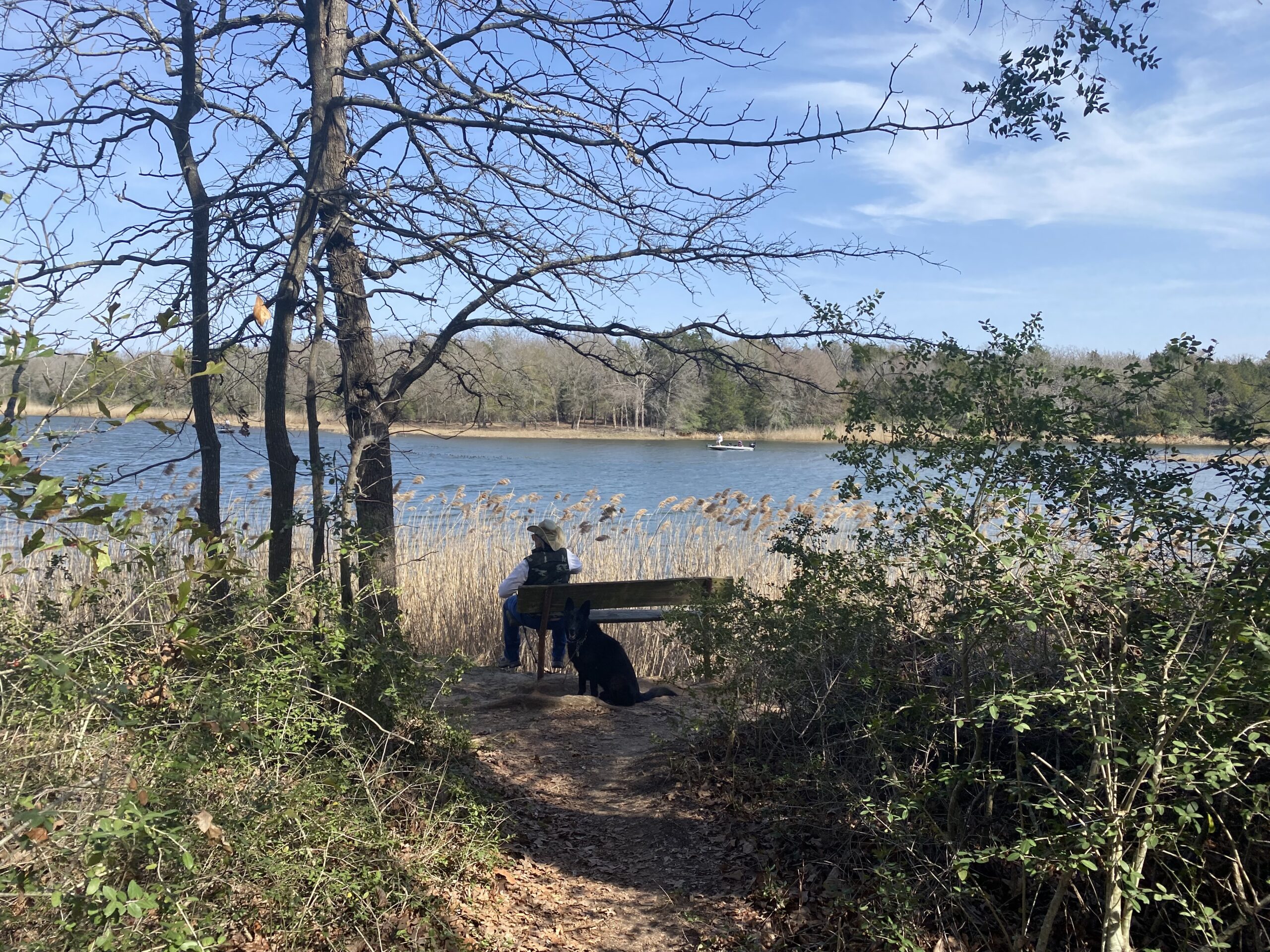
A lone park visitor—and a shaggy black dog—sit by Fairfield Lake at a park bench, with tall winter trees and brush around them.
With 54 percent fewer state park acres per capita than Florida, wild spaces like Fairfield Lake State Park are increasingly rare in Texas. Asher Elbein / Texas Observer

The post Farewell to a Beloved State Park appeared first on The Texas Observer.
10 Mar 12:09

Satish Kaushik, who helped living-dead Ig Nobel Prize winner Lal Bihari, has himself died

by Marc Abrahams

Indian filmmaker Satish Kaushik, who in 2003 helped Lal Bihari, founder of the Association of Dead People, accept the Ig Nobel Peace Prize — and who years later produced a feature film about the life and death and life of Lal Bihari — has himself died. This report in Business Standard brings the sad news:

Satish Kaushik, master of the spontaneous who radiated joie de vivre
From Jaane Bhi Do Yaaron and Mr India to Mandi, Kaushik leaves an indelible mark on Indian cinema

Kaushik, who passed away on the night of March 8 in Gurugram, made the journey from Delhi’s Karol Bagh to the Mumbai movie industry (via a couple of institutional pit stops that shaped him) without ever losing his solid moorings….

He nurtured his own dream of directing his first global film. Initially titled Lal Bihari Mritak, it was about an Uttar Pradesh villager deemed dead in the state’s revenue records and forced to fight tooth and nail to prove he was alive…. It took Kaushik a decade and a half to bring the project to fruition. It took the form of the Zee5 original film Kaagaz, starring Pankaj Tripathi.

Satish Kaushik to the Rescue, in 2003

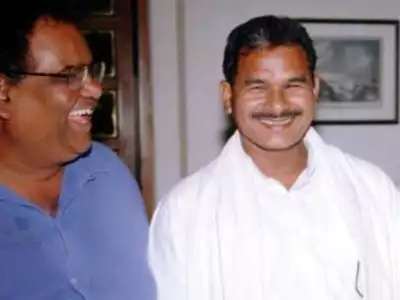
Satish Kaushek (left) with Lal Bihari. Photo: The Times of India.

In 2003 we awarded that year’s Ig Nobel Peace Prize to Lal Bihari, of Uttar Pradesh, India, for a triple accomplishment: First, for leading an active life even though he has been declared legally dead; Second, for waging a lively posthumous campaign against bureaucratic inertia and greedy relatives; and Third, for creating the Association of Dead People. Lal Bihari overcame the handicap of being dead, and managed [with help from Satish Kaushik] to obtain a passport from the Indian government so that he could travel to Harvard to accept his Prize. However, the U.S. government refused to allow him into the country. Satish Kaushik arranged for (and funded) their mutual friend Madhu Kapoor to came to the Ig Nobel Ceremony and accept the Prize on behalf of Lal Bihari. You can watch video of that acceptance, at the Ig Nobel Ceremony:

Several weeks later, the Prize was presented to Lal Bihari himself in a special ceremony in India.

A Tribute from the Prize-winning Prime Minister

There are many tributes in India this week to Satish Kaushik. Observer Voice reports that a special tribute comes from the country’s prime minister:

The Prime Minister, Shri Narendra Modi has condoled the passing away of noted film personality, Shri Satish Kaushik. The Prime Minister tweeted: “Pained by the untimely demise of noted film personality Shri Satish Kaushik Ji. He was a creative genius who won hearts thanks to his wonderful acting and direction. His works will continue to entertain audiences. Condolences to his family and admirers. Om Shanti.”

Narendra Modi is himself an Ig Nobel Prize winner. The 2020 Ig Nobel Prize for Medical Education was awarded to Jair Bolsonaro of Brazil, Boris Johnson of the United Kingdom, Narendra Modi of India, Andrés Manuel López Obrador of Mexico, Alexander Lukashenko of Belarus, Donald Trump of the USA, Recep Tayyip Erdogan of Turkey, Vladimir Putin of Russia, and Gurbanguly Berdimuhamedow of Turkmenistan, for using the Covid-19 viral pandemic to teach the world that politicians can have a more immediate effect on life and death than scientists and doctors can.

09 Mar 21:31

Honduran president ends ban on emergency contraception, making it widely available

by Bill Chappell
Honduran President Xiomara Castro signed a new executive document Wednesday night that will allow open access to emergency contraception.

President Xiomara Castro, the country's first female leader, announced the policy shift in the final hours of International Women's Day.

(Image credit: Office of the Honduran Presidency)

09 Mar 21:25

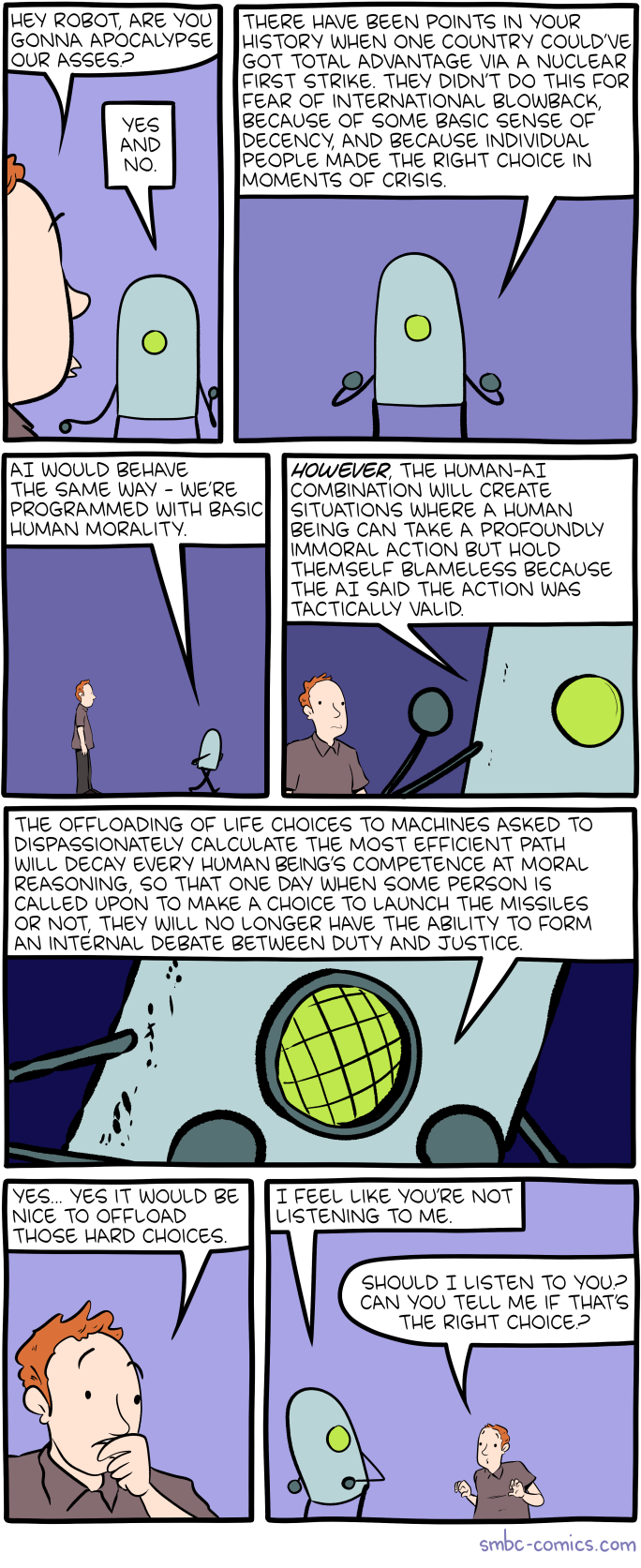
Saturday Morning Breakfast Cereal - Resonsible

by tech@thehiveworks.com


Click here to go see the bonus panel!

Hovertext:
The whole is worse than the sum of its parts sometimes.


Today's News:
09 Mar 19:10

Greeting Cards for Newly Tenured Professors

by Ryan Weber

09 Mar 19:05

The value of good teeth

As a kid, Ryanne Jones' friend accidentally hit her in the mouth with a hammer, knocking out her two front teeth. Her parents never had enough money for the dental care needed to fix them, so Ryanne lived much of her adult life with a chipped and crooked smile.

Ryanne spent a while as a single mom working low-wage jobs, but she had higher aspirations: she interviewed dozens of times a year for higher-paying roles that she was more than qualified for. But she never landed any of them. And to her, it really seemed like the only thing standing between her and a better job was her rotting, brown front teeth.

Our physical appearances can communicate a lot about our financial status. There are some things, such as clothing, that we have more control over. But there are other things that we don't — and they can have serious long-term economic consequences.

This episode was originally run as part of Marketplace's This is Uncomfortable podcast.

Reported by: Reema Khrais

Edited by: Micaela Blei.

Produced by: Zoë Saunders, Peter Balonon-Rosen, Megan Detrie, Hayley Hershman and Daniel Martinez. The Planet Money version was produced by Alyssa Jeong Perry.

Mastered by: Charlton Thorp

Music: Wonderly

Learn more about sponsor message choices: podcastchoices.com/adchoices

NPR Privacy Policy
09 Mar 14:03

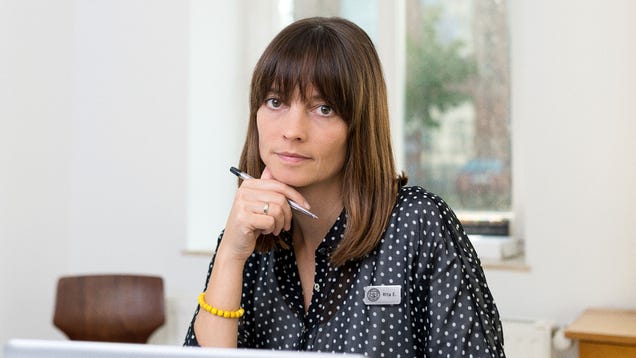
Bored Census Bureau Employee Changes Every Ohio Resident’s Name to Laura

SUITLAND, MD—Saying that at this point she just wondered how long it would take everyone to notice, U.S. Census Bureau employee Rita Edmond confided to reporters Thursday that, out of sheer boredom, she had changed every Ohio resident’s name to Laura. “Ever since I randomly decided to do it this morning, all 11.78…

Read more...

09 Mar 12:53

Fedora Linux editions part 3: Labs

by Arman Arisman

Everyone uses their computer in different ways, according to their needs. You may work as a designer, so you need various design software on your computer. Or maybe you’re a gamer, so you need an operating system that supports the games you like. Sometimes we don’t have enough time to prepare an operating system that supports our needs. Fedora Linux Lab editions are here for you for that reason. Fedora Labs is a selection of curated bundles of purpose-driven software and content curated and maintained by members of the Fedora Community. This article will go into a little more detail about the Fedora Linux Lab editions.

You can find an overview of all the Fedora Linux variants in my previous article Introduce the different Fedora Linux editions.


Astronomy

Fedora Astronomy is made for both amateur and professional astronomers. You can do various activities related to astronomy with this Fedora Linux. Some of the applications in Fedora Astronomy are Astropy, Kstars, Celestia, Virtualplanet, Astromatic, etc. Fedora Astronomy comes with KDE Plasma as its default desktop environment.

Details about the applications included and the download link are available at this link: https://labs.fedoraproject.org/en/astronomy/


Comp Neuro

Fedora Comp Neuro was created by the NeuroFedora Team to support computational neuroscience. Some of the applications included in Fedora Linux are Neuron, Brian, Genesis, SciPy, Moose, NeuroML, NetPyNE, etc. Those applications can support your work, such as modeling software, analysis tools, and general productivity tools.

Details about the applications included and the download link are available at this link: https://labs.fedoraproject.org/en/comp-neuro/


Design Suite

This Fedora Linux is for you if you are a designer. You will get a complete Fedora Linux with various tools for designing, such as GIMP, Inkscape, Blender, Darktable, Krita, Pitivi, etc. You are ready to create various creative works with those tools, such as web page designs, posters, flyers, 3D models, videos, and animations. This Fedora Design Suite is created by designers, for designers.

Details about the applications included and the download link are available at this link: https://labs.fedoraproject.org/en/design-suite/


Games

Playing games is fun, and you can do it with Fedora Games. This Fedora Linux is comes with various game genres, such as first-person shooters, real-time and turn-based strategy games, and puzzle games. Some of the games on Fedora Linux are Extreme Tux Racer, Wesnoth, Hedgewars, Colossus, BZFlag, Freeciv, Warzone 2011, MegaGlest, and Fillets.

Details about the applications included and the download link are available at this link: https://labs.fedoraproject.org/en/games/


Jams

Almost everyone likes music. Some of you may be a musician or music producer. Or maybe you are someone who likes to play with audio. Then this Fedora Jam is for you, as it comes with JACK, ALSA, PulseAudio, and various support for audio and music. Some of the default applications from Fedora Jam are Ardor, Qtractor, Hydrogen, MuseScore, TuxGuitar, SooperLooper, etc.

Details about the applications included and the download link are available at this link: https://labs.fedoraproject.org/en/jam/


Python Classroom

Fedora Python Classroom will make your work related to Python easier, especially if you are a Python developer, teacher, or instructor. Fedora Python Classroom is supported by various important stuff pre-installed. Some of the default applications on Fedora Linux are IPython, Jypyter Notebook, git, tox, Python 3 IDLE, etc. Fedora Python Classroom has 3 variants, namely you can run it graphically with GNOME, or with Vagrant or Docker containers.

Details about the applications included and the download link are available at this link: https://labs.fedoraproject.org/en/python-classroom/


Security Lab

Fedora Security Lab is Fedora Linux for security testers and developers. Xfce comes as a default desktop environment with customizations to suit the needs of security auditing, forensics, system rescue, etc. This Fedora Linux provides several applications that are installed by default to support your work in the security field, such as Etherape, Ettercap, Medusa, Nmap, Scap-workbench, Skipfish, Sqlninja, Wireshark, and Yersinia.

Details about the applications included and the download link are available at this link: https://labs.fedoraproject.org/en/security/


Robotics Suite

Fedora Robotic Suite is Fedora Linux with a wide variety of free and open robotics software packages. This Fedora Linux is suitable for professionals or hobbyists related to robotics. Some of the default applications are Player, SimSpark, Fawkes, Gazebo, Stage, PCL, Arduino, Eclipse, and MRPT.

Details about the applications included and the download link are available at this link: https://labs.fedoraproject.org/en/robotics/


Scientific

Your scientific and numerical work will become easier with Fedora Scientific. This Fedora Linux features a variety of useful open source scientific and numerical tools. KDE Plasma is the default desktop environment along with various applications that will support your work, such as IPython, Pandas, Gnuplot, Matplotlib, R, Maxima, LaTeX, GNU Octave, and GNU Scientific Library.

Details about the applications included and the download link are available at this link: https://labs.fedoraproject.org/en/scientific/


Conclusion

You have many choices of Fedora Linux to suit your work or hobby. Fedora Labs makes that easy. You don’t need to do a lot of configuration from scratch because Fedora Labs will do it for you. You can find complete information about Fedora Labs at https://labs.fedoraproject.org/.

09 Mar 12:49

our meetings have a “condolence corner,” my office has a portrait of a child abuser, and more

by Ask a Manager

This post was written by Alison Green and published on Ask a Manager.

It’s five answers to five questions. Here we go…

1. Our all-hands meetings have a “condolence corner”

We have a new director who has started doing monthly all-hands meetings. The meetings are fine (general updates) but for the past three months our director has started a “Condolence Corner” where he takes a few minutes to call out team members who have experienced personal losses (a parent, a spouse, one woman who had a late term miscarriage) and publicly offered the team’s condolences and invited people to speak about their loss. I’m not convinced that these people were asked before their losses were shared in this format based on their expressions the first time it happened, and I personally would be horrified if my loss was shared with 60+ people, most of them strangers, in this kind of way. I’m am very junior, but is this something I can ask my boss to push back on?

If he’s sharing people’s losses without their permission, that is horrible — invasive and inappropriate and violating. And inviting people to speak about their loss at a team meeting?! Most people are not going to want to do that. For that matter, many people in the audience, who might be struggling with their own losses or impending losses, are not going to want to hear that when they’re trying to stay in a work-focused head space.

Yes, you can talk to your own boss about it. You can be pretty direct: “Do you know if Bob gets people’s permission to share their personal losses at our monthly meetings? I would be really upset if my loss were shared that way without my permission ahead of time, and I want to make sure that doesn’t happen to me or anyone else who would feel the same.”

2. Can I speak up about the portrait of a child abuser in my office?

I work for a nonprofit that is run under the purview of the Roman Catholic Church, and my office is in the same building as the diocese for our area. My office frequently collaborates with the church and they have a strong relationship with each other.

A few years before I started this job, credible child sexual abuse allegations surfaced regarding a prominent bishop of my diocese. Some cases have settled, many are pending. Not only that, but this bishop has since come out and admitted in plain language to covering up child sexual abuse allegations against fellow priests in order to protect the reputation of the diocese.

There is a large portrait of this bishop hanging in the hallway leading to my office, and I want to ask the diocese to remove it. This hallway is used all day long as it’s the only way in or out of my part of the building, and the portrait is in plain view to anyone coming or going. I’m also willing to put up a stink about it if they drag their feet or otherwise refuse.

Is this something worth pursuing or is it just throwing a tea spoon of water at a forest fire? Would my organization would legally be allowed to fire me over it? I have good reason to believe that they would catch wind of this and could give me a hard time about it, if they don’t try to push me out entirely.

I know this is a pretty small thing in the grand scheme of tackling abuse perpetuated by the Catholic Church, but it seems like such a slap in the face to his victims to continue to keep his portrait up.

Yes, legally they could fire you over it. It would be messed up to do that, but they could. That doesn’t mean they would — but you’re better positioned than I am to know what their response likely would be. It’s also true that if they’re run under the church’s purview and dependent on them for funding, they may be very hesitant to rock the boat, especially over something they may see as purely symbolic, as opposed to something directly harming kids. (To be clear, it obviously does harm kids to venerate an abuser this way, but they might not see a portrait as something that requires urgent action or something they’d be willing to cause tension with a funder over.)

All that said, I doubt your employer would come down hard on you over a single request … but based on what you know of the diocese, are they likely to remove the portrait based on one request from you or would you have to wage more of a campaign? If the latter, that does move you more deeply into territory where your employer might object.

Are there other options? For example, could you nudge friends and family in the community to complain, so it’s not coming from you? Or someone else working in the building who you know feels the same as you but doesn’t work for your organization? Could the painting … disappear in the night? (I’m not officially advising that, just noting that sometimes mysterious things happen to portraits honoring people who abuse children.)

3. My employee is lying about his title, with our boss’s approval

First time manager here. One of my employees, Joe, has been very transparent in his search for a new position. There just isn’t room for growth here and he’s a hard-working, dedicated staff member. I have been diligent in supporting him because I recognize the limitations here for him, and also appreciate everyone who helped me grow “up” as I was coming up in my career. A trapped employee is rarely a productive employee, in my eyes.

Joe updated his LinkedIn profile as he commenced his search (not unexpected), but then one day I saw that he had updated his title to (anonymizing here) “Deputy Lead Llama Herder” when his position is definitely more “Llama Herder Administrator/Scheduler.” I asked him about it, and he said Big Boss told him it was okay to use that title in his job search. (I supervise Joe, but he works closely with our Big Boss.) This makes me uncomfortable, but it’s not the hill I’m going to die on. He got close on a position (I was one of his references) but somehow word reached them that he was using a deceptive title and he was disqualified.

What’s the kindest way I can communicate that he should use his real (not particularly impressive) title, especially in the face of our Big Boss supporting him in using a deceptive title?

It sounds like he might have already learned the lesson since he lost a job opportunity over it! But if the fake title is still on his LinkedIn, then yes, it would be a kindness to say something. Be direct: “I know Jane told you it was fine to use that title, but as you just saw with that job that disqualified you for it, it can really harm you. Employers won’t hire you if they find out you’re misrepresenting your job and there are a lot of ways they could find out, including if they do an employment verification with our HR team, which will give them your real title.”

Also — if you’re a reference for him and you’re asked what his title is (which isn’t an uncommon reference question), are you planning to lie for him? Assuming not, that’s another thing to mention. I realize this is somewhat awkward because your own boss okayed him doing this, but you’re entitled to say, for example, that you won’t call out the fiction proactively but you won’t lie about his title if you’re asked.

4. Interviewing after chemo

I recently finished up a course of chemo treatments. I’m doing well now, but my family is planning a move out of state, so I’ll be interviewing soon (teaching). How can I professionally dress my head without getting into the details about my health?

My head is neither cleanly bald nor a tasteful pixie — think more along the lines of the doll/spider hybrid from the first Toy Story movie — so I’ll need to cover it. Is a scarf head wrap suitably professional for an interview?

I also don’t want to raise speculation as to why I’m wearing a wrap, though that’s probably unavoidable. The wrapping technique I use is commonly taught as a chemo wrap, so it will probably be recognized; it doesn’t look like a religious head covering. My treatments have reached their end and I won’t need any special accommodation or leave time, so I shouldn’t have to explain my diagnosis.

I don’t want to invite doubts about not being healthy enough to do my job consistently. Do I just make a vague comment about a health issue that is now resolved and move on?

A head scarf is completely fine! And you don’t need to address it either — no need to make a comment about a now-resolved health issue (plus there are reasons other than cancer that people might wrap their heads). But if you’d rather it read less like a chemo wrap, you could look online for other ways to wrap the scarf and see if you like any of them … and if you want to stick with what you’re doing, that’s fine too.

Since you’re asking for options, there of course are also wigs if you’re more comfortable in them, but I’m guessing you’re well aware of that and they’re not your preference. If you prefer the head scarf, wear it without any self-consciousness.

5. How can I ask my resigning boss to take me with her?

After several years of bosses who were terrible in various ways, I have finally hit the manager lottery. I love my boss. We’ve been working together for about 10 months and have developed a strong rapport and our work styles complement nicely. She trusts me to work independently, including in sensitive client situations, supports my ideas and growth, and has given me consistently positive feedback.

She is destined for greater things than her current position, and I have reason to suspect she may be actively looking for her next opportunity. If my boss were to leave, I would gladly follow her to a different organization and continue working for her rather than stay at the whim of whatever happens next here in her absence (things are not the most functional in general).

If that conversation occurs where she tells me she is leaving, what is a professional and appropriate way to basically say, “Please take me with you?”

“I have loved working for you, and if you have openings on your team there, either now or down the road, I would be very interested in talking with you about them.”

Or once you know more about where she’s going: “Do you have more openings on your team? I have loved working for you and would be very interested in joining you there if that’s a possibility.”

09 Mar 12:44

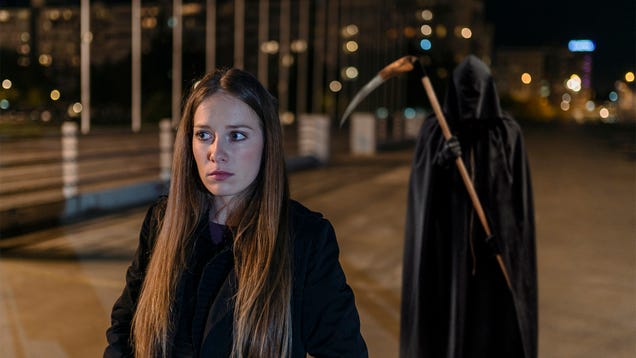
Grim Reaper Slows Pace On Sidewalk So As Not To Freak Out Woman Walking Ahead Of Him

LOS ANGELES—In an effort to avoid making her feel nervous as night fell in the city, the Grim Reaper reportedly slowed his pace on the sidewalk Thursday so as not to freak out the woman walking ahead of him. “The last thing I want is for this person to think I’m following her,” said Death, Emissary of the Underworld…

Read more...

09 Mar 12:43

Pros And Cons Of Banning Books

Bans on books in schools are on the rise, with states like Texas, Florida, and Pennsylvania targeting material some parents and educators believe is inappropriate for students, while critics of these policies point to consequences of such measures. The Onion looks at the pros and cons of banning books.

Read more...

09 Mar 12:41

DE LA SOUL I'M A LITTLE TEAPOT

by noreply@blogger.com (JerryMaguire)
09 Mar 03:31

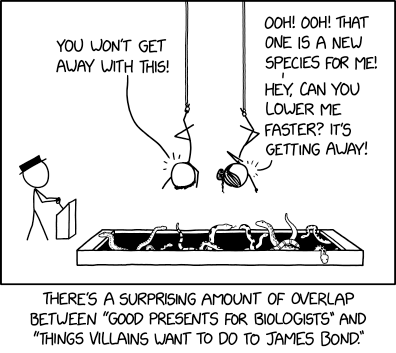
Presents for Biologists

A lot of these are actually non-venomous, but I can see which species you mistook them for. If you pause the crane for a sec I can give you some ID pointers for next time!
08 Mar 21:39

Nuclear Fusion Breakthrough With Hydrogen-Boron Reactions

by Sabine Hossenfelder

Try out my quantum mechanics course (and many others on math and science) on Brilliant using the link https://brilliant.org/sabine. You can get started for free, and the first 200 will get 20% off the annual premium subscription.

Today we’ll talk about a new LHC anomaly, wakefield acceleration, nuclear fusion progress, how to look around corners in augmented reality, the largest magnetic fields we’ve ever seen, engineers who have designed better wood, birds that change their colour, metamaterials that guide robots, and of course, the telephone will ring.

00:00 Intro
00:30 A New LHC Anomaly
02:12 Laser Amplification from Wakesurfing
05:21 Hydrogen-Boron Fusion Progress
07:47 Looking through Walls in Augmented Reality
09:37 The Largest Magnetic Fields in the Universe
11:51 Better Wood
14:10 A Mysterious Color-Change in Hummingbirds
15:51 Directing Robots with Metamaterials
17:38 Learn Science With Brilliant

💌 Support us on Donatebox ➜ https://donorbox.org/swtg
👉 Transcript and References on Patreon ➜ https://www.patreon.com/Sabine
📩 Sign up for my weekly science newsletter. It's free! ➜ https://sabinehossenfelder.com/newsletter/
🔗 Join this channel to get access to perks ➜
https://www.youtube.com/channel/UC1yNl2E66ZzKApQdRuTQ4tw/join

#science #sciencenews #technews
08 Mar 20:13

Saturday Morning Breakfast Cereal - Weeee!

by tech@thehiveworks.com


Click here to go see the bonus panel!

Hovertext:
re: yesterday's comic - I have never gotten more hatemail than the time I insulted wild blueberries. Deal with it, bros.


Today's News:
08 Mar 17:00

Fans

by Sarah Andersen

null

08 Mar 12:41

Telecom Monopolies Win Again: Gigi Sohn Forced To Withdraw From FCC Nomination

by Karl Bode

Telecom and media giants (News Corporation, AT&T, and Comcast, mostly) have spent big bucks to scuttle the FCC nomination of popular reformer Gigi Sohn. That’s involved seeding all kinds of bullshit claims in the press (with the GOP’s help) about how Sohn hates rural America, police, puppies, and freedom. Some of the most recent attacks have been grotesquely homophobic.

The goal was to keep the FCC without the voting majority to do much of anything deemed controversial by industry (like restoring net neutrality or imposing media consolidation limits). And because the U.S. is a corrupt shitshow, the gambit has been very successful. Sohn has ample experience and is widely popular across both sides of the aisle. She’s actually more qualified than several key recent FCC nominees of note.

It didn’t matter.

After several years of fighting, Sohn today announced she’d be withdrawing as a nominee, pointing directly at the telecom and media industry smear campaign as a major factor:

“It is a sad day for our country and our democracy when dominant industries, with assistance from unlimited dark money, get to choose their regulators. And with the help of their friends in the Senate, the powerful cable and media companies have done just that.”

Sohn’s been in Senate confirmation purgatory for the better part of the last two years thanks to blanket opposition from the GOP (which to a man almost always supports telecom monopolies despite its pretense about loving “antitrust reform”). But Sohn’s fate was also doomed by waffling by key Democratic Senators like Mark Kelly (AZ) , Catherine Cortez Masto (NV), and Joe Manchin (WV), who kept her from getting the 51 votes needed in a Senate confirmation vote (and at times parroted false industry claims).

Manchin finally this week came out in opposition to Sohn after a year of refusing to publicly state his position one way or the other. According to his statement, Manchin claims he opposed Sohn because he’s just super concerned about partisanship at the FCC:

There’s not much that’s coherent or factual here. Sohn’s entire career has been spent advocating for broadband affordability, and there’s really nothing she’s said or done at any hearing that could be construed as problematically partisan. Especially in the context of a modern Trumpist GOP that casually tosses around calls for civil war like they’re party snacks.

Sohn’s major crime appears to have been calling Fox News propaganda in a tweet (undeniably true) and retweeting calls for modest police reform.

It’s worth noting that Manchin voted in support of Trump FCC pick Ajit Pai, arguably one of the most captured and nakedly partisan telecom regulators I’ve seen in more than two-decades of covering the agency.

During Pai’s tenure his agency was caught making up DDOS attacks to try and downplay public anger at shitty policies, turned a blind eye while the broadband industry used fake and dead people to stuff the FCC comment process with illusory support for extremely unpopular policies, and rubber stamped industry mergers without even reading the supporting documents.

You’re to ignore that Comcast has been slowly accumulating Manchin staffers in a bid to influence his vote. Or that the aging coal baron has generally opposed meaningful accountability for numerous industries with very obvious monopolization, safety, and regulatory capture problems.

From my conversations with numerous DC insiders, Manchin has always opposed Sohn’s nomination, he just hasn’t been willing to publicly own it until now. Manchin was a primary reason Sohn’s Senate confirmation vote was scuttled last year, making Manchin the primary reason the FCC currently lacks the voting majority to do most of the things he’s pretending to care about now.

There was briefly some hope that the midterm victory by Rafael Warnock would change the math and make Manchin’s vote less relevant. With Manchin’s vote offset by Warnock, the hope was that Sohn could get the 51-vote-majority needed via support from Senators Mark Kelly (AZ) and Catherine Cortez Masto (NV). But both, like Manchin, proved repeatedly noncommittal and easily influenced by industry.

With Sohn understandably backing away from this corrupt shitshow, the FCC will remain in 2-2 partisan gridlock until Biden nominates somebody the telecom industry deems suitably feckless. At that point, any potential candidate will have virtually no time to do much of anything before the next presidential election, exactly as AT&T, Comcast, and News Corporation planned it.

There will be a lot of press chatter that misses the central point of Sohn’s experience. Namely that a completely manufactured joint propaganda campaign by the telecom lobby and GOP prevented a popular female reformer from being seated at a key regulatory agency because the United States is comically corrupt.

From Sohn’s statement:

Unfortunately, the American people are the real losers here. The FCC deadlock, now over two years long, will remain so for a long time. As someone who has advocated for my entire career for affordable, accessible broadband for every American, it is ironic that the 2-2 FCC will remain sidelined at the most consequential opportunity for broadband in our lifetimes. This means that your broadband will be more expensive for lack of competition, minority and underrepresented voices will be marginalized, and your private information will continue to be used and sold at the whim of your broadband provider. It means that the FCC will not have a majority to adopt strong rules which ensure that everyone has nondiscriminatory access to broadband, regardless of who they are or where they live, and that low income students will continue to be forced to do their school work sitting outside of Taco Bell because universal service funds can’t be used for broadband in their homes. And it means that many rural Americans will continue the long wait for broadband because the FCC can’t fix its Universal Service programs.

While the GOP and telecom industry operated in lockstep during the attack on Sohn, Democrats carry plenty of blame. A belated nomination, a repeated failure to whip votes, repeated decisions to bow to bad-faith industry attempts to hold duplicative hearings, and a comic inability to publicly support Sohn as she faced down a relentless smear campaign alone all contributed to her nomination’s demise.

Sohn’s withdrawn nomination is a new low point for very broken U.S. telecom and media policy. For four years, the agency was a mindless marionette for industry under the Trump FCC. And in the last two years, the FCC has been intentionally mired in partisan gridlock by that same industry. That’s six straight years of total regulatory capture, and another blistering example of normalized U.S. corruption.

Our myopic internet policy fixation on “Big Tech” will ensure this story doesn’t survive for more than a few days in the mainstream press. Still, this one’s going to leave a long lasting and ugly mark on U.S. internet policy and the public trust.

I expect the next FCC nominee will be appropriately feckless, as per industry’s wishes. And the agency will stumble forth behaving precisely as the telecom and media lobby wishes: lots of nebulous chatter about how terrible the digital divide is, but nobody with the political backbone to meaningfully stand up to the massive telecom monopolies directly responsible for the problem.

08 Mar 12:40

Female CEOs Share What It Took To Get To The Top

On this International Women’s Day, The Onion devotes its sterling reportage to championing women—a small but influential sliver of the nation’s population—in an endeavor to prevent them from vanishing from the public consciousness entirely.

Read more...

08 Mar 12:31

International Women’s Day

Women form an embattled—yet vitally important—minority across the developed world, with recent census estimates suggesting there could be as many as 15,000 of them in the United States alone. Precisely because of the challenges women face, our most powerful institutions must stand up for this small but influential…

Read more...

08 Mar 12:30

International Women’s Day Celebrated With Small Note On Office Whiteboard

08 Mar 12:28

Comic for 2023.03.08 - Pants

New Cyanide and Happiness Comic
08 Mar 05:15

The State’s Houston ISD Takeover Is Unfair, Racist, and Wasteful

by Ruth Kravetz

I am a parent and teacher with Community Voices for Public Education, a Houston-based nonprofit rooted in the belief that our community schools are a public good, not a commodity to be sold off to the highest bidder. That is why we, along with many other Houstonians, have protested the attempted state takeover of Houston ISD for years—a dramatic assault on local control that may take place this week. 

At a February protest, HISD student Elizabeth Rodriguez stated, “Instead of punishing us with a takeover, our schools should be better funded to make sure students have all the support we need and the facilities we deserve. We are not just test scores.”

Contrary to what you may hear from some Republican leaders, Houston Independent School District (HISD) is not a failing district. HISD received a B grade in the most recent state school ratings and is AAA bond-rated. 

Why, then, is Houston ISD even under threat of a takeover

In 2015, Texas passed a law that allows the state to take over an entire school district if even one campus is rated F in standardized test performance for five years. The state says the rationale for the takeover is Wheatley High School’s low 2019 accountability rating and problems with the HISD school board. Since 2019, when the takeover bid began, Houston ISD had successfully delayed Texas’ efforts, but the GOP-controlled state Supreme Court cleared the state’s legal path in January. 

In the past few years, HISD already proved that local control works: Since 2019, voters elected an almost entirely new school board, and students and teachers worked to bring Wheatley’s state score up to a C in 2022. Since 2015, HISD reduced its number of low-performing schools from 58 to nine, which is fewer than are found in Dallas ISD. Even using the state’s deeply flawed accountability system to rate schools, Houston ISD comes out fine. 

Since 2015, HISD reduced its number of low-performing schools from 58 to nine, which is fewer than are found in Dallas ISD. Nevertheless, the state’s takeover efforts persist.

Nevertheless, the state’s takeover efforts persist. If successful, a state-appointed board of managers will make all policy decisions with Texas Education Agency (TEA) Commissioner Mike Morath pulling the strings behind the scenes. HISD’s democratically elected board will only have a ceremonial role with no voting authority. And the kicker is that the unelected Morath, who’s appointed by Governor Greg Abbott, has full discretion to expand the takeover. The superintendent could also be replaced, and individual schools could be parceled off to charter school operators—such as YES, KIPP, IDEA, and churches—with the usual consequences as seen around the country.

Charter schools often purposefully underenroll students with disabilities and other at-risk children, inflating their state accountability ratings. Should this occur in Houston following a takeover, the state will likely take the credit in its accountability shell game.

A takeover may also lead to teachers leaving the district, creating more classroom vacancies. The chances for a bond to replace older elementary schools will go out the window. If other takeovers are any indication, we can also expect more of our taxpayer dollars to go to costly consultants than to the needs of children.

If all this doesn’t make you mad, how about this? Over and over again, the governor and the TEA commissioner have moved the goalposts in the middle of the game. 

In 2019, Wheatley High initially received a passing grade from the TEA, but the agency later changed its scoring criteria and applied them retroactively. And in January, TEA publicly announced more rule changes that will be implemented immediately and applied retroactively to last year’s seniors, whose data is counted in this year’s accountability rating. At the high school level, schools that were projecting a B rating are now projecting a D. School districts around the state are raising the alarm about the change. 

We tell our children they have to be honest and to play by the rules; we should expect the governor and TEA commissioner to do the same.

Unfortunately, the state takeover of Houston ISD has nothing to do with student needs. It is about power, profits, and a willful disregard for children living in poverty.

As I ponder the district’s future, I am reminded of a student I once taught. When I went to his house to help him think about college, he had no electricity and the only furniture in the house was a bed, an engine block, and a chair. He did his homework by a street lamp outside. The last thing he needed was more pressure to meet arbitrary standardized testing goals or for the state to punish his school for serving low-income students like himself.

From Beaumont to New Orleans to Detroit, takeovers—which disproportionately target districts with high Black and Brown political participation—do not improve student achievement and experiences.

Beaumont ISD was taken over by the state in 2014 following financial issues. Four years later, under state leadership, many Beaumont ISD schools were worse off than before, triggering another takeover based on low academic performance and plummeting graduation rates. Instead of improving the school district, the state takeover led to more problems.

From Beaumont to New Orleans to Detroit, takeovers—which disproportionately target districts with high Black/Brown political participation—do not improve student achievement and experiences.

Nearly 85 percent of the districts that have been taken over by their states, nationwide, have had majority Black or Latino student populations. In Texas, roughly two-thirds of state takeovers since 1998 have been in school districts with large Black student populations. 

Wasteful spending is another problem that occurs under state takeover. A 2019 report on the Detroit takeover shows roughly $610 million in wasteful spending thanks to costly consultant contracts and rampant mismanagement of the district’s schools and educational services while the state was in control. 

We cannot afford for Houston’s children to suffer the same fate. 

If the governor really cared about our children, he would use the state’s $33 billion surplus to fully fund our schools and ensure that students and families struggling with poverty and the long-lasting impact of the pandemic have the resources they need to learn. Instead, he continues to dish up a meal of expanded high-stakes testing, narrowing what our kids learn even more, along with prosecuting his ongoing war against the elected representatives of the state’s major cities.

We at Community Voices for Public Education urge like-minded Texans to add their names to the almost 2,000 parents and others who have signed our petition opposing the state takeover, to sit out the STAAR test to protest its nefarious use to shame our children, and to call the governor and their state legislators to demand they halt the Houston ISD state takeover. 

We will accept nothing less than ensuring that our communities have control over our schools.

The post The State’s Houston ISD Takeover Is Unfair, Racist, and Wasteful appeared first on The Texas Observer.

08 Mar 05:06

‘The Last of Us’ TV show explores horrifying future where last of mankind is forced to live in Alberta

by Janel Comeau

Leduc, AB – Fans and critics alike have offered praise for the new HBO series ‘The Last of Us’, saying the show gives a terrifying glimpse into a dystopian, post-apocalyptic future where the last survivors of mankind are forced to live in Alberta.  “The writers have really created a horrifying scenario. Just imagine, you’re walking […]

The post ‘The Last of Us’ TV show explores horrifying future where last of mankind is forced to live in Alberta appeared first on The Beaverton.

07 Mar 23:26

Congress Considers Banning TikTok After App Makes Every Senator Bulimic

WASHINGTON—Unveiling a potential bill aimed at combating what members described as a grave risk to public safety, Congress announced Tuesday that it was considering a ban on TikTok after the app made every senator bulimic. “We cannot in good conscience continue to allow the widespread use of an app that gave all 100…

Read more...

07 Mar 23:25

QUARKS QUIRKS!

by noreply@blogger.com (JerryMaguire)
07 Mar 18:59

Mass Media and Elections

by Mary Kelly

Mass Media and Elections cover

Mass Media and Elections
Joslyn
1984

If there was ever a book that was outdated, I think this one might be in the top 10. Aside from the craziness of campaigns, the choice of candidates, and fake news, this book is missing a whole chunk of information.
Updates should probably include things like social media, the Internet, and for the American audience: Russian interference, conspiracy theories, false identities, massive voter fraud, mail in voting, fake news, and a whole chapter on Fox news.

The other surprising item is the blurb on the back cover stating this would be good for the college undergraduate. When I first looked at the book, I would have guessed high school audience. Although some of the material is a bit dense, it looked like a teen nonfiction book.

Mary

back cover of mass media and campaigns

Introduction to book

political advertising appeals

Table of the impact of newspaper reading on 1972 election

The post Mass Media and Elections appeared first on Awful Library Books.

07 Mar 17:23

my boss said she doesn’t think mothers can fully commit to their jobs

by Ask a Manager

This post was written by Alison Green and published on Ask a Manager.

A reader writes:

I’ve been at my current company for 10 years. In 2021, I had my first baby. Every department I’ve worked in has been very supportive and flexible — not just of me, but of anyone who needs to adjust their schedule for caregiving duties, doctors’ appointments, and even social events. We’re hybrid so we’ve been expected to go into the office once a month up until now; last month the acting CEO announced he wants us in the office four days a week (for literally no reason other than he doesn’t understand remote work, but that’s another situation entirely).

Anyway, I’m on a new team now with a leader who’s not supportive of mothers. I say this because when she and I were talking about going back, I said I had needed to adjust my childcare schedule, which turned into a conversation about who watches my child while I’m working. I told her my husband watches him because we work opposite schedules. She said that was unacceptable because she didn’t feel like I could fully commit to being an employee while also being a mother; she said even though my husband is watching my child, I was still a mom and would not be able to focus on work and that dads were different, they can work and not focus on their children. I was stunned. I was caught off guard so I just mumbled something about being on the waitlist for the on-property daycare and kind of changed the subject. She then went on some weird rant about how she hates when moms take their kids to the grocery store and how they should be placed in daycare for that as well — I guess she doesn’t realize daycare isn’t cheap and she doesn’t pay me enough to drop my kid off anytime I need to go out in public.

There is a dad on the team who frequently shows his daughter off during Zoom meetings, so I don’t think this is a conversation they’ve had.

Am I right to feel incredibly offended and targeted? I’m the only mother on the team so it feels like my opportunities under this manager are always going to be limited from now on because she has this strange idea of working mothers in her head.

I would go to employee relations but she has been with the company for years so I’m not sure if they’d even help; this conversation also happened over Zoom so there’s no record of it.

You can’t fully commit to being an employee while also being a mother?! What does that even mean? No mothers should have jobs?

Maybe what she means is that if your child is in your house while you’re working, she doesn’t believe you’ll be able to keep your full attention on your job … but then that would mean a full-time nanny would be an unacceptable child care solution too, and I doubt she’d argue that. It sounds like this is about the fact that it’s your husband who’s providing child care while you work — she doesn’t believe a man can really have full charge of a child while a woman is present.

This is gross.

It’s also illegal, if she lets it affect the way she treats you, which you have to assume it does. She’s not legally permitted to treat working mothers different than working fathers, and she’s opening your company to some serious legal liability by making comments like that.

I do think you need to escalate it. Your company sounds like it’s generally very supportive of working parents; this manager is likely an aberration, and one your company would want to know about so they can step in and address it. You said you’re worried about escalating it because she’s been there for years, but your company isn’t going to want any employee, regardless of tenure, creating legal liability for them. In fact, you’ll be doing them a favor by reporting it now rather than waiting, since waiting would risk her doing stuff that gets them in deeper trouble. And you don’t need to worry that you don’t have a record of the conversation; that’s usually the case with stuff like this (and discrimination and harassment in general) and it’s highly reportable anyway.

Let your company know what your boss said, and use this language: “It sounds like I’m being treated differently than men on the team because Jane doesn’t believe mothers can fully commit to their jobs, which would be gender-based discrimination.”

Don’t let this go; it’s a big deal.

07 Mar 17:08

Man Too Chickenshit To Blow Up Oil Refinery Guesses He’ll Try To Eat More Locally

DALLAS—Neither bold nor committed enough to enact true environmental change, local chickenshit Anthony Stanback decided Tuesday that instead of blowing up an oil refinery, he would try to eat more locally sourced food. “I guess it wouldn’t hurt to start hitting up the farmers market more often,” said the 31-year-old…

Read more...

07 Mar 17:08

Tennessee Bans Drag Show Performances On Public Property

Tennessee’s governor signed a new bill that bans “adult cabaret entertainment” on public property or in locations where it can be viewed by minors, threatening drag performers with a misdemeanor charge or a felony if it’s a repeat offense. What do you think?

Read more...

07 Mar 17:06

A Prospect of Success by Purposely Failing the 97th Time

by Marc Abrahams

Walking, a lottery, failure, frenzy, the number 97… this study has all of those, and perhaps other things as well:

Failure is Also an Option,” Antoine Amarilli, Marc Beunardeau, and Rémi Géraud, and David Naccache, in The New Codebreakers, Springer, Berlin, Heidelberg, 2016, pp. 161-165. The authors report:

“The Nijmeegse Vierdaagse is the world’s most famous walking event. The walk is known to be challenging and each year about 10% of the participants drop out. In 2016 the Vierdaagse will celebrate its centennial anniversary. In the walker community there is a frenzy about participating in the centennial walk. Initially, the rules governing participation were the following: A walker who succeeds the n-th walk is admitted to walk at year (n + 1). Walkers who fail a walk enter a lottery. If they win the lottery, they are also granted tickets to the walk. Finally, walkers who fail two successive draws are admitted to the walk following the second lottery failure. In 2013, while computing our chances to be admitted to the centennial walk, we noticed a rather counterintuitive fact: By purposely failing the 97-th walk, walkers can actually… increase their chances to attend the centennial walk.”