
Extremism researchers say online rhetoric from the far right has heated up since Trump was indicted. But they're not seeing signs that it will translate to collective violence.
(Image credit: Gerald Herbert/AP)

Extremism researchers say online rhetoric from the far right has heated up since Trump was indicted. But they're not seeing signs that it will translate to collective violence.
(Image credit: Gerald Herbert/AP)
This post was written by Alison Green and published on Ask a Manager.
It’s a special “where are you now?” season at Ask a Manager and I’m running updates from people who had their letters here answered in the past. Here are four updates from past letter-writers.
1. How do I draw the line on political conversations at work?
I wrote in with a question about drawing the line on political/social issue conversations during meetings three years ago, about a month before the 2020 election. Part of the issue with my colleague is that I was a team lead, but not officially the team manager, so I had very little actual authority to exercise. Coupled with a boss who really didn’t want to deal with it, I wasn’t sure how to approach asking her to knock off talking about very difficult topics when we needed to focus on work.
Ultimately I did end up having a private conversation with her. I took the approach of asking her to not bring up difficult news topics in meetings because I was dealing with a lot of anxiety and it made it hard to focus on getting work done for the rest of the day (which was true!). I also suggested seeking support among one of our peer affinity groups at work if she needed to talk through her feelings about hard social situations. At first she became very defensive and was not receptive to that request, and I have to admit that some of my reluctance to bring it up in the first place was knowing she would probably react negatively. However, later that day she came back and apologized for her reaction and agreed to keep political and societal topics out of work meetings. I also talked to the whole team during our next weekly meeting about taking mental health time if anyone needed it since everyone was very anxious and stressed about the election–thankfully our workplace is very supportive of offering space and encouraging time off when folks need it.
Ultimately that situation was a really good opportunity to grow my management skills, and almost three years later our department has undergone a major reorg, we have new leadership, and I was promoted to an official management position! I’m a lot more confident in having difficult conversations and recognizing when it’s my job to intervene for the good of the team. Additionally, that colleague has transitioned to a different role that suits her better overall, and these days I have a lot more support from a new boss to effectively manage my team. She has told me repeatedly that she thinks I’m a great manager, which I largely attribute to the great advice and tips I’ve picked up from AAM over the years. Thanks to Alison and commentariat for the great advice, both for my own question and the many others that have been relevant to my work over the years!
2. Our health committee chair is anti-vax, anti-science, and out of control
I had already resigned when you answered (you were quick, my impulsiveness was just quicker). My resignation did catch the attention of the person who oversees the employee groups and we had a candid chat. I don’t know specifics, but there was definitely action somewhere behind the scenes because the Chair toned everything I mentioned in my letter way down and ultimately stepped down herself. It was never my intention to oust her…I guess I was hopeful she’d find a better understanding of the limitations of workplace groups and some of her more controversial opinions. But if that can’t happen, this outcome is for the best.
3. Resigning while my boss is on parental leave (#2 at the link)
After my boss came back from leave, things settled down somewhat, and I took the time to catch my breath and begin skillbuilding and updating my resume. Before I could secure a new job, however, she beat me to the punch and resigned for another opportunity. Because our organization is in the middle of a hiring freeze, they wanted to go back to the previous summer’s plan of me doing both jobs with half the resources. And by “hiring freeze,” they don’t plan to backfill her position until fall 2024 (so not THIS fall, NEXT fall!). The idea of repeating last summer’s workload for approximately 18 months sent me into a mental tailspin, and I lost track of the amount of anxiety attacks I had during those first few weeks — although thankfully never in front of my coworkers. To her credit, my boss tried to get me a raise and a new title before she left to accurately reflect the additional work, but several months later it’s still in central budgeting purgatory, not approved but also not denied.
Suffice to say, beyond my individual situation, a number of ominous organizational red flags cropped up that pushed me to supercharge my job search. I bought your How to Get a Job e-book and overhauled my resume and cover letter. Without a doubt, I can say your advice helped me achieve my most fruitful job search to-date, and I even had to navigate juggling multiple job offers. I received one offer letter from Company B while waiting to hear back from Company A, which was my dream company. Based on guidance from previous posts, I immediately emailed Company A to ask if I was still in consideration and if they could let me know by (that Friday). Company A is in an industry known for a slow and bureaucratic HR process, but to my surprise, they pulled out all the stops and within two days offered me the job — including a higher title, a salary more than 10% over what I’m currently making, and a signing bonus! I start in a few weeks, and I couldn’t be happier. Not only am I leaving a situation that was so harmful to my mental health, but I also feel valued and like my hard work is being recognized. Most of all, I’m genuinely excited about the new role itself and the team I’ll be working with. I want to thank you and this community for being such a great resource during a challenging junction in my career.
4. Rewriting my job description when I’ve taken on lots of new work (#3 at the link)
I wrote to you in late 2020 about updating my job description with new responsibilities with no talk of changing my title, pay, etc. I took your advice and was straightforward with my boss that these were new responsibilities and that I felt they reflected a shift in my role. Well, I honestly think this all just hadn’t crossed her mind before—she agreed with me and early the following year, I got a promotion and a raise! It felt great to have success with this because I struggle with confidence at work.
The thing is, as much as I liked my job and colleagues, the responsibility additions didn’t really stop coming and there wasn’t another raise or promotion in sight. So, I looked around and was successful in finding a new position that offered some opportunities I didn’t have before and a nice salary boost. It hasn’t been a seamless transition—there have been bumps in the road as I adjust to a new role at a smaller organization. Overall, I feel proud that I had this success and am so appreciative of the advice I received from you and the AAM community!
A 37-count criminal indictment against Donald Trump was unsealed Friday, revealing allegations that the former president willfully retained classified government records and conspired to prevent their return to U.S. officials. What do you think?
This post was written by Alison Green and published on Ask a Manager.
Welcome to the mid-year “where are you now?” event at Ask a Manager! All this week and next, I’ll be running updates from people who had their letters here answered in the past.
There will be more posts than usual this week, so keep checking back throughout the day.
Remember the letter-writer whose boss told them they were “not a good human” when they asked to be paid for their time? (First update here.) Here’s the latest.
As I mentioned, I stuck around working for these miserable people because my husband and I were trying to have a baby. Those efforts were successful, and we had a healthy child. Yay!
My job offered paid parental leave, which I took. It wasn’t particularly generous, but better than $0 (and not optional – I tried to opt out bc I very much knew there was no “free lunch” with these people, and they were the last people to whom I wanted to be indebted, but I was told I couldn’t opt out and take unpaid leave.)
A few days after I returned from parental leave, my boss handed me a bill. For the amount he expected me to pay him back for my paid parental leave. You read that correctly. He demanded that I (a W-2 employee) reimburse him (the owner) for my “paid” parental leave. I was like: “Uh, then it’s not really paid leave?” He said, and I swear this is an exact quote: “Yes, it was paid. Believe me, I know because I had to pay it. That’s why you owe it back.”
I know it seems like I must be leaving something out here. I’m not. Employer has a clear and unambiguous policy in the employee handbook, for paid leave for which I clearly qualified. I did, in fact, birth a child. I had, in fact, worked at the firm well more than long enough to qualify for the leave. I took less leave than was allowed – both by my firm and by law. No weird facts here. I had a baby and went on a short maternity leave, nothing fancy or complicated, song as old as time, and no one claimed otherwise. The only dispute was that my boss claimed it is “generally understood” that “paid” leave is essentially an advance, which the firm pays but then the employee owes back. The firm’s policy says nothing about reimbursement and just says “paid” leave, but boss contends that it is inherent in the concept of “paid” leave that the employee will later reimburse the firm. (You don’t even need to tell me he’s wrong and I’m right because, obviously, he’s banana crackers.)
I was dumbfounded but not really surprised. I tabled the conversation for a few months because I hoped that he would decide this wasn’t a nickel he could squeeze with a straight face. But I was wrong. He kept bringing it up, demanding to know my plan for paying him back the money I “owed,” and saying things like “this isn’t something I can just let go.”
This finally came to a head one day, when he popped into my office for the umpteenth time, unannounced, wanting to know my plan for paying him back, while I was in the middle of prepping for an important meeting.
I just had enough. So, I told him my honest thoughts on the matter. This started gently, just explaining that he was wrong – factually, logically, legally, ethically wrong AF – about the meaning of “paid” leave. He doubled down. The conversation escalated in tone and intensity. There were other issues too, so what the heck, while we were at it, I went into those. He played dumb, and told me that I was off-base and that no one had ever disagreed with him on these issues and no one had ever questioned or tried to discuss these issues with him before.
Except, I knew for a fact that someone had quit a month or so earlier, over a dispute about one of these issues, after REPEATEDLY trying to discuss with boss to no avail. I just couldn’t. So I called him on that. And he LOST IT. He stood up, said that never happened, demanded that we call former employee immediately to confirm this never happened, stormed out of my office to grab his cell phone and call this poor woman. Well, that backfired for him, because she answered and she said, “Uh, yeah, that happened.”
Boss then calmed down and reflected and said, “Wow, I’m wrong and also what sort of a lunatic calls a former employee out of the blue to settle a dispute?” Just kidding! Boss did none of that. Instead, he hung up the phone, and looked at me and said, “See, I told you?!”
That’s when I LOST IT. This wasn’t a nuanced issue. It was like I was saying “black,” boss was saying “white,” and former employee was saying “totally black.” Then boss hangs up and declares he heard “totally white”? I know it sounds crazy, but that’s what happened. I’m rarely speechless but I just stood there for a while, with my eyebrows on the ceiling and my jaw at my knees.
Which, brings us to the point of no return. After asking “are you serious?” a few times, I just started screaming at him. He started screaming at me. This spilled out into the common area of the firm. The good people of the world got up to discreetly and politely shut their office doors, embarrassed for us both. It was bad. It was a scene. I’m not proud of it, and I definitely lost my cool and that’s not how I typically handle myself. I eventually ended the “conversation” by screaming “this isn’t productive” a few times, then walked back to my office, grabbed my bag, and left.
On the way home, I was like — wow that happened and this isn’t healthy. So I made one phone call, and in less than 3 hours, I had a better job with a competitor for more pay. (I’m in a niche field, so everyone knows everyone, and they were already familiar with my work.)
I’m not going to lie, it was extremely satisfying to give notice the next morning. Mic drop moment for sure. That was six months ago, and I couldn’t be happier at my new firm.
Also a positive note: Apparently the only way to get that “paid” maternity leave at my old firm is to leave before they can take it out of your bonus, so I got the last laugh on that one.
This post was written by Alison Green and published on Ask a Manager.
It’s a special “where are you now?” season at Ask a Manager and I’m running updates from people who had their letters here answered in the past.
There will be more posts than usual this week, so keep checking back– there’s more to come today!
Remember the letter-writer whose HR wouldn’t do anything about a coworker who was angry about her post-surgery weight loss? Here’s the update. (First update here.)
I got an offer from a local company that’s going fully remote with administration and management meeting up once a month. The salary was right, it’s 90% remote, it’s a good fit, so I’m happy with it. My role is HR adjacent as head of payroll. I report to the COO and was hired by the CEO and COO.
I walk in to our first admin meeting and who is sitting across from me but the HR Director who told me medical documentation doesn’t matter and orchestrated my red-flag meeting, let’s call him “Bob.” Bob is the interim HR director for this company. Bob looked very uncomfortable when he saw me. We went through some employee files, including several who are on maternity leave and two who were injured on a job site. Bob got quieter as we began reviewing medical documentation and approving paid leave. I smiled and looked him in the eye every time I asked, “And does Jill have her medical documentation? Great! Medical documentation holds a lot of weight. That’s important stuff to have.” He looked like he wanted to melt into his seat.
At one point he tried to argue against someone using their PTO to provide end of life care for a parent when they had ample PTO. I smiled and said, “You’re right, our employee support fund should cover half this time. It’s a shame for them to have to lose all their PTO when they’re obviously going to need it to heal and grieve over the next few months. Why don’t you get me the paperwork for the support fund this afternoon? That’s so generous.” Everyone was happy and in agreement. He looked like he swallowed a lemon but everyone was like “OMG Bob how thoughtful.” He had to eat it so bad and got me the documentation an hour later.
Bob can suck it. Bob is also only a contractor so he’ll be moving on soon anyway. Medically I’m doing better, and very happy to move on from where I was. Aubrey’s been full-on radio silence which is perfect for me. Thanks AAM team and commenters!

WASHINGTON—Insisting that he had done nearly everything right this time, Secretary of Transportation Pete Buttigieg reportedly failed his third consecutive driver’s test Monday. “It’s kind of bullshit, because it was really only the parallel parking part that I screwed up,” said Buttigieg, describing how he always…

BUTNER, NC—Gathering in a circle as they admired the neatly wrapped package, prison officials confirmed Monday that they had found a beautiful present left for them in the late Ted Kaczynski’s cell. “Well, how splendid—he left us a little farewell gift,” said correctional officer Sean Arndt, who expressed his delight…
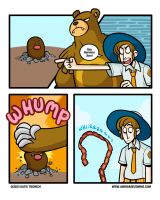
I've been hunting for Dugtrio -- if I get enough tickets, there's a plastic spider ring in it for me.
This comic was written by Omnithea. It is about having fun outside.

Hovertext:
Actually with this new plugin the robot doesn't need the sympathy but can just directly experience a mixture of awe and joy.

Public breastfeeding continues to become increasingly acceptable as more women decide to embrace motherhood without sacrificing their work or social lives. However, some men are not comfortable with such open displays of caregiving. We spoke to several men about why they believe breastfeeding in public should be…

MUNCIE, IN—Beginning to regret his decision to pursue that particular field, Ball State University valedictorian Zach Arizmendi told reporters Monday that he thought offers to be a professional valedictorian would come rolling in after graduation. “Considering how many people heard me speak, I thought some companies…

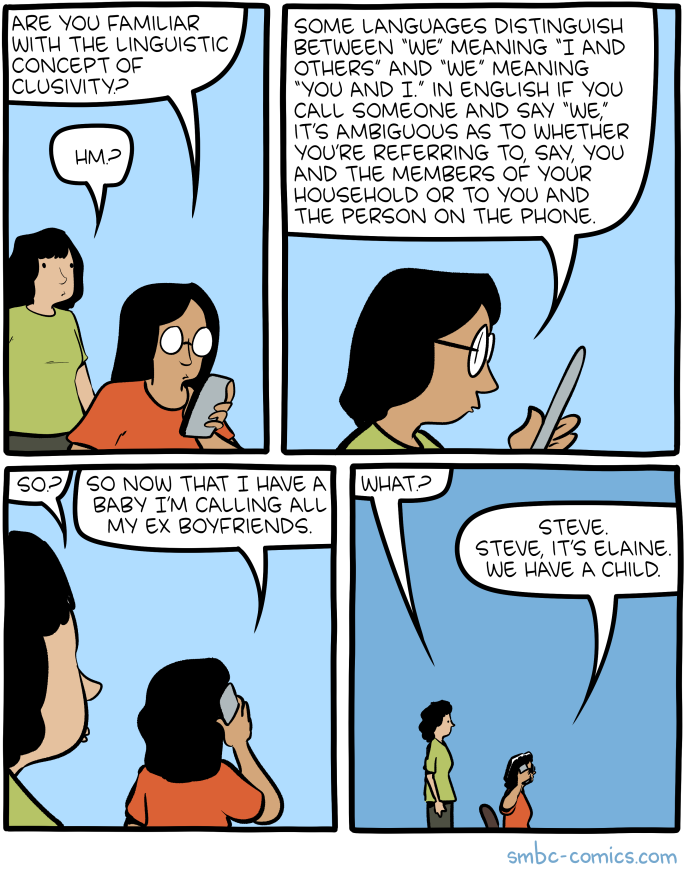
Hovertext:
This is literally the funniest clusivity joke ever created.
Another double update thanks to this stupid book I wrote that people keep preordering.
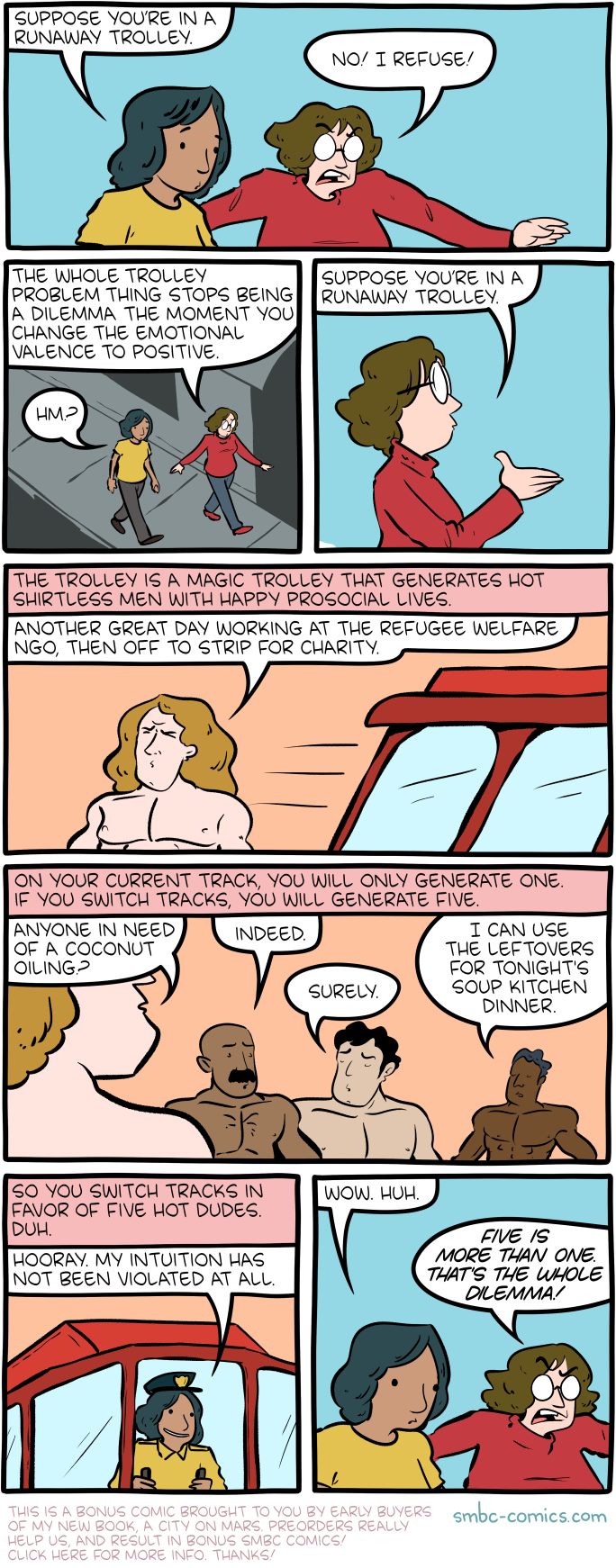
Hovertext:
The weird thing is every last one of them is named Bruce.


The American right is returning to its homophobic roots.
Last week, Sen. Ted Cruz (R-TX) sent a tweet criticizing a draconian new anti-LGBTQ law in Uganda. The law imposed strict criminal penalties for same-sex relations — including execution for “serial offenders” who commit “aggravated homosexuality.” Cruz, quite reasonably, condemned Uganda’s law as “grotesque and an abomination.”
Almost immediately, Cruz faced a wave of criticism from prominent conservative accounts with large followings.
“Unlike the lawmakers in Texas, the Uganda government recognizes that if you give an inch, the LGBTQ Mafia will take a mile,” wrote Lauren Witzke, the 2020 GOP Senate candidate in Delaware. “While you guys struggle to stop drag queens from twerking on the laps of toddlers, they stop it before it starts.”
The attacks on Cruz were a sign of the times for American conservatism, which is currently in the grips of a renewed and increasingly vicious anti-LGBTQ fervor.
In January, Donald Trump released a campaign video decrying “the left-wing gender insanity being pushed on our children.” He vowed that, in a second term, his administration would work to ban gender-affirming care for minors “in all 50 states,” officially recognize “male” and “female” as “assigned at birth” as the only genders, and reconfigure school curriculums to teach students “positive education about the nuclear family [and] the roles of mothers and fathers.”
Trump’s leading competitor for the 2024 nomination, Florida Gov. Ron DeSantis, has gone even further, making laws attacking LGBTQ inclusion, especially in schools, into a core plank of his “anti-woke” governing agenda. DeSantis’s campaign is part of a broader trend, with 2023 seeing a fresh wave of anti-trans legislation in Republican-controlled statehouses across the country — with over 530 bills proposed by late May, by one tally. Right-wing activists are leading boycotts against brands that celebrate LGBTQ identity and Pride month, like Target and Bud Light. Just this Tuesday, a school board meeting about teaching gender in Glendale, California, schools devolved into a fistfight.
Politically, the anti-LGBTQ turn may well turn out to be counterproductive for the right. Polling data suggests that the public, and especially younger generations, are becoming increasingly liberal on LGBTQ issues. The fact that conservatives are going after corporations like Disney, Anheuser-Busch, and Target — some of the biggest and most famous icons of mainstream America — indicates just how out of step they are with the country.
Yet it’s this reality, somewhat paradoxically, that might explain the resurgence in anti-LGBTQ politics: The cultural right is lashing out because it’s been losing for so long. Much as the rise of Donald Trump and the panic about “wokeness” began (primarily) in reaction to challenges to America’s racial hierarchy, so too has the return of anti-LGBTQ politics been a reaction to changing norms about sexuality and gender.
To a certain extent, anti-LGBTQ conservative intellectuals openly acknowledge that they are on the defensive. In their worldview, they are standing up for the “ordinary” American against an overwhelmingly progressive elite culture successfully imposing its own values on everyone else — a claim that implicitly rejects the idea that changing attitudes on sex and gender are moving from the bottom up rather than the top down.
But as we’ve seen in the renewed energy behind anti-LGBTQ politics and the raft of anti-trans bills in statehouses across the country, a rearguard backlash politics can still be powerful — mobilizing a committed minority in ways that have significant consequences for real people’s lives.
In 2020, New York University sociologists Delia Baldassarri and Barum Park published an article with a provocative thesis: The “culture war” that once dominated American politics, centering on moral divides between religious conservatives and more secular liberals, was over. The liberals had won.
Using detailed data sets covering the years 1972 to 2016, Baldassarri and Park traced the evolution of public opinion on a large variety of policy questions. On most issues they examined — in areas like economics, race, immigration, and foreign policy — average public opinion stayed relatively static.
But on “moral” issues, like feminism or drug use, the picture was remarkably different. “Among all of the 37 moral issues under study, only for one issue, namely whether extramarital sex is wrong, was the proportion of liberal responses lower in 1972 compared to 2016,” they write. In virtually all of those 36 cases, the public shifted notably in the liberal direction (with the important exception of abortion, where opinion stayed static rather than trending left).
Nowhere was this trend clearer than on gay rights, where the authors found “by far the most pronounced opinion change we observe in the data.” (Note that their study did not include any surveys on trans issues, since there was no reliable data from most of the time period under examination.)
“In only two decades, more than a third of the population has changed its position on gay rights: the approval of gays’ right to adopt children rose by 48.8 percentage points between 1992 and 2016,” they write. “Gay marriage support grew from 12.4 percent in 1988 to 59.4 percent in 2016, a 47 percentage point difference.”
Looking beneath the hood, Baldassarri and Park uncovered an interesting partisan pattern in the moral issues data: On topic after topic, Democrats would become more progressive faster than Republicans, who would eventually start to catch up years later. What at first looked like a persistent partisan gap, akin to views on tax cuts and abortion, would eventually give way to bipartisan consensus.
Notably, the Republican shift on gay rights took off during arguably the most intense recent period of partisan conflict on the issue: the struggle over same-sex marriage in the George W. Bush presidency.
In the 2004 presidential election, legally codifying marriage as something between a man and a woman was a central plank of the Republican Party’s platform. Yet as that was happening, it appears rank-and-file Republicans were already shifting to the left on LGBTQ issues.
/cdn.vox-cdn.com/uploads/chorus_asset/file/24708840/72554727.jpg) David McNew/Getty Images
David McNew/Getty Images
These changes were too fast to be explained by older Republicans dying off and younger, more liberal ones taking their place. Instead, Baldassarri and Park suggest the best explanation is that many Americans genuinely changed their minds.
As the overall cultural environment became more liberal thanks to decades of LGBTQ activism, gays and lesbians around the country felt more comfortable coming out of the closet. The result is that more Republicans had personal contact with gay people, which in turn made them more sympathetic to LGBTQ equality. There is a wide body of literature supporting this so-called “contact hypothesis,” and Baldassarri and Park see it as central to the new bipartisan consensus on issues like same-sex marriage.
“At least in recent years, both Republicans and Democrats have similar probabilities of knowing someone in their close social circles who is gay or lesbian,” they write. “This may explain why Republicans have turned towards more progressive views so easily on these issues.”
On the right, the smartest voices have understood the basic contours of the new reality for quite some time.
In 2014, a year before the Supreme Court ruled that same-sex marriage was a constitutional right in Obergefell v. Hodges, the New York Times’s Ross Douthat wrote a column negotiating “the terms of our surrender” on same-sex marriage.
Seeing the debate on the matter as essentially lost, Douthat pleaded for magnanimity from the victorious left, hoping for a world where “religious conservatives would essentially be left to promote their view of wedlock within their own institutions, as a kind of dissenting subculture emphasizing gender differences and procreation, while the wider culture declares that love and commitment are enough to make a marriage.”
This view — we’ve lost the culture war, now let us be conservatives in peace — morphed into something like the mainstream right’s official position on LGBTQ issues after Obergefell. Rallying under the banner of religious liberty, the right championed causes like a Christian baker refusing to bake a cake for a same-sex wedding. What liberals called discrimination was, conservatives argued, actually an exercise of religious freedom.
Around the same time, some on the right even flirted with trying to build a kind of pro-gay conservatism akin to certain European far-right movements. During his 2016 Republican National Convention speech, Donald Trump tried to win over LGBTQ voters by touting his proposed ban on Muslim immigration: “I will do everything in my power to protect our LGBTQ citizens from the violence and oppression of a hateful foreign ideology.”
He also opposed a North Carolina law forcing people to use the bathroom that matches their sex assigned at birth and unfurled a Pride flag on stage at an October rally. The New York Times’s Maggie Haberman declared that “it is his views on gay rights and gay people that most distinguish Mr. Trump from previous Republican standard-bearers.”
Obviously, things have changed — both with Trump and with the right more broadly. The language of religious freedom has been muted, and pro-gay conservatism feels like (at best) a distant dream. Today, the right is defined by calls to stamp out “gender ideology,” panic about drag queen readings at public libraries, and accusations that LGBTQ activists are “grooming” kids for sexual abuse.
The difference between then and now is not that the religious right, the traditional source of anti-LGBTQ sentiment, has gotten more influential. If anything, the conservative base has moved in a slightly more secular direction. Between 2010 and 2020, the percentage of Republicans who belonged to a church declined by 10 points (from 75 to 65 percent).
Nor was this spearheaded by Trump’s presidency. Trump’s policy record on LGBTQ issues was — contrary to his pronouncements as a candidate — fairly hostile. But it wasn’t a major focus of his rhetoric in the way that race and immigration were. In fact, he once again attempted to reach out to LGBTQ voters in the 2020 campaign (with little success).
Understanding the right’s return to anti-LGBTQ politics instead requires understanding two things: the rise of trans identity and the emergence of a broader right-wing war on “wokeness.”
In 2014, Time magazine published a cover story on “the transgender tipping point”: the notion that trans people were finally “emerging from the margins” and demanding rights and public recognition. Today, the article feels quaint — but usefully so, in that it documents just how new the ideas of the trans movement are to many straight cisgender Americans.
In many ways, the notion that 2014 was a “tipping point” for trans equality feels overly optimistic. But there’s no doubt that there’s been significant progress since then as well.
In 2022, the journal Public Opinion Quarterly published an analysis by five scholars examining data on trans people and trans issues in the same way that Baldassarri and Park studied gay issues. Examining “feelings thermometer” data between 2002 and 2020, in which respondents were asked to rate how warmly they feel toward trans people, the researchers document a clear positive trend — with nearly all of the increase happening between 2015 and 2020:
/cdn.vox-cdn.com/uploads/chorus_asset/file/24684872/Screen_Shot_2023_05_26_at_11.30.55_AM.png) Lewis et al./Public Opinion Quarterly
Lewis et al./Public Opinion Quarterly
Drilling down on that period, they also find a generally pro-trans trend on specific issues. “Support for allowing transgender people to serve openly in the military has increased from 52–54 percent in 2015 to 76 percent in 2020, reflecting a change from a relatively divided public to near consensus by 2020,” they write.
That said, the public is still more divided on trans issues than on gay and lesbian ones. A 2022 Pew survey found that majorities of Americans say that whether one is a man or woman is determined by sex assigned at birth and oppose requiring that health insurance cover gender-affirmation care. A 2023 Washington Post/KFF poll found that a large majority supported anti-discrimination protections for trans individuals, but a (slightly smaller) majority also opposed trans women participating in women’s sports.
This is a climate rife for right-wing backlash.
The overall rapid trend toward trans inclusion and visibility generates the dual sense of vulnerability and threat that powers much of social conservative politics. And the fact that they are specific issues where the public is still seemingly on their side is seen as an opportunity by the anti-LGBTQ right to halt and even reverse the overall trend.
The backlash against the trans movement’s challenge to traditional ideas has radicalized the right more broadly on sex and gender — making the post-Obergefell “religious liberty” arguments feel almost as quaint as the Time essay. Today, the right has gone on offense against not only trans identity but LGBTQ inclusion more broadly, as seen in policies like Florida’s “Don’t Say Gay” law or attacks on Kohl’s for selling a onesie with a Pride flag on it.
Matt Walsh, a Daily Wire podcast host and a leading advocate of boycotting LGBTQ-friendly companies, made that goal explicit in a recent tweet: “The goal is to make ‘pride’ toxic for brands. If they decide to shove this garbage in our face, they should know that they’ll pay a price. It won’t be worth whatever they think they’ll gain.”
This development grows out of the sense of loss that Douthat gestured at, and not only on LGBTQ issues.
In the past several years, the culture warrior right has developed a narrative of total isolation and cultural besiegement. From their point of view, the left controls the commanding heights of culture: the universities, Hollywood, the media, and even Fortune 500 companies. Increasingly, they claim, these institutions have been captured by a hostile “woke” ideology that won’t be happy with cultural detente — nothing less than stamping out conservative thinking on every cultural issue will do.
The Catholic conservative Sohrab Ahmari put this thinking clearly in a 2019 essay: “Progressives understand that culture war means discrediting their opponents and weakening or destroying their institutions. Conservatives should approach the culture war with a similar realism.”
In this increasingly influential line of right-wing thought, any expression of left-wing cultural values in public life is an example of wokeness’s assault on conservative values. Those conservatives who never really reconciled themselves to defeat in the marriage war now point to the trans campaign for acceptance as proof that the slope was in fact slippery — and that if wokeness as a whole is not defeated, the result will be the destruction of everything conservatives hold dear.
This is why the backlash against the “T” in LGBTQ was bound to consume the other letters as well: Conservatives see the increased visibility of the queer movement in general as a threat to their survival. The LGBTQ movement started this culture war, in the conservative mind; the new backlash against Pride Month and “woke corporations” is simply a defensive action.
“Pride was never such a controversial thing when it was gay men and lesbians,” the prominent right-wing commentator Erick Erickson tweeted. “Sure, there were issues, but no major public backlash till Pride also meant celebrating people with mental health disorders who bully those who disagree with them.”
Erickson’s argument ignores both the right’s history of anti-Pride agitprop and the author’s own long record of homophobia. His tweet was widely mocked by Twitter liberals. But Erickson’s fellow conservatives thought he had a point.
Pride events “were more commonly ignored before the 1-2 punch of pervasive corporate propaganda with transgender politics,” writes National Review’s Dan McLaughlin. “15 years ago, the average American might associate gay pride events with a parade in the Village, not their employer, their church, and the State Department flying the rainbow flag.”
This fear of “woke” conquest of American institutions doesn’t just explain the motivation behind the right’s increasing anti-LGBTQ politics — it also explains their theory of victory.
In their view, left-wing beliefs about sex and gender are not deeply and authentically held by a majority of Americans. Instead, their rise is the result of manipulation by cultural gatekeepers — nefarious woke elites indoctrinating the country into thinking things that are immoral are not. If Middle America can be aroused from its slumber, the anti-woke right believes, America can return to a time where queer identity is rightly consigned to the shadows.
“Regular people care greatly about the society their children are inheriting. That’s a concern that cuts to [the] deepest part of their soul. They are terrified that their children will be destroyed by our degenerate culture,” as Walsh puts it.
Certainly, the boycott campaigns have had startling success in punishing corporations. And the anti-LGBTQ turn on the right has influenced the legislative agenda in Republican-controlled states like Florida, with significant consequences for real people’s lives.
But recent data suggests the broader goal of changing minds, of reversing grassroots support for LGBTQ inclusion, will be a much tougher lift.
An analysis of data on the 2022 midterms by Third Way, a centrist Democratic think tank, found that Republican candidates for statewide office who spent heavily on anti-trans campaign ads in 2022 underperformed those who focused on other issues. This is in part because trans issues were a low priority for the electorate compared to issues like inflation, crime, immigration, and abortion — classic areas of persistent partisan conflict.
And this is because progress on LGBTQ issues is not, at root, an artifact of a handful of progressive elites forcing their ideas on everyone else, but the result of incremental and bottom-up cultural change: individual LGBTQ people changing the minds of people in their own lives. Corporations like Bud Light are not pioneers working to impose “wokeness” on America: They are late movers responding to a new pro-LGBTQ consensus that’s reflected in their sales and marketing research.
/cdn.vox-cdn.com/uploads/chorus_asset/file/24708986/1258460890.jpg) Theodore Parisienne/NY Daily News/Getty Images
Theodore Parisienne/NY Daily News/Getty Images
A majority of Americans already believe that Republicans talk too much about “wokeness,” with some of the right’s hobbyhorses — like ESG, a kind of socially conscious investing practice — scarcely registering with the general public. When politicians like Ron DeSantis take up the banner, their language — peppered with anti-woke jargon about “gender ideology” and “ESG” — feels out of step with where the electorate is.
We find ourselves in a strange and worrying political moment, where one of our two political parties has become consumed by anti-LGBTQ fervor, even as signs point to that position’s weakness in our culture and politics. Extremism has become normalized, and not just in Ted Cruz’s comment section. At the March Conservative Political Action Conference (CPAC) in DC, arguably the leading conservative movement event of the year, prominent anti-gay commentator Michael Knowles proclaimed that “transgenderism must be eradicated” — to sustained applause.
But as dangerous as this new anti-LGBTQ right is, there are real political costs to living in a fantasy world — one where LGBTQ inclusion is seen as the result of a plot against America rather than authentic social change. While the backlash has been ugly and troubling, and the harms real and consequential, the long history of public opinion on LGBTQ rights should give some reason to think the bill may come due for the GOP sooner rather than later.
This article is part five of a multipart series. Click here to read Part One, Part Two, Part Three, and Part Four
Welcome to the last leg of our tour around Texas through its post office murals. We’ll finish our journey in East Texas.
First, we’ll start in the upper eastern corner of the state in Cooper, which is just half an hour south of Paris, Texas. Cooper is the seat of Delta County and is where one can find Lloyd Goff’s 1939 post office mural, Before the Fencing of Delta County. The mural features a vignette of young, handsome men dressed up as cowboys. I say dressed up because they look like they’re performing a role, temporarily impersonating cowboys. Their hair is perfectly coiffed and, except for a hole in the pants of the gentleman drinking from the bucket, I see no dirt, snags, or stains on their clothes.
The poses feel staged, like a photo shoot. The shirtless cowboy on the left, with his muscular arms among the sea of attractive faces, is probably why some of my colleagues refer to the Cooper composition as “the gay cowboy mural.” The subject matter feels almost reminiscent of a very subdued Tom of Finland piece, with its stereotypically hyper masculine characters set among their working class environment. Looking at other examples of Lloyd Goff’s work produces more examples of compositions with shirtless or nearly naked men at work. And yet, in addition to his figurative work, Goff was also a modernist and produced semi-abstract pieces.
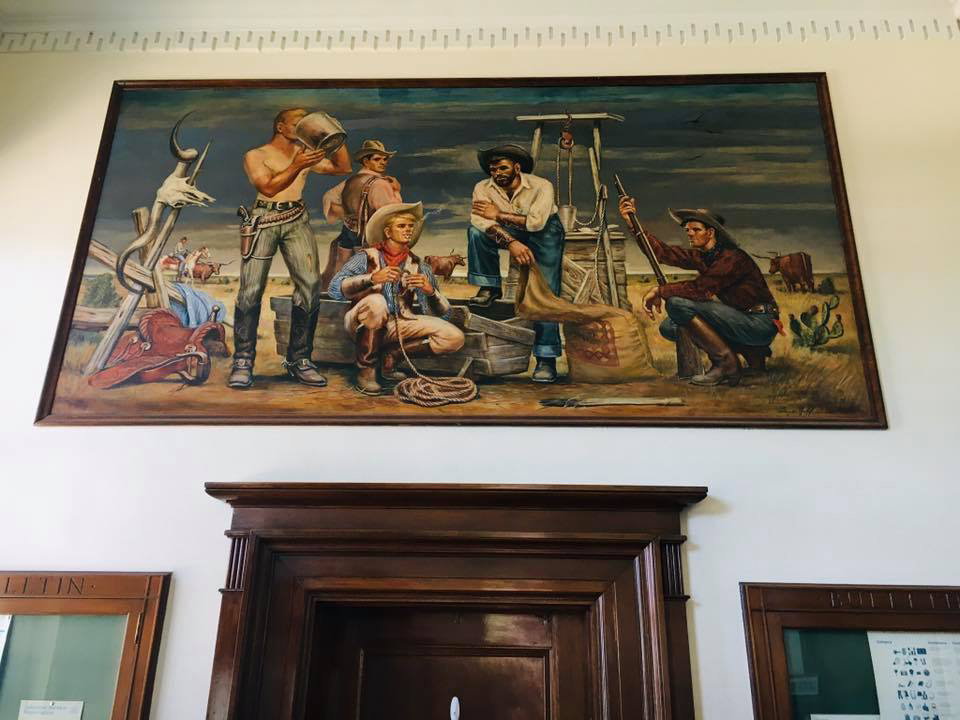
Cooper, TX. Lloyd Goff, “Before the Fencing of Delta County,” 1939. Photo: Leslie Thompson.
A Dallas artist born and raised, Goff studied with some of the big names in early Texas art like Frank Reaugh, Thomas Stell, and Olin Travis. He also worked with some well-known artists on other public art projects, like Paul Cadmus for the U.S. Embassy in Ottawa, Canada and Reginald Marsh at the Customs House in New York City. Additionally, the young artist traveled around Europe and studied at the Académies Julian and de la Grande Chaumière in Paris. After painting the Cooper mural, Goff studied at the University of New Mexico, Albuquerque for a couple of years, where he later taught, splitting the remainder of his career between New Mexico and New York.
How does the mural’s group of salubrious cowboys relate specifically to Cooper? Historically, the area had been home to the Caddo, Delaware, Quapaw, and Seminole people before Anglo colonial settlers arrived and eventually established the town. Cooper was largely developed by a farming economy dependent on cash crops, first cotton and then wheat. It’s possible that, being an agricultural region, cowboys tending to livestock were a common sight, though there aren’t many details in Goff’s mural that hint at specific ties to Cooper. The landscape itself doesn’t read East Texas, but rather a general area populated by longhorns (note the prickly pear cactus in the lower right corner).
Maybe the reason the mural seems more generic is that it was a reused design Goff had originally submitted for the Dallas post office mural competition. Unfortunately for Goff, the administrators did not find the cowboys of his first sketch to be authentic. They wanted something that represented the more typical “cowboy types and not handsome types of Dude-ranchers.” The Cooper design is Goff’s attempt at “more rugged types.” In my opinion, ain’t nothin’ rugged about these fellas. But apparently the local townsfolk had no qualms, complimenting the mural as “right plain” and “plain natural.”
Next we journey southeast into the threshold of the Piney Woods region of Texas with a visit to Longview. Just 125 miles east of Dallas is where we find Thomas Stell, Jr.’s 1942 mural Rural East Texas in the downtown Longview post office lobby. The painting celebrates East Texas agriculture. At center, just above the doorway, is a farmer driving a tractor with cows standing nearby in front of a log cabin house, and on the left is a pair of horses pulling a cartful of cotton, filled to the brim. Just beyond the farmer in the far distance we see evidence of the lumber industry, with freshly cut logs rolling onto a conveyor belt near what is likely a working sawmill. The painting blends the romantic visions of the rural farm, an ideal of American identity, with the burgeoning values of a modern, industrial country.

Longview, TX. Thomas Stell, Jr., “Rural East Texas,” 1942. Photo: Leslie Thompson.
Stell grew up over 300 miles south of Longview in Cuero, Texas. Recognized as a talented artist by one of his teachers, the Texas historian Walter Prescott Webb, Stell pursued a career in the arts. From Rice Institute (now Rice University) to the Arts Student League and the National Academy of Design in New York, to Columbia University, his artistic education was extensive. He then imparted some of that education as an instructor at the Dallas Art Institute. Remember Lloyd Goff, whom we just visited in Cooper? He was a student of Stell’s.
When Stell painted the Longview mural, he was actually living in San Antonio, working as the state director of the American Index of Design for the Works Projects Administration and teaching at Trinity University. In fact, the local paper, the San Antonio Light, published an article about professor Stell working on the Longview mural with an accompanying photo of the artist at work.
Though the post office mural doesn’t show off Stell’s strengths as a portraitist, which is what he was best known for, it does exemplify his signature style. His forms are simplified. His boldly contrasting shadows and highlights intensify the curves of the cattle. Every detail is precisely delineated, perhaps a nod to his interest in early Italian Renaissance and Flemish painters. There’s a great clarity in Stell’s draftsmanship. My only question is: what kind of tree is the artist trying to portray in the very left edge of the mural? Is that pine?
We will experience the smooth contours of Stell’s compositions again at our next stop in Teague. If you find yourself in Teague, don’t call attention to yourself as an outsider by incorrectly pronouncing the town name. The locals call it “Tig,” and the town located roughly halfway between Fort Worth and Houston off I-45. Historically, Teague was a railway stop and shipping center for cotton, and like some of the other towns on our journey (we’re looking at you, Ranger), when the cotton boom bottomed out, so did the local population.

Teague, TX. Thomas Stell, Jr., “Cattle Roundup,” 1940. Photo: Leslie Thompson.
Just off the quiet Main Street, across from the quaint public library, visitors will discover Thomas Stell, Jr.’s 1940 mural Cattle Roundup. Like his Longview mural, the Teague composition is clean and simple. However, in this scene we move away from the lush countryside and travel with two cowboys driving a small herd of longhorn through an arid landscape.
The colors are muted. The only vegetation around are a few varieties of cacti. Perched on the large cactus is a vulture. The only other sign of life is a nearby armadillo. The mural is quintessential Texas, but not quite the right region. Why would Stell paint a West Texas scene for a post office located in East Texas? My research didn’t reveal any answers, but it’s clear that the artist is being playful, and the section officials back in Washington, D.C. were none the wiser. For example, despite the fact that they suggested Stell try to be a little more realistic and authentic in his portrayal of the scene, complaining that the horses and cattle were too “toy like,” they completely overlooked the saguaro cactus. Saguaros don’t grow in the Lone Star state!
Now we move deep into the Piney Woods as we make our last stop in Trinity. We started this whole journey with Jerry Bywaters back in Quanah, so it seems fitting to round out our post office adventures with another Bywaters mural. In preparation for the painting, the artist visited a large lumber plant in town — Longleaf Pine Company — to see the mechanics of the operation. His fascination with the process is evident in his 1942 mural, Lumber Manufacturing, which depicts how the workers transform pine logs into board lumber.
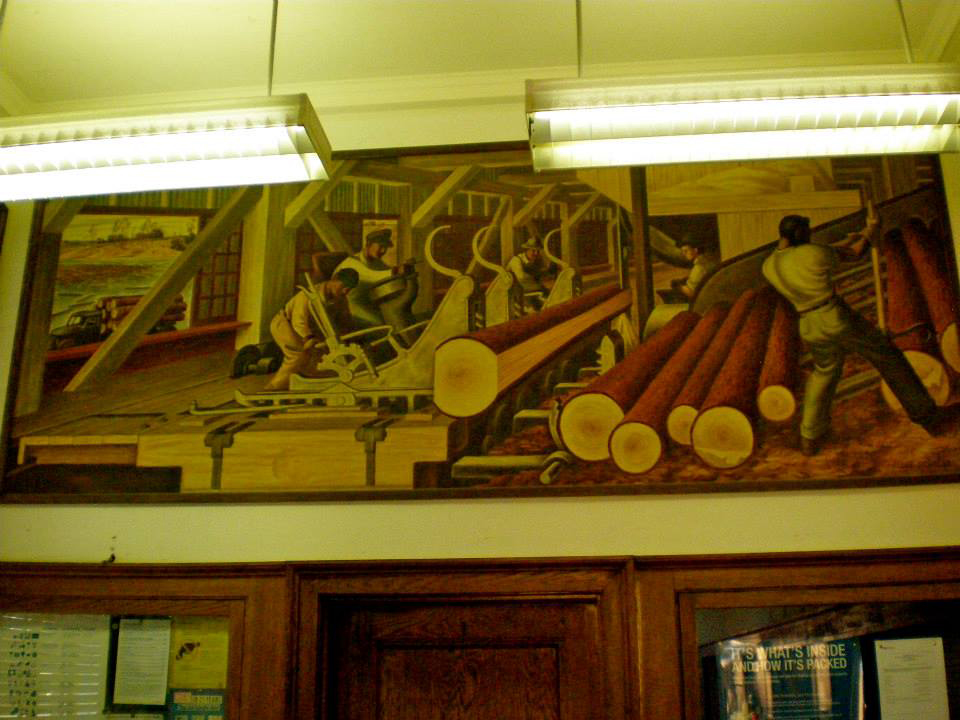
Trinity, TX. Jerry Bywaters, “Lumber Manufacturing,” 1942. Photo: Leslie Thompson.
Trinity is a tiny town, and is quite off the beaten path, but it’s a sweet, verdant path. The town was named after the nearby Trinity River, which winds its way south into Lake Livingston. At the time of Bywater’s mural, the Longleaf Pine Company, built next to a 37 acre pond, was one of the country’s most successful manufacturers of Yellow Pine. The company was also one of the largest employers in Trinity, so it’s not hard to understand how its closing in 1955 devastated the local economy.
Like his fellow members of the Dallas Nine — a circle of artists in the 1930s and 40s — Jerry Bywaters drew inspiration from nearby surroundings for his subject matter. Likewise, as a follower of Regionalism, Bywaters avoided European abstraction in favor of naturalistic representation, using tight brushwork, a hard-edged style and an earthy palette, as seen in the Trinity mural. Tans, grays, and rusty browns dominate the composition. It’s a very industrial scene, with many clean lines and smooth surfaces. Even the last remaining organic matter — the tree logs — is being scrubbed of its rough exterior.
The study for the mural is in the collection of the Smithsonian, and a comparison shows a few small changes, like the addition of the man working the logs in the right foreground. Through the window of the mill we can see in the background how the nearby environment is being stripped of its natural resources. The painting feels void of life. Or maybe I had a hard time reconciling the mechanized scene of the mural with the lush, tree-lined roads I drove through to reach my destination. Despite my lukewarm response, I still appreciated the artist’s style and attention to detail in representing the hard-working class of men.
I hope it’s been evident that I have a passion for these post office murals. Do I know everything about them? Not even close. Are the murals impartial? No, they’re clearly a product of their time. In fact, a majority of the murals are painted from a white, male perspective, with a few exceptions of female artists, a couple of European artists, and one Mexican artist (side note: of the 850 artists employed throughout the country by the Section of Fine Arts, only ⅙ were women, and only three were African American). But I believe the murals are a good conversation starter, about myriad topics.
I wrote this series not to be the be-all and end-all — there are plenty of great scholars who have authored many wonderful publications on PO murals. Rather, I wrote this series as more of a PSA: There’s some great art out there, sometimes hiding where you least expect it. And I hope these essays have sparked your curiosity to go explore.
The post Texas Post Office Murals, Part V: East Texas appeared first on Glasstire.

At least three guardsmen fainted during the military parade known as the Colonel's Review, in which more than 1,400 soldiers of the Household Division and the King's Troop Royal Horse Artillery were reviewed by the heir to the throne, who is honorary Colonel of the Welsh Guards.
Houston hit 95 degrees yesterday, our hottest day so far this year, and we’ll be on track to come close to that again today. Over the last 30 years, the average first 95 degree day in Houston was on June 8th. So we’re right on schedule this year. And while heat remains the primary weather story for the next week or more, there will be some storms worth watching later today. But not for everyone.
Everything looks pretty okay through early afternoon. So if you’re looking to get in a morning swim or have a morning/midday birthday party to attend, no worries.
Things get more complicated this afternoon. Storms should begin to fire up in North Texas, near DFW, which is the primary area we’ll be watching this evening. Additional isolated storms are possible in the northern reaches of the Houston area, so if you’re on Lake Livingston or Lake Conroe this afternoon, just keep an ear out for thunder and seek shelter should you hear some. An additional very isolated shower like yesterday is possible in the Houston metro area. But for the most part, things look okay through, call it, 3 to 5 PM or so.
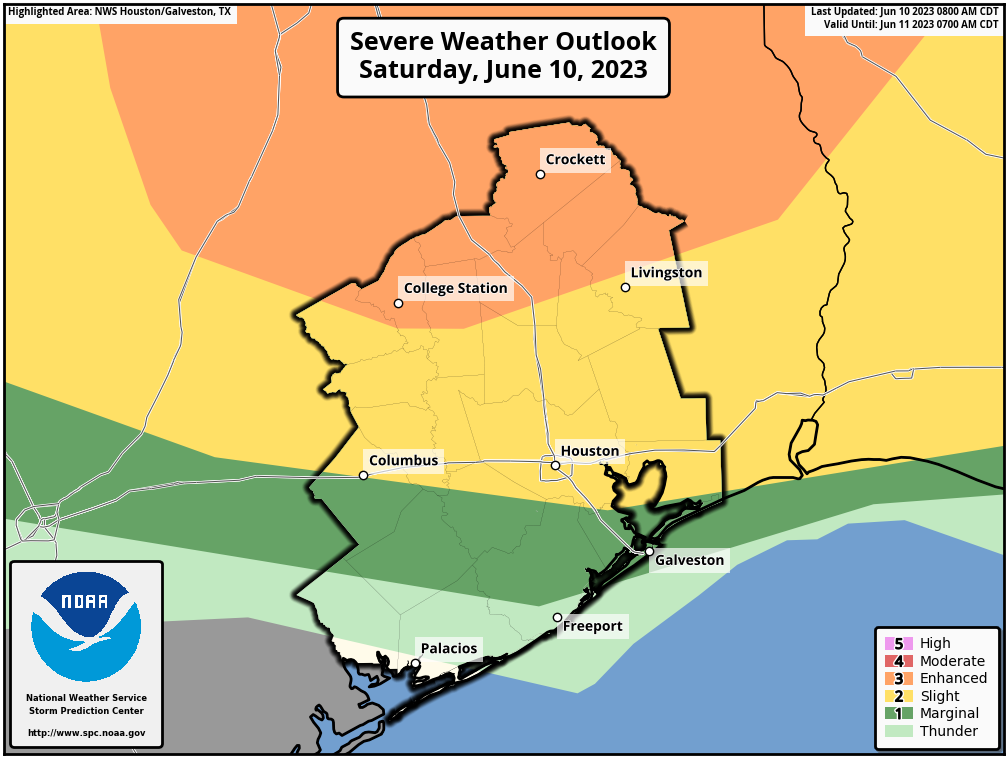
Thereafter, things become a bit trickier. Storms near Dallas should be hauling south and east during the late afternoon, finally reaching the northern fringe of southeast Texas by about 5 to 8 PM. Assuming they can hold together, they’ll get into Huntsville, Conroe, and Cleveland by about 8 to 11 PM. And from there, the northern half of the Houston metro and The Woodlands around Midnight, give or take. Everything will push offshore overnight.
What can we expect: North of Houston, where the enhanced risk is in place, which includes College Station and Huntsville, watch for strong, damaging winds from any storms, the potential for hail, and even an isolated tornado (though that would probably be a higher risk closer to Dallas). As the storms come south from there, the threat for wind and hail will continue — but slowly diminish. Any damaging winds would probably be more isolated than widespread. Hail would be isolated as well. And there’s a chance that some places, especially in the western third of the Houston area see nothing. By the time the storms get to the coast overnight, they may just have lightning and thunder.

At this point, I don’t believe these storms will have the same impact on our area as Thursday’s storms did, and the highest odds for anything like that will be north of Highway 105 and east of I-45. That said, there’s at least reason to keep tabs on things this evening across the area, so stay aware of the weather around you. Conditions should improve overnight and tomorrow looks fine.

Look for highs in the mid-90s, maybe into the upper-90s in a couple spots on Sunday. We’ll be back with more on Monday!


Horseshoe crab blood is used to test vaccines around the world. But while Europe has approved a synthetic alternative, biomedical labs are bleeding more crabs from the Atlantic Coast.
(Image credit: Ariane Müeller)


The Tandy 1000 EX was released in mid-1986 ($799) and the Tandy 1000 HX released in mid-1987 ($699) . They were Tandy's "entry-level" PC-compatible models, containing everything you need to run PC and MS-DOS software in a fully self-contained unit by means of the built-in keyboard. The Tandy 1000 SX ($1,199) was released alongside the EX and the Tandy 1000 TX ($1,199) accompanied the HX. Due to their low cost and despite their increasingly unimpressive specifications, they still sold very, very well. Lets talk about their abilities, their upgrades and their differences.
Read more »Christian televangelist Pat Robertson, who helped make religion central to Republican Party politics in America through his Christian Coalition, has died at 93. What do you think?
NEW YORK—Thanking the pathetic individual for helping end a scourge to the city’s streets, the City of New York announced Friday that Timothy Waller, a very sad man, had adopted all 500,000 of its feral cats. “Mr. Waller has gone above and beyond in helping to stem the tide of stray felines by offering to put up…
MIAMI – A former employee of the United States federal government who was let go due to extreme incompetence has just been indicted on charges of stealing from his erstwhile employer. Donald Trump, 76, has a checkered work record and a well-documented history of poor job performance. It’s not clear how someone known for ineptitude […]
The post Fired employee indicted for stealing from workplace appeared first on The Beaverton.
NEW YORK CITY – The NHL, a league who will soon make less money and attract fewer eyeballs than the propreantepenultimate name in soccer, the MLS, announced they will make no significant changes to their style of play or business plan. “Why change when things are going so well,” said commissioner Gary Bettman, who took […]
The post Sport about to be passed in popularity by world’s 5th best soccer league sees no reason to change appeared first on The Beaverton.
/https://static.texastribune.org/media/files/63431d411d0b34eff142dc79f94d0514/TCEQ%20Complaint%20Gunter%20ST%20TT%2005.jpg)