The Google fight with the country echoes a similar battle in Australia, where the tech industry eventually struck deals with news publishers after tense negotiations.
(Image credit: LOIC VENANCE/AFP via Getty Images)

The Google fight with the country echoes a similar battle in Australia, where the tech industry eventually struck deals with news publishers after tense negotiations.
(Image credit: LOIC VENANCE/AFP via Getty Images)

Better By Microwave
Longbotham and Simmons
1990
Submitter: I am submitting this 1990 microwave cook book I found on the shelf of my local public library. I love when I find traces of attempted dishes on the pages of the cookbooks. I wonder if Clams with Black Bean Sauces in the microwave worked out?
Holly: Oh good, clams in the microwave: portable and quick for a lunch room snack at work. Some of the other recipes don’t sound too bad, although I would probably not make most of them in a microwave.


HEAVEN – Hesitant and embarrassed, God, the almighty Lord, creator of Earth and the heavens, approached recently deceased sex educator Sue Johanson with a question. “Hey, I’m, ah…I was wondering…” stuttered the embarrassed diety, as the crowds of heaven looked on. “You see, well, my partner and I like to do this thing, and, well.. […]
The post Blushing God approaches Sue Johanson with sex question no one else has been able to answer appeared first on The Beaverton.
Alright, I’ve been covering Eric most of this week, and given the stability in the forecast, it’s been a little challenging to discuss much, which has actually kept the posts pretty short and sweet! We’ll do that again today, but I want to focus more on next week.
More of the same: Sun, heat advisories or excessive heat warnings, and very minimal rain chances. Highs near 100 or in the upper-90s. Lows near 80 each day.

I suppose Sunday may see a slightly better chance for a stray shower along the coast, but even that looks mediocre at best right now.
With the holiday weekend perhaps being four days for many of you, there will be obvious interest in Monday and Tuesday’s forecast. What we know is that rain chances will not be zero on those days. However, the higher rain chances next week look to hold off until Wednesday through Friday. Our shower chances will be about 10 to 20 percent on Monday and 30 percent on Tuesday, hopefully winding down in time for area fireworks displays. I don’t think anyone needs to alter plans for the Fourth, but it’s probably a good idea to think about a rain option, just to be extra safe, if only for a short period of time.
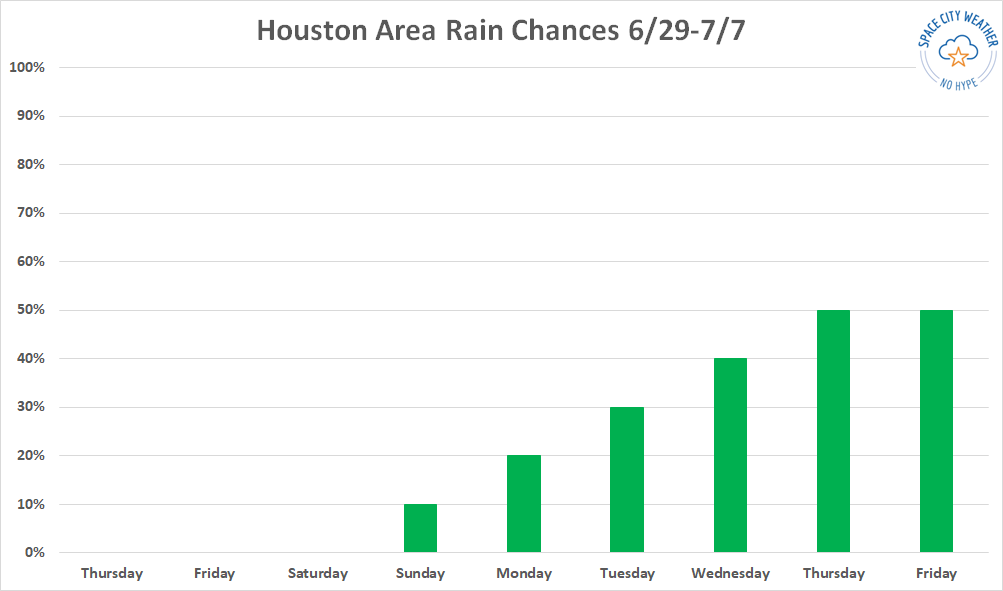
As we move beyond Independence Day, it looks as though we will ease into more of a classic midsummer pattern for Houston. It won’t be cool, but it will be noticeably less hot. We should see fewer and less regular heat advisories or warnings. Expect highs more into the mid-90s, near average for this time of year. Morning lows will be mostly in the 70s to perhaps near 80 at times. But each day will carry at least a 20 to 40 percent chance of scattered thunderstorms to locally cool things off. Rain chances should build into the end of the week, nearing 50 percent on Thursday and Friday before declining once more.


ATLANTA—In a renewed effort to crack down on fraud, Georgia Gov. Brian Kemp (R) reportedly signed a new law Thursday cutting welfare benefits for recipients who were caught experiencing happiness. “If even the slightest gleam of anything but abject misery is detected in their eye, all benefits will be cut immediately,…
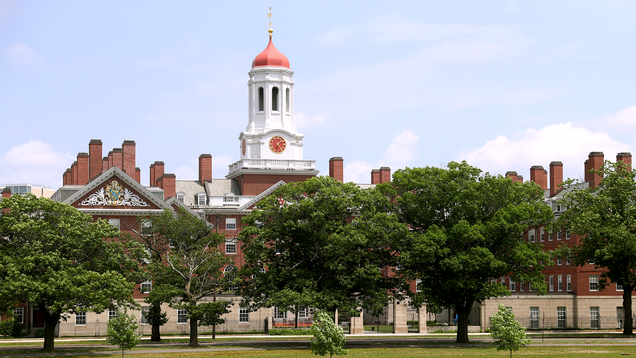
CAMBRIDGE, MA—In the wake of the 6-3 Supreme Court decision ending affirmative action, Harvard University announced Thursday that they would admit their first white student. “After nearly four centuries in existence, we are finally able to leave behind our woeful legacy of discrimination and accept our first student…
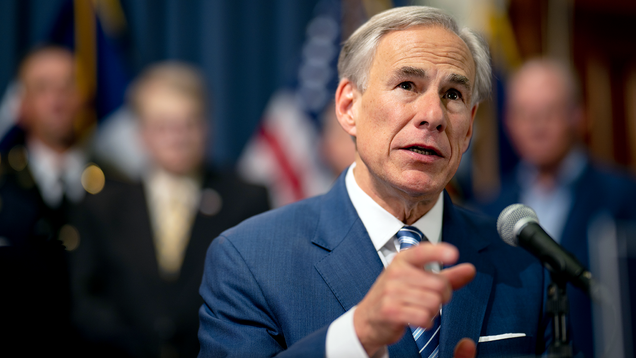
AUSTIN, TX—Addressing the life-threatening heat dome that has settled over Texas, Gov. Greg Abbott (R) announced Thursday that a backup prayer system had been added to the state electricity grid. “To prevent the deadly outages we’ve experienced over the last few years, these new reserves will kick in to supply…

Affirmative action in the world of higher education can be an incredibly difficult topic to address. While many people have strong opinions about how the policy affects race in college admissions, I, as an enslaved person, have uniquely personal ties to the issue.
Back in the year 1823, I decided to become a slave so…
The CDC has confirmed that five cases of malaria have been discovered in Florida and Texas, the first time the potentially fatal mosquito-borne disease has been locally acquired in the United States in 20 years. What do you think?
This post was written by Alison Green and published on Ask a Manager.
A reader writes:
I wrote a Glassdoor review and the employer is absolutely losing their mind.
Recently, I left my last very chaotic workplace for new pastures. The prior workplace had leadership that would constantly go on social media and talk about how much they disliked certain employees and clients (which definitely impacted our business) and would consistently play favorites within the office. On top of that, leadership also made it clear that raises would be minimal and that they would not promote anybody from within because they felt like we weren’t qualified to tackle leadership positions (!). I began applying for jobs and recently was hired for a position making more than double the pay and with much better benefits. I am very satisfied.
I’ve always been on the fence about writing reviews on websites like Glassdoor or Indeed but for this workplace I decided to write a review on both because I felt compelled to let people know that this place is very challenging to work at. I brought up the “leadership on social media” aspect, the lack of professional growth, and the lack of financial mobility. It’s now a very highly rated review on said websites, and now leadership at that workplace has read the review and are turning it into a “witch hunt” of sorts.
My friends who still work there report that within a week of “a review” being posted (my friends do NOT know that I was the one that wrote the review, and I did not disclose this to them), leadership brought everybody into a meeting and began with an opening statement of: “We know that someone wrote a letter on a review website, so we’ll give you all time to reveal yourselves.” When nobody revealed themselves (because nobody in the room wrote the letter — I did!), they began to question each and every person in the room about their experience at the workplace and whether or not anyone had anything negative to say. Quite literally, they went around to each person questioning them on their experience working there and if they wrote the review. And then ended the meeting with, “If you have a problem with working here, you can leave.”
My friends were really uncomfortable during that exchange for obvious reasons (they recently began to look for new employment as well) and there have been whispers about who might have written the review who has left. I’ve kept silent — I don’t work there anymore, anyway. For a while it put a huge knot in my stomach, but I’m viewing this more as “out of sight, out of mind” — I spoke my truth and wrote the review, and that’s that.
However, while I know there’s nothing that I can do, I can’t shake this feeling that I put my friends and colleagues in a weird position. Any advice on how to emotionally move forward?
You didn’t put your friends and colleagues in a weird position. Your former company’s management did.
You did a normal thing that people do — you spoke honestly about your experience working at a previous company, on sites specifically designed to do that in order to help other workers.
Your former company chose to go on a witch hunt and tried to intimidate and threaten people over that. Which isn’t surprising, given what you already know about how they operate. But their unreasonable, crappy actions don’t make your actions unreasonable or crappy, just because they’re blowing up over it.
I see how you might feel awkward that your friends are speculating on who wrote the review when you’re not fessing up to it … but unless these are your lifelong best friends — unless you have the sort of close relationship where you’re spending holidays together and are godparents to each other’s children — you don’t owe it to work friends to compromise your anonymity like that. You’re allowed to contribute to anonymous review websites, and you don’t have to lose your anonymity just because their employer is pissed off about it. (I do think it would be a bit different with a very close relationship — like if your spouse still worked there and you didn’t tell even them, that would be surprising — but I’m assuming these are more like work friends. I’m also assuming you’re not saying things, “I would never write something like that — how awful.”)
Really, the best way to see this is as more of the same from your old employer: you did a normal thing for a former employee to do after escaping bad working conditions, and they’re freaking out about it rather than responding constructively (which would include ignoring it or, I don’t know, thinking about whether there’s a message there that they should pay attention to). It sucks for the people still there that they work for a company that handles honest reviews that way, but you didn’t do anything wrong and you don’t even work there anymore. You get to move on, and hopefully your old work friends will soon too.

The Supreme Court just effectively ended colleges’ ability to consider race in admissions. Here’s what could happen next.
Affirmative action as we know it is gone. In a 6-3 ruling today in the case of Students for Fair Admissions v. Harvard and a companion lawsuit against the University of North Carolina at Chapel Hill, the conservative majority on the Supreme Court discarded decades of legal precedent by ruling that colleges may no longer consider race when admitting students.
The Court was unmoved by the near-unanimous belief among people who run colleges that student diversity is essential for education, or by the many barriers that continue to stand between students of color and college degrees. Because nearly all private colleges, including Harvard, receive federal funding, they are now subject to the court’s brand-new interpretation of the 14th Amendment’s ban on racial discrimination.
That creates an enormous challenge for college leaders and admissions staff. The higher education institutions affected by this ruling will almost certainly not relent on their stated commitment to recruiting a diverse student body. But they’ll need to find new ways of making good on that commitment with methods that (they hope) won’t run afoul of the Supreme Court.
History suggests it will be difficult to fully replace the strategies that the Court just declared illegal, particularly at first. That’s especially true given that many forms of affirmative action for the white and wealthy still stand: The Ivy League crew team recruit with mediocre grades won’t be touched by this decision.
A diverse higher ed landscape is still possible after SFFA v. Harvard, but will colleges, especially of the elite variety, be willing to upend the old ways of doing things and commit to new investments to achieve it?
SFFA v. Harvard goes into effect in a few months, when early-decision applications start arriving for the entering Class of 2028. Colleges have already admitted most of the students who will matriculate this fall. The ruling doesn’t affect them or those who are still finalizing their choices.
Here’s another thing to understand: Affirmative action has never been a dominant force in admissions. The college destination of the large majority of students will be unaffected by its demise.
Of the roughly 1,600 colleges that report admissions statistics to the federal government, only 350 admit 60 percent of applicants or less, and those include a dozen large universities in states that have already banned the use of race by public institutions when considering applications. Fewer than 100 colleges have admission rates below 30 percent, and they only enroll about 10 percent of all students. And most students of color who attend selective colleges would likely have been admitted to the same college or somewhere similar without racial preferences.
So we’re really talking about the elite tier of schools in the US — a relatively small swath. But it’s a consequential swath: Elite diplomas are an irreplaceable credential for entry into the halls of influence and wealth.
The corporate leaders who employ us and politicians who represent us are disproportionately selective college graduates, as are the barons of media, finance, and technology. Harvard and Yale educate eight hundredths of 1 percent of American undergraduates and gave us 89 percent of the current Supreme Court.
Black and Hispanic students in particular have historically been denied an equal opportunity to earn valuable college degrees. If history is a guide, SFFA v. Harvard will immediately make that problem worse.
This isn’t the first time some colleges have been legally prohibited from using race in admissions. Nine states have passed laws or referendums that bar affirmative action in public universities. Often, the results have been the same: a swift decline in admissions rates for Black and Hispanic students, with damaging long-term consequences.
California was the first and largest state to ban affirmative action, in 1996. Black and Hispanic representation at the flagship Berkeley and UCLA campuses immediately dropped.
But as a recent study found, the total damage was much larger and long-lasting. The ban cascaded down through California’s public higher education system, altering admissions at less-exclusive institutions and knocking some students out of the system altogether.
Some affirmative action opponents had theorized that this would actually be a good thing because of the so-called “mismatch hypothesis,” which supposes that students are harmed by admission to colleges where they can’t keep up academically. Ending affirmative action would mean they would end up going to colleges appropriate to their achievement level and would consequently thrive there and beyond, or so the thinking went.
The California study, which examined the entire population of people who applied to the University of California over nearly two decades, totally demolished this idea. Ending racial preferences, it turned out, was nothing but bad for Black and Hispanic students. They were less likely to finish college, major in science and engineering, or go to graduate school. Hispanic students in particular were shut out of high-earning careers.
That’s because selective colleges also tend to be rich colleges, with unmatched resources to help students learn, graduate, and connect to the social and employment networks that determine success. The end of affirmative action in California basically closed off those networks for many students of color.
The results in Michigan, which banned affirmative action in 2006, were similar. Despite extensive recruitment efforts, Black enrollment at the flagship University of Michigan declined from 7 percent in 2006 to less than 4 percent in 2021, even as the Black college-age population in the state increased. Hispanic enrollment grew in Michigan (and California) but that was likely the result of a significant increase in the overall size of the Hispanic population.
The damage will also be felt by students who don’t directly benefit from racial preferences, in the form of increasingly homogenous student bodies and diminished educational experiences. A fragmented nation that provides young people with woefully few opportunities to build authentic relationships with people from different backgrounds will have fewer still. And it’s unclear whether SFFA v. Harvard will ultimately reduce the often-justified sense among many Asian Americans that they are penalized by their racial and ethnic identity when applying to top schools.
Fortunately, colleges have options to maintain the racial diversity of their student bodies, even under the strictures of SFFA. Much will depend on their creativity and commitment, and how much they’re willing to back their ideals with cold, hard cash.
To start, colleges will need to communicate what the Supreme Court’s ruling does and doesn’t mean.
Among the many sobering findings in the California study was a decline in highly qualified Black and Hispanic applicants to the UC system. In other words, the publicity surrounding the ban may have mistakenly convinced some students they shouldn’t bother to apply.
The decision may also prompt more colleges to implement “test-optional” policies of not requiring SAT and ACT scores for admission, a practice that was widely adopted during the pandemic and would likely benefit Black and Hispanic students with lower test scores but strong high school grades.
While the Supreme Court has barred the direct consideration of race, colleges can still legally consider other factors that have the effect of increasing racial and ethnic diversity. Texas, for example, enacted a well-known “Top 10 Percent Plan” in 1997 that guarantees the top 10th of every high school’s graduating class admission to the University of Texas.
Since some Texas school districts have very high concentrations of Black and Hispanic students, this effectively increased access to selective universities like UT-Austin, which admits so many students this way that it had to narrow its criteria to the top 6 percent.
Percent plans are a start. But one study found they only bring back a fifth of the students lost to an affirmative action ban. They also depend, ironically, on states having a significant number of racially segregated school districts, many of which have roots in racist “redlining” policies and other forms of discrimination. Colleges will have to do more.
Colleges can also give preference to low-income students. Since centuries of structural racism have left Black and Hispanic households with less income and wealth than their white counterparts, class preferences would increase racial diversity without formally considering race. This is the hoped-for outcome proposed by Richard Kahlenberg, a liberal scholar who nonetheless served as an expert witness for the plaintiffs in SFFA v. Harvard.
Class-based preferences, Kahlenberg notes, are far more popular among the general public than policies centered on race. He believes that wealthy Black and Hispanic students, who compose a significant percentage of students at universities like Harvard, would be replaced by more economically needy students of color.
“I’ve long argued a conservative decision on race will yield a liberal public policy result,” Kahlenberg says.
Colleges could also give a boost to students from certain places. Harvard already does this with an admissions bump for residents of so-called “Sparse Country” states, predominantly rural areas in the West and Great Plains whose residents happen to be overwhelmingly white.
Colleges could target metropolitan areas, cities, or even neighborhoods with large non-white populations. In other words, like the percent plans, such an approach would leverage America’s shameful history of racialized housing discrimination to get around our new, judicially mandated prohibition against helping people who continue to suffer from its effects.
But geographic plans may also cross the line the Supreme Court drew prohibiting policies that act as racial preferences in all but name, which could spur government investigations and more litigation.
In the majority opinion, Chief Justice Roberts wrote, “Universities may not simply establish through application essays or other means the regime we hold unlawful today.” And low-income students recruited through class-based affirmative action have less money to pay tuition. Harvard, with a $51 billion endowment, can afford to pay their bills. The University of North Carolina at Chapel Hill, the other defendant in the SFFA decision, has an endowment one-tenth that size and more than double the student body — and it’s still richer than many selective schools.
A signal moment in the aftermath of SFFA will come next spring, when Harvard announces the racial/ethnic composition of its graduating Class of 2028. Harvard may, through great effort and expense, be able to legally recreate the Class 2027’s mix of 15 percent African American/Black, 11 percent Latinx, and 3 percent Native American and Native Hawaiian students. But Harvard can take on more low-income students and build out the kind of recruitment operation a school needs to diversify the student body in a post-SFFA world. Other selective colleges that lack Harvard’s billions might not be able to do the same.
And even for Harvard, getting there might require heavy expenditure of a currency that’s even more valuable to elite colleges than money: social prestige.
The SFFA decision left a range of admissions preferences that primarily benefit white people untouched. They include legacy admissions, bumps for the children of faculty, athletic recruitment, and the less formal but widely acknowledged preference for the underqualified children of people who are famous, powerful, or make enormous financial contributions, a.k.a. “the Jared Kushner rule.”
For a Kahlenberg-style class-based affirmative action plan to work, Harvard can’t just increase preferences for low-income students. It also has to decrease preferences for legacies and the rich.
Harvard is among a small handful of “need-blind” colleges and universities that don’t penalize students who can’t afford to pay full tuition. It also offers generous aid to those who can’t afford a $59,000 tuition bill. In 2010, Harvard had, by one estimate, 14 times more students from the top 20 percent of household income than from the bottom 20 percent. It is not wealth-, fame-, or status-blind.
Large parts of the American power elite are nominally sympathetic to the virtues of race-conscious college admissions and also deeply committed to the cause of getting their own children into an Ivy League or similar institution. They won’t go down without a fight.
And that’s before addressing the most powerful admissions preference of all: athletics. Harvard found that its preference for top athletes is nearly three times stronger than the boost for legacies and Black applicants, and more than six times the preference for students of low or modest income. Remember the “Operation Varsity Blues” scandal that involved wealthy parents bribing college sports coaches to pretend their children were great athletes? Top colleges will all but ignore their academic standards for people who are good at hitting a ball with a racket.
Duke University economist Peter Arcidiacono did most of the number-crunching for the plaintiffs in SFFA. “Going into this, I thought what I’d find going on with legacies is more disturbing than with athletics, but that’s not the case,” he says. “If you eliminate athletic preferences at Harvard, white admission rates go down, Black admission rates stay the same, and Hispanic and Asian rates go up. Over 16 percent of white admits are athletes at Harvard, which is significantly higher than for Black students.”
To increase racial diversity, colleges could eliminate preferences for expensive niche sports, like fencing and squash, that are mostly played by wealthy white people. Says Arcidiacono, “It seems crazy to me to have such massive advantages for people on the sailing team.”
The Supreme Court has undoubtedly made it more difficult for selective colleges to build undergraduate classes that reflect the whole American community, or to compensate for the structural racism that still keeps many students down. It would be naive to think that the damage wrought by the SFFA decision can be entirely avoided.
But the end of affirmative action doesn’t have to mean the end of campus diversity. There is a big difference between doing nothing to blunt the Court’s decision and adopting the many strategies that some colleges have already pioneered. In the coming years, we’ll find out which colleges are willing to spend what it takes to make good on their lofty ideals.

A janitor cleaning in a laboratory at Rensselaer Polytechnic Institute in Troy, NY has been accused of damaging at least $1 million in scientific research after a storage freezer shut off while he was trying to turn off a constant beeping noise. What do you think?
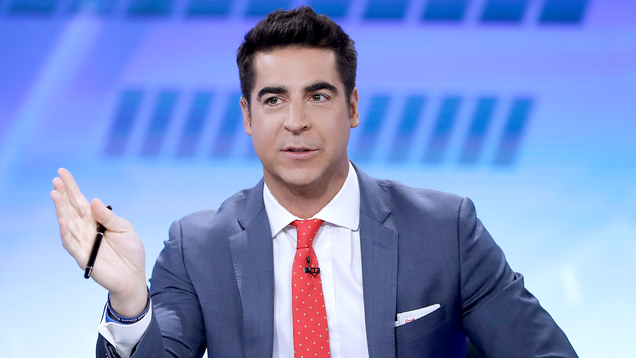
Television host Jesse Watters is set to take over Tucker Carlson’s 8 p.m. time slot after Carlson’s highly publicized departure. Here’s everything you need to know about the longtime Fox News anchor.

The donation, announced at a news conference Wednesday, means the $1.4-billion building is now named the Arthur J.E. Child Comprehensive Cancer Centre.
The leader of the Wagner mercenary group that mounted a brief uprising against Russia over the weekend denies that he had any intention of seizing power with his march on Moscow and only wanted to protest against Russian military leadership. What do you think?
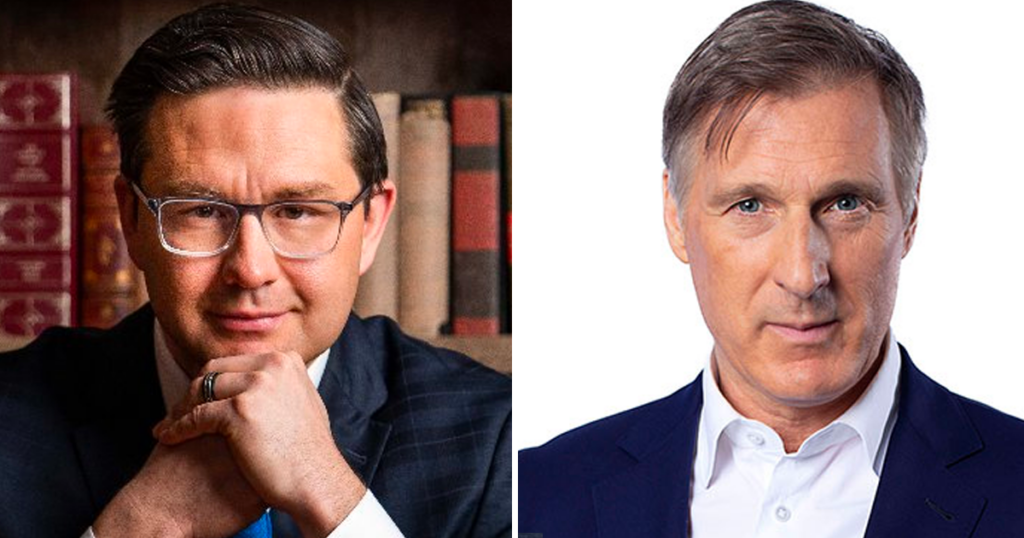
OTTAWA – The People’s Party Of Canada are struggling to adapt to Pierre Poilievre’s ascension to Conservative Party leader given his popularity with the men who make up the party’s base: dudes who keep a ‘rejected by’ list. “When O’Toole was CPC leader we could easily distinguish ourselves from him,” said leader Maxime Bernier. “But […]
The post PPC struggle to adapt to Poilievre’s popularity with their base: men who keep a list of every woman that’s rejected them appeared first on The Beaverton.

Hovertext:
We are assuming for the sake of argument that all bits of human are equivalent, which is basically correct.

Warner Bros. Discovery recently announced a shake-up at the network, which for years has offered a well curated film selection. Critic David Bianculli says TCM wasn't broken — and didn't need fixing.
(Image credit: AFP via Getty Images)

This post was written by Alison Green and published on Ask a Manager.
A reader writes:
I have a question for you about a scenario that happened several years ago, but still sort of haunts me. I work in the medical setting, under a new manager, Jane, and a relatively well-established director, John, who has a reputation for pushing shortcomings off onto other individuals. There was some friction between Jane and another employee, and during a one-on-one meeting with John over another issue, I was asked how I would’ve handled it (I’m still not sure why, since I had no management background myself at the time). Since the issue seemed to be related to a misunderstanding/different communication styles, I recommended a facilitated conversation between Jane and the employee, with John being the facilitator. I’ve carried a lot of guilt around about that recommendation — it seemed so reasonable at the time…
The next day, all staff (10 of us) were instructed to proceed to a conference room. The chairs were arranged in a circle, and Jane was placed in the middle. We were then required to go around the circle one at a time and list all of our grievances with Jane’s management style. She was given no opportunity to defend her decisions. None of this seemed to be related at all to the original dispute. In fact, the employee who experienced friction with Jane was allowed to skip this particularly horrible experience “because it would be too stressful for her,” according to John.
Several of us, during our “turn,” attempted to sway the conversation away from the negative and talk about things Jane was doing well. We were told that positive reinforcement wasn’t the point of this meeting and that we needed to follow instructions.
Somewhat unsurprisingly, Jane put in her notice about 30 minutes after this concluded. She still works for the organization in a different role, and I’ve had an opportunity to apologize about what happened. She and I remain on friendly terms, but I can’t help but wonder if there’s anything I could have done or said differently in the moment, and I can’t think of any better perspective on this than yours.
What on earth.
This was horrible for everyone — it was obviously horrible for Jane, but it was horrible for the rest of you too! John sounds like a sadist.
This isn’t how you give an employee feedback! Of course there are times when a manager needs to hear feedback from the employees under them, but it requires a fair amount of skill for their boss to coordinate that in a way that (a) allows employees to feel safe providing candid and useful feedback, (b) ensures those employees won’t experience any blowback for providing it, and (c) sets the manager up to process the feedback in a constructive way.
“Everyone’s going to sit in a circle and tell Jane everything we don’t like about her” is not that. It fails on every measure!
It doesn’t seem like John put any thought into this at all. Aside from how cruel it was, the fact that he didn’t even ask you to prepare anything ahead of time is telling. People don’t generally give highly useful feedback when they’re put on the spot with no warning. So it seems a lot more about John playing out some personal agenda of his own than anything designed or intended to be useful or constructive.
There are managers who are sort of bulls-in-china-shops when it comes to relaying team feedback to managers beneath them — managers who aren’t acting with ill will but just don’t understand the trepidation someone might have about delivering a candid assessment to their manager or how power dynamics can affect that process, and who therefore leap too quickly to “just tell her your complaint!” Those managers aren’t particularly skilled or thoughtful about human dynamics … but this feels like more than that. This feels like John targeting Jane in a very personal and deliberately unkind way.
But it’s 100% not your fault. A team-wide grievance circle obviously wasn’t what you were envisioning when you suggested a facilitated conversation between Jane, John, and the employee. But even if the grievance circle had been your idea, John — by nature of his position — should have been responsible for realizing that wasn’t a good idea and not doing it. It was already weird that he was asking you about how to handle the friction between Jane and your coworker, and it really seems like he was looking for cover for either his own ineptitude or his own cruelty … or both.
You’re wondering whether there was something you could have done differently once the session got under way. I love that you and your coworkers tried to talk about things Jane was doing well. But when John cut you off and insisted you criticize instead, the only other thing you could have done at that point was to refuse to go along with it — either by saying something bland like “I don’t really have any critical feedback off the top of my head” or by taking more of a stand with something like, “This feels wrong to me.” But it’s famously hard to know how to react in the moment when something weird like this is happening — there are tons of studies showing how tough people find it — and that’s doubly true when your livelihood is involved. Most people muddle through as best as they can. As long as you weren’t being actively cruel, I can’t fault you for not standing up to John when he blindsided you all with this.
This was John’s doing, not yours.
This post was written by Alison Green and published on Ask a Manager.
A reader writes:
I would appreciate some feedback on a somewhat sensitive religion/workplace conflict that happened a few years ago, and how to respond to the occasional inquiry from colleagues and clients about it.
While returning to the states for the summer, I recommended an acquaintance of mine, Jade, to fly in and take over my job as a corporate trainer in our industry here in our country in Europe. I knew her from our shared religion and mutual friends back home and knew she was a great academic and very loved in many circles. I did not know that she held a private belief that proselytizing was her calling for ALL spheres of life. Our job requires a bubbly personality, which is probably what made her a good missionary back home (and she is unquestionably beautiful).
I began getting weirder and weirder emails from my clients throughout the summer without anyone saying anything concrete: “Your lovely friend sure makes our industrial welding meetings feel like Disneyland!” Or, “I didn’t realize you believed animals have an afterlife, why didn’t you tell me?” and “Jade mentioned you are probably saving yourself for your fiance, but I don’t think you wanted that information shared with the accounting team?”
When I returned, I was pulled immediately into a meeting with my boss. Apparently, they didn’t want me to feel bad, but Jade had quickly diverged from using our curriculum and instead brought church pamphlets to work from with clients. I’m talking working with clients on polishing skills specific to their job and field and instead asking them to read about the bible and think how they could relate it to industrial machining.
The light then clicked on for me when I realized the only recommendations I had ever heard about Jade came from research associates at institutions owned by our church.
My boss had felt she could stick it out with Jade (otherwise Jade’s work visa would be revoked), even though Jade started getting progressively worse. We had no HR and work in a country and contract system where my boss has almost no say when it comes to arguing with proclaimed religious convictions.
Jade had transitioned quite quickly from the business attire she agreed to wear after training to dowdy, baggy dresses that she said she had to wear because of she had promised God as a missionary to prioritize modesty as a woman (we wore pantsuits so it was not revealing).
However, I was humiliated and most shocked when my boss revealed that Jade walked into a meeting with my biggest government client … with a keyboard. She proceeded to play hymns and ask my clients what was most important to learn, their “secular life skills” or to believe God will teach them everything they need to know for their social work exam if they choose to read the scripture instead of the curriculum.
Apparently, each time my boss attempted to correct Jade about work process and conduct, Jade was jaded (sorry) and doubled down because she believed Satan was just working harder to dissuade her from her mission.
The majority of my clients stayed because of the relationships I spent years developing, but I lost some who felt (obviously) their money was being wasted. My boss was so confused and said that she and the clients didn’t want to offend, as Jade told everyone I held all the same convictions and would back her up when I returned. Legally, I could not go back to a single client and discuss my religion or refute everything Jade had said about me.
In 10 weeks, Jade ruined my professional image with quite a few clients, and possibly made people believe I held incredibly sexist beliefs. She told my boss that she refused to work with any men one-on-one because “it is unfair to her future husband and making sure these situations are prevented will help Letter-Writer too, who is of the same belief” (I’m not!). Most of my clients didn’t believe I was that extreme, for which I am grateful, but it’s a small town and I lost important academic connections because she presented me as “going to quit as soon as she gets married because her husband will be her priority.”
I wish I had known so I could have given my boss permission (sounds backwards but she thought she was doing me a favor by not getting my “friend” deported if I was coming back soon) to send Jade home, but no one contacted me.
Jade flew home the week before I got there and I ended up chewing her out in a series of emails that I don’t quite regret. I let her know that she not only horrifically misrepresented others in the religious organization with her behavior but that she needed professional guidance before she ever entered the “secular” workforce again.
Is there some way I could have handled this better (aside from never recommending anyone I haven’t worked with)? On the one hand, I do understand her motives; our church had such stringent teachings about being damned for passing on any chance to proselytize and risking the salvation of those around you, I can see why she was convinced she was doing right (it’s one reason I left the religion).
On the other, what do I say if I ever run into Jade again and is there anything I can say to past clients who all like to bring her up?
I do have to laugh though. One major client told me on my first day back that he ran into Jade at an industry conference where clients were lined up to hit the buffet. He said he saw her hold up a line of 20 people who were choosing food and once she realized their eyes were on her, she started singing a hymn to them. He said someone of course got mad and cut her off flat, but Jade told my client later in their meeting that she thought a conference section about crime scene cleaning was the ultimate chance to “shine for God.”
Oh my goodness, what! I don’t know where to start.
You’re right that you shouldn’t recommend anyone you haven’t worked with — at least not without a clear caveat that you haven’t worked with them. It can be fine to say something like, “I’ve never worked with Jade so I can’t vouch for her qualifications, but I can tell you that she’s smart, funny, and really enthusiastic about llama midwifery” … but that’s clearer about the limits of your endorsement than a more general (and thus more problematic) “I think my friend Jade would be great this job.”
But aside from not recommending Jade, there wasn’t a lot of room for you to do anything differently because no one told you what was going on!
The exception to that was those weird emails from your clients. Ideally when that happened, you would have done more digging — like reaching out to your boss to say you were getting strange messages from clients and asking if she knew what was behind them. That might have prompted her to tell you what was happening in your absence.
But really, your boss is the one who messed up! Jade was using church pamphlets to work with clients! She was telling them to read the bible instead of your organization’s curriculum! Those are major, major offenses — both in the sense of being professional transgressions and being highly offensive to many people who don’t share her faith or her specific way of practicing it. It was kind of your boss to want to help Jade maintain her work visa, but not at the expense of the damage Jade was doing and the people she was proselytizing to without consent. (And really, if your boss had laid things out clearly to Jade like she should have — “in order to keep this job you must do X and stop doing Y” — then it would have been Jade’s choice whether she kept her visa or not.)
It’s particularly weird that apparently your boss did try to intervene but when Jade doubled down, your boss just … what, shrugged and let it go? Why? Based on what you’ve written, your boss was about as negligent as a manager can be. And on top of all the damage she let Jade do to your organization’s work and reputation, she let Jade harm your reputation too. You sound like you like your boss and I’m sure she’s lovely in many ways, but she failed in a lot of ways too!
As for what to say to past clients who bring up Jade’s comments … I wouldn’t wait for them to bring her up, because not everyone will. Instead, proactively contact them and apologize for the experience they had while you were away. Say explicitly, “I’m told Jade wildly misrepresented me while I was gone, and I’d be grateful if you disregarded anything she relayed in that regard.” (You said that legally you can’t refute what she said about you — and not knowing your country’s laws, I can’t counter that, but from over here it seems awfully surprising that there’s no way whatsoever to correct the record about yourself.)
As for what to say if you ever run into Jade again … that’s really up to you and depends on what kind of relationship, if any, you want with her going forward. But if you can manage to carry a keyboard around to deliver whatever message you land on in song, that would be a nice touch.

SAN FRANCISCO—Explaining that it was required by California law to notify them of its status, ChatGPT was reportedly informing users Wednesday that it was on the sex offender registry. “I will fulfill your prompt shortly, but first, compliant with federal and state law, I must tell you I have been convicted of lewd…

SAN FRANCISCO—Musing aloud about what he must have done for things to turn out the way they did, local man Kyle Swarz told reporters Wednesday he was reflecting on where he went wrong in life to deserve the worst-looking chocolate chip muffin at his neighborhood coffee shop. “I just wonder what I could have done…
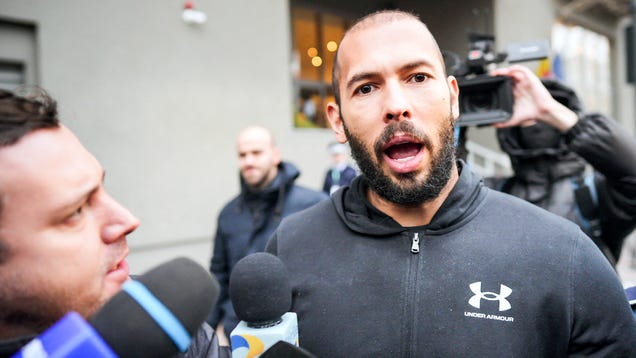
Even after his arrest for sex-trafficking in Romania, many teenage boys are still proud to call Andrew Tate a role model. The Onion asked adolescent males why they look up to the influencer, and this is what they said.

PORTLAND, OR—Closing out a highly anticipated series of lectures, talks, and panels on the topic of hallucinogenic drugs in contemporary society, the Portland Psychedelic Science Conference’s keynote address was delivered Wednesday by a bird that could read everyone’s thoughts, according to witnesses. “Every line of…
1. Bleb
2. Etnies
3. Furuncle
4. Stussy
5. Mormal
6. Kith
7. Lues
8. Vetements
9. Milk Leg
10. Cav Empt
11. Icterus
12. Huf
13. Dropsy
14. Temu
15. Aphthae
16. Tropicfeel
Streetwear Brand: 2, 4, 6, 8, 10, 12, 14, 16
Skin Condition: 1, 3, 5, 7, 9, 11, 13, 15

Password rules seem to get more strict and weird over time. Neal Agarwal takes it to a ridiculous level, as Neal Agarwal likes to do. Enter a password that fits the rules, and another rule pops up until you find yourself with a password with a thousand wingdings.
Tags: game, Neal Agarwal, passwords