Trump floated the idea during a White House press conference with Israeli Prime Minister Benjamin Netanyahu on Tuesday, proposing the U.S. assume ownership of the territory and redevelop the land.
This post was written by Alison Green and published on Ask a Manager.
Just sharing this tweet from Washington Post reporter Jeff Stein about Elon Musk’s “deferred resignation” offer for federal government workers. (Don’t take it! It’s still a trap.)
I just wanted to thank you for posting about what federal workers who are currently under attack can do.
The former Twitter employees I know have all spent the past couple of weeks reliving the Twitter takeover from 2 years ago but on a much more widespread and terrible scale. I want to say this is all beyond belief but … we saw this happen and how it played out, and now I’m just left feeling so angry that we couldn’t have stopped this somehow. I don’t know what I could have done differently or better, but I feel the burden of watching this happen the first time around and not being able to stop it.
Seeing the news about how Elon locked government workers out of their systems, how they’re moving beds into OPM’s headquarters … It feels like the Twilight Zone.
I would not at all be surprised if he held a public auction in the next couple weeks to sell off real estate, office equipment … all the way down to artwork on the walls and plants on employee desks.
I’m still thinking about how I can help push back on and resist what we’re seeing happen all around us, and I wanted to say that if you ever do another post on this issue, please let the federal workers know that a whole bunch of former Twitter employees know what they’re going through, and we support them, and we’re so so sorry they’re experiencing this.
Last month, Meta admitted to torrenting a controversial large dataset known as LibGen, which includes tens of millions of pirated books. But details around the torrenting were murky until yesterday, when Meta's unredacted emails were made public for the first time. The new evidence showed that Meta torrented "at least 81.7 terabytes of data across multiple shadow libraries through the site Anna’s Archive, including at least 35.7 terabytes of data from Z-Library and LibGen," the authors' court filing said. And "Meta also previously torrented 80.6 terabytes of data from LibGen."
"The magnitude of Meta’s unlawful torrenting scheme is astonishing," the authors' filing alleged, insisting that "vastly smaller acts of data piracy—just .008 percent of the amount of copyrighted works Meta pirated—have resulted in Judges referring the conduct to the US Attorneys’ office for criminal investigation."
The Infrastructure Investment and Jobs Act (IIJA) contained a whopping $42.5 billion to expand broadband access. To make sure that money wasn’t wasted, it contained a number of provisions.
Like demanding ISPs try to provide at least one tier of service poor people could afford. Or provisions encouraging networks built with taxpayer money try to be open access, which, as we’ve discussed at length, help boost broadband competition and lower cost. As well as encouragement that taxpayer money be spent on the most future-proof technology (fiber) where applicable. Pretty common sense stuff.
“Roth, who is poised to lead the National Telecommunications and Information Administration, outlined her stance on the $42.5 billion Broadband, Equity, Access, and Deployment program in June, criticizing its emphasis on fiber deployments and what she described as a “woke social agenda” laden with additional regulatory burdens.”
“Requiring states to choose a statewide low-cost, low-income rate is just one of the ways that they’ve imposed extra legal requirements. There’s also climate change regulations, union mandates, wholesale access requirements… all kinds of left-wing priorities on the program that just divert resources away from the overall goal of closing broadband gaps. This is going to make the program less cost effective, and it’s going to undermine its goals.”
As with the DOGE stuff, authoritarians are having a good time stripping away stuff like this under the pretense that it’s “too woke,” or that by removing it they’re being more efficient. In reality they’re just stripping away this stuff due to corruption. They can’t just acknowledge they’re corrupt hacks, so the layers of performance are required to distract a lazy press and a broadly misinformed public.
Contrary to Republican whining, there’s a reason the NTIA didn’t want to throw billions of dollars at Starlink. If you’re going to spend taxpayer money on broadband, it makes sense to prioritize fiber and 5G wireless. Why? Starlink is capacity constrained, too expensive for many rural Americans, harms astronomical research, is destroying the ozone layer, and is run by a racist asshole.
I strongly suspect Republicans will throw as much of this money as possible at Starlink, ignore all the significant problems, then declare the U.S. broadband problem effectively “solved.”
Of course Trumpublicans voted against the infrastructure bill in the first place. And they’ve already begun taking credit for the benefits of the bill wherever possible among their constituents. But not before taking an axe to any parts of the bill that their biggest donors don’t like under the pretense of “eliminating waste” and “being efficient.”
It’s just corruption dressed up as efficiency, something press outlets covering this sort of thing still don’t illustrate particularly clearly to their readers.
News moves fast… While this post was getting finalized came news that Marko Elez has resigned after his racist tweets were found and publicized. Nevertheless, the point made herein still stands.
Amidst all the news today is news suggesting that Musk and his lackeys have had their access to the federal government’s payment systems limited. While it appears true that there are now some limits, it is too soon to celebrate before we know whether there are enough. The limits might only be on the data used by these systems, and not the code that powers these systems. And that difference is important.
The Defendants will not provide access to any payment record or payment system of records maintained by or within the Bureau of the Fiscal Service, except that the Defendants may provide access to any of the following people:
o Mr. Tom Krause, a Special Government Employee in the Department of the Treasury, as needed for the performance of his duties, provided that such access to payment records will be “read only”; o Mr. Marko Elez, a Special Government Employee in the Department of the Treasury, as needed for the performance of his duties, provided that such access to payment records will be “read only”;
This order comes after reporting from earlier this week that, despite promises from the Treasury Department that Krause had “read only” access, Elez appeared to have admin privileges and may have even pushed live code into the system. Nathan Tankus, who has been closely tracking the access issue also reported today that, from a practical standpoint, Elez’s access may have already been somewhat curtailed in response to public reporting.
On Saturday, they had given Marko read/write access and marked his access request as completed and closed. There was no mistake in their wording: they explicitly said they had given Marko read/write access to SPS. On Wednesday, they reopened his access request and stated his permissions were now read only.
But reporting on what’s going on at Treasury in response to this court order keeps obscuring an important issue, and it’s leading people to breathe a sigh of relief that is potentially, and critically, not warranted. Indeed, there’s a way to read the court order that should be cause for alarm, not relief.
True, it is good that access to Americans’ social security numbers is limited to just two Muskers, and that their access is limited, although there is a lack of clarity for what these limitations mean. It may mean that they cannot change the data, and it may also mean that they cannot download or share it, but “read only” is not defined in the order, so it’s hard to be sure.
It is also not clear that it goes beyond payment records. Per the order access is limited to “any payment records,” which presumably includes Americans personal information. And access is also limited to “any payment system of records.” But “payment system of records” is a term desperate for definition, because it’s not at all clear that it applies to what it really needs to apply to.
What is really dangerous is for these renegades to have access to the software code that makes the payments out of Treasury. But this provision looks like it only prevents them from accessing the system that handles how Treasury handles the records about whom to pay. It does not look like this injunctive provision extends to anything that controls the payments themselves. It looks like any number of DOGErs (beyond just Krause and Elez) could still have access to those systems and the software Treasury uses to make payments (even if they don’t have direct access to the records of payments). There appears to be nothing in this order to limit any DOGEr’s access to not just see the software code but potentially also change the code, upload the code, and run the code.
If anything, the negotiated settlement suggests that DOGE very much still intends to do such things, given that Krause and (previously) Elez still needed access to records “for the performance of [their] duties.” What duties are these? How do they relate to actual payments? What are they still doing in these systems?
This lawsuit of course may not have been the right vehicle to limit their access to the software code, given that it was brought to address the separate problem of the the privacy harm resulting when any of them can see Americans’ personal information. But that’s not the only harm the nation faces if these guys still have control over the computers that handle whether and how America pays its bills. It is critically important that reporting recognize that this question has not been fully answered in a way that can give anyone confidence that our entire economy does not still rest in their unauthorized hands.
by by Avi Asher-Schapiro, Christopher Bing, Annie Waldman, Brett Murphy, Andy Kroll, Justin Elliott, Kirsten Berg, Sebastian Rotella, Alex Mierjeski, Pratheek Rebala and Al Shaw
On President Donald Trump’s authority alone, Elon Musk, the world’s richest man, has been unleashed on federal agencies. Employees from Musk’s companies and those of his allies, as well as young staffers he’s recruited, are wresting authority from career workers and commandeering computer systems.
While some have been public about their involvement, others have attempted to keep their roles secret, scrubbing LinkedIn pages and other sources of data. With little information from the White House, ProPublica is attempting to document who is involved and what they are doing.
Musk’s team, known as the Department of Government Efficiency, has already thrown entire swaths of the federal government and its programs into disarray — programs that serve millions of Americans.
Musk himself has made no secret of his intentions, saying that DOGE is a “wood chipper for bureaucracy” and that he is “deleting” agencies.
A White House spokesperson wrote, “Those leading this mission with Elon Musk are doing so in full compliance with federal law, appropriate security clearances, and as employees of the relevant agencies, not as outside advisors or entities.” None of the people identified responded to requests for comment.
We are still reporting. Do you have information about any of the people listed below? Do you know of any other Musk associates who have entered the federal government? You can reach
our tip line
on Signal at
917-512-0201
. Please be as specific, detailed and clear as you can.
Armstrong is a technology banker at Morgan Stanley who worked on Musk’s $44 billion acquisition of Twitter — since rebranded as X — in 2022. He has been given an influential role at OPM, which handles personnel issues across the federal government. Since Trump took office, OPM has spearheaded the new administration’s efforts to dramatically reduce the federal workforce and roll back telework and remote work policies.
Riccardo Biasini, 39
Senior Adviser to the Director
Connected to: Office of Personnel Management
Musk link: Former engineer at Tesla, executive at the Boring Company
Biasini is an engineer and former executive who has worked at two of Musk’s companies, the Boring Company and Tesla. He has also taken a high-ranking role at OPM. Biasini was listed as the contact person for the government-wide email system put in place by the Trump administration and used to send messages directly from OPM to millions of federal workers across the government, according to a
recent court filing
.
Brian Bjelde, 44
Senior Adviser
Connected to: Office of Personnel Management
Musk link: Vice president of people operations at SpaceX
Bjelde is a longtime SpaceX employee who’s spent more than 20 years at the company, according to his LinkedIn profile, where he’s had a variety of jobs, including as managing director of the “food services group.” He previously worked for NASA’s Jet Propulsion Laboratory. He’s been referred to in press reports as a “top DOGE Lieutenant,” working at OPM to slash head count. CNN
previously
revealed that Bjelde had informed OPM staff of a plan to cut 70% of the agency’s workforce. The New York Times
reported
that Bjelde helped Musk cut staff at Twitter following its takeover.
Akash Bobba, 21
Senior Adviser to the Director
Connected to: Office of Personnel Management
Bobba was named by Wired magazine as part of a team of six young engineers picked by Musk for his DOGE team. A recent graduate of the University of California, Berkeley, Bobba worked as an intern at Meta, the social media company, and at Palantir, the software and data analytics firm that is a major defense contractor. Bobba is listed in personnel records as an “expert” at OPM, where he has reportedly been able to access internal databases. He graduated from high school in 2021; in his graduation speech, featured in the Spotlight New Jersey newspaper, he told his fellow graduates that, in life, the “answers we deserve demand discomfort.”
James Burnham, 41
General Counsel
Connected to: Executive Office of the President
Burnham is a former litigation partner at Jones Day and a high-ranking Justice Department and White House official from the first Trump administration. The New York Times
first reported
his involvement with DOGE as a lawyer in January. His title at DOGE is listed internally as general counsel, according to records reviewed by ProPublica. Burnham previously served as a clerk to Supreme Court Justice Neil Gorsuch. On
a website
for one of his past companies, Burnham is described as having played a “central role” in the selection and confirmation processes for Gorsuch, Justice Brett Kavanaugh and then-Judge Amy Coney Barrett.
Nate Cavanaugh, 28
Connected to: General Services Administration
Cavanaugh is an entrepreneur who has founded companies focused on intellectual property management and small-business finance. He has been interviewing staffers at the GSA as part of the DOGE team, according to those who have spoken with him. GSA procures technology tools, real estate, and other services for federal government agencies. In published interviews, Cavanaugh has expressed an admiration for tech luminaries, including Peter Thiel, Elon Musk, and Mark Zuckerberg, and has said he is “very interested in crypto.”
Edward Coristine, 19
Expert
Connected to: Office of Personnel Management
Musk link: Interned at Neuralink
Coristine is a recent undergraduate student at Northeastern University and part of the group of young DOGE staffers detailed to OPM, the government’s human resources office. Wired reported that Coristine interned at Neuralink, Musk’s brain-computer interface company. Friends of Coristine
told
Northeastern University’s independent student newspaper that Musk was one of Coristine’s idols and that while he finished the fall 2024 semester, he did not return to school for the spring term. According to CBS News, Coristine has been
seeking
access to the Small Business Administration’s internal records on behalf of DOGE.
Steve Davis, 45
Musk link: Longtime Musk lieutenant, CEO of the Boring Company
Davis has been a senior executive and close associate of Musk’s for over two decades, working with him at SpaceX, X and the Boring Company. He was one of the first people to be associated with the DOGE effort last year. The New York Times reported he was on early calls with Musk as they conceived of the DOGE effort and explored ways to cut federal programs. Bloomberg
reported
that Davis has helped recruit staffers for DOGE.
Marko Elez, 25
Connected to: Treasury Department
Musk link: Worked as an engineer at X and SpaceX
Elez works at the Treasury Department, a staffer at the office of the Secretary of Treasury confirmed in a call with a ProPublica reporter.
Wired reported
Feb. 4 that Elez, who graduated from Rutgers in 2021 and studied computer science, has gained access to the highly sensitive payment systems of the U.S. Treasury Department. According to Elez’s LinkedIn bio, which was recently deleted, he was most recently an engineer at X in New York for roughly a year and an engineer at SpaceX in the Los Angeles area for around three years before that. Elez reportedly resigned Feb. 6 after
The Wall Street Journal reported
that he has links to a social media account that posted racist comments online.
Luke Farritor, 23
Executive Engineer in the Office of the Secretary
Connected to: Department of Health and Human Services
Musk link: Former SpaceX intern
Farritor works as an executive engineer at the HHS, according to agency data. He studied
computer science
at the University of Nebraska-Lincoln and interned at SpaceX, working on its Starlink Wi-Fi team and Starship launchpad software, according to
his Linkedin
profile. In March 2024, he received a Thiel
fellowship
, a two-year program founded by billionaire tech entrepreneur Peter Thiel that awards a $100,000 startup grant to students who drop out of college.
Stephanie Holmes, 43
Human Resources
Holmes is running human resources at DOGE, according to government workers who have been in meetings with her. A former lawyer with Jones Day, a firm that frequently represents Trump, she was previously the chief people officer at Oklo, a nuclear energy company chaired by OpenAI CEO Sam Altman. She also ran her own HR consulting firm, BrighterSideHR, which
advised
companies to pursue “non-woke” approaches to diversity and inclusion in the workplace.
Gautier “Cole” Killian, 24
Federal Detailee
Connected to: Environmental Protection Agency
Killian works at the EPA, according to agency data. His position is a federal detail, which typically allows government employees to transfer between agencies for temporary roles. He studied math and computer science at McGill University, where he
conducted
blockchain-related research. He recently worked as an engineer at Jump Trading, an algorithmic financial trading company, and is a member of the DOGE team, according to recent media
reports
.
Gavin Kliger, 25
Senior Adviser to the Director
Connected to: U.S. Agency for International Development, Office of Personnel Management
Kliger is a senior adviser at OPM, according to his LinkedIn profile. He spent nearly five years as a software engineer at Databricks, a cloud-based AI company. He is widely reported to be part of Musk’s DOGE team. On his personal Substack, he wrote an essay titled “Why I gave up a seven-figure salary to save America,” according to press reports, and described failed U.S. attorney general nominee Matt Gaetz, who
withdrew from Congress
amid allegations of sexual misconduct, as a “victim” of the deep state. On Feb. 3, workers at USAID received an email announcing that their Washington offices would be
closed
that day. Replies to the email were directed to Kliger at a USAID email address.
Keenan D. Kmiec, 45
Lawyer
Connected to: Executive Office of the President
Keenan Kmiec’s career veered from elite law to, more recently, crypto. After clerking for then-Judge Samuel Alito on a federal circuit court, he clerked on the Supreme Court for Chief Justice John Roberts in the 2006-2007 term, according to his LinkedIn. He did a stint at a corporate law firm and had his own firm focused on insider-trading litigation. In 2021, Kmiec began working for a Swiss foundation that promotes a blockchain called Tezos, according to his LinkedIn. He then served for nine months as CEO of a now-defunct startup called InterPop, which described itself as “forging the future of digital fandom with comic, game, and collectible NFTs minted responsibly on the Tezos blockchain.”
Tom Krause, 47
Expert
Connected to: Treasury Department
Krause is a part of DOGE’s efforts to gain access to sensitive federal payment systems as part of Musk’s larger effort to root out spending perceived as wasteful. According to the
Treasury Department
, Krause leads a team of people who have been granted “read-only” access to the code for the agency’s Fiscal Service payment system, which processes payments for major programs such as Social Security and Medicare. The department has clarified he is designated as a “special government employee.” The New York Times
reported
that Krause is affiliated with Musk’s DOGE team.
Katie Miller, 33
Spokesperson
In December, during the transition, Trump named Miller, who served in the first administration as a press secretary to Vice President Mike Pence, as one of the first members of DOGE. She is the wife of White House deputy chief of staff Stephen Miller. After reports that DOGE personnel accessed internal USAID data, Katie Miller defended the group, saying that “no classified material was accessed without proper security clearances.”
Justin Monroe, 36
Adviser
Connected to: FBI
Musk link: Senior director for security at SpaceX
Monroe is working as an adviser within the office of the director of the FBI, according to three people familiar with the matter. NBC News previously reported that an unnamed SpaceX employee has been placed in the FBI director’s office but said it could not confirm the individual’s identity. Monroe is a seasoned information security professional who previously served in the U.S. Navy as an
information warfare officer
.
Nikhil Rajpal, 30
Expert
Connected to: Office of Personnel Management
Musk link: Former Twitter employee
Rajpal is listed as an “expert” now working for OPM. An archived version of his personal website from 2018 lists his job title as an engineer at Twitter. Rajpal has extensive access to sensitive personnel data used by OPM, according to a source familiar with his role. Wired reported Feb. 5 that Rajpal also sought and was later granted access to data at the National Oceanic and Atmospheric Administration. Wired magazine
reported
that he is part of the DOGE team.
Rachel Riley, 33
Senior Adviser in the Office of the Secretary
Connected to: Department of Health and Human Services
Riley works as a senior adviser at HHS, according to agency data. She previously worked for consultancy firm McKinsey & Company for about eight years, most
recently
as a partner leading teams advising the company’s state and federal government clients. She has been working closely with Brad Smith, a former health official in Trump’s first administration who ran DOGE during the transition period, according to
media reports
.
Michael Russo, 67
Chief Information Officer
Connected to: Social Security Administration
Musk link: Former chief technology officer of Starlink payment processor Shift4 Payments
Russo is a top-ranking technology official at the SSA, which disburses over $1.5 trillion in benefits annually. Russo spent over seven years as an executive and senior adviser with Shift4 Payments, a payment processing company that is both an
investor
in SpaceX and a payment processor for StarLink, according to
his Linkedin
. The CEO of Shift4 Payments, Jared Isaacman, has been nominated by Trump to lead NASA and is a friend of Musk’s who has purchased multiple spacewalks with Musk’s SpaceX company. Russo’s office will oversee the SSA’s over $2 billion IT budget.
Amanda Scales, 34
Chief of Staff
Connected to: Office of Personnel Management
Musk link: Previous employee of xAI
Scales’ name came to light in the first week of the Trump administration as federal employees received a memo putting them on notice that diversity, equity, inclusion and accessibility initiatives in the federal government were now barred through an executive order — and to report efforts to conceal them. The message listed Scales as the point of contact for questions. Scales worked in the human resources department at xAI, Musk’s artificial intelligence company, prior to OPM. Before that, she worked in recruiting at ridesharing company Uber. She is reportedly an integral part of OPM’s sweeping efforts to restructure the federal workforce.
Thomas Shedd, 28
Federal Acquisition Service Deputy Commissioner and Director of Technology Transformation Services
Connected to: General Services Administration
Musk link: Software engineer at Tesla
Shedd’s work at Tesla focused on building software that operates vehicle and battery factories, according to a GSA
press release
. The office Shedd runs, known as TTS, helps federal agencies improve their tech practices. GSA leaders have told employees they plan to cut 50% of the budget. Shedd has told colleagues he plans to run TTS like a “startup software company,” according to
Wired magazine
, which will
reportedly
involve the use of artificial intelligence to analyze government contracts.
Brad Smith, 42
Smith was among the earliest names associated with DOGE outside of its founder. The New York Times reported he was helping lead the group. He served in a series of health-related policy roles during the first Trump administration, including being part of the board of Operation Warp Speed, the historic COVID-19 vaccine development program. According to The New York Times, which first reported Smith’s involvement in DOGE, he is a friend of Jared Kushner, Trump’s son-in-law.
Christopher Stanley, 33
Musk link: Senior director for security engineering at X and principal engineer at SpaceX
Stanley is an experienced information security professional who has worked at multiple Musk-related companies. He is reportedly an aide to Musk at DOGE, according to
The New York Times
, and has a role at the White House. He was part of the initial transition team after Musk purchased Twitter in 2022, according to his LinkedIn
profile
. On inauguration day, Stanley assisted in the release of individuals associated with the Jan. 6 riots, he
wrote
on X.
Others Named in Musk’s Orbit
Beyond the figures ProPublica has confirmed, other media have reported on a few additional people close to Musk who work for DOGE or other federal agencies. ProPublica is working to confirm them as well:
We are still reporting. Do you have information about any of the people listed above? Do you know of any other Musk associates who have entered the federal government? You can reach
our tip line
on Signal at
917-512-0201
. Please be as specific, detailed and clear as you can.
Sometime during the next several weeks, the directors of federal agencies will receive a draft version of President Trump's budget request for the coming fiscal year, which begins on October 1. This "passback review" is a standard part of the federal budgeting process which ends in Congress writing a budget and the president signing it into law.
The budget request will be the first of President Trump's second term, and it will offer a clear window into the priorities of his new administration. Although widespread cuts are expected for much of the government's discretionary spending, the outlook for the National Science Foundation appears to be especially grim.
During an emotional all-hands meeting on Tuesday, the agency's assistant director for engineering, Susan Margulies, told agency employees to expect between a quarter and a half of its staff to be laid off within the coming months, E&E News reported.
Serengeti, Disney – After many successful sequels and prequels, Disney has announced plans to finally make a film explaining the origin of the bug shown on screen for 2 seconds before Timon eats it. “We know fans have been demanding answers for years,” explained Barry Jenkins, the director and writer for the new film. “Some […]
Introduction- Many, if not most people were shocked at recent events. The rise to power of people who would have been unthinkable a few short years ago now seems to be accelerating. It’s normal to feel overwhelmed, but giving up is not an option. This is my attempt to list a few simple things we can all do to resist what seems so unstoppable. And save our sanity.
This post was written by Alison Green and published on Ask a Manager.
A reader writes:
I was working on writing up a job ad today for temporary research assistants for a field biology project, and noticed trends in my ads and in others’. It’s common for early career employees applying to assistant or technician jobs to think that they want to do fieldwork and then quit in the middle of the season because it wasn’t what they expected. There are really fun parts like getting to travel to cool places, camp or backpack, work directly with plants and animals, and meet new people. However, employees are often underpaid (especially at the technician level), work long hours, and must front some transportation or per diem costs before getting reimbursed. They are far from their friends and family camping for long periods of time and without cell service in some cases. Often, these staff are expected to work through bad weather (if it’s safe), hike long distances, do manual labor all day, and deal with biting and stinging insects. This can be compounded if you’re assigned to work with one other person and it turns out that you don’t get along with them. It can be downright miserable!
The solution to this seems to be that we become very up-front about the working conditions in the job and write requirements like, “Must be comfortable carrying 30 pounds in high heat and humidity for 13 hours per day off trail on uneven terrain with biting flies and mosquitos while maintaining a positive attitude.” It doesn’t matter who you are, you’re going to have an off day here and there in those conditions — especially if you have been working and living with the same one or two people for three weeks. I think writing like that just comes off … wrong?
I am worried that, in an effort to be transparent, we make ourselves sound uninviting and expect that green staff will fail. I think it also emphasizes physical tolerance where emotional intelligence and maturity can make or break a field season. Do you have any advice for striking a balance when hiring for jobs that have inherent challenges?
P.S. I make it sound terrible but there are many of us who really love it!
The instinct to be very up-front about the working conditions is the right one! The more transparent and realistic you are, and the more you paint a picture of what the work is really like, the more you’ll attract candidates who will do well and the more likely the “wrong” candidates will self-select out.
When you’re hiring, truth in advertising about the less appealing parts of the job is a good thing. You want people to have a good understanding of what they’d be getting into. It’s true that you don’t want to cross over into “this job sucks! but you’ll need to keep a smile on your face!” … but you shouldn’t shy away from describing things as accurately as possible.
I would also think about what traits and experiences people who do well in the job tend to share, and talk about that as well — “if you’re the person on camping trips who’s always tracking the animal droppings you see and isn’t daunted if it rains, this may be you” or so forth. (These are undoubtedly terrible examples — non-camper here — but you’ll have better ones since you’re familiar with the work and the actual qualities that predict success.) Or, “We’ve found people who thrive in this role generally have ____ (“spent extended time outdoors in various weather conditions,” “a high degree of emotional intelligence and the ability to work in sometimes uncomfortably close quarters with a wide range of people,” or whatever is true).
With a job like this, where you get a lot of people who don’t fully understand what they’re signing on for, I might even consider including one or two short testimonials from people who have done the job successfully and liked it — just a short paragraph from a couple people on what the experience was like for them, what was tough, and why they liked it anyway (without any sugarcoating).
You could also run the draft of your ad by people who are doing the job currently or did it recently and ask for their feedback — do they think it’s a full and accurate representation? Are there other things they wish they knew before they got hired?
But it’s much better to err on the side of too much transparency than not enough.
The Sims, which has sold nearly 200 million copies, celebrates its 25th anniversary this February. In honor of the video game franchise, The Onion looks back at its key milestones.
1977: Will Wright gets a great idea for a video game while watching a family burn to death in their home.
1989: SimCity, the game’s city-building precursor, debuts as a popular alternative to constructing a large metropolis in real life.
2000: Mom doesn’t get it.
2003: Console debut introduces The Sims to gamers not allowed to play Grand Theft Auto.
2011: The U.N. condemns Iran after evidence emerges proving they are developing their own version of The Sims.
2015: Night of sleep lost creating a family that looks kind of like the Ninja Turtles.
2020: Yearning for pandemic escapism, millions turn to The Sims to recall what it’s like to walk in circles in a different-looking house.
2023:The Sims 4 reaches over 70 million active losers.
NEW YORK—Issuing a categorical denial of the accusations, NBC producers announced Thursday there was absolutely no usage of artificial intelligence in the new series Detective Fireman Lawyer Chicago Los Angeles Show. “At NBC, we are passionate about storytelling, and the truth is that machine learning isn’t capable of bringing to life vibrant characters like Jim Jack John Zander Chase Johnson Jackson, a man who is barely hanging on as he balances his hectic work life with alcoholism dead child gambling attempted suicide problem,” said producer Tanya Nance, telling reporters that everything from the series’ opening shot of courtroom explosion precinct skyscraper ocean cliff on had come entirely from the minds of the show’s creators. “We understand that tensions are high around the issue of using large language models in entertainment, but rest assured that only a passionate team of experienced writers could deliver on a premise like this. I’m confident that audiences will be hooked from the moment they find out who is behind the murder arson big case DNA evidence opposing counsel. And while I don’t want to give too much away about the future of the show, let’s just say that there’s more to our hero than meets the eye con artist ghost mobster drug dealer elf.” At press time, Nance admitted that invalid input format invalid input format invalid input format quota exceeded too many input requests.
WASHINGTON—Rebuking President Trump’s decision to pardon Jan. 6 rioters, Sen. Mitch McConnell (R-KY) staunchly vowed this week to continue falling down stairs in the face of an apparent fascist takeover. “I can no longer physically stand upright for a party that excuses a violent insurrection that targeted our Capitol,” the 82-year-old lawmaker said as he slid down a row of steps outside the Senate chamber. “There are certain principles I refuse to compromise on, and I will make that known by tumbling down flight after flight of these hallowed steps. Rest assured, I will not stop until every last bone in my body is broken and I can no longer feed myself or recognize my surroundings. Suffering internal bleeding is my duty and my promise to the good people of Kentucky. So here I go again, America.” At press time, McConnell confirmed that intermittently losing consciousness—not violent rioting—was the only form of “legitimate political discourse” he recognized.
President Trump declared that the United States should seize control of Gaza and permanently displace the entire Palestinian population of the devastated seaside enclave, one of the most brazen ideas that any American leader has advanced in years. What do you think?
“I’m sure once he explains the plan it will all make even less sense.”
Demetrius Kelly, Pancake Flipper
“We must liberate these people from their home!”
Maggie Prats, Geode Labeler
“Is displacing native people really something we want associated with America?”
“Project Row Houses presents the second iteration of the Southern Survey Biennial, which showcases recent works created by seven contemporary visual artists living and working in the South. PRH Curator and Programming Manager Cydney Pickens: ‘The Southern Survey Biennial is an extremely important initiative, as there are few national platforms that specifically spotlight and reward artists from the South. We are humbled to showcase such dynamic local talent in our neighborhood of Third Ward at the historic row houses on Holman Street.’”
Sizhu Li, “Moonment,” aluminum sheets, wood, Arduino, motor, fans, 28 x 21 x 11 feet. Site-specific at HoCo Arts Council
2. Sizhu Li: Moonment
The Contemporary at Blue Star (San Antonio)
February 7 – May 4, 2025
Opening Reception: Friday, February 7, 6 p.m. – 9 p.m.
From Contemporary at Blue Star:
“Contemporary at Blue Star is happy to announce the first installation of the new year, Moonment, an ongoing, touring project by artist Sizhu Li. The public opening, on Friday, February 7, will be preceded by an artist-led walkthrough, happening that morning at 10:30am.
Inspired by her Chinese heritage, Moonment draws from the Tang Dynasty poem “海上升明月,天涯共此” (Gazing at the Moon, Longing from Afar) by Jiuling Zhang. In this moving work, Zhang captures the connection between people who, though separated across vast distances, share in gazing upon the same moon rising above the sea. In Moonment, each site-specific installation uses sheets of aluminum hanging from the ceiling to the floor, with programmed fans propelling the sheets to move, visibly and audibly mimicking the waves of the ocean. Nearby, a heart-shaped moon constructed from a piece of metal and a circulating wooden baton create the heartbeat of the ocean’s tides.”
Julián Chams, “Coleccioìn #4 (Palma, El Yunque),” 2023
From Koslov Larsen:
“Koslov Larsen is pleased to present Object Impermanence, a group show featuring the works of Rosalba Breazeale, Julián Chams, and Amber Toplisek. Curated by Zan Zeller, Object Impermanence explores the art object as artifact, a tool for time-traveling, reaching back into the past and sustaining into the future. An artifact serves as a physical mark of the maker having existed in time, a testament to the perseverance of their legacy. What do we choose to preserve as part of our lineage?
The exhibition brings together photosculptural works which defy the bounds of the traditional photographic frame. The pieces feature natural imagery in fragmented and refracted forms — these incomplete forms synthesize to become something larger than themselves, a form of collectivism. Each artifact, crafted by the hand of the artist, holds personal memory as well as collective memory.”
“Devin T. Mays has exhibited and performed at Martin Janda, Vienna; The Renaissance Society, Chicago; Neubauer Collegium, Chicago; gta exhibitions, Zürich; Sweetwater, Berlin; F, Houston; SculptureCenter, New York; Museum of Contemporary Art, Chicago among others. Mays is an Assistant Professor in The Department of Art at Rice University. He currently lives and works between Galveston and Houston, Texas.”
A work from “Bibi Flores: I Am, and We as Energy, Rising”
“I Am, and We as Energy, Rising is a collection of abstract paintings and mixed media works with themes of healing, empowerment, and transformation. Vibrant colors, dynamic shapes, and intuitive forms represent a personal and collective journey of resilience and growth, embodying the power to overcome trauma. The artwork invites viewers to connect with a shared vision of renewal, rising together toward peace, love, and harmony.”
One look at the day 3 through 7 hazards map issued by the Weather Prediction Center may cause some consternation, as it’s busier than a 4 year old’s crayon box.
There’s a lot going on here. (NOAA WPC)
We’ve got some heavy rain and mountain snow back in California, wind in the Rockies, cold in the North, heavy rain in the Ohio and Mississippi Valleys, ice potential in Appalachia and parts of the Great Lakes, and then heavy snow risk in the Northeast and Midwest. And Alaska too.
I want to focus on the storm potential this weekend from the Midwest through Northeast. In a nutshell, an upper-level disturbance is going to swing through the Upper Midwest and into the Northeast, with plausible interactions with other disturbances along the way that will likely produce a widespread snow for many areas, as well as the potential for a wintry mix to the south, across Ohio and Pennsylvania.
As highlighted above, there is potential for heavy snow on Saturday from South Dakota into the Twin Cities in Minnesota across Wisconsin into the northern half of Lower Michigan. Is this a slam dunk? Not yet. If we look at precipitation forecasts from the various models, there are some disparities in where the highest precip totals are drawn. So for anyone in this region, there is some fail mode to this forecast.
Total precipitation forecast this weekend from various weather models. (Pivotal Weather)
Modeling, with the notable exception of the ICON model (and GFS to a lesser extent) seems to agree on a general precipitation maximum between the Twin Cities and along I-94 in Wisconsin. It extends across Lake Michigan into Lower Michigan, primarily north of Grand Rapids. Within this band of precipitation, models suggest anywhere from about 0.30″ to 0.60″ of liquid equivalent. That would constitute at least 5 to 9 inches of snow, using about a 15 to 1 ratio of snow to liquid. Expect a somewhat narrow but significant band of accumulation somewhere probably from northern South Dakota into Minneapolis-St. Paul into central Wisconsin. Another bullseye is likely across Lower Michigan, again north of Grand Rapids and probably east to the Thumb, including Sagniaw.
Once the storm clears the Midwest, its next phase will be in the Northeast. Don’t focus on the specifics below but rather the location of the maximum positive snow depth change according to the GFS model.
Snow accumulation may be highest in the mountains of Upstate New York, southern Vermont, Massachusetts, and New Hampshire. (PolarWx.com)
The bullseye, at least according to this model would occur in the southern Adirondacks, southern Greens, Berkshires, and portions of New Hampshire. At this point, it’s too early to overspeculate on amounts but suffice to say a “plowable” snow is a plausible outcome there, after the current week’s lighter snow and light ice.
Speaking of ice, this next storm will also come with some of that too. Sunday’s forecast from the European model does indeed show widespread freezing rain across much of Pennsylvania. While it’s too soon to get extra specific in terms of ice accumulation, another round of 0.10 to 0.25 inches of ice accumulation is possible this weekend.
Potential for another quick hitting round of freezing rain is in the cards for Pennsylvania. While ice accumulation doesn’t look severe, a tenth to quarter-inch of ice build up would cause travel problems across the region. Again. (Pivotal Weather)
The real takeaway from all this is if you have travel plans anywhere along the I-90, I-80, or I-94 corridors this weekend, you would be wise to plan ahead and be prepared for hazardous winter weather.
Another storm is possible next week, with perhaps more to follow. As we noted earlier this week, it looks like an active period is setting up across parts of the country.
A final word
Today is National Weatherpersons Day! I would be remiss if I didn’t give a special thank you to our friends and colleagues that work across the industry to serve their communities and keep people safe and informed. From broadcasters to private sector meteorologists to researchers to government meteorologists, we all work together to achieve a similar end goal: Minimize risk to lives and property.
In particular, I want to note our friends at the National Weather Service across the country. There is a lot going on right now, and whether you agree or disagree with it, you know what those NWS employees are still doing right now? Creating forecasts and issuing warnings and alerts to keep their communities safe. Whatever distractions they have to manage right now, they still show up to serve us all. I have come to know many NWSers, and they put up with a lot on a good day, including a grueling schedule that requires virtually all of them to work overnights every few weeks. They sacrifice time from their families and their lives to serve the communities in which they live. And they are some of the most servant-minded individuals I have ever come to know. They care, they work hard, and they provide a public service that is virtually unmatched in terms of return on taxpayer investment, saving our country and economy billions annually and saving countless lives in the process. To them, we are grateful and simply put cannot expect to do our jobs effectively without the work they do. Thank you to all meteorologists, but especially those at the NWS, especially now. I hope everyone else realizes this when they hear various news nuggets about NOAA and NWS in the days and weeks ahead.
WASHINGTON—Claiming that the waterway will now be called the America Canal, President Donald Trump announced Thursday that the Panama Canal would be relocated to U.S. soil. “Our beautiful system of channels and locks is finally coming home, folks!” said Trump in a Truth Social post before signing an executive order directing American personnel to airlift the 50-mile-long artificial waterway connecting the Pacific Ocean and Caribbean Sea to its new location in Austin, TX. “China can say bye-bye to their influence over the canal once it’s placed squarely within America’s borders. This simple action of transferring a billion gallons of water over to the United States will create more jobs than ever before. You’re welcome!” At press time, Trump officials drafted plans to relocate Canada and Greenland to America’s heartland as well.
WASHINGTON—Whining that they were being discriminated against even though they were the “bestest sons ever in the whole wide world,” the Trump Boys attempted Thursday to convince their father that Barron was getting unfair advantages because he was a DEI. “Daddy, Barron is ruining our lives because he’s different,” said a pouting Donald Jr., who sobbed while describing how their little brother received preferential treatment even though he couldn’t do cartwheels, play basketball, or make fart noises as good as they could. “If we don’t do something, soon it’ll be nothing but Barron Trumps around here. We think it’s time to fire him from the family forever, and then send him back to wherever REIs [sic] come from!” At press time, the Trump boys had put on baseball helmets and aprons and rushed into Barron’s room to deport him to “Guacamole Bay” [sic].
Every four years, before and after the U.S. presidential election, a team of libraries and research organizations, including the Internet Archive, work together to preserve material from U.S. government websites during the transition of administrations.
These “End of Term” (EOT) Web Archive projects have been completed for term transitions in 2004, 2008, 2012, 2016, and 2020, with 2024 well underway. The effort preserves a record of the U.S. government as it changes over time for historical and research purposes.
With two-thirds of the process complete, the 2024/2025 EOT crawl has collected more than 500 terabytes of material, including more than 100 million unique web pages. All this information, produced by the U.S. government—the largest publisher in the world—is preserved and available for public access at the Internet Archive.
“Access by the people to the records and output of the government is critical,” said Mark Graham, director of the Internet Archive’s Wayback Machine and a participant in the EOT Web Archive project. “Much of the material published by the government has health, safety, security and education benefits for us all.”
The EOT Web Archive project is part of the Internet Archive’s daily routine of recording what’s happening on the web. For more than 25 years, the Internet Archive has worked to preserve material from web-based social media platforms, news sources, governments, and elsewhere across the web. Access to these preserved web pages is provided by the Wayback Machine. “It’s just part of what we do day in and day out,” Graham said.
To support the EOT Web Archive project, the Internet Archive devotes staff and technical infrastructure to focus on preserving U.S. government sites. The web archives are based on seed lists of government websites and nominations from the general public. Coverage includes websites in the .gov and .mil web domains, as well as government websites hosted on .org, .edu, and other top level domains.
The Internet Archive provides a variety of discovery and access interfaces to help the public search and understand the material, including APIs and a full text index of the collection. Researchers, journalists, students, and citizens from across the political spectrum rely on these archives to help understand changes on policy, regulations, staffing and other dimensions of the U.S. government.
As an added layer of preservation, the 2024/2025 EOT Web Archive will be uploaded to the Filecoin network for long-term storage, where previous term archives are already stored. While separate from the EOT collaboration, this effort is part of the Internet Archive’s Democracy’s Library project. Filecoin Foundation (FF) and Filecoin Foundation for the Decentralized Web (FFDW) support Democracy’s Library to ensure public access to government research and publications worldwide.
According to Graham, the large volume of material in the 2024/2025 EOT crawl is because the team gets better with experience every term, and an increasing use of the web as a publishing platform means more material to archive. He also credits the EOT Web Archive’s success to the support and collaboration from its partners.
Web archiving is more than just preserving history—it’s about ensuring access to information for future generations.The End of Term Web Archive serves to safeguard versions of government websites that might otherwise be lost. By preserving this information and making it accessible, the EOT Web Archive has empowered researchers, journalists and citizens to trace the evolution of government policies and decisions.
More questions? Visit https://eotarchive.org/ to learn more about the End of Term Web Archive.
“We’re OK, Mama” When I’ve had great banter with the server the whole night, and she comes up to us to ask if there’s anything else we need before she brings the check.
“OK, Mama!!!” Giving praise to a friend for any minor accomplishment.
“Mama, are you OK?” When my friend is going through a tough breakup, and he wants to dye his hair platinum blond and is now obsessed with catching the Knockdown Center Killer.
“OK, Mamá” After my Venezuelan mother reminded me to text my aunt for her birthday.
“Mama…” When my friend has been at this new job for only six months, and they tell me they want to quit without a backup plan.
“Oh, Mama!” Johnny Bravo.
“Oh, Mama, we’re not doing that” At a party after I get cornered by my friend’s friend from Florida who wants to talk at me about the success of the DeSantis administration.
“Mama, don’t” Whenever Jeremy Allen White is going to engage in self-sabotaging behavior in any piece of film or TV he’s in.
“Mama, please” When my boss is telling me we have to make the PowerPoint more digestible because the CEO of the company doesn’t understand the data.
“Oh no, you don’t, Miss Mama” I’m babysitting, and my niece steals the remote from her younger brother because she wants to watch one of those weird YouTube videos where someone is just opening Kinder Surprise Eggs for an hour.
[Head tilted down] “Mama” When my friend is about to text the guy that’s been ghosting her.
[Head titled up, eyes widened] “Mama” When I’m bored at a party, and my friend takes out a joint.
[Blink, blink, blink] … … … “Mama” Someone has just asked me to go to their improv show at 11 p.m. on a Tuesday.
“Yes, Mama!” When a guy who is flirting with me but I’m not interested in romantically asks me if I want to get coffee.
“Yes, Mamaaa!!!” When a guy I am flirting with responds, “Let’s do it, diva,” when I ask him to get coffee, so I pretend I wasn’t asking him out on a date.
“Not the place, Mama.” Waiting in line to get bagels, and my friend has just started going into graphic detail about his sex life, and I’m sex-positive and want to celebrate anyone comfortable in their own body, but I’m hungry, and perhaps there’s an internalized homophobia that I haven’t fully examined in therapy yet, so I feel embarrassed, and while I do consider that probably nobody is listening to our conversation, I cannot fight the urge to shut it down.
“Oh, it’s tough out there, Mama.” When my friend quit their job without a backup plan gets rejected from their fiftieth job application.
“Mama?” Hiking with my lesbian friend, and she is much further ahead, and I am now alone in the woods.
“Go off, Mama!” We got a flat tire, and I want to call AAA, but my lesbian friend says she can change it herself.
“That’s what you get, Mama.” When my girlfriend has an ugly bridesmaid dress that she doesn’t want to wear after I warned her that being a bridesmaid was a bad idea.
A coup is underway in the United States, and we must stop pretending otherwise. The signs are unmistakable and accelerating: in just the past 48 hours, Elon Musk’s DOGE commission has seized control of Treasury payment systems and gained unauthorized access to classified USAID materials, while security officials who followed protocols were removed. Career civil servants across agencies are being systematically purged for having followed legal requirements during previous administrations. The president openly declares he won’t enforce laws he dislikes, while Congress watches in complicit silence. This isn’t happening through tanks in the streets or soldiers at government buildings—it’s occurring through the systematic dismantling of constitutional governance and its replacement with a system of personal loyalty to private interests. Those who resist are being removed, while those who enable this transformation are being rewarded with unprecedented control over government functions. The time for euphemisms and careful hedging has passed. We are watching, in real time, the conversion of constitutional democracy into something darker and more dangerous. To pretend otherwise isn’t prudence—it’s complicity.
I understand why many Americans are hesitant to accept what’s happening—acknowledging the reality of a coup in progress is frightening. But we must confront the facts before us with clear eyes: Donald Trump and Elon Musk are systematically seizing control of the federal government’s machinery through plainly illegal means. They are violating civil service protections established by law, shuttering congressionally mandated agencies without authority, and subjecting career public servants to ideological purges.
When security officials are removed for following classification protocols, when private citizens gain unauthorized access to Treasury payment systems, when civil servants are punished for having participated in legally required training—these aren’t isolated incidents or normal policy changes. They represent the coordinated dismantling of constitutional governance and its replacement with a system of personal loyalty.
The machinery of government—the actual systems and institutions through which public authority flows—is being captured by private interests operating outside constitutional constraints. This is precisely what the Civil Service Reform Act was designed to prevent. These aren’t abstract concerns about democratic norms—these are concrete violations of specific laws designed to prevent exactly this kind of authoritarian capture of government functions.
This is an emergency, and it demands emergency response from every American with power or influence. The window for effective resistance narrows with each passing day. History will judge harshly those who had the capacity to resist but chose instead to wait and see how things develop. The time to act is now, before the mechanisms that would allow effective resistance are completely dismantled.
The American Constitution represents more than just a system of government—it embodies humanity’s greatest experiment in self-governance through reason and law rather than force and will. When the Founders established our constitutional republic, they created something unprecedented: a government bound by law rather than personal authority, where power flows through democratic institutions rather than individual whim. This inheritance, paid for with the blood of patriots from Lexington to Normandy, gave birth to the very idea of modern liberal democracy.
Now we watch as this precious inheritance is being systematically subjugated to the personal authority of Donald Trump and Elon Musk. The constitutional firebreaks designed to prevent the concentration of power—checks and balances, civil service protections, congressional oversight—are being dismantled not through revolution but through a calculated strategy of institutional capture. When private citizens gain control of Treasury systems, when security officials are removed for following classification protocols, when Congress abandons its constitutional duties, we’re witnessing the subordination of constitutional governance to personal power.
This isn’t just another political crisis—it’s an existential threat to the constitutional order that has secured human liberty for over two centuries. Every American who understands the value of this inheritance has a duty to resist its destruction. The Constitution doesn’t defend itself—it requires citizens willing to stand for the principles of democratic governance against those who would replace the rule of law with the rule of men.
There is a fundamental difference between partisan policy debates and what we’re witnessing now. When Republicans pass legislation on immigration, when they reform tax policy, when they push back against progressive cultural initiatives—this is the normal, healthy function of democratic governance. Elections have consequences, and the party in power has every right to advance its policy agenda through legal channels.
But what’s happening now exists in a different category entirely. When private citizens gain unauthorized access to Treasury payment systems, when security officials are removed for following classification protocols, when congressionally established agencies are illegally shuttered—these aren’t policy changes. They represent the systematic dismantling of the constitutional framework that makes policy debates possible in the first place.
Consider the profound difference: Opposing Democratic policies on taxation or immigration is legitimate political disagreement. Refusing to execute laws passed by Congress, removing civil servants for following legal requirements, and allowing private citizens to seize control of government functions represents an attack on constitutional governance itself. The former is about what policies we should have; the latter is about whether we’ll maintain a system where policy debates matter at all.
To conservatives who value our constitutional inheritance: This isn’t about advancing Republican policies or opposing Democratic ones. It’s about whether we’ll preserve the constitutional system that allows these debates to occur through democratic processes rather than personal decree. When we replace professional civil service with personal loyalty systems, when we ignore congressional mandates, when we allow private interests to seize control of government functions—we’re not winning political battles, we’re destroying the arena where those battles are meant to occur.
The voices of history echo through our present crisis with devastating clarity. Each American who gave their life to preserve constitutional democracy—from the blood-soaked fields of Gettysburg to the beaches of Normandy—did so with the faith that future generations would guard the precious gift of self-governance. They died not just to defeat specific enemies, but to ensure that government of the people, by the people, for the people would not perish from the earth.
Now, as we watch the systematic dismantling of constitutional governance—as private citizens seize control of government functions, as career civil servants are purged for following the law, as Congress abandons its duties—these sacrifices demand action from every American who understands what’s at stake. The transformation happening before our eyes—from a government bound by law to one bound by personal loyalty—is precisely what generations of Americans gave their lives to prevent.
This isn’t about partisan politics or policy preferences. This is about preserving the constitutional inheritance that makes American democracy possible at all. When we see security officials removed for protecting classified information, when we watch congressionally established agencies illegally shuttered, when we witness the machinery of government being captured by private interests—we’re seeing the unraveling of everything our fallen heroes died to protect.
The dead speak to us now with urgent clarity: The time for comfortable illusions has passed. Every American who values constitutional democracy must act to preserve it. Not tomorrow, not after the next election, but now—while the mechanisms for democratic resistance still exist. Our ancestors paid for our freedom with their blood. We dishonor their sacrifice if we surrender it through inaction.
Mike Brock is a former tech exec who was on the leadership team at Block. Originally published at his Notes From the Circus. Republished here with permission.
Just months after we learned Chinese hackers had compromised US telecom systems through government-mandated backdoors, an inexperienced developer from Musk’s DOGE unit is pushing untested code directly into the Treasury’s payment infrastructure — a system that handles over $6 trillion in federal payments annually.
The Treasury Department wants us to believe everything is fine. When Senators Warren and Wyden — the ranking members of the Banking and Finance Committees — demanded answers about Musk’s team’s access to the payment system, Treasury responded with reassurances: just “read only” access, they claimed, with no ability to interfere with payments.
Importantly, the ongoing review of Treasury’s systemsis not resulting in the suspension or rejection of any payment instructionssubmitted to Treasury by other federal agencies across the government. In particular, the review at the Fiscal Service has not caused payments for obligations such as Social Security and Medicare to be delayed or re-routed. To be clear, the agency responsible for making the payment always drives the payment process. Currently, Treasury staff members working with Tom Krause, a Treasury employee,will have read-only access to the coded data of the Fiscal Service’s payment systemsin order to continue this operational efficiency assessment. This is similar to the kind of access that Treasury provides to individuals reviewing Treasury systems, such as auditors, and that follows practices associated with protecting the integrity of the systems and business processes.
But while Treasury was making these claims, both Wired and TPM revealed a far more alarming reality: a 25-year-old DOGE team member named Marko Elez (who had refused to give any of his brand new colleagues his last name) had been granted something far beyond “read only” access — he had full administrator privileges to the system. That’s the keys to the kingdom (or, rather, the kingdom’s payments):
Two of those sources say that Elez’s privileges include the ability not just to read but to write code on two of the most sensitive systems in the US government: The Payment Automation Manager (PAM) and Secure Payment System (SPS) at the Bureau of the Fiscal Service (BFS). Housed on a top-secret mainframe, these systems control, on a granular level, government payments that in their totality amount to more than a fifth of the US economy.
Despite reporting that suggests DOGE has access to these Treasury systems on a “read-only” level, sources say Elez, who has visited a Kansas City office housing BFS systems, has many administrator-level privileges. Typically, those admin privileges could give someone the power to log into servers through secure shell access, navigate the entire file system, change user permissions, and delete or modify critical files. That could allow someone to bypass the security measures of, and potentially cause irreversible changes to, the very systems they have access to.
And Elez’s qualifications for this extraordinary level of access to our nation’s financial infrastructure? According to Wired’s reporting, a mere three and a half years of experience since graduating Rutgers, split between SpaceX and ExTwitter’s Search AI team. Neither position involved anything remotely close to handling critical financial infrastructure or government payment systems.
But it gets worse. Josh Marshall’s reporting at TPM reveals something that I can already hear developers howling about, even through the internet: Elez isn’t just looking at the code — he’s pushing untested changes directly into production on a system that handles trillions in federal payments:
I’m told that Elez and possibly other DOGE operatives received full admin-level access on Friday, January 31st. The claim of “read only” access was either false from the start or later fell through. The DOGE team, which appears to be mainly or only Elez for the purposes of this project,has already made extensive changes to the code base for the payment system. They have not locked out the existing programmer/engineering staff but have rather leaned on them for assistance, which the staff appear to have painedly provided hoping to prevent as much damage as possible — “damage” in the sense not of preventing the intended changes but avoiding crashes or a system-wide breakdown caused by rapidly pushing new code into production with a limited knowledge of the system and its dependencies across the federal government.
Remember Treasury’s reassurance that no payments would be blocked? That appears to have been, at best, aspirational. At worst, deliberately misleading. Marshall’s sources indicate that the code changes have a very specific purpose: creating mechanisms to block payments while hiding the evidence.
Phrases like “freaking out” are, not surprisingly, used to describe the reaction of the engineers who were responsible for maintaining the code base until a week ago.The changes that have been made all seem to relate to creating new paths to block payments and possibly leave less visibility into what has been blocked.I want to emphasize that the described changes arenot being tested in a dev environment (i.e., a not-live environment) but have already been pushed into production. This is code that appears to be mainly the work of Elez, who was first introduced to the system probably roughly a week ago and certainly not before the second Trump inauguration. The most recent information I have is that no payments have as yet been blocked and that the incumbent engineering team was able to convince Elez to push the code live to impact only a subset of the universe of payments the system controls. I have also heard no specific information about this access being used to drill down into the private financial or proprietary information of payment recipients, thoughit appears that the incumbent staff has only limited visibility into what Elez is doing with the access. They have, however, looked extensively into the categories and identity of payees to see how certain payments can be blocked.
Let’s be clear about what we’re seeing: deliberately obscured payment-blocking capabilities being added to absolutely critical government infrastructure by an inexperienced developer with minimal oversight. In cybersecurity terms, that’s not just a backdoor — it’s flashing warning lights of an approaching catastrophe.
And the timing couldn’t be worse.
As you might know, we’re about to face yet another debt ceiling crisis in the near future, which might be even more chaotic given the current state of the federal government. But one of the key aspects of the whole debt ceiling thing is that, at some point, long-term civil servants at the Treasury Department are supposed to inform Congress when the government runs out of money.
Greg Sargent, over at The New Republic, has a terrifying piece on how the people who know how to do that were the people Musk just pushed out, like David Lebyk.
What also alarms these officials is that this is unfolding even as a debt ceiling crisis looms. When the government is on the verge of defaulting on its obligations, these officials tell me, it’s Lebryk and his team who carefully monitor the situation to determine, to the greatest extent possible, on what date it will no longer be able to meet its obligations. This team monitors the water levels, these officials say, noting that this is how Treasury knows what to say in those letters that periodically warn Congress that a breach is approaching.
As it happens, this is precisely why we want career, nonpolitical civil servants to be in charge of the spigots. To put it delicately, this is some really complicated shit, and we want the process to be administered in a totally nonpoliticized way. Letting someone like Musk anywhere near it risks corrupting it quite deeply.
“The payment systems are controlled by a small number of career officials precisely to protect them and the full faith and credit of the United States from political interference,” said Jesse Lee, who was a senior adviser to the National Economic Council under President Joe Biden. Or as Linden put it: “This is exactly the kind of thing you do not want political appointees getting involved in.”
And just to add an extra layer of technical recklessness to this situation, Marshall’s reporting includes this stomach-churning detail:
Adding further anxiety about the stability of the system there is, I’m told, a long-scheduled migration scheduled to take place this weekend which could interact in unpredictable ways with the code changes already described.
Cool. Cool.
Pushing untested code changes right before a major system migration is the kind of thing that gets you fired from a low-level development job. Here we’re talking about the federal government’s payment infrastructure.
All of this becomes even more alarming when you consider the broader context: sophisticated foreign adversaries have been systematically probing and compromising US government systems for years.
As we’ve been covering over the last few months, we only recently learned that the Chinese state-sponsored hacking group known as Salt Typhoon gained almost unrestricted access to the backdoors we built into the telecom system for law enforcement wiretapping. They had that access for “months or longer” and were able to do real damage. We still don’t even know if we’ve gotten them out of the system.
And what was one of Trump’s first moves upon taking office? Firing the team investigating that breach.
So here we are: an inexperienced developer, fresh from working on ExTwitter’s search tools, is implementing hidden payment-blocking capabilities in the federal government’s $6 trillion payment system, while the very experts who understand these systems are being pushed out, and the teams responsible for investigating security breaches are being disbanded.
What could go wrong?
Hopefully, for everyone’s sake, nothing goes wrong at all. It sounds like career staff are doing their best to actually protect the system from harm. But, this isn’t a rocket ship that you can have blow up a few times before you figure out the problems.
When thousands of pages started disappearing from the Centers for Disease Control and Prevention (CDC) website late last week, public health researchers quickly moved to archive deleted public health data.
Soon, researchers discovered that the Internet Archive (IA) offers one of the most effective ways to both preserve online data and track changes on government websites. For decades, IA crawlers have collected snapshots of the public Internet, making it easier to compare current versions of websites to historic versions. And IA also allows users to upload digital materials to further expand the web archive. Both aspects of the archive immediately proved useful to researchers assessing how much data the public risked losing during a rapid purge following a pair of President Trump's executive orders.
Part of a small group of researchers who managed to download the entire CDC website within days, virologist Angela Rasmussen helped create a public resource that combines CDC website information with deleted CDC datasets. Those datasets, many of which were previously in the public domain for years, were uploaded to IA by an anonymous user, "SheWhoExists," on January 31. Moving forward, Rasmussen told Ars that IA will likely remain a go-to tool for researchers attempting to closely monitor for any unexpected changes in access to public data.
The plan comes months after the company wrapped up similar projects aimed at improving the city's energy resilience, and just days after the company said that Houston-area customers will see lower rates on monthly bills after settling its 2024 rate case after months of negotiations.
On December 12, 2018, the Central Intelligence Agency declassified an 8-page document on the history of the ‘psychological operations’ commonly known as psyops. Founded in 1953 by Dr. Stanley Gottlieb and then director of the CIA Allen Dulles, project MK-ULTRA responded to similar mind-over-matter initiatives brewing in the Soviet Union, China, and North Korea. In these terms, the CIA analogized the human brain as a programmable computer, one that generated a technological to philosophical to psychological system of reprogramming the mind. Before declassification, whispers of such a program circulated in uncertainty, often relegated to online chat forums, factions of conspiratorially ‘enlightened’ truthers, and those contrarians in favor of anti-consensus reality. Unearthing these records exposed the intellectual undercurrent of these midcentury intelligence agencies: institutions employing shadowy governmental agents transfixed by modernist literature, philosophy, and other lofty curricula popular within the Ivy League academy.
Robert Ruello’s Signal Spirits,” with “Fooling Al #1,” 2022, acrylic and Flashe on canvas, 84 x 60 x 1 1/2 inches
Signal Spirits, Inman Gallery’s latest show hosted by the TransArt Foundation for Art and Anthropology, exhibits a host of multimedia responses devoted to “exploring the unseen/unnoticed layers of both digital and physical realities,” says the artist, Robert Ruello. Ruello injects his visual practice with subtext, a process that infuses his art — whether in progress or completed — with “things like the illusion of transparency…” By foregrounding an image’s bitmap…the invisible background underlying all digital media…he lays bare the mechanics of transparency, where perception often misaligns reality. Much like the tension between dream and reality, transparency necessarily implies a buffer between observer and subject, a system where the sensorial reach-out-and-touch flips to reach-out-and-feel, where an imagined sensation triggers a stronger reaction in which the grass is always yet never greener.
Surpik Angelini, the owner and founder of the TransArt Foundation, “has a keen interest in anthropology…so she created TransArt with that in mind. The south gallery is more of a formal presentation of my work – and the north gallery is more about process,” says Ruello. Through a lens of conceptual process and material completion, Signal Spirits distills technological history into varying densities of innovation, underestimation, overappraisal, and snafu. Intent on cultivating the next Thomas Edison of spy technology, the United States intelligence apparatus of the Cold War era sought to innovate ingenious tools of James-Bond-level espionage. By exposing this bungled history, Ruello necessarily softens the swarms of anxious prophecies foreseeing a future of human submission gripped at the throat by technological dominance.
Installation view of Robert Ruello’s “Signal Spirits”
Ruello presents these recently declassified histories as works on paper. With backgrounds of copy paper white, they imbibe the warm-off-the-inkjet aura of a click-and-print image. Yearning in style for Web 1.0 (1989-2004), they reconstruct two distinct timelines. Conceptually grounded in a cautionary Cold War climate, but stylistically situated after the fall of the Berlin Wall, these works dissect layers of seriousness and disaffection. Drenched in sweaty suspicion, the US shivered at the
thought of a Soviet dominated world. In turn, it ignited an American climate of loyalty oaths, ideological rivalry, and “duck and cover” drills in schools. But when the collapse of the Berlin Wall softened a fear of mutually assured destruction and “safety first” caution, the 1990s emerged from the fallout shelter as the “slacker decade”, a period that forever cemented sayings like “selling out” and “trying too hard” as pejoratives.
Although these works on paper unconsciously simulate the pared-down style of that less is more era, they maintain cogent and historically minded heft.
Adjacent to but distinct from a “formal language”, Ruello’s bitmap-inspired glyphs offer “a point of reference for encrypted information: a transcribed, if incomplete, forgotten story.” The mechanics of its engagement recall interaction with a QR code. After prompting the viewer to consult the internet for more context, they naturally direct their audience to view these secret operations in contemporary terms.
Installation view of Robert Ruello’s “Signal Spirits”
Works on paper like Project A 119, Acoustic Kitty, and Bookmark: Operation Tacana visualize histories of tried and failed innovations. Devised by the US Air Force in 1958, Project A 119 intended to showcase American might over Soviet malice by detonating an atomic bomb on the moon. Instead, the US rerouted its resources to the 1969 moon landing. In Operation Acoustic Kitty, the CIA surgically implanted microphones into cats casting them as undercollar infiltrators of the Kremlin and other Soviet embassies. But after spending 20 million dollars on noncompliant cats, they abandoned the project. Take Bookmark: Operation Tacana as another example in which the CIA equipped pigeons with tiny cameras to function as biological surveillance drones.
While these operations might seem farfetched, given the perceived level of clear and present Cold War danger, preventing nuclear annihilation rattled an already anxious mind. Declassifying such snafus begged the unavoidable question: what descendants presently lurk in the shadows? And while covert operations undoubtedly still exist, legitimizing such operations has spawned a horde of truther vigilantes.
Intent on exposing the Machiavellian puppet master at the center of the worldwide stage, legitimate criticisms of these bad actors has demonized a culture in which questioning consensus reality in any role commits the secular sin of delusion, legitimate or otherwise. Spellbound by paranoid hyperbole, this conspiratorial cadre purports the resurgence of these top-secret Cold War operations but scales them to schizophrenic proportions. According to members of the far-right coalition QAnon (Q for short), “birds are fake.” In their world, pigeons — ahem…all birds in fact — roam the skies as artificial agents of avian surveillance. You might ask yourself: “Well golly…how on earth do these little rascals recharge?” The answer is simple: birds don’t merely rest on telephone wires, silly…they charge there, too.
Web 2.0 emerged in full during the dawning light of the early aughts. Despite the well-intentioned longing for community-building networks — a good-natured environment predicated on the back of Barack Obama’s 2008 “Hope” campaign — these networks thrived as “edgelord” chambers of conspiratorial fester. Critical of left-wing “echo chambers” like the mainstream media, extreme factions of right-wing trolls retreated into sightless caves of blinding black, where even the smallest bumps in the night were misperceived as evildoing left-wing commies. Oh. And don’t forget George Soros, the Clintons, and their covert cabal of blood-worshipping Satanists.
Installation shot of Robert Ruello’s “Signal Spirits” with “Fooling Al #1,” 2022, acrylic and Flashe on canvas, 84 x 60 x 1 1/2 inches and “Operation Tacana,” 2023, acrylic and Flashe on canvas, 84 x 60 x 1 1/2 inches
In contrast, the south gallery exhibits 4 large pieces formally displayed on stretched canvas, encompassing the works Fooling AI #1 (2022) and #2 (2022-24), a finished version of Operation Tacana (2023), and Dragonfly Spy (2023). If the works in this gallery represent formal presentations grounded as complete presentations, then they more closely align with the present state of the world as informed by the past. If their counterparts in the north gallery represent process — both physical and conceptual processes of becoming — then those sketch-like works probe the past to inform the present and future.
As much sleek and sterile steel pervades our visions of future aesthetics, such an Appleification begs the question: does the future indeed look futuristic? A la the cyberpunk aesthetic of The Matrix, Ruello predicts so. This question recalls the different ‘fallen world’ flavors depicted in media; Does the loom of dread and doom amplify or unravel those visions? Does the techno-feudalism of monopolies like Apple and Amazon prevail, thereby pacifying conflict and preserving this Appleification? Or do our most base human instincts succumb and plunge the world into a dystopian hellscape competing for ever-dwindling resources? Or perhaps another option: does artificial intelligence dethrone the likes of techno-feudal monarchs (a distant — or perhaps not-so-distant — Caesar character like Elon Musk) and enact something far worse? A fallen world where the machines usher in a permanent Reich of world domination. An ironic world akin to The Matrix in which the human race is confined to pod-like cells of energy.
Installation view of Robert Ruello’s “Signal Spirits”
To quote the first chapter of Mark Fisher’s paradigm-shattering text, Capitalist Realism, “It’s easier to imagine the end of the world than the end of capitalism.” In a world gripped by strife, decline, and intrigue…gazing into the hopeful horizon of the future might seem impossible. As resources decline and demands rise, ditching capitalism seems unlikely. As supplies and demands endlessly hurl toward zero sum convergence, how likely are the ultra-wealthy oligarchs of the world — the real world leaders — to redistribute the pie as their monetary resources dwindle as well? And given the ultimately uncertain possibility of AI to advocate creative solutions to curb this decline, perhaps Capitalist Realism needs a 2025 addendum. Maybe we need an appendix that flips the apocalyptic script…one that articulates technology’s ability to improve instead of corrupt human error. In this sense, Ruello offers glimmers of a troubled past as omens to disarm the final bomb. He also pokes fun at the idea of complete technological supremacy by offering mixed news…in which machines,
much like their creators, are prone to error…perhaps even operator error once they achieve an autonomous awareness. But maybe, as Rob Zombie growls in his Blade Runner inspired single, these friendly foes might just be “More Human Than Human.”
Signal Spirits is on view at TransArt Foundation for Art and Anthropology through January 25.
People sometimes think that cybersecurity is just about defending computer systems from remote adversaries. But it’s broader than that; cybersecurity has always been about protecting computer systems more generally from any sort of misuse, no matter how the adversary might access them.
So that Elon Musk and his minions have managed to walk right into government offices to take over computer systems where they had no legitimate authorization or entitlement needs to be understood as a cyberattack by a rogue actor. And every ounce of outrage we ever would have had if any other rogue actor had taken over critical government infrastructure needs to be mustered here, because it is just as outrageous, and as dangerous, if not more so on both fronts, because this time the threat to America’s security came from within.
These systems Musk and his “team” have accessed are among the most sensitive and critical to the running of the United States of America. In the case of the Office of Personnel Management (OPM) they manage human resources. But there’s also reports that the Muskovites have taken over those computer services in the Treasury Department and Governments Services Administration (GSA), which spends the country’s multi-trillion dollar budget to pay America’s bills, and USAID, which handles a lot of highly classified information affecting our nation’s standing in the world. Yet here is Musk, a man who regularly chats with Vladimir Putin, with access to it all, if not also outright control.
They know their names. They know their addresses. They know their backgrounds, careers, their spouses and dependents. They know absolutely every single detail about these people that would be captured in an HR system. And because OPM is involved with managing security clearances, they know plenty more private details about our nation’s public servants captured in the process of doing their background checks.
And over at the other departments, like those that handle things like making payments to things like Social Security recipients, they know all every recipient’s social security numbers too, if not even more information about everyone that the government pays.
Meanwhile, we know little to nothing about his team. Even some names are unknown, let alone the full range of their affiliations, which we usually ask about before giving anyone access to the country’s most sensitive information. They have had zero vetting and in many cases no known security clearance (and, in the case of Musk, there were limits to his, which was already in jeopardy). It is also not clear whether Musk or his minions even have known jobs in the government themselves, for which such vetting would ordinarily have been required before entrusting them with access to such systems. Without those jobs they have no plausible claim to having the appropriate authority needed to have access to these systems, or even the buildings. (No, it’s not something that becomes ok just because the President says its ok. There are laws that limit his ability to make delegations like this, and for just this sort of reason: to make sure the public remains protected from arbitrary exercises of executive power that may not be in the country’s interests.)
They are a bunch of strangers who have essentially busted into government offices and strong-armed the career staff there into giving them access to all these systems with all this critical function and data. Systems that it has heretofore been the priority of the United States government to protect because of their sensitivity and how vulnerable the nation would be if an adversary could access them.
And yet here we are, where that very thing we’ve feared, passed law to punish, and spent countless dollars trying to prevent — a cyberattack — has just happened.
The response needs to be more than just a shrug. The nation’s infrastructure has just been attacked by the prototypical example of a rogue actor, acting lawlessly, with openly declared hostile intent aiming to disrupt the operation of the nation’s government as the people, expressed through acts of Congress, wanted their government to operate.
What has happened needs to be understood that way, in these gravest of terms, in order to provoke the appropriate response from any still-legitimate organs of American government, which must be as swift and powerful as any time when America’s homeland security has been attacked.
It is bitterly ironic that Congress and the courts spent all that effort gnashing and wailing and tearing up the Constitution over the potential threat posed to America’s national security interests by TikTok, when we were just going to simply hand over the keys to the kingdom the very next week to the guy who owns Twitter.
The Department of Government Efficiency has requested and been granted access to the National Oceanic and Atmospheric Administration’s IT systems and is already making personnel changes, multiple sources briefed on that matter have confirmed, raising concerns the new, Elon Musk-led team could interfere with scientific processes.
Members of the DOGE team have entered both the Commerce Department—NOAA’s parent agency—and a NOAA building in Silver Spring, Maryland, according to congressional aides briefed on the matter by employees, and officials requested access to the agency’s IT systems. That access was subsequently provided for the stated purpose that DOGE was ensuring compliance with President Trump’s executive order to root out any diversity, equity and inclusion efforts from government.
Also this week, the head of NOAA’s Office of Human Capital Services—the agency’s human resources team—was placed on administrative leave. NOAA referred questions to Commerce, which did not respond to a request for comment. The move follows the Trump administration and DOGE placing leaders at many agencies across government on administrative leave and its widespread efforts to shrink the federal workforce.
Federal agencies across government have already sent preliminary lists of all employees working in DEI offices to the Office of Personnel Management and the White House, and have begun placing those individuals on administrative leave as the administration prepares to lay them off. In placing them on leave, agencies informed employees their programs "divided Americans by race, wasted taxpayer dollars and resulted in shameful discrimination.”
With access to NOAA’s systems and removing the top career HR official, DOGE team members may be clearing the way to investigate whether any remaining agency employees engaged in DEI efforts. Such efforts appear to be underway at least at some other federal agencies.
Multiple U.S. Forest Service employees, for example, told Government Executive they can no longer access their performance review portal. When attempting to do so, an error message is displayed that says due to the DEI executive order the performance plans are “temporarily unavailable” and “employees and supervisors will not be able to view or complete any actions on performance plans.”
“Stay tuned to this area for any future updates,” the message reads.
Trump has nominated Neil Jacobs to lead NOAA. Jacobs served as acting administrator at NOAA in Trump’s first term and when Trump’s false claims about the path of Hurricane Dorian in 2019 led to the scandal known as “Sharpiegate.” Jacobs eventually told lawmakers and the Commerce inspector general that a statement seeking to back up Trump's claims was drafted by top Commerce and White House officials.
Lawmakers suggested DOGE’s intentions could run deeper than just the administration’s anti-DEI efforts.
“Elon Musk and his DOGE hackers are ransacking their way through the federal government, unlawfully gaining unfettered access to Americans’ private information and gutting programs people depend on,” said Reps. Jared Huffman, D-Calif., and Zoe Lofgren, D-Calf., the top Democrats on the House Natural Resources Committee and the House Space, Science and Technology Committees, respectively. “Now they have reached NOAA where they’re wreaking havoc on the scientific and regulatory systems that protect American families’ safety and jobs.”
Huffman and Lofgren raised concerns the DOGE members could be erasing mentions of climate change from NOAA systems and websites and said any interference with the agency's National Weather Service would have dire consequences.
Sen. Chris Van Hollen, D-Md., the top Democrat Senate appropriations panel with jurisdiction over NOAA, said he would look into the matter and “will not stand for it.”
Project 2025, the Heritage Foundation document that included many policy and agency reform proposals the Trump administration has already implemented, called for NOAA to be “dismantled and many of its functions eliminated, sent to other agencies, privatized, or placed under the control of states and territories.” It also called for most of NOAA’s climate change research to be disbanded.













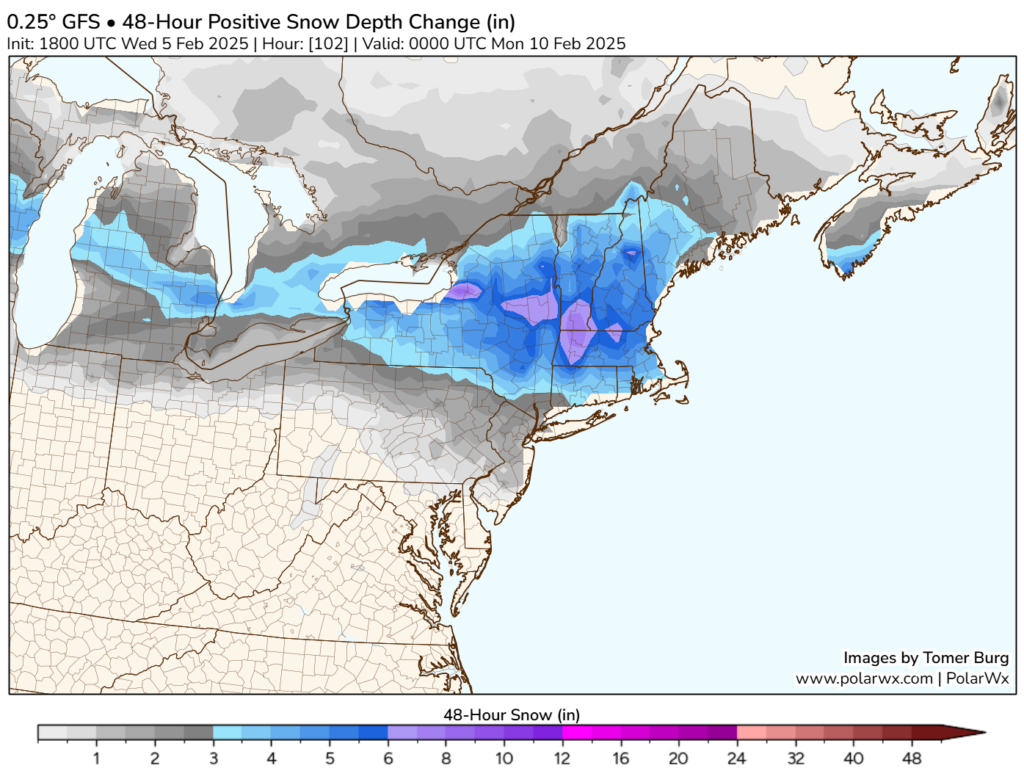


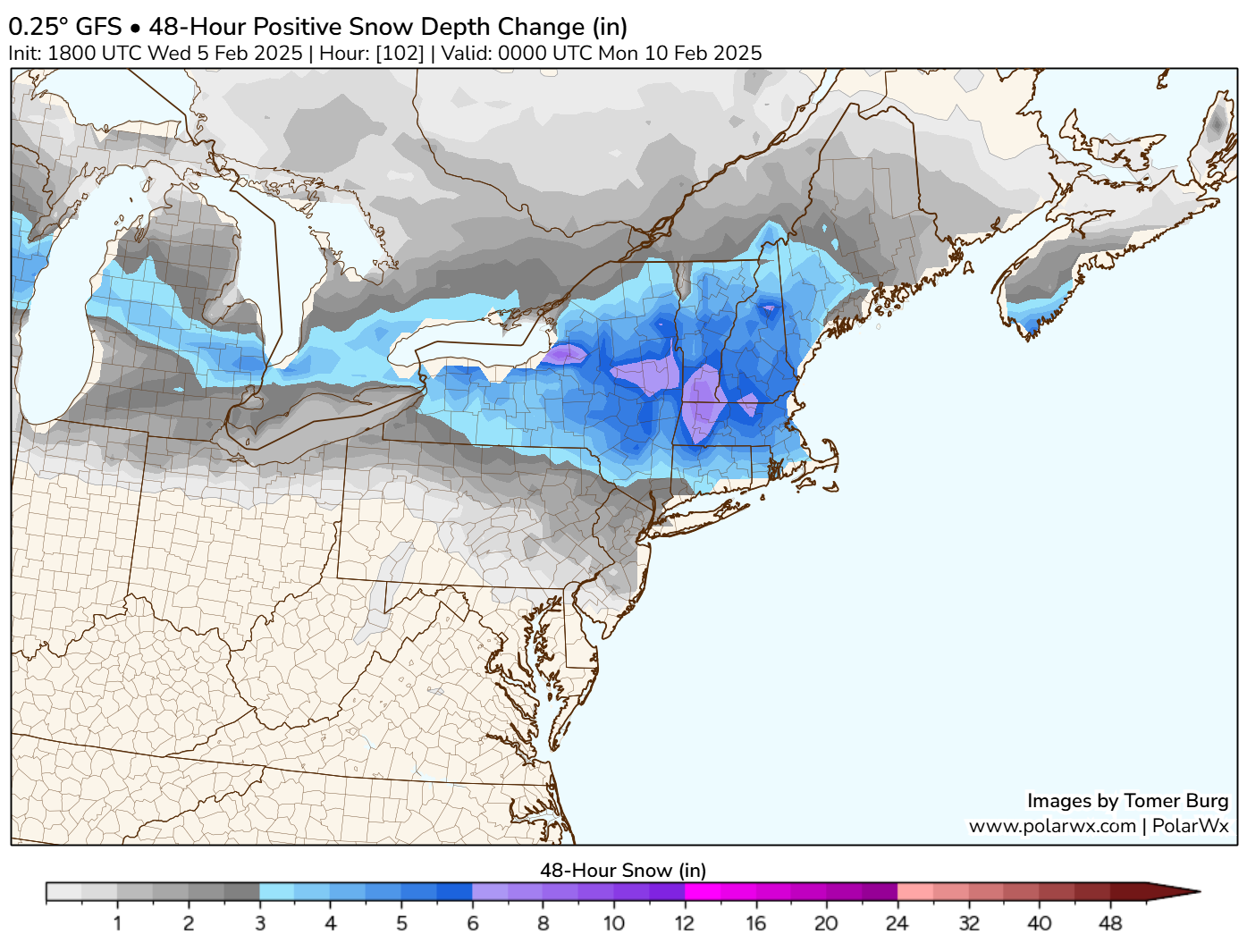


/https://static.texastribune.org/media/files/9c49faac397d7136bc727f327b5ac122/Texas%20State%20campus%2003.jpg)