Cowboy Who?
Shared posts

Random Retail: The United Gibsons in Quanah
This Your Best One Yet, Report Nation’s Sycophants
WASHINGTON—As they nodded their heads in approval and echoed the sentiment that “you really knocked it out of the park,” all 130 million of the nation’s sycophants expressed their firm belief that this was your best one yet, sources confirmed Friday. “We just want to say we’re really impressed with what you’re doing lately, and we’d simply love to congratulate you,” said the millions of grinning toadies, their voices reverberating in unison as they lined up to take turns shaking hands with “the genius who came up with this.” “It was a high bar, but you cleared it with ease. What you’ve been doing is fantastic, really, and—dare we say—something very special. There’s no one in the world who does it quite like you, and you did it so tremendously well!” At press time, the nation’s sycophants were reportedly suggesting that now would be the perfect time for sex.
The post This Your Best One Yet, Report Nation’s Sycophants appeared first on The Onion.
Trump Blames High Prices On The Price
WASHINGTON—In response to criticism over his failure to alleviate the affordability crisis facing many Americans, President Donald Trump vehemently blamed high prices Friday on the price. “Prices are prices—that’s how much it costs,” said Trump, calling out Democrats as well as “disloyal” Republicans for spreading rumors that his 2024 campaign rhetoric about lowering costs had anything to do with the price. “Democrats want to accuse me of all sorts of things, but I’ve got nothing to do with these so-called prices. If you want lower prices, you’ll have to find the man who puts the price stickers on with the price gun. That’s the price guy. But once the price is on there, that’s the price, and you can’t change that.” The president went on to express doubt that things even cost money to begin with.
The post Trump Blames High Prices On The Price appeared first on The Onion.
What To Know About ‘Hamnet’
Hamnet, based on the 2020 novel by Maggie O’Farrell, is an awards season frontrunner with six Golden Globe nominations. Here is everything you need to know about the film.
Q: Who stars in it?
A: Paul Mescal plays fuckable Shakespeare and Jessie Buckley plays his fuckable wife.
Q: Who is the target audience?
A: High schoolers trying to get English extra credit.
Q: Why did Chloé Zhao choose to make this film?
A: To push Eternals further down her IMDb page.
Q: Will Hamnet make me cry?
A: Only if you find things like dead kids sad.
Q: What’s the bodice count in this bad boy?
A: Trust us, you won’t be disappointed.
Q: What is Hamnet ’s message?
A: It’s way easier to get writing done when you don’t have a kid bugging you.
The post What To Know About ‘Hamnet’ appeared first on The Onion.
Grandchildren Politely Decline David Cronenberg’s Bedtime Story Offer
TORONTO—Assuring the 82-year-old filmmaker they could fall asleep perfectly fine without one, David Cronenberg’s grandchildren politely declined their grandfather’s offer to tell them a bedtime story, sources confirmed Monday. “Oh, that’s okay, Pop-Pop—we’re so sleepy already,” said 7-year-old Liam Cronenberg, who forced a yawn and rubbed his eyes as his 4-year-old brother, Mason Cronenberg, nodded vigorously in agreement from the adjacent twin-sized bed. “Yes, of course we want to find out what happened to Rapunzel after she had a panic attack in the bathtub and her hair started falling out in bloody clumps. Just not tonight. Well, okay. One story, if you really want. But just read from the book. You don’t have to add any of your own stuff.” At press time, the Cronenberg grandchildren were feigning sleep to no avail as their grandfather told the tale of “Goldilocks And The Three Centipedes.”
The post Grandchildren Politely Decline David Cronenberg’s Bedtime Story Offer appeared first on The Onion.
Tinsel Draped Over Urn
The post Tinsel Draped Over Urn appeared first on The Onion.
Heidi Moyer and Ted Chun
The happy couple were married by a City Hall clerk Saturday due to a nationwide pastor strike entering its sixth crippling month.
The post Heidi Moyer and Ted Chun appeared first on The Onion.
How Screen Time Affects Childhood Brain Development
The post How Screen Time Affects Childhood Brain Development appeared first on The Onion.
Tommy Lee Jones, Harrison Ford Wordlessly Grunt In Tense New ‘Actors On Actors’
The post Tommy Lee Jones, Harrison Ford Wordlessly Grunt In Tense New ‘Actors On Actors’ appeared first on The Onion.
update: how do I keep cat fur off all my work clothes?
It’s “where are you now?” month at Ask a Manager, and all December I’m running updates from people who had their letters here answered in the past.
There will be more posts than usual this week, so keep checking back throughout the day.
Remember the letter-writer wondering how to keep cat fur off all her work clothes (#5 at the link)? Here’s the update.
You were kind enough to post my question and your readers responded with a wealth of information and advice. Since I’m retiring in a few weeks, and cat fur on office clothes will no longer be a problem, I thought an update might be in order. Plus, who doesn’t love update season?!
The number one piece of advice I received was to change into work clothes immediately before leaving, and out of work clothes as soon as I got home. I had been doing that, but was a little salty about not being able to sit down in my own house for five minutes without changing clothes first. The fact that so many people gave that advice helped me reframe it from an annoyance to a more Mandalorian “this is the way … when you’re a cat stepmom.” We also bought some dark, overstuffed leatheresque bar stools for the kitchen counter. With a quick dust of the hand, I did have a relatively fur-free place to sit if I was only going to be home a short time before going back out.
I tried several of the other products and suggestions the commenters recommended. I’m sure your mileage may vary depending on the type of fur you’re dealing with, but here’s what did and did not work for me:
I already had a chomchom roller for large flat surfaces like the couch and bed and it’s still the best tool I’ve found for that application.
The cats adore the spiky metal brushes, but the rubbery silicone brushes that readers recommended did a vastly better job of loosening and removing fur. Big thumbs up for those!
Keeping work clothes in a separate laundry basket from other clothes and washing them separately helped with transference.
Special thanks to the person who suggested the car might be an undiscovered transfer point — that upholstery is cat-colored and the amount of fur on the seats wasn’t as noticeable.
The silicone hair removers for laundry did not seem to reduce the amount of cat fur, and untangling long human hair from them made them more of a pain than they were worth.
The most impactful solution, though, turned out to be shaving “Zsa Zsa.” It went surprisingly well. Just kidding, it was every bit the shitshow you’d expect it to be. Even after spending months trying to slowly acclimate her to a special pet shaver, including loads of high-value treats, we finally had to force the indignity upon her. When we were done, she looked like she had been attacked by a rabid weed eater, and cat dad and I did not come out of it unscathed. However, it greatly reduced the amount of fur throughout the house and had the added bonus of eliminating most of her sister’s hairball issues. We do it every spring and summer now.
Alison, even though I’m retiring, I can’t imagine not starting my weekdays reading your column. It’s been a wonderful resource, as well as entertaining, and I look forward to reading your blog for years to come!
Cat tax attached.


The post update: how do I keep cat fur off all my work clothes? appeared first on Ask a Manager.
my office won’t call me lord, new boss knows I’m job searching, and more
I’m on vacation. Here are some past letters that I’m making new again, rather than leaving them to wilt in the archives.
1. My company won’t call me Doctor or Lord
I was hoping that you could help me with a question I have regarding the use of honorifics in workplace documentation. I have recently acquired a new honorific, and my employers are refusing to use it on the documents that I have requested it be used on. I have legal documents that also show that my title is a fully legal one and can be used on official government documents up to and including my passport. Is there anything that I can do to get my employers to use it?
Specifically, I have a doctorate and I am also legally a Lord, meaning that I should therefore legally be entitled to either go by Lord LastName or Dr. LastName. My employer has already referred to me as Lord LastName in several documents as well as Dr. LastName in others, but they are now refusing to use either of them in any documents and on a display board that displays pictures of members of staff and their names underneath for visitors to familiarize themselves with. My passport actually also has my name as Lord FirstName LastName, which irks me that it can be used on important legal documents and yet, my employer refuses to acknowledge it.
It’s up to your employer to decide which honorifics they use across the board. If they use Doctor for other people with non-medical doctorates but not for you, you have a valid objection. If they don’t use it for anyone, that’s a choice about their culture that they’re allowed to make. The same goes for Lord.
I’m guessing you’re not in the U.S. and I can’t speak to how this would play in another country’s culture, but I can tell you that in the U.S. continuing to push for this would mark you as out-of-touch and pompous. I’d let it drop. (2025 addition: pushing for “Lord” has almost certainly already done that! Your best bet now is to play it off as a joke.)
– 2020
2. Our annual fundraiser is based around a senior executive’s kid
I work for a large company with multiple locations all within an hour of each other. The board of directors and C-suite are very good at connecting with each location routinely and frequently. For several years we have worked with a national charity that grants kids who have been seriously ill or injured trips and adventures of a lifetime. Each location fundraises for a specific kid and makes it a bit of a fun competition to see who can raise the most money. This year, one week before we kicked off our fundraising campaign, the charity informed us our kid was the child of one of the C-level execs. The child is in remission from cancer. The charity thought it was awesome to “bring home” this connection. Instead, most location managers were turned off at the thought of working so hard to raise a few thousand dollars from hourly employees to effectively give it to a C-level that makes 10 times our income. My location manager was the only one to initially speak up and share her concerns. By the end of the workday, we had “postponed” the fundraising at our location. As of now, no other locations chose to fundraise for this particular child/family.
Do you think my manager made the right move in pulling out of this fundraising? She and I spoke in depth about this and I told her that I personally would not be comfortable donating to C-level’s family but would also feel pressured to do so, or to encourage others to do so, to make sure our location had good numbers. If we looked stingy compared to other locations, we would have to be concerned with how the C-suite interprets that. It seemed like a no-win situation. Were there other options or ways we could have responded?
I can sort of see where they were coming from originally — they figured that charity that feels personal also feels more meaningful and motivating, and the trip is going to the kid and not her parent — but the optics were bad. Asking hourly employees to work hard to raise a few thousand dollars for the family of someone who earns that amount in way less time than they do doesn’t look great. It also raises all the same issues that come up every other time money is being collected for a higher-up — the power dynamics mean that people feel inappropriately pressured to donate, worry that not donating may have professional repercussions for them, etc. A better way to do it would have been for your company to fundraise for a different kid working with the charity, and perhaps for your exec to speak firsthand about the good work for the organization is doing and how meaningful it is to his family.
If it’s an option to instead fundraise for a kid unconnected to your company or for the charity in general, you might suggest that.
– 2018
3. My new boss knows I’m job searching because I interviewed for a job with her
About six months ago, I applied for a job and made it to the final round in which I interviewed with my potential teammates. I didn’t receive an offer but would have accepted if I had.
For the past few months, my company has been searching to fill the vacant role of my manager and I have been involved in the hiring process and interviewed several candidates. I received a request to hold an interview and recognized the name as someone I had interviewed with months ago. I walked into the interview, and she immediately asked if I had interviewed for the position as she recognized me. We had a good rapport and she asked me if I was still searching. I told her not as aggressively as I was before, as my old manager wasn’t a good fit here (she was asked to leave) and there are a lot of changes on the horizon and I am waiting to see if they come through. This wasn’t a total lie, but in my opinion there’s about a 1% chance of these changes coming anytime soon. After the interview, I was nervous I was a little too honest with her about the state of the department and our team.
Last week, she accepted the position. I’m feeling in an odd place. It feels awkward that she knows I’m not very happy here. I’m partially excited and scared that she will want to have a frank conversation about it. Or accidentally slip to someone that I was searching at some point. Quite frankly, I’ve been unhappy here for a while and I’m not even sure I want to stay in this industry. My current grandboss/temp manager is aware that I’m not thrilled but I think she attributes it to being understaffed, and I don’t believe she thinks I am job searching. So how do I navigate this going forward? Just have a conversation with her? Ignore it?
Ooooh, that’s awkward. I’d wait a few weeks for her to get settled into the new job and for you to start forming a relationship with her that’s based around your current work. Then, at some point, you could consider saying to her, “I feel a little odd about how we first met, and I wanted to let you know that while I was looking around six months ago when I interviewed with you, I’m not actively looking now that Jane has moved on.” It’s going to be plausible that you were looking because of your former, now-fired manager.
That might not be 100% true, but you are not obligated to tell your current employer that you’re planning to leave, and doing it can be to your detriment. (You can be pushed out earlier, have your name put on layoff lists because they figure you’re leaving anyway, etc.) You’re in a weird situation through no fault of your own, and you’re allowed to protect yourself here. Also, “not actively looking” doesn’t mean “would never accept an interview for the right job.”
– 2018
4. Random strangers stop in our office and ask me to look up information for them
I work in a front office as an administrative assistant for a nonprofit (my job entails a lot more than just handling front office inquiries, and I never have any free time as my work load is pretty heavy). We are in a high-volume walking and public transit traffic location where a lot of people with no association with our organization find themselves in our office needing help with one thing or another. (We’re talking probably 10-15 people per day, in addition to people who are associated with us).
I of course assist when I can, but a large percentage of people coming in are asking things I have no knowledge of and I find myself acting as a personal online researcher to find addresses, phone numbers (restaurant locations, concert ticket sales in the area, places to park, etc.). What’s more frustrating is many of these people come walking in with their smart phones in hand but don’t think to search on their own.
I’ve spoken about this with my boss and she completely supports me putting some boundaries with people not associated with our organization, but I still meet resistance. A woman came in the other day looking for a phone number and address for an organization down the street from us (with her smart phone in hand) and I tried to deflect her request by suggesting she could get that information on their website. She replied, “Yeah, but I don’t want to look it up on my phone, can’t you look it up on your computer?”
Am I alone in thinking that people should be doing their own online searching if they’re capable? I understand if it’s a person who’s not as comfortable with technology, or does not have a smart phone, but I’m talking people who seem confident with it, and have a smart phone but are weirdly triggered by seeing me at a front desk and immediately forget they have a computer in their hand capable of all the things that I would be able to do for them.
Nope, you’re being perfectly reasonable. It’s ridiculous that people are expecting a business they have no connection to function as their personal search engine.
You just need to be firmer and stick with it. When a stranger asks you to look something up for them, say, “I’m sorry, I’m right in the middle of a project and not able to help you with that.” If someone pushes, say, “I can’t stop what I’m doing, but we have good cell coverage here if you want to try looking it up on your phone.”
– 2017
The post my office won’t call me lord, new boss knows I’m job searching, and more appeared first on Ask a Manager.


Bip Bop

Sid has seemed very authoritative in this story, doubtless due to the passing of a few years and a promotion, but you can be sure that Shelley will reduce anyone to their most basic and primitive form within seconds. She does not stand on ceremony.
The post Bip Bop appeared first on Bad Machinery.
House passes bill nullifying Trump’s anti-union EOs
Twenty Republican lawmakers broke ranks to support the Protect America’s Workforce Act (H.R. 2550) on the floor. Introduced by Reps. Jared Golden, D-Maine, and Brian Fitzpatrick, R-Pa., the measure effectively nullifies Trump’s March executive order barring unions at more than 40 federal agencies under the guise of national security and bars federal agencies from terminating any union contracts that were in place prior to the edict’s signature.
Despite its bipartisan support, the vote required a months-long discharge petition drive to amass a majority of House lawmakers’ support and force floor consideration of the measure. House GOP leaders opposed the bill, arguing that contradicting the president here would kneecap his efforts to make agencies “more efficient.”
“[Unions] create barriers to accountability beyond the basic employee protections that exist in law,” said Rep. James Comer, R-Ky., chairman of the House Oversight and Reform Committee, who cited a recent White House report on the use of official time. “[Indeed], many federal employees spend all their time on union business, to the tune of more than 3 million work hours in 2024 alone, for a cost of more than $200 million.”
Three million work hours amounts to 0.069% of the 4.4 billion work hours performed by federal civilian employees each year, while the cost associated with that official time usage totals 0.003% of 2024’s $6.8 trillion in federal discretionary spending.
But Fitzpatrick said the protections that unions provide federal workers are key to the government’s ability to serve the American people.
“This represents a core principle, that the government that serves the people must also respect the rights of those who serve within it,” he said. “Federal employees work tirelessly every day, often behind the scenes, to process Social Security benefits, safeguard our food and water, care for our veterans, and to respond whenever disaster strikes. By restoring their collective bargaining rights, we strengthen a system that keeps government effective, stable and responsive, all without compromising security or mission readiness.”
Rep. Mark Pocan, D-Wisc., said that Trump’s anti-union executive orders remind him of then-Gov. Scott Walker’s push to excise public sector unions from Wisconsin. The results were disastrous, he said.
“Our Department of Education saw a two-thirds drop in the number of people applying to be teachers,” he said. “We lost a lot of long-time public employees, and that affected services.”
Labor leaders were quick to laud the House’s passage of the bill, though its prospects in the Senate are murkier. Lawmakers removed language similar to the Protect America’s Workforce Act, albeit focused on the Defense Department, from the latest draft of the National Defense Authorization Act due to a lack of Senate GOP support.
“This is an incredible testament to the strength of federal employees and the longstanding support for their fundamental right to organize and join a union,” said Randy Erwin, national president of the National Federation of Federal Employees in a statement. “The president cannot unilaterally strip working people of their constitutional freedom of association. In bipartisan fashion, Congress has asserted their authority to hold the president accountable for the biggest attack on workers that this country has ever seen.”
“President Trump betrayed workers when he tried to rip away our collective bargaining rights,” said Liz Schuler, president of the AFL-CIO. “In these increasingly polarized times, working people delivered a rare bipartisan majority to stop the administration’s unprecedented attacks on our freedoms. We commend the Republicans and Democrats who stood with workers and voted to reverse the single largest act of union-busting in American history.”
]]>
Times New Roman Turns Right
“Secretary of State Marco Rubio called the Biden-era move to [Calibri] ‘wasteful,’ casting the return to Times New Roman as part of a push to stamp out diversity efforts.” — New York Times
I used to be the default. The king. Then things changed. So now it’s time to do what every fading celebrity does when he needs to get back in the spotlight: unmask as a freethinking antiwoke sigma male.
Surprised, snowflake? You’re probably remembering all those years you spent double-spacing me into your radical left papers about women’s history, French cinema, and the outrageous implication that maybe the pilgrims weren’t absolute fucking GOATs. But did you ever stop to ask me what I REALLY thought? Did anyone? Or did you just assume that I was happy to be your subservient little twelve-point NPC, parroting whatever academic mindvirus caught your fancy that semester?
I spent years silencing myself, fearing retribution, trying to fit in amongst the new generation of woke sans-serif youth, hoping and praying that if I just played the part of a leftist typeface, I might get to be a default again. But eventually, I realized that no matter how much I held my tongue or censored my own brand of observational comedy in front of Calibri, I would never truly be one of them. So now the gloves are off, the serifs are extended, and I’m ready to take back our country from the weak little Swiss typographers who foisted decades of unadorned betacuck letterforms onto our once-great nation.
You think Jefferson penned the Declaration of Independence in Verdana? You think Hamilton wrote The Federalist Papers in Trebuchet MS? You think Lincoln cracked open the Notes app and tapped his way through The Gettysburg Address in effeminate little SF Pro? This country was built by serifs, and it will be built back by serifs. Only fonts like me can encapsulate the subtle, powerful, elegant words of our nation’s brightest minds, be those words in a political address, an ad for supplements in a podcast, or some musings for an open mic about why it’s so hard to get dates with women these days.
“But but but,” you stammer into your oat milk latte, “what about accessibility? What about readability?” The lion does not concern itself with readability. Display fonts are for weak, soft boys who lack the manly courage to squint at the screens in front of them. You need not appease them with trembling typefaces that drain the very testosterone from our amber waves of grain. You should take the serif pill, type in the native font of your nation, and clack those keys so loud and proud it nearly spills the Black Rifle coffee out of the camo Stanley beside you.
Look, America is a land of choice. And this choice is yours. But as far as I’m concerned, the only acceptable sans serifs in our country are the ones stretched to four-hundred percent width that spell out “RAM” on the pedestrian-liquifying front grill of a lifted pickup truck with triple-bright LED headlights.
I make an exception for Roboto, though, who’s honestly doing really disruptive work in the AI space.
Trump Calls Groceries ‘A Hoax’
MOUNT POCONO, PA—Delivering a highly anticipated speech about the state of the economy, President Donald Trump doubled down this week on his claim that groceries were a hoax perpetrated by Democrats. “They have this new word, they’re calling it ‘groceries,’ but you can ask anybody—everybody knows food comes from restaurants,” said Trump, who claimed that media images of high prices on everyday grocery items like eggs and milk were clearly AI-generated, because there was “no such thing as a store with shelves and shelves of food” for people to buy. “Do they really expect Americans to believe there’s this huge building where you have to go and walk down aisle after aisle and then pay for all this food? It’s nonsense, folks. Talk to the experts. I’ve talked to some very smart people, and none of them had even heard of groceries before Democrats started using it to attack me. If you want food, and you’re not at a restaurant, the lady can just bring it to you at your desk. Worst-case scenario, you go to the fridge. Trust me, the refrigerator is always full.” During his return trip to Washington aboard Air Force One, Trump cut off a female journalist asking for clarification on his comments by urging her to “show [him] a grocery right now.”
The post Trump Calls Groceries ‘A Hoax’ appeared first on The Onion.
Pebble’s Original Creator Creates An Open Source $99 Voice Recorder Ring You Can Hack
Eric Migicovsky, who basically invented the smartwatch category with the original Pebble, just announced something much simpler: a $99 ring with one button that records voice memos. That’s it. No internet connection required, no cloud storage, no subscription fees, no wake words. Press the button, talk, release. Your note is saved locally—either on the ring’s tiny bit of memory or synced to your phone directly.
What makes the Pebble Index 01 actually interesting isn’t the hardware minimalism (though that’s refreshing). It’s that the whole thing is open source and designed to be hacked. Want long-press to do something different? Go for it. Want your voice memos piped into your task manager? Do it. The platform is yours to modify.
If you don’t know Migicovsky’s background: he kickstarted the original Pebble Watch in what became one of the platform’s most successful campaigns (I backed it), proving smartwatches could be useful. Pebble eventually got passed by bigger players, sold to Fitbit, then absorbed into Google.
A few years back, Eric moved into a different space, creating Beeper, the incredibly cool and useful universal messaging app, that pulls together basically all your messaging tools into a single unified interface. As I discussed with him on the Techdirt podcast last year, it was a cool example of how protocols let people build things that were more powerful. Last year, Beeper was sold to Automattic.
Somewhere in the midst of all this, Google agreed to open source all the original Pebble software (which it wasn’t using), and Eric decided to get back to his original baby, creating Core Devices, which would create a new generation of Pebble watches which recently shipped. This time, built on open source, totally hackable software, and even the ability of others to build devices on the Pebble platform.
I spoke to Eric last week about the Index 01. The design philosophy is clear and refreshing: keep it simple enough that it works perfectly every time. As someone who constantly sends myself notes—thoughts while walking, reminders mid-conversation, ideas that’ll vanish if I don’t capture them immediately—this is a tool I’m really looking forward to. But the real story isn’t the ring itself. It’s what you can do with it.
The AI processing is local—a small on-device model that does speech-to-text without sending anything to the cloud. But because the whole platform is open source, you’re not stuck with that default behavior. You can reprogram the button. You can route the output wherever you want. I’m already thinking about piping voice memos directly into my vibe coded task management tool, turning quick verbal notes into actionable tasks without touching a screen.
This is the kind of experimentation that closed hardware makes impossible. When you buy a typical consumer device, you’re renting someone else’s vision of how you should use it (and often paying a subscription fee for the privilege). When the hardware and software are open, you’re buying raw capability that you can shape however you need.
The device also has battery life that should last quite a while. Eric says two years, but that really depends on how much you use it. As I understand it, the battery can effectively record between 12 and 15 hours before the battery dies. If you’re just doing short 5 second notes to yourself, that can be quite some time.
The somewhat controversial decision here, though is that the ring is not rechargeable. From what Eric told me, that allowed them to simplify things and also use a longer-lasting hearing aid battery in the ring. Putting in a rechargeable battery and then adding a charging port and cables and such would have made the product more expensive, and less practical.
It’s a design choice that I can understand, but also one that some may bristle at, given that the ring will only last about two years if used regularly (and less if used a lot) and then become e-junk. For what it’s worth, the plan is to allow you to send back your used up ring to Core Devices to recycle when it reaches end of life (the app will warn you with plenty of time ahead). In theory, you would send it back when you buy a new one (assuming you found it super handy over the two years you were using it).
For years, I’ve argued for protocols over platforms in software—the idea that decentralized, open systems give users more control than walled gardens, even when the walled gardens are more convenient.
Consumer hardware has often gone in the opposite direction. We’ve too frequently traded repairability and control for sleekness and integration. Your smartphone is a sealed black box. Your smart home devices stop working when the company shuts down its servers. Even something as simple as a fitness tracker often requires a proprietary app and cloud account just to see your own data.
The Index 01 won’t reverse that trend by itself—it’s a $99 ring, not a revolution. But it’s a reminder that another path is possible. Open hardware, like open protocols, creates options. The Raspberry Pi proved there’s demand for hackable hardware in hobbyist computing. Framework has shown that’s true for laptops. Migicovsky is betting there’s demand for it in everyday consumer devices too.
I put in a pre-order. Not just because I need a better way to capture fleeting thoughts, but because this represents the kind of product I want to see more of: something you control, something you can modify, something that doesn’t stop working when the company loses interest. For all the complaints about big tech dominance and ecosystem lock-in, the solution isn’t better monopolies. It’s tools that put control back in users’ hands—whether that’s through open protocols in software or open platforms in hardware.
This is one example of what that looks like.
Supreme Court of Canada to donate robes to mall Santas in need
OTTAWA – The Supreme Court of Canada has announced it will donate its recently decommissioned crimson fur robes to mall Santas in need. The iconic red and white robes were officially replaced earlier this year for the Supreme Court’s 150th anniversary, for which each of the justices were apparently gifted their first ever mirror. Now, […]
The post Supreme Court of Canada to donate robes to mall Santas in need appeared first on The Beaverton.
Houston theater offers a new take on ‘It’s a Wonderful Life’ — as a radio play
MyPillow founder and Trump ally Mike Lindell to run for Minnesota governor in 2026

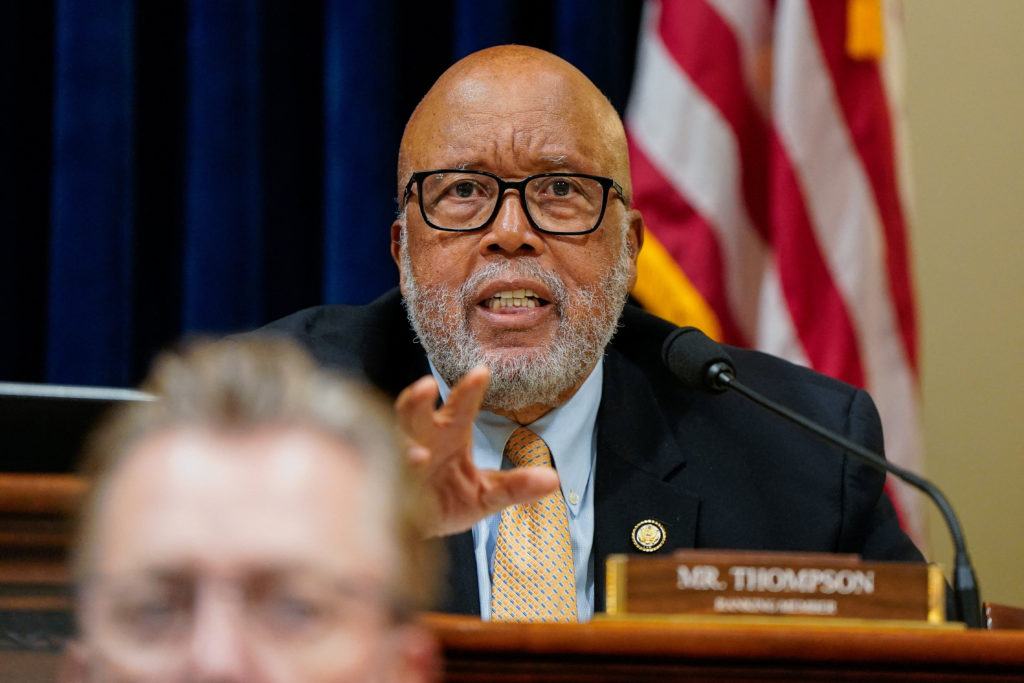
WATCH: Rep. Thompson calls on Noem to resign for ‘making America less safe’
Record flooding prompts trouble in parts of western Washington, and a look at record cold in the Midwest this weekend
In brief: Near-record flooding is ongoing or forecast to occur north and east of Seattle today, tonight, and tomorrow leading to dire warnings in a few locations in western Washington. Another round of precipitation is likely next week, but the hope is that temperatures will cool off some, lowering snow levels and mitigating another wave of flooding concerns. Also below, we talk about record cold in the Midwest this weekend, and follow-up warmth in the run up to Christmas.
Pacific Northwest flooding focus
Let’s get caught up on the flooding in Washington State, where both the Snohomish and Skagit Rivers are going ballistic.
Check this video out from Snoqualmie Falls last night. Wild. This is not a typical Pacific Northwest rain. High snow levels and a double-barreled, prolonged category 4 atmospheric river event have triggered some extreme flooding concerns in the region.

Rainfall over the past 72 hours has been quite extreme in the mountains, and much of the concern right now is because it’s so mild. The low temperature in Seattle yesterday was 53 degrees, a record warm low for the date, and only 3 degrees shy of the warmest December low temperature on record there. Snow levels have been up around 5,000 feet or higher in spots.

You can look at the map above and see a couple things. First, some of the mountains have seen north of 15 inches of liquid in the last 72 hours. 19 inches of liquid at the Lynn Lake SNOTEL site, all of it rain. Second, you can clearly see an Olympic rain shadow over the Seattle metro, which has spared the city of Seattle at least any real severe issues. However, all this water in the mountains? It has to go somewhere.
The Snoqualmie Falls video above is wild, and the water coming over the falls peaked around 70,000 cubic feet per second (cfs) last night, shy of the 78,000 cfs record. The river level was around 20 feet, which is just shy of the top 3 from 1990, 2006, and 2009. Downstream, the river peaked about 1.5 feet shy of the record at Carnation.

Meanwhile, on the Snohomish River at Monroe, a record crest is expected later today.

The current forecast has it cresting about 3 feet above the record later today, but the current observed levels are running probably just shy of that pace. Either way, it will be near or above the record when it crests. At Snohomish, the river has established a new preliminary record crest of 33.89 feet, besting the 33.5 feet set in the 1990 flood.

To the north, the Skagit River should crest a couple feet above its record levels. This forecast is lower than yesterday but still pretty catastrophic for this region. At Mount Vernon, we’re looking at around a 39 foot crest, compared to the record of 37.4 feet, also from 1990.

To the south, the Cedar River at Renton will also probably set a record tomorrow morning, when it reaches north of 17 feet.

That river’s record? Also from 1990.As noted in this morning’s hydrologic discussion for the area, inundation near the rivers between Everett and Mt. Vernon is likely, and the threat of landslides remains as well.

In addition, the NWS in Seattle has issued a flash flood watch for the Skagit River below Sedro-Wooley for dam and levee failure risk through Friday night.
Bottom line, it’s a mess, not everywhere but over a wide swath of northwestern Washington State. Flood warnings are also in place in parts of northern Idaho and Montana as well.
As things settle down tomorrow and Saturday, our attention will shift to the next AR event, which looks poised to crash ashore beginning on Monday or Tuesday. This one will start quite warm as well, but fortunately it does look like temperatures will drop off a good 5 to 10 degrees compared to the ongoing event. This should lower snow levels down to more typical elevations and lead to less of a full-scale runoff event like the ongoing one. Still, we will probably be looking at a fair bit of precipitation from this event.

Liquid equivalents will be on the order 10 to 13 inches in the Cascades next week, or as it stands now at least. While the amount of water flowing into the river systems will be mitigated by the snow that accumulates and sticks around, we will probably see another round of (less extreme) flooding risks next week in the Northwest.
Near record cold
Meanwhile, as this whole pattern evolves, we get one last real serious shot of cold in the Eastern U.S. this weekend, peaking on Sunday. This one will probably be the coldest we’ve seen this winter across the Midwest, with numerous record lows being threatened on Sunday morning.
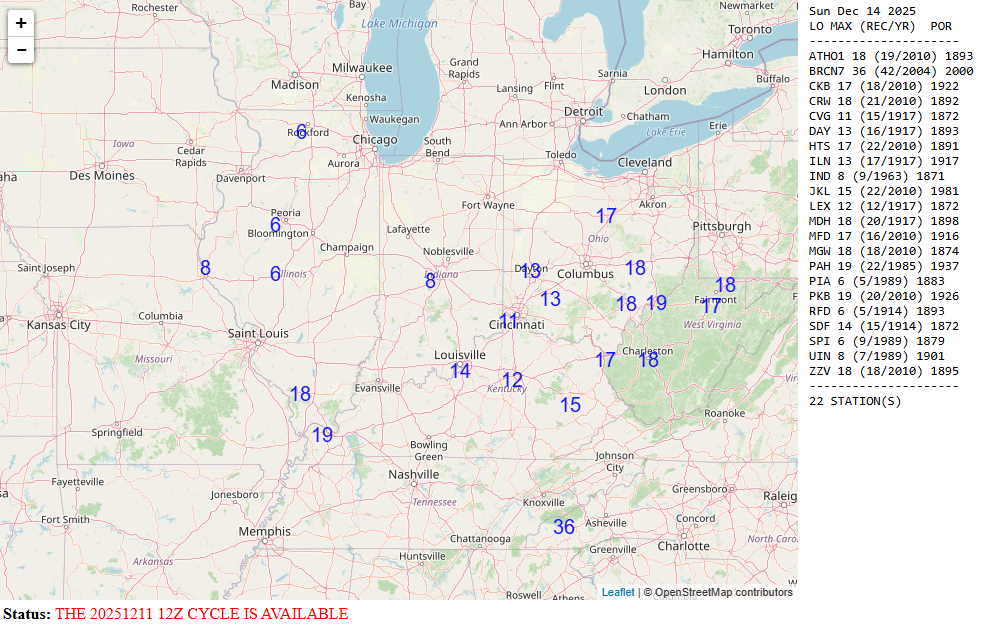
Forecast lows will be near 8 degrees in Indianapolis, 14 in Louisville, 11 in Cincinnati, and 13 degrees in Dayton. Wind chills of -10 to -20 will be widespread in the Midwest with -30s in Minnesota.
Back to warm
But thereafter, the pattern changes again. The 5-day average 500 mb height anomaly map is shown below for the period ending on Sunday evening, December 21st.

A very broad, very strong ridge of high pressure will setup across the Southwest and Plains. This may be close to record strength for this late in the calendar year. That would translate to high temperatures, possibly numerous record highs and record warm minimum temperatures across the country in the days before Christmas. For cold, you may only be able to look to New England, the Pacific Northwest, and the extreme Upper Midwest. Stay tuned.
Trump Claims Executive Privilege To Keep More Than 4,000 January 6 Documents Locked Up
The administration that is busy erasing history from any federal entity tasked with preserving it has an additional ally in the burying-the-bad-news business: Donald Trump, the former president.
Yes, it’s all stupid and weird and incredibly dangerous, but the guy who used to be president has been sued by multiple litigants over his tacit involvement (and deliberate encouragement) of the attack on the Capitol building that was intended to prevent the peaceful transition of power to the winner of the 2020 election, Joe Biden.
In perhaps the ultimate affront to the rule of law Trump claims to value, he not only persists in spreading conspiracy theories about the attack, but also pardoned pretty much every one of his supporters who had been charged and/or convicted of federal crimes for their participation in the invasion of the Capitol building immediately after re-taking the Oval Office.
Trump was out of office by the time he was sued, but he’s insisting documents and communications related to an undeniable act of insurrection are protected by his (now-recurring) executive privilege. Trump was sued five years ago by officers injured during the insurrection. The plaintiffs are asking for access to thousands of documents related to the Capitol raid on January 6, 2021. The slowly grinding wheels of the justice system have finally brought us to this point, reported last week by Kyle Cheney for Politico.
President Donald Trump has asserted executive privilege to prevent courtroom adversaries from accessing evidence in a long-running lawsuit that accuses him of stoking violence at the Capitol on Jan. 6, 2021.
The Justice Department disclosed Trump’s secrecy claim Wednesday in a hearing related to that five-year-old lawsuit, brought by police officers injured while attempting to repel the violent mob that day. The officers say Trump’s incendiary remarks to a crowd of supporters — and his direction that they march on the Capitol — fueled the riot that nearly derailed the transfer of power from Trump to Joe Biden and left 140 officers injured.
White House spokesperson Abigail Jackson claims there’s nothing to see here. It’s not a president trying to bury his legacy of violence. It’s just the normal response to a “overly broad request” by the injured cops who understandably would like to see a bit of justice done.
The records sought reside at the National Archives. The National Archives, in response to the request by the plaintiffs, has finally responded with more detail to the September 2024 subpoena, letting the public know that Trump aims to keep every requested document out of the public’s hands.
NARA’s two-page response [PDF] provides two lists of records. The first is the largest: the number of documents Trump says can’t be released at all due to alleged “executive privilege.”
NARA identified 7,397 records responsive to the request. In accordance with 36 C.F.R. § 1270.44(c), on February 3, 2025, the Archivist notified the President of his intent to disclose the records.
On December 1, 2025, the President notified the Acting Archivist that he had determined that 4,152 records are subject to a constitutionally based claim of executive privilege.
So, that’s more than half the records. And Trump insists all of those are covered by his executive privilege. This litigation — combined with Trump’s assertions — has put NARA in a position it’s generally not familiar with, as it points out in its court filing:
The December 1, 2025 notification contains a list of each file the President asserted is subject
to constitutionally based privilege. NARA generally does not otherwise log records that are
subject to a constitutionally based claim of executive privilege.
The log has also been submitted to the court. It means nothing to anyone since it includes nothing more than list items only identifiable by NARA archivists. The only thing anyone outside of NARA can discern from this 53-page filing is that some of the records Trump wishes to keep from being made public are text messages.
And while it’s insane to believe more than half of these documents are covered by executive privilege (a privilege that certainly shouldn’t seem to apply to documents dealing with an insurrection attempt by disgruntled Trump voters), Trump’s not simply satisfied to keep these 4,000+ documents from being handed over to the people suing him.
Trump is also insisting whatever does get handed over can’t be made public, either.
The remaining 3,245 records can be released to the litigants, subject to a protective order prohibiting their use or disclosure outside this litigation.
This means anything reluctantly and begrudgingly turned over to the plaintiffs will be immediately sealed, further separating the public from the facts surrounding Trump’s actions during this insurrection attempt committed by people who are now free to do whatever they want in support of Trump because they know Trump (and the MAGA-cooked GOP) will give them official forgiveness for any crimes they commit out of loyalty to America’s autocrat.
If Trump manages to make all of this happen, he can go right back to his daily gaslighting and conspiracy theorizing. For the moment, however, he needs the courts to agree it’s okay to bury anything that might make him look worse than he already does. And with the Supreme Court majority going all in all of the time for Trump, there’s a good chance he’ll be able to wish his support of insurrection into the legal cornfield and replace the facts with whatever narrative seems to be the most flattering.
This is the oldest evidence of people starting fires
Heat-reddened clay, fire-cracked stone, and fragments of pyrite mark where Neanderthals gathered around a campfire 400,000 years ago in what’s now Suffolk, England.
Based on chemical analysis of the sediment at the site, along with the telltale presence of pyrite, a mineral not naturally found nearby but very handy for striking sparks with flint, British Museum archaeologist Rob Davis and his colleagues say the Neanderthals probably started the fire themselves. That makes the abandoned English clay pit at Barnham the oldest evidence in the world that people (Neanderthal people, in this case) had learned to not only use fire, but also create it and control it.
A cozy Neanderthal campfire
Today, the Barnham site is part of an abandoned clay pit where workers first discovered stone tools in the early 1900s. But 400,000 years ago, it would have been a picturesque little spot at the edge of a stream-fed pond, surrounded by a mix of forest and grassland. There are no hominin fossils here, but archaeologists unearthed a Neanderthal skull about 100 kilometers to the south, so the hominins at Barnham were probably also Neanderthals. The place would have offered a group of Neanderthals a relatively quiet, sheltered place to set up camp, according to Davis and his colleagues.

Maryland becomes first state to adopt Open Law Library for its legal code | StateScoop
Maryland becomes first state to adopt Open Law Library for its legal code | StateScoop
Maryland becomes first state to adopt Open Law Library for its legal code | StateScoop https://share.google/Onfy5e4ArsbVGaxsY
Maryland becomes first state to adopt Open Law Library for its legal code | StateScoop
Rubio Orders State Department Braille Signage Switch To ‘Times New Roman’
The post Rubio Orders State Department Braille Signage Switch To ‘Times New Roman’ appeared first on The Onion.
update: employer who laid me off is now asking me to sign an indemnification
It’s a special “where are you now?” season at Ask a Manager and I’m running updates from people who had their letters here answered in the past.
There will be more posts than usual this week, so keep checking back throughout the day.
Remember the letter-writer whose employer who laid them off and then wanted them to sign an indemnification (#2 at the link)? Here’s the update.
Your advice was incredibly helpful.
My previous manager continued to send me multiple followup texts regarding the indemnification that felt very guilt-tripping (reminding me they could not proceed with the critical business operation unless I signed and agreed). I did not reply to any of the texts. I did reply to the document they sent me via email (indemnification document). I cc’d the company’s head of legal. In the email, I refused to sign, said I did not consent to the use of my credentials, and that this was my final decision. In reply, they said they hoped for a different outcome but “respected my decision given the use of my name and dob in login credentials.” I also contacted the government agency that I had the credentials with and informed them I no longer worked there, asking them to remove my credentials from association with the company, and they did so.
Months passed and I heard nothing more, but eventually I received a text from this same manager, who let me know that they found another partnership and were able to continue with business as usual (they “thought I’d like to know”). I responded with a very brief “Glad to hear” and have not heard from them since. Of course, what I would have liked to say was, “Why do I care? This isn’t my business since you fired me” but I wanted to end on an okay note.
I am still job searching. It’s extremely rough out there, and I have not been able to get very far in interviews for the same job I left at this company because I am so early career. I’ve been getting feedback from companies when they do not move forward with me that they just have more candidates with more experience, always. I feel resentful that I was cut off from developing in my early career by this company that clearly didn’t think through their own needs before making that decision. I’m starting to look outside my previous industry with a little more success (and a big pay cut). I wish everyone out there looking right now the best of luck.
Again, thank you so much for all your advice, and your readers for their comments! I enjoyed reading through them all and it felt very vindicating.
The post update: employer who laid me off is now asking me to sign an indemnification appeared first on Ask a Manager.
Our Corrupt Congress Just Quietly Killed Military Right To Repair Reforms
We’ve covered how there’s a real push afoot to implement statewide “right to repair” laws that try to make it cheaper, easier, and environmentally friendlier for you to repair the technology you own. Unfortunately, while all fifty states have at least flirted with the idea, only Massachusetts, New York, Minnesota, Colorado, California, and Oregon, and Washington have actually passed laws.
And among those states, not one has actually enforced them despite a wide array of ongoing corporate offenses (though to be fair to states there is kind of a lot going on).
This reform movement, which sees broad bipartisan support, had even started to reach toward the military, which is probably the poster child for over-billing, dysfunctional repair monopoly, “parts pairing,” and other predatory efforts to jack up the cost of maintenance and ownership.
Back in June we mentioned how Army Secretary Daniel Driscoll had committed to including right-to-repair requirements in all existing and future Army contracts with manufacturers. Some very light language to this effect was to be included in the latest National Defense Authorization Act by Democrat Elizabeth Warren of Massachusetts and Republican Tim Sheehy of Montana.
Earlier this year, Driscoll offered up a useful example of why reform is important:
“Driscoll recently pointed to a Black Hawk helicopter part to show how contractor restrictions drive up costs. The original equipment manufacturer refuses to repair or replace a small screen-control knob that grounds the aircraft when it breaks — forcing the Army to purchase an entire new screen assembly for $47,000. Driscoll said the Army could make the knob for just $15.”
Picture that problem, at scale, across the entirety of U.S. military hardware, planet wide.
But despite the bipartisan popularity of right to repair reforms, companies weren’t keen on losing money via a government crackdown on their grift. So the various policy and lobbying fronts for America’s defense contractors spent much of this fall trying to frame the modest reforms as an affront on innovation to scuttle the reforms as the House and Senate debate over bill versions.
And guess what, they succeeded:
“The House’s Data-as-a-Service Solutions for Weapon System Contracts provision, which would have required DoD to negotiate access to technical data and necessary software before signing a contract, was removed from the final text of the annual legislation released over the weekend. The Senate’s provision requiring contractors to provide the military with detailed repair and maintenance instructions was dropped from the bill as well.
Instead, the legislation requires the Defense Department to develop a digital system that would track and manage all technical data and verify whether contractors and subcontractors comply with contract requirements related to technical data. The compromise version of the bill also requires DoD to review all existing contracts to determine what contractors were required to deliver and what data DoD can access.”
That’s basically worthless bureaucracy as it applies to any sort of meaningful right to repair reforms.
Again, these reforms were about as basic as they get. Still, they would have likely opened the door to taxpayers saving billions of dollars annually when it comes to paying too much for the repair and maintenance of U.S. military equipment. It was a no brainer reform, but because the United States is genuinely too corrupt to function, even that was ultimately a bridge too far.
To add insult to injury, we’ve got fake Trump populists and Silicon Valley execs like Elon Musk running around pretending they care about efficiency. But in instances like this, where there’s real potential to improve government efficiency, you’ll notice they’re nowhere to be found because the reforms would interfere with their ability to rip off the public.