dvd.rkrjrdn
Shared posts
05 Aug 11:26
The Mediocre Professor
by Tracy McGaugh
There's a great piece in the Chronicle called The Mediocre Professor. I feel this guy's . . . what? . . . resignation?
I was never so certain of my ability to make an impact through teaching as I was the first few years of my teaching career. As my academic career started to get a little air under it, I started to notice that I had more credibility among peers at other institutions than I did with peers at my own institution or students. Don't get me wrong, I enjoyed a reasonable level of respect, but I had a fan base outside of the building. I didn't worry much about it because I felt amply respected among those who knew and understood the field in which I taught, and most of those people just happened to do the same thing at other law schools.
Flash forward a few more years into my academic career, and I've landed two successive academic jobs, based in part on my reputation in my field. So that's nice. I enjoy what feels like ample respect among my colleagues at my own institution, which is also nice. And I wouldn't expect students to have any idea of my track record in my specific little field of expertise. After all, they were college students or stockbrokers before they came to law school. And I don't teach in the kind of area that gets you a lot of calls for talking head commentary on CNN or Fox News.
But considering the amount of time I put into my teaching and how little difference it seems to make in terms of the feedback I receive, it leaves me wondering if I really make an impact at all. Does exploring new teaching techniques and reading about the latest in adult learning theory really make me a better teacher than someone who is teaching from the same yellowed notes they've used for 15 years? What makes a good teacher? How do we measure impact? And what about a career in which we gives our very best effort to the people in the worst position to understand if it has any value or not?
I have to admit that I'm seduced by the idea of so pushing and inspiring my students that they each take a defiant step onto their desks to declare "O Captain, my captain." I love those rally speeches that coaches make in movies telling students that they'll run faster, harder, better than ever before because there's something greater than themselves at stake. Now I think that's a bit of an exaggeration when the "something greater" is a school's reputation for awesome football. But in law school, isn't that exactly what you hope for? That the practice of law serves something greater than the individual who practices law? And that you can help your students become better than even they imagined so they can serve this "something greater"?
But how on earth are we to know if we're making an impact? Short of being told, the only thing we have to go by is student evaluations, which are suspect at best, particularly for a professional course of study that students cannot fully evaluate unless they've graduated and gone on to practice. I had a professor who I thought was EVIL (like the fru-it of the dev-il) in law school. And I said something approximating that in the evaluations (and since I went to a small law school, I had him for a lot of classes -- Legal Writing II, Remedies, Professional Responsibility, and Federal Courts). It was only after I graduated that I realized how well he had served me. I can honestly say that I was a better lawyer because he was such a pain in my ass. I don't know that I ever did anything -- in law school or law practice -- that would have met his standards, but I know that trying to meet them made me better. If you put much stock in my comments on his course evals, you wouldn't think he was that great of a teacher. But ask me now, and I tell you that he is a teaching god the likes of which I can only fantasize about emulating. He doesn't teach anymore. He's a full-time administrator. Was it his students' misunderstanding of how gifted he was that pulled him out of the classroom for good? Did he think he wasn't making a difference?
I don't want to be like the mediocre professor in the Chronicle piece, finally resigning myself to not trying to be better and do more. But I do wonder from time to time whether it matters that I don't throw in the towel. Am I making a difference or fooling myself?
I was never so certain of my ability to make an impact through teaching as I was the first few years of my teaching career. As my academic career started to get a little air under it, I started to notice that I had more credibility among peers at other institutions than I did with peers at my own institution or students. Don't get me wrong, I enjoyed a reasonable level of respect, but I had a fan base outside of the building. I didn't worry much about it because I felt amply respected among those who knew and understood the field in which I taught, and most of those people just happened to do the same thing at other law schools.
Flash forward a few more years into my academic career, and I've landed two successive academic jobs, based in part on my reputation in my field. So that's nice. I enjoy what feels like ample respect among my colleagues at my own institution, which is also nice. And I wouldn't expect students to have any idea of my track record in my specific little field of expertise. After all, they were college students or stockbrokers before they came to law school. And I don't teach in the kind of area that gets you a lot of calls for talking head commentary on CNN or Fox News.
But considering the amount of time I put into my teaching and how little difference it seems to make in terms of the feedback I receive, it leaves me wondering if I really make an impact at all. Does exploring new teaching techniques and reading about the latest in adult learning theory really make me a better teacher than someone who is teaching from the same yellowed notes they've used for 15 years? What makes a good teacher? How do we measure impact? And what about a career in which we gives our very best effort to the people in the worst position to understand if it has any value or not?
I have to admit that I'm seduced by the idea of so pushing and inspiring my students that they each take a defiant step onto their desks to declare "O Captain, my captain." I love those rally speeches that coaches make in movies telling students that they'll run faster, harder, better than ever before because there's something greater than themselves at stake. Now I think that's a bit of an exaggeration when the "something greater" is a school's reputation for awesome football. But in law school, isn't that exactly what you hope for? That the practice of law serves something greater than the individual who practices law? And that you can help your students become better than even they imagined so they can serve this "something greater"?
But how on earth are we to know if we're making an impact? Short of being told, the only thing we have to go by is student evaluations, which are suspect at best, particularly for a professional course of study that students cannot fully evaluate unless they've graduated and gone on to practice. I had a professor who I thought was EVIL (like the fru-it of the dev-il) in law school. And I said something approximating that in the evaluations (and since I went to a small law school, I had him for a lot of classes -- Legal Writing II, Remedies, Professional Responsibility, and Federal Courts). It was only after I graduated that I realized how well he had served me. I can honestly say that I was a better lawyer because he was such a pain in my ass. I don't know that I ever did anything -- in law school or law practice -- that would have met his standards, but I know that trying to meet them made me better. If you put much stock in my comments on his course evals, you wouldn't think he was that great of a teacher. But ask me now, and I tell you that he is a teaching god the likes of which I can only fantasize about emulating. He doesn't teach anymore. He's a full-time administrator. Was it his students' misunderstanding of how gifted he was that pulled him out of the classroom for good? Did he think he wasn't making a difference?
I don't want to be like the mediocre professor in the Chronicle piece, finally resigning myself to not trying to be better and do more. But I do wonder from time to time whether it matters that I don't throw in the towel. Am I making a difference or fooling myself?
05 Aug 11:25
Is Good Enough Really Good Enough?
by Tracy McGaugh
If you haven't yet seen my friend and colleague Hollee Schwartz Temple's blog with Becky Beaupre Gillespie, which launched earlier this week, you're already behind the times.
The spelling of Hollee's first name and both women's double last names give you an optimistic inkling of what you'll find. They're young, accomplished professional women trying to balance the personal with the professional. Hollee and Becky are clever writers who are tackling serious questions with humor and self-deprecation. So far, the blog is a valentine to Xer moms everywhere. The second generation in the modern American women's movement, Xers are faced with the challenges of what do do when you can have it all. Does it mean you're lame if you don't want it all? What if you are allowed have it all, but you feel unequal to the task? Are you allowed to still only go after some of it? And while everyone supports us in theory, what really happens when you tell your boss you have to leave because you have a sick child or when you tell your husband he's in charge of dinner tonight because you have to attend a professional event?
Yesterday's post asked if giving up on perfection is giving up. Good question.
I struggle with whether letting go of who I wanted to be is admitting defeat or growing up and being realistic. But the truth is that most of my dreams of who I should be were the dreams of a very young woman with no life experience. I also thought that "jack of all trades and master of none" was a bad thing (because my Boomer parents told me it was; but they were pretty unhappy, too). But Jack of All Trades is what I feel like most days.
I'm a pretty good mom -- sometimes stunningly wise, sometimes staggeringly incompetent. I go back and forth between wondering if I should write a book about parenting and wondering if I should call Children's Protective Services on myself. I feel the same way about work. Some days I really can't believe no one gives me an award for the job I do. I mean, I. Am. A. Treasure. Other days, I can't believe that hiring searches have resulted in a law school faculty offering me a job -- surely with other people to pick from, they could have made a better decision than me.
Most of the time my feelings of success personally are directly inverse to my feelings of success professionally, and vice versa, so I at least feel quasi-successful 90% of the time. About once every couple of years, I feel like I'm juggling it all masterfully and hitting on all cylinders. One every couple of months, I feel like I'm about to be fired, divorced, and stripped of my parental rights. It's usually triggered by something like running late, forgetting to send in the chips for the kindergarten party, and having to fill my car with gas all before my first class. Truth be told, I could juggle the first two if it weren't for the trip to the gas station. Somehow it's the gas station that feels like a moral failing.
So 90% of the time, I'm good enough. I'm not Gloria Steinem. I'm not Mother Theresa. I'm not Oprah, but I at least make enough money to partake of her media empire in its many forms. Would the me from two decades ago be disappointed in who I turned out to be? Will my daughters be disappointed in who I am? Will my husband wish he had married someone who could make a damn decision about whether to be Mommy or President? I don't know. I have horrible visions of my girls reaching adulthood and saying, "you sacrificed being a better mother so you could achieve this paltry degree of professional success? Are you kidding?" Then again, they're much nicer than I am, so they'll probably cut me some slack.
And in the end, I guess that says as much about my success as anything else.
The spelling of Hollee's first name and both women's double last names give you an optimistic inkling of what you'll find. They're young, accomplished professional women trying to balance the personal with the professional. Hollee and Becky are clever writers who are tackling serious questions with humor and self-deprecation. So far, the blog is a valentine to Xer moms everywhere. The second generation in the modern American women's movement, Xers are faced with the challenges of what do do when you can have it all. Does it mean you're lame if you don't want it all? What if you are allowed have it all, but you feel unequal to the task? Are you allowed to still only go after some of it? And while everyone supports us in theory, what really happens when you tell your boss you have to leave because you have a sick child or when you tell your husband he's in charge of dinner tonight because you have to attend a professional event?
Yesterday's post asked if giving up on perfection is giving up. Good question.
I struggle with whether letting go of who I wanted to be is admitting defeat or growing up and being realistic. But the truth is that most of my dreams of who I should be were the dreams of a very young woman with no life experience. I also thought that "jack of all trades and master of none" was a bad thing (because my Boomer parents told me it was; but they were pretty unhappy, too). But Jack of All Trades is what I feel like most days.
I'm a pretty good mom -- sometimes stunningly wise, sometimes staggeringly incompetent. I go back and forth between wondering if I should write a book about parenting and wondering if I should call Children's Protective Services on myself. I feel the same way about work. Some days I really can't believe no one gives me an award for the job I do. I mean, I. Am. A. Treasure. Other days, I can't believe that hiring searches have resulted in a law school faculty offering me a job -- surely with other people to pick from, they could have made a better decision than me.
Most of the time my feelings of success personally are directly inverse to my feelings of success professionally, and vice versa, so I at least feel quasi-successful 90% of the time. About once every couple of years, I feel like I'm juggling it all masterfully and hitting on all cylinders. One every couple of months, I feel like I'm about to be fired, divorced, and stripped of my parental rights. It's usually triggered by something like running late, forgetting to send in the chips for the kindergarten party, and having to fill my car with gas all before my first class. Truth be told, I could juggle the first two if it weren't for the trip to the gas station. Somehow it's the gas station that feels like a moral failing.
So 90% of the time, I'm good enough. I'm not Gloria Steinem. I'm not Mother Theresa. I'm not Oprah, but I at least make enough money to partake of her media empire in its many forms. Would the me from two decades ago be disappointed in who I turned out to be? Will my daughters be disappointed in who I am? Will my husband wish he had married someone who could make a damn decision about whether to be Mommy or President? I don't know. I have horrible visions of my girls reaching adulthood and saying, "you sacrificed being a better mother so you could achieve this paltry degree of professional success? Are you kidding?" Then again, they're much nicer than I am, so they'll probably cut me some slack.
And in the end, I guess that says as much about my success as anything else.
17 Jul 21:50
Research on Flipped Learning Classrooms
by Legalskillsblog
Here’s a 21 page research study on flipping classrooms. The research includes K-12 and college case studies. It defines the four pillars of an effective flipped classroom this way: (1 )an expectation that class time may be chaotic and noisy;...
dvd.rkrjrdn likes this
17 Jul 21:50
Defending Washington & Lee's Third-Year Experiential Program
by Legalskillsblog
Over the last few days, several blogs, including this one, have noted Professor Deborah J. Merritt's theory that Washington & Lee's experiential program is causing W & L's poor employment outcome. Quoting one of my co-bloggers, "In this post from...
dvd.rkrjrdn likes this
17 Jul 21:48

Skills & Values: Lawyering Process
by David Thomson
I am pleased to announce that my new book, Skills & Values: Lawyering Process - Legal Writing and Advocacy will be published by LexisNexis/Matthew Bender later this week. Sample copies will be available for review at the ALWD Conference in Milwaukee, Wisconsin next week.
Skills & Values: Lawyering Process is an entirely different sort of legal writing textbook. Which is probably a good thing, since today we have a plethora of legal writing textbooks from long-time leaders in our field, folks such as Helene Shapo, Linda Edwards, Charles Calleros, Anne Enquist, Richard Neumann, and Laurel Oates. Many of these books are in their fifth or sixth editions now. Teachers of the legal writing and advocacy course have a diverse and mature group of legal writing textbooks to choose from when they decide on a text for their courses.
The design of this book, however, is quite different from the traditional legal writing textbook in several ways. First, it is a hybrid text, which means only a portion of the entire text is printed, with the rest residing on the Lexis Web Courses platform. This allows the book to be somewhat cheaper and students have less to lug around, but even better, it allows for more interactive features in the online portion of the text that can be achieved in print. In addition, for the professor who might decide to adopt this text, it comes with a fully populated Web Course for their students all ready to go, as well as an online Teacher’s Manual with Prezis and PowerPoints to use or adapt for class, handouts, a closed memo assignment, email memo assignments, and checklists for various aspects of the legal writing process.
Second, it is based on the assumption that students today need to read less and do more. To be active rather than passive. Aristotle said: “What we have to learn to do, we learn by doing.” It is no secret to educators at all levels that our students are changing. Some assume this is an entirely bad thing, and lament the “short attention span” of the Google generation. But most teachers would rather, as teachers have for millennia, reach their students where they are with what they need. The design of this book should help them do that.
Third, students are just learning this material for the first time, and perhaps they do not need, in the 1L year, quite so much information about the writing process. They certainly do need a deeper understanding later in law school, and in practice. But as they are first learning how to do, they need to do, rather than spend so much time reading about it. So the chapters and topics covered in the print book are covered at a depth that is less than a traditional textbook. They are designed to introduce the basic concepts of legal writing and advocacy, and to be supplemented with additional interactive information on the online site, and then used.
Finally, it is rare to select a legal writing text that is designed very closely to the way each professor teaches the course. Because all of the books have their own approach, which might be different from our own in some ways, we end up compensating for the differences in class and in handouts and in assignments, and this can be confusing for students. The idea of this text is to be the most flexible of them all, by putting in the hands of teachers the ability to assign a small amount of reading, and then to use the online materials (and their own) in the way that most suits how they prefer to teach the material.
As with all of the books in the Skills & Values Series, this is an entirely different way to think of a law school text than what we have had in the past. And yet it is not entirely unfamiliar either. It is designed to be flexible, adaptable, and designed to teach our students what they need to become well rounded and skilled professionals in the ways they best learn, so that we may best prepare them for their future, not our past.
I am grateful to my hosts during my sabbatical, the Institute for the Advancement of the American Legal System (IAALS). They have given me an office where I have been working since January, and this helped me to focus on finishing this book. They are a wonderful group, and it has been a pleasure to be around them.
dvd.rkrjrdn likes this
17 Jul 21:47
Learning to Pay Attention: A Fundamental Legal Skill
by Legalskillsblog
One of the biggest problems that law teachers face with the current generation of law students is getting them to pay attention. R. Lisle Baker & Daniel P. Brown have just posted an excellent article on this topic: On Engagement:...
dvd.rkrjrdn likes this
17 Jul 21:47
Tips on handling criticism constructively
by Legalskillsblog
Good advice for law students heading into their summer jobs and to keep in mind when reviewing feedback from professors next fall. From The Business Insider (footnotes omitted): Listen up. Figure out whether the criticism is constructive or simply rude....
dvd.rkrjrdn likes this
17 Jul 21:47
Sync Your Files Faster, Freer, and more Privately with BitTorrent
by Brian Croxall

A few weeks ago, I spoke at Case Western at a two-day symposium about “Exploring Collaboration in Digital Scholarship.” The talks were engaging and the subject—collaboration—is something that’s dear to our hearts here at ProfHacker. (Ever wanted to know how to run a group-authored blog?) Perhaps symbolic of this need for collaboration, the speakers were each presented with a flash drive, along with some other branded swag.
I remember getting my first flash drive. The ability to carry 256 MB around on something the size of a pack of gum was clear evidence that, as William Gibson puts it, “the future is already here—it’s just not very evenly distributed.” I could fit all of my graduate work and a lot more besides on that single flash drive which cost only $60.
Of course, that flash drive became immediately obsolete once I discovered Dropbox in 2008. Why should I bother carrying my files around on a stick or emailing them to myself when all of my files could be synced automatically between multiple computers as well as the cloud? We’ve covered Dropbox extensively for how it can be used in your research, teaching, and more. And when Dropbox had some privacy snafus in 2011, Mark introduced you to SpiderOak, a secure alternative to Dropbox. Google even got into the act last year with Drive, its platform for syncing your stuff. The only thing those flash drives are good for these days? Running portable apps.
Dropbox is dead simple, relatively fast, and super reliable. But there is a problem with it and similar services: limited storage. Dropbox and SpiderOak give you 2GB for free, and Google provides 5GB. And that’s a lot of space—up to 20x more than my first flash drive held. Alas, it’s not 2004 any more, and many of us work with much larger files these days, especially if you’re juggling data. Of course, all of these companies will be happy to sell you more space.
But what if there was an option that allowed you unlimited syncing for free? That synced files faster than Dropbox? And that didn’t involve any third-party company who might jeopardize your data? That’s exactly what you get with BitTorrent Sync, a new tool from BitTorrent Labs. BitTorrent Sync (BTS, not to be confused with Built to Spill) works in a very similar manner to Dropbox: you install a small application and you choose a folder that you would like to sync. When you do, you’re given a “secret,” a multi-character passkey. When you install BTS on a second computer, you install the software and then paste that key into the client. You choose the destination folder on that second computer, and your files immediately start syncing.
So far, this sounds pretty similar to Dropbox. The difference is that there’s no third-party. Instead of Dropbox’s servers handling files and making sure they are kept in sync, it’s simply the BTS software that does this. Your files are not in the cloud, they only live on the devices where you’ve chosen them to sync. This means a couple of different things:
-
First, because there are no third-party servers, you can sync as much information as you want…for free. Forget 2GB limits: I just synced a 2GB folder and created several others equally large.
-
Second, because there are no third-party servers, there’s no chance that your information could be shared, accidentally compromised, or terms-of-serviced into a new relationship with that third party.
-
Third, because BTS uses the BitTorrent file sharing protocol, it’s amazingly fast. That 2GB folder synced in just 20 minutes, averaging 1MB/s. It would have taken much longer on Dropbox. (Granted, you could perhaps do this just as quickly with a flash drive, but then it wouldn’t be kept in sync.) And because of how BitTorrent works, the more computers involved in the sync (“seeds” in BitTorrent lingo), the faster it will go.
It’s not quite as convenient to share BTS folders with friends as it is in Dropbox, where you can simply email them an invite to a folder from the interface. But it’s not hard, either. With BitTorrent Sync, you simply email them the “secret” and they paste it into their interface and choose which folder that they want to host the new files in.
BTS also provides some options that Dropbox doesn’t. You can create one-way synchronization, where you are the only person who can add or remove things from the folder. It’s ideal for sharing photos or videos with your family. You can also create a “one-time secret” that works for only 24 hours.
It’s worth saying that there are some disadvantages for BTS compared to other services. It doesn’t offer version control like Dropbox. It also doesn’t have a web interface since, again, your files aren’t living on someone else’s server. What’s perhaps more important is that the lack of a third-party server means the software can’t recover files that you’ve deleted. (If you’ve deleted them, however, they should be in your computer’s trash can.) This means that BTS can’t be used quite as reliably as a redundant backup solution…but Dropbox shouldn’t be used for this anyway. You do have a backup plan, right?
I’ve been using BTS for a few weeks now, and it’s been very reliable and a great addition to my sync solutions. I love knowing that I’m limited in my sharing only by the size of the hard drives I’m using, and the speed is amazing. I’m not going to abandon Dropbox altogether, as it’s easier for working with other people simply because they already have that software installed. BTS isn’t any harder to install, but it is one more piece of software and overcoming inertia can be difficult.
Could you use more sync-able storage? Will you give BitTorrent Sync a try? What’s your preferred sync solution? Let us know in the comments!
Lead image: Wheat field / CC BY-SA 2.0
Anne.greenleaf, dvd.rkrjrdn likes this
17 Jul 21:47
"A Critique of Best Practices in Legal Education: Five Things All Law Professors Should Know"
by Legalskillsblog
This is a new article by Professor Michael T. Gibson (Oklahoma City) available at 42 U. Balt. L. Rev. 1 (2012). While I only skimmed it, part of Professor Gibson's premise is that the authors of Best Practices for Legal...
dvd.rkrjrdn likes this
17 Jul 21:46
Some Socratic Questions on the Importance of Teaching Contract Drafting
by Legalskillsblog
Preston M. Torbert has posted an article on SSRN in which he raises the issue of the importance of teaching contract drafting. Contract Drafting: A Socratic Manifesto Abstract: This manifesto is one practitioner's reaction to the concerns raised by Harry...
dvd.rkrjrdn likes this
17 Jul 21:46
How to Get Better Feedback from Students
by Maryellen Weimer, PhD
It’s that time of the year when end-of-course ratings and student comments are collected. When the feedback arrives, the quality often disappoints—and if the feedback is collected online, fewer students even bother to respond. Most of the comments are dashed off half thoughts, difficult to decipher. Complaints aren’t accompanied with constructive suggestions. Yes, some do say really nice things, but others sound off with pretty awful comments. However, I don’t think students are entirely at fault here.
There are many reasons why student feedback is not particularly helpful, but there are things we can do to make it better. Here are a few suggestions on how to extract more value from course evaluations:
We don’t learn a lot from student feedback when we don’t ask good questions. At the top of my list of bad questions I’d put the ever-popular “What did you like most/least about the course/instructor” kind of questions. I wish I could make those questions illegal. Since when did the goal of education become providing learners with what they like? I know teachers can’t remove these questions from institutionally mandated forms. We can object, though, and we can ask students better questions on our own. If teachers want to make changes that improve teaching and learning, we need to ask about the impact of a policy, practice, behavior, technique, assignment, or instructional approach on students’ efforts to learn.
We don’t learn as much as could when we ask after it’s too late to make a difference. For me that means the end of the course when students are busy and stressed. They’ve got more important things on their minds. And at many institutions they are asked to evaluate every course every semester, which is not what the research recommends. Then there’s the reality that the feedback they provide isn’t going to benefit them—the course is over. The feedback that helps teachers make good choices about what and how to change doesn’t emerge from those overall, global assessments of how the course compares with all other courses on the planet. It’s found in responses to smaller segments of instruction, or course events like assignments or group activities, and it’s solicited right after the fact while students clearly remember what happened and the teacher has time to implement alterations.
We compromise the learning potential of student feedback when we don’t teach the principles of constructive feedback. The benefits of doing so go in both directions. Teachers get feedback that is more helpful than hurtful and students start developing a skill they can use in virtually every profession. Students deliver more constructive feedback when they understand what teachers do and don’t have the power to change, and what is and isn’t relevant to learning. Most of the time we don’t decide when the class meets or who enrolls in it. Moreover, our selection of ties or the types of earrings we wear don’t merit commentary in feedback that addresses learning experiences. Constructive feedback doesn’t preclude students from identifying things about the course and instruction that compromised their efforts to learn. It’s about how those comments are delivered. The golden rule of feedback is that teachers and students should give each other feedback in the form they’d like to have feedback given unto them.
We don’t learn much from student feedback when they don’t take the process seriously. And the reason students don’t take the process seriously is because they don’t think we do. They complain about some teachers, assignments, and courses year after year and nothing changes. Teachers can convince students that their feedback does matter by soliciting it and then talking about it during the course. Responding to student suggestions does not obligate the teacher to do whatever students recommend. If a course activity or assignment is essential to achieving certain learning outcomes, then removing it would be irresponsible. Teachers can help students understand by explaining the educational rationale behind the decision to continue the activity or assignment, and then by exploring what could be done that might help them do better. If a teacher makes a change that students recommend, they often feel vested in making the change successful.
It’s true that students don’t always provide good, helpful feedback, but that doesn’t mean they can’t or won’t. It’s up to faculty to solicit and respond to their feedback in ways that make it a learning experience for both parties.
dvd.rkrjrdn and -1 others like this
17 Jul 21:46
Law Schools Are Offering Degrees for Nonlawyers.
by Legalskillsblog
From the National Law Journal: Emory is among nearly 30 law schools that have or soon will offer a master's degree for nonlawyers, up from just a handful two years ago, according to the school's director of graduate programs, Lynn...
dvd.rkrjrdn likes this
17 Jul 21:46
Recent study finds that the reading habits of college students have changed
by Legalskillsblog
There's both good and bad news according to a new study that surveys the reading habits of college students. The study, called "Reading Habits of College Students in the United States," reports that students are doing more reading than commonly...
dvd.rkrjrdn likes this
17 Jul 21:46


Neb. Court Rejects Off-Campus Search of Student Vehicle
by Mark Walsh
A search by school officials of a student's vehicle while it was parked just off campus was unreasonable under the Fourth Amendment, Nebraska's highest court has ruled.
The search had turned up drug paraphernalia, leading to a 19-day suspension for a Millard West High School student identified in court papers as J.P.
The Nebraska Supreme Court ruled 5-1 that school officials exceeded their authority under state law when they concluded that a student driving to and from school without parking on school grounds gave them a sufficient nexus to school activities to subject the student to discipline based on that activity.
"We conclude that the school district did not have implied authority to search a student's vehicle parked off campus," the court majority said in J.P. v. Millard Public Schools.
The incident stems from a day in August 2010 when J.P. drove a truck to the high school and parked on an adjacent street. After one class, J.P. sought to exit the building to go to his truck, but a hall monitor refused him permission, court papers say. A short time later, J.P. snuck out to the vehicle anyway and retrieved his wallet and a sweatshirt.
A school security officer witnessed J.P.'s visit to his truck, and after some communication with others about whether the student had permission to leave the building, J.P. found himself in the office of Assistant Principal Harry Grimminger. The administrator required J.P. to empty his pockets, and that search turned up no contraband.
Grimminger said he wanted to search J.P.'s truck. The student refused consent, saying his dad would not want the truck searched. Nevertheless, the assistant principal and a school resource officer performed the search, and they turned up two drug pipes.
J.P. and his father challenged the student's suspension on Fourth Amendment grounds. A hearing officer found that school jurisdiction extended to the adjacent street where J.P. had parked the truck, and the suspension was upheld.
The family sued, and a Nebraska trial court ruled that the search was unreasonable under the Fourth Amendment because school officials in this case had to meet the same standards for a warrantless search as the police, J.P. did not consent to the search of the truck, and the search of his pockets had not given the authorities probable cause to move on to the truck.
In its May 17 decision, the state high court affirmed the lower court. The court noted that the U.S. Supreme Court's 1985 decision in New Jersey v. T.L.O.—which said school officials need only meet a standard of reasonable suspicion to search students at school—had been applied many times by lower courts across the country to searches of student vehicles. But all of those cases involved vehicles parked on school property, the Nebraska high court said.
The court said it could not find a case that recognized "a right of school officials to conduct off-campus searches of a student's person or property which are unrelated to school- sponsored activities."
"On school grounds, school officials have authority to regulate and control student conduct," Justice John F. Wright wrote for the majority. "But school officials are not given express or implied authority to search on a public street, at a student's home, or on other premises off school grounds, including an off-school-grounds vehicle that is not associated with a school-sponsored event or activity."
It upheld the lower court's order that J.P.'s discipline be removed from his permanent record.
Writing in dissent, Chief Justice Michael G. Heavican said he believed school officials had several grounds to conduct the search of J.P.'s truck under the "reasonable suspicion" standard.
"Here, while on school property during regular school hours, J.P. lied to school officials on multiple occasions and J.P. exited the school without authorization and reentered the school on two separate occasions," Heavican said. "The majority's opinion allows students to violate important school rules without consequence. It permits students to hide from authority simply by parking their vehicles across the street."
dvd.rkrjrdn likes this
17 Jul 21:44
Do people read electronic text differently than hardcopy?
by Legalskillsblog
A new study by Amsterdam researchers concludes that hardcopy text is the superior medium for learning and digesting complicated material while electronic text is better for skimming a lot of information quickly. The findings are included in an article called...
dvd.rkrjrdn likes this
17 Jul 21:44
Professor Jim Moliterno on Resistance to Change in Legal Education
by Legalskillsblog
Professor James Moliterno has posted an article on SSRN concerning the resistance to change in legal education. The Future of Legal Education Reform Abstract: "The history of the legal profession’s self-regulation during self-identified crisis times (such as the present) is...
dvd.rkrjrdn likes this
17 Jul 21:44


Veggie Cooking Cheat-Sheet [infographic]
by Micaela Lacy
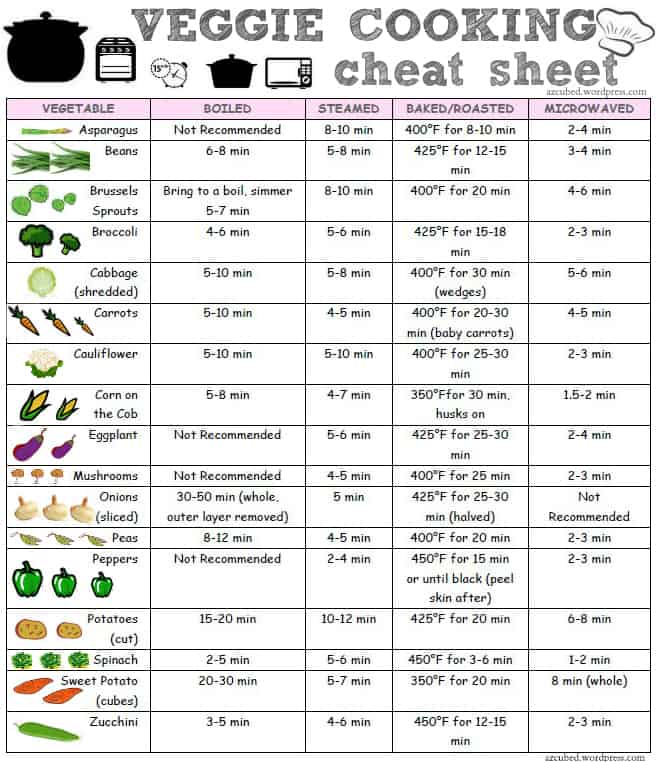
Finally! A veggie cooking cheat-sheet!
Like many Americans, I do not eat enough vegetables. According to The U.S. Department of Agriculture’s relatively new food pyramid, (released in 2005) we should be eating 2.5 cups of vegetables a day. I have nothing against veggies–their health benefits are reason enough to head to the produce section when grocery shopping–but, back in the kitchen, I often find myself unsure of how to cook them.
Check out this veggie cheat-sheet to relieve any vegetable related fears. And if the chart doesn’t convince you to eat your vegetables, maybe this easy Indian recipe will! Tastes great on whole wheat crackers!
Gujarati Carrot Salad with Mustard Seeds
Ingredients:
3 medium carrots, peeled and grated
2 tablespoon olive oil
1 1/2 teaspoon black mustard seeds
1 teaspoon white sesame seeds
Unprocessed sea salt and freshly ground black pepper to taste
Instructions:
In a bowl, toss the grated carrots with salt and pepper.
Heat the oil in a small skillet over low heat and when hot, add the mustard seeds and sesame seeds. Cover the pot and wait until the mustard seeds pop (they may jump up and burn you, so keep the cover on for a short while).
Pour the contents of the skillet over the carrots and stir to mix well. Serve lukewarm or cold. [Recipe Via] [Infographic Via]
© Micaela Lacy for Daily Infographic, 2013. |
Permalink |
No comment |
Add to
del.icio.us
Post tags: carrot, carrot salad, carrots, chart, cheat sheet, cooking, easy cooking, food, health, Healthy, recipe, salad, salads, vegetable, vegetable cheat sheet, vegetables, veggie, veggie cheat sheet, veggies
dvd.rkrjrdn likes this
17 Jul 21:43
Making Connections with Scapple
by Amy Cavender
 During the last few weeks of April, I was working on a couple of end-of-semester projects for class. To help clarify my thinking, I really needed to sketch out how the various pieces of the project fit together, just so I could visualize it.
I suppose I could have gone to the local office supply store and purchased several large sheets of newsprint, but the later part of April happened to be when the team at Literature and Latte released Scapple.
Scapple is a completely free-form editor that lets you get ideas down quickly, move them around (or not), and make connections between them (or not). In short, you can place any item anywhere on the page that you like, and connect it to any other item—or just leave it to stand by itself.
It’s a great tool for mindmapping, though it’s not limited to that. It was certainly ideal for my purposes. I downloaded the trial version, installed it, and had the basics figured out in about two minutes. I was able to sketch out what I needed really quickly, and much faster than I could have done it by hand. It’s also possible to export a Scapple file as a PDF or PNG file, which made it incredibly easy for me to include my sketch in my presentation to the class.
Those who use Scrivener (which has received just a few mentions in this space) will appreciate the fact that the two applications play well together; notes can be dragged from Scapple directly into Scrivener.
I usually play around with software for quite a while before making a purchasing decision, but it only took a couple of hours to decide that, for me, Scapple was worth the price of the license (it’s a reasonable $14.99, and academic pricing is available).
The only downside (and this is not a dig at Literature and Latte; they’re a small outfit and just can’t do everything all at once) is that, unlike Scrivener, Scapple is only available for the Mac. So, while we’d love to hear your impressions about Scapple, we’d also be very interested in hearing from Windows and Linux users who’ve found something that works well for them to accomplish similar tasks. If you’ve got suggestions, please share them in the comments!
17 Jul 21:43
For punctuation geeks, an interesting decision by the U.S. 2nd Circuit
by Ray
Does a modifying phrase following a list of nouns or phrases modify each item on the entire list, or only the last item? That depends on whether the modifying phrase is separated from the last item by a comma. So concluded the U.S. Second Circuit in AIG v. Bank of America, decided April 19. Writing for the court, Judge Leval gave this example:
[T]he statement, “This basketball team has a seven-foot center, a huge power forward, and two large guards, who do spectacular dunks,” differs from the statement, “This basketball team has a seven-foot center, a huge power forward, and two large guards who do spectacular dunks.” The first statement conveys that all four players do spectacular dunks. The latter statement conveys that only the guards do so.
Hat tip to Aseal F. Morghem for this item.
dvd.rkrjrdn likes this
17 Jul 21:43
Flipped Learning for Legal Education
by professorpistone
Hi Everyone! Mary just invited me to join this blogging community. Glad to be here. For my first post, I’d like to think about how flipped or blended learning could be used in legal education. Flipped learning blends online and in-class instruction and has been used of late in lots of educational settings, including K-12 […]
dvd.rkrjrdn likes this
17 Jul 21:43
"Wireless Medicine" -- Is Law Next?
by LegalWhiteboard
by William Henderson A good friend of mine, Ed Reeser, who is a lawyer, sent along this video on the "Wireless Medicine" movement, which is apparently led by Dr. Eric Topol, one of the nation's leading cardiologists, author of the...
08 Jul 17:11
Improve your Course Evaluations by having your Class Write Letters to Future Students
by Brian Croxall
 As we’re drawing to the close of the spring semester, it’s a good time to not only be thinking about final assignments and exams but to consider your final student evaluations. We’ve talked frequently about course evaluations here at ProfHacker: Jason talked about working with the numerical output from evaluations; Heather made some suggestions for what to do when the evaluations are just plain wrong, as well as sharing reader’s suggestions; Mark talked about the best time to read those evaluations; Ryan discussed the lessons he learned from his evaluations last spring and how he changed the next iteration of his course; and I’ve previously covered how to improve student participation on evaluations. Why spill so much (digital) ink on evaluations, when we all know that they are an imperfect measure of what happens in a college classroom? Well, if we’ve got to do them, we might as well make them as useful as possible.
Last semester I tried something new with the qualitative portion of my evaluations: I asked the students to compose a letter to those who would take the course the next time it was offered. (EDIT: When I was writing this post, I couldn’t recall who had given me this idea. I’m pleased to now give credit to Patrick Williams, who suggested it). Here’s the exact prompt: Write a short letter to future students in the class, letting them know whatever you think is most important about the instructor, the course, the assignments, and the reading. I had two reasons for this new format. First, my past format for evaluations breaks everything up into three or four questions with equal amounts of space allotted to each question. This prompt would allow them to spend more time on the subjects that they wanted to talk more about and vice versa. Second, I hoped the freedom of the form would result in the students creating a bit of narrative that resulted in them sharing more specifics about the class.
After getting the evaluations back, I can say that the new format accomplished both of these goals. What’s more, I found that the students wrote, on average, far more on these evaluations than they have on past ones that I have provided. And in writing something directed at fellow students rather than me or some faceless, unknowable bureaucracy, I’d say that the students were much more candid. This means that they are more direct in talking about my strengths and weaknesses. And while it’s nice to hear the former, it’s the latter that will actually help me do a better job the next time around. If you’re interested, you can read them for yourself (PDF).
Overall, I’m very pleased with this reformulation of my evaluations and have been recommending it to friends. I know that not everyone can write their own qualitative evaluations, but would you ask your classes to write letters to future students? Do you have a different format you use for class evaluations? Let us know in the comments!
Lead image: Letter Box at Epworth Post Office / David Wright / CC BY 2.0
08 Jul 17:10
Podcasts from 2013 AALS Annual Meeting Available to AALS Member and Fee-Paid Law Schools
by lawschool academicsupport
Jane La Barbera, Managing Director of AALS, recently e-mailed the following announcement. If you are faculty or professional staff from AALS memer and fee-paid law schools, you would be able to access the podcasts. Please notice the restrictions on access...
08 Jul 17:10
Why Global-Intuitive Students May Mistake Superficial Analysis for the Real Thing
by lawschool academicsupport
Global processors are always looking for the big picture, the overview, or the roadmap in learning - they want to know the essentials and the end result. Intuitive processors are curioius about concepts, abstractions, theories, and policies and seek out...
08 Jul 17:10
Why Sequential-Sensing Students May Mistake Class Preparation for the Ultimate Goal
by lawschool academicsupport
Sequential processors focus on the individual units before them (cases, subtopics, topics) rather than look at the bigger picture (how these units combine into a whole). Sensing processors focus on details, facts, and practicalities rather than look at ideas or...
08 Jul 17:10

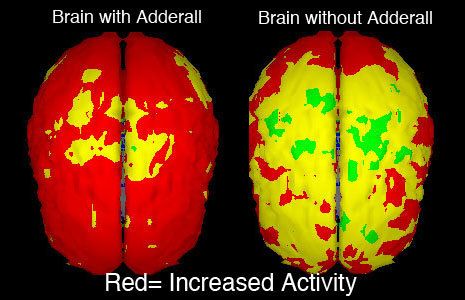
A year or so ago a colleague, far, far closer to retirement than to taking a law school exam, told me he went to his doctor to get an Adderall prescription. The result was just what was hoped for. He could focus longer and write more articles. As I understand it, Adderall is available to all will shop around for the right doctors. I would like to write more articles too so I wondered if I should get some Aderall myself. And, since we all want to do "our" best, should we all feel obligated to take Adderall or its therapeutic equivalents so we can be more productive. In fact, maybe employers should require it.
All of this is less important for professors since the measures of success are so elusive. On the other hand, if Adderall is an undergraduate epidemic why would it not also be widespread among law students where grading curves and class rank can made the difference between a job or no job. If it is widespread or likely to become widespread, what of it? One article I read suggested it was a great opportunity for lower socioeconomic kids because their families can substitute Adderall for more expensive prep courses, tutors, etc., to which wealthier students have access. I wonder about the logic of this. In a competitive world won't the rich kids use all their expensive aids plus Adderall. Of course, maybe I just misunderstand how Adderall works.
Another article I read indicated that the abuse of Aderall is more common among middle and higher socioeconomic students. I am not sure what "abuse" means but it does include illegally obtaining Adderall. This surprised me because the richer the kid the more able he or she is to doctor shop. In either case, when it comes to aids -- legal or illegal -- is there really any serious doubt about which class will have greater access and be able to squeeze out the greatest benefit.
Where do law school administrators and bar examiners fall into this. Nowhere is what I expect because a general rule for adminstrators seems to be to do nothing unless forced to. This may be the right outcome. It does not seem practical to test the test takers. Plus, what would the sanction be? Still, it's just another way to game the system and it seems inconsistent for state bars and some law schools to obsess about "background" but then turn a blind eye to dopers.
Adderall for All: Students and Professors Alike
by Jeffrey Harrison
A year or so ago a colleague, far, far closer to retirement than to taking a law school exam, told me he went to his doctor to get an Adderall prescription. The result was just what was hoped for. He could focus longer and write more articles. As I understand it, Adderall is available to all will shop around for the right doctors. I would like to write more articles too so I wondered if I should get some Aderall myself. And, since we all want to do "our" best, should we all feel obligated to take Adderall or its therapeutic equivalents so we can be more productive. In fact, maybe employers should require it.
All of this is less important for professors since the measures of success are so elusive. On the other hand, if Adderall is an undergraduate epidemic why would it not also be widespread among law students where grading curves and class rank can made the difference between a job or no job. If it is widespread or likely to become widespread, what of it? One article I read suggested it was a great opportunity for lower socioeconomic kids because their families can substitute Adderall for more expensive prep courses, tutors, etc., to which wealthier students have access. I wonder about the logic of this. In a competitive world won't the rich kids use all their expensive aids plus Adderall. Of course, maybe I just misunderstand how Adderall works.
Another article I read indicated that the abuse of Aderall is more common among middle and higher socioeconomic students. I am not sure what "abuse" means but it does include illegally obtaining Adderall. This surprised me because the richer the kid the more able he or she is to doctor shop. In either case, when it comes to aids -- legal or illegal -- is there really any serious doubt about which class will have greater access and be able to squeeze out the greatest benefit.
Where do law school administrators and bar examiners fall into this. Nowhere is what I expect because a general rule for adminstrators seems to be to do nothing unless forced to. This may be the right outcome. It does not seem practical to test the test takers. Plus, what would the sanction be? Still, it's just another way to game the system and it seems inconsistent for state bars and some law schools to obsess about "background" but then turn a blind eye to dopers.
08 Jul 17:09
Six Steps to Making Positive Changes in Your Teaching
by Maryellen Weimer, PhD
I’m working my way through a 33-page review of scholarship on instructional change in Science, Technology, Engineering and Math (STEM) disciplines. The authors reviewed an impressive 191 conceptual and empirical journal articles. However, what they found isn’t impressive both in terms of the quality of the scholarship on this topic and in terms of instructional change in general.
It’s not the first article I’ve read of late on the various barriers that stand in the way of change in higher education. The literature is not encouraging, but I think there are some fairly straightforward principles that give any new teaching strategy, technique or approach a much greater chance of success. Out of that success will grow the courage and motivation to implement even more instructional changes.
1. Think about what needs to change before deciding on a change – I regularly lead workshops on campuses across the country and often worry that there are carts being placed before unseen horses. When I’m asked to present, I’m usually counseled that faculty attending will want techniques, new ideas, strategies that work, and pragmatic things they can do in the classroom. But that’s not where the change process should begin. It should start with a question, ‘What am I doing that isn’t promoting learning or very much learning?’ Or, ‘What am I doing that I’ve probably done the same way for too long?’ Once you see the horse, you can better pick out a cart to put behind it.
2. Lay the groundwork for the change – I regularly object to the “just do it” approach to instructional change, as if we all work in a Nike commercial. The motivation is admirable but every instructional situation is unique. Teachers are different, students are different and we don’t all teach the same content in the same kind of courses. Whatever a teacher does must be adapted so that it fits the peculiarities of the given instructional situation. Don’t just do it before having given careful thought to how the change will work with your content, your students, and when you use it.
3. Incorporate change systematically – Beyond adapting the change, teachers need to prepare for its implementation. This means considering when (or if) it fits with the content, what skills it requires and whether students have those skills. If they don’t, how could those skills be developed? It also means valuing the change process by giving it your full and focused attention so as to ensure the new approach has the best possible chance of succeeding.
4. Change a little before changing a lot – Too often faculty have “conversion experiences” about themselves as teachers. They go to a conference or read a book, get convinced that they could be doing so much better and decide to change all sorts of things at once. They envision a whole new course taught by an entirely different teacher. Unfortunately, that much change is often hard on students and equally difficult for teachers to sustain.
5. Determine in advance how you will know whether the change is a success – It’s too bad that assessment has come to carry so much negative baggage, because when it’s about a teacher trying something new and wanting to know if it works, assessment provides much needed of objectivity. If you determine beforehand what success is going to look like, then you are much less likely to be blinded by how much everybody liked it. In this giant review of the change literature I mentioned earlier, only 21% of the articles contained “strong evidence to support claims of success or failure.”
6. Have realistic expectations for success – No matter how innovative, creative and wonderful the new idea may be, it isn’t going to be perfect and it isn’t going to be the best learning experience possible for every student or the pinnacle of your teaching career. Everything we do in class has mixed results; any new approach will work really well for some students, in some classes, on some days. Know that going in, remind yourself regularly, and don’t let it discourage you from continuing to make positive changes.
Reference: Henderson, C., Beach, A., and Finkelstein, N. (2011). Facilitating change in undergraduate STEM instructional practices: An analytic review of the literature. Journal of Research in Science Teaching, 48 (8), 984-952.
04 Jul 22:45
Has Your School Bonded its SBA Treasurer?
by Legalskillsblog
Has Your School Bonded its SBA Treasurer? Maybe it should. Getting someone bonded is not very difficult. Consider this: Margaret Oyler did not graduate from the University of Baltimore School of Law, but she did nab $33,000 from the school’s...
No more posts. Check out what's trending.