
Shared posts

26 Jun 05:50
“How I learned Blender”
Blender Guru’s Andrew Price shares the story of how he learned to work with Blender. It’s an inspiring read, and it includes 5 observations that you may find useful. Andrew writes: At least once a week I get an email … Continue reading →
26 Jun 05:50


Freshly Pressed Friday Faves
by Krista
Here in North America, it’s late spring and the plants are in a rush — growing visibly each day in a bid to soak up every rain drop and sunbeam before fall forces summer to flee. We feel we should document every moment with a camera — to capture it before that beauty fades for another year. This week, as we read through the stunning posts featured on Freshly Pressed in the Reader, we were awed by photographers capturing still life and not so still life on-the-spot, around the world.
Myanmar: Dhala, Bamboo village
Lithuanian photographer and journalist Berta Tilmantaite transported us to a bamboo-hut village in Myanmar where smiles are plentiful: a young man smiles posing with his red-dress-clad daughter, a young girl grins as she watches a boy in mid-hula hoop, and the shy smile of a young boy in a yellow shirt. We loved this glimpse into life halfway around the globe and the deep feeling of community and humanity the photos portray.

Photo by Berta Tilmantaite.
New York streets
London, England-based professional photographer Roger Harris posted about a recent photographic journey through the streets of New York. We loved the diversity Roger captures, from gents playing chess outdoors, to exuberant tourists in I heart New York sweartshirts taking snapshots, to two mother and daughter pairs on the subway, to an elderly man walking hunched over, past the Donut Pub in the rain. Like Berta’s Myanmar series, Roger’s photographs portray the humanity of homo sapiens.

Photo by Roger Harris.
Mudbrick Winter Wedding — Christina & Hamish
Meanwhile, Lauretta and Blair Quax, wedding photographers at Shine Studios in Auckland, New Zealand, tell the story of the first day in a lifelong journey with their photos of Christina & Hamish’s wedding. We loved the emotions that Lauretta and Blair’s photos reflect: the romantic, lavender-swathed fairy tale setting, the shy, reflective bride as she dresses and primps, the juxtaposition of formal jackets hung from a sign that says “beach,” the anticipation in a bevy of champagne glasses standing at the ready to toast the young couple, and softly-lit photos of mingling family and friends celebrating the event. The photos made us want to raise a glass to wish Christina and Hamish a long and happy life together.

Photo by Lauretta and Blair Quax.
Little Church on the Prairie
South African photographer Robin is documenting his travels from Pretoria, South Africa, to British Columbia, Canada in photographs. South of Quesnel, in north nentral British Columbia, Robin photographs an old, abandoned, fire-scarred Catholic church standing in a lush green field, stark against the falling evening. The photos evoke loss, not only in fire, but of the communities that once gathered to bless weddings, baptize babies, and mourn the dead, now absent.

Photo by Robin.
Did you read something in the Reader that you think is Freshly Pressed material? Feel free to leave us a link, or tweet us @freshly_pressed.
For more inspiration, check out our writing challenges, photo challenges, and other blogging tips at The Daily Post; visit our Recommended Blogs; and browse the most popular topics in the Reader. For editorial guidelines for Freshly Pressed, read: So You Want To Be Freshly Pressed.

25 Jun 05:41
Chetan Patil: TECH COMMUNITIES TO FOLLOW IN PUNE
(This article by Navin Kabra was first published on PuneTech and is reproduced here for the benefit of tech in Pune and for blog readers.)
This is a list of all software technology user groups and Organizations in Pune. If you know of any group/organization/mailing list that is missing, please contact.
Note : to keep a track of the meetings of these groups, the best way is to subscribe to the PuneTech calendar
- ClubHack - website, newsletter and yearly conference dedicated to security
- Computer Society of India Pune - one of the oldest technology groups in Pune. Periodic events and trainings
- High Energy Materials Society of India (HEMSI)
- IEEE Pune
- ISACA Pune Chapter - Security, audits, certifications etc
- Indian Institute of Production Engineers Pune - regular meetings for production engineers
- JUGPune - Joomla Users Group
- LinuxChix - Women in linux/open source
- Null - Security/white-hat hacking – website, mailing list, regular events, yearly conference
- OLPC Pune - inactive
- OWASP Pune - For professionals interested in application security on the web
- PHPCamp - Big, yearly PHP conference. Also check out PHPCamp.net
- Project Management Institute Pune - Monthly meetings, yearly conference
- PuneChips – Group for people interested in VLSI, semiconductor, embedded technologies
- Pune CleanTech - For those interested in clean/green technologies
- Pune Flex Users Group - Low activity mailing list
- Pune GNU/Linux Users Group - monthly meetings and active mailing list
- Pune Java - Pune Java developers mailing list
- Pune JBoss Users Group - low activity mailing list
- Pune OpenCoffee Club (POCC) - Very active community for startups/entrepreneurs. Also check out thePOCC mailing list.
- Pune Rails Meetup Group - Active group for regular Ruby-on-Rails developers.
- Pune Techies Facebook Group
- Pune Technology Professionals Linked-in Group
- Pune Tivoli Users Group - low activity. Official group with occasional meetings
- Pune User Group (Microsoft Technologies) - Forums, regular meetings, big yearly conference
- Software Exporters Association of Pune - Pune’s big and influential industry body
- Software Process Improvement Network Pune - inactive
- Tech Events Calendar - PuneTech’s own – the most comprehensive tech events calendar
- TechMarathi - group interested in writing/translating tech articles in Marathi
- TiE Pune – The Indus Entrepreneurs – Pune Chapter of the global entrepreneurs network. Regular meetings and presentations.
- Venture Center - Government body helping entrepreneurs/innovators in chemical, biological, material science areas
The post TECH COMMUNITIES TO FOLLOW IN PUNE appeared first on #chetanpatil.

25 Jun 05:38


बड़ा हुआ तो क्या हुआ
by kissoflif3
कबीर का दोहा
बड़ा हुआ तो क्या हुआ, जैसे पेड़ खजूर |
पंथी को छाया नहीं, फल लागे अति दूर ||
खजूर के पेड़ के भाँति बड़े होने का कोई फायदा नहीं है, क्योंकि इससे न तो यात्रियों को छाया मिलती है, न इसके फल आसानी से तोड़े जा सकते हैं | आर्थात बड़प्पन के प्रदर्शन मात्र से किसी का लाभ नहीं होता |
Bada hua to kya hua, jaise ped khajoor
Panthi ko chhaaya nahi, phal laage ati door.
It’s of no use to be great like a date palm tree as it neither gives shade to travelers nor does it allow its fruit to be plucked with ease. In other words, exhibition of greatness does not benefit anyone.
25 Jun 05:32


Pictures of the comic I’m working on. Presentation in 6...
Pictures of the comic I’m working on. Presentation in 6 days! Woooooh. (I’m still far from finishing, go go full nights of work)
Hope you’ll like it, I’ll translate the full thing when finished.
21 Jun 11:33


कबीर यह मन मसखरा
by kissoflif3
कबीर का दोहा
कबीर यह मन मसखरा, कहूँ तो मानै रोस |
जा मारग साहिब मिलै, तहाँ न चलै कोस ||
कबीर कहते हैं कि मन बड़ा चंचल और मज़ाकिया है | इसे ज्ञान-ध्यान की बातें बुरी लगती है | इसे प्रभु-भक्ति के मार्ग पर चलने के लिए कहो तो उस पर बिलकुल नहीं चलता | अर्थात मन की चंचलता पर काबू पाना बड़ा कठिन है |
Kabir yah man maskhara, kahun tu maanei ros
Jaa maarag saahib milei, tahan na chalei kos.
Kabir says that our mind is very fickle and funny. It finds talks of wisdom and contemplation offensive. It doesn’t want to devote itself towards Lord’s devotion. In other words, it is very difficult to control the fickleness of the mind.
18 Jun 01:58
120. TERENCE McKENNA: Nature loves courage
by Zen Pencils

Terence McKenna (1946-2000) was a psychedelic warrior – a writer, lecturer and expert on ecology, botany, shamanism and spiritual transformation. McKenna’s books discuss the benefits and mind-altering effects of LSD, psilocybin and other hallucinogens, and the role they’ve played in human history and culture. His ‘Stoned Ape Theory’ argues that the rapid rise of homo sapiens was triggered when our ancestors started eating magic mushrooms, leading to increased brain size, creativity and language. Pretty fascinating if you ask me.
There are many great McKenna interviews and lectures on YouTube, like this one and this one. The audio version of the above quote can be heard in this video.
I can say from personal experience that there is truth in this quote. I never believed in “The Secret”, all that talk of “if you put positive energy into the universe, the universe will reward you” or “the bigger the risk, the bigger the reward”. I thought it was new age bullshit – something Dr. Phil and other ‘life coaches’ trotted out to suckers. But honestly, my experience over the past 18 months has changed my mind. I had an impossible dream (become a web cartoonist) and I made the commitment and hurled myself into the abyss (quit my job and sold my house to fund the dream) and so far, it’s worked out better than I could have imagined. As soon as I handed in my resignation letter, good things started happening to me. Tim Ferriss contacted me about contributing to his book, my house was sold after I was super stressed that it wouldn’t, and all sorts of other small, positive things encouraged me to keep going. It did kind of feel that the universe was rewarding me for making the decision to finally act on my impossible dream.
Now I don’t want to give people a false sense of hope – that all you have to do is take the leap and everything will work out peachy. For me, ‘making the commitment’ means working my ass off, drawing these comics 6-7 days a week. But the work is satisfying and meaningful to me. So I would say that hard work, planning, skill, commitment and grit make up 90% of the equation, but maybe that last 10% is just deciding to hurl yourself into the abyss.
I’m interested to hear what your experience is with this. Have you taken a risk and found that it paid off big time? Or have you taken a leap of faith only for it to end badly? Are you better off for trying, or did the experience just leave you bitter and angry?
RELATED COMICS by Timothy Leary, Mark Twain, Ray Bradbury and Bill Hicks.
Thanks to Daniel, Kent, Kaveri and Senyor for submitting this.
aaronrsturm, jessica and 2 others like this
17 Jun 14:36


Pop! Goes the bubble.
by heartranjan
Back in my childhood, we had an old, black and white television. Konark was the company, and Gitanjali was the brand.
Like a high school romance, the television was not the best around. But it belonged to me, and my heart belonged to it. It had a knob that you could turn to access 12 channels – a cruel mockery that the government only allowed it one. Under the knob, were three buttons – On/Off and Volume, Brightness, and Contrast. It had a red box, but that was all the colour it had.
I was used to it. To its timings, and to its tantrums. I knew what to do if the picture was blurred (run up to the balcony and shoo away the crow on the antenna), and what to do if it rained (pray to God and promise not to think about Juhi Chawla). We were cool friends – me and the television.
So imagine my surprise one day, when I randomly turned the knob, and found there was a second channel slowly appearing on the screen.
DD Metro.
My world opened up. No more did I have to endure the sober, sedated programs on National. This channel looked a lot cooler, the people wore dresses I could see on the streets, and a language I didn’t feel alienated by.
It was on this wonderful channel, DD Metro, that I saw a young girl sitting on a throne.
She was unlike any other actress I had seen. What right did she have to be singing a song if she wasn’t an actress? And what was with those crazy scenes? One moment it was a durbar, the next there was a snake crawling across the floor, then someone doing yoga.
I hated it. But I watched on like a man transfixed.
**************************
The 90’s are often seen as the years when the floodgates were being opened for the rest of the world. But for us who were too young to figure anything out, all the liberalisation and privatisation didn’t make any sense.
Our revolutions happened in our television sets.
Made in India, the song whose audacity I couldn’t take, but whose tunes I couldn’t wish away, was just the beginning. What followed was a hurricane – Baba Sehgal appeared in the Jumpin ad, Daler Mehndi was making the entire country blabber Punjabi, and a young boy with long hair was singing about the pangs of a lonely heart.
Indipop not only changed the way we listened to music. It also changed the way we watched television.
For the first time, there was no heroine gyrating in the rain, or singing out songs of pain about her love. The tone was spunky, the tunes funky. While television was slotted earlier – the mornings and evenings for news, the afternoon for soap operas, Sundays for films – indipop meant you could watch anything you want. And the earth didn’t come crashing down on you if you walked out of the room and came back ten minutes later.
I remember watching television those days with a sense of awe. I never knew what was going to come up. Since these were not films, no one knew the artists, or the genres they were going to play. What resulted was a heady mix of genres and styles.
If there was Nusrat Fateh Ali Khan singing about Lisa Ray in a bad blouse, there was a gawky Shahid Kapoor saving money to buy Hrishita Bhatt a dress. Dooba Dooba had a band that was slowly sinking into water to symbolise that the singer was drowning in her eyes – tacky now, earth shatteringly profound back then.
And Lucky Ali! That man with the husky voice, and dreamy lyrics, and those crazy, beautiful videos that were shot in locations that made our televisions look really posh.
If there was something about Indipop that made it such a rage, it was that it catered to every category. Tunak Tunak Tun would be followed by Tanha Dil, which would be followed by Ab Ke Saawan. My ears and brain had multiple orgasms on a daily basis.

It also changed the way I listened to music. Belonging to a family that would make a Khap panchayat beam with pride, I had no access to any films or film music. Which meant that I had to wait for someone to get married in my lane so I could listen to songs being played and mug them up. Or go to a friend’s place to watch television or music. Or wait till a kind uncle gave me some money so I could go to a cassette shop.
Oh, those cassette shops!
Side A would have one film, and Side B would have another. You listened to all the songs on one side, and flipped the cassette over. God forbid you left the cassette lying around, and the tape would come out like a snake from Pandora’s Box, and the next few days were spent in screwing the cassette with a Reynold 045 Fine Carbure jammed into it. All this trouble for listening to an Anu Malik song that sounded like two mules mating.
But with Indipop, there was no such trouble. Neelam, or Malaika decided the songs for you, spoke in English, and kept you glued till the song came on. And how they came on!
But obviously, everything couldn’t be so smooth.
For Bollywood, that hydra headed monster was watching. Very soon, it would plan its deadly attack.
**********************
While the Bollywood of the early 90s was an outdated, embarrassingly loud rogue, the Bollywood of the mid and late 90s tried to win back the hearts of the nation.
DDLJ had happened, and India had a hero who did not bash three Pakistanis per second. DDLJ was followed by KKHH, and then DTPH. If the bonfire was slowly dying out, these three films, in one go, put the wood back in Bollywood.
From then on, Bollywood went out of its way to woo the audience everywhere. Songs began to be shot in locations abroad, and the youth reconnected with the films.
Slowly, everybody who was anybody in Indipop started drifting to Bollywood. Shaan, KK, and Sonu Nigam became a part of the Bollywood stable. Baba Sehgal, who had inspired a generation of rappers (even though the elders felt it was gangrap of their music aesthetics), stopped cutting albums.
Hariharan, one half of the beautiful Colonial Cousins, started singing in films. Lucky Ali smoked a lot of pot and moved to New Zealand and married thrice. Palash Sen acted in a film with Sushmita Sen and Daler Mehndi would pave way for his younger brother, someone with such an appreciation of beauty that he had to forcibly kiss Rakhi Sawant at a party.
Slowly but surely, like an octopus patrolling a sea, Bollywood ate up everything that came in its way.
What was a delight on television, slowly became a pain.
Indipop gave way to the Remix Scene. Crappy remakes of crappy songs. With 25 year old girls wearing the clothes of 15 year olds and dancing like 65 year olds.
Magnasound, that record label that started it all, got sued by Asha Bhonsle and filed for bankruptcy. Bollywood started making snazzy videos to entice the youth, who had already been dumbed down when Bournvita Quiz Contest was pulled off air and Derek O Brain went to join Mamta Banerjee’s political party.
Just like that, the dream was shattered.
************************
So today, when I watch a Coke Studio or MTV Unplugged, I watch it with cynicism. I know that the monster is watching too, with bated breath. It just has to stretch its hands out, and the guy will be lost forever – singing songs for 45 year old heroes chasing their daughters’ friends – till there is life.
Music today is film music.
Alisha Chinai is a judge on a fucked up reality show.
Baba Sehgal is the Snake God in a Telugu film called Rudhramadevi.
And people ask me why I hate Bollywood so much.



13 Jun 10:14


पानी मिलै न आपको
by kissoflif3
कबीर का दोहा
पानी मिलै न आपको, औरन बकसत छीर |
आपन मन निहचल नहीं, और बंधावत धीर ||
जिसे स्वयं को पीने के लिये पानी नहीं है, वह दूसरों को दूध पिलाता है | जिसका अपना मन स्थिर नहीं है, वह दूसरों को धैर्य रखने की प्रेरणा देता है | अर्थात पहले स्वयं ज्ञानी बनें, फिर दूसरों को उपदेश दें |
Paani milei na aapko, auran baksat chheer
Aapan mann nihachal nahi, aur bandhaavat dheer.
He does not have water for himself, but gives milk to others. He does not have a calm mind but preaches patience. That is to say, one must first be wise himself, before advising others.
12 Jun 18:38


बिगरी बात बने नहीं
by kissoflif3
रहीम का दोहा
बिगरी बात बने नहीं, लाख करो किन कोय |
रहिमन बिगरै दूध को, मथे ना माखन होय ||
बिगडी बात को लाख उपाय करके भी संवारा नहीं जा सकता है, जैसे फटे दूध को लाख मथकर भी मक्खन नहीं निकलता| इसलिये बात को बिगडने ही न दें| वाणी पर नियंत्रण रखें, क्योंकि वाणी शत्रु को भी मित्र और मित्र को भी शत्रु बना सकती है|
Bigari baat bane nahi, laakh karo kin koye
Rahiman bigarey doodh ko, mathe na maakhan hoye.
A million measures cannot reform a situation that has fallen apart, just like curdled milk cannot be churned to produce butter. Don’t let the situation go out of control. Exercise control over your words, because your words can make an enemy your friend, and a friend your enemy.
12 Jun 16:23
Tilak
by kissoflif3
kissoflif3 posted a photo:

At Kumbh Mela.
This was perhaps the first instance when I had asked a stranger for a photograph. I was walking on one of the pontoon bridges when I saw this man approaching. I knew I wanted to photograph him. I politely asked him if he would let me take his photograph, and he obliged. He then asked me to photograph him along with his wife. ;-)
Oh btw, while processing this photograph, I fell in love with b&w processing. So vintage! So black and white!
12 Jun 16:23
O Mahatma.. O Maharshi..
by 9

yedi satyam.. yedasatyam..
yedanityam.. yedi nityam..
— Sri Sri
06 Jun 06:29


Timeline
by daddysan
I remember refreshing the page once. Not sure why I did it, because the rational part of my brain, however limited, was screaming at me, calling me a fool. I knew there wasn’t going to be another tweet but I had to be sure anyway. The timeline had halted. The last six or seven tweets stared me in the face, one of them hopeful. Others were argumentative, some dismissive. But always inviting the possibility of discussion, rebuttal. That there was discussion or rebuttal was a foregone conclusion, but it won’t be appearing on this timeline anymore. That made me angrier. Damn this thing to hell. Why allow us to connect to each other for a short while, but interact at such a furious pace that it felt like a lifetime?
More anger. Because I wanted to say things to him. I wanted to argue and provoke him into revealing himself further; after all, the preceding pages of tweets had tantalizingly revealed his facets one by one. I still hadn’t met him, didn’t really know who he was but we “connected”. And now I wanted more.
I feared for those whom I seek out when I’m online. Those who delight me with what they have to say. Those I’ve come to love and befriend. Strangers who’ve stood by me unknowingly, because the comfort of my anonymity wouldn’t allow them to know anymore. And yet, I’ve forged bonds that are deeper than I’ve ever managed even in real life. I’ve tried to meet them but at some point, perhaps subconsciously, have chosen not to do so. To avoid shattering the image I have of them in my mind. I love them and I’d like it to stay that way. Like a thing of beauty perched precariously on a precipice. If I come too close, it might topple. Unfortunately, that means I’m addicted to every update as it flits across my screen. It adds to my mental picture of them. It builds empathy and a sense of one-ness with them. It’s unfortunate because now I’m vulnerable. They’re real people with real lives I have no control over. I can only wish they’re careful, that they stay safe. That luck and good health favor them. But I know I’ll still feel betrayed when they’re gone.
I wonder, what kind of a footprint would I leave? Leave. To go away. To not have that page flickering away in one corner of your screen, illuminated with banalities, argumentative jibes, praise, foolishness, fun – that part of the iceberg that rests below the calm surface of our happy selves. Where would my unfinished story fit in? I wonder if there’ll be someone like me, staring at my timeline, willing it to manifest just one more update or tweet so they could hope to finally complete a puzzle I had strewn over the lives of those who connected with me.
I hope not. It’s too unfair.
(Rest in peace Atul.)
05 Jun 04:44
New Throwing Research Could Shed Light On Optimal Mechanics
by Charlie Eisenhood
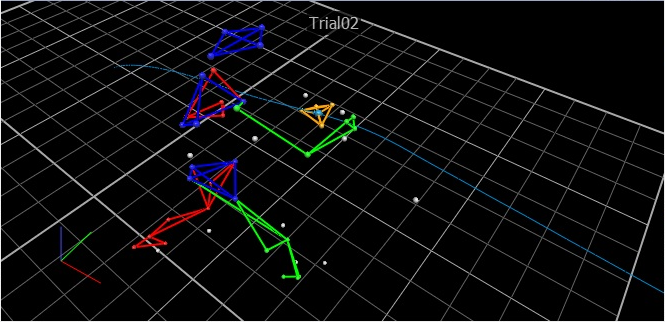 A Scottish Ultimate coach has been granted access to a state-of-the-art motion capture laboratory and is preparing to spend the summer doing research on the mechanics of throwing a disc.
The research will be nearly the first of its kind — in 1997, Sarah Hummel, a UC Davis graduate student, did a single thrower analysis for her master’s thesis. But Benji Heywood, the coach of the University of St. Andrews in Scotland, is planning to track dozens of different throwers to try to find out more about how the different approaches to throwing affect the flight of the disc.
Here’s how it works, as described by Heywood on his blog:
The thrower and the disc are dotted with about 30 reflective markers, on all the joints (wrists, knees, shoulders etc.) and other places of interest. These markers are then picked up in real time by around 15 cameras working at 400 frames/second. For every marker, for every frame, we get the position (accurate to around half a millimetre in 3 dimensions), and also the velocity and the acceleration. The distance between any two markers, or the angle between two or more, can also be automatically calculated.
This will allow for incredible detail into the biomechanics of throwing: how does arm speed affect disc velocity? What about wrist snap? Does more body torque translate directly into throw distance?
With a large sample size of participants, Heywood is hoping to track various techniques and styles. The cameras and markers are so sensitive that “test-runs pick up a tiny repeated oscillation in the z-axis (up and down) after release,” which Heywood think suggests that the disc flexes when you grip it and, after release, it vibrates early in its flight.
That level of detail will allow Heywood to examine different facets of throwing as he tries to find some commonalities to great throwers.
If you want to be involved, get in touch with Heywood at his blog, Understanding Ultimate, or his Facebook page. The trials will be running throughout the summer and into the early fall. He plans to publish results in an academic paper as well as on his blog.
The post New Throwing Research Could Shed Light On Optimal Mechanics appeared first on Ultiworld.
05 Jun 04:43


Chop Fine (Pt. 3)
by heartranjan
He was very happy with the clip.
If you saw it, you would first notice the well lit room. A girl with a yellow T – shirt walks in and closes the door. There’s a boy in a white shirt and a brown pant near the door waiting.
The girl looks around the door and then puts her arm around the guy. They kiss for a long time, and then the boy drags the girl to the bed.
At 1.05 in the video, after fiddling around for a bit, he starts taking her clothes off. She has nice breasts.
At 2:20, they are fully naked. The boy makes her go on her knees on the bed and enters her from the back. She puts her head down throughout, her hair blocking her face. At one point, he holds her by the hair and pulls her hair up. Her mouth is open.
At 3:00, you cant tell if she is in pain or enjoying it. Her mouth remains open. The guy looks into the camera once in a while, but he goes on at her.
At 4:25, she makes him lie down and mounts him. Her hands are on his torso, and she rocks back and forth in a steady motion. Her hair is on her face, and the boy lifts his hand to her face and puts the hair behind her ears.
At 5:23, she stops abruptly. The boy makes her get off and they both stand up.
At 5:47, the video fades into black.
*****************
He had seen it so many times, he knew it by heart.
He had shown it to his two best friends, and he had seen the jealousy on their faces.
It was like a state of constant high. He couldn’t get it out of his head. At college, he would look at her, and imagine what she would look like naked. He would rush to the bathroom in the college and shag looking at the video.
In a few days, he grew paranoid about it. His friends were the kind of guys for whom it was perfectly normal to look into another person’s phone. He hid it in a folder deep within his phone and kept checking every few hours if it was still there.
Everytime he met a friend, he wondered if he should show it to him. All those fuckers, who had laughed and mocked at him, wouldn’t he want to see the expression on their faces now!
His messages to her had all but dried up, but that wasn’t his worry. He knew it would take a message to get it all back. It was around this time that he had heard that she was going out with a guy in the class. One of the guys who kept hovering around her all the time.
He messaged her that night, but couldn’t get much out of her.
She messaged him ‘Good Night’ at 10.30.
He wondered why he felt betrayed.
He had never suggested anything of the sort. The chase had been so exciting, that he hadn’t thought of the capture. But she genuinely was interested, wasn’t she?
Or was she?
So he’d been used! That’s what it was.
He almost felt hurt. Was it because of the way he looked? Surely it was. Why wouldn’t she talk to him in college, otherwise?
He stood up, switched on the light and looked at himself in the mirror. Used. Like a dog.
He felt the idea forming in his head. Hot, frothing, till it brewed into a thick, vicious plan.
He caught himself smiling at the mirror.
Now the bitch deserved what was coming her way.
He was going to shame her in front of the entire world.
*********************************
That afternoon when his father was at work and his mother had slept, he logged on to the computer to check out porn sites.
The first ones that came to his mind were the biggies – RedTube, YouPorn, XVideos.
But opening them was like opening the folded, cardboard Snake and Ladders game. There was a hundred videos, all packed in small squares. So many that after a point, they all looked the same. This wouldn’t do it.
He then logged into the Indian sites. These were more like blogs – a variety of stuff – stories, videos, pictures, all served in small quantities everyday.
It’s interesting, it struck him, how we consume porn in the same way we consume products. The foreign sites resembled supermarkets – thousands of options and you had to choose among. The Indian sites were like kirana stores – variety, packaged in smaller quantities.
Half an hour of search, and he boiled down on two – DebonairBlog, and FSIBlog.
He found the email id to send the mail to.
When everyone had slept in the night, he woke up, went to the computer, and transferred the file to the system. He watched the blue bar move across like a reluctant snail. He created a new email account, and attached the file with a brief introduction. He wrote his name, age, place. He also added her name, age, and locality.
It was utterly quiet, there didn’t seem to be even the gush of winds of summer nights. He felt drops of sweat on his forehead. When he was ready, he read it again, and thought for a minute.
And clicked on ‘Send’.
He couldn’t sleep well that night.
He fidgeted a little, and no amount of breath exercises could get him to sleep. He kept looking at his phone.
Awake? 
Sent: 1:43
To: M.
No response.
*******************************
His phone was ringing. He put it on silent and sat up. The room was flooded with light.
His phone showed him four missed calls and two messages.
It was unnaturally sunny for 7.15 AM, and when he walked to the window and pulled the curtain outside, he could see a small yellow butterfly flutter by.
His phone rang again. Prabir.
“Hello?”
“Abey chutiye. Tu local hero ban gaya hahaha…kab
He hung up.
He lay back in his bed, snug and comfortable, and looked at the ceiling.
So the bastards had seen it. Ha!
So much for zebras being born, the jealous motherfuckers!
He walked to the table, pulled up the blue Neelkamal chair, and switched on the computer.
He closed the door, and opened the browser. He entered the url, and waited for it to load.
He watched as images and text began to appear on the screen. There were pictures, stories, and videos – the daily fix of the depraved.
He scrolled down till he saw the screenshots. He would recognise those anywhere.
There were three screenshots, and a small description. He bent forward to read it clearly.
HOT DELHI GIRL FUCKING WITH HER SERVANT:
Watch this hot Delhi girl sucking and fucking her servant when her parents are outside. Dare to miss!
Servant!
His mind was spinning.
His phone rang, and he ran to the bed. It was Prabir.
He felt the rage rising up to his brain. He felt his blood boiling.
***************************
THE END.
04 Jun 05:30


Regressiveness
by greatbong
Mallika Sherawat recently gave an interview at Cannes. It’s kind of news I guess because, after all, who interviews Mallika nowadays? Well in case you haven’t seen it, I encourage you to do so [video], particularly if you need a good laugh. (And come on, who doesn’t?). Since it is very difficult to remember what she said, after the few minutes you spend laughing or cringing, let me summarize her main thesis—- “India is regressive, I am very progressive” with the subtext being that she is victimized because of her progressiveness. Why does she claim to be progressive? Because she was the first person to kiss and first person to wear a bikini.
Once you can go beyond her accent, which is as authentic as a Chandila over, and her creative liberties with truth (Devika Rani has kissed on screen in the 30s and Nalini Jayawant wore two pieces in the 50s [pics]), you can get to the core of what she is saying. That somehow kissing and exposing skin is “progressiveness”.
Here is the short retort.
It is NOT.
Let’s forget India for a while and just look at the Hindi film industry, since it fairly accurately captures the way a large part of rolls.
Yes. Hindi films are regressive. They are regressive for many reasons, none of which is as glaring as its treatment of women. This regressiveness is ingrained in the very way most movies are made—directors sit at the feet of big-name male stars, listen to what kind of movies they want to do (“Mujhe ek comedy chahiye ab, aajkal action waise chal nahee raha hai, plus my orthopedic surgeon told me to take it easy for a year”), come up with scripts (originality optional and frankly, looked down upon), the star okays it, the financiers then line up and then, the heroine is chosen, often “recommended” by the male-movie-star. Even though she is technically also headlining the film, her pay will be a fraction of what the male superhero gets. Why? Because she is a not central to the commercial viability of the movie in any way, (except perhaps her dance steps in the obligatory item-number), her role being to just establish the hero’s machismo. That’s why she has little bargaining power, exchangeable as she is, with minimum fuss, by another warm body.
Given that this is the status quo, choosing to kiss or choosing to show that part of your body which no woman has shown before (assuming for argument’s sake that Mallika was the first person to do this) is hardly progressive. As a matter of fact, it strengthens the established stereotypes regarding the role of women in commercial cinema, namely titillating male audiences.
The reason I deem fit to even blog about the Mallika video is this. Its bad that women have to show skin in order to be in the game. Its even worse when the word “bold” is tagged on to it, as if boldness and progressiveness is measured by square-inch of female skin exposure, no matter how neanderthal the narrative may be.
In Mallika’s defense, this association is not her making. This “mera film bahoot bold hain” is a line as old as the hills, used by countless film-makers to justify the use of “jawaani” in their movies even though their themes even Aurangzeb may consider medieval. And it’s a line whose hypocrisy needs to be called out.
It’s worth mentioning that there have been women in the Hindi film industry, who have tried, with various degrees of success, to not play the stereotype—the Nandita Das-s, the Konkonas and the Vidya Balans. If they say that their careers have suffered because they were “different” and independent, I can buy that. Just that when the star of “Bach ke rahena re baba“, who feeds into and feeds from the same regressive culture of films without ever making any attempt to do something different, pulls out the martyr card, I find it rather laughable, if not slightly offensive, if only for the way it trivializes those who truly try to be progressive in the extant commercial set-up.
04 Jun 05:04
Unread (8,762)
by punchagan
I am unread. Unlike you, who classify yourselves as well-read or not, I am classified as unread or not. Well, you could call me not well-read too, I guess. I was looked at once, my innards glanced through, and was hurriedly marked as unread, starred and tagged. Given my length, the care with which I was composed, and the flurry with which I was stowed away, I probably contain something important, to be read at the opportune moment, something to be cherished and to be replied to with diligence and care. I felt a sense of pride.
I got composed and sent weeks ago, and have been lying here untouched, since. I get buried deeper and deeper every day, with a daily flood of newer stuff piling up onto me. While my composer, eagerly awaits a reply, (less and less eagerly each day, though) I have lost all hope of being read and replied to. I curse myself for carrying something so important. A thousand other replies have been sent, and a few thousand others composed here, but my turn hasn't come, yet.
How I wish, it'd be my turn today. How I wish, I could push my way up through to the top of the stack. How I wish, I could see the eager wait come to an end! How I wish, I'm given the attention I deserved, today! Reply, ASAP!
PS: Apologies for all those emails that are still starred and unread, in my Inbox…
baali likes this
03 Jun 03:00
Filed under: Banno, Dhanno, kaphal Tagged: children, garhwal, Kaphal, Rudraprayag

i love you, there i said it
by Banno
“The children show their love in strange ways”, I said to Dhanno.
“They will run up excitedly and say ‘pranaam’ and then run off again. It’s not as if they talk much to me, or hang around me much. They will laugh and chatter amongst themselves, and be naughty.
But they are still shy of eating in front of me, shy of taking sweets, or any other treats. Once when I forced some cold drinks on them, because I knew they wanted them, they swirled the bottles around in their hand, until I had moved away.
They don’t touch me of their own accord, but accept the hugs I give, or the pats on their heads, except Pavan, the littlest one who will squirm a little.
Anjali when she knows we will be going away, will go away before us, will not come out of her house until her mother calls her, and will seem quite disinterested in the goodbyes.
Anuraaj will dance around excitedly, the last one to leave, until we leave, full of mischief even as we see him running off.
Harish and Ajay call me every now and then, and after the enthusiastic ‘pranaam’ it is up to me to ask them questions to carry on the conversation, and all they will say is ‘yes, m’m, no, m’m’.
But then, Harish will stand on the road between his village Aagar, up on the mountain and look down at the Ghimtoli market, where he knows we will come that morning, just to watch our jeep pass by.
Or Ajay will come with us up to the next village some 7 kms. away, ready to walk back if he does not get a ride home, just to have those few extra minutes with us. On the ride he will not say a word, just sit beside me in the front seat, and then get dropped off, wave goodbye and leave.
That is how I have to figure out that they love me”, I said to Dhanno.
“You should stay in Garhwal”, Dhanno says.
I know she wants to say something else but is not. “Because I express love in the same strange way, isn’t it?”, I complete for her. She nods.
When she was younger, she would say, “Mummy, I love you”, and wait for me to reply back, “I love you too.” I would just look at her and smile. Soon, it became a game between us. When will Mummy actually say, “I love you too.”?
But the words seem so little to me, have always done. There is love, but there is also the piercing pain you feel every now and then, the irritation, the exasperation, and the resignation that you feel in your heart that you are not going anywhere, that you are never ever going to be able to let this person go. How can those words encompass all that? Sometimes she sulked, but I don’t think she ever doubted her place in my heart.
The children know that too. They don’t need me to hug them, or say how much I love them, to know how much they mean to me. Harish knows it when I climb up a few kms. to his house, after a day’s shoot, to say a proper goodbye, even if it is a huffing puffing one. He cries when I am unable to go the second time, though not in front of me.
Ajay knows it when I travel 21 kms., more than an hour’s drive in the hills, to meet him in his mother’s home, after his grandfather does not allow him to complete the last 2 days of the shoot. Ajay does not talk to me much even then, but looks proud and happy that I am in his home.
His mother does not apologize for her father, and she has nothing more to give us but tea and biscuits. A day or two, later she calls me, embarrassed, “I did not make any lunch for you.” I said I would eat the next time, she asks, “In our hut?” She has been calling me regularly all of last year, even though we had not met then, usually at around noon. “Have you eaten?”, she would ask. I would ask, “What are you doing?” “I am in the fields”, she would say. Or, “I am in the jungle cutting wood”, and I would feel such happiness receiving a phone call from the field or the jungle, from a woman I had never met, as if I were there myself. How could I explain to her that I had travelled those 21 kms. to meet her as much as I had to meet Ajay?
Harish’s father will call me from his job in Phata, a government office where he is a caretaker cum peon, taking care of buildings visited only now and then by his superiors on a routine visit, or their families on their way to Kedarnath. He too has nothing much to say except ‘Pranaam, sir! How are you? How is Sirji (Teja)? How is the little one (Dhanno, whom he has never met)?”
The children all live away from one or other of their parents.
Harish lives in Aagar with his mother and sisters, his father lives in Phata, almost 115 kms. away.
Anuraaj and Anjali live in a rented house in Ghimtoli with their mother, away from their village Talghar, while their father works in Amritsar.
Pavan lives in Ghimtoli market with his father who has a small clothes shop there and his sister Santoshi, only a little older than him, while his mother lives in the village Ghwans with her in-laws taking care of them and their house, a few kms. away. They meet on weekends.
Ajay lives with his mother’s parents and sister in Ghimtoli. His mother lives in Chandannagar, 21 kms. away with her in-laws, his father works in Mumbai. He catches a jeep and goes to meet her on weekends.
Ghimtoli has a small private school, marginally better than the government schools around, and almost 80% of the children live with one parent or their grandparents to be able to go there.
Pavan was only 6 when we shot with him last year. His father told us that he had learned to get ready and go to school on his own, since he was 4 or 5, as his mother was not around.
Most of the children turn up at school, unwashed, school uniforms torn and dirty, buttons and zips missing, noses running, not having eaten in the morning. At the shoot, the children dressed in their best, but they came without breakfast or handkerchiefs.
To us, from Mumbai, the children seemed so independent, so undemanding, also maybe a little neglected, a result of the harsh landscape, the poor living conditions, the choices their parents don’t have.
To them, our concern about them being fed, cleaning their noses, seeing they were out of the sun, drinking water regularly, playing with them and laughing with them, letting them be naughty, and then scolding them, was more than enough love.

Cross posted on the Kaphal blog
Filed under: Banno, Dhanno, kaphal Tagged: children, garhwal, Kaphal, Rudraprayag

