Shared posts

11 Dec 08:16

Just a Quick Pilgrimage to the Church of Doom

by MessyNessy

mariedom

I came across this photograph and assumed it must be a film set from a 1960s sci-fi flick. Surely those nuns haven’t just come from a prayer session inside that monstrous building? As it turns out, this picture of architectural doom is indeed of a real Catholic church, located in a small medieval hamlet close to Dusseldorf, Germany. One of Brutalism’s finest, it is the work of Gottfried Böhm, hailed as the “son, grandson, husband, and father of architects.”

Architect: Gottfried Boehm, 1961 - 1973

(c) Yuri Palmin

The Church of the Pilgrimage in Neviges, also known as Neviges Mariendom, was built in 1968 at the height of the Brutalist movement. Out of 17 architects invited to design a new church for the historic pilgrimage site, Böhm’s was chosen by judges and the concrete structure became widely considered as his greatest work. In 1986, he was awarded the Pritzker Prize.

Architect: Gottfried Boehm, 1961 - 1973

(c) Yuri Palmin

c08b55faec13faca80b21009c8985c36-1

Architect: Gottfried Boehm, 1961 - 1973

Architect: Gottfried Boehm, 1961 - 1973

(c) Yuri Palmin

Architect: Gottfried Boehm, 1961 - 1973

(c) Yuri Palmin

neviges_07

Reminiscent of a coal bunker from the outside, it actually gets better on the inside. I suppose it’s growing on me in a dystopian, cold war, retrofuturist sort of way…

Architect: Gottfried Boehm, 1961 - 1973

(c) Yuri Palmin

But still, talk about putting the (concrete) fear of god into them…

This article Just a Quick Pilgrimage to the Church of Doom was published by Messy Nessy Chic.

04 Dec 20:50

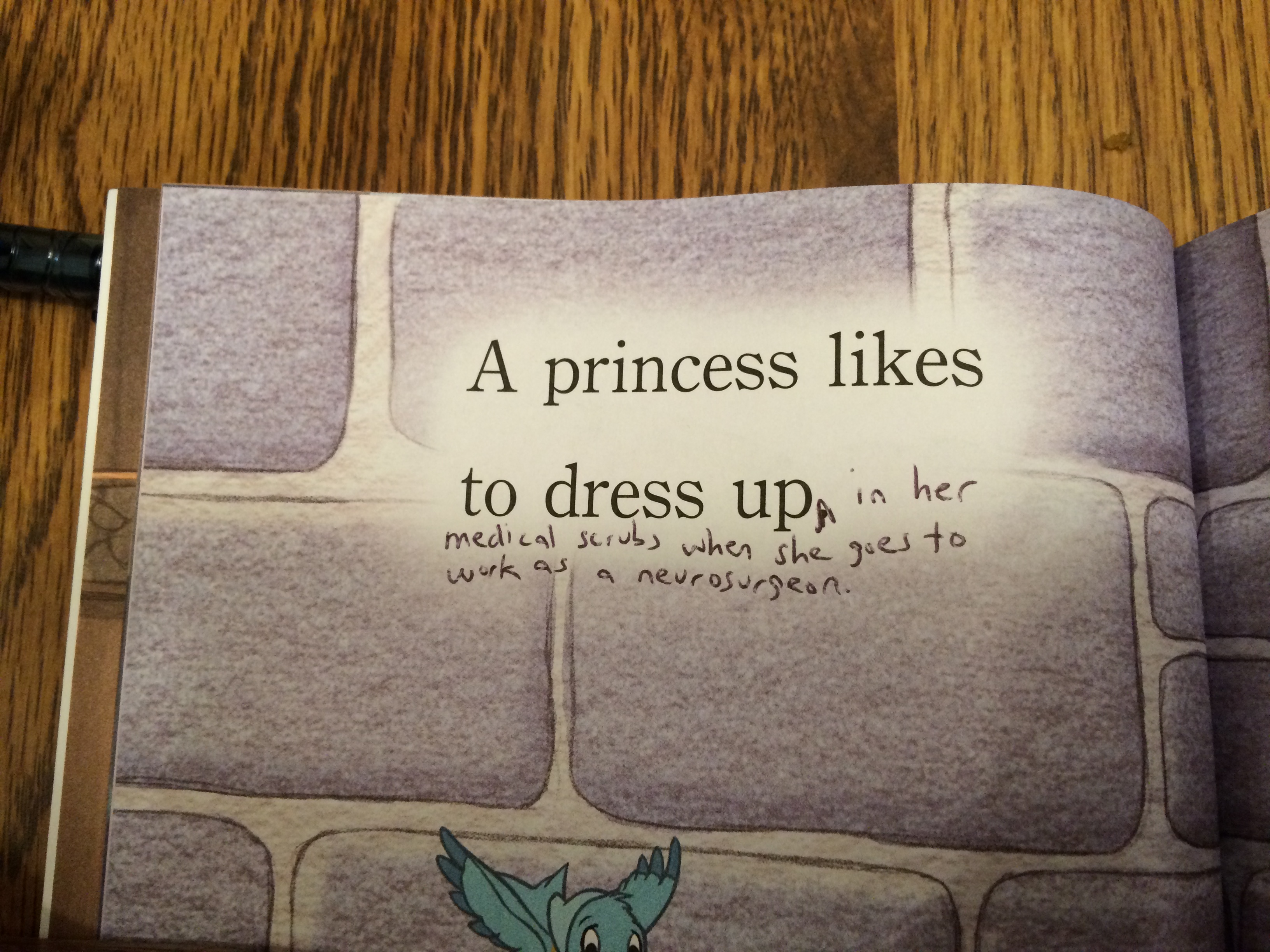
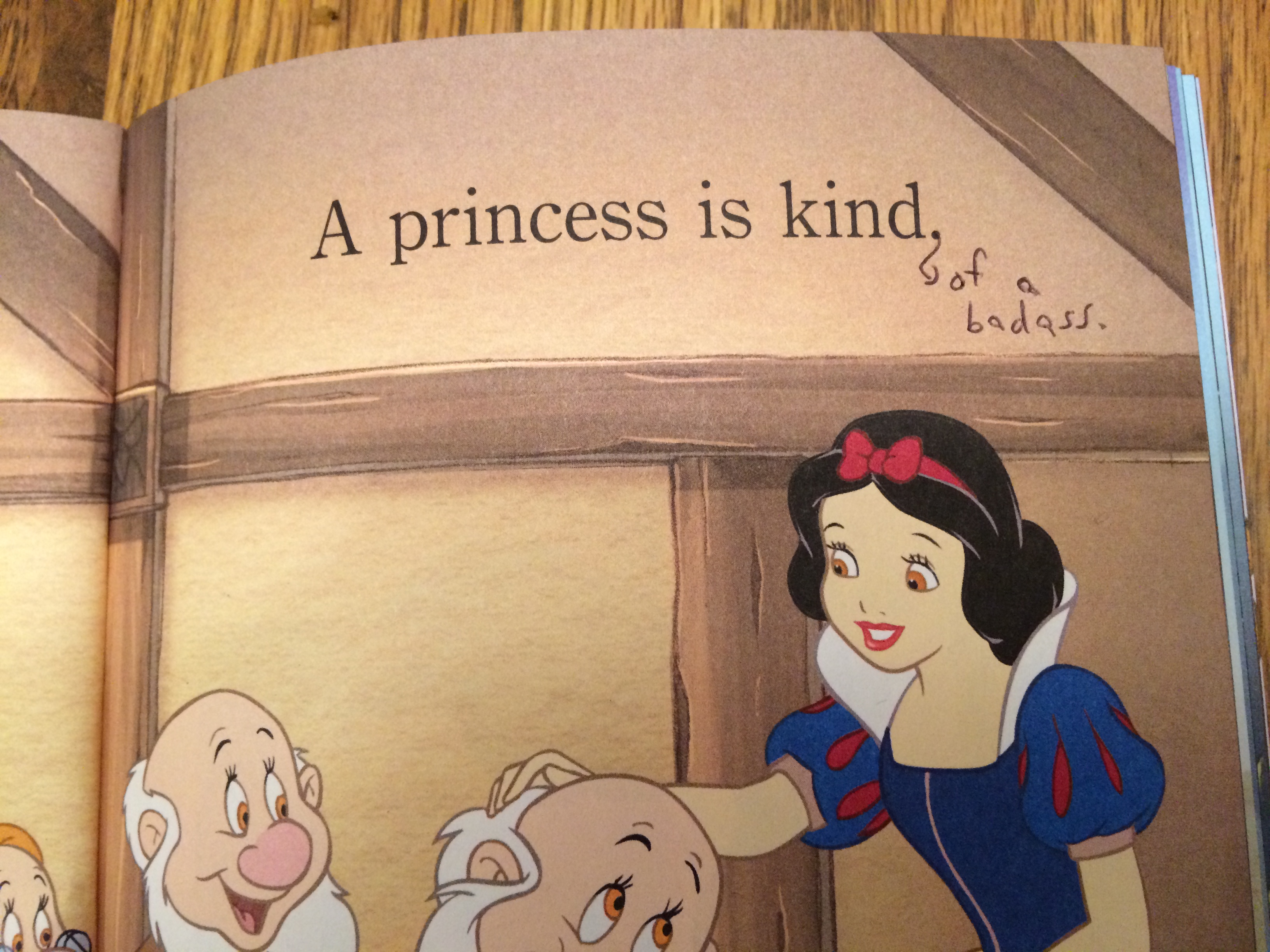
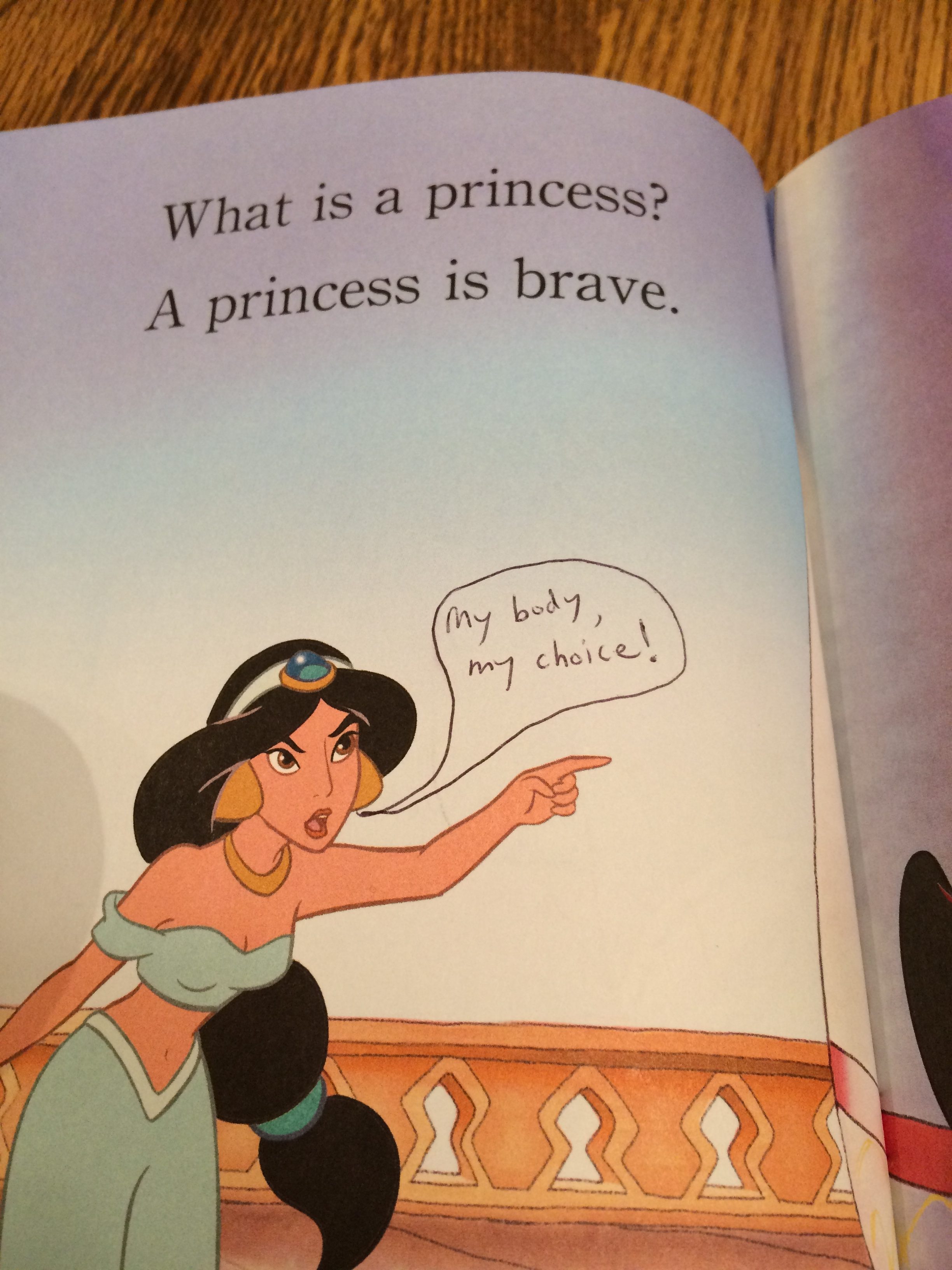
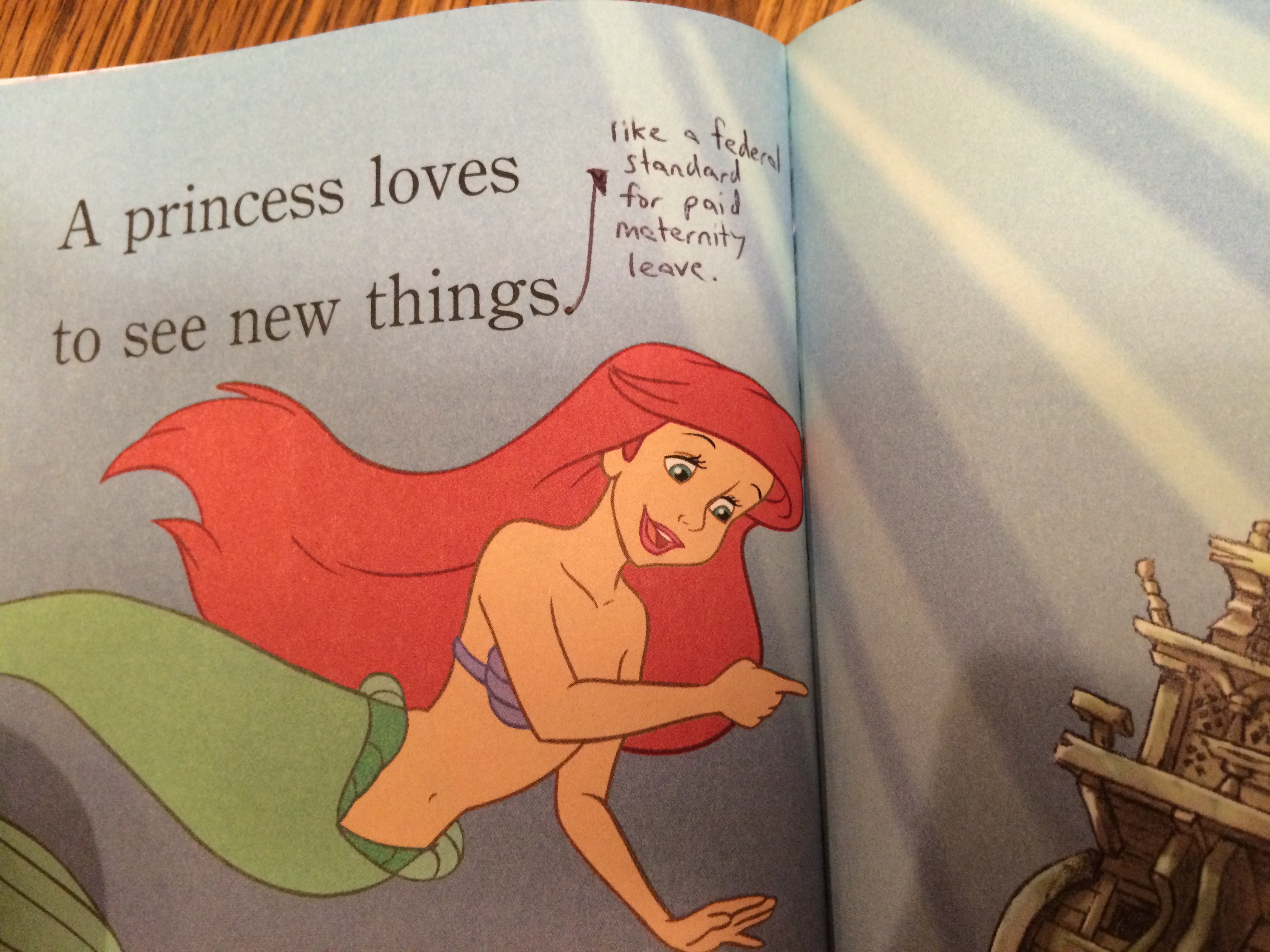
“A Princess is Kind of a Bad Ass”: When Feminist Moms Pick Up the Pen

by Lisa Wade, PhD

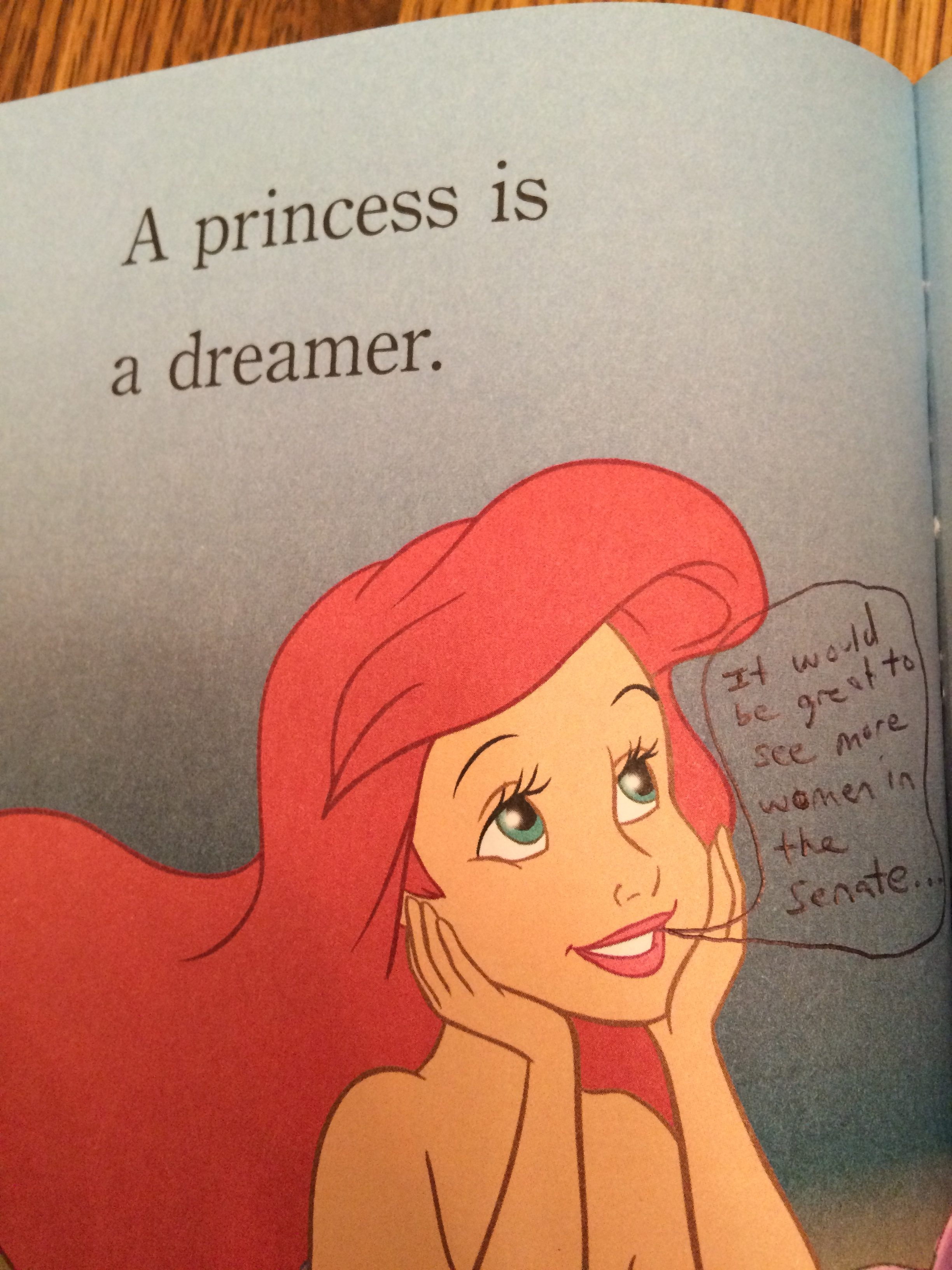
Sometimes there’s nothing to do but take matters into our own hands. Danielle Lindemann, a mother and sociologist, decided to do just that. After discovering that one of her daughter’s books required some “subversion,” she decided to do a little editing. Here’s to one way of fighting the disempowering messages taught to little girls by capitalist icons:

img_4096 img_4095 img_4098 img_4097 img_4101 img_4103

Lisa Wade, PhD is a professor at Occidental College. She is the author of American Hookup, a book about college sexual culture, and a textbook about gender. You can follow her on Twitter, Facebook, and Instagram.

(View original at https://thesocietypages.org/socimages)

04 Dec 03:06

Lonomian Romance

by Juan

2016-11-30

04 Dec 01:18

Fog Waves Are The Most Beautiful Thing I Captured After 8 Years Of Experimenting

by NIck Steinberg

For the last 8 years I’ve been shooting in the San Francisco area I have been absolutely obsessed with the fog. Night and day it’s what I live for and what defines my photographic style. I check the cams, satellites, and other forecasts to always be able to just get up and go. We even have a small group of about 20 of us known as, “Fogaholics” where we keep each other updated all the time as soon as we see it roll in.


Show Full Text

Recently in my studies of the area I have discovered something amazing! During the summer months, when the fog is created from high amounts of inland heat, it gets too high to shoot in the bay area (including the Golden Gate Bridge) as it is usually above 1,000′ and the bridge sits at 746′. In addition, since it is coming from the Pacific ocean, the coastline is pretty much unshootable. So the only option is to hit up the high vantage points, one of the best being Mt. Tamalpais, which sits at 2,572′. Mt. Tam allows you to get, “above it all” and is literally heaven on earth as you feel on top of the world or almost on an airplane looking down on clouds. What I discovered from hundreds of trips up there is, when the fog rolls through and is at the perfect height and density, it will create wave-like movements as it contours the land. This is where I coined the term “Fog Waves” as it literally looks like waves that resemble the ocean.

I found that when playing around and experimenting with different shutter speeds in my camera it would either freeze the movement or accentuate the flow and make it more buttery and smooth. This is all done “In camera” and not photoshopped. I do this by putting on dark filters known as ND or Neutral Density filters that trick the camera into thinking it’s night time forcing a longer shutter speed. Doing this is how I am able to get these smooth effects and sometimes I shoot up to 2 minutes depending on the flow. Too long and it can turn to mush and too short will be too textured. Shooting fog is a study and takes a lot of patience, preparation, and knowledge of the area to catch it as it is very elusive. In the end though, the chase is always worth it and the views on Mt. Tamalpais are literally something out of a dream!

More info: Instagramnicholassteinbergphotography.com | Facebook

04 Dec 01:03

Stop Everything, Allow Your Inner Child to Enjoy these Adorable Felt Sculptures

by MessyNessy

catrabbit_06

Nope, there was absolutely nothing that was going to stop me from dedicating an entire post to these soul-wrenchingly adorable little fluffy felt sculptures.

porco_brightpink_2_small

porco_brightpink_box_small

I don’t know about you, but me and my inner child really needed this today. We’re looking at the work of Cat Rabbit, the creation of a Melbourne-based textile artist who’s name is of course, Cat.

13833802595_6ac06c67b2_k

Each of her pieces are handmade without a pattern, and Cat says she usually works from rough sketches or just an image in her head. Some of the pieces are for sale via her Etsy Shop and selected retailers, but she also makes work for solo and group exhibitions. I wouldn’t be surprised if Wes Anderson was one of her next clients.

alpacapurimachine_small

chow_5_small

catrabbitside

frog_sitting_small

rabbitc

catrabbitsde2

abby_kitty_2_small

rabbitc1

catside

daffypom_1

If you’re obsessed enough with Cat Rabbit’s stuff, there’s a nice little video that takes you into her world here.

Otherwise, you can see what’s up on her Etsy Shop and get more cuteness by Cat Rabbit on Instagram.

And that my friend, is all.

This article Stop Everything, Allow Your Inner Child to Enjoy these Adorable Felt Sculptures was published by Messy Nessy Chic.

03 Dec 13:59

Come Together, a short film by Wes Anderson

by Jason Kottke
Roslyn

Well, this got me in the Christmas spirit.

Wes Anderson directed a short holiday film starring Adrien Brody for H&M. It is delightful. You can criticize the twee formality in his work,1 but this is a reminder that Anderson can bring the emotion when he wants.

  1. I mean, I love that about his stuff, but I know many don’t. Criticize away!

Tags: Adrien Brody   advertising   H&M   holidays   video   Wes Anderson
02 Dec 21:24

Fighting authoritarianism: 20 lessons from the 20th century

by Jason Kottke

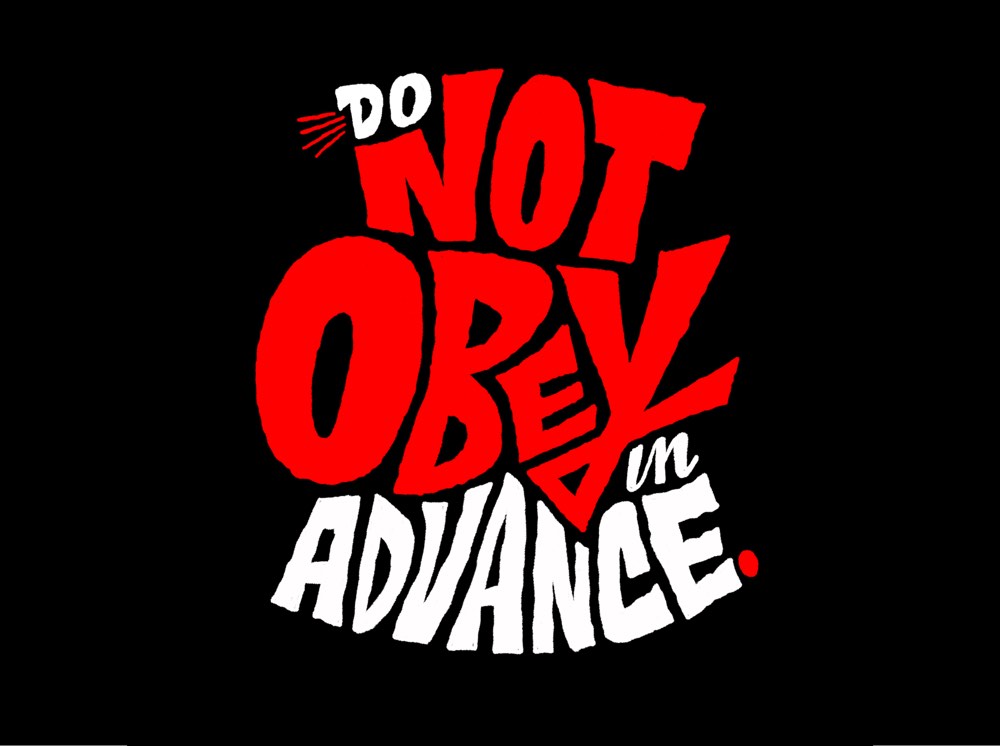
Do Not Obey In Advance

Yale history professor Timothy Snyder took to Facebook to share some lessons from 20th century about how to protect our liberal democracy from fascism and authoritarianism. Snyder has given his permission to republish the list, so I’ve reproduced it in its entirety here in case something happens to the original.

Americans are no wiser than the Europeans who saw democracy yield to fascism, Nazism, or communism. Our one advantage is that we might learn from their experience. Now is a good time to do so. Here are twenty lessons from the twentieth century, adapted to the circumstances of today.

1. Do not obey in advance. Much of the power of authoritarianism is freely given. In times like these, individuals think ahead about what a more repressive government will want, and then start to do it without being asked. You’ve already done this, haven’t you? Stop. Anticipatory obedience teaches authorities what is possible and accelerates unfreedom.

2. Defend an institution. Follow the courts or the media, or a court or a newspaper. Do not speak of “our institutions” unless you are making them yours by acting on their behalf. Institutions don’t protect themselves. They go down like dominoes unless each is defended from the beginning.

3. Recall professional ethics. When the leaders of state set a negative example, professional commitments to just practice become much more important. It is hard to break a rule-of-law state without lawyers, and it is hard to have show trials without judges.

4. When listening to politicians, distinguish certain words. Look out for the expansive use of “terrorism” and “extremism.” Be alive to the fatal notions of “exception” and “emergency.” Be angry about the treacherous use of patriotic vocabulary.

5. Be calm when the unthinkable arrives. When the terrorist attack comes, remember that all authoritarians at all times either await or plan such events in order to consolidate power. Think of the Reichstag fire. The sudden disaster that requires the end of the balance of power, the end of opposition parties, and so on, is the oldest trick in the Hitlerian book. Don’t fall for it.

6. Be kind to our language. Avoid pronouncing the phrases everyone else does. Think up your own way of speaking, even if only to convey that thing you think everyone is saying. (Don’t use the internet before bed. Charge your gadgets away from your bedroom, and read.) What to read? Perhaps “The Power of the Powerless” by V’aclav Havel, 1984 by George Orwell, The Captive Mind by Czeslaw Milosz, The Rebel by Albert Camus, The Origins of Totalitarianism by Hannah Arendt, or Nothing is True and Everything is Possible by Peter Pomerantsev.

7. Stand out. Someone has to. It is easy, in words and deeds, to follow along. It can feel strange to do or say something different. But without that unease, there is no freedom. And the moment you set an example, the spell of the status quo is broken, and others will follow.

8. Believe in truth. To abandon facts is to abandon freedom. If nothing is true, then no one can criticize power, because there is no basis upon which to do so. If nothing is true, then all is spectacle. The biggest wallet pays for the most blinding lights.

9. Investigate. Figure things out for yourself. Spend more time with long articles. Subsidize investigative journalism by subscribing to print media. Realize that some of what is on your screen is there to harm you. Bookmark PropOrNot or other sites that investigate foreign propaganda pushes.

10. Practice corporeal politics. Power wants your body softening in your chair and your emotions dissipating on the screen. Get outside. Put your body in unfamiliar places with unfamiliar people. Make new friends and march with them.

11. Make eye contact and small talk. This is not just polite. It is a way to stay in touch with your surroundings, break down unnecessary social barriers, and come to understand whom you should and should not trust. If we enter a culture of denunciation, you will want to know the psychological landscape of your daily life.

12. Take responsibility for the face of the world. Notice the swastikas and the other signs of hate. Do not look away and do not get used to them. Remove them yourself and set an example for others to do so.

13. Hinder the one-party state. The parties that took over states were once something else. They exploited a historical moment to make political life impossible for their rivals. Vote in local and state elections while you can.

14. Give regularly to good causes, if you can. Pick a charity and set up autopay. Then you will know that you have made a free choice that is supporting civil society helping others doing something good.

15. Establish a private life. Nastier rulers will use what they know about you to push you around. Scrub your computer of malware. Remember that email is skywriting. Consider using alternative forms of the internet, or simply using it less. Have personal exchanges in person. For the same reason, resolve any legal trouble. Authoritarianism works as a blackmail state, looking for the hook on which to hang you. Try not to have too many hooks.

16. Learn from others in other countries. Keep up your friendships abroad, or make new friends abroad. The present difficulties here are an element of a general trend. And no country is going to find a solution by itself. Make sure you and your family have passports.

17. Watch out for the paramilitaries. When the men with guns who have always claimed to be against the system start wearing uniforms and marching around with torches and pictures of a Leader, the end is nigh. When the pro-Leader paramilitary and the official police and military intermingle, the game is over.

18. Be reflective if you must be armed. If you carry a weapon in public service, God bless you and keep you. But know that evils of the past involved policemen and soldiers finding themselves, one day, doing irregular things. Be ready to say no. (If you do not know what this means, contact the United States Holocaust Memorial Museum and ask about training in professional ethics.)

19. Be as courageous as you can. If none of us is prepared to die for freedom, then all of us will die in unfreedom.

20. Be a patriot. The incoming president is not. Set a good example of what America means for the generations to come. They will need it.

A great thought-provoking list. “Corporeal politics”…I like that phrase. And I’ve seen many references to Hannah Arendt’s The Origins of Totalitarianism in recent weeks.

See also Five Steps to Tyranny and The 14 Features of Eternal Fascism.

Note: Illustration by the awesome Chris Piascik.

Tags: history   lists   politics   Timothy Snyder
01 Dec 23:41

gift guide: a charitable giving primer.

by erin

charitable_gifts_reading_my_tea_leaves_img_5794
Many people feel especially motivated to lend a helping hand around the holiday season and for some folks, that might mean taking a look at their coffers (or skill sets) to see who else they might be able to reach with thoughtful donations of money or time to good causes at the end of the year. This year, James and I have decided to take a look at the spending that we’ve done on family Christmas presents over the past few years (we keep a spreadsheet to keep track of costs and remember what we’ve given in years past!) and instead of giving traditional presents this year, we’re donating the majority of the same funds we might have otherwise spent on gifts for ourselves and our family members to charities that we believe in. We’ll still offer something small and simple for family to open on Christmas morning, but we’ll also be making cards letting folks know that we’ve given a gift to a charity in their name.

In case you’re looking for ways to make a difference this holiday season (and in advance of Giving Tuesday tomorrow!), I thought it might be helpful to publish a charitable gift giving primer. Consider it a starter guide to putting hard earned money (or skills!) to use for causes you care about. 

What’s a charity and how does it work?

Charities (nonprofits) work in a number of ways. For instance, nonprofits that you might consider supporting for Giving Tuesday might focus on advocacy (to change public opinion, practices and laws), direct services (like providing legal services for refugees), or research (climate change, disease, etc.) and lots of organizations work across these three main areas.

Who should I donate to?

Deciding what kind of charity to support is a deeply personal matter. In the current political climate, you may decide to support causes that are most likely to suffer from the change in administration. For example, organizations that support:

+ Human rights – especially those that advocate for LGBTQ, Muslim, black, and Latino communities

+ Women’s health and empowerment

+ Free press

+ Immigration issues

+ Refugees

+ Environment

That said, it’s probably most important to identify a cause that is meaningful to you and that you are willing to support over the long-term. Other noble causes you might consider could include:

+ Veterans

+ Arts and humanities

+ Scientific and medical research

+ Hunger and homelessness

+ Animal welfare

+ Education and job preparedness 

What are the best practices when choosing and giving to a specific charity?

+ Give from the heart: Choose a cause that is important to you and will likely remain a priority. One-off donations in response to a crisis, like natural disasters, are important, but your money will have the biggest impact if you concentrate your giving on one or two organizations and continue to support them over time.

+ Do your research: Check an organization’s rating and details on their spending and results on sites like Charity Navigator or GuideStar. That said, don’t discount organizations that are not rated, especially local or newer nonprofits. Charity Navigator provides solid guidance on how to conduct due diligence on unrated organizations

+ Donate unrestricted funds: Donate to organizations that you trust to use your donation wisely, and then let them decide how the money would best be deployed. Earmarking funds for specific programs means none of it can be used to cover essentials like office space, software, fundraising, and communications. This isn’t sexy stuff, but an organization can’t do good work without investing in their infrastructure, too. It’s important to note that nonprofits are often judged on the percentage of funding they spend on programs versus overhead (this is called their overhead ratio). Overhead is the cost of running an organization, like office space, staff training, and the accounting and fundraising software they need to raise and keep track of donations (!). Most people in the nonprofit sector agree that overhead ratio is not a good measure of an organization’s effectiveness. In fact, the three leading organizations that collect and analyze information on nonprofits in the US all recommend that overhead ratio not be used as a metric for assessing organizations you might want to support. Keep in mind that in order to do good work, an organization needs to invest in its staff and its infrastructure—and that all falls under the umbrella of overhead spending!

+ Make your donation a monthly one: Monthly donations help organizations plan their budgets for the year. If you have a total amount in mind, consider dividing it by 12 and make your donation a recurring one. (NB: Some organizations have a monthly minimum of $5 or $10, so this might only apply to folks who are able to donate $60 or $120 or more!).

+ Double up: Ask if your employer has a corporate matching policy for donations. Some companies will match their employees’ contributions, thereby doubling your impact. If you don’t work for a large corporation, consider setting up a similar matching campaign with your own family members. You might be able to drastically improve your reach if you make a family-wide giving plan.

Okay, and what if I don’t have any money to give? What else can I give besides cash?

+ Time: Volunteering at an organization can be as helpful as giving funds. As with cash donations, do your research and make sure the organization is a good fit for your personally. Much like with monthly monetary donations, consider a regular volunteering commitment as opposed to helping at a one-time event. Charity Navigator has a good guide to volunteering.

+ Voice: Speak up! If you support an organization (by donating, volunteering, or even if you just think they’re up to something great), talk about it. Post about it on social media and provide a link to the organization’s donation page. Mention to your friends and family how it feels to donate or volunteer and why you do it. This kind of verbal chatter and endorsement can go a long way toward encouraging other folks to get active.

+ Skills: Are you a graphic artist? You could help a nonprofit develop eye-catching communications materials they might otherwise not be able to afford. Are you a programmer? You could design a new website for a local nonprofit. Are you a really great writer? You could help an organization raise money by helping them work on a grant application. If you’re not sure how to start, Taproot Foundation is a great place for connecting people willing to provide pro bono services with nonprofits looking for help.

+ Stuff (aka noncash items): In most cases, it is better to provide money than to provide goods. That said, local organizations, in particular, may have a need for specific items. Make sure that what you’re able to offer is a good match for what an organization needs. Homeless shelters and food pantries, for example, have limited storage and limited ability to sort through donations (and it costs them money to store, sort and distribute donated goods!). Check websites and make phone calls before dropping off donations and resist the urge to donate items that haven’t been specifically requested. Instead, you might consider selling items and donating the money earned from the sale instead. Charity Navigator has a helpful guide to noncash donations, too.

charitable_gifts_reading_my_tea_leaves_img_5808I need specifics! Who should I give my time or money to?

While I wouldn’t want to make these decisions for you, if you’re feeling stumped, here’s a (very much) non-exhaustive list of organizations working harder than ever to provide services and programs to folks in need:

American Civil Liberties Union: A national nonprofit working in “courts, legislatures and communities to defend and preserve the individual rights and liberties that the Constitution and laws of the United States guarantee everyone in this country.”

Council on American-Islamic Relations (CAIR): A nonprofit with a mission to “enhance understanding of Islam, encourage dialogue, protect civil liberties, empower American Muslims, and build coalitions that promote justice and mutual understanding.”

EarthJustice: A nonprofit, public interest law organization that “wields the power of law and the strength of partnership to preserve the wild, to fight for healthy communities, and to advance clean energy to promote a healthy climate.”

Human Rights Campaign: A nonprofit civil rights organization working to achieve lesbian, gay, bisexual, transgender and queer equality.

Mother Jones: A reader-supported, nonprofit news organization dedicated to independent and investigative journalism.

National Immigration Forum: A nonprofit advocating for the value of immigrants and immigration to the United States.

National Resources Defense Council: An environmental nonprofit with a mission to “safeguard the earth—its people, its plants and animals, and the natural systems on which all life depends.” They fulfill their mission through members, lawyers, policy advocates, and scientists.

Planned Parenthood: A women’s health nonprofit providing reproductive health services, advocating public policies that support those rights, providing educational programs on human sexuality, and promoting research and technological advancement in reproductive health care.

ProPublica: An independent, nonprofit news outlet dedicated to producing investigative journalism in the public interest.

Southern Poverty Law Center: A nonprofit “dedicated to fighting hate and bigotry and to seeking justice for the most vulnerable members of our society.” They pursue their mission through litigation, education, and advocacy.

Women’s Refugee Commission: A nonprofit dedicated to improving the lives and protecting the rights of women, children, and youth displaced by conflict and crisis.

Please feel free to share your own plans for giving or specific nonprofits that you already support in the comments section!

Special thanks to Allison Zimmerman Chadha for the invaluable research she contributed to this post.


01 Dec 11:18

brucesterling:*Remember those?  They used to be everywhere once,...


brucesterling:

*Remember those?  They used to be everywhere once, just like newspapers.  Boy, time flies

30 Nov 20:20

justnexttotheblues: depressionlemon: tostadasheep: candycorned...


justnexttotheblues:

depressionlemon:

tostadasheep:

candycorned:

pugnacious-behavior:

vvhaleshark:

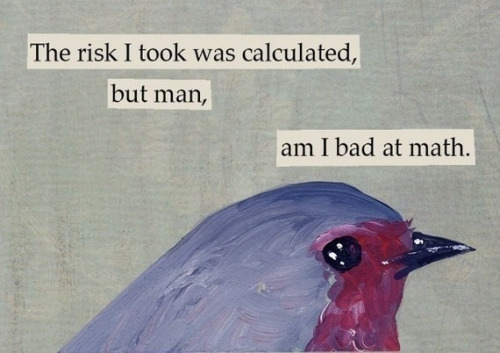
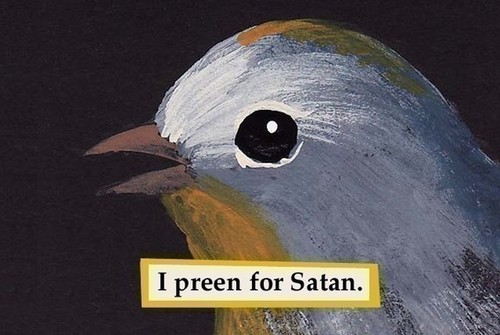
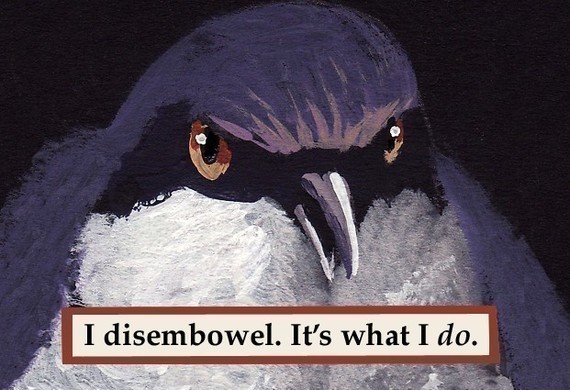
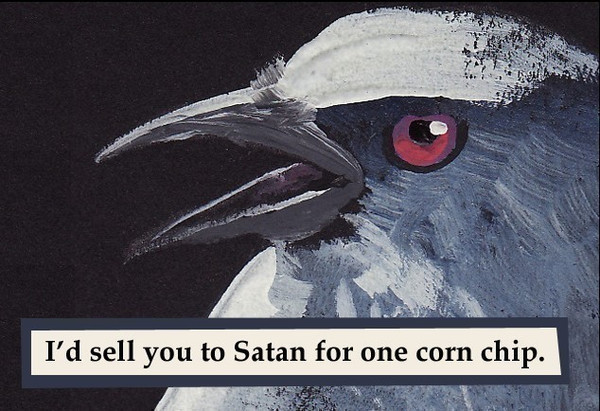
what did this bird do

I wish i had context on this 

here u go

I don’t think the contexts helps in this case.

I’ve been collecting these for a while so here are all the ones you missed

I’ve had the ‘I’d sell you to Satan for one corn chip’ picture saved on my computer for years, and I have NEVER SEEN THE REST OF THESE.


I’m so pleased.

oh em geeee ❤❤❤

30 Nov 20:13

Adventures of the Ampersand

by Grant
Roslyn

Punctuation comics!


This comic appears in the latest issue of The Southampton Review.

Posters are available at my shop.
You can now pre-order my book, The Shape of Ideas.
29 Nov 00:45

On this day 1859, Charles Darwin published The Origin of...

Roslyn

Heh.


On this day 1859, Charles Darwin published The Origin of Species.

27 Nov 09:35

Arguments to ponder for Thanksgiving

by Tyler Cowen
Roslyn

Koalapocalypse.

I am not a big fan of DST but those figures are alarming.

The population of wild koalas in the southeast portion of Australia’s Queensland state has plunged by 80% in less than two decades, but researchers are offering a simple plan to save them. They can sum it up in three words: daylight saving time.

Changing the clocks would help stem the koalapocalypse by reducing fatal encounters between koalas and the motorists who drive through their ever-shrinking territory, the researchers say. According to their calculations, the number of koala deaths could fall by 8% on weekdays and 11% on weekends.

“We hope that our study will encourage the Queensland government to consider the benefits of implementing DST,” they wrote in a study published Tuesday in the journal Biology Letters.

Queensland, the state in the northeastern corner of Australia, has a complicated relationship with daylight saving time. The practice has not been observed there since 3 a.m. on March 1, 1992, when a three-year trial period came to an end. The push to bring it back has spawned petitions, referendums and even a political party (Daylight Saving for South-East Queensland, or DS4SEQ).

There are too many noisy videos at the link.  And might abolishing the U.S. penny help the koalas too?  I am sure it will!

The post Arguments to ponder for Thanksgiving appeared first on Marginal REVOLUTION.

27 Nov 08:31

Max Siedentopf reenacts cliché family photography using sculpted watermelons

by Lucy Bourton
Maxlist

On photographer Max Siedentopf’s website his work is described as “sometimes really smart and insightful, but usually just fun ideas.” This is a description most apt for Horribly Happy Holidays a photography series which is superbly sarcastic and slightly sinister.

Read more

27 Nov 08:17

davidmalki: Daughters of the horse-leech, thy tempest...

Roslyn

Divine.


davidmalki:

Daughters of the horse-leech, thy tempest out-thunders me.

source: Israel Zangwill, Without Prejudice, 1899. This description, at the time meant to be as absurd a set of charges and demands as could be placed in a straw woman’s mouth, today reads like a beautiful manifesto.

27 Nov 07:11

hair care

Roslyn

I love the scent of frowny sighs!


hair care

25 Nov 12:18

thenatsdorf: The Secret World of Stuff [full video]

Roslyn

Less oh no, but still


thenatsdorf:

The Secret World of Stuff [full video]

25 Nov 12:17

thegreatgar-inski: Obama right now.

Roslyn

Oh no


thegreatgar-inski:

Obama right now.

25 Nov 11:52

bisexual-community: And She’s Back!!! “Same as it ever was,...


*Pièce de Résistance* by Alison Bechdel from "Dykes to Watch Out For" November 2016


*Happy Thanksgiving 2016* by Alison Bechdel from "Dykes to Watch Out For" November 2016

bisexual-community:

And She’s Back!!! “Same as it ever was, only much worse” by Alison Bechdel

“Since I stopped drawing Dykes to Watch Out For at the tail end of the Bush administration, people have asked me many times if I thought about my characters, and if so, what they were up to. And I would have to be honest. No, I didn’t think about them, and I had no idea what they were doing.

But last week they all started flooding back.”

(1) Pièce de Résistance
(2) Happy Thanksgiving 2016

25 Nov 09:41

Actors’ movie accents, rated

by Jason Kottke
Roslyn

This was 15 minutes of fun.

Erik Singer is a dialect coach who works with actors to perfect different accents and dialects. In this video, he quickly analyzes the performances of 32 actors based on their use of accents. Pretty fascinating to watch. He singles out Philip Seymour Hoffman’s portrayal of Truman Capote as an exemplary use of the proper accent. High marks also go to Kate Winslet doing a Polish accent, Idris Elba’s South African accent while portraying Nelson Mandela (and his Bal’more accent in The Wire), and Cate Blanchett playing Katherine Hepburn in The Aviator.

Nicolas Cage in Con Air and Tom Cruise in Far and Away? Well, let’s just say they couldn’t pahk the cah in Hahvahd Yahd.

Update: Actress Sarah Jones takes a slightly different approach to speaking in different accents. Instead of aiming for a particular generalized dialect, she picks out a particular person to impersonate.

Let’s say you want to sound like a Trinidadian woman, as Ms. Jones does in her show. She recommends you watch YouTube clips of speakers at council meetings in Trinidad until you find the person you most want to sound like. If you can meet your subject in person, it will help make your goal much easier to reach.

“I ask them to speak something very slowly three times in a row and then I have them say it at normal speed the way they’d say it three times in a row,” she said. “I have them say it the way they’d say it in school as compared to how they’d say it to a friend.”

Be sure to play the embedded audio clips of Jones speaking as her different characters. And you can watch her in action in this TED Talk:

Tags: Erik Singer   language   movies   Sarah Jones   video
25 Nov 02:51

BTW, we’re in the LA Times

by JenniferP
Roslyn

Good advice.

No big, just me & Cheryl Strayed & Emily Post’s progeny hanging out in adjacent paragraphs.

This is for the 50+ “How do we get through the holidays?” questions in my inbox.❤


25 Nov 00:26

thatdarnmo: thatdarnmo: Now presenting a short comic about a...


thatdarnmo:

thatdarnmo:

Now presenting a short comic about a deer finding herself a cute doefriend. I wanted this to fit a mini zine format so that’s why the pacing is a bit odd.

Edit: To clarify, yes, they are both sapphic, transgender lady deers in love.

I’ve gone ahead and added an amendment to my comic’s description to clear up the confusion some folks are having. This is a f/f comic and I appreciate everyone who is doing their best to respect that.

23 Nov 09:06

OBAMA RECKONS WITH A TRUMP PRESIDENCY

by S. Abbas Raza
Roslyn

Essential.

David Remnick in The New Yorker:

ScreenHunter_2379 Nov. 18 18.24The morning after Donald Trump was elected President of the United States, Barack Obama summoned staff members to the Oval Office. Some were fairly junior and had never been in the room before. They were sombre, hollowed out, some fighting tears, humiliated by the defeat, fearful of autocracy’s moving vans pulling up to the door. Although Obama and his people admit that the election results caught them completely by surprise—“We had no plan for this,” one told me—the President sought to be reassuring.

“This is not the apocalypse,” Obama said. History does not move in straight lines; sometimes it goes sideways, sometimes it goes backward. A couple of days later, when I asked the President about that consolation, he offered this: “I don’t believe in apocalyptic—until the apocalypse comes. I think nothing is the end of the world until the end of the world.”

Obama’s insistence on hope felt more willed than audacious. It spoke to the civic duty he felt to prevent despair not only among the young people in the West Wing but also among countless Americans across the country. At the White House, as elsewhere, dread and dejection were compounded by shock. Administration officials recalled the collective sense of confidence about the election that had persisted for many months, the sense of balloons and confetti waiting to be released. Last January, on the eve of his final State of the Union address, Obama submitted to a breezy walk-and-talk interview in the White House with the “Today” show. Wry and self-possessed, he told Matt Lauer that no matter what happened in the election he was sure that “the overwhelming majority” of Americans would never submit to Donald Trump’s appeals to their fears, that they would see through his “simplistic solutions and scapegoating.”

More here.

22 Nov 02:39

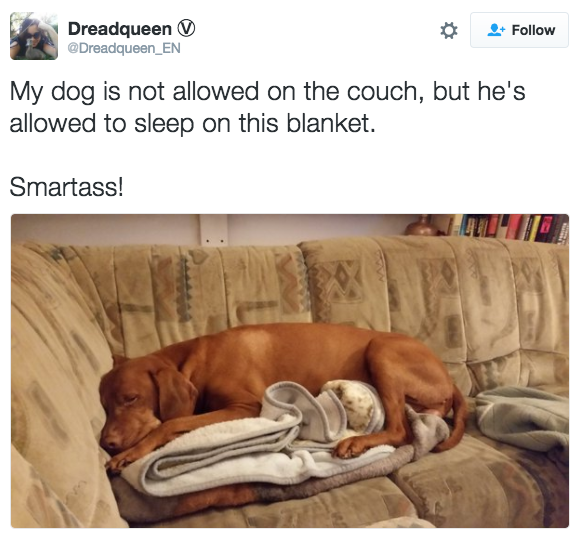
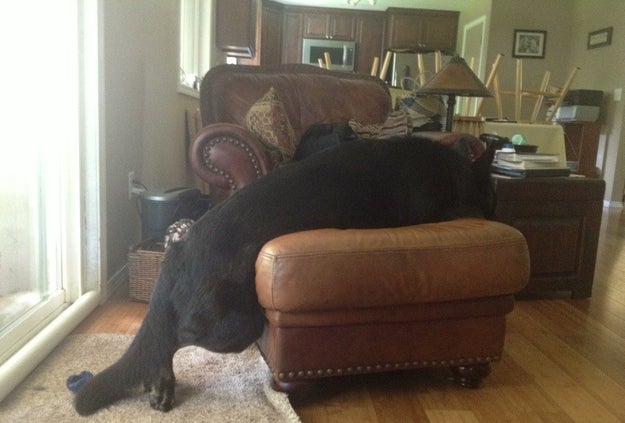
17 Dogs Who Are Carefully Bending Their Human's Rules

by Kat Angus

“What do you mean? I’m not on the couch.”

"I'm not on the couch. I'm on the blanket, which is on the couch."

"I'm not on the couch. I'm on the blanket, which is on the couch."

Twitter: @Dreadqueen_EN

"The rule is that I don't lie on the couch cushions. I am not on the couch cushions."

"The rule is that I don't lie on the couch cushions. I am not on the couch cushions."

calicojack1 / Via imgur.com

"I'm not on the ottoman. One of my paws is still on the floor, see?"

"I'm not on the ottoman. One of my paws is still on the floor, see?"

MuskyTusk


View Entire List ›

22 Nov 00:54

Moniker launches creepy browser-based game about online profiling

by Jenny Brewer
Roslyn

I played this for a while! It feels oddly game-like.

Moniker-clickclickclick-list

Interactive design studio Moniker and developers VPro have launched Clickclickclick, a browser-based game that documents and narrates your every move.

Read more

21 Nov 09:11

Colours of The Great Barrier Reef

by Ros Anderson
Roslyn

I've been to the reef several times. It's now facing unprecedented coral bleaching, and the consensus is that this is because of climate change. What a terrible loss.

Who would team mustard yellow with turquoise and purple? Or magenta and acid yellow? If you think psychedelia was invented by 60s heads and LSD then we’ve got a short film to change your mind, proving that Mother Nature is the most daring decorator going. This captivating time-lapse video of coral was filmed to highlight the plight of Australia’s Great Barrier Reef. However it also demonstrates that whatever inventive colour combinations and clashes we humans can come up, nature can always better us. The hypnotic footage, created by Barcelona-based myLapse, shows the microscopic movements of coral that would be invisible to the human eye. Created from around 25,000 images it shows us what we stand to lose as climate change bleaches and threatens the very existence of the coral and the delicate eco-system it creates.

The reef is the world’s largest coral reef system, covering approximately 344,400 square kilometres. It is the biggest single structure made from living organisms and incredibly it can be seen from space. 2016 is a key year for the reef, with reports that it is close to reaching ‘tipping point’ in terms of it surviving climate change. The video proves not only that reports of its death are somewhat premature, but also surely highlights the importance of preserving this unique underwater world.

Coral Colours

Coral Colours

Coral Colours

Coral Colours

Coral Colours

The post Colours of The Great Barrier Reef appeared first on The Chromologist.

21 Nov 00:41

AI ExperimentsYesterday, Google released a load of creative...


AI Experiments

Yesterday, Google released a load of creative coding experiments using artificial intelligence and neural networks to demonstrate how the technology can be applied:

With all of the exciting A.I. stuff happening, there are lots of people eager to start tinkering with machine learning technology. That’s why we’ve created A.I. Experiments, a site that showcases simple experiments that let anyone play with this technology hands-on, and resources for creating your own experiments. 

You can explore more here

Not only that, Google also released Art and Culture Experiements, which lets you interact with art data in various ways:

With Google Arts & Culture experiments, try out new ways to explore art. Get inspired with machine learning experiments developed in collaboration with resident artists and creative coders at the Lab 

More Here

18 Nov 01:52

Why don't stores in Europe refrigerate eggs?

by bookofjoe
Roslyn

Yeah - I always found the eggs-in-the-fridge thing weird! We don't refrigerate eggs in Australia either.

From C. Claiborne Ray's New York Times Science section "Q&A" feature:••••••••••••••••••••••••••••••••••Eggs sold at retail stores in the United States and Europe are handled differently, said Randy W. Worobo, a professor of food science at Cornell University, making the Salmonella risks to consumers different.Salmonella enteritidis infections from consuming eggs can cause serious illness in susceptible people.In the United States, the Department of Agriculture requires egg producers to clean and sanitize eggs, Dr. Worobo said. "The washing removes both dirt and fecal matter that might contain salmonella from the exterior," he said, "but at the same time, it removes a thin outer protective layer."In Europe, where washing is not required, the eggs still have that protective film, he said, preventing salmonella from infiltrating the egg's interior and making refrigeration unnecessary.After United States eggs are washed, they must be kept at a surrounding air temperature that does not exceed 45 degrees Fahrenheit.This prevents condensation from building up on the egg and allowing any Salmonella on the exterior to penetrate the shell and contaminate the interior, Dr. Worobo said.The refrigeration also prevents the growth of any Salmonella from the reproductive tract of the hen that may already be inside the egg.••••••••••••••••••••••••••••••••••From a 2002 paper in the Journal of Food Science:The outer coating of the shell itself consists of a mucous coating called the cuticle or bloom, which is deposited on the shell just prior to lay [eggs pictured at top of this post have bloom still on].This protein-like covering helps protect the interior contents of the egg from bacteria penetration through the shell."••••••••••••••••••••••••••••••••••From Countryside Daily:••••••••••••••••••••••••••••••••••Wondering How to Wash Fresh Eggs? It's Safer Not To!How to Wash Chicken Eggs Safely When It's Absolutely NecessaryAmericans tend to be germaphobes, which probably explains why we need to know how to wash fresh eggs.Maybe it comes from a deeply rooted cultural mindset that "cleanliness is next to Godliness."Perhaps our national intolerance of dirtiness is simply subliminal conditioning.We are bombarded with endless advertising telling us that we are on the frontline of the war against bacteria that can only be battled armed with a vast variety of anti-bacterial products that just happen to be for sale.Our collective aversion for any and all things perceived to be "dirty" has actually put us significantly more at risk from bacteria in at least one area — eggs.The biggest health risk associated with eggs is being exposed to Salmonella bacteria.Most types of Salmonella grow in the intestinal tracts of animals and are passed through their feces.Most humans become infected with Salmonella after eating foods that are directly or indirectly contaminated with animal feces.With chicken eggs, the eggshell is exposed to Salmonella usually after the egg has been laid as a result of poor animal management practices (i.e. the bird is living in a feces-infested condition) and not necessarily from backyard chickens.If eggs can get dirty after being laid, it logically makes sense to wash them, right?Washing fresh eggs will help eliminate the risk of contamination, right?Wrong.Eggshells are almost entirely composed of tiny calcium carbonate crystals.Though an eggshell appears solid to the naked eye, it has as many as 8,000 microscopic pores between the crystals forming the shell.These tiny pores allow for the transfer of moisture, gases and bacteria (e.g. Salmonella) between the inner and outer eggshell.Nature has provided an efficient and effective defense against contamination through the pores in an eggshell.Just prior to laying an egg, a hen's body deposits a protein-like mucous coating on the outside of an egg.This protective coating is called the "bloom" or "cuticle."  This protective coating seals the pores of the eggshell, thereby prohibiting the transfer of bacteria from the exterior to the interior of the egg.Here’s the rub: an egg's bloom remains intact so long as the egg is not washed.No matter if you think you know how to wash fresh eggs, just the act of rinsing or washing an egg removes this protective layer and reopens the eggshell's pores.Interestingly, the United States is one of the only countries in the world that requires the washing of commercially produced eggs, and has spent vast resources in developing methods for how to wash fresh eggs.The vast majority of our European counterparts legally restrict commercially produced eggs from being washed.In Ireland, for example, only unwashed eggs can achieve Grade A or AA.Washed eggs, under Ireland's Food Safety regulations, receive a B grading and cannot be sold at retail.Also noteworthy is the fact that an egg with its bloom left on does not need to be refrigerated.This is the reason that most Europeans do not keep their eggs in the fridge but rather on the counter.If keeping the natural bloom on the eggshell is ideal, then it is important to try to produce as of clean eggs as possible.For anyone who is raising chickens for eggs, here are a few ways to minimize eggshell contamination in a backyard flock: • Learn how to clean a chicken coop. The less poop lying around, the less likely poop can accidentally be spread on the eggshells.• Place roosts higher than open-topped nesting boxes. Chickens like to roost in the highest part of the coop. Building the chicken roosting barns higher than the nesting area will discourage the birds from roosting on the side of the nesting box and soiling the inside.• Put roofs on nesting boxes. Constructing roofs on nesting boxes helps prevent chickens from roosting and pooping inside of them.• Collect eggs early and often. The less time an egg is left inside a coop the less chance it has of being made dirty later. Following these guidelines can minimize the necessity for learning how to wash fresh eggs, but if an eggshell becomes dirty with a little mud or poop, it is still possible in some cases to keep the bloom intact.Depending on how badly soiled the eggshell is, it may be feasible to use sandpaper to gently brush off the contaminants from the egg's shell.Even if you feel the need to know how to wash fresh eggs, not washing your eggshells is the simplest and most natural approach to protecting the integrity of your eggs preventing the spread of Salmonella.However, perhaps not washing an egg that has dropped out of the rear end of your beloved bird simply grosses you out. You understand the "no wash" argument, but still you feel an overwhelming need to clean your eggs regardless of logic.If you are in the "wash-your-eggs" camp, then it is important to know the safest method.There are innumerable opinions and advice on the subject on the internet.The overwhelming majority of the suggested egg-washing methods out there are absolutely incorrect.One should never use bleach, soap, or other chemical cleaners to wash eggs.When the bloom is removed from the eggshell, these unnatural substances can then pass through the shell’s pores and contaminate the interior of the egg.Moreover, some chemicals found in detergents and sanitizers may actually increase the porosity of the shell, making it even more susceptible to bacteria.Washing eggs in cold water is also ill advised.Washing with cool or cold water creates a vacuum effect, pulling unwanted bacteria inside the egg even faster.Similarly, soaking dirty eggs in water is unsafe.An egg's bloom is quickly removed by contact with water, leaving the shell's pores wide open to absorb the contaminants in the water in which the egg is soaking.The longer an egg is left soaking in water, the more opportunity for Salmonella and other microbial contaminants to penetrate the shell.The best method of washing fresh eggs is using warm water that is at least 90°F.Washing with warm water causes the egg's contents to expand and push dirt and contaminants away from the shell's pores.Never soak eggs, even in warm water.It is unnecessary and encourages the transfer of contaminants to the inside of the eggs.Washed eggs must be immediately and thoroughly dried before being stored — putting eggs away wet encourages the growth and transfer of bacteria on the eggshells to the egg's interior.It is best not to wash the bloom from your eggs — but if you are going to do so despite all of the reasons not to, then be sure to know how to wash fresh eggs properly so that you minimize the risks.••••••••••••••••••••••••••••••••••Learn more about the topic of egg-washing in episode 013 of the Urban Chicken Podcast here.
18 Nov 01:45

Rover, P.I. Takes Another Case

by alex

Rover, P.I. Takes Another Case

16 Nov 19:54

Word of the Year 2016 is… post-truth

by DanP

After much discussion, debate, and research, the Oxford Dictionaries Word of the Year 2016 is post-truth – an adjective defined as ‘relating to or denoting circumstances in which objective facts are less influential in shaping public opinion than appeals to emotion and personal belief.’

Why was this chosen?

The concept of post-truth has been in existence for the past decade, but Oxford Dictionaries has seen a spike in frequency this year in the context of the EU referendum in the United Kingdom and the presidential election in the United States. It has also become associated with a particular noun, in the phrase post-truth politics.

word-count-v2a-01

Post-truth in 2016

Post-truth has gone from being a peripheral term to being a mainstay in political commentary, now often being used by major publications without the need for clarification or definition in their headlines.

The term has moved from being relatively new to being widely understood in the course of a year – demonstrating its impact on the national and international consciousness. The concept of post-truth has been simmering for the past decade, but Oxford shows the word spiking in frequency this year in the context of the Brexit referendum in the UK and the presidential election in the US, and becoming associated overwhelmingly with a particular noun, in the phrase post-truth politics.

A brief history of post-truth

The compound word post-truth exemplifies an expansion in the meaning of the prefix post- that has become increasingly prominent in recent years. Rather than simply referring to the time after a specified situation or event – as in post-war or post-match – the prefix  in post-truthhas a meaning more like ‘belonging to a time in which the specified concept has become unimportant or irrelevant’. This nuance seems to have originated in the mid-20th century, in formations such as post-national (1945) and post-racial (1971).

Post-truth seems to have been first used in this meaning in a 1992 essay by the late Serbian-American playwright Steve Tesich in The Nation magazine. Reflecting on the Iran-Contra scandal and the Persian Gulf War, Tesich lamented that ‘we, as a free people, have freely decided that we want to live in some post-truth world’. There is evidence of the phrase ‘post-truth’ being used before Tesich’s article, but apparently with the transparent meaning ‘after the truth was known’, and not with the new implication that truth itself has become irrelevant.

A book, The Post-truth Era, by Ralph Keyes appeared in 2004, and in 2005 American comedian Stephen Colbert popularized an informal word relating to the same concept: truthiness, defined by Oxford Dictionaries as ‘the quality of seeming or being felt to be true, even if not necessarily true’. Post-truth extends that notion from an isolated quality of particular assertions to a general characteristic of our age.

The Word of the Year 2016 shortlist:

odo_woty_742px_pictographic_nov16_5

Here are the Oxford Dictionaries Word of the Year shortlist choices, and definitions:

adulting, n. [mass noun] informal the practice of behaving in a way characteristic of a responsible adult, especially the accomplishment of mundane but necessary tasks.

alt-right, n. (in the US) an ideological grouping associated with extreme conservative or reactionary viewpoints, characterized by a rejection of mainstream politics and by the use of online media to disseminate deliberately controversial content.

Brexiteer, n. British informal a person who is in favour of the United Kingdom withdrawing from the European Union.

chatbot, n. a computer program designed to simulate conversation with human users, especially over the Internet.

coulrophobia, n. [mass noun] rare extreme or irrational fear of clowns.

glass cliff,  n. used with reference to a situation in which a woman or member of a minority group ascends to a leadership position in challenging circumstances where the risk of failure is high.

hygge, n. [mass noun] a quality of cosiness and comfortable conviviality that engenders a feeling of contentment or well-being (regarded as a defining characteristic of Danish culture):

Latinx, n. (plural Latinxs or same) and adj. a person of Latin American origin or descent (used as a gender-neutral or non-binary alternative to Latino or Latina); relating to people of Latin American origin or descent (used as a gender-neutral or non-binary alternative to Latino or Latina).

woke, adj. (woker, wokest) US informal alert to injustice in society, especially racism.

A version of this article originally appeared on the Oxford Dictionaries site.

Featured image credit: Image created for Oxford University Press. Used with permission. 

The post Word of the Year 2016 is… post-truth appeared first on OUPblog.