1.

via deaflemon
2.

3.

4.

5.

via QuincyAzrael
6.

via Gummy4
7.

via bwlo222
8.

via Okay_I_Chuckled
9.

via dogrio345
10.

via Yuli-Ban
11.

via babbaslol
12.

via ItsStevoHooray
via deaflemon
via QuincyAzrael
via Gummy4
via bwlo222
via Okay_I_Chuckled
via dogrio345
via Yuli-Ban
via babbaslol
via ItsStevoHooray
I’ve long contemplated starting a collection of vintage computers and video games, but I really don’t have the space, and my wife probably wouldn’t appreciate a bunch of extra junk in our already jampacked house. Thanks to the wonders of 3D printing, I might be able to fulfill my dream without taking up much space at all.

Dave Nunez of Rabbit Engineering has created a series of more than 60 miniature devices based on classic computers and game consoles, each of which is small enough to fit in the palm of your hand. They’re not perfectly to scale, but they each capture the spirit and style of the system on which it’s based.

Choose from classics like the original Apple Macintosh, the Commodore 64, TRS-80, Atari 800, and even the IMSAI 8080 from the movie Wargames for hardcore computer nerds. There are also teensy versions of consoles from the Atari 2600 and Mattel Intellivision up through today’s Xbox One S. I think I have to have that tiny Dreamcast, even if I can’t play Shenmue on it.


Most of the miniatures costs just $9 to $15 (USD), and is fully painted and ready to go. I could see building a pretty substantial collection this way without breaking the bank – or the bookshelf. Head on over to Rabbit Engineering’s Etsy shop to order your own collection of micro-sized microcomputers.
In a way, your cubicle or office is sort of like your own Fallout settlement. The biggest difference is that supermutants won’t come eat your coworkers, and there aren’t idiot NPCs banging on random stuff with hammers around the office. At least not at my office. You can have your own Nuka Cola machine though, and unlike the game’s machines, this one actually works.

It looks like a tiny version of the machines seen around the wasteland, and inside it can hold up to 12 cans of your favorite soft drink. If you have a lax office environment, you could even keep beer inside.

The fridge measures 22″ x 9″ x 10.5″ on the outside and has a 60″ long cord. It can’t go flat against a wall, as it needs some space for air circulation. You can order one with your Christmas loot from ThinkGeek for $149.99(USD).


Fuck. I'm crying. 2016 is a slaughterhouse.
Carrie Fisher, the iconic actress who portrayed Princess Leia in the Star Wars series, died Tuesday following a massive heart attack last week. She was 60.
“It is with a very deep sadness that Billie Lourd confirms that her beloved mother Carrie Fisher passed away at 8:55 this morning,” Simon Halls, a spokesperson for Fisher's family, released to People.
Fisher suffered a heart attack last week aboard a Los Angeles-bound flight 15 minutes prior to landing. A medic onboard performed CPR on the actress until paramedics arrived to take the actress to UCLA Medical Center, where she was placed on a ventilator.
Watch her at Craig Ferguson, these 2 were actual pals and his famous Snake-Cup was a present by the princess:
She was there so many times because they both were/are crazy and took a lot of drugs:
And she also got him a pair of Kangaroo Testicles (in that clip from Min 21):
„Hi, I'm Ms. Han Solo and I'm an Alcoholic.“
„I'm a very mature crazy person.“ Goodnite, Carrie. You were one of the very few Never-Bullshitters out there. Thanks for that and all this Star Wars.
— beCCCi*_: (@Genderbeitrag) December 27, 2016

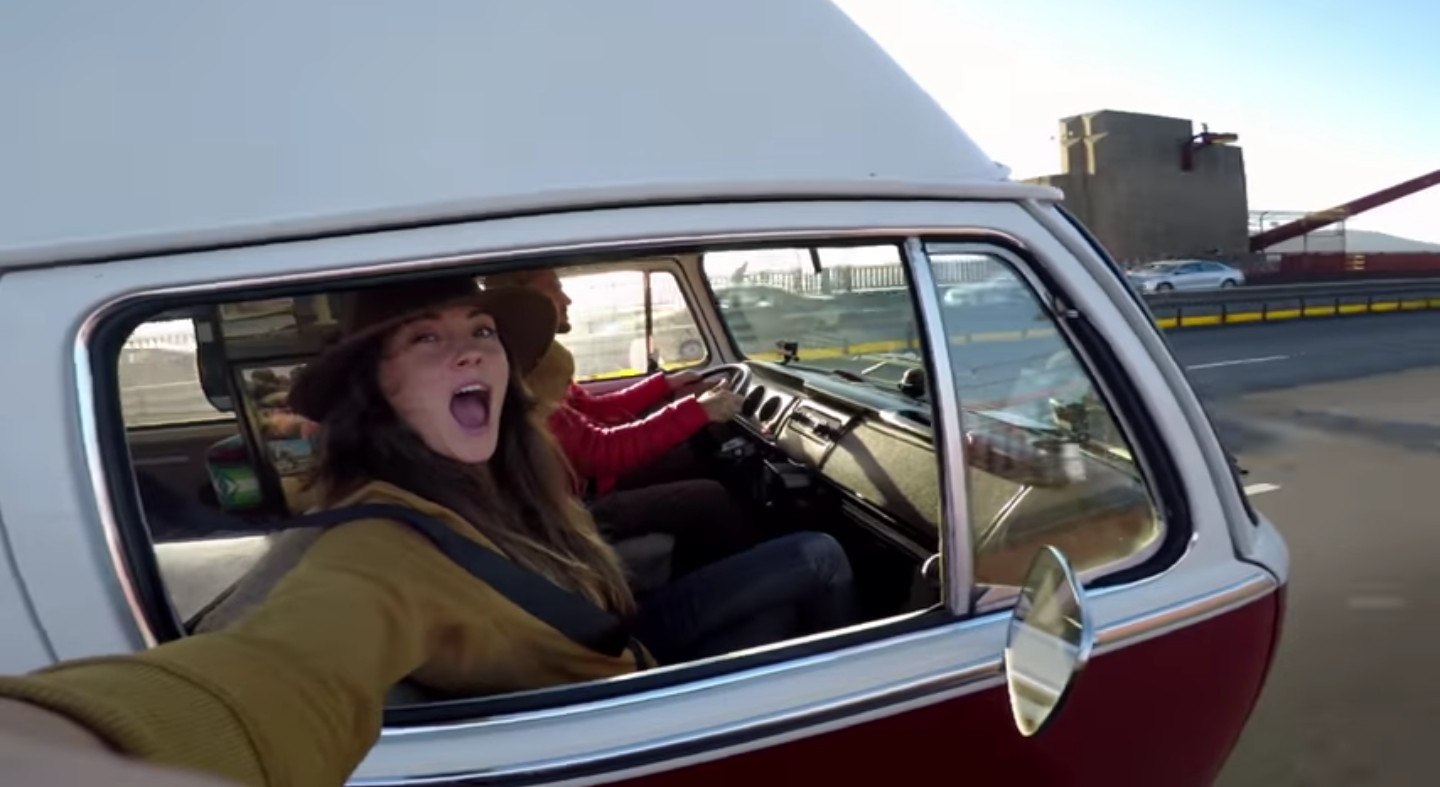 Wie jedes Jahr kommt auch diesmal der Jahresrückblick des Kameraherstellers GoPro. In dem Best-of-Video werden spektakuläre Actionsequenzen kompiliert. Vom Surfen, Skateboarden, Fallschirmspringen, Wintersport bis hin zu Unterwasseraufnahmen....
 Air Hockey alleine zu spielen, macht wenig Spaß. Die beiden Entwickler Jose Lulio und Juan Pedro Calderon Negueroles haben dafür eine Lösung entwickelt. Der Air Hockey Robot Evo. Ein vollautomatischer Air Hockey-Spieler, der seine "Intelligenz"...
Jagged Alliance von Sir-Tech, das sind die Wizardry-Macher, erschien 1994 und verstand sich als Strategie-Rollenspiel. Durch die unmittelbare Konkurrenz mit dem kurz vorher erschienenen UFO: Enemy Unknown ging der Titel vielleicht ein bisschen unter – obwohl es noch für einen exzellenten Nachfolger und eine Reihe Neuauflagen reichte. In Deutschland war der Titel schon immer beliebter als anderswo, was sich auch heute noch zeigt, denn das Thema dieser Folge wurde per Abstimmung unter den Patreon-Unterstützern entschieden, und JA gewann deutlich.
Hier ist das Gespräch von Gunnar und Chris dazu.
Hinweise: Die Folge gibt’s auch auf iTunes, zum Download oder gleich im Feed. Das Plakat stammt wie immer vom talentierten Paul Schmidt, die Shownotes hat Herr Anym rausgeschrieben. Ach, und haben wir schon erwähnt, dass wir Anfang Oktober eine Patreon-Kampagne gestartet haben? Hust.
Wir danken zudem unseren liebreizenden  Sponsoren :
Game Legends ist ein toller Shop für Spiele-Merchandise, bei dem es viel mehr gibt als nur T-Shirts oder Hoodies. Checkt das ruhig mal aus.
Digitalmindsoft ist der Entwickler des mächtigen 3D-Echtzeit-Strategiespiels Call to Arms und der Men of War-Reihe (schöner Trailer dazu drüben, bei YT).
Es werden erwähnt:
Spiele:
Jagged Alliance, X-COM, Turrican, Sid Meier’s Civilization, StarCraft, Age of Empires, Neptune’s Pride, Frozen Synapse, Wizardry, Freakin‘ Funky Fuzzballs, Jagged Alliance 2, Jagged Alliance: Deadly Games, Baldur’s Gate II, Fallout, Jagged Alliance DS, Guitar Hero, XCOM: Enemy Unknown.
Organisationen:
PC Gamer, Urban Dictionary, Sir-Tech Software, Madlab Software, Ubisoft, Electronic Arts, Turbine, Nordic Games, 2K Games, MicroProse.
Personen:
Alanis Morissette, John Rambo, Robert Sirotek, Norman Sirotek, Ian Currie, Linda Currie (geb. Sirotek), Jack Richards, Brenda Richards, Lucas Santino, Ernest Hemingway, Murray „Moses“ Ebstern, Glen „Boss“ Hatchet, Helmut „Grunty“ Grunther, Gary Roachburn, Victoria „Vicki“ Waters, Fidel Dahan, Ivan Dolvich, Vincenzo „Vinny“ Massimo, Larry Roachburn, Hurl E. Cutter, Tex R. Colburn, Mary Beth Wilkens, Peter „Wolf“ Sanderson, Speck T. Kline, Marty „Kaboom“ Moffat, Ice Williams, Col. Leo Kelly, Elio, Christians Bruder, Gerrit Tameris, Darius Kazemi, diverse Patreon-Patrons im Danksagungsteil.

Few movies before and since 1987 have broken the mould like RoboCop. Granted, there have been plenty of violent sci-fi films; plenty of satire, too. But combining them both while interweaving a bleak future where corporations play an omnipresent role in the lives of ordinary citizens, together with a wicked sense of humour, created an unexpected hit. Oh, and don’t forget the blood. A lot of blood. Reportedly turned down by practically every director in Hollywood, even the man whose sole major English-language credit was the medieval tale Flesh & Blood, almost let the film’s script slip through his fingers. Only a second glance convinced Paul Verhoeven that there was the opportunity to create something special.
As with any good film, the script was where RoboCop first began to shine (and as we will find out shortly, was the most important part in the genesis of the videogame adaptation). Written by Edward Neumeier and Michael Miner, its dystopian vision of a crime-riddled Detroit, peppered with acerbic news reports and advertisements gave the movie a thrilling beating heart to go with its sci-fi action. And as with many licences, all Ocean had to go on when making its decision was a sheaf of paper and ink.

But what a script. Not only did the story contain several set-pieces that stood out as potential scenarios for a videogame – RoboCop also boasted an unremitting parade of violence and gunplay that would leave the game’s designers a relatively simple task of shoehorning the movie into pixelated form. Ocean’s development director and movie buff, Gary Bracey, was first to see the script and read it from start to finish, as he did with all submitted material. Gary slapped a yellow post-it note on the manuscript and sent it to Ocean co-owner Jon Woods. The note was as succinct as it was plaintive – ‘We should get this – it could be a winner!’
Fortunately, the software house heeded Gary’s advice and the licence was acquired, its cheap cost helped by the movie’s comparative low-budget and lack of stars. It was still an early stage for RoboCop the movie; when Ocean secured the licence in 1987, the movie had just begun post-production. During development of the 8-bit games, Ocean had access to production stills for its references to ED-209 and RoboCop itself (as well as the script), before later in the project it finally received actual VHS tapes containing short clips from the movie.

Likely due to the success of the popular brawler Target Renegade, Ocean reunited the team of coder Mike Lamb and graphic artist Dawn Hollywood (at the time, Dawn Drake) for the Spectrum and Amstrad versions of RoboCop. On the other major 8-bit platform, Commodore 64, coder John Meegan (Short Circuit, Slap Fight) and artist Stephen Thomson teamed up for the first time with Jonathan Dunn providing the iconic music for all three versions. “I used to enjoy redoing box artwork and I spotted an American movie mag with some screenshots of an upcoming movie called RoboCop,” Stephen recalls. “I loved the design so did a Commodore 64 map of one of the images. Fast-forward a few months and I was at CES in Earl’s Court trying to get work. I turned up at the Ocean stand and asked Gary Bracey to take a look at my work. By pure chance, they were showing off their latest licences, one of which was RoboCop. I showed Gary my RoboCop loading screen and got the job on the spot!”
For his first game in the industry, Stephen is rightly proud of RoboCop; but like everyone else he was under a punishing schedule. Ocean needed to get the game released as quickly as possible due to excited word-of-mouth in America. “It was always about the timescale,” says Spectrum artist Dawn. “And deciding what elements would make a good game and then how to fit everything in. We watched the clips a lot and spent hours over stock photos.” Gary Bracey himself admits the team were under stress. “Every game can be improved and you can spend months working on details and tweaking. However, given the tight timeframe, the teams did an incredible job. I don’t think they could have done a better job given the time.”

The design of the game on the 8-bits would follow a set template despite any differences in technology. Starting after the bloody demise of Detroit cop Alex Murphy and his resurrection, RoboCop begins with the title character patrolling the streets of the city, searching for the gang who killed him, and is portrayed in a standard side-scrolling view with enemy attackers lurking above as well as on the ground. Fortunately, an early design meeting saw these sections punctuated with segments inspired by the movie. Having disposed of a potential rapist in a first-person shooter mini-game, RoboCop high-tails it back to the station to identify one of his assailants who seems mightily familiar and this photo fit section would be used again in the game to break up the stomp-and-gun action. These two parts were Ocean’s attempt to differentiate the game from its arcade cousin, having sub-sold the license back to Data East.

Working on both the Commodore Amiga and Atari ST versions was Ocean veteran Peter Johnson. Having begun his career writing arcade conversions such as Yie Ar Kung Fu and Arkanoid for the BBC Micro, Peter also converted the latter, and Wizball, to the 16-bit machines. A true all-rounder, he created the code, graphics and sound for both these versions of RoboCop, and was fortunate to catch the movie prior to commencement. “It was essentially a port of the 8-bit and coin-op versions,” explains Peter. “I was also loaned a suitcase version of the arcade game to work from, a VHS video of it being played from start to finish and either the Spectrum or Commodore 64 version for the extra bits they added.” The animation of the main sprite was created as Peter ‘drew’ over the Spectrum’s graphics in a style matching the arcade game. However, all the background graphics were redrawn using the arcade machine as a reference. With Peter’s expertise and experience with the Atari computer, and the Amiga still gaining popularity, the latter was a port of the former, although both versions of the game are the ‘prime’ versions of RoboCop, containing the best elements from the previous games, with a few cutscenes thrown in for good measure.

With an estimated budget of $13 million, RoboCop’s opening weekend reaped $8 million in US box-office receipts. Word-of-mouth increased its final tally to over $53 million, a figure which, when adjusted for inflation, equals almost $120 million, eclipsing 2014’s sterile remake. The movie was a moderate success in UK cinemas and it became a bigger hit on home video in the winter of 1988, serendipitously coinciding with the release of Ocean’s 8-bit versions of the game. “I liked the finished game and was proud that Mike and I had managed to capture different aspects of the film such as the hostage situation and photo fit,” says Dawn. “Jonathan Dunn also got the music and sound elements perfect, and at that point it was the pinnacle of my career.” The two-person team also worked together for the C64 version, as Stephen remembers. “Teaming up with Johnny Meegan was brilliant for me. Magazines such as Zzap64! started to mention us as a team and we got a lot of recognition for our hard work. But I have a soft spot for RoboCop, mainly because it was my first game.” But what about the man who was responsible for bringing RoboCop into pixelated form? “At that point it was the biggest game I’d been involved with,” says Gary. “It was the first licence I‘d chosen myself. As for the movie, I loved it when I first saw it!” We agree – RoboCop remains one of the finest action movies and movie videogame licences of the Eighties. Load it up, play it, watch the movie. And stay out of trouble.
If you’re a fan of the family-friendly fun of Disney’s animated films, you’ll undoubtedly remember the early Nineties with a great deal of fondness. Having recovered from the commercial disappointments of the Seventies and Eighties, as well as the blow of losing Don Bluth and a number of other animators, the company had entered a renaissance period of critically and commercially-successful films. The Little Mermaid had done well with both critics and the cinema-going public, and Beauty And The Beast had blown it out of the water in terms of box office takings. Not to be outdone, the directors of The Little Mermaid returned with an adaptation of the Arabian folk tale Aladdin and managed to take the record for the highest-grossing animated film of all time.
While Aladdin featured all the hallmarks of a great Disney film, from beautiful animation to memorable songs, the film was able to draw on star power that hadn’t been available to its predecessors. While Aladdin, his love interest Jasmine and the dastardly Jafar all had actors who weren’t well known, the genie of the lamp was played by Robin Williams – a huge deal at a time when actors would rarely cross over from live-action roles to voice acting. With over $500 million taken at the box office, it wasn’t a question of if the tie-in merchandise would arrive, but just how much of it.

For gaming fans, that meant licensed games, and there was cause to be excited about that – the last few years had seen a number of excellent Disney licensed games on consoles, including the likes of DuckTales and Castle Of Illusion. Recognising the value of the Aladdin licence, Disney did something unusual and split the rights amongst a number of parties. Three companies ended up with the rights to publish games; Sega was granted the right to publish games on its own platforms, Capcom got the licence for the SNES, and Virgin had the option to produce versions for other computers and consoles.
First out of the blocks was Sega. The company initially assigned the project to BlueSky Software, which had previously delivered Ariel The Little Mermaid for the publisher. However, progress was slow as the small team was also working on Jurassic Park. With no easy way to prioritise either project and Disney growing displeased with the lack of progress, the plug was pulled on BlueSky’s version. Luckily for Sega, which had lost a lot of time, Disney had a preferred partner which was willing to do business in the form of Virgin Games. It helped that the company’s president, Martin Alper, had a previous relationship with Sega from his time at Mastertronic, which had distributed the company’s hardware and software in Europe until 1991. What’s more, Virgin had a team capable of delivering high-quality Mega Drive games, as it had proven itself with Cool Spot.
The resulting three-way deal saw Sega handle publishing duties, Virgin Games taking on development and Disney providing animation and licensing rights. Animation cels would be hand-drawn by Disney’s own animators, then sent to Virgin for digitising and programming into the game. The result was striking – other games had skilful imitation of Disney animation, but Aladdin had the real thing. Enemies lost their trousers when hit and danced painfully across hot coals in the streets of Agrabah, and Aladdin himself was a restless chap, constantly scouting the area for guards. Very rarely did a game live up to the promise of cartoon-quality animation, but it was easy to see that Aladdin did as the titular character shimmied his way up ropes and engaged in swordplay.

The game wasn’t just visually stunning. As programmer and project manager, David Perry delivered his best platform game yet. Aladdin felt like Cool Spot in his movements, particularly when jumping around, but the game was a step ahead in terms of level design – in part, just because the film offered so much inspiration. Aladdin’s acrobatic escape from Agrabah’s guards, the magic carpet ride from an exploding Cave Of Wonders and even the song Never Had a Friend Like Me all provided ideas for stages. Additionally, attacking enemies was fun. You could lob apples if you liked, but there was more fun in sidling up to an enemy and swiping with a sword. Excellent renditions of the film’s music from Tommy Tallarico and Donald S. Griffin capped the whole thing off.
On the SNES side of things, Capcom took a different approach. The planner was a pre-Resident Evil Shinji Mikami, whose previous cartoon licence work included Goof Troop and Who Framed Roger Rabbit. Capcom’s game was amongst the most aesthetically pleasing on the console, with excellent visuals and audio, but Disney’s lighter level of involvement showed – the sprites all looked beautiful, but the refined shading ensured that they didn’t quite look like Disney’s work.
Other changes were afoot, too. While Aladdin didn’t look as close to his film counterpart as in the Mega Drive game, he acted a lot more similarly. His athletic abilities were heavily emphasised, as he could clamber up platforms, vault over posts, swing from poles and a lot more. Everyone’s favourite street rat could still chuck apples, but swordplay was off the menu. Instead, he was able to jump on the heads of enemies in the traditional platform game style.

Mikami has famously said that he’d have bought the Mega Drive version if he hadn’t made the SNES version, as he liked that game’s swordplay. We’d say that downplays the quality of his own game, though. Capcom’s Aladdin is an excellent platformer in its own right, featuring a different style of gameplay and some top class level design. These days, you don’t have to pick and we’d argue that both games are well worth playing – indeed, some will prefer the agility-focused SNES game over the more combat-oriented Mega Drive one.
Of course, back in 1993 that wasn’t the case. Both games arrived in November 1993, shortly after the home video release of the film. Aladdin did well for Capcom on the SNES, but didn’t hit the million sales mark – thus falling a long way short of the Mega Drive version, which came out a couple of weeks earlier and was given Sega’s full marketing support. Between retail sales and console bundle deals, Aladdin shifted a massive 4 million copies and became the Mega Drive’s third highest-selling game ever, behind only the first two Sonic games. The Capcom version of the game only reappeared once, for the Game Boy Advance in 2003, so it was the Mega Drive version that would go on to have a greater legacy. Thanks to Virgin Games’ publishing rights for other platforms, conversions of Aladdin made their way to the PC, Amiga, NES and Game Boy in 1994. The game was also reconverted to Game Boy Color by Crawfish for Ubisoft in 2000. In 1994, Sega published Aladdin for the Master System and Game Gear. Rather than going with Virgin again it assigned the game to its subsidiary SIMS, which had previously designed Tom & Jerry: The Movie. It ended up with a whole new design, and much like the team’s previous game it was one of the best-looking games ever to appear on Sega’s 8-bit formats, but didn’t have the gameplay to match the gorgeous looks.

Aladdin was a much less combative protagonist in SIMS’ game, with limited attacking opportunities meaning that he spent most of his time running from hazards instead. This in itself wouldn’t be a problem, but the game wasn’t particularly interesting or challenging – beside a poor jumping mechanic, the game offered too many bland forced-scrolling levels. Unsurprisingly, this version never received any new conversions after 1994. Still, these lesser versions did nothing to tarnish Aladdin’s name, as Virgin Games had stolen all the headlines. Disney established Disney Interactive Studios in 1994, a move that would have been inconceivable prior to Aladdin. Just as it was a watershed moment for animated films with the unprecedented involvement of a celebrity actor in a voice role, the most-played version of Aladdin marked a turning point for licensed games with the unprecedented involvement of a rights holder in doing its videogame justice.
Actress, producer, and writer Carrie Fisher has passed away at the age of 60. The news was confirmed by Fisher's daughter, Billie Lourd.
"It is with a very deep sadness that Billie Lourd confirms that her beloved mother Carrie Fisher passed away at 8:55 this morning," spokesman Simon Halls told People. "She was loved by the world and she will be missed profoundly. Our entire family thanks you for your thoughts and prayers."
On December 23 Fisher suffered a heart attack while on a flight from London to Los Angeles, and was rushed to intensive care. Her mother later released a statement saying she was in stable condition.
Although Fisher is known most for her iconic role as Princess Leia Organa in Star Wars, she was also an accomplished writer, having had multiple books published and working on numerous Hollywood scripts.
Most recently, Fisher appeared in Star Wars: The Force Awakens and was promoting her latest book, The Princess Diarist.
Having been diagnosed with bipolar disorder and battling an addiction to drugs, Fisher was also an activist in raising awareness on mental health and substance abuse. She spoke openly about her struggles and her activism work surrounding the issues were invaluable.
Harrison Ford, who appeared alongside Fisher in Star Wars as Han Solo, has released a statement addressing the loss of his "emotionally fearless" friend.
"Carrie was one-of-a-kind ... brilliant, original," he told People. "Funny and emotionally fearless. She lived her life, bravely. My thoughts are with her daughter Billie, her mother Debbie, her brother Todd, and her many friends. We will all miss her."
Star Wars creator and director George Lucas described Fisher as "a very colorful personality that everyone loved."
"Carrie and I have been friends for most of our adult lives. She was extremely smart; a talented actress, writer and comedienne with a very colorful personality that everyone loved. In Star Wars she was our great and powerful princess--feisty, wise and full of hope in a role that was more difficult than most people might think. My heart and prayers are with Billie, Debbie and all Carrie’s family, friends and fans. She will be missed by all."
Kathleen Kennedy, president of Lucasfilm, said Fisher "defined the female hero of our age."
"Carrie holds such a special place in the hearts of everyone at Lucasfilm it is difficult to think of a world without her. She was Princess Leia to the world but a very special friend to all of us. She had an indomitable spirit, incredible wit, and a loving heart. Carrie also defined the female hero of our age over a generation ago. Her groundbreaking role as Princess Leia served as an inspiration of power and confidence for young girls everywhere. We will miss her dearly."
"Carrie Fisher was one-of-a-kind, a true character who shared her talent and her truth with us all with her trademark wit and irreverence," added Disney chief executive Bob Iger. "Millions fell in love with her as the indomitable Princess Leia; she will always have a special place in the hearts of Star Wars fans as well as all of us who were lucky enough to know her personally. She will be sorely missed, and we join millions of fans and friends around the world who mourn her loss today."
There has been an outpouring of love for Fisher from those that knew her.
There are no words for this loss. Carrie was the brightest light in every room she entered. I will miss her dearly. pic.twitter.com/GgIeYGeMt9
— Peter Mayhew (@TheWookieeRoars) December 27, 2016
no words #Devastated pic.twitter.com/R9Xo7IBKmh
— Mark Hamill (@HamillHimself) December 27, 2016
I thought I had got what I wanted under the tree. I didn't. In spite of so many thoughts and prayers from so many. I am very, very sad.
— Anthony Daniels (@ADaniels3PO) December 27, 2016
I'm deeply saddened at the news of Carrie's passing. She was a dear friend, whom I greatly respected and admired. The force is dark today!
— Billy Dee Williams (@realbdw) December 27, 2016
I'm deeply saddened to learn of the death of Carrie Fisher. I will miss our banterings. A wonderful talent & light has been extinguished.
— William Shatner (@WilliamShatner) December 27, 2016
It's a little thing, but Carrie Fisher was gracious, funny and creatively open when we worked with her for a small role in #Dishonored. RIP.
— Harvey Smith (@Harvey1966) December 27, 2016
My life goal as a kid was to have buns like Leia. I had a definitely flammable Star Wars bedspread cause of her. RIP @carrieffisher 😰 pic.twitter.com/gUOxbsFomH
— Felicia Day (@feliciaday) December 27, 2016
Carrie Fisher was smart, funny, talented, surprising, and always a hell of a fun time to be around. Family Guy will miss her immensely.
— Seth MacFarlane (@SethMacFarlane) December 27, 2016
RIP pic.twitter.com/pwEpWZ3w08
— philip lord (@philiplord) December 27, 2016
#CarrieFisher was so witty and provocative and unrelentingly interesting. Goddamn, I loved her. Everyone did.
— Elizabeth Banks (@ElizabethBanks) December 27, 2016
Gone way too soon. RIP Carrie Fisher. https://t.co/2IPyP1DYYD
— Lynda Carter (@RealLyndaCarter) December 27, 2016
Carrie Fisher has passed, she was funnier&smarter than anyone had the right to be. Sail On Silver Girl. Condolences Debbie & Billie
— Whoopi Goldberg (@WhoopiGoldberg) December 27, 2016
R.I.P.
Dearest Carrie, so incredibly sad to say farewell so soon to such a beautifully honest and unique human being- see you in the multiverse.
— Andy Serkis (@andyserkis) December 27, 2016
We've lost our Princess. pic.twitter.com/N9xMYe6jLT
— Gwendoline Christie (@lovegwendoline) December 27, 2016
Fisher will be remembered as an icon and role model.
GameSpot extends its condolences to Fisher's family and friends.
Rogue One made use of computer-generated visuals to bring back certain characters from the original Star Wars, a move some have deemed controversial. Now, filmmakers on the movie have shared more information about the decision to do so and the process behind it.
Spoilers from Rogue One follow below.
Some of Rogue One's returning characters were recast (General Dodonna), while others saw actors return from the prequels (Bail Organa). As seen in the trailers, Mon Mothma had Genevieve O'Reilly reprise her role from a cut portion of Revenge of the Sith, though she was not the same actress to play her in Return of the Jedi. Grand Moff Tarkin and a brief appearance by Princess Leia, however, were deemed to require the same look as in A New Hope.
In the case of Tarkin, Lucasfilm decided that he was a key character, given his command of the Death Star in A New Hope. "If he's not in the movie, we're going to have to explain why he's not in the movie," said Rogue One co-producer Kiri Hart in an interview with The New York Times. "This is kind of his thing."
Tarkin was realized by having an actor, Guy Henry, play the physical role, with CG work being used to recreate the face of original Tarkin actor Peter Cushing, who passed away in 1994.
His return was teased in trailers ahead of the film's release, and he ultimately proved to have a fairly prominent role in the movie. Some have criticized the ethical decision behind using Cushing's likeness, though his estate gave its consent in allowing it to happen. Others have been critical of the actual look--some have noted an unnatural quality to his appearance.

Industrial Light & Magic animation supervisor Hal Hickel told the NYT that one challenge it faced in recreating his look came down to the lighting used in the original film. Lighting him "he way he was in A New Hope improved his likeness as Tarkin, but it worsened the sense of him being real because then he didn't look like any of the actors in the scene."
Ultimately, it was deemed that "[r]ealism had to trump likeness." Alternatives were proposed that would have eliminated the need to have him on-screen in this way, though they ultimately went unused. "We did talk about Tarkin participating in conversations via hologram, or transferring that dialogue to other characters," said ILM chief creative officer John Knoll.
Knoll went on to say that this was "done for very solid and defendable story reasons. This is a character that is very important to telling this kind of story." He doesn't believe this practice will become commonplace, in part because "[i]t is extremely labor-intensive and expensive to do."
"We're not planning on doing this digital recreation extensively from now on," he said. "It just made sense for this particular movie."
As for the likeness of a young Carrie Fisher, who sadly passed away on Tuesday, Hart talked about the significance of seeing the character's face.
"To deliver on that moment of hopefulness, that is really underscored by the fact that you do get to see her face," Hart said. "That's the best possible use of effects, to enhance the meaning and the emotion of the experience for the viewer."
For more on the process, check out the full story here. You can read GameSpot's Rogue One review here.
Not only did Star Wars: Rogue One originally have a wildly different ending, but the filmmakers have now revealed they had bigger plans for one of the Rebel characters. Lucasfilm president Kathleen Kennedy told Empire (via Collider) that the original plan was for Forest Whitaker's character, Saw Gerrera, to have a "much larger" presence in the sci-fi spinoff.

"To be honest, we originally thought we were going to develop Saw into something much larger, but we couldn't accommodate it. So he is not in the movie as much as we would like to have him in the movie, which creates the opportunity to explore his character even further in our future development."
Whitaker himself is also quoted in the Empire story. He said, "I'm curious about what else they're about to do. Because they seem to really like the character, which is great!"
Kennedy's "future development" line could be a reference to Gerrera's ongoing store in the animated series Star Wars Rebels. Collider surmises that it might be possible for him to show up in future anthology movies, though this is not confirmed.
Rogue One arrived in theaters on December 16 and was the No. 1 movie worldwide. It has to date made more than $500 million around the globe.
For more on Rogue One, check out GameSpot's review.

Welcome to Kotaku’s Sunday Comics, your weekly roundup of the best webcomics that usually occurs on Sunday except when it doesn’t. The images enlarge if you click on the magnifying glass icon.
Welcome to Kotaku’s Sunday Comics, your weekly roundup of the best webcomics that usually occurs on Sunday except when it doesn’t. The images enlarge if you click on the magnifying glass icon.

When Niantic CEO John Hanke announced that Pokémon Go was getting a companion app for the Apple Watch, the app was still within arm's reach of its global phenomenon status. Fast-forward three months to December, and Pokémon Go's popularity has dipped significantly thanks to waning interest from casual players, frustration from technical issues, and cold weather making it more difficult to play. Regardless, the devoted Pokémon seekers have been patiently waiting for the release of the Apple Watch app Niantic promised before the end of 2016.
With just over a week remaining in 2016, Niantic surprise-launched the Apple Watch app, marketing it as a better way to play in cold temperatures. Over the first few days of its availability, I put the Apple Watch app to the test and immediately noticed several positives and negatives about it. Check out my biggest takeaways from my time with the app below, and if you've been using the new app, leave your thoughts in the comments.
Pro: You Don't Need To Have Your Phone Out
The big selling point for the Apple Watch app is that you no longer need to have your phone out to passively play Pokémon Go. I can't tell you how many walks I've gone where I've opened up the Pokémon Go app and then slipped my phone into my pocket so that I could rack up kilometers to hatch my eggs and earn candy for my buddy Pokémon. With the Apple Watch app, I no longer need to waste my phone's battery or go through the hassle of putting my unlocked phone into my pocket where anything can happen. Now, I can just fire up Pokémon Go on my Apple Watch and watch the kilometers pour in when I'm on the go. This also helps when the weather dips below freezing and your phone can be painful to operate.
Con: You Can't Do Much From The Watch App Itself
While this isn't much of a problem if I'm just trying to accrue distance for eggs and candy, the Apple Watch app is only good for playing passively. Included in the list of things you can't do within the Apple Watch app are catching Pokémon and managing your collection (transferring, evolving, marking as favorite, etc.). We knew that this was the case before launch, but being able to catch nearby creatures (even in a limited capacity as is seen in the Pokémon Go Plus accessory) would be a big plus for the app's overall experience.

Pro: It Notifies You Of Nearby Monsters And Stops
It pays to have the Pokémon Go app open as often as possible. In addition to accumulating distance, having the app open ensures you don't miss a nearby Pokémon that you need to bolster your collection. With the Apple Watch app, you can set it to notify you about each nearby Pokémon. This means that if you're walking down the street and a Snorlax spawns nearby, you'll feel a little tap on your wrist and a bell sound to let you know. You still need to get your phone out to catch it, but at least you don't miss the opportunity as you would have before this app's release.
Con: There's Little Notification Customization
With the current settings, however, you're either notified about everything or nothing. So if you want your watch to tell you about the elusive Dragonite that you need to complete your Pokédex, you're going to have to tolerate several hundred Pidgey and Rattata notifications. Third-party apps with a similar notification system have a filtering system that lets you select which Pokémon you wish to be notified about. If Niantic could implement a system where I can say that I only want to be told about a particular list of monsters, it will come that much closer to a necessary app for any aspiring Pokémon Master.

Pro: You Can Hatch Eggs And Earn Candy From Stationary Workouts
My first time using the Pokémon Go Apple Watch app, I ran five kilometers, earning candy, hatching an egg, and grabbing an Abra along the way. The next day, the weather was pretty rough, so I kept my workout indoors. Just to see what it did, I started a workout within the Pokémon Go Apple Watch app and much to my surprise, it actually tracked distance. To test it out again, I did another full hour on a cardio machine inside of my house and tracked several kilometers without setting foot outside or even moving from the spot that I started. I'm not sure how it estimates your distance, but I successfully tracked multiple kilometers during my indoor workouts.
Con: You Have To Babysit It
Over the course of my tests, I ran into the problem of the app resetting in the middle of my workout. During my outdoor run, the app kicked me back to the "Start" screen, approximately every six minutes. This became a big hassle and a huge distraction to my run as I had to keep looking at my wrist to ensure it was still tracking. I tried different things like turning off the notifications for nearby Pokémon, but the problem persisted. I thought maybe it was because I was going too fast, but when I went for a leisurely walk later that day, the app reset in the same manner before I even got off my block. When I did my stationary workouts, the first day resulted in similar problems, but the second time I was able to make it the full hour without any kind of reset or lost progress. I was hopeful that it was a sign that the app is improving in stability, but the very next workout I tried to do with it, it wouldn't last for more than 60 seconds without crashing.
A Mixed Bag
The Pokémon Go Apple Watch App is a step in the right direction for making Pokémon Go as easy to play as possible. The convenience of being able to hatch eggs and earn buddy Pokémon candy without needing to have your phone out is great selling point, but I couldn't help but feel that my first few days with the app show that it's not quite where it needs to be to be a viable alternative to walking around, with your face buried in your phone like so many of us did throughout the summer and fall.
Luckily, many of the big issues with the Apple Watch app could be remedied through post-release updates. Whether or not Niantic decides to do that is another thing entirely. If Niantic does patch out the technical issues and makes the app more useful, it could become a more convenient way to monitor what's happening around you.

This feature originally appeared in issue 282 of Game Informer magazine.
In 1991, a company known in the United States predominantly for manufacturing light bulbs entered the cutthroat world of video games with the Philips CD-i. The fledgling console was expected to compete directly with the Sega Genesis and Super Nintendo.
The details of how it all came about are vague, but Nintendo partnered with Philips with the intent of making a CD-ROM add-on for the Super Nintendo after an initial partnership with Sony with the same goal went sour. Nintendo signed a contract with Philips that gave the Japanese company rights to all of the CD games that would release for the add-on in exchange for Philips obtaining the rights to use some of Nintendo’s characters, specifically those from the Mario and Zelda franchises. The add-on never came to be, but the contract led to Philips releasing one Mario game and three Zelda games on its CD-i console. It was one of the rare occasions where these characters appeared on a non-Nintendo system.
The man behind many of these off-shoot titles is Stephen Radosh. His credits include being executive producer on Hotel Mario, executive in charge of production on both Link: The Faces of Evil and Zelda: The Wand of Gamelon, and production executive on the final Zelda CD-i game, Zelda’s Adventure. His strange and varied career in the game industry started with computer chess, moved to Atari’s early days, and carried through to Sega and Philips. We spoke with Radosh about what it was like to be one of the only developers to make Nintendo games without its oversight.

From Atari To Donkey Kong
Radosh got his first programming gig with a company that published textbooks, but was also interested in creating entertainment-based computer products. He worked with developers on a chess game called Sargon, but beelined to Atari when he saw an opening for a manager of design in New York. He worked on a number of Atari games and was present for the release of E.T. and the subsequent collapse. “We got a couple of advanced copies and I put it in,” Radosh says. “Within 20 minutes I was calling the west coast going, ‘Um, I think you sent us a bad rom here. This game keeps crashing.’ They went, ‘No, no we sent you the release copy.’ I wrote a memo like, ‘You can’t release this!’”
Radosh left Atari and landed at Sega after pushing off inferior offers from Coleco. Sega was pushing its Master System at the time, but Radosh mostly worked on arcade cabinets, including one that never released, but was Radosh’s first experience working on a Nintendo franchise. “Somehow Sega had gotten the rights to Donkey Kong,” Radosh says. He developed an arcade game, for Sega, where players controlled Donkey Kong as a parking attendant. “You were dodging cars that were pulling in and out of the lot, and you had to get X number of cars parked in spaces,” Radosh says.

One of the reasons the game never released was because during Radosh’s employment with Sega, the company (owned by Paramount at the time) was sold back to Japan, leaving him to explore new job opportunities. He recognized that, despite never working in film or television, he could call himself Stephen Radosh from Paramount, and used that leverage to develop television game shows, but couldn’t stay away from video games for long.
For more on how the Philips CD-i came to be, head to page two.
 Unverbindliche Preisempfehlung:
 Das Jahr neigt sich dem Ende entgegen und 2017 steht schon in den Startlöchern. Könnt ihr mit Stolz auf 2016 zurückblicken und wollt ihr euch für eure Erfolge belohnen? Vielleicht ist das Jahr aber auch nicht ganz so gut verlaufen und es wird Zeit, das Jahr mit all seinen Rückschlägen schnell hinter euch zu lassen. Egal, wie euer Jahr verlaufen ist: Wir glauben, dass ihr euch mal etwas Gutes gönnen solltet!
Etwas Schönes, etwas Luxuriöses, aber praktisch sollte es auch sein: Mit einer brandneuen Apple Watch könnt ihr das neue Jahr gebührend einläuten.
Wenn ihr die Verpackung öffnet, könnt ihr auf den ersten Blick Apples Handwerkskunst erkennen. Wunderschöne Formen, zeitloses Design, kein unnötiger Schnickschack. Weniger ist eben mehr, wie Apple mal wieder beweist.
Neben der Optik zählen aber natürlich auch die inneren Werte. Die Apple Watch ist nicht einfach nur eine Uhr, ihr seht auch eingehende Nachrichten, könnt eure Lieblingsmusik steuern, Anrufe tätigen und sogar eure Herzfrequenz messen. Wie ihr sehr ist die Apple Watch quasi das Schweizer Taschenmesser unter den Armbanduhren.
Nehmen wir mal die anderen zahlreichen tollen Funktionen etwas genauer unter die Lupe. Die Apple Watch unterstützt Apple Pay, sodass ihr bequem und kontaktlos in Geschäften, in Apps und auf Websites bezahlen könnt. Auf eure persönliche Lieblingsassistin Siri müsst ihr natürlich nicht verzichten und außerdem könnt ihr mit der Uhr eure Schritte zählen und sie zeigt euch bei Bedarf auch den Weg
Ihr wollt eure Apple Watch personalisieren? Kein Problem! Es gibt etliche Themes, die ihr euch herunterladen und so euer Zifferblatt ganz nach euren Wünschen anpassen könnt. Aber nicht nur Software-seitig könnt ihr eure Apple Watch personalisieren, auch das Armband lässt sich ganz einfach austauschen. Ob Leder, Edelstahl oder gewebtes Nylon: Ihr habt die (Qual der) Wahl!
Ob Apple Watch oder Apple Watch Sport. Ob Leder-, Edelstahl-, Nylon oder Kuntstoffarmband, eines ist klar: Mit einer dieser Armbanduhren aus dem Hause Apple Watch kann 2017 kommen. Und zu diesem Preis bekommt ihr die Appple Watch sicher nicht so schnell wieder ...
* Für die Apple Watch braucht ihr ein iPhone 5 oder neuer.
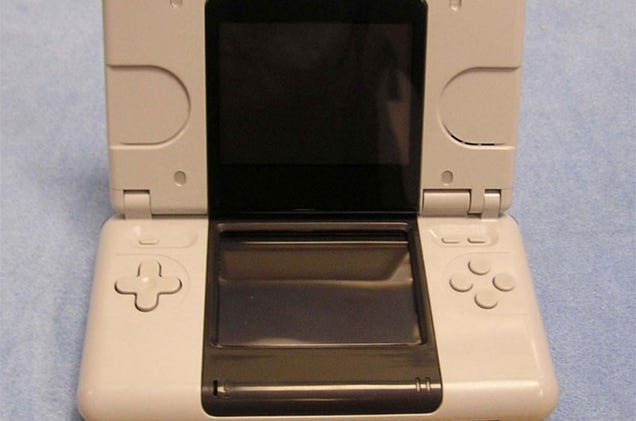
You may not know Evan Amos by name, but you’ve certainly seen his work: he’s responsible for many of the clean product shots of video game consoles that you see on Wikipedia (and by extension everywhere else). Today, he’s shared something very cool for fans of old Nintendo hardware.
It’s no secret that turning a Raspberry Pi into a retro game console is hands-down the most popular, easy, and fun project you can do with a Pi. That initial guide is just the beginning though, and if you really want to get more out your little DIY console, you’ll want to dig in with some advanced tips.
__default-news-image.jpg) The year marking the 30th anniversary of The Legend of Zelda is almost at it's end. Nintendo has observed the occasion sporadically throughout the year including the release of four newZelda amiibo. However, Nintendo doesn't seem quite done celebrating the beloved series. Nintendo UK released a never before seen behind-the-scenes look at some original design drawings from the very first Zelda game...
The year marking the 30th anniversary of The Legend of Zelda is almost at it's end. Nintendo has observed the occasion sporadically throughout the year including the release of four newZelda amiibo. However, Nintendo doesn't seem quite done celebrating the beloved series. Nintendo UK released a never before seen behind-the-scenes look at some original design drawings from the very first Zelda game...

Wie im Vorfeld angekündigt, hat Microsoft heute den Ultimate Game Sale im Xbox-Game-Store gestartet. Neben der einmonatigen Goldmitgliedschaft für ein Euro bietet der Shop aktuell zahlreiche Schnäppchen für die den Zeitraum vom 22. bis 28. Dezember 2016 an.

Pünktlich zu Weihnachten hat Valve auf Steam die alljährliche Winteraktion mit zahlreichen Angeboten gestartet. Bis zum 2.

Es ist soweit und der große Countdown Sale ist da. Als Tagesangebot gibt es die Life is Strange Complete Season (One) für 5 EUR, sofern ihr Gold Mitglieder seid. Ansonsten zahlt ihr 6,60 EUR. Weitere Angebote findet ihr unten und direkt im Sale. ^^
Link: Countdown Deals im Xbox Store
z.B.
 Bedlam für 5,99 EUR
Contract für 5 EUR
Deadlight: Director’s Cut für 10 EUR
Life is Strange Complete Season für 5 EUR
Günstiges Guthaben:
 10 EUR Xbox Live Guthaben für 7,89 EUR – Press-Start (“XMAS16“)
25 EUR Xbox Live Guthaben für 22,79 EUR – CDKeys (5%GS)
50 EUR Xbox Live Guthaben für 44,64 EUR – CDKeys (5%GS)
Goldpreis – Silberpreis
• Arcade Game Series 3-in-1 Pack – 3,20€ – 4,00€ – 60% Rabatt
• Assassin’s Creed IV Black Flag – 8,00€ – 10,00€ – 60% Rabatt
• Batman: Arkham Knight – 35,00€ – 41,99€ – 50% Rabatt
• Batman: Arkham Knight Premium-Edition – 44,00€ – 55,00€ – 60% Rabatt
• Batman: Return to Arkham – 29,99€ – 34,99€ – 40% Rabatt
• Batman: Arkham Knight – 35,00€ – 41,99€ – 50% Rabatt
• Batman: Arkham Knight Premium-Edition – 44,00€ – 55,00€ – 60% Rabatt
• Batman: Return to Arkham – 29,99€ – 34,99€ – 40% Rabatt
• Bard’s Gold – 2,99€ – 3,49€ – 40% Rabatt
• Battlefield 1 – 41,99€ – 48,99€ – 35% Rabatt
• Battlefield 1 Deluxe Edition – 53,99€ – 62,99€ – 35% Rabatt
• Battlefield 1 Ultimate Edition – 104,99€ – 118,99€ – 25% Rabatt
• Battlefield 1 – Titanfall 2 Deluxe-Bundle – 89,99€ – 104,99€ – 40% Rabatt
• Bedlam – 5,99€ – 6,99€ – 40% Rabatt
• BioShock: The Collection – 32,49€ – 37,49€ – 35% Rabatt
• Call of Duty: Black Ops III – Gold Edition – 41,99€ – 48,99€ – 40% Rabatt
• Call of Duty: Black Ops III Digital Deluxe Edition – 59,99€ – 69,99€ – 40% Rabatt
• Call of Duty: Infinite Warfare – 45,49€ – 52,49€ 25% Rabatt
• Call of Duty: Infinite Warfare – Digital Legacy Edition – 67,49€ – 76,49€ – 25% Rabatt
• Call of Duty: Infinite Warfare – Digital Deluxe Edition – 87,99€ – 98,99€ – 25% Rabatt
• Contrast – 5,00€ – 5,99€ – 50% Rabatt
• Crimson Chrome Bundle – 12,50€ – 14,99€ – 50% Rabatt
• Dark Souls III – 35,00€ – 41,99€ – 50% Rabatt
• Dark Souls III – Deluxe Edition – 47,25€ – 56,69€ – 50% Rabatt
• Deadlight: Director’s Cut – 10,00€ – 11,99€ – 50% Rabatt
• Destiny – The Collection – 35,99€ – 41,99€ – 33% Rabatt
• Deus Ex: Mankind Divided – 35,00€ – 41,99€ – 50% Rabatt
• Deus Ex: Mankind Divided – Digital Deluxe Edition – 50,00€ – 59,99€ – 50% Rabatt
• Dishonored 2 – 46,89€ – 52,49€ – 33% Rabatt
• Dishonored Definitive Edition – 10,00€ – 11,99€ – 50% Rabatt
• Dovetail Games Euro Fishing – 11,09€ – 12,94€ – 40% Rabatt
• Everspace (Spielvorschau) – 23,99€ – 20% Rabatt
• F1 2016 – 35,00€ – 41,99€ – 50% Rabatt
• Far Cry Primal – 20,00€ – 23,99€ – 50% Rabatt
• Far Cry Primal – Apex Edition – 22,50€ – 26,99€ – 50% Rabatt
• Final Fantasy XV – 52,49€ – 59,49€ – 25% Rabatt
• Final Fantasy XV – Digitale Premium-Edition – 71,24€ – 80,74€ – 25% Rabatt
• Firewatch – 11,99€ – 13,99€ – 40% Rabatt
• Forza Horizon 3 Standard Edition – 45,49€ – 35% Rabatt
• Forza Horizon 3 Deluxe Edition – 67,49€ – 25% Rabatt
• Forza Horizon 3 Ultimate Edition – 79,99€ – 20% Rabatt
• Forza Motorsport 6 Standard Edition – 35,00€ – 41,99€ – 50% Rabatt
• Forza Motorsport 6 Deluxe Edition – 45,00€ – 53,99€ – 50% Rabatt
• Forza Motorsport 6 Ultimate Edition – 54,75€ – 65,69€ – 50% Rabatt
• Forza Motorsport 6 – Autopass – 9,90€ – 12,00€ – 67% Rabatt
• Gears of War 4 – 38,49€ – 45% Rabatt
• Gears of War 4 Ultimate Edition – 69,99€ – 30% Rabatt
• Grand Theft Auto V – 35,00€ – 41,99€ – 50% Rabatt
• Grand Theft Auto V – White Shark – 42,50€ – 50,99€ – 50% Rabatt
• Grand Theft Auto V – Megalodon – 58,00€ – 72,50€ – 60% Rabatt
• Grand Theft Auto V – Walhai – 43,20€ – 54,00€ – 60% Rabatt
• Grow Up – 5,00€ – 5,99€ – 50% Rabatt
• Halo 5: Guardians – 35,00€ – 41,99€ – 50% Rabatt
• Halo 5: Guardians – Digital Deluxe Edition – 49,50€ – 59,39€ – 50% Rabatt
• Hitman – Die komplette erste Season – 30,00€ – 35,99€ – 50% Rabatt
• Hitman – Intro-Pack – 7,50€ – 8,99€ – 50% Rabatt
• Hitman – Upgrade-Pack – 25,00€ – 29,99€ – 50% Rabatt
• Inside & Limbo Bundle – 17,99€ – 20,99€ – 40% Rabatt
• Jotun: Valhalla Edition – 10,04€ – 11,24€ – 33% Rabatt
• Killer Instinct: Ultra Edition von Staffel 3 – 20,00€ – 23,99€ – 50% Rabatt
• Lego Marvel Super Heroes – 10,00€ – 13,20€ – 50% Rabatt
• Lego Marvel’s Avengers – 27,49€ – 32,49€ – 45% Rabatt
• Lego Marvel’s Avengers Luxusedition – 32,99€ – 38,99€ – 45% Rabatt
• Life is Strange Complete Season – 5,00€ – 6,60€ – 75% Rabatt
• Lost Sea – 7,50€ – 8,99€ – 50% Rabatt
• Madden NFL 17 – 35,00€ – 41,99€ – 50% Rabatt
• Madden NFL 17-Deluxe-Edition – 40,00€ – 47,99€ – 50% Rabatt
• Madden NFL 17-Super-Deluxe-Edition – 50,00€ – 59,99€ – 50% Rabatt
• Mafia III – 45,49€ – 52,49€ – 35% Rabatt
• Mafia III Deluxe Edition – 53,99€ – 62,99€ – 40% Rabatt
• Metal Gear Solid V: Ground Zeroes – 10,00€ – 11,99€ – 50% Rabatt
• Metal Gear Solid V: The Definitive Experience – 26,79€ – 29,99€ – 33% Rabatt
• Metal Gear Solid V: The Phnatom Pain – 15,00€ – 17,99€ – 50% Rabatt
• Minecraft: Story Mode – The Complete Season (Episodes 1-5) – 12,00€ – 14,39€ – 50% Rabatt
• Minecraft: Story Mode – Adventure Pass (Additional Episodes 6-8) – 6,50€ – 7,79€ – 50% Rabatt
• Mount & Blade: Warband – 13,39€ – 14,99€ – 33% Rabatt
• NBA 2K17 – 48,99€ – 55,99€ – 30% Rabatt
• NBA 2K17 Kobe Bryant Legend Edition – 58,49€ – 67,49€ – 35% Rabatt
• NBA 2K17 Kobe Bryant Legend Edition Gold – 65,99€ – 76,99€ – 40% Rabatt
• NHL 17 – 35,00€ – 41,99€ – 50% Rabatt
• NHL 17 Deluxe Edition – 45,00€ – 53,99€ – 50% Rabatt
• Ori and the Blind Forest: Definitive Edition – 10,00€ – 11,99€ – 50% Rabatt
• Oxenfree – 10,00€ – 11,99€ – 50% Rabatt
• Pac-Man Championship Edition – 8,44€ – 9,79€ – 35% Rabatt
• Payday 2: Crimewave Edition – 6,60€ – 8,00€ – 67% Rabatt
• Payday 2 – Crimewave Edition – Riesen-Fischzug-Bundle – 29,99€ – 34,99€ – 40% Rabatt
• Prison Architect: All Day And A Night Edition – 20,99€ – 24,49€ – 40% Rabatt
• Pro Evolution Soccer 2017 – Digital Exclusive – 38,99€ – 44,99€ – 35% Rabatt
• Project Cars Digital Edition – 15,00€ – 17,99€ – 50% Rabatt
• Project CARS – Game of the Year Edition – 27,49€ – 32,49€ – 45% Rabatt
• ReCore – 19,99€ – 50% Rabatt
• Saints Row: Gat out of Hell – 3,75€ – 4,94€ – 75% Rabatt
• Star Wars Battlefront 15,00€ – 17,99€ – 50% Rabatt
• Star Wars Battlefront™ Deluxe Edition – 15,00€ – 17,99€ – 50% Rabatt
• Star Wars Battlefront Ultimate Edition – 29,99€ – 33,99€ – 25% Rabatt
• Star Wars Battlefront Season Pass – 19,49€ – 22,49€ – 35% Rabatt
• Superhot – 16,74€ – 33% Rabatt
• Tales from the Borderlands Complete Season (Episodes 1-5) – 6,60€ – 8,00€ – 67% Rabatt
• The Elder Scrolls V: Skyrim Special Edition – 40,19€ – 44,99€ – 33% Rabatt
• The Escapists: Supermax Edition – 9,24€ – 11,20€ – 67% Rabatt
• The Flame in the Flood – 10,00€ – 11,99€ – 50% Rabatt
• The Incredible Adventures of Van Helsing II – 7,50€ – 8,99€ – 50% Rabatt
• The Incredible Adventures of Van Helsing II: Extended Edition – 10,00€ – 11,99€ – 50% Rabatt
• The Telltale Undead Survival Bundle – 16,50€ – 20,00€ – 67% Rabatt
• The Walking Dead: Michonne – A Telltale Miniseries – 4,29€ – 5,20€ – 67% Rabatt
• The Walking Dead: Michonne – Season Pass – 2,64€ – 3,20€ – 67% Rabatt
• The Witness (Der Zeuge) – 26,79€ – 29,99€ –
• Titanfall 2 – 35,00€ – 41,99€ – 50% Rabatt
• Titanfall 2 Deluxe Edition – 45,00€ – 53,99€ – 50% Rabatt
• Trials Fusion: The Awesome Max Edition – 16,00€ – 20,00€ – 60% Rabatt
• Warhammer: End Times – Vermintide – 23,99€ – 27,99€ – 40% Rabatt
• Wolfenstein: The Old Blood – 10,00€ – 11,99€ – 50% Rabatt
• Worms W.M.D – 20,09€ – 22,49€ – 33% Rabatt
• World of Tanks – Captured KV-1 Elite – 27,19€ – 30,59€ – 20% Rabatt
• WWE 2K17 – 48,99€ – 55,99€ – 30% Rabatt
• WWE 2K17 Digital Deluxe – 59,99€ – 69,99€ – 40% Rabatt
Goldpreis – Silberpreis
• Assassin’s Creed IV Black Flag – 7,99€ – 9,99€
• Batman: The Telltale Series – 0,00€ – 0,89€
• Batman – The Telltale Series – Season Pass – 11,99€ – 14,39€
• Batman: Arkham City – 6,59€ – 8,59€
• Call of Duty 2 – 9,99€ – 11,99€
• Call of Duty: Black Ops – 14,99€ – 17,99€
• Call of Duty: Black Ops II – 19,99€ – 24,99€
• Call of Duty: Black Ops III – Bundle – 23,99€ – 29,99€
• Destiny: König der Besessenen – Digitale Collector’s Edition – 22,79€ – 26,79€
• Destiny: König der Besessenen – Legendäre Edition – 17,99€ – 20,99€
• Deux Ex: Human Revolution – 3,74€ – 5,24€
• Dishonored: Die Maske des Zorns – 9,99€ – 11,99€
• Escape Dead Island – 1,99€ – 3,99€
• Fallout: New Vegas – 7,49€ – 8,99€
• Fallout: New Vegas – Lonesome Road – 6,35€ – 7,11€
• Game of Thrones – Season Pass (Episodes 2-6) – 6,59€ – 8,59€
• Goat Simulator: Payday – 3,74€ – 4,24€
• Grand Theft Auto IV – 6,24€ – 8,74€
• Grand Theft Auto V – 23,99€ – 27,99€
• Gyromancer – 7,19€ – 8,63€
• Injustice: Götter unter uns – 11,99€ – 14,99€
• Just Cause 2 – 2,99€ – 4,49€
• Lego Marvel Super Heroes – 7,49€ – 8,89€
• Lego Marvel’s Avengers – 21,99€ – 25,99€
• Life is Strange Season Pass (Episoden 2-5) – 4,24€ – 5,94€
• Madden NFL 17 – 34,99€ – 41,99€
• Minecraft: Story Mode – Adventure Pass (Additional Episodes 6-8) – 6,49€ – 7,79€
• Minecraft: Story Mode – Season Pass – 11,99€ – 14,39€
• Oblivion – 7,49€ – 8,99€
• Prison Architect: Xbox 360 Edition – 14,99€ – 17,49€
• Prison Architect: All Day And A Night DLC – 5,99€ – 6,99€
• Rayman Legends – 6,59€ – 7,99€
• Saints Row: Gat Out of Hell – 3,74€ – 5,24€
• Shred Nebula – 1,91€ – 2,39€
• Tales from the Borderlands – Season Pass – 4,94€ – 6,44€
• The Walking Dead: Michonne – Season Pass (Episodes 2-3) – 2,63€ – 3,43€
• The Walking Dead: Season Two – Season Pass – 4,94€ – 6,44€
(Quelle)
Der Beitrag Countdown Deals im Xbox Store, z.B. Life is Strange Complete Season (One) für 5 EUR, uvm. erschien zuerst auf .

