Shared posts

25 Dec 20:54

Art Activity: Found Objects Mandala

by artlabrx

We need to move! It’s important for our mental and emotional well-being to get up and move around when we’re confined to our homes. Step outside to smell the fresh air and explore the world around you. Movement or exercise breaks up the monotony of being isolated indoors.

Need a little incentive? Challenge yourself to create art in the form of a mandala using the natural elements you find as you observe and explore your surroundings. It will get you moving and stimulate your brain. 

A mandala is basically a design inside of a circle. Think of it as a flower or a circular pattern that you make with layers. We often see them in adult coloring books with intricate patterns.
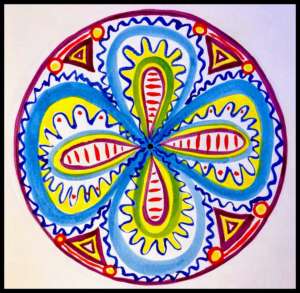
Colorful patterned mandala drawn with marker on paper
Hand drawn mandala example by Lisa Lounsbury


Nature Mandala Instructions 

Use objects found in nature
  1. Pick a location for your nature mandala. Maybe your yard near the sidewalk, a road,  or in your favorite park along a walking path. Place it so others can see your creation because it’ll brighten their spirits and they may be inspired to add to it! 
  2. Place a rock in the middle of the area you’ve selected. 
  3. Then surround it with other rocks in alternating colors or textures. 
  4. Possibly add sticks or pine cones. (It’s best to use things that won’t blow away in the wind.)
  5. Finally, take pictures to share with friends and challenge them to create their own nature mandala. 

The basic idea is to get outside, make art with nature, and hopefully involve others. Plus, it looks cool!
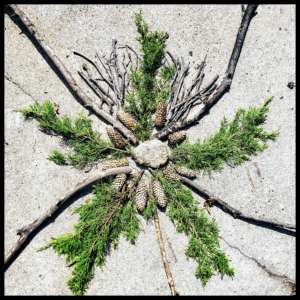
Mandala of natural elements
Nature mandala with twigs and cones


If you can’t get outdoors then try making a mandala at home using objects found around the house.

Indoor Mandala Instructions

Use objects found in the home or office
  1. Pick a location for your mandala such as in the middle of the table or on the floor. 
  2. Decide on a theme. For example, pick items that makes you happy, are colorful, or are found only in your kitchen.
  3. Look for an object to use for the center of the design.
  4. For the next layer, look around your home for interesting items that all have the same color or shape, for instance.
  5. Place those items around the center object.
  6. Now keep adding layers that extend from the center.
  7. Finally, take pictures to share with friends and challenge them to create their own nature mandala.
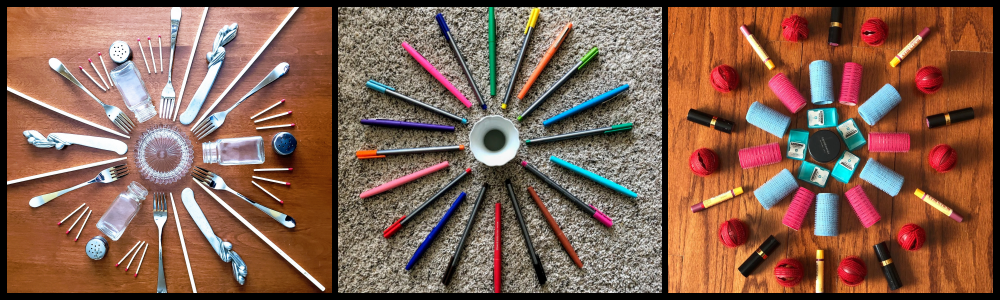
 

Three found object mandala examples
Found object mandala’s can be made with almost anything

Creating your own mandala from objects found in nature or around the house is a wonderful way to see items around us with a new creative perspective. Invite friends to do the same thing and build your own creative community!

– Lisa Lounsbury, MA, LMFT, ATR-BC, Executive Director of Art Lab Rx, LLC

The post Art Activity: Found Objects Mandala appeared first on Art Lab Rx.
25 Dec 20:54

Art Activity: Mosaic Collage

by artlabrx

I don’t know about you, but during this stressful time I struggle to focus and my mind wanders more easily. To manage this, I’ve been using the art-making process of creating a mosaic collage out of old magazines, calendar pages, and advertisements.

This art project involves ripping or cutting colorful paper into small pieces. Then I glue them onto a canvas, board, or thick paper to create a colorful mosaic collage.

The physical action of ripping or cutting paper can help us release stress, but we don’t stop there. When composing a pleasing image, we need to slow down as we make selections from our various pieces of paper. During the collage process, we make design decisions which help us to focus. It soothes and calms us as we apply glue to the back of each piece and build our collage design, one piece at a time.

This activity also helps us make a shift in how we view the things around us. We now might look at a magazine page or advertisement as art materials and not junk mail, for instance. Learning to shift our view through the art-making process can make it easier for us to look at our lives from a fresh perspective as well.

Art Activity: Getting Started

Your mosaic collage design can be whatever you want: a landscape, flower, abstract image, or even a portrait made from various images of eyes, lips and hair. This is also a good art project for students. You can use it to practice color theory, compare patterns, and learn shapes.

Gather materials:

  • Old magazines, advertisements, calendars and even old artwork
  • Scissors (optional)
  • Glue stick or bottled glue
  • Canvas, board, or paper (paper bags also work well)
  • Muffin tin or containers for sorting (optional)
  • Damp rag or paper towel for wiping fingers

Preparing Your Materials

  1. Look at the collected items for color and pattern. Then use what you see to help you decide on your design.
colorful printed materials for art activity
Old magazines & flyers work well

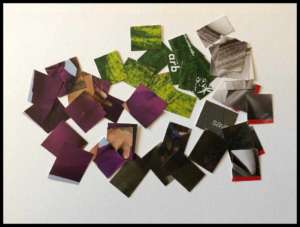
2. Tear or cut pages into approximately 1” size pieces. You decide if you want the pieces to be bigger or smaller, and they can be whatever shape you want. I find that squares are the easiest to cut out quickly.

Square mosaic collage pieces ready for art activity
Cut colorful paper into squares

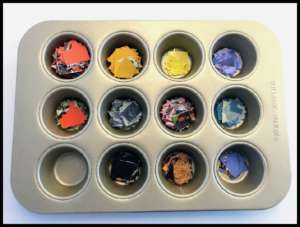
3. Sort the pieces by color, pattern, and maybe words. A muffin tin works well for this. For instance, place separate colors, leaf patterns, and flowers in different sections. This will make it easier to select your pieces when you are creating your design.

Muffin tin with sorted mosaic collage pieces
Use muffin tins to sort paper by color or pattern

4. Place your sheet of paper on the table in front of you. Set out your glue and a damp rag for wiping your fingers next to it. Place the muffin tin so you can easily see all the pieces.

Create Your Mosaic Collage

5. Decide what image you want to create. Do you want to make a self-portrait, or a landscape scene, or a bright colorful flower? You could even choose a famous art piece and recreate it with your mosaic pieces. It can be silly and wacky or soothing and calm. You get to decide what you want this to be.

6. Start by laying out a few pieces and arrange them until you are satisfied. Take time to play with your layout. Have fun!

7. Glue these pieces down before adding more.

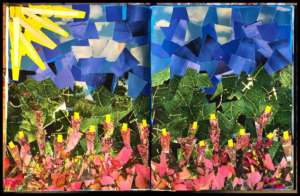
Mosaic collage by Lisa Lounsbury
Mosaic collage example by Lisa Lounsbury

8. Keep adding pieces and gluing them down. You get to decide when your piece is finished!

9. Set your new artwork aside to dry and don’t forget to clean up!

Congratulations! You turned trash into treasure. Well done. Now, share your picture with family and friends and invite them to make one of their own!

– Lisa Lounsbury, MA, LMFT, ATR-BC, Executive Director of Art Lab Rx, LLC

The post Art Activity: Mosaic Collage appeared first on Art Lab Rx.
25 Dec 20:54

Rebalancing

by artlabrx

Have you taken the temperature of your mental health? The recent increase in using thermometers to check for symptoms of COVID-19 got me thinking about the general imbalance of attention to our mind with respect to our overall well-being.

We may seek advice from a nutrition expert when we want to eat healthier, or look to exercise experts to find out better ways to move our bodies when we want to strengthen our muscles or increase flexibility. Also, we go to church services, read blogs from spiritual mentors or seek other types of spiritual counsel when it comes to improving our spiritual lives. If we freely tend to these aspects of our lives, then why do we hesitate to seek out a therapist for our mental health?

Our mental health is an equal component of our overall well-being. One could say it even has top priority since the phrase is, Mind-Body-Spirit. That said, our collective mental health is grieved right now.

As a society we are experiencing loss, great loss. Not only loss of life, which is devastating, but also loss of work, loss of schedule and routine, a loss of sensory inputs through our tactile awareness that bring about a loss of equilibrium, known as homeostasis. Homeostasis is our natural, physiological balance or rhythm.

You might not realize how important your sensory inputs are to the rhythm of your life. Consider the sound of the alarm at a certain time, how often you snooze, the smell of the morning coffee or tea, showering, different clothing for work, taste of food at certain hours from certain vendors, the clank of the keys, sounds of cars speeding by, sounds and smells of the city bus or train, keys in the door, the sensation of driving, holding the steering wheel and having traffic around you, the sound of work shoes on concrete sidewalks, and so much more. These sights, sounds, tastes, smells and the things we feel, all contribute to the sensory inputs of our regular routine.

Think of your personal homeostasis as a mobile. Each of those tactile elements are different….not everything is equal but it’s all in balance to make up our regular routine. Once one thing is knocked out of whack, everything else in the mobile moves and continues to seek balance, seeking it’s natural rhythm, homeostasis. That’s part of why we feel out of whack, maybe a little depressed.

So what do we do about it?

Move. Start by taking a look at what actually is still part of your normal routine. If you are not going back to work for a while, pay attention to which of the five senses needs to be activated. Maybe you need pretty flowers that smell good or specific foods that remind you of your previous routine. Or search out foods that are comforting to you. Find textures that appeal to you, be aware of the ones that are soothing, or satisfying for sound and feel. Go and do things that activate your senses.

We all have different circumstances and varying levels of resiliency. Take your mental health temperature, and if you recognize you need more help to return to homeostasis, it’s ok. We can help.

– Lisa Lounsbury, MA, LMFT, ATR-BC, Executive Director of Art Lab Rx, LLC

Image credit: Wooden Mobile “Expressions” by DJECO

The post Rebalancing appeared first on Art Lab Rx.
25 Dec 20:54

Shared Art

by artlabrx

Friendships and human connections add meaning to our life. As a child, I loved getting a letter in the mail from my pen pal; a little gift opened with great anticipation. I had equal joy writing a letter in reply as I thought of her delight in receiving it. I learned at an early age that writing can build relationships. It’s a beautiful means of communication. Not to mention, I loved to get personal mail! Art-making is another way we can express ourselves. I’ve discovered it, too, can enhance my friendships Plus, it’s still fun to get personal mail!   

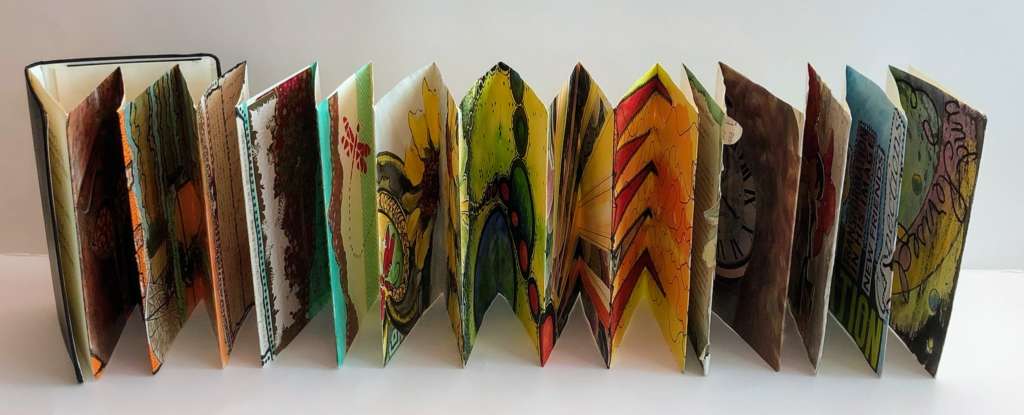
The idea to communicate this way with a friend came when I went to the Minnesota Center for Book Arts in Minneapolis (https://www.mnbookarts.org/) and saw a gallery show featuring a display of several Japanese-fold sketchbooks (website) completely opened. Artists made art in the first spread, then sent their books to other artists all over the world. The beauty of the Japanese-fold album is, when you lay the book open, it becomes one continuous piece. It seamlessly flows from one person’s creation to the next. The amazing variety of artistic styles was inspiring.

Shared Art

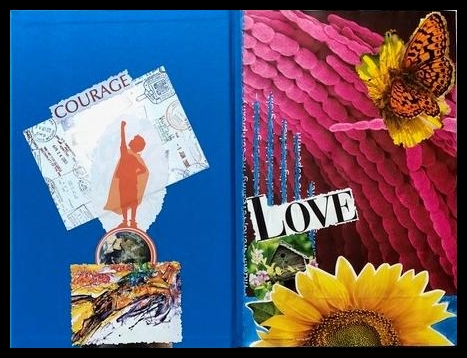
Collaborative or shared art intrigued me, so I asked an art therapist friend of mine to do one with me. We each bought a Moleskine Japanese album and met with our new sketch books, paper and art supplies at a central location. We chatted, as friends do, while making art on the same piece of paper; turning the paper every now and then so we could add to each other’s work.  

We pondered various methods of distributing our shared art piece and decided on ripping it to give the sections a natural deckled edge. As we said goodbye we alternately selected pieces to take home with us. The Moleskine Japanese Albums have little pockets in the back where we tucked our new collage ephemera pieces for inclusion in future artwork in our new books.


Shared Art

Once home, we each created to our hearts content on a two-page spread. Then we each added a little detail on the next spread as an invitation to the other person, enticing them to respond. 

I encourage you to start a visual conversation with a friend. You can start how we did  or choose a theme for the first spread and decide when you’d like to send your books back and forth. We tried once a month and that worked for a while, but later settled on once every other month. You get to choose, make it your own.

Shared Art

This visual conversation contributes to the Adlerian concept of social interest by connecting with others in a unique way. Often both people will be thinking of the other as they make art on the pages. Friendships are enriched with the personal and intimate nature of the small shared book, responding to each other’s art-making. The book becomes precious and holds a sacred space for non-verbal communication. 

It also gives us the opportunity to see things from a completely new perspective, helping us to see our life with a new lens. Usually both friends show their book to others, encouraging them to start a visual conversation of their own. 

This shared art experience helps with both anxiety and depression because it is calming and soothing to create art. Plus, it encourages you to take action by getting the book, responding to the other’s work, and then sending the books back and forth in the mail. It’s an active process.

It enhances neural plasticity by encouraging both parties to think of novel ways to create based on the other person’s inviting images. The act of looking at the book when it comes in the mail, seeing their response to your art, their invitation to you, and the process of thinking how you are going to respond creates new neural pathways. Then, as you act on those thoughts and make the art, you are strengthening that pathway and enhancing neural plasticity, thus changing your brain. Old dogs CAN learn new tricks.

This project has the same excitement of the old-fashioned pen-pal letter in the mail, with a creative twist. It’s a great way to connect non-verbally with someone who lives far away or in the next town. It can be a great way to get unstuck and to feel inspired. Plus, it’s just plain fun!

– Lisa Lounsbury, MA, LMFT, ATR-BC, Executive Director of Art Lab Rx, LLC

The post Shared Art appeared first on Art Lab Rx.
25 Dec 20:54

Creative Break: Art In Community

by artlabrx

In March, when my business suddenly changed, like most everyone else’s,  I was no longer facilitating in-house art therapy groups. I felt a deep loss. It was then that I realized how important it was to me to be creating within a community and interacting with people about their artwork. 

It was very clear that I needed to create art within a community and to see other people’s artwork. I needed to start something to make this happen for myself. So I sent an invitation to my friends on Facebook asking them to join me on Zoom for a creative break. Happily, several people jumped at the chance to make art together!

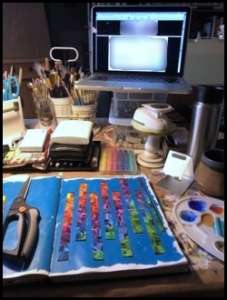
Creative Break computer and art materials setup
Ready for Creative Break!


The Creative Break Experience

In Creative Break we welcome each other, connect briefly about the topic, then independently create and explore with instrumental music playing in the background. We then show our creations to each other and share what the session’s topic means to us.

For me, during the exploration, I find I’m able to relax and get into a state of Flow. Sometimes I’m able to immediately create an art image that expresses what I’m feeling, but at other times I struggle with what to make. In that struggle I keep thinking, keep wondering, keep moving around my studio. Often I grab some art material that I am instinctively gravitating towards because I know that I need to stop overthinking it and just start making something. That effort of simply starting seems to unlock something inside of me. It allows me to go past my own criticism, to go beyond my own judgment; and I just create, making something. 

Exploring through Art Making

By diving in and making something, I can allow my thoughts to wander in and out. I might think, “I didn’t realize this is what I thought about this,” or, “yes, this is how I feel.” I often discover buried or new thoughts. 

When it’s time to connect and share with others, I learn about how they explored and discovered their thoughts and feelings about the topic. It allows me to process what I am thinking and feeling; it helps me realize that our art pieces speak volumes. I often find myself transformed through this seemingly simple task. It’s simple, yet profound. 

The more I attend Creative Break, the more I feel a sense of community and I believe others feel the same way.

“Creative Break has helped me connect my emotions to my art. Prior to this time, my process was to start with the idea of what I was creating. Starting instead with a feeling and seeing what develops is changing my whole creative process.” – Erinn

Sometimes, I will take what I started in Creative Break and continue working on it after our session. This usually ends up being fun and prolongs the feelings of rejuvenation. Many times I feel better after a Creative Break session. It helps me feel grounded even if I don’t have a profound epiphany. I have a greater sense of energy that propels me to move forward through the rest of the week. I feel more connected with other people and less isolated, better heard and understood, more resilient.

Through time, our art-making community has become a valuable part of my life, and of those who regularly attend the creative break. What started with a selfish goal in mind has turned into something that has been a blessing to many people. 


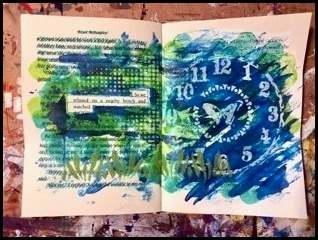
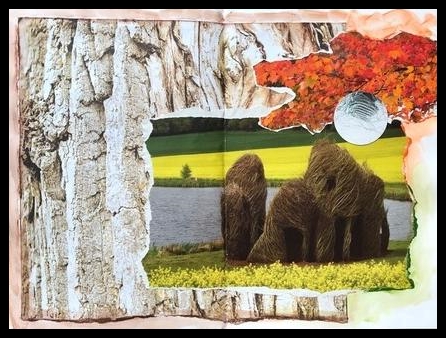
Creative break altered book page of clock
Altered book page for “Rest” theme

Take a Creative Break

Many of us are struggling with challenges that are different now than they were before. So when people hear about Creative Break, they ask me to provide this opportunity for their children. Medical professionals and mental health care providers have also asked if I could do this for them. With that in mind, I have started Art Therapy Creative Break sessions for adults and teens at Art Lab Rx. 

Creative Break sessions are held weekdays with groups for teens and others for adults. The one hour sessions are offered through a HIPAA-compliant website in small groups of up to 8 people. 

We will have a topic, time for quiet art-making, and time for simple sharing and processing the art in the group. 

Come join us for one session or participate every week. Only basic art materials and a quiet place to join us online are needed. For more information please send an email to ar******@***il.com. We’re waiting to hear from you!

– Lisa Lounsbury, MA, LMFT, ATR-BC, Executive Director of Art Lab Rx, LLC

The post Creative Break: Art In Community appeared first on Art Lab Rx.
25 Dec 20:53

Embracing Discomfort

by artlabrx

In this whole process of change, we’re spending more time in our homes than ever and we’ve needed to use our space differently. Many people are using this time to remodel their homes and yards. I wonder if, like me, they are seeing the spaces in their homes from a different perspective; realizing what works and what doesn’t.

I’ve had to take a fresh look at my art-making space. How I normally used the space wasn’t working anymore as my needs changed. I wanted to shift into providing telehealth for my clients which meant I needed to reconfigure my space. Basically, I had to change my entire studio around to create a conducive background for teletherapy. It soon became a disaster zone with boxes, art supplies, books and furniture spilling into the rest of the house as I began to rearrange my space from this new perspective. 

It was both exciting and uncomfortable. The chaos felt overwhelming at times, but in order for me to move forward, I realized I must embrace the discomfort and make the changes. Thankfully all of my efforts paid off. I love my reconfigured studio space. Now it only takes a few moments for me to make a shift if I want to have my daughter make art with me, to conduct an interview over Zoom, or to provide a telehealth art therapy session. 

Encouraged by the experience, I’m allowing that same change to occur in my own art-making process. I’m embracing the discomfort by trying new materials, tools and methods; trying things I’ve never done before. It can be messy and uncomfortable, especially for those of us who want perfection. When we expect everything we do to be a masterpiece, we tend to not challenge ourselves to step out of our own box and we miss out on new discoveries.

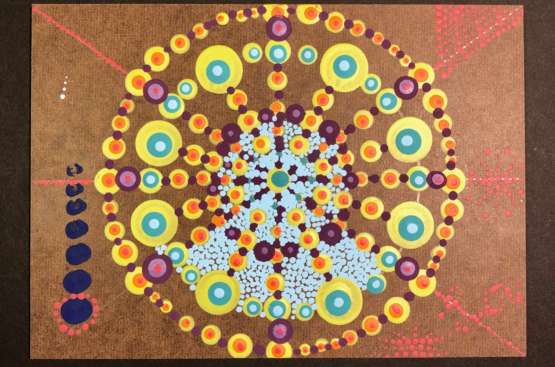
For example, here is my practice dot painting piece that looks pretty awful.

Embracing Discomfort

I didn’t understand how to use the tools yet. For instance, I didn’t know to space the dots or when to layer the paint. So I gave myself permission to make a mess and fail on this first one. It was freeing to just play with the new tools and not have unrealistic expectations of myself.

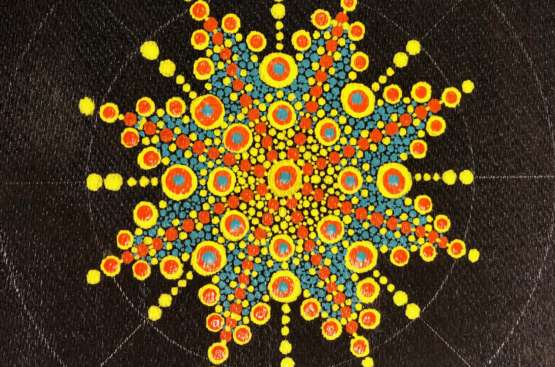
Here’s another attempt; it’s not perfect, but it’s interesting and fun. I’m learning. They are both works in progress, and that’s okay, as I too am a work in progress. We all are.

Embracing Discomfort

I’m embracing the discomfort of not being good at something in order to learn something new and continue to grow creatively. I always want to remain teachable.  

By doing this, I’ve discovered a new, unexpected source of relaxation using a process which is very different from my other work. I’ve found a painting method that is very soothing and comforting to me. 

You never know what you are going to find when you try something new. You never know what you are going to discover. This process also has a ripple effect. When you expand your mind to learn new things, new languages, or new skills, you become a better problem solver. You are expanding into areas of your brain that have been resting. Experimenting gives your brain a much appreciated workout.

Transform the need for perfection into a mind of curiosity. Allow yourself to move in small steps. If you are unable to embrace discomfort in one area of your life, try it in another area. The practice can transfer to other areas of your life when you are ready. Be gentle with yourself and just try something different. Embrace discomfort.

– Lisa Lounsbury, MA, LMFT, ATR-BC, Executive Director of Art Lab Rx, LLC

The post Embracing Discomfort appeared first on Art Lab Rx.
25 Dec 20:53

Seeing the Light Through Darkness

by artlabrx

Most of us are having a really tough time right now. At the same time, beautiful things are happening all around us.

At the beginning of the pandemic, when my business came to a complete halt, I had my own version of a three-year-old temper tantrum. It wasn’t pretty, but emotions are natural. It’s ok to be angry, sad, frustrated and scared. Staying stuck in our negative emotions can cause problems.

After doing the work of getting it all out of my system, I was able to look up and ask “Where’s the gift, the beauty?” “What’s the next right thing in front of me?”

Highlighting the Good

The good is out there; it always has been and it always will be, we just need to search for it. Turn off the noise and purposely notice the calm. Breathe slowly and deeply. Be still so you can see the light around you.

Let me encourage you to make a paradigm shift. Start by intentionally noticing the little things such as the giggle of a child, a cute puppy held by someone in your Zoom call, the taste of your favorite food, the smell of your morning coffee, or the feel of the cool air on your face. These little things are surrounding us every day and they can be magical if you look a new lens.

Seeing the Light Through Darkness

Sometimes we are so engulfed in the negativity and darkness, that we can easily miss the beauty. It requires effort on our part to see past the negative, to go in search of good, positive things. When we do make the effort, it’s worth it. Regularly discovering or noticing moments of beauty and light can bring thankfulness, lead to a healthier mindset, increase our resilience, and improve our ability to cope.

Shining Light on Priorities

My personal experience with social-distancing during this time of COVID has forced me to slow down and take a look at my priorities. It has forced me to pivot and change how I look at my life and my business. To look closely at my relationships and see a deeper value in those who I find precious.

It goes against my nature to slow down, but because of it, I’ve been able to shift my concept of success and how I practice art therapy. I began to offer art therapy virtually, something I never thought I would do because I thought it would be too impersonal. But by doing art therapy with clients through telehealth, I’ve come to realize that one of my gifts is to connect well with clients even online. This works.

Seeing the Light Through Darkness

I’ve also created online groups that I would have never thought of before. These groups have fostered new ways for me to develop community with others who are also looking to find light in this darkness. How have you developed community? Has it been intentional or organic? Either way is okay as everyone is going to carve a different path, to whack their way through the weeds of darkness to find their own light.

Art in Community Brings Hope

Making art in community with others is what’s helping me and it could help you, too. I invite you to join one of our Creative Break groups or start one of your own. Simply gather friends together on your favorite online platform and make art together. Remember, it’s not about the final art product, it’s about community. Your community of friends and family can become your light in the darkness. You can make a difference for each other.

“I love the Creative Art Break group! I have participated for 10 months and in this time, I have uncovered a new layer of my soul. I have tapped an inner wisdom that provides creative healing and release during challenging times of transition, grief, and complexity. I learned about various mediums, techniques and expressions and have made lasting friends. Our community of creators provide wise insight about each other’s artwork, and we provide encouragement, support and the promise that through art and community there is always hope. The antidote to isolation is this community of creation.”

– Mary G., Creative Break Participant

– Lisa Lounsbury, MA, LMFT, ATR-BC, Executive Director of Art Lab Rx, LLC

The post Seeing the Light Through Darkness appeared first on Art Lab Rx.
25 Dec 20:53

Caring for the Caregiver

by artlabrx

A kind word, a thoughtful gesture, or simply looking into someone’s eyes while smiling may be all it takes to let others know they are seen and heard, it shows care and compassion. We all know that, but it really strikes home when we are the recipient.

I experienced this in December when I was hospitalized with COVID-19. I was reminded that it takes a special person with a certain type of heart to be in a helping profession. The nursing assistants who made a difference for me were those who really saw me and provided  incredibly intimate care. Simple things like a hot washcloth to wash my face, a toothbrush, lotion for my feet, or a kind word were a gift. In stark contrast were those who came into my room in the middle of the night, flipped on the light and began removing my covers with no warning. It was a harsh shock. I was a task and not a person. It was easy to tell who were the ones able to express the gift of humanity, they made such a difference.

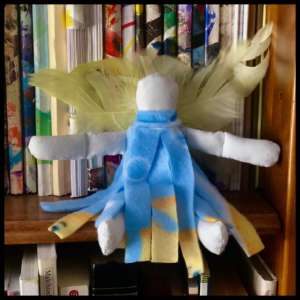
Handmade angel doll with soft dress for comfort
Angel doll created to soothe and comfort

Caregivers Need Care

Expressing care and concern can be healing, but what about when we don’t make an effort to express that deeper level of care for someone? Or when we don’t receive that level of care ourselves? Caregivers need to be seen and cared for as well. 

The helping professional or the family caregiver is usually the last person to get support, if they get it at all. For a long time that was my experience. I was that person, giving and doing without recognizing that I needed to take care of myself. As a single mom in grad school, things changed when one day my mentor asked me what I did for relief and for fun. I had no answer.

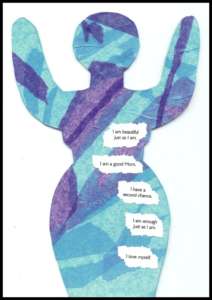
Blue paper woman caregiver with affirmations
Caregivers need affirmations

Take a Deep Breath

How do you answer that question? If your reply is “not enough” or “nothing,” I encourage you to pause, take a deep breath, and consider ways you might practice self-care. Caring for yourself is about doing small, easy things for yourself, so keep it simple. Is there something you enjoy doing that makes you lose track of time? Try doing that or something similar.  Maybe listen to calming music, or think of three things you are grateful for.  Personally, I find doing something creative has a healing influence on my life.

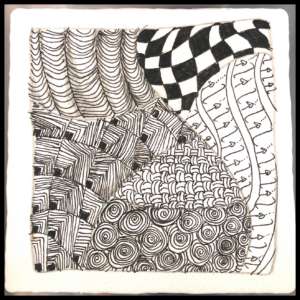
Black marker doodles on white paper
Practice Zentangle for Self-Care

Practicing Self-Care

A surgeon friend of mine practices Zentangle drawings to help her slow down and focus on something other than the frenzied pace of her work life. Engaging in the moment, watching the way the pen or pencil glides across the paper has a calming effect and lets her mind wander. I’m the happy recipient of one of her pieces as shown above. Curious to learn more? Visit the Zentangle website for instructions. 

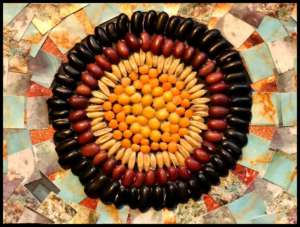
Another idea is to find objects around you and arrange them into a pattern. Begin by placing an item in front of you then adding other elements around it. Casually observe how things relate to each other as you set them in place. It’s surprisingly satisfying. For example, creating this mandala with beans and seeds from my kitchen was wonderfully calming as I laid them out in a repetitive pattern. See our Found Objects Mandala blog post for more examples and instructions 

Bean and seed mandala created for soothing self-care
Found Object Mandala with Beans and Seeds

One Step Further in Self-Care

If doing something for yourself at home is a struggle, try taking a local wellness workshop or art class. There are many opportunities in the Twin Cities area for exploring creative self-expression. Give yourself permission to try something new. While I’m an artist and Art Therapist, I sometimes need to give myself permission to divert from my normal routine, and taking a class is a perfect way to do that. For individual attention on a deeper level, contact us at Art Lab Rx to meet with an art therapist. 

– Lisa Lounsbury, MA, LMFT, ATR-BC, Executive Director of Art Lab Rx, LLC

Featured Image Artwork Credit: Pamela Bredlow “Comfort”. Used with permission.

The post Caring for the Caregiver appeared first on Art Lab Rx.
25 Dec 20:53

Wanted: Part-Time Art Therapist

by angie mccormick

Pre-licensed okay

February 5, 2026


Art Lab Rx is a mental health agency focusing on art therapy in Blaine, MN. We have a thriving business with a mobile art therapy studio, a great workplace culture where our team and clients are valued, and we serve a full spectrum of populations. This is a place where you can grow your career with the flexibility to focus on other areas of your life. Kind of a win/win.

Qualifications:

  • Master’s degree in art therapy

  • Good communication skills

  • Good organizational skills

  • Pleasant disposition

  • Self-starter, works independently


Responsibilities:

  • Plan and facilitate group session with a variety of populations

  • Facilitate individual session caseload of at least 10 clients per week (will help to build case load)

  • First right of refusal on other therapy or wellness opportunities when available

  • This position may work with children, adolescents, adults, and/or a combination

  • Create invoices for hours worked every two weeks

  • If not fully licensed, this position requires concurrent clinical supervision by a registered at therapist (ATR or ATR-BC)

  • Art therapist will adhere to the ATCB Code of Professional Practice, MN State laws for therapy, as well as, facility policies and procedures


Benefits:

  • Fair compensation for group work depending on skill, experience, education, and market conditions

  • Insurance payout for individual clients

  • Independent Contractor with 1099 at the end of the year

  • Free one hour of supervision per 10 hours of direct client contact for Pre-licensed

  • You get to work in a wicked-cool warehouse studio


Submit cover letter, resume and examples of personal artwork to ar******@***il.com.


The post Wanted: Part-Time Art Therapist appeared first on Art Lab Rx.