Shared posts
04 Dec 12:12
Why do you wake up before your alarm?
by Jason Kottke
Your body clock alarm is just as accurate as the one on your phone: your body naturally takes note of what time you want to wake up and wakes you up.
There's evidence you can will yourself to wake on time, too. Sleep scientists at Germany's University of Lubeck asked 15 volunteers to sleep in their lab for three nights. One night, the group was told they'd be woken at 6 a.m., while on other nights the group was told they'd be woken at 9 a.m..
But the researchers lied-they woke the volunteers at 6 a.m anyway. And the results were startling. The days when sleepers were told they'd wake up early, their stress hormones increased at 4:30 a.m., as if they were anticipating an early morning. When the sleepers were told they'd wake up at 9 a.m., their stress hormones didn't increase -- and they woke up groggier. "Our bodies, in other words, note the time we hope to begin our day and gradually prepare us for consciousness," writes Jeff Howe at Psychology Today.
(via digg)
Tags: science sleep time
Merijn, Aune.emily likes this
03 Dec 15:39
This is what it's like to be poor
by Jason Kottke
AmberReally powerful.
Kinja user KillerMartinis provides some perspective on what it's like to live in poverty.
Rest is a luxury for the rich. I get up at 6AM, go to school (I have a full courseload, but I only have to go to two in-person classes) then work, then I get the kids, then I pick up my husband, then I have half an hour to change and go to Job 2. I get home from that at around 1230AM, then I have the rest of my classes and work to tend to. I'm in bed by 3. This isn't every day, I have two days off a week from each of my obligations. I use that time to clean the house and soothe Mr. Martini and see the kids for longer than an hour and catch up on schoolwork. Those nights I'm in bed by midnight, but if I go to bed too early I won't be able to stay up the other nights because I'll fuck my pattern up, and I drive an hour home from Job 2 so I can't afford to be sleepy. I never get a day off from work unless I am fairly sick. It doesn't leave you much room to think about what you are doing, only to attend to the next thing and the next. Planning isn't in the mix.
Her response to the first (agressively negative) comment is worth reading as well.
Update: We can't have nice things on the Internet...looks like KillerMartinis was not exactly forthcoming with regard to her financial status. (thx, @j4)
Tags: money
01 Dec 02:42

This year my Christmas candy wishlist is bigger than ever! It's making a real mess of things in my kitchen, but in the end those dirty dishes are usually worth it. Of course, if I had my preference every candy recipe would be just like this one - easy, delicious, and my kitchen didn't suffer any turmoil. And it's a seasonal favorite to boot!

I mixed these up in five minutes flat, and in about five more I had them all rolled out and stored in a tin. You can eat them immediately, but they improve upon standing. In about three days' time the boozy edge will mellow and the bourbon flavor will be more developed. I plan to make several batches ahead of time to give as Christmas gifts.


Since these only have five ingredients, I'd urge you to use best of each. I used quality chocolate, local honey and a fine Kentucky bourbon. Keep these guys tightly closed in a tin for longevity and they'll keep for up to four weeks!
Five Minute Bourbon Balls
[click for printable version]
Yield: 1 1/2 dozen
Source: adapted from a vintage Betty Crocker microwave cookbook
Prep: 5 minutes, total time about 10 minutes
1/2 cup/ 4 oz. semisweet chocolate chips
2 tablespoons/ 43 g honey
1 1/2 cups finely ground vanilla wafers (such as Nilla Wafers)
1 1/2 cups/ 155g ground walnuts
3 tablespoons/ 45 ml bourbon whiskey (I used Wild Turkey Kentucky Bourbon)
Pour 1/2 cup of the ground walnuts in a small bowl and set aside for later use.
Mix chocolate chips and honey in a 1 1/2 quart microwaveable bowl. Heat in the microwave at full power 1-2 minutes, until the mixture can be stirred smooth with no lumps remaining.
Stir in ground vanilla wafers, walnuts and whiskey. Stir; mixture should be quite thick. Scoop out mixture by the level tablespoons and roll into balls. Roll in reserved 1/2 cup of ground walnuts. Store tightly in a covered container. Flavor will fully develop over four days. Stored properly, these will keep up to 4 weeks.
Note: If you don't have a microwave, you can melt the chocolate and honey over medium-low heat in a saucepan. This may take a little longer (you'll have to abandon the 5 minute moniker) but it'll be worth the time and effort!
Five Minute Bourbon Balls
by noreply@blogger.com (Heather Baird)
This year my Christmas candy wishlist is bigger than ever! It's making a real mess of things in my kitchen, but in the end those dirty dishes are usually worth it. Of course, if I had my preference every candy recipe would be just like this one - easy, delicious, and my kitchen didn't suffer any turmoil. And it's a seasonal favorite to boot!
I mixed these up in five minutes flat, and in about five more I had them all rolled out and stored in a tin. You can eat them immediately, but they improve upon standing. In about three days' time the boozy edge will mellow and the bourbon flavor will be more developed. I plan to make several batches ahead of time to give as Christmas gifts.
Since these only have five ingredients, I'd urge you to use best of each. I used quality chocolate, local honey and a fine Kentucky bourbon. Keep these guys tightly closed in a tin for longevity and they'll keep for up to four weeks!
Five Minute Bourbon Balls
[click for printable version]
Yield: 1 1/2 dozen
Source: adapted from a vintage Betty Crocker microwave cookbook
Prep: 5 minutes, total time about 10 minutes
1/2 cup/ 4 oz. semisweet chocolate chips
2 tablespoons/ 43 g honey
1 1/2 cups finely ground vanilla wafers (such as Nilla Wafers)
1 1/2 cups/ 155g ground walnuts
3 tablespoons/ 45 ml bourbon whiskey (I used Wild Turkey Kentucky Bourbon)
Pour 1/2 cup of the ground walnuts in a small bowl and set aside for later use.
Mix chocolate chips and honey in a 1 1/2 quart microwaveable bowl. Heat in the microwave at full power 1-2 minutes, until the mixture can be stirred smooth with no lumps remaining.
Stir in ground vanilla wafers, walnuts and whiskey. Stir; mixture should be quite thick. Scoop out mixture by the level tablespoons and roll into balls. Roll in reserved 1/2 cup of ground walnuts. Store tightly in a covered container. Flavor will fully develop over four days. Stored properly, these will keep up to 4 weeks.
Note: If you don't have a microwave, you can melt the chocolate and honey over medium-low heat in a saucepan. This may take a little longer (you'll have to abandon the 5 minute moniker) but it'll be worth the time and effort!
Vgreco51 likes this
30 Nov 00:57


Vancouver Aquarium Releases Rehabilitated Harbor Seals
by Andrew Bleiman
AmberThese look so silly and cute.
After receiving months of care at the Vancouver Aquarium Marine Mammal Rescue Centre, seven rehabilitated Harbor Seal pups poked their noses out of their transport kennels and wiggled down to the waters of Howe Sound on the morning of November 20. Five of the rescued seal pups were outfitted with satellite-linked transmitters, which will provide valuable data to the aquarium’s veterinary team regarding the seal pups’ travel patterns and progress following their release.
In the water, the transmitters don't weigh anything, and the seals don't seem to be bothered by them at all! They aren't invasive; no part of the animal has been punctured or any pain caused. They will fall off by the time the animals molt next spring, if not before. When the animals move, the antennas point backwards, and so they don't affect the seals' ability to swim.The transmitters are the result of decades of collaboration between veterinarians, biologists, engineers, and programmers.
Photo credits: Vancouver Aquarium
See photos of the release after the fold!
28 Nov 14:56
There is a horrible but small chore in your life that you have been putting off.
AmberUgh, fine. I'm gonna go through the giant pile of mail on my desk tonight. And sew the button back on Adam's pants.
Today, you are going to do it. You are going to spend that five minutes cleaning that hideous toilet or finally calling your insurance company or whatever it is. Here’s how.
Step 1: Steel yourself mentally, physically, and spiritually.
Step 2: Gather the items required to get this thing done.
Step 3: Put on “Fancy” by Reba McEntire (or the original by Bobbie Gentry; your choice), the single most inspiring and motivating piece of art ever created by humans. Let its fineness and flawlessness and power flow through each cell in your body. Realize you are so much bigger — and stronger — than your humble roots and nigh-impossible odds whatever stupid tiny chore this is. When she ramps up to the climax, belt, “I may have been born just plain white trash — BUT FANCY WAS MY NAAAAAAAAME!" at the top of your lungs.
Step 4: You now have the strength to do anything. Re-play Fancy if need be and get that shit done.
Here’s your one chance, Fancies, don’t let me down!
Christal and -1 others like this
27 Nov 01:20
Step 316: Don't feel embarrassed on behalf of other people
Via Boyfriend Dave:
"You know, you don’t have to feel embarrassed for people when they’re doing something on purpose," he said. "They’re doing it because they want to. They’re doing it because it makes them happy. Don’t worry about her — she’s just doing her. She’s not embarrassed. So why are you?"
Someone wearing a weird outfit? Someone dancing who’s not great at it? Someone getting up for karaoke without the voice for it? Don’t cringe on their behalf; that is almost always an expression of your discomfort in your own skin. It takes a lot of courage to be yourself, to do something because you love it. Don’t worry about those people; they are fucking fine. They’re great, in fact.
mkvande and -1 others like this
25 Nov 19:34
The Most Memorable Rideshare Trip I’ve Ever Taken
by David Raether
by David Raether

The following is an excerpt from David Raether’s new memoir, Tell Me Something, She Said, which is about Raether’s experience falling in love, becoming a sitcom writer in Los Angeles, losing everything, becoming homeless, and rebuilding his life. Raether often used Rideshare to travel from Los Angeles to San Francisco to visit his family. Here, Raether describes one of his most memorable experiences using the service.
People who engage in Rideshare are, almost by necessity, a more open-minded bunch, less dogmatic about life and its prospects, largely reasonable. It’s hard to be doctrinaire about things when you take a complete stranger in your car for six hours. And many of the drivers I’ve ridden with are women. When I tell people this, generally they are shocked. But Ridesharing is different than hitchhiking. You answer the ad on Craigslist, they get your phone number and email address, they can see who you are by looking you up on Facebook, and they talk to you on the phone to get a sense of who you are. The main attribute you both are looking for is this: Is this person gonna be cool about the ride? For me, I’m just trying to get to San Francisco or LA. I’m not looking to get into a big political or religious discussion, I’m not looking for a lifelong friend, and I usually don’t even get a last name.

In April, 2011, before we both left Los Angeles, my daughter Saskia and I made our last Rideshare together up to the Bay Area. This one ride was the fitting coda for both us about the years we endured, together and apart, as a father and a daughter since my wife and I separated.
“Who is this guy we’re riding up with?” Saskia asked, as we sat at the Universal City Red Line station waiting for our ride up to San Francisco. Saskia—who was heading to college in the fall—was joining me because her big sister, Sasha, my eldest, was coming from New York to visit friends in San Francisco, and this probably would be the last time Saskia and I would ever make this trip.
“His name is Juan Carlos,” I said.
“Juan Carlos what?” she asked.
“I don’t know,” I said. “That’s all I got.”
“Why is he going up to San Francisco?”
“I don’t know,” I said.
“You don’t know his last name, you don’t know why he’s going up to San Francisco,” she said. “Good job, David.”
“He sounded nice.”
“Great,” she said. “He’s probably a gang-banger. And he’s probably going up for a gang meeting.”
And then she laughed.
Joking about a man named Juan Carlos was something that came easily for Saskia because she was fluent in Spanish and had grown up in Los Angeles. The stew of languages and cultures that she swam in every day was normal for her. Virtually everyone she knew was bilingual, and not just in Spanish: Mandarin, Armenian, Russian, Arabic, and on and on.
She was being ridiculous about Juan Carlos, of course, but she did point out one of the basic problems with Rideshare: you really have no idea who you’re going to end up spending the next six hours with. For all you know, it could be Charles Manson. Or an Amway distributor, which is its own special form of torment.
When I talked with him on the phone, Juan Carlos hadn’t sounded like a serial killer, or a gang banger, or dangerous at all. He sounded like a very happy person, fun-loving, blithe, the sort of typical type of person the rest of the world imagines living in sunny Southern California: young, vaguely foreign. I liked him because on the phone he laughed easily at most things I said, funny or not.
But I really didn’t know much about him. Which would be no big deal were I making this trip alone. On my own, I always figured if the ride sucked, I could get out anywhere and figure things out from there. After a year of homelessness I had discovered resourcefulness that I did not know I possessed. I now knew that I could be proverbially and literally dropped in the middle of nowhere and figure my way home. In whatever form that home might take. It felt somewhat like freedom.
But Saskia was joining me, and wasn’t really all that keen on the trip anyway. She would see her sister again in a few weeks anyway when the eldest three girls would come from the East Coast for her high school graduation, plus the trip meant she would miss two days of school near the end of her senior year, and, finally, the whole idea of ride-sharing with her father must have irritated the hell out of her. Simply saying “Trust me, Saskia,” to a girl who had seen her father lose her childhood home, I’m sure pushed her normally trusting nature to the outer reaches of its elasticity.
I tried another approach.
“Saskia,” I said in my well-practiced father-knows-best tone, “Some day, maybe when you’re in your thirties or forties, you’re going to tell your children about the Rideshare trips you took to San Francisco with your father. And your kids and everyone else you tell are going to think they’re such incredibly cool stories and they’re going to love hearing about it.”
“Somehow I doubt it,” she said, and then scowled and curled up the right side of her upper lip.
A moment later, Juan Carlos pulled up in a three year-old Hyundai subcompact that had not been packed with the greatest of care. The left side of the back seat area was stacked high with clothes, books, shoes, a guitar, and the other clutter of a life lived casually. There was room for Saskia and possibly room for her backpack if we just rearranged things a bit. “There we go! Plenty of room,” he said. Saskia stared blankly at him.
“Sorry it’s a little crowded, but you’re slender,” he said to her with a goofy smile. That got her to smile.
He had on a T-shirt and track pants and wore his hair long and looked to be about 25. I bet he’s from Argentina, I thought, because I love Argentine soccer, and many Argentine soccer players have long hair. I have wanted to go to Argentina since before I was born. But I probably never would, so getting a ride from an Argentine was about as close as I would ever get to the country I had dreamed of visiting since watching the 1978 World Cup and deciding it was my true homeland, the way a dreamy twenty-two-year-old English and philosophy major from Minneapolis might do.
I looked back at Saskia. She glared at me, the way an angry 17-year-old girl whose father had completely screwed up her life might do.
“So,” I said to Juan Carlos once we were on the freeway, “Tell me about yourself.”
Maybe he could get that upper lip to unsnarl. I was long past capable of that.
Juan Carlos was not 25, as I had guessed; he was 38. He was originally from a village in the Michoacán state of Mexico, but he had lived in the United States since he was 14. His village was outside the big Mexican city of Morelia, and his had been a happy childhood. His parents owned farmland and raised sugar cane, and he lived in a nice house on the edge of the village. They had horses and 25 head of cattle (whom he knew, each of them, by name.)
The family had three dogs: two Chihuahuas and an unspotted, all-black Dalmatian. I’d never heard of an all-black Dalmatian. Maybe it was just a big black dog that he had decided was an extremely rare all-black Dalmatian because people like to make things up about their lives sometimes to make them seem more interesting. The Dalmatian’s name was Negro.
Negro, he told us, lived to be 20 years old. Or maybe he wasn’t. You never know how old a dog is, he said. They live their lives the way they want to.
In Mexico, he said, we think about dogs differently than in America. In America, people think about dogs as members of their families. Americans have to raise the dog, train him, teach him, feed him and care for him, as if he were a baby joining the family. In Mexico, he said, dogs are our best friends. They may live with you, but they can take care of themselves. They find their own food, they wander around all day with their other dog friends, and at night, they come to visit you, like a friend would.
In the mornings, the dogs would leave the house, sometimes anticipating where Juan Carlos and his father and brothers would go during the day, and the dogs would come along. He said at nights, after working in the fields, when it was time to bring the cattle in, his grandfather would whistle and the Chihuahuas and Negro would come up to the men on their horses. His grandfather or his father would tell the dogs it was time to bring the cattle in. And off they would go.
“Wait a minute,” I said. “You used Chihuahuas for herding cattle?”
“Yes,” he said. “They are very good at it. Dogs can do anything. They don’t just do what you think they can do, they can do much more.”
I looked at Saskia and she was smiling. Juan Carlos’ beguiling tales of village life in Mexico were softening her. The idea of Chihuahuas herding cattle seemed particularly amusing.
It was a good morning for a ride. We were coming up to the Tejon Pass and the sky was clear and the hillsides were still green from the winter rains and snow. It was sunny, but it wasn’t yet summer. The air was still cool, and when I rolled down the windows it was fresh and smelled good. This was going to be a happy ride.
“Do you have brothers and sisters?” I asked, wanting to expand the conversation, wanting Juan Carlos to tell us more about his life.
“There were five boys and then my sister came.”
I smiled, thinking of my six girls and two boys. “Oh, man, your sister must be the princess of the house.” I laughed a fatherly laugh.
“Well, actually, my sister passed away,” he said.
“Oh, that’s terrible,” I said. “What happened?”
He got quiet for a moment, and I looked back at Saskia, who suddenly had a concerned look. I rolled up the window because I didn’t want the noisy sound of rushing air to interrupt. He took a deep breath.
“When I was 12 years old, my sister, my mother, my father and two of my brothers were killed in a car accident. My thirteen-year-old brother and my seven year-old brother and I weren’t in the car; we weren’t there when it happened.”
Saskia had a stricken look on her face. This just seemed so wrong. Silly, light-hearted Juan Carlos with the cattle-herding Chihuahuas and the 20-year-old Dalmatian, suddenly seemed to both of us to be a different sort person all together.
“I just… I just can’t imagine that,” I said.
Juan Carlos stared ahead at the road. We drove for a moment, and I started to feel bad for pressing the point. But he continued.
“It was hard,” he said. “I mean, I was just a kid.”
“How did you come to grips with it? I mean, how do you get through something like that?”
“There were two moments,” he said, “that sort of pushed me through it. The first was when my uncle told my two brothers and me what had happened. I felt a strong rush through my body, like I was high on the most powerful drug possible. I just felt so light, like I was flying.”
“It must have been adrenaline,” I said.
“I don’t know,” he said. “Maybe it was adrenaline. Or maybe it was their spirits moving through me. I just don’t know.”
The way he said this made me believe the second guess was correct.
“The second moment happened on the morning of the funerals. I was showering and, when I finished, I reached out for a towel.” He took a hand off the steering wheel and made a grabbing motion. “But there wasn’t one there.” He paused. “That’s one of the things my mother always did. She was always making sure there were towels in the bathroom and soap and little things like that.”
“And then I realized that this was the rest of my life. No one would take care of me. I was alone in the world. I would have to take care of myself. And no matter what happened to me, good or bad, I would have no one to share it with. I couldn’t come home and say: ‘oh, listen to what happened to me.’ Because there now was no one there to listen. No mother. No father. No older brothers. No little sister.”
 David Raether’s book can be purchased on Amazon in paperback or for Kindle. Please consider supporting the author by purchasing his book.
We took this in, and it felt as if the car moved silently through the mountains for a while.
“Juan Carlos,” I said finally. But my voice trailed off. “It’s hard to survive bad things, isn’t it?” I said.
“But you have to do it,” he said. “You just have to go on.”
And he did. Two years after the crash that killed his family, when he was fourteen, he left for America. He said he just had to leave the village, with its herding Chihuahuas and Negro, the black Dalmatian, and sugar cane fields and the smell of cooking coming out of the windows in the late afternoon as he walked home from school.
He went to stay with an aunt who lived in Long Beach. He didn’t speak a word of English. He was an illegal alien. One of the seemingly endless sea of illegal aliens that some believe are clogging the schools, streets, hospitals, restaurant kitchens, construction sites, auto repair garages and strawberry fields of California. Juan Carlos taught himself English, took up skateboarding and the piano and the guitar. He read novels in English and became a musician. He drove for Fedex for 10 years, then worked his way into television production, one of those guys on the stage dressing the set. He was gradually becoming someone new. I have become, he said, some kind of an American.
“I am Mexican in my soul,” he said. “But I have become American in my soul, too.
“My brothers came a year after me, but they left,” he said. “They couldn’t take it here. But I wanted to be here. I wanted to make a life here. And I did.”
“Do you ever go back?” I asked.
“I couldn’t for a long time because I was, you know, illegal. But when I was nineteen I went back for the first time.”
He described returning to his village. It looked as it did when he’d left: small, familiar, dusty and warm. He walked along the streets for a time, looking into shops and greeting people. He turned a corner and in the near distance saw a dog. It was Negro. They both stopped and appraised each other, and then Negro trotted up to him, wagged his tail , and leaned against Juan Carlos, waiting for him to scratch behind his ears.
“I bent over and whispered his name, and he leaned closer to me. ‘Negro,’ I said. The old dog leaned even closer to him, pushing his chest against Juan Carlos’ legs, lifting up his head and looking at the boy who was now a man with a deep voice and different clothes.
The image of that scene, Juan Carlos and Negro standing on a street corner, best friends reunited after many years, silently leaning against each other, felt like I’d just watched the climactic scene from a movie. In the backseat, Saskia was crying quietly, and I rubbed my eyes as well.
“You survived,” I said softly, not wanting to break the spell of his story.
“Yes, I did,” he said. He looked at me and smiled. “I am overqualified when it comes to survival.”
For the rest of the drive, Juan Carlos and I talked non-stop, about agriculture in Mexico, about the Revolution and Zapata and Pancho Villa, about books he had read, and the woman he loved, now waiting for him in northern California. We listened to music he composed and recorded. Several days later, he would email me links to two of the songs. I asked Saskia to translate them but she told me she didn’t want to. They were too sad, she said. They were about losing someone and not being able to find them.
But I have to say, the Juan Carlos we met in that cramped Hyundai was a happy person. He smiled most of the way, had a dozen projects he intended to pursue, was in love with a woman, and wanted some day to marry her. “I live my life the way I want to,” he’d said. “The past is always there, but I wouldn’t be who I am without it.”
He’d also told us a story about going for a run several years earlier. It was a rainy morning in Los Angeles, and he was running through a park. Suddenly, he said, he felt overcome with sorrow, so he stopped and leaned against a tree. “I felt like they were all there, in the tree, he said. My mother, my father, my brothers and my little sister. I could feel them saying to me, ‘Go on, Juan Carlos, we are here with you. Just keep going on.’
“And so I do,” he said. “That’s what I do.”
We arrived in Oakland about six hours later. He dropped us off at the Grand Lake Theater in Oakland where we were to meet Annie. Saskia and I stood for a moment and watched him drive away, not saying anything.
Finally, she looked at me. “That was a wonderful ride,” she said.
“Yes it was,” I said. And I put my arm on her shoulder and we stood together.
David Raether is the author of Tell Me Something, She Said, and a former TV writer on shows like Roseanne. He currently resides in San Francisco.
Photo: Faramaz Hashemi
3 Comments
25 Nov 19:04


Let Them Eat: Leftover Cranberry Sauce Cake
by María del Mar Sacasa

Leftovers, not looked-overs. [Photograph: María del Mar Sacasa]
Leftovers are not always cheered at the dinner table, but that changes on Thanksgiving. After the big family meal, football, and crazy late-night shopping have passed, people poke their heads into their refrigerators, their open mouths, basking in the glow of what they know what's in there. Stuffing! Turkey! Potatoes! All the makings for a gobbler sandwich or turkey hash are right there, waiting to be re-imagined into an over-the-top holiday meal.
The only post-Thanksgiving item that goes overlooked year after year in my fridge is cranberry sauce. Granted, I've gone overboard and made three to four varieties, but still, this year I was determined to find a purpose for it. The recipe that follows is a standard sour cream coffeecake, dense and rich, crusted with a cookie-like covering of almonds, and scented with orange zest. In the middle, dollops of rescued cranberry sauce. The flavors of orange, almond, and cranberry go seamlessly together, you're effectively using leftovers, and, should you have guests still about over the weekend, you have a breakfast or snack at the hand.
About the author: María del Mar Sacasa is a food stylist, recipe developer, and author of the food blog Cookin' and Shootin'. Her first book, Winter Cocktails is currently on sale.
Get the Recipe!
25 Nov 19:03
Nirvana punks Top of the Pops in 1991
by Jason Kottke
AmberThis makes me giggle.
When Nirvana appeared on Top of the Pops in 1991, they were asked to only sing the lead vocal over an instrumental track. The result was perhaps the most unusual performance of Smells Like Teen Spirit ever, with the band barely playing their instruments in sync with the music and Cobain doing his best Ian Curtis/Morrisey impression.
Tags: music Nirvana video
25 Nov 17:33
Cool interactive Bob Dylan music video
by Jason Kottke
This is great fun...the people on every channel of this TV are singing Like a Rolling Stone by Bob Dylan. Including Bob Dylan himself on VH1. (via @faketv)
Tags: Bob Dylan music TV
24 Nov 19:27
Sunday Sweets: WHO LOVES YA?!
by Jen
To be honest, peeps, I wasn't going to do Doctor Who Sweets this weekend, only because I've already featured most of the best ones over the years.
But then I came to my senses.
After all, I grew up on Doctor Who. My first convention ever was a Doctor Who event - where John Pertwee patted my head - and a few months ago I received a side-hug from my favorite Doctor, Peter Davison. [Still squeeing over that, btw.]
Besides, John and I managed to find a few 'Who Sweets we haven't posted yet, so you get the ultimate Best-Of mix sure to make your knees go all wibbly-wobbly. So, without further ado:
The 13 Best Doctor Who Cakes Of All Time (So Far!):
 (By Nerdache Cakes)
Much as I adore Tigger, I'm kinda bummed I can't make a "Doctor POOH" joke here. But that's ok; Piglet in a homemade Dalek costume MORE than makes up for it.
And speaking of Daleks:
 (By Stacked Cakes)
WOW.
The 'net is full of so many fantastic TARDIS cakes, it's hard to narrow down the best ones.
Actually, I take that back; this one wasn't hard to narrow down at all:
 (By Leigh Henderson of theyrecoming.com)
This cake (yes, it's cake!) is fitted with mirrors and lights to make it actually look bigger on the inside.
Here's a peek inside the window:

Time for a cookie break!
 (Sub'd by Christina C. and made by Cookie Cowgirl)
Daleks in party hats. YESSS.
And who's the cutest widdle alien fat particle of all time?
 (Found here, baker unknown)
IT'S YOU!
(No, not YOU you. I mean the adipose. Um. Awkwarrrd.)
As a Classic Who girl, these guys were always my favorite villains:
 (By Truly Scrumptious Designer Cakes)
Still can't get over how cute she managed to make a Cyberman look, though. I seriously want that cake in doll form!
And now for something a little steamy:

If you think about it, Steampunk and Doctor Who really are a match made in the heavens, am I right?
And while we're talking TARDISes TARDI TARDIS cakes, I love the galaxy airbrushing on this one:
 (Made by Claudia's Cakery)
It takes a lot to fool me with cake these days, but this next one did. I *still* have a hard time believing it's not a wooden model:
 (Sub'd by Kristy G. and found here)
Even if you've only watched Doctor Who since the reboot, I bet you still have a soft spot for Tom Baker:
 (Sub'd by Emily G. and made by Border City Cakes)
It's all about the scarf, right? And the crazy hair.
(I'm, uh, glad the baker went with the scarf, though. o.0)
And another excellent contribution from the original show:
 (By Imaginative Icing)
K-9!
Sometimes you see a fan-built K-9 rolling around at conventions, and I so want one.
Even though I grew up on the show, I'm ashamed to admit I have a LOT of catching up to do with the new episodes. (Too many were making me cry!) I will catch up, though - I WILL.
Anyway, if you're in the same boat - or if you've never seen ANY episodes and just want to know what all the fuss is about, then at least watch the episode "Blink." It's quite possibly the best episode of any sci-fi show EVER, and stands alone just fine.
Plus, after you watch that, you'll know why everyone else is about to flinch away from their screens in terror:
 (By the cake girl)
BOO!
Muahahahaha! :D
Ok, one more, just so we can end on a less petrifying [smirk] note:
 (By Michelle Sugar Art)
Woohoo! It's a WHO-bilation!
(In my mind Doctor Seuss & the Doctor are friends, so that totally works.)
Enjoy the 50th anniversary special, my fellow Whovians, and have a Sweet weekend!
23 Nov 01:18
Snowflakes, close-up
by Jason Kottke


Alexey Kljatov takes amazing photographs of snowflakes. Infinite beautiful variation. The large versions are worth checking out.
Tags: Alexey Kljatov photography snow
21 Nov 11:58
R. Kelly improvised love songs
by Aaron Cohen
R. Kelly is some sort of random love song generating genius apparently. On a recent visit to the Rolling Stone offices, R. Ess asked R. Kelly to sing to them about dolphins, ice hockey, newspapers, and Italian heroes. The results R. Hilarious.
(via @leecrutchley who has a new book out.)
Tags: music R. Kelly Rolling Stone video
18 Nov 19:12


The Food Lab's Complete Guide to a Stress-Free Thanksgiving, 2013
by J. Kenji López-Alt
It's time for another round of The Food Lab. Got a suggestion for an upcoming topic? Email Kenji here, and he'll do his best to answer your queries in a future post. Become a fan of The Food Lab on Facebook or follow it on Twitter for play-by-plays on future kitchen tests and recipe experiments.

[Photographs: J. Kenji Lopez-Alt, except where noted]
If it seems like I do one of these Thanksgiving planning guides every year, that's because I do. Such is the nature of annual holidays.
But here we go. I present The Not-All-New-But-Completely-Updated Food Lab's Complete Guide To A Stress-Free Thanksgiving, 2013 Edition.
The key to a successful Thanksgiving is planning. Know what needs to get done, when it needs to be done, and how much manpower and time it's going to take you. There's no better way to derail a calm evening by scrambling at the last minute to make sure your turkey is cooked through, or the gravy isn't burning.
By far the best way to make sure your kitchen doesn't turn into a disaster site on the big day is to prepare everything as far in advance as you can. Some foods not only do well prepared in advance, but actually improve with a few days in the fridge.
There are many theories as to when to prep each individual item, but here's my own schedule of events, starting three weeks before Thanksgiving.
Before you do anything, you may want to virtually thumb through our Thanksgiving Survival Guide, which has everything you need to know about Thanksgiving, from what turkey to buy to what recipes to make, to recommended wine pairings. It's a crazy good resource (if I do say so myself).
Done browsing? Good, now read on.
Advanced Planning
Plan Your Menu and Start Shopping!
Now is the time to take stock of your pantry. Draw up a shopping list for all of your side dishes, figure out what you need and what you already have, and start your shopping. I find holiday grocery shopping to be far less stressful if I get it in small installments instead of trying to battle through the crowds for basic pantry staples at the last minute.
Check out our Guide to Thanksgiving Pantry Essentials for tips on what to have on hand, when to buy it, and how to store it.
Think of Presentation
Do you have all the dinnerware and glasses you need? Silverware? Tablecloths? Are you going to have to borrow or rent chairs or are you gonna spend the night watching gravy dribble down Grandma Ginny's blouse as she tries to eat while standing through the whole meal? Centerpieces, candles, decorations?
Pick Your Turkey!

What's the right bird for you? Check out our all-new Complete Guide to Turkeys and figure out which one you'll be going for. Then go ahead and buy it: Frozen birds can be stored in the freezer until a week out (whereupon they should be moved to the fridge or a cooler to defrost), and turkeys that come wrapped in vacuum-sealed plastic will generally have an expiration date at least a few weeks away, so you can get away with buying one now and storing it in the fridge until you start prepping it for the big day.
If you want a specialty bird, make sure you talk to your farmer or butcher on the early side to lock in your order.
Are you planning on brining your bird? You might want to check out The Truth About Brining before you make up your mind!
Here are some of my favorite turkey recipes to get you started (or stay tuned to our Thanksgiving Planning Page in the upcoming weeks for more options):
- Crisp-Skinned Butterflied Roast Turkey with Gravy, for those who value the juiciest meat and crispest skin with the least amount of effort over traditional presentation.
- Turkey Breast Porchetta paired with Red Wine-Braised Turkey Legs for those who want to take a break-down-the-bird approach to the holiday and are willing to put in some extra work for superior end results.
- Roast Turkey With Stuffing and Giblet Gravy, for the traditionalists.
- Cajun Smoked Turkey if you live in a year-round-smoking area or are willing to brave the elements in the name of flavor.
What About Sides?

The key to successful Thanksgiving side dishes is to make sure your menu includes many items that can be made in advance—most casseroles can be constructed in the morning or even the day before Thanksgiving, just requiring a trip to the oven while the turkey rests.
Other sides can be cooked in advance and served briefly reheated, or even at room temperature. I always like to mix up multiple heat sources (that is, some dishes that require an oven, some that can be heated stovetop, some that can be warmed in a slow cooker, etc.) so that there's no last-minute bottleneck.

Of course, we'll be adding a ton of new recipes to the site this month, so keep an eye out for them. A complete list of our recommended Thanksgiving recipes from the past can be found on our Thanksgiving Side Dishes page.
To get you started, here's a list of what I'm making this year, with links to all of the recipes. Later on, we'll get to the logistics of how to cook and serve them all, 100-percent stress-free.
- Gingery Glazed Carrots (stovetop)
- Classic Sage and Sausage Stuffing (stovetop/oven)
- The Ultimate Green Bean Casserole (stovetop/oven)
- Ultra-Crispy New Potatoes With Garlic, Herbs, and Lemon (oven)
- Roasted Brussels Sprouts and Shallots with Balsamic Vinegar (oven)
- Fluffy Mashed Potatoes (microwave)
- Creamed Pearl Onions (oven)
- Easy Gravy (stovetop)
- Basic Cranberry sauce (room temperature)
- Beet and Citrus Salad with Pinenut Vinaigrette (room temperature)
- Roasted Pear Salad with Endive, Pomegranate, Stilton, and Hazelnut Vinaigrette (fridge)
Desserts

Pies are the classic Thanksgiving choice, and happen to be ideally suited for the situation, since they can be made a day ahead, stored and served at room temperature. You can go with a classic from the list below, or check out the dozens of tested-and-true options we have here.
For your crust, a frozen crust will do in a pinch (check out our taste test here), but for best results, go for homemade. The vodka-based recipe I developed for Cook's Illustrated will do you well (get the complete recipe here), though I've personally moved on to what I believe to be a superior crust in The Food Lab: The Science of Pie Dough.
If apple pie is your bag, check out our guides to picking the best apples, as well as turning those apples into perfect apple pie filling; for a bigger crowd, we think a Cranberry Apple Slab Pie is a better bet.
- Cook's Illustrated's Foolproof Vodka Pie Dough
- The Food Lab's Easy Pie Dough (room temperature)
- Perfect Apple Pie
- Cranberry Apple Slab Pie
- Classic Pumpkin Pie
Keep 'Em Busy With Hors d'Oeuvres!

The best way to keep those annoying relatives out of your way in the kitchen (you know the ones) is to make sure there's plenty of food to be passed around before you sit down to dinner. Some carefully planned hors d'oeuvres that take little work the day-of will keep sticky fingers busy, ensuring that your perfectly roasted potatoes and Brussels sprouts don't get snagged before they make it to the table.

Spicy Crab Dip [Photograph: Marvin Gapultos]
Here's what I had out on the table last year, and yes, we'll offer more options on our Thanksgiving Planning Page in the coming days and weeks:
- A big vegetable platter, along with homemade Green Goddess Dressing, Ranch Dressing, and Chunky Blue Cheese Dip
- Assorted nuts, cheeses, and charcuterie with Red Onion Jam
- Country Ham Biscuits (Oven)
- Great Deviled Eggs
10 DAYS OUT: Double Check Everything
Still got a bit of time on our hands, so relax!
- Follow up on invitations. You can start by cracking a cold one, sitting down at the computer, and emailing your family and guests to confirm who and who won't be there. Is anyone planning on bringing food or drink? Take note and plan your table accordingly.
- Prepare frozen foods in advance. You can do this all the week of, but why not get a jump start? Pie doughs freeze perfectly well, as does the roasted chicken or turkey stock you're going to use for your gravy.
- Check off your equipment list. Do you have all the tools you need to cook all of your dishes? This list of 11 Essential Thanksgiving Tools is a good place to start.
- Get your drink on. Make sure you've got your wine, beer, and whatever ingredients you need to make cocktails handy. Go ahead and open up one of those bottles right now and take a nice long pull. You deserve it. Then shove a cork in it and get back to work. Check out our Thanksgiving Drinks Guide for recommendations to get you started on a list of wines, beers, and cocktails you can serve.
- Last minute planning. Figure out exactly which cooking vessels you'll need for which dish and have them clean and ready. Clear out space in your fridge and get ready, because this coming weekend, the final stretch begins.
- Thaw your turkey at the end of the week. A turkey can take a good few days in the fridge to thaw. You want it to be completely thawed and ready to brine, salt, or air-dry by the Sunday before Thanksgiving, which means that if it's frozen, it needs to be transferred to the bottom rack of the fridge in a tray by Thursday night the week before Thanksgiving.
ONE WEEK OUT: Take it Day by Day
If you've been following this guide—barring meddling relatives (who can never be accounted for)—there should be no reason whatsoever that the week of Thanksgiving will be anything but smooth sailing. Here's what you gotta do.
Saturday or Sunday
- Shop for remaining ingredients. You can safely buy most of your ingredients now. Onions, carrots, potatoes, celery, sweet potatoes, Brussels sprouts and green beans, squash, even fresh-looking salad greens will last until Thursday provided you store them properly. Check out our Taste Tests for some specific product recommendations. Pick up cheeses and cured meats for an easy, no-prep hors d'oeuvre to serve while you're in the kitchen.
- Have your turkey ready. By Sunday, you should either have your fresh turkey in the fridge ready to brine or salt (if that's in the plans—check out The Truth About Brining here), or your frozen turkey completely thawed.
- If you don't have it frozen, make pie dough. Pie dough freezes very well, so make it today and save it in the freezer until Wednesday when you bake your pies.
- Make soups and dips. Soups and appetizer dips improve with a few days in the fridge, so it's actually better to make them in advance.
- Make the cranberry sauce. Cranberries have natural preservatives that give them an extraordinarily long shelf life. You can even make the sauce the week before if you'd like, using any of our many variations.
Monday

If you choose to brine your bird, you should be being doing that today. Large birds can be brined in a cooler filled with water and ice packs (change the ice packs every 12 hours to make sure the water stays cooler than 40°F). Alternatively, do what I do and dry-brine your bird by salting it and leaving it in the fridge, for a similar juiciness-enhancing effect with less fuss and better flavor.
Tuesday
Take the day off! Watch a movie, play with the dog, rake the lawn, or just drink the day away, but don't let things get too out of hand: You'll need all your wits about you for Wednesday and Thursday.
Wednesday

- Get your turkey ready for roasting. This can mean removing it from the brine and allowing it to air-dry overnight in the fridge, rubbing it with herb butter, or separating it into various parts, depending on how you like to cook your bird. Check out our Turkey Talk page for recipe ideas and tips.
- Make your pies. Bake off your pies and allow them to cool and rest at room temperature (or in the refrigerator, if that's what the recipes call for) until you need them on Thursday.
- Dry your bread. Cut up your bread and set it out to stale and dry overnight to make dressing or stuffing the next day. (You can also just do this Thursday morning in a low oven).
- Make salad dressings. If you're planning on having a couple salads, make the dressings today.
- Assemble your casseroles. Any casserole that can be finished in the oven like the dressing (or stuffing, if you prefer that nomenclature), green bean casseroles, sweet potato casserole—whatever—can be assembled ahead of time and refrigerated overnight. Pull 'em out of the fridge about two hours before you plan on baking them to let them come up to room temperature. Leave off any crunchy toppings like fried onions or bread crumbs until ready to bake (or even until after it's baked).
- Basic vegetable prep. It's the final stretch, so have all your vegetables washed, cut, and ready. Brussels sprouts can be split or shredded. Carrots can be peeled and cut. Green beans (if they're not already in your casserole) can be trimmed and washed. Salad greens should be washed, spun, and ready to go. Like beet salads? Roast off those beets today and they'll be ready to serve tomorrow. You get the idea. The more organization and planning you do today, the less stressful tomorrow will be.
Thursday
When planning a Thanksgiving menu, it's always a balancing act between making sure all of the classics are represented and all of the family members are happy. Whatever route you choose—whole turkey, turkey porchetta, sweet potato casserole, or roasted sweet potatoes, fried Brussels sprouts or roasted—keep in mind the limitations of your kitchen.
The microwave shouldn't be forgotten either—it's ideal for heating things like mashed root vegetables. If there's one problem that people seem to have most, it's this: There's just not enough room in my kitchen. To solve this problem, I like to think of my kitchen as a system of individual energy-output devices, each one capable of heating foods in a different way. There's the oven, which is necessary for the turkey and useful for any casserole-type dishes. The microwave is best for heating liquids and long-cooked vegetable dishes that tend to burn on the stovetop or dry out in the oven.
Once you start thinking of different dishes in terms of how they're heated, you quickly realize that the key to successfully pulling off a big meal is to diversify. If you plan on five casseroles and a turkey, you're gonna run out of oven space. Don't do it! Instead, do some dishes that can be heated in the oven, others on the stovetop, others in the microwave, and some to be served cold or at room temperature. Choose hors d'oeuvres and appetizers that can be served at room temperature, or heated in the toaster oven.
THE FINAL COUNTDOWN: Day 0

Now I've got only four burners, a microwave, and an oven to complete all these dishes. Here's how it works.
4 hours before dinner: I make the mashed potatoes and set them aside (it's OK if they get a little cool for now), and I par-boil my crispy roast potatoes to get them ready for roasting
I also pull out my green bean casserole and stuffing casserole from the fridge to get 'em ready to pop in the oven. I take an hour to relax with a martini and chat to my sister about why cranberries belong in the sauce, not in the stuffing.
2 1/2 hours before dinner: My creamed pearl onions, then I spread my roasted brussels sprouts onto a rimmed baking sheet, and do the same with my par-boiled crispy roast potatoes.
I add my casseroles to the bottom rack of the oven to cook off while the turkey finishes.
1 hour before dinner: My turkey is out of the oven. I place it to the side, tented with aluminum foil to rest, then deglaze the drippings from the pan and add it to my gravy that I've placed in a small saucepot on the corner of the stove (no need to heat it yet). I also pull out the casseroles, cover them in foil, and keep them in a warm spot in my kitchen, swatting at my dad's hand as he reaches for a green bean.
I bang the oven up to 500°F and throw my potatoes in, letting them roast for about 20 minutes before flipping them and adding my Brussels sprouts. Meanwhile, I start glazing my carrots, holding them warm off to the side once they're done.
Beets come out of the fridge and into a large bowl. Cranberry sauce goes into its serving bowl on the table.
15 minutes before dinner: Potatoes and sprouts are out of the oven and into serving bowls. Oven back down to 350°F. The foil covers come off the casseroles and they go for one last trip to the oven to crisp up their tops. The mashed potatoes get zapped in the microwave a few times to reheat.
Dinner time! The turkey is carved, roast potatoes and Brussels sprouts are piping hot in their serving bowls, the casseroles get uncovered, fried onions go on top of the green beans, mashed potatoes emerge from the microwave, gravy is transferred to a boat, cranberry sauce is already waiting for the action to start, the beets and pear salads are tossed with their respective vinaigrettes, wine is poured, and the arguing joyful merriment ensues.
About the author: J. Kenji Lopez-Alt is the Chief Creative Officer of Serious Eats where he likes to explore the science of home cooking in his weekly column The Food Lab. You can follow him at @thefoodlab on Twitter, or at The Food Lab on Facebook.
Evans.laura.a, Mark.strandberg likes this
18 Nov 18:46
The bourbon family tree
by Jason Kottke
A chart of where many varieties of bourbon come from, along with five things you can learn from the chart.
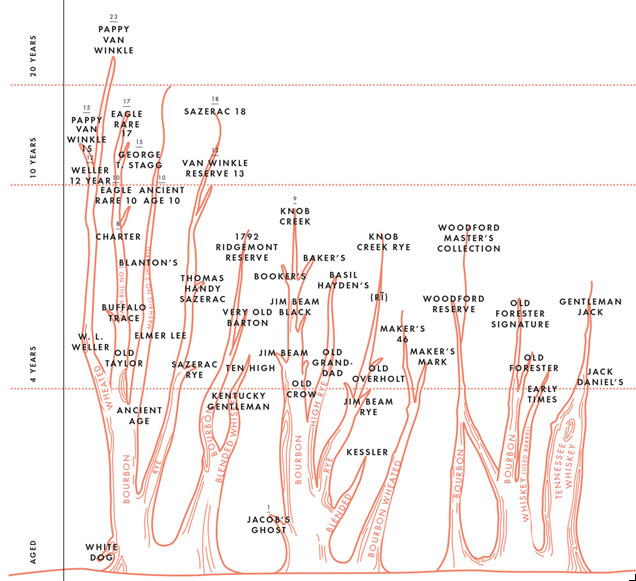
Pappy Van Winkle is frequently described by both educated and uneducated drinkers as the best bourbon on the market. It is certainly aged for longer than most premium bourbons, and has earned a near hysterical following of people scrambling to get one of the very few bottles that are released each year. Of the long-aged bourbons, it seems to be aged very gently year-to-year, and this recommends it enormously. But if you, like most people, can't find Pappy, try W. L. Weller. There's a 12 year old variety that retails for $23 around the corner. Pappy 15-year sells for $699-$1000 even though it's the exact same liquid as the Pappy (same mash bill, same spirit, same barrels); the only difference is it's aged 3 years less.
The chart is taken from the Kings County Distillery Guide to Urban Moonshining.
Written by the founders of Kings County Distillery, New York City's first distillery since Prohibition, this spirited illustrated book explores America's age-old love affair with whiskey. It begins with chapters on whiskey's history and culture from 1640 to today, when the DIY trend and the classic cocktail craze have conspired to make it the next big thing. For those thirsty for practical information, the book next provides a detailed, easy-to-follow guide to safe home distilling, complete with a list of supplies, step-by-step instructions, and helpful pictures, anecdotes, and tips.
(via df)
Tags: alcohol books food infoviz
Joswald1, Sussman.adam and 2 others like this
18 Nov 17:31
Google wins lawsuit
by Mighty M
A very important development occurred over the weekend: Google won a case its been fighting since 2005 against the US Authors Guild about massive copyright infringement in the digital library project. The judge sided with Google noting the scanning project was "fair use" and that it provides "Significant public benefits." This will have to be included in discussions of fair use and copyright. There was an agreement in 2008 which was thrown out in 2011. Another agreement was reached in 2012. This latest version denies the copyright claim of the US authors. By April 2013 more than 30 million works had been scanned by Google to be included in its digital library. To read more about it click here http://www.bbc.co.uk/news/technology-24939689
17 Nov 16:46
Persimmon Prosciutto and Brie Grilled Cheese
by joythebaker
AmberWant!
Can I melt that?
If the answer is yes, I’m most likely going to make a grilled cheese sandwich.
I was named Most Likely To Make The Best Grilled Cheese Sandwich On Earth in high school… because that category existed (in my dreams).
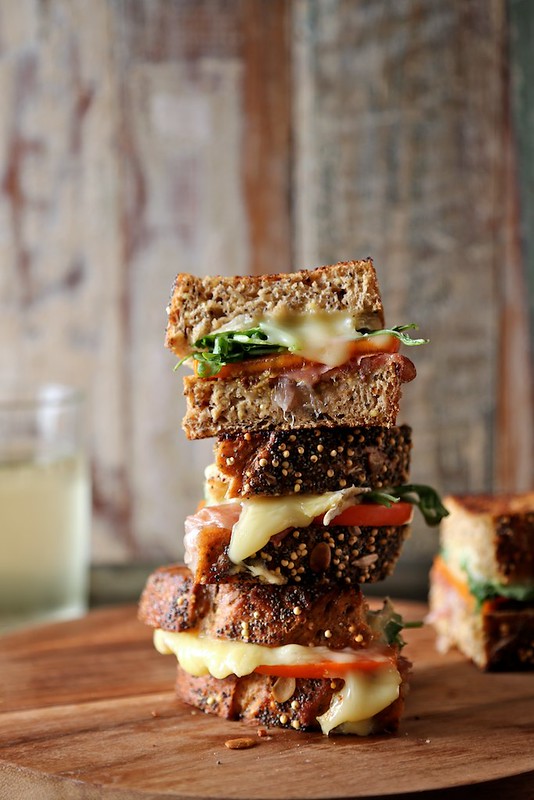
I’ve been building up to this moment. I’ve been waiting for the stars to align, the persimmons to ripen, and the Brie to appear in the refrigerator. This is that moment realized.
This sandwich makes me feel rich. Like, cash-money rich. (I’m not.) (It’s cool.)

In other grilled cheese related news:
Spinach and Artichoke Grilled Cheese Sandwich

Original photography shot with the Canon EOS 5D Mark III digital SLR. The filmmaker’s camera.
This almost feels too good to be true. We’re hitting every flavor range. Sweet persimmon. Salty prosciutto. Tangy mustard. Spicy mustard. Creamy Brie. Crisp and crunchy whole grain bread .
Yea, it’s serious.
We might have stumbled upon the most perfect sandwich situation.

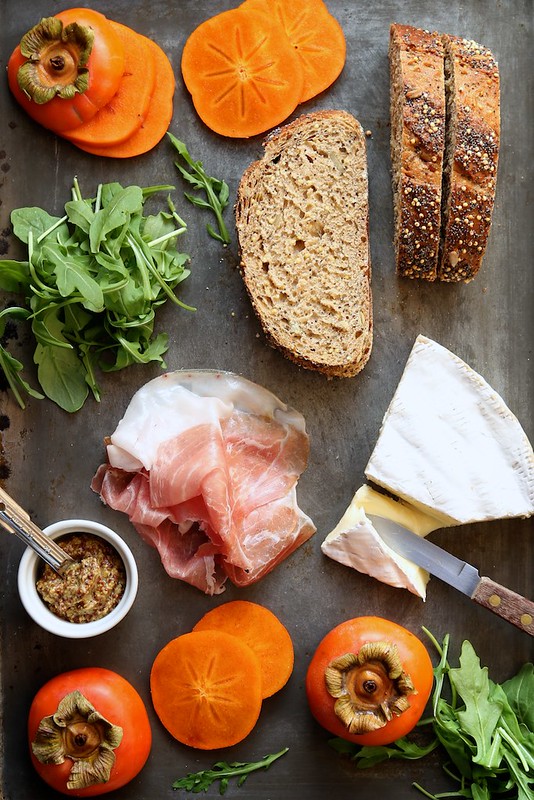
Everything is stacked and layered. Mustard atop the whole grain bread, then prosciutto, sliced persimmon, and fresh arugula.

Brie cheese is generously spread on the remaining two bread slices Rind and all. Don’t be scared.

A good, old-fashioned sandwich smash.
By now our butter is melting in a skillet… and now would be a good time to pour the wine too.

Sandwiches are grilled on both sides. I go a little overboard with my toasting. Maybe I like things a little burnt.
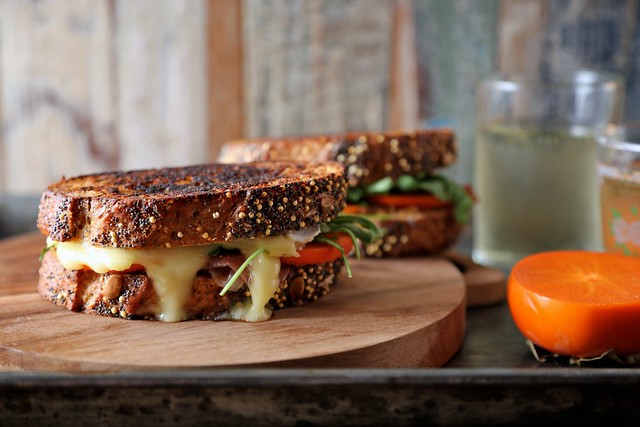
Sweet and salty. Totally seasonal. Crisp and creamy. I mean… this sandwich has it all.
I used Fuyu persimmons. They’re the firmer of the two and I think they’re the most delicious. When ripe, they’ll be slightly soft and easily sliced. Pile up that bread! Fuyu persimmons won’t last long in the markets. We’ve got to get at this while we can!
Oh! Speaking of persimmons, this Pear and Persimmon Caprese Toast I made last year is a total win!
Persimmon Prosciutto and Brie Grilled Cheese
makes 2 sandwiches
4 slices whole wheat seeded bread
2 tablespoons whole grain mustard
4 slices prosciutto
1 Fuyu persimmon, thinly sliced
2 small handfuls fresh arugula
2 to 4 ounces Brie cheese, depending on how much cheese you like
1 tablespoon butter for grilling
Spread mustard on four slices of bread. Layer on two slices of prosciutto, two slices of persimmon, and a small handful of arugula onto two slices. Spread Brie cheese onto the other two (mustard-covered) bread pieces. Sandwich the two parts together.
Heat butter in a medium skillet over medium heat. Place sandwiches in the pan, Brie side down, and grill until cheese is melted and bread is toasted to a golden brown. Flip sandwiches and cook until golden.
Remove from the skillet. Slice in half and serve immediately.
Lowbrowmedia likes this
16 Nov 23:35
Jackie's pink suit
by Mighty M
The pink suit with navy trim that Mrs. J. Kennedy was wearing the day her husband was assassinated in Dallas is now available for researchers to see in the National Archives. To date, nobody has requested to see it. Donated by Mrs. Kennedy in 1964, a deed of gift was finally signed by her daughter Caroline in 2003 asking that it be kept unavailable for viewing until 2103. Only the hat and gloves are missing. What an, unfortunately and sad, iconic American artifact, like Lincoln's last chair. The suit and her hose are still covered in blood. She refused to clean up after the shooting, noting that she wanted to show what had been done. We have some clothes in the Clarke, but none documents a national murder. We have a couple early CMU cross country shirts. I'm stunned at how small they are. Apparently, the male student population was once pretty tiny. Most donated CMU artifacts are in CMU's museum. To read more about the pink suit and the story surrounding it, click here: http://www.nytimes.com/2013/11/15/fashion/jacqueline-kennedys-smart-pink-suit-preserved-in-memory-and-kept-out-of-view.html?adxnnl=1&src=ISMR_AP_LO_MST_FB&pagewanted=all&adxnnlx=1384617819-2sBfaUq9rS+4NXVn6fdTbQ&_r=0
16 Nov 23:26
Women Who Are Bosses
by Meaghan O'Connell
by Meaghan O'Connell
 This interview between Lena Dunham and Mindy Kaling, two boss ladies who are also boss-ladies, is excellent:
LENA: What would you say is the hardest part about being a boss? I’d say it’s that there’s no convenient time to take naps and the constant sense that you are neglecting something or someone.
MINDY: I want to be part of the gang. I don’t want to be the gang leader who has to stay on gang schedule and pay gang taxes. I have to do that stuff now. Sometimes I just want to shoot my machine gun in the air, you know?
Also this, from Mindy Kaling:
0 CommentsI love women who are bosses and who don’t constantly worry about what their employees think of them. I love women who don’t ask, “Is that OK?” after everything they say. I love when women are courageous in the face of unthinkable circumstances, like my mother when she was diagnosed with stage IV pancreatic cancer. Or like Gabrielle Giffords writing editorials for the New York Times about the cowardice of Congress regarding gun laws and using phrases like “mark my words” like she is Clint Eastwood. How many women say stuff like that? I love mothers who teach their children that listening is often better than talking. I love obedient daughters who absorb everything—being perceptive can be more important than being expressive. I love women who love sex and realize that sexual experience doesn’t have to be the source of their art. I love women who love sex and can write about it in thoughtful, creative ways that don’t exploit them, as many other people will use sex to exploit them. I love women who know how to wear menswear.
16 Nov 23:21
Game Theory and ‘The Price is Right’
by Mike Dang
by Mike Dang

Many contestants fail to win anything on The Price is Right, of course. But as I watched the venerable game show that morning, it quickly became clear to me that most contestants haven’t thought through the structure of the game they’re so excited to be playing. It didn’t bother me that Margie didn’t know how much a stainless steel oven range costs; that’s a relatively obscure fact. It bothered me, as a budding mathematician, that she failed to use basic game theory to help her advance. If she’d applied a few principles of game theory—the science of decision-making used by economists and generals—she could have planted a big kiss on Bob Barker’s cheek, and maybe have gone home with … a new car! Instead, she went home empty-handed.
At Slate, Ben Blatt explains how winning on The Price is Right is really all about game theory, or strategic decision making. Here’s his example from Contestants Row, the segment on the show where contestants guess the prices of various goods—the person who guesses the closest to the retail price without going over gets to move forward in the show:
In one instance, when Margie was the last contestant to bid, she guessed the retail price of an oven was $1,150. There had already been one bid for $1,200 and another for $1,050. She therefore could only win if the actual price was between $1,150 and $1,200. Since she was the last to bid, she could have guessed $1051, expanding her range by almost $100 (any price from $1051 to $1199 would have made her a winner), with no downside. What she really should have done, however, is bid $1,201. Game theory says that when you are last to bid, you should bid one dollar more than the highest bidder. You obviously won’t win every time, but in the last 1,500 Contestants’ Rows to have aired, had final bidders committed to this strategy, they would have won 54 percent of the time. Instead, last bidders too often rely on their intuition, or on suggestions called out by delirious audience members. As a result, they have won only 35 percent of the time. Contestants in this sample of 1,500 who guessed a value between the highest and second-highest current guesses, as Margie did, win only 20 percent of the time. In this instance, the oven cost $1,999. Margie lost again.
Blatt also has a pretty incredible cheat sheet to all The Price is Right games at the end of his piece. (Unrelated: When I was a kid, I made my own Plinko game by hammering nails into a board and then using checkers pieces as game discs.)
5 Comments
16 Nov 23:10
Important European Lifestyle Innovation
by Meaghan O'Connell
AmberCharity!
by Meaghan O'Connell
 In Brussels, Belgium, you can now order hot, freshly-made french fries from a vending machine:
“After a 90-second wait, the $3.50 half-cup serving emerges from the vending machine accompanied by a choice of sauces. Customers can choose between ketchup, mayonnaises (which is the classic fry condiment across much of Europe) and a mysterious offering simply called “samurai.”
Good work, humanity.
Photo: waferboard
6 Comments
16 Nov 22:37
Analog animated GIF player
by Jason Kottke
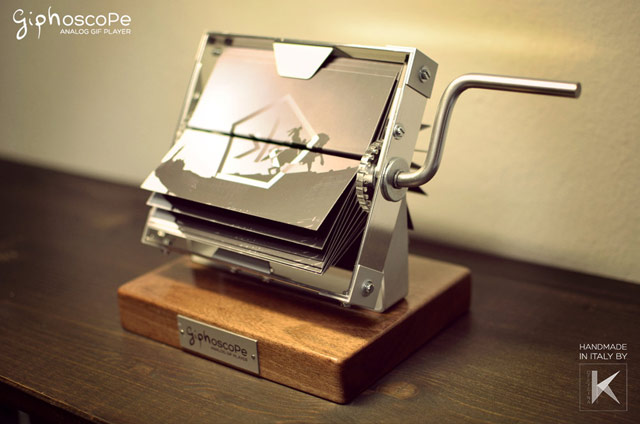
The Giphoscope is a hand-cranked animated GIF player. At €299, this is the holiday gift for the animated GIF lover who has everything.
(via @Coudal)
Mirthe likes this
15 Nov 17:54
"Life in Ikea is impossible"
by Jason Kottke
The trailer for Alfonso Cuarón's "Ikea", a film about a man and a woman lost in the vast nothingness of Ikea.
(via ★interesting)
Tags: Alfonso Cuaron Gravity Ikea movies trailers
14 Nov 00:34
The Tea Party Invitation
by amber
AmberI love this blog.
I’m in the kitchen putting dishes away and I hear Crappy Baby imitate a phone ringing. He’s got a phone call! He often pretends …Continue reading …
The post The Tea Party...
13 Nov 23:48
For A Few Hundred Bucks, You Can Make Your Own 3-D Printer
You can print out almost anything with a 3-D printer, from weapons and prosthetic hands to Yoda figurines. Sure, you can buy a 3-D printer. But what if you wanted to make one yourself? It's easier than you might think.
12 Nov 20:04


Poached Eggs in White Wine
AmberI have never thought of this before. I may have to experiment!
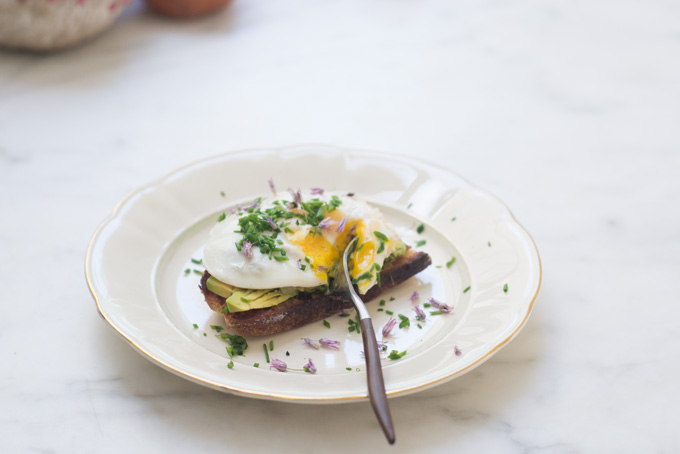
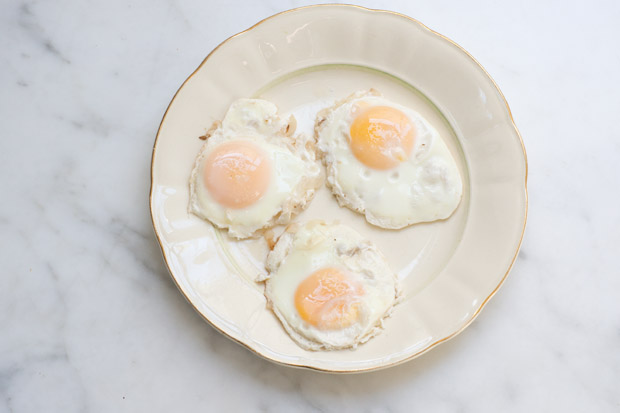
I find myself poaching eggs two or three times a week. And, I know it seems obvious, but I sometimes need a nudge to poach them in something other than water. All sorts of broths and infusions are fair game, it's funny that I don't branch out more often. These, for example, were eggs poached in white wine accented with minced shallots and herbs. A simple twist that immediately transformed the humble poached egg into something just a hint special and unexpected. The nudge came from a tiny cookery volume titled The Flavors of France Volume II, published by Hastings House in 1964. Often, before I leave on a trip, I find myself cooking from cookbooks related to my pending destination, and I picked up this little gem in a thrift store in Napa, California years ago. It charmingly juxtaposes French regional architectural photos with regional recipes. This was a twist on an Oeufs Poches au Vin Rouge recipe, that I tweaked to my liking - using white wine, simplifying the instructions, and serving it open-faced on toasted bread.
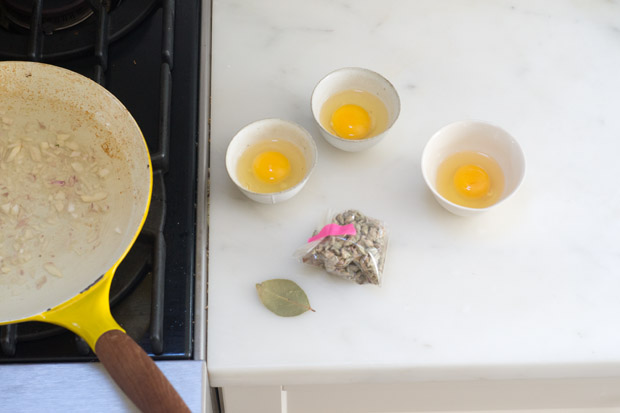
Depending on the size of your pan, it's a shallow poach. You use the remaining poaching liquid to fashion a quick sauce after the eggs have set.
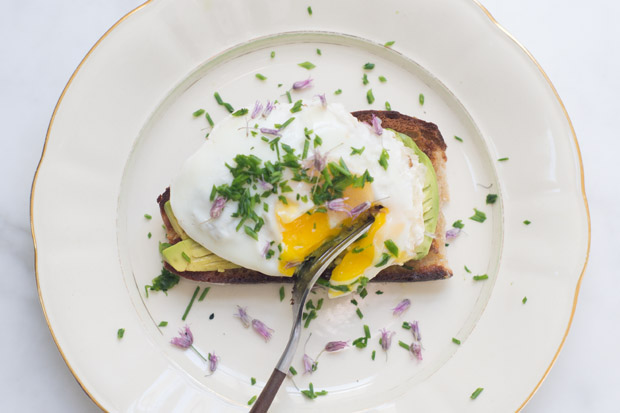
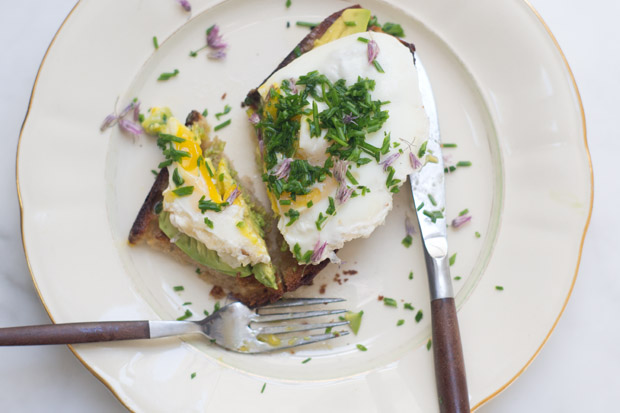
Making my way back from France - in the meantime, I'm imagining you might enjoy these not just on bread, but also, on top of a fall root vegetable gratin, or a chunky potato stew, or alongside a robust kale salad.....xo -h
Sethkoenig and -1 others like this
08 Nov 23:23


Freshness Burger Invents a Wrapper That Acts as a Privacy Shield
by Erin Jackson
AmberNo, for real. I want this.

[Photographs: Freshness Burger]
Who amongst us, at one time or another, hasn't wished that a particularly large or sloppy burger could come with a privacy shield? That's exactly what Japanese burger shop Freshness Burger has done with their "Liberation Wrapper", a burger holding device that allows women to tear into the shop's largest item (the "classic burger") with abandon, while maintaining the appearance of "ochobo"—a small and modest mouth.

Before the debut of the new burger wrapper, the classic burger was the least-ordered item by women. With the invention of the wrapper, sales have increased a reported 213% compared to the previous month, according to this video which explains the liberation wrapper and features depictions of happy female customers getting all up in their burger's business.
Without getting too deep into the gender politics of the invention (or how the image of the closed mouth printed on the wrapper looks a bit creepy), I have to say... this really isn't a bad idea. I'd take it even further, and provide customers with burger isolation booths, so that they could eat as messily as they want while pounding the table, praising the burger gods, or letting loose a profanity-laced exaltation of their burger without fear of judgment. I don't know about you, but that's what I'm looking for in a burger-eating experience.
[via: Foodbeast]
About the author: Erin Jackson is a food writer and photographer who is obsessed with discovering the best eats in San Diego. You can find all of her discoveries on her San Diego food blog EJeats.com. On Twitter, she's @ErinJax
Love hamburgers? Then you'll Like AHT on Facebook! And go follow us on Twitter while you're at it!
04 Nov 16:29
Ridden By the Hag: My Sleep Paralysis Visitors
by Jenah Shaw
AmberAdam gets sleep paralysis, and it's super scary for him and for me. =(
by Jenah Shaw
Reduced simply, sleep paralysis occurs when, in transition between sleeping and wakefulness, the mind is alert but the body still sleeping. For most people, this happens during their waking process; while REM sleep allows for sight and hearing, movement is suppressed. Typically, this muscle atonia is accompanied by the idea of a direct threat: the hallucination of an intruder in the room, or something or someone pressing down physically on your chest.
 I was 19 when I first experienced sleep paralysis, and that time it took the form of man lying on top of me, so heavy that it was hard for me to breathe. I’d been dreaming of a heritage village in the South Island town my mother lives, a fenced in collection of buildings with a windmill and a cafe and a book fair every year. It was a pretty innocuous dream, at first; everything was sunny and gentle and not much was happening. At the front gates I saw a friend I hadn’t spoken to in a long time, and while I was trying to talk to her I became aware of a man approaching me to my left. He was trying to get my attention. From the corner of my eyes—or perhaps just because you know these things in dreams without having to look at them directly—I could make out that he was a bit shorter than me, and unshaven, with lank blonde hair that fell to his shoulders. When I ignored him, he came and stood very close, which was when I turned, and the minute I looked at him I woke up. By which I mean I seemed to wake up, but he was still there.
He was heavy. I tried to shift my arms, but they were pinned to my sides. And I could smell him, which was the worst of it—the bitter combination of feeling a rough jaw against the skin of my neck, and the terror of being unable to breathe. I choked. He smelt like sweat and something else—something ugly.
Over his shoulder, I could see the objects of the furniture in my room, all regular and known and ordinary. I think I knew I was dreaming because I remember something turning in my mind, like something was trying to rouse me. Something was forcing me upwards into consciousness like a swimmer through currents. Wrenched into wakefulness, the man vanished, the pressure left my chest, and my room was the same as it had always been. I was shaking and terrified and confused. I’d read about sleep paralysis—and thank god we don’t believe in demons—but trying to move and finding myself unable to had left me feeling exhausted and also intensely, intensely vulnerable. It took a long time to get to sleep again that night.
I don’t know I spoke to anyone about it for a few days, because what do you say?
•••Reduced simply, sleep paralysis occurs when, in transition between sleeping and wakefulness, the mind is alert but the body still sleeping. For most people, this happens during their waking process; while REM sleep allows for sight and hearing, movement is suppressed. Typically, this muscle atonia is accompanied by the idea of a direct threat: the hallucination of an intruder in the room, or something or someone pressing down physically on your chest.
Folklore the world-over has provided explanations and narratives for these experiences (which feel, at the time, so real—the smell! the touch!) and have given us a dense library of different, terrifying nighttime visitors: incubus, succubus, the Old Hag. Newfoundland gives us the terrifying expression of being “hag rid,” or ridden by the hag. In Chinese culture it is called, in pinyin, guǐ yā shēn (“ghost pressing on body”), in Turkish karabasan (“the dark assailant”), and in Vietnamese ma đè means “held down by the ghost.” The Hungarian term boszorkany-nyomas means “witches pressure”, while German has alpdrucken, or “elf pressing.” This is an old story. The experience, though terrifying, is nothing new.
My hallucinations have never taken the form of a “hag,” but I have experienced sleep paralysis of most the other, archetypal obvious types, so I can imagine it. I get the weight and fear of it, the visceral and necessary experience that would lead to that term: ridden by the hag.
For me it is like this: I open my eyes and feel like I am totally awake, except for a peculiar sense of dread, or perhaps some piece of dream that had previously been in my head will now seem to be fully outside of me. It is always menacing. Usually, the dread comes first, and then, slowly, I am hit with the realization that I cannot move. By now I will know that I am experiencing sleep paralysis, and I will know that if I ignore whatever is threatening and concentrate only on my breathing I will fall back down into darkness and wake a few minutes later, properly, to a normal room and total control of all my limbs. Still, it’s never pleasant.
To a critical mind, it’s easy to track the hallucinations back to a probable cause: the clothes on the ground that look like they could be a body, a mark on the wall which could easily be confused for a face. Once I woke to find a small man standing beside the bed in my boyfriend’s room. Talking rapidly, he let off a shrill narration of things that would happen imminently—things he would do to me, and bad things in the world, like earthquakes, fires, and bombs. Sleep paralysis, I thought dimly. Breathe it out. But it was hard to ignore the monologue from the man beside the bed. He spoke so urgently.
“He’s going to wake up soon,” he said, pointing at my sleeping boyfriend, “And then he will get up, he will leave the room, and he won’t see me.” He started to giggle.
“He’s going to wake up soon,” he said, pointing at my sleeping boyfriend, “And then he will get up, he will leave the room, and he won’t see me.” He started to giggle.
When I fully woke, I was kicking my boyfriend in the shins repeatedly (like this would make him less inclined to wake up and move away from me), and probably harder than was entirely necessary. Then, quiet, I lay in the dark, wide awake, staring around the room. Just above where the man had been standing was a reading lamp. It’s the type that has a bending neck for twisting into different angles. That night the neck was curved over into an arc. If you looked at it a certain way, it could appear to be the outline of a head. Maybe even the peculiarly rounded head of a person who would stand as high as my waist.
You can realize these things, as you lie there in the dark, still trying to fight off the lingering sense of vulnerability and fear, but that is not to say they help all that much at the time.
Early cases of sleep paralysis seem to be clearly linked with the idea of dreaming. The word “nightmare” can be traced back to old Norse and Germanic words (“mare” or “mara” or “mahr”) that were used to describe the hag that sits on peoples chests while they sleep and brings them bad dreams; the spirit was also thought to ride horses in the night, leaving them exhausted by the morning. (Norwegian and Danish words for “nightmare” are mareritt and mareridt, which translate to “mare-ride.”) A Persian medical text from the 10th century describes a nightmare in which “the person senses a heavy thing upon him and finds he is unable to scream” and suggests that “the nightmare… is caused by rising of vapours from the stomach to the brain… The therapy includes bloodletting from the superficial vein of the arm and from the leg vein and thinning the diet, especially in patients with red eyes and face.”
But sleep paralysis has also, frequently, been associated with the workings of the supernatural. As time passed, the mara figure transmuted into a more current fear for the superstitious—the devil, demons, witches. In the Salem witch trials, John Louder recounted how, after arguing with the accused Bridget Bishop, “he did awake in the night by moonlight, and did see clearly the likeness of this woman grievously oppressing him; in which miserable condition she held him, unable to help himself, till near day.” In 1595, in another trial, Dorothy Jackson accused several neighbors of witchcraft, saying she was “ridden with a witch three times of one night, being thereby greatly astonished and upon her astonishment awaked her husband”; in the late 17th century, Nicolas Raynes provided testimony at the trial of a purported witch and said that his wife, “after being threatened, has been continually tormented by Elizabeth, a reputed witch, who rides on her, and attempts to pull her on to the floor.”
In more modern attempts to understand the occurrences, we’ve attempted to draw links between the brain patterns of interrupted sleep and the various and many strains of old hag folklore. During REM sleep, the body shuts down its motonuerons to stop the body from acting out dreams. In sleep paralysis, this function is still active: although the mind has woken up, the body remains locked down. The muscle paralysis removes the voluntary control of breathing, while the REM breathing patterns can feel, to the waking mind, like suffocation. The accompanying sense of terror is believed to come from the brain’s emergency response mechanisms; the vulnerability we feel with paralysis cues the brain into a hyper-vigilant response. Alert to any possible threat, and with all senses suddenly hyperactive, real-word stimuli is exaggerated to the point of hallucination.
In my own experiences, when I lie awake afterward, piecing together the shapes in the room, I’ve thought about how it is perhaps all made more terrifying for coming from inside the head than from without it—like the phone call that is coming from inside the building. The mind knows what the mind fears. I figure that’s I’ve never been visited by a hag. Witches have never really caused me much unease.
It’s been about a year since I was last seized by sleep paralysis. For a while, it would visit me every few months, and it was exhausting. I realized that I was only affected when I was sleeping on my back, and I’ve been trying not to do that. It seems to be working.
It is a strange thing, though, to see the things that scare us and look at them directly—all the murky, unshaped fears that lurk in some primal bog at the base of our skulls suddenly grow legs and arms and teeth and stare at us from the bedside or rest their chins on ours. And if I look at the forms my nighttime visitors have taken over the years, I suppose it is interesting to review their patterns—a misshapen parade of vague, malevolent intent—and to compare them to those in old folklore. For one thing, my visitors are mostly men: devilish sometimes, or shadowy and unformed, or just a regular sort of a man who might be holding something heavy. Ghoulish women, or witches or hags, never visit me in my sleep.
I wonder about that sometimes, but only in the daytime. I try not to think about these things when it gets dark.
Jenah Shaw writes and edits and lives in Wellington, New Zealand.
0 Comments
02 Nov 15:47


Video: Watch NASA's 3D Pizza Printer in Action
by Niki Achitoff-Gray
Amber@Kellygo, can we do this at work??

Earlier this year, we told you about a $125,000 grant from NASA to fund the creation of a 3D printer. For space!
The goal? Viable, nutritious meals (read: pizza) for potential consumption by astronauts on their intrepid voyages into the vast beyond. Well, folks, part one of the dream officially became reality earlier this month at the SXSW Eco Conference, where Systems & Materials Research Corporation debuted their design in action.
That action? Pizza printing!
Watch the Video
The ingredients currently being printed consist of dough, tomato ketchup, and cream cheese. Deeelish! Between printed pizza and test tube burgers, it's been a big year for sci-fi science. Now, all they have to do is launch that baby into the stars and, the truly daunting challenge, find somebody willing to dig in.
So? Any takers?