Shared posts

21 Apr 07:57

These Could Be the Spiciest Tacos in LA

by Chelsee Lowe

A little research into the spiciest foods in Los Angeles uncovers dishes like the Special 2 at Orochon Ramen. On Chowhound, jdwdeville nominates a new contender: cochinita pibil tacos at Guisados in East LA.

You can specify how spicy you want them, on a scale of 1 to 10. “I should have known from the way the guy looked at me,” says jdwdeville, after ordering a 10: a thick, made-to-order tortilla filled with bright red pork, puréed habaneros, and toasted chiles. “I valiantly plowed through until about halfway when the tears in my eyes made it hard to see.”

Guisados serves plenty of other tacos too—more than 10 filling options, including bistek, chorizo, shrimp, and calabacitas—and Chowhounds say they're delicious. You can order a taco sampler and wash it down with one of the aguas frescas.

Guisados [East LA]
2100 E. Cesar Chavez Avenue, Los Angeles
323-264-7201

Discuss: Proposing a new contender for Spiciest Dish in LA: the Cochinita Pibil taco at Guisados

Photo from Guisados / Facebook

14 Apr 06:02

This is What Happens When SimCity’s Mayor is an Architecture Critic

by Alex Dent

SimCity Panoramic

I’ve always been kind of terrible at video games. Any video game, it doesn’t matter. I automatically make anyone else playing a game with me look expertly skilled. It started when I plugged in my very own Sega Genesis on my seventh birthday and continues to this day when I get together with friends to play Michael Jackson: The Experience on Wii. However, I did have the fleeting experience of skillful gaming one summer when my parents sent my twin sister and I to spend time with our Aunt and Uncle in Minneapolis and they, in turn, sent us to spend time at a computer camp.

Here’s what I remember from my week as a computer day-camper: dusty gray carpet and SimCity. I probably played the entire week, not even fully aware that I could deduce the rules that guided city development. Still, by the time I returned home, I knew how to make cities that looked pretty and didn’t collapse in fifteen minutes. This limited skill set made me pretty popular in the computer lab in 4th grade, and it lasted until the computers were upgraded with CD-ROMs and Microsoft Encarta was installed. Then nobody cared that I could make symmetrical towns with alternating patches of color, they just wanted to put in the Encarta CD and watch the video about the rainforest.

SimCity screenshot

But I didn’t quit playing.  I stuck around for SimCity2000, SimCity 3000, and even played The Sims before switching from PC to Mac, parting with the Sim universe for nearly a decade now. I’ve been seeing an awful lot about the newest release of SimCity on the Internet since its release last month. Plenty of coverage has centered on folks unable to connect to the servers to play online. But the best coverage of the game is what happened with architecture critic Justin Davidson sat down to play the game. It’s truly entertaining to read someone thinking critically about the design of the game that most people play to unwind and turn off their brain for a while. He discovers dubious principles for gameplay success and the less exciting, cumbersome zoning obstacles. And even while thinking critically of the game while he plays it, his city fails. It’s oddly reassuring to see an expert in one area fail in another. Not because it makes them real people, I know he’s a real person, but because it makes us feel like we’re just as capable as some really smart people.

Of course, I’d probably still fare worse than Davidson or anyone else playing the game today, which is fine. I would get better with practice, making meticulously patterns in concrete and trees before some other advance in digital encyclopedias made my skills obsolete. So I’ll just think back to all of the thriving cities I created like FrankLloydWrightDreamland or Artown and try to forget my abysmal performance of “Smooth Criminal”.

09 Apr 04:28

DIY Herbal Honey Cough Drops

by Free Range Mama

The flu season is upon us, and coughs are a-plenty.  People seek relief from cold and flu symptoms in various ways, including pharmaceuticals, and medicated candy such as Halls.  Halls, owned by Cadbury, is a leading supplier of cough candies.  Aside from the fact that they suppress coughs, they contain an unacceptable amount of chemicals.

Active  Ingredient: Menthol 9.4 mg Inactive  ingredients: acesulfame potassium, aspartame, beta carotene, FD&C blue no.  1, flavors, isomalt, sodium carboxymethylcellulose, soy lecithin, water (www.gethalls.com)

In one example, Halls peppermint variety, the only active ingredient is menthol.  The inactive ingredients are used for flavour, color and texture.  How many of them do you recognize?  How many of them do you recognize as ingredients you try to avoid in general?  None of the inactive ingredients are going to boost your immune system at a time when you need it the most.

Herbal honey cough drops are easy to make, use all natural ingredients, soothe your throat and cough, and give a natural boost to your body when it is fighting a virus.

Peppermint Oil:
Peppermint oil contains a large amount of naturally occurring menthol.  Menthol is used, among many other things, as an antipruritic to reduce itching, as a topical analgesic to relieve minor aches and pains, in decongestants for chest and sinuses, and to produce a cooling sensation.  These work together to soothe an itchy, sore throat and calm a cough.  Caution: menthol, in very large doses, can be lethal.  Peppermint oil can contain up to 55% menthol so it is important, as with any essential oil, to use only very small amounts of it.

When choosing a peppermint oil, make sure you choose a therapeutic grade oil from a company you trust.  Most essential oils are not therapeutic grade, are meant for aromatherapy and may contain ingredients you don’t want to consume.  Read the notes at the bottom to find a high-quality, therapeutic grade essential oil.

Honey:
Unpasteurized honey has antibacterial and antiviral properties.  Honey has been used over the years to soothe coughs, heal wounds and prevent bacterial infections.

Ginger:

Ginger is a natural immune booster and is used to help with congestion. It also contains antiviral properties and is a great natural cold and flu fighter.

Optional:

Cold and Flu teas: check the label of your tea to discover the benefits the herbs provide.

Materials:

  • Thick-bottomed pot
  • Silicone candy molds, parchment paper and/or greased cookie sheet
  • Candy or deep fry thermometer (must reach 300F)
  • Metal whisk

Ingredients:

  • 1/2 c. raw honey
  • 3 inches peeled, organic ginger root
  • 5 drops therapeutic grade peppermint essential oil (essential oil droppers are not standardized. Use common sense.)  0.2 ml will work too, from a syringe.  Make sure your essential oil is therapeutic grade (food grade).  Not all essential oils are created equally.
  • Optional: herbal Cold and Flu-type teas: Echinacea and Roots Tea by Mountain Rose Herbs or Traditional Medicinals teas
  • powdered sugar for dipping in afterwards

Directions:

  1. Boil ginger root and tea in a pot with 2 cups of water.  Reduce “tea” to about 1/4 cup by simmering, on low.  Strain liquid.
  2. Heat honey and tea mixture in a thick-bottomed pot over medium heat.  It will try and boil over, so adjust temperature to keep if from boiling over.    Keep a thermometer in the pot to observe the temperature.  Stir constantly.
  3. Once the temperature passes 225F your water has entirely boiled out, and the honey mixture will rise in temperature rapidly.  Stir continuously to prevent scorching.  Continue to stir until temperature rises over 300F.  This is the temperature needed to “candy” the honey, and make it hard. Remove from heat.
  4. Add therapeutic grade peppermint oil.  It may smoke a little as the impurities burn off.  Stir rapidly.
  5. Pour immediately into candy molds or onto parchment paper that has been coated with powdered sugar or onto a greased cookie sheet.  Allow to cool completely.
  6. Once cooled, dust each candy with powdered sugar.  Wrap with parchment paper and store in a sealed container for up to a month. If you aren’t going to use them immediately, store in a sealed container in the freezer.

Tips:

  1. Whole New Mom demonstrates how to make powdered sugar from organic sugar to avoid GMO icing sugar.
  2. Most essential oils are NOT therapeutic grade and are meant to be used for fragrance instead of consumption.  Make sure the essential oil you are using is therapeutic grade.  Mountain Rose Herbs essential oils are high quality, organic and therapeutic-grade.
  3. Peppermint essential oil contains approximately 50% menthol.  Menthol, though naturally occurring, is toxic in large quantities.  Use common sense!!
  4. Honey naturally absorbs moisture from the air.  Keep candies in an air-tight container to prevent them from “melting” and sticking together.
  5. Caution: Do not use when pregnant or on children under 2.  (based on warnings for peppermint and raw honey.)

This post has been shared on Homestead Barn Hop #95, Homestead Abundance Link-up #6Waste Not, Want Not Wednesday, Simple Living Wednesday, Wildcrafting Wednesday #72, Thank Your Body Thursday, Get Real Frugal Friday #3 and Fat Tuesday, January 22nd.


09 Apr 00:26

5 Great Cheese Shops in Los Angeles

by Chelsee Lowe

A trip to Switzerland left BobtheBigPig jonesing for high-caliber cheeses, from stinky chunks of aged Appenzeller to mild bites of Vacherin. It can be hard to find some great European cheeses in the U.S. (strict rules about pasteurized milk, for starters), but Chowhounds did point BobtheBigPig to five LA-area shops for scoring a cheese fix.

• Andrew Steiner (pictured) of Andrew’s Cheese Shop worked as the full-time "Maitre d’Fromage" at Patina for years before opening his own store beachside in Santa Monica. On display are more than 200 cheeses—most are straight from the farms where their milk's from. Tasting is welcome. Steiner hosts the occasional Cheese 101 class and has been known to roast his own Marcona almonds. 728 Montana Avenue,
 Santa Monica; 310-393-3308.

• The cheese case at Culver City's Surfas stocks a wide, well-edited selection. Chowhound Dommy says the man behind the magic is “an oft misunderstood GENIUS” named David. He's happy to help you choose. 8777 W. Washington Boulevard, Culver City; 310-559-4770.

• There’s more to Wally’s than wine. The cheese section is so popular it warrants its own building, the stand-alone Cheese Box across the parking lot from the main store. Hard-to-find cheeses, chocolates, also a killer sandwich menu with heroes and really good cheeses in the grilled cheese. Of course. 2107 Westwood Boulevard, Los Angeles; 310-475-0606.

• Eastside cheese-lovers lean heavily on The Cheese Store of Silverlake for both local and imported selections. Rounds are organized by general type: cow, sheep, goat, and blue. The store also has a nice selection of wines and gourmet foods. 3926 W. Sunset Boulevard, Los Angeles; 323-644-7511.

• The sister-owned Cheese Cave in Claremont has made a name for itself in a short amount of time. Dommy loves showing up to "taste with abandon, chat freely with the staff and browse for hours." There are also three daily sandwich options, but go early if you want one of those—the supply is limited. 325 Yale Avenue,
 Claremont; 909-625-7560.

Discuss: ISO cheese shop

Photo from Andrew's Cheese Shop

07 Apr 17:34

Up Close and Personal with Icelandic Horses

by Jennifer Dombrowski
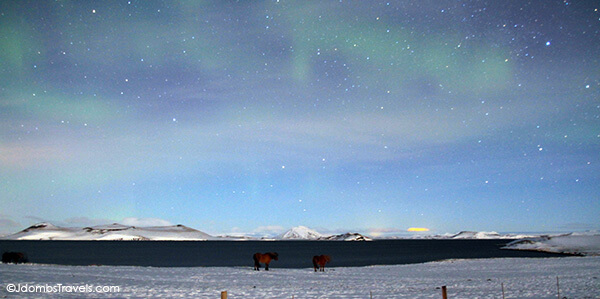
Icelandic horses under the Northern Lights

Icelandic horses under the Northern Lights

I’ve always been a sucker for horses. We had a Quarter Horse and an Arabian when I was growing up, but I was just to young to help ride and care for the horses. With my parent’s busy work schedules, they couldn’t ride and exercise them as much as they liked so they sold them when I was about six. We never did horses again as I got older, but I’ve never let that dream go. And after two trips to Iceland where the Icelandic horses are about the cutest I’ve ever seen, it’s more alive than ever.

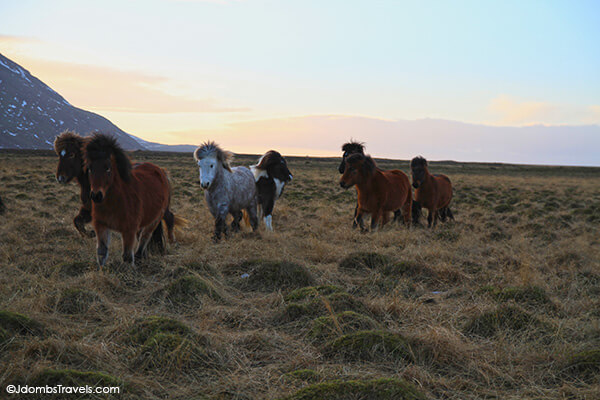
Icelandic horses Icelandic horsesJust what makes Icelandic horses so cute and special? The Vikings brought these small Nordic horses with them when they arrived in Iceland more than one thousand years ago, probably somewhere between 860 and 935 AD. Selective breeding and isolation makes the breed as pure as the day the Vikings brought them. And to maintain the special breed, Icelandic laws prevent horses from being imported to Iceland. Also, once an Icelandic horse leaves Iceland, it can never return.

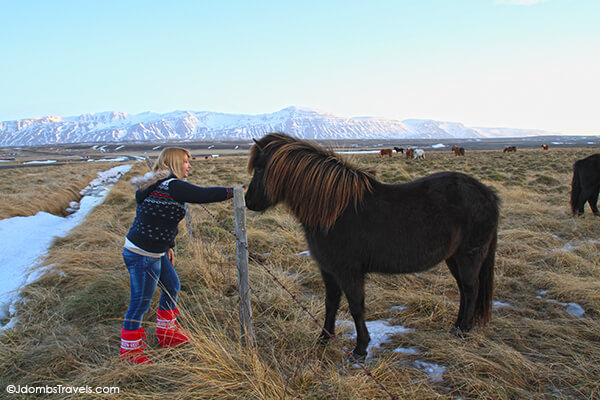
Icelandic horsesThe Iceland horse is so small, pony sized even at an average of just 13 – 14 hands tall, but registries still classify them as horses. They come in a variety of colors from white to black, palomino to silver, and everything in between. They are also incredibly friendly and gentle. Just driving around Iceland, we spotted hundreds – even in winter. They are generally keen to trot over for a pat and to say hello. I don’t know how many times I made Tim stop on the side of the road so I could pet yet another cute Icelandic horse. And in winter, I think they’re even cuter with their heavy double coats to protect them against the harsh Icelandic winds.

Icelandic horsesThe Icelandic horse is also renowned for its five gaits, the most popular being the tölt. The tölt is a four beat running-walk with flowing movement unique to the Icelandic horse and is easy and comfortable to ride (though Tim might disagree).

Icelandic horse

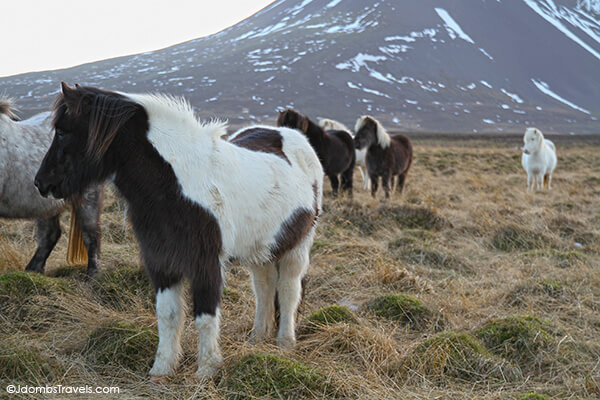
Icelandic horses with their heavy winter coats

Where to See Icelandic Horses

  • Book a riding tour at Þúfa farm in Kjós, just 40 kilometers north of Reykjavik. We had a fantastic riding tour, which you can read more about here.
  • Attend the Icelandic Horse Festival in Reykjavik each April. The 2013 festival is April 4 – 7, where you can ride, learn more about, and see various Icelandic horse competitions. Entrance to the festival is free.
01 Apr 20:22

The Most Amazing Church I’ve Ever Seen & Can’t Show You

by Wandering Earl

Wandering Earl

The Most Amazing Church

Yesterday, our Wander Across Mexico group visited the town of San Juan Chamula, a community of 95,000 Tstozil Mayans that lies approximately ten kilometers away from San Cristobal de las Casas. And during that visit, yes, we entered what I can only describe as the most amazing church I’ve seen in all my travels.

Let me give you a little background…

The Tsotzil Mayans live in their own autonomous region in the Mexican state of Chiapas, a region that Mexican police and military are not allowed to enter. These Mayans, in order to maintain their culture and traditions, have extremely strict rules and practices and when any member of the community rebels or doesn’t adhere to these cultural rules, they are expelled, simple as that.

In addition, the Tsotzil believe that when you take a photograph of someone, their soul is taken away and so, visitors to the town are generally not allowed to take photographs directly of people, especially any civil or religious leaders. If the local police, who walk around wearing white fur ponchos and holding long black sticks, catch you taking a photograph of something they don’t want to be photographed, the punishment can range from a verbal reprimand to having your camera confiscated or even being fined or tossed in the local jail.

And the most sure-fire way to end up in that jail would be to take photographs inside the town’s one church, the Church of San Juan, a simple-looking church that sits at one end of the main square. This church is the center of Tsotzil life as this is where every member of the community practices their unique religion, which is an intriguing mix of traditional Mayan customs and Spanish Catholicism.

Photography is strictly prohibited in this building, simply because, as you’re about to find out below, what actually takes place inside the sole church in this community is unlike anything else you will ever see in any church on the planet…

Church of San Juan, Chiapas

Inside the Church of San Juan

I can only try to explain what I saw as best I can. But believe me, you really need to see this place for yourself (as is the case with most things) in order to truly appreciate it.

The church has no priest. It is open 24 hours per day. Members of the Tsotzil community can enter at any time. When they do visit the church, they walk through the large hall, which has no pews, and they find an empty spot on the floor, which is completely covered in fresh pine leaves. The Tsotzil then set up a variety of candles in front of them, candles of different colors that each represent a specific type of problem that they need to be solved. When we visited, some people had a few candles in front of them and others had almost one hundred, creating a scene in which there were well over 5,000 candles in total burning inside this church.

Once the candles are lit, the Tsotzil pray, in their local Tsotzil language, to one of the dozens of Catholic saints whose statues line the sides of the main hall, or to the large statue of John the Baptist encased in glass at the far end of the room. Sometimes they pray for a few minutes, other times for hours on end. They are free to remain inside for as long as they wish until all of their issues are dealt with.

Once they have finished their prayers, and especially when they are suffering from a more serious problem, the Tsotzil consult one of the medicine men or medicine women who are wandering around the inside of the church. The shaman comes over, lifts up a live chicken (which the praying Tsotzil had brought with them) and rubs the chicken against the afflicted person or persons. Every now and then the shaman checks the person’s pulse until they determine, through the pulse somehow, that the problem they are praying about has been transferred to the soul of the chicken.

Then, the Tsotzil takes the chicken and wrings its neck so that the problem disappears forever.

Finally, the newly ‘freed’ individual or individuals take a giant shot of ‘posh’, a local sugar-cane based liquor, and often a long swig of Coca-Cola as well, until they begin to burp. Once they burp, they believe that they have been fully cleansed of the evil that had been haunting them, allowing them to end their prayer session and head back outside.

Now, in summary, just imagine an entire church hall, eerily lit and full of Catholic saint statues and thousands of burning multicolored candles on the floor, with dozens of traditionally-dressed Tsotzil families, couples and individuals sitting on a layer of pine needles, praying on their knees, chanting in ancient tongue, drinking homemade booze, burping out loud and killing chickens.

The scene was fascinating and I am certain that every single member of our group could have stayed inside watching it for a long, long time. I have never seen anything like it and I’m not sure if I ever will.

Again, taking photographs inside this church is completely prohibited and so I have no real proof to back up the above. However, if you ever travel to the state of Chiapas, Mexico, or more specifically, to the town of San Cristobal de las Casas, you absolutely must venture over to San Juan Chamula so that you can also experience this community for yourself.

Only then will the above actually seem real.

Have you been to San Juan Chamula? What do you think about their unique religious practices?


26 Mar 17:42

Number of the Day

by Melissa McEwan
$59: The average income growth, adjusted for inflation, for the bottom 90% of USians between 1966 and 2011, per an analysis by Pulitzer Prize-winning journalist David Cay Johnston for Tax Analysts. That's fifty-nine dollars. Over forty-five years. While nondiscretionary individual spending has increased significantly.
Another day, another mind-blowing fact about the staggering difference between the haves and the have-nots.

Incomes for the bottom 90 percent of Americans only grew by $59 on average between 1966 and 2011 (when you adjust those incomes for inflation), according to an analysis by Pulitzer Prize-winning journalist David Cay Johnston for Tax Analysts. During the same period, the average income for the top 10 percent of Americans rose by $116,071, Johnston found.
Over at Digby's place, David Atkins observes:
And these statistics only look at the top 10%. The top 1% is making exponentially more than the rest of the 9% under them. And the top tenth of a percent is doing exponentially better than the rest of the one percent.

The country isn't broke. It's just that a small portion of the country's people have basically looted all the wealth of the last 50 years.

Ideally, that looting would be illegal in its own right. But if we give conservatives the benefit of the doubt and say that it would be too economically restrictive to attempt to control how much these people are taking away from the rest of the economy, then the second-best alternative we have under the circumstances is to redistribute a greater portion of those ill-gotten gains to create better jobs and social services for people whose incomes have been artificially constrained.

What we should under no circumstances be doing is cutting the safety net while allowing these thieves to walk away with all their loot.
Whoops.

image of a beat-up old boot with a broken bootstrap, to which I have added advertising-style text reading: 'New bootstraps! Now only $60!'
25 Mar 23:51

Some of the Biggest Spills & Accidents

by Avi Abrams

"QUANTUM SHOT" #823
Link - article by M. Christian and Avi Abrams


Some of the Biggest Spills, Accidents, and - Often Terrifying - Boo-Boos In History

"Experience is simply the name we give our mistakes." -Oscar Wilde

What makes this quick look at ten big-time spills, accidents, and boo-boos especially scary is that they far too often involve stuff that you’d think we'd be taking extra-extra-extra special care with: industrial waste, nuclear weapons, molasses, and - more shocking than anything else - beer.


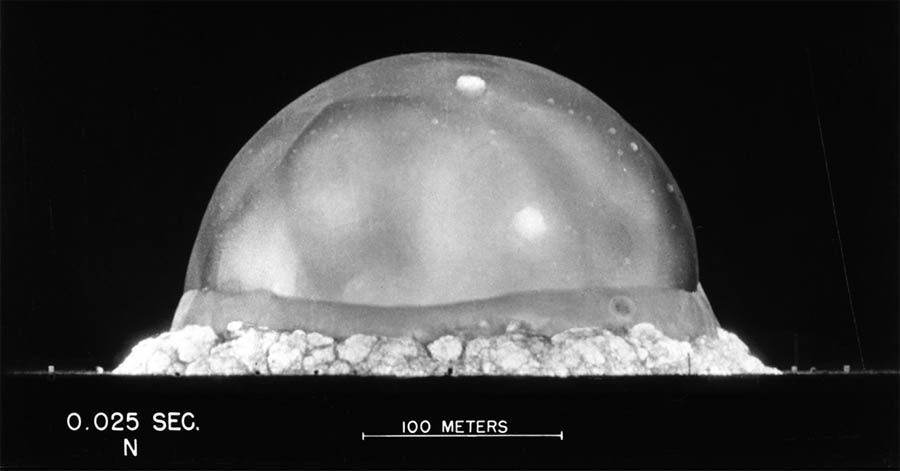
(The expanding fireball of the Trinity nuclear explosion, seen .025 seconds after detonation (U.S. Department of Defense), via)


Even though evolution has graced us homo sapiens with two of them, the briefest glances at the history of extremely large scale accidents is more than enough to make us wonder if we should be sporting nothing but thumbs.


10. The Demon Core

It seems as soon as mankind started splitting them, we've been letting atoms slip through our fingers. Even putting aside the sad irony of Marie Sklodowska-Curie dying by her own discovery of radioactivity, our earliest attempts to harness the power of atomic energy are filled with shuddering tales of glow-in-the-dark slip-ups.


(one of the first bombs to be built was a plutonium implosion device, referred to as the "Gadget" (U.S. Department of Defense) via)


Back in 1945, when the scientists of the Manhattan Project were first banging blocks of uranium together, there was a nightmarishly series of accidents involving what - very aptly - came to be called The Demon Core.


(images via)


Basically just a little-less-then 15 pound ball of plutonium, in August 21, the core went first went demonic when Harry Daghlian accidentally dropped a brick of tungsten carbide into it. Heroically, Harry managed to pull the brick out - avoiding a supercritical reaction - but died shortly thereafter from radiation poisoning.


(right image: a plutonium sphere the size of this glass ball destroyed the city of Nagasaki.)


A few months later, on May 21st, Louis Slotin tried to – and if this doesn't make you shiver then nothing will - "tickle the dragon's tail' by basically pushing the core as far as they could ... his only safety feature being a carefully inserted screwdriver.


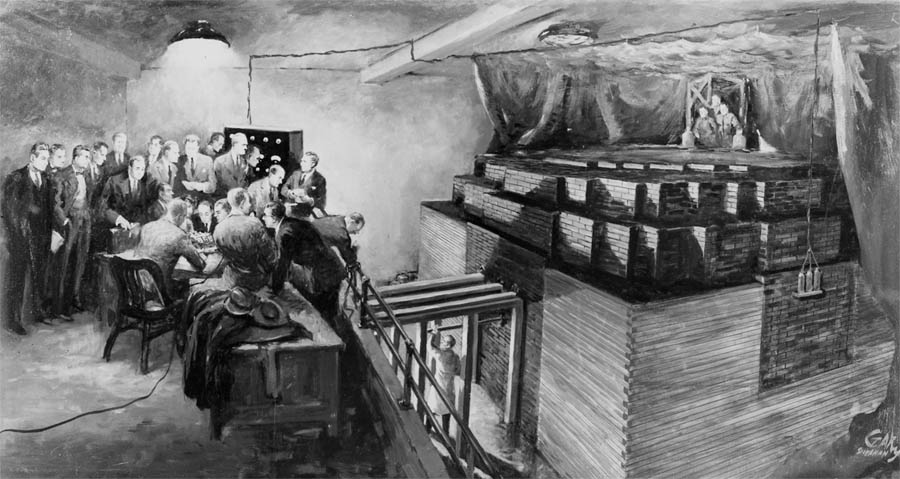
(Fermi and his team constructed the first nuclear reactor on December 2, 1942 - image via)


All it took was for that well thought-out safety feature to slip and the core went momentarily supercritical: as with Daghlian, Slotin managed to prevent a chain reaction, but fatally dosed himself - and exposed eight other people nearby with enough radiation to seriously shorten their lifespans.


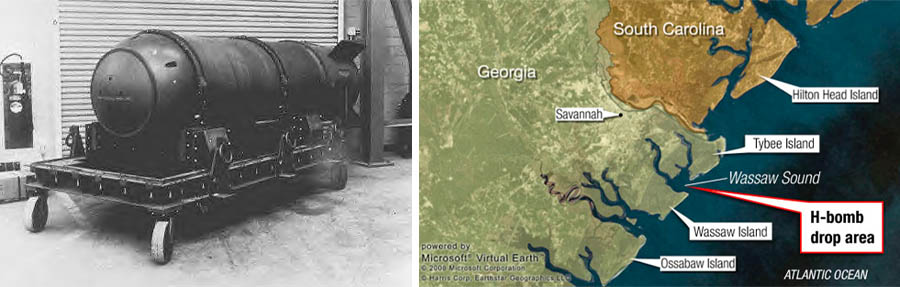
(MK-17 hydrogen bomb on lift truck, seen in 1954 - image via)


9. The Kyshtym Disaster

American scientists weren't the only ones fumbling and bumbling with nuclear power. On the other side of the world, the Soviets were racing with mad abandon to catch up with their counterparts ... emphasis on the phrase "mad abandon."


In the closed science city of Ozyorsk, they built the vast plutonium manufacturing plant of Mayak. Unfortunately, they were more-than-a-bit fumbling in the dark when it came to nuclear power, and on September 29th, 1957 a radioactive waste tank exploded. While the blast itself was impressive - it tossed the tank's 160 ton lid completely off - the release of toxic materials contaminated the region, resulting in an estimated 8,000 deaths.


What's particularly surreal about the The Kyshtym Disaster is that it didn't officially exist: the Soviets simply erased not just the accent but the town itself. The name "Kyshtym Disaster" is used because Ozyorsk and Mayak were erased from all subsequent maps and Kyshtym just happened to be the closest landmark.


If that makes you shake your head, keep shaking: there are reports that while the Soviets made Ozyorsk and Mayak "go away" the CIA knew of the disaster but kept the information secret to protect the US's own nuclear power industry.


8. Castle Bravo

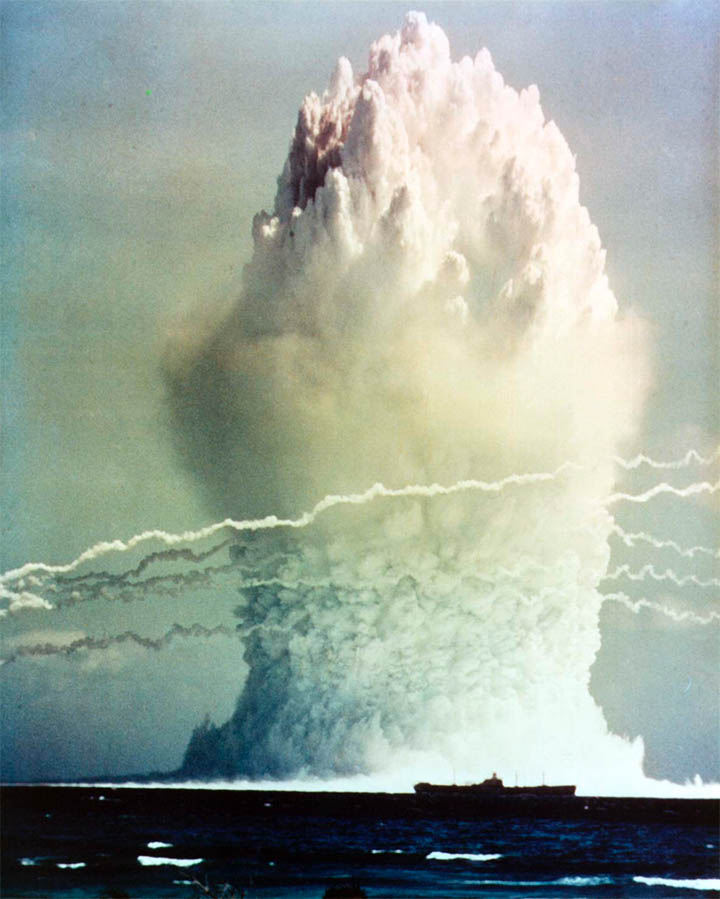
Back in the 60's nuclear weapons testing was at an all time high – to a point where it must have seemed like every country that could, did: mushrooms sprouting everywhere, for any reason... One of these tests was code-named Castle Bravo: a record-setting 15 megaton blast - which, tragically - led to a record-setting release of nuclear fallout.


(image via)


Detonated on March 1, 1954, Castle Bravo's mushroom reached a staggering 130,000 feet - irradiating seven thousand square miles of the Pacific, as well as the islands of Utirik, Rongelap, and Rongerik.


(image via)


Ironically, the ill-advised decision to set off the bomb in the presence of high winds was made by Dr. Alvin C. Graves - who just happened to have been exposed to a high dose of radiation himself when Dr. Slotin had been tinkering with the Demon Core.


(image via)


Because of the unexpected fallout, there was a lot of political fallout as well, led by the discovery of the fatal exposure of a Japanese fishing trawler. Because of Castle Bravo, Nevil Shute penned On the Beach, which became a rallying cry against nuclear proliferation.


7. Where, Or Where, Has That Nuclear Bomb Gone?

Fallout is bad – hell, radioactivity itself isn't great - but when you have an accident involving an actual, weaponized bomb ... well, that's the stuff of nightmares.


(image via)


But if you think that's bad what about two? In 1958 a B-47 bomber smacked into a F-86 Sabre. Luckily, the jet pilot, as well as the bomber crew, managed to eject (former) and land (latter) but not before the B-47 crew had to drop its nuclear egg:


While there have been far too many incidents like this - far too many to list, in fact - that makes this one so interesting is that the bomb, which was dropped in Wassaw Sound, Georgia, was never recovered. Oh, a lot of people have looked for it but so far haven't found it.


(images courtesy of the Douglas Keeney collections - more info)


"A hydrogen bomb was believed to have been lost after being jettisoned from a B-47 Stratojet such as the one pictured here. The weapon was reported dropped in the waters of Wassaw Sound near Tybee Island, Ga., in 1958." - more info.


(image via)

Tick, tick, tick, tick, tick...


6. Titan-II Pops Its Nuclear Top

Before we leave the work of splitting - and dropping - atoms, we have to make a quick stop to Little Rock Air Force Base in 1980. What makes this little detour isn't fallout, or fatal doses of radioactivity but what could have happened - or, better to say, what could have happened after what happened.


(a Titan missile stands 103 feet tall - image credit: James Marshall / Getty Images, via)


In 1980 a workman repairing a nuclear-armed Titan-II missile dropped a socket wrench. Not a big deal, right? Well, the wrench pinged and banged its way all the way down the silo, in the process punching a hole in the Titan's fuel tank.

The silo was evacuated: which was a very good thing as shortly thereafter the missile exploded - throwing the nuclear warhead 100 feet straight up. Tragically, a serviceman was killed but, luckily, the warhead remained intact.


(image via)


Still, one was to wonder if all that took was one dropped wrench ... there are a lot of nuclear missiles out there, even more wrenches, and a whole lot of possibly butter-fingered mechanics...


5. The Aberfan Disaster

While the world of atomic power has a (shudder) lot more slippages, spillages, accidents and boo-boos there are lots of other historical incidents of equally nightmarish devastation with much more ... almost mundane materials.

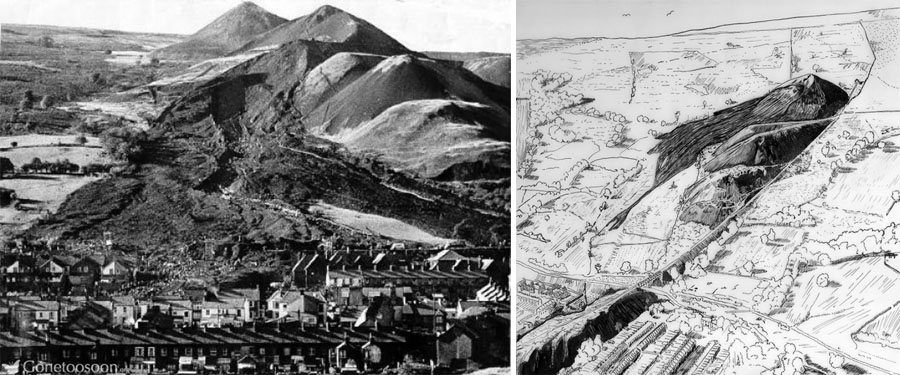
Coal, for instance. Not to dismiss the thousands - if not millions - who have had their lives shortened by working in the mines, in 1966 twenty-eight adults and, tragically, 116 children were killed when a mountain of coal tailings thundered down into the town of Aberfan, Wales.


(images via)


Aberfan was a disaster in many other ways as well: the media was thumped for insensitivity and sensationalism; untrained – though enthusiastic - early responders were criticized for possibly impeding professional emergency services; and Lord Robens, the Chairman of the British National Coal Board, made every mistake he could possibly make (even claiming the slide was not the fault of the mine) and was soon out of a job.


4. The Bhopal Disaster

While the coal - as well as the nuclear world, both civilian and military - certainly have had their moments of horrifying recklessness, one of the benchmarks of corporate irresponsibility has to be Union Cardbide's role in The Bhopal Disaster.

In 1984 the Union Carbide pesticide factory near the town of Bhopal, India, released some 30 metric tons of extremely toxic methyl isocyanate into the environment.


(image via)


Exposure to methyl isocyanate results in vomiting, coughing, and suffocation - though many others were also killed in the panic that followed the release.

The area around Bhopal quickly became a chemical hell-on-earth: trees lost their leaves, animals died by the thousands, and while the total impact of the disaster is a matter of debate, Indian authories have said that over 700,000 people were affected - and of those 3,000 to 8,000 died.


(right image credit: Andrew North, via)


It shouldn't have to be mentioned but - yeah - Union Carbide denied responsibility for the accident, going as far as to claim sabotage. In the end, Union Carbide was penalized $470 million, plus a promise to create and fund a hospital for the victims.

The true disaster, though, has to be that Union Carbide legally tap-danced its way out of any criminal proceedings: the Supreme Court of the United States even refused to hear about the possibility of UC executives being extradited to India. In the end, token two year sentences were given to UC's Indian Staffers - quite of few of them in their 70s.


3. Niigata Minamata Disease

Coal is black and nasty – in and out of the ground, atoms can make mushroom clouds or deadly cancer, methyl isocyanate is nightmarishly toxic, but in 1965 Japan tragically realized that mercury can be a true - and lasting - horror.

At first Niigata Minamata Disease was a complete mystery. In 1956 all Japanese doctors knew was that it was a terror: cats usually were the first to show symptoms ("dancing cat fever") but for it was also seen in humans, usually those who lived or worked near the Shiranui Sea and Minamata Bay.


(images via)


Spasms; difficulty speaking, hearing, seeing - coma and then death, Niigata Minamata was a terrifying puzzle ... until 1959 when the finger was finally pointed at heavy metal poisoning, specifically from industrial run-off from a factory owned and operated by the Chisso Corporation.

Chisso - ah, but no doubt you can see this coming - denied responsibility while secretly changing it's discharging of toxic mercery from the Bay to the nearby Minamata River - resulting in a brand new outbreak of mercury posioning among a whole new part of the country.

Eventually Chisso was called on it's environmental recklessness – though only after what is called "ten years of silence," where it avoided seriously addressing the issue while placating some of the victims with "sympathy money."

The real tragedy, though, is that mercury is a particularly nasty element and getting it out of an environment is tremendously difficult - just about as difficult as getting the Japanese government to do anything about it. It wasn't until 1968 that the Japanese government officially recognized that mercury poisoning was the cause of Niigata Minamata Disease ... after 2,265 suffered its affects, and 1,784 of those were fatal.


2. London Beer Flood

Sit, down, put your feet up, have a beverage, for here's a tale of ale that is - to put it mildly - unique: in 1814, London to be specific, a fermentation vat belonging to the Meux and Company Brewery burst, causing several others to burst as well.

The result was a tidal wave of frothy terror - 323,000 gallons to be precise - that smashed into, and wiped out, not just two nearby houses but also the local pub. In the end eight people drowned in the flood...


(images via)


Ironically, in the end responsibility was given not to the brewer but to "an act of God" – and, today, you can raise a pint to the all-mighty as the new local tavern has begun the tradition of brewing a special brew in celebration of the famous beer flood.


1. Boston Molasses Disaster

While not as directly alcoholic, the top of this odd disaster list does owe a lot to booze - or, to be specific - a main ingredient in the making of it.

In 1919, the Purity Distilling Company of Boston was working full-tilt ... or, very possibily, more-than-full-tilt because on the morning the 15th one of their molasses vats exploded.


(images via)


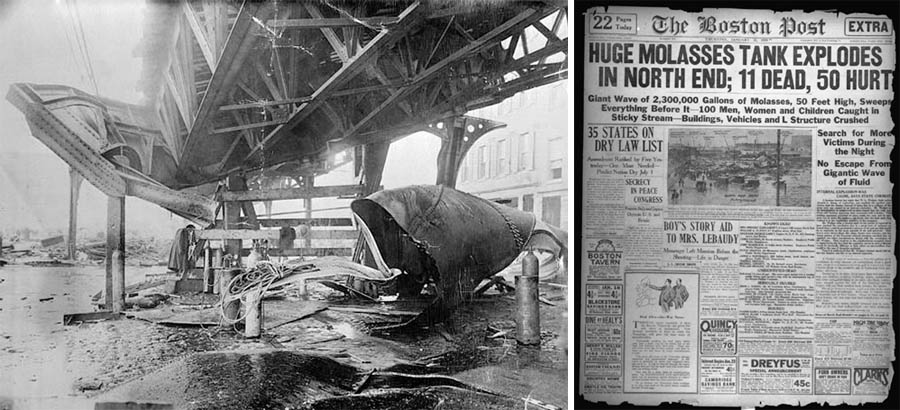
The causes of what became known as the Great Molasses Flood have been debated and debated and debated but what is known is the vat contained 2,300,000 gallons and when it went - and, boy it went - it roared down into Boston: a sticky brown liquid nightmare 15 feet high and moving at 35 miles per hour.

The molasses wave knocked houses off their foundations, adding bricks and mortar to the mix, knocked a railcar over, and even took down a section of the Boston Elevated Railway.

In the end, 150 were hurt by the molasses wave, and 21 killed. It's reported that it was almost impossible to even find some of the dead as they'd become entombed in the sticky mass.


(images via)


In the end, it took over two weeks to clean the molasses from the streets of Boston - and longer still to repair the damage the spill had caused. It's reported that Boston harbor was brown from the spillage for months, and that the city reeked of the smell for far longer than that.

The topper, though - and a good conclusion to this exploration of spills, accidents, and boo-boos - is when that vast tank of molasses bubbled, gurgled, and churned its way into Boston, and history.

For, contrary to popular belief, molasses really does run in January.


Article by M. Christian and Avi Abrams, Dark Roasted Blend. M. Christian is also the author of "Welcome to Weirdsville": a wonderful compendium of interesting subjects and fascinating topics. This is a highly recommended book for all lovers of weird & wonderful this side of the Universe; order the Kindle edition here.


CONTINUE TO "APOCALYPTIC SCIENTIFIC EXPERIMENTS" ->

Also Read: "Biochemical Oops! List" ->


24 Mar 18:36

Something new underfoot at Echo Park Lake

by The Eastsider

Construction worker takes a walk on new, eco-friendly pavement/Kevin Break

When Echo Park Lake reopens to the public in May after a multimillion clean up and renovation, most of the attention will be drawn to the lake, of course, and the landmark bridge, boathouse and Lady Of The Lake statute. But visitors may also want to glance down every once in a while to look at the new ribbon of pathways that circle the 13-acre lake. Instead of the cracked and lumpy dark asphalt of old, the new paths, photographed today by Kevin Break, are made from a tan-colored, porous pavement. That pavement, riddled with tiny gaps,  is not only for walking, however.

During a community meeting late last year, Julie Allen, with the city’s Bureau of Engineering, explained how the eco-friendly permeable path will play a role in collecting water to keep the lake filled:

The stormwater that lands on the pavement will infiltrate down and travel to the lake through a drainage pipe under the pavement. The water is filtered and cleaned before getting to the lake.

The new pavement will be porous enough to allow rain water to pass through but durable enough to stand up to heavy foot traffic. Cyclists might be tempted cruise along on the smooth, new pathways. But they better watch out. Bikes won’t be allowed to ride on the surface.

Tiny gaps in the concrete will allow storm water to trickle through into the ground. Photo by Eastsider


Pathways encircle the Lady of the Lake statue. Photo by Kevin Break

New path sweeps along the eastern edge of the lake. Photo by Kevin Break

23 Mar 00:02

Yamashiro Farmers' Market Returns, Ringing in the Arrival of Spring

by Krista Simmons

yamashiroveev.jpg
Photo by Lindsay William-Ross/LAist

There are plenty of reasons to love L.A., especially when the sun is shining. But one of our absolute favorite bits about the arrival of springtime is the coming of all sorts of outdoor revelry, including the Yamashiro Farmers Market.

Starting on April 4, what's been deemed will return to its perch atop the hills of Hollywood, offering all sorts of farmers' market produce, artisanal goods, and most importantly, cocktails.

In the years past, Yamashiro executive chef Brock Kleweno has done sliders and tacos, but this year he's debuting a revamped Middle Eastern/Mediterranean-meets-Asian menu, including pitas made with preserved lemon and honey chicken, braised lamb merguez with shiso tatziki; and ‘shwarma’-marinated beef with citrus tahini. There will also be smaller mezzes and sides such as edamame hummus, pomegranate quinoa tabbouleh, and fig and olive salad with walnuts and fried feta.

Produce will be hauled up from San Diego's Hillside Family Farms, who have been involved with the market since its inception in 2010. Also along for the ride this year are Heirloom LA, the Flat Iron food truck, Bolani East West Gourmet, Longshot Espresso, Hepp's artisanal salts and Dolce Manachelli's. There will also be cocktails available from the Pagoda bar.

The event is put together by LA City Farm and Yamashiro.

You can valet, of course, or park the bottom of the hill at the Mosaic Church for free, then come up on the complimentary shuttle service, which is available on a first come/first served basis. If the lot's full, nearby street and lot parking will be available.

Just remember to bring a sweater in the first few weeks, because as much as we'd love to pretend that summer is in full swing, we're not quite there yet. Nights on the hill can get chilly.

The Yamashiro Farmers Market will take place every Thursday from 5 p.m.-9 p.m. through September.

Related:
What's On Offer at Yamashiro's Nighttime Market
Know Your (Seasonal) Farmers' Market: Thursdays at Yamashiro

22 Mar 23:59

Echo Park Lake Will Re-Open Soon, After 2-Year Rehab

by Lindsay William-Ross
echo-park-lake-rehab-Feb13.jpg
Echo Park Lake in February 2013 (Photo by STERLINGDAVISPHOTO via the LAist Featured Photos pool on Flickr)

It's been a long time since L.A.'s Echo Park Lake has been its usual self. A two-year-long rehab project has been taking place, putting iconic items like the Lady of the Lake statue on the move, and looking more like a construction zone than a lake-dotted city park. But the end is in sight: The lake is set to re-open in mid-May.

There's going to be a grand re-opening public celebration, reports Echo Park Now, as well as the return of some familiar aspects of the park, though not everything will go back to its pre-rehab state.

The Lady of the Lake was put back in earlier this year, and she's in her original spot, back where she first was after she was commissioned in 1934. The Lotus Plants (which were being cared for in the Valley) are there, but they are protected by netting, and won't bloom until next spring. Speaking of the Lotus flowers, their annual celebration, the Lotus Festival, will not be happening this year. Actually, there won't be any festivals held at the Park until next year, since it's going to take sometime for the new sod to be established.

There's also a new pavement perimeter around the lake and a return of the catch and release fishing program. Plans to reinstate the boathouse, as well as to keep the bridge and island open are in the works.

22 Mar 23:59

CicLAvia Changes New April Route To The Sea

by Lauren Lloyd
CicLAvia-April-2013-updated-map.jpg
Updated Official CicLAvia April 2013 Route Map (Facebook)

CicLAvia's new April route to the sea has been very well received among Los Angelenos, and those planning to pedal along the 15-mile course should note that the route has slightly changed.

Don't worry, the course will still stretch from the Pacific to Downtown L.A., only Figueroa has been scrapped. Instead, the route continues on 7th Street all the way to MacArthur Park, moves onto Alvarado, then finally hits Venice for the sweet cruise to the sand.

The upcoming ride takes place Sunday, April 21, from 10 a.m. to 3 p.m. and welcomes not only bicyclists, but walkers, runners, roller skaters and skateboarders. Basically, any mode of transportation powered by legs—leave the motors at home, people.

Following the sixth installment of one of L.A.'s most highly anticipated community events, two other CicLAvia rides will shut down the streets on both June 23 and October 6. Looking into the future, bicyclists and active Angelenos alike will be beckoned to get out and explore a new L.A. neighborhood every month. And to that we raise our U-locks!

Related:
CicLAvia Releases Official Map For April 2013 Route To The Sea
CicLAvia's New April 2013 Route Will Reach The Beach

22 Mar 23:47

Kombucha Dog Fermented Beverages

by DailyCandy
komucha dog fermented beverages!

Have You Seen Me?

Lost: Your energy and digestive equilibrium.
Found: Adorable rescue dogs needing a home.

Make the connection with Kombucha Dog, a new line of fermented beverages whose bottles brandish photos of handsome mutts available for adoption.

Flavored using only raw, organic pressed fruit, owner Michael Faye’s healthy, enzyme-packed teas detoxify, revitalize, and boost immunity. Ginger and raspberry are tangy and remarkably smooth (read: no floating globs). Additional seasonal flavors (blackberry, peach) are in the works.

See the pooch of your dreams? Check the Kombucha Dog website for info on making him yours (pug Chalon currently has us by the heartstrings).

The labels change as the dogs get adopted.

No better reward than that.

Available at Erewhon, 7660 Beverly Boulevard, at Stanley Avenue, Mid-City (323-937-0777 or erewhonmarket.com); Locali, 5825 Franklin Avenue, between Canyon Drive and North Van Ness Avenue, Beachwood Canyon (323-466-1360 or localiyours.com), $4-$5. For more information, go to kombuchadog.com.

Photo: Courtesy of Kombucha Dog

Tags: Do-Gooder, Dog Friendly, Healthy
22 Mar 20:24

Bahooka's Baubles To Help Revive Clifton's Pacific Seas Cafeteria

by Hadley Tomicki

Bahooka

We recently mourned the loss of Bahooka, Rosemead's Tiki legend, by looking at our region's remaining strongholds of Tiki culture. Soon there will be another destination on the map, as L.A. Magazine reports that Andrew Meieran has purchased a lot of Bahooka's decor for the reopening of Clifton's Cafeteria. Meiran plans to revive Clifton's Pacific Seas Cafeteria, a tropical-themed adjunct that was paved over to provide more parking. With his new stash that includes a vintage diving helmet, canoes, and gas pumps, Merian says, "We're taking a little Southern California legend and fusing it into the Clifton's legacy. We're losing one and somehow it's all coming back together." [LA Mag; Earlier]

Read more posts by Hadley Tomicki

Filed Under: reopenings, andrew meiran, bahooka, clifton's cafeteria, downtown, tiki

20 Mar 21:58

A Picture of Possessions: Toy Stories

toy stories 031413.jpg

Arafa & Aisha - Bububu, Zanzibar


Regardless of nationality or economic status, children cherish their toys. In his project Toy Stories, photographer Gabriele Galimberti spent 18 months documenting children around the world showcasing their prized possessions.

Norden-Rrahke-Marocco-3:13.jpg

Norden - Rrahke, Marocco


What struck me most about these images was the similarities between the children, not their differences. I expected to feel a sense of lack and sadness from the children who have fewer toys to display and possibly live in poverty, but instead, those children seemed equally, if not more, happy and satisfied with their belongings.

Cun-Zi-Yi-China-3:13.jpg

Cun Zi Yi - Chongqing, China


In fact, Galimberti noticed that the richest children were more possessive with their toys and needed more time before letting him arrange them for the photo. In poorer families, even if they had only a few toys, they didn't seem to mind the imposition.

enea-colorado-3:13.jpg

Enea - Boulder, Colorado


For me, these photos are more a celebration of childhood and the developing interests and personalities of each child than a statement about economic advantage. And those personalities have a lot to do with their role models. Galimberti says, "Doing this, I learnt more about the parents than I did about the kids." As the ones who buy the toys, parents, perhaps unconsciously, reveal their aspirations for their children. Like the farmer's daughter below and her collection of tools.

alessia-toscana-3:13.jpg

Alessia - Castiglion Fiorentino, Italy


Ultimately, kids are kids and, as much as we want to let them represent agendas or make statements, they're more concerned with having fun. I'd say it's a pretty good lesson for us all.

See them all at Gabriele Galimberti.

(Images: Gabriele Galimberti)

19 Mar 22:47

Early Report: WildCraft Sourdough Pizza in Culver City

by Chelsee Lowe
Alexisr

yums

At Culver City’s month-old WildCraft Sourdough Pizza, the Neapolitan pies are cooked in a brick oven made by a third-generation builder from Naples, but there's a California twist: a slow-rising sourdough crust. It's thicker than a traditional Neapolitan pizza, a fact that Neopolitan purists might take issue with. But there's too much to like about WildCraft to quibble, Chowhound Dommy says.

For one thing, that sourdough crust is delicious, plus it's nicely charred and has excellent meat toppings. Beyond that, the Caesar salad with artichokes is first-rate. New Trial likes the quality cuts on the Carnage pizza (prosciutto, pepperoni, porchetta, and sausage), and loves the fried, sausage-wrapped olives, “the olive version of a Scottish egg.”

WildCraft Sourdough Pizza [Westside – Inland]
9725 Culver Boulevard, Culver City
310-815-8100

Discuss: Wildcraft Sourdough Pizza

Photo from WildCraft Sourdough Pizza / Facebook

See More Stories Like This

Share on Facebook | Tweet this | StumbleIt | See the comments

14 Mar 20:33

Easy Homemade Vegan Chocolate + Instant Hot Chocolate

by Angela (Oh She Glows)
Alexisr

test!

homemadeveganchocolate 2048 thumb   Easy Homemade Vegan Chocolate + Instant Hot Chocolate

This 4-ingredient chocolate is what dreams are made of. It’s packed with antioxidants, is easy to make, and is refined sugar-free. What more could your taste buds ask for on Valentine’s day? Give me my man and this chocolate and I’m a happy lady.

homemadeveganchocolate 2006 thumb   Easy Homemade Vegan Chocolate + Instant Hot Chocolate

When I spotted this bag of cacao butter at Organic Garage I knew I had to pick some up. Cacao butter (or cocoa butter) is the pale yellow vegetable fat extracted from cocoa beans. You can find it at most health food stores, specialty grocery stores (like Organic Garage), and of course, online (for my online vegan shopping guide, see this post).

homemadeveganchocolate 2045 thumb   Easy Homemade Vegan Chocolate + Instant Hot Chocolate

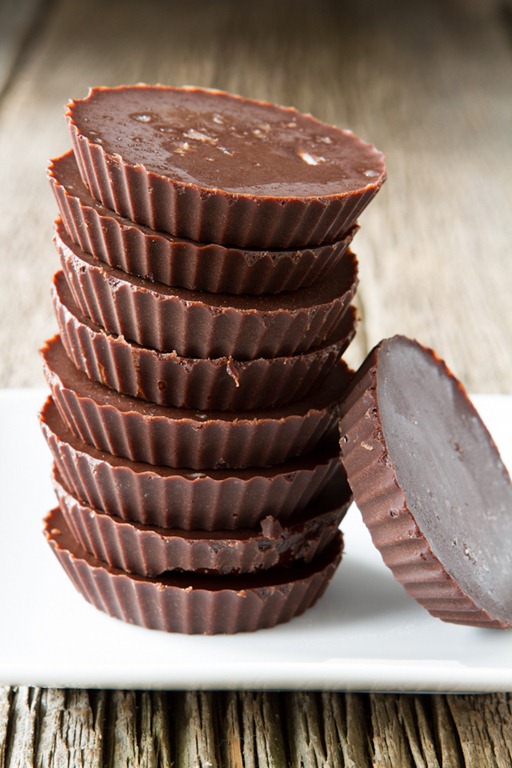
This recipe I’m sharing today does not result in a traditional hard/waxy chocolate like the bars that you’d buy at a store. Instead, it produces a fudge-like texture that melts in your mouth sending a wave of pure bliss throughout your body. It sounds dramatic because it is!

Update: My original recipe resulted in a softer fudge-like chocolate, however I tried a batch the next day without using the blender (I mixed by hand) and this resulted in a much firmer chocolate. I’ve since updated the recipe to reflect this method as I enjoyed it even more.

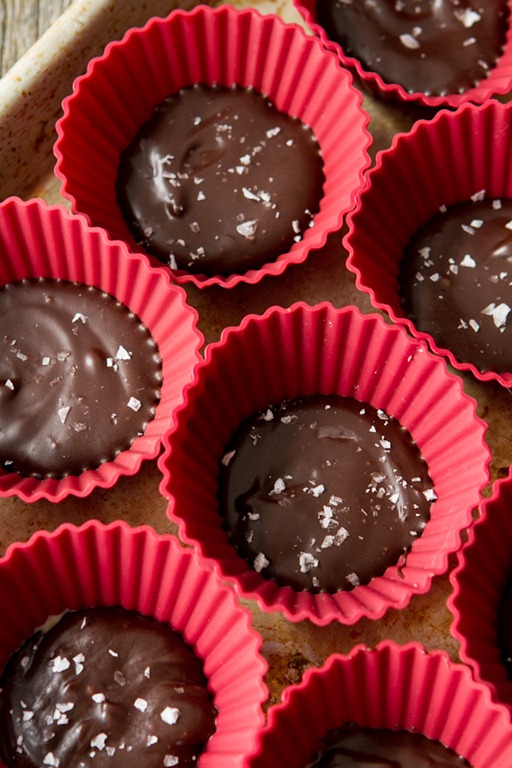
I strongly suggest using these silicone baking cups if you can get your hands on some. The chocolate will easily pop right out. If you don’t have the silicone baking cups, you can simply line a baking sheet with parchment paper and then drop spoonful’s of chocolate all over the paper or you can even use paper liners. The chocolate will stick a bit to paper liners, but they will still come out.

homemadeveganchocolate 2013 thumb   Easy Homemade Vegan Chocolate + Instant Hot Chocolate

Freeze for about 30 minutes.

“Clean” every nook and cranny of the blender.

And experience love at first bite.

Easy Homemade Vegan Chocolate

Email, print, or text this recipe

Yield: 12 servings

Ingredients:

  • 120 grams cacao/cocoa butter (about 1 cup of cacao butter chunks)
  • 1/2 cup cocoa powder
  • 1/2 cup room-temperature pure maple syrup (or liquid sweetener of choice)
  • pinch of fine grain sea salt
  • Flaked sea salt, for finishing


Note: I’ve changed the directions to omit the blending process. The blender seems to yield a softer, thicker mixture while simply mixing by hand resulted in a firmer chocolate that poured easily. I much preferred the chocolate when mixing by hand.

1. Gently melt the cacao butter in a pot over the lowest heat setting. Or you can use a double boiler.

2. Whisk all other ingredients (except flaked sea salt)  into the pot.

3. Pour into 12 silicone cups and sprinkle with flaked sea salt (optional). Alternatively, you can use paper liners (they will stick a tiny bit but will still peel off) or line a baking sheet with parchment paper and drop spoonfuls all over the paper. Plastic chocolate molds may stick.

4. Freeze for 30 minutes or until firm. Pop chocolate out of the cups and enjoy immediately. Store in the fridge or freezer until ready to use.

For nutritional info, see here.


Instant Hot Chocolate

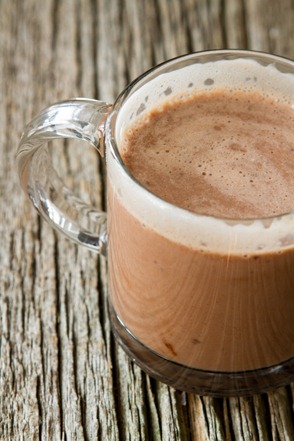
Simply drop a disc of vegan chocolate into a mug of steamed almond milk and stir until combined. This makes the creamiest, most delightful hot chocolate! It just might be my favourite hot drink yet.

homemadeveganchocolate 2037   Easy Homemade Vegan Chocolate + Instant Hot Chocolate homemadeveganchocolate 2038   Easy Homemade Vegan Chocolate + Instant Hot Chocolatehomemadeveganchocolate 2040   Easy Homemade Vegan Chocolate + Instant Hot Chocolate homemadeveganchocolate 2043   Easy Homemade Vegan Chocolate + Instant Hot Chocolate

Thank you so much for supporting Oh She Glows in The Kitchn’s blog nomination for Healthy Cooking Blog! I’m currently in second place and would appreciate any extra support you can lend today during this last day of voting.

I hope you have a lovely Valentine’s Day tomorrow no matter what you are up to. xo

Comments (102) | Share on Facebook | Tweet | Pin It | Stumble © copyright 2013 Oh She Glows. All Rights Reserved.