Shared posts

04 Oct 21:35

Angry about health care? Look at Hyde.

by Jill

The current Republican temper tantrum over health care — you know, the one where they forced a shut-down of the entire government because they don’t want the American public to have health care coverage — is just the logical conclusion of a long line of GOP healthcare shenanigans. But usually, they’re targeting poor people, and poor women in particular. In my Guardian column this week, I’m writing about how this all goes back to the Hyde Amendment:

Thirty-seven years ago this week, the Hyde amendment was first attached to an appropriations bill. It banned any federal funding of abortion by outlawing it in the Medicaid program. Since 1976, Hyde has been reauthorized again and again. Women’s health groups routinely oppose it, even bringing and losing a Supreme Court case over it.

President Clinton managed to get an exception for rape and incest into the amendment in the 1990s. But today, outside of the civil liberties organizations and women’s advocacy groups that are still pointing out the harms wrought by Hyde, there’s little mainstream political will to seriously challenge the law, even within the Democratic party. That Democrats so easily backed down on the Hyde amendment is a real shame, because that cowardice handed the GOP an effective road map for denying healthcare coverage for people or procedures they dislike.

Medicaid and Medicare provide healthcare to low-income, elderly and vulnerable Americans, and are some of the most popular social welfare programs in the United States. They passed thanks to liberal control of Congress in the mid-1960s. But after the Supreme Court decided Roe v Wade – initially to little fanfare – in 1973, extending the right to abortion to all American women, conservatives adopted an anti-abortion position as part of its efforts to solidify a base of segregationists, newly politicized religious Christians, and other traditionalists increasingly wary of rapidly-shifting social mores around race and gender.

Enter Henry Hyde, a right-wing senator from the suburbs of Chicago, Illinois for whom abortion was a personal obsession. Realizing he couldn’t deny the right to abortion to all American women, Hyde targeted the ones he could: low-income women relying on Medicaid. The initial iteration of the Hyde amendment barred Medicaid funding for any abortion, including cases of rape or incest, even to save the pregnant woman’s life. In the years following, more progressive lawmakers managed to add in rape, incest and threat-to-life exceptions, and some individual states decided to pay for abortion care with their own funds. But Democrats were never able to do away with the amendment itself, and today it’s far from the top of the party’s priority list.

Today reproductive healthcare for low-income women is in crisis. The US has one of the highest unintended pregnancy rates among developed nations, and one of the highest maternal mortality rates. Women are more likely to die during childbirth in Republican-dominated states than in more liberal ones, and poor women are particularly vulnerable. Many pregnant women find themselves pawning their valuables in order to pay for an abortion, or begging family and friends for money.

Barriers to abortion access – Hyde premiere among them – mean that low-income women often end up having abortions later in the pregnancy than they otherwise would have, which means the procedure is more expensive and more difficult to obtain. Organizations like the National Network of Abortion Funds have sprung up to fill the gap, but they can’t meet 100% of the need.

Hyde also means that some low-income women who want to terminate their pregnancies aren’t able to get abortions at all. Those women, of course, adjust to their life circumstances as all of us do, but they are much more likely to suffer negative health and financial consequences than similarly-situated women who were able to terminate. Even when previous financial differences are taken into account, women who sought to have abortions but couldn’t are three times as likely to fall below the federal poverty line two years after giving birth.

The takeaway from Hyde should be that denying low-income people healthcare is a public health disaster, and no one should be refused a necessary and legal medical procedure because of their income. But, the GOP learned that Democrats will fold on basic rights if it only impacts poor women, and if they can isolate particular aspects of medical care that a large enough segment of the population feels morally superior about. One in three American women will have an abortion in her life, but the GOP managed to turn terminating a pregnancy into a divisive issue where half the American public thinks the government should have control.

The full piece is here.

02 Oct 19:48

I’m Getting Too Old for this Cliché

by Not That Mike The Other Mike

When a sassy streetwise crow teams up with a gruff by-the-book cat, the fur, feathers — and bullets — fly fast and furious! Damien Bleargh and Rick Nickerson are… Cray-Cray and McSteele, coming this fall to Fox!


From Japan’s Most Retweeted Cat Pictures.


Filed under: Uncategorized Tagged: Birds, Kittens
23 Sep 04:47

Overheard in L.A.: The Truth About Horrible Drivers

by Emma G. Gallegos
driving-street-art.jpg
Driving in L.A. (Photo by Jo via the LAist Featured Photos pool)

This week's edition of Overheard in L.A. features bits of overheard conversation from Whole Foods, Trader Joe's and Chipotle.

Overheard of the Week
"People in L.A. are terrible drivers. Trust me, I almost hit a bicyclist, like, every day."
via @DavidG_C

Come, Let Us Drown Our Sorrows In $8 Juice
"Oh well, all comedians are just totally miserable. Writers too, I guess."
At a juice bar via @LeRenardRouge

Crushed Dreams Of Pantless Conferencing
"The worst of it was, I was on a video call and the dog was desperate to get out. But I just had a shirt and no pants on so I couldn't get up. And the dog went to the bathroom on the floor."
In Silver Lake Trader Joe's via Fran Levy

Think of The Children!
Mother: Where in the world did you learn the term camel toe?
Child: Miley Cyrus.
via @RandyRULES

The Good Life
"Don't you just hate it when your WiFi doesn't reach your hot tub?"
via @ChrisEastvedt

The Good Life 2
"What the hell? We're out of freakin' Perrier!"
At work via @xXSuperJudeXx

In Defense Of The Selfie
"I'm not selfie-concious."
"Me neither."
"I take selfies all the time and I love it."
"Yeah, van Gogh was the same way."
via @DaddarioAlex

Is It?
Showbiz industry guy to his female friend: "OMG. This is worthy of a snapchat!"
At a cafe in Burbank where iced coffee is served in a MASON JAR via Lindsay William-Ross

Watch Out
"Anyone who's taking themselves too seriously, you've just got to fuck up their vibe a little."
Near Echo Park Lake via @alicebolin

Romper Problems
"Dude, I have a romper on...No way."
via @gracesegundo

Actually, That Explains Everything
"I'm an actor, writer, director, so that's what I'm doing."
At Chipotle via @StevenWilliamz

How To Start The Night
"This is my lesbian lover I just had a fight with. Let's get wasted."
In West Hollywood via @Girl_Genius

Watch Where You Point That Thing
"I'm wearing a Ring Pop, please be careful."
At a party via @apocalypstick

Drama Queen 1
"I got the drama queen special: 5htp St John's wort and valerian."
At Whole Foods via Fran Levy

Drama Queen 2
Queen 1: Everything with you is a production.
Queen 2: But it's worth it.
In West Hollywood via @gerardseifert

How We Live
One lady: "What did you do?"
Another lady: "Last night? I made macaroni and cheese with pot butter and went to bed at 9:45. What did you do?"
In line at Sunny Spot for a meatball pop-up via Mary Quick

Our Overheard in L.A. feature relies on you to send us the strange conversations you overhear in this city. Send them our way at tips@laist.com. (In the e-mail, put "overheard" in the subject and tell us who said it, where they said it and any amusing context.)

Previously:
Overheard in L.A.: Why Our Wedding Was A Failure
Overheard in L.A.: Things We Want From An Open Relationship
Overheard in L.A.: Westside Lies
Overheard in L.A.: Our Ridiculously Bougie Food Emergencies
Overheard in L.A.: The Hollywood Line That Makes Us Roll Our Eyes
Overheard in L.A.: What's Wrong With Venice
Overheard in L.A.: Our Terrible Reasons For Going To Rehab
Overheard in L.A.: Why The Walk Of Shame In L.A. Is Extra Shameful
And more!

20 Sep 18:24

Noted: New Logo for Google by Google

by Armin

Flatter Than Thou

New Logo for Google by Google

(Est. 1998) Google is, yeah, it's Google.

Design by: In-house

Opinion/Notes: There is no real point in making this into a full review since the change isn't that radical and we've all slowly seen it coming. It should, at least be noted. So here it is: The Google logo has gone completely, utterly, unapologetically flat. And it's… fine.

Related Links: The Verge story

New Logo for Google by Google
Logo detail.
Many thanks to our ADVx3 Partners
20 Sep 18:08

Get The Most Out Of Your New iPhone 5s Or 5c With These Essential Apps

by Kimberly Price

Get The Most Out Of Your New iPhone 5s Or 5c With These Essential Apps

So you’ve just purchased a new iPhone 5s or 5c and you don’t quite know which apps to spoil it with? There’s an AppList for that. This list will help you get started with some of the best and most essential apps so you can enjoy your iPhone or iPod touch to the fullest.

Updated AppList: The Absolute Essential Must Have iPhone Apps


12 Sep 23:40

Where To Find The Best Cronut In L.A.

by Krista Simmons

cronutsknockoff.jpeg
The Cronuts™at Dominique Ansel in New York (Photo by Marc Yearsley/Gothamist)

For those of you who have been living in a cave for the last few months, cronuts are a hybrid of a doughnut and a croissant created by pastry chef Dominique Ansel that have taken New York by storm. There are epic long lines to procure the deep fried delights, with some people even trading sex for said sweets.

So it's only natural that shops all over the country would capitalize on this food trend, attempting to create edible knockoffs for the masses.

Pastry chef Roxana Jullapat made an attempt over at Cook's County which we got to sample, but she decided the effort to make the fried sweets just wasn't worth it. Other bakeries didn't seem to have a problem ripping off the idea though. Sixteen of them in L.A. alone did so, in fact. (Sadly none of our ice cream purveyors have ripped off the idea of a cronut concrete a la Shake Shack. We're looking at you, Top Round.)

Betty Hallock of the L.A. Times, who also happens to have tried the original version in NYC, took it upon herself to try every single version of the hybrid donuts at each shop, some of which carried up to 6 flavors. That's quite the noble effort. One we're glad wasn't bestowed upon us, might we add. Thank you news gods.

Members of our staff have admittedly enjoyed the crullants at Semi Sweet Bakery in Downtown L.A., which made it to third place on Hallock's list. So who has the best, in her opinion? Forage. Their riff makes fun of the zeitgeisty item, naming it the "croissant doughnut #trending." And it's appropriately priced at a hipster-friendly $5.50.

Says the Times:

Forage calls its version "croissant doughnut #trending," a name made up by one of the servers, according to pastry chef Kristin Ferguson Smith. (On the receipt, it says "Crowe-Gnut.") Ferguson Smith's are nothing like Ansel's Cronut, but they are things of beauty in their own right: big, rustic, with a flakiness that's almost shaggy. Her croissant dough contains sourdough starter, which adds depth of flavor, and lately she has been making them in knot shapes (rather than traditional doughnut rings), their centers filled entirely with pastry cream and the whole thing sprinkled with cinnamon-sugar.

Now if only someone could hack Ansel's magic souflee here in L.A. That's some research we'd be down for.

06 Sep 20:38

Pacific Island Nations Tell The World ‘Climate Change Has Arrived’

by Jeff Spross
Representatives to the Pacific Islands Forum in 2009.

Delegates to the Pacific Islands Forum in 2009.

CREDIT: Phil Walter / Getty Images AsiaPac

“Climate change has arrived,” and the world must act. That’s the message from fifteen nations in the southwestern Pacific, who signed a statement yesterday calling on other countries to join them in “the urgent reduction and phase down of greenhouse gas pollution.”

The statement — called the Majuro Declaration For Climate Leadership — is the product of the 44th Pacific Islands Forum, an intergovernmental meeting of 16 member nations in the southwestern Pacific, which chose climate change as its theme this year. The Declaration was signed on September 5th by Australia, New Zealand, and 13 other Pacific Island nations, and will be presented to United Nations Secretary-General Ban Ki Moon in an attempt to galvanize action for the next big international meeting on climate change in 2015.

“We’ve had a strong meeting of minds here on the urgency of the problem, but the real work begins now,” said President Christopher Loeak of the Marshall Islands, one of the 13 island nations. “We need the rest of the world to follow the Pacific’s lead.” To that end, the Majuro Declaration also reaffirms the various commitments previously made by the 15 signatories to reduce their carbon dioxide emissions and to get more of their power from renewables. They include:

  • Australia: Reduce greenhouse gas emissions 5 to 15 percent below 2000 levels by 2020, and by 25 percent if there is world agreement to stabilize atmospheric carbon dioxide at 450 ppm. Generate 20 percent of its electricity from renewables by 2020.
  • New Zealand: Reduce emissions 5 percent below 1990 levels by 2020, and by 20 percent if global agreement is reached. Generate 20 percent of its electricity from renewables by 2020.
  • Republic of the Marshall Islands: Reduce emissions 40 percent below 2009 levels and generate 20 percent of its electricity from renewables by 2020.
  • Cook Islands: Generate 50 percent of the inhabited islands’ electricity by 2015, and 100 percent by 2020.
  • Nauru: Generate 50 percent of its electricity from renewables by 2020.
  • Federated States of Micronesia: Generate 10 percent of the electricity for urban areas and 50 percent for rural areas from renewables by 2020.

This year’s forum included delegations from 13 of its 16 members, as well as representatives from the European Union, China, Japan, the United States, and the top United Nations climate change envoy. U.S. Secretary of State John Kerry had planned to attend in person, but was forced to deal with the possibility of a U.S. military strike on Syria. Instead, the forum was kicked off by a video message from Kerry, which called the scientific evidence for climate change “irrefutable” and “alarming.”

The stakes for many of the Majuro Declarations’ signing nations are direct and immediate. The language recognizes the countries’ “unique vulnerability to climate change, the predicted catastrophic impacts on the security and livelihoods of our people, and the significant benefits that come with our transition to renewable, clean and sustainable energy sources.” Doug Ramsay, the Pacific Rim manager for New Zealand’s NIWA and a climate change expert, singled out the Marshall Islands, Kiribati and Tuvalu as Pacific island nations that could see the worst case scenario of rising sea levels forcing mass abandonment and population relocation.

The Marshall Islands, home to around 60,000 people and this year’s host for the forum, recently declared a state of national emergency and shipped in desalination plants to fight a severe drought. Then the nation’s capital was swamped by rising tides and storm surges, forcing a temporary closure of its airport. President Loeak called the drought “unprecedented,” and blamed both it and the flooding on climate change.

Referring to his home atoll of Ailinglaplap, President Loeak said, ““the end of the island gets shorter every year.”

The post Pacific Island Nations Tell The World ‘Climate Change Has Arrived’ appeared first on ThinkProgress.


05 Sep 17:19

Women, what's your favorite undergarment on men?

03 Sep 21:37

An incredible collection of video game backgrounds in animated GIF form

by Bobby Solomon

Video game backgrounds as animated GIFs

Video game backgrounds as animated GIFs

I’m sure a lot of people don’t think of video games as pieces of art, but I’d say they’re wrong, and this proves it. Reddit user RudeBootie has put together a collection of 125 different backgrounds from various fighting backgrounds in animated GIF form, and they’re pretty mind-blowing.

As you can see above and below the artists that created these backgrounds did some fantastic things with pixels, and yes, it’s all pixel art. These images are packed with a ton of details and I’d have to imagine that backgrounds like these would take weeks to complete. My personal favorites are the blowing sand in the Egyptian scene above and the totally random manatees in the GIF below.

Don’t forget to check out the full collection by clicking here.

Video game backgrounds as animated GIFs

Video game backgrounds as animated GIFs

Video game backgrounds as animated GIFs

Video game backgrounds as animated GIFs

Video game backgrounds as animated GIFs

Video game backgrounds as animated GIFs

27 Aug 21:26

3 Great L.A. Vegan Comfort Foods

by Christine Chiao
MLS-FV-2.JPG
Christine Chiao
Meatloaf sandwich
Leading up to this year's Best of L.A. issue (due out Oct. 3), we'll be bringing you periodic lists of some of the best things we've found to eat and drink around town. Ice cream sandwiches and bowls of tsukemen, fish tacos and dan dan mian, cups of boba and glasses of booze. Read on.

For those who follow a specific dietary lifestyle like veganism, or maybe are in the midst of transitioning into it, the idea of not having your favorite comfort foods can be a bit daunting. Even as awareness of veganism has grown, there remains an underlying perception of it as being a particularly ascetic way of eating. For ominivores, self-professed carnivores and even vegetarians, it's tough to imagine avoiding large quantities of ingredients -- many of which compose at least a handful of favorite dishes.

In Los Angeles, veganism has often been a call for some restaurants to be creative, becoming even more so as of late (see: Crossroads and Kind Kreme). The list of choices is growing to the extent that you can find vegan by cuisine -- whether it's Japanese or Thai. And so it makes sense that you can find quite a few vegan or at least vegan-friendly restaurants with plant-based comfort dishes that recall the familiarity of favorites while remaining true to the dietary credo. Turn the page for some of the better vegan comfort dishes here in town.

SE-Cafe.jpeg
Christine Chiao
Corn chowder

3. Corn chowder at Elderberries Café
It's easy to miss Elderberries Café, an unassuming café to the right of a tattoo parlor on Sunset, especially if you're just trying to keep up with traffic on the busy thoroughfare. If it's your first time, you might be offered elderflower juice in a small jug to try. The café is compact, with the kitchen right behind a counter serving up vegan, gluten-free sandwiches, wraps and salads. The standout is a corn chowder peppered with chopped kale and minimally seasoned with salt. It's creamy without being cloying, a balance often difficult to achieve. Call ahead to see if the café has any, as they've been known to sell out. Sundays might be the better day of the week to stop by for a bowl, when a guitarist trained in jazz standards might perform songs from either Ray Charles or Etta James' catalog. 7564 Sunset Blvd., Los Angeles; (323) 851-0700.
FCD-Doomies.jpeg
Christine Chiao
Fried chicken dinner

2. Fried chicken dinner at Doomie's Home Cookin'
Unless you grew up eating vegan, there are times when you might yearn for certain foods -- fried chicken, Philly cheesesteak, barbecue pulled pork -- you gave up to transition into a plant-based diet. That's where Doomie's Home Cookin', nestled in the corner of a strip mall off Fountain and Vine, can help stave your craving for, well, fried chicken, Philly cheesesteak and barbecue pulled pork. They're all there on the menu, curated it seems for those with the worst case of classic comfort food withdrawal. Even for those who grew up on vegan food, there's the curiosity for foods much celebrated and hardly experienced. It's not improbable to sit next to a party of four, one of whom has been a vegan all four years of her young life -- and intensely curious about mac-n-cheese and burgers. Doomie's Southern fried chicken plate arrives with mashed potatoes, a small cob of corn and a dinner roll. Made of soy and satisfingly crispy, the fried "chicken" is close to the real deal; you'll even find a part of a wooden skewer in the "drumstick" to complete the impression. 1253 Vine St., Los Angeles; (323) 469-4897.

See also: 10 Best Vegan-Friendly Restaurants in L.A.: Happy Earth Day


Doomie's Home Cookin'

1253 Vine St., Los Angeles, CA

Category: Restaurant

Show additional locations »

Flore Vegan Cuisine

3818 W. Sunset Blvd., Los Angeles, CA

Category: Restaurant

Elderberries Cafe

7564 W. Sunset Blvd., Los Angeles, CA

Category: Restaurant

21 Aug 22:11

Avocado Beer At Angel City Brewery Taps Into California's Gold

by Krista Simmons

Foerstner1.jpg
Photo courtesy of Angel City Brewing

Living in California, it's hard to deny the glory of the avocado. The state's fabulous fruit is great when made into a creamy dip, smashed on toast with smoked trout like at Hart & the Hunter, or simply served up with a squeeze of lime and some salt and pepper. But did you ever think about having it in your beer? Brewer Dieter Foerstner of Angel City Brewery did. And now it's on offer at their Arts District tasting room.

Almost as glorious as the idea of Maui Brewing Company's coconut porter, this avocado-infused brew comes from the same dude that brewed Pickle Weisse — a tart, light-bodied, straw-colored ale blended with pickles — and the French Sip — a beer playing off of the long-standing rivalry between Cole's and Philippe's the Original.

Though Foerstner is originally from Arizona, his grandparents were in L.A. natives that owned an avocado ranch in the Valley growing up. He's been eating guac since a young kid and has a great fondness for the green gold.

Foerstner's new beer beer featuring nature's butter will be available at the brewery's Avocado Festival this weekend on August 24, from 1 to 7 p.m. Many food trucks with avo-themed dishes including avocado popsicles will be on hand, and they'll host a guacamole contest for guests and attendees. He took a moment to explain this moment of genius with us.

LAist: First off, tell us how this whole idea came about. Was it over copious amounts of tequila shots and guac at El Compadre or what?

Dieter Foerstner: Last year, I was showing up to work at 4 a.m. to get started on a brew. I just started piecing the recipe idea in my mind. Then I pitched the idea to Alan Newman, one of our owners, who I expected would say I was out of my mind, but he thought it was great. I put together a recipe, and last year on July 21 we served it at the Bloom Fest. We didn't have our tasting room open yet, so now we're brininging it back so the public can taste it.

How did you go about giving the beer an avocado flavor without making it turn green like the tacky St. Paddy's Day beers?

I added about 100 pounds of avocado directly to our mash, and then added some more to our whirlpool. I also added crushed red pepper, garlic, lime and cilantro to give it a guacamole flavor. It's a kolsch style beer. The reason why I chose that style is because it has light delicate flavors, just like that of the avocado. I really wanted to showcase the avocados, trying to make sure everything was light and delicate and well-balanced... There's not a whole lot of red pepper in there. I ddin't want to overwhelm the flavor of the beer.

It's still a love or hate kind of thing, which is the way a lot of our specialty beers have been. It's not what traditionalists would expect a beer to taste like. It does have a well-pronounced avocado flavor, so people who don't care for the fruit to begin with might not enjoy it. But being an avocado lover, I love it.

Avo Ale.jpg
Photo courtesy of Angel City Brewery

Were there any challenges getting the right formula down?

You can call it dumb luck or skill, but this was only my second batch of this. We have 15 barrels, and I haven't come across any real difficulites at all. It's fermentation was fine, the brewing and runoff was fine; it's really been an easy beer ... It's got a beautiful head retention considering the oil content of avocados. Oils tend to kill head retention, but not with this one.

What would you recommend paring the avocado beer with, aside from tacos of course?

It would pair really well with salty food. Obviously it would go fantastic with chips and guacamole. Yesterday as we tapped the beer we were eating fresh avocado slices and really experiencing the explosion of the avocado flavors. Being light and delicate it could go with salads or some lighter fish dishes. But it's definitely a food beer.

Will this ever be bottled, or is it just an in-house special?

There are no plans in teh forseeable future to bottle this beer. It's just one of those special treats in the public house for guests to come and try and entice them to check out our space ... We'll keep it on tap as long as it's in inventory. It could be on for 4-6 weeks, but it all depends on how popular it is with our guests. I'm hoping it stays on for a while so I can enjoy it after work.

We hope it stays on long enough for us to get down and have a sip, too.

21 Aug 22:08

Map: CicLAvia Announces October Event in the 'Heart of LA'

by Lindsay William-Ross

ciclavia-heartofla-102613.jpg

On October 26, 7.5 miles of city streets will once again be closed to vehicle traffic so that bicyclists and pedestrians can experience Los Angeles on their own two feet...or wheels. CicLAvia revealed this week plans and a route map for their "Heart of LA" event, which will be—where else?—in Downtown.

CicLAvia's reasoning and mission for the fall event is pretty simple:

The Heart of Los Angeles route follows in the footsteps of our first five events and helps Angelenos rediscover the origins of the City of Angels. Whether you’ve ridden these streets before or are new to CicLAvia, the Heart of LA route promises something new to discover.

In April, CicLAvia went westward, with a 15-mile nearly straight shot to the Pacific. Quickly on its heels, in June CicLAvia hosted their longest, most walkable, and event-laden gathering to date, taking over Wilshire Boulevard for the day.

See all of our CicLAvia coverage here.

17 Aug 05:56

Will LACMA Redesign Jeopardize The La Brea Tar Pits?

by Sharon Knolle
labrea-tar-pits.jpg
La Brea Tar Pits (Photo by via the LAist Featured Photos pool on Flickr)

A redesign of LACMA's central building that was intended as an homage to the adjoining La Brea Tar pits might end up endangering them instead, scientists worry.

The L.A. Times reports that the new structure, designed by Swiss architect Peter Zumthor, will disrupt the ongoing paleontological research at the site.

Zumthor's $650 million redesign of the Los Angeles County Museum of Art includes several overhanging areas and is intended to mimic the tar pits themselves; the Times writes, "Seen from above, the structure's flowing lines resemble a splatter of tar."

John Harris, chief curator of the Natural History Museum's Page Museum, says Zumthor's plan, which is on display at LACMA's Resnick Pavilion, doesn't address how to protect the tar pits.

"If I understand correctly, this would all be under an overhang," Harris tells the Times. "It would block off the light, the rain, and that affects the vegetation. The example of how current vegetation and small animals get trapped [in tar] is how we demonstrate to people how this incredible wealth of fossils got here in the first place," he says. "It would go from something that's totally natural to something artificial."

LACMA Director Michael Govan promises that the models in the exhibition are not the final vision for the new building.

"Even I know it cantilevers too far," Govan says of the overhangs. "But all of that would get worked out over the next five years. There's no intention to impinge on the tar pits in a negative way. The building is emerging as a sort of celebration of the tar pits; it's meant to magnify the extraordinary natural feature of the site."

Officials of the Page Museum are also concerned that new construction, which is still years off, will damage any fossils on the site.

In 2006, when LACMA added an underground parking garage, 16 fossil deposits were found, including a baby mastodon and a mammoth skeleton, nicknamed Zed, the Times reports. The fossils, known as "Project 23," were packed into 23 crates and are now the main focus of the Page Museum's science. LACMA paid for the excavation, which was a boon for the Page, but a bulldozer also accidentally damaged the mammoth's skull.

After that mishap, another construction project, the expansion of the Purple Line subway, is proceeding with all due caution for any fossils they uncover, Scott McConnell, director of MTA construction management on the new subway tells the Times.

However, this new building won't involve any digging, Govan promises, since it'll be built on the foundations of the old one.

Los Angeles City Councilman Tom LaBonge tells the Times,"There will be a lot of wrestling—instead of mud, in tar—to find out what's the best vision for this. But [the Zumthor building] is a tremendous concept. I think it's worth it."

Earlier this year, the Times described the project as "one of the most significant works of architecture to rise in Los Angeles since Frank Gehry's Walt Disney Concert Hall opened 10 years ago."

Related:
LAPD Diver Goes Headfirst Into La Brea Tar Pits
LACMA's $650 Million Makeover Plan Means Demolition
Frank Gehry Says 'L.A. Doesn't Take Architecture Seriously'
Metro Giving The Tar Pits A Shaft
Squirrel Rescued, Rehabilitated After Plunge Into La Brea Tar Pits

16 Aug 20:21

$1 Express Megabus Service From Burbank To Bay Area Starts Today!

by Lauren Lloyd

Southern Californians pining for a taste of Northern California but lacking funds now have a new option: a $1 bus ride from Burbank to San Francisco, Oakland and San Jose. All aboard the Megabus? Service starts today!

The popular city-to-city, express bus company resumed service between SoCal, NorCal and Las Vegas back in 2012 after launching in 2007 and putting on the brakes one year later. The Burbank service is its latest local offering.

Megabus Vice President of Marketing and Public Relations Mike Alvich said in a release, "This expansion provides San Fernando Valley residents the convenience of an additional arrival/departure location in and out of the metro area."

Trips between Burbank and the Bay Area costs just $1 to start and take five to six hours. Megabuses depart six times daily from the Downtown Burbank Metrolink Station at the Megabus arrival/departure location. The low fee does, however, increase as travel dates approach.

Alvich offers some tips on scoring the lowest prices: "The $1 fares go quickly, but there are many other great fares available if you book early." He added, "Traveling on Tuesdays, Wednesdays and Saturdays is another great way Burbank customers and all travelers can secure the best megabus.com fares."

Tickets can be booked online here.

Happy thrifty riding!

Related:
$1 Express Bus Service From L.A. To Bay Area and Vegas is Back!
Travel to San Francisco Nonstop for $1

09 Aug 19:57

How Cotton Candy Grapes Are Made

by Krista Simmons
grapes.jpg
Not cotton candy grapes, but a fruit engineer probably had a hand in these, too. (Photo by Firooz Taheri on Flickr)

Ever wondered how those adorable Cuties became so darn addictive? Or why pluots are just so perfect? Well, it's no accident. There are fruit engineers behind it all. These experts specialize in cross-breeding techniques that are centuries old.

One such engineer in Kern County named David Cain is hoping his cotton candy grapes will make it big. The bite sized fruits are said to taste like carnival candy, but they look quite different than your average table grape. Instead of being round, they're more of a mini-banana shape.

The idea of these hybridized fruits might sound a little bit freaky, but this is quite different than the GMOs that people are so skeeved out by. In the case of grapes, pollen from male grape flowers is extracted and then carefully brushed onto the female clusters of the target plant. Then comes a lot of waiting, replanting, and repeating until it's all just right.

But all that work isn't for naught.

Says the Times:

Cain's company, in the heart of California's $1.1-billion table grape industry, specializes in bold flavors and exotic shapes. Purple-hued Funny Fingers are long and thin like chili peppers. A variety named Sweet Sapphire come as round and fat as D batteries. Like the Cotton Candy, the special varieties are patented, then licensed to growers. The Funny Fingers are marketed as Witch Fingers and are available at high-end supermarkets. The Cotton Candy will be available this month.

Ordinary grapes like the red Flame Seedless can cost as little as 88 cents a pound. The Cotton Candy could fetch around $6 a pound, though prices would come down if enough growers cultivate the grape.

Much like a talent scout looking for the next "big thing," Cain is constantly developing new combinations. But the problem is that they often take up to 15 years or more to mature.

So there are naturally high hopes that this cotton candy grape will take off. We can't wait to try them. It's certainly a lot healthier than a trip to the county fair.

25 Jul 22:30

Wild thing, I think I need you: How weeds could save dinner

by John Upton
Wild strawberries
Kim Hummer / USDA
This wild species of strawberry was recently discovered growing in the Oregon Cascades. Researchers say it could be bred with other species to create new disease-resistant or delicious varieties.

Who needs weeds? In a climate-changed world, we all do.

Wild relatives of potatoes, peas, eggplants, and lentils, among many other crops, are often thought of as weeds, but they could help us produce healthier harvests even as we face water shortages and other climate-induced challenges.

Nature explains:

Faced with climate change, plant breeders are increasingly turning to the genomes of the wild, weedy relatives of crops for traits such as drought tolerance and disease resistance. But a global analysis of 455 crop wild relatives has found that 54% are underrepresented in gene bank collections — and that many, including ones at risk of extinction, have never been collected.

The findings, released on 22 July by the International Center for Tropical Agriculture (CIAT), based near Palmira, Colombia, will guide the largest international initiative to date to conserve crop wild relatives. The effort, which is being spearheaded by the Global Crop Diversity Trust, based in Rome, in partnership with the Millennium Seed Bank of London’s Kew Gardens, is deemed urgent at a time when one in five plants faces extinction.

Plant breeders are keenly interested in securing the genetic diversity needed to breed new varieties that will withstand the droughts and elevated temperatures expected in the future as a result of climate change. Crop wild relatives are one of the most valuable genetic resources to improve crops, but they are threatened because of habitat loss as well as gene flow from domesticated plants through cross-pollination, says Paul Gepts, a plant breeder at the University of California, Davis.

Here’s one sweet example of how wild plants can help shore up food supplies: This newly discovered strawberry species, if crossed with other varieties, “may reveal new flavors or genetic disease resistance,” says Kim Hummer, a scientist with the USDA Agricultural Research Service.


Filed under: Climate & Energy, Food
29 Jun 00:49

Whale-Watching and Nature Cruise for One or Two from Marina Del Rey Sportfishing (Up to 52% Off)

Whale-Watching and Nature Cruise for One or Two from Marina Del Rey Sportfishing (Up to 52% Off)

It's said that the happiest day in a boat owner's life is when he sells the boat or gets to use it in a Viking funeral, praise Odin. Skip the hassles of ownership with this Groupon.

Choose Between Two Options

The on-water adventure lasts 3–3.5 hours and departs at 10 a.m. on weekdays and at 10 a.m. and 1:30 p.m. on Saturdays and Sundays. From Big Whale, a 65-foot-long sightseeing boat, passengers might spot gray whales, blue whales, fin whales, and other species. Other wildlife may make appearances, including dolphins, sea turtles, and seals. Upon arrival, passengers will need to pay a $5 fuel surcharge in cash.

Groupon Says

Read more...

29 Jun 00:20

Disabled Duck To Walk Again Thanks to 3-D Printing

3d-printed-duck-foot.jpg This is Buttercup the duck. He's a dude though, not a chick. Although I guess all ducks were chicks at one time. "No, they were DUCKLINGS." Damn it all to hell. Anyways, Buttercup was born with a backwards foot that prevented him from walking normally and hurt, and nobody wants to see a lame duck.
Because the foot needs to be flexible, the usual plastics used in 3D printing aren't viable. Instead, NovaCopy printed a mould, which will be used to cast a silicone foot for the lucky duck, creating several iterations of the design to come up with the perfect one. It will be attached to his foot via a silicone sheath.
Heck yeah, he's getting an all new lease on life! I could use one of those myself. I haven't really been paying my life rent lately and my landlord is getting pissed. Isn't that right, God? "You've got till the end of the month to do two good deeds or I'll lightning bolt you." So, uh, any of you want to fake needing help crossing the street? Thanks to PYY, who wants to know what the name of Butttercup's little teddy bear in the picture is (please be Westley, please be Westley!)
21 Jun 06:18

Phase-shifted torsos and impossibly acrobatic legs: the black-and-white tights dance

by Cory Doctorow

By Crom, what sorcery is this? These women with their motley tights have backdoored my brain's habitual human-recognition heuristics and keep fooling my eye into seeing impossible acrobatic half-humans with phase-shifted torsos!

Black and White Tights Dance (with "Tanz" lyrics) (via IO9)


13 Jun 00:40

‘Game of Thrones’ Recap: “Mhysa”

by Alyssa Rosenberg

This post discusses plot points from the June 9 episode of Game of Thrones. During this week, I’ll publish a series of posts on a number of aspects of the third season, but in this piece, I’ll focus on the third season finale.

The title of the third season finale of Game of Thrones is “Mhysa,” the Ghiscari word for mother, and the title that’s given to Dany by the freed slaves of Yunkai at the end of the episode. But it’s a fitting title for an episode that’s substantially concerned with what it means to be family, whether you’re born into it, chose to affirm it, or build it from the ashes of your shattered life. And it’s also an hour of television that’s a powerful reminder that what happens in family, and who counts as family, always emotionally powerful questions, matters rather more in a system of governance based on hereditary monarchy, and one that begins to explore the emotional and governance risks of building a family that’s the size of an entire nation.

The nightmare of a family you’re born into, especially when that nightmarish family has become entwined with the state, is never more clear than in the small council meeting where Tyrion learns of Robb Stark’s death. “Write back to Lord Frey,” Joffrey says, thinking not of the implications for his nation, but of his personal vendettas. “Thank him for his service. And command him to send me Robb Stark’s head. I’m going to serve it to Sansa at my wedding feast.” Tyrion, who’s extended his protection to Sansa Stark at their wedding in the matter of their bedding, with help from his father, tries to intervene again, and provokes another nasty confrontation. “Everyone is mine to torment,” Joffrey declares. “You’d do well to remember that, you little monster.” “Monsters are dangerous,” Tyrion shoots back at him. “And just now, kings seem to be dying like flies.” And Tywin, once again, backs up his son, telling his grandon, “Any man who must say ‘I am the king is no true king,’” then sending him to bed without supper.

But the decision that follows, about the moment when Tywin decided he would accept Tyrion as a Lannister, and make him part of the family, is so painful it’s almost not worth scoring the points with Joffrey. “A good man does everything in his power to better his family’s position, regardless of his own selfish desires,” Tywin order Tyrion to get Sansa pregnant–he doesn’t care about the young woman’s trauma, just securing the Lannisters’ interests. And he finds himself musing to Tyrion about what those ties mean to him. “The day that you were born. I wanted to carry you into the sea and let the waves wash you away. Instead I let you live. And I brought you up as my son. Because you’re a Lannister,” Tywin tells him. Blood means overcoming even disgust.

It means less in the Iron Islands, where Balon Greyjoy, having received Theon’s preserved penis along with a letter ordering the Ironborn out of the North, disowns his boy. Actions matter more to the Ironborn than blood in a country where a man wins his precious things, his land, his manhood, and even his family. “The boy’s a fool,” Balon tells Yara, his daughter. “He cannot further the Greyjoy line. I will not give up the lands I’ve seized, the strongholds I’ve taken…My son is not a man anymore.” But that focus on merit also earns sons–and daughters–a certain amount of autonomy that isn’t afforded to Lannisters, and it offers them chances to make their own reputations. “I’m going to pick the fastest ship in our fleet. I’m going to choose the fifty best killers in the Iron Islands,” Yara declares, assembling her army in a stunning act of self-determination that few other women in Westeros are old enough enough, or have resources enough, to take. “I’m going to march on the Dreadfort. I’m going to find my little brother. And I’m going to bring him home.”

If those sections of the episode are concerned with the decisions parents make to love their children, others address the question of what happens when adults raise up monsters, and how they relate to the people they’ve brought into the world. “Ramsay has his own way of doing things,” Roose Bolton tells Walder Frey at the Twins. But at the Dreadfort, where the man who is revealed to be Roose Bolton’s son continues his torment of the man who once was Theon Greyjoy an is now the creature Reek, the connection between Roose’s behavior and Ramsay’s is more complicated. “So I’ve always wondered. Do eunuchs have a phantom cock? Next time you think about naked girls, do you feel an itch?” Ramsay muses over a sausage. “Sorry. I shouldn’t make jokes. My mother taught me not to throw stones at cripples. But my father taught me aim for their head.”

And in King’s Landing, Cersei, who may have raised a monster–though she’s raised two decent other children–through a thousand small acts instead of one large lesson, muses on the fact that, unlike Roose, who disowns his son, Cersei loves Joffrey anyway. “You want to make things better for Sansa? Give her a child,” Cersei tells Tyrion. “So she can have some happiness in her life…It was all I had, once, before Myrcella was born. I used to spend hours looking at him. His whisps of hair. His tiny little hands and feet. He was such a jolly little fellow. You always hear the terrible ones were terrible babies…Whenever he was with me he was happy. And no one can take that away from me, not even Joffrey. How it feels to have someone, someone of your own.” Having once felt that astonishing sense of possession and identification, is it any wonder that the parents of Westeros turn on their children so savagely when they prove disappointing, bound by the desperate need to continue to protecting them as family, even as they become people of their own?

And is it any wonder that those children, or parents who have failed their own children, cling to delight in families that feel, unexpectedly, as they ought, or families they choose? Tyrion and Sansa share a rare moment of happiness walking in the garden, when Sansa exhibits a rare wild streak after two men laugh at the sight of them together. “How shall we punish them?” she asks in a tone that suggests she shares some of the impishness that’s often perceived as Tyrion’s chief attribute, suggesting a method that Arya used to employ “when she was angry with me, and she was always angry with me.” She’s caught a brief glimpse of the family she lost and appreciated too late in the husband who was foisted on her, only to have it stolen from her again. Blood, it seems, is something essential, especially when Lannisters are organizing the slaughter of Starks.

On Dragonstone, Davos finds a similar unexpected pleasure in Gendry, who challenges him by assuming he’s highborn.“I didn’t want to be a Lord,” Davos explains. “I did it for my son. I didn’t want him to step over a river of shit every time he stepped through his front door. I wanted him to have a better life.” “Does he?” Gendry, a boy whose father casually abandoned him to that river of excrement, asks. “He’s dead,” Davos confesses, killed by the very role Davos’s lordship gave his family in the Battle of the Blackwater. But Davos is able to do better by Gendry than he did by his own son by blood. “His name’s Gendry. He’s a good lad. A poor lad from Flea Bottom who happens to be your nephew,” he pleads to Stannis to save him. “What is a boy against a kingdom?” Stannis wants to know. And when Davos tells him “everything,” he’s correct as a matter of morality and bloodlines. Killing Gendry would make Stannis the Rat Cook, would make him worse than Walder Frey, killing not just a guest he’s already tormented, but betraying the bonds of blood he’s violated before in his quest for kingship. When Stannis misses the lesson, Davos takes matters into his own hands. “You know how to swim?” he asks the boy. When Gendry tells him no, Davos offers him a meager “Don’t fall out,” and pushes him off. Even if Gendry dies at sea, Davos will have saved Stannis from sin, and given Gendry the experience of knowing that someone cares for him.

In Westeros, in the aftermath of Walder Frey’s atrocities, another makeshift family’s born in the blood they take, rather than what courses through their veins. Sandor Clegane couldn’t spare Arya the sight off her brother’s wolf’s head attached to his body with spikes, and he can’t spare her the sound of ugly talk about her mother’s death. But unlike Yoren, who saved her from the image of her father’s assassination, Sandor doesn’t need to. Arya’s a harder girl now, one who’s killed the boy who tried to prevent her escape, who’s seen torture and atrocity, who’s ordered men killed through an intermediary. And for the first time, she kills because she wants to, not because she needs to, through a clever ruse with a dropped coin that leaves the Freys vulnerable. “Where did you get the knife?” Sandor asks her when it’s all over. “From you,” Arya tells him, handing the weapon she once would have kept to murder him with back to Sandor, who was once her captor, and now seems more like a partner. “Is that the first man you’ve killed?” he wants to know, and Arya learns the value of legalism in keeping her secrets, telling him the truth that yes, it’s “The first man.” “Next time your’e going to do something like that, tell me first,” Sandor tells her, assuming there will be a next time. And Arya’s “Valar Morguhlis” is an affirmation and a deadly promise. That the Hound could both be on her prayer of vengeance and the only family she has left is, in the context of this episode, much more plausible than it might have been before.

In the North, Arya’s brother Jon is forced to choose between one of his elected families and the other after Ygritte tracks him down on his mad dash back to Castle Black. “Ygritte you know I didn’t have a choice. You always knew who I was. What I am,” Jon pleads with her. “I have to go home, now. I know you won’t hurt me.” But Ygritte nocks her bow and tells him, “You know nothing, Jon Snow,” before burying her arrows in him. Jon may be right that “I do know some things. I know I love you. I know you love me. I have to go home now.” But Jon was raised in a country where some obligations are higher than others, and where your will matters less than your family and your oaths. Those obligations gave him a second-class childhood at Winterfell, where family ties compelled Ned Stark to take him in, but family hierarchies meant that he was second class. But it seems that Jon has internalized more of those values than even he might have expected, and the cruelest thing he does to Ygritte is not necessarily to leave her, but to expect her to understand why he’s going. But Ygritte grew up governed by nothing but her own sense of what is right and what she wants. And Jon is the only family that she chose. Her arrows punish him, but don’t kill him, though what hope can she have for reunion?

And outside of Yunkai, Dany waits for the slaves who refused to fight for the slavers to emerge from the city. “Perhaps they didn’t want to be conquered,” Dany muses as the wait drags on. “You didn’t conquer them. You liberated them,” Jorah encourages her. But Dany knows differently, warning him “People learn to love their chains.” She forgets that caution in the moment the crowd embraces her as “Mhysa,” mother, a silver hope in a sea of brown people. It’s an image that many commentators found troubling, given Game of Thrones‘ overwhelming whiteness, and the presentation of many non-white people as barbarians, deceptive slavers, or mindless slaves. But it’s worth remembering that in Game of Thrones, the people who can injure you worst are often your family. And as joyful as that sequence was framed to be, a family conceived not in genuine compatibility or a shared vision of the world but in desperate need and a rush of affirmation contains great potential for harm. Dany, whose brother was her first abuser, and the rest of us forget that at our peril, and at the peril of a new form of governance by consent of the governed that is putting out fragile roots in Slaver’s Bay.


15 May 20:57

I'll Make Those: Bioshock Infinite Papercraft Vigor Bottles

bioshock-infinite-undertow-vigor.jpg DeviantARTist JouzuMania is developing papercraft models for all the vigors in Bioshock Infinite. So far he has versions of the Undertow and Murder of Crows bottles that you can download and make yourself. I might actually try to do these. I'll fail miserably, but I will try. And aren't they teaching kids in school these days that trying is all that matters? You don't have to excel at anything, just try. You know, because that's what the world needs: a whole generation of purple participation ribbon winners. Hit the jump for the Murder of Crows.
02 May 00:15

Cat Island in Ishinomaki, Japan

Cat Island

On the island of Tashirojima, the cats outnumber people, and the people like it that way.

It's no accident that the cats who inhabit Tashirojima, or what has become known as "Cat Island," in Japan have come to be the island's primary residents. Cats have long been thought by the locals to represent luck and good fortune, and doubly so if you feed and care for them. Thus, the cats are treated like kings, and although most are feral because keeping them as "pets" is generally considered inappropriate, they are well-fed and well-cared-for.

Despite this, luck and fortune hasn't exactly come to the human residents of "Cat Island." In the last 50 years, the human population of the island has dwindled from 1,000 to fewer than 100. As more and more people have shunned the island as it became dominated by felines, the people that have remained have become ever more protective of the cats. Currently, dogs are not allowed on the island to protect the well-being of the cats – and presumably any dog foolish enough to venture onto an island full of feral cats.

The cats may end up bringing luck after all, however. Tourism has been picking up as the island has become an attraction for curious travelers, thanks to all of those cats.

01 May 20:44

Where can you see THIS?

by Ed Graham
Where to see THIS?

They’re not cute… Really.

I never realized how incredibly stupid penguins look until I saw them for myself. Seeing them waddle awkwardly on land, watching them flap their useless wings, listening to them caw loudly at each other for no apparent reason other than to make noise. But get them in water, though, and they suddenly transform into one of the most amazing animals on the planet. I knew I wanted to see them last year when I went down south, waaay south to Punta Arenas, Chile.

Thousands of penguins migrate to Isla Magdalena every summer (October through March). If you’re in Punta Arenas during this time it’s well worth a visit – take a passenger ferry or do as I did and buy a ticket on one of the cargo ships that go to the island. The island itself is small with absolutely no facilities other than a lonely lighthouse. There’s a roped path for tourists but otherwise the entire island is overrun by thousands of very bold penguins – they have no fear of humans and will walk right up to you if you let them, awkwardly gawking at you as you stare right back at them.

Okay, okay. Maybe they’re a little cute.

Here are the pictures (I had some fun with the editing on these):

Penguins3


Penguins2


Penguins6


Penguins4


Penguins5

01 May 20:30

Fujian Tulou: Ancient Earthen Castles of China

by Kaushik

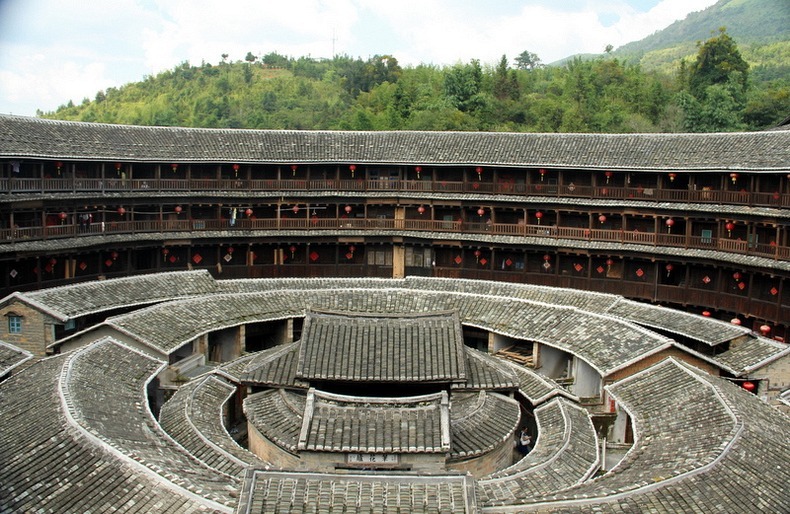
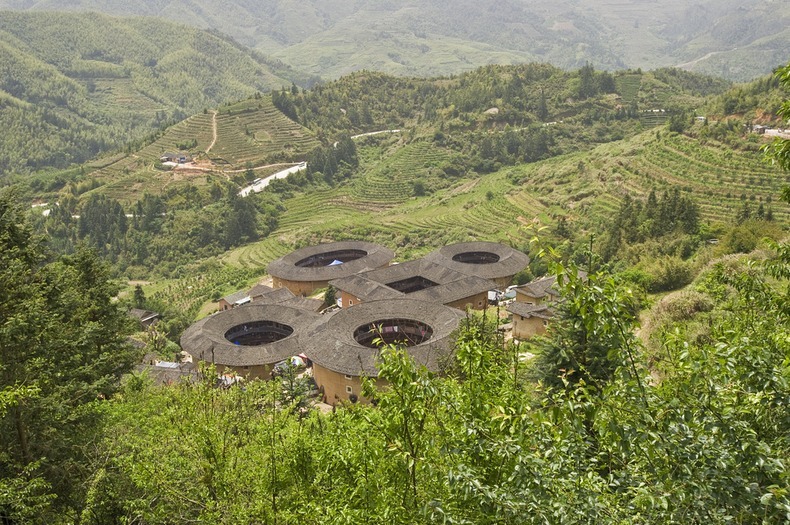
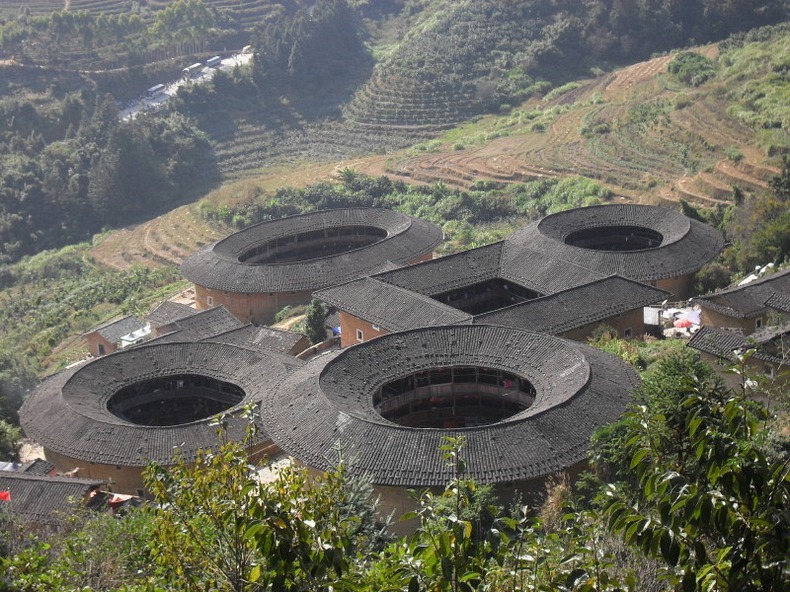
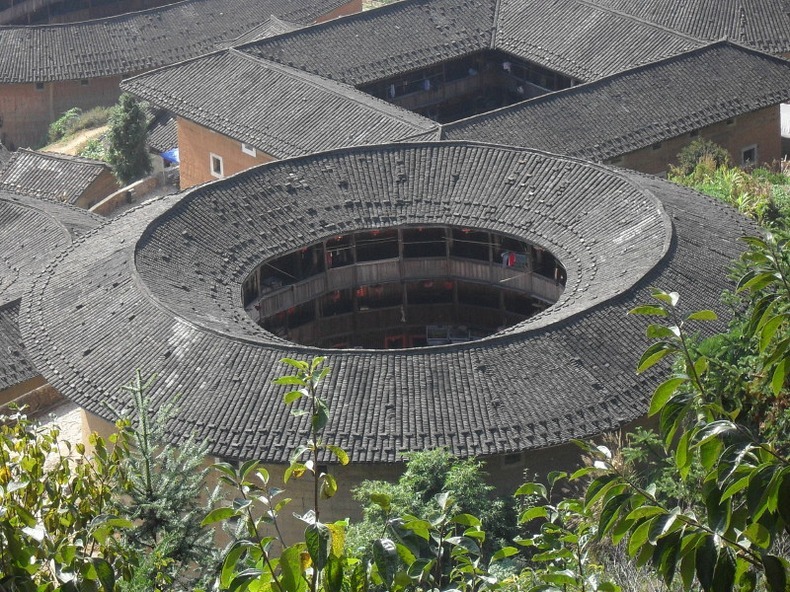
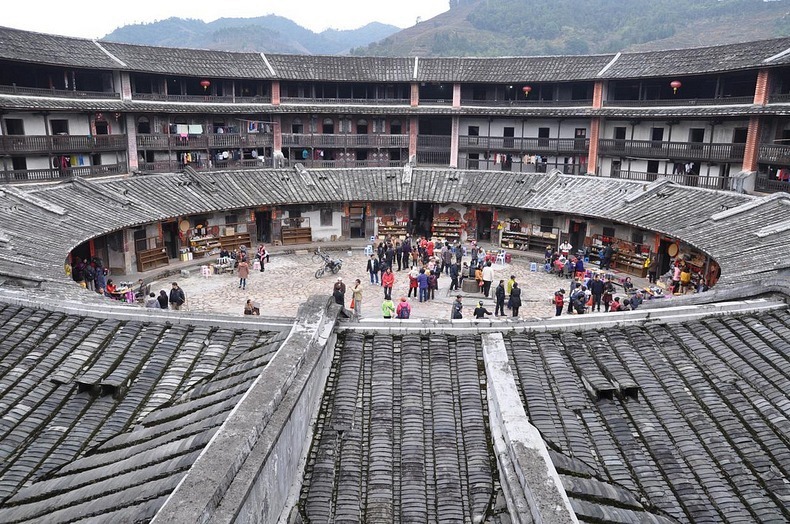
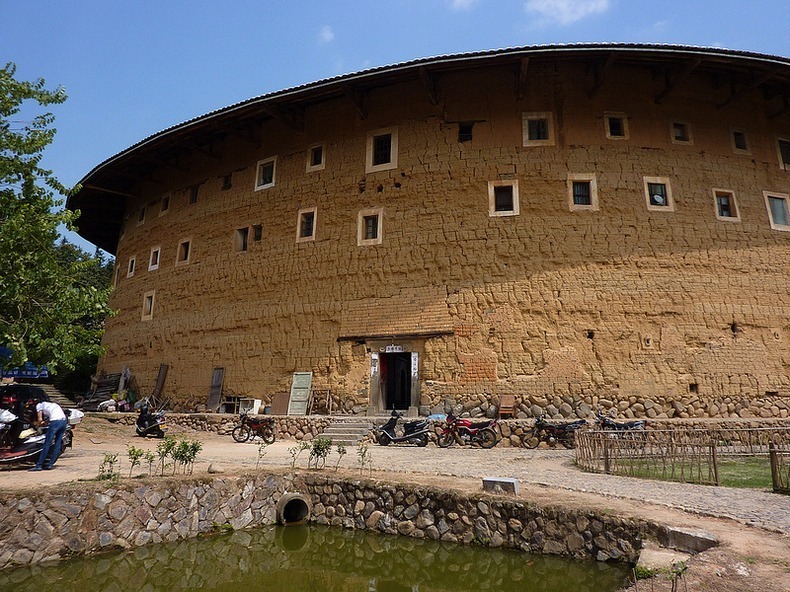
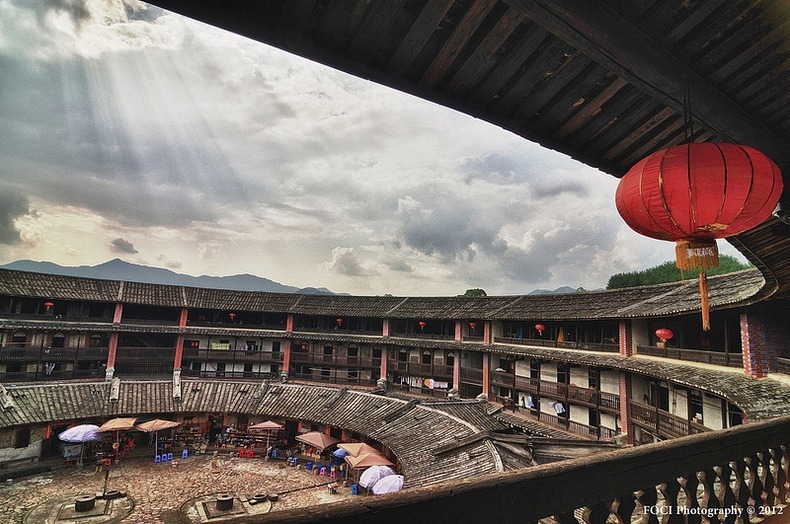
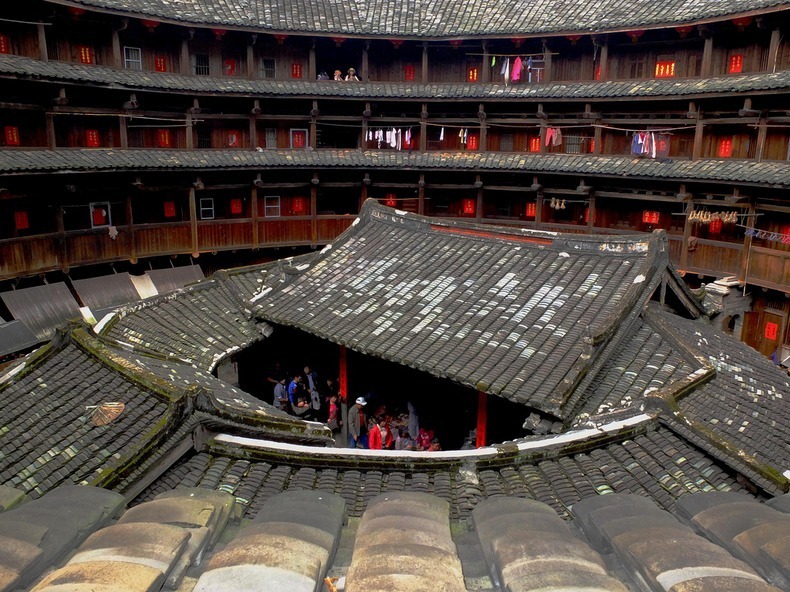
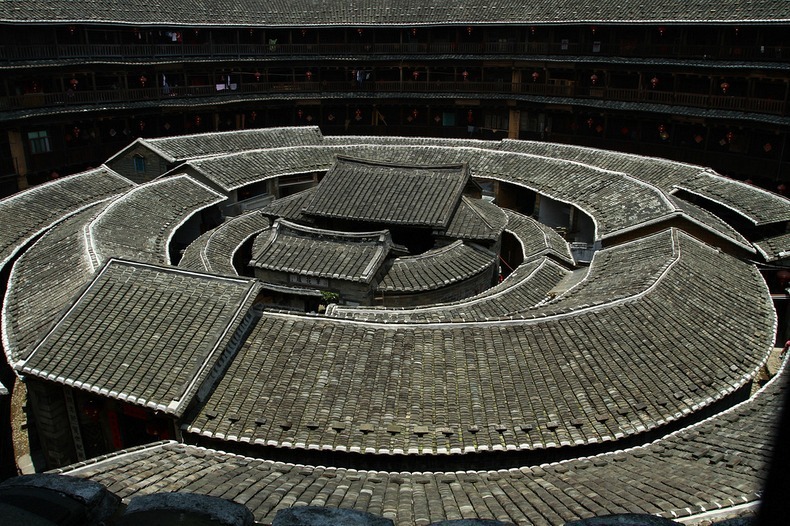
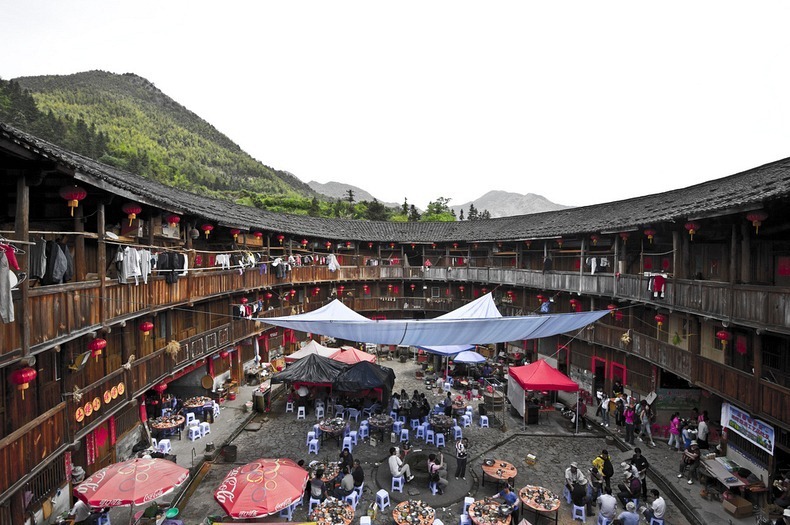
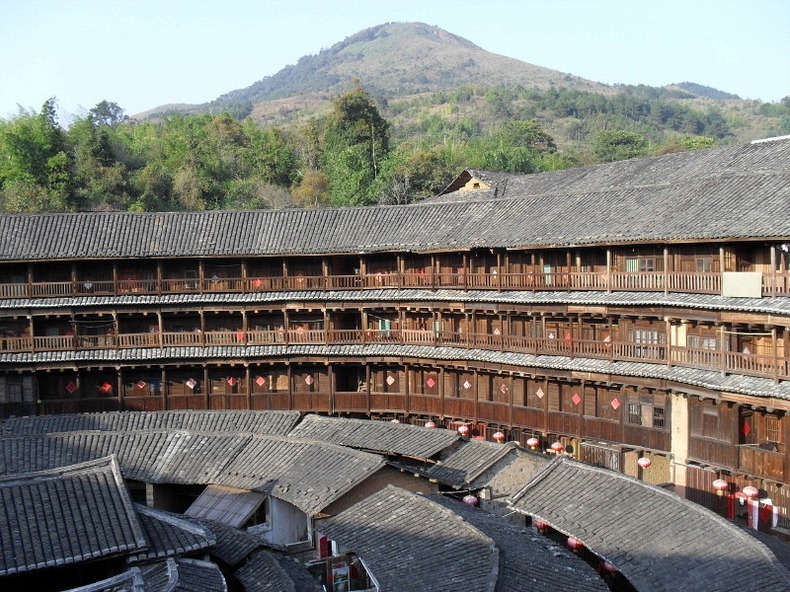
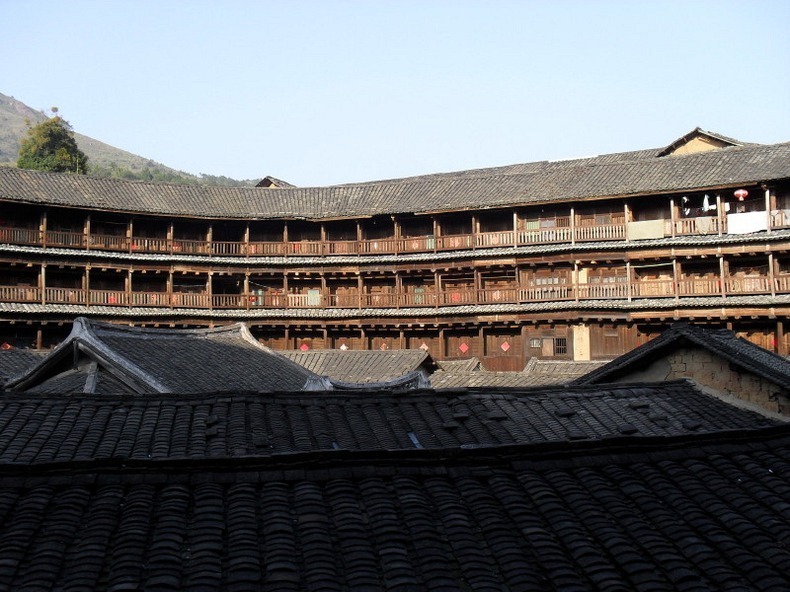
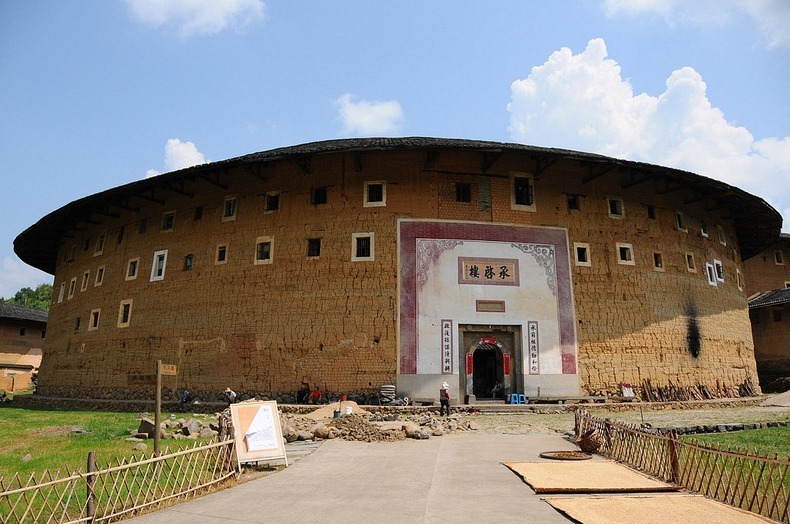
Fujian Tulou is a collection of earthen houses, impenetrable by outsiders, built between the 12th and the 20th centuries, located in the mountainous areas in southeastern Fujian, China. A tulou is usually large, several storeys high, and built along an inward-looking, circular or square floor plan. The doughnut shaped house has a central open courtyard and can house up to 800 people or 80 families each. The outside wall is a solid block served by only one entrance, and windows to the outside are located only above the first floor. Tulous were built for defense against armed bandits that plagued southern China from the 12th century to 19th century. The people of southern Fujian first built strongholds on top of mountains as a defense. These early strongholds later evolved into Fujian Tulou.

fujian-tulou-7

Photo credit

The fortified outer structures are formed by compacting earth, mixed with stone, granite, bamboo, wood and other readily available materials, to form walls up to 6 feet thick. Branches, strips of wood and bamboo chips are often laid in the wall as additional reinforcement. The entrance is guarded by 4-5 inch thick wooden doors reinforced with an outer shell of iron plate. The top level of these earth building have gun holes.

The tulous are as solid as a castle and offered specular resistance against cannon fire. In 1934, a group of uprising peasants of Yongding County occupied a tulou to resist the assault of the army, which fired 19 cannon shots at that tulou, but made only a small dent on the outside wall.

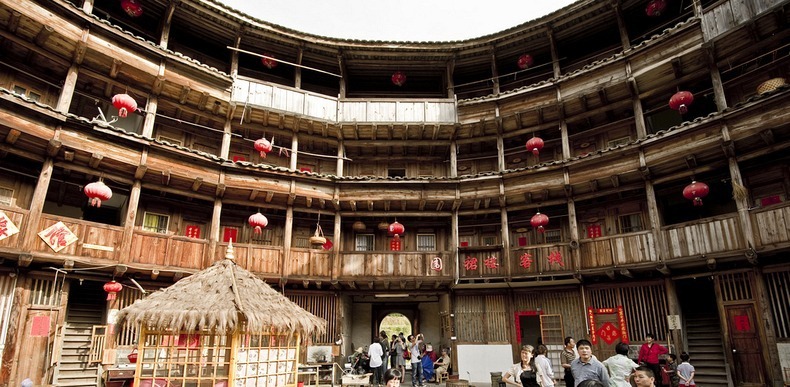
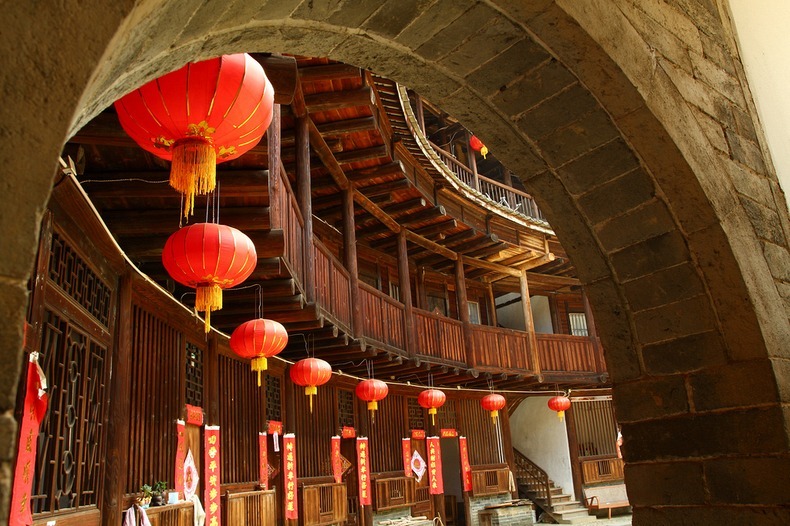
Housing a whole clan, the whole structure functioned as small village and were known as “a little kingdom for the family” or “bustling small city.” The buildings were divided vertically between families with each disposing of two or three rooms on each floor. In contrast with their plain exterior, the inside of the tulou were built for comfort that is warm in winter and cool in summer, and were often highly decorated. The rooms are well-lit, well-ventilated, windproof, and the entire building earthquake-proof.

There are more than 20,000 tulous in Fujian, scattered in the mountainous southeastern region of Fujian province. Although tulous are found in other parts of China, they are all referred to as Fujian Tulou after UNESCO adopted that name for all dwellings of this type. A total of 46 Fujian Tulou sites have been inscribed in 2008 by UNESCO as World Heritage Site, as "exceptional examples of a building tradition and function exemplifying a particular type of communal living and defensive organization in a harmonious relationship with their environment".

fujian-tulou-10

Photo credit

fujian-tulou-11

Photo credit

fujian-tulou-14

Photo credit

fujian-tulou-1

Photo credit

fujian-tulou-2

Photo credit

fujian-tulou-3

Photo credit

fujian-tulou-4

Photo credit

fujian-tulou-5

Photo credit

fujian-tulou-8

Photo credit

fujian-tulou-9

Photo credit

fujian-tulou-6

Photo credit

fujian-tulou-12

Photo credit

fujian-tulou-15

Photo credit

fujian-tulou-16

Photo credit

26 Apr 20:29

Honey sweetened sparkling lemonade with flavor options

by Krissa

Written by Krissa Jeldy of More Than Mundane

We have an abundance of lemons this time of year and one of the things I love to make is lemonade. Spring and summer just call for homemade lemonade in my opinion, because, really–what says “summer” more than drinking an ice cold glass of lemonade?

Traditionally, lemonade is made with white sugar, but I’m always looking for healthier sweeteners, and honey is perfect in this case, because it pairs so well with lemons. You may want to play with the amount of honey in the recipe and adjust it to your level of desired sweetness. I find that if I’m adding in a sweet fruit at the end, I don’t need as much honey.

This is my basic lemonade recipe with lots of ways to add in some fun variety as well.

Honey Sweetened Sparkling Lemonade

Ingredients

  • 1 cup + 2 cups of water
  • 3/4 cup honey
  • 7-8 lemons (you will need 1 cup of lemon juice)
  • optional add-ins: ginger, lavender, rosemary, basil, mint, frozen fruit
  • club soda/sparkling water (optional)

Directions

1. Begin by making a simple syrup by heating 1 cup water with 1 cup honey on the stove. Bring to a low boil, reduce the heat and simmer for 20 minutes. Add the peels from several lemons to your simple syrup while it simmers. This is also where you can add in your flavors, or you can stick with just the lemon peels for traditional lemonade. Other options for add-ins:

  • ginger (2 inch segment of fresh ginger, sliced)
  • lavender (1-2 Tbsp. dried lavender buds)
  • rosemary (2-3 sprigs)
  • basil
  • mint
  • thyme
  • sage

2. While your honey simple syrup simmers, juice your lemons. You want 1 cup of lemon juice.

3. Cool the honey simple syrup and strain the add-ins out.

4. Mix together the honey simple syrup, lemon juice, and 2 cups of cool water (or 3 cups if you’re not mixing with sparkling water).

5. Fill a glass 2/3 full with the lemonade and top off with some club soda/sparkling water. You can also add in fresh or frozen fruit at this point. I like strawberries, raspberries, blackberries, blueberries, cherries or peaches. I also like watermelon, but blend it until it’s smooth before adding it to the lemonade.

Some Good Pairings

  • Basil + Strawberry
  • Mint + Cucumber
  • Lavender + Blueberry
  • Basil + Blackberry
  • Basil + Cucumber
  • Thyme + Peach
  • Sage + Blackberry
  • Rosemary + Peach
  • Mint + Strawberry

My most recent batch was mint with muddled strawberries, which both my daughter and my husband declared “the best lemonade ever.”

How do you like your lemonade? Classic, or with some fun flavors mixed in?

23 Apr 19:25

The Golden Fire Hydrant in San Francisco, California

On the southwest corner of Dolores Park sits a very fancy fire hydrant.

When San Francisco burst into flames in the days following the disastrous 1906 earthquake, much of the city's network of fire hydrants failed. Miraculously this hydrant, nicknamed "little giant" is said to have been the only functioning hydrant and is credited with saving the historic Mission District neighborhood from a certain fiery doom.

Painted with a fresh coat of gold paint each April 18, the fire hydrant above Dolores Park now stands as a testament to the fire department's valiant efforts to save the city against almost insurmountable odds.

A memorial plaque reads:

"Though the water mains were broken and dry on April 18, 1906 yet from this Greenberg hydrant on the following night there came a stream of water allowing the firemen to save the Mission District.

Dedicated to chief Dennis Sullivan and the men who fought the Great Fire and to the spirit of the people of San Francisco who regardless of their losses brought our city from its ruins to be host of the world with their 1925 Pan Pacific Exposition and the building of our Civic Center."

May their love and devotion for this city be an inspiration for all to follow and their motto "the city that knows how' a light to lead all future generations."

In the years after the great quake, an entire new system of emergency water supply was created, known as the “Auxiliary Water Supply System” (AWSS) including a system of fireboats, underground cisterns and independent reservoirs. now, a century later, in need of maintenance and updating before the next big one hits.

In 2012 the hydrant was accidentally painted silver, but it was quickly re-painted in its rightful gold color.


23 Apr 19:24

If You Go Anywhere in May, Go to Córdoba, Spain

by Liz

cordoba spain may

From 2010 to 2011, I was lucky enough to call Córdoba, Spain home. Nestled between Sevilla and Granada, two rockstar Spanish cities in the south, Córdoba often gets overlooked on traditional itineraries. Many times, tour buses just stop there for a day trip to visit the famous Mezquita mosque-cathedral if at all.

But believe me, Cordoba has way more to offer; it is a vibrant, traditional city, full of color. Unfortunately it took me about 6 months to truly fall in love with it.

Between having to commute an absurd amount of time to a job I hated, to a horrible apartment with awful roommates and no heat, to dealing with a long distance breakup, I pretty much was a disaster my first winter there. Grumpy and always frozen, I couldn’t wait until spring. Luckily, all my coworkers and friends repeatedly told me over and over again, just wait til spring, wait until May. May is the best time to visit, they said.

And they were not wrong. Córdoba during most of the year rocks.

But May in Córdoba is PHENOMENAL.

cordoba spain may

cordoba spain may

cordoba spain may

The perfect month between rainy, chilly winter and before the scorching summer sun appears, May is the perfect time to visit Spain. Apart from the fact that city literally blossoms and smells like flowers, proving the old adage, April showers bring May flowers true, there is so much to do! Under blue skies, everyone goes outside, enjoying drinks and tapas on the plentiful terraces in the sunshine, and everyone gets excited for the festivals.

In May, there is a festival every week in Cordoba, turning the city into one giant vacation (details here). There is always something going on; it was just remarkable. I don’t think I was sober any weekend (or week day for that matter) from late April to June.

If you like experiencing local culture and events, go to Cordoba in May. All of these festivals are very popular with Spaniards but there are hardly any foreign tourists.

cordoba spain may

Cata del Vino Montilla-Moriles (April 17-21, 2013)

Cata del vino is a wine tasting festival that kicks off a month of holidays. The Cordoba region is well known for its white wine varieties. Since southern Spain is so hot and dry, compared with La Rioja in the north where I lived last year, the grapes grow differently, and chilled, dry white wines are more popular. At the entrance you buy a ticket to get you in with 5 drink “tastings” and a free glass, and you can go from stand to stand and pick out and try hundreds of varieties of white wine. But remember that “tasting” size in Spain is no different from a regular glass size, so be careful.

In fact, the wine sellers are so friendly they don’t usually even look at your ticket to see how many glasses you have left, letting you try as many wines as possible. This means bring food. We were naïve, and had to shell out for food there, which wasn’t too cheap, whereas the seasoned locals, brought little coolers and bags of pre-sliced Spanish ham and full tortillas to share and snack on. Smart thinking.

cordoba spain may

cordoba spain may

Las Cruces de Mayo (May 1-5, 2013)

In Spanish, cruces means “crosses,” and in this colorful festival, the various catholic brotherhoods around town, cofradías, each place a giant cross made of flowers outside their church in a little square for a few days. These are the same people who walk in the processions during Semana Santa. In the religious paradox so often found in Spain, the brotherhoods also set up bars and stands next to the crosses outside with music blasting to raise money. Bring on the mixed wine drinks!

From the local tourist office you can pick up a map with the crosses’ locations around Cordoba marked out, and it’s great fun to go out with friends and hop from one cross location to another, eating and drinking all day long and all night long. At one of these stands near my apartment, I attempted to dance the famous flamenco sevillanas for the first time, after about a bucket of sangria first.

cordoba spain may

cordoba spain may

cordoba spain may

Los Patios (May 8-19, 2013)

This is by far my favorite May event in Córdoba. With spring in full swing, all of the flowers around town come alive. Córdoba is traditional Spain at its finest, with an extensive old quarter filled with winding cobblestone streets and whitwashed walls that keep the houses cool in the hot summers. Many of the old houses and apartments are situated around an interior patio. You walk through the front gate, and the rooms and apartments are off to the sides of a square center.

In the past, these patios were turned into gardens with a well in the center, and were used for just about everything. Families planted beautiful pots of flowers everywhere, from pots hanging on the walls to huge burnt red terracotta vessels on the ground. In May, the flowers are in full bloom and literally cover these patios from head to foot in fragrant flowers. It’s a wonder to behold, really.

cordoba spain may

cordoba spain may

Since these are private houses still in use today, the patios are closed to the public during the year, and are only opened for two weeks in May when the families compete in a contest for the most beautiful patio in Cordoba. The patios are marked by two little pine trees outside the gate, most are congregated in the old quarter – and they are all free to visit. You can pick up a map from the tourist office that has all the competing patios listed.

When I was in Córdoba, I took the time to visit each and every patio, hoarding thousands and thousands of pictures. It can get crowded, especially on the weekends, since busloads of Spaniards come to town to visit this famous festival, so it’s best to go early or midday, or during the week unless you want a million heads in your photos.

cordoba spain may

cordoba spain may

cordoba spain may

La Feria ( May 25-1, 2013)

But like always, Córdoba saves the best for last: the culminating festival in May is the most fun: la feria (fair). Nothing like the skeezy borderline dangerous fairs we have in the US, í are a true part of southern Spain. Each and every village and city in Spain has one or two major holidays during the year, and Córdoba’s main festival is the feria. Ferias are popular in southern Spain, where girls break out their flamenco dresses and boys squeeze into the traditional gypsy costumes of their ancestors to celebrate.

The most famous Spanish feria is in Seville, the major city in Andalucía, but I wholeheartedly disagree that it’s the best. In general, Ferias are set up in certain areas of town and are made up of tents (casetas) where you go inside and order drinks, food, listen to music and of course, dance. In Sevilla, the casetas are private and you can only go inside if you know someone and are invited. Um, where’s the fun in that?

Well in Cordoba, all the casetas are public AND there are hundreds, crisscrossed like streets. Every year the feria is set up across the river underneath a magnificently lit entrance that mimics the famous Mezquita in town. Since Córdoba is smaller than Sevilla, I always run into people I know out and about, making it really fun and familiar. The typical drink ordered in the casetas is called rebujito, which is the dry white wine typical from the region mixed with 7-up and ice. May sound gross but on a hot sunny day, it’s delicious! Just be careful as it goes down like water! Also during feria, the bullfights begin, with many going on at the ring in town, if you are feeling adventurous.

cordoba spain may

cordoba spain may

cordoba spain may

How to get there

Córdoba is really well connected to the rest of Spain. It is on the AVE high speed train line to the south, less than 2 hours from Madrid, and an hour from Seville and Málaga on the south coast. Spain’s train company is called Renfe. Córdoba is also really well connected by bus, you can check all the bus times and destinations here. If you want to fly to Spain, I usually would fly into Madrid, take the metro to the AVE train station at Atocha and catch the train to Córdoba, but if you want to fly closer to home, Málaga has a major international airport, and Seville and Granada also have small airports, some serviced by EasyJet, Iberia and the dreaded Ryanair. You can also hire a car in Spain in Malaga or Sevilla and easily drive to Córdoba, getting see some of the spectacular hill towns – but be sure to check the fuel terms and conditions.

Have you ever been to Córdoba, Spain? Would you like to go in May now? Where’s the best to place to visit in spring?

cordoba spain may

cordoba spain may

cordoba spain may

cordoba spain may

cordoba spain may

The post If You Go Anywhere in May, Go to Córdoba, Spain appeared first on Young Adventuress.

23 Apr 17:21

Voting Rights Make Comeback With 195 Bills To Expand Ballot Access

by Scott Keyes

A new report from the Brennan Center for Justice details the voting rights landscape in the beginning of 2013, painting a much rosier picture for advocates of voting rights than the previous two years.

In all, 195 bills to expand voting rights have been introduced in 45 states this year (see where on the map below). Of those, three states have passed as many bills thus far: Virginia passed online voter registration, New Mexico made registration at the state’s DMVs easier, and Oklahoma loosened its voter ID law. 155 bills are still pending in 37 state legislatures, including legislation to restore ex-felons’ voting rights, implement Election Day registration, and roll back voter ID laws.

However, as the report notes, those looking to restrict access to the ballot box are still a force in dozens of states. This year, at least 80 new bills rolling back voting rights have been introduced in 31 states (refer to the map below), with 62 bills still pending in 25 states. Two states have successfully passed legislation making it harder to vote: Virginia, which has passed voter ID and legislation restricting voter registration groups like the League of Women Voters, and Arkansas, which passed voter ID over Gov. Mike Beebe’s (D) veto.

President Obama announced in his State of the Union speech this year that he would be creating a commission to improve the voting experience in the United States. The nine-member commission was created on March 28 and will address issues like long lines, voting technology, and other ballot-related matters.


23 Apr 17:21

The Spilling Fields: How BP Made The Gulf Oil Disaster More Toxic While Covering It Up

by Joe Romm

US Air Force photo of C-130 spraying Corexit onto BP spill

Mark Hertsgaard has a must-read piece in Newsweek on how “The 2010 Gulf of Mexico oil spill was even worse than BP wanted us to know.” His piece is about the dangers created by the 1.84 million gallons of Corexit used to “clean up” the 210 million gallons of Louisiana crude BP negligently spilled into the Gulf of Mexico.

Hertsgaard summarizes his piece as follows:

A secret internal manual that BP buried demonstrates that BP sacrificed the health of clean-up workers, local residents and Gulf ecosystems for its public relations goal of making the massive oil spill disappear, at least from TV screens.  Sadly, most of the world’s media–including, I regret to say, yours truly– got snookered by this cover-up, which I believe is a large part of the reason why the Gulf catastrophe, which President Obama at the time called “the worst environmental disaster in American history,” has been largely forgotten and oil industry practices have not been significantly reformed.

Back in 2010, I interviewed one of the leading experts on the environmental impact of chemically dispersing oil for a piece in Salon headlined “Is BP’s remedy for the spill only making it worse?” As the Climate Progress story on it noted, “BP’s dispersants are toxic — but not as toxic as dispersed oil.”

Then, in 2011, we ran a piece on how “Corexit Makes Oil Spills Worse, Not Better, Scientists Find.”

Hertsgaard takes the story to the next level, concluding:

And so the worst environmental disaster in U.S. history has been whitewashed—its true dimensions obscured, its victims forgotten, its lessons ignored. Who says cover-ups never work?

Here is the whole piece:

What BP Doesn’t Want You to Know About the 2010 Gulf Spill

by Mark Hertsgaard

“It’s as safe as Dawn dishwashing liquid.” That’s what Jamie Griffin says the BP man told her about the smelly, rainbow-streaked gunk coating the floor of the “floating hotel” where Griffin was feeding hundreds of cleanup workers during the BP oil disaster in the Gulf of Mexico. Apparently, the workers were tracking the gunk inside on their boots. Griffin, as chief cook and maid, was trying to clean it. But even boiling water didn’t work.

“The BP representative said, ‘Jamie, just mop it like you’d mop any other dirty floor,’” Griffin recalls in her Louisiana drawl.

It was the opening weeks of what everyone, echoing President Barack Obama, was calling “the worst environmental disaster in American history.” At 9:45 p.m. local time on April 20, 2010, a fiery explosion on the Deepwater Horizon oil rig had killed 11 workers and injured 17. One mile underwater, the Macondo well had blown apart, unleashing a gusher of oil into the gulf. At risk were fishing areas that supplied one-third of the seafood consumed in the U.S., beaches from Texas to Florida that drew billions of dollars’ worth of tourism to local economies, and Obama’s chances of reelection. Republicans were blaming him for mishandling the disaster, his poll numbers were falling, even his 11-year-old daughter was demanding, “Daddy, did you plug the hole yet?”

Griffin did as she was told: “I tried Pine-Sol, bleach, I even tried Dawn on those floors.” As she scrubbed, the mix of cleanser and gunk occasionally splashed onto her arms and face.

Within days, the 32-year-old single mother was coughing up blood and suffering constant headaches. She lost her voice. “My throat felt like I’d swallowed razor blades,” she says.

Then things got much worse.

Like hundreds, possibly thousands, of workers on the cleanup, Griffin soon fell ill with a cluster of excruciating, bizarre, grotesque ailments. By July, unstoppable muscle spasms were twisting her hands into immovable claws. In August, she began losing her short-term memory. After cooking professionally for 10 years, she couldn’t remember the recipe for vegetable soup; one morning, she got in the car to go to work, only to discover she hadn’t put on pants. The right side, but only the right side, of her body “started acting crazy. It felt like the nerves were coming out of my skin. It was so painful. My right leg swelled — my ankle would get as wide as my calf — and my skin got incredibly itchy.”

“These are the same symptoms experienced by soldiers who returned from the Persian Gulf War with Gulf War syndrome,” says Michael Robichaux, a Louisiana physician and former state senator, who treated Griffin and 113 other patients with similar complaints. As a general practitioner, Robichaux says he had “never seen this grouping of symptoms together: skin problems, neurological impairments, plus pulmonary problems.” Only months later, after Kaye H. Kilburn, a former professor of medicine at the University of Southern California and one of the nation’s leading environmental health experts, came to Louisiana and tested 14 of Robichaux’s patients did the two physicians make the connection with Gulf War syndrome, the malady that afflicted an estimated 250,000 veterans of that war with a mysterious combination of fatigue, skin inflammation, and cognitive problems.

Meanwhile, the well kept hemorrhaging oil. The world watched with bated breath as BP failed in one attempt after another to stop the leak. An agonizing 87 days passed before the well was finally plugged on July 15. By then, 210 million gallons of Louisiana sweet crude had escaped into the Gulf of Mexico, according to government estimates, making the BP disaster the largest accidental oil leak in world history.

Yet three years later, the BP disaster has been largely forgotten, both overseas and in the U.S. Popular anger has cooled. The media have moved on. Today, only the business press offers serious coverage of what the Financial Times calls “the trial of the century” — the trial now underway in New Orleans, where BP faces tens of billions of dollars in potential penalties for the disaster. As for Obama, the same president who early in the BP crisis blasted the “scandalously close relationship” between oil companies and government regulators two years later ran for reelection boasting about how much new oil and gas development his administration had approved.

Such collective amnesia may seem surprising, but there may be a good explanation for it: BP mounted a cover-up that concealed the full extent of its crimes from public view. This cover-up prevented the media and therefore the public from knowing — and above all, seeing — just how much oil was gushing into the gulf. The disaster appeared much less extensive and destructive than it actually was. BP declined to comment for this article.

That BP lied about the amount of oil it discharged into the gulf is already established. Lying to Congress about that was one of 14 felonies to which BP pleaded guilty last year in a legal settlement with the Justice Department that included a $4.5 billion fine, the largest fine ever levied against a corporation in the U.S.

What has not been revealed until now is how BP hid that massive amount of oil from TV cameras and the price that this “disappearing act” imposed on cleanup workers, coastal residents, and the ecosystem of the gulf. That story can now be told because an anonymous whistleblower has provided evidence that BP was warned in advance about the safety risks of attempting to cover up its leaking oil. Nevertheless, BP proceeded. Furthermore, BP appears to have withheld these safety warnings, as well as protective measures, both from the thousands of workers hired for the cleanup and from the millions of Gulf Coast residents who stood to be affected.

The financial implications are enormous. The trial now under way in New Orleans is wrestling with whether BP was guilty of “negligence” or “gross negligence” for the Deepwater Horizon disaster. If found guilty of “negligence,” BP would be fined, under the Clean Water Act, $1,100 for each barrel of oil that leaked. But if found guilty of “gross negligence”–which a cover-up would seem to imply — BP would be fined $4,300 per barrel, almost four times as much, for a total of $17.5 billion. That large a fine, combined with an additional $34 billion that the states of Louisiana, Alabama, Mississippi, and Florida are seeking, could have a powerful effect on BP’s economic health.

Yet the most astonishing thing about BP’s cover-up? It was carried out in plain sight, right in front of the world’s uncomprehending news media (including, I regret to say, this reporter).

The chief instrument of BP’s cover-up was the same substance that apparently sickened Jamie Griffin and countless other cleanup workers and local residents. Its brand name is Corexit, but most news reports at the time referred to it simply as a “dispersant.” Its function was to attach itself to leaked oil, break it into droplets, and disperse them into the vast reaches of the gulf, thereby keeping the oil from reaching Gulf Coast shorelines. And the Corexit did largely achieve this goal.

But the 1.84 million gallons of Corexit that BP applied during the cleanup also served a public-relations purpose: They made the oil spill all but disappear, at least from TV screens. By late July 2010, the Associated Press and The New York Times were questioning whether the spill had been such a big deal after all. Time went so far as to assert that right-wing talk-radio host Rush Limbaugh “has a point” when he accused journalists and environmentalists of exaggerating the crisis.

But BP had a problem: It had lied about how safe Corexit is, and proof of its dishonesty would eventually fall into the hands of the Government Accountability Project, the premiere whistleblower-protection group in the U.S. The proof? A technical manual BP had received from NALCO, the firm that supplied the Corexit that BP used in the gulf.

An electronic copy of that manual is included in a new report GAP has issued, “Deadly Dispersants in the Gulf.” On the basis of interviews with dozens of cleanup workers, scientists, and Gulf Coast residents, GAP concludes that the health impacts endured by Griffin were visited upon many other locals as well. What’s more, the combination of Corexit and crude oil also caused terrible damage to gulf wildlife and ecosystems, including an unprecedented number of seafood mutations; declines of up to 80 percent in seafood catch; and massive die-offs of the microscopic life-forms at the base of the marine food chain. GAP warns that BP and the U.S. government nevertheless appear poised to repeat the exercise after the next major oil spill: “As a result of Corexit’s perceived success, Corexit … has become the dispersant of choice in the U.S. to ‘clean up’ oil spills.”

BP’s cover-up was not planned in advance but devised in the heat of the moment as the oil giant scrambled to limit the PR and other damages of the disaster. Indeed, one of the chief scandals of the disaster is just how unprepared both BP and federal and state authorities were for an oil leak of this magnitude. U.S. law required that a response plan be in place before drilling began, but the plan was embarrassingly flawed.

“We weren’t managing for actual risk; we were checking a box,” says Mark Davis, director of the Institute on Water Resources Law and Policy at Tulane University. “That’s how we ended up with a response plan that included provisions for dealing with the impacts to walruses: because [BP] copied word for word the response plans that had been developed after the Exxon-Valdez oil spill [in Alaska, in 1989] instead of a plan tailored to the conditions in the gulf.”

As days turned into weeks and it became obvious that no one knew how to plug the gushing well, BP began insisting that Corexit be used to disperse the leaking oil. This triggered alarms from scientists and from a leading environmental NGO in Louisiana, the Louisiana Environmental Action Network (LEAN).

The group’s scientific adviser, Wilma Subra, a chemist whose work on environmental pollution had won her a “genius grant” from the MacArthur Foundation, told state and federal authorities that she was especially concerned about how dangerous the mixture of crude and Corexit was: “The short-term health symptoms include acute respiratory problems, skin rashes, cardiovascular impacts, gastrointestinal impacts, and short-term loss of memory,” she told GAP investigators. “Long-term impacts include cancer, decreased lung function, liver damage, and kidney damage.”

(Nineteen months after the Deepwater Horizon explosion, a scientific study published in the peer-reviewed journal Environmental Pollution found that crude oil becomes 52 times more toxic when combined with Corexit.)

BP even rebuffed a direct request from the administrator of the Environmental Protection Agency, Lisa Jackson, who wrote BP a letter on May 19, asking the company to deploy a less toxic dispersant in the cleanup. Jackson could only ask BP to do this; she could not legally require it. Why? Because use of Corexit had been authorized years before under the federal Oil Pollution Act.

In a recent interview, Jackson explains that she and other officials “had to determine, with less-than-perfect scientific testing and data, whether use of dispersants would, despite potential side effects, improve the overall situation in the gulf and coastal ecosystems. The tradeoff, as I have said many times, was potential damage in the deep water versus the potential for larger amounts of undispersed oil in the ecologically rich coastal shallows and estuaries.” She adds that the presidential commission that later studied the BP oil disaster did not fault the decision to use dispersants.

Knowing that EPA lacked the authority to stop it, BP wrote back to Jackson on May 20, declaring that Corexit was safe. What’s more, BP wrote, there was a ready supply of Corexit, which was not the case with alternative dispersants. (A NALCO plant was located just 30 miles west of New Orleans.)

But Corexit was decidedly not safe without taking proper precautions, as the manual BP got from NALCO spelled out in black and white. The “Vessel Captains Hazard Communication” resource manual, which GAP shared with me, looks innocuous enough. A three-ring binder with a black plastic cover, the manual contained 61 sheets, each wrapped in plastic, that detailed the scientific properties of the two types of Corexit that BP was buying, as well as their health hazards and recommended measures against those hazards.

BP applied two types of Corexit in the gulf. The first, Corexit 9527, was considerably more toxic. According to the NALCO manual, Corexit 9527 is an “eye and skin irritant. Repeated or excessive exposure … may cause injury to red blood cells (hemolysis), kidney or the liver.” The manual adds: “Excessive exposure may cause central nervous system effects, nausea, vomiting, anesthetic or narcotic effects.” It advises, “Do not get in eyes, on skin, on clothing,” and “Wear suitable protective clothing.”

When available supplies of Corexit 9527 were exhausted early in the cleanup, BP switched to the second type of dispersant, Corexit 9500. In its recommendations for dealing with Corexit 9500, the NALCO manual advised, “Do not get in eyes, on skin, on clothing,” “Avoid breathing vapor,” and “Wear suitable protective clothing.”

It’s standard procedure — and required by U.S. law — for companies to distribute this kind of information to any work site where hazardous materials are present so workers can know about the dangers they face and how to protect themselves. But interviews with numerous cleanup workers suggest that this legally required precaution was rarely if ever followed during the BP cleanup. Instead, it appears that BP told NALCO to stop including the manuals with the Corexit that NALCO was delivering to cleanup work sites.

“It’s my understanding that some manuals were sent out with the shipments of Corexit in the beginning [of the cleanup],” the anonymous source tells me. “Then, BP told NALCO to stop sending them. So NALCO was left with a roomful of unused binders.”

Roman Blahoski, NALCO’s director of global communications, says: “NALCO responded to requests for its pre-approved dispersants from those charged with protecting the gulf and mitigating the environmental, health, and economic impact of this event. NALCO was never involved in decisions relating to the use, volume, and application of its dispersant.”

Misrepresenting the safety of Corexit went hand in hand with BP’s previously noted lie about how much oil was leaking from the Macondo well. As reported by John Rudolf in The Huffington Post, internal BP emails show that BP privately estimated that “the runaway well could be leaking from 62,000 barrels a day to 146,000 barrels a day.” Meanwhile, BP officials were telling the government and the media that only 5,000 barrels a day were leaking.

In short, applying Corexit enabled BP to mask the fact that a much larger amount of oil was actually leaking into the gulf. “Like any good magician, the oil industry has learned that if you can’t see something that was there, it must have ‘disappeared,’” Scott Porter, a scientist and deep-sea diver who consults for oil companies and oystermen, says in the GAP report. “Oil companies have also learned that, in the public mind, ‘out of sight equals out of mind.’ Therefore, they have chosen crude oil dispersants as the primary tool for handling large marine oil spills.”

BP also had a more direct financial interest in using Corexit, argues Clint Guidry, president of the Louisiana Shrimp Association, whose members include not only shrimpers but fishermen of all sorts. As it happens, local fishermen constituted a significant portion of BP’s cleanup force (which numbered as many as 47,000 workers at the height of the cleanup). Because the spill caused the closure of their fishing grounds, BP and state and federal authorities established the Vessels of Opportunity (VoO) program, in which BP paid fishermen to take their boats out and skim, burn, and otherwise get rid of leaked oil. Applying dispersants, Guidry points out, reduced the total volume of oil that could be traced back to BP.

“The next phase of this trial [against BP] is going to turn on how much oil was leaked,” Guidry tells me. [If found guilty, BP will be fined a certain amount for each barrel of oil judged to have leaked.] “So hiding the oil with Corexit worked not only to hide the size of the spill but also to lower the amount of oil that BP may get charged for releasing.”

Not only did BP fail to inform workers of the potential hazards of Corexit and to provide them with safety training and protective gear, according to interviews with dozens of cleanup workers, the company also allegedly threatened to fire workers who complained about the lack of respirators and protective clothing.

“I worked with probably a couple hundred different fishermen on the [cleanup],” Acy Cooper, Guidry’s second in command, tells me in Venice, the coastal town from which many VoO vessels departed. “Not one of them got any safety information or training concerning the toxic materials they encountered.” Cooper says that BP did provide workers with body suits and gloves designed for handling hazardous materials. “But when I’d talk with [the BP representative] about getting my guys respirators and air monitors, I’d never get any response.”

Roughly 58 percent of the 1.84 million gallons of Corexit used in the cleanup was sprayed onto the gulf from C-130 airplanes. The spray sometimes ended up hitting cleanup workers in the face.

“Our boat was sprayed four times,” says Jorey Danos, a 32-year-old father of three who suffered racking coughing fits, severe fatigue, and memory loss after working on the BP cleanup. “I could see the stuff coming out of the plane — like a shower of mist, a smoky color. I could see [it] coming at me, but there was nothing I could do.”

“The next day,” Danos continues, “when the BP rep came around on his speed boat, I asked, ‘Hey, what’s the deal with that stuff that was coming out of those planes yesterday?’ He told me, ‘Don’t worry about it.’ I said, ‘Man, that s–t was burning my face — it ain’t right.’ He said, ‘Don’t worry about it.’ I said, ‘Well, could we get some respirators or something, because that s–t is bad.’ He said, ‘No, that wouldn’t look good to the media. You got two choices: You can either be relieved of your duties or you can deal with it.’”

Perhaps the single most hazardous chemical compound found in Corexit 9527 is 2-Butoxyethanol, a substance that had been linked to cancers and other health impacts among cleanup workers on the 1989 Exxon-Valdez oil spill in Alaska. According to BP’s own data, 20 percent of offshore workers in the gulf had levels of 2-Butoxyethanol two times higher than the level certified as safe by the Occupational Safety and Health Administration.

Cleanup workers were not the only victims; coastal residents also suffered. “My 2-year-old grandson and I would play out in the yard,” says Shirley Tillman of the Mississippi coastal town Pass Christian. “You could smell oil and stuff in the air, but on the news they were saying it’s fine, don’t worry. Well, by October, he was one sick little fellow. All of a sudden, this very active little 2-year-old was constantly sick. He was having headaches, upper respiratory infections, earaches. The night of his birthday party, his parents had to rush him to the emergency room. He went to nine different doctors, but they treated just the symptoms; they’re not toxicologists.”

“It’s not the crime, it’s the cover-up.” Ever since the Watergate scandal of the 1970s, that’s been the mantra. Cover-ups don’t work, goes the argument. They only dig a deeper hole, because the truth eventually comes out.

But does it?

GAP investigators were hopeful that obtaining the NALCO manual might persuade BP to meet with them, and it did. On July 10, 2012, BP hosted a private meeting at its Houston offices. Presiding over the meeting, which is described here publicly for the first time, was BP’s public ombudsman, Stanley Sporkin, joining by telephone from Washington. Ironically, Sporkin had made his professional reputation during the Watergate scandal. As a lawyer with the Securities and Exchange Commission, Sporkin investigated illegal corporate payments to the slush fund that President Nixon used to buy the silence of the Watergate burglars.

Also attending the meeting were two senior BP attorneys; BP Vice President Luke Keller; other BP officials; Thomas Devine, GAP’s senior attorney on the BP case; Shanna Devine, GAP’s investigator on the case; Michael Robichaux; Wilma Subra; and Marylee Orr, the executive director of LEAN. The following account is based on my interviews with Thomas Devine, Robichaux, Subra, and Orr. BP declined to comment.

BP officials had previously confirmed the authenticity of the NALCO manual, says Thomas Devine, but now they refused to discuss it, even though this had been one of the stated purposes for the meeting. Nor would BP address the allegation, made by the whistleblower who had given the manual to GAP, that BP had ordered the manual withheld from cleanup work sites, perhaps to maintain the fiction that Corexit was safe.

“They opened the meeting with this upbeat presentation about how seriously they took their responsibilities for the spill and all the wonderful things they were doing to make things right,” says Devine. “When it was my turn to speak, I said that the manual our whistleblower had provided contradicted what they just said. I asked whether they had ordered the manual withdrawn from work sites. Their attorneys said that was a matter they would not discuss because of the pending litigation on the spill.” [Disclosure: Thomas Devine is a friend of this reporter.]

The visitors’ top priority was to get BP to agree not to use Corexit in the future. Keller said that Corexit was still authorized for use by the U.S. government and BP would indeed feel free to use it against any future oil spills.

A second priority was to get BP to provide medical treatment for Jamie Griffin and the many other apparent victims of Corexit-and-crude poisoning. This request too was refused by BP.

Robichaux doubts his patients will receive proper compensation from the $7.8 billion settlement BP reached in 2012 with the Plaintiffs’ Steering Committee, 19 court-appointed attorneys who represent the hundreds of individuals and entities that have sued BP for damages related to the gulf disaster. “Nine of the most common symptoms of my patients do not appear on the list of illnesses that settlement says can be compensated, including memory loss, fatigue, and joint and muscular pain,” says Robichaux. “So how are the attorneys going to file suits on behalf of those victims?”

At one level, BP’s cover-up of the gulf oil disaster speaks to the enormous power that giant corporations exercise in modern society, and how unable, or unwilling, governments are to limit that power. To be sure, BP has not entirely escaped censure for its actions; depending on the outcome of the trial now under way in New Orleans, the company could end up paying tens of billions of dollars in fines and damages over and above the $4.5 billion imposed by the Justice Department in the settlement last year. But BP’s reputation appears to have survived: Its market value as this article went to press was a tidy $132 billion, and few, if any, BP officials appear likely to face any legal repercussions. “If I would have killed 11 people, I’d be hanging from a noose,” says Jorey Danos. “Not BP. It’s the golden rule: The man with the gold makes the rules.”

As unchastened as anyone at BP is Bob Dudley, the American who was catapulted into the CEO job a few weeks into the gulf disaster to replace Tony Hayward, whose propensity for imprudent comments — “I want my life back,” the multimillionaire had pouted while thousands of gulf workers and residents were suffering — had made him a globally derided figure. Dudley told the annual BP shareholders meeting in London last week that Corexit “is effectively … dishwashing soap,” no more toxic than that, as all scientific studies supposedly showed. What’s more, Dudley added, he himself had grown up in Mississippi and knows that the Gulf of Mexico is “an ecosystem that is used to oil.”

Nor has the BP oil disaster triggered the kind of changes in law and public priorities one might have expected. “Not much has actually changed,” says Mark Davis of Tulane. “It reflects just how wedded our country is to keeping the Gulf of Mexico producing oil and bringing it to our shores as cheaply as possible. Going forward, no one should assume that just because something really bad happened we’re going to manage oil and gas production with greater sensitivity and wisdom. That will only happen if people get involved and compel both the industry and the government to be more diligent.”

And so the worst environmental disaster in U.S. history has been whitewashed — its true dimensions obscured, its victims forgotten, its lessons ignored. Who says cover-ups never work?

– Mark Hertsgaard is the environment correspondent for The Nation, a fellow at the New America Foundation, and a cofounder of Climate Parents. His six books include “HOT: Living Through the Next Fifty Years on Earth.” This piece was reposted at his request. The top image comes via Grist.


21 Apr 07:57

The 10 Best Diner Breakfasts in Los Angeles

by Chelsee Lowe

There’s a time and place for a pricey brunch, but for classic American breakfasts you can’t top LA’s diners. The menus may be sticky with syrup, the vinyl banquettes ratty, but the food is great, the prices fair, and the air has the whiff of nostalgia. Here in alphabetical order are 10 places Chowhounds in the Los Angeles area like to go to start the day.

1. HARBOR HOUSE
16341 Pacific Coast Highway, Sunset Beach
562-592-5404

This seaside diner with a spin-off in Dana Point never closes, and since 1939, surfers, South Bay locals, and travelers on the PCH have been showing up at all hours to order from the huge menu. Save room for a slice of pie or a piece of cake.

2. HUGE TREE PASTRY
423 N. Atlantic Boulevard, Suite 106, Monterey Park
626-458-8689

Neither as old or as well known as LA’s iconic diners, Huge Tree is the place to go for Taiwanese breakfast staples like you tiao (fried donuts), sweet peanut rice milk, and baked sesame buns. A few dim sum items are available too, including fried turnip cake and xiao long bao.

3. MANUEL’S ORIGINAL EL TEPEYAC CAFÉ
812 N. Evergreen Avenue, Los Angeles
323-268-1960

This East LA legend serves burritos large enough to feed an entire family. If a truckload of chili verde in a tortilla sounds too heavy first thing in the morning, opt for huevos rancheros or chilaquiles. There’s a second location in City of Industry.

4. NAT’S EARLY BITE COFFEE SHOP
14115 Burbank Boulevard, Sherman Oaks
818-781-3040

Some ‘hounds claim that nothing here disappoints, but the pastries baked on-site are the way to go. Strawberry rhubarb, apple, and cherry pies are winners, but ask for the day’s offerings (if you’re lucky, coconut and chocolate muffins will be among them). There’s a second location in Canoga Park.

5. NICK’S COFFEE SHOP
8536 W. Pico Boulevard, Los Angeles
310-652-3567

Family owned and operated—say hi to Nick at the cash register, and he’ll probably tell you the story behind this place. The menu is encyclopedic, but don’t miss the gargantuan pancakes, hot chocolate with a steep mountain of whipped cream, or the golden hash browns.

6. THE ORIGINAL PANTRY CAFÉ
877 S. Figueroa Street, Los Angeles
213-972-9279

Open 24/7, this downtown institution about to turn 90 has no front-door locks. A basic egg breakfast comes with sourdough toast fried on the griddle.

7. PEPY’S GALLEY — CLOSED
12155 Venice Boulevard, Los Angeles
310-390-0577

The pirate tchotchkes in this bowling alley diner are corny, but there’s nothing gimmicky about the chilaquiles or machaca with eggs. Ask for some of the incredible chunky salsa.

8. RAE’S RESTAURANT
2901 Pico Boulevard, Santa Monica
310-828-7937

Classic diner dishes at a Santa Monica mainstay with hard-core followers impervious to the grease and the dated interior. Have a plain ol’ hamburger (it comes with thick-cut fries), biscuits and gravy, or corned beef hash with grilled pineapple.

9. RONNIE’S DINER
12740 Culver Boulevard, Los Angeles
310-578-9399

The specialty of this Culver City spot is the Chorizo Bowl: two eggs, spuds, sour cream, avocado, and a mound of chorizo heaped onto tortillas. Don’t forget the salsa.

10. SNUG HARBOR
2323 Wilshire Boulevard, Santa Monica
310-828-2991

Snag a swivel stool at the counter at this cozy Santa Monica spot and watch the short-order cooks make your Hungry Man (scrambled eggs, potatoes, onions, and Polish sausage) or egg scramble (pictured).

This article was updated on November 30, 2017 to reflect a restaurant closure.

Photo of Snug Harbor breakfast scramble by Flickr member KayOne73 under Creative Commons