Shared posts

08 Jul 07:55

Social science: The cost of children

by Ruth Mace

Social science: The cost of children

Nature 499, 7456 (2013). doi:10.1038/nature12257

Authors: Ruth Mace

An investigation into the causes of the decline in the number of children being born finds that economic motivations are more influential than child mortality or social learning, but also reinforces the relatedness of these factors.

14 Jun 11:51

Fluctuations in a diffusive medium with gain. (arXiv:1208.5891v2 [cond-mat.stat-mech] UPDATED)

by Stefano Lepri

We present a stochastic model for amplifying, diffusive media like, for instance, random lasers. Starting from a simple random-walk model, we derive a stochastic partial differential equation for the energy field with contains a multiplicative random-advection term yielding intermittency and power-law distributions of the field itself. Dimensional analysis indicate that such features are more likely to be observed for small enough samples and in lower spatial dimensions.

13 Jun 10:54

UK scientists fear further cuts

by Daniel Cressey

UK scientists fear further cuts

Nature 498, 7453 (2013). http://www.nature.com/doifinder/10.1038/498151a

Author: Daniel Cressey

Funding jitters rife ahead of government spending review.

13 Jun 10:53

Science prizes: The new Nobels

by Zeeya Merali

Science prizes: The new Nobels

Nature 498, 7453 (2013). http://www.nature.com/doifinder/10.1038/498152a

Author: Zeeya Merali

The launch of several science mega-prizes is making some researchers millionaires — but others question whether such awards are the best way to promote their field.

10 Jun 08:08

Opinion: Congress to vet grant applications?

by Chris Lee
Jacopo.bertolotti

I agree with every single word here (and it doesn't happen very often to me).

In the not too distant past, Congress decided that it wanted more direct oversight over science granting. Canada seems to be jumping on the same bandwagon, so maybe it's something in the water. Scientists were outraged, and there has been much written about how bad an idea this is. But most of the objections have centered on the expertise of legislators—or rather a lack thereof—while the problems actually run a lot deeper than that.

Political oversight: It’s not all bad

I don't happen to agree that political oversight should be absent from science. Taxpayers pay for science, so they should, through the political process, have some say in funding priorities. This idea can be seen in action in Europe, where science funding has been made largely subservient to societal needs. Funding priorities are set through a consultative and consensus-driven process that combines relevant industries, scientists, and relevant government institutes. Their recommendations are taken to the politicians, who either release the money or make recommendations for changes based on other considerations.

For instance, in energy research, fusion is often specifically excluded because fusion researchers draw on money through ITER, which is government funded. Essentially, everybody (except maybe the fusion researchers) wants to make sure that fusion research doesn't get two slices of the pie.

Read 13 remaining paragraphs | Comments

10 Jun 07:37

advanced class

quantum_physics_is_a_lie
07 Jun 13:03

The World as Free-Fire Zone

How drones made it easy for Americans to kill a particular person anywhere on the planet.

Editor’s Note: This story relies upon anonymous sources who could not have spoken on the record without prosecution or other serious repercussions. The author revealed their identities to MIT Technology Review.

07 Jun 07:48

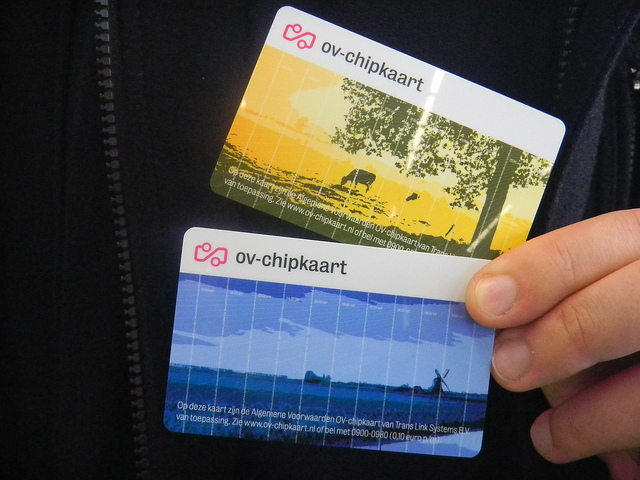
Dutch public transportation may be hackable with an Android smartphone

by Casey Johnston

The smartcards used to pay for public transportation in the Netherlands may now be hacked with an Android phone, according to a report from NOS.nl. The crack requires two free apps that allow the cracker to load the card with money and travel without paying anything.

NOS carries little detail on the nature of the hack, but Dutch hackers appear to have a somewhat long and storied history of cracking Netherlands’ smartcard, the OV-Chipkaart. The chip inside the card has been modified repeatedly by the card creator, Trans Link, but there is no shortage of tutorials on how to hack them, and there are plenty of stories about hacks that have taken place. There are also less technical Android apps to circumvent paying for transport, like OV Hacker, which plays the tone a Chipkaart would make when successfully scanned in order to trick bus drivers.

A research article from 2009 laid out how the RFID chip inside the card can be read with an NFC reader, decrypted with one application, and then reloaded with the desired amount by another application. The chip has been modified since then, but there’s at least one thread on the xda-developers forums where a user notes that his Android smartphone was able to read out the (encrypted) contents of his OV-Chipkaart with the NFC reader inside his phone.

Read 4 remaining paragraphs | Comments

06 Jun 13:41

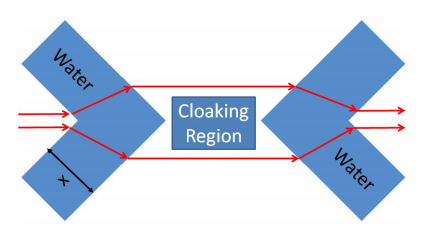
Human-Scale Invisibility Cloak Unveiled

Jacopo.bertolotti

Trivial in many senses. But the picture is still impressive.

Researchers demonstrate an invisibility cloak that can be scaled to almost any size and say it could be used to hide orbiting satellites

06 Jun 11:23

A cold-atom random laser

by Q. Baudouin

Nature Physics 9, 357 (2013). doi:10.1038/nphys2614

Authors: Q. Baudouin, N. Mercadier, V. Guarrera, W. Guerin & R. Kaiser

In conventional lasers optical cavities are used to provide feedback to gain media. Mirrorless lasers can be built by using disordered structures to induce multiple scattering, which increases the path length in the medium, providing the necessary feedback. Interestingly, light or microwave amplification by stimulated emission also occurs naturally in stellar gases and planetary atmospheres. The possibility of additional scattering-induced feedback—random lasing—could explain the unusual properties of some space masers. Here, we report experimental evidence of random lasing in a controlled, cold atomic vapour, taking advantage of Raman gain. By tuning the gain frequency in the vicinity of a scattering resonance, we observe an enhancement of the light emission due to random lasing. The unique possibility to both control the experimental parameters and to model the microscopic response of our system provides an ideal test bench for better understanding natural lasing sources, in particular the role of resonant scattering feedback in astrophysical lasers.

06 Jun 11:21

What has econophysics ever done for us?

by Mark Buchanan
Jacopo.bertolotti

The debate about econophysics goes on

Nature Physics 9, 317 (2013). doi:10.1038/nphys2648

Author: Mark Buchanan

06 Jun 07:39

Thinking of Running an Open Innovation Contest? Think Again.

Open competitions can help find an optimal solution to a well-understood problem, but they are a poor way to innovate.

Open innovation contests are gaining popularity with companies. The thinking is that since not all the smart people work for your company, and technology is developing so rapidly, why not hold a contest to get the best minds competing to innovate for you? While 99 percent of the entries will fail, those entries aren’t on your company’s income statement. And when that 1 percent succeeds by pulling off a true breakthrough, then your company will be the big winner.

06 Jun 07:30

Cooperative fluorescence from a strongly driven dilute cloud of atoms

by J. R. Ott, M. Wubs, P. Lodahl, N. A. Mortensen, and R. Kaiser

Author(s): J. R. Ott, M. Wubs, P. Lodahl, N. A. Mortensen, and R. Kaiser

Rapid CommunicationCreative Commons We investigate cooperative fluorescence in a dilute cloud of strongly driven two-level emitters. Starting from the Heisenberg equations of motion, we compute the first-order scattering corrections to the saturation of the excited-state population and to the resonance-fluorescence spectrum, which bot...

[Phys. Rev. A 87, 061801] Published Wed Jun 05, 2013

05 Jun 14:41

Collective Motion of Humans in Mosh and Circle Pits at Heavy Metal Concerts

by Jesse L. Silverberg, Matthew Bierbaum, James P. Sethna, and Itai Cohen
Jacopo.bertolotti

This paper deserve a prize for the title!

Author(s): Jesse L. Silverberg, Matthew Bierbaum, James P. Sethna, and Itai Cohen

Human collective behavior can vary from calm to panicked depending on social context. Using videos publicly available online, we study the highly energized collective motion of attendees at heavy metal concerts. We find these extreme social gatherings generate similarly extreme behaviors: a disorder...

[Phys. Rev. Lett. 110, 228701] Published Wed May 29, 2013

05 Jun 14:36

Exploration and Trapping of Mortal Random Walkers

by S. B. Yuste, E. Abad, and Katja Lindenberg
Jacopo.bertolotti

Funny little paper. Not sure how it ended up in PRL though.

Author(s): S. B. Yuste, E. Abad, and Katja Lindenberg

Exploration and trapping properties of random walkers that may evanesce at any time as they walk have seen very little treatment in the literature, and yet a finite lifetime is a frequent occurrence, and its effects on a number of random walk properties may be profound. For instance, whereas the ave...

[Phys. Rev. Lett. 110, 220603] Published Thu May 30, 2013

05 Jun 09:38

Subwavelength light focusing using random nanoparticles

by Jung-Hoon Park

Nature Photonics 7, 454 (2013). doi:10.1038/nphoton.2013.95

Authors: Jung-Hoon Park, Chunghyun Park, HyeonSeung Yu, Jimin Park, Seungyong Han, Jonghwa Shin, Seung Hwan Ko, Ki Tae Nam, Yong-Hoon Cho & YongKeun Park

05 Jun 09:38

Enhanced energy storage in chaotic optical resonators

by C. Liu

Nature Photonics 7, 473 (2013). doi:10.1038/nphoton.2013.108

Authors: C. Liu, A. Di Falco, D. Molinari, Y. Khan, B. S. Ooi, T. F. Krauss & A. Fratalocchi

04 Jun 07:36

Tre argomenti contro il presidenzialismo (in Italia, almeno)

by Leonardo T


Non è tanto l'atavica passione per l'Uomo forte. È proprio che non sappiamo sceglierceli, 'sti uomini, sembrano tutti presi a nolo da una compagnia di avanspettacolo.
03 Jun 06:53

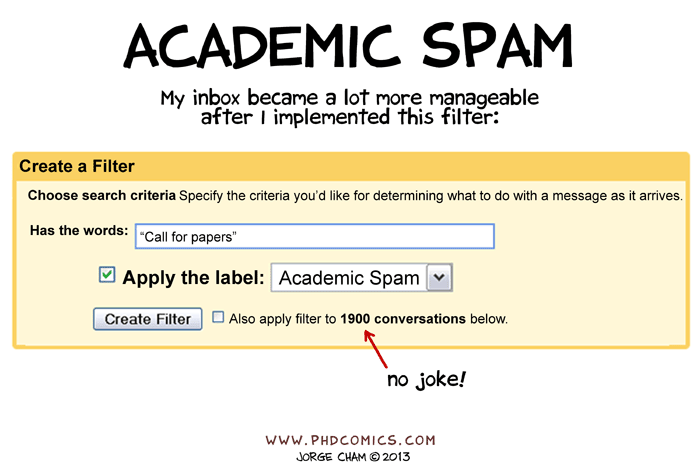
05/31/13 PHD comic: 'Academic Spam'

Jacopo.bertolotti

I will give this filter some serious thought

Piled Higher & Deeper by Jorge Cham
www.phdcomics.com
title: "Academic Spam" - originally published 5/31/2013

For the latest news in PHD Comics, CLICK HERE!

10 Apr 10:22

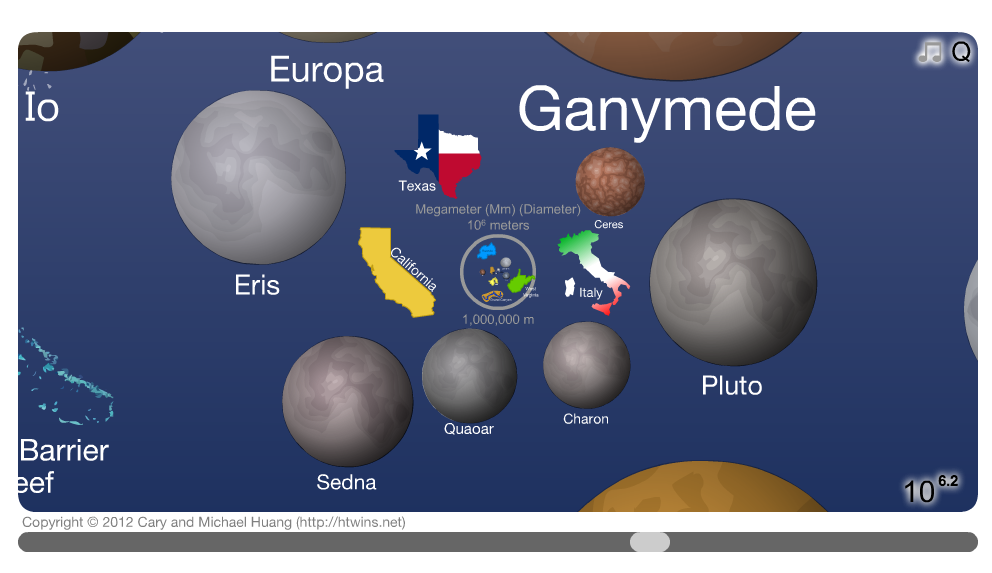
Signore e signori, l'Universo

by Paolo Attivissimo

Questo è il link. Non dico altro. Non serve dire altro. Scritto da Paolo Attivissimo per il blog Il Disinformatico. Ripubblicabile liberamente se viene inclusa questa dicitura (dettagli). Sono ben accette le donazioni Paypal.