Nature Photonics 9, 54 (2015). doi:10.1038/nphoton.2014.274
Authors: Roman Bruck, Ben Mills, Benedetto Troia, David J. Thomson, Frederic Y. Gardes, Youfang Hu, Goran Z. Mashanovich, Vittorio M. N. Passaro, Graham T. Reed & Otto L. Muskens
Nature Photonics 9, 54 (2015). doi:10.1038/nphoton.2014.274
Authors: Roman Bruck, Ben Mills, Benedetto Troia, David J. Thomson, Frederic Y. Gardes, Youfang Hu, Goran Z. Mashanovich, Vittorio M. N. Passaro, Graham T. Reed & Otto L. Muskens
Nature Photonics 9, 8 (2015). doi:10.1038/nphoton.2014.313
Author: Matteo Burresi
Non-invasive, multispectral characterization of integrated photonic circuits paves the way towards optical methodologies ready for industrial applications.
While the standard (introductory physics) way of computing the equivalent resistance of nontrivial electrical circuits is based on Kirchhoff's rules, there is a mathematically and conceptually simpler approach, called the method of nodal potentials, whose basic variables are the values of the electric potential at the circuit's nodes. In this paper, we review the method of nodal potentials and illustrate it using the Wheatstone bridge as an example. We then derive a closed-form expression for the equivalent resistance of a generic circuit, which we apply to a few sample circuits. The result unveils a curious interplay between electrical circuits, matrix algebra, and graph theory and its applications to computer science. The paper is written at a level accessible by undergraduate students who are familiar with matrix arithmetic. Additional proofs and technical details are provided in appendices.
Equivalence principles played a central role in the development of general relativity. Furthermore, they have provided operative procedures for testing the validity of general relativity, or constraining competing theories of gravitation. This has led to a flourishing of different, and inequivalent, formulations of these principles, with the undesired consequence that often the same name, “equivalence principle,” is associated with statements having a quite different physical meaning. In this paper, we provide a precise formulation of the several incarnations of the equivalence principle, clarifying their uses and reciprocal relations. We also discuss their possible role as selecting principles in the design and classification of viable theories of gravitation.
In this paper, we discuss what is, what is not, and what is only sort of superresolution microscopy. We begin by considering optical resolution, first in terms of diffraction theory, then in terms of linear-systems theory, and finally in terms of techniques that use prior information, nonlinearity, and other tricks to improve resolution. This discussion reveals two classes of superresolution microscopy, “pseudo” and “true.” The former improves images up to the diffraction limit, whereas the latter allows for substantial improvements beyond the diffraction limit. The two classes are distinguished by their scaling of resolution with photon counts. Understanding the limits to imaging resolution involves concepts that pertain to almost any measurement problem, implying a framework with applications beyond optics.
Scientific method: Defend the integrity of physics
Nature 516, 7531 (2014). doi:10.1038/516321a
Authors: George Ellis & Joe Silk
Attempts to exempt speculative theories of the Universe from experimental verification undermine science, argue George Ellis and Joe Silk.
Challenge the abuse of science in setting policy
Nature 516, 7531 (2014). http://www.nature.com/doifinder/10.1038/516289a
Author: Guillaume Chapron
The misuse of wolf research by Swedish politicians should be a warning to all biodiversity scientists, says Guillaume Chapron.
365 days: Images of the year
Nature 516, 7531 (2014). http://www.nature.com/doifinder/10.1038/516304a
Author: Daniel Cressey
Eruptions, comets and a see-through mouse all captured the imagination in 2014.
Article
Various vertical surface emitting, terahertz quantum-cascade lasers have been proposed recently but these suffer from power cancellations in the far-field and limited extraction efficiencies. Here, Vitiello et al. circumvent these issues using two-dimensional photonic quasi-crystalline resonators.
Nature Communications doi: 10.1038/ncomms6884
Authors: Miriam Serena Vitiello, Michele Nobile, Alberto Ronzani, Alessandro Tredicucci, Fabrizio Castellano, Valerio Talora, Lianhe Li, Edmund H. Linfield, A. Giles Davies
Author(s): K. G. Makris, L. Ge, and H. E. Türeci
For wave propagation in a lossy optical medium, the total optical power is commonly expected to decay with propagation distance. Using methods of non-normal operator theory, researchers challenge this notion and show that overall lossy optical materials with a small amount of distributed gain can amplify certain input signals by orders of magnitude.

[Phys. Rev. X 4, 041044] Published Mon Dec 15, 2014

 |
| Credit: Mazda USA |
In “The Troll Hunters,” Adrian Chen writes, “Old-school hate is having a sort of renaissance online, and in the countries thought to be furthest beyond it. The anonymity provided by the Internet fosters communities where people can feed on each other’s hate.”
A new study indicates that lots of bits of old studies turn up, verbatim, in lots of newer scientific studies. The new study (which I have not checked to see whether it contains uncredited copied text) is:
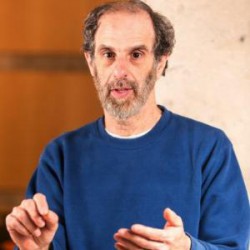
“Patterns of text reuse in a scientific corpus,” Daniel T. Citron and Paul Ginsparg [pictured here], Proceedings of the National Academy of Sciences, epub December 8, 2014. The authors at Cornell University, report:
“We consider the incidence of text ‘reuse’ by researchers via a systematic pairwise comparison of the text content of all articles deposited to arXiv.org from 1991 to 2012. We measure the global frequencies of three classes of text reuse and measure how chronic text reuse is distributed among authors in the dataset. We infer a baseline for accepted practice, perhaps surprisingly permissive compared with other societal contexts, and a clearly delineated set of aberrant authors. We find a negative correlation between the amount of reused text in an article and its influence, as measured by subsequent citations.”
Co-author Ginsparg is the creator of arXiv.
John Bohannon gives further details and comment, in Science magazine.
(Thanks to investigator Scott Langill for bringing this to our attention.)
Richard Feynman told stories that got people thinking. This passage from a talk Feynman gave at a meeting of the National Science Teachers Association in 1966 in New York City, was later printed — as part of a transcript of the entire talk — in The Physics Teacher, vol. 7, issue 6, 1969, pp. 313-320.
The next day, Monday, we were playing in the fields and this boy said to me, “See that bird standing on the stump there? What’s the name of it?”
I said, “I haven’t got the slightest idea.”
He said, “It’s a brown-throated thrush. Your father doesn’t teach you much about science.”
I smiled to myself, because my father had already taught me that [the name] doesn’t tell me anything about the bird. He taught me “See that bird? It’s a brown-throated thrush, but in Germany it’s called a halsenflugel, and in Chinese they call it a chung ling and even if you know all those names for it, you still know nothing about the bird–you only know something about people; what they call that bird. Now that thrush sings, and teaches its young to fly, and flies so many miles away during the summer across the country, and nobody knows how it finds its way,” and so forth. There is a difference between the name of the thing and what goes on.
The result of this is that I cannot remember anybody’s name, and when people discuss physics with me they often are exasperated when they say “the Fitz-Cronin effect,” and I ask “What is the effect?” and I can’t remember the name.
I would like to say a word or two — may I interrupt my little tale — about words and definitions, because it is necessary to learn the words.
It is not science. That doesn’t mean, just because it is not science, that we don’t have to teach the words. We are not talking about what to teach; we are talking about what science is. It is not science to know how to change Centigrade to Fahrenheit. It’s necessary, but it is not exactly science. In the same sense, if you were discussing what art is, you wouldn’t say art is the knowledge of the fact that a 3-B pencil is softer than a 2-H pencil. It’s a distinct difference. That doesn’t mean an art teacher shouldn’t teach that, or that an artist gets along very well if he doesn’t know that. (Actually, you can find out in a minute by trying it; but that’s a scientific way that art teachers may not think of explaining.) …
Assess the real cost of research assessment
Nature 516, 7530 (2014). http://www.nature.com/doifinder/10.1038/516145a
Author: Peter M. Atkinson
The Research Excellence Framework keeps UK science sharp, but the process is overly burdensome for institutions, says Peter M. Atkinson.
Some students sometimes don’t “give it their all“, suggests this paper:
“I Just Want My Research Credit: Frequency of Suboptimal Effort in a Non-Clinical Healthy Undergraduate Sample,” Jonathan DeRight and Randall S. Jorgensen [pictured here], The Clinical Neuropsychologist, epub December 10, 2014. (Thanks to Vaughan Bell for bringing this to our attention.) The authors, at Syracuse University, explain:
“The current study utilized an embedded measure of effort… to determine the frequency of poor effort in non-clinical healthy undergraduate students participating in a research study for course credit. Results indicate that more than 1 in 10 college students participating in a cognitive test battery for research showed test scores consistent with inadequate effort, which was associated with poor performance on testing across many domains. This conclusion was supported by poor performance on many other subtests. Healthy college students with suboptimal effort (n = 11) had an overall score in the 15th percentile on average compared to the 48th percentile in the rest of the students (n = 66). Those who failed validity indicators on the baseline administration were more likely to fail validity indicators on the repeat administration. Those who were tested in the morning were also more likely to fail validity indicators.”
Some students sometimes do, suggests this October 26, 2014 news report, also from Syracuse, New York:
5,000 students give it their all in Carrier Dome to find out who are the best marching bands in New York
More than 5,000 high school students, along with an estimated 10,000 fans, packed the Carrier Dome for the New York State Field Band Conference championships Sunday.
Fifty marching bands came to town to compete and determine who is the best. For each band, months of practice all came down to a 7- to 10-minute performance. A panel of 10 judges evaluated each band on its musical and visual presentation.
Alcune settimane fa la Corte di Cassazione ha cancellato il processo Eternit, a quanto pare in quanto ha considerato prescritti i reati. Sono scattate immediatamente una serie di polemiche e la richiesta di rivedere il sistema. Proverò a descriverlo cercando di dare un quadro razionale delle problematiche esistenti.
Tutti i sistemi penali che conosco prevedono l’istituto della prescrizione.
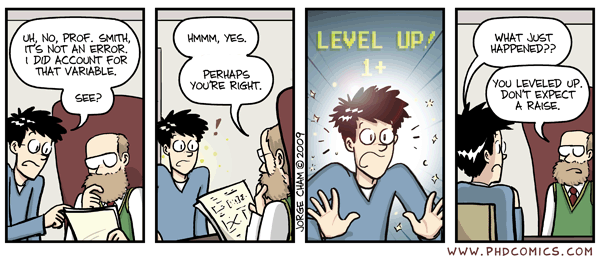
| Piled Higher & Deeper by Jorge Cham |
www.phdcomics.com
|
|
 |
||
|
title:
"Level Up." - originally published
12/8/2014
For the latest news in PHD Comics, CLICK HERE! |
||
 |
| Kim Tinkham racconta la sua storia in televisione: "mi sono curata da sola". |
"naturopata, microbiologo e nutrizionista. Famoso per i suoi studi sulla dieta alcalina, Young è fervente sostenitore della salute, la guarigione olistica e uno stile di vita che promuove il fattore alcalino. Vive con la moglie, Shelley Redford Young, coautrice de "Il miracolo del pH alcalino", in un ranch nello Utah, dove conducono anche il “Ph Miracle Center”, il centro in cui i pazienti vengono curati seguendo i dettami della dieta alcalina".
Jacopo.bertolottiAll nice and beautiful. But no concrete idea in sight here.
Business culture and dishonesty in the banking industry
Nature 516, 7529 (2014). doi:10.1038/nature13977
Authors: Alain Cohn, Ernst Fehr & Michel André Maréchal
Trust in others’ honesty is a key component of the long-term performance of firms, industries, and even whole countries. However, in recent years, numerous scandals involving fraud have undermined confidence in the financial industry. Contemporary commentators have attributed these scandals to the financial sector’s business culture, but no scientific evidence supports this claim. Here we show that employees of a large, international bank behave, on average, honestly in a control condition. However, when their professional identity as bank employees is rendered salient, a significant proportion of them become dishonest. This effect is specific to bank employees because control experiments with employees from other industries and with students show that they do not become more dishonest when their professional identity or bank-related items are rendered salient. Our results thus suggest that the prevailing business culture in the banking industry weakens and undermines the honesty norm, implying that measures to re-establish an honest culture are very important.
Jacopo.bertolottiNot my kind of science, but finding new materials for the next generation of batteries is seriously important.
Conductive two-dimensional titanium carbide ‘clay’ with high volumetric capacitance
Nature 516, 7529 (2014). doi:10.1038/nature13970
Authors: Michael Ghidiu, Maria R. Lukatskaya, Meng-Qiang Zhao, Yury Gogotsi & Michel W. Barsoum
Safe and powerful energy storage devices are becoming increasingly important. Charging times of seconds to minutes, with power densities exceeding those of batteries, can in principle be provided by electrochemical capacitors—in particular, pseudocapacitors. Recent research has focused mainly on improving the gravimetric performance of the electrodes of such systems, but for portable electronics and vehicles volume is at a premium. The best volumetric capacitances of carbon-based electrodes are around 300 farads per cubic centimetre; hydrated ruthenium oxide can reach capacitances of 1,000 to 1,500 farads per cubic centimetre with great cyclability, but only in thin films. Recently, electrodes made of two-dimensional titanium carbide (Ti3C2, a member of the ‘MXene’ family), produced by etching aluminium from titanium aluminium carbide (Ti3AlC2, a ‘MAX’ phase) in concentrated hydrofluoric acid, have been shown to have volumetric capacitances of over 300 farads per cubic centimetre. Here we report a method of producing this material using a solution of lithium fluoride and hydrochloric acid. The resulting hydrophilic material swells in volume when hydrated, and can be shaped like clay and dried into a highly conductive solid or rolled into films tens of micrometres thick. Additive-free films of this titanium carbide ‘clay’ have volumetric capacitances of up to 900 farads per cubic centimetre, with excellent cyclability and rate performances. This capacitance is almost twice that of our previous report, and our synthetic method also offers a much faster route to film production as well as the avoidance of handling hazardous concentrated hydrofluoric acid.
Jacopo.bertolottiInteresting article, although the first 2/3 are overly optimistic. Finally the last third brings back the balance.
Physics: Quantum computer quest
Nature 516, 7529 (2014). http://www.nature.com/doifinder/10.1038/516024a
Author: Elizabeth Gibney
After a 30-year struggle to harness quantum weirdness for computing, physicists finally have their goal in reach.
Jacopo.bertolottiPostdoc life is not an easy one.
Harsh reality
Nature 516, 7529 (2014). doi:10.1038/516007b
Two reports highlight the plight of postdocs on both sides of the pond aiming for academia.
Single-shot compressed ultrafast photography at one hundred billion frames per second
Nature 516, 7529 (2014). doi:10.1038/nature14005
Authors: Liang Gao, Jinyang Liang, Chiye Li & Lihong V. Wang
The capture of transient scenes at high imaging speed has been long sought by photographers, with early examples being the well known recording in 1878 of a horse in motion and the 1887 photograph of a supersonic bullet. However, not until the late twentieth century were breakthroughs achieved in demonstrating ultrahigh-speed imaging (more than 105 frames per second). In particular, the introduction of electronic imaging sensors based on the charge-coupled device (CCD) or complementary metal–oxide–semiconductor (CMOS) technology revolutionized high-speed photography, enabling acquisition rates of up to 107 frames per second. Despite these sensors’ widespread impact, further increasing frame rates using CCD or CMOS technology is fundamentally limited by their on-chip storage and electronic readout speed. Here we demonstrate a two-dimensional dynamic imaging technique, compressed ultrafast photography (CUP), which can capture non-repetitive time-evolving events at up to 1011 frames per second. Compared with existing ultrafast imaging techniques, CUP has the prominent advantage of measuring an x–y–t (x, y, spatial coordinates; t, time) scene with a single camera snapshot, thereby allowing observation of transient events with temporal resolution as tens of picoseconds. Furthermore, akin to traditional photography, CUP is receive-only, and so does not need the specialized active illumination required by other single-shot ultrafast imagers. As a result, CUP can image a variety of luminescent—such as fluorescent or bioluminescent—objects. Using CUP, we visualize four fundamental physical phenomena with single laser shots only: laser pulse reflection and refraction, photon racing in two media, and faster-than-light propagation of non-information (that is, motion that appears faster than the speed of light but cannot convey information). Given CUP’s capability, we expect it to find widespread applications in both fundamental and applied sciences, including biomedical research.
