构筑具有叠层结构的器件是提升太阳能电池光伏效率的有效途径.在叠层电池构筑中,对子电池光谱响应范围的选择和调制是提升电池性能的关键步骤之一.在本工作中,我们对叠层有机太阳能电池中的前、后子电池之间的光谱匹配性进行了优化调制.最终,我们选用带隙为1.24 eV的PTB7-Th:IEICO-4F作为后电池,带隙为1.59 eV的J52-2F:IT-M作为前电池制备高效率叠层电池,实现了对300-1000 nm范围内太阳发射光谱的高效利用.在该叠层有机太阳能电池中,前、后电池的能量损失均得到十分有效的控制,分别为0.64 eV和0.53 eV.因此,从具体光伏性能参数上来看,本工作中制备的叠层器件兼具了高短路电流密度(JSC)和高开路电压(VOC)的优势,分别达到13.3 mA/cm2和1.65 V.该电池在本实验室内部测试的光伏效率高达14.9%,封装之后效率略有降低,由中国计量科学研究院(NIM)验证的光伏效率达到14.0%.该结果是有机光伏领域获得的最高结果.
Chen Weijie
Shared posts
13 Nov 01:07
Photoinduced degradation from trace 1,8-diiodooctane in organic photovoltaics

J. Mater. Chem. C, 2017, Advance Article
DOI: 10.1039/C7TC04358A, Paper
DOI: 10.1039/C7TC04358A, Paper
Ian E. Jacobs, Faustine Wang, Zaira I. Bedolla Valdez, Alejandra N. Ayala Oviedo, David J. Bilsky, Adam J. Moule
Residual 1,8-Diiodooctane (DIO), a common solvent additive used in organic photovoltaic (OPV) films, is found to cause photodegradation even at ppm concentrations.
To cite this article before page numbers are assigned, use the DOI form of citation above.
The content of this RSS Feed (c) The Royal Society of Chemistry
Residual 1,8-Diiodooctane (DIO), a common solvent additive used in organic photovoltaic (OPV) films, is found to cause photodegradation even at ppm concentrations.
To cite this article before page numbers are assigned, use the DOI form of citation above.
The content of this RSS Feed (c) The Royal Society of Chemistry
13 Nov 01:03
Electrochemical and atomic force microscopy investigations of the effect of CdS on the local electrical properties of CH3NH3PbI3:CdS perovskite solar cells

J. Mater. Chem. C, 2017, 5,12112-12120
DOI: 10.1039/C7TC04377E, Paper
DOI: 10.1039/C7TC04377E, Paper
Mingxuan Guo, Fumin Li, Lanyu Ling, Chong Chen
The effect of the incorporated CdS on the local optoelectronic properties of CH3NH3PbI3:CdS bulk heterojunction (BHJ) perovskite solar cells (PSCs) are studied using Kelvin probe force microscopy (KPFM), conductive atomic force microscopy (c-AFM) and electrochemical impedance spectroscopy (EIS).
The content of this RSS Feed (c) The Royal Society of Chemistry
The effect of the incorporated CdS on the local optoelectronic properties of CH3NH3PbI3:CdS bulk heterojunction (BHJ) perovskite solar cells (PSCs) are studied using Kelvin probe force microscopy (KPFM), conductive atomic force microscopy (c-AFM) and electrochemical impedance spectroscopy (EIS).
The content of this RSS Feed (c) The Royal Society of Chemistry
David likes this
10 Nov 01:16


Small-Molecule Organic Photovoltaic Modules Fabricated via Halogen-Free Solvent System with Roll-to-Roll Compatible Scalable Printing Method
by Youn-Jung Heo, Yen-Sook Jung, Kyeongil Hwang, Jueng-Eun Kim, Jun-Seok Yeo, Sehyun Lee, Ye-Jin Jeon, Donmin Lee and Dong-Yu Kim

ACS Applied Materials & Interfaces
DOI: 10.1021/acsami.7b12420
10 Nov 01:16

Few-Layer Thin-Film Metallic Glass-Enhanced Optical Properties of ZnO Nanostructures
by Bohr-Ran Huang, Jinn P. Chu, Cheng-Liang Hsu, You-Syuan Chen and Chia-Hao Chang

ACS Applied Materials & Interfaces
DOI: 10.1021/acsami.7b13121
guohuan likes this
10 Nov 01:10


CsPbBr3 Solar Cells: Controlled Film Growth through Layer-by-Layer Quantum Dot Deposition
by Jacob B. Hoffman, Gary Zaiats, Isaac Wappes and Prashant V. Kamat

Chemistry of Materials
DOI: 10.1021/acs.chemmater.7b03751
10 Nov 01:08
A low temperature processed fused-ring electron transport material for efficient planar perovskite solar cells

J. Mater. Chem. A, 2017, 5,24820-24825
DOI: 10.1039/C7TA09543K, Paper
DOI: 10.1039/C7TA09543K, Paper
Mingyu Zhang, Jingshuai Zhu, Kuan Liu, Guanhaojie Zheng, Guanchao Zhao, Liwei Li, Yuan Meng, Ted Guo, Huanping Zhou, Xiaowei Zhan
A low temperature processed fused-ring electron acceptor IDIC is used as the electron transport layer in planar n-i-p perovskite solar cells, which exhibit higher efficiency and better stability than control devices based on TiO2.
The content of this RSS Feed (c) The Royal Society of Chemistry
A low temperature processed fused-ring electron acceptor IDIC is used as the electron transport layer in planar n-i-p perovskite solar cells, which exhibit higher efficiency and better stability than control devices based on TiO2.
The content of this RSS Feed (c) The Royal Society of Chemistry
09 Nov 08:21
Ultra-fast spin-mixing in a diketopyrrolopyrrole monomer/fullerene blend charge transfer state

J. Mater. Chem. A, 2017, 5,24335-24343
DOI: 10.1039/C7TA07381J, Paper
DOI: 10.1039/C7TA07381J, Paper
Enrico Salvadori, Nathaniel Luke, Jordan Shaikh, Anastasia Leventis, Hugo Bronstein, Christopher W. M. Kay, Tracey M. Clarke
Transient absorption and time-resolved EPR spectroscopy show an ultra-fast spin-mixing CT state in a small diketopyrrolopyrrole-based molecule blended with fullerene.
The content of this RSS Feed (c) The Royal Society of Chemistry
Transient absorption and time-resolved EPR spectroscopy show an ultra-fast spin-mixing CT state in a small diketopyrrolopyrrole-based molecule blended with fullerene.
The content of this RSS Feed (c) The Royal Society of Chemistry
yechennan_suda@163.com, guohuan and 2 others like this
09 Nov 08:20
Interfacial disorder in efficient polymer solar cells: the impact of donor molecular structure and solvent additives

J. Mater. Chem. A, 2017, 5,24749-24757
DOI: 10.1039/C7TA07924A, Paper
DOI: 10.1039/C7TA07924A, Paper
Nakul Jain, Naresh Chandrasekaran, Aditya Sadhanala, Richard H. Friend, Christopher R. McNeill, Dinesh Kabra
Highly sensitive spectroscopic study of interfacial disorder and its correlation with the solvent additive and the molecular structure of the donor in bulk heterojunction organic solar cells.
The content of this RSS Feed (c) The Royal Society of Chemistry
Highly sensitive spectroscopic study of interfacial disorder and its correlation with the solvent additive and the molecular structure of the donor in bulk heterojunction organic solar cells.
The content of this RSS Feed (c) The Royal Society of Chemistry
shiyurongyu, guohuan and 3 others like this
09 Nov 01:00
Solution-processed SnO2 thin film for a hysteresis-free planar perovskite solar cell with a power conversion efficiency of 19.2%
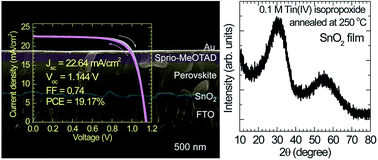
J. Mater. Chem. A, 2017, 5,24790-24803
DOI: 10.1039/C7TA08040A, Paper
DOI: 10.1039/C7TA08040A, Paper
Kwang-Ho Jung, Ja-Young Seo, Seonhee Lee, Hyunjung Shin, Nam-Gyu Park
A hysteresis-free and high-efficiency planar perovskite solar cell was developed using a solution-processed SnO2 electron-transporting layer (ETL).
The content of this RSS Feed (c) The Royal Society of Chemistry
A hysteresis-free and high-efficiency planar perovskite solar cell was developed using a solution-processed SnO2 electron-transporting layer (ETL).
The content of this RSS Feed (c) The Royal Society of Chemistry
shiyurongyu, Ligang Yuan and 3 others like this
09 Nov 00:55


Electronic and Optical Properties of Two-Dimensional GaN from First-Principles
by Nocona Sanders, Dylan Bayerl, Guangsha Shi, Kelsey A. Mengle and Emmanouil Kioupakis

Nano Letters
DOI: 10.1021/acs.nanolett.7b03003
Yan likes this
09 Nov 00:53

Wearable Electronics: Wearable Large-Scale Perovskite Solar-Power Source via Nanocellular Scaffold (Adv. Mater. 42/2017)
by Xiaotian Hu, Zengqi Huang, Xue Zhou, Pengwei Li, Yang Wang, Zhandong Huang, Meng Su, Wanjie Ren, Fengyu Li, Mingzhu Li, Yiwang Chen, Yanlin Song

In article number 1703236, Fengyu Li, Yanlin Song, and co-workers report hysteresis-free, flexible, and large-scale perovskite solar cells with recorded photoelectric conversion efficiencies of 12.3% for a 1 cm2 single chip and 8.4% for a 24 cm2 solar module. This is the first time that a wearable solar power source that can supply power for multifunction electronic devices with a variety of body movements is fabricated practically.
08 Nov 12:04

Angular-Shaped Dithienonaphthalene-Based Nonfullerene Acceptor for High-Performance Polymer Solar Cells with Large Open-Circuit Voltages and Minimal Energy Losses
by Yunlong Ma, Meiqi Zhang, Yabing Tang, Wei Ma and Qingdong Zheng

Chemistry of Materials
DOI: 10.1021/acs.chemmater.7b03770
hailul, Xu Xiangfei and 10 others like this
08 Nov 12:03

Solar Cells: Organometal Halide Perovskite Solar Cells with Improved Thermal Stability via Grain Boundary Passivation Using a Molecular Additive (Adv. Funct. Mater. 42/2017)
by Chaneui Park, Hyomin Ko, Dong Hun Sin, Kyu Chan Song, Kilwon Cho

In article number 1703546, Kilwon Cho and co-workers demonstrate that PCBM molecules chemically passivate the grain boundaries of organometal halide perovskite crystals. The chemical passivation prevents halogens at the crystal boundaries from exiting from the crystal lattice, and thereby retards thermal degradation of the perovskite crystals. The tunability of perovskite grain boundaries by additives is an advance toward the practical use of organometal halide perovskite solar cells.
mjl15121624, Fiona-moon and 3 others like this
08 Nov 12:01

A Shockley-Type Polymer: Fullerene Solar Cell
by Ardalan Armin, Zhiming Chen, Yaocheng Jin, Kai Zhang, Fei Huang, Safa Shoaee
Abstract
Charge extraction rate in solar cells made of blends of electron donating/accepting organic semiconductors is typically slow due to their low charge carrier mobility. This sets a limit on the active layer thickness and has hindered the industrialization of organic solar cells (OSCs). Herein, charge transport and recombination properties of an efficient polymer (NT812):fullerene blend are investigated. This system delivers power conversion efficiency of >9% even when the junction thickness is as large as 800 nm. Experimental results indicate that this material system exhibits exceptionally low bimolecular recombination constant, 800 times smaller than the diffusion-controlled electron and hole encounter rate. Comparing theoretical results based on a recently introduced modified Shockley model for fill factor, and experiments, clarifies that charge collection is nearly ideal in these solar cells even when the thickness is several hundreds of nanometer. This is the first realization of high-efficiency Shockley-type organic solar cells with junction thicknesses suitable for scaling up.

Strongly suppressed recombination is observed in a polymer:fullerene system resulting in solar cell power conversion efficiencies as high as 9% at a junction thickness of 800 nm. Results indicate that solar cell devices made of this material system with thicknesses as large as 300 nm can exhibit Shockley-type behavior, i.e., the fill factor is unaffected by bimolecular recombination.
08 Nov 12:00

Organic Solar Cells: A Switchable Interconnecting Layer for High Performance Tandem Organic Solar Cell (Adv. Energy Mater. 21/2017)
by Shunmian Lu, Hong Lin, Shaoqing Zhang, Jianhui Hou, Wallace C. H. Choy

In article number 1701164, Wallace C.H. Choy and co-workers demonstrate an all-solution-processed switchable interconnecting layer (ICL) for both inverted and normal tandem organic solar cells (OSCs). This strategy shifts the views from conventionally complicated tunneling junction ICL where both electron/hole transport layers play several different roles towards simplified ICL where electron/hole transport layers play distinct decoupled role, advancing ICL for more adaptable tandem OSCs.
08 Nov 01:00


Photoinduced Bulk Polarization and Its Effects on Photovoltaic Actions in Perovskite Solar Cells
by Ting Wu, Liam Collins, Jia Zhang, Pei-Ying Lin, Mahshid Ahmadi, Stephen Jesse and Bin Hu

ACS Nano
DOI: 10.1021/acsnano.7b06413
08 Nov 01:00

Transparent Perovskite Light-Emitting Touch-Responsive Device
by Shu-Yu Chou, Rujun Ma, Yunfei Li, Fangchao Zhao, Kwing Tong, Zhibin Yu and Qibing Pei

ACS Nano
DOI: 10.1021/acsnano.7b05935
08 Nov 01:00

Photoelectrochemically Active and Environmentally Stable CsPbBr3/TiO2 Core/Shell Nanocrystals
by Zhi-Jun Li, Elan Hofman, Jian Li, Andrew Hunter Davis, Chen-Ho Tung, Li-Zhu Wu, Weiwei Zheng
Abstract
Inherent poor stability of perovskite nanocrystals (NCs) is the main impediment preventing broad applications of the materials. Here, TiO2 shell coated CsPbBr3 core/shell NCs are synthesized through the encapsulation of colloidal CsPbBr3 NCs with titanium precursor, followed by calcination at 300 °C. The nearly monodispersed CsPbBr3/TiO2 core/shell NCs show excellent water stability for at least three months with the size, structure, morphology, and optical properties remaining identical, which represent the most water-stable inorganic shell passivated perovskite NCs reported to date. In addition, TiO2 shell coating can effectively suppress anion exchange and photodegradation, therefore dramatically improving the chemical stability and photostability of the core CsPbBr3 NCs. More importantly, photoluminescence and (photo)electrochemical characterizations exhibit increased charge separation efficiency due to the electrical conductivity of the TiO2 shell, hence leading to an improved photoelectric activity in water. This study opens new possibilities for optoelectronic and photocatalytic applications of perovskites-based NCs in aqueous phase.

TiO2 shell coated CsPbBr3 core/shell nanocrystals are successfully constructed, resulting in excellent water, photo and thermal stability. TiO2 shell coating effectively increases charge separation efficiency, hence leading to an improved photoelectric activity in water.
mjl15121624, ytdcty and 2 others like this
08 Nov 00:58

Interface Engineering for Highly Efficient and Stable Planar p-i-n Perovskite Solar Cells
by Yang Bai, Xiangyue Meng, Shihe Yang
Abstract
Organic-inorganic halide perovskite materials have become a shining star in the photovoltaic field due to their unique properties, such as high absorption coefficient, optimal bandgap, and high defect tolerance, which also lead to the breathtaking increase in power conversion efficiency from 3.8% to over 22% in just seven years. Although the highest efficiency was obtained from the TiO2 mesoporous structure, there are increasing studies focusing on the planar structure device due to its processibility for large-scale production. In particular, the planar p-i-n structure has attracted increasing attention on account of its tremendous advantages in, among other things, eliminating hysteresis alongside a competitive certified efficiency of over 20%. Crucial for the device performance enhancement has been the interface engineering for the past few years, especially for such planar p-i-n devices. The interface engineering aims to optimize device properties, such as charge transfer, defect passivation, band alignment, etc. Herein, recent progress on the interface engineering of planar p-i-n structure devices is reviewed. This review is mainly focused on the interface design between each layer in p-i-n structure devices, as well as grain boundaries, which are the interfaces between polycrystalline perovskite domains. Promising research directions are also suggested for further improvements.

Interface engineering has been widely practiced on planar p-i-n perovskite solar cells since it brings about significant improvement in both device performance and stability. Recent progress is reviewed about the engineering of each interface of such devices and its effects, including defect passivation, accelerated charge transfer, enhanced stabilities, etc., which are key parameters for the photovoltaic devices.
08 Nov 00:56

Perovskite Solar Cells with ZnO Electron-Transporting Materials
by Peng Zhang, Jiang Wu, Ting Zhang, Yafei Wang, Detao Liu, Hao Chen, Long Ji, Chunhua Liu, Waseem Ahmad, Zhi David Chen, Shibin Li
Abstract
Perovskite solar cells (PSCs) have developed rapidly over the past few years, and the power conversion efficiency of PSCs has exceeded 20%. Such high performance can be attributed to the unique properties of perovskite materials, such as high absorption over the visible range and long diffusion length. Due to the different diffusion lengths of holes and electrons, electron transporting materials (ETMs) used in PSCs play a critical role in PSCs performance. As an alternative to TiO2 ETM, ZnO materials have similar physical properties to TiO2 but with much higher electron mobility. In addition, there are many simple and facile methods to fabricate ZnO nanomaterials with low cost and energy consumption. This review focuses on recent developments in the use of ZnO ETM for PSCs. The fabrication methods of ZnO materials are briefly introduced. The influence of different ZnO ETMs on performance of PSCs is then reviewed. The limitations of ZnO ETM-based PSCs and some solutions to these challenges are also discussed. The review provides a systematic and comprehensive understanding of the influence of different ZnO ETMs on PSCs performance and potentially motivates further development of PSCs by extending the knowledge of ZnO-based PSCs to TiO2-based PSCs.

Progress in perovskite solar cells based on ZnO electron-transport materials of different morphologies and their fabrication methods is summarized. The influence of the ZnO morphology and fabrication process on the performance of perovskite solar cells are reviewed and highlighted. Moreover, the issues of ZnO materials, and some solutions and strategies to promote the performance of solar cells, are introduced.
mryulongwang@163.com, jogging__ and 14 others like this
08 Nov 00:56

All-Polymer Solar Cells Based on a Conjugated Polymer Containing Siloxane-Functionalized Side Chains with Efficiency over 10%
by Baobing Fan, Lei Ying, Peng Zhu, Feilong Pan, Feng Liu, Junwu Chen, Fei Huang, Yong Cao
Abstract
A novel wide-bandgap conjugated copolymer based on an imide-functionalized benzotriazole building block containing a siloxane-terminated side-chain is developed. This copolymer is successfully used to fabricate highly efficient all-polymer solar cells (all-PSCs) processed at room temperature with the green-solvent 2-methyl-tetrahydrofuran. When paired with a naphthalene diimide-based polymer electron-acceptor, the all-PSC exhibits a maximum power conversion efficiency (PCE) of 10.1%, which is the highest value so far reported for an all-PSC. Of particular interest is that the PCE remains 9.4% after thermal annealing at 80 °C for 24 h. The resulting high efficiency is attributed to a combination of high and balanced bulky charge carrier mobility, favorable face-on orientation, and high crystallinity. These observations indicate that the resulting copolymer can be a promising candidate toward high-performance all-PSCs for practical applications.

A novel wide-bandgap conjugated copolymer PTzBI-Si based on an imide-functionalized benzotriazole unit containing a siloxane-terminated side-chain is developed and used to fabricate all-polymer solar cells (all-PSCs). When processed with a green solvent 2-methyl-tetrahydrofuran, the all-PSC exhibits a power conversion efficiency of 10.1%, which represents the highest efficiency ever reported for all-PSCs.
hailul, lizhendong and 19 others like this
08 Nov 00:55


Ring-Fusion of Perylene Diimide Acceptor Enabling Efficient Nonfullerene Organic Solar Cells with a Small Voltage Loss
by Jianquan Zhang, Yunke Li, Jiachen Huang, Huawei Hu, Guangye Zhang, Tingxuan Ma, Philip C. Y. Chow, Harald Ade, Ding Pan and He Yan

Journal of the American Chemical Society
DOI: 10.1021/jacs.7b09998
Xu Xiangfei, 以昇陳 and 14 others like this
08 Nov 00:55

Molecular Road Map to Tuning Ground State Absorption and Excited State Dynamics of Long-Wavelength Absorbers
by Yusong Bai, Jean-Hubert Olivier, Hyejin Yoo, Nicholas F. Polizzi, Jaehong Park, Jeff Rawson and Michael J. Therien

Journal of the American Chemical Society
DOI: 10.1021/jacs.7b09982
zhouweilei, WANG and 8 others like this
08 Nov 00:54

Control of Fullerene Crystallization from 2D to 3D through Combined Solvent and Template Effects
by Daling Cui, Maryam Ebrahimi, Federico Rosei and Jennifer M. Macleod

Journal of the American Chemical Society
DOI: 10.1021/jacs.7b08642
guangceng, mona lipschitz and one other like this
08 Nov 00:49

Efficient kesterite solar cells with high open-circuit voltage for applications in powering distributed devices
by Priscilla D. Antunez
Efficient kesterite solar cells with high open-circuit voltage for applications in powering distributed devices
Efficient kesterite solar cells with high open-circuit voltage for applications in powering distributed devices, Published online: 06 November 2017; doi:10.1038/s41560-017-0028-5
NatureArticleSnippet(type=short-summary, markup=Kesterite thin-film solar cells feature abundant non-toxic elements. Here, Antunez et al. present a process to simultaneously optimize the conversion efficiency and voltage over a wide range of light intensities appropriate for small-scale, distributed and indoor applications.
, isJats=true)
06 Nov 01:50
Giant positive magnetoresistance in half-metallic double-perovskite Sr2CrWO6 thin films
by Zhang, J., Ji, W.-J., Xu, J., Geng, X.-Y., Zhou, J., Gu, Z.-B., Yao, S.-H., Zhang, S.-T.
Magnetoresistance (MR) is the magnetic field–induced change of electrical resistance. The MR effect not only has wide applications in hard drivers and sensors but also is a long-standing scientific issue for complex interactions. Ferromagnetic/ferrimagnetic oxides generally show negative MR due to the magnetic field–induced spin order. We report the unusually giant positive MR up to 17,200% (at 2 K and 7 T) in 12-nm Sr2CrWO6 thin films, which show metallic behavior with high carrier density of up to 2.26 x 1028 m–3 and high mobility of 5.66 x 104 cm2 V–1 s–1. The possible mechanism is that the external magnetic field suppresses the long-range antiferromagnetic order to form short-range antiferromagnetic fluctuations, which enhance electronic scattering and lead to the giant positive MR. The high mobility may also have contributions to the positive MR. These results not only experimentally confirm that the giant positive MR can be realized in oxides but also open up new opportunities for developing and understanding the giant positive MR in oxides.
06 Nov 01:44

Kinetic Isotope Effects Provide Experimental Evidence for Proton Tunneling in Methylammonium Lead Triiodide Perovskites
by Yan-Fang Chen, Yu-Tang Tsai, Lionel Hirsch and Dario M. Bassani

Journal of the American Chemical Society
DOI: 10.1021/jacs.7b09526
06 Nov 01:42

High voltage, please!
by Susanne Siebentritt
High voltage, please!
High voltage, please!, Published online: 06 November 2017; doi:10.1038/s41560-017-0031-x
NatureArticleSnippet(type=standfirst, markup=Kesterite solar cells are low-cost alternatives for photovoltaics, based only on abundant metals, but they exhibit limited voltages. A new wide-gap kesterite solar cell provides a much higher voltage at a good efficiency.
, isJats=true)
06 Nov 01:36

Colour selective control of terahertz radiation using two-dimensional hybrid organic inorganic lead-trihalide perovskites
by Ashish Chanana
Colour selective control of terahertz radiation using two-dimensional hybrid organic inorganic lead-trihalide perovskites
Colour selective control of terahertz radiation using two-dimensional hybrid organic inorganic lead-trihalide perovskites, Published online: 06 November 2017; doi:10.1038/s41467-017-01517-0
NatureArticleSnippet(type=short-summary, markup=All-optical approaches to modulate signals are of wide interest. Here the authors demonstrate the use of two-dimensional perovskites on silicon for optically controlling the propagation and attenuation of terahertz radiation in the visible by changing the number of atomic layers.
, isJats=true)